EP4455098A1 - Vorrichtung und verfahren zur beschleunigung der schlammgranulierung - Google Patents
Vorrichtung und verfahren zur beschleunigung der schlammgranulierung Download PDFInfo
- Publication number
- EP4455098A1 EP4455098A1 EP23756573.4A EP23756573A EP4455098A1 EP 4455098 A1 EP4455098 A1 EP 4455098A1 EP 23756573 A EP23756573 A EP 23756573A EP 4455098 A1 EP4455098 A1 EP 4455098A1
- Authority
- EP
- European Patent Office
- Prior art keywords
- activated sludge
- sludge
- sewage
- granulation
- accelerating
- Prior art date
- Legal status (The legal status is an assumption and is not a legal conclusion. Google has not performed a legal analysis and makes no representation as to the accuracy of the status listed.)
- Pending
Links
Images






Classifications
-
- C—CHEMISTRY; METALLURGY
- C02—TREATMENT OF WATER, WASTE WATER, SEWAGE, OR SLUDGE
- C02F—TREATMENT OF WATER, WASTE WATER, SEWAGE, OR SLUDGE
- C02F3/00—Biological treatment of water, waste water, or sewage
- C02F3/02—Aerobic processes
- C02F3/12—Activated sludge processes
- C02F3/1236—Particular type of activated sludge installations
- C02F3/1263—Sequencing batch reactors [SBR]
-
- C—CHEMISTRY; METALLURGY
- C02—TREATMENT OF WATER, WASTE WATER, SEWAGE, OR SLUDGE
- C02F—TREATMENT OF WATER, WASTE WATER, SEWAGE, OR SLUDGE
- C02F11/00—Treatment of sludge; Devices therefor
- C02F11/02—Biological treatment
- C02F11/04—Anaerobic treatment; Production of methane by such processes
-
- C—CHEMISTRY; METALLURGY
- C02—TREATMENT OF WATER, WASTE WATER, SEWAGE, OR SLUDGE
- C02F—TREATMENT OF WATER, WASTE WATER, SEWAGE, OR SLUDGE
- C02F3/00—Biological treatment of water, waste water, or sewage
- C02F3/006—Regulation methods for biological treatment
-
- C—CHEMISTRY; METALLURGY
- C02—TREATMENT OF WATER, WASTE WATER, SEWAGE, OR SLUDGE
- C02F—TREATMENT OF WATER, WASTE WATER, SEWAGE, OR SLUDGE
- C02F3/00—Biological treatment of water, waste water, or sewage
- C02F3/02—Aerobic processes
- C02F3/12—Activated sludge processes
- C02F3/1236—Particular type of activated sludge installations
-
- C—CHEMISTRY; METALLURGY
- C02—TREATMENT OF WATER, WASTE WATER, SEWAGE, OR SLUDGE
- C02F—TREATMENT OF WATER, WASTE WATER, SEWAGE, OR SLUDGE
- C02F3/00—Biological treatment of water, waste water, or sewage
- C02F3/28—Anaerobic digestion processes
- C02F3/2866—Particular arrangements for anaerobic reactors
- C02F3/2873—Particular arrangements for anaerobic reactors with internal draft tube circulation
-
- C—CHEMISTRY; METALLURGY
- C02—TREATMENT OF WATER, WASTE WATER, SEWAGE, OR SLUDGE
- C02F—TREATMENT OF WATER, WASTE WATER, SEWAGE, OR SLUDGE
- C02F1/00—Treatment of water, waste water, or sewage
- C02F2001/007—Processes including a sedimentation step
-
- C—CHEMISTRY; METALLURGY
- C02—TREATMENT OF WATER, WASTE WATER, SEWAGE, OR SLUDGE
- C02F—TREATMENT OF WATER, WASTE WATER, SEWAGE, OR SLUDGE
- C02F2203/00—Apparatus and plants for the biological treatment of water, waste water or sewage
- C02F2203/004—Apparatus and plants for the biological treatment of water, waste water or sewage comprising a selector reactor for promoting floc-forming or other bacteria
-
- C—CHEMISTRY; METALLURGY
- C02—TREATMENT OF WATER, WASTE WATER, SEWAGE, OR SLUDGE
- C02F—TREATMENT OF WATER, WASTE WATER, SEWAGE, OR SLUDGE
- C02F2209/00—Controlling or monitoring parameters in water treatment
- C02F2209/005—Processes using a programmable logic controller [PLC]
-
- C—CHEMISTRY; METALLURGY
- C02—TREATMENT OF WATER, WASTE WATER, SEWAGE, OR SLUDGE
- C02F—TREATMENT OF WATER, WASTE WATER, SEWAGE, OR SLUDGE
- C02F2209/00—Controlling or monitoring parameters in water treatment
- C02F2209/44—Time
-
- C—CHEMISTRY; METALLURGY
- C02—TREATMENT OF WATER, WASTE WATER, SEWAGE, OR SLUDGE
- C02F—TREATMENT OF WATER, WASTE WATER, SEWAGE, OR SLUDGE
- C02F2301/00—General aspects of water treatment
- C02F2301/04—Flow arrangements
- C02F2301/043—Treatment of partial or bypass streams
-
- C—CHEMISTRY; METALLURGY
- C02—TREATMENT OF WATER, WASTE WATER, SEWAGE, OR SLUDGE
- C02F—TREATMENT OF WATER, WASTE WATER, SEWAGE, OR SLUDGE
- C02F2305/00—Use of specific compounds during water treatment
- C02F2305/06—Nutrients for stimulating the growth of microorganisms
-
- C—CHEMISTRY; METALLURGY
- C02—TREATMENT OF WATER, WASTE WATER, SEWAGE, OR SLUDGE
- C02F—TREATMENT OF WATER, WASTE WATER, SEWAGE, OR SLUDGE
- C02F3/00—Biological treatment of water, waste water, or sewage
- C02F3/02—Aerobic processes
- C02F3/12—Activated sludge processes
- C02F3/1205—Particular type of activated sludge processes
- C02F3/1221—Particular type of activated sludge processes comprising treatment of the recirculated sludge
-
- Y—GENERAL TAGGING OF NEW TECHNOLOGICAL DEVELOPMENTS; GENERAL TAGGING OF CROSS-SECTIONAL TECHNOLOGIES SPANNING OVER SEVERAL SECTIONS OF THE IPC; TECHNICAL SUBJECTS COVERED BY FORMER USPC CROSS-REFERENCE ART COLLECTIONS [XRACs] AND DIGESTS
- Y02—TECHNOLOGIES OR APPLICATIONS FOR MITIGATION OR ADAPTATION AGAINST CLIMATE CHANGE
- Y02W—CLIMATE CHANGE MITIGATION TECHNOLOGIES RELATED TO WASTEWATER TREATMENT OR WASTE MANAGEMENT
- Y02W10/00—Technologies for wastewater treatment
- Y02W10/10—Biological treatment of water, waste water, or sewage
Definitions
- the present disclosure relates to an apparatus and method for accelerating the granulation of sludge.
- an activated sludge process is commonly used in biological treatment facilities for wastewater.
- the activated sludge process uses suspended microorganisms to remove contaminants contained in sewage.
- the activated sludge process makes it difficult to optimize the dominance of microorganisms corresponding to the conditions of each unit, resulting in low efficiency in the removal of contaminants, due to the continuous movement of suspended sludge to each tank.
- the activated sludge process has several problems with solid-liquid separation and treatment efficiency, such as frequent bulking and foaming depending on the characteristics of influent and the operating method thereof.
- a wastewater treatment method has been proposed that treats sewage by granulating suspended sludge instead of using suspended microorganisms.
- the granules are used in order to treat contaminants in sewage while solving the problems of the activated sludge process described above.
- This method of sewage treatment using granules has a problem that it takes a considerable period of time to granulate sludge to produce granules. In conventional methods, it takes at least 3 months or more to form sludge into granules. Since it takes quite a long period of time as described above, it was difficult to completely solve the problems of the activated sludge process in a short period of time even with the conventional methods.
- the capacity of the sewage treatment system can be increased by increasing the amount that can be treated at one time or by increasing the number of treatments by speeding up the treatment speed.
- it is difficult to increase the amount that is treated at one time because it requires more physical space such as the site.
- the most efficient way to increase the treatment capacity of the sewage treatment system is to accelerate the treatment speed, thereby increasing the number of treatment cycles per unit period.
- the conventional sewage treatment system has a relatively small treatment capacity.
- An embodiment of the present disclosure has an object to provide an apparatus and method for accelerating the granulation of sludge, which are capable of accelerating granulation of sludge to shorten the settling time of granules.
- an embodiment of the present disclosure has an object to provide a sewage treatment system and method that increase a sewage treatment capacity by accelerating granulation of sludge to shorten the settling time of granules.
- an apparatus for accelerating sludge granulation which serves to accelerate a process of granulating activated sludge to produce granules.
- the apparatus includes a cultivation tank configured to receive activated sludge and a carbon source to culture them in a preset environment for a preset time, an acceleration reactor configured to receive the activated sludge cultured in the cultivation tank and sewage from the outside to grow and granulate the activated sludge, and a control unit configured to control operations of the cultivation tank and the acceleration reactor.
- the preset environment may be an anaerobic environment.
- the preset time may be 3 to 5 days.
- the acceleration reactor may include an inflow port for receiving the activated sludge cultured in the cultivation tank and the sewage from the outside, an aeration part configured to stir the introduced activated sludge and sewage, a shear force formation part configured to generate shear force in the activated sludge stirred by the aeration part, and an outflow port for discharging supernatant after the reaction in the acceleration reactor is completed.
- the shear force formation part may include an inlet formed at the bottom thereof for introducing air supplied from the aeration part thereinto, a release port formed at one point thereof for releasing the stirred activated sludge from the inside to the outside thereof, and an outlet formed at the top thereof for discharging the stirred activated sludge to the outside.
- control unit may control the acceleration reactor to receive the sewage for a first preset time to aerate it for a second preset time, to precipitate the sludge for a third preset time, and to rest for a fourth preset time.
- control unit may control the acceleration reactor to operate repeatedly in a cycle.
- an apparatus for accelerating sludge granulation which serves to accelerate a process of granulating activated sludge to produce granules.
- the apparatus includes an acceleration reactor configured to receive activated sludge and a carbon source to culture them in a preset environment for a preset time and to receive sewage from the outside to grow and granulate the cultured activated sludge, and a control unit configured to control an operation of the acceleration reactor.
- control unit may operate the acceleration reactor until the sludge is formed into granules.
- control unit may determine whether the sludge is formed into the granules based on whether the sludge satisfies preset criteria in size and sedimentation.
- a method of accelerating a process of granulating activated sludge to produce granules which includes a culture process of receiving activated sludge and a carbon source to culture them in a preset environment for a preset time, an aeration process of receiving sewage from the outside to aerate the activated sludge cultured in the culture process for a first preset time, a sedimentation process of settling the sludge for a second preset time, and a resting process of pausing for a third preset time.
- first, second, A, and/or “B” may be used herein to describe various elements of the present disclosure, but these elements should not be construed as being limited by the terms. These terms will be used only for the purpose of differentiating one element from other elements of the present disclosure. For example, without departing from the scope and spirit of the present disclosure, a first element may be referred to as a second element, and, similarly, a second element may also be referred to as a first element.
- the term “and/or” includes any and all combinations of one or more of the associated listed items.
- each configuration, procedure, process, method, or the like included in each embodiment of the present disclosure may be shared to the extent that they are not technically contradictory to each other.
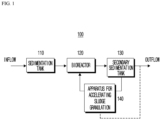
- FIG. 1 is a block diagram illustrating a configuration of a sewage treatment system according to a first embodiment of the present disclosure.
- the sewage treatment system which is designated by reference numeral 100, according to the first embodiment of the present disclosure includes a sedimentation tank 110, a bioreactor 120, a secondary sedimentation tank 130, an apparatus for accelerating sludge granulation 140, and a control unit (not shown).
- the control unit may include one or more processors and one or more memory modules storing programs to be executed by the one or more processors.
- the sewage treatment system 100 uses activated sludge or granules to remove contaminants in sewage, for example, nutrients such as nitrogen or phosphorus. Meanwhile, it includes the apparatus for accelerating sludge granulation 140, thereby dramatically improving the granulation of activated sludge or the rate of production of granules. Accordingly, the sewage treatment system 100 may significantly increase the settling velocity of activated sludge or granules that have undergone biological treatment, so as to thereby increase the number of sewage treatments per unit period and an improvement in treatment capacity as well.
- the sedimentation tank 110 receives sewage and sediments impurities or solids in the sewage.
- the sedimentation tank 110 first receives the incoming sewage and settles impurities and solids.
- the bioreactor 120 uses activated sludge to remove nutrients such as phosphorus and nitrogen contained in sewage.
- the bioreactor 120 uses activated sludge to release phosphorus components in sewage.
- the bioreactor 120 creates an anaerobic environment to release phosphorus in sewage using some of the activated sludge present in the bioreactor 120.
- (some) of the activated sludge in the bioreactor 120 has a state in which organic matter may be primarily accumulated in the cell.
- the bioreactor 120 uses activated sludge to remove the released phosphorus and oxidizes ammonia nitrogen to nitrate nitrogen. After using activated sludge to release phosphorus in sewage, the bioreactor 120 allows microorganisms to perform biological treatment using nutrients in an environment with oxygen supplied. Some activated sludge in the bioreactor 120 absorbs phosphorus present in sewage to accumulate energy by converting ADP into ATP. In this case, since the activated sludge accumulates a much larger amount of phosphorus in an aerobic environment than the amount released in an anaerobic environment, the phosphorus in sewage may be removed as a whole. Meanwhile, some other activated sludge in the bioreactor 120 oxidizes ammonia nitrogen to nitrate nitrogen. Thus, the released phosphorus is removed and the ammonia nitrogen is oxidized to nitrate nitrogen.
- the bioreactor 120 then uses activated sludge to denitrify the remaining nitrogen components in sewage.
- the bioreactor 120 creates an anoxic environment and denitrifies the oxidized nitrate nitrogen into nitrogen gas using activated sludge.
- the bioreactor 120 may include, for example, an anaerobic tank, an aerobic tank, and an anoxic tank to perform each of the operations described above.
- the secondary sedimentation tank 130 receives the sewage that has passed through the bioreactor 120, settles the remaining microorganisms (activated sludge) in the sewage and discharges the supernatant.
- the bioreactor 120 allows the microorganisms utilized within in it to settle, while only discharging the supernatant. Nevertheless, a significant amount of microorganisms may still be present in the effluent from the bioreactor 120.
- Microorganisms in the sewage discharged from the bioreactor 120 are settled in the secondary sedimentation tank 130 and then returned them back to the bioreactor 120, thereby preventing the outflow of the microorganisms.
- the secondary sedimentation tank 130 settles microorganisms and discharges supernatant. Since the supernatant has its nutrients removed, it may be discharged directly or may undergo a post-treatment process before being discharged.
- the sedimentation of microorganisms is essential.
- the microorganisms activated sludge
- the sedimentation time can be significantly reduced, leading to a considerable decrease in treatment time.
- the sewage treatment system 100 further includes the apparatus for accelerating sludge granulation 140.
- the apparatus for accelerating sludge granulation 140 receives some or all of the effluent from the secondary sedimentation tank 130 to accelerate the granulation of activated sludge.
- the amount of sewage discharged from the secondary sedimentation tank 130 may vary with the degree of granulation of the activated sludge or the capacity of the apparatus for accelerating sludge granulation 140.
- the secondary sedimentation tank 130 may retain some of the sewage introduced thereinto to allow for the sedimentation of microorganisms, and may release the remainder into the apparatus for accelerating sludge granulation 140. If the secondary sedimentation tank 130 and the apparatus for accelerating sludge granulation 140 have a similar capacity, the entire amount of sewage may also be discharged to the apparatus for accelerating sludge granulation 140 for sedimentation of microorganisms.
- the apparatus for accelerating sludge granulation 140 may accelerate the granulation of activated sludge by creating a preset environment to induce the release of extracellular polymeric substances (EPS) from the activated sludge (microorganisms) and continuously applying shear force at the same time as the growth of microorganisms.
- the apparatus for accelerating sludge granulation 140 may reduce the time consumed in the conventional process of activated sludge granulation by 1/3 or less, thereby significantly reducing the sedimentation time of microorganisms in the bioreactor 120.
- the apparatus for accelerating sludge granulation 140 granulates activated sludge to return the granulated activated sludge or granules to the bioreactor 120 and discharge the treated supernatant.
- the configuration of the apparatus for accelerating sludge granulation will be described later with reference to FIGS. 2 to 4 .
- the control unit controls the operation of each component.
- the control unit controls each of the components 120 to 140 so that the components 120 to 140 perform the above-mentioned operations.
- the control unit (not shown) adjusts the amount of sewage discharged from the secondary sedimentation tank 130 to the apparatus for accelerating sludge granulation 140 or the duration the sewage retention in the apparatus for accelerating sludge granulation 140, depending on the degree of granulation of activated sludge, the capacity of the apparatus for accelerating sludge granulation 140, or the amount of nutrients in the incoming sewage. If the activated sludge is sufficiently granulated or formed into granules while going through the apparatus for accelerating sludge granulation 140 multiple times or for a long period of time, it may ensure sufficient speed in the secondary sedimentation tank 130 without having to additionally go through the apparatus for accelerating sludge granulation 140.
- the control unit may control no sewage to be discharged from the secondary sedimentation tank 130 to the apparatus for accelerating sludge granulation 140, or may control the apparatus for accelerating sludge granulation 140, which receives sewage, to store the sewage for a sufficient time to form activated sludge into granules.
- the control unit controls a sufficient amount of sewage or the entire amount of sewage that can be accommodated by the apparatus for accelerating sludge granulation 140 to be delivered from the secondary sedimentation tank 130 to the apparatus for accelerating sludge granulation 140.
- control unit controls the apparatus for accelerating sludge granulation 140, which receives sewage, to granulate an appropriate amount of activated sludge and then return the granulated activated sludge to the bioreactor 120. Accordingly, the control unit (not shown) controls nutrients to be quickly removed even when the amount of nutrients increases.
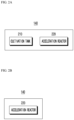
- FIGS. 2A and 2B are block diagrams illustrating the configuration of the apparatus for accelerating sludge granulation according to the embodiment of the present disclosure.
- the apparatus for accelerating sludge granulation 140 includes a cultivation tank 210 and an acceleration reactor 220.
- the cultivation tank 210 preferentially cultures activated sludge in a preset environment.
- the cultivation tank 210 has an anaerobic environment and receives organic matter as a carbon source together with activated sludge to be granulated.
- the introduced carbon source includes methanol, glycerin, glucose, acetate, or the like.
- activated sludge performs biological treatment on the carbon source.
- the activated sludge releases extracellular polymeric substances (EPS).
- EPS extracellular polymeric substances
- the cultivation tank 210 creates an anaerobic environment by injecting a carbon source so that the activated sludge releases extracellular polymeric substances.
- the cultivation tank 210 cultures activated sludge for about 3 to 5 days in a preset environment.
- the activated sludge cultured in the cultivation tank 210 releases extracellular polymeric substances. This is illustrated in FIGS. 5A and 5B .
- FIGS. 5A and 5B are diagrams illustrating a state of the cultivation tank according to the embodiment of the present invention when organic matter is not added into and when it is added into the cultivation tank.
- FIG. 5B it can be seen that, when a preset environment is provided in the cultivation tank and organic matter is introduced thereinto, extracellular polymeric substances are released from the activated sludge.
- the cultivation tank 210 performs stationary culture without separate stirring, or performs stirring at a preset speed or less.
- the cultivation tank 210 cultures activated sludge in a preset environment for about 3 to 5 days, and then delivers the cultured activated sludge to the acceleration reactor 220.
- the activated sludge is stationarily cultured for about 3 to 5 days or is stirred at a preset speed or less in the cultivation tank 210, the settling properties of the activated sludge may be significantly enhanced while going through a process to be described later. The data to support this is illustrated in FIG. 9 .
- FIG. 9 is a graph illustrating the sedimentation of activated sludge cultured in the cultivation tank for a preset period of time and for another period of time according to the embodiment of the present disclosure.
- the experimental group refers to activated sludge cultured for a preset period of time (3 to 5 days).
- FIG. 9 illustrates the sedimentation of activated sludge in the experimental group over time.
- the sludge volume index (SVI) is an index indicative of the settling properties of sludge. The smaller the SVI, the better the settling characteristics of the sludge. It can be seen that the activated sludge (in the experimental group in FIG. 7 ) cultured for a preset period of time has a significant decreased SVI after that period of time (5 days in FIG. 7 ).
- control group refers to activated sludge cultured for more than the preset period of time (5 days).
- FIG. 9 also illustrates the settling properties of activated sludge in the control group over time. It can be seen that the time taken for the control group activated sludge to increase its settling properties was about 4 times longer than that of the experimental group. In addition, it can be seen that the degree of improvement in settling properties of activated sludge (the extent to which the SVI decreases) or the final settling properties of activated sludge in the control group is significantly less than that in the experimental group.
- the acceleration reactor 220 receives activated sludge cultured in the cultivation tank 210 to grow the activated sludge and improve the settling properties thereof.
- the acceleration reactor 220 receives the cultured activated sludge, and then receives sewage to grow and granulate the activated sludge.
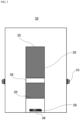
- the structure of the acceleration reactor 220 is illustrated in FIG. 3 .
- FIG. 3 is a diagram illustrating the configuration of the acceleration reactor according to the embodiment of the present disclosure.
- the acceleration reactor 220 includes an outlet 310, a shear force formation part 320, an aeration part 330, and an inlet 340.
- the outlet 310 discharges the supernatant after the reaction is completed within the acceleration reactor 220.
- the outlet 310 is formed at a preset height or more in the reactor 220, which may allow only supernatant to be discharged except the activated sludge that is sedimented and granulated.
- the shear force formation part 320 generates shear force in the activated sludge stirred by the aeration part 330.
- the shear force formation part 320 includes an inlet 329 formed at the bottom thereof for introducing air supplied from the aeration part 330 thereinto, a release port 326 formed at one point thereof, for example, near the center in the height direction thereof for releasing the stirred activated sludge from the inside to the outside thereof, and an outlet 323 formed at the top thereof for discharging the stirred activated sludge to the outside.
- the release port 326 is implemented to be open in all directions at one point of the shear force formation part 320, which may allow the activated sludge released through the release port 326 to be subjected to shear force.
- the activated sludge which is stirred by the aeration part 330, introduced through the inlet 329, and discharged through the outlet 323, is also subjected to shear force during discharge from the outlet 323.
- the aeration part 330 stirs the activated sludge introduced into the reactor 220 to pass through the shear force formation part 320.
- the aeration part 330 stirs activated sludge, which allows the activated sludge to be introduced through the inlet 329 of the shear force formation part 320 and discharged through the release port 326 or the outlet 323.
- the activated sludge is discharged through the release port 326 or the outlet 323 by the aeration part 330 and is subjected to shear force. As the activated sludge from which extracellular polymeric substances are released is subjected to shear force, the granulation of activated sludge may be accelerated.
- Inlet 340 receives the cultured activated sludge from the cultivation tank 210 and the sewage for the growth of activated sludge from the outside into the reactor 220, or it returns settled activated sludge or granules to the outside (bioreactor).
- control unit (not shown) controls the operations of the cultivation tank 210 and the acceleration reactor 220.
- the control unit (not shown) cultures the activated sludge for a preset period of time (3 to 5 days) and then injects it into the acceleration reactor 220.
- the activated sludge is preferentially cultured in the cultivation tank 210 and then grown in the acceleration reactor 220, it can result in the significant increase in settling properties and shortening the time to rise in settling properties compared to other cases.
- FIG. 10 illustrates a difference in sedimentation between the preferential culture followed by the acceleration reaction and the culture during the acceleration reaction.
- FIG. 10 is a graph illustrating the sedimentation of activated sludge when it is grown by the apparatus for accelerating sludge granulation and when it is grown by another process according to the embodiment of the present disclosure.
- the experimental group refers to activated sludge that is preferentially cultured in the cultivation tank 210 and then grown in the acceleration reactor according to the embodiment of the present disclosure.
- FIG. 10 illustrates the settling properties of activated sludge in the experimental group over time. It can be seen from data in the experimental group that the settling properties have improved at a significant rate after progress of growth (decrease in SVI value) and significantly improved after 5 days. In addition, it can be seen that the settling properties have increased by about 90% (based on the SVI value) compared to the first time.
- control group refers to activated sludge that is cultured during the acceleration reaction as the acceleration reaction is preferentially performed.
- FIG. 10 also illustrates the settling properties of activated sludge in the control group over time.
- the control group is identical to the experimental group in that the carbon source is provided during the culture, with the sole exception that the culture proceeds during the acceleration reaction.
- the settling properties is gradually increased after 5 days, but the extent of increase in the settling properties (in the range of about 10 to 20% based on the SVI value) is insignificant.
- the activated sludge when the activated sludge is preferentially cultured in the cultivation tank 210, as described above, the activated sludge may be granulated with high efficiency and in a short time to improve the settling properties thereof as described above.
- control unit operates the acceleration reactor 220 to grow the activated sludge injected into the acceleration reactor 220.
- the control unit controls the reactor 220 to repeat inflow, aerobic, sedimentation, outflow, and rest processes, thereby growing the activated sludge in the reactor 220.
- the control unit causes sewage to flow into the reactor 220 from the outside.
- the control unit may cause the sewage to flow into the reactor 220.
- the control unit may introduce sewage into the reactor 220 within about an hour.
- the control unit controls the progress of aeration in the reactor 220.
- the aeration proceeds as illustrated in FIG. 4A .
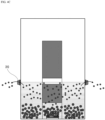
- FIGS. 4A , 4B , and 4C are diagrams illustrating the operation of the acceleration reactor according to the embodiment of the present disclosure.
- the control unit controls the aeration part 330 to stir activated sludge, thereby carrying out the aerobic process in the reactor 220.
- the activated sludge grows while biologically treating contaminants in sewage, and the granulation thereof is accelerated by applying shear force thereto.
- This control unit (not shown) controls aeration to proceed by the aeration part 330 for about 2 to 4 hours.
- control unit may stop the aeration to allow the stirred activated sludge to settle, and after settling, the activated sludge can be granulated through a rest period. This process proceeds as illustrated in FIGS. 4B and 4C .
- the control unit stops the aeration to allow the activated sludge to settle.
- the settling can proceed in about 15 minutes.
- the control unit proceeds with a rest period while discharging supernatant. The rest period may proceed for about 45 minutes.
- the control unit may control the acceleration reactor 220 in this way to be operated in one cycle.
- One cycle takes about 4 to 6 hours, and the control unit (not shown) controls the reactor 220 to perform it repeatedly.
- the apparatus for accelerating sludge granulation 140 grows and granulates the activated sludge, cultured in the cultivation tank 210, in the acceleration reactor 220, the improvement in settling properties can be observed as shown in FIGS. 6A , 6B , and 6C .
- FIGS. 6A , 6B , and 6C illustrates a comparison of the sedimentation of sludge when it is cultured and when it is not cultured in the apparatus for accelerating sludge granulation according to the embodiment of the present disclosure.
- FIG. 6A illustrates a sedimentation state of untreated activated sludge at the initial time, 5 minutes later, and 30 minutes later.
- FIG. 6B illustrates a sedimentation state of the activated sludge cultured in the cultivation tank or aerated only in the acceleration reactor 220 at the initial time, 5 minutes later, and 30 minutes later.
- FIG. 6C illustrates a sedimentation state of the activated sludge that has gone through both the cultivation tank 210 and the acceleration reactor 220 at the initial time, 5 minutes later, and 30 minutes later according to the embodiment of the present disclosure.
- sludge volume index (SVI) in each situation is as follows. Untreated Activated sludge Activated sludge having gone through only cultivation tank Activated sludge having gone through only acceleration reactor SVI 5 Seeding stage 135.9 135.9 135.9 After 5 days 115.4 112.6 111.8 SVI 30 Seeding stage 58.9 58.9 58.9 After 5 days 71.8 73.3 73.1
- the settling properties of the activated sludge that has gone through both the cultivation tank 210 and the acceleration reactor 220 is significantly improved compared to that of untreated activated sludge or activated sludge treated only in either the cultivation tank or the acceleration reactor.
- the SVI in that situation is as follows. Activated sludge having gone through both cultivation tank and acceleration reactor SVI 5 Seeding stage 135.9 After 5 days 48.8 SVI 30 Seeding stage 58.9 After 5 days 30.2
- the control unit continuously operates the acceleration reactor 220 and checks whether the sludge is granulated and grows into granules.
- the control unit continuously operates the acceleration reactor 220, as described with reference to FIGS. 4A to 4C .
- the sludge biologically treats contaminants in sewage and is granulated while growing.
- the control unit (not shown) checks whether the sludge grows into granules.
- the control unit (not shown) checks whether the size and settling properties of the sludge in the sample collected in the reactor 220 satisfies preset criteria.
- the granule may have a size of 0.2 mm or more and a SVI 5 of 60 mL/g or less.
- the control unit (not shown) operates the acceleration reactor 220 until the sludge satisfies the criteria of granules.
- sludge granulation In order to satisfy the criteria, the production of granules (sludge granulation) conventionally takes at least 3 months in the reactor, whereas the apparatus for accelerating sludge granulation 140 may produce granules in about 1 month.
- control unit adjusts information on the granulation of activated sludge in the acceleration reactor depending on the degree to which the activated sludge is granulated or the amount of nutrients in the introduced sewage.
- control unit may cause the activated sludge to be completely formed into granules and then returned to the bioreactor 120, or may cause the activated sludge to be granulated to an appropriate level and then returned to the bioreactor 120.
- FIG. 2B it may include only the acceleration reactor 220 and the control unit (not shown), excluding the cultivation tank 210.
- the acceleration reactor 220 may perform the operation of the cultivation tank 210.
- the acceleration reactor 220 is first injected with sludge and a carbon source, and may create an anaerobic environment.
- the extracellular polymeric substances of microorganisms are released from the acceleration reactor 220 in which an anaerobic environment is created.
- the acceleration reactor 220 creates an anaerobic environment and exposes sludge for 3 to 5 days to release extracellular polymeric substances.
- the acceleration reactor 220 receives sewage from the outside to grow and granulate the sludge as described with reference to FIG. 3 .
- the acceleration reactor 220 is somewhat more complex in operation or treatment, it is possible to reduce the space for the apparatus for accelerating sludge granulation 140 since it is not necessary to ensure the cultivation tank 210.
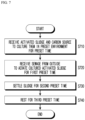
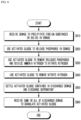
- FIG. 7 is a flowchart illustrating a method of accelerating granulation of activated sludge by the apparatus for accelerating sludge granulation according to the embodiment of the present disclosure.
- the cultivation tank 210 or the acceleration reactor 220 receives activated sludge and a carbon source to culture them in a preset environment for a preset time (S710) .
- the cultivation tank 210 or the acceleration reactor 220 receives activated sludge and a carbon source, and cultures the activated sludge in an anaerobic environment for about 3 to 5 days. Accordingly, extracellular polymeric substances are released from the activated sludge.
- the acceleration reactor 220 receives sewage from the outside to aerate the cultured activated sludge for a first preset time (S720).
- the acceleration reactor 220 receives the cultured activated sludge and receives sewage from the outside for about an hour to grow the activated sludge.
- the acceleration reactor 220 aerates the introduced activated sludge and sewage for the first preset time to apply shear force at the same time as the growth of the activated sludge.
- the acceleration reactor 220 may perform an aeration process for about 2 to 4 hours.
- the acceleration reactor 220 settles the sludge for a second preset time (S730).
- the acceleration reactor 220 is rested for a third preset time (S740).
- the acceleration reactor 220 repeats the processes of S720 to S740 except for the inflow of activated sludge until the activated sludge is granulated and formed into granules.
- FIG. 8 is a flowchart illustrating a method of treating nutrients in sewage by the sewage treatment system according to the embodiment of the present disclosure.
- the sedimentation tank 110 receives sewage and settles impurities or solids in the sewage (S810).
- the bioreactor 120 uses activated sludge to release phosphorus in sewage (S820).
- the bioreactor 120 uses activated sludge to remove the released phosphorus and oxidizes ammonia nitrogen to nitrate nitrogen (S830).
- the bioreactor 120 uses activated sludge to remove nitrate nitrogen through denitrification (S840).
- the secondary sedimentation tank 130 settles the activated sludge contained in the discharged sewage and discharges supernatant (S850).
- the apparatus for accelerating sludge granulation 140 receives some or all of the discharged sewage to granulate activated sludge (S860).
- FIG. 11 is a block diagram illustrating a configuration of a sewage treatment system according to a second embodiment of the present disclosure.
- the sewage treatment system which is designated by reference numeral 1100, according to the second embodiment of the present disclosure includes a flow adjustment tank 1110, an apparatus for accelerating sludge granulation 1120, a sequencing batch reactor (SBR) 1130, a post-treatment tank 1140, a sludge storage tank 1150, and a control unit (not shown).
- SBR sequencing batch reactor
- the sewage treatment system 1100 uses activated sludge or granules to remove contaminants in sewage, for example, nutrients such as nitrogen or phosphorus.
- the sewage treatment system 1100 includes the SBR 1130, instead of the bioreactor 120.
- the flow adjustment tank 1110 stores sewage from the outside, delivers a preset amount of the stored sewage to the SBR 1130 at preset time intervals, and allows microorganisms to discharge phosphorus into sewage.
- the flow adjustment tank 1110 stores sewage introduced from the outside and releases a certain amount of sewage into the SBR 1130 at regular intervals.
- the SBR 1130 has a fixed amount of sewage that is treatable, and takes a certain amount of time to treat a certain amount of sewage, rather than treatment in real time at the same time as inflow. Hence, the produced sewage should not immediately flow into the SBR 1130.
- the sewage that is produced varies from time to time, so that at some times a large amount of sewage is produced, while at other times only a very small amount of sewage is produced.
- the flow adjustment tank 1110 serves as a buffer for the SBR 1130 by receiving and storing all of the sewage produced at front of the SBR 1130, and releases a preset amount of sewage into the SBR 1130 at preset time intervals. Sewage with various composition ratios flows into the flow adjustment tank 1110 from various places such as homes, livestock farms, or industrial sites. For example, the sewage from homes or industrial sites contains relatively low concentrations of nitrogen and organic matter, while the sewage from livestock farms contains higher concentrations of nitrogen and organic matter.
- the SBR 1130 removes nitrogen, phosphorus, and organic matter in the sewage introduced from the flow adjustment tank 1110.
- the SBR 1130 regulates the supply of oxygen under the control of the control unit (not shown) to remove nitrogen in the sewage introduced from the flow adjustment tank 1110.
- the SBR 1130 stirs sewage under aerobic conditions, allowing activated sludge (nitrifying microorganisms) in the sewage to oxidize ammonia nitrogen to nitrate nitrogen.
- the SBR 1130 stirs sewage under anoxic conditions with the supply of air stopped, allowing activated sludge (denitrifying microorganisms) to remove nitrate nitrogen in the sewage.
- the activated sludge (phosphorus-removing microorganisms) releases phosphorus by going through the flow adjustment tank 1110, to thereby have a state in which organic matter may be accumulated in the cell.
- the activated sludge absorbs phosphorus present in sewage to accumulate energy by converting ADP into ATP.
- the activated sludge since the activated sludge accumulates a much larger amount of phosphorus in the aerobic environment of the SBR 1130 than the amount released in the anaerobic environment of the flow adjustment tank, the phosphorus in sewage may be removed as a whole.
- the SBR 1130 goes through stirring and air supply processes under the control of the control unit, and then goes through a precipitation process to precipitate activated sludge accumulating phosphorus.
- the SBR 1130 goes through a precipitation process to discharge the precipitated microorganisms, and discharges supernatant to the post-treatment tank 1140.
- the SBR 1130 may include a sensor therein to observe and record a level of water, dissolved oxygen (DO), a concentration of mixed liquor suspended solids (MLSS), or the like.
- the SBR 1130 senses information on the level of water, the dissolved oxygen, or the concentration of mixed liquor suspended solids to transmit it to the control unit (not shown).
- the control unit may determine the level of water and current state in the SBR 1130 based on the values observed by the sensors in the SBR 1130 and control the operation of the SBR 1130.
- the SBR 1130 may perform the above-mentioned operations and replace the bioreactor 120.
- the post-treatment tank 1140 performs post-treatment on the supernatant discharged from the SBR 1130 or the treated water treated in the apparatus for accelerating sludge granulation 1120.
- the apparatus for accelerating sludge granulation 1120 or the SBR 1130 may not remove all amounts of organic matter present in sewage.
- the post-treatment tank 1140 performs a necessary post-treatment process depending on the state of supernatant, such as a process of removing organic matter contained in the treated water treated in the apparatus for accelerating sludge granulation 1120 or the supernatant discharged from the SBR 1130, or a process of removing ammonia nitrogen or nitrate nitrogen, and then discharges it to the outside.
- the sludge storage tank 1150 stores activated sludge or granules in case the activated sludge or granules may not be transported in time.
- the sewage treatment system 1100 further includes the apparatus for accelerating sludge granulation 1120.
- the apparatus for accelerating sludge granulation 1120 may be implemented in the same space as or in close proximity to the flow adjustment tank 1110, and receives some or all of the sewage introduced into the flow adjustment tank 1110 from the flow adjustment tank 1110 to accelerate the granulation of activated sludge.
- the apparatus for accelerating sludge granulation 1120 may be implemented in the same space as the flow adjustment tank 1110.
- the apparatus for accelerating sludge granulation 1120 is implemented in the same space as the flow adjustment tank 1110, it is possible to increase convenience in management of the apparatus for accelerating sludge granulation since it is maintained and repaired together with the flow adjustment tank 1110.
- the flow adjustment tank 1110 stores the introduced sewage unless it releases the sewage to the SBR 1130.
- the apparatus for accelerating sludge granulation 1120 receives the sewage stored in the flow adjustment tank 1110 from the flow adjustment tank 1110.
- the apparatus for accelerating sludge granulation 1120 may accelerate the granulation of activated sludge by creating a preset environment to induce the release of extracellular polymeric substances (EPS) from the activated sludge (microorganisms) and continuously applying shear force at the same time as the growth of microorganisms.
- EPS extracellular polymeric substances
- the apparatus for accelerating sludge granulation 1120 may return sewage in which activated sludge is granulated back to the flow adjustment tank 1110, allowing the reaction to proceed in the SBR 1130 by the granulated activated sludge or activated sludge granules. Since the reaction proceeds by the granulated activated sludge or activated sludge granules, the sedimentation rate of the activated sludge after the reaction may significantly increase compared to the conventional method. In addition, the apparatus for accelerating sludge granulation 1120 may reduce the time taken to granulate activated sludge to 1/3 or less of the time consumed in the conventional process of activated sludge granulation.
- the apparatus for accelerating sludge granulation 1120 may exchange activated sludge or granules directly with the SBR 1130, in addition to return of sewage in which activated sludge is granulated back to the flow adjustment tank 1110.
- the apparatus for accelerating sludge granulation 1120 may receive the settled activated sludge from the sedimentation process of the SBR 1130 from the SBR 1130, and granulate the activated sludge to provide it back to the SBR 1130.
- the apparatus for accelerating sludge granulation 1120 may release the granulated sludge directly into the SBR 1130 and the treated water directly into the post-treatment tank 1140. Since the apparatus for accelerating sludge granulation 1120 performs the same operation as the apparatus for accelerating sludge granulation 140, a detailed description thereof is omitted.
Landscapes
- Life Sciences & Earth Sciences (AREA)
- Engineering & Computer Science (AREA)
- Chemical & Material Sciences (AREA)
- Environmental & Geological Engineering (AREA)
- Hydrology & Water Resources (AREA)
- Water Supply & Treatment (AREA)
- Organic Chemistry (AREA)
- Microbiology (AREA)
- Biodiversity & Conservation Biology (AREA)
- Health & Medical Sciences (AREA)
- Molecular Biology (AREA)
- Oil, Petroleum & Natural Gas (AREA)
- General Chemical & Material Sciences (AREA)
- Chemical Kinetics & Catalysis (AREA)
- Activated Sludge Processes (AREA)
Applications Claiming Priority (3)
| Application Number | Priority Date | Filing Date | Title |
|---|---|---|---|
| KR1020220020766A KR102515705B1 (ko) | 2022-02-17 | 2022-02-17 | 슬러지의 입상화를 가속하는 장치 및 방법 |
| KR1020220020772A KR102515710B1 (ko) | 2022-02-17 | 2022-02-17 | 슬러지의 입상화를 가속할 수 있는 하수처리 장치 및 방법 |
| PCT/KR2023/001971 WO2023158160A1 (ko) | 2022-02-17 | 2023-02-10 | 슬러지의 입상화를 가속하는 장치 및 방법 |
Publications (2)
| Publication Number | Publication Date |
|---|---|
| EP4455098A1 true EP4455098A1 (de) | 2024-10-30 |
| EP4455098A4 EP4455098A4 (de) | 2025-09-24 |
Family
ID=87578475
Family Applications (1)
| Application Number | Title | Priority Date | Filing Date |
|---|---|---|---|
| EP23756573.4A Pending EP4455098A4 (de) | 2022-02-17 | 2023-02-10 | Vorrichtung und verfahren zur beschleunigung der schlammgranulierung |
Country Status (3)
| Country | Link |
|---|---|
| US (1) | US20240343622A1 (de) |
| EP (1) | EP4455098A4 (de) |
| WO (1) | WO2023158160A1 (de) |
Family Cites Families (10)
| Publication number | Priority date | Publication date | Assignee | Title |
|---|---|---|---|---|
| JP2007136367A (ja) * | 2005-11-18 | 2007-06-07 | Sumitomo Heavy Ind Ltd | 生物学的排水処理装置及び生物学的排水処理方法 |
| JP5261977B2 (ja) * | 2007-05-11 | 2013-08-14 | 栗田工業株式会社 | 嫌気性処理方法および嫌気性処理装置 |
| TWI568687B (zh) * | 2009-06-15 | 2017-02-01 | 沙烏地阿拉伯油品公司 | 包含懸浮系統與多重生物反應器區域的經懸浮介質膜生物反應器系統及方法 |
| KR101272016B1 (ko) * | 2010-11-17 | 2013-06-10 | 안대희 | 생물막 및 호기성 그래뉼 슬러지를 이용한 하·폐수처리 장치 및 방법 |
| RU2666867C2 (ru) * | 2012-09-21 | 2018-09-12 | Ди.Си. УОТЕР ЭНД СЬЮЭР ОТОРИТИ | Способ и устройство для обработки воды с использованием сеток |
| KR101830902B1 (ko) * | 2017-02-23 | 2018-03-30 | 주식회사 부강테크 | 암모늄 산화 박테리아 그래뉼 생성조를 연계한 회분식 부분 아질산화 반응조 및 혐기성 암모늄 산화를 이용한 고농도 질소 오폐수 처리장치 |
| KR20200099388A (ko) * | 2019-02-14 | 2020-08-24 | 주식회사 테크로스환경서비스 | 수처리 장치 및 수처리 방법 |
| KR102384123B1 (ko) * | 2019-07-16 | 2022-04-14 | 지에스건설 주식회사 | 그래뉼 슬러지 가속화반응조와 회수장치를 구비한 하폐수 처리 시설 및 이를 이용한 하폐수 처리 방법 |
| JP7296923B2 (ja) | 2020-08-12 | 2023-06-23 | プライムプラネットエナジー&ソリューションズ株式会社 | 角型電池 |
| KR102582851B1 (ko) | 2020-08-12 | 2023-09-26 | 고려대학교 산학협력단 | 탄산탈수효소 복합체 및 이에 의한 이산화탄소 생물학적 고정화 및 지질 생산 강화 방법 |
-
2023
- 2023-02-10 EP EP23756573.4A patent/EP4455098A4/de active Pending
- 2023-02-10 WO PCT/KR2023/001971 patent/WO2023158160A1/ko not_active Ceased
-
2024
- 2024-06-28 US US18/757,820 patent/US20240343622A1/en active Pending
Also Published As
| Publication number | Publication date |
|---|---|
| EP4455098A4 (de) | 2025-09-24 |
| US20240343622A1 (en) | 2024-10-17 |
| WO2023158160A1 (ko) | 2023-08-24 |
Similar Documents
| Publication | Publication Date | Title |
|---|---|---|
| US5182021A (en) | Biological process for enhanced removal of ammonia, nitrite, nitrate, and phosphate from wastewater | |
| US6485645B1 (en) | Biological process for removing phosphorus involving a membrane filter | |
| AU731280B2 (en) | Process, using ammonia rich water for the selection and enrichment of nitrifying micro-organisms for nitrification of wastewater | |
| CA2247406C (en) | Biodegradable effluent nutrient removal | |
| EP2740713A1 (de) | Verfahren zum Starten und Steuern eines biologischen Verfahrens zur Ammoniakbeseitigung durch Wirkung von autotrophen Bakterien in Abwasser | |
| US20140367330A1 (en) | Wastewater treatment process that utilizes granular sludge to reduce cod concentration in wastewater | |
| JP4224951B2 (ja) | 脱窒方法 | |
| US20070251868A1 (en) | Method and apparatus for nitrogen removal and treatment of digester reject water in wastewater using bioagumenation | |
| NZ282330A (en) | Wastewater treatment, use of sequencing batch reactor with means for supplying feed to the reactor bottom and evenly distributing it throughout settled sludge | |
| KR100459950B1 (ko) | 질산화조가 분리된 변형 연속회분식 하폐수 처리장치 및그 방법 | |
| JP4302341B2 (ja) | 生物学的窒素除去方法及び装置 | |
| JP4915036B2 (ja) | 脱窒方法及び脱窒装置 | |
| JP2003033790A (ja) | 脱窒装置及び脱窒方法 | |
| KR102507805B1 (ko) | 슬러지의 입상화를 가속할 수 있는 가속화 반응조 및 그를 포함하는 sbr 하수처리 장치 | |
| EP4455098A1 (de) | Vorrichtung und verfahren zur beschleunigung der schlammgranulierung | |
| JP2011143365A (ja) | 排水の処理方法及び排水の処理装置 | |
| JP2002172399A (ja) | 脱窒処理方法 | |
| JPH07290088A (ja) | 有機性廃水の生物学的脱窒方法 | |
| KR102515710B1 (ko) | 슬러지의 입상화를 가속할 수 있는 하수처리 장치 및 방법 | |
| KR100673831B1 (ko) | 축산폐수, 침출수와 분뇨와 같은 폐수처리방법 | |
| JP2002172400A (ja) | 汚泥返流水中の窒素除去方法および装置 | |
| KR102515705B1 (ko) | 슬러지의 입상화를 가속하는 장치 및 방법 | |
| JP3858271B2 (ja) | 廃水処理方法及び装置 | |
| KR100416693B1 (ko) | 2단 폭기방식을 이용한 하수의 영양소 제거 방법 및 장치 | |
| JP4596533B2 (ja) | 排水の処理方法 |
Legal Events
| Date | Code | Title | Description |
|---|---|---|---|
| STAA | Information on the status of an ep patent application or granted ep patent |
Free format text: STATUS: THE INTERNATIONAL PUBLICATION HAS BEEN MADE |
|
| PUAI | Public reference made under article 153(3) epc to a published international application that has entered the european phase |
Free format text: ORIGINAL CODE: 0009012 |
|
| STAA | Information on the status of an ep patent application or granted ep patent |
Free format text: STATUS: REQUEST FOR EXAMINATION WAS MADE |
|
| 17P | Request for examination filed |
Effective date: 20240726 |
|
| AK | Designated contracting states |
Kind code of ref document: A1 Designated state(s): AL AT BE BG CH CY CZ DE DK EE ES FI FR GB GR HR HU IE IS IT LI LT LU LV MC ME MK MT NL NO PL PT RO RS SE SI SK SM TR |
|
| DAV | Request for validation of the european patent (deleted) | ||
| DAX | Request for extension of the european patent (deleted) | ||
| A4 | Supplementary search report drawn up and despatched |
Effective date: 20250826 |
|
| RIC1 | Information provided on ipc code assigned before grant |
Ipc: C02F 3/10 20230101AFI20250820BHEP Ipc: C02F 3/00 20230101ALI20250820BHEP Ipc: C02F 3/12 20230101ALI20250820BHEP |