EP4454486A1 - Bleached tobacco residue, production method therefor, reconstituted tobacco material, production method therefor, and tobacco product - Google Patents
Bleached tobacco residue, production method therefor, reconstituted tobacco material, production method therefor, and tobacco product Download PDFInfo
- Publication number
- EP4454486A1 EP4454486A1 EP21968954.4A EP21968954A EP4454486A1 EP 4454486 A1 EP4454486 A1 EP 4454486A1 EP 21968954 A EP21968954 A EP 21968954A EP 4454486 A1 EP4454486 A1 EP 4454486A1
- Authority
- EP
- European Patent Office
- Prior art keywords
- tobacco
- residue
- flavor
- liquid
- extract liquid
- Prior art date
- Legal status (The legal status is an assumption and is not a legal conclusion. Google has not performed a legal analysis and makes no representation as to the accuracy of the status listed.)
- Pending
Links
Images



Classifications
-
- A—HUMAN NECESSITIES
- A24—TOBACCO; CIGARS; CIGARETTES; SIMULATED SMOKING DEVICES; SMOKERS' REQUISITES
- A24B—MANUFACTURE OR PREPARATION OF TOBACCO FOR SMOKING OR CHEWING; TOBACCO; SNUFF
- A24B15/00—Chemical features or treatment of tobacco; Tobacco substitutes, e.g. in liquid form
- A24B15/18—Treatment of tobacco products or tobacco substitutes
- A24B15/24—Treatment of tobacco products or tobacco substitutes by extraction; Tobacco extracts
-
- A—HUMAN NECESSITIES
- A24—TOBACCO; CIGARS; CIGARETTES; SIMULATED SMOKING DEVICES; SMOKERS' REQUISITES
- A24B—MANUFACTURE OR PREPARATION OF TOBACCO FOR SMOKING OR CHEWING; TOBACCO; SNUFF
- A24B13/00—Tobacco for pipes, for cigars, e.g. cigar inserts, or for cigarettes; Chewing tobacco; Snuff
-
- A—HUMAN NECESSITIES
- A24—TOBACCO; CIGARS; CIGARETTES; SIMULATED SMOKING DEVICES; SMOKERS' REQUISITES
- A24B—MANUFACTURE OR PREPARATION OF TOBACCO FOR SMOKING OR CHEWING; TOBACCO; SNUFF
- A24B15/00—Chemical features or treatment of tobacco; Tobacco substitutes, e.g. in liquid form
- A24B15/10—Chemical features of tobacco products or tobacco substitutes
- A24B15/12—Chemical features of tobacco products or tobacco substitutes of reconstituted tobacco
-
- A—HUMAN NECESSITIES
- A24—TOBACCO; CIGARS; CIGARETTES; SIMULATED SMOKING DEVICES; SMOKERS' REQUISITES
- A24B—MANUFACTURE OR PREPARATION OF TOBACCO FOR SMOKING OR CHEWING; TOBACCO; SNUFF
- A24B15/00—Chemical features or treatment of tobacco; Tobacco substitutes, e.g. in liquid form
- A24B15/18—Treatment of tobacco products or tobacco substitutes
- A24B15/24—Treatment of tobacco products or tobacco substitutes by extraction; Tobacco extracts
- A24B15/241—Extraction of specific substances
-
- A—HUMAN NECESSITIES
- A24—TOBACCO; CIGARS; CIGARETTES; SIMULATED SMOKING DEVICES; SMOKERS' REQUISITES
- A24B—MANUFACTURE OR PREPARATION OF TOBACCO FOR SMOKING OR CHEWING; TOBACCO; SNUFF
- A24B15/00—Chemical features or treatment of tobacco; Tobacco substitutes, e.g. in liquid form
- A24B15/18—Treatment of tobacco products or tobacco substitutes
- A24B15/28—Treatment of tobacco products or tobacco substitutes by chemical substances
- A24B15/42—Treatment of tobacco products or tobacco substitutes by chemical substances by organic and inorganic substances
Definitions
- the present invention relates to a bleached tobacco residue and a method for producing the same, a reconstituted tobacco material and a method for producing the same, and a tobacco product.
- a tobacco extract liquid or a tobacco residue obtained by extracting a water-soluble component from a tobacco material such as leaf tobacco is used as a flavor source for tobacco products.
- a reconstituted tobacco material obtained by preparing sheet tobacco from a tobacco residue and adding a tobacco extract liquid to the sheet tobacco is used as a flavor source for tobacco products such as cigarettes, oral tobacco, and flavor inhalers (Patent Literature 1).
- the reconstituted tobacco material may be visually recognized by a user, for example, when a cartridge containing the reconstituted tobacco material is replaced, or a pigment component in the reconstituted tobacco material may ooze out into a wrapping material (such as paper or nonwoven fabric) wrapping the reconstituted tobacco material. Therefore, the color of the reconstituted tobacco material is preferably close to white in view of appearance.
- TSNA tobacco-specific nitrosamines
- NNK 4-(methylnitrosamino)-1-(3-pyridyl)-1-butanone
- NNN N'-nitrosonomicotine
- NAT N'-nitrosoanatabine
- NAB N'-nitrosoanabasine
- the TSNAs contained in mainstream tobacco smoke are generated via three routes (Non-Patent Literature 1 to 3).
- the three routes are a route in which the TSNAs contained in a tobacco filler are transferred directly to the smoke through evaporation, a route in which the TSNAs are synthesized by nitrosating alkaloids contained in a tobacco filler by utilizing the heat generated during combustion, and a route in which NNK bound to a lignin-like polymer component is dissociated by the heat generated during combustion and transferred to the smoke.
- bound NNK NNK bound to a lignin-like polymer component in a tobacco filler
- free NNK NNK free from being bound to a lignin-like polymer component in a tobacco filler
- Patent Literature 1 U.S. Patent No. 4895175
- An object of the present invention is to provide a technique relating to a whitened tobacco residue in which 4-(methylnitrosamino)-1-(3-pyridyl)-1-butanone (hereinafter, also referred to as "NNK”), which is one kind of tobacco-specific nitrosamines, is reduced.
- NNK 4-(methylnitrosamino)-1-(3-pyridyl)-1-butanone
- a method for producing a bleached tobacco residue comprising treating a tobacco residue with an aqueous solution containing peracetic acid, acetic acid, and hydrogen peroxide, thereby bleaching the tobacco residue.
- a bleached tobacco residue obtainable by the above-mentioned method.
- a method for producing a reconstituted tobacco material comprising:
- a tobacco product comprising the above-mentioned reconstituted tobacco material.
- NNK 4-(methylnitrosamino)-1-(3-pyridyl)-1-butanone
- a method for producing a bleached tobacco residue includes treating a tobacco residue with an aqueous solution containing peracetic acid, acetic acid, and hydrogen peroxide, thereby bleaching the tobacco residue.
- a method for producing a bleached tobacco residue further includes, prior to the bleaching treatment, extracting, from a tobacco material, a water-soluble component contained in the tobacco material by using an aqueous solvent, thereby preparing a tobacco residue.
- a method for producing a bleached tobacco residue includes:
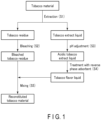
- FIG. 1 also shows "a method for producing a reconstituted tobacco material" in addition to "a method for producing a bleached tobacco residue”.
- a water-soluble component contained in a tobacco material is extracted from the tobacco material by using an aqueous solvent, whereby a tobacco residue is obtained.
- a tobacco extract liquid is also obtained at the same time as the tobacco residue is obtained (see FIG. 1 ).
- cut tobacco which is ready to be incorporated into a tobacco product such as a combustion-type or heating-type flavor inhaler
- a tobacco product such as a combustion-type or heating-type flavor inhaler
- Cut tobacco which is ready to be incorporated into a tobacco product refers to cut tobacco which is ready to be incorporated into a tobacco product through various processes including drying in a farm house, subsequently one to several years of long-term aging in a leaf processing facility, and, subsequently to that, blending and cutting in a manufacturing facility.
- the cut tobacco consists of cut pieces of leaf tobacco.
- the cut tobacco may be any of the following: cut pieces of stemmed leaves, cut pieces of midrib, cut pieces of reconstituted tobacco (i.e., a tobacco material obtained by processing leaf scraps, cut tobacco scraps, midrib scraps, fine powder, etc., generated in the facility processes into a reusable shape), or a mixture thereof.
- a pulverized product obtained by pulverizing the cut tobacco may be used for the extraction in order to increase extraction efficiency.
- cut tobacco As the cut tobacco, cut tobacco derived from any tobacco variety can be used. For example, cut tobacco derived from flue-cured tobacco, burley tobacco, oriental tobacco or the like can be used. As the cut tobacco, cut tobacco derived from a single variety, or a mixture of cut tobacco derived from different varieties may be used.
- aqueous solvent water or an aqueous solution containing ethanol at a concentration of 10% by mass or less can be used.
- the aqueous solvent is generally water, and preferably water having a room temperature (e.g., approximately 20 °C) to a temperature of 70 °C.
- the aqueous solvent can be used, for example, in an amount of 500 to 5000% by mass with respect to the tobacco material.
- the extraction can be performed by, for example, immersing the tobacco material in hot water having a temperature of 40 to 60 °C for 30 to 180 minutes, or shaking the tobacco material (at, e.g., 200 rpm) in hot water having a temperature of 40 to 60 °C for 30 to 180 minutes.
- the extraction may also be performed by repeating the extraction multiple times. Specifically, the extraction may be performed by extracting, from the tobacco material, the water-soluble component contained in the tobacco material by using the aqueous solvent, and then placing the resultant tobacco residue in a new aqueous solvent to perform the second extraction, and as necessary, repeating the extraction using a new aqueous solvent.
- the tobacco extract liquid contains a water-soluble component contained in the tobacco material.
- water-soluble component contained in the tobacco material include components that contribute to tobacco flavor (e.g., organic acids, foliar resins, terpenoids, and polyphenols).
- the tobacco residue can be used for preparing a tobacco filler (hereinafter also referred to as a "reconstituted tobacco material") by mixing the tobacco residue with the finally obtained tobacco flavor liquid and appropriately processing the resultant mixture.
- a tobacco filler hereinafter also referred to as a "reconstituted tobacco material”
- the tobacco residue may be used for preparing a tobacco-molded body such as sheet tobacco from a mixture obtained by mixing the tobacco residue with the finally obtained tobacco flavor liquid.
- the tobacco residue may be used for preparing a tobacco powder by mixing the tobacco residue with the finally obtained tobacco flavor liquid and drying and pulverizing the resultant mixture.
- the tobacco residue obtained in the extraction step (S1) is treated with an aqueous solution containing peracetic acid, acetic acid, and hydrogen peroxide, whereby the tobacco residue is bleached (see FIG. 1 ). Thereby, a bleached tobacco residue is obtained.
- the "bleached tobacco residue” refers to a tobacco residue that has been subjected to bleaching treatment. That is, it suffices that the "bleached tobacco residue” has gone through the bleaching treatment, and it is unnecessary for the "bleached tobacco residue” to turn completely white as a result of the bleaching treatment.
- the bleaching step can be performed by immersing the tobacco residue in the aqueous solution containing peracetic acid, acetic acid, and hydrogen peroxide.
- the amount of peracetic acid consumed by the reaction between the tobacco residue and peracetic acid can be compensated for by peracetic acid generated by the reaction between acetic acid and hydrogen peroxide, whereby peracetic acid can be present in the reaction solution at a concentration equal to or higher than a predetermined concentration. In this case, the efficiency of bleaching the tobacco residue can be improved.
- the concentration of peracetic acid in the aqueous solution is, for example, 0.015 to 10% by mass, and preferably 0.15 to 1.5% by mass.
- the concentration of acetic acid in the aqueous solution is, for example, 0.04 to 4% by mass, and preferably 0.4 to 4% by mass.
- the concentration of hydrogen peroxide in the aqueous solution is, for example, 0.0055 to 0.55% by mass, and preferably 0.055 to 0.55% by mass.
- aqueous solution containing peracetic acid, acetic acid, and hydrogen peroxide a commercially available peracetic acid formulation can be used.
- peracetic acid formulations approved as food additives can be used.
- PERASAN MP2-J KANTO CHEMICAL CO., INC.
- PERASAN MP2-J is composed of 15% by mass of peracetic acid, 40% by mass of acetic add, 5.5% by mass of hydrogen peroxide, and less than 1% by mass of a stabilizer(s), the balance being water.
- the bleaching step can be performed by immersing the tobacco residue in a bleaching liquid under conditions that allow the tobacco residue to be bleached.
- the bleaching step can be performed at a temperature of 22 to 100 °C for 15 to 240 minutes.
- the bleaching step is preferably performed while heating, and is preferably performed at a temperature of, for example, 40 to 100 °C.
- the bleaching step is performed while heating, the effect of bleaching the tobacco residue can be enhanced, and the effect of reducing the amount of bound NNK in the tobacco residue can be enhanced.
- the ratio (solid-liquid ratio) of the mass of the tobacco residue to the mass of the aqueous solution (bleaching liquid) can be, for example, 1:30 to 1: 100.
- the tobacco residue can be efficiently bleached, and the amount of bound NNK in the tobacco residue can be reduced (see Examples 1 and 2 described later).
- the above-described method can produce a tobacco residue that is whitened and has an excellent appearance (i.e., has the color desired by a user when it is incorporated into a tobacco product), and contains a reduced amount of bound NNK.
- the term "whitened” used herein refers to the visual color of the tobacco residue being changed to a lighter color by the bleaching treatment. That is, the term “whitened” includes not only the case where the tobacco residue is completely changed to white visually, but also the case where the tobacco residue is not completely changed to white visually.
- a whitened reconstituted tobacco material can be produced by combining the bleached tobacco residue obtained in the bleaching step (S2) with a decolorized tobacco extract liquid.
- a method for producing a reconstituted tobacco material includes:
- a method for producing a reconstituted tobacco material includes:
- a liquid obtained by extracting a water-soluble component from a tobacco material is referred to as a "tobacco extract liquid”
- a solid obtained during this extraction is referred to as a “tobacco residue”
- a liquid obtained by adjusting the pH of the tobacco extract liquid to 4.1 or less is referred to as an "acidic tobacco extract liquid”
- a liquid obtained by treating the acidic tobacco extract liquid with a reverse phase adsorbent is referred to as a "tobacco flavor liquid”.
- the pH of the tobacco extract liquid obtained in the extraction step (S1) is adjusted to 4.1 or less, whereby an acidic tobacco extract liquid is obtained (see FIG. 1 ).
- the pH of the tobacco extract liquid is adjusted preferably in the range of 1 to 4.1, more preferably in the range of 2 to 3.
- the pH can be adjusted by adding to the tobacco extract liquid a pH adjuster for lowering the pH of the tobacco extract liquid in an amount necessary to reach the desired pH.
- a pH adjuster for example, a weak acid such as phosphoric acid, citric acid, or acetic acid may be used, or a strong acid such as nitric acid, hydrochloric acid, or sulfuric acid may be used.
- the pH is a value measured by a pH-meter using a glass electrode in accordance with the pH-measuring method described in JIS Z 8802:2011, that is, a value obtained by using two electrodes, a glass electrode and a reference electrode, and measuring a potential difference generated between these two electrodes.
- a pH-meter a commercially available pH-meter based on the glass electrode method, such as LAQUA F-72 (HORIBA), can be used.
- the pH measurement can be performed, for example, on a tobacco extract liquid having a temperature of 20 °C. If the pH measurement value has the numbers equal to and below the second decimal point, the numbers equal to and below the second decimal point may be subjected to a round-off operation; the obtained value can be regarded as the pH value.
- the acidic tobacco extract liquid may be prepared so as to contain ethanol at a concentration of 10% by mass or less.
- the acidic tobacco extract liquid may be prepared so as to contain ethanol at a concentration of 1 to 10% by mass. That is, the preparation of the acidic tobacco extract liquid may further include adding ethanol to the tobacco extract liquid obtained in the extraction step (S1) or to the tobacco extract liquid adjusted to a pH of 4.1 or less, such that the final concentration is 10% by mass or less (preferably 1 to 10% by mass).
- the tobacco flavor liquid obtained as a final product can contain larger amounts of tobacco flavor components while exhibiting a colorless or nearly colorless color (see Example 7 described later).
- the acidic tobacco extract liquid is treated with a reverse phase adsorbent to remove a colored component from the acidic tobacco extract liquid.
- a tobacco flavor liquid is thereby obtained (see FIG. 1 ).
- the reverse phase adsorbent used can be any adsorbent used in reverse-phase solid-phase extraction.
- the "reverse-phase solid-phase extraction” refers to a method in which a polar solution or suspension (a mobile phase) is allowed to flow through a nonpolar solid (a stationary phase) and hydrophobic components contained in the mobile phase are adsorbed to the stationary phase to be separated.
- the reverse phase adsorbent examples include an adsorbent in which a hydrophobic group such as an octadecylsilyl group (ODS) is bonded to silica gel carrier particles, and an adsorbent formed of hydrophobic polymer particles such as a styrene-divinylbenzene copolymer.
- the reverse phase adsorbent is commercially available, and examples thereof include InterSep C18 (GL Sciences Inc.) solid-phase extraction cartridge, Oasis HLB (Nihon Waters K.K.) solid-phase extraction cartridge, and synthetic adsorbents such as Diaion HP series (Mitsubishi Chemical Corporation) and Amberlite XAD series (Organo Corporation).
- the reverse phase adsorbent is not limited to these examples, and known adsorbents having the same separation mode as these examples can be used.
- the treatment step (S4) may be performed by passing the acidic tobacco extract liquid through a solid phase formed of a reverse phase adsorbent, or performed by adding the particles of the reverse phase adsorbent to the acidic tobacco extract liquid and then removing the particles of the reverse phase adsorbent from the acidic tobacco extract liquid by filtration or the like.
- the treatment step (S4) can be performed by passing the acidic tobacco extract liquid through a solid phase formed of a reverse phase adsorbent. In a more preferred embodiment, the treatment step (S4) can be performed by passing the acidic tobacco extract liquid through a column filled with a reverse phase adsorbent.
- the "reverse phase adsorbent" may generally be composed of an aggregate of the particles of the reverse phase adsorbent.
- the treatment step (S4) can remove colored components and tobacco-specific nitrosamines (TSNAs) from the tobacco extract liquid without losing the tobacco flavor components contained in the tobacco extract liquid (see Examples 4 to 6 described later). For example, if the acidic tobacco extract liquid is passed through a column filled with a reverse phase adsorbent, the colored components and tobacco-specific nitrosamines (TSNAs) contained in the tobacco extract liquid can be adsorbed to the column, and the tobacco flavor components contained in the tobacco extract liquid can be eluted into an eluate.
- TSNAs tobacco-specific nitrosamines
- the tobacco-specific nitrosamines are nitrosamines specifically present in a tobacco filler such as leaf tobacco and in cigarette smoke, and refer to four components, which are 4-(methylnitrosamino)-1-(3-pyridyl)-1-butanone (NNK), N'-nitrosonomicotine (NNN), N'-nitrosoanatabine (NAT), and N'-nitrosoanabasine (NAB).
- NNK 4-(methylnitrosamino)-1-(3-pyridyl)-1-butanone
- NNN N'-nitrosonomicotine
- NAT N'-nitrosoanatabine
- NAB N'-nitrosoanabasine
- the mixing step (S5) the bleached tobacco residue obtained in the bleaching step (S2) is mixed with the tobacco flavor liquid obtained in the treatment step (S4). A reconstituted tobacco material is thereby obtained (see FIG. 1 ).
- the bleached tobacco residue may be formed into a specific form such as a sheet or granules to prepare a tobacco-molded body such as sheet tobacco or tobacco granules, and the obtained tobacco-molded body may be mixed with the tobacco flavor liquid.
- the tobacco flavor liquid may be concentrated to prepare a concentrate of the tobacco flavor liquid, and the obtained concentrate may be mixed with the tobacco residue or the tobacco-molded body.
- the bleached tobacco residue is mixed with a decolorized tobacco extract liquid (i.e., a tobacco flavor liquid), whereby a reconstituted tobacco material is produced.
- a decolorized tobacco extract liquid i.e., a tobacco flavor liquid
- the bleached tobacco residue may be mixed with the tobacco extract liquid obtained in the extraction step (S1) to produce a reconstituted tobacco material.
- the tobacco residue can be efficiently bleached, and the amount of bound NNK in the tobacco residue can be reduced (see Examples 1 and 2 described later).
- TSNAs tobacco-specific nitrosamines
- a bleached tobacco residue obtainable by the above-described "method for producing a bleached tobacco residue”.
- the bleached tobacco residue is whitened and has an excellent appearance, and contains a reduced amount of bound NNK.
- the bleached tobacco residue if it is incorporated into a tobacco product, it can provide a desirable appearance to a user and also provide a reduced amount of NNK to a user while the tobacco product is used.
- the bleached tobacco residue can provide a reduced amount of NNK to a user, especially if heated in a heating-type flavor inhaler, since bound NNK in the tobacco residue is dissociated by heat, converted to free NNK, and transferred to the smoke, as described in the background section above.
- the bleached tobacco residue has a reduced mass as compared to the tobacco residue before being subjected to the bleaching treatment (see Example 3 below).
- the bleached tobacco residue is incorporated into a tobacco product, a larger amount of tobacco residue can be incorporated into the tobacco product.
- the bleached tobacco residue can be incorporated into a tobacco product such as a flavor inhaler according to a known technique. Examples of the use of the bleached tobacco residue will be described below.
- the bleached tobacco residue is mixed with the tobacco flavor liquid obtained in the treatment step (S4) described above, and the resultant mixture is dried. Then, the resultant dried product can be used as a tobacco flavor source of a tobacco product.
- the bleached tobacco residue is mixed with the tobacco flavor liquid obtained in the treatment step (S4) described above, and a tobacco-molded body such as sheet tobacco or tobacco granules is prepared from the resultant mixture. Then, the tobacco-molded body can be used as a tobacco flavor source of a tobacco product.
- the bleached tobacco residue is mixed with the tobacco flavor liquid obtained in the treatment step (S4) described above, the resultant mixture is dried and pulverized to prepare a tobacco powder, and the tobacco powder is added to a tobacco material (e.g., stemmed leaves or leaf tobacco). Then, the mixture obtained thereby can be used as a tobacco flavor source of a tobacco product.
- a tobacco material e.g., stemmed leaves or leaf tobacco
- the bleached tobacco residue is mixed with the tobacco flavor liquid obtained in the treatment step (S4) described above, the resultant mixture is dried and pulverized to prepare a tobacco powder, the tobacco powder is suspended in water to prepare a tobacco slurry, and the tobacco slurry is added to a tobacco material (e.g., stemmed leaves or leaf tobacco). Then, the mixture obtained thereby can be used as a tobacco flavor source of a tobacco product.
- a tobacco material e.g., stemmed leaves or leaf tobacco
- a reconstituted tobacco material obtainable by the above-described "method for producing a reconstituted tobacco material”.
- the reconstituted tobacco material is whitened and has an excellent appearance, and contains sufficient amounts of tobacco flavor components but contains reduced amounts of tobacco-specific nitrosamines (TSNAs).
- TSNAs tobacco-specific nitrosamines
- the bleached tobacco residue contained in the reconstituted tobacco material has a reduced mass as compared to the tobacco residue before being subjected to the bleaching treatment (see Example 3 below).
- the reconstituted tobacco material is incorporated into a tobacco product, a larger amount of reconstituted tobacco material can be incorporated into the tobacco product.
- the reconstituted tobacco material may be a product obtained by drying a mixture of the bleached tobacco residue obtained in the bleaching step (S2) described above and the tobacco flavor liquid obtained in the treatment step (S4) described above.
- This product can be used as a tobacco flavor source of a tobacco product.
- the reconstituted tobacco material may be a tobacco-molded body obtained by molding a mixture of the bleached tobacco residue obtained in the bleaching step (S2) described above and the tobacco flavor liquid obtained in the treatment step (S4) described above into a specific shape such as a sheet shape or a granular shape.
- the tobacco-molded body can be used as a tobacco flavor source of a tobacco product.
- the reconstituted tobacco material may be a tobacco powder obtained by drying a mixture of the bleached tobacco residue obtained in the bleaching step (S2) described above and the tobacco flavor liquid obtained in the treatment step (S4) described above and then pulverizing the dried mixture into powder form.
- a tobacco material e.g., stemmed leaves or leaf tobacco
- the flavor of the tobacco material can be enhanced.
- the tobacco material with an enhanced flavor can be used as a tobacco flavor source of a tobacco product.
- the reconstituted tobacco material may be a tobacco slurry obtained by drying a mixture of the bleached tobacco residue obtained in the bleaching step (S2) described above and the tobacco flavor liquid obtained in the treatment step (S4) described above, pulverizing the dried mixture into powder form, and suspending the resultant powder in water.
- a tobacco material e.g., stemmed leaves or leaf tobacco
- the flavor of the tobacco material can be enhanced.
- the tobacco material with an enhanced flavor can be used as a tobacco flavor source of a tobacco product.
- the reconstituted tobacco material may contain additives such as a binder, a pH adjuster, a preservative, and an antioxidant, as necessary.
- the "reconstituted tobacco material” described above can be incorporated into any tobacco product. That is, according to another aspect, there is provided a tobacco product which includes the above-described "reconstituted tobacco material". Examples of the tobacco product are a combustion-type flavor inhaler, a heating-type flavor inhaler, a non-heating-type flavor inhaler, and smokeless tobacco.
- combustion-type flavor inhaler is a flavor inhaler that provides a user with a tobacco flavor by burning a tobacco filler (cut tobacco, a tobacco-molded body, or the like).
- tobacco filler cut tobacco, a tobacco-molded body, or the like.
- examples of the combustion-type flavor inhaler include a cigarette, a pipe, a kiseru (i.e., a traditional Japanese pipe for fine cut tobacco), a cigar, and a cigarillo.
- heating-type flavor inhaler is a flavor inhaler that provides a user with a tobacco flavor by heating, not burning, a tobacco filler.
- heating-type flavor inhaler include:
- non-heating-type flavor inhaler is a flavor inhaler that provides a user with a tobacco flavor without burning or heating a tobacco filler.
- An example of the non-heating-type flavor inhaler is a non-heating-type tobacco flavor inhaler that includes an inhaler main body having an air flow passage through which air flows due to inhalation, and tobacco flavor-releasing granules arranged in the air flow passage (see, for example, WO 2012/023515 ).
- “Smokeless tobacco” is a product with which a user tastes the tobacco flavor by introducing the product directly into the nasal cavity or oral cavity.
- the former is called a nasal tobacco product, and the latter is called an oral tobacco product.
- An example of the former is snuff tobacco, and an example of the latter is chewing tobacco.
- the "reconstituted tobacco material" described above can be incorporated into a heating-type flavor inhaler. That is, according to a representative example, there is provided a heating-type flavor inhaler that includes the above-described "reconstituted tobacco material".
- the heating-type flavor inhaler may further include a heater for heating a tobacco filler containing the reconstituted tobacco material.
- the "reconstituted tobacco material" described above can be incorporated into an oral tobacco product. That is, according to a representative example, there is provided an oral tobacco product that includes the above-described "reconstituted tobacco material".
- the oral tobacco product may further include a liquid-permeable wrapping material (e.g., a non-woven pouch) that wraps a tobacco filler containing the reconstituted tobacco material.
- the oral tobacco product may have a teabag shape with a tobacco flavor source wrapped in a non-woven pouch.
- FIG. 2 is a perspective view showing an example of a heat-not-burn-type flavor inhaler.
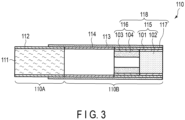
- FIG. 3 is a cross-sectional view of a heat-not-burn-type flavor inhalation article.
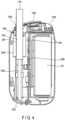
- FIG. 4 is a diagram showing an internal structure of an aerosol-generation device.
- a flavor inhaler 100 includes:
- the flavor inhalation article 110 is a replaceable cartridge and has a columnar shape extending along a single direction.
- the flavor inhalation article 110 is configured to generate aerosol containing a flavor component by being heated while being inserted into the aerosol-generation device 120.
- the flavor inhalation article 110 has a base portion 110A forming one end thereof and including a filler 111 and first cigarette paper 112 wrapped around the filler 111, and a mouthpiece portion 110B forming an end opposite to the base portion 110A.
- the base portion 110A and the mouthpiece portion 110B are connected by second cigarette paper 113.
- the mouthpiece portion 110B has a paper tube portion 114 and a filter 118 adjacent to the paper tube portion 114.
- the filter 118 has a filter plug 115, a hollow plug 116, and forming paper 117 covering and thereby connecting the filter plug 115 and the hollow plug 116.
- the paper tube portion 114 is a paper tube formed by winding paper in a cylindrical shape, and has a hollow inside.
- the hollow plug 116 is arranged adjacent to the paper tube portion 114, and the filter plug 115 is arranged at an end of the mouthpiece portion 110B.
- the filter plug 115 includes a filter material 102 such as acetate tow and a first plug wrap 101 wrapped around the filter material 102.
- the hollow plug 116 includes a filling layer 104 and a second plug wrap 103 wrapped around the filling layer 104.
- the filling layer 104 is formed of densely packed fibers and has one or more channels (hollow parts). Each of the one or more channels extends in a length direction (hereinafter referred to as a "longitudinal direction") of the flavor inhalation article 110.
- a length direction hereinafter referred to as a "longitudinal direction”
- the flavor inhalation article 110 when the decrease in aerosol components through filtration in the filter plug 115 is desired to be diminished, it is effective to shorten the length of the filter plug 115 and replace it with the hollow plug 116 in order to increase a delivery amount of aerosol.
- the filter 118 may be composed of two plugs, as shown in FIG. 3 , or composed of three or more plugs or only one plug.
- the filter 118 may be composed only of the filter plug 115, omitting the hollow plug 116. That is, the filter plug 115 may be arranged adjacent to the paper tube portion 114 to form the mouthpiece portion 110B.
- the mouthpiece portion 110B is composed of two segments, the paper tube portion 114 and the filter 118, the mouthpiece portion 110B may be composed of one segment or three or more segments.
- an opening may be provided in the mouthpiece portion 110B to take in air from the outside so that the draw resistance of the flavor inhalation article 110 can be appropriately adjusted.
- the longitudinal size, that is, the length, of the flavor inhalation article 110 is preferably 40 to 90 mm, more preferably 50 to 75 mm, and still more preferably 50 to 60 mm.
- the length of the perimeter of the flavor inhalation article 110 is preferably 15 to 25 mm, more preferably 17 to 24 mm, and still more preferably 20 to 23 mm.
- the base portion 110A may have a length of 20 mm
- the paper tube portion 114 may have a length of 20 mm
- the hollow plug 116 may have a length of 8 mm
- the filter plug 115 may have a length of 7 mm, and the lengths of these individual segments can be changed as appropriate according to production suitability, required quality, and the like.
- the filler 111 includes the above-described "reconstituted tobacco material” and aerosol source.
- the filler 111 is preferably composed only of the above-described "reconstituted tobacco material” and aerosol source from the viewpoint of the effects of the invention.
- the filler 111 may include a tobacco filler other than the above-described "reconstituted tobacco material", provided that the effects of the invention are exhibited.
- the aerosol source is heated at a predetermined temperature to generate vapor.
- the aerosol source may be, for example, glycerin, propylene glycol, triacetin, 1,3-butanediol, and a mixture thereof.
- the aerosol source can be contained in an amount of, for example, 15 to 19% by mass with respect to the total tobacco filler included in the filler 111.
- the amount of the filler 111 contained in the flavor inhalation article 110 is, for example, 200 to 400 mg, and preferably 250 to 320 mg.
- first cigarette paper 112 and the second cigarette paper 113 the same cigarette paper and tipping paper as those used in a cigarette can be used.
- first plug wrap 101, the second plug wrap 103, and the forming paper 117 the same plug wrap and forming paper as those used in a cigarette can be used.
- the aerosol-generation device 120 includes an insertion hole 130 into which the flavor inhalation article 110 can be inserted. That is, the aerosol-generation device 120 includes an inner tubular member 132 constituting the insertion hole 130.
- the inner tubular member 132 may be formed of a heat conductive material such as aluminum or stainless steel (SUS).
- the aerosol-generation device 120 may include a lid portion 140 that closes the insertion hole 130.
- the lid portion 140 is slidable, and can change its state between a state where the insertion hole 130 is closed and a state where the insertion hole 130 is exposed (see FIG. 2 ).
- the aerosol-generation device 120 may include an air flow path 160 communicating with the insertion hole 130.
- One end of the air flow path 160 is connected to the insertion hole 130, while the other end of the air flow path 160 communicates with the outside (outside air) of the aerosol-generation device 120 at a portion different from the insertion hole 130.
- the aerosol-generation device 120 may include a lid portion 170 that covers an end portion of the air flow path 160 on the side communicating with the outside air.
- the lid portion 170 can keep covered the end of the air flow path 160 on the side communicating with the outside air, or can keep this end exposed.
- the lid portion 170 is in a state of covering the aforementioned end of the air flow path 160, but does not air-tightly close the air flow path 160. That is, the lid portion 170 is in a state of covering the air flow path 160, but is separated from the aforementioned end of the air flow path 160, and is configured to allow the outside air to flow into the air flow path 160 from a gap between the lid portion 170 and the air flow path 160.
- a user holds, in the mouth, one end of the flavor inhalation article 110, specifically, the mouthpiece portion 110B shown in FIG. 3 , and performs an inhalation action.
- the outside air flows into the air flow path 160 through the user's inhalation action.
- the air flowing into the air flow path 160 passes through the flavor inhalation article 110 in the insertion hole 130 and is guided into an oral cavity of the user.
- the aerosol-generation device 120 may include a temperature sensor in the air flow path 160 or on an outer surface of a wall portion constituting the air flow path 160.
- the temperature sensor may be, for example, a thermistor, a thermocouple, or the like.
- the aerosol-generation device 120 includes a battery 10, a control unit 20, and a heater 30.
- the battery 10 stores electric power for use in the aerosol-generation device 120.
- the battery 10 may be a chargeable and dischargeable secondary battery.
- the battery 10 may be, for example, a lithium ion battery.
- the heater 30 may be provided around the inner tubular member 132.
- the space accommodating the heater 30 and the space accommodating the battery 10 may be separated from each other by a partition wall 180. This can prevent the air heated by the heater 30 from flowing into the space accommodating the battery 10. Therefore, an increase in the temperature of the battery 10 can be suppressed.
- the heater 30 preferably has a tubular shape capable of heating the outer periphery of the columnar flavor inhalation article 110.
- the heater 30 may be, for example, a film heater.
- the film heater may include a pair of film-like substrates and a resistance heating element sandwiched between the pair of substrates.
- the film-like substrate is preferably made of a material excellent in heat resistance and electrical insulating properties, and is typically made of polyimide.
- the resistance heating element is preferably made of one or two or more metal materials such as copper, nickel alloy, chromium alloy, stainless steel, and platinum rhodium, and may be formed of, for example, a base material made of stainless steel. Further, in order to connect the resistance heating element to a power source via a flexible printed circuit (FPC), copper plating may be applied to a connection portion and a lead portion thereof.
- FPC flexible printed circuit
- a heat-shrinkable tube is provided outside the heater 30.
- the heat-shrinkable tube is a tube that shrinks in a radial direction through heat, and is made of, for example, a thermoplastic elastomer.
- the heater 30 is pressed against the inner tubular member 132 by the contraction action of the heat-shrinkable tube. This increases the adhesion between the heater 30 and the inner tubular member 132, thereby increasing the conduction of the heat from the heater 30 to the flavor inhalation article 110 via the inner tubular member 132.
- the aerosol-generation device 120 may include a tubular thermal insulator on the outer side of the heater 30 in the radial direction, preferably on the outer side of the heat-shrinkable tube.
- the thermal insulator may serve to prevent the outer surface of the housing of the aerosol-generation device 120 from reaching an excessively high temperature by blocking the heat of the heater 30.
- the thermal insulator may be made of an aerogel such as a silica aerogel, a carbon aerogel, or an alumina aerogel.
- the aerogel as a thermal insulator may typically be a silica aerogel having high thermal insulation performance and relatively low manufacturing costs.
- the thermal insulator may be a fiber-based thermal insulator such as glass wool or rock wool, or a foam-based thermal insulator such as urethane foam or phenolic foam.
- the thermal insulator may be a vacuum thermal insulator.
- An outer tubular member 134 is provided outside the thermal insulator.
- the thermal insulator may be provided between the inner tubular member 132 facing the flavor inhalation article 110 and the outer tubular member 134.
- the outer tubular member 134 may be formed of a heat conductive material such as aluminum or stainless steel (SUS). It is preferable that the thermal insulator be provided in the sealed space.
- the control unit 20 may include a circuit board, a central processing unit (CPU), a memory, and the like.
- the aerosol-generation device 120 may include a notification unit for notifying the user of various kinds of information under the control of the control unit 20.
- the notification unit may be, for example, a light emitting element such as a light emitting diode (LED), a vibration element, or a combination thereof.
- the control unit 20 Upon detecting an activation request from the user, the control unit 20 starts supplying power from the battery 10 to the heater 30.
- the activation request from the user is made by, for example, an operation of a push button or a slide switch by the user, or an inhalation action of the user.
- the activation request from the user may be made by pressing a push button 150. More specifically, the activation request from the user may be made by pressing the push button 150 in a state where the lid portion 140 is opened.
- the activation request from the user may be made by detection of an inhalation action of the user.
- the user's inhalation action can be detected by, for example, such a temperature sensor as described above.
- Example 1 a color analysis of a bleached tobacco residue was performed.
- PERASAN MP2-J is an aqueous solution containing 15% by mass of peracetic acid, 40% by mass of acetic acid, and 5.5% by mass of hydrogen peroxide.
- a bleached tobacco residue was obtained in the same manner as described above, except that hydrogen peroxide solution was used as a bleaching liquid.
- the bleached tobacco residue was subjected to color analysis.
- the color measurement was performed using a colorimeter (CM-5, KONICA MINOLTA, INC.) and analysis software (Spectra Magic DX, KONICA MINOLTA, INC.), and the color was converted into a numerical value by the L*a*b* color system.
- the bleached tobacco residue was freeze-dried, and the resultant tobacco residue was filled into a glass container with a transparent bottom and measured by a reflection method.
- the color difference ( ⁇ E*ab) was calculated by the following calculation formula.
- FIG. 5 shows the results of the example of the present invention
- FIG. 6 shows the results of the comparative example
- the horizontal axis represents the concentration of the bleaching liquid (the concentration of PERASAN MP2-J or the concentration of a hydrogen peroxide solution)
- the vertical axis represents the color difference.
- white circles indicate the results obtained when the reaction temperature was 22 °C
- black circles indicate the results obtained when the reaction temperature was 60 °C.
- a reaction time of 120 minutes was adopted.
- the concentration of the bleaching agents contained in the bleaching liquids in the example of the present invention ( FIG. 5 ) is lower than that in the comparative example ( FIG. 6 ). Comparing the results shown in FIGS. 5 and 6 in consideration of this reveals that a tobacco residue having a higher bleaching efficiency and a color closer to white is obtained when an aqueous solution containing peracetic acid, acetic acid, and hydrogen peroxide is used as a bleaching liquid, as compared with the case where a hydrogen peroxide solution is used.
- the results of FIG. 5 also show that the bleaching efficiency can be increased by using an aqueous solution containing peracetic acid, acetic acid, and hydrogen peroxide as a bleaching liquid and performing the bleaching treatment while heating.
- the reaction temperature of the bleaching is considered to be desirably about 55 °C to 100 °C.
- FIG. 7 shows the result of the example of the present invention.
- the horizontal axis represents the reaction time
- the vertical axis represents the color difference.
- 10% by mass of PERASAN MP2-J was used as a bleaching liquid, and the reaction temperature was 60 °C.
- the result of FIG. 7 shows that a tobacco residue having a color closer to white is obtained when the reaction time is 15 minutes. From this result, it is considered that the reaction time can be set in a range of, for example, 15 minutes to 240 minutes.
- Example 2 the amount of bound NNK in a bleached tobacco residue was analyzed.
- a bleached tobacco residue was prepared according to the method described in Example 1, and the amount of bound NNK in the bleached tobacco residue was analyzed. The analysis was performed by releasing NNK from the bound NNK in the tobacco residue. Specifically, 3 mL of water was added to 30 mg of bleached tobacco residue, and the resultant mixture was heated in a sealed container at 160 °C for 2 hours. After cooling, the liquid portion (containing NNK released from bound NNK) was subjected to LC-MS-MS analysis.
- FIG. 8 shows the results of the example of the present invention
- FIG. 9 shows the results of the example of the present invention and the comparative example.
- the horizontal axis represents the concentration of the bleaching liquid (the concentration of PERASAN MP2-J), and the vertical axis represents the amount of bound NNK in relative values.
- white circles indicate the results obtained when the reaction temperature was 22 °C
- black circles indicate the results obtained when the reaction temperature was 60 °C.
- the horizontal axis represents the concentration of the bleaching agent in the bleaching liquid (the concentration of peracetic acid in PERASAN MP2-J or the concentration of hydrogen peroxide in the hydrogen peroxide solution), and the vertical axis represents the amount of bound NNK in relative values.
- white circles indicate the results of the comparative example
- black circles indicate the results of the example of the present invention.
- a reaction time of 120 minutes was adopted.
- the results of FIG. 8 show that the amount of bound NNK contained in the tobacco residue can be reduced by performing the bleaching treatment on the tobacco residue using an aqueous solution containing peracetic acid, acetic acid, and hydrogen peroxide.
- the results of FIGS. 8 and 9 also show that the effect of reducing the amount of bound NNK is higher when an aqueous solution containing peracetic acid, acetic acid, and hydrogen peroxide is used as a bleaching liquid, as compared with the case where a hydrogen peroxide solution is used, whereby the tobacco residue containing a reduced amount of bound NNK is obtained.
- the results of FIG. 8 also show that the effect of reducing the amount of bound NNK can be enhanced by using an aqueous solution containing peracetic acid, acetic acid, and hydrogen peroxide as a bleaching liquid and performing the bleaching treatment while heating.
- the reaction temperature of the bleaching is considered to be desirably about 55 °C to 100 °C.
- FIG. 10 shows the result of the example of the present invention.
- the horizontal axis represents the reaction time
- the vertical axis represents the amount of bound NNK in relative values.
- 10% by mass of PERASAN MP2-J was used as a bleaching liquid, and the reaction temperature was 60 °C.
- the results of FIG. 10 show that the amount of bound NNK contained in the tobacco residue can be reduced when a bleaching treatment with 10% by mass of PERASAN MP2-J is performed for a period of 15 minutes or more. It is considered that the reaction time can be set in a range of, for example, 15 minutes to 240 minutes.
- FIG. 11 shows the result of the example of the present invention.
- the horizontal axis represents the amount of bleaching liquid relative to the tobacco residue (solid-liquid ratio), and the vertical axis represents the amount of bound NNK in relative values.
- 10% by mass of PERASAN MP2-J was used as a bleaching liquid, and the reaction temperature and the reaction time were respectively 60 °C and 30 minutes.
- FIG. 11 show that a particularly high NNK-reduction effect is achieved when 5 mL or more of bleaching liquid is used relative to 150 mg of tobacco residue, whereby the tobacco residue containing a reduced amount of NNK is obtained. From this result, it is considered to be particularly preferable to use 5 mL or more of bleaching liquid relative to 150 mg of tobacco residue.
- Example 3 the mass of a bleached tobacco residue was measured.
- a bleached tobacco residue was prepared according to the method described in Example 1, and the mass of the bleached tobacco residue was measured.
- FIG. 12 shows the results of the example of the present invention
- FIG. 13 shows the results of the comparative example
- the horizontal axis represents the concentration of the bleaching liquid (the concentration of PERASAN MP2-J or the concentration of a hydrogen peroxide solution)
- the vertical axis represents the ratio of the mass of the bleached tobacco residue to the mass of the tobacco residue before being bleached.
- white circles indicate the results obtained when the reaction temperature was 22 °C
- black circles indicate the results obtained when the reaction temperature was 60 °C.
- a reaction time of 120 minutes was adopted.
- the concentration of the bleaching agents contained in the bleaching liquids in the example of the present invention ( FIG. 12 ) is lower than that in the comparative example ( FIG. 13 ). Comparing the results shown in FIGS. 12 and 13 in consideration of this reveals that the effect of reducing the mass of the tobacco residue is higher and a tobacco residue having a smaller mass is obtained when an aqueous solution containing peracetic acid, acetic acid, and hydrogen peroxide is used as a bleaching liquid, as compared with the case where a hydrogen peroxide solution is used.
- the results of FIG. 12 also show that the effect of reducing the mass of the tobacco residue can be enhanced by using an aqueous solution containing peracetic acid, acetic acid, and hydrogen peroxide as a bleaching liquid and performing the bleaching treatment while heating.
- the reaction temperature of the bleaching is considered to be desirably about 55 °C to 100 °C.
- Example 4 the color of a tobacco flavor liquid was analyzed.
- a burley tobacco material in an amount of 751 g was subjected to extraction using hot water at 60 °C. Then, a phosphoric acid aqueous solution adjusted to have a predetermined pH was added, followed by immersion for 30 minutes while stirring, followed by extraction via shaking for 1 hour. Thereafter, centrifugation (3000 rpm, 5 minutes) was performed, and compression filtration of the supernatant was performed using a 0.45 ⁇ m membrane filter to separate it into a filtrate (tobacco extract liquid) and an extraction residue (tobacco residue).
- a phosphoric acid aqueous solution, a potassium hydroxide aqueous solution, and a sodium sulfate aqueous solution were added to the resultant tobacco extract liquid (0.5 mL) to adjust the pH to various values.
- LAQUA F-72 HORIBA
- the addition of the potassium hydroxide aqueous solution and the sodium sulfate aqueous solution was performed for the analysis of the flavor components (GC-MS analysis) described later.
- Each of the pH-adjusted solutions (acidic tobacco extract liquids) was passed through a reverse-phase solid-phase extraction column (Oasis HLB). A tobacco flavor liquid was thereby obtained.
- the tobacco flavor liquid was diluted 10 times, and the diluted liquid was subjected to absorbance analysis.
- the extract liquids acidic tobacco extract liquids
- the same absorbance analysis As a control, the extract liquids (acidic tobacco extract liquids) before being passed through the column were subjected to the same absorbance analysis.
- FIG. 14 shows the results of the analysis of the tobacco flavor liquid obtained from an acidic tobacco extract liquid having a pH of 2.2.
- Table 1 shows the results of the analysis of the tobacco flavor liquids obtained from acidic tobacco extract liquids having various pH values. In Table 1, an absorbance of about 0.1 or less indicates that the tobacco flavor liquids have a desired degree of colorlessness.
- the results of FIG. 14 show that the acidic tobacco extract liquid is colored, whereas the tobacco flavor liquid is colorless with the colored components removed.
- the results in Table 1 show that the tobacco flavor liquids obtained from the acidic tobacco extract liquids having a pH of 5.6 or less are colorless with the colored components removed.
- Example 5 the flavor components in the tobacco flavor liquid were analyzed.
- a tobacco flavor liquid was prepared according to the method described in Example 4, and the tobacco flavor liquid was subjected to GC-MS analysis.
- the tobacco flavor liquid was prepared from an acidic tobacco extract liquid having a pH of 0.9 to 5.3.
- the amounts of nicotine, myosmine, anabasine, nicotyrine, anatabine, and dipyridyl were analyzed.
- FIG. 15 shows the results of the analysis of nicotine.
- FIG. 15 is a graph showing a relationship between the pH of the acidic tobacco extract liquid and the nicotine content in the tobacco flavor liquid.
- the results of FIG. 15 show that when a tobacco flavor liquid is prepared from an acidic tobacco extract liquid adjusted to a pH of 4.1 or less, nicotine is hardly removed from the acidic tobacco extract liquid by the treatment using a reverse-phase solid-phase extraction column, whereas when a tobacco flavor liquid is prepared from an acidic tobacco extract liquid adjusted to a pH of 5.3, nicotine is easily removed from the acidic tobacco extract liquid by the treatment using a reverse-phase solid-phase extraction column.
- Example 6 tobacco-specific nitrosamines (TSNAs) in a tobacco flavor liquid were analyzed.
- TSNAs tobacco-specific nitrosamines
- a tobacco flavor liquid was prepared according to the method described in Example 4, and the tobacco flavor liquid was subjected to LC-MS-MS analysis.
- the tobacco flavor liquid was prepared from an acidic tobacco extract liquid having a pH of 0.9 to 5.3.
- Table 2 shows the results of the analysis of the TSNA content.
- the TSNA content shown in Table 2 refers to the sum of the content of 4-(methylnitrosamino)-1-(3-pyridyl)-1-butanone (NNK), the content of N'-nitrosonomicotine (NNN), the content of N'-nitrosoanatabine (NAT), and the content of N'-nitrosoanabasine (NAB).
- Table 2 show that TSNA was removed by the treatment using a reverse-phase solid-phase extraction column in all cases where tobacco flavor liquids were prepared from acidic tobacco extract liquids adjusted to a pH of 0.9 to 4.1.
- Examples 4 to 6 show that when a tobacco flavor liquid is prepared from an acidic tobacco extract liquid adjusted to a pH of 4.1 or less by the treatment using a reverse-phase solid-phase extraction column, colored components and tobacco-specific nitrosamines (TSNAs) can be removed from the tobacco extract liquid while maintaining the tobacco flavor components contained in the tobacco extract liquid.
- TSNAs tobacco-specific nitrosamines
- Example 7 the effect of adding ethanol on the preparation of a tobacco flavor liquid was examined.
- An acidic tobacco extract liquid (having a pH of 2.2 or 3.2) was prepared according to the method described in Example 4, and ethanol was added to the acidic tobacco extract liquid such that the ethanol concentration became a predetermined concentration.
- the acidic tobacco extract liquid was then passed through a reverse-phase solid-phase extraction column (Oasis HLB). A tobacco flavor liquid was thereby obtained.
- the tobacco flavor liquid was subjected to GC-MS analysis.
- the tobacco flavor liquids were prepared from acidic tobacco extract liquids containing various concentrations of ethanol.
- the amounts of myosmine, anabasine, anatabine, dipyridyl, benzaldehyde, phenethyl alcohol, and megastigmatrienone were analyzed.
- FIG. 16 shows the results of the analysis of benzaldehyde.
- FIG. 16 is a graph showing a relationship between the ethanol concentration in the acidic tobacco extract liquid and the benzaldehyde content in the tobacco flavor liquid.
- the results of FIG. 16 show that the content of benzaldehyde in the tobacco flavor liquid can be increased by adding ethanol to the acidic tobacco extract liquid and preparing a tobacco flavor liquid using the resultant tobacco extract liquid.
- ethanol is preferably added to the acidic tobacco extract liquid such that a final concentration is 10% by mass or less.
- Example 7 show that when the acidic tobacco extract liquid contains ethanol at a concentration of 10% by mass or less, the tobacco flavor liquid obtained as a final product can contain larger amounts of tobacco flavor components while exhibiting a colorless or nearly colorless color.
- Example 8 the smoking flavor was evaluated using a heat-not-burn-type flavor inhaler containing a reconstituted tobacco material.
- Paper-processed sheet tobacco was prepared as a reconstituted tobacco material.
- the paper-processed sheet tobacco refers to sheet tobacco produced by utilizing a papermaking technique.
- a tobacco material made of 60% by mass of flue-cured tobacco and 40% by mass of burley tobacco was subjected to extraction using hot water at 50 °C for 1 hour.
- the ratio (solid-liquid ratio) of the mass of the tobacco material to the mass of the hot water was 1:20.
- the extract thus obtained was separated into a liquid (tobacco extract liquid) and a solid (tobacco residue), and each of them was collected.
- a bleaching liquid i.e., an aqueous solution containing 1.5% by mass of peracetic acid, 4% by mass of acetic acid, and 0.55% by mass of hydrogen peroxide
- was added to the tobacco residue was treated at 60 °C for 0.5 hours.
- the ratio of the mass of the tobacco residue to the mass of the bleaching liquid was 1:40.
- the bleached tobacco residue thus obtained was washed with water and then made into paper to prepare base sheet tobacco.
- the above-mentioned tobacco extract liquid was poured back onto the base sheet tobacco to prepare paper-processed sheet tobacco.
- the paper-processed sheet tobacco was cut into 0.8 mm widths to prepare cut sheet tobacco (the example of the present invention).
- a control paper-processed sheet tobacco was prepared in the same manner as the above paper-processed sheet tobacco except that the tobacco residue was not bleached.
- the control paper-processed sheet tobacco was also cut into 0.8 mm widths to prepare cut sheet tobacco (control).
- the flavor inhalation article shown in FIG. 3 was prepared using each of the cut sheet tobacco (the example of the present invention) and the cut sheet tobacco (control) as a tobacco filler.
- the cut sheet tobacco was wrapped with wrapping paper to prepare a tobacco rod.
- the tobacco rod had a length of 20 mm and contained 260 mg of cut sheet tobacco.
- a tobacco stick of a commercially available heating-type tobacco product (Ploom X, JAPAN TOBACCO INC.) was cut to take out a filter portion, and the tobacco rod was connected thereto to prepare a flavor inhalation article.
- a heating device of a commercially available heating-type tobacco product (Ploom X, JAPAN TOBACCO INC.) was used as an aerosol-generation device to heat the flavor inhalation article, and the smoking flavor was evaluated by a panel of two experts.
Landscapes
- Chemical & Material Sciences (AREA)
- Chemical Kinetics & Catalysis (AREA)
- General Chemical & Material Sciences (AREA)
- Health & Medical Sciences (AREA)
- General Health & Medical Sciences (AREA)
- Toxicology (AREA)
- Manufacture Of Tobacco Products (AREA)
Abstract
Description
- The present invention relates to a bleached tobacco residue and a method for producing the same, a reconstituted tobacco material and a method for producing the same, and a tobacco product.
- It has been reported that a tobacco extract liquid or a tobacco residue obtained by extracting a water-soluble component from a tobacco material such as leaf tobacco is used as a flavor source for tobacco products. For example, it has been reported that a reconstituted tobacco material obtained by preparing sheet tobacco from a tobacco residue and adding a tobacco extract liquid to the sheet tobacco is used as a flavor source for tobacco products such as cigarettes, oral tobacco, and flavor inhalers (Patent Literature 1).
- If the reconstituted tobacco material is used as a flavor source for tobacco products, the reconstituted tobacco material may be visually recognized by a user, for example, when a cartridge containing the reconstituted tobacco material is replaced, or a pigment component in the reconstituted tobacco material may ooze out into a wrapping material (such as paper or nonwoven fabric) wrapping the reconstituted tobacco material. Therefore, the color of the reconstituted tobacco material is preferably close to white in view of appearance.
- On the other hand, it is known that tobacco-specific nitrosamines (TSNAs) are contained in the mainstream tobacco smoke of cigarettes and the tobacco vapor of heating-type flavor inhalers. TSNA refers to four components: 4-(methylnitrosamino)-1-(3-pyridyl)-1-butanone (NNK), N'-nitrosonomicotine (NNN), N'-nitrosoanatabine (NAT), and N'-nitrosoanabasine (NAB).
- It has been reported that the TSNAs contained in mainstream tobacco smoke are generated via three routes (Non-Patent Literature 1 to 3). Specifically, the three routes are a route in which the TSNAs contained in a tobacco filler are transferred directly to the smoke through evaporation, a route in which the TSNAs are synthesized by nitrosating alkaloids contained in a tobacco filler by utilizing the heat generated during combustion, and a route in which NNK bound to a lignin-like polymer component is dissociated by the heat generated during combustion and transferred to the smoke. NNK bound to a lignin-like polymer component in a tobacco filler is referred to as "bound NNK", and NNK free from being bound to a lignin-like polymer component in a tobacco filler is referred to as "free NNK".
- Patent Literature 1:
U.S. Patent No. 4895175 -
- [Non-Patent Literature 1] Hoffmann D. et al., "Origin in tobacco smoke of N'-nitrosonomicotine, a tobacco-specific carcinogen: Brief Communication", J. Natl. Cancer Inst., Vol. 58(6), pp. 1841-1844, 1977
- [Non-Patent Literature 2] Adams J. D. et al., "On the formation of the tobacco-specific carcinogen 4-(methylnitrosamino)-1-(3-pyridyl)-1-butanone during smoking", Cancer Lett., Vol. 17(3), pp. 339-346, 1983
- [Non-Patent Literature 3] Lipowicz P. J. and Seeman J. I., "A model to estimate the sources of tobacco-specific nitrosamines in cigarette smoke", Chem. Res. Toxicol., Vol. 30(8), pp. 1556-1561, 2017
- An object of the present invention is to provide a technique relating to a whitened tobacco residue in which 4-(methylnitrosamino)-1-(3-pyridyl)-1-butanone (hereinafter, also referred to as "NNK"), which is one kind of tobacco-specific nitrosamines, is reduced.
- According to one aspect, there is provided a method for producing a bleached tobacco residue, the method comprising treating a tobacco residue with an aqueous solution containing peracetic acid, acetic acid, and hydrogen peroxide, thereby bleaching the tobacco residue.
- According to another aspect, there is provided a bleached tobacco residue obtainable by the above-mentioned method.
- According to further another aspect, there is provided a method for producing a reconstituted tobacco material, the method comprising:
- extracting, from a tobacco material, a water-soluble component contained in the tobacco material by using an aqueous solvent, thereby obtaining a tobacco extract liquid and a tobacco residue;
- treating the tobacco residue with an aqueous solution containing peracetic acid, acetic acid, and hydrogen peroxide, thereby obtaining a bleached tobacco residue;
- adjusting a pH of the tobacco extract liquid to 4.1 or less, thereby obtaining an acidic tobacco extract liquid;
- treating the acidic tobacco extract liquid with a reverse phase adsorbent to remove a colored component from the acidic tobacco extract liquid, thereby obtaining a tobacco flavor liquid; and
- mixing the bleached tobacco residue with the tobacco flavor liquid.
- According to further another aspect, there is provided a reconstituted tobacco material obtainable by the above-mentioned method.
- According to further another aspect, there is provided a tobacco product comprising the above-mentioned reconstituted tobacco material.
- According to the present invention, there is provided a technique relating to a whitened tobacco residue in which 4-(methylnitrosamino)-1-(3-pyridyl)-1-butanone (NNK), which is one of the tobacco-specific nitrosamines, is reduced.
-
-
FIG. 1 is a flowchart showing an example of a method for producing a bleached tobacco residue and a reconstituted tobacco material. -
FIG. 2 is a perspective view showing an example of a heat-not-burn-type flavor inhaler. -
FIG. 3 is a cross-sectional view of a heat-not-burn-type flavor inhalation article. -
FIG. 4 is a diagram showing an internal structure of an aerosol-generation device. -
FIG. 5 is a graph showing a relationship between a concentration of a bleaching liquid and a color of a tobacco residue. -
FIG. 6 is a graph showing a relationship between a concentration of a bleaching liquid and a color of a tobacco residue. -
FIG. 7 is a graph showing a relationship between a reaction time and a color of a tobacco residue. -
FIG. 8 is a graph showing a relationship between a concentration of a bleaching liquid and an amount of bound NNK. -
FIG. 9 is a graph showing a relationship between a concentration of a bleaching agent in a bleaching liquid and an amount of bound NNK. -
FIG. 10 is a graph showing a relationship between a reaction time and an amount of bound NNK. -
FIG. 11 is a graph showing a relationship between an amount of bleaching liquid with respect to a tobacco residue and an amount of bound NNK. -
FIG. 12 is a graph showing a relationship between a concentration of a bleaching liquid and a mass ratio of a tobacco residue. -
FIG. 13 is a graph showing a relationship between a concentration of a bleaching liquid and a mass ratio of a tobacco residue. -
FIG. 14 is a graph showing a result of color analysis of a tobacco flavor liquid. -
FIG. 15 is a graph showing a relationship between a pH of an acidic tobacco extract liquid and a nicotine content in a tobacco flavor liquid. -
FIG. 16 is a graph showing a relationship between an ethanol concentration in an acidic tobacco extract liquid and a benzaldehyde content in a tobacco flavor liquid. - Hereinafter, the present invention will be described in detail; however, the description below is intended to provide a description of the present invention, and not intended to limit the present invention.
- According to an embodiment, a method for producing a bleached tobacco residue includes treating a tobacco residue with an aqueous solution containing peracetic acid, acetic acid, and hydrogen peroxide, thereby bleaching the tobacco residue. According to a preferred embodiment, a method for producing a bleached tobacco residue further includes, prior to the bleaching treatment, extracting, from a tobacco material, a water-soluble component contained in the tobacco material by using an aqueous solvent, thereby preparing a tobacco residue.
- That is, according to a preferred embodiment, a method for producing a bleached tobacco residue includes:
- (S1) extracting, from a tobacco material, a water-soluble component contained in the tobacco material by using an aqueous solvent, thereby obtaining a tobacco residue; and
- (S2) treating the tobacco residue with an aqueous solution containing peracetic acid, acetic acid, and hydrogen peroxide, thereby bleaching the tobacco residue.
- The method according to the preferred embodiment is shown in
FIG. 1. FIG. 1 also shows "a method for producing a reconstituted tobacco material" in addition to "a method for producing a bleached tobacco residue". - Hereinafter, the method according to the preferred embodiment will be described in the order of "an extraction step (S1)" and "a bleaching step (S2)".
- In the extraction step (S1), a water-soluble component contained in a tobacco material is extracted from the tobacco material by using an aqueous solvent, whereby a tobacco residue is obtained. In the extraction step (S1), a tobacco extract liquid is also obtained at the same time as the tobacco residue is obtained (see
FIG. 1 ). - As the tobacco material, cut tobacco which is ready to be incorporated into a tobacco product, such as a combustion-type or heating-type flavor inhaler, can be used. Cut tobacco which is ready to be incorporated into a tobacco product" refers to cut tobacco which is ready to be incorporated into a tobacco product through various processes including drying in a farm house, subsequently one to several years of long-term aging in a leaf processing facility, and, subsequently to that, blending and cutting in a manufacturing facility.
- The cut tobacco consists of cut pieces of leaf tobacco. The cut tobacco may be any of the following: cut pieces of stemmed leaves, cut pieces of midrib, cut pieces of reconstituted tobacco (i.e., a tobacco material obtained by processing leaf scraps, cut tobacco scraps, midrib scraps, fine powder, etc., generated in the facility processes into a reusable shape), or a mixture thereof. A pulverized product obtained by pulverizing the cut tobacco may be used for the extraction in order to increase extraction efficiency.
- As the cut tobacco, cut tobacco derived from any tobacco variety can be used. For example, cut tobacco derived from flue-cured tobacco, burley tobacco, oriental tobacco or the like can be used. As the cut tobacco, cut tobacco derived from a single variety, or a mixture of cut tobacco derived from different varieties may be used.
- As the aqueous solvent, water or an aqueous solution containing ethanol at a concentration of 10% by mass or less can be used. The aqueous solvent is generally water, and preferably water having a room temperature (e.g., approximately 20 °C) to a temperature of 70 °C. The aqueous solvent can be used, for example, in an amount of 500 to 5000% by mass with respect to the tobacco material.
- The extraction can be performed by, for example, immersing the tobacco material in hot water having a temperature of 40 to 60 °C for 30 to 180 minutes, or shaking the tobacco material (at, e.g., 200 rpm) in hot water having a temperature of 40 to 60 °C for 30 to 180 minutes.
- The extraction may also be performed by repeating the extraction multiple times. Specifically, the extraction may be performed by extracting, from the tobacco material, the water-soluble component contained in the tobacco material by using the aqueous solvent, and then placing the resultant tobacco residue in a new aqueous solvent to perform the second extraction, and as necessary, repeating the extraction using a new aqueous solvent.
- A mixture of the tobacco residue and the tobacco extract liquid is obtained by the extraction. The tobacco extract liquid contains a water-soluble component contained in the tobacco material. Examples of the "water-soluble component contained in the tobacco material" include components that contribute to tobacco flavor (e.g., organic acids, foliar resins, terpenoids, and polyphenols).
- After the extraction, the tobacco residue and the tobacco extract liquid are separated, and the tobacco extract liquid is used as a raw material for obtaining a tobacco flavor liquid. On the other hand, the tobacco residue can be used for preparing a tobacco filler (hereinafter also referred to as a "reconstituted tobacco material") by mixing the tobacco residue with the finally obtained tobacco flavor liquid and appropriately processing the resultant mixture. For example, the tobacco residue may be used for preparing a tobacco-molded body such as sheet tobacco from a mixture obtained by mixing the tobacco residue with the finally obtained tobacco flavor liquid. Alternatively, the tobacco residue may be used for preparing a tobacco powder by mixing the tobacco residue with the finally obtained tobacco flavor liquid and drying and pulverizing the resultant mixture.
- In the bleaching step (S2), the tobacco residue obtained in the extraction step (S1) is treated with an aqueous solution containing peracetic acid, acetic acid, and hydrogen peroxide, whereby the tobacco residue is bleached (see
FIG. 1 ). Thereby, a bleached tobacco residue is obtained. As used herein, the "bleached tobacco residue" refers to a tobacco residue that has been subjected to bleaching treatment. That is, it suffices that the "bleached tobacco residue" has gone through the bleaching treatment, and it is unnecessary for the "bleached tobacco residue" to turn completely white as a result of the bleaching treatment. - The bleaching step can be performed by immersing the tobacco residue in the aqueous solution containing peracetic acid, acetic acid, and hydrogen peroxide.
- When the aqueous solution containing peracetic acid, acetic acid, and hydrogen peroxide is used as a bleaching liquid, the amount of peracetic acid consumed by the reaction between the tobacco residue and peracetic acid can be compensated for by peracetic acid generated by the reaction between acetic acid and hydrogen peroxide, whereby peracetic acid can be present in the reaction solution at a concentration equal to or higher than a predetermined concentration. In this case, the efficiency of bleaching the tobacco residue can be improved.
- The concentration of peracetic acid in the aqueous solution is, for example, 0.015 to 10% by mass, and preferably 0.15 to 1.5% by mass. The concentration of acetic acid in the aqueous solution is, for example, 0.04 to 4% by mass, and preferably 0.4 to 4% by mass. The concentration of hydrogen peroxide in the aqueous solution is, for example, 0.0055 to 0.55% by mass, and preferably 0.055 to 0.55% by mass.
- As the aqueous solution containing peracetic acid, acetic acid, and hydrogen peroxide, a commercially available peracetic acid formulation can be used. Preferably, peracetic acid formulations approved as food additives can be used. For example, PERASAN MP2-J (KANTO CHEMICAL CO., INC.) can be used. PERASAN MP2-J is composed of 15% by mass of peracetic acid, 40% by mass of acetic add, 5.5% by mass of hydrogen peroxide, and less than 1% by mass of a stabilizer(s), the balance being water.
- The bleaching step can be performed by immersing the tobacco residue in a bleaching liquid under conditions that allow the tobacco residue to be bleached. For example, the bleaching step can be performed at a temperature of 22 to 100 °C for 15 to 240 minutes. The bleaching step is preferably performed while heating, and is preferably performed at a temperature of, for example, 40 to 100 °C. When the bleaching step is performed while heating, the effect of bleaching the tobacco residue can be enhanced, and the effect of reducing the amount of bound NNK in the tobacco residue can be enhanced.
- In the bleaching step, the ratio (solid-liquid ratio) of the mass of the tobacco residue to the mass of the aqueous solution (bleaching liquid) can be, for example, 1:30 to 1: 100.
- According to the above-described method, the tobacco residue can be efficiently bleached, and the amount of bound NNK in the tobacco residue can be reduced (see Examples 1 and 2 described later). Thus, the above-described method can produce a tobacco residue that is whitened and has an excellent appearance (i.e., has the color desired by a user when it is incorporated into a tobacco product), and contains a reduced amount of bound NNK. The term "whitened" used herein refers to the visual color of the tobacco residue being changed to a lighter color by the bleaching treatment. That is, the term "whitened" includes not only the case where the tobacco residue is completely changed to white visually, but also the case where the tobacco residue is not completely changed to white visually.
- A whitened reconstituted tobacco material can be produced by combining the bleached tobacco residue obtained in the bleaching step (S2) with a decolorized tobacco extract liquid.
- According to an embodiment, a method for producing a reconstituted tobacco material includes:
- adjusting a pH of the tobacco extract liquid obtained in the extraction step (S1) to 4.1 or less, thereby obtaining an acidic tobacco extract liquid;
- treating the acidic tobacco extract liquid with a reverse phase adsorbent to remove a colored component from the acidic tobacco extract liquid, thereby obtaining a tobacco flavor liquid (i.e., a decolorized tobacco extract liquid); and
- mixing the bleached tobacco residue obtained in the bleaching step (S2) with the tobacco flavor liquid (See
FIG. 1 ). - That is, according to an embodiment, a method for producing a reconstituted tobacco material includes:
- (S1) extracting, from a tobacco material, a water-soluble component contained in the tobacco material by using an aqueous solvent, thereby obtaining a tobacco extract liquid and a tobacco residue;
- (S2) treating the tobacco residue with an aqueous solution containing peracetic acid, acetic acid, and hydrogen peroxide, thereby obtaining a bleached tobacco residue;
- (S3) adjusting a pH of the tobacco extract liquid to 4.1 or less, thereby obtaining an acidic tobacco extract liquid;
- (S4) treating the acidic tobacco extract liquid with a reverse phase adsorbent to remove a colored component from the acidic tobacco extract liquid, thereby obtaining a tobacco flavor liquid (i.e., a decolorized tobacco extract liquid); and
- (S5) mixing the bleached tobacco residue with the tobacco flavor liquid (See
FIG. 1 ). - In the present disclosure, a liquid obtained by extracting a water-soluble component from a tobacco material is referred to as a "tobacco extract liquid", a solid obtained during this extraction is referred to as a "tobacco residue", a liquid obtained by adjusting the pH of the tobacco extract liquid to 4.1 or less is referred to as an "acidic tobacco extract liquid", and a liquid obtained by treating the acidic tobacco extract liquid with a reverse phase adsorbent is referred to as a "tobacco flavor liquid".
- Hereinafter, the method according to this embodiment will be described in the order of steps (S1) to (S5).
- The "extraction step (S1)" and the "bleaching Step (S2)" can be performed as explained in <1. Method for Producing Tobacco Residue>.
- In the pH-adjusting step (S3), the pH of the tobacco extract liquid obtained in the extraction step (S1) is adjusted to 4.1 or less, whereby an acidic tobacco extract liquid is obtained (see
FIG. 1 ). - In the pH-adjusting step (S3), the pH of the tobacco extract liquid is adjusted preferably in the range of 1 to 4.1, more preferably in the range of 2 to 3. The pH can be adjusted by adding to the tobacco extract liquid a pH adjuster for lowering the pH of the tobacco extract liquid in an amount necessary to reach the desired pH. As the pH adjuster, for example, a weak acid such as phosphoric acid, citric acid, or acetic acid may be used, or a strong acid such as nitric acid, hydrochloric acid, or sulfuric acid may be used.
- In the present disclosure, the pH is a value measured by a pH-meter using a glass electrode in accordance with the pH-measuring method described in JIS Z 8802:2011, that is, a value obtained by using two electrodes, a glass electrode and a reference electrode, and measuring a potential difference generated between these two electrodes. As a pH-meter, a commercially available pH-meter based on the glass electrode method, such as LAQUA F-72 (HORIBA), can be used. The pH measurement can be performed, for example, on a tobacco extract liquid having a temperature of 20 °C. If the pH measurement value has the numbers equal to and below the second decimal point, the numbers equal to and below the second decimal point may be subjected to a round-off operation; the obtained value can be regarded as the pH value.
- The acidic tobacco extract liquid may be prepared so as to contain ethanol at a concentration of 10% by mass or less. Preferably, the acidic tobacco extract liquid may be prepared so as to contain ethanol at a concentration of 1 to 10% by mass. That is, the preparation of the acidic tobacco extract liquid may further include adding ethanol to the tobacco extract liquid obtained in the extraction step (S1) or to the tobacco extract liquid adjusted to a pH of 4.1 or less, such that the final concentration is 10% by mass or less (preferably 1 to 10% by mass).
- When the acidic tobacco extract liquid contains ethanol at a concentration of 10% by mass or less, the tobacco flavor liquid obtained as a final product can contain larger amounts of tobacco flavor components while exhibiting a colorless or nearly colorless color (see Example 7 described later).
- In the treatment step (S4), the acidic tobacco extract liquid is treated with a reverse phase adsorbent to remove a colored component from the acidic tobacco extract liquid. A tobacco flavor liquid is thereby obtained (see
FIG. 1 ). - The reverse phase adsorbent used can be any adsorbent used in reverse-phase solid-phase extraction. The "reverse-phase solid-phase extraction" refers to a method in which a polar solution or suspension (a mobile phase) is allowed to flow through a nonpolar solid (a stationary phase) and hydrophobic components contained in the mobile phase are adsorbed to the stationary phase to be separated.
- Examples of the reverse phase adsorbent include an adsorbent in which a hydrophobic group such as an octadecylsilyl group (ODS) is bonded to silica gel carrier particles, and an adsorbent formed of hydrophobic polymer particles such as a styrene-divinylbenzene copolymer. The reverse phase adsorbent is commercially available, and examples thereof include InterSep C18 (GL Sciences Inc.) solid-phase extraction cartridge, Oasis HLB (Nihon Waters K.K.) solid-phase extraction cartridge, and synthetic adsorbents such as Diaion HP series (Mitsubishi Chemical Corporation) and Amberlite XAD series (Organo Corporation). The reverse phase adsorbent is not limited to these examples, and known adsorbents having the same separation mode as these examples can be used.
- The treatment step (S4) may be performed by passing the acidic tobacco extract liquid through a solid phase formed of a reverse phase adsorbent, or performed by adding the particles of the reverse phase adsorbent to the acidic tobacco extract liquid and then removing the particles of the reverse phase adsorbent from the acidic tobacco extract liquid by filtration or the like.
- In a preferred embodiment, the treatment step (S4) can be performed by passing the acidic tobacco extract liquid through a solid phase formed of a reverse phase adsorbent. In a more preferred embodiment, the treatment step (S4) can be performed by passing the acidic tobacco extract liquid through a column filled with a reverse phase adsorbent. The "reverse phase adsorbent" may generally be composed of an aggregate of the particles of the reverse phase adsorbent.
- The treatment step (S4) can remove colored components and tobacco-specific nitrosamines (TSNAs) from the tobacco extract liquid without losing the tobacco flavor components contained in the tobacco extract liquid (see Examples 4 to 6 described later). For example, if the acidic tobacco extract liquid is passed through a column filled with a reverse phase adsorbent, the colored components and tobacco-specific nitrosamines (TSNAs) contained in the tobacco extract liquid can be adsorbed to the column, and the tobacco flavor components contained in the tobacco extract liquid can be eluted into an eluate.
- The tobacco-specific nitrosamines (TSNAs) are nitrosamines specifically present in a tobacco filler such as leaf tobacco and in cigarette smoke, and refer to four components, which are 4-(methylnitrosamino)-1-(3-pyridyl)-1-butanone (NNK), N'-nitrosonomicotine (NNN), N'-nitrosoanatabine (NAT), and N'-nitrosoanabasine (NAB).
- In the mixing step (S5), the bleached tobacco residue obtained in the bleaching step (S2) is mixed with the tobacco flavor liquid obtained in the treatment step (S4). A reconstituted tobacco material is thereby obtained (see
FIG. 1 ). - The bleached tobacco residue may be formed into a specific form such as a sheet or granules to prepare a tobacco-molded body such as sheet tobacco or tobacco granules, and the obtained tobacco-molded body may be mixed with the tobacco flavor liquid. The tobacco flavor liquid may be concentrated to prepare a concentrate of the tobacco flavor liquid, and the obtained concentrate may be mixed with the tobacco residue or the tobacco-molded body.
- In the embodiment described above, the bleached tobacco residue is mixed with a decolorized tobacco extract liquid (i.e., a tobacco flavor liquid), whereby a reconstituted tobacco material is produced. The invention disclosed herein is not limited to this embodiment, and the bleached tobacco residue may be mixed with the tobacco extract liquid obtained in the extraction step (S1) to produce a reconstituted tobacco material.
- According to the above-described method, the tobacco residue can be efficiently bleached, and the amount of bound NNK in the tobacco residue can be reduced (see Examples 1 and 2 described later). In addition, according to the method described above, it is possible to remove colored components and tobacco-specific nitrosamines (TSNAs) from the tobacco extract liquid while maintaining the tobacco flavor components contained in the tobacco extract liquid (see Examples 4 to 6 described later). Thus, if a reconstituted tobacco material is produced according to the above-described method, the reconstituted tobacco material produced is whitened and has an excellent appearance (i.e., has the color desired by a user when incorporated into a tobacco product), and contains sufficient amounts of tobacco flavor components but contains reduced amounts of tobacco-specific nitrosamines (TSNAs).
- According to another aspect, there is provided a bleached tobacco residue obtainable by the above-described "method for producing a bleached tobacco residue".
- As described above, the bleached tobacco residue is whitened and has an excellent appearance, and contains a reduced amount of bound NNK. Thus, if the bleached tobacco residue is incorporated into a tobacco product, it can provide a desirable appearance to a user and also provide a reduced amount of NNK to a user while the tobacco product is used. The bleached tobacco residue can provide a reduced amount of NNK to a user, especially if heated in a heating-type flavor inhaler, since bound NNK in the tobacco residue is dissociated by heat, converted to free NNK, and transferred to the smoke, as described in the background section above.
- In addition, the bleached tobacco residue has a reduced mass as compared to the tobacco residue before being subjected to the bleaching treatment (see Example 3 below). Thus, if the bleached tobacco residue is incorporated into a tobacco product, a larger amount of tobacco residue can be incorporated into the tobacco product.
- The bleached tobacco residue can be incorporated into a tobacco product such as a flavor inhaler according to a known technique. Examples of the use of the bleached tobacco residue will be described below.
- For example, the bleached tobacco residue is mixed with the tobacco flavor liquid obtained in the treatment step (S4) described above, and the resultant mixture is dried. Then, the resultant dried product can be used as a tobacco flavor source of a tobacco product.
- Alternatively, the bleached tobacco residue is mixed with the tobacco flavor liquid obtained in the treatment step (S4) described above, and a tobacco-molded body such as sheet tobacco or tobacco granules is prepared from the resultant mixture. Then, the tobacco-molded body can be used as a tobacco flavor source of a tobacco product.
- Alternatively, the bleached tobacco residue is mixed with the tobacco flavor liquid obtained in the treatment step (S4) described above, the resultant mixture is dried and pulverized to prepare a tobacco powder, and the tobacco powder is added to a tobacco material (e.g., stemmed leaves or leaf tobacco). Then, the mixture obtained thereby can be used as a tobacco flavor source of a tobacco product.
- Alternatively, the bleached tobacco residue is mixed with the tobacco flavor liquid obtained in the treatment step (S4) described above, the resultant mixture is dried and pulverized to prepare a tobacco powder, the tobacco powder is suspended in water to prepare a tobacco slurry, and the tobacco slurry is added to a tobacco material (e.g., stemmed leaves or leaf tobacco). Then, the mixture obtained thereby can be used as a tobacco flavor source of a tobacco product.
- According to another aspect, there is provided a reconstituted tobacco material obtainable by the above-described "method for producing a reconstituted tobacco material".
- As described above, the reconstituted tobacco material is whitened and has an excellent appearance, and contains sufficient amounts of tobacco flavor components but contains reduced amounts of tobacco-specific nitrosamines (TSNAs). Thus, if the reconstituted tobacco material is incorporated into a tobacco product, it can provide a desirable appearance to a user and also provide sufficient amounts of tobacco flavor components and reduced amounts of tobacco-specific nitrosamines (TSNAs) to a user while the tobacco product is used.
- In addition, the bleached tobacco residue contained in the reconstituted tobacco material has a reduced mass as compared to the tobacco residue before being subjected to the bleaching treatment (see Example 3 below). Thus, if the reconstituted tobacco material is incorporated into a tobacco product, a larger amount of reconstituted tobacco material can be incorporated into the tobacco product.
- Specific examples of the reconstituted tobacco material will be described below.
- For example, the reconstituted tobacco material may be a product obtained by drying a mixture of the bleached tobacco residue obtained in the bleaching step (S2) described above and the tobacco flavor liquid obtained in the treatment step (S4) described above. This product can be used as a tobacco flavor source of a tobacco product.
- Alternatively, the reconstituted tobacco material may be a tobacco-molded body obtained by molding a mixture of the bleached tobacco residue obtained in the bleaching step (S2) described above and the tobacco flavor liquid obtained in the treatment step (S4) described above into a specific shape such as a sheet shape or a granular shape. The tobacco-molded body can be used as a tobacco flavor source of a tobacco product.
- Alternatively, the reconstituted tobacco material may be a tobacco powder obtained by drying a mixture of the bleached tobacco residue obtained in the bleaching step (S2) described above and the tobacco flavor liquid obtained in the treatment step (S4) described above and then pulverizing the dried mixture into powder form. By adding the tobacco powder to a tobacco material (e.g., stemmed leaves or leaf tobacco), the flavor of the tobacco material can be enhanced. The tobacco material with an enhanced flavor can be used as a tobacco flavor source of a tobacco product.
- Alternatively, the reconstituted tobacco material may be a tobacco slurry obtained by drying a mixture of the bleached tobacco residue obtained in the bleaching step (S2) described above and the tobacco flavor liquid obtained in the treatment step (S4) described above, pulverizing the dried mixture into powder form, and suspending the resultant powder in water. By adding the tobacco slurry to a tobacco material (e.g., stemmed leaves or leaf tobacco), the flavor of the tobacco material can be enhanced. The tobacco material with an enhanced flavor can be used as a tobacco flavor source of a tobacco product.
- The reconstituted tobacco material may contain additives such as a binder, a pH adjuster, a preservative, and an antioxidant, as necessary.
- The "reconstituted tobacco material" described above can be incorporated into any tobacco product. That is, according to another aspect, there is provided a tobacco product which includes the above-described "reconstituted tobacco material". Examples of the tobacco product are a combustion-type flavor inhaler, a heating-type flavor inhaler, a non-heating-type flavor inhaler, and smokeless tobacco.
- The "combustion-type flavor inhaler" is a flavor inhaler that provides a user with a tobacco flavor by burning a tobacco filler (cut tobacco, a tobacco-molded body, or the like). Examples of the combustion-type flavor inhaler include a cigarette, a pipe, a kiseru (i.e., a traditional Japanese pipe for fine cut tobacco), a cigar, and a cigarillo.
- The "heating-type flavor inhaler" is a flavor inhaler that provides a user with a tobacco flavor by heating, not burning, a tobacco filler. Examples of the heating-type flavor inhaler include:
- a carbon heat source-type flavor inhaler that heats a tobacco filler with the combustion heat of a carbon heat source (see, for example,
WO 2006/073065 ); - an electric heating-type flavor inhaler having a tobacco stick containing a tobacco filler and a heating device for electrically heating the tobacco stick (see, for example,
WO 2010/110226 ); and - a liquid atomizing-type flavor inhaler in which a liquid aerosol source is heated by a heater to generate aerosol and a flavor derived from a tobacco filler is inhaled together with the aerosol (see, for example,
WO 2015/046385 ). - The "non-heating-type flavor inhaler" is a flavor inhaler that provides a user with a tobacco flavor without burning or heating a tobacco filler. An example of the non-heating-type flavor inhaler is a non-heating-type tobacco flavor inhaler that includes an inhaler main body having an air flow passage through which air flows due to inhalation, and tobacco flavor-releasing granules arranged in the air flow passage (see, for example,
WO 2012/023515 ). - "Smokeless tobacco" is a product with which a user tastes the tobacco flavor by introducing the product directly into the nasal cavity or oral cavity. The former is called a nasal tobacco product, and the latter is called an oral tobacco product. An example of the former is snuff tobacco, and an example of the latter is chewing tobacco.
- According to a representative example, the "reconstituted tobacco material" described above can be incorporated into a heating-type flavor inhaler. That is, according to a representative example, there is provided a heating-type flavor inhaler that includes the above-described "reconstituted tobacco material". The heating-type flavor inhaler may further include a heater for heating a tobacco filler containing the reconstituted tobacco material.
- Alternatively, according to a representative example, the "reconstituted tobacco material" described above can be incorporated into an oral tobacco product. That is, according to a representative example, there is provided an oral tobacco product that includes the above-described "reconstituted tobacco material". The oral tobacco product may further include a liquid-permeable wrapping material (e.g., a non-woven pouch) that wraps a tobacco filler containing the reconstituted tobacco material. Specifically, the oral tobacco product may have a teabag shape with a tobacco flavor source wrapped in a non-woven pouch.
- Hereinafter, an example of the heating-type flavor inhaler that includes the above-described "reconstituted tobacco material" will be described with reference to
FIGS. 2 to 4 .FIG. 2 is a perspective view showing an example of a heat-not-burn-type flavor inhaler.FIG. 3 is a cross-sectional view of a heat-not-burn-type flavor inhalation article.FIG. 4 is a diagram showing an internal structure of an aerosol-generation device. - As shown in
FIG. 2 , aflavor inhaler 100 includes: - a
flavor inhalation article 110 including the "reconstituted tobacco material" described above and an aerosol source; and - an aerosol-
generation device 120 which heats theflavor inhalation article 110 to atomize the aerosol source and release a flavor component from the reconstituted tobacco material. - The
flavor inhalation article 110 is a replaceable cartridge and has a columnar shape extending along a single direction. Theflavor inhalation article 110 is configured to generate aerosol containing a flavor component by being heated while being inserted into the aerosol-generation device 120. - As shown in
FIG. 3 , theflavor inhalation article 110 has abase portion 110A forming one end thereof and including afiller 111 andfirst cigarette paper 112 wrapped around thefiller 111, and amouthpiece portion 110B forming an end opposite to thebase portion 110A. Thebase portion 110A and themouthpiece portion 110B are connected bysecond cigarette paper 113. - The
mouthpiece portion 110B has apaper tube portion 114 and afilter 118 adjacent to thepaper tube portion 114. Thefilter 118 has afilter plug 115, ahollow plug 116, and formingpaper 117 covering and thereby connecting thefilter plug 115 and thehollow plug 116. Thepaper tube portion 114 is a paper tube formed by winding paper in a cylindrical shape, and has a hollow inside. Thehollow plug 116 is arranged adjacent to thepaper tube portion 114, and thefilter plug 115 is arranged at an end of themouthpiece portion 110B. - The
filter plug 115 includes afilter material 102 such as acetate tow and afirst plug wrap 101 wrapped around thefilter material 102. - The
hollow plug 116 includes afilling layer 104 and asecond plug wrap 103 wrapped around thefilling layer 104. Thefilling layer 104 is formed of densely packed fibers and has one or more channels (hollow parts). Each of the one or more channels extends in a length direction (hereinafter referred to as a "longitudinal direction") of theflavor inhalation article 110. Thus, during inhalation, air or aerosol flows only through the channel(s), and hardly flows through the gaps between the fibers. In theflavor inhalation article 110, when the decrease in aerosol components through filtration in thefilter plug 115 is desired to be diminished, it is effective to shorten the length of thefilter plug 115 and replace it with thehollow plug 116 in order to increase a delivery amount of aerosol. - The
filter 118 may be composed of two plugs, as shown inFIG. 3 , or composed of three or more plugs or only one plug. For example, thefilter 118 may be composed only of thefilter plug 115, omitting thehollow plug 116. That is, thefilter plug 115 may be arranged adjacent to thepaper tube portion 114 to form themouthpiece portion 110B. - Although the
mouthpiece portion 110B is composed of two segments, thepaper tube portion 114 and thefilter 118, themouthpiece portion 110B may be composed of one segment or three or more segments. - Although not shown in the drawings, an opening may be provided in the
mouthpiece portion 110B to take in air from the outside so that the draw resistance of theflavor inhalation article 110 can be appropriately adjusted. In this case, it is desirable to provide an opening in thepaper tube portion 114. - The longitudinal size, that is, the length, of the
flavor inhalation article 110, is preferably 40 to 90 mm, more preferably 50 to 75 mm, and still more preferably 50 to 60 mm. The length of the perimeter of theflavor inhalation article 110 is preferably 15 to 25 mm, more preferably 17 to 24 mm, and still more preferably 20 to 23 mm. In addition, in theflavor inhalation article 110, thebase portion 110A may have a length of 20 mm, thepaper tube portion 114 may have a length of 20 mm, thehollow plug 116 may have a length of 8 mm, and thefilter plug 115 may have a length of 7 mm, and the lengths of these individual segments can be changed as appropriate according to production suitability, required quality, and the like. - The
filler 111 includes the above-described "reconstituted tobacco material" and aerosol source. Thefiller 111 is preferably composed only of the above-described "reconstituted tobacco material" and aerosol source from the viewpoint of the effects of the invention. However, thefiller 111 may include a tobacco filler other than the above-described "reconstituted tobacco material", provided that the effects of the invention are exhibited. - The aerosol source is heated at a predetermined temperature to generate vapor. The aerosol source may be, for example, glycerin, propylene glycol, triacetin, 1,3-butanediol, and a mixture thereof. The aerosol source can be contained in an amount of, for example, 15 to 19% by mass with respect to the total tobacco filler included in the
filler 111. - If the length of the perimeter of the
base portion 110A is 22 mm and the length of thebase portion 110A is 20 mm, the amount of thefiller 111 contained in theflavor inhalation article 110 is, for example, 200 to 400 mg, and preferably 250 to 320 mg. - For the
first cigarette paper 112 and thesecond cigarette paper 113, the same cigarette paper and tipping paper as those used in a cigarette can be used. For thefirst plug wrap 101, thesecond plug wrap 103, and the formingpaper 117, the same plug wrap and forming paper as those used in a cigarette can be used. - As shown in
FIG. 4 , the aerosol-generation device 120 includes aninsertion hole 130 into which theflavor inhalation article 110 can be inserted. That is, the aerosol-generation device 120 includes an innertubular member 132 constituting theinsertion hole 130. The innertubular member 132 may be formed of a heat conductive material such as aluminum or stainless steel (SUS). - Further, the aerosol-
generation device 120 may include alid portion 140 that closes theinsertion hole 130. Thelid portion 140 is slidable, and can change its state between a state where theinsertion hole 130 is closed and a state where theinsertion hole 130 is exposed (seeFIG. 2 ). - The aerosol-
generation device 120 may include anair flow path 160 communicating with theinsertion hole 130. One end of theair flow path 160 is connected to theinsertion hole 130, while the other end of theair flow path 160 communicates with the outside (outside air) of the aerosol-generation device 120 at a portion different from theinsertion hole 130. - The aerosol-
generation device 120 may include alid portion 170 that covers an end portion of theair flow path 160 on the side communicating with the outside air. Thelid portion 170 can keep covered the end of theair flow path 160 on the side communicating with the outside air, or can keep this end exposed. - In this example, the
lid portion 170 is in a state of covering the aforementioned end of theair flow path 160, but does not air-tightly close theair flow path 160. That is, thelid portion 170 is in a state of covering theair flow path 160, but is separated from the aforementioned end of theair flow path 160, and is configured to allow the outside air to flow into theair flow path 160 from a gap between thelid portion 170 and theair flow path 160. - In a state where the
flavor inhalation article 110 is inserted into the aerosol-generation device 120, a user holds, in the mouth, one end of theflavor inhalation article 110, specifically, themouthpiece portion 110B shown inFIG. 3 , and performs an inhalation action. The outside air flows into theair flow path 160 through the user's inhalation action. The air flowing into theair flow path 160 passes through theflavor inhalation article 110 in theinsertion hole 130 and is guided into an oral cavity of the user. - The aerosol-
generation device 120 may include a temperature sensor in theair flow path 160 or on an outer surface of a wall portion constituting theair flow path 160. The temperature sensor may be, for example, a thermistor, a thermocouple, or the like. When the user sucks themouthpiece portion 110B of theflavor inhalation article 110, the internal temperature of theair flow path 160 or the temperature of the wall portion constituting theair flow path 160 decreases because of the influence of the air flowing through theair flow path 160 from thelid portion 170 side toward aheater 30 side (the description of theheater 30 provided later). The temperature sensor can detect the user's inhalation action by measuring this temperature decrease. - The aerosol-
generation device 120 includes abattery 10, acontrol unit 20, and aheater 30. Thebattery 10 stores electric power for use in the aerosol-generation device 120. Thebattery 10 may be a chargeable and dischargeable secondary battery. Thebattery 10 may be, for example, a lithium ion battery. - The
heater 30 may be provided around the innertubular member 132. The space accommodating theheater 30 and the space accommodating thebattery 10 may be separated from each other by apartition wall 180. This can prevent the air heated by theheater 30 from flowing into the space accommodating thebattery 10. Therefore, an increase in the temperature of thebattery 10 can be suppressed. - The
heater 30 preferably has a tubular shape capable of heating the outer periphery of the columnarflavor inhalation article 110. Theheater 30 may be, for example, a film heater. The film heater may include a pair of film-like substrates and a resistance heating element sandwiched between the pair of substrates. The film-like substrate is preferably made of a material excellent in heat resistance and electrical insulating properties, and is typically made of polyimide. The resistance heating element is preferably made of one or two or more metal materials such as copper, nickel alloy, chromium alloy, stainless steel, and platinum rhodium, and may be formed of, for example, a base material made of stainless steel. Further, in order to connect the resistance heating element to a power source via a flexible printed circuit (FPC), copper plating may be applied to a connection portion and a lead portion thereof. - Preferably, a heat-shrinkable tube is provided outside the
heater 30. The heat-shrinkable tube is a tube that shrinks in a radial direction through heat, and is made of, for example, a thermoplastic elastomer. Theheater 30 is pressed against the innertubular member 132 by the contraction action of the heat-shrinkable tube. This increases the adhesion between theheater 30 and the innertubular member 132, thereby increasing the conduction of the heat from theheater 30 to theflavor inhalation article 110 via the innertubular member 132. - The aerosol-
generation device 120 may include a tubular thermal insulator on the outer side of theheater 30 in the radial direction, preferably on the outer side of the heat-shrinkable tube. The thermal insulator may serve to prevent the outer surface of the housing of the aerosol-generation device 120 from reaching an excessively high temperature by blocking the heat of theheater 30. The thermal insulator may be made of an aerogel such as a silica aerogel, a carbon aerogel, or an alumina aerogel. The aerogel as a thermal insulator may typically be a silica aerogel having high thermal insulation performance and relatively low manufacturing costs. However, the thermal insulator may be a fiber-based thermal insulator such as glass wool or rock wool, or a foam-based thermal insulator such as urethane foam or phenolic foam. Alternatively, the thermal insulator may be a vacuum thermal insulator. - An outer
tubular member 134 is provided outside the thermal insulator. The thermal insulator may be provided between the innertubular member 132 facing theflavor inhalation article 110 and the outertubular member 134. The outertubular member 134 may be formed of a heat conductive material such as aluminum or stainless steel (SUS). It is preferable that the thermal insulator be provided in the sealed space. - The
control unit 20 may include a circuit board, a central processing unit (CPU), a memory, and the like. The aerosol-generation device 120 may include a notification unit for notifying the user of various kinds of information under the control of thecontrol unit 20. The notification unit may be, for example, a light emitting element such as a light emitting diode (LED), a vibration element, or a combination thereof. - Upon detecting an activation request from the user, the
control unit 20 starts supplying power from thebattery 10 to theheater 30. The activation request from the user is made by, for example, an operation of a push button or a slide switch by the user, or an inhalation action of the user. The activation request from the user may be made by pressing apush button 150. More specifically, the activation request from the user may be made by pressing thepush button 150 in a state where thelid portion 140 is opened. Alternatively, the activation request from the user may be made by detection of an inhalation action of the user. The user's inhalation action can be detected by, for example, such a temperature sensor as described above. - Hereinafter, preferred embodiments will be described.
-
- [A1] A method for producing a bleached tobacco residue, the method including treating a tobacco residue with an aqueous solution containing peracetic acid, acetic acid, and hydrogen peroxide, thereby bleaching the tobacco residue.
- [A2] The method according to [A1] further including, prior to the treatment, extracting, from a tobacco material, a water-soluble component contained in the tobacco material by using an aqueous solvent, thereby preparing the tobacco residue.
- [A3] The method according to [A2], wherein the aqueous solvent is water.
- [A4] The method according to [A2], wherein the aqueous solvent is an aqueous solution containing ethanol at a concentration of 10% by mass or less.
- [A5] The method according to any one of [A1] to [A4], wherein the treatment is performed by immersing the tobacco residue in the aqueous solution.
- [A6] The method according to any one of [A1] to [A5], wherein the concentration of peracetic acid in the aqueous solution is 0.015 to 10% by mass, preferably 0.15 to 1.5% by mass.
- [A7] The method according to any one of [A1] to [A6], wherein the concentration of acetic acid in the aqueous solution is 0.04 to 4% by mass, preferably 0.4 to 4% by mass.
- [A8] The method according to any one of [A1] to [A7], wherein the concentration of hydrogen peroxide in the aqueous solution is 0.0055 to 0.55% by mass, preferably 0.055 to 0.55% by mass.
- [A9] The method according to any one of [A1] to [A8], wherein the treatment is performed at a temperature of 22 to 100 °C.
- [A10] The method according to any one of [A1] to [A9], wherein the treatment is performed at a temperature of 40 to 100 °C.
- [A11] The method according to any one of [A1] to [A10], wherein the treatment is performed for 15 to 240 minutes.
- [A12] The method according to any one of [A1] to [A11], wherein a ratio between a mass of the tobacco residue and a mass of the aqueous solution is 1:30 to 1:100.
- [B1] A bleached tobacco residue obtainable by the method according to any one of [A1] to [A12].
- [C1] A method for producing a reconstituted tobacco material, the method including:
- extracting, from a tobacco material, a water-soluble component contained in the tobacco material by using an aqueous solvent, thereby obtaining a tobacco extract liquid and a tobacco residue;
- treating the tobacco residue with an aqueous solution containing peracetic acid, acetic acid, and hydrogen peroxide, thereby obtaining a bleached tobacco residue;
- adjusting a pH of the tobacco extract liquid to 4.1 or less, thereby obtaining an acidic tobacco extract liquid;
- treating the acidic tobacco extract liquid with a reverse phase adsorbent to remove a colored component from the acidic tobacco extract liquid, thereby obtaining a tobacco flavor liquid; and
- mixing the bleached tobacco residue with the tobacco flavor liquid.
- [C2] The method according to [C1], wherein the aqueous solvent is water.
- [C3] The method according to [C1], wherein the aqueous solvent is an aqueous solution containing ethanol at a concentration of 10% by mass or less.
- [C4] The method according to any one of [C1] to [C3], wherein the treatment with the aqueous solution is performed by immersing the tobacco residue in the aqueous solution.
- [C5] The method according to any one of [C1] to [C4], wherein the concentration of peracetic acid in the aqueous solution is 0.015 to 10% by mass, preferably 0.15 to 1.5% by mass.
- [C6] The method according to any one of [C1] to [C5], wherein the concentration of acetic acid in the aqueous solution is 0.04 to 4% by mass, preferably 0.4 to 4% by mass.
- [C7] The method according to any one of [C1] to [C6], wherein the concentration of hydrogen peroxide in the aqueous solution is 0.0055 to 0.55% by mass, preferably 0.055 to 0.55% by mass.
- [C8] The method according to any one of [C1] to [C7], wherein the treatment with the aqueous solution is performed at a temperature of 22 to 100 °C.
- [C9] The method according to any one of [C1] to [C8], wherein the treatment with the aqueous solution is performed at a temperature of 40 to 100 °C.
- [C10] The method according to any one of [C1] to [C9], wherein the treatment with the aqueous solution is performed for 15 to 240 minutes.
- [C11] The method according to any one of [C1] to [C10], wherein a ratio between a mass of the tobacco residue and a mass of the aqueous solution is 1:30 to 1:100.
- [C12] The method according to any one of [C1] to [C11], wherein the treatment with the reverse phase adsorbent is performed by passing the acidic tobacco extract liquid through a solid phase formed of the reverse phase adsorbent.
- [C13] The method according to any one of [C1] to [C12], wherein the treatment with the reverse phase adsorbent is performed by passing the acidic tobacco extract liquid through a column filled with the reverse phase adsorbent.
- [C14] The method according to any one of [C1] to [C13], wherein a pH of the tobacco extract liquid is adjusted to 1 to 4.1, preferably 2 to 3.
- [C15] The method according to any one of [C1] to [C14], wherein obtaining the acidic tobacco extract liquid further includes adding ethanol to the tobacco extract liquid or to the tobacco extract liquid adjusted to have a pH of 4.1 or less, such that a final concentration is 10% by mass or less.
- [D1] A reconstituted tobacco material obtainable by the method according to any one of[Cl] to [C15].
- [D2] The reconstituted tobacco material according to [D1], wherein the reconstituted tobacco material is a tobacco-molded body obtained by forming a material containing the bleached tobacco residue and the tobacco flavor liquid.
- [D3] The reconstituted tobacco material according to [D2], wherein the tobacco-molded body is sheet tobacco or tobacco granules.
- [E1] A tobacco product including the reconstituted tobacco material according to any one of [D1] to [D3]
- [E2] A heating-type flavor inhaler including the reconstituted tobacco material according to any one of [D1] to [D3].
- [E3] The heating-type flavor inhaler according to [E2], further including a heating device for heating the reconstituted tobacco material.
- [E4] The heating-type flavor inhaler according to [E2] including:
- a flavor inhalation article including the reconstituted tobacco material and an aerosol source; and
- a heating device for heating the flavor inhalation article to atomize the aerosol source and release a flavor component from the reconstituted tobacco material.
- [E5] An oral tobacco product including the reconstituted tobacco material according to any one of [D1] to [D3].
- [E6] The oral tobacco product according to [E5], further including a liquid-permeable wrapping material for wrapping the reconstituted tobacco material.
- In Example 1, a color analysis of a bleached tobacco residue was performed.
- 40 mL of distilled water was added to 1 g of burley tobacco material, and extraction by shaking was performed for 1 hour. Then, centrifugation (3000 rpm, 5 minutes) was performed, and the supernatant was filtered through a 0.45 µm membrane filter. The same operation was repeated two more times, thereby collecting an extraction residue (tobacco residue). The obtained tobacco residue was bleached by being immersed in an aqueous solution containing peracetic acid, acetic acid, and hydrogen peroxide. A diluted solution of PERASAN MP2-J (KANTO CHEMICAL CO., INC.) was used as the aqueous solution containing peracetic acid, acetic acid, and hydrogen peroxide. Through this procedure, a bleached tobacco residue was obtained.
- PERASAN MP2-J is an aqueous solution containing 15% by mass of peracetic acid, 40% by mass of acetic acid, and 5.5% by mass of hydrogen peroxide.
- In the comparative example, a bleached tobacco residue was obtained in the same manner as described above, except that hydrogen peroxide solution was used as a bleaching liquid.
- The bleached tobacco residue was subjected to color analysis. The color measurement was performed using a colorimeter (CM-5, KONICA MINOLTA, INC.) and analysis software (Spectra Magic DX, KONICA MINOLTA, INC.), and the color was converted into a numerical value by the L*a*b* color system. The bleached tobacco residue was freeze-dried, and the resultant tobacco residue was filled into a glass container with a transparent bottom and measured by a reflection method. The color difference (ΔE*ab) was calculated by the following calculation formula.

- The results of the color analysis are shown in
FIGS. 5 to 7 . -
FIG. 5 shows the results of the example of the present invention, andFIG. 6 shows the results of the comparative example. InFIGS. 5 and 6 , the horizontal axis represents the concentration of the bleaching liquid (the concentration of PERASAN MP2-J or the concentration of a hydrogen peroxide solution), and the vertical axis represents the color difference. InFIGS. 5 and 6 , white circles indicate the results obtained when the reaction temperature was 22 °C, and black circles indicate the results obtained when the reaction temperature was 60 °C. In the experiments ofFIGS. 5 and 6 , a reaction time of 120 minutes was adopted. - In the example of the present invention, three kinds of solutions, 10% by mass of PERASAN MP2-J (an aqueous solution containing 1.5% by mass of peracetic acid, 4% by mass of acetic acid, 0.55% by mass of hydrogen peroxide), 1% by mass of PERASAN MP2-J (an aqueous solution containing 0.15% by mass of peracetic acid, 0.4% by mass of acetic acid, 0.055% by mass of hydrogen peroxide), and 0.1% by mass of PERASAN MP2-J (an aqueous solution containing 0.015% by mass of peracetic acid, 0.04% by mass of acetic acid, 0.0055% by mass of hydrogen peroxide), were used as bleaching liquids. On the other hand, in the comparative example, three kinds of solutions, 10% by mass of hydrogen peroxide solution, 1% by mass of hydrogen peroxide solution, and 0.1% by mass of hydrogen peroxide solution, were used as bleaching liquids.
- The concentration of the bleaching agents contained in the bleaching liquids in the example of the present invention (
FIG. 5 ) is lower than that in the comparative example (FIG. 6 ). Comparing the results shown inFIGS. 5 and 6 in consideration of this reveals that a tobacco residue having a higher bleaching efficiency and a color closer to white is obtained when an aqueous solution containing peracetic acid, acetic acid, and hydrogen peroxide is used as a bleaching liquid, as compared with the case where a hydrogen peroxide solution is used. - The results of
FIG. 5 also show that the bleaching efficiency can be increased by using an aqueous solution containing peracetic acid, acetic acid, and hydrogen peroxide as a bleaching liquid and performing the bleaching treatment while heating. The reaction temperature of the bleaching is considered to be desirably about 55 °C to 100 °C. -
FIG. 7 shows the result of the example of the present invention. InFIG. 7 , the horizontal axis represents the reaction time, and the vertical axis represents the color difference. In the experiment ofFIG. 7 , 10% by mass of PERASAN MP2-J was used as a bleaching liquid, and the reaction temperature was 60 °C. - The result of
FIG. 7 shows that a tobacco residue having a color closer to white is obtained when the reaction time is 15 minutes. From this result, it is considered that the reaction time can be set in a range of, for example, 15 minutes to 240 minutes. - In Example 2, the amount of bound NNK in a bleached tobacco residue was analyzed.
- A bleached tobacco residue was prepared according to the method described in Example 1, and the amount of bound NNK in the bleached tobacco residue was analyzed. The analysis was performed by releasing NNK from the bound NNK in the tobacco residue. Specifically, 3 mL of water was added to 30 mg of bleached tobacco residue, and the resultant mixture was heated in a sealed container at 160 °C for 2 hours. After cooling, the liquid portion (containing NNK released from bound NNK) was subjected to LC-MS-MS analysis.
- The results of the analysis of the amount of bound NNK are shown in
FIGS. 8 to 11 . -
FIG. 8 shows the results of the example of the present invention, andFIG. 9 shows the results of the example of the present invention and the comparative example. InFIG. 8 , the horizontal axis represents the concentration of the bleaching liquid (the concentration of PERASAN MP2-J), and the vertical axis represents the amount of bound NNK in relative values. InFIG. 8 , white circles indicate the results obtained when the reaction temperature was 22 °C, and black circles indicate the results obtained when the reaction temperature was 60 °C. InFIG. 9 , the horizontal axis represents the concentration of the bleaching agent in the bleaching liquid (the concentration of peracetic acid in PERASAN MP2-J or the concentration of hydrogen peroxide in the hydrogen peroxide solution), and the vertical axis represents the amount of bound NNK in relative values. InFIG. 9 , white circles indicate the results of the comparative example, and black circles indicate the results of the example of the present invention. In the experiments ofFIGS. 8 and9 , a reaction time of 120 minutes was adopted. - The results of
FIG. 8 show that the amount of bound NNK contained in the tobacco residue can be reduced by performing the bleaching treatment on the tobacco residue using an aqueous solution containing peracetic acid, acetic acid, and hydrogen peroxide. The results ofFIGS. 8 and9 also show that the effect of reducing the amount of bound NNK is higher when an aqueous solution containing peracetic acid, acetic acid, and hydrogen peroxide is used as a bleaching liquid, as compared with the case where a hydrogen peroxide solution is used, whereby the tobacco residue containing a reduced amount of bound NNK is obtained. - The results of
FIG. 8 also show that the effect of reducing the amount of bound NNK can be enhanced by using an aqueous solution containing peracetic acid, acetic acid, and hydrogen peroxide as a bleaching liquid and performing the bleaching treatment while heating. The reaction temperature of the bleaching is considered to be desirably about 55 °C to 100 °C. -
FIG. 10 shows the result of the example of the present invention. InFIG. 10 , the horizontal axis represents the reaction time, and the vertical axis represents the amount of bound NNK in relative values. In the experiment ofFIG. 10 , 10% by mass of PERASAN MP2-J was used as a bleaching liquid, and the reaction temperature was 60 °C. - The results of
FIG. 10 show that the amount of bound NNK contained in the tobacco residue can be reduced when a bleaching treatment with 10% by mass of PERASAN MP2-J is performed for a period of 15 minutes or more. It is considered that the reaction time can be set in a range of, for example, 15 minutes to 240 minutes. -
FIG. 11 shows the result of the example of the present invention. InFIG. 11 , the horizontal axis represents the amount of bleaching liquid relative to the tobacco residue (solid-liquid ratio), and the vertical axis represents the amount of bound NNK in relative values. In the experiment ofFIG. 11 , 10% by mass of PERASAN MP2-J was used as a bleaching liquid, and the reaction temperature and the reaction time were respectively 60 °C and 30 minutes. - The results of
FIG. 11 show that a particularly high NNK-reduction effect is achieved when 5 mL or more of bleaching liquid is used relative to 150 mg of tobacco residue, whereby the tobacco residue containing a reduced amount of NNK is obtained. From this result, it is considered to be particularly preferable to use 5 mL or more of bleaching liquid relative to 150 mg of tobacco residue. - In Example 3, the mass of a bleached tobacco residue was measured.
- A bleached tobacco residue was prepared according to the method described in Example 1, and the mass of the bleached tobacco residue was measured.
- The results of the measurement of the mass of the tobacco residue are shown in
FIGS. 12 and13 . -
FIG. 12 shows the results of the example of the present invention, andFIG. 13 shows the results of the comparative example. InFIGS. 12 and13 , the horizontal axis represents the concentration of the bleaching liquid (the concentration of PERASAN MP2-J or the concentration of a hydrogen peroxide solution), and the vertical axis represents the ratio of the mass of the bleached tobacco residue to the mass of the tobacco residue before being bleached. InFIGS. 12 and13 , white circles indicate the results obtained when the reaction temperature was 22 °C, and black circles indicate the results obtained when the reaction temperature was 60 °C. In the experiments ofFIGS. 12 and13 , a reaction time of 120 minutes was adopted. - As described in Example 1, the concentration of the bleaching agents contained in the bleaching liquids in the example of the present invention (
FIG. 12 ) is lower than that in the comparative example (FIG. 13 ). Comparing the results shown inFIGS. 12 and13 in consideration of this reveals that the effect of reducing the mass of the tobacco residue is higher and a tobacco residue having a smaller mass is obtained when an aqueous solution containing peracetic acid, acetic acid, and hydrogen peroxide is used as a bleaching liquid, as compared with the case where a hydrogen peroxide solution is used. - The results of
FIG. 12 also show that the effect of reducing the mass of the tobacco residue can be enhanced by using an aqueous solution containing peracetic acid, acetic acid, and hydrogen peroxide as a bleaching liquid and performing the bleaching treatment while heating. The reaction temperature of the bleaching is considered to be desirably about 55 °C to 100 °C. - In Example 4, the color of a tobacco flavor liquid was analyzed.
- A burley tobacco material in an amount of 751 g was subjected to extraction using hot water at 60 °C. Then, a phosphoric acid aqueous solution adjusted to have a predetermined pH was added, followed by immersion for 30 minutes while stirring, followed by extraction via shaking for 1 hour. Thereafter, centrifugation (3000 rpm, 5 minutes) was performed, and compression filtration of the supernatant was performed using a 0.45 µm membrane filter to separate it into a filtrate (tobacco extract liquid) and an extraction residue (tobacco residue).
- A phosphoric acid aqueous solution, a potassium hydroxide aqueous solution, and a sodium sulfate aqueous solution were added to the resultant tobacco extract liquid (0.5 mL) to adjust the pH to various values. LAQUA F-72 (HORIBA) was used as a pH meter. The addition of the potassium hydroxide aqueous solution and the sodium sulfate aqueous solution was performed for the analysis of the flavor components (GC-MS analysis) described later.
- Each of the pH-adjusted solutions (acidic tobacco extract liquids) was passed through a reverse-phase solid-phase extraction column (Oasis HLB). A tobacco flavor liquid was thereby obtained.
- The tobacco flavor liquid was diluted 10 times, and the diluted liquid was subjected to absorbance analysis. As a control, the extract liquids (acidic tobacco extract liquids) before being passed through the column were subjected to the same absorbance analysis.
- The results of the absorbance analysis are shown in
FIG. 14 and Table 1.[Table 1] Sample Number pH of Acidic Tobacco Extract Liquid Absorbance of Tobacco Flavor Liquid 1 0.8 0.022 2 1.2 0.024 3 1.8 0.017 4 2.8 0.015 5 5.6 0.039 6 8.6 0.235 -
FIG. 14 shows the results of the analysis of the tobacco flavor liquid obtained from an acidic tobacco extract liquid having a pH of 2.2. Table 1 shows the results of the analysis of the tobacco flavor liquids obtained from acidic tobacco extract liquids having various pH values. In Table 1, an absorbance of about 0.1 or less indicates that the tobacco flavor liquids have a desired degree of colorlessness. - The results of
FIG. 14 show that the acidic tobacco extract liquid is colored, whereas the tobacco flavor liquid is colorless with the colored components removed. The results in Table 1 show that the tobacco flavor liquids obtained from the acidic tobacco extract liquids having a pH of 5.6 or less are colorless with the colored components removed. - In Example 5, the flavor components in the tobacco flavor liquid were analyzed.
- A tobacco flavor liquid was prepared according to the method described in Example 4, and the tobacco flavor liquid was subjected to GC-MS analysis. The tobacco flavor liquid was prepared from an acidic tobacco extract liquid having a pH of 0.9 to 5.3. As the flavor components, the amounts of nicotine, myosmine, anabasine, nicotyrine, anatabine, and dipyridyl were analyzed.
-
FIG. 15 shows the results of the analysis of nicotine.FIG. 15 is a graph showing a relationship between the pH of the acidic tobacco extract liquid and the nicotine content in the tobacco flavor liquid. - The results of
FIG. 15 show that when a tobacco flavor liquid is prepared from an acidic tobacco extract liquid adjusted to a pH of 4.1 or less, nicotine is hardly removed from the acidic tobacco extract liquid by the treatment using a reverse-phase solid-phase extraction column, whereas when a tobacco flavor liquid is prepared from an acidic tobacco extract liquid adjusted to a pH of 5.3, nicotine is easily removed from the acidic tobacco extract liquid by the treatment using a reverse-phase solid-phase extraction column. - With regard to myosmine and nicotyrine, in all cases where tobacco flavor liquids were prepared from acidic tobacco extract liquids adjusted to a pH of 0.9 to 5.3, the flavor components were hardly removed from the acidic tobacco extract liquids by the treatment using a reverse-phase solid-phase extraction column.
- With regard to anabasine, anatabine, and dipyridyl, in the cases of the acidic tobacco extract liquid adjusted to a pH of 3.2 or less, the flavor components were hardly removed from the acidic tobacco extract liquid by the treatment using a reverse-phase solid-phase extraction column, but the flavor components were removed to some extent from the acidic tobacco extract liquid in the case of the acidic tobacco extract liquid adjusted to a pH of 4.1, and the flavor components were easily removed from the acidic tobacco extract liquid in the case of the acidic tobacco extract liquid adjusted to a pH of 5.3.
- In Example 6, tobacco-specific nitrosamines (TSNAs) in a tobacco flavor liquid were analyzed.
- A tobacco flavor liquid was prepared according to the method described in Example 4, and the tobacco flavor liquid was subjected to LC-MS-MS analysis. The tobacco flavor liquid was prepared from an acidic tobacco extract liquid having a pH of 0.9 to 5.3.
- Table 2 shows the results of the analysis of the TSNA content.
[Table 2] pH of Acidic Tobacco Extract Liquid TSNA Content in Acidic Tobacco Extract Liquid [µg/g] TSNA Content in Tobacco Flavor Liquid [µg/g] TSNA Reduction Rate [%] 0.9 4.14 0.86 79.2 2.2 3.99 0.21 94.7 3.2 3.86 0.18 95.3 4.1 3.83 0.18 95.3 - The TSNA content shown in Table 2 refers to the sum of the content of 4-(methylnitrosamino)-1-(3-pyridyl)-1-butanone (NNK), the content of N'-nitrosonomicotine (NNN), the content of N'-nitrosoanatabine (NAT), and the content of N'-nitrosoanabasine (NAB). The TSNA reduction rate shown in Table 2 refers to a value calculated by the following formula:
TSNA reduction rate [%] = {(TSNA content in acidic tobacco extract liquid) - (TSNA content in tobacco flavor liquid) / (TSNA content in acidic tobacco extract liquid)} × 100. - The results in Table 2 show that TSNA was removed by the treatment using a reverse-phase solid-phase extraction column in all cases where tobacco flavor liquids were prepared from acidic tobacco extract liquids adjusted to a pH of 0.9 to 4.1.
- The results of Examples 4 to 6 show that when a tobacco flavor liquid is prepared from an acidic tobacco extract liquid adjusted to a pH of 4.1 or less by the treatment using a reverse-phase solid-phase extraction column, colored components and tobacco-specific nitrosamines (TSNAs) can be removed from the tobacco extract liquid while maintaining the tobacco flavor components contained in the tobacco extract liquid.
- In Example 7, the effect of adding ethanol on the preparation of a tobacco flavor liquid was examined.
- An acidic tobacco extract liquid (having a pH of 2.2 or 3.2) was prepared according to the method described in Example 4, and ethanol was added to the acidic tobacco extract liquid such that the ethanol concentration became a predetermined concentration. The acidic tobacco extract liquid was then passed through a reverse-phase solid-phase extraction column (Oasis HLB). A tobacco flavor liquid was thereby obtained.
- The tobacco flavor liquid was subjected to GC-MS analysis. The tobacco flavor liquids were prepared from acidic tobacco extract liquids containing various concentrations of ethanol. As the flavor components, the amounts of myosmine, anabasine, anatabine, dipyridyl, benzaldehyde, phenethyl alcohol, and megastigmatrienone were analyzed.
-
FIG. 16 shows the results of the analysis of benzaldehyde.FIG. 16 is a graph showing a relationship between the ethanol concentration in the acidic tobacco extract liquid and the benzaldehyde content in the tobacco flavor liquid. - The results of
FIG. 16 show that the content of benzaldehyde in the tobacco flavor liquid can be increased by adding ethanol to the acidic tobacco extract liquid and preparing a tobacco flavor liquid using the resultant tobacco extract liquid. - As for the other flavor components (myosmine, anabasine, anatabine, dipyridyl, phenethyl alcohol, and megastigmatrienone) as well, when ethanol was added to an acidic tobacco extract liquid and a tobacco extract liquid thus obtained was used to prepare a tobacco flavor liquid, it was possible to increase the content of the flavor components in the tobacco flavor liquid, as in the case of benzaldehyde.
- However, when the content of ethanol in the acidic tobacco extract liquid was increased, it was difficult to remove the colored components through the treatment using a reverse-phase solid-phase extraction column, and the degree of colorlessness of the tobacco flavor liquid was decreased. For example, when the content of ethanol in the acidic tobacco extract liquid was 50% by mass, the tobacco flavor liquid was colored brown, and when the content of ethanol in the acidic tobacco extract liquid was 10% by mass, the tobacco flavor liquid was almost colorless. Therefore, ethanol is preferably added to the acidic tobacco extract liquid such that a final concentration is 10% by mass or less.
- The results of Example 7 show that when the acidic tobacco extract liquid contains ethanol at a concentration of 10% by mass or less, the tobacco flavor liquid obtained as a final product can contain larger amounts of tobacco flavor components while exhibiting a colorless or nearly colorless color.
- In Example 8, the smoking flavor was evaluated using a heat-not-burn-type flavor inhaler containing a reconstituted tobacco material.
- Paper-processed sheet tobacco was prepared as a reconstituted tobacco material. The paper-processed sheet tobacco refers to sheet tobacco produced by utilizing a papermaking technique.
- First, a tobacco material made of 60% by mass of flue-cured tobacco and 40% by mass of burley tobacco was subjected to extraction using hot water at 50 °C for 1 hour. The ratio (solid-liquid ratio) of the mass of the tobacco material to the mass of the hot water was 1:20. The extract thus obtained was separated into a liquid (tobacco extract liquid) and a solid (tobacco residue), and each of them was collected. A bleaching liquid (i.e., an aqueous solution containing 1.5% by mass of peracetic acid, 4% by mass of acetic acid, and 0.55% by mass of hydrogen peroxide) was added to the tobacco residue, and the resultant mixture was treated at 60 °C for 0.5 hours. The ratio of the mass of the tobacco residue to the mass of the bleaching liquid (solid-liquid ratio) was 1:40. The bleached tobacco residue thus obtained was washed with water and then made into paper to prepare base sheet tobacco. The above-mentioned tobacco extract liquid was poured back onto the base sheet tobacco to prepare paper-processed sheet tobacco. The paper-processed sheet tobacco was cut into 0.8 mm widths to prepare cut sheet tobacco (the example of the present invention).
- A control paper-processed sheet tobacco was prepared in the same manner as the above paper-processed sheet tobacco except that the tobacco residue was not bleached. The control paper-processed sheet tobacco was also cut into 0.8 mm widths to prepare cut sheet tobacco (control).
- The flavor inhalation article shown in
FIG. 3 was prepared using each of the cut sheet tobacco (the example of the present invention) and the cut sheet tobacco (control) as a tobacco filler. First, the cut sheet tobacco was wrapped with wrapping paper to prepare a tobacco rod. The tobacco rod had a length of 20 mm and contained 260 mg of cut sheet tobacco. A tobacco stick of a commercially available heating-type tobacco product (Ploom X, JAPAN TOBACCO INC.) was cut to take out a filter portion, and the tobacco rod was connected thereto to prepare a flavor inhalation article. - A heating device of a commercially available heating-type tobacco product (Ploom X, JAPAN TOBACCO INC.) was used as an aerosol-generation device to heat the flavor inhalation article, and the smoking flavor was evaluated by a panel of two experts.
- There was no significant difference in the overall impression of the smoking flavor between the flavor inhalation article of the example of the present invention and the control flavor inhalation article. For the flavor inhalation article of the example of the present invention, there were no significantly negative points about the smoking flavor.
-
- 100. Flavor inhaler
- 110. Flavor inhalation article
- 120. Aerosol-generation device
- 130. Insertion hole
- 140. Lid portion
- 150. Push button
- 110A. Base portion
- 110B. Mouthpiece portion
- 101. First plug wrap
- 102. Filter material
- 103. Second plug wrap
- 104. Filling layer
- 111. Filler
- 112. First cigarette paper
- 113. Second cigarette paper
- 114. Paper tube portion
- 115. Filter plug
- 116. Hollow plug
- 117. Forming paper
- 118. Filter
- 10. Battery
- 20. Control unit
- 30. Heater
- 132. Inner tubular member
- 134. Outer tubular member
- 160. Air flow path
- 170. Lid portion
- 180. Partition wall
Claims (10)
- A method for producing a bleached tobacco residue, the method comprising treating a tobacco residue with an aqueous solution containing peracetic acid, acetic acid, and hydrogen peroxide, thereby bleaching the tobacco residue.
- The method according to claim 1 further comprising, prior to the treatment, extracting, from a tobacco material, a water-soluble component contained in the tobacco material by using an aqueous solvent, thereby preparing the tobacco residue.
- A bleached tobacco residue obtainable by the method according to claim 1 or 2.
- A method for producing a reconstituted tobacco material, the method comprising:extracting, from a tobacco material, a water-soluble component contained in the tobacco material by using an aqueous solvent, thereby obtaining a tobacco extract liquid and a tobacco residue;treating the tobacco residue with an aqueous solution containing peracetic acid, acetic acid, and hydrogen peroxide, thereby obtaining a bleached tobacco residue;adjusting a pH of the tobacco extract liquid to 4.1 or less, thereby obtaining an acidic tobacco extract liquid;treating the acidic tobacco extract liquid with a reverse phase adsorbent to remove a colored component from the acidic tobacco extract liquid, thereby obtaining a tobacco flavor liquid; andmixing the bleached tobacco residue with the tobacco flavor liquid.
- The method according to claim 4, wherein the treatment with the reverse phase adsorbent is performed by passing the acidic tobacco extract liquid through a solid phase formed of the reverse phase adsorbent.
- The method according to claim 4 or 5, wherein obtaining the acidic tobacco extract liquid further comprises adding ethanol to the tobacco extract liquid or to the tobacco extract liquid adjusted to have a pH of 4.1 or less, such that a final concentration is 10% by mass or less.
- A reconstituted tobacco material obtainable by the method according to any one of claims 4 to 6.
- A tobacco product comprising the reconstituted tobacco material according to claim 7.
- A heating-type flavor inhaler comprising the reconstituted tobacco material according to claim 7.
- An oral tobacco product comprising the reconstituted tobacco material according to claim 7.
Applications Claiming Priority (1)
| Application Number | Priority Date | Filing Date | Title |
|---|---|---|---|
| PCT/JP2021/047673 WO2023119517A1 (en) | 2021-12-22 | 2021-12-22 | Bleached tobacco residue, production method therefor, reconstituted tobacco material, production method therefor, and tobacco product |
Publications (2)
| Publication Number | Publication Date |
|---|---|
| EP4454486A1 true EP4454486A1 (en) | 2024-10-30 |
| EP4454486A4 EP4454486A4 (en) | 2025-10-15 |
Family
ID=86901623
Family Applications (1)
| Application Number | Title | Priority Date | Filing Date |
|---|---|---|---|
| EP21968954.4A Pending EP4454486A4 (en) | 2021-12-22 | 2021-12-22 | BLEACHED TOBACCO RESIDUE, MANUFACTURING METHOD THEREOF, RECONSTITUTED TOBACCO MATERIAL, MANUFACTURING METHOD THEREOF, AND TOBACCO PRODUCT |
Country Status (3)
| Country | Link |
|---|---|
| EP (1) | EP4454486A4 (en) |
| JP (1) | JP7681726B2 (en) |
| WO (1) | WO2023119517A1 (en) |
Family Cites Families (14)
| Publication number | Priority date | Publication date | Assignee | Title |
|---|---|---|---|---|
| US4014905A (en) * | 1974-02-04 | 1977-03-29 | Firmenich S.A. | Esters of certain tetramethyl and pentamethyl-1-oxa-spiro [4-5] decan-6-ols with certain alkanoic acids |
| US4235247A (en) * | 1978-09-15 | 1980-11-25 | International Flavors & Fragrances Inc. | Organoleptic uses of 3-hydroxy-1-(2,6,6-trimethyl-1,3-cyclohexadien-1-yl)-1-butanone |
| FR2596621B1 (en) | 1986-04-07 | 1991-02-15 | Ltr Ind | PROCESS FOR THE PREPARATION OF AROMATIZED RECONSTITUTED TOBACCO AND AROMATIZED RECONSTITUTED TOBACCO OBTAINED BY THIS PROCESS |
| US5302375A (en) * | 1992-11-19 | 1994-04-12 | Colgate-Palmolive Company | Oral composition having improved tooth whitening effect |
| US6221341B1 (en) * | 1997-11-19 | 2001-04-24 | Oraceutical Llc | Tooth whitening compositions |
| JP4408289B2 (en) * | 2004-06-16 | 2010-02-03 | 日本たばこ産業株式会社 | Method for producing recycled tobacco material |
| UA89803C2 (en) | 2005-01-06 | 2010-03-10 | Джапан Тобакко Инк. | Carbonaceous heat source composition for non-combustible smoke article |
| WO2010110226A1 (en) | 2009-03-23 | 2010-09-30 | 日本たばこ産業株式会社 | Non-combustion article for flavor inhalation |
| EP2606752B1 (en) | 2010-08-20 | 2016-04-06 | Japan Tobacco Inc. | Tobacco-flavor-releasing material and non-heating type tobacco flavor aspirator comprising same |
| EP3042577B1 (en) | 2013-09-30 | 2020-02-26 | Japan Tobacco Inc. | Non-burning type flavor inhaler and capsule unit |
| SE541198C2 (en) * | 2016-11-02 | 2019-04-30 | Winnington Ab | Defibrated tobacco raw material |
| US20200196658A1 (en) * | 2018-12-20 | 2020-06-25 | R.J. Reynolds Tobacco Company | Method for whitening tobacco |
| WO2020148704A1 (en) * | 2019-01-18 | 2020-07-23 | R. J. Reynolds Tobacco Company | Plant-derived rubisco protein purification |
| US12063953B2 (en) * | 2019-09-11 | 2024-08-20 | Nicoventures Trading Limited | Method for whitening tobacco |
-
2021
- 2021-12-22 JP JP2023568904A patent/JP7681726B2/en active Active
- 2021-12-22 WO PCT/JP2021/047673 patent/WO2023119517A1/en not_active Ceased
- 2021-12-22 EP EP21968954.4A patent/EP4454486A4/en active Pending
Also Published As
| Publication number | Publication date |
|---|---|
| WO2023119517A1 (en) | 2023-06-29 |
| EP4454486A4 (en) | 2025-10-15 |
| JPWO2023119517A1 (en) | 2023-06-29 |
| JP7681726B2 (en) | 2025-05-22 |
Similar Documents
| Publication | Publication Date | Title |
|---|---|---|
| US20230041070A1 (en) | Aerosol generating material and devices including the same | |
| EP3711494A1 (en) | Method for manufacturing fragrance-carrying tobacco filler, fragrance-carrying tobacco filler, and heating type flavor inhaler | |
| EP3973794A1 (en) | Fragrance-containing sheet for heating-type flavor inhaler, and heating-type flavor inhaler | |
| KR20230025705A (en) | Expendables | |
| KR20260039677A (en) | Smoking article and aerosol-generating systems comprising thereof | |
| EP4209136A1 (en) | Tobacco filling material, non-combustion heating-type flavor inhaler, and method for producing tobacco filling material | |
| JP7681726B2 (en) | Bleached tobacco residue and its manufacturing method, regenerated tobacco material and its manufacturing method, and tobacco product | |
| KR20210138066A (en) | Housings and cartomizers for aerosol delivery systems | |
| EP4275518A1 (en) | Method for producing tobacco-flavor liquid, tobacco-flavor liquid, tobacco additive, and flavor inhaler | |
| KR20220033293A (en) | Aerosol generating article and system | |
| EP4627942A1 (en) | Compositions and methods | |
| EP4627940A1 (en) | Compositions and methods | |
| EP4627943A1 (en) | Compositions and methods | |
| EP4627941A1 (en) | Compositions and methods | |
| US20240041093A1 (en) | Tobacco-flavored liquid manufacturing method, tobacco-flavored liquid, and flavor inhaler | |
| EP4627939A1 (en) | Methods | |
| WO2023119516A1 (en) | Production method for tobacco flavored liquid, tobacco flavored liquid, reconstituted tobacco material, and tobacco product | |
| EP4691268A1 (en) | Tobacco filler and non-combustion heating flavor inhaler | |
| EP4684657A1 (en) | Delivery systems, devices and methods | |
| RU2787099C1 (en) | Flavouring agent-containing plate for a heating-type aromatic substance inhaler and heating-type aromatic substance inhaler | |
| WO2024034013A1 (en) | Tobacco molded article and manufacturing method thereof | |
| WO2024127546A1 (en) | Tobacco filler, flavor inhaler and production method for tobacco filler | |
| KR20230063372A (en) | Aerosol generating article |
Legal Events
| Date | Code | Title | Description |
|---|---|---|---|
| STAA | Information on the status of an ep patent application or granted ep patent |
Free format text: STATUS: THE INTERNATIONAL PUBLICATION HAS BEEN MADE |
|
| PUAI | Public reference made under article 153(3) epc to a published international application that has entered the european phase |
Free format text: ORIGINAL CODE: 0009012 |
|
| STAA | Information on the status of an ep patent application or granted ep patent |
Free format text: STATUS: REQUEST FOR EXAMINATION WAS MADE |
|
| 17P | Request for examination filed |
Effective date: 20240611 |
|
| AK | Designated contracting states |
Kind code of ref document: A1 Designated state(s): AL AT BE BG CH CY CZ DE DK EE ES FI FR GB GR HR HU IE IS IT LI LT LU LV MC MK MT NL NO PL PT RO RS SE SI SK SM TR |
|
| A4 | Supplementary search report drawn up and despatched |
Effective date: 20250912 |
|
| RIC1 | Information provided on ipc code assigned before grant |
Ipc: A24B 15/12 20060101AFI20250908BHEP Ipc: A24B 15/24 20060101ALI20250908BHEP Ipc: A24B 13/00 20060101ALI20250908BHEP Ipc: A24B 15/42 20060101ALI20250908BHEP |
|
| RIC1 | Information provided on ipc code assigned before grant |
Ipc: A24B 15/12 20060101AFI20260223BHEP Ipc: A24B 15/24 20060101ALI20260223BHEP Ipc: A24B 13/00 20060101ALI20260223BHEP Ipc: A24B 15/42 20060101ALI20260223BHEP |
|
| GRAP | Despatch of communication of intention to grant a patent |
Free format text: ORIGINAL CODE: EPIDOSNIGR1 |
|
| STAA | Information on the status of an ep patent application or granted ep patent |
Free format text: STATUS: GRANT OF PATENT IS INTENDED |
|
| INTG | Intention to grant announced |
Effective date: 20260511 |
|
| GRAJ | Information related to disapproval of communication of intention to grant by the applicant or resumption of examination proceedings by the epo deleted |
Free format text: ORIGINAL CODE: EPIDOSDIGR1 |
|
| STAA | Information on the status of an ep patent application or granted ep patent |
Free format text: STATUS: REQUEST FOR EXAMINATION WAS MADE |
|
| GRAP | Despatch of communication of intention to grant a patent |
Free format text: ORIGINAL CODE: EPIDOSNIGR1 |
|
| STAA | Information on the status of an ep patent application or granted ep patent |
Free format text: STATUS: GRANT OF PATENT IS INTENDED |
|
| INTC | Intention to grant announced (deleted) | ||
| INTG | Intention to grant announced |
Effective date: 20260706 |