EP4451659A1 - Sprachanrufverfahren und -vorrichtung, computerlesbares speichermedium und chipsystem - Google Patents
Sprachanrufverfahren und -vorrichtung, computerlesbares speichermedium und chipsystem Download PDFInfo
- Publication number
- EP4451659A1 EP4451659A1 EP23864122.9A EP23864122A EP4451659A1 EP 4451659 A1 EP4451659 A1 EP 4451659A1 EP 23864122 A EP23864122 A EP 23864122A EP 4451659 A1 EP4451659 A1 EP 4451659A1
- Authority
- EP
- European Patent Office
- Prior art keywords
- terminal device
- signaling
- radio access
- access network
- call
- Prior art date
- Legal status (The legal status is an assumption and is not a legal conclusion. Google has not performed a legal analysis and makes no representation as to the accuracy of the status listed.)
- Granted
Links
Images







Classifications
-
- H—ELECTRICITY
- H04—ELECTRIC COMMUNICATION TECHNIQUE
- H04L—TRANSMISSION OF DIGITAL INFORMATION, e.g. TELEGRAPHIC COMMUNICATION
- H04L65/00—Network arrangements, protocols or services for supporting real-time applications in data packet communication
- H04L65/1066—Session management
- H04L65/1069—Session establishment or de-establishment
-
- H—ELECTRICITY
- H04—ELECTRIC COMMUNICATION TECHNIQUE
- H04L—TRANSMISSION OF DIGITAL INFORMATION, e.g. TELEGRAPHIC COMMUNICATION
- H04L65/00—Network arrangements, protocols or services for supporting real-time applications in data packet communication
- H04L65/10—Architectures or entities
- H04L65/1016—IP multimedia subsystem [IMS]
-
- H—ELECTRICITY
- H04—ELECTRIC COMMUNICATION TECHNIQUE
- H04L—TRANSMISSION OF DIGITAL INFORMATION, e.g. TELEGRAPHIC COMMUNICATION
- H04L65/00—Network arrangements, protocols or services for supporting real-time applications in data packet communication
- H04L65/1066—Session management
- H04L65/1101—Session protocols
- H04L65/1104—Session initiation protocol [SIP]
-
- H—ELECTRICITY
- H04—ELECTRIC COMMUNICATION TECHNIQUE
- H04L—TRANSMISSION OF DIGITAL INFORMATION, e.g. TELEGRAPHIC COMMUNICATION
- H04L65/00—Network arrangements, protocols or services for supporting real-time applications in data packet communication
- H04L65/80—Responding to QoS
-
- H—ELECTRICITY
- H04—ELECTRIC COMMUNICATION TECHNIQUE
- H04W—WIRELESS COMMUNICATION NETWORKS
- H04W36/00—Hand-off or reselection arrangements
- H04W36/0005—Control or signalling for completing the hand-off
- H04W36/0011—Control or signalling for completing the hand-off for data sessions of end-to-end connection
- H04W36/0022—Control or signalling for completing the hand-off for data sessions of end-to-end connection for transferring data sessions between adjacent core network technologies
- H04W36/00224—Control or signalling for completing the hand-off for data sessions of end-to-end connection for transferring data sessions between adjacent core network technologies between packet switched [PS] and circuit switched [CS] network technologies, e.g. circuit switched fallback [CSFB]
- H04W36/00226—Control or signalling for completing the hand-off for data sessions of end-to-end connection for transferring data sessions between adjacent core network technologies between packet switched [PS] and circuit switched [CS] network technologies, e.g. circuit switched fallback [CSFB] wherein the core network technologies comprise IP multimedia system [IMS], e.g. single radio voice call continuity [SRVCC]
-
- H—ELECTRICITY
- H04—ELECTRIC COMMUNICATION TECHNIQUE
- H04W—WIRELESS COMMUNICATION NETWORKS
- H04W92/00—Interfaces specially adapted for wireless communication networks
- H04W92/16—Interfaces between hierarchically similar devices
- H04W92/18—Interfaces between hierarchically similar devices between terminal devices
Definitions
- This application relates to the communication field, and specifically, to a communication method and apparatus, a computer-readable storage medium, and a chip system.
- Wireless cellular communication network technologies have entered the 5G era, and a fifth-generation system (Fifth-generation System, 5GS) starts to provide a new radio (new radio, NR) access technology.
- 5GS fifth-generation system
- 5G network coverage is not yet available.
- some users are not willing to use 5G, and disable a 5G function on a terminal device. This causes the terminal device to fall back from a 5G network to a 4G network.
- a time point at which a voice bearer is established will be affected, which may lead to no voice or automatic hang-up after the call is connected.
- this application provides a communication method and apparatus, a computer-readable storage medium, and a chip system, to effectively improve a success rate of call state refreshing of a terminal device in an EPSFB process, and avoid a problem of dual-terminal no sound, call drop, or call drop after no sound, thereby improving user experience of a
- a communication method including: A second terminal device receives a first call initiated by a first terminal device.
- the second terminal device receives voice sent by the first terminal device after the second terminal device connects to the first call.
- the method further includes: Before the second terminal device sends the first signaling to the first terminal device, the second terminal device receives UPDATE signaling sent by the first terminal device based on the first call, where the first signaling is sent to the first terminal device in response to the UPDATE signaling.
- an EPS fallback occurs on the second terminal device after a call initiated by the first terminal device is received and before the first signaling is to be received.
- the first signaling is received based on completion of the EPS fallback by the second terminal device.
- the method further includes: receiving a first switching instruction before a network standard of the second terminal device is configured as a second network standard, where that the network standard of the second terminal device is configured as the second network standard is executed in response to the first switching instruction.
- the method further includes: Before the second terminal device receives the first switching instruction, the second terminal device sends 100 Trying signaling to the first terminal device in response to the first call initiated by the first terminal device, where the first switching instruction is received based on the 100 Trying signaling.
- a communication method including: A second terminal device receives a second call initiated by a first terminal device.
- the second terminal device sends first 180 Ringing signaling to the first terminal device after the fourth signaling is received by the second terminal device and after first duration from the first moment.
- the second terminal device receives a third call initiated by the first terminal device after the second terminal device rejects the second call.
- the second terminal device receives the voice sent by the first terminal device after the second terminal device connects to the third call.
- the method further includes: The second terminal device starts timing, where the second 180 Ringing signaling is sent based on a fact that timing duration is greater than preset duration.
- a communication method including: A second terminal device receives first INVITE signaling sent by a first terminal device when the second terminal device receives a fourth call initiated by the first terminal device.
- a communication apparatus includes a processor, an antenna, and a memory.
- the memory is configured to store instructions
- the processor is configured to execute the instructions stored in the memory, to control the antenna to receive or send a signal, so as to perform the method according to any one of the above implementations.
- a computer-readable storage medium stores a computer-executable program.
- the computer-executable program When invoked by a computer, the computer is enabled to perform the method according to any one of the above implementations.
- a chip system including a processor.
- the processor is configured to execute a computer-executable program, to enable a device installed with the chip system to perform the method according to any one of the above implementations.
- first, second, third, and the like may be used in this application to describe various information, such information should not be limited to these terms. These terms are merely used to distinguish the same type of information from each other.
- first information may also be referred to as second information, and similarly, second information may also be referred to as first information.
- word “if” as used herein can be interpreted as "at the time of” or “when” or “in response to determining.”
- a long term evolution (long term evolution, LTE) system a universal mobile telecommunication system (universal mobile telecommunication system, UMTS), a worldwide interoperability for microwave access (worldwide interoperability for microwave access, WiMAX) communication system, a 5th generation (5th generation, 5G) system, a new radio (new radio, NR) system, or a future mobile communication system, vehicle-to-X (vehicle-to-X, V2X), where the V2X may include vehicle to network (vehicle to network, V2N), vehicle to vehicle (vehicle to vehicle, V2V), vehicle to infrastructure (vehicle to infrastructure, V2I), and vehicle to pedestrian (vehicle to pedestrian, V2P), long term evolution-vehicle (Long Term Evolution-Vehicle, LTE-V), internet of vehicles, machine type communication (machine type communication, MTC), internet of things (Internet of
- a terminal device in the embodiments of this application may alternatively be referred to as user equipment (user equipment, UE), a mobile station (mobile station, MS), a mobile terminal (mobile terminal, MT), an access terminal, a user unit, a user station, a mobile site, a mobile station, a remote station, a remote terminal, a mobile device, a user terminal, a terminal, a wireless communication device, a user agent, or a user apparatus.
- the terminal device may be a device that provides voice and/or data connectivity to a user, for example, a handheld device or a vehicle-mounted device with a wireless connection function.
- the terminal include a mobile phone (mobile phone), a tablet computer, a notebook computer, a palmtop computer, a mobile internet device (mobile internet device, MID), a wearable device, a virtual reality (virtual reality, VR) device, an augmented reality (augmented reality, AR) device, a wireless terminal in industrial control (industrial control), a wireless terminal with cloud gaming, a wireless terminal in self-driving (self-driving), a wireless terminal in a remote medical surgery (remote medical surgery), a wireless terminal in a smart grid (smart grid), a wireless terminal in transportation safety (transportation safety), a wireless terminal in a smart city (smart city), a wireless terminal in a smart home (smart home), a cellular phone, a cordless phone, a session initiation protocol (session initiation protocol, SIP) phone, a wireless local loop (wireless local loop, WLL) station, a personal digital assistant (personal digital assistant, PDA), a handheld device and a computing device
- the network referred to in the embodiments of this application is a core network and an access network device that are responsible for processing a voice service, and includes, for example, an internet protocol (internet protocol, IP) multimedia subsystem (IP multimedia subsystem, IMS) network or another network.
- IP internet protocol
- IMS IP multimedia subsystem
- the IMS network includes an IMS domain core network and an evolved packet core (Evolved Packet Core, EPC) network.
- EPC evolved Packet Core
- the IMS domain core network include a serving-call session control function (serving-call session control function, S-CSCF), an interrogating-call session control function (interrogating-call session control function, I-CSCF), a proxy-call session control function (proxy-call session control function, P-CSCF), a session border controller (session border controller, SBC), and several dedicated servers, such as a multimedia telephony application server (multimedia telephony application server, MMTel AS).
- the I-CSCF may be disposed together with the S-CSCF, and may be referred to as "I/S-CSCF" for short.
- the SBC may be disposed together with the P-CSCF, and may be referred to as "SBC/P-CSCF" for short.
- the EPC may include a packet data network gateway (packet data network gateway, PGW), a serving gateway (serving gateway, SGW), and a mobile management entity (mobile management entity, MME).
- PGW packet data network gateway
- SGW serving gateway
- MME mobile management entity
- the PGW may be disposed together with the SGW, and may be referred to as "SGW/PGW" for short.
- the foregoing network elements are corresponding network elements in the IMS network in the conventional technology. They are not described in detail but only briefly herein.
- the S-CSCF may be used for user registration, authentication control, session routing, and service trigger control, and maintain session state information.
- the I-CSCF may be used for assignment and query of an S-CSCF registered by a user.
- the P-CSCF may be used for proxy of signaling and a message.
- the SBC can provide secure access and media processing.
- the MMTel AS provides basic and supplementary services for a multimedia telephone.
- the MME is a core device of an EPC network.
- the SGW may be used to connect an IMS core network to a wireless network
- the PGW may be used to connect the IMS core network to an IP network.
- a radio access network (radio access network, RAN) device is an access device that allows a terminal device to access a mobile communication system in a wireless manner, and may be a base station NodeB, an evolved NodeB (evolved NodeB, eNB), a next generation NodeB (next generation NodeB, gNB) in a 5G mobile communication system, a transmission point, a base station in a future mobile communication system or an access node in a Wi-Fi system, one or more antenna panels of a base station in the 5G system, or may be a network node that forms a gNB or the transmission point, such as a baseband unit (baseband unit, BBU) or a distributed unit (distributed unit, DU).
- baseband unit baseband unit
- DU distributed unit
- the gNB may include a central unit (central unit, CU) and the DU, and the CU and the DU separately implement some functions of the gNB.
- the CU is responsible for processing a non-real-time protocol and service, and implementing functions at radio resource control (radio resource control, RRC) and packet data convergence protocol (packet data convergence protocol, PDCP) layers.
- the DU is responsible for processing a physical layer protocol and real-time service, and implementing functions at radio link control (radio link control, RLC), media access control (media access control, MAC), and physical (physical, PHY) layers.
- the gNB may further include an active antenna unit (active antenna unit, AAU).
- AAU implements some physical layer processing functions, and functions related to radio frequency processing and an active antenna. Because information of the RRC layer eventually becomes information of the PHY layer, or is transformed from information of the PHY layer, under this architecture, higher layer signaling, such as RRC layer signaling, may alternatively be considered to be sent by the DU, or sent by DU+AAU.
- a network device may be a device including one or more of a CU node, a DU node, and an AAU node.
- the CU may be used as a network device in an access network, or may be used as a network device in a core network (core network, CN). This is not limited in this application.
- the radio access network device and the terminal device may be deployed on land, including indoor or outdoor, or handheld or vehicle-mounted; or may be deployed on a water surface; or may alternatively be deployed on an airplane, a balloon, or a satellite in the air.
- Application scenarios of the radio access network device and the terminal device are not limited in the embodiments of this application.
- Communication between the radio access network device and the terminal device and communication between terminal devices may be performed by using a licensed spectrum (licensed spectrum), may be performed by using an unlicensed spectrum (unlicensed spectrum), or may be performed by using both a licensed spectrum and an unlicensed spectrum.
- Communication between the radio access network device and the terminal device and communication between terminal devices may be performed by using a spectrum less than 6 gigahertz (gigahertz, GHz), may be performed by using a spectrum greater than 6 GHz, or may be performed by using both a spectrum less than 6 GHz and a spectrum greater than 6 GHz.
- a spectrum resource used between the radio access network device and the terminal device is not limited in the embodiments of this application.
- the terminal device or the network device includes a hardware layer, an operating system layer that runs at the hardware layer, and an application layer that runs at the operating system layer.
- the hardware layer includes hardware such as a central processing unit (central processing unit, CPU), a memory management unit (memory management unit, MMU), and a memory (which is also referred to as a main memory).
- the operating system may be any one or more computer operating systems for implementing service processing through a process (process), for example, a Linux operating system, a Unix operating system, an Android operating system, an iOS operating system, or a Windows operating system.
- the application layer includes applications such as a browser, an address book, word processing software, and instant messaging software.
- an execution body of the method provided in the embodiments of this application is not specifically limited, provided that a program that records code of the method provided in the embodiments of this application can be run to perform communication according to the method provided in the embodiments of this application.
- the execution body of the method provided in the embodiments of this application may be a terminal device or a network device, or may be a functional module that can invoke the program and execute the program and that is in a terminal device or a network device.
- aspects or features of this application may be implemented as methods, apparatuses, or products that use standard programming and/or engineering technologies.
- the term "product" used in this application may cover a computer program that can be accessed from any computer-readable device, carrier or medium.
- the computer-readable medium may include but is not limited to: a magnetic storage device (such as a hard disk, a floppy disk, or a magnetic tape), an optical disc (such as a compact disc (compact disc, CD) or a digital versatile disc (digital versatile disc, DVD)), a smart card, and a flash memory device (such as an erasable programmable read-only memory (erasable programmable read-only memory, EPROM), a card, a stick, or a key drive).
- a magnetic storage device such as a hard disk, a floppy disk, or a magnetic tape
- an optical disc such as a compact disc (compact disc, CD) or a digital versatile disc (digital versatile disc, DVD)
- a smart card such
- Various storage media described herein may represent one or more devices and/or machine-readable media configured to store information.
- the term "machine-readable media” may include but is not limited to a radio channel and various other media that can store, include, and/or carry instructions and/or data.
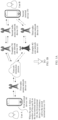
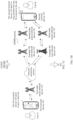
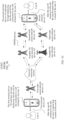
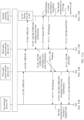
- FIG. 1A to FIG. 1C are diagrams showing an example of an application scenario according to an embodiment of this application.
- FIG. 1A to FIG. 1C show a process of a call between a user A using a first terminal device 140 and a user B using a second terminal device 150.
- the second terminal device 150 falls back from a 5G network to a 4G network, resulting in a problem of no sound, a call drop, or a call drop after no sound for the call.
- a first SIM card is configured on the first terminal device 140
- a second SIM card is configured on the second terminal device 150.
- the first SIM card is corresponding to a first phone number
- the second SIM card is corresponding to a second phone number.
- An operator of the first SIM card is different from an operator of the second SIM card. However, in some other cases, the operator of the first SIM card may alternatively be the same as the operator of the second SIM card.
- An operator of a SIM card is not limited in this embodiment of this application.
- the first terminal device 140 is connected to a first radio access network device 110 in a wireless manner.
- the first radio access network device 110 refers to a base station that the first terminal device 140 accesses under a specific condition, rather than a specific base station.
- the first radio access network device 110 may be a gNB base station, an eNB base station, or another base station that the first terminal device 140 needs to access under a specific condition.
- the first radio access network device 110 may not be switched, or may be switched to meet a specific network requirement.
- specific information and a switching process of a base station accessed by the first terminal device 140 are not shown in FIG. 1A to FIG. 1C , but are represented by using the first radio access network device 110 as an example.
- the second terminal device 150 is connected to a second radio access network device 120 and an example 5G core network device 102 in a wireless manner, or the second terminal device 150 is connected to a third radio access network device 130 and an example 4G core network device 101 in a wireless manner.
- the first radio access network device 110 interacts with the example 5G core network device 102 or the example 4G core network device 101.
- Each of the second radio access network device 120 and the third radio access network device 130 may be a gNB base station, an eNB base station, or another base station that the second terminal device 150 needs to access under a specific condition, depending on a situation of a network on which the second terminal device 150 resides.
- a network accessed by the second radio access network device 120 is the 5G network
- a network accessed by the third radio access network device 130 is the 4G network.
- a 5G core network accessed by the second terminal device 150 is a first core network.
- a 4G core network accessed by the second terminal device 150 is a second core network.
- FIG. 1A to FIG. 1C specific information and a switching process of a base station accessed by the second terminal device 150 are not shown in FIG. 1A to FIG. 1C , but are represented by using the second radio access network device 120 and the third radio access network device 130 as an example.
- interaction between the first radio access network device 110 and the example 5G core network device 102 or the example 4G core network device 101 is not shown in FIG. 1A to FIG. 1C .
- the foregoing described signaling transmission interaction process, voice bearer establishment process, and the like are not limited to interaction between a terminal device and a base station device, and interaction between base station devices, but should further include another network device in the mobile communication system, which are not drawn in FIG. 1A to FIG. 1C to simplify and facilitate understanding.
- a core network device and a radio access network device may be separate and different physical devices, or functions of a core network device and logical functions of a radio access network device may be integrated on a same physical device, or some functions of a core network device and some functions of a radio access network device may be integrated on one physical device.
- the terminal device may be fixed, or may be mobile.
- the first terminal device 140 and the second terminal device 150 may be used as user equipment to interact with the radio access network device and the core network device.
- the radio access network device includes but is not limited to a 2G radio access network, a 3G radio access network, a 4G radio access network, and a 5G radio access network
- the core network device includes but is not limited to a 2G core network, a 3G core network, a 4G core network, and a 5G core network.
- a communication system architecture in FIG. 1A to FIG. 1C is for illustrative purposes only, and the foregoing descriptions do not constitute a limitation on a diagram of an architecture of a call test system in embodiments of this application.
- the mobile communication system applied in embodiments of this application includes but is not limited to the architecture shown in FIG. 1A to FIG. 1C .
- a signaling transmission interaction process, a process in which a voice bearer is established, and the like in embodiments of this application are not limited to interaction between the terminal device and the radio access network device, but should further include another network device in the mobile communication system, for example, the core network device, which is not shown in FIG. 2A and FIG. 2B to FIG. 11A and FIG. 11B .
- Each of the first radio access network device 110, the second radio access network device 120, and the third radio access network device 130 includes but is not limited to a 4G-long term evolution (4G-Long Term Evolution, 4G-LET) base station or a 5G-new radio (5G-New Radio, 5G-NR) base station. Quantities and suppliers of core network devices, radio access network devices, and terminal devices included in the mobile communication system are not limited in the embodiments of this application.
- the radio access network device may be the first radio access network device 110, the second radio access network device 120, or the third radio access network device 130 in FIG. 1A to FIG. 1C , or may be an apparatus in an access network device.
- Interaction between the first radio access network device 110, the second radio access network device 120, or the third radio access network device 130 is not limited to interaction between a radio access network device and a core network device that are on a caller side and a radio access network device and a core network device that are on a called side, but is a complete interaction process between a caller side network and a called side network.
- some or all of information exchanged among the terminal device, the core network device, and the access network device may be carried in an existing message, channel, signal, or signaling, or may be a newly defined message, channel, signal, or signaling. This is not specifically limited herein.
- the user A uses the first terminal device 140
- the user B uses the second terminal device 150
- a phone number of the user A is the first phone number
- a phone number of the user B is the second phone number.
- the first SIM card is corresponding to the first phone number
- the second SIM card is corresponding to the second phone number.
- the user A dials the phone number of the user B by using the first terminal device 140.
- both the first terminal device 140 and the second terminal device 150 reside on the 5G network.
- a resident network refers to a network in which the terminal device currently registers based on a SIM card.
- the network on which the second terminal device 150 resides falls back from 5G to 4G.
- the second terminal device 150 falls back to the 4G network because the 5G network on which the second terminal device 150 currently resides supports IMS registration (IMS registration) locally but does not support a 5G voice service (Voice-over NR).
- IMS registration IMS registration
- 5G voice service Voice-over NR
- the second terminal device 150 supports the 5G network, but the user disables a 5G voice call function.
- the network on which the second terminal device 150 resides also falls back from the 5G network to the 4G network.
- the second terminal device 150 when the second terminal device 150 receives on a 5G network that does not support a telephone voice service function, a voice call from the user A, or the user B receives on a 5G network that supports a telephone voice service function by using a second terminal device 150 that does not support a 5G voice call function, a call from the user A, the network of the second terminal device 150 falls back from the 5G network to the 4G network.
- the 4G network carries a voice service of the second terminal device 150.
- the second terminal device 150 After the voice call ends, the second terminal device 150 returns to the 5G network.
- This process is referred to as an evolved packet system (evolved packet system, EPS) fallback (EPS Fallback, EPSFB) process.
- the evolved packet system fallback process may also be referred to as EPS Fallback, EPSFB, EPSFallback, EPS fallback, EPS backoff, and the like.
- the terminal device performs a resource reservation negotiation operation with a network in advance in a call establishment process.
- the terminal device may complete establishment of the voice bearer and synchronize voice bearer states of the first terminal device 140 and the second terminal device 150 between the first terminal device 140 and the second terminal device 150 through a resource reservation negotiation process.
- the first terminal device 140 sends 180 Ringing signaling to the second terminal device 150, a call state of the second terminal device 150 is updated to a ringing state, and the second terminal device 150 starts to ring.
- the ringing state refers to a state in which a user, when there is an incoming call, has not answered the call and a called terminal device rings to remind the user of the incoming call.
- a ringing tone used when the ringing starts includes vibration, a color ring back tone, beep, or music, a song, recording, or video that is personalized. This is not limited herein.
- a caller terminal device may display information such as "The other party is ringing" to inform a caller user that the called terminal device has started to ring.
- the second terminal device 150 falls back from the 5G network to the 4G network, after the second terminal device 150 receives a call from the first terminal device 140, a time point at which the establishment of the voice bearer is completed is later than establishment of the voice bearer in a normal situation.
- the establishment of the voice bearer of the second terminal device 150 is not completed.
- the second terminal device 150 sends signaling indicating that the establishment of the voice bearer of the second terminal device 150 is not completed to the first terminal device 140, and further sends signaling indicating the first terminal device 140 to play a ringback tone.
- the first terminal device 140 After the first terminal device 140 receives the signaling indicating the first terminal device 140 to play the ringback tone, the first terminal device 140 starts to play the ringback tone. After sending the signaling indicating the first terminal device 140 to play the ringback tone, the second terminal device 150 starts to ring. After the second terminal device 150 starts to ring, the user B answers a call, and the call between the first terminal device 140 and the second terminal device 150 is connected.
- a voice bearer of a terminal device is normal, but a state in which a voice packet can be sent or received of a core network on which the terminal device or another terminal device that talks with the terminal device resides is not synchronized, or a synchronization exception occurs.
- a voice bearer of a terminal device of either side fails to be established due to a problem on a terminal side or a network side, the called terminal will not enter the ringing state, avoiding a problem of no sound, a call drop, or a call drop after no sound after a call is answered.
- some abnormal signaling disorder may cause a problem that the voice bearer of the terminal device is established but the network side is still abnormal.
- the network side receives the signaling indicating the first terminal device 140 to play the ringback tone, and then receives the signaling indicating that the establishment of the voice bearer of the second terminal device 150 is not completed, there is a problem of no sound, a call drop, or a call drop after no sound after the call is answered.
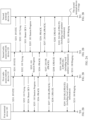
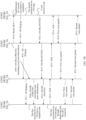
- FIG. 2A and FIG. 2B are diagrams of signaling interaction of a voice call in a 5G network according to an embodiment of this application.
- the communication method described in this embodiment of this application is applied to the first terminal device 140, the second terminal device 150, the first radio access network device 110, and the second radio access network device 120 that are shown in FIG. 1A to FIG. 1C and FIG. 2A and FIG. 2B .
- an EPSFB process does not occur.
- the first terminal device 140 may normally establish a session with the second terminal device 150, and a user may normally answer the call. For example, as shown in FIG. 2A and FIG. 2B , the following steps are included.
- Step S201 The first terminal device 140 sends INVITE signaling to the second terminal device 150.
- the first terminal device 140 initiates a call to the second terminal device 150.
- the first terminal device 140 sends the INVITE signaling to the second terminal device 150.
- the first terminal device 140 in response to the user A dials the number of the user B on the first terminal device 140, sends the INVITE signaling to the second terminal device 150.
- the INVITE signaling may be first request information, and the INVITE signaling may indicate that the first terminal device 140 initiates a call to the second terminal device 150.
- the first terminal device 140 may send the INVITE signaling to the first radio access network device 110.
- the first radio access network device 110 After receiving the INVITE signaling, the first radio access network device 110 sends the INVITE signaling received from the first terminal device 140 to the second radio access network device 120.
- the second radio access network device 120 After the second radio access network device 120 receives the INVITE signaling, the second radio access network device 120 sends the INVITE signaling received from the first radio access network device 110 to the second terminal device 150.
- An occasion at which a first terminal device sends first request information is not limited in this embodiment of this application.
- the first terminal device sends the first request information when a caller user initiates a voice call.
- the second terminal device 150 may acknowledge, based on information that is included in the INVITE signaling and that the first terminal device 140 supports resource reservation, that the first terminal device 140 supports resource reservation. It should be noted that a support field in the INVITE signaling carries a precondition tag, and the precondition tag indicates that the first terminal device 140 supports resource reservation. After receiving the INVITE signaling, the second terminal device 150 may further determine whether the second terminal device 150 supports resource reservation. After it is acknowledged that the second terminal device 150 supports the resource reservation, the second terminal device 150 may further acknowledge a call state of the second terminal device 150.
- a current terminal state CALL_STATE of the second terminal device 150 is an in-call IN_CALL state and a radio access technology (Radio Access Technology, RAT) of a network on which the second terminal device 150 resides is NR, it indicates that the second terminal device 150 is in a process of a call, and the call is received in the 5G network.
- RAT Radio Access Technology
- Step S202 The second terminal device 150 sends 100 Trying signaling to the first terminal device 140.
- the 100 Trying signaling may be first response information, and the 100 Trying signaling may indicate that the second terminal device 150 responds to the INVITE signaling sent by the first terminal device 140 to the second terminal device 150.
- the second terminal device 150 may send the 100 Trying signaling to the second radio access network device 120.
- the second radio access network device 120 After receiving the 100 Trying signaling, the second radio access network device 120 sends the 100 Trying signaling received from the second terminal device 150 to the first radio access network device 110.
- the first radio access network device 110 After the first radio access network device 110 receives the 100 Trying signaling, the first radio access network device 110 sends the 100 Trying signaling received from the second radio access network device 120 to the first terminal device 140.
- Step S203 The second radio access network device 120 delivers a voice dedicated bearer establishment instruction to the second terminal device 150.
- the voice dedicated bearer establishment instruction may be represented as an activate dedicated EPS bearer context request (Activate dedicated EPS bearer context request).
- the voice dedicated bearer establishment instruction may be a second voice bearer instruction.
- the voice dedicated bearer establishment instruction may indicate the second terminal device 150 to establish a second voice bearer, and the second voice bearer indicates that a voice resource of the second terminal device 150 has been reserved.
- the second voice bearer may be a logical path used to transmit a voice.
- step S203 is performed after the second radio access network device 120 receives the 100 Trying signaling.
- the second radio access network device 120 delivers the voice dedicated bearer establishment instruction to the second terminal device 150.
- the second radio access network device 120 indicates the second terminal device 150 to establish the second voice bearer.
- a specific voice resource reservation state of the second voice bearer is not limited in this embodiment of this application.
- that the terminal device establishes the second voice bearer may be understood as that the resource reservation state is a normal state, that is, the terminal device is in a state in which a voice packet can be sent or received.
- a specific occasion at which the second radio access network device 120 delivers the voice dedicated bearer establishment instruction to the second terminal device 150 is not limited in this embodiment of this application.
- step S203 may occur at another occasion after step S202 in which the second radio access network device 120 receives the 100 Trying signaling.
- Step S204 The first radio access network device 110 delivers a voice dedicated bearer establishment instruction to the first terminal device 140.
- the voice dedicated bearer establishment instruction may be represented as an activate dedicated EPS bearer context request (Activate dedicated EPS bearer context request).
- the voice dedicated bearer establishment instruction may be a first voice bearer instruction.
- the voice dedicated bearer establishment instruction may indicate the first terminal device 140 to establish a first voice bearer, and the first voice bearer indicates that a voice resource of the first terminal device 140 has been reserved.
- the first voice bearer may be a logical path used to transmit a voice.
- step S204 is performed after the first radio access network device 110 receives the 100 Trying signaling.
- the first radio access network device 110 delivers the voice dedicated bearer establishment instruction to the first terminal device 140.
- the first radio access network device 110 indicates the first terminal device 140 to establish the first voice bearer.
- a specific voice resource reservation state of the first voice bearer is not limited in this embodiment of this application.
- that the terminal device establishes the first voice bearer may be understood as that the resource reservation state is a normal state, that is, the terminal device is in a state in which a voice packet can be sent or received.
- a specific occasion at which the first radio access network device 110 delivers the voice dedicated bearer establishment instruction to the first terminal device 140 is not limited in this embodiment of this application.
- step S204 may occur at another occasion after step S202 in which the first radio access network device 110 receives the 100 Trying signaling.
- Step S205 The second terminal device 150 sends 183 Session Progress signaling to the first terminal device 140.
- the 183 session progress (Session Progress) signaling may be first session progress information, and the first session progress information includes information about a first handshake in a process of three handshakes (including the first handshake, a second handshake, and a third handshake) between the second terminal device and the first terminal device.
- the 183 Session Progress signaling may indicate that the second terminal device 150 performs voice coding negotiation with the first terminal device 140.
- the second terminal device 150 sends the 183 Session Progress signaling to the second radio access network device 120.
- the second radio access network device 120 receives the 183 Session Progress signaling
- the second radio access network device 120 sends the 183 Session Progress signaling received from the second terminal device 150 to the first radio access network device 110.
- the first radio access network device 110 receives the 183 Session Progress signaling
- the first radio access network device 110 sends the 183 Session Progress signaling received from the second radio access network device 120 to the first terminal device 140.
- Step S206 The first terminal device 140 sends PRACK signaling to the second terminal device 150.
- the PRACK signaling may be first acknowledgment information, and the first acknowledgment information includes information about the second handshake in the three handshakes.
- the PRACK signaling may indicate that the first terminal device 140 acknowledges that the 183 Session Progress signaling sent by the second terminal device 150 has been received.
- the first terminal device 140 sends the PRACK signaling to the first radio access network device 110.
- the first radio access network device 110 sends the PRACK signaling received from the first terminal device 140 to the second radio access network device 120.
- the second radio access network device 120 receives the PRACK signaling, the second radio access network device 120 sends the PRACK signaling received from the first radio access network device 110 to the second terminal device 150.
- Step S207 The second terminal device 150 sends 200 OK (PRACK) signaling to the first terminal device 140.
- the signaling sent is actually 200 OK signaling used to reply to the PRACK signaling.
- signaling replied by 200 OK signaling that is used to reply to different signaling is marked in parentheses following the 200 OK signaling, to make a distinction.
- the 200 OK signaling used to reply to the PRACK signaling is written as the 200 OK (PRACK) signaling.
- PRACK 200 OK
- a writing method herein is only an example.
- a specific description of signaling actually sent is subject to a 3GPP standard protocol. For other 200 OK signaling with double brackets in this application, refer to this explanation.
- the 200 OK (PRACK) signaling may be first 200 OK signaling.
- the 200 OK (PRACK) signaling may be first response information, and the first response information includes information about the third handshake in the three handshakes.
- the 200 OK (PRACK) signaling may indicate that the second terminal device 150 acknowledges that the PRACK signaling sent by the first terminal device 140 has been received.
- the second terminal device 150 sends the 200 OK (PRACK) signaling to the second radio access network device 120.
- the second radio access network device 120 receives the 200 OK (PRACK) signaling
- the second radio access network device 120 sends the 200 OK (PRACK) signaling received from the second terminal device 150 to the first radio access network device 110.
- the first radio access network device 110 receives the 200 OK (PRACK) signaling
- the first radio access network device 110 sends the 200 OK (PRACK) signaling received from the second radio access network device 120 to the first terminal device 140.
- Step S208 The first terminal device 140 sends UPDATE signaling to the second terminal device 150.
- the UPDATE signaling may be first update information, and the UPDATE signaling may indicate that the first terminal device 140 has established the first voice bearer, that is, establishment of the first voice bearer is completed or the first voice bearer is established.
- the first terminal device 140 checks whether the first terminal device 140 has established the first voice bearer, that is, the establishment of the first voice bearer is completed or the first voice bearer is established. After the first terminal device 140 acknowledges that the first terminal device 140 has received the voice dedicated bearer establishment instruction delivered by the first radio access network device 110 in step S203, and completes the establishment of the first voice bearer based on the voice dedicated bearer establishment instruction, the first terminal device 140 sends the UPDATE signaling to the first radio access network device 110, and the UPDATE signaling includes information indicating that the first terminal device 140 has established the first voice bearer.
- the first terminal device 140 sends the UPDATE signaling to the first radio access network device 110, and the UPDATE signaling includes information indicating that the first terminal device 140 has established the first voice bearer.
- the first radio access network device 110 After receiving the UPDATE signaling, the first radio access network device 110 sends the UPDATE signaling to the second radio access network device 120. After receiving the UPDATE signaling, the second radio access network device 120 sends the UPDATE signaling to the second terminal device 150.
- step S208 if the second terminal device 150 has not completed establishment of the second voice bearer, the second terminal device 150 responds to the UPDATE signaling, and returns signaling indicating that the establishment of the second voice bearer is not completed to the first terminal device 140. In some embodiments, information indicating that the establishment of the second voice bearer is not completed is sent to the first terminal device 140 through the 200 OK (UPDATE) signaling.
- the 200 OK (UPDATE) signaling may carry the information indicating that the establishment of the second voice bearer is completed.
- Step S209 The second terminal device 150 sends 200 OK (UPDATE) signaling to the first terminal device 140.
- 200 OK UPDATE
- the 200 OK (UPDATE) signaling may be second 200 OK signaling.
- the 200 OK (UPDATE) signaling may indicate that the second terminal device 150 acknowledges that the UPDATE signaling sent by the first terminal device 140 has been received.
- the signaling sent is actually 200 OK signaling used to reply to the UPDATE signaling.
- signaling replied by 200 OK signaling that is used to reply to different signaling is marked in parentheses following the 200 OK signaling, to make a distinction.
- the 200 OK signaling used to reply to the UPDATE signaling is written as the 200 OK (UPDATE) signaling.
- UPDATE 200 OK
- a writing method herein is only an example.
- a specific description of signaling actually sent is subject to a 3GPP standard protocol. For other 200 OK (UPDATE) signaling in this application, refer to this explanation.
- the 200 OK (UPDATE) signaling may indicate that configuration of a voice bearer resource of the second terminal device 150 has been completed or that the establishment of the second voice bearer has been completed.
- the 200 OK (UPDATE) signaling may indicate that the second terminal device 150 is in a state in which a voice packet can be sent or received.
- the first radio access network device 110 determines that a current called terminal device, that is, the second terminal device 150, is in a state in which a voice packet can be sent or received.
- the first radio access network device 110 is in a connected state, that is, a state in which a voice packet can be normally forwarded.
- the first radio access network device 110 sends the 200 OK (UPDATE) signaling to the first terminal device 140.
- Step S210 The second terminal device 150 sends 180 Ringing signaling to the first terminal device 140.
- the 180 Ringing signaling may be first ring information, and the 180 Ringing signaling may indicate that the second terminal device 150 has established the second voice bearer and is ready to make a call.
- a call state of the second terminal device 150 is updated to a ringing state, and the second terminal device 150 starts to ring.
- the ringing state refers to a state in which a user, when there is an incoming call, has not answered the call and a called terminal device rings to remind the user of the incoming call.
- a ringing tone used when the ringing starts includes vibration, a color ring back tone, beep, or music, a song, recording, or video that is personalized. This is not limited herein.
- the second radio access network device 120 After the second radio access network device 120 receives the 180 Ringing signaling, the second radio access network device 120 sends the 180 Ringing signaling to the first radio access network device 110.
- the first radio access network device 110 After the first radio access network device 110 receives the 180 Ringing signaling, the first radio access network device 110 determines that a current called terminal, that is, the second terminal device 150, is in a state in which a voice packet can be sent or received, and the first radio access network device 110 is in a connected state, that is, a state in which a voice packet can be normally forwarded, and sends the 180 Ringing signaling to the first terminal device 140. After the first terminal device 140 receives the 180 Ringing signaling, a call state of the first terminal device 140 is updated to a ringback tone state, and the first terminal device 140 starts to play a ringback tone.
- the ringback tone state refers to a state in which a called user does not answer a call when the call succeeds and a caller terminal device sends a ringback tone to remind a user that the called user has not answered the call.
- the ringback tone includes vibration, a color ring back tone, beep, or music, a song, recording, or video that is personalized. This is not limited herein.
- Step S211 The second terminal device 150 sends 200 OK (INVITE) signaling to the first terminal device 140.
- the second terminal device 150 sends the 200 OK (INVITE) signaling to the first terminal device 140.
- the second terminal device 150 in response to the user B answers the call on the second terminal device 150, the second terminal device 150 sends the 200 OK (INVITE) signaling to the first terminal device 140.
- the 200 OK (INVITE) signaling may be third 200 OK signaling, and the 200 OK (INVITE) signaling may indicate that the second terminal device 150 responds to the first terminal device 140 that the second terminal device 150 has been prepared to send and receive a voice packet.
- the second terminal device 150 after the second terminal device 150 starts to ring, the user B answers the call, and the second terminal device 150 sends the 200 OK (INVITE) signaling to the second radio access network device 120.
- the second radio access network device 120 sends the 200 OK (INVITE) signaling received from the second terminal device 150 to the first radio access network device 110.
- the first radio access network device 110 After the first radio access network device 110 receives the 200 OK (INVITE) signaling, the first radio access network device 110 sends the 200 OK (INVITE) signaling received from the second radio access network device 120 to the first terminal device 140.
- the first terminal device 140 After the first terminal device 140 receives the 200 OK (INVITE) signaling, the first terminal device 140 indicates, through displaying, that the call is connected.
- the first terminal device 140 may display, to a user, a user prompt such as "in a phone call”, “in a call”, “call in progress”, “connected”, or the like.
- a user prompt such as "in a phone call”, “in a call”, “call in progress”, “connected”, or the like.
- additional call duration prompt may be displayed, such as "00:01”, “00:02”, “00:03”, or the like.
- an occasion at which the first terminal device 140 indicates, through displaying, that the call is connected may be after step S211 in which the first terminal device 140 receives the 200 OK (INVITE) signaling and before step S212 in which the first terminal device 140 sends ACK signaling to the second terminal device 150; or after step S212 in which the first terminal device 140 sends ACK signaling to the second terminal device 150.
- the occasion is not limited in this embodiment of this application.
- Step S212 The first terminal device 140 sends ACK signaling to the second terminal device 150.
- the ACK signaling may be second acknowledgment information, and the ACK signaling may indicate that the first terminal device 140 acknowledges to the second terminal device 150 that the first terminal device 140 has received the 200 OK (INVITE) signaling sent by the second terminal device 150 to the first terminal device 140.
- the first terminal device 140 sends the ACK signaling to the first radio access network device 110.
- the first radio access network device 110 sends the ACK signaling received from the first terminal device 140 to the second radio access network device 120.
- the second radio access network device 120 receives the ACK signaling, the second radio access network device 120 sends the received ACK signaling to the second terminal device 150.
- Step S213 The second terminal device 150 sends a first voice packet to the first terminal device 140.
- the first voice packet may include an IMS RTP SN and Payload.
- the first voice packet may include voice data.
- the second terminal device 150 sends the first voice packet to the second radio access network device 120.
- the second radio access network device 120 sends the first voice packet received from the second terminal device 150 to the first radio access network device 110.
- the first radio access network device 110 sends the first voice packet to the first terminal device 140.
- the first terminal device 140 plays a voice.
- an occasion at which the second terminal device 150 sends the first voice packet to the first radio access network device 110 is not limited in this embodiment of this application.
- the second terminal device 150 sends the first voice packet to the first radio access network device 110.
- the second terminal device receives the ACK signaling, the second terminal device 150 sends the first voice packet to the first radio access network device 110.
- Step S214 The first terminal device 140 sends a second voice packet to the second terminal device 150.
- the second voice packet may include an IMS RTP SN and Payload.
- the second voice packet may include voice data.
- the first terminal device 140 sends the second voice packet to the first radio access network device 110.
- the first radio access network device 110 sends the second voice packet to the second radio access network device 120.
- the second radio access network device 120 sends the second voice packet to the second terminal device 150.
- the second terminal device 150 plays the voice.
- Step S214 and step S215 have no mutual triggering relationship and sequence, and the sequence of the two may be interchanged.
- voice packets exchanged between a caller terminal device and a called terminal device are not limited to the first voice packet and the second voice packet. Details are not described in this embodiment of this application, and only the first voice packet and the second voice packet are used as examples to indicate an exchange process of user voice packets between the caller terminal device and the called terminal device in the call process.
- a user can normally make a voice call.
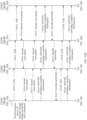
- FIG. 3A and FIG. 3B are diagrams of signaling interaction of a voice call in an EPSFB scenario according to an embodiment of this application.
- the communication method described in this embodiment of this application is applied to the first terminal device 140, the second terminal device 150, the first radio access network device 110, the second radio access network device 120, and a third radio access network device 130 that are shown in FIG. 1A to FIG. 1C and FIG. 3A and FIG. 3B .
- the first terminal device 140 and the second terminal device 150 are connected to the first radio access network device 110 and the second radio access network device 120 or the third radio access network device 130 in a wireless manner.
- Each of the first radio access network device 110, the second radio access network device 120, or the third radio access network device 130 is connected to a network device such as a core network device corresponding to the first radio access network device 110, the second radio access network device 120, or the third radio access network device 130 in a wireless or wired manner, which is not shown in the figure.
- the first terminal device 140 in a process in which the first terminal device 140 makes a call to the second terminal device 150, signaling interaction is not disordered even if an EPSFB process occurs.
- the first terminal device 140 may normally establish a session with the second terminal device 150, and a user may normally answer the call. For example, as shown in FIG. 3A and FIG. 3B , the following steps are included.
- Step S301 The first terminal device 140 sends INVITE signaling to the second terminal device 150.
- the first terminal device 140 initiates a call to the second terminal device 150.
- the first terminal device 140 sends the INVITE signaling to the second terminal device 150.
- the first terminal device 140 in response to the user A dials the number of the user B on the first terminal device 140, sends the INVITE signaling to the second terminal device 150.
- the INVITE signaling may be first request information, and the INVITE signaling may indicate that the first terminal device 140 initiates a call to the second terminal device 150.
- the INVITE signaling may be first INVITE signaling, and the INVITE signaling may be signaling that includes an invite.
- the first terminal device 140 may send the INVITE signaling to the first radio access network device 110.
- the first radio access network device 110 After receiving the INVITE signaling, the first radio access network device 110 sends the INVITE signaling received from the first terminal device 140 to the second radio access network device 120.
- the second radio access network device 120 After the second radio access network device 120 receives the INVITE signaling, the second radio access network device 120 sends the INVITE signaling received from the first radio access network device 110 to the second terminal device 150.
- An occasion at which a first terminal device sends first request information is not limited in this embodiment of this application.
- the first terminal device sends the first request information when a caller user initiates a voice call.
- the second terminal device 150 may acknowledge, based on information that is included in the INVITE signaling and that the first terminal device 140 supports resource reservation, that the first terminal device 140 supports resource reservation. It should be noted that a support field in the INVITE signaling carries a precondition tag, and the precondition tag indicates that the first terminal device 140 supports resource reservation. After receiving the INVITE signaling, the second terminal device 150 may further determine whether the second terminal device 150 supports resource reservation. After it is acknowledged that the second terminal device 150 supports the resource reservation, the second terminal device 150 may further acknowledge a call state of the second terminal device 150.
- a current terminal state CALL_STATE of the second terminal device 150 is an in-call IN_CALL state and a radio access technology (Radio Access Technology, RAT) of a network on which the second terminal device 150 resides is NR, it indicates that the second terminal device 150 is in a process of a call, and the call is received in the 5G network.
- RAT Radio Access Technology
- Step S302 The second terminal device 150 sends 100 Trying signaling to the first terminal device 140.
- the 100 Trying signaling may be first response information, and the 100 Trying signaling may indicate that the second terminal device 150 responds to the INVITE signaling sent by the first terminal device 140 to the second terminal device 150.
- the second terminal device 150 may send the 100 Trying signaling to the second radio access network device 120.
- the second radio access network device 120 After receiving the 100 Trying signaling, the second radio access network device 120 sends the 100 Trying signaling received from the second terminal device 150 to the first radio access network device 110.
- the first radio access network device 110 After the first radio access network device 110 receives the 100 Trying signaling, the first radio access network device 110 sends the 100 Trying signaling received from the second radio access network device 120 to the first terminal device 140.
- Step S303 The first radio access network device 110 delivers a voice dedicated bearer establishment instruction to the first terminal device 140.
- the voice dedicated bearer establishment instruction may be represented as an activate dedicated EPS bearer context request (Activate dedicated EPS bearer context request).
- the voice dedicated bearer establishment instruction may be a first voice bearer instruction.
- the voice dedicated bearer establishment instruction may indicate the first terminal device 140 to establish a first voice bearer, and the first voice bearer indicates that a voice resource of the first terminal device 140 has been reserved.
- the first voice bearer may be a logical path used to transmit a voice.
- step S204 is performed after the first radio access network device 110 receives the 100 Trying signaling.
- the first radio access network device 110 delivers the voice dedicated bearer establishment instruction to the first terminal device 140.
- the first radio access network device 110 indicates the first terminal device 140 to establish the first voice bearer.
- a specific voice resource reservation state of the first voice bearer is not limited in this embodiment of this application.
- that the terminal device establishes the first voice bearer may be understood as that the resource reservation state is a normal state, that is, the terminal device is in a state in which the terminal device can perform subsequent sending and receiving of a voice packet.
- a specific occasion at which the first radio access network device 110 delivers the voice dedicated bearer establishment instruction to the first terminal device 140 is not limited in this embodiment of this application.
- step S204 may occur at another occasion after step S202 in which the first radio access network device 110 receives the 100 Trying signaling.
- Step S304 The second terminal device 150 sends 183 Session Progress signaling to the first terminal device 140.
- the 183 session progress (Session Progress) signaling may be first session progress information, and the first session progress information includes information about a first handshake in a process of three handshakes (including the first handshake, a second handshake, and a third handshake) between the second terminal device and the first terminal device.
- the 183 Session Progress signaling may indicate that the second terminal device 150 performs voice coding negotiation with the first terminal device 140.
- the second terminal device 150 sends the 183 Session Progress signaling to the second radio access network device 120.
- the second radio access network device 120 receives the 183 Session Progress signaling
- the second radio access network device 120 sends the 183 Session Progress signaling received from the second terminal device 150 to the first radio access network device 110.
- the first radio access network device 110 receives the 183 Session Progress signaling
- the first radio access network device 110 sends the 183 Session Progress signaling received from the second radio access network device 120 to the first terminal device 140.
- Step S305 The first terminal device 140 sends PRACK signaling to the second terminal device 150.
- the PRACK signaling may be first acknowledgment information, and the first acknowledgment information includes information about the second handshake in the three handshakes.
- the PRACK signaling may indicate that the first terminal device 140 acknowledges that the 183 Session Progress signaling sent by the second terminal device 150 has been received.
- the first terminal device 140 sends the PRACK signaling to the first radio access network device 110.
- the first radio access network device 110 sends the PRACK signaling received from the first terminal device 140 to the second radio access network device 120.
- the second radio access network device 120 receives the PRACK signaling, the second radio access network device 120 sends the PRACK signaling received from the first radio access network device 110 to the second terminal device 150.
- Step S306 The second terminal device 150 sends 200 OK (PRACK) signaling to the first terminal device 140.
- the signaling sent is actually 200 OK signaling used to reply to the PRACK signaling.
- signaling replied by 200 OK signaling that is used to reply to different signaling is marked in parentheses following the 200 OK signaling, to make a distinction.
- the 200 OK signaling used to reply to the PRACK signaling is written as the 200 OK (PRACK) signaling.
- PRACK 200 OK
- a writing method herein is only an example. A specific description of signaling actually sent is subject to a 3GPP standard protocol. For other 200 OK (PRACK) signaling in this application, refer to this explanation.
- the 200 OK (PRACK) signaling may be first 200 OK signaling.
- the 200 OK (PRACK) signaling may be first response information, and the first response information includes information about the third handshake in the three handshakes.
- the 200 OK (PRACK) signaling may indicate that the second terminal device 150 acknowledges that the PRACK signaling sent by the first terminal device 140 has been received.
- the second terminal device 150 sends the 200 OK (PRACK) signaling to the second radio access network device 120.
- the second radio access network device 120 receives the 200 OK (PRACK) signaling
- the second radio access network device 120 sends the 200 OK (PRACK) signaling received from the second terminal device 150 to the first radio access network device 110.
- the first radio access network device 110 receives the 200 OK (PRACK) signaling
- the first radio access network device 110 sends the 200 OK (PRACK) signaling received from the second radio access network device 120 to the first terminal device 140.
- Step S307 The second terminal device 150 switches from a 5G voice call to a 4G voice call.
- configuration of a network standard of the second terminal device 150 is changed from a first network standard to a second network standard, where the first network standard is 4G, and the second network standard is 5G.
- the process in which the second radio access network device 120 indicates the second terminal device 150 to switch to the 4G voice call may be implemented in a plurality of manners. The following steps show only one of the switching manner. Other implementations further include directly delivering a switching instruction without delivering a measurement instruction, implementing switching by delivering a mobilityFromNRCommand signaling switching instruction. This name is merely an example, and is specifically subject to a related protocol.
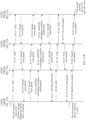
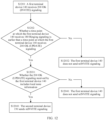
- FIG. 4 is a schematic flowchart in which a second terminal device 150 switches from a 5G voice call to a 4G voice call.
- Step S401 The second radio access network device 120 delivers RRC signaling to the second terminal device 150.
- the RRC signaling may be represented as RRC Connection Reconfiguration.
- RRC signaling used to deliver measurement in this scenario is written as the RRC signaling, and a specific writing method of the signaling is subject to a related protocol.
- the RRC signaling may carry one measurement instruction delivered by the second radio access network device 120 to the second terminal device 150. Based on the measurement instruction, the second terminal device 150 measures a 4G LTE signal status, and is instructed to report an LTE measurement threshold. When a cell is found to meet a requirement of the threshold, the second terminal device 150 reports a measurement report.
- each network device may be divided into one or more cells.
- the cell may be an area within coverage of a wireless network of a network device.
- a cell within NR network coverage is referred to as an NR cell
- a cell within LTE network coverage is referred to as an LTE cell.
- Signal quality strength of the cell may be represented by reference signal received power (reference signal received power, RSRP) and reference signal received quality (reference signal received quality, RSRQ).
- RSRP reference signal received power
- RSRQ reference signal received quality
- Step S402 The second terminal device 150 reports a first measurement report to the second radio access network device 120.
- the second terminal device 150 after receiving the RRC signaling, measures a network condition in which the second terminal device 150 is located based on the RRC signaling, and reports the first measurement report to the second radio access network device 120.
- a first measurement result refers to a measurement result of a network status of the terminal device.
- Step S403 The second radio access network device 120 delivers a first switching instruction to the second terminal device 150.
- the second radio access network device 120 After the second radio access network device 120 receives the first measurement report and delivers the first switching instruction to the second terminal device 150, the second radio access network device 120 indicates the second terminal device 150 to hand over from 5G to 4G. After the second terminal device 150 receives the first switching instruction delivered by the second radio access network device 120, the second terminal device 150 returns response information, which is specifically subject to a related protocol. Details are not described herein again.
- step S403 configuration of a network standard of the second terminal device 150 is changed from a first network standard to a second network standard, where the first network standard is 4G, and the second network standard is 5G.
- the second radio access network device 120 and the second terminal device 150 do not perform step S401 and step S402, and directly perform step S403.
- Step S404 The second terminal device 150 falls back to an LTE cell that meets the requirement of the threshold based on redirectedCarrierInfo information included in the received signaling and based on the instruction of the second radio access network device 120, and determines that a current call is an EPSFB call.
- Step S405 The second terminal device 150 reports TAU Request signaling to the third radio access network device 130.
- the TAU Request signaling may be second request information, and the TAU Request signaling indicates that the second terminal device 150 requests the third radio access network device 130 to start to reside on the network, and updates a tracking area, to complete a function of accessing a 4G network.
- Step S406 The third radio access network device 130 delivers TAU Accept signaling to the second terminal device 150.
- the TAU Accept signaling may be sixth response information, and the TAU Accept signaling indicates that the third radio access network device 130 responds to the TAU Request signaling reported by the second terminal device 150.
- Step S407 The second terminal device 150 reports TAU Complete signaling to the third radio access network device 130.
- the TAU Complete signaling may be sixth acknowledgment information, and the TAU Complete signaling indicates that the second terminal device 150 acknowledges that the TAU Accept signaling delivered by the third radio access network device 130 is received.
- Step S401 to step S407 describe a specific process of step S307 that is in FIG. 3A and FIG. 3B and in which the second radio access network device 120 indicates the second terminal device 150 to hand over to the 4G voice call.
- Step S308 The first terminal device 140 sends UPDATE signaling to the second terminal device 150.
- the UPDATE signaling may be first update information, and the UPDATE signaling may indicate that the first terminal device 140 has established the first voice bearer, that is, establishment of the first voice bearer is completed or the first voice bearer is established.
- the first terminal device 140 checks whether the first terminal device 140 has established the first voice bearer, that is, the establishment of the first voice bearer is completed or the first voice bearer is established. After the first terminal device 140 acknowledges that the first terminal device 140 has received the voice dedicated bearer establishment instruction delivered by the first radio access network device 110 in step S303, and completes the establishment of the first voice bearer based on the voice dedicated bearer establishment instruction, the first terminal device 140 sends the UPDATE signaling to the first radio access network device 110, and the UPDATE signaling includes information indicating that the first terminal device 140 has established the first voice bearer.
- the first terminal device 140 sends the UPDATE signaling to the first radio access network device 110, and the UPDATE signaling includes information indicating that the first terminal device 140 has established the first voice bearer.
- the first radio access network device 110 After receiving the UPDATE signaling, the first radio access network device 110 sends the UPDATE signaling to the third radio access network device 130. After receiving the UPDATE signaling, the third radio access network device 130 sends the UPDATE signaling to the second terminal device 150.
- step S308 if establishment of a second voice bearer of the second terminal device 150 is not completed, the second terminal device 150 responds to the UPDATE signaling, and returns signaling indicating that the establishment of the second voice bearer is not completed to the first terminal device 140.
- the signaling indicating that the establishment of the second voice bearer is not completed is sent to the first terminal device 140 through the 200 OK (UPDATE) signaling.
- the 200 OK (UPDATE) signaling may carry the signaling indicating that the establishment of the second voice bearer is completed.
- step S308 are described when the establishment of the second voice bearer of the second terminal device 150 is not completed.
- Step S309 The second terminal device 150 sends 200 OK (UPDATE) signaling to the first terminal device 140.
- the 200 OK (UPDATE) signaling may indicate that the second terminal device 150 acknowledges that the UPDATE signaling sent by the first terminal device 140 has been received.
- the 200 OK (UPDATE) signaling may be fifth signaling, or the 200 OK (UPDATE) signaling may be seventh signaling.
- the signaling sent is actually 200 OK signaling used to reply to the UPDATE signaling.
- signaling replied by 200 OK signaling that is used to reply to different signaling is marked in parentheses following the 200 OK signaling, to make a distinction.
- the 200 OK signaling used to reply to the UPDATE signaling is written as the 200 OK (UPDATE) signaling.
- UPDATE 200 OK
- a writing method herein is only an example.
- a specific description of signaling actually sent is subject to a 3GPP standard protocol.
- the second terminal device 150 checks a voice bearer state of the second terminal device 150.
- the 200 OK (UPDATE) signaling may indicate information that the establishment of the second voice bearer of the second terminal device 150 is not completed.
- the first radio access network device 110 determines that a current called terminal device, that is, the second terminal device 150, is not in a state in which a voice packet can be sent or received, and the first radio access network device 110 is in a non-connected state, that is, a state in which a voice packet cannot be normally forwarded. After receiving the 200 OK (UPDATE) signaling, the first radio access network device 110 sends the 200 OK (UPDATE) to the first terminal device 140.
- Step S310 The third radio access network device 130 delivers a voice dedicated bearer establishment instruction to the second terminal device 150.
- the voice dedicated bearer establishment instruction may be second signaling, the voice dedicated bearer establishment instruction may be fourth signaling, or the voice dedicated bearer establishment instruction may be sixth signaling.
- the voice dedicated bearer establishment instruction may be indicated as an activate dedicated EPS bearer context request (Activate dedicated EPS bearer context request).
- the voice dedicated bearer establishment instruction may be a second voice bearer instruction.
- the voice dedicated bearer establishment instruction may indicate that the third radio access network device 130 indicates the second terminal device 150 to establish a second voice bearer, and the second voice bearer may indicate a voice resource reservation state of the second terminal device 150.
- step S310 is performed after step S307 in which the second terminal device 150 has been switched to a 4G voice scheme.
- the third radio access network device 130 delivers the voice dedicated bearer establishment instruction to the second terminal device 150
- the third radio access network device 130 indicates the second terminal device 150 to establish the second voice bearer.
- a specific voice resource reservation state of the second voice bearer is not limited in this embodiment of this application.
- that the terminal device establishes the second voice bearer may be understood as that the resource reservation state is a normal state, that is, the terminal device is in a state in which the terminal device can perform subsequent sending and receiving of a voice packet.
- the second radio access network device 120 may deliver the voice dedicated bearer establishment instruction to the second terminal device 150 after step S302 in which the second radio access network device 120 receives the 100 Trying signaling. Because the EPSFB occurs, with reference to FIG. 3A and FIG. 3B , the third radio access network device 130 delivers the voice dedicated bearer establishment instruction only after the second radio access network device 120 delivers the switching instruction and a network on which the second terminal device 150 resides is switched to 4G. As a result, in a call process, a time point at which the second terminal device 150 completes the establishment of the second voice bearer is delayed due to an EPSFB process.
- the third radio access network device 130 does not deliver the voice dedicated bearer establishment instruction immediately after the second radio access network device 120 delivers the switching instruction and the network on which the second terminal device 150 resides is switched to 4G.
- a time point at which the second terminal device 150 receives the voice dedicated bearer establishment instruction may be earlier than a time point at which the second terminal device 150 receives the UPDATE signaling, or may be later than a time point at which the second terminal device 150 receives the UPDATE signaling.
- a specific occasion at which the third radio access network device 130 delivers the voice dedicated bearer establishment instruction is not limited in this embodiment of this application. For a specific implementation, refer to a 3GPP standard protocol.
- Step S311 The second terminal device 150 sends 180 Ringing signaling to the first terminal device 140.
- the 180 Ringing signaling may be first ring information, and the 180 Ringing signaling may indicate that the second terminal device 150 has established the second voice bearer and is ready to make a call.
- a call state of the second terminal device 150 is updated to a ringing state, and the second terminal device 150 starts to ring.
- the ringing state refers to a state in which a user, when there is an incoming call, has not answered the call and a called terminal device rings to remind the user of the incoming call.
- a ringing tone used when the ringing starts includes vibration, a color ring back tone, beep, or music, a song, recording, or video that is personalized. This is not limited herein.
- the third radio access network device 130 After the third radio access network device 130 receives the 180 Ringing signaling, the third radio access network device 130 sends the 180 Ringing signaling to the first radio access network device 110.
- the first radio access network device 110 After the first radio access network device 110 receives the 180 Ringing signaling, the first radio access network device 110 determines that a current called terminal, that is, the second terminal device 150, is in a state in which a voice packet can be sent or received, and the first radio access network device 110 is in a connected state, that is, a state in which a voice packet can be normally forwarded, and sends the 180 Ringing signaling to the first terminal device 140. After the first terminal device 140 receives the 180 Ringing signaling, a call state of the first terminal device 140 is updated to a ringback tone state, and the first terminal device 140 starts to play a ringback tone.
- the ringback tone state refers to a state in which a called user does not answer a call when the call succeeds and a caller terminal device sends a ringback tone to remind a user that the called user has not answered the call.
- the ringback tone includes vibration, a color ring back tone, beep, or music, a song, recording, or video that is personalized. This is not limited herein.
- step S309 signaling transmission in step S309 is not delayed due to a delay problem of interaction between a first core network and a second core network accessed by the first terminal device 140 and the second terminal device 150, the 200 OK (UPDATE) signaling is normally transmitted to the first terminal device 140, and a problem of disorder of the 200 OK (UPDATE) signaling and the 180 Ringing signaling does not occur.
- the 200 OK (UPDATE) signaling is normally transmitted to the first terminal device 140, and a problem of disorder of the 200 OK (UPDATE) signaling and the 180 Ringing signaling does not occur.
- Step S312 The second terminal device 150 sends 200 OK (INVITE) signaling to the first terminal device 140.
- the second terminal device 150 sends the 200 OK (INVITE) signaling to the first terminal device 140.
- the second terminal device 150 in response to the user B answers the call on the second terminal device 150, the second terminal device 150 sends the 200 OK (INVITE) signaling to the first terminal device 140.
- the 200 OK (INVITE) signaling may be third 200 OK signaling, and the 200 OK (INVITE) signaling may indicate that the second terminal device 150 responds to the first terminal device 140 that the second terminal device 150 has been prepared to send and receive a voice packet.
- the second terminal device 150 after the second terminal device 150 starts to ring, the user B answers the call, and the second terminal device 150 sends the 200 OK (INVITE) signaling to the third radio access network device 130.
- the third radio access network device 130 sends the 200 OK (INVITE) signaling received from the second terminal device 150 to the first radio access network device 110.
- the first radio access network device 110 After the first radio access network device 110 receives the 200 OK (INVITE) signaling, the first radio access network device 110 sends the 200 OK (INVITE) signaling received from the third radio access network device 130 to the first terminal device 140.
- the first terminal device 140 After the first terminal device 140 receives the 200 OK (INVITE) signaling, the first terminal device 140 indicates, through displaying, that the call is connected.
- the first terminal device 140 may display, to a user, a user prompt such as "in a phone call”, “in a call”, “call in progress”, “connected”, or the like.
- a user prompt such as "in a phone call”, “in a call”, “call in progress”, “connected”, or the like.
- additional call duration prompt may be displayed, such as "00:01”, “00:02”, “00:03”, or the like.
- an occasion at which the first terminal device 140 indicates, through displaying, that the call is connected may be after step S312 in which the first terminal device 140 receives the 200 OK (INVITE) signaling and before step S313 in which the first terminal device 140 sends ACK signaling to the second terminal device 150; or after step S313 in which the first terminal device 140 sends ACK signaling to the second terminal device 150.
- This occasion is not limited in this embodiment of this application.
- Step S313 The first terminal device 140 sends ACK signaling to the second terminal device 150.
- the ACK signaling may be second acknowledgment information, and the ACK signaling may indicate that the first terminal device 140 acknowledges to the second terminal device 150 that the first terminal device 140 has received the 200 OK (INVITE) signaling sent by the second terminal device 150 to the first terminal device 140.
- the first terminal device 140 sends the ACK signaling to the first radio access network device 110.
- the first radio access network device 110 sends the ACK signaling received from the first terminal device 140 to the third radio access network device 130.
- the third radio access network device 130 sends the received ACK signaling to the second terminal device 150.
- Step S314 The second terminal device 150 sends a first voice packet to the first terminal device 140.
- the first voice packet may include an IMS RTP SN and Payload.
- the first voice packet may include voice data.
- the second terminal device 150 sends the first voice packet to the third radio access network device 130.
- the third radio access network device 130 sends the first voice packet received from the second terminal device 150 to the first radio access network device 110.
- the first radio access network device 110 sends the first voice packet to the first terminal device 140.
- the first terminal device 140 plays a voice.
- an occasion at which the second terminal device 150 sends the first voice packet to the first radio access network device 110 is not limited in this embodiment of this application.
- the second terminal device 150 sends the first voice packet to the first radio access network device 110.
- the second terminal device receives the ACK signaling, the second terminal device 150 sends the first voice packet to the first radio access network device 110.
- Step S315 The first terminal device 140 sends a second voice packet to the second terminal device 150.
- the second voice packet may include an IMS RTP SN and Payload.
- the second voice packet may include voice data.
- the first terminal device 140 sends the second voice packet to the first radio access network device 110.
- the first radio access network device 110 sends the second voice packet to the third radio access network device 130.
- the third radio access network device 130 sends the second voice packet to the second terminal device 150.
- the second terminal device 150 plays the voice.
- Step S314 and step S315 have no mutual triggering relationship and sequence, and the sequence of the two may be interchanged.
- voice packets exchanged between a caller terminal device and a called terminal device are not limited to the first voice packet and the second voice packet. Details are not described in this embodiment of this application, and only the first voice packet and the second voice packet are used as examples to indicate an exchange process of user voice packets between the caller terminal device and the called terminal device in the call process.
- a signaling interaction process in an abnormal scenario shown in FIG. 5A and FIG. 5B includes the following steps.
- step S501 to step S508 in FIG. 5A and FIG. 5B are the same as step S301 to step S308 in FIG. 3A and FIG. 3B .
- step S301 to step S308 Details are not described herein again.
- Step S509 The second terminal device 150 sends 200 OK (UPDATE) signaling to the first terminal device 140.
- 200 OK UPDATE
- the second terminal device 150 checks a voice bearer state of the second terminal device 150.
- the second terminal device 150 acknowledges that the second terminal device 150 has not received the voice dedicated bearer establishment instruction delivered by the third radio access network device 130, that is, the establishment of the second voice bearer is not completed
- the 200 OK (UPDATE) signaling may indicate information that the establishment of the second voice bearer of the second terminal device 150 is not completed.
- the first radio access network device 110 determines that a current called terminal device, that is, the second terminal device 150, is not in a state in which a voice packet can be sent or received, and the first radio access network device 110 is in a non-connected state, that is, a state in which a voice packet cannot be normally forwarded. After receiving the 200 OK (UPDATE) signaling, the first radio access network device 110 sends the 200 OK (UPDATE) to the first terminal device 140.
- FIG. 7(a) is a determining logic of the second terminal device 150 before the second terminal device 150 sends the 200 OK (UPDATE) signaling.
- the second terminal device 150 determines whether the establishment of the second voice bearer is completed.
- information included in the 200 OK (UPDATE) signaling sent by the second terminal device 150 to the first terminal device 140 may be different, and is specifically depending on the voice bearer state of the second terminal device 150.
- the 200 OK (UPDATE) signaling may enable the first radio access network device 110 to normally send and receive a voice packet.
- the third radio access network device 130 receives the 200 OK (UPDATE) signaling
- the third radio access network device 130 sends the 200 OK (UPDATE) signaling to the first radio access network device 110.
- the first radio access network device 110 receives the 200 OK (UPDATE) signaling
- the first radio access network device 110 sends the 200 OK (UPDATE) signaling to the first terminal device 140.
- UPDATE 200 OK
- Step S510 The third radio access network device 130 delivers a voice dedicated bearer establishment instruction to the second terminal device 150.
- step S510 is the same as step S310.
- step S310 For related descriptions, refer to the descriptions in step S310. Details are not described herein again.
- Step S511 The second terminal device 150 sends 180 Ringing signaling to the first terminal device 140.
- the 180 Ringing signaling may be first ring information, and the 180 Ringing signaling may indicate that the second terminal device 150 has established the second voice bearer and is ready to make a call.
- a call state of the second terminal device 150 is updated to a ringing state, and the second terminal device 150 starts to ring.
- the ringing state refers to a state in which a user, when there is an incoming call, has not answered the call and a called terminal device rings to remind the user of the incoming call.
- a ringing tone used when the ringing starts includes vibration, a color ring back tone, beep, or music, a song, recording, or video that is personalized. This is not limited herein.
- the third radio access network device 130 After the third radio access network device 130 receives the 180 Ringing signaling, the third radio access network device 130 sends the 180 Ringing signaling to the first radio access network device 110.
- the first radio access network device 110 After the first radio access network device 110 receives the 180 Ringing signaling, the first radio access network device 110 determines that a current called terminal, that is, the second terminal device 150, is in a state in which a voice packet can be sent or received, and the first radio access network device 110 is in a connected state, that is, a state in which a voice packet can be normally forwarded, and sends the 180 Ringing signaling to the first terminal device 140. After the first terminal device 140 receives the 180 Ringing signaling, a call state of the first terminal device 140 is updated to a ringback tone state, and the first terminal device 140 starts to play a ringback tone.
- the ringback tone state refers to a state in which a called user does not answer a call when the call succeeds and a caller terminal device sends a ringback tone to remind a user that the called user has not answered the call.
- the ringback tone includes vibration, a color ring back tone, beep, or music, a song, recording, or video that is personalized. This is not limited herein.
- Step S512 The second terminal device 150 sends 200 OK (INVITE) signaling to the first terminal device 140.
- Step S513 The first terminal device 140 sends ACK signaling to the second terminal device 150.
- step S512 and step S513 are the same as step S312 and step S313 in FIG. 3A and FIG. 3B .
- step S312 and step S3113 are the same as step S312 and step S313 in FIG. 3A and FIG. 3B .
- step S312 and step S3113 are the same as step S312 and step S313 in FIG. 3A and FIG. 3B .
- step S312 and step S313 Details are not described herein again.
- Step S514 The second terminal device 150 sends a first voice packet to the first radio access network device 110.
- the first voice packet may include an IMS RTP SN and Payload.
- the first voice packet may include voice data.
- the second terminal device 150 sends the first voice packet to the third radio access network device 130.
- the third radio access network device 130 sends the first voice packet received from the second terminal device 150 to the first radio access network device 110.
- the first radio access network device 110 cannot normally forward a voice packet, and the first radio access network device 110 cannot further send the first voice packet to the first terminal device 140.
- an occasion at which the second terminal device 150 sends the first voice packet to the first radio access network device 110 is not limited in this embodiment of this application.
- the second terminal device 150 sends the first voice packet to the first radio access network device 110.
- the second terminal device receives the ACK signaling, the second terminal device 150 sends the first voice packet to the first radio access network device 110.
- Step S515 The first terminal device 140 sends a second voice packet to the first radio access network device 110.
- the second voice packet may include an IMS RTP SN and Payload.
- the second voice packet may include voice data.
- the first terminal device 140 sends the second voice packet to the first radio access network device 110.
- the first radio access network device 110 cannot normally forward a voice packet, and the first radio access network device 110 cannot further send the second voice packet to the third radio access network device 130.
- an occasion at which the first terminal device 140 sends the second voice packet to the first radio access network device 110 is not limited in this embodiment of this application.
- the first terminal device 140 sends the second voice packet to the first radio access network device 110.
- the first terminal device 140 sends the second voice packet to the first radio access network device 110.
- Step S514 and step S515 have no mutual triggering relationship and sequence, and the sequence of the two may be interchanged.
- voice packets exchanged between a caller terminal device and a called terminal device are not limited to the first voice packet and the second voice packet. Details are not described in this embodiment of this application, and only the first voice packet and the second voice packet are used as examples to indicate an exchange process of user voice packets between the caller terminal device and the called terminal device in the call process.
- the terminal device In an EPSFB process, the terminal device needs to fall back from a 5G network bearer state to a 4G network bearer state. This process consumes a specific period of time, and the establishment of the second voice bearer can only be completed after a network switching is completed. Therefore, in the EPSFB process, the establishment of the second voice bearer is completed at a later time point. Further, because the establishment of the second voice bearer is completed at a later time point, when the second terminal device 150 receives the UPDATE signaling in step S508, the establishment of the second voice bearer is not completed.
- the 200 OK (UPDATE) signaling may indicate information that the establishment of the second voice bearer of the second terminal device 150 is not completed.
- the first radio access network device 110 receives the 200 OK (UPDATE) signaling in step S509.
- the third radio access network device 130 sends the 180 Ringing signaling to the first radio access network device 110.
- step S511 after the first radio access network device 110 receives the 180 Ringing signaling, the first radio access network device 110 determines that a current called terminal, that is, the second terminal device 150, is in a state in which a voice packet can be sent or received, and the first radio access network device 110 is in a connected state, that is, a state in which a voice packet can be normally forwarded, and sends the 180 Ringing signaling to the first terminal device 140. After the first terminal device 140 receives the 180 Ringing signaling, the first terminal device 140 starts to play a ringback tone, the second terminal device 150 starts to ring, and the user B may answer a call.
- a current called terminal that is, the second terminal device 150
- a connected state that is, a state in which a voice packet can be normally forwarded
- signaling transmission may be delayed, resulting in the problem of signaling disorder.
- a current called terminal that is, the second terminal device 150
- a non-connected state that is, a state in which a voice packet cannot be normally forwarded.
- the first radio access network device 110 cannot normally forward a voice packet.
- the user B answers the call, although the first terminal device 140 and the second terminal device 150 start to send voice packets, because the first radio access network device 110 cannot normally forward the voice packet, the user A cannot hear a sound of the user B through the first terminal device 140 during the call. The user B cannot hear a sound of the user A through the second terminal device 150 during the call.
- a call drops.
- the call drop may be manifested as that the call ends automatically after a period of time.
- the call drop refers to abnormal release in a communication process of a user.
- a communication method shown in FIG. 6A and FIG. 6B is provided. Steps before step S609 are respectively the same as step S301 to step S308 in FIG. 3A and FIG. 3B . For related descriptions, refer to the descriptions in step S301 to step S308. Details are not described herein again.
- the method corresponding to FIG. 6A and FIG. 6B may further include the following steps.
- Step S609 The second terminal device 150 sends 200 OK (UPDATE) signaling to the first terminal device 140.
- the 200 OK (UPDATE) signaling may be second response information, and the 200 OK (UPDATE) signaling may indicate information that the second terminal device 150 responds UPDATE signaling to the first terminal device 140.
- the 200 OK (UPDATE) signaling may be first signaling, or the 200 OK (UPDATE) signaling may be third signaling.
- the signaling sent is actually 200 OK signaling used to reply to the UPDATE signaling.
- signaling replied by 200 OK signaling that is used to reply to different signaling is marked in parentheses following the 200 OK signaling, to make a distinction.
- the 200 OK signaling used to reply to the UPDATE signaling is written as the 200 OK (UPDATE) signaling.
- UPDATE 200 OK
- a writing method herein is only an example.
- a specific description of signaling actually sent is subject to a 3GPP standard protocol.
- FIG. 7(b) is a possible determining logic before the second terminal device 150 sends the 200 OK (UPDATE) signaling in an improvement scheme.
- FIG. 7(c) is another possible determining logic before the second terminal device 150 sends the 200 OK (UPDATE) signaling in an improvement scheme.
- the second terminal device 150 may further perform the following three determining processes: (1) determining that the first terminal device 140 supports resource reservation through a resource reservation flag bit of the first terminal device 140; (2) determining that the second terminal device 150 supports resource reservation based on a fact that a support field in the received INVITE signaling carries a precondition tag; and (3) determining that a current call is an EPSFB call with reference to step S404.
- the second terminal device 150 determines that the foregoing three conditions are met, the second terminal device 150 is shown in FIG. 7(b) .
- An occasion for executing the foregoing determining processes is not limited in this embodiment of this application.
- the second terminal device 150 may further perform the following three determining processes: (1) determining that the first terminal device 140 supports resource reservation through a resource reservation flag bit of the first terminal device 140; (2) determining that the second terminal device 150 supports resource reservation based on a fact that a support field in the received INVITE signaling carries a precondition tag; and (3) determining that a current call is an EPSFB call with reference to step S404.
- the second terminal device 150 determines that the foregoing three conditions are met, the second terminal device 150 is shown in FIG. 7(c) .
- An occasion for executing the foregoing determining processes is not limited in this embodiment of this application.
- Step S610 The third radio access network device 130 delivers a voice dedicated bearer establishment instruction to the second terminal device 150.
- the voice dedicated bearer establishment instruction may be second signaling, the voice dedicated bearer establishment instruction may be fourth signaling, or the voice dedicated bearer establishment instruction may be sixth signaling.
- the voice dedicated bearer establishment instruction may be indicated as an activate dedicated EPS bearer context request (Activate dedicated EPS bearer context request).
- the voice dedicated bearer establishment instruction may be a second voice bearer instruction.
- the voice dedicated bearer establishment instruction may indicate that the third radio access network device 130 indicates the second terminal device 150 to establish a second voice bearer, and the second voice bearer may indicate a voice resource reservation state of the second terminal device 150.
- step S610 is performed after step S607 in which the second terminal device 150 has been switched to a 4G voice scheme.
- the third radio access network device 130 delivers the voice dedicated bearer establishment instruction to the second terminal device 150
- the third radio access network device 130 indicates the second terminal device 150 to establish the second voice bearer.
- a specific voice resource reservation state of the second voice bearer is not limited in this embodiment of this application.
- that the terminal device establishes the second voice bearer may be understood as that the resource reservation state is a normal state, that is, the terminal device is in a state in which the terminal device can perform subsequent sending and receiving of a voice packet.
- the second radio access network device 120 may deliver the voice dedicated bearer establishment instruction to the second terminal device 150 after step S302 in which the second radio access network device 120 receives the 100 Trying signaling. Because the EPSFB occurs, with reference to FIG. 3A and FIG. 3B , the third radio access network device 130 delivers the voice dedicated bearer establishment instruction only after the second radio access network device 120 delivers the switching instruction and a network on which the second terminal device 150 resides is switched to 4G. As a result, in a call process, a time point at which the second terminal device 150 completes the establishment of the second voice bearer is delayed due to an EPSFB process.
- the third radio access network device 130 does not deliver the voice dedicated bearer establishment instruction immediately after the second radio access network device 120 delivers the switching instruction and the network on which the second terminal device 150 resides is switched to 4G.
- a time point at which the second terminal device 150 receives the voice dedicated bearer establishment instruction may be earlier than a time point at which the second terminal device 150 receives the UPDATE signaling, or may be later than a time point at which the second terminal device 150 receives the UPDATE signaling.
- a specific occasion at which the third radio access network device 130 delivers the voice dedicated bearer establishment instruction is not limited in this embodiment of this application. For a specific implementation, refer to a 3GPP standard protocol.
- Step S611 The second terminal device 150 sends 180 Ringing signaling to the first terminal device 140.
- the 180 Ringing signaling may be first ring information, and the 180 Ringing signaling may indicate that the second terminal device 150 has established the second voice bearer and is ready to make a call.
- the second terminal device 150 after receiving the voice dedicated bearer establishment instruction, the second terminal device 150 sends the 180 Ringing signaling to the first terminal device 140.
- the second terminal device 150 sends the 180 Ringing signaling to the first terminal device 140.
- the second terminal device 150 based on a fact that the establishment of the second voice bearer is completed, the second terminal device 150 sends the 180 Ringing signaling to the first terminal device 140.
- a call state of the second terminal device 150 is updated to a ringing state, and the second terminal device 150 starts to ring.
- the ringing state refers to a state in which a user, when there is an incoming call, has not answered the call and a called terminal device rings to remind the user of the incoming call.
- a ringing tone used when the ringing starts includes vibration, a color ring back tone, beep, or music, a song, recording, or video that is personalized. This is not limited herein.
- the third radio access network device 130 After the third radio access network device 130 receives the 180 Ringing signaling, the third radio access network device 130 sends the 180 Ringing signaling to the first radio access network device 110.
- the first radio access network device 110 After the first radio access network device 110 receives the 180 Ringing signaling, the first radio access network device 110 determines that a current called terminal, that is, the second terminal device 150, is in a state in which a voice packet can be sent or received, and the first radio access network device 110 is in a connected state, that is, a state in which a voice packet can be normally forwarded, and sends the 180 Ringing signaling to the first terminal device 140. After the first terminal device 140 receives the 180 Ringing signaling, a call state of the first terminal device 140 is updated to a ringback tone state, and the first terminal device 140 starts to play a ringback tone.
- the ringback tone state refers to a state in which a called user does not answer a call when the call succeeds and a caller terminal device sends a ringback tone to remind a user that the called user has not answered the call.
- the ringback tone includes vibration, a color ring back tone, beep, or music, a song, recording, or video that is personalized. This is not limited herein.
- Step S612 The second terminal device 150 sends 200 OK (INVITE) signaling to the first terminal device 140.
- Step S613 The first terminal device 140 sends ACK signaling to the second terminal device 150.
- Step S614 The second terminal device 150 sends a first voice packet to the first terminal device 140.
- Step S615 The first terminal device 140 sends a second voice packet to the second terminal device 150.
- step S612 to step S615 in FIG. 6A and FIG. 6B are respectively the same as step S312 to step S315 in FIG. 3A and FIG. 3B .
- the first radio access network device 110 may normally forward a voice packet.
- step S809 to resolve a problem that a user cannot hear a sound after answering a call in the implementation corresponding to FIG. 5A and FIG. 5B , as shown in FIG. 8A and FIG. 8B , another optimization scheme is provided to avoid a problem of dual-terminal no sound, call drop, or call drop after no sound in a call process between a caller terminal and a called terminal due to signaling disorder between 180 Ringing and 200 OK (UPDATE) signaling on a network side.
- Steps before step S809 are respectively the same as step S301 to step S308 in FIG. 3A and FIG. 3B .
- step S301 to step S308 For related descriptions, refer to the descriptions in step S301 to step S308.
- the method corresponding to FIG. 8A and FIG. 8B may further include the following steps.
- Step S809 The second terminal device 150 sends the 200 OK (UPDATE) signaling to the third radio access network device 130, and then starts a timer.
- 200 OK UPDATE
- the timer may be represented as 180_delay_timer.
- the timer may enable the second terminal device 150 to delay sending of the 180 Ringing signaling for a specific period of time, and the specific period of time is not limited in this embodiment of this application.
- the timer is written as the 180_delay_timer.
- the name is merely an example.
- the timer may be another form of timer during actual application. Starting the timer may be represented as that the second terminal device 150 starts timing, and the 180 Ringing signaling is sent based on a fact that timing duration is greater than preset duration.
- the second terminal device 150 after receiving the UPDATE signaling, the second terminal device 150 checks a voice bearer state of the second terminal device 150.
- the second terminal device 150 acknowledges that the second terminal device 150 has not received a voice dedicated bearer establishment instruction delivered by the third radio access network device 130, that is, the establishment of the second voice bearer is not completed, the second terminal device 150 sends the 200 OK (UPDATE) signaling to the third radio access network device 130.
- the second terminal device 150 After sending the 200 OK (UPDATE) signaling to the third radio access network device 130, the second terminal device 150 starts the 180_delay_timer.
- the second terminal device 150 after receiving the UPDATE signaling, the second terminal device 150 checks a voice bearer state of the second terminal device 150.
- UPDATE 200 OK
- the timer is started.
- the second terminal device 150 determines that the foregoing four conditions are met, the second terminal device 150 starts the timer.
- An occasion for executing the foregoing determining processes is not limited in this embodiment of this application.
- starting time of the 180_delay_timer may be after the second terminal device 150 sends the 200 OK (UPDATE) signaling to the third radio access network device 130, and before the third radio access network device 130 delivers the voice dedicated bearer establishment instruction to the second terminal device 150.
- the starting time may alternatively be after the third radio access network device 130 delivers the voice dedicated bearer establishment instruction to the second terminal device 150.
- Step S810 The third radio access network device 130 delivers the voice dedicated bearer establishment instruction to the second terminal device 150.
- step S810 in FIG. 8A and FIG. 8B is the same as step S310 in FIG. 3A and FIG. 3B .
- step S310 is the same as step S310 in FIG. 3A and FIG. 3B .
- Step S811 The second terminal device 150 sends the 180 Ringing signaling to the first terminal device 140 after the 180_delay_timer expires.
- the second terminal device 150 sends the 180 Ringing signaling only after the 180_delay _timer expires.
- a call state of the second terminal device 150 is updated to a ringing state, and the second terminal device 150 starts to ring.
- the ringing state refers to a state in which a user, when there is an incoming call, has not answered the call and a called terminal device rings to remind the user of the incoming call.
- a ringing tone used when the ringing starts includes vibration, a color ring back tone, beep, or music, a song, recording, or video that is personalized. This is not limited herein.
- a network of the third radio access network device 130 is set to a connected state.
- the first radio access network device 110 determines that a current called terminal, that is, the second terminal device 150, is in a state in which a voice packet can be sent or received, and the first radio access network device 110 is set to a connected state, that is, a state in which a voice packet can be normally forwarded, and sends the 180 Ringing signaling to the first terminal device 140.
- a call state of the first terminal device 140 is updated to a ringback tone state, and the first terminal device 140 starts to play a ringback tone.
- the ringback tone state refers to a state in which a called user does not answer a call when the call succeeds and a caller terminal device sends a ringback tone to remind a user that the called user has not answered the call.
- the ringback tone includes vibration, a color ring back tone, beep, or music, a song, recording, or video that is personalized. This is not limited herein.
- preset duration for timing of the 180_delay _timer is greater than duration in which the third radio access network device 130 sends the 200 OK (UPDATE) signaling to the first terminal device 140. Therefore, this embodiment of this application provides a method for ensuring that a time point at which the first radio access network device 110 receives the 180Ringing signaling is later than a time point at which the first radio access network device 110 receives the 200 OK (UPDATE) signaling, so that the first radio access network device 110 can normally forward a voice packet. It may be understood that the preset duration of the 180_delay_timer in this embodiment of this application may be duration that can ensure that the 180_delay_timer completes the foregoing effect, such as 0.3s and 0.5s. This waiting duration is not limited in this embodiment of this application.
- Step S812 to step S815 in FIG. 8A and FIG. 8B are the same as step S312 to step S315 in FIG. 3A and FIG. 3B .
- step S809 to step S811 shown in FIG. 8A and FIG. 8B the second terminal device 150 sends the 200 OK (UPDATE) signaling to the third radio access network device 130, and then starts the 180_delay_timer, so that the second terminal device 150 sends the 180 Ringing signaling to the first terminal device 140 only after the 180_delay_timer expires.
- This embodiment of this application provides a communication method for coping with the dual-terminal no sound, call drop, or call drop after no sound in the call process between the caller terminal and the called terminal due to the signaling disorder between the 180 Ringing and 200 OK (UPDATE) signaling on the network side, ensuring a normal voice for a terminal device in an abnormal scenario.
- UPDATE 180 Ringing and 200 OK
- step S1007 to step S1015 are consistent with step S507 to step S515 in FIG. 5A and FIG. 5B .
- step S1013 the first terminal device 140 and the second terminal device 150 cannot receive a voice from each other.
- step S1015 the method shown in FIG. 10A to FIG. 10C further includes the following steps.
- Step S1016 The first terminal device 140 sends first reINVITE signaling to the second terminal device 150.
- the first reINVITE signaling may be first re-request information.
- the first reINVITE signaling may be third INVITE signaling, and the first reINVITE signaling may include an invite.
- the first reINVITE signaling may include an INVITE.
- the reINVITE signaling may be written in other forms, such as INVITE signaling, reinvite signaling, and re-invite signaling, which are subject to a related protocol. However, in this application, the reINVITE signaling is written in a unified manner for convenience of describing and representing differences from the INVITE signaling in other steps.
- the first reINVITE signaling includes a same SIP Call ID as the INVITE signaling in step S1001, that is, step S301. For other reINVITE signaling in this application, refer to the descriptions herein.
- the first terminal device 140 sends the first reINVITE signaling to the first radio access network device
- the first terminal device 140 determines whether a time point at which the first terminal device 140 receives the 180 Ringing signaling is earlier than a time point at which the first terminal device 140 receives the 200 OK (UPDATE) signaling.
- the first terminal device 140 does not send the first reINVITE signaling.
- the first terminal device 140 determines whether the 200 OK (UPDATE) signaling received by the first terminal device 140 includes local none information. When the 200 OK (UPDATE) signaling received by the first terminal device 140 does not include the local none information, the first terminal device 140 does not send the first reINVITE signaling. When the 200 OK (UPDATE) signaling received by the first terminal device 140 includes the local none information, the first terminal device 140 sends the first reINVITE signaling.
- four determining processes (1) determining that the first terminal device 140 supports resource reservation through a resource reservation flag bit of the first terminal device 140; (2) determining that the second terminal device 150 supports resource reservation based on a fact that a support field in the received INVITE signaling carries a precondition tag; (3) determining that a current call is an EPSFB call with reference to step S404; and (4)
- the first terminal device 140 determines that the foregoing four conditions are met, the first terminal device 140 sends the first reINVITE signaling to the second terminal device 150, and performs the following steps.
- An occasion for executing the foregoing determining processes is not limited in this embodiment of this application.
- Step S1017 The second terminal device 150 sends first 200 OK (reINVITE) signaling to the first terminal device 140.
- the first 200 OK (reINVITE) signaling may be fourth 200 OK signaling.
- the first 200 OK (reINVITE) signaling may indicate that the second terminal device 150 notifies the first terminal device 140 that the second terminal device 150 has received the first reINVITE signaling, and notifies the first terminal device 140 that the second terminal device 150 is currently in a recvonly state.
- the first 200 OK (reINVITE) signaling may be written in other forms, such as 200 OK signaling and 200 OK (REINVITE) signaling, which are subject to a related protocol.
- 200 OK (reINVITE) signaling is written in a unified manner for convenience of describing and representing differences from the 200 OK signaling in other steps.
- 200 OK (reINVITE) signaling refer to the descriptions herein.
- the second terminal device 150 sends the first 200 OK (reINVITE) signaling to the third radio access network device 130.
- the third radio access network device 130 sends the first 200 OK (reINVITE) signaling to the first radio access network device 110.
- the first radio access network device 110 sends the first 200 OK (reINVITE) signaling to the first terminal device 140.
- Step S1018 The first terminal device 140 sends first ACK signaling to the second terminal device 150.
- the first ACK signaling may be third acknowledgment information, and the first ACK signaling may indicate that the first terminal device 140 acknowledges to the second terminal device 150 that the first terminal device 140 has received the first 200 OK (reINVITE) signaling sent by the second terminal device 150 to the first terminal device 140.
- the first terminal device 140 sends the first ACK signaling to the first radio access network device 110.
- the first radio access network device 110 sends the first ACK signaling received from the first terminal device 140 to the third radio access network device 130.
- the third radio access network device 130 sends the received first ACK signaling to the second terminal device 150.
- Step S1019 The first terminal device 140 sends second reINVITE signaling to the second terminal device 150.
- the second reINVITE signaling may be second re-request information.
- the second reINVITE signaling may be second INVITE signaling, and the second reINVITE signaling may include an invite.
- the second reINVITE signaling includes a same SIP Call ID as the first INVITE signaling in step S1001, that is, step S301.
- the first terminal device 140 sends the second reINVITE signaling to the first radio access network device 110.
- the first radio access network device 110 After receiving the second reINVITE signaling, the first radio access network device 110 sends the second reINVITE signaling to the third radio access network device 130.
- the third radio access network device 130 After receiving the second reINVITE signaling, the third radio access network device 130 sends the second reINVITE signaling to the second terminal device 150.
- Step S1020 The second terminal device 150 sends second 200 OK (reINVITE) signaling to the first terminal device 140.
- the second 200 OK (reINVITE) signaling may be fifth response information.
- the second 200 OK (reINVITE) signaling may indicate that the second terminal device 150 notifies the first terminal device 140 that the second terminal device 150 has received the second reINVITE signaling, and notifies the first terminal device 140 that the second terminal device 150 is currently in a sendrecv state.
- the second terminal device 150 sends the second 200 OK (reINVITE) signaling to the third radio access network device 130.
- the third radio access network device 130 sends the second 200 OK (reINVITE) signaling to the first radio access network device 110.
- the first radio access network device 110 determines that a state of normally sending and receiving a voice packet is recovered.
- the first radio access network device 110 sends the second 200 OK (reINVITE) signaling to the first terminal device 140.
- Step S1021 The first terminal device 140 sends second ACK signaling to the second terminal device 150.
- the second ACK signaling may be fourth acknowledgment information, and the second ACK signaling may indicate that the first terminal device 140 acknowledges to the second terminal device 150 that the first terminal device 140 has received the second 200 OK (reINVITE) signaling sent by the second terminal device 150 to the first terminal device 140 for a second time.
- the first terminal device 140 sends the second ACK signaling to the first radio access network device 110.
- the first radio access network device 110 sends the second ACK signaling received from the first terminal device 140 to the third radio access network device 130.
- the third radio access network device 130 sends the received second ACK signaling to the second terminal device 150.
- step S1022 and step S1023 in FIG. 10A to FIG. 10C are respectively the same as step S314 and step S315 in FIG. 3A and FIG. 3B .
- the first radio access network device 110 determines that the second terminal device is in a state in which a voice packet can be normally sent or received, so that the first radio access network device 110 is set to a state in which a voice packet can be normally forwarded. Therefore, the user B can normally hear a sound after a phone call is connected, ensuring a normal voice for a terminal device in an abnormal scenario.
- step S1107 steps before step S1107 are respectively the same as step S301 to step S308 in FIG. 3A and FIG. 3B .
- step S1109 to step S1115 are consistent with step S509 to step S515 in FIG. 5A and FIG. 5B .
- step S1113 the first terminal device 140 and the second terminal device 150 cannot receive a voice from each other.
- step S1115 the method shown in FIG. 11A and FIG. 11B further includes the following steps.
- Step S 1116 The first terminal device 140 sends third reINVITE signaling to the second terminal device 150.
- the third reINVITE signaling may be third re-request information.
- the third reINVITE signaling may be second INVITE signaling, and the third reINVITE signaling may include an invite.
- the third reINVITE signaling includes a same SIP Call ID as the first INVITE signaling in step S1001, that is, step S301.
- the first terminal device 140 sends the third reINVITE signaling to the first radio access network device 110; after receiving the third reINVITE signaling, the first radio access network device 110 sends the third
- the first terminal device 140 determines whether a time point at which the first terminal device 140 receives the 180 Ringing signaling is earlier than a time point at which the first terminal device 140 receives the 200 OK (UPDATE) signaling.
- the first terminal device 140 does not send the reINVITE signaling.
- the first terminal device 140 determines whether the 200 OK (UPDATE) signaling received by the first terminal device 140 includes local none information. When the 200 OK (UPDATE) signaling received by the first terminal device 140 does not include the local none information, the first terminal device 140 does not send the reINVITE signaling. When the 200 OK (UPDATE) signaling received by the first terminal device 140 includes the local none information, the first terminal device 140 sends the reINVITE signaling.
- four determining processes (1) determining that the first terminal device 140 supports resource reservation through a resource reservation flag bit of the first terminal device 140; (2) determining that the second terminal device 150 supports resource reservation based on a fact that a support field in the received INVITE signaling carries a precondition tag; (3) determining that a current call is an EPSFB call with reference to step S404; and (4)
- the first terminal device 140 determines that the foregoing four conditions are met, the first terminal device 140 sends the third reINVITE signaling to the second terminal device 150, and performs the following steps.
- An occasion for executing the foregoing determining processes is not limited in this embodiment of this application.
- the second terminal device 150 sends the third 200 OK (reINVITE) signaling to the third radio access network device 130.
- the third radio access network device 130 sends the third 200 OK (reINVITE) signaling to the first radio access network device 110.
- the first radio access network device 110 recovers to a state of normally sending and receiving a voice packet.
- the first radio access network device 110 sends the third 200 OK (reINVITE) signaling to the first terminal device 140.
- Step S1118 The first terminal device 140 sends ACK signaling to the second terminal device 150.
- the first terminal device 140 sends the ACK signaling to the first radio access network device 110.
- the first radio access network device 110 sends the ACK signaling received from the first terminal device 140 to the third radio access network device 130.
- the third radio access network device 130 sends the received ACK signaling to the second terminal device 150.
- step S1119 and step S1120 in FIG. 11A and FIG. 11B are respectively the same as step S314 and step S315 in FIG. 3A and FIG. 3B .
- the third 200 OK (reINVITE) signaling After receiving the third 200 OK (reINVITE) signaling, a network status of the first radio access network device 110 determines that the second terminal device 150 can normally send or receive a voice packet, and a state of the first radio access network device 110 is set to a state in which a voice packet can be normally sent or received. Therefore, the user B can normally hear a sound after a phone call is connected, ensuring a normal voice for a terminal device in an abnormal scenario.
- FIG. 2A and FIG. 2B to FIG. 12 are merely for ease of understanding, and are not intended to limit the embodiments of this application to the examples shown in the figures. Actually, a person skilled in the art may perform equivalent transformation based on the examples in FIG. 2A and FIG. 2B to FIG. 12 to obtain more implementations.
- the processing methods for call requests provided in the embodiments of this application may all be applied to an electronic device supporting calls such as a mobile phone, a tablet computer, a desktop computer, a laptop computer, a notebook computer, an ultra-mobile personal computer (Ultra-mobile Personal Computer, UMPC), a handheld computer, a netbook, a personal digital assistant (Personal Digital Assistant, PDA), a wearable electronic device, or a smartwatch.
- a mobile phone a tablet computer, a desktop computer, a laptop computer, a notebook computer, an ultra-mobile personal computer (Ultra-mobile Personal Computer, UMPC), a handheld computer, a netbook, a personal digital assistant (Personal Digital Assistant, PDA), a wearable electronic device, or a smartwatch.
- UMPC Ultra-mobile Personal Computer
- PDA Personal Digital Assistant
- wearable electronic device or a smartwatch.
- smartwatch a smartwatch.
- the foregoing UE may alternatively be a type of the electronic device.
- FIG. 13 is a schematic diagram of a structure of an example of a terminal device according to an embodiment of this application.
- a terminal device 1300 may include a processor 1310, a power management module 1341, a battery 1342, an audio module 1370, a sensor module 1380, and a display 1394.
- the processor 1310 may include one or more processing units.
- the processor 1310 may include an application processor (application processor, AP), a modem processor, a graphics processing unit (graphics processing unit, GPU), an image signal processor (image signal processor, ISP), a controller, a memory, a video codec, a digital signal processor (digital signal processor, DSP), a baseband processor, a neural-network processing unit (neural-network processing unit, NPU), and/or the like.
- Different processing units may be separate devices, or may be integrated into one or more processors.
- a memory may be further disposed in the processor 1310, and is configured to store instructions and data.
- the processor 1310 may include one or more interfaces.
- the interface may include an inter-integrated circuit (inter-integrated circuit, I2C) interface, an inter-integrated circuit sound (inter-integrated circuit sound, I2S) interface, a pulse code modulation (pulse code modulation, PCM) interface, a universal asynchronous receiver/transmitter (universal asynchronous receiver/transmitter, UART) interface, a mobile industry processor interface (mobile industry processor interface, MIPI), a general-purpose input/output (general-purpose input/output, GPIO) interface, a subscriber identity module (subscriber identity module, SIM) interface, a universal serial bus (universal serial bus, USB) interface, and/or the like.
- I2C inter-integrated circuit
- I2S inter-integrated circuit sound
- PCM pulse code modulation
- PCM pulse code modulation
- UART universal asynchronous receiver/transmitter
- MIPI mobile industry processor interface
- GPIO general-purpose input/output
- SIM subscriber identity module
- USB universal serial bus
- the terminal device 1300 may further include an external memory interface 1320, an internal memory 1321, a universal serial bus (universal serial bus, USB) interface 1330, a charging management module 1340, an antenna 1, an antenna 2, a mobile communication module 1350, a wireless communication module 1360, a button 1390, a motor 1391, an indicator 1392, a camera 1393, a subscriber identity module (subscriber identification module, SIM) card interface 1395, and the like.
- an external memory interface 1320 an internal memory 1321
- a universal serial bus (universal serial bus, USB) interface 1330 a charging management module 1340, an antenna 1, an antenna 2, a mobile communication module 1350, a wireless communication module 1360, a button 1390, a motor 1391, an indicator 1392, a camera 1393, a subscriber identity module (subscriber identification module, SIM) card interface 1395, and the like.
- SIM subscriber identity module
- the internal memory 1321 may be configured to store computer-executable program code, and the executable program code includes instructions.
- the processor 1310 executes various functional applications and data processing of the electronic device 1300 by running the instructions stored in the internal memory 1321.
- the internal memory 1321 may include a program storage area and a data storage area.
- the program storage area may store an operating system, an application required by at least one function (such as a sound playback function and an image playback function), and the like.
- the data storage area may store data (such as audio data or an address book) and the like created during use of the electronic device.
- the internal memory 1321 may include a high-speed random access memory, and may further include a non-volatile memory, such as at least one magnetic disk storage device, a flash memory device, or a universal flash storage (universal flash storage, UFS).
- the processor 1310 executes various functional applications and data processing of the electronic device by running the instructions stored in the internal memory 1321 and/or instructions stored in a memory disposed in the processor.
- the electronic device implements a display function through the GPU, the display 1330, and the application processor.
- the GPU is a microprocessor for image processing and is connected to the display 1330 and the application processor.
- the GPU is configured to perform mathematical and geometric calculations and graphics rendering.
- the processor 1310 may include one or more GPUs, and execute program instructions to generate or change display information.
- the display 1330 is configured to display an image, a video, and the like.
- the display 1330 includes a display panel.
- the display panel may be a liquid crystal display (liquid crystal display, LCD), an organic light-emitting diode (organic light-emitting diode, OLED), an active-matrix organic light emitting diode (active-matrix organic light emitting diode, AMOLED), a flex light-emitting diode (flex light-emitting diode, FLED), a Mini-LED, a Micro-LED, a Micro-OLED, a quantum dot light emitting diode (quantum dot light emitting diodes, QLED), or the like.
- the electronic device may include one or N displays 1330, where N is a positive integer greater than 1.
- the electronic device may implement a shooting function through the ISP, the camera 1340, the video codec, the GPU, the display 1330, the application processor, and the like.
- the ISP is configured to process data fed back by the camera 1340. For example, during photographing, a shutter is enabled. Light is transferred to a photosensitive element of the camera through a lens, and an optical signal is converted into an electrical signal. The photosensitive element of the camera transmits the electrical signal to the ISP for processing, and the electrical signal is converted into an image visible to a naked eye.
- the ISP may further perform algorithm optimization on noise, brightness, and complexion of the image.
- the ISP may further optimize parameters such as exposure and color temperature of a photographing scene.
- the ISP may be disposed in the camera 1340.
- a wireless communication function of the electronic device may be implemented through the antenna 1, the antenna 2, the mobile communication module 1350, the wireless communication module 1360, the modem processor, the baseband processor, and the like.
- the antenna 1 and the antenna 2 are configured to transmit and receive an electromagnetic wave signal.
- Each antenna in the electronic device may be configured to cover one or more communication frequency bands. Different antennas may be multiplexed to improve utilization of the antennas.
- the antenna 1 may be multiplexed as a diversity antenna of a wireless local area network.
- the antennas may be used in combination with a tuning switch.
- the mobile communication module 1350 may provide a solution for wireless communication such as 2G/3G/4G/5G applied to the electronic device.
- the mobile communication module 1350 may include at least one filter, a switch, a power amplifier, a low noise amplifier (low noise amplifier, LNA), or the like.
- the mobile communication module 1350 may receive an electromagnetic wave through the antenna 1, perform processing such as filtering or amplification on the received electromagnetic wave, and transfer a processed electromagnetic wave to the modem processor for demodulation.
- the mobile communication module 1350 may further amplify a signal modulated by the modem processor, and convert an amplified signal into an electromagnetic wave through the antenna 1 for radiation.
- at least some functional modules of the mobile communication module 1350 may be disposed in the processor 1310.
- at least some functional modules of the mobile communication module 1350 may be disposed in a same device as at least some modules of the processor 1310.
- the electronic device initiates or receives a call request through the mobile communication module 1350 and the antenna 1.
- the wireless communication module 1360 may provide a solution for wireless communication to be applied to the electronic device, including a wireless local area network (wireless local area networks, WLAN) (such as a wireless fidelity (wireless fidelity, Wi-Fi) network), Bluetooth (Bluetooth, BT), a global navigation satellite system (global navigation satellite system, GNSS), frequency modulation (frequency modulation, FM), a near field communication (near field communication, NFC) technology, an infrared (infrared, IR) technology, and the like.
- the wireless communication module 1360 may be one or more devices integrated with at least one communication processing module.
- the wireless communication module 1360 receives an electromagnetic wave through the antenna 3, performs processing of frequency modulation and filter on an electromagnetic wave signal, and sends a processed signal to the processor 1310.
- the wireless communication module 1360 may further receive a to-be-sent signal from the processor 1310, perform frequency modulation and amplification on the to-be-sent signal, and convert a processed signal into an electromagnetic wave through the antenna 2 for radiation.
- the audio module 1370 may include a speaker 1370A, a receiver 1370B, a microphone 1370C, and a headset jack 1370D.
- the sensor module 1380 may include the touch sensor 1380K, and may further include at least one of a pressure sensor 1380A, a gyroscope sensor 1380B, a barometric pressure sensor 1380C, a magnetic sensor 1380D, an acceleration sensor 1380E, a distance sensor 1380F, a proximity light sensor 1380G, a fingerprint sensor 1380H, a temperature sensor 1380J, an ambient light sensor 1380L, a bone conduction sensor 1380M, and the like.
- the electronic device 1300 may implement an audio function such as music playback, recording, and the like by using the audio module 1370, the speaker 1370A, the receiver 1370B, the microphone 1370C, the headset jack 1370D, the application processor, and the like.
- the audio module 1370 is configured to convert digital audio information into an analog audio signal output, and is further configured to convert an analog audio input into a digital audio signal.
- the audio module 1370 may be further configured to encode and decode an audio signal.
- the audio module 1370 may be disposed in the processor 1310, or some functional modules of the audio module 1370 are disposed in the processor 1310.
- the speaker 1370A also referred to as a "horn" is configured to convert an audio electrical signal into a sound signal.
- the electronic device 1300 may be used to listen to music or answer a hands-free call through the speaker 1370A.
- the receiver 1370B also referred to as an "earpiece", is configured to convert an audio electrical signal into a sound signal.
- the receiver 1370B may be placed near a person's ear to answer the voice.
- the microphone 1370C also referred to as a "mouthpiece” or a “megaphone", is configured to convert a sound signal into an electrical signal.
- a user may make a sound by approaching a mouth to the microphone 1370C, to input a sound signal to the microphone 1370C.
- At least one microphone 1370C may be disposed in the electronic device 1300.
- two microphones 1370C may be disposed in the electronic device 1300, which may further implement a noise reduction function in addition to collecting a sound signal.
- three, four, or more microphones 1370C may alternatively be disposed in the electronic device 1300 to collect a sound signal and reduce noise. This may further identify a sound source, and implement a directional recording function and the like.
- the headset jack 1370D is configured to connect to a wired headset.
- the headset jack 1370D may be a USB interface, or may be a 3.5 mm open mobile terminal platform (open mobile terminal platform, OMTP) standard interface or a cellular telecommunications industry association of the USA (cellular telecommunications industry association of the USA, CTIA) standard interface.
- OMTP open mobile terminal platform
- CTIA cellular telecommunications industry association of the USA
- the terminal device 1300 may include more or fewer components than those shown in the figure, some components may be combined, some components may be split, or different component arrangements may be used.
- the components shown in the figure may be implemented by hardware, software, or a combination of software and hardware.
- an operating system for example, an iOS operating system, an Android operating system, a Windows operating system, or the like, runs on the foregoing components.
- An application may be installed and run on the operating system.
- a software architecture of a terminal device is described.
- the terminal device may be the terminal device 1300 shown in FIG. 13 .
- a software system of the terminal device may use a layered architecture, an event-driven architecture, a microkernel architecture, a micro service architecture, or a cloud architecture.
- a software system with a layered architecture is used as an example to describe a software architecture of the terminal device 1300.
- FIG. 14 is a block diagram of a software architecture of an example of a terminal device according to an embodiment of this application.
- FIG. 14 uses the software architecture of the terminal device 1300 shown in FIG. 13 as an example for description.
- FIG. 14 is a block diagram of a software architecture of an electronic device according to an embodiment of this application.
- the layered architecture divides software into several layers, with each layer having a clear role and responsibilities. Layers communicate with each other through a software interface.
- the Android system is divided, from top to bottom, into four layers: an application layer, an application framework layer, an Android runtime (Android runtime) and system library, and a kernel layer.
- the application layer may include a series of application packages. As shown in FIG. 14 , the application packages may include applications such as Camera, Gallery, Calendar, Calls, Map, Navigation, WLAN, Bluetooth, Music, Videos, and Messages.
- the application packages may include applications such as Camera, Gallery, Calendar, Calls, Map, Navigation, WLAN, Bluetooth, Music, Videos, and Messages.
- the application framework layer provides an application programming interface (application programming interface, API) and a programming framework for an application at the application layer.
- the application framework layer includes some predefined functions. As shown in FIG. 14 , the application framework layer may include a window manager, a content provider, a phone manager, a resource manager, a notification manager, a view system, and the like.
- the window manager is configured to manage a window program.
- the window manager may obtain a size of a display, determine whether there is a status bar, perform screen locking, take a screenshot, and the like.
- the content provider is configured to store and obtain data, so that the data can be accessed by an application.
- the data may include a video, an image, audio, calls that are made and answered, a browsing history, a bookmark, an address book, and the like.
- the phone manager is configured to provide a communication function for the electronic device, for example, call state management (including connecting, hang-up, and the like).
- the resource manager provides an application with various resources such as a localized character string, an icon, an image, a layout file, and a video file.
- the notification manager enables an application to display notification information on a status bar.
- the notification information may be a message used to indicate a notification type, and may automatically disappear after a short stay without interacting with a user.
- the notification manager is configured to notify download completion, a message prompt, and the like.
- the notification manager may alternatively be a notification that appears on a top status bar of a system in a form of a graph or a scroll bar text, for example, a notification of an application running on the background, or may be a notification that appears on a screen in a form of a dialog window. For example, text information is prompted on a status bar, a prompt tone is made, the electronic device vibrates, or an indicator light flashes.
- the view system includes a visual control such as a control for text display or a control for picture display.
- the view system may be configured to create an application.
- a display interface may be formed by one or more views.
- a display interface including an SMS notification icon may include a view for text display and a view for picture display.
- a kernel library includes two parts: One part is a functional function that needs to be invoked by a java language, and the other part is a kernel library of Android.
- the application layer and the application framework layer are run in a virtual machine.
- the virtual machine executes java files at the application layer and the application framework layer as binary files.
- the virtual machine is configured to perform functions such as object lifecycle management, stack management, thread management, security and exception management, and garbage collection.
- the system library may include a plurality of functional modules, for example, a surface manager (surface manager), a media library (Media Libraries), a three-dimensional graphics processing library (for example, OpenGL ES), and a two-dimensional graphics engine (for example, SGL).
- a surface manager surface manager
- Media Libraries media libraries
- a three-dimensional graphics processing library for example, OpenGL ES
- a two-dimensional graphics engine for example, SGL
- the surface manager is configured to manage a display subsystem, and provide fusion of 2D and 3D layers for a plurality of applications.
- the media library supports playback and recording of a plurality of common audio and video formats, a static image file, and the like.
- the media library may support a plurality of audio and video encoding formats, such as MPEG 2, H.262, MP3, AAC, AMR, JPG, and PNG.
- the three-dimensional graphics processing library is configured to implement three-dimensional graphics drawing, image rendering and composition, layer processing, and the like.
- the two-dimensional graphics engine is a drawing engine for 2D drawing.
- the kernel layer is a layer between hardware and software.
- the kernel layer includes at least a display driver, a camera driver, an audio driver, a sensor driver, and the like.
- FIG. 15 is a schematic block diagram of a communication apparatus according to an embodiment of this application.
- the communication apparatus embodiments are corresponding to the method embodiments. For similar descriptions, refer to the method embodiments.
- a communication apparatus 1500 shown in FIG. 15 may be configured to support execution of all steps that are performed by the first terminal device 140 and the second terminal device 150 and that are corresponding to the embodiments in FIG. 2A and FIG. 2B to FIG. 12 .
- the communication apparatus 1500 includes a processor 1510, a memory 1520, and an antenna 1530.
- the processor 1510, the memory 1520, and the antenna 1530 are connected through communication.
- the memory 1520 stores instructions.
- the processor 1510 is configured to execute the instructions stored in the memory 1520.
- the antenna 1530 is configured to perform specific signal transmitting and receiving driven by the processor 1510.
- Components in the communication apparatus 1500 are connected to each other through communication.
- the processor 1510, the memory 1520, and the antenna 1530 communicate with each other through an internal connection path to transmit control and/or data signals.
- the foregoing method embodiments of this application may be applied to a processor, or a processor implements the steps of the method embodiments.
- the processor may be an integrated circuit chip, and has a signal processing capability.
- the steps of the foregoing method embodiments may be implemented by using an integrated logic circuit of hardware in the processor or implemented by using instructions in a form of software.
- the processor may be a central processing unit (central processing unit, CPU), a network processor (network processor, NP) or a combination of a CPU and an NP, a digital signal processor (digital signal processor, DSP), an application specific integrated circuit (application specific integrated circuit, ASIC), a field programmable gate array (field programmable gate array, FPGA), or another programmable logic device, a discrete gate, a transistor logic device, or a discrete hardware component.
- CPU central processing unit
- NP network processor
- DSP digital signal processor
- ASIC application specific integrated circuit
- FPGA field programmable gate array
- a general-purpose processor may be a microprocessor, or the processor may be any conventional processor.
- the steps of the methods disclosed in this application may be directly executed by a hardware decoding processor or executed by a combination of hardware and software modules in a decoding processor.
- the software module may be located in a mature storage medium in the art, such as a random access memory, a flash memory, a read-only memory, a programmable read-only memory, an electrically-erasable programmable memory, or a register.
- the storage medium is located in a memory.
- the processor reads information in the memory and completes the steps of the foregoing methods in combination with hardware thereof.
- a communication apparatus 1600 may include a processing module 1610, a storage module 1620, and a transceiver module 1630.
- the communication apparatus 1500 shown in FIG. 15 or the communication apparatus 1600 shown in FIG. 16 can implement all the steps in the foregoing FIG. 2A and FIG. 2B to FIG. 12 .
- FIG. 15 or the communication apparatus 1600 shown in FIG. 16 can implement all the steps in the foregoing FIG. 2A and FIG. 2B to FIG. 12 .
- FIG. 15 or the communication apparatus 1600 shown in FIG. 16 can implement all the steps in the foregoing FIG. 2A and FIG. 2B to FIG. 12 .
- Similar descriptions refer to the descriptions of the methods. To avoid repetition, details are not described herein again.
- FIG. 17 shows a schematic diagram of a possible structure of a terminal device 1700 in the foregoing embodiments.
- the terminal device 1700 may be the first terminal device 140 or the second terminal device 150.
- the terminal device 1700 may include a processing module 1710 and a communication module 1720.
- the processing module 1710 may be configured to control and manage an action of the terminal device.
- the communication module 1720 may be configured to support communication between the terminal device and another device.
- the communication module 1720 may be configured to support the terminal device 1700 to perform all the steps in the foregoing FIG. 2A and FIG. 2B to FIG. 12 .
- the processing module 1710 may be configured to support the terminal device to indicate that a call is connected, play a ringback tone, ring, play a voice, and the like.
- the terminal device provided in this embodiment is configured to perform the foregoing communication methods. Therefore, same effect as that of the foregoing implementation methods may be achieved.
- the processing module may be a processor or a controller.
- the processing module may implement or execute various examples of logical blocks, modules, and circuits described with reference to content disclosed in this application.
- the processor may alternatively be a combination for implementing a computing function, for example, a combination including one or more microprocessors, a combination of a digital signal processor (digital signal processing, DSP) and a microprocessor, or the like.
- the storage module may be a memory.
- the communication module may be specifically a device, such as a radio frequency circuit, a Bluetooth chip, or a Wi-Fi chip, that interacts with another terminal device.
- the communication module and the processing module may be integrated into one processor. In some other embodiments, the communication module and the processing module may be two processors, which respectively implement a function of the communication module and a function of the processing module.
- the terminal device, the computer storage medium, the computer program product, or the chip provided in the embodiments are all configured to perform the corresponding methods provided above. Therefore, for beneficial effect that can be achieved, refer to beneficial effect of the corresponding methods, and details are not described herein again.
- a processing unit configured to execute these technologies on a communication apparatus (for example, a base station, a terminal, a network entity, or a chip) may be implemented in one or more general-purpose processors, DSPs, digital signal processing devices, ASICs, programmable logic devices, FPGAs, or other programmable logic apparatuses, discrete gates or transistor logic, discrete hardware devices, or any combination thereof.
- the general-purpose processor may be a microprocessor.
- the general-purpose processor may be any conventional processor, controller, microcontroller, or state machine.
- the processor may alternatively be implemented through a combination of computing apparatuses, for example, a combination of a digital signal processor and a microprocessor, a plurality of microprocessors, one or more microprocessors in conjunction with a digital signal processor core, or any other similar configuration.
- the memory in the embodiments of this application may be a volatile memory or a non-volatile memory, or may include both a volatile memory and a non-volatile memory.
- the non-volatile memory may be a read-only memory (read-only memory, ROM), a programmable read-only memory (programmable ROM, PROM), an erasable programmable read-only memory (erasable PROM, EPROM), an electrically erasable programmable read-only memory (electrically EPROM, EEPROM), or a flash memory.
- the volatile memory may be a random access memory (random access memory, RAM), and serves as an external cache.
- RAMs may be used, for example, a static random access memory (static RAM, SRAM), a dynamic random access memory (dynamic RAM, DRAM), a synchronous dynamic random access memory (synchronous DRAM, SDRAM), a double data rate synchronous dynamic random access memory (double data rate SDRAM, DDR SDRAM), an enhanced synchronous dynamic random access memory (enhanced SDRAM, ESDRAM), a synchronous link dynamic random access memory (synchlink DRAM, SLDRAM), and a direct rambus random access memory (direct rambus RAM, DR RAM).
- static random access memory static random access memory
- DRAM dynamic random access memory
- DRAM dynamic random access memory
- SDRAM synchronous dynamic random access memory
- double data rate SDRAM double data rate SDRAM
- DDR SDRAM double data rate SDRAM
- ESDRAM enhanced synchronous dynamic random access memory
- SLDRAM synchronous link dynamic random access memory
- direct rambus RAM direct rambus RAM
- This application further provides an apparatus, where the apparatus may be specifically a chip, a component, or a module, and the apparatus may include a processor, a memory, and a communication module that are connected.
- the memory is configured to store computer-executable instructions.
- the processor may execute the computer-executable instructions stored in the memory, to enable the chip to perform the communication methods in the foregoing method embodiments.
- This embodiment further provides a computer storage medium.
- the computer storage medium stores a computer instruction.
- the terminal device When the computer instruction is run on a terminal device, the terminal device is enabled to perform the steps of the foregoing related methods and implement the communication methods in the foregoing embodiments.
- This application further provides a computer-readable medium, where the computer-readable medium stores a computer program, and the computer program implements a function of any one of the foregoing method embodiments when being executed by a computer.
- This embodiment further provides a computer program product.
- the computer program product runs on a computer, the computer is enabled to perform the foregoing related steps, so as to implement the communication method in the foregoing embodiment.
- All or some of the foregoing embodiments may be implemented by software, hardware, firmware, or any combination thereof.
- the software is used for implementation, all or some of the foregoing embodiments may be implemented in a form of a computer program product.
- the computer program product includes one or more computer instructions.
- the computer may be a general-purpose computer, a dedicated computer, a computer network, or another programmable apparatus.
- the computer instruction may be stored in a computer-readable storage medium or transmitted from one computer-readable storage medium to another computer-readable storage medium.
- the computer instruction may be transmitted from one website, computer, server, or data center to another website, computer, server, or data center in a wired (for example, a coaxial cable, an optical fiber, or a digital subscriber line (digital subscriber line, DSL)) or wireless (for example, infrared, wireless, or microwave) manner.
- the computer-readable storage medium may be any usable medium accessible by a computer, or a data storage device, such as a server or a data center that includes one or more usable media.
- the usable medium may be a magnetic medium (for example, a floppy disk, a hard disk, or a magnetic tape), an optical medium (for example, a high-density digital video disc (digital video disc, DVD)), a semiconductor medium (for example, a solid state disk (solid state disk, SSD)), or the like.
- a magnetic medium for example, a floppy disk, a hard disk, or a magnetic tape
- an optical medium for example, a high-density digital video disc (digital video disc, DVD)
- a semiconductor medium for example, a solid state disk (solid state disk, SSD)
- the electronic device may perform some or all the steps in the embodiments. These steps or operations are merely examples.
- the embodiments of this application may further perform another operation or deformation of various operations.
- the steps may be performed in an order different from that described in the embodiments, and possibly not all the operations in the embodiments of this application need to be performed.
- sequence numbers of the steps do not mean execution sequences.
- the execution sequences of the various processes should be determined based on functions and internal logic of the processes, and should not be construed as any limitation on the implementation processes of the embodiments of this application.
- the disclosed systems, apparatuses, and methods may be implemented in other manners.
- the described apparatus embodiments are merely examples.
- division of the units is merely logical function division.
- a plurality of units or components may be combined or integrated into another system, or some features may be ignored or not performed.
- the displayed or discussed mutual couplings or direct couplings or communication connections may be implemented by using some interfaces.
- the indirect couplings or communication connections between the apparatuses or units may be implemented in an electronic, mechanical, or another form.
- the units described as separate components may or may not be physically separate, and components displayed as units may or may not be physical units, and may be at one position, or may be distributed on a plurality of network units. Some or all of the units may be selected based on actual needs to achieve the objectives of the solutions of the embodiments.
- the function may be stored in a computer-readable storage medium when the function is implemented in a form of a software functional unit and sold or used as an independent product.
- the computer software product is stored in a storage medium, and includes several instructions for indicating a computer device (which may be a personal computer, a server, a network device, or the like) to perform all or some of the steps of the methods described in embodiments of this application.
- the storage medium includes various media that can store program code, for example, a USB flash drive, a removable hard disk, a read-only memory ROM, a random access memory RAM, a magnetic disk, or an optical disc.
- sequence numbers of the various processes do not mean execution sequences in various embodiments of this application.
- the execution sequences of the various processes should be determined based on functions and internal logic of the processes, and should not be construed as any limitation on the implementation processes of the embodiments of this application.
- system and “network” are often used interchangeably in this specification.
- the term “and/or” is only a description of an association relationship between associated objects, and means that there may be three types of relationships.
- a and/or B may mean that A exists alone, both A and B exist, and B exists alone.
- the character "/" in this specification usually indicates an "or” relationship between associated objects.
- A/B may mean A or B.
- a meaning of an expression similar to the expression "the item includes at least one of the following: A, B, and C” that appears in the embodiments of this application usually means, unless otherwise specified, that the item may be any one of the following: A; B; C; A and B; A and C; B and C; A, B and C; A and A; A, A and A; A, A and B; A, A and C; A, B and B; A, C and C; B and B; B, B and B; B, B and C; C and C; C, C and C; and other combinations of A, B and C.
- the foregoing three elements A, B and C are used as examples to illustrate an optional entry of the item.
- the item includes at least one of the following: A, B, ..., and X"
- the entries that the item may apply to may also be obtained according to the foregoing rule.
Landscapes
- Engineering & Computer Science (AREA)
- Multimedia (AREA)
- Computer Networks & Wireless Communication (AREA)
- Signal Processing (AREA)
- Business, Economics & Management (AREA)
- General Business, Economics & Management (AREA)
- Mobile Radio Communication Systems (AREA)
Applications Claiming Priority (2)
| Application Number | Priority Date | Filing Date | Title |
|---|---|---|---|
| CN202310252491 | 2023-03-03 | ||
| PCT/CN2023/094078 WO2024183154A1 (zh) | 2023-03-03 | 2023-05-12 | 语音呼叫方法、装置、计算机可读存储介质和芯片系统 |
Publications (3)
| Publication Number | Publication Date |
|---|---|
| EP4451659A1 true EP4451659A1 (de) | 2024-10-23 |
| EP4451659A4 EP4451659A4 (de) | 2025-02-12 |
| EP4451659B1 EP4451659B1 (de) | 2026-02-25 |
Family
ID=90675686
Family Applications (1)
| Application Number | Title | Priority Date | Filing Date |
|---|---|---|---|
| EP23864122.9A Active EP4451659B1 (de) | 2023-03-03 | 2023-05-12 | Sprachanrufverfahren und -vorrichtung, computerlesbares speichermedium und chipsystem |
Country Status (4)
| Country | Link |
|---|---|
| US (1) | US20250240331A1 (de) |
| EP (1) | EP4451659B1 (de) |
| CN (1) | CN118901234A (de) |
| WO (1) | WO2024183154A1 (de) |
Families Citing this family (1)
| Publication number | Priority date | Publication date | Assignee | Title |
|---|---|---|---|---|
| US20250330501A1 (en) * | 2024-04-19 | 2025-10-23 | Microsoft Technology Licensing, Llc | Adding a server to a call |
Family Cites Families (6)
| Publication number | Priority date | Publication date | Assignee | Title |
|---|---|---|---|---|
| US10098021B2 (en) * | 2015-05-28 | 2018-10-09 | Apple Inc. | VoLTE quality of service enhancement with preconditions |
| CN112671674B (zh) * | 2019-10-16 | 2023-03-28 | 华为技术有限公司 | 呼叫处理的方法、系统及相关装置 |
| CN113163058B (zh) * | 2021-03-17 | 2023-09-19 | 维沃移动通信有限公司 | 会话参数更新方法、装置及通信设备、电子设备 |
| CN115209487B (zh) * | 2021-03-25 | 2025-03-18 | 中国移动通信有限公司研究院 | 语音回落的处理方法、装置及终端 |
| CN117221923A (zh) * | 2021-05-31 | 2023-12-12 | 荣耀终端有限公司 | 用于提升sa网络下电话呼通率的通信系统及用户设备 |
| WO2022271772A1 (en) * | 2021-06-22 | 2022-12-29 | Google Llc | Establishing internet protocol multimedia subsystem services in a cellular network |
-
2023
- 2023-05-12 US US18/699,520 patent/US20250240331A1/en active Pending
- 2023-05-12 EP EP23864122.9A patent/EP4451659B1/de active Active
- 2023-05-12 WO PCT/CN2023/094078 patent/WO2024183154A1/zh not_active Ceased
- 2023-05-12 CN CN202380013243.6A patent/CN118901234A/zh active Pending
Also Published As
| Publication number | Publication date |
|---|---|
| EP4451659A4 (de) | 2025-02-12 |
| US20250240331A1 (en) | 2025-07-24 |
| WO2024183154A9 (zh) | 2024-11-07 |
| EP4451659B1 (de) | 2026-02-25 |
| CN118901234A (zh) | 2024-11-05 |
| WO2024183154A1 (zh) | 2024-09-12 |
Similar Documents
| Publication | Publication Date | Title |
|---|---|---|
| US12376163B2 (en) | 5G SA network-based call method, electronic device, and system | |
| EP3902328B1 (de) | Netzwerksuchverfahren und endgerätevorrichtung | |
| MX2011003083A (es) | Metodo y aparato para comunicar servicio de mensajes cortos y mensajes de servicio suplementario. | |
| US20250056643A1 (en) | Call receiving method and communication apparatus | |
| EP4586736A1 (de) | Kommunikationsaufbauverfahren und -vorrichtung, endgerätevorrichtung und netzwerkseitige vorrichtung | |
| US20240284316A1 (en) | Call processing method and apparatus | |
| WO2026016586A1 (zh) | 通信方法、通信设备、通信系统及计算机可读介质 | |
| EP4451659B1 (de) | Sprachanrufverfahren und -vorrichtung, computerlesbares speichermedium und chipsystem | |
| CN118368362B (zh) | 语音呼叫方法、装置、计算机可读存储介质和芯片系统 | |
| EP4701173A1 (de) | Verfahren und vorrichtung für eine rufverbindung | |
| EP4648539A1 (de) | Anrufverfahren und endgerät | |
| EP4583552A1 (de) | Datenübertragungsverfahren und endgerätevorrichtung | |
| CN118450451B (zh) | 小区切换方法及相关设备 | |
| WO2025092123A1 (zh) | 一种用于通话连接的方法和装置 | |
| CN118524173A (zh) | 视频彩振的播放方法和电子设备 | |
| WO2025067114A1 (zh) | 建立数据通道的方法、第一用户设备及网络侧功能 | |
| WO2025020542A1 (zh) | 语音通话的方法及设备 | |
| WO2024221911A9 (zh) | 一种通信方法和通信装置 | |
| CN120263776A (zh) | 通信方法及相关装置 | |
| CN120857093A (zh) | 一种紧急呼叫方法和装置 | |
| CN120379073A (zh) | 一种通话方法、终端设备、可读存储介质及芯片系统 | |
| CN118317381A (zh) | 一种通信方法、终端设备和可读存储介质 |
Legal Events
| Date | Code | Title | Description |
|---|---|---|---|
| STAA | Information on the status of an ep patent application or granted ep patent |
Free format text: STATUS: UNKNOWN |
|
| STAA | Information on the status of an ep patent application or granted ep patent |
Free format text: STATUS: THE INTERNATIONAL PUBLICATION HAS BEEN MADE |
|
| PUAI | Public reference made under article 153(3) epc to a published international application that has entered the european phase |
Free format text: ORIGINAL CODE: 0009012 |
|
| STAA | Information on the status of an ep patent application or granted ep patent |
Free format text: STATUS: REQUEST FOR EXAMINATION WAS MADE |
|
| 17P | Request for examination filed |
Effective date: 20240321 |
|
| AK | Designated contracting states |
Kind code of ref document: A1 Designated state(s): AL AT BE BG CH CY CZ DE DK EE ES FI FR GB GR HR HU IE IS IT LI LT LU LV MC ME MK MT NL NO PL PT RO RS SE SI SK SM TR |
|
| REG | Reference to a national code |
Ref country code: DE Ref legal event code: R079 Free format text: PREVIOUS MAIN CLASS: H04M0005040000 Ipc: H04L0065101600 Ref country code: DE Ref legal event code: R079 Ref document number: 602023012766 Country of ref document: DE Free format text: PREVIOUS MAIN CLASS: H04M0005040000 Ipc: H04L0065101600 |
|
| A4 | Supplementary search report drawn up and despatched |
Effective date: 20250114 |
|
| RIC1 | Information provided on ipc code assigned before grant |
Ipc: H04M 5/04 20060101ALI20250108BHEP Ipc: H04L 65/80 20220101ALI20250108BHEP Ipc: H04L 65/1104 20220101ALI20250108BHEP Ipc: H04L 65/1069 20220101ALI20250108BHEP Ipc: H04L 65/1016 20220101AFI20250108BHEP |
|
| GRAP | Despatch of communication of intention to grant a patent |
Free format text: ORIGINAL CODE: EPIDOSNIGR1 |
|
| STAA | Information on the status of an ep patent application or granted ep patent |
Free format text: STATUS: GRANT OF PATENT IS INTENDED |
|
| RIC1 | Information provided on ipc code assigned before grant |
Ipc: H04L 65/1016 20220101AFI20250910BHEP Ipc: H04L 65/1069 20220101ALI20250910BHEP Ipc: H04L 65/1104 20220101ALI20250910BHEP Ipc: H04L 65/80 20220101ALI20250910BHEP Ipc: H04W 92/18 20090101ALI20250910BHEP |
|
| DAV | Request for validation of the european patent (deleted) | ||
| DAX | Request for extension of the european patent (deleted) | ||
| INTG | Intention to grant announced |
Effective date: 20250930 |
|
| GRAS | Grant fee paid |
Free format text: ORIGINAL CODE: EPIDOSNIGR3 |
|
| GRAA | (expected) grant |
Free format text: ORIGINAL CODE: 0009210 |
|
| STAA | Information on the status of an ep patent application or granted ep patent |
Free format text: STATUS: THE PATENT HAS BEEN GRANTED |
|
| AK | Designated contracting states |
Kind code of ref document: B1 Designated state(s): AL AT BE BG CH CY CZ DE DK EE ES FI FR GB GR HR HU IE IS IT LI LT LU LV MC ME MK MT NL NO PL PT RO RS SE SI SK SM TR |
|
| REG | Reference to a national code |
Ref country code: CH Ref legal event code: F10 Free format text: ST27 STATUS EVENT CODE: U-0-0-F10-F00 (AS PROVIDED BY THE NATIONAL OFFICE) Effective date: 20260225 Ref country code: GB Ref legal event code: FG4D |
|
| REG | Reference to a national code |
Ref country code: DE Ref legal event code: R096 Ref document number: 602023012766 Country of ref document: DE |
|
| REG | Reference to a national code |
Ref country code: IE Ref legal event code: FG4D |