EP4583552A1 - Datenübertragungsverfahren und endgerätevorrichtung - Google Patents
Datenübertragungsverfahren und endgerätevorrichtung Download PDFInfo
- Publication number
- EP4583552A1 EP4583552A1 EP23902289.0A EP23902289A EP4583552A1 EP 4583552 A1 EP4583552 A1 EP 4583552A1 EP 23902289 A EP23902289 A EP 23902289A EP 4583552 A1 EP4583552 A1 EP 4583552A1
- Authority
- EP
- European Patent Office
- Prior art keywords
- terminal device
- sim card
- network
- call
- event
- Prior art date
- Legal status (The legal status is an assumption and is not a legal conclusion. Google has not performed a legal analysis and makes no representation as to the accuracy of the status listed.)
- Pending
Links
Images




Classifications
-
- H—ELECTRICITY
- H04—ELECTRIC COMMUNICATION TECHNIQUE
- H04W—WIRELESS COMMUNICATION NETWORKS
- H04W8/00—Network data management
- H04W8/18—Processing of user or subscriber data, e.g. subscribed services, user preferences or user profiles; Transfer of user or subscriber data
- H04W8/183—Processing at user equipment or user record carrier
-
- H—ELECTRICITY
- H04—ELECTRIC COMMUNICATION TECHNIQUE
- H04W—WIRELESS COMMUNICATION NETWORKS
- H04W36/00—Hand-off or reselection arrangements
- H04W36/0005—Control or signalling for completing the hand-off
- H04W36/0011—Control or signalling for completing the hand-off for data sessions of end-to-end connection
- H04W36/0027—Control or signalling for completing the hand-off for data sessions of end-to-end connection for a plurality of data sessions of end-to-end connections, e.g. multi-call or multi-bearer end-to-end data connections
-
- H—ELECTRICITY
- H04—ELECTRIC COMMUNICATION TECHNIQUE
- H04W—WIRELESS COMMUNICATION NETWORKS
- H04W4/00—Services specially adapted for wireless communication networks; Facilities therefor
- H04W4/16—Communication-related supplementary services, e.g. call-transfer or call-hold
-
- H—ELECTRICITY
- H04—ELECTRIC COMMUNICATION TECHNIQUE
- H04W—WIRELESS COMMUNICATION NETWORKS
- H04W8/00—Network data management
- H04W8/18—Processing of user or subscriber data, e.g. subscribed services, user preferences or user profiles; Transfer of user or subscriber data
- H04W8/20—Transfer of user or subscriber data
- H04W8/205—Transfer to or from user equipment or user record carrier
-
- H—ELECTRICITY
- H04—ELECTRIC COMMUNICATION TECHNIQUE
- H04W—WIRELESS COMMUNICATION NETWORKS
- H04W36/00—Hand-off or reselection arrangements
- H04W36/0005—Control or signalling for completing the hand-off
- H04W36/0011—Control or signalling for completing the hand-off for data sessions of end-to-end connection
- H04W36/0022—Control or signalling for completing the hand-off for data sessions of end-to-end connection for transferring data sessions between adjacent core network technologies
- H04W36/00222—Control or signalling for completing the hand-off for data sessions of end-to-end connection for transferring data sessions between adjacent core network technologies between different packet switched [PS] network technologies, e.g. transferring data sessions between LTE and WLAN or LTE and 5G
-
- H—ELECTRICITY
- H04—ELECTRIC COMMUNICATION TECHNIQUE
- H04W—WIRELESS COMMUNICATION NETWORKS
- H04W60/00—Affiliation to network, e.g. registration; Terminating affiliation with the network, e.g. de-registration
- H04W60/005—Multiple registrations, e.g. multihoming
-
- H—ELECTRICITY
- H04—ELECTRIC COMMUNICATION TECHNIQUE
- H04W—WIRELESS COMMUNICATION NETWORKS
- H04W88/00—Devices specially adapted for wireless communication networks, e.g. terminals, base stations or access point devices
- H04W88/02—Terminal devices
- H04W88/06—Terminal devices adapted for operation in multiple networks or having at least two operational modes, e.g. multi-mode terminals
Definitions
- This application relates to the field of communication technologies, and in particular, to a data transmission method and a terminal device.
- terminal devices supporting dual-SIM dual-standby are currently included on the market.
- the terminal devices supporting dual-SIM dual-standby further include terminal devices supporting dual-SIM dual-standby single-active (dual-SIM single-active for short below) and terminal devices supporting dual-SIM dual-standby dual-active (dual SIM dual active, DSDA) (dual-SIM dual-active for short below).
- Two independent subscriber identity modules subscriber identity modules, SIMs
- SIMs subscriber identity modules
- two SIM cards can standby at the same time, the two SIM cards cannot simultaneously perform a voice call or use data traffic to access the Internet.
- two SIM cards may standby at the same time, and may perform voice calls at the same time (for example, one SIM card is performing a call, and the other SIM card may receive an incoming call).
- the two cards are respectively a SIM card 1 and a SIM card 2
- a dual-SIM dual-active terminal device that supports only registering two cards on a fifth generation wireless communication technology (5th generation wireless communication technology, 5G) network
- 5G fifth generation wireless communication technology
- the terminal device falls back from dual-SIM dual-active to dual-SIM single-active.
- the terminal device is dual-SIM single-active, because the SIM card 1 is performing a call, the SIM card 2 cannot use a data service and cannot call or be called, and the terminal device actively hangs up an incoming call of the SIM card 2.
- the terminal device hangs up the incoming call of the SIM card 2 locally, and a message indicating that the incoming call is hung up is not synchronized to a network device.
- session statuses of a card slot of the SIM card 2 and the network device are not synchronized, and the network device considers that the SIM card 2 is still performing a call service, resulting in that the SIM card 2 cannot call or be called subsequently.
- this application provides a data transmission method, applied to a first terminal device.
- the first terminal device is provided with a first SIM card and a second SIM card, the first SIM card is registered on a first network, and the second SIM card is registered on a second network.
- the first terminal device when the first SIM card is registered on the first network and the second SIM card is registered on the second network, the first terminal device has a dual-SIM dual-active function; and when at least one of the first SIM card and the second SIM card is registered on a network different from the first network and the second network, the first terminal device no longer has the dual-SIM dual-active function.
- the first network is a 5G network
- the second network is a 5G network. After the first terminal device switches the network of the second SIM card and registers the second SIM card on a 4G network, the first terminal device no longer has the dual-SIM dual-active function.
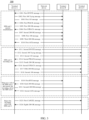
- the first terminal device establishes the first phone call with the second terminal device by using the first SIM card, and the first terminal device receives the second call from the third terminal device by using the second SIM card.
- the first terminal device obtains the first measurement report based on the first event.
- the first terminal device needs to report the measurement report of the first event to the base station.
- the base station After receiving the measurement report of the first event, the base station indicates the first terminal device to perform network switching. After the network switching, the first terminal device no longer meets the condition that the first SIM card is registered on the first network and the second SIM card is registered on the second network.
- the first terminal device no longer has the dual-SIM dual-active function. Therefore, the first terminal device rejects the second call for the second SIM card.
- the cancel message for rejecting the second call cannot be sent to the network side, and the network side cannot synchronize a session status of the second SIM card, and may consider that the second SIM card is still in an occupied state. Consequently, the first terminal device cannot call or be called by using the second SIM card.
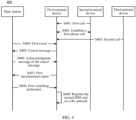
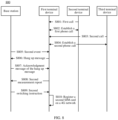
- the method further includes: the first terminal device establishes a second phone call between the first terminal device and the third terminal device in response to the operation of the user of answering the second call on the first terminal device, where the first phone call is held; the first terminal device sends a hang up message after receiving a second event from the base station, to end the first phone call; the first terminal device sends a second measurement report to the base station after receiving an acknowledgment message of the hang up message, where the first terminal device meets a reporting condition of a measurement report of the second event after receiving the second event and before sending the second measurement report; and the first terminal device receives a second switching instruction from the base station, and registers the second SIM card on the third network.
- the first terminal device establishes the first phone call with the second terminal device by using the first SIM card, and the first terminal device receives the second call from the third terminal device by using the second SIM card, answers the second call, and establishes the second phone call with the third terminal device. After the first terminal device answers the second call, the first phone call between the first terminal device and the second terminal device is held.
- the first terminal device receives the second event, the first terminal device obtains the second measurement report based on the second event. When the reporting condition of the measurement report the second event is met, the first terminal device needs to report the measurement report of the second event to the base station.
- the first terminal device may delay (suppress) reporting of the second measurement report.
- the first terminal device first sends the hang up message for ending the first phone call to the base station when the first terminal device does not perform network switching, that is, when the first terminal device still has the dual-SIM dual-active function.
- the hang up message for ending the first phone call can be normally sent.
- the first terminal device determines that the network side has synchronized the session status of the first SIM card.
- the first terminal device may send the second measurement report to the base station, to register the second SIM card on the 4G network based on the second switching instruction of the base station. This helps information synchronization between session statuses of the terminal device and the network side, thereby avoiding a problem that the SIM card of the terminal device cannot perform the call service.
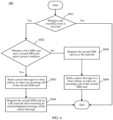
- the method before the first terminal device sends the cancel message, includes: The first terminal device determines that the first SIM card and the second SIM card are SIM cards registered on the 5G network, and that the first SIM card and the second SIM card are both in an occupied state, where the occupied state includes a calling state or a call incoming state.
- the first terminal device may determine whether the first SIM card and the second SIM card meet a preset condition, where the preset condition at least includes: The first SIM card and the second SIM card are both SIM cards registered on the 5G network, and the first SIM card and the second SIM card are both in an occupied state.
- the first event is a B1 event/B2 event; and after receiving the first event from the base station, the method further includes: The first terminal device measures signal quality of a first cell based on the B1 event/B2 event, where the first cell and a serving cell of the first terminal device belong to different communication systems; and the first terminal device obtains the first measurement report based on the signal quality of the first cell.
- the method before receiving the first event from the base station, the method further includes: The first terminal device receives a third event from the base station, where the third event indicates to measure signal quality of the serving cell of the first terminal device; and if the signal quality of the serving cell of the first terminal device is less than a threshold, the first terminal device sends a third measurement report to the base station, where the third measurement report includes the signal quality of the serving cell of the first terminal device.
- this application provides a data transmission method applied to a first terminal device.
- the first terminal device is provided with a first SIM card and a second SIM card, the first SIM card is registered on a first network, and the second SIM card is registered on a second network.
- the first terminal device when the first SIM card is registered on the first network and the second SIM card is registered on the second network, the first terminal device has a dual-SIM dual-active function; and when at least one of the first SIM card and the second SIM card is registered on a network different from the first network and the second network, the first terminal device no longer has the dual-SIM dual-active function.
- the first network is a 5G network
- the second network is a 5G network. After the first terminal device switches the network of the second SIM card and registers the second SIM card on a 4G network, the first terminal device no longer has the dual-SIM dual-active function.
- the first terminal device determines whether the first SIM card and the second SIM card meet the preset condition. If the preset condition is met, network switching needs to be delayed; if the preset condition is not met, network switching does not need to be delayed.
- the first terminal device makes a phone call with another terminal device by using the first SIM card.
- the first terminal device receives an incoming call of another terminal device by using the second SIM card. If in this case, the first terminal device receives the first event, the first terminal device first sends a termination message for rejecting the incoming call of the second SIM card to the network side.
- the termination message may be a cancel (CANCEL) message in session initiation protocol (session initiation protocol, SIP) signaling, and is used for terminating a session that is not established yet.
- the first terminal device reports the first measurement report to the base station after receiving the acknowledgment message of the termination message from the network side.
- the first measurement report is the measurement report of the first event.
- the first terminal device may register the second SIM card on the third network based on the third switching instruction of the base station.
- the first terminal device makes a phone call with another terminal device by using the first SIM card.
- the first terminal device receives an incoming call of another terminal device by using the second SIM card, and the first terminal device answers the incoming call of the second SIM card in response to a user operation, and holds the phone call of the first SIM card.
- the first terminal device receives the first event, the first terminal device first sends a termination message for hanging up the phone call of the first SIM card to the network side.
- the termination message may be a hang up (BYE) message in SIP signaling, and is used for terminating an established session.
- the first terminal device reports the first measurement report to the base station after receiving the acknowledgment message of the termination message from the network side.
- the first measurement report is the measurement report of the first event.
- the first terminal device may register the second SIM card on the third network based on the third switching instruction of the base station.
- the technical solutions of this application help achieve information synchronization between session statuses of the terminal device and the network side, thereby avoiding a problem that a SIM card of the terminal device cannot perform a call service.
- this application provides a data transmission method, applied to a base station.
- the method includes: The base station sends a first event to a first terminal device, where the first terminal device is provided with a first SIM card and a second SIM card, the first SIM card is registered on a first network, the second SIM card is registered on a second network, the first terminal device is performing a first phone call with a second terminal device, and the first terminal device is receiving a second call from a third terminal device; the base station sends a cancel message, where the cancel message is for rejecting the second call; the base station receives an acknowledgment message of the cancel message; the base station receives a first measurement report from the first terminal device after sending the acknowledgment message of the cancel message to the first terminal device; and the base station sends a first switching instruction to the first terminal device, where the first switching instruction instructs the first terminal device to register the second SIM card on a third network, and network standards of the third network and the second network are different.
- the base station may send the cancel message for rejecting the second call, and receive the acknowledgment message of the cancel message. This helps the network side synchronize a session status of the SIM card of the first terminal device, thereby avoiding a problem that the SIM card of the first terminal device cannot perform a call service.
- this application provides a data transmission method, applied to a communication system including a first terminal device and a base station.
- the first terminal device is provided with a first SIM card and a second SIM card, the first SIM card is registered on a 5G network, and the second SIM card is registered on a 5G network.
- the method includes: The first terminal device receives a first call from a second terminal device; and establishes a first phone call between the first terminal device and a second terminal device in response to an operation of a user of answering the first call on the first terminal device; the first terminal device receives a second call from a third terminal device during the first phone call, where the first call and the second call respectively call a number of the first SIM card and a number of the second SIM card; the base station sends a first event to the first terminal device; the first terminal device sends a cancel message after receiving the first event, to reject the second call, where the second call is not answered when the first event is received; the first terminal device sends a first measurement report to the base station after receiving an acknowledgment message of the cancel message, where the first terminal device meets a measurement report reporting condition of the first event after receiving the first event and before sending the first measurement report; and the base station sends a fourth switching instruction to the first terminal device after receiving the first measurement report, where the fourth switching instruction instructs the first terminal device to register the
- this application provides a terminal device.
- the terminal device may also be referred to as a terminal (terminal), user equipment (user equipment, UE), a mobile station (mobile station, MS), a mobile terminal (mobile terminal, MT), and the like.
- the terminal device includes a processor and a memory.
- the memory stores computer-executable instructions.
- the processor executes the computer-executable instructions stored in the memory, so that the terminal device performs the method according to the first aspect or the second aspect.
- the processor may generate an operating control signal according to an instruction operation code and a sequence signal, to complete control of fetching and executing instructions.
- a memory may further be disposed in the processor 110, and is configured to store instructions and data.
- the memory in the processor 110 is a cache memory.
- the memory may store instructions or data recently used or cyclically used by the processor 110. If the processor 110 needs to use the instructions or the data again, the processor 110 may directly invoke the instructions or the data from the memory. This avoids repeated access, and reduces waiting time of the processor 110, thereby improving efficiency of the terminal device 100.
- the display screen 194 is configured to display an image, a video, and the like.
- the display screen 194 includes a display panel.
- the display panel may be a liquid crystal display (liquid crystal display, LCD), an organic light-emitting diode (organic light-emitting diode, OLED), an active-matrix organic light emitting diode (active-matrix organic light emitting diode, AMOLED), a flexible light-emitting diode (flexible light-emitting diode, FLED), a mini-Led, a micro-Led, a micro-oLed, or quantum dot light emitting diodes (quantum dot light emitting diodes, QLED).
- the terminal device 100 may include 1 or N display screens 194. N is a positive integer greater than 1.
- the external memory interface 120 may be configured to connect to an external storage card such as a micro SD card, to extend a storage capability of the terminal device 100.
- the external storage card communicates with the processor 110 through the external memory interface 120, to implement a data storage function, for example, store data files such as music, a photo, and a video into the external storage card.
- the internal memory 121 may be configured to store one or more computer programs, and the one or more computer programs include instructions.
- the processor 110 may run the instructions stored in the internal memory 121, to enable the terminal device 100 to perform various function applications, data processing, and the like.
- the internal memory 121 may include a program storage area and a data storage area.
- the program storage area may store an operating system, and the program storage area may also store one or more applications (such as Gallery and Contacts) and the like.
- the data storage area may store data (for example, photos and contacts) and the like created during use of the terminal device 100.
- the internal memory 121 may include a high-speed random access memory, and may further include a non-volatile memory, for example, at least one disk storage device, a flash memory device, or a universal flash storage (universal flash storage, UFS).
- the processor 110 may run the instructions stored in the internal memory 121 and/or instructions stored in the memory disposed in the processor 110, to enable the terminal device 100 to perform various function applications and data processing.
- the terminal device 100 may implement an audio function, for example, music playback and recording, by using the audio module 170, the speaker 170A, the phone receiver 170B, the microphone 170C, the headset jack 170D, the application processor, and the like.
- the audio module 170 is configured to convert digital audio information into an analog audio signal, and convert an analog audio input into a digital audio signal.
- the audio module 170 may further be configured to encode and decode audio signals.
- the audio module 170 may be disposed in the processor 110, or some function modules in the audio module 170 are disposed in the processor 110.
- the speaker 170A also referred to as a "horn", is configured to convert an electrical audio signal into a sound signal.
- the terminal device 100 may be used to listen to music or listen to a hands-free call by using the speaker 170A.
- the phone receiver 170B also referred to as an "earpiece” is configured to convert an electrical audio signal into a sound signal. When a call is answered or audio information is listened to by using the terminal device 100, the phone receiver 170B may be put close to a human ear to listen to a voice.
- the microphone 170C also referred to as a "mike” or a "mic”, is configured to convert a sound signal into an electrical signal.
- a user may make a sound approaching the microphone 170C through the mouth of the user, to input a sound signal into the microphone 170C.
- At least one microphone 170C may be disposed in the terminal device 100.
- two microphones 170C may be disposed in the terminal device 100, to collect a sound signal and further implement a noise reduction function.
- three, four, or more microphones 170C may be disposed in the terminal device 100, to collect a sound signal, reduce noise, and further identify a sound source, implement a directional recording function, and the like.
- the headset jack 170D is configured to be connected to a wired headset.
- the headset jack 170D may be the USB interface 130, or may be a 3.5 mm open mobile terminal platform (open mobile terminal platform, OMTP) standard interface or a cellular telecommunications industry association of the USA (cellular telecommunications industry association of the USA, CTIA) standard interface.
- open mobile terminal platform OMTP
- cellular telecommunications industry association of the USA cellular telecommunications industry association of the USA, CTIA
- the sensor module 180 may include a pressure sensor 180A, a gyroscope sensor 180B, a barometric pressure sensor 180C, a magnetic sensor 180D, an acceleration sensor 180E, a distance sensor 180F, an optical proximity sensor 180G, a fingerprint sensor 180H, a temperature sensor 180J, a touch sensor 180K, an ambient light sensor 180L, a bone conduction sensor 180M, and the like.
- an operating system for example, an iOS operating system, an Android operating system, or a Windows operating system, runs on the foregoing components in the terminal device.
- An application may be installed and run on the operating system. In some other embodiments, there may be a plurality of operating systems running in the terminal device.
- the hardware modules included in the terminal device shown in FIG. 1 are merely examples for description, and do not constitute a limitation on a specific structure of the terminal device.
- the terminal device provided in this embodiment of this application may further include other hardware modules having an interaction relationship with the hardware modules shown in the figure. This is not specifically limited herein.
- the terminal device may further include a flash light, a micro projection apparatus, and the like.
- the terminal device may further include components such as a keyboard and a mouse.
- the terminal device in embodiments of this application may be a device having a wireless transceiver function, and may be deployed on land, including indoor or outdoor, handheld, wearable, or vehicle-mounted, may be deployed on water (for example, on a ship), or may be deployed in the air (for example, on an airplane, a balloon, or a satellite).
- the terminal device may be user equipment (user equipment, UE), an access terminal, a terminal unit, a subscriber unit (subscriber unit), a terminal station, a mobile station (mobile station, MS), a mobile console, a remote station, a remote terminal, a mobile device, a wireless communication device, a terminal agent, a terminal apparatus, or the like in a 5G network or a future evolved public land mobile network (public land mobile network, PLMN).
- UE user equipment
- UE user equipment
- PLMN public land mobile network
- the access terminal may be a cellular phone (cellular phone), a cordless phone, a session initiation protocol (SIP) phone, a wireless local loop (wireless local loop, WLL) station, a personal digital assistant (personal digital assistant, PDA), a handheld device with a wireless communication function, a computing device or another processing device connected to a wireless modem, a vehicle-mounted device or a wearable device, a virtual reality (virtual reality, VR) terminal device, an augmented reality (augmented reality, AR) terminal device, a wireless terminal in industrial control (industrial control), a wireless terminal in self-driving (self driving), a wireless terminal in remote medical (remote medical), a wireless terminal in a smart grid (smart grid), a wireless terminal in transportation safety (transportation safety), a wireless terminal in a smart city (smart city), a wireless terminal in a smart home (smart home), or the like.
- the terminal may be mobile or fixed. A specific type and structure of the terminal are not limited in embodiments of this
- the terminal device may be an apparatus configured to implement a function of the terminal device, or may be an apparatus, for example, a chip system, that can support the terminal device in implementing the function.
- the apparatus may be installed in the terminal.
- the chip system may include a chip, or may include a chip and another discrete device.
- the terminal device in embodiments of this application may also be referred to as user equipment (UE), a mobile station (mobile station, MS), a mobile terminal (mobile terminal, MT), an access terminal, a subscriber unit, a subscriber station, a mobile station, a mobile console, a remote station, a remote terminal, a mobile device, a user terminal, a terminal, a wireless communication device, a user agent, a user apparatus, or the like.
- UE user equipment
- MS mobile station
- MT mobile terminal
- an access terminal a subscriber unit, a subscriber station, a mobile station, a mobile console, a remote station, a remote terminal, a mobile device, a user terminal, a terminal, a wireless communication device, a user agent, a user apparatus, or the like.
- the 5G data plane includes a user plane network element (UPF) and a data network.
- the UPF is responsible for functions such as interacting with the data network, managing transmission of user plane data, traffic statistics, and security eavesdropping.
- the data network may provide massive and diverse data for the UPD.
- the first terminal device has the dual-SIM dual-active function. Therefore, during the phone call with the second terminal device, the first terminal device may receive the second call from the third terminal device.
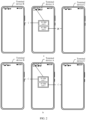
- the third terminal device may be the terminal device C shown in b in FIG. 2 or the terminal device C in FIG. 3 .
- FIG. 8 is a schematic flowchart of still another data transmission method 800 according to an embodiment of this application.
- the method 800 is applied to a communication system including a first terminal device, a second terminal device, a third terminal device, and a base station.
- the first terminal device is provided with a first SIM card and a second SIM card, the first SIM card is registered on a first network, and the second SIM card is registered on a second network.
- the computer-readable medium may include a random access memory (random access memory, RAM), a read-only memory (read-only memory, ROM), a compact disc read-only memory (compact disc read-only memory, CD-ROM) or another optical disk memory, a magnetic disk memory or another magnetic storage device, or any other medium that is to carry or store required program code in a form of an instruction or a data structure, and may be accessed by the computer.
- RAM random access memory
- ROM read-only memory
- CD-ROM compact disc read-only memory
- any connection is appropriately referred to as the computer-readable medium.
- An embodiment of this application provides a computer program product.
- the computer program product includes a computer program, and when the computer program is run, a computer is enabled to perform the foregoing method.
- These computer program instructions may be provided for a processing unit of a general-purpose computer, a dedicated computer, an embedded processor, or any other programmable data processing device to generate a machine, so that the instructions executed by a processing unit of a computer or any other programmable data processing device generate an apparatus for implementing a specific function in one or more procedures in the flowcharts and/or in one or more blocks in the block diagrams.
Landscapes
- Engineering & Computer Science (AREA)
- Computer Networks & Wireless Communication (AREA)
- Signal Processing (AREA)
- Databases & Information Systems (AREA)
- Mobile Radio Communication Systems (AREA)
Applications Claiming Priority (2)
| Application Number | Priority Date | Filing Date | Title |
|---|---|---|---|
| CN202211620134.4A CN118215035B (zh) | 2022-12-15 | 2022-12-15 | 数据传输方法及终端设备 |
| PCT/CN2023/125988 WO2024125089A1 (zh) | 2022-12-15 | 2023-10-23 | 数据传输方法及终端设备 |
Publications (2)
| Publication Number | Publication Date |
|---|---|
| EP4583552A1 true EP4583552A1 (de) | 2025-07-09 |
| EP4583552A4 EP4583552A4 (de) | 2025-12-17 |
Family
ID=91451194
Family Applications (1)
| Application Number | Title | Priority Date | Filing Date |
|---|---|---|---|
| EP23902289.0A Pending EP4583552A4 (de) | 2022-12-15 | 2023-10-23 | Datenübertragungsverfahren und endgerätevorrichtung |
Country Status (3)
| Country | Link |
|---|---|
| EP (1) | EP4583552A4 (de) |
| CN (2) | CN118215035B (de) |
| WO (1) | WO2024125089A1 (de) |
Family Cites Families (9)
| Publication number | Priority date | Publication date | Assignee | Title |
|---|---|---|---|---|
| US10021544B2 (en) * | 2015-01-26 | 2018-07-10 | Apple Inc. | Dual SIM dual standby with caller ID enhancement |
| US10028243B2 (en) * | 2015-11-20 | 2018-07-17 | Mediatek Inc. | Method and system for call setup |
| US10440599B2 (en) * | 2016-09-30 | 2019-10-08 | Intel IP Corporation | Processing requests for measurement of signal quality at the location of a user equipment with multiple SIMs or subscriptions |
| WO2021007696A1 (en) * | 2019-07-12 | 2021-01-21 | Guangdong Oppo Mobile Telecommunications Corp., Ltd. | Multi subscriber identity module user equipment and method for operating same |
| CN111758282B (zh) * | 2020-05-18 | 2023-04-11 | 北京小米移动软件有限公司 | 小区切换方法及装置、存储介质 |
| WO2022067575A1 (zh) * | 2020-09-29 | 2022-04-07 | 华为技术有限公司 | 测量报告上报方法及装置 |
| US12004020B2 (en) * | 2021-01-29 | 2024-06-04 | Qualcomm Incorporated | Techniques for handling calls associated with user equipment transition from dual active mode to dual standby mode |
| US11882495B2 (en) * | 2021-05-13 | 2024-01-23 | Qualcomm Incorporated | Techniques for mobility for dual subscriber dual active user equipment |
| CN114339922B (zh) * | 2021-12-30 | 2024-11-05 | 中国电信股份有限公司 | 数据传输方法及设备、存储介质 |
-
2022
- 2022-12-15 CN CN202211620134.4A patent/CN118215035B/zh active Active
-
2023
- 2023-10-23 CN CN202380070864.8A patent/CN119999245A/zh active Pending
- 2023-10-23 WO PCT/CN2023/125988 patent/WO2024125089A1/zh not_active Ceased
- 2023-10-23 EP EP23902289.0A patent/EP4583552A4/de active Pending
Also Published As
| Publication number | Publication date |
|---|---|
| CN118215035A (zh) | 2024-06-18 |
| CN118215035B (zh) | 2025-04-25 |
| CN119999245A (zh) | 2025-05-13 |
| EP4583552A4 (de) | 2025-12-17 |
| WO2024125089A1 (zh) | 2024-06-20 |
| WO2024125089A9 (zh) | 2024-09-19 |
Similar Documents
| Publication | Publication Date | Title |
|---|---|---|
| US12452786B2 (en) | Network connection processing method, related device, and computer storage medium | |
| EP4213512B1 (de) | Bildschirmprojektionsverfahren und -system sowie elektronische vorrichtung | |
| CN114828126B (zh) | 一种被叫寻呼方法和装置 | |
| EP4387331B1 (de) | Kommunikationsverfahren und elektronische vorrichtung | |
| EP4404625A1 (de) | Zellenübergabeverfahren, endgerätevorrichtung und lesbares speichermedium | |
| WO2020155013A1 (zh) | 一种紧急呼叫方法及用户终端 | |
| CN118677984B (zh) | 通信方法、通信设备、通信系统及计算机可读介质 | |
| CN114466324B (zh) | 呼叫方法及相关装置 | |
| CN109451525B (zh) | 一种拥塞判断的方法及装置 | |
| CN116320152A (zh) | 一种会议中接收来电的处理方法、终端及芯片系统 | |
| EP4583552A1 (de) | Datenübertragungsverfahren und endgerätevorrichtung | |
| US20250240331A1 (en) | Voice call method and apparatus, computer-readable storage medium, and chip system | |
| CN118450043B (zh) | 一种呼叫处理方法、终端及存储介质 | |
| EP4701173A1 (de) | Verfahren und vorrichtung für eine rufverbindung | |
| CN118368362B (zh) | 语音呼叫方法、装置、计算机可读存储介质和芯片系统 | |
| EP4608058A1 (de) | Verfahren und vorrichtung zur herstellung eines anrufs | |
| RU2805992C2 (ru) | Способ обработки сетевого соединения, соответствующее устройство и компьютерный носитель | |
| WO2025061115A1 (zh) | 一种通话方法、电子设备及系统 | |
| CN120692604A (zh) | 语音业务处理方法、电子设备和计算机可读存储介质 | |
| CN120379073A (zh) | 一种通话方法、终端设备、可读存储介质及芯片系统 |
Legal Events
| Date | Code | Title | Description |
|---|---|---|---|
| STAA | Information on the status of an ep patent application or granted ep patent |
Free format text: STATUS: THE INTERNATIONAL PUBLICATION HAS BEEN MADE |
|
| PUAI | Public reference made under article 153(3) epc to a published international application that has entered the european phase |
Free format text: ORIGINAL CODE: 0009012 |
|
| STAA | Information on the status of an ep patent application or granted ep patent |
Free format text: STATUS: REQUEST FOR EXAMINATION WAS MADE |
|
| 17P | Request for examination filed |
Effective date: 20250403 |
|
| AK | Designated contracting states |
Kind code of ref document: A1 Designated state(s): AL AT BE BG CH CY CZ DE DK EE ES FI FR GB GR HR HU IE IS IT LI LT LU LV MC ME MK MT NL NO PL PT RO RS SE SI SK SM TR |
|
| A4 | Supplementary search report drawn up and despatched |
Effective date: 20251119 |
|
| RIC1 | Information provided on ipc code assigned before grant |
Ipc: H04W 8/18 20090101AFI20251113BHEP Ipc: H04W 36/00 20090101ALI20251113BHEP Ipc: H04W 60/00 20090101ALN20251113BHEP Ipc: H04W 88/06 20090101ALN20251113BHEP |
|
| DAV | Request for validation of the european patent (deleted) | ||
| DAX | Request for extension of the european patent (deleted) |