EP4450150A1 - Funktionale trennschicht, trennmembran und verfahren zur herstellung der funktionalen trennschicht - Google Patents
Funktionale trennschicht, trennmembran und verfahren zur herstellung der funktionalen trennschicht Download PDFInfo
- Publication number
- EP4450150A1 EP4450150A1 EP22907330.9A EP22907330A EP4450150A1 EP 4450150 A1 EP4450150 A1 EP 4450150A1 EP 22907330 A EP22907330 A EP 22907330A EP 4450150 A1 EP4450150 A1 EP 4450150A1
- Authority
- EP
- European Patent Office
- Prior art keywords
- group
- functional layer
- separation
- separation functional
- structural unit
- Prior art date
- Legal status (The legal status is an assumption and is not a legal conclusion. Google has not performed a legal analysis and makes no representation as to the accuracy of the status listed.)
- Withdrawn
Links
- 238000000926 separation method Methods 0.000 title claims abstract description 353
- 239000002346 layers by function Substances 0.000 title claims abstract description 226
- 239000012528 membrane Substances 0.000 title claims description 111
- 238000004519 manufacturing process Methods 0.000 title claims description 24
- 229920001721 polyimide Polymers 0.000 claims abstract description 131
- 239000004642 Polyimide Substances 0.000 claims abstract description 128
- 125000000524 functional group Chemical group 0.000 claims abstract description 110
- 229910052751 metal Chemical class 0.000 claims abstract description 92
- 239000002184 metal Chemical class 0.000 claims abstract description 92
- 239000000203 mixture Substances 0.000 claims abstract description 75
- 150000004985 diamines Chemical class 0.000 claims abstract description 68
- 150000003839 salts Chemical class 0.000 claims abstract description 51
- GTDPSWPPOUPBNX-UHFFFAOYSA-N ac1mqpva Chemical compound CC12C(=O)OC(=O)C1(C)C1(C)C2(C)C(=O)OC1=O GTDPSWPPOUPBNX-UHFFFAOYSA-N 0.000 claims abstract description 49
- 125000006158 tetracarboxylic acid group Chemical group 0.000 claims abstract description 49
- 125000003178 carboxy group Chemical group [H]OC(*)=O 0.000 claims abstract description 26
- 150000008065 acid anhydrides Chemical group 0.000 claims abstract description 18
- 125000002887 hydroxy group Chemical group [H]O* 0.000 claims abstract description 16
- 125000003396 thiol group Chemical class [H]S* 0.000 claims abstract description 15
- CURLTUGMZLYLDI-UHFFFAOYSA-N Carbon dioxide Chemical compound O=C=O CURLTUGMZLYLDI-UHFFFAOYSA-N 0.000 claims description 135
- 239000007789 gas Substances 0.000 claims description 102
- 229910002092 carbon dioxide Inorganic materials 0.000 claims description 76
- 239000011248 coating agent Substances 0.000 claims description 75
- 238000000576 coating method Methods 0.000 claims description 75
- 125000001424 substituent group Chemical group 0.000 claims description 70
- VNWKTOKETHGBQD-UHFFFAOYSA-N methane Chemical compound C VNWKTOKETHGBQD-UHFFFAOYSA-N 0.000 claims description 61
- 239000001569 carbon dioxide Substances 0.000 claims description 59
- 239000000463 material Substances 0.000 claims description 54
- 239000007788 liquid Substances 0.000 claims description 51
- 238000000034 method Methods 0.000 claims description 49
- 125000004435 hydrogen atom Chemical group [H]* 0.000 claims description 34
- 150000001875 compounds Chemical class 0.000 claims description 33
- IJGRMHOSHXDMSA-UHFFFAOYSA-N Atomic nitrogen Chemical compound N#N IJGRMHOSHXDMSA-UHFFFAOYSA-N 0.000 claims description 22
- 125000003118 aryl group Chemical group 0.000 claims description 21
- 150000004696 coordination complex Chemical class 0.000 claims description 21
- 239000000126 substance Substances 0.000 claims description 19
- 238000001035 drying Methods 0.000 claims description 18
- 125000005647 linker group Chemical group 0.000 claims description 16
- 239000003446 ligand Substances 0.000 claims description 14
- 238000005259 measurement Methods 0.000 claims description 13
- 229910052757 nitrogen Inorganic materials 0.000 claims description 13
- 125000000472 sulfonyl group Chemical group *S(*)(=O)=O 0.000 claims description 13
- AZDRQVAHHNSJOQ-UHFFFAOYSA-N alumane Chemical group [AlH3] AZDRQVAHHNSJOQ-UHFFFAOYSA-N 0.000 claims description 3
- 239000002253 acid Substances 0.000 abstract description 38
- 150000002430 hydrocarbons Chemical group 0.000 description 72
- 125000005843 halogen group Chemical group 0.000 description 40
- 239000010410 layer Substances 0.000 description 33
- 239000002105 nanoparticle Substances 0.000 description 33
- 238000010438 heat treatment Methods 0.000 description 24
- -1 propane-2,2-diyl group Chemical group 0.000 description 24
- SECXISVLQFMRJM-UHFFFAOYSA-N N-Methylpyrrolidone Chemical compound CN1CCCC1=O SECXISVLQFMRJM-UHFFFAOYSA-N 0.000 description 22
- 238000012360 testing method Methods 0.000 description 22
- 239000000243 solution Substances 0.000 description 19
- 239000012530 fluid Substances 0.000 description 17
- 229920005989 resin Polymers 0.000 description 17
- 239000011347 resin Substances 0.000 description 17
- 239000002904 solvent Substances 0.000 description 17
- 238000005452 bending Methods 0.000 description 16
- 150000001768 cations Chemical class 0.000 description 15
- 230000014759 maintenance of location Effects 0.000 description 13
- CUJRVFIICFDLGR-UHFFFAOYSA-N acetylacetonate Chemical compound CC(=O)[CH-]C(C)=O CUJRVFIICFDLGR-UHFFFAOYSA-N 0.000 description 12
- 229910017053 inorganic salt Inorganic materials 0.000 description 12
- 150000002500 ions Chemical class 0.000 description 12
- 125000004432 carbon atom Chemical group C* 0.000 description 10
- OKKJLVBELUTLKV-UHFFFAOYSA-N Methanol Chemical compound OC OKKJLVBELUTLKV-UHFFFAOYSA-N 0.000 description 9
- 239000003795 chemical substances by application Substances 0.000 description 9
- 125000002924 primary amino group Chemical group [H]N([H])* 0.000 description 9
- 239000004952 Polyamide Substances 0.000 description 8
- VYPSYNLAJGMNEJ-UHFFFAOYSA-N Silicium dioxide Chemical compound O=[Si]=O VYPSYNLAJGMNEJ-UHFFFAOYSA-N 0.000 description 8
- 150000001732 carboxylic acid derivatives Chemical class 0.000 description 8
- 230000004048 modification Effects 0.000 description 8
- 238000012986 modification Methods 0.000 description 8
- YTVNOVQHSGMMOV-UHFFFAOYSA-N naphthalenetetracarboxylic dianhydride Chemical compound C1=CC(C(=O)OC2=O)=C3C2=CC=C2C(=O)OC(=O)C1=C32 YTVNOVQHSGMMOV-UHFFFAOYSA-N 0.000 description 8
- 239000002245 particle Substances 0.000 description 8
- 229920002647 polyamide Polymers 0.000 description 8
- 239000011159 matrix material Substances 0.000 description 7
- MWUXSHHQAYIFBG-UHFFFAOYSA-N Nitric oxide Chemical compound O=[N] MWUXSHHQAYIFBG-UHFFFAOYSA-N 0.000 description 6
- 239000007864 aqueous solution Substances 0.000 description 6
- 125000004185 ester group Chemical group 0.000 description 6
- 125000001033 ether group Chemical group 0.000 description 6
- 229920000139 polyethylene terephthalate Polymers 0.000 description 6
- 239000005020 polyethylene terephthalate Substances 0.000 description 6
- 229920000642 polymer Polymers 0.000 description 6
- 238000005406 washing Methods 0.000 description 6
- XLYOFNOQVPJJNP-UHFFFAOYSA-N water Substances O XLYOFNOQVPJJNP-UHFFFAOYSA-N 0.000 description 6
- ZMXDDKWLCZADIW-UHFFFAOYSA-N N,N-Dimethylformamide Chemical compound CN(C)C=O ZMXDDKWLCZADIW-UHFFFAOYSA-N 0.000 description 5
- 125000000217 alkyl group Chemical group 0.000 description 5
- 239000002131 composite material Substances 0.000 description 5
- 238000003851 corona treatment Methods 0.000 description 5
- 125000002496 methyl group Chemical group [H]C([H])([H])* 0.000 description 5
- 239000013110 organic ligand Substances 0.000 description 5
- 238000003756 stirring Methods 0.000 description 5
- YEJRWHAVMIAJKC-UHFFFAOYSA-N 4-Butyrolactone Chemical compound O=C1CCCO1 YEJRWHAVMIAJKC-UHFFFAOYSA-N 0.000 description 4
- YRKCREAYFQTBPV-UHFFFAOYSA-N acetylacetone Chemical compound CC(=O)CC(C)=O YRKCREAYFQTBPV-UHFFFAOYSA-N 0.000 description 4
- 125000002947 alkylene group Chemical group 0.000 description 4
- JLDSOYXADOWAKB-UHFFFAOYSA-N aluminium nitrate Chemical compound [Al+3].[O-][N+]([O-])=O.[O-][N+]([O-])=O.[O-][N+]([O-])=O JLDSOYXADOWAKB-UHFFFAOYSA-N 0.000 description 4
- 230000006866 deterioration Effects 0.000 description 4
- 238000005342 ion exchange Methods 0.000 description 4
- 229920002492 poly(sulfone) Polymers 0.000 description 4
- 239000000377 silicon dioxide Substances 0.000 description 4
- 238000003860 storage Methods 0.000 description 4
- 230000036962 time dependent Effects 0.000 description 4
- WFDIJRYMOXRFFG-UHFFFAOYSA-N Acetic anhydride Chemical compound CC(=O)OC(C)=O WFDIJRYMOXRFFG-UHFFFAOYSA-N 0.000 description 3
- 229910002651 NO3 Inorganic materials 0.000 description 3
- NHNBFGGVMKEFGY-UHFFFAOYSA-N Nitrate Chemical compound [O-][N+]([O-])=O NHNBFGGVMKEFGY-UHFFFAOYSA-N 0.000 description 3
- JUJWROOIHBZHMG-UHFFFAOYSA-N Pyridine Chemical group C1=CC=NC=C1 JUJWROOIHBZHMG-UHFFFAOYSA-N 0.000 description 3
- ZMANZCXQSJIPKH-UHFFFAOYSA-N Triethylamine Chemical compound CCN(CC)CC ZMANZCXQSJIPKH-UHFFFAOYSA-N 0.000 description 3
- 230000032683 aging Effects 0.000 description 3
- 229910052782 aluminium Inorganic materials 0.000 description 3
- 230000015572 biosynthetic process Effects 0.000 description 3
- 229910001424 calcium ion Inorganic materials 0.000 description 3
- 238000006243 chemical reaction Methods 0.000 description 3
- 208000028659 discharge Diseases 0.000 description 3
- 230000014509 gene expression Effects 0.000 description 3
- 239000012510 hollow fiber Substances 0.000 description 3
- 229910001425 magnesium ion Inorganic materials 0.000 description 3
- 125000001570 methylene group Chemical group [H]C([H])([*:1])[*:2] 0.000 description 3
- 239000011259 mixed solution Substances 0.000 description 3
- ZIUHHBKFKCYYJD-UHFFFAOYSA-N n,n'-methylenebisacrylamide Chemical compound C=CC(=O)NCNC(=O)C=C ZIUHHBKFKCYYJD-UHFFFAOYSA-N 0.000 description 3
- 239000012466 permeate Substances 0.000 description 3
- 229920000728 polyester Polymers 0.000 description 3
- 239000009719 polyimide resin Substances 0.000 description 3
- 229920005749 polyurethane resin Polymers 0.000 description 3
- 239000011148 porous material Substances 0.000 description 3
- 239000002243 precursor Substances 0.000 description 3
- 229920002050 silicone resin Polymers 0.000 description 3
- 229910001415 sodium ion Inorganic materials 0.000 description 3
- 125000003258 trimethylene group Chemical group [H]C([H])([*:2])C([H])([H])C([H])([H])[*:1] 0.000 description 3
- ZVDSMYGTJDFNHN-UHFFFAOYSA-N 2,4,6-trimethylbenzene-1,3-diamine Chemical compound CC1=CC(C)=C(N)C(C)=C1N ZVDSMYGTJDFNHN-UHFFFAOYSA-N 0.000 description 2
- OJSPYCPPVCMEBS-UHFFFAOYSA-N 2,8-dimethyl-5,5-dioxodibenzothiophene-3,7-diamine Chemical compound C12=CC(C)=C(N)C=C2S(=O)(=O)C2=C1C=C(C)C(N)=C2 OJSPYCPPVCMEBS-UHFFFAOYSA-N 0.000 description 2
- CSCPPACGZOOCGX-UHFFFAOYSA-N Acetone Chemical compound CC(C)=O CSCPPACGZOOCGX-UHFFFAOYSA-N 0.000 description 2
- 229920001780 ECTFE Polymers 0.000 description 2
- YCKRFDGAMUMZLT-UHFFFAOYSA-N Fluorine atom Chemical compound [F] YCKRFDGAMUMZLT-UHFFFAOYSA-N 0.000 description 2
- TWRXJAOTZQYOKJ-UHFFFAOYSA-L Magnesium chloride Chemical compound [Mg+2].[Cl-].[Cl-] TWRXJAOTZQYOKJ-UHFFFAOYSA-L 0.000 description 2
- FXHOOIRPVKKKFG-UHFFFAOYSA-N N,N-Dimethylacetamide Chemical compound CN(C)C(C)=O FXHOOIRPVKKKFG-UHFFFAOYSA-N 0.000 description 2
- 239000004698 Polyethylene Substances 0.000 description 2
- 239000004721 Polyphenylene oxide Substances 0.000 description 2
- 239000004734 Polyphenylene sulfide Substances 0.000 description 2
- 239000004743 Polypropylene Substances 0.000 description 2
- 239000004793 Polystyrene Substances 0.000 description 2
- WCUXLLCKKVVCTQ-UHFFFAOYSA-M Potassium chloride Chemical compound [Cl-].[K+] WCUXLLCKKVVCTQ-UHFFFAOYSA-M 0.000 description 2
- XUIMIQQOPSSXEZ-UHFFFAOYSA-N Silicon Chemical group [Si] XUIMIQQOPSSXEZ-UHFFFAOYSA-N 0.000 description 2
- FAPWRFPIFSIZLT-UHFFFAOYSA-M Sodium chloride Chemical compound [Na+].[Cl-] FAPWRFPIFSIZLT-UHFFFAOYSA-M 0.000 description 2
- GWEVSGVZZGPLCZ-UHFFFAOYSA-N Titan oxide Chemical compound O=[Ti]=O GWEVSGVZZGPLCZ-UHFFFAOYSA-N 0.000 description 2
- 229920000122 acrylonitrile butadiene styrene Polymers 0.000 description 2
- 125000004423 acyloxy group Chemical group 0.000 description 2
- 125000003277 amino group Chemical group 0.000 description 2
- WPYMKLBDIGXBTP-UHFFFAOYSA-N benzoic acid Chemical compound OC(=O)C1=CC=CC=C1 WPYMKLBDIGXBTP-UHFFFAOYSA-N 0.000 description 2
- 229910052791 calcium Inorganic materials 0.000 description 2
- JJWKPURADFRFRB-UHFFFAOYSA-N carbonyl sulfide Chemical compound O=C=S JJWKPURADFRFRB-UHFFFAOYSA-N 0.000 description 2
- 238000009833 condensation Methods 0.000 description 2
- 230000005494 condensation Effects 0.000 description 2
- BGTOWKSIORTVQH-UHFFFAOYSA-N cyclopentanone Chemical compound O=C1CCCC1 BGTOWKSIORTVQH-UHFFFAOYSA-N 0.000 description 2
- 230000003247 decreasing effect Effects 0.000 description 2
- 230000018044 dehydration Effects 0.000 description 2
- 238000006297 dehydration reaction Methods 0.000 description 2
- 238000003618 dip coating Methods 0.000 description 2
- TXKMVPPZCYKFAC-UHFFFAOYSA-N disulfur monoxide Inorganic materials O=S=S TXKMVPPZCYKFAC-UHFFFAOYSA-N 0.000 description 2
- 125000000816 ethylene group Chemical group [H]C([H])([*:1])C([H])([H])[*:2] 0.000 description 2
- 238000011156 evaluation Methods 0.000 description 2
- 229910052731 fluorine Inorganic materials 0.000 description 2
- 239000011737 fluorine Substances 0.000 description 2
- CHPZKNULDCNCBW-UHFFFAOYSA-N gallium nitrate Inorganic materials [Ga+3].[O-][N+]([O-])=O.[O-][N+]([O-])=O.[O-][N+]([O-])=O CHPZKNULDCNCBW-UHFFFAOYSA-N 0.000 description 2
- 150000008282 halocarbons Chemical group 0.000 description 2
- LELOWRISYMNNSU-UHFFFAOYSA-N hydrogen cyanide Chemical compound N#C LELOWRISYMNNSU-UHFFFAOYSA-N 0.000 description 2
- 230000006872 improvement Effects 0.000 description 2
- 229910010272 inorganic material Inorganic materials 0.000 description 2
- 239000011147 inorganic material Substances 0.000 description 2
- 229910052742 iron Inorganic materials 0.000 description 2
- AWJUIBRHMBBTKR-UHFFFAOYSA-N isoquinoline Chemical compound C1=NC=CC2=CC=CC=C21 AWJUIBRHMBBTKR-UHFFFAOYSA-N 0.000 description 2
- RLJMLMKIBZAXJO-UHFFFAOYSA-N lead nitrate Chemical compound [O-][N+](=O)O[Pb]O[N+]([O-])=O RLJMLMKIBZAXJO-UHFFFAOYSA-N 0.000 description 2
- KWGKDLIKAYFUFQ-UHFFFAOYSA-M lithium chloride Chemical compound [Li+].[Cl-] KWGKDLIKAYFUFQ-UHFFFAOYSA-M 0.000 description 2
- 229910052749 magnesium Inorganic materials 0.000 description 2
- YIXJRHPUWRPCBB-UHFFFAOYSA-N magnesium nitrate Inorganic materials [Mg+2].[O-][N+]([O-])=O.[O-][N+]([O-])=O YIXJRHPUWRPCBB-UHFFFAOYSA-N 0.000 description 2
- 239000007769 metal material Substances 0.000 description 2
- 239000000178 monomer Substances 0.000 description 2
- 125000004433 nitrogen atom Chemical group N* 0.000 description 2
- 239000004745 nonwoven fabric Substances 0.000 description 2
- 238000009832 plasma treatment Methods 0.000 description 2
- 229920000573 polyethylene Polymers 0.000 description 2
- 229920000306 polymethylpentene Polymers 0.000 description 2
- 239000011116 polymethylpentene Substances 0.000 description 2
- 229920001955 polyphenylene ether Polymers 0.000 description 2
- 229920000069 polyphenylene sulfide Polymers 0.000 description 2
- 229920001155 polypropylene Polymers 0.000 description 2
- 229920001296 polysiloxane Polymers 0.000 description 2
- 229920002223 polystyrene Polymers 0.000 description 2
- 229920001343 polytetrafluoroethylene Polymers 0.000 description 2
- 239000004810 polytetrafluoroethylene Substances 0.000 description 2
- 229920002635 polyurethane Polymers 0.000 description 2
- 239000004814 polyurethane Substances 0.000 description 2
- 229910052710 silicon Inorganic materials 0.000 description 2
- 229910052708 sodium Inorganic materials 0.000 description 2
- 239000007787 solid Substances 0.000 description 2
- 238000004528 spin coating Methods 0.000 description 2
- 229910001220 stainless steel Inorganic materials 0.000 description 2
- 239000010935 stainless steel Substances 0.000 description 2
- 125000000542 sulfonic acid group Chemical group 0.000 description 2
- XTQHKBHJIVJGKJ-UHFFFAOYSA-N sulfur monoxide Chemical compound S=O XTQHKBHJIVJGKJ-UHFFFAOYSA-N 0.000 description 2
- 229910052719 titanium Inorganic materials 0.000 description 2
- 239000010936 titanium Substances 0.000 description 2
- ZVYYAYJIGYODSD-LNTINUHCSA-K (z)-4-bis[[(z)-4-oxopent-2-en-2-yl]oxy]gallanyloxypent-3-en-2-one Chemical compound [Ga+3].C\C([O-])=C\C(C)=O.C\C([O-])=C\C(C)=O.C\C([O-])=C\C(C)=O ZVYYAYJIGYODSD-LNTINUHCSA-K 0.000 description 1
- LFKXWKGYHQXRQA-FDGPNNRMSA-N (z)-4-hydroxypent-3-en-2-one;iron Chemical compound [Fe].C\C(O)=C\C(C)=O.C\C(O)=C\C(C)=O LFKXWKGYHQXRQA-FDGPNNRMSA-N 0.000 description 1
- WNXJIVFYUVYPPR-UHFFFAOYSA-N 1,3-dioxolane Chemical compound C1COCO1 WNXJIVFYUVYPPR-UHFFFAOYSA-N 0.000 description 1
- VLDPXPPHXDGHEW-UHFFFAOYSA-N 1-chloro-2-dichlorophosphoryloxybenzene Chemical compound ClC1=CC=CC=C1OP(Cl)(Cl)=O VLDPXPPHXDGHEW-UHFFFAOYSA-N 0.000 description 1
- QRUWUSOUUMPANJ-UHFFFAOYSA-N 2-amino-5-[(4-amino-3-carboxyphenyl)methyl]benzoic acid Chemical compound C1=C(C(O)=O)C(N)=CC=C1CC1=CC=C(N)C(C(O)=O)=C1 QRUWUSOUUMPANJ-UHFFFAOYSA-N 0.000 description 1
- UENRXLSRMCSUSN-UHFFFAOYSA-N 3,5-diaminobenzoic acid Chemical compound NC1=CC(N)=CC(C(O)=O)=C1 UENRXLSRMCSUSN-UHFFFAOYSA-N 0.000 description 1
- QHHKLPCQTTWFSS-UHFFFAOYSA-N 5-[2-(1,3-dioxo-2-benzofuran-5-yl)-1,1,1,3,3,3-hexafluoropropan-2-yl]-2-benzofuran-1,3-dione Chemical compound C1=C2C(=O)OC(=O)C2=CC(C(C=2C=C3C(=O)OC(=O)C3=CC=2)(C(F)(F)F)C(F)(F)F)=C1 QHHKLPCQTTWFSS-UHFFFAOYSA-N 0.000 description 1
- ZCYVEMRRCGMTRW-UHFFFAOYSA-N 7553-56-2 Chemical group [I] ZCYVEMRRCGMTRW-UHFFFAOYSA-N 0.000 description 1
- 101710134784 Agnoprotein Proteins 0.000 description 1
- 239000005711 Benzoic acid Substances 0.000 description 1
- UXVMQQNJUSDDNG-UHFFFAOYSA-L Calcium chloride Chemical compound [Cl-].[Cl-].[Ca+2] UXVMQQNJUSDDNG-UHFFFAOYSA-L 0.000 description 1
- VEXZGXHMUGYJMC-UHFFFAOYSA-M Chloride anion Chemical compound [Cl-] VEXZGXHMUGYJMC-UHFFFAOYSA-M 0.000 description 1
- 229910021592 Copper(II) chloride Inorganic materials 0.000 description 1
- RWSOTUBLDIXVET-UHFFFAOYSA-N Dihydrogen sulfide Chemical compound S RWSOTUBLDIXVET-UHFFFAOYSA-N 0.000 description 1
- YLQBMQCUIZJEEH-UHFFFAOYSA-N Furan Chemical group C=1C=COC=1 YLQBMQCUIZJEEH-UHFFFAOYSA-N 0.000 description 1
- 229910021586 Nickel(II) chloride Inorganic materials 0.000 description 1
- 239000004677 Nylon Substances 0.000 description 1
- 239000002033 PVDF binder Substances 0.000 description 1
- 229920003171 Poly (ethylene oxide) Polymers 0.000 description 1
- 239000004696 Poly ether ether ketone Substances 0.000 description 1
- 239000005062 Polybutadiene Substances 0.000 description 1
- 229920002614 Polyether block amide Polymers 0.000 description 1
- 239000006087 Silane Coupling Agent Substances 0.000 description 1
- QAOWNCQODCNURD-UHFFFAOYSA-L Sulfate Chemical compound [O-]S([O-])(=O)=O QAOWNCQODCNURD-UHFFFAOYSA-L 0.000 description 1
- YTPLMLYBLZKORZ-UHFFFAOYSA-N Thiophene Chemical group C=1C=CSC=1 YTPLMLYBLZKORZ-UHFFFAOYSA-N 0.000 description 1
- RTAQQCXQSZGOHL-UHFFFAOYSA-N Titanium Chemical compound [Ti] RTAQQCXQSZGOHL-UHFFFAOYSA-N 0.000 description 1
- 239000002250 absorbent Substances 0.000 description 1
- 230000002745 absorbent Effects 0.000 description 1
- 238000010521 absorption reaction Methods 0.000 description 1
- 125000005595 acetylacetonate group Chemical group 0.000 description 1
- XECAHXYUAAWDEL-UHFFFAOYSA-N acrylonitrile butadiene styrene Chemical compound C=CC=C.C=CC#N.C=CC1=CC=CC=C1 XECAHXYUAAWDEL-UHFFFAOYSA-N 0.000 description 1
- 239000004676 acrylonitrile butadiene styrene Substances 0.000 description 1
- 125000002723 alicyclic group Chemical group 0.000 description 1
- HSFWRNGVRCDJHI-UHFFFAOYSA-N alpha-acetylene Natural products C#C HSFWRNGVRCDJHI-UHFFFAOYSA-N 0.000 description 1
- XAGFODPZIPBFFR-UHFFFAOYSA-N aluminium Chemical compound [Al] XAGFODPZIPBFFR-UHFFFAOYSA-N 0.000 description 1
- PNEYBMLMFCGWSK-UHFFFAOYSA-N aluminium oxide Inorganic materials [O-2].[O-2].[O-2].[Al+3].[Al+3] PNEYBMLMFCGWSK-UHFFFAOYSA-N 0.000 description 1
- KVLCHQHEQROXGN-UHFFFAOYSA-N aluminium(1+) Chemical compound [Al+] KVLCHQHEQROXGN-UHFFFAOYSA-N 0.000 description 1
- 229940007076 aluminum cation Drugs 0.000 description 1
- 125000003368 amide group Chemical group 0.000 description 1
- 125000006294 amino alkylene group Chemical group 0.000 description 1
- 238000000137 annealing Methods 0.000 description 1
- 125000005577 anthracene group Chemical group 0.000 description 1
- 239000004760 aramid Substances 0.000 description 1
- 229920003235 aromatic polyamide Polymers 0.000 description 1
- 229910001626 barium chloride Inorganic materials 0.000 description 1
- WDIHJSXYQDMJHN-UHFFFAOYSA-L barium chloride Chemical compound [Cl-].[Cl-].[Ba+2] WDIHJSXYQDMJHN-UHFFFAOYSA-L 0.000 description 1
- 235000010233 benzoic acid Nutrition 0.000 description 1
- 229910052790 beryllium Inorganic materials 0.000 description 1
- 230000005540 biological transmission Effects 0.000 description 1
- 238000009835 boiling Methods 0.000 description 1
- 229910052796 boron Inorganic materials 0.000 description 1
- 125000001246 bromo group Chemical group Br* 0.000 description 1
- 239000001110 calcium chloride Substances 0.000 description 1
- 229910001628 calcium chloride Inorganic materials 0.000 description 1
- 238000011088 calibration curve Methods 0.000 description 1
- 229910052799 carbon Inorganic materials 0.000 description 1
- 150000001721 carbon Chemical group 0.000 description 1
- 125000002915 carbonyl group Chemical group [*:2]C([*:1])=O 0.000 description 1
- 239000000919 ceramic Substances 0.000 description 1
- 230000008859 change Effects 0.000 description 1
- 125000001309 chloro group Chemical group Cl* 0.000 description 1
- 229910052804 chromium Inorganic materials 0.000 description 1
- 230000000052 comparative effect Effects 0.000 description 1
- 239000012809 cooling fluid Substances 0.000 description 1
- 229920001577 copolymer Polymers 0.000 description 1
- 229910052802 copper Inorganic materials 0.000 description 1
- ORTQZVOHEJQUHG-UHFFFAOYSA-L copper(II) chloride Chemical compound Cl[Cu]Cl ORTQZVOHEJQUHG-UHFFFAOYSA-L 0.000 description 1
- 238000005520 cutting process Methods 0.000 description 1
- 230000007423 decrease Effects 0.000 description 1
- 239000004205 dimethyl polysiloxane Substances 0.000 description 1
- 239000006185 dispersion Substances 0.000 description 1
- 238000009826 distribution Methods 0.000 description 1
- 230000000694 effects Effects 0.000 description 1
- 239000003822 epoxy resin Substances 0.000 description 1
- 125000001495 ethyl group Chemical group [H]C([H])([H])C([H])([H])* 0.000 description 1
- 239000005038 ethylene vinyl acetate Substances 0.000 description 1
- 239000000835 fiber Substances 0.000 description 1
- 238000001914 filtration Methods 0.000 description 1
- 125000001153 fluoro group Chemical group F* 0.000 description 1
- 239000006260 foam Substances 0.000 description 1
- 229910052733 gallium Inorganic materials 0.000 description 1
- VANNPISTIUFMLH-UHFFFAOYSA-N glutaric anhydride Chemical group O=C1CCCC(=O)O1 VANNPISTIUFMLH-UHFFFAOYSA-N 0.000 description 1
- 239000001307 helium Substances 0.000 description 1
- 229910052734 helium Inorganic materials 0.000 description 1
- SWQJXJOGLNCZEY-UHFFFAOYSA-N helium atom Chemical compound [He] SWQJXJOGLNCZEY-UHFFFAOYSA-N 0.000 description 1
- 125000001072 heteroaryl group Chemical group 0.000 description 1
- 125000005842 heteroatom Chemical group 0.000 description 1
- 239000001257 hydrogen Substances 0.000 description 1
- 229910052739 hydrogen Inorganic materials 0.000 description 1
- 229910000037 hydrogen sulfide Inorganic materials 0.000 description 1
- 125000005462 imide group Chemical group 0.000 description 1
- 229910052738 indium Inorganic materials 0.000 description 1
- 239000011261 inert gas Substances 0.000 description 1
- 238000010884 ion-beam technique Methods 0.000 description 1
- 229910000360 iron(III) sulfate Inorganic materials 0.000 description 1
- 230000001678 irradiating effect Effects 0.000 description 1
- 125000000468 ketone group Chemical group 0.000 description 1
- 239000004816 latex Substances 0.000 description 1
- 229920000126 latex Polymers 0.000 description 1
- 229910052745 lead Inorganic materials 0.000 description 1
- 229910052744 lithium Inorganic materials 0.000 description 1
- 229910001629 magnesium chloride Inorganic materials 0.000 description 1
- 229910052748 manganese Inorganic materials 0.000 description 1
- 239000006262 metallic foam Substances 0.000 description 1
- 238000001000 micrograph Methods 0.000 description 1
- 239000012046 mixed solvent Substances 0.000 description 1
- 238000002156 mixing Methods 0.000 description 1
- 229910052750 molybdenum Inorganic materials 0.000 description 1
- CWQXQMHSOZUFJS-UHFFFAOYSA-N molybdenum disulfide Chemical compound S=[Mo]=S CWQXQMHSOZUFJS-UHFFFAOYSA-N 0.000 description 1
- 125000002950 monocyclic group Chemical group 0.000 description 1
- 125000001624 naphthyl group Chemical group 0.000 description 1
- 229910052759 nickel Inorganic materials 0.000 description 1
- QMMRZOWCJAIUJA-UHFFFAOYSA-L nickel dichloride Chemical compound Cl[Ni]Cl QMMRZOWCJAIUJA-UHFFFAOYSA-L 0.000 description 1
- 229920001778 nylon Polymers 0.000 description 1
- 125000002347 octyl group Chemical group [H]C([*])([H])C([H])([H])C([H])([H])C([H])([H])C([H])([H])C([H])([H])C([H])([H])C([H])([H])[H] 0.000 description 1
- 239000011368 organic material Substances 0.000 description 1
- 125000004430 oxygen atom Chemical group O* 0.000 description 1
- YNPNZTXNASCQKK-UHFFFAOYSA-N phenanthrene Chemical group C1=CC=C2C3=CC=CC=C3C=CC2=C1 YNPNZTXNASCQKK-UHFFFAOYSA-N 0.000 description 1
- 125000001997 phenyl group Chemical group [H]C1=C([H])C([H])=C(*)C([H])=C1[H] 0.000 description 1
- 230000000704 physical effect Effects 0.000 description 1
- 239000003495 polar organic solvent Substances 0.000 description 1
- 229920000435 poly(dimethylsiloxane) Polymers 0.000 description 1
- 229920003207 poly(ethylene-2,6-naphthalate) Polymers 0.000 description 1
- 229920001200 poly(ethylene-vinyl acetate) Polymers 0.000 description 1
- 229920001197 polyacetylene Polymers 0.000 description 1
- 229920002239 polyacrylonitrile Polymers 0.000 description 1
- 229920002857 polybutadiene Polymers 0.000 description 1
- 229920001083 polybutene Polymers 0.000 description 1
- 229920001707 polybutylene terephthalate Polymers 0.000 description 1
- 239000004417 polycarbonate Substances 0.000 description 1
- 229920000515 polycarbonate Polymers 0.000 description 1
- 125000003367 polycyclic group Chemical group 0.000 description 1
- 229920000647 polyepoxide Polymers 0.000 description 1
- 229920002530 polyetherether ketone Polymers 0.000 description 1
- 239000011112 polyethylene naphthalate Substances 0.000 description 1
- 238000006116 polymerization reaction Methods 0.000 description 1
- 229920000098 polyolefin Polymers 0.000 description 1
- 229920005672 polyolefin resin Polymers 0.000 description 1
- 229920013636 polyphenyl ether polymer Polymers 0.000 description 1
- 229920006380 polyphenylene oxide Polymers 0.000 description 1
- 239000004800 polyvinyl chloride Substances 0.000 description 1
- 229920000915 polyvinyl chloride Polymers 0.000 description 1
- 229920002620 polyvinyl fluoride Polymers 0.000 description 1
- 229920002981 polyvinylidene fluoride Polymers 0.000 description 1
- 239000005373 porous glass Substances 0.000 description 1
- 229910052700 potassium Inorganic materials 0.000 description 1
- 238000012545 processing Methods 0.000 description 1
- 125000001436 propyl group Chemical group [H]C([*])([H])C([H])([H])C([H])([H])[H] 0.000 description 1
- 238000000746 purification Methods 0.000 description 1
- UMJSCPRVCHMLSP-UHFFFAOYSA-N pyridine Natural products COC1=CC=CN=C1 UMJSCPRVCHMLSP-UHFFFAOYSA-N 0.000 description 1
- 125000000168 pyrrolyl group Chemical group 0.000 description 1
- 238000001226 reprecipitation Methods 0.000 description 1
- 239000013557 residual solvent Substances 0.000 description 1
- 229920002379 silicone rubber Polymers 0.000 description 1
- 239000004945 silicone rubber Substances 0.000 description 1
- 229910052709 silver Inorganic materials 0.000 description 1
- 239000002356 single layer Substances 0.000 description 1
- 238000007764 slot die coating Methods 0.000 description 1
- 239000011780 sodium chloride Substances 0.000 description 1
- 125000000547 substituted alkyl group Chemical group 0.000 description 1
- 125000005156 substituted alkylene group Chemical group 0.000 description 1
- HXJUTPCZVOIRIF-UHFFFAOYSA-N sulfolane Chemical group O=S1(=O)CCCC1 HXJUTPCZVOIRIF-UHFFFAOYSA-N 0.000 description 1
- 229910052717 sulfur Inorganic materials 0.000 description 1
- 125000004434 sulfur atom Chemical group 0.000 description 1
- 238000004381 surface treatment Methods 0.000 description 1
- 125000000383 tetramethylene group Chemical group [H]C([H])([*:1])C([H])([H])C([H])([H])C([H])([H])[*:2] 0.000 description 1
- 238000009210 therapy by ultrasound Methods 0.000 description 1
- UMHFSEWKWORSLP-UHFFFAOYSA-N thiophene 1,1-dioxide Chemical group O=S1(=O)C=CC=C1 UMHFSEWKWORSLP-UHFFFAOYSA-N 0.000 description 1
- 238000000108 ultra-filtration Methods 0.000 description 1
- 229910052720 vanadium Inorganic materials 0.000 description 1
- 125000000391 vinyl group Chemical group [H]C([*])=C([H])[H] 0.000 description 1
- 229910052727 yttrium Inorganic materials 0.000 description 1
- 229910052725 zinc Inorganic materials 0.000 description 1
- 239000011592 zinc chloride Substances 0.000 description 1
- JIAARYAFYJHUJI-UHFFFAOYSA-L zinc dichloride Chemical compound [Cl-].[Cl-].[Zn+2] JIAARYAFYJHUJI-UHFFFAOYSA-L 0.000 description 1
- 229910052726 zirconium Inorganic materials 0.000 description 1
Images

Classifications
-
- B—PERFORMING OPERATIONS; TRANSPORTING
- B01—PHYSICAL OR CHEMICAL PROCESSES OR APPARATUS IN GENERAL
- B01D—SEPARATION
- B01D71/00—Semi-permeable membranes for separation processes or apparatus characterised by the material; Manufacturing processes specially adapted therefor
- B01D71/06—Organic material
- B01D71/58—Other polymers having nitrogen in the main chain, with or without oxygen or carbon only
- B01D71/62—Polycondensates having nitrogen-containing heterocyclic rings in the main chain
- B01D71/64—Polyimides; Polyamide-imides; Polyester-imides; Polyamide acids or similar polyimide precursors
-
- B—PERFORMING OPERATIONS; TRANSPORTING
- B01—PHYSICAL OR CHEMICAL PROCESSES OR APPARATUS IN GENERAL
- B01D—SEPARATION
- B01D53/00—Separation of gases or vapours; Recovering vapours of volatile solvents from gases; Chemical or biological purification of waste gases, e.g. engine exhaust gases, smoke, fumes, flue gases, aerosols
- B01D53/22—Separation of gases or vapours; Recovering vapours of volatile solvents from gases; Chemical or biological purification of waste gases, e.g. engine exhaust gases, smoke, fumes, flue gases, aerosols by diffusion
- B01D53/228—Separation of gases or vapours; Recovering vapours of volatile solvents from gases; Chemical or biological purification of waste gases, e.g. engine exhaust gases, smoke, fumes, flue gases, aerosols by diffusion characterised by specific membranes
-
- B—PERFORMING OPERATIONS; TRANSPORTING
- B01—PHYSICAL OR CHEMICAL PROCESSES OR APPARATUS IN GENERAL
- B01D—SEPARATION
- B01D67/00—Processes specially adapted for manufacturing semi-permeable membranes for separation processes or apparatus
- B01D67/0081—After-treatment of organic or inorganic membranes
- B01D67/0088—Physical treatment with compounds, e.g. swelling, coating or impregnation
-
- B—PERFORMING OPERATIONS; TRANSPORTING
- B01—PHYSICAL OR CHEMICAL PROCESSES OR APPARATUS IN GENERAL
- B01D—SEPARATION
- B01D69/00—Semi-permeable membranes for separation processes or apparatus characterised by their form, structure or properties; Manufacturing processes specially adapted therefor
- B01D69/12—Composite membranes; Ultra-thin membranes
-
- B—PERFORMING OPERATIONS; TRANSPORTING
- B01—PHYSICAL OR CHEMICAL PROCESSES OR APPARATUS IN GENERAL
- B01D—SEPARATION
- B01D69/00—Semi-permeable membranes for separation processes or apparatus characterised by their form, structure or properties; Manufacturing processes specially adapted therefor
- B01D69/14—Dynamic membranes
- B01D69/141—Heterogeneous membranes, e.g. containing dispersed material; Mixed matrix membranes
- B01D69/142—Heterogeneous membranes, e.g. containing dispersed material; Mixed matrix membranes with "carriers"
-
- B—PERFORMING OPERATIONS; TRANSPORTING
- B01—PHYSICAL OR CHEMICAL PROCESSES OR APPARATUS IN GENERAL
- B01D—SEPARATION
- B01D69/00—Semi-permeable membranes for separation processes or apparatus characterised by their form, structure or properties; Manufacturing processes specially adapted therefor
- B01D69/14—Dynamic membranes
- B01D69/141—Heterogeneous membranes, e.g. containing dispersed material; Mixed matrix membranes
- B01D69/148—Organic/inorganic mixed matrix membranes
-
- C—CHEMISTRY; METALLURGY
- C08—ORGANIC MACROMOLECULAR COMPOUNDS; THEIR PREPARATION OR CHEMICAL WORKING-UP; COMPOSITIONS BASED THEREON
- C08G—MACROMOLECULAR COMPOUNDS OBTAINED OTHERWISE THAN BY REACTIONS ONLY INVOLVING UNSATURATED CARBON-TO-CARBON BONDS
- C08G73/00—Macromolecular compounds obtained by reactions forming a linkage containing nitrogen with or without oxygen or carbon in the main chain of the macromolecule, not provided for in groups C08G12/00 - C08G71/00
- C08G73/06—Polycondensates having nitrogen-containing heterocyclic rings in the main chain of the macromolecule
- C08G73/10—Polyimides; Polyester-imides; Polyamide-imides; Polyamide acids or similar polyimide precursors
- C08G73/1003—Preparatory processes
- C08G73/1007—Preparatory processes from tetracarboxylic acids or derivatives and diamines
- C08G73/1028—Preparatory processes from tetracarboxylic acids or derivatives and diamines characterised by the process itself, e.g. steps, continuous
-
- C—CHEMISTRY; METALLURGY
- C08—ORGANIC MACROMOLECULAR COMPOUNDS; THEIR PREPARATION OR CHEMICAL WORKING-UP; COMPOSITIONS BASED THEREON
- C08G—MACROMOLECULAR COMPOUNDS OBTAINED OTHERWISE THAN BY REACTIONS ONLY INVOLVING UNSATURATED CARBON-TO-CARBON BONDS
- C08G73/00—Macromolecular compounds obtained by reactions forming a linkage containing nitrogen with or without oxygen or carbon in the main chain of the macromolecule, not provided for in groups C08G12/00 - C08G71/00
- C08G73/06—Polycondensates having nitrogen-containing heterocyclic rings in the main chain of the macromolecule
- C08G73/10—Polyimides; Polyester-imides; Polyamide-imides; Polyamide acids or similar polyimide precursors
- C08G73/1042—Copolyimides derived from at least two different tetracarboxylic compounds or two different diamino compounds
-
- B—PERFORMING OPERATIONS; TRANSPORTING
- B01—PHYSICAL OR CHEMICAL PROCESSES OR APPARATUS IN GENERAL
- B01D—SEPARATION
- B01D2256/00—Main component in the product gas stream after treatment
- B01D2256/10—Nitrogen
-
- B—PERFORMING OPERATIONS; TRANSPORTING
- B01—PHYSICAL OR CHEMICAL PROCESSES OR APPARATUS IN GENERAL
- B01D—SEPARATION
- B01D2256/00—Main component in the product gas stream after treatment
- B01D2256/24—Hydrocarbons
- B01D2256/245—Methane
-
- B—PERFORMING OPERATIONS; TRANSPORTING
- B01—PHYSICAL OR CHEMICAL PROCESSES OR APPARATUS IN GENERAL
- B01D—SEPARATION
- B01D2257/00—Components to be removed
- B01D2257/50—Carbon oxides
- B01D2257/504—Carbon dioxide
-
- B—PERFORMING OPERATIONS; TRANSPORTING
- B01—PHYSICAL OR CHEMICAL PROCESSES OR APPARATUS IN GENERAL
- B01D—SEPARATION
- B01D2323/00—Details relating to membrane preparation
- B01D2323/15—Use of additives
- B01D2323/218—Additive materials
- B01D2323/2189—Metal-organic compounds or complexes
-
- B—PERFORMING OPERATIONS; TRANSPORTING
- B01—PHYSICAL OR CHEMICAL PROCESSES OR APPARATUS IN GENERAL
- B01D—SEPARATION
- B01D63/00—Apparatus in general for separation processes using semi-permeable membranes
- B01D63/10—Spiral-wound membrane modules
-
- B—PERFORMING OPERATIONS; TRANSPORTING
- B01—PHYSICAL OR CHEMICAL PROCESSES OR APPARATUS IN GENERAL
- B01D—SEPARATION
- B01D71/00—Semi-permeable membranes for separation processes or apparatus characterised by the material; Manufacturing processes specially adapted therefor
- B01D71/02—Inorganic material
-
- B—PERFORMING OPERATIONS; TRANSPORTING
- B01—PHYSICAL OR CHEMICAL PROCESSES OR APPARATUS IN GENERAL
- B01D—SEPARATION
- B01D71/00—Semi-permeable membranes for separation processes or apparatus characterised by the material; Manufacturing processes specially adapted therefor
- B01D71/06—Organic material
- B01D71/54—Polyureas; Polyurethanes
-
- B—PERFORMING OPERATIONS; TRANSPORTING
- B01—PHYSICAL OR CHEMICAL PROCESSES OR APPARATUS IN GENERAL
- B01D—SEPARATION
- B01D71/00—Semi-permeable membranes for separation processes or apparatus characterised by the material; Manufacturing processes specially adapted therefor
- B01D71/06—Organic material
- B01D71/70—Polymers having silicon in the main chain, with or without sulfur, nitrogen, oxygen or carbon only
-
- C—CHEMISTRY; METALLURGY
- C08—ORGANIC MACROMOLECULAR COMPOUNDS; THEIR PREPARATION OR CHEMICAL WORKING-UP; COMPOSITIONS BASED THEREON
- C08G—MACROMOLECULAR COMPOUNDS OBTAINED OTHERWISE THAN BY REACTIONS ONLY INVOLVING UNSATURATED CARBON-TO-CARBON BONDS
- C08G2340/00—Filter material
-
- Y—GENERAL TAGGING OF NEW TECHNOLOGICAL DEVELOPMENTS; GENERAL TAGGING OF CROSS-SECTIONAL TECHNOLOGIES SPANNING OVER SEVERAL SECTIONS OF THE IPC; TECHNICAL SUBJECTS COVERED BY FORMER USPC CROSS-REFERENCE ART COLLECTIONS [XRACs] AND DIGESTS
- Y02—TECHNOLOGIES OR APPLICATIONS FOR MITIGATION OR ADAPTATION AGAINST CLIMATE CHANGE
- Y02C—CAPTURE, STORAGE, SEQUESTRATION OR DISPOSAL OF GREENHOUSE GASES [GHG]
- Y02C20/00—Capture or disposal of greenhouse gases
- Y02C20/40—Capture or disposal of greenhouse gases of CO2
Definitions
- the present invention relates to a separation functional layer, a separation membrane, and a method for manufacturing a separation functional layer.
- a membrane separation method has been developed as a method for separating an acid gas such as carbon dioxide from a gas mixture containing the acid gas.
- the membrane separation method allows an efficient separation of an acid gas with a suppressed operation cost, compared with an absorption method according to which an acid gas contained in a gas mixture is absorbed by an absorbent to be separated.
- Separation membranes used in the membrane separation method include a composite membrane in which a separation functional layer is formed on a porous support member.
- a material of the separation functional layer include a resin such as a polyimide resin or a polyether block amide resin.
- Patent Literature 1 discloses a separation membrane including a polyimide resin.
- the present invention provides a separation functional layer including polyimide P, wherein
- the present invention further provides a separation membrane including:
- the present invention further provides a method for manufacturing a separation functional layer including polyimide P, including
- the present invention makes it possible to provide a new separation functional layer suitable for separating an acid gas from a gas mixture containing the acid gas.
- a separation functional layer according to a first aspect of the present invention is a separation functional layer including polyimide P, wherein
- At least one of the structural unit A1 and the structural unit B1 includes the metal salt of the carboxyl group as the functional group F.
- a metal included in the metal salt has a valence of 2 or 3.
- the metal salt is an aluminum salt.
- the structural unit B1 has the functional group F.
- a ratio of an amount of substance of the structural unit B1 having the functional group F with respect to an amount of substance of all structural units B derived from diamine is 3 to 25 mol% in the polyimide P.
- the diamine b1 includes an aromatic ring.
- the structural unit B1 is represented by formula (B1), formula (B2), or formula (B3) below.
- R 1b to R 4b are each independently a hydrogen atom or an optional substituent. At least one selected from the group consisting of R 1b to R 4b is a group including the functional group F.
- R 5b to R 12b are each independently a hydrogen atom or an optional substituent, and X 1 is a single bond or an optional linking group. At least one selected from the group consisting of R 5b to R 12b is a group including the functional group F.
- R 13b to R 20b are each independently a hydrogen atom or an optional substituent, and X 2 is a single bond or an optional linking group. At least one selected from the group consisting of R 13b to R 20b is a group including the functional group F.
- the polyimide P further includes a structural unit B2 derived from diamine b2 having a sulfonyl group.
- the structural unit B2 is represented by formula (C1) below.
- R 1c to R 6c are each independently a hydrogen atom or an optional substituent.
- the tetracarboxylic dianhydride a1 has a fused ring.
- the structural unit A1 is represented by formula (A1) below.
- R 1a to R 4a are each independently a hydrogen atom or an optional substituent.
- a permeation coefficient of carbon dioxide permeating through the separation functional layer is 1000 Barrer or more
- a concentration of the carbon dioxide in the gas mixture is 50 vol% under a standard condition
- the gas mixture supplied to the space adjacent to the one surface has a temperature of 30°C and a pressure of 0.1 MPa
- the space adjacent to the other surface is decompressed in such a manner that a pressure in the space is lower than an atmospheric pressure in a measurement environment by 0.1 MPa.
- a separation factor ⁇ of the separation functional layer for carbon dioxide with respect to methane is 30 or more, and a concentration of the carbon dioxide in the gas mixture is 50 vol% under a standard condition
- the gas mixture supplied to the space adjacent to the one surface has a temperature of 30°C and a pressure of 0.1 MPa, and the space adjacent to the other surface is decompressed in such a manner that a pressure in the space is lower than an atmospheric pressure in a measurement environment by 0.1 MPa.
- the separation functional layer according to any one of the first to fourteenth aspects is for use in separating carbon dioxide from a gas mixture containing carbon dioxide and at least one selected from the group consisting of methane and nitrogen.
- a separation membrane according to a sixteenth aspect of the present invention includes:
- a manufacturing method according to a seventeenth aspect of the present invention is a method for manufacturing a separation functional layer including polyimide P, including
- At least one of the structural unit A1 and the structural unit B1 has the metal salt.
- the coating liquid contains, as the material of the separation functional layer, polyimide Q having at least one functional group f selected from the group consisting of a carboxyl group, a hydroxyl group, and a thiol group, and a compound having a metal, and the polyimide P is formed from the polyimide Q at the time of forming the separation functional layer.
- the compound includes a metal complex having the metal and a ligand coordinated with the metal.
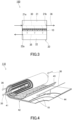
- FIG. 1 is a cross-sectional view of a separation functional layer 1 of the present embodiment.
- the separation functional layer 1 of FIG. 1 can function as a self-supporting membrane (single-layer membrane).
- the separation functional layer 1 is, for example, capable of allowing an acid gas contained in a gas mixture to preferentially permeate therethrough.
- the separation functional layer 1 is typically a dense layer (nonporous layer) in which no pores can be found when observed with a scanning electron microscope (SEM) at a magnification of 5000.
- SEM scanning electron microscope
- the separation functional layer 1 includes polyimide P.
- the polyimide P includes a structural unit A1 derived from a tetracarboxylic dianhydride a1 having a six-membered ring acid anhydride structure, and a structural unit B1 derived from diamine b1.
- At least one of the structural unit A1 and the structural unit B1 has at least one functional group F selected from the group consisting of a carboxyl group, a hydroxyl group, a thiol group, and metal salts of these groups.
- At least one of the structural unit A1 and the structural unit B1 preferably includes the metal salt (particularly the metal salt of the carboxyl group) as the functional group F.
- the structural unit B1 preferably has the functional group F.
- the structural unit A1 may or may not have the functional group F.
- the structural unit A1 derived from the tetracarboxylic dianhydride a1 is a structural unit suitable for improving the permeation coefficient and permeation rate of an acid gas permeating through the separation functional layer 1.
- the tetracarboxylic dianhydride a1 has, for example, one or more, preferably two acid anhydride structures S.
- the six-membered ring acid anhydride structure S is typically a glutaric anhydride structure represented by formula (1) below.
- the tetracarboxylic dianhydride a1 may further have at least one functional group f selected from the group consisting of a carboxyl group, a hydroxyl group, and a thiol group, or may not have the functional group f.
- the functional group f is the same as the functional group F except that the metal salts are not included in its options.
- the tetracarboxylic dianhydride a1 may have a fused ring, and the fused ring may include the acid anhydride structure S.
- the fused ring may include an aromatic ring in addition to the acid anhydride structure S.
- the aromatic ring included in the fused ring may be composed only of carbon atoms, or may be a heteroaromatic ring including a hetero atom such as an oxygen atom, a nitrogen atom, or a sulfur atom.
- the aromatic ring may be polycyclic or monocyclic. The number of carbon atoms in the aromatic ring is, for example, but not particularly limited to, 4 to 14.
- aromatic ring examples include a benzene ring, a naphthalene ring, an anthracene ring, a phenanthrene ring, a furan ring, a pyrrole ring, a pyridine ring, and a thiophene ring.
- the fused ring may or may not have a substituent.
- the substituent of the fused ring is not particularly limited, and examples thereof include a halogen group and a hydrocarbon group.
- the halogen group include a fluoro group, a chloro group, a bromo group, and an iodine group.
- the number of carbon atoms in the hydrocarbon group is, for example, but not particularly limited to, 1 to 15.
- Examples of the hydrocarbon group include an alkyl group such as a methyl group, an ethyl group, or a propyl group.
- the hydrocarbon group may be a halogenated hydrocarbon group in which a hydrogen atom has been substituted by a halogen group. In the case where the fused ring has a plurality of substituents, the substituents may be identical to or different from each other.
- the tetracarboxylic dianhydride a1 is represented by formula (a1) below, for example.
- R 1a to R 4a are each independently a hydrogen atom or an optional substituent.
- the optional substituent is not particularly limited, and examples thereof include a halogen group and a hydrocarbon group.
- the halogen group and the hydrocarbon group those stated above can be mentioned.
- the structural unit A1 derived from the tetracarboxylic dianhydride a1 is represented by formula (A1) below, for example.
- the structural unit A1 represented by the formula (A1) is derived from the tetracarboxylic dianhydride a1 represented by the above-mentioned formula (a1). Note that in the formula (A1), a nitrogen atom included in an imide group is derived from diamine that has reacted with the tetracarboxylic dianhydride a1.
- R 1a to R 4a are the same as in the formula (a1) and each independently a hydrogen atom or an optional substituent.
- formula (A1-1) As a specific example of the structural unit A1 represented by the formula (A1), formula (A1-1) below can be mentioned.
- a ratio p1 of an amount of substance of the above-mentioned structural unit A1 with respect to an amount of substance of all structural units A derived from a tetracarboxylic dianhydride is, for example, 50 mol% or more, and may be 70 mol% or more, 90 mol% or more, 95 mol% or more, or even 99 mol% or more.
- the polyimide P may only include the above-mentioned structural unit A1 as the structural unit A derived from the tetracarboxylic dianhydride.
- the polyimide P may further include, besides the structural unit A1, a structural unit A2 derived from a tetracarboxylic dianhydride a2 having a five-membered ring acid anhydride structure.
- the tetracarboxylic dianhydride a2 is not particularly limited, and examples thereof include pyromellitic dianhydride and 4,4'-(hexafluoroisopropylidene)diphthalic anhydride.
- the structural unit B1 derived from the diamine b1, especially the structural unit B1 having the functional group F, is a structural unit suitable for improving the selectivity for the acid gas permeating through the separation functional layer 1.
- the diamine b1 is a compound that has two primary amino groups and further has, for example, at least one functional group f selected from the group consisting of a carboxyl group, a hydroxyl group, and a thiol group.
- the number of the functional groups f in the diamine b1 is, for example, but not particularly limited to, 5 or less, and preferably 2 or less, and particularly preferably 1. The smaller the number of the functional groups f in the diamine b1 is, the more the solubility of the polyimide P tends to be improved and the more easily a desirable method for manufacturing the separation functional layer 1 tends to be adopted.
- the above-mentioned functional group f has a dissociative proton and can form a salt with a counter cation.
- the diamine b1 have a carboxyl group as the functional group f.
- the diamine b1 it is preferable for the diamine b1 not to have a group having a dissociative proton, such as a sulfonic acid group, other than the functional group f.
- the diamine b1 does not include a sulfonic acid group, it is easy to adjust the solubility of the polyimide P properly.
- the diamine b1 may further have an aromatic ring.
- aromatic ring those stated above for the tetracarboxylic dianhydride a1 can be mentioned.
- a substituent of the aromatic ring includes, for example, at least one selected from the group consisting of the functional group f and a primary amino group.
- the aromatic ring may or may not have an additional substituent other than the substituent including the functional group f and the substituent including the primary amino group.
- the additional substituent is not particularly limited, and examples thereof include a halogen group and a hydrocarbon group.
- the additional substituent may include a photopolymerizable functional group (such as a vinyl group).
- the diamine b1 is represented by formula (b1), formula (b2), or formula (b3) below, for example.
- R 1b to R 4b are each independently a hydrogen atom or an optional substituent.
- at least one selected from the group consisting of R 1b to R 4b is a group including the functional group f, and is preferably the functional group f itself.
- the optional substituent other than the group including the functional group f is not particularly limited, and examples thereof include a halogen group and a hydrocarbon group.
- the halogen group and the hydrocarbon group those stated above for the tetracarboxylic dianhydride a1 can be mentioned.
- R 5b to R 12b are each independently a hydrogen atom or an optional substituent, and X 1 is a single bond or an optional linking group.
- X 1 is a single bond or an optional linking group.
- at least one selected from the group consisting of R 5b to R 12b is a group including the functional group f, and is preferably the functional group f itself.
- the optional substituent other than the group including the functional group f is not particularly limited, and examples thereof include a halogen group and a hydrocarbon group.
- the halogen group and the hydrocarbon group those stated above for the tetracarboxylic dianhydride a1 can be mentioned.
- the optional linking group is a divalent hydrocarbon group, for example.
- the divalent hydrocarbon group include an alkylene group such as a methylene group, an ethylene group, a propane-1 ,3-diyl group, or a propane-2,2-diyl group.
- the divalent hydrocarbon group may be a halogenated hydrocarbon group in which a hydrogen atom has been substituted by a halogen group.
- X 1 may include a functional group, such as an ether group or an ester group, in addition to or instead of the divalent hydrocarbon group.
- R 13b to R 20b are each independently a hydrogen atom or an optional substituent, and X 2 is a single bond or an optional linking group.
- X 2 is a single bond or an optional linking group.
- at least one selected from the group consisting of R 13b to R 20b is a group including the functional group f, and is preferably the functional group f itself.
- the optional substituent other than the group including the functional group f is not particularly limited, and examples thereof include a halogen group and a hydrocarbon group.
- the halogen group and the hydrocarbon group those stated above for the tetracarboxylic dianhydride a1 can be mentioned.
- the optional linking group is a divalent hydrocarbon group, for example.
- the divalent hydrocarbon group those stated above for X 1 can be mentioned.
- X 2 may include a functional group, such as an ether group or an ester group, in addition to or instead of the divalent hydrocarbon group.
- the structural unit B1 derived from the diamine b1 preferably has the functional group F as described above.
- the structural unit B1 preferably includes a metal salt of a carboxyl group, a metal salt of a hydroxyl group, or a metal salt of a thiol group as the functional group F, and it is particularly preferable that the structural unit B1 include the metal salt of the carboxyl group.
- a metal included in the metal salt as the functional group F is not particularly limited, and examples thereof include Li, Na, K, Be, Mg, Ca, Ba, Sc, Y, Ti, Zr, V, Cr, Mo, Mn, Fe, Co, Ni, Cu, Ag, Zn, B, Al, Ga, In, and Pb.
- the metal is preferably Mg, Fe, Al, or Ga, and particularly preferably Al. That is, the metal salt as the functional group F is preferably an aluminum salt. Note that the metal included in the metal salt may be Na, Ca, or the like.
- the metal is specifically present as a cation.
- the metal (metal cation) included in the metal salt has a valence of 1 or more, for example, preferably 2 or more, and more preferably 3 or more. In one example, the metal has a valence of 2 or 3.
- the structural unit B1 includes the metal salt as the functional group F
- a plurality of the polyimides P can be coordinated with the metal cation included in the metal salt via a functional group such as a carboxyl group.
- the polyimides P are crosslinked with each other via the metal cation.
- the formation of such a crosslinked structure suppresses physical aging of the polyimide P, which tends to make it possible to suppress time-dependent deterioration of the separation performance of the separation functional layer 1.
- the separation performance of the separation functional layer 1 tends to be improved as well.
- the metal salt as the functional group F can be formed by, for example, replacing, with the metal cation, a dissociative proton of the functional group f included in the polyimide P obtained from a group of monomers including the tetracarboxylic dianhydride a1 and the diamine b1.
- the structural unit B1 derived from the diamine b1 is represented by formula (B1), formula (B2), or formula (B3) below, for example.
- the structural unit B1 represented by the formula (B1) is derived from the diamine b1 represented by the above-mentioned formula (b1).
- the structural unit B1 represented by the formula (B2) is derived from the diamine b1 represented by the above-mentioned formula (b2).
- the structural unit B1 represented by the formula (B3) is derived from the diamine b1 represented by the above-mentioned formula (b3).
- R 1b to R 4b are each independently a hydrogen atom or an optional substituent. At least one selected from the group consisting of R 1b to R 4b is a group including the functional group F, and is preferably the functional group F itself.
- the optional substituent other than the group including the functional group F is not particularly limited, and examples thereof include a halogen group and a hydrocarbon group. As the halogen group and the hydrocarbon group, those stated above for the tetracarboxylic dianhydride a1 can be mentioned.
- M is an optional metal cation, preferably a Mg ion, a Fe ion, an Al ion, or a Ga ion, and particularly preferably an Al ion.
- M may be a Na ion or a Ca ion.
- R 5b to R 12b are each independently a hydrogen atom or an optional substituent, and X 1 is a single bond or an optional linking group.
- At least one selected from the group consisting of R 5b to R 12b is a group including the functional group F, and is preferably the functional group F itself.
- the optional substituent other than the group including the functional group F is not particularly limited, and examples thereof include a halogen group and a hydrocarbon group.
- the halogen group and the hydrocarbon group those stated above for the tetracarboxylic dianhydride a1 can be mentioned.
- the optional linking group is a divalent hydrocarbon group, for example.
- the divalent hydrocarbon group those stated above can be mentioned.
- X 1 may include a functional group, such as an ether group or an ester group, in addition to or instead of the divalent hydrocarbon group.
- M is an optional metal cation, preferably a Mg ion, a Fe ion, an Al ion, or a Ga ion, and particularly preferably an Al ion.
- M may be a Na ion or a Ca ion.
- R 13b to R 20b are each independently a hydrogen atom or an optional substituent, and X 2 is a single bond or an optional linking group.
- At least one selected from the group consisting of R 13b to R 20b is a group including the functional group F, and is preferably the functional group F itself.
- the optional substituent other than the group including the functional group F is not particularly limited, and examples thereof include a halogen group and a hydrocarbon group.
- the halogen group and the hydrocarbon group those stated above for the tetracarboxylic dianhydride a1 can be mentioned.
- the optional linking group is a divalent hydrocarbon group, for example.
- the divalent hydrocarbon group those stated above can be mentioned.
- X 2 may include a functional group, such as an ether group or an ester group, in addition to or instead of the divalent hydrocarbon group.
- M is an optional metal cation, preferably a Mg ion, a Fe ion, an Al ion, or a Ga ion, and particularly preferably an Al ion.
- M may be a Na ion or a Ca ion.
- a ratio p2 of an amount of substance of the structural unit B1, particularly the structural unit B1 having the functional group F, with respect to an amount of substance of all structural units B derived from diamine is, for example, 1 mol% or more, and preferably 3 mol% or more.
- the upper limit of the ratio p2 is, for example, but not particularly limited to, 60 mol%, and may be 50 mol%, 40 mol%, 30 mol%, or even 25 mol%.
- the ratio p2 is preferably 3 to 25 mol%. When the ratio p2 is in this range, the separation functional layer 1 tends to exhibit satisfactory separation performance.
- the polyimide P may further include a structural unit B2 derived from diamine b2 having a sulfonyl group (-SO 2 -).
- the structural unit B2 is a structural unit suitable for improving the permeation coefficient and permeation rate of an acid gas permeating through the separation functional layer 1.
- the diamine b2 is a compound having two primary amino groups in addition to the sulfonyl group.
- the number of the sulfonyl groups in the diamine b2 is, for example, but not particularly limited to, 5 or less, and preferably 1.
- the diamine b2 does not include, for example, a group having a dissociative proton, such as the above-mentioned functional group f.
- the diamine b2 includes, for example, a ring structure having a sulfonyl group.
- the ring structure having the sulfonyl group is typically a thiophene 1,1-dioxide ring or a tetrahydrothiophene 1,1-dioxide ring.
- the diamine b2 may have a fused ring, and the fused ring may include the ring structure having the sulfonyl group.
- the fused ring may include an aromatic ring in addition to the ring structure having the sulfonyl group.
- aromatic ring those stated above for the tetracarboxylic dianhydride a1 can be mentioned.
- a substituent of the fused ring includes a primary amino group, for example.
- the fused ring may or may not have an additional substituent other than the substituent including the primary amino group.
- the additional substituent is not particularly limited, and examples thereof include a halogen group and a hydrocarbon group.
- the halogen group and the hydrocarbon group those stated above for the tetracarboxylic dianhydride a1 can be mentioned.
- the diamine b2 is represented by formula (c1) below, for example.
- R 1c to R 6c are each independently a hydrogen atom or an optional substituent.
- the optional substituent is, for example, a substituent other than a group including the above-mentioned functional group f, and is specifically a halogen group, a hydrocarbon group, or the like.
- the halogen group and the hydrocarbon group those stated above for the tetracarboxylic dianhydride a1 can be mentioned.
- the structural unit B2 derived from the diamine b2 is represented by formula (C1) below, for example.
- the structural unit B2 represented by the formula (C1) is derived from the diamine b2 represented by the above-mentioned formula (c1).
- R 1c to R 6c are each independently a hydrogen atom or an optional substituent.
- the optional substituent is, for example, a substituent other than a group including the above-mentioned functional group F, and is specifically a halogen group, a hydrocarbon group, or the like.
- the halogen group and the hydrocarbon group those stated above for the tetracarboxylic dianhydride a1 can be mentioned.
- the structural unit B2 represented by the formula (C1) is suitable for improving the stiffness of the polyimide P.
- the polyimide P with excellent stiffness tends to be able to suppress plasticization of the separation functional layer 1 even when the gas mixture to be separated has a high pressure.
- a ratio p3 of an amount of substance of the above-mentioned structural unit B2 with respect to the amount of substance of all structural units B derived from diamine is, for example, but not particularly limited to, 5 mol% or more, and may be 10 mol% or more, 20 mol% or more, 30 mol% or more, or even 40 mol% or more.
- the upper limit of the ratio p3 is, for example, but not particularly limited to, 95 mol%, and may be 90 mol%, 80 mol%, 70 mol%, 60 mol%, or even 50 mol%.
- the polyimide P may further include a structural unit B3 derived from diamine b3, which is additional diamine, other than the diamine b1 and b2.
- the diamine b3 is a compound that does not have the above-mentioned functional group f or sulfonyl group but has two primary amino groups.
- the diamine b3 does not include, for example, a group having a dissociative proton.
- the diamine b3 may further have an aromatic ring.
- aromatic ring those stated above for the tetracarboxylic dianhydride a1 can be mentioned.
- a substituent of the aromatic ring includes a primary amino group, for example.
- the aromatic ring may or may not have an additional substituent other than the substituent including the primary amino group.
- the additional substituent is not particularly limited, and examples thereof include a halogen group and a hydrocarbon group.
- the halogen group and the hydrocarbon group those stated above for the tetracarboxylic dianhydride a1 can be mentioned.
- the diamine b3 is represented by formula (d1), formula (d2), or formula (d3) below, for example.
- R 1d to R 4d are each independently a hydrogen atom or an optional substituent.
- the optional substituent is, for example, a substituent other than a group including the above-mentioned functional group f and a group including a sulfonyl group, and is specifically a halogen group, a hydrocarbon group, or the like.
- the halogen group and the hydrocarbon group those stated above for the tetracarboxylic dianhydride a1 can be mentioned.
- R 5d to R 8d are each independently a hydrogen atom or an optional substituent.
- the optional substituent is, for example, a substituent other than a group including the above-mentioned functional group f and a group including a sulfonyl group, and is specifically a halogen group, a hydrocarbon group, or the like.
- the halogen group and the hydrocarbon group those stated above for the tetracarboxylic dianhydride a1 can be mentioned.
- R 9d to R 16d are each independently a hydrogen atom or an optional substituent, and X 3 is a single bond or an optional linking group.
- the optional substituent is, for example, a substituent other than a group including the above-mentioned functional group f and a group including a sulfonyl group, and is specifically a halogen group, a hydrocarbon group, or the like.
- the halogen group and the hydrocarbon group those stated above for the tetracarboxylic dianhydride a1 can be mentioned.
- the optional linking group is a divalent hydrocarbon group, for example.
- the divalent hydrocarbon group those stated above can be mentioned.
- the divalent hydrocarbon group may further have an aromatic ring.
- aromatic ring those stated above for the tetracarboxylic dianhydride a1 can be mentioned.
- the divalent hydrocarbon group in X 3 may be a fluorenediyl group.
- X 3 may include a functional group, such as an ether group or an ester group, in addition to or instead of the divalent hydrocarbon group.
- the structural unit B3 derived from the diamine b3 is presented by formula (D1), formula (D2), or formula (D3) below, for example.
- the structural unit B3 represented by the formula (D1) is derived from the diamine b3 represented by the above-mentioned formula (d1).
- the structural unit B3 represented by the formula (D2) is derived from the diamine b3 represented by the above-mentioned formula (d2).
- the structural unit B3 represented by the formula (D3) is derived from the diamine b3 represented by the above-mentioned formula (d3).
- R 1d to R 4d are each independently a hydrogen atom or an optional substituent.
- the optional substituent is, for example, a substituent other than a group including the above-mentioned functional group F, and is specifically a halogen group, a hydrocarbon group, or the like.
- the halogen group and the hydrocarbon group those stated above for the tetracarboxylic dianhydride a1 can be mentioned.
- formula (D1-1) As a specific example of the structural unit B3 represented by the formula (D1), formula (D1-1) below can be mentioned.
- R 5d to R 8d are each independently a hydrogen atom or an optional substituent.
- the optional substituent is, for example, a substituent other than a group including the above-mentioned functional group F, and is specifically a halogen group, a hydrocarbon group, or the like.
- the halogen group and the hydrocarbon group those stated above for the tetracarboxylic dianhydride a1 can be mentioned.
- formula (D2-1) below can be mentioned.
- R 9d to R 16d are each independently a hydrogen atom or an optional substituent, and X 3 is a single bond or an optional linking group.
- the optional substituent is, for example, a substituent other than a group including the above-mentioned functional group F, and is specifically a halogen group, a hydrocarbon group, or the like.
- the halogen group and the hydrocarbon group those stated above for the tetracarboxylic dianhydride a1 can be mentioned.
- the optional linking group is a divalent hydrocarbon group, for example. As the divalent hydrocarbon group, those stated above can be mentioned.
- X 3 may include a functional group, such as an ether group or an ester group, in addition to or instead of the divalent hydrocarbon group.
- a functional group such as an ether group or an ester group
- formulae (D3-1) to (D3-3) can be mentioned.
- a ratio p4 of an amount of substance of the above-mentioned structural unit B3 with respect to the amount of substance of all structural units B derived from diamine is, for example, but not particularly limited to, 5 mol% or more, and may be 10 mol% or more, 20 mol% or more, 30 mol% or more, or even 40 mol% or more.
- the upper limit of the ratio p4 is, for example, but not particularly limited to, 95 mol%, and may be 90 mol%, 80 mol%, 70 mol%, 60 mol%, or even 50 mol%.
- the structural units A derived from the tetracarboxylic dianhydride and the structural units B derived from the diamine are arranged alternately.
- examples of the combination of the structural units A and B adjacent to each other include formula (A1-B1), formula (A1-B2), formula (A1-C1), and formula (A1-D1) below.
- R 1a to R 4a , R 1b to R 12b , R 1c to R 6c , and R 1d to R 4d are the same as those described above for the formula (A1), the formula (B1), the formula (B2), the formula (C1), and the formula (D1).
- the polyimide P has a weight-average molecular weight (Mw) of 30000 or more, for example, and preferably 50000 or more, and still more preferably 75000 or more.
- the upper limit of the weight-average molecular weight of the polyimide P is, for example, but not particularly limited to, 1000000.
- a molecular weight distribution of the polyimide P is measured by gel permeation chromatograph (GPC) including a differential refractive index detector (RID) so that the weight-average molecular weight of the polyimide P can be calculated from the obtained chromatogram (chart) using a calibration curve of standard polystyrene.
- the content of the polyimide P in the separation functional layer 1 is, for example, 50 wt% or more, and may be 60 wt% or more, 70 wt% or more, 80 wt% or more, 90 wt% or more, or even 95 wt% or more.
- the separation functional layer 1 may be composed substantially of the polyimide P alone.
- the separation functional layer 1 may further include an additional component other than the polyimide P.
- additional component include nanoparticles.
- the nanoparticles those stated as examples for the later-described intermediate layer 2 can be mentioned, for example.
- the nanoparticles are dispersed in a matrix including the polyimide P, for example.
- the nanoparticles may be spaced from each other in the matrix, or may aggregate partially.
- a method for manufacturing the separation functional layer 1 includes, for example, step I of forming the separation functional layer 1 by applying a coating liquid (a dispersion or a solution) containing a material of the separation functional layer 1 onto a base material and drying the coating liquid.
- a coating liquid a dispersion or a solution
- the coating liquid contains, as the material of the separation functional layer 1, polyimide Q having at least one functional group f selected from the group consisting of a carboxyl group, a hydroxyl group, and a thiol group, and a compound M having a metal.
- the polyimide Q is the precursor of the polyimide P, and a dissociative proton of the functional group f is replaced with a metal cation and thereby the polyimide P can be formed from the polyimide Q.
- this coating liquid makes it possible to form the polyimide P having a metal salt as the above-mentioned functional group F.
- the polyimide Q can be produced by the following method, for example. First, a group of diamines including the above-mentioned diamine b1 is dissolved in a solvent to obtain a solution.
- the solvent include a polar organic solvent such as N-methyl-2-pyrrolidone or 1,3-dioxolane.
- a group of tetracarboxylic dianhydrides including the above-mentioned tetracarboxylic dianhydride a1 are added gradually to the obtained solution.
- the addition of the group of tetracarboxylic dianhydrides is carried out, for example, for 3 to 20 hours in a heating environment at 140°C or higher under the condition that the solution is being stirred.
- the polyamide acid is imidized to obtain the polyimide Q.
- the imidization method include a chemical imidization method and a thermal imidization method.
- the chemical imidization method is a method for imidizing polyamide acid using a dehydration condensation agent under, for example, a room temperature condition.
- Examples of the dehydration condensation agent include acetic anhydride, pyridine, and triethylamine.
- the thermal imidization method is a method for imidizing polyamide acid by a heat treatment. The heat treatment is carried out at a temperature of 180°C or higher, for example.
- the content of the polyimide Q in the coating liquid can be adjusted suitably in accordance with the solubility of the polyimide Q, and it is 1 wt% to 30 wt%, for example.
- the ratio of the weight of the polyimide Q with respect to the total weight of the polyimide Q and a solvent is 1 wt% to 30 wt%, for example.
- the metal that the compound M has those stated above as the metal included in the metal salt as the functional group F can be mentioned.
- the metal is present as a cation, for example.
- the compound M include a metal complex having the metal and a ligand coordinated with the metal, and an inorganic salt including the metal.
- the compound M preferably includes the metal complex.
- the ligand preferably has volatility.
- the ligand may have a boiling point of 20°C to 260°C under an atmospheric pressure (101.325 kPa).
- the ligand having volatility is likely to evaporate at the time of drying the coating film described later, and is unlikely to remain in the separation functional layer 1.
- the ligand does not need to have volatility. In this case, it is possible to remove the ligand from the separation functional layer 1 easily by performing a washing operation after the formation of the separation functional layer 1.
- the ligand is typically an organic ligand having a functional group for coordination with a metal.
- the number of carbon atoms in the organic ligand is, for example, but not particularly limited to, 1 to 10.
- the functional group included in the organic ligand include a carbonyl group such as a ketone group.
- the number of the functional groups included in the organic ligand is, for example, 1 or more, and may be 2 or more.
- Specific examples of the organic ligand include acetylacetonato (acac).
- Specific examples of the metal complex include Al(acac) 3 , Fe(acac) 2 , Ga(acac) 3 , and Mg(acac) 2 .
- Examples of the inorganic salt include a chloride, a nitrate, and a sulfate, and specific examples thereof include LiCl, NaCl, KCl, AgNOs, MgCl 2 , CaCl 2 , BaCl 2 , NiCl 2 , ZnCl 2 , CuCl 2 , Pb(NO 3 ) 2 , Al(NO 3 ) 3 , Fe 2 (SO 4 ) 3 , Ga(NO 3 ) 3 , Fe(NO 3 ) 2 , and Mg(NO 3 ) 2 .
- the ratio of the weight of the compound M with respect to the weight of the polyimide Q can be adjusted suitably in accordance with the composition of the polyimide Q, etc., and it is, for example, 1 to 20 wt%, and may be 1 to 10 wt%.
- the ratio of an amount of substance of the compound M with respect to an amount of substance of the functional group f included in the polyimide Q is, for example, but not particularly limited to, 2.0 or more.
- the coating liquid may further contain a ligand.
- the ratio of the weight of the ligand with respect to the weight of the polyimide Q can be adjusted suitably in accordance with the contents of the polyimide Q and the metal complex, etc., and it is, for example, 1 to 20 wt%, and may be 1 to 10 wt%.
- the coating liquid further contains a solvent, for example.
- the solvent is typically a good solvent that can dissolve the polyimide Q.
- the solvent preferably includes at least one selected from the group consisting of an amide compound and a lactone compound, and more preferably includes an amide compound.
- the amide compound include N,N-dimethylformamide (DMF), N-methyl-2-pyrrolidone (NMP), and N,N-dimethylacetamide (DMAc).
- Examples of the lactone compound include ⁇ -butyrolactone.
- the content of the solvent in the coating liquid is 30 wt% to 95 wt%, for example.
- the ratio of the weight of the solvent with respect to the total weight of the polyimide Q and the solvent is 30 wt% to 95 wt%, for example.
- the coating liquid is not limited to those having the above-mentioned composition.
- the coating liquid contains the polyimide P instead of the polyimide Q and the compound M mentioned above.
- the polyimide P has, for example, at least one functional group F selected from the group consisting of a carboxyl group, a hydroxyl group, a thiol group, and metal salts of these groups.
- the base material is typically a release liner.
- the base material include: a film including a resin; paper; and a sheet including a metal material such as aluminum or stainless steel.
- the sheet including a metal material tends to have high heat resistance.
- the base material is preferably a film including a resin from the viewpoint of having excellent surface smoothness.
- Examples of a polymer included in the resin in the base material include: polyolefin such as polyethylene, polypropylene, polybutene, polybutadiene, or polymethylpentene; polyester such as polyethylene terephthalate, polybutylene terephthalate, or polyethylene naphthalate; polyvinyl chloride and a vinyl chloride copolymer; polyurethane; and an ethylene-vinyl acetate copolymer. Polyester, particularly polyethylene terephthalate, is preferred.
- a surface of the base material may be subjected to a release treatment.
- the release treatment can be provided by, for example, applying a release treatment agent onto the surface of the base material.
- the release treatment agent include a silicone-based release treatment agent, a long-chain alkyl-based release treatment agent, a fluorine-based release treatment agent, and a molybdenum sulfide-based release treatment agent.
- One of these release treatment agents may be used alone or two or more of them can be used in combination.
- the base material is preferably a polyethylene terephthalate (PET) film subjected to the release treatment.
- the thickness of the base material is, for example, but not particularly limited to, 5 to 100 ⁇ m, and preferably 10 to 50 ⁇ m.
- the base material may be subjected to a surface modification treatment before the coating liquid is applied thereonto.
- the surface modification treatment may be provided to the surface of the base material, the surface having been subjected to the release treatment.
- the surface modification treatment include a corona treatment, a plasma treatment, an excimer treatment, and a frame treatment, and preferred is a corona treatment.
- the surface modification treatment can be performed by, for example, irradiating the surface of the base material with an active energy ray.
- the active energy ray include an electron ray, an ion beam, a plasma beam, and an ultraviolet ray.
- the discharge amount is 0.1 kW•min/m 2 or more, for example.
- the upper limit of the discharge amount is, for example, but not particularly limited to, 10 kW•min/m 2 .
- the method for applying the coating liquid onto the base material is not particularly limited, and a spin coating method, a dip coating method, and a slot-die coating method can be used, for example.
- the coating liquid may be applied onto the base material using an applicator, a wire bar, or the like.
- the coating liquid may be applied onto the surface of the base material, the surface having been subjected to the release treatment and/or the surface modification treatment.
- a coating film is formed by applying the coating liquid onto the base material.
- the thickness of the coating film can be adjusted suitably in accordance with a target thickness of the separation functional layer 1, and it is 1 ⁇ m to 100 ⁇ m, for example.
- the separation functional layer 1 can be obtained by drying the coating film.
- the conditions for drying the coating film are not particularly limited, and they are, for example, that the drying temperature is 50°C to 200°C and the drying duration is 1 minute to 10 hours.
- the coating film can be dried using a heater, for example.
- the coating film may be dried by passing through a heating unit including a heater.
- the coating film may be dried by passing through a plurality of heating units. The set temperatures of the heating units may be equal to or different from each other.
- the coating liquid contains the polyimide Q having the functional group f and the compound M having the metal
- a dissociative proton included in the functional group f of the polyimide Q is replaced with the metal (metal cation) of the compound M at the time of drying the coating film, for example.
- the compound M is a metal complex and a ligand included in the metal complex is volatile
- the ligand is evaporated at the time of the drying and thereby the replacement of the dissociative proton of the functional group f with the metal of the compound M tends to be accelerated.
- the separation functional layer 1 obtained by this method, a plurality of the polyimides P are usually crosslinked with each other via the metal cation. By having this crosslinked structure, the separation functional layer 1 tends to have high solvent resistance.
- the replacement of the dissociative proton included in the functional group f with the metal of the compound M may be made after the formation of the separation functional layer 1.
- the coating liquid containing the polyimide Q and the solvent mentioned above is applied onto the base material and dried to form the separation functional layer 1.
- the dissociative proton of the functional group f may be replaced with the metal of the compound M.
- the solution containing the compound M is, for example, an aqueous solution containing the above-mentioned inorganic salt.
- the concentration of the inorganic salt in the aqueous solution is, for example, but not particularly limited to, 0.01 to 1 mol/L.
- the conditions for the operation of immersing the separation functional layer 1 in the solution containing the compound M are not particularly limited, and the operation may be performed under a room temperature condition for 1 to 48 hours, for example.
- the separation functional layer 1 after being immersed in the above-mentioned solution may be further subjected to a washing treatment with water and a drying treatment.
- the drying treatment may be performed at a temperature of 150°C or lower for 1 to 24 hours.
- the step I is not limited to the above method, and the separation functional layer 1 may be formed by, for example, applying the coating liquid containing the polyimide P and the solvent mentioned above onto the base material and drying the coating liquid.
- the separation functional layer 1 may be formed by applying onto the base material the coating liquid containing polyamide acid that is the precursor of the polyimide P and imidizing the polyamide acid to form the polyimide P.
- the manufacturing method of the present embodiment may further include, after the step I, step II of providing further a heat treatment (annealing treatment) to the separation functional layer 1.
- step II tends to improve the separation performance of the separation functional layer 1 and also make it possible to suppress the time-dependent deterioration of the separation performance of the separation functional layer 1.
- the step II also makes it possible to obtain the separation functional layer 1 that hardly includes a residual solvent because the solvent sufficiently evaporates.
- the step II may be performed after the step (the step III described later) of removing the base material from a laminate of the separation functional layer 1 and the base material.
- the manufacturing method of the present embodiment further includes, after the step I or the step II, step III of removing the base material from a laminate of the separation functional layer 1 and the base material, for example. Removing the base material makes it possible to obtain the separation functional layer 1 that functions as a self-supporting membrane.
- the thickness of the separation functional layer 1 is, for example, 500 ⁇ m or less, and may be 300 ⁇ m or less, 100 ⁇ m or less, 50 ⁇ m or less, 25 ⁇ m or less, 15 ⁇ m or less,10 ⁇ m or less, 5.0 ⁇ m or less, or even 2.0 ⁇ m or less.
- the thickness of the separation functional layer 1 may be 0.05 ⁇ m or more, or 0.1 ⁇ m or more.
- a permeation coefficient C1 of carbon dioxide with respect to the separation functional layer 1 when a gas mixture composed of carbon dioxide and methane is supplied to a space adjacent to one surface of the separation functional layer is, for example, 100 Barrer or more, and may be 500 Barrer or more, 1000 Barrer or more, 1500 Barrer or more, 2000 Barrer or more, or even 2500 Barrer or more.
- the upper limit of the permeation coefficient C1 is, for example, but not particularly limited to, 4000 Barrer, and may be 3500 Barrer or 3000 Barrer.
- Barrer means 10 -10 •cm 3 (STP) •cm/(sec•cm 2 •cmHg).
- cm 3 (STP) means the volume of carbon dioxide at 1 atmospheric pressure and 0°C.
- the gas mixture supplied to the space adjacent to the one surface of the separation functional layer 1 has a temperature of 30°C and a pressure of 0.1 MPa.
- the space adjacent to the other surface of the separation functional layer 1 is decompressed in such a manner that a pressure in the space is lower than an atmospheric pressure in a measurement environment by 0.1 MPa.
- a separation factor ⁇ 1 of the separation functional layer 1 for carbon dioxide with respect to methane is, for example, 20 or more, and may be 22 or more, 25 or more, 30 or more, 35 or more, or even 40 or more.
- the upper limit of the separation factor ⁇ 1 is, for example, but not particularly limited to, 100, and may be 60.
- the separation factor ⁇ 1 can be calculated by the following formula. It should be noted that, in the following formula, X A and X B are respectively the volume rate of the carbon dioxide and the volume rate of the methane in the gas mixture. Y A and Y B are respectively the volume rate of the carbon dioxide and the volume rate of the methane in the permeated fluid that has permeated through the separation functional layer 1.
- the above-mentioned permeation coefficient C1 (Barrer) and separation factor ⁇ 1 (-) may satisfy relational expression (i) or relational expression (ii) below.
- the separation functional layer 1 preferably has high durability.
- the durability of the separation functional layer 1 can be evaluated by conducting a bending test, for example.
- the bending test is conducted by cutting the separation functional layer 1 into the size of 50 mm by 50 mm to produce a specimen, taking up the specimen by a columnar roll with an outer diameter of 5 mm, and leaving it in a normal temperature environment for 24 hours.
- a permeation coefficient C2 of carbon dioxide with respect to the separation functional layer 1 after being subjected to the bending test is, for example, 100 Barrer or more, and may be 500 Barrer or more, 1000 Barrer or more, 1500 Barrer or more, 2000 Barrer or more, or even 2500 Barrer or more.
- the upper limit of the permeation coefficient C2 is, for example, but not particularly limited to, 4000 Barrer, and may be 3500 Barrer or 3000 Barrer.
- the permeation coefficient C2 can be measured by the same method as that for the permeation coefficient C1, except that the separation functional layer 1 after being subjected to the bending test is used.
- a separation factor ⁇ 2 of the separation functional layer 1 for carbon dioxide with respect to methane after the separation functional layer 1 is subjected to the bending test is, for example, 20 or more, and may be 22 or more, 25 or more, 30 or more, 35 or more, or even 40 or more.
- the upper limit of the separation factor ⁇ 2 is, for example, but not particularly limited to, 100, and may be 60.
- the separation factor ⁇ 2 can be calculated by the method mentioned above for the separation factor ⁇ 1.
- the ratio (selectivity retention ratio) of the separation factor ⁇ 2 after the bending test is conducted with respect to the separation factor ⁇ 1 before the bending test is conducted is, for example, 80% or more, and may be 85% or more, 90% or more, 93% or more, 95% or more, 98% or more, or even 100% or more. It can be said that the higher the selectivity retention ratio is, the higher the durability of the separation functional layer 1 is.
- a permeation coefficient C3 of carbon dioxide with respect to the separation functional layer 1 when a gas mixture composed of carbon dioxide and nitrogen is supplied to a space adjacent to one surface of the separation functional layer is, for example, 100 Barrer or more, and may be 500 Barrer or more, 1000 Barrer or more, 1500 Barrer or more, 2000 Barrer or more, 2500 Barrer or more, or even 3000 Barrer or more.
- the upper limit of the permeation coefficient C3 is, for example, but not particularly limited to, 5000 Barrer, and may be 4000 Barrer.
- the permeation coefficient C3 can be determined by the same method as that for the permeation coefficient C1, except that the gas mixture composed of carbon dioxide and nitrogen is used. Note that the concentration of the carbon dioxide in the gas mixture is 50 vol% under standard conditions (0°C, 101 kPa).
- the gas mixture supplied to the space adjacent to the one surface of the separation functional layer 1 has a temperature of 30°C and a pressure of 0.1 MPa.
- a separation factor ⁇ 3 of the separation functional layer 1 for carbon dioxide with respect to nitrogen is, for example, 20 or more, and may be 22 or more, 25 or more, 30 or more, 35 or more, or even 40 or more.
- the upper limit of the separation factor ⁇ 3 is, for example, but not particularly limited to, 100, and may be 60.
- the separation factor ⁇ 3 can be calculated by the same method as that mentioned above for the separation factor ⁇ 1.
- the retention ratio of the permeation coefficient C3 when the separation functional layer 1 is stored in an environment at 85°C for 500 hours is, for example, 30% or more, and may be 40% or more, 50% or more, 60% or more, 70% or more, 80% or more, or even 90% or more.
- the upper limit of the retention ratio of the permeation coefficient C3 is, for example, but not particularly limited to, 98%, and may be 95%.
- the polyimide P includes the metal salt as the functional group F, a crosslinked structure is formed and thereby the physical aging of the polyimide P is suppressed, which tends to make it possible to suppress the time-dependent deterioration of the separation performance of the separation functional layer 1.
- the retention ratio of the permeation coefficient C3 can be determined by the following method. First, the separation functional layer 1 is stored in an environment at 85°C for 500 hours. A permeation coefficient C4 of carbon dioxide with respect to the separation functional layer 1 is measured by the same method as that for the permeation coefficient C3, except that the separation functional layer 1 after being stored is used. The ratio of the permeation coefficient C4 (Barrer) with respect to the permeation coefficient C3 (Barrer) can be considered as the retention ratio of the permeation coefficient C3.
- the permeation coefficient C4 of carbon dioxide with respect to the separation functional layer 1 is, for example, 100 Barrer or more, and may be 500 Barrer or more, 800 Barrer or more, 1000 Barrer or more, 1300 Barrer or more, 1500 Barrer or more, or even 1800 Barrer or more.
- the upper limit of the permeation coefficient C4 is, for example, but not particularly limited to, 4000 Barrer, and may be 3000 Barrer.
- the present invention provides a separation functional layer including polyimide P, wherein
- Test An operation in which a gas mixture composed of carbon dioxide and nitrogen is supplied to a space adjacent to one surface of the separation functional layer while a space adjacent to another surface of the separation functional layer is decompressed is conducted. Based on the result of the operation, a permeation coefficient of carbon dioxide permeating through the separation functional layer is determined.
- the content of the carbon dioxide in the gas mixture is 50 vol% under standard conditions
- the gas mixture supplied to the space adjacent to the one surface has a temperature of 30°C and a pressure of 0.1 MPa
- the space adjacent to the other surface is decompressed in such a manner that a pressure in the space is lower than an atmospheric pressure in a measurement environment by 0.1 MPa.
- the separation functional layer 1 of the present embodiment there can be mentioned the use for separating an acid gas from a gas mixture containing the acid gas.
- the acid gas in the gas mixture include carbon dioxide, hydrogen sulfide, carbonyl sulfide, sulfur oxide (SOx), hydrogen cyanide, and nitrogen oxide (NOx), and preferred is carbon dioxide.
- the gas mixture contains an additional gas other than the acid gas.
- the additional gas include a nonpolar gas such as hydrogen, nitrogen, or methane, and an inert gas such as helium, and preferred examples include nitrogen and methane.
- the separation functional layer 1 of the present embodiment is suitable for use for separating carbon dioxide from a gas mixture containing carbon dioxide and at least one selected from the group consisting of methane and nitrogen.
- the use of the separation functional layer 1 is not limited to the use for separating an acid gas from the above-mentioned gas mixture.
- a separation membrane 10 of the present embodiment includes the above-mentioned separation functional layer 1, and further includes, for example, an intermediate layer 2 and a porous support member 3.
- the porous support member 3 supports the separation functional layer 1.
- the intermediate layer 2 is disposed between the separation functional layer 1 and the porous support member 3, and is in direct contact with each of the separation functional layer 1 and the porous support member 3.
- the intermediate layer 2 includes, for example, a resin, and further includes nanoparticles dispersed in the resin (matrix).
- the nanoparticles may be spaced from each other in the matrix, or may aggregate partially.
- the intermediate layer 2 does not need to include the nanoparticles, and may be composed substantially of the resin.
- a material of the matrix is not particularly limited, and examples thereof include a silicone resin such as polydimethylsiloxane; a fluorine resin such as polytetrafluoroethylene; an epoxy resin such as polyethylene oxide; a polyimide resin; a polysulfone resin; a polyacetylene resin such as polytrimethylsilylpropyne or polydiphenylacetylene; a polyolefin resin such as polymethylpentene; and a polyurethane resin.
- the matrix preferably includes a silicone resin and a polyurethane resin.
- Each nanoparticle may include an inorganic material.
- the nanoparticle may include an organic material.
- the inorganic material included in the nanoparticle is, for example, silica, titania, or alumina.
- the nanoparticle preferably includes silica.
- the nanoparticle may have a surface modified with a modifying group including a carbon atom.
- the nanoparticle having the surface modified with the modifying group exhibits an excellent dispersibility in the matrix.
- the nanoparticle is, for example, a silica nanoparticle that may have a surface modified with a modifying group.
- the modifying group further includes a silicon atom, for example.
- the surface of the nanoparticle is represented, for example, by the following formulae (I) to (III), the surface being modified with the modifying group.
- R 1 to R 6 in the formulae (I) to (III) are each independently an optionally substituted hydrocarbon group.
- the number of carbon atoms in the hydrocarbon group is not particularly limited as long as it is one or more.
- the number of carbon atoms in the hydrocarbon group may be, for example, 25 or less, 20 or less, 10 or less, or 5 or less. In some cases, the number of carbon atoms in the hydrocarbon group may be more than 25.
- the hydrocarbon group may be a linear or branched chain hydrocarbon group, or may be an alicyclic or aromatic cyclic hydrocarbon group. In a preferred embodiment, the hydrocarbon group is a linear or branched alkyl group having 1 to 8 carbon atoms.
- the hydrocarbon group is, for example, a methyl group or an octyl group, and is preferably a methyl group.
- the substituent in the hydrocarbon group is, for example, an amino group or an acyloxy group.
- Examples of the acyloxy group include a (meth)acryloyloxy group.
- the above optionally substituted hydrocarbon group represented by R 1 to R 6 in the formulae (I) to (III) is represented by the following formula (IV).
- the nanoparticle having a surface modified with a modifying group including the hydrocarbon group represented by the formula (IV) is suitable for improving a permeation rate of an acid gas permeating through the separation membrane 10.
- R 7 is an optionally substituted alkylene group having 1 to 5 carbon atoms.
- the alkylene group may be linear or branched.
- Examples of the alkylene group include a methylene group, an ethylene group, a propane-1 ,3-diyl group, a butane-1,4-diyl group, and a pentane-1,5-diyl group, and preferred is a propane-1,3-diyl group.
- the substituent in the alkylene group include an amide group and an aminoalkylene group.
- R 8 is an optionally substituted alkyl group or aryl group having 1 to 20 carbon atoms.
- the alkyl group may be linear or branched.
- Examples of the substituents in the alkyl group and the aryl group include an amino group and a carboxyl group.
- R 8 is, for example, a 3,5-diaminophenyl group.
- the surface of the nanoparticle is preferably represented by the following formula (V), the surface being modified with the modifying group.
- the modifying group is not limited to have the structures shown in the formulae (I) to (III).
- the modifying group may include a polymer chain having a polyamide structure or a polydimethylsiloxane structure instead of R 1 to R 6 in the formulae (I) to (III).
- this polymer chain is directly bonded to a silicon atom.
- Examples of the shape of this polymer chain include linear, dendritic, and hyper-branched shapes.
- the method for modifying the surface of the nanoparticle with the modifying group is not particularly limited.
- the surface of the nanoparticle can be modified by allowing a hydroxyl group present on the surface of the nanoparticle to react with a known silane coupling agent.
- the modifying group includes a polyamide structure
- the surface of the nanoparticle can be modified by, for example, the method disclosed in JP 2010-222228 A .
- the average particle diameter of the nanoparticles is not particularly limited as long as it is on the order of nanometers ( ⁇ 1000 nm).
- the average particle diameter of the nanoparticles is, for example, 100 nm or less, preferably 50 nm or less, and more preferably 20 nm or less.
- the lower limit of the average particle diameter of the nanoparticles is, for example, 1 nm.
- the average particle diameter of the nanoparticles can be determined by the following method, for example. First, a cross section of the intermediate layer 2 is observed with a transmission electron microscope. In the obtained electron microscope image, the area of a specific nanoparticle is calculated by image processing.
- the diameter of a circle having the same area as the calculated area is regarded as the particle diameter (the diameter of the particle) of the specific nanoparticle.
- the particle diameter is calculated for any number (at least 50) of the nanoparticles, and the average of the calculated values is regarded as the average particle diameter of the nanoparticles.
- the shape of each nanoparticle is not particularly limited, and may be a spherical, ellipsoidal, flaky, or fibrous shape.
- the content of the nanoparticles in the intermediate layer 2 is, for example, 5 wt% or more, preferably 10 wt% or more, and more preferably 15 wt% or more.
- the upper limit of the content of the nanoparticles in the intermediate layer 2 is, for example, but not particularly limited to, 30 wt%.
- the thickness of the intermediate layer 2 is, for example, but not particularly limited to, less than 50 ⁇ m, preferably 40 ⁇ m or less, and more preferably 30 ⁇ m or less.
- the lower limit of the thickness of the intermediate layer 2 is, for example, but not particularly limited to, 1 ⁇ m.
- the intermediate layer 2 is, for example, a layer having a thickness of less than 50 ⁇ m.
- the porous support member 3 supports the separation functional layer 1 via the intermediate layer 2.
- the porous support member 3 include: a nonwoven fabric; porous polytetrafluoroethylene; an aromatic polyamide fiber; a porous metal; a sintered metal; a porous ceramic; a porous polyester; porous nylon; an activated carbon fiber; latex; silicone; silicone rubber; a permeable (porous) polymer including at least one selected from the group consisting of polyvinyl fluoride, polyvinylidene fluoride, polyurethane, polypropylene, polyethylene, polystyrene, polycarbonate, polysulfone, polyether ether ketone, polyacrylonitrile, polyimide, and polyphenylene oxide; a metallic foam having an open cell or a closed cell; a polymer foam having an open cell or a closed cell; silica; a porous glass; and a mesh screen.
- the porous support member 3 may be a combination of two or more of these materials.
- the porous support member 3 has, for example, an average pore diameter of 0.01 to 0.4 ⁇ m.
- the thickness of the porous support member 3 is, for example, but not particularly limited to, 10 ⁇ m or more, preferably 20 ⁇ m or more, and more preferably 50 ⁇ m or more.
- the thickness of the porous support member 3 is, for example, 300 ⁇ m or less, preferably 200 ⁇ m or less, and more preferably 150 ⁇ m or less.
- the separation membrane 10 can be produced by the following method, for example.
- the coating liquid containing the materials of the intermediate layer 2 is applied onto the porous support member 3 to form a coating film.
- the method for applying the coating liquid is not particularly limited, and a method such as spin coating method or a dip coating method can be used, for example.
- the coating liquid may be applied, for example, using a wire bar.
- the coating film is dried to form the intermediate layer 2.
- the coating film can be dried under heating conditions, for example.
- the heating temperature of the coating film is, for example, 50°C or higher.
- the heating duration of the coating film is, for example, one minute or longer, and may be five minutes or longer.
- a surface of the intermediate layer 2 may be subjected to an adhesion improvement treatment, if necessary.
- the adhesion improvement treatment is, for example, a surface treatment such as application of a primer, a corona discharge treatment, or a plasma treatment.
- the separation functional layer 1 is formed on the intermediate layer 2 in the laminate of the porous support member 3 and the intermediate layer 2.
- the separation membrane 10 can be obtained.
- the method for producing the separation membrane 10 is not limited to the above method, and the separation membrane 10 may also be produced by the following method.
- the separation functional layer 1 formed on the base material, such as a release liner is prepared by the above-mentioned method.
- the coating liquid containing the materials of the intermediate layer 2 is applied onto the separation functional layer 1, and the applied coating liquid is dried to form the intermediate layer 2.
- the laminate of the intermediate layer 2 and the separation functional layer 1 is transferred to the porous support member 3. Thereby, the separation membrane 10 can be obtained.
- the dissociative proton included in the functional group f of the polyimide Q that is the precursor of the polyimide P may be replaced with the metal of the compound M after the production of the separation membrane 10.
- the dissociative proton of the functional group f may be replaced with the metal of the compound M by immersing the separation membrane 10 in a solution containing the inorganic salt mentioned above.
- the separation membrane 10 after being immersed in the above-mentioned solution may be further subjected to a washing treatment with water and a drying treatment.
- the separation membrane 10 is typically a flat membrane.
- the separation membrane 10 may have a shape other than a flat membrane shape, and it may be a hollow fiber membrane, for example.
- the separation membrane 10 as a hollow fiber membrane does not need to include the intermediate layer 2 while including the separation functional layer 1 and the porous support member 3.
- a permeation rate T of carbon dioxide permeating through the separation membrane 10 when a gas mixture composed of carbon dioxide and methane is supplied to a space adjacent to one surface of the separation membrane 10 is, for example, 50 GPU or more, and may be 100 GPU or more, 150 GPU or more, 200 GPU or more, 300 GPU or more, 400 GPU or more, 500 GPU or more, 700 GPU or more, or even 1000 GPU or more.
- the upper limit of the permeation rate T is, for example, but not particularly limited to, 3000 GPU.
- GPU means 10 -6 •cm 3 (STP)/(sec•cm 2 •cmHg).
- the permeation rate T can be calculated by the method mentioned above for the permeation coefficient C1 of the separation functional layer 1.
- the gas mixture composed of carbon dioxide and methane is supplied to, for example, a space adjacent to a principal surface 11, on the separation functional layer side, of the separation membrane 10. Furthermore, a space adjacent to a principal surface 12, on the porous support member side, of the separation membrane 10 is decompressed.
- a separation factor ⁇ 4 of the separation membrane 10 for carbon dioxide with respect to methane is, for example, but not particularly limited to, 20 or more, and may be 22 or more, 25 or more, 30 or more, or even 35 or more.
- the upper limit of the separation factor ⁇ 4 is, for example, but not particularly limited to, 100, and may be 60.
- the separation factor ⁇ 4 can be calculated by the method mentioned above for the separation factor ⁇ 1.
- a membrane separation device 100 of the present embodiment is provided with the separation membrane 10 and a tank 20.
- the membrane separation device 100 it is also possible to use the separation functional layer 1 alone instead of the separation membrane 10.
- the tank 20 is provided with a first room 21 and a second room 22.
- the separation membrane 10 is disposed in the tank 20.
- the separation membrane 10 separates the first room 21 from the second room 22.
- the tank 20 has a pair of wall surfaces, and the separation membrane 10 extends from one of them to the other.
- the first room 21 has an inlet 21a and an outlet 21b.
- the second room 22 has an outlet 22a.
- the inlet 21a, the outlet 21b, and the outlet 22a each are an opening formed in the wall surfaces of the tank 20, for example.
- Membrane separation using the membrane separation device 100 is carried out by the following method, for example.
- a gas mixture 30 containing an acid gas is supplied to the first chamber 21 via the inlet 21a.
- the concentration of the acid gas in the gas mixture 30 is, for example, but not particularly limited to, 0.01 vol% (100 ppm) or more, preferably 1 vol% or more, more preferably 10 vol% or more, still more preferably 30 vol% or more, and particularly preferably 50 vol% or more, under standard conditions.
- the upper limit of the concentration of the acid gas in the gas mixture 30 is, for example, but not particularly limited to, 90 vol% under standard conditions.
- the pressure in the first chamber 21 may be increased by supplying the gas mixture 30.
- the membrane separation device 100 may further include a pump (not shown) for increasing the pressure of the gas mixture 30.
- the pressure of the gas mixture 30 to be supplied to the first chamber 21 is, for example, 0.1 MPa or more, and preferably 0.3 MPa or more.
- the pressure in the second chamber 22 may be decreased while the gas mixture 30 is supplied to the first chamber 21.
- the membrane separation device 100 may further include a pump (not shown) for decompressing the inside of the second room 22.
- the pressure in the second chamber 22 may be decreased such that a space in the second chamber 22 has a pressure lower than an atmospheric pressure in a measurement environment by, for example, 10 kPa or more, preferably 50 kPa or more, and more preferably 100 kPa or more.
- Supply of the gas mixture 30 to the first chamber 21 allows to obtain, on the other surface side of the separation membrane 10, a permeated fluid 35 in which the acid gas content is higher than in the gas mixture 30. That is, the permeated fluid 35 is supplied into the second room 22.
- the permeated fluid 35 contains, for example, the acid gas as a main component.
- the permeated fluid 35 may contain a small amount of a gas other than the acid gas.
- the permeated fluid 35 is discharged to an outside of the tank 20 via the outlet 22a.
- the concentration of the acid gas in the gas mixture 30 gradually decreases from the inlet 21a toward the outlet 21b in the first chamber 21.
- the gas mixture 30 processed in the first chamber 21 (a non-permeated fluid 36) is discharged outside the tank 20 via the outlet 21b.
- the membrane separation device 100 of the present embodiment is suitable for a flow-type (continuous-type) membrane separation method.
- the membrane separation device 100 of the present embodiment may be used for a batch-type membrane separation method.
- the membrane separation device 100 may be a spiral membrane element, a hollow fiber membrane element, or the like.
- FIG. 4 shows a spiral membrane element.
- the membrane separation device 110 of FIG. 4 includes a central tube 41 and a laminate 42.
- the laminate 42 includes the separation membrane 10.
- the laminate 42 may include the separation functional layer 1 alone instead of the separation membrane 10.
- the central tube 41 has a cylindrical shape.
- the central tube 41 has a surface with a plurality of pores formed therein to allow the permeated fluid 35 to flow into the central tube 41.
- Examples of a material of the central tube 41 include: a resin such as an acrylonitrile-butadiene-styrene copolymer (an ABS resin), a polyphenylene ether resin (a PPE resin), or a polysulfone resin (a PSF resin); and a metal such as stainless steel or titanium.
- the central tube 41 has an inner diameter in a range of 20 to 100 mm, for example.
- the laminate 42 further includes a feed-side flow passage material 43 and a permeation-side flow passage material 44 in addition to the separation membrane 10.
- the laminate 42 is wound around a circumference of the central tube 41.
- the membrane separation device 110 may be further provided with an exterior material (not shown).
- a resin net composed of polyphenylene sulfide (PPS) or an ethylene-chlorotrifluoroethylene copolymer (ECTFE) can be used, for example.
- Membrane separation using the membrane separation device 110 is carried out by the following method, for example.
- the permeated fluid 35 that has permeated through the separation membrane 10 of the laminate 42 moves into the central tube 41.
- the permeated fluid 35 is discharged to an outside via the central tube 41.
- the gas mixture 30 processed by the membrane separation device 110 (the non-permeated fluid 36) is discharged outside from another end of the wound laminate 42.
- the acid gas can be separated from the gas mixture 30.
- polyimide was synthesized using an automatic polymerization apparatus (EasyMax 402 available from METTLER TOLEDO).
- a separable flask (400 mL volume) coming with the apparatus was equipped with a Dimroth condenser, a stirring rod, a bulk thermometer, a nitrogen introducing tube, and a flat stopper.
- a cooling fluid set at 10°C was circulated through a chiller of the Dimroth condenser.
- a N 2 gas was made to flow inside the flask at a flow rate of 100 mL/min.
- the stirring rate was set at 300 rpm.
- NTDA naphthalene-1,4,5,8-tetracarboxylic dianhydride
- benzoic acid 8.54 g (70 mmol)
- the polyimide was dissolved in N-methyl-2-pyrrolidone (NMP).
- NMP N-methyl-2-pyrrolidone
- the obtained solution was applied onto a release liner to obtain a coating film.
- the coating film was dried to form a separation functional layer (self-supporting membrane) of Example 1. This self-supporting membrane was peeled off from the release liner to be used.
- a separation membrane (composite membrane) of Example 1 was produced in the same manner as the separation functional layer mentioned above, except that the polyimide was dissolved in a mixed solvent obtained by mixing ⁇ -butyrolactone and cyclopentanone at a weight ratio of 20:80 and the obtained solution was applied onto a laminate of a porous support member and an intermediate layer. Note that the laminate of a porous support member and an intermediate layer was produced by the following method.
- a silicone resin POLON MF-56 available from Shin-Etsu Chemical Co., Ltd.
- a polyurethane resin TAKELAC W-6010 available from Mitsui Chemicals, Inc.
- the obtained coating liquid was applied onto a porous support member using a bar coater.
- an ultrafiltration membrane RS-50 available from Nitto Denko Corporation
- the coating liquid was applied under the condition of a coating thickness of 10 ⁇ m.
- the obtained coating film was dried at 110°C for 5 minutes. Thereby, a laminate of the porous support member and an intermediate layer was obtained.
- the intermediate layer had a thickness of 1 ⁇ m.
- Separation functional layers (self-supporting membranes) of Examples 2 to 21 were produced in the same manner as in Example 1, except that the type and ratio of the diamine were changed as shown in Tables 1 and 2.
- a separation membrane composite membrane was also produced in each of Examples 4, 5, 8, and 9 in the same manner as in Example 1.
- Examples 3, 5, 7, 9 to 12, 14, 16, and 18 to 21 a treatment of immersing the produced separation functional layer (or the separation membrane) in an aqueous solution of an inorganic salt was performed. Specifically, the separation functional layer (or the separation membrane) was immersed in methanol for 24 hours first, and then taken out therefrom and immersed in acetone for 15 hours. The separation functional layer (or the separation membrane) after being immersed was dried by a vacuum dryer at a 120°C for 8 hours. The separation functional layer (or the separation membrane) after being dried was immersed in an aqueous solution of an inorganic salt having a concentration of 0.1 mol/L for 24 hours. Note that Al(NO 3 ) 3 was used as the inorganic salt in Examples 3, 5, 7, 9, 14, 16, and 18.
- Example 10 Ga(NO 3 ) 3 was used as the inorganic salt.
- Example 11 and 20 Fe(NO 3 ) 2 was used as the inorganic salt.
- Example 12 and 21 Mg(NO 3 ) 2 was used as the inorganic salt.
- the separation functional layer In the operation of immersing the separation functional layer (or the separation membrane) in the aqueous solution of the inorganic salt, the aqueous solution was replaced with a new one 3 times for 24 hours.
- a dissociative proton of the functional group f (a carboxyl group) included in the polyimide was replaced with a metal cation, such as an aluminum cation, to form a metal salt of the functional group f.
- the separation functional layer or the separation membrane
- the separation functional layer (or the separation membrane) was dried at 120°C for 8 hours.
- the separation functional layer of each of Examples 1 to 21 was measured for the permeation coefficient C1 of carbon dioxide, and the separation factor ⁇ 1 (CO 2 /CH 4 ) of the separation functional layer for carbon dioxide with respect to methane was measured.
- the separation functional layer was placed in a metal cell, and the metal cell was sealed with an O-ring so that no leakage would occur.
- a gas mixture was injected into the metal cell so that the gas mixture would come into contact with one principal surface of the separation functional layer.
- the gas mixture was composed substantially of carbon dioxide and methane.
- the concentration of carbon dioxide in the gas mixture was 50 vol% under standard conditions.
- the gas mixture injected into the metal cell had a temperature of 30°C and a pressure of 0.1 MPa.
- a space adjacent to another principal surface of the separation functional layer was decompressed using a vacuum pump. This space was decompressed in such a manner that a pressure in the space was lower than an atmospheric pressure in a measurement environment by 0.1 kPa. Accordingly, a permeated fluid was obtained from the other principal surface of the separation functional layer.
- the permeation coefficient C1 and the separation factor ⁇ 1 were calculated based on the composition of the obtained permeated fluid, the weight of the permeated fluid, etc. Tables 1 and 2 and FIG. 5 show the results.
- the dashed lines (i) and (ii) in FIG. 5 correspond respectively to the relational expressions (i) and (ii) between the permeation coefficient C1 and the separation factor ⁇ 1 mentioned above.
- the separation functional layer of each of Examples 1 to 21 was subjected to a bending test by the following method. First, the separation functional layer was cut into the size of 50 mm by 50 mm to produce a specimen. Next, this specimen was taken up by a columnar roll with an outer diameter of 5 mm and left in a normal temperature environment for 24 hours. The separation functional layer after undergoing the bending test was subjected to the above-mentioned gas permeation test to measure the permeation coefficient C2 of carbon dioxide, and the separation factor ⁇ 2 (CO 2 /CH 4 ) of the separation functional layer for carbon dioxide with respect to methane. Tables 1 and 2 show the results.
- the separation membrane of each of Examples 1, 4, 5, 8, and 9 was measured for the permeation rate T of carbon dioxide, and the separation factor ⁇ 4 (CO 2 /CH 4 ) of the separation membrane for carbon dioxide with respect to methane was measured. Table 1 shows the results.
- each of the separation functional layers of Examples 2 to 21 in which at least one of the structural unit A1 and the structural units B1 has the functional group F in the polyimide had a greater separation factor ⁇ 1 for carbon dioxide with respect to methane than that of the separation functional layer of Example 1.
- the separation functional layers had improved separation performance by allowing the polyimide to include a metal salt as the functional group F ( FIG. 5 ).
- the permeation coefficient and the separation factor tend to show a trade-off relationship in a separation functional layer.
- both the permeation coefficient C1 and the separation factor ⁇ 1 exhibited satisfactory results ( FIG. 5 ).
- Example 2 the polyimide synthesized in Example 2 was prepared.
- This polyimide was put in a 10 L pail can, and N-methyl-2-pyrrolidone (NMP) as a solvent and acetylacetone as a ligand were further added thereto to obtain a mixed solution.
- NMP N-methyl-2-pyrrolidone
- This mixed solution was stirred at a rotation speed of 700 to 1400 rpm for 1 hour using a propeller-type stirring blade.
- NMP and Al(acac) 3 as the metal complex were put in a separate screw tube, and furthermore the resultant was subjected to an ultrasonic treatment using an ultrasonic washing machine to obtain an Al(acac) 3 solution.
- the Al(acac) 3 solution and the above-mentioned mixed solution were mixed further and the mixture was stirred at a rotation speed of 700 to 1400 rpm for 1 hour using a propeller-type stirring blade to prepare a coating liquid.
- the ratio of the weight of the polyimide with respect to the total weight of the polyimide and the NMP was 8 wt%, and the ratio of the weight of the NMP with respect to the above total weight was 92 wt%.
- the ratio of the weight of the Al(acac) 3 with respect to the weight of the polyimide and the ratio of the weight of the acetylacetone with respect to the weight of the polyimide were both 6 wt%.
- a polyethylene terephthalate (PET) film (MRF75T302 available from Mitsubishi Chemical Corporation) subjected to the release treatment was prepared.
- PET polyethylene terephthalate
- the surface thereof subjected to the release treatment was subjected to a corona treatment under the condition of a discharge amount of 0.25 kW•min/m 2 .
- the above-mentioned coating liquid was applied onto the base material to form a coating film. The application of the coating liquid was performed using a slot die.
- the coating film was conveyed at the speed of 1 m/min and allowed to pass through three heating units to be dried. Specifically, the coating film was allowed to pass through a first heating unit, a second heating unit, and a third heating unit in this order.
- the set temperature of the first heating unit was 100°C
- the set temperature of the second heating unit was 130°C
- the set temperature of the third heating unit was 130°C.
- the duration (drying duration) in which the coating film passed through the first to third heating units was 6 minutes.
- a separation functional layer was obtained by drying the coating film.
- the drying of the coating film allowed a dissociative proton of the functional group f (carboxyl group) included in the polyimide to be replaced with the Al of the metal complex. Thereby, an Al salt of the functional group f was formed.
- Example 22 a separation functional layer (self-supporting membrane) of Example 22 was obtained.
- Separation functional layers (self-supporting membranes) of Examples 23 to 25 were produced in the same manner as in Example 22, except that the polyimides synthesized in Example 4, Example 8, and Example 13 were used respectively instead of the polyimide of Example 2.
- Separation functional layers (self-supporting membranes) of Examples 26 to 32 were produced in the same manner as in Example 24, except that the type of the metal complex and the ratio of the weight of the metal complex with respect to the weight of the polyimide in the coating liquid were changed as shown in Table 3.
- a separation functional layer (self-supporting membrane) of Example 33 was produced in the same manner as in Example 22, except that the polyimide synthesized in Example 17 was used instead of the polyimide of Example 2.
- Separation functional layers (self-supporting membranes) of Examples 34 to 40 were produced in the same manner as in Example 33, except that the type of the metal complex and the ratio of the weight of the metal complex with respect to the weight of the polyimide in the coating liquid were changed as shown in Table 4.
- the permeation coefficient C3 of carbon dioxide with respect to the separation functional layer of each of Examples 1, 8 and 22 to 40 was measured in the same manner as the permeation coefficient C1, except that a gas mixture composed of carbon dioxide and nitrogen was used. Furthermore, the separation functional layer was stored in an environment at 85°C for 500 hours, and then the permeation coefficient C4 of carbon dioxide with respect to the separation functional layer was measured in the same manner as the permeation coefficient C3. Based on the results of these measurements, the ratio of the permeation coefficient C4 with respect to the permeation coefficient C3 was calculated to be regarded as the retention ratio of the permeation coefficient C3. Tables 3 and 4 show the results.
- Example 1 Example 22
- Example 23 Example 24
- Example 25 Example 26
- Example 8 Example 27
- Example 29 Example 30
- Example 32 Composition of poly imide Molar ratio Acid anhydride NTDA 100 100 100 100 100 100 100 100 100 100 100 100 100 Diamine TrMPD 50 48.75 47.5 45 25 45 45 45 45 45 45 45 45 45 45 45 45 45 45 45 45 45 45 45 45 45 45 45 45 45 45 45 45 45 45 45 45 45 45 45 45 45 45 DBA (monovalent carboxylic acid) - 2.5 5 10 50 10 10 10 10 10 10 10 10 10 10 10 10 10 10 MBAA (divalent carboxylic acid) - - - - - - - - - - - - -
- Example 33 Example 34 Example 35 Example 36 Example 37 Example 38 Example 39 Example 40 Composition of polyimide Molar ratio Acid anhydride NTDA 100 100 100 100 100 100 100 100 100 100 100 Diamine TrMPD 47.5 47.5 47.5 47.5 47.5 47.5 47.5 DDBT 47.5 47.5 47.5 47.5 47.5 47.5 47.5 47.5 DBA (monovalent carboxylic acid) - - - - - - - MBAA (divalent carboxylic acid) 5 5 5 5 5 5 5 5 5 5 5 5 5 5 5 5 5 5 5 5 5 5 5 5 5 5 5 5 5 5 5 5 5 5 5 5 5 5 5 5 5 5 5 5 5 5 5 5 5 5 5 5 5 5 5 5 5 5 5 5 5 5 5 5 5 5 5 5 5 5 5 5 5 5 5 5 5 5 5 5 Composition of coating liquid Weight ratio (*1) Metal complex Al(acac) 3 6 10 - - - - - - - - Fe(acac) 2 - - 6 10 - - -
- each of the separation functional layers of Examples 22 to 40 in which the polyimide included the metal salt as the functional group F had a higher value of the retention ratio of the permeation coefficient C3 than those of Examples 1 and Example 8 when stored in the environment at 85°C for 500 hours. It is inferred that this result was because the crosslinked structure of the polyimide via a metal cation included in the metal salt suppressed the physical aging of the polyimide.
- the separation functional layer and the separation membrane of the present embodiment are suitable for separating an acid gas from a gas mixture containing the acid gas.
- the separation functional layer and the separation membrane of the present embodiment are suitable for separating carbon dioxide from an off-gas from a chemical plant or a thermal power plant.
Landscapes
- Chemical & Material Sciences (AREA)
- Chemical Kinetics & Catalysis (AREA)
- Engineering & Computer Science (AREA)
- Oil, Petroleum & Natural Gas (AREA)
- Analytical Chemistry (AREA)
- General Chemical & Material Sciences (AREA)
- Polymers & Plastics (AREA)
- Organic Chemistry (AREA)
- Medicinal Chemistry (AREA)
- Health & Medical Sciences (AREA)
- Inorganic Chemistry (AREA)
- Dispersion Chemistry (AREA)
- Manufacturing & Machinery (AREA)
- Macromolecular Compounds Obtained By Forming Nitrogen-Containing Linkages In General (AREA)
Applications Claiming Priority (4)
| Application Number | Priority Date | Filing Date | Title |
|---|---|---|---|
| JP2021202818 | 2021-12-14 | ||
| JP2022145670 | 2022-09-13 | ||
| JP2022181049 | 2022-11-11 | ||
| PCT/JP2022/045199 WO2023112803A1 (ja) | 2021-12-14 | 2022-12-07 | 分離機能層、分離膜、及び分離機能層の製造方法 |
Publications (1)
| Publication Number | Publication Date |
|---|---|
| EP4450150A1 true EP4450150A1 (de) | 2024-10-23 |
Family
ID=86774629
Family Applications (1)
| Application Number | Title | Priority Date | Filing Date |
|---|---|---|---|
| EP22907330.9A Withdrawn EP4450150A1 (de) | 2021-12-14 | 2022-12-07 | Funktionale trennschicht, trennmembran und verfahren zur herstellung der funktionalen trennschicht |
Country Status (4)
| Country | Link |
|---|---|
| US (1) | US20250041808A1 (de) |
| EP (1) | EP4450150A1 (de) |
| JP (1) | JPWO2023112803A1 (de) |
| WO (1) | WO2023112803A1 (de) |
Families Citing this family (1)
| Publication number | Priority date | Publication date | Assignee | Title |
|---|---|---|---|---|
| CN119869093A (zh) * | 2025-02-11 | 2025-04-25 | 江苏阜成环保新材料研究有限公司 | 一种高透气耐高温超低排放滤料 |
Family Cites Families (9)
| Publication number | Priority date | Publication date | Assignee | Title |
|---|---|---|---|---|
| JP2671072B2 (ja) * | 1991-11-26 | 1997-10-29 | 宇部興産株式会社 | ガス分離膜の製造法 |
| JP2003062422A (ja) * | 2001-08-27 | 2003-03-04 | Inst Of Physical & Chemical Res | 気体分離膜及びその製造方法 |
| JP3698107B2 (ja) * | 2002-02-15 | 2005-09-21 | 宇部興産株式会社 | 新規分離膜およびその製造方法 |
| JP2011502049A (ja) * | 2007-11-05 | 2011-01-20 | シーオー2 シーアールシー・テクノロジーズ・プロプライエタリー・リミテッド | 気体分離膜及びその製造方法 |
| JP5626950B2 (ja) | 2009-03-25 | 2014-11-19 | 公立大学法人首都大学東京 | 表面ハイパーブランチまたはデンドリマー修飾無機ナノ粒子および気体分離膜 |
| TWI641654B (zh) * | 2016-04-08 | 2018-11-21 | Taiwan Textile Research Institute | 聚醯亞胺組成物以及分離膜的製備方法 |
| CN108043232B (zh) * | 2017-12-06 | 2021-02-09 | 上海交通大学 | 一种六元环聚酰亚胺共聚物分离膜及其制备方法和用途 |
| JP2020084155A (ja) * | 2018-11-30 | 2020-06-04 | ダイキン工業株式会社 | 樹脂組成物、樹脂膜及び気体透過膜 |
| KR102152278B1 (ko) * | 2018-11-30 | 2020-09-07 | 한국화학연구원 | Bcda 기반의 부분-지환족 폴리이미드 기체분리막 소재 및 이의 제조방법 |
-
2022
- 2022-12-07 EP EP22907330.9A patent/EP4450150A1/de not_active Withdrawn
- 2022-12-07 WO PCT/JP2022/045199 patent/WO2023112803A1/ja not_active Ceased
- 2022-12-07 US US18/719,743 patent/US20250041808A1/en active Pending
- 2022-12-07 JP JP2023567730A patent/JPWO2023112803A1/ja active Pending
Also Published As
| Publication number | Publication date |
|---|---|
| WO2023112803A1 (ja) | 2023-06-22 |
| JPWO2023112803A1 (de) | 2023-06-22 |
| US20250041808A1 (en) | 2025-02-06 |
Similar Documents
| Publication | Publication Date | Title |
|---|---|---|
| Haghighat et al. | Fouling decline and retention increase of polyvinyl chloride nanofiltration membranes blended by polypyrrole functionalized multiwalled carbon nanotubes | |
| US9861932B2 (en) | Polymer membrane for gas separation or enrichment comprising hybrid nanoporous material, uses thereof, and a preparation method thereof | |
| US9475010B2 (en) | Porous membranes made up of organopolysiloxane copolymers | |
| Zhang et al. | Polyphenol-assisted in-situ assembly for antifouling thin-film composite nanofiltration membranes | |
| Oor et al. | Fabrication of organic solvent nanofiltration membranes with graphene oxide-enhanced covalent organic framework via interfacial polymerization | |
| KR102408068B1 (ko) | 가스 분리막, 가스 분리막 엘리먼트 및 가스 분리 방법 | |
| Pereira et al. | Preparation of polysulfone-based PANI–TiO2 nanocomposite hollow fiber membranes for industrial dye rejection applications | |
| JP5252333B1 (ja) | 排水処理用の逆浸透膜 | |
| US20140311347A1 (en) | Polaniline based membranes for separation of carbon dioxide and methane | |
| JP6521052B2 (ja) | ガス分離膜、ガス分離モジュール、ガス分離装置、及びガス分離方法 | |
| WO2020122153A1 (ja) | 発電システム | |
| JP5896295B2 (ja) | ナノろ過用の分離膜 | |
| Nayeri et al. | A review on the recent development of carbon nanotubes (CNTs) application for polymeric mixed-matrix membranes: synthesis, performance, and future challenges | |
| KR101659122B1 (ko) | 염제거율 및 투과유량 특성이 우수한 폴리아미드계 수처리 분리막 및 그 제조방법 | |
| JP2013031834A (ja) | かん水淡水化用の逆浸透膜 | |
| US20250041808A1 (en) | Separation functional layer, separation membrane, and method for manufacturing separation functional layer | |
| JP2025152873A (ja) | 分離機能層、及び分離膜 | |
| JP2025155586A (ja) | 架橋ポリマー、分離機能層、及び分離膜 | |
| EP4130012A1 (de) | Metallorganisches gerüst, trennfolie und verfahren zur herstellung des metallorganischen gerüsts | |
| WO2024195265A1 (ja) | 分離機能層、分離膜、及び分離機能層の製造方法 | |
| Ishak et al. | Fabrication of PES MMMs with improved separation performances using two-dimensional rGO/ZIF-8 and MoS2/ZIF-8 nanofillers | |
| JPWO2020122152A1 (ja) | 発電システム | |
| CN118369151A (zh) | 分离功能层、分离膜及分离功能层的制造方法 | |
| JP2025156069A (ja) | 分離機能層、及び分離膜 | |
| WO2020122151A1 (ja) | 発電システム |
Legal Events
| Date | Code | Title | Description |
|---|---|---|---|
| STAA | Information on the status of an ep patent application or granted ep patent |
Free format text: STATUS: THE INTERNATIONAL PUBLICATION HAS BEEN MADE |
|
| PUAI | Public reference made under article 153(3) epc to a published international application that has entered the european phase |
Free format text: ORIGINAL CODE: 0009012 |
|
| STAA | Information on the status of an ep patent application or granted ep patent |
Free format text: STATUS: REQUEST FOR EXAMINATION WAS MADE |
|
| 17P | Request for examination filed |
Effective date: 20240712 |
|
| AK | Designated contracting states |
Kind code of ref document: A1 Designated state(s): AL AT BE BG CH CY CZ DE DK EE ES FI FR GB GR HR HU IE IS IT LI LT LU LV MC ME MK MT NL NO PL PT RO RS SE SI SK SM TR |
|
| STAA | Information on the status of an ep patent application or granted ep patent |
Free format text: STATUS: THE APPLICATION HAS BEEN WITHDRAWN |
|
| 18W | Application withdrawn |
Effective date: 20241121 |