EP4447409A2 - Verfahren und system zur verkehrssteuerung auf hplmn-basis, wenn ein benutzergerät auf verschiedenen plmns registriert ist - Google Patents
Verfahren und system zur verkehrssteuerung auf hplmn-basis, wenn ein benutzergerät auf verschiedenen plmns registriert ist Download PDFInfo
- Publication number
- EP4447409A2 EP4447409A2 EP24197775.0A EP24197775A EP4447409A2 EP 4447409 A2 EP4447409 A2 EP 4447409A2 EP 24197775 A EP24197775 A EP 24197775A EP 4447409 A2 EP4447409 A2 EP 4447409A2
- Authority
- EP
- European Patent Office
- Prior art keywords
- pdu session
- hplmn
- vplmn
- smf
- atsss
- Prior art date
- Legal status (The legal status is an assumption and is not a legal conclusion. Google has not performed a legal analysis and makes no representation as to the accuracy of the status listed.)
- Granted
Links
Images




Classifications
-
- H—ELECTRICITY
- H04—ELECTRIC COMMUNICATION TECHNIQUE
- H04L—TRANSMISSION OF DIGITAL INFORMATION, e.g. TELEGRAPHIC COMMUNICATION
- H04L65/00—Network arrangements, protocols or services for supporting real-time applications in data packet communication
- H04L65/1066—Session management
- H04L65/1069—Session establishment or de-establishment
-
- H—ELECTRICITY
- H04—ELECTRIC COMMUNICATION TECHNIQUE
- H04L—TRANSMISSION OF DIGITAL INFORMATION, e.g. TELEGRAPHIC COMMUNICATION
- H04L65/00—Network arrangements, protocols or services for supporting real-time applications in data packet communication
- H04L65/1066—Session management
- H04L65/1073—Registration or de-registration
-
- H—ELECTRICITY
- H04—ELECTRIC COMMUNICATION TECHNIQUE
- H04L—TRANSMISSION OF DIGITAL INFORMATION, e.g. TELEGRAPHIC COMMUNICATION
- H04L65/00—Network arrangements, protocols or services for supporting real-time applications in data packet communication
- H04L65/1066—Session management
- H04L65/1083—In-session procedures
- H04L65/1095—Inter-network session transfer or sharing
-
- H—ELECTRICITY
- H04—ELECTRIC COMMUNICATION TECHNIQUE
- H04W—WIRELESS COMMUNICATION NETWORKS
- H04W28/00—Network traffic management; Network resource management
- H04W28/02—Traffic management, e.g. flow control or congestion control
- H04W28/10—Flow control between communication endpoints
-
- H—ELECTRICITY
- H04—ELECTRIC COMMUNICATION TECHNIQUE
- H04W—WIRELESS COMMUNICATION NETWORKS
- H04W60/00—Affiliation to network, e.g. registration; Terminating affiliation with the network, e.g. de-registration
-
- H—ELECTRICITY
- H04—ELECTRIC COMMUNICATION TECHNIQUE
- H04W—WIRELESS COMMUNICATION NETWORKS
- H04W60/00—Affiliation to network, e.g. registration; Terminating affiliation with the network, e.g. de-registration
- H04W60/005—Multiple registrations, e.g. multihoming
-
- H—ELECTRICITY
- H04—ELECTRIC COMMUNICATION TECHNIQUE
- H04W—WIRELESS COMMUNICATION NETWORKS
- H04W76/00—Connection management
- H04W76/10—Connection setup
- H04W76/15—Setup of multiple wireless link connections
- H04W76/16—Involving different core network technologies, e.g. a packet-switched [PS] bearer in combination with a circuit-switched [CS] bearer
-
- H—ELECTRICITY
- H04—ELECTRIC COMMUNICATION TECHNIQUE
- H04W—WIRELESS COMMUNICATION NETWORKS
- H04W8/00—Network data management
- H04W8/02—Processing of mobility data, e.g. registration information at HLR [Home Location Register] or VLR [Visitor Location Register]; Transfer of mobility data, e.g. between HLR, VLR or external networks
-
- H—ELECTRICITY
- H04—ELECTRIC COMMUNICATION TECHNIQUE
- H04W—WIRELESS COMMUNICATION NETWORKS
- H04W8/00—Network data management
- H04W8/02—Processing of mobility data, e.g. registration information at HLR [Home Location Register] or VLR [Visitor Location Register]; Transfer of mobility data, e.g. between HLR, VLR or external networks
- H04W8/08—Mobility data transfer
- H04W8/12—Mobility data transfer between location registers or mobility servers
-
- H—ELECTRICITY
- H04—ELECTRIC COMMUNICATION TECHNIQUE
- H04W—WIRELESS COMMUNICATION NETWORKS
- H04W8/00—Network data management
- H04W8/22—Processing or transfer of terminal data, e.g. status or physical capabilities
- H04W8/24—Transfer of terminal data
-
- H—ELECTRICITY
- H04—ELECTRIC COMMUNICATION TECHNIQUE
- H04W—WIRELESS COMMUNICATION NETWORKS
- H04W76/00—Connection management
- H04W76/20—Manipulation of established connections
- H04W76/25—Maintenance of established connections
-
- H—ELECTRICITY
- H04—ELECTRIC COMMUNICATION TECHNIQUE
- H04W—WIRELESS COMMUNICATION NETWORKS
- H04W84/00—Network topologies
- H04W84/02—Hierarchically pre-organised networks, e.g. paging networks, cellular networks, WLAN [Wireless Local Area Network] or WLL [Wireless Local Loop]
- H04W84/04—Large scale networks; Deep hierarchical networks
- H04W84/042—Public Land Mobile systems, e.g. cellular systems
Definitions
- the embodiments herein relate to device management. More particularly relates to a method and system for Home Public Land Mobile Network (HPLMN)-based traffic control when user equipment (UE) is registered on different PLMNs.
- HPLMN Home Public Land Mobile Network
- the 5G or pre-5G communication system is also called a 'Beyond 4G Network' or a 'Post LTE System'.
- the 5G communication system is considered to be implemented in higher frequency (mmWave) bands, e.g., 60GHz bands, so as to accomplish higher data rates.
- mmWave e.g., 60GHz bands
- MIMO massive multiple-input multiple-output
- FD-MIMO Full Dimensional MIMO
- array antenna an analog beam forming, large scale antenna techniques are discussed in 5G communication systems.
- RANs Cloud Radio Access Networks
- D2D device-to-device
- CoMP Coordinated Multi-Points
- FQAM Hybrid FSK and QAM Modulation
- SWSC sliding window superposition coding
- ACM advanced coding modulation
- FBMC filter bank multi carrier
- NOMA non-orthogonal multiple access
- SCMA sparse code multiple access
- the Internet which is a human centered connectivity network where humans generate and consume information
- IoT Internet of Things
- IoE Internet of Everything
- sensing technology “wired/wireless communication and network infrastructure”, “service interface technology”, and “Security technology”
- M2M Machine-to-Machine
- MTC Machine Type Communication
- Such an loT environment may provide intelligent Internet technology services that create a new value to human life by collecting and analyzing data generated among connected things.
- IoT may be applied to a variety of fields including smart home, smart building, smart city, smart car or connected cars, smart grid, health care, smart appliances and advanced medical services through convergence and combination between existing Information Technology (IT) and various industrial applications.
- IT Information Technology
- 5G communication systems to loT networks.
- technologies such as a sensor network, Machine Type Communication (MTC), and Machine-to-Machine (M2M) communication may be implemented by beamforming, MIMO, and array antennas.
- Application of a cloud Radio Access Network (RAN) as the above-described Big Data processing technology may also be considered to be as an example of convergence between the 5G technology and the loT technology.
- RAN Radio Access Network
- a user equipment is camped to a home network of a subscriber.
- the UE is registered with a HPLMN of the home network for both 3rd Generation Partnership Project (3GPP) and non-3GPP access (Consider FIG. 1 , step 1).
- the HPLMN provides the required services to the UE based on a subscriber data policy.
- Current 3GPP standards support establishment of a Multi-Access protocol data unit (MA PDU) Session for Access Traffic Steering, Switching and Splitting (ATSSS) when the UE is camped on the HPLMN for both 3GPP and non-3GPP access.
- MA PDU Multi-Access protocol data unit
- ATSSS Session for Access Traffic Steering, Switching and Splitting
- the ATSSS feature extends 5G system to enable traffic steering, switching and splitting between 3GPP and non-3GPP access networks.
- the ATSSS feature can be achieved by establishing the MA PDU session between the UE and the network. Further, when the UE is in roaming, the MA PDU session can be established only if the UE is registered to a same visitor Public Land Mobile Network (PLMN) for both the 3GPP access and the non-3GPP access. i.e. only if the UE is registered for both the 3GPP access and non-3GPP access with the same telecom operator, then that telecom operator controls how much traffic flows to 3GPP access and how much traffic should flow over non-3GPP access.
- PLMN Public Land Mobile Network
- the MA PDU session gets terminated (step 5) or will not be able to be established.
- PLMN Public Land Mobile Network
- the principal object of the embodiments herein is to provide a method and system for HPLMN-based traffic control in a wireless communication network when a UE is registered on different PLMNs.
- Another object of the embodiments herein is to extend an ATSSS policy by the HPLMN for the UE which is registered to a VPLMN.
- Another object of the embodiments herein is to increases a home operator's revenue and protect the UE from the high roaming charges reported by a visited network for services of the HPLMN.
- Another object of the embodiments herein is to reduce user roaming cost.
- the method includes receiving, by the UE, a MA PDU session establishment accept message from the HPLMN over the first interface, wherein the MA PDU session establishment accept message comprises the ATSSS policy and sending, by the UE, the MA PDU session request to establish the MA PDU session to the HPLMN over a second interface. Further, the method also includes receiving, by the UE, the MA PDU session establishment accept message from the HPLMN over the second interface, wherein the MA PDU session establishment accept message comprises the ATSSS policy.
- the embodiments herein provide a HPLMN for traffic control in a wireless communication network when a UE is registered on different PLMNs.
- the HPLMN includes a memory and a processor coupled to the memory.
- the processor is configured to receive a MA PDU session request to establish a MA PDU session from the UE which is registered for 3GPP access over a VPLMN and non-3GPP access over the HPLMN in the wireless communication network, wherein the MA PDU session request comprises ATSSS Capability information of the UE.
- the processor is also configured to determine an ATSSS policy for the MA PDU session establishment and establish the MA PDU session with the UE. Further, the processor is also configured to send a MA PDU session establishment accept message to the UE, wherein the MA PDU session establishment accept message comprises the ATSSS policy.
- the embodiments herein provide a system for HPLMN-based traffic control in a wireless communication network when a UE is registered on different PLMNs.
- the system comprises the UE, the HPLMN and the VPLMN.
- the UE configured to send a MA PDU session request to establish a MA PDU session to the HPLMN, wherein the UE is registered for 3GPP access over the VPLMN and non-3GPP access over the HPLMN in the wireless communication network and where the MA PDU session request comprises ATSSS Capability information of the UE.
- the HPLMN is configured to receive the MA PDU session request to establish a MA PDU session from the UE which is registered for 3GPP access over the VPLMN and non-3GPP access over the HPLMN in the wireless communication network, where the MA PDU session request comprises the ATSSS Capability information of the UE.
- the HPLMN is also configured to determine an ATSSS policy for the MA PDU session establishment and establish the MA PDU session with the UE. Further, the HPLMN is configured to send a MA PDU session establishment accept message to the UE, wherein the MA PDU session establishment accept message comprises the ATSSS policy.
- the UE is configured to receive the MA PDU session establishment accept message from the HPLMN, wherein the MA PDU session establishment accept message comprises the ATSSS policy.
- a method and system for HPLMN-based traffic control in a wireless communication network when a UE is registered on different PLMNs are provided.
- circuits may, for example, be embodied in one or more semiconductor chips, or on substrate supports such as printed circuit boards and the like.
- circuits constituting a block may be implemented by dedicated hardware, or by a processor (e.g., one or more programmed microprocessors and associated circuitry), or by a combination of dedicated hardware to perform some functions of the block and a processor to perform other functions of the block.
- a processor e.g., one or more programmed microprocessors and associated circuitry
- Each block of the embodiments may be physically separated into two or more interacting and discrete blocks without departing from the scope of the disclosure.
- the blocks of the embodiments may be physically combined into more complex blocks without departing from the scope of the disclosure.
- the embodiments herein provide a method for HPLMN-based traffic control in a wireless communication network when a UE is registered on different PLMNs.
- the method includes receiving, by the HPLMN, a MA PDU session request to establish a MA PDU session from the UE which is registered for 3GPP access over a VPLMN and non-3GPP access over the HPLMN in the wireless communication network, where the MA PDU session request comprises ATSSS Capability information of the UE.
- the method includes determining, by the HPLMN, an ATSSS policy for the MA PDU session establishment and establishing, by the HPLMN, the MA PDU session with the UE.
- the method also includes sending, by the HPLMN, a MA PDU session establishment accept message to the UE, where the MA PDU session establishment accept message comprises the ATSSS policy.
- the establishing, by the HPLMN, the MA PDU session with the UE includes receiving the MA PDU session establishment request from the UE to an H-SMF of the HPLMN over a first interface.
- the method also includes determining whether establishment of the MA PDU session is allowed by the H-SMF of the HPLMN based on a home operator policy (for example by contacting policy control function (PCF) and a subscription data (for example by contacting the Unified data management (UDM)) or based on local configuration.
- the method includes establishing a MA PDU session context with the H-UPF of the HPLMN by the H-SMF of the HPLMN, where the H-SMF of the HPLMN provides a N4 filter rules to the H-UPF.
- the method also includes establishing the MA PDU session with the UE in response to determining that establishment of the MA PDU session is allowed and receiving a MA PDU session establishment request to the H-SMF over the second interface. Furthermore, the method includes determining whether establishment of the MA PDU session is allowed by the H-SMF of the HPLMN based on the home operator policy and the subscription data. Finally, the method includes establishing the MA PDU session context with the H-UPF of the HPLMN by the H-SMF of the HPLMN, wherein the H-SMF of the HPLMN provides a N4 filter rules to the H-UPF and establishing the MA PDU session with the UE in response to determining that establishment of the MA PDU session is allowed.
- the first interface is a N11 interface and the second interface is a N16 interface.
- the first interface is a N16 interface and the second interface is a N11 interface.
- the N11 interface is established between an H-AMF of the HPLMN and the H-SMF of the HPLMN indicating that the MA PDU session establishment request is received from the UE which is registered over a non-3GPP access on the HPLMN.
- the receiving of MA PDU session establishment request from the UE to an H-SMF of the HPLMN includes the UE sending MA PDU session establishment request message to HPLMN AMF, HPLMN AMF requests HPLMN SMF to create the PDU session context.
- the method of establishing the MA PDU session with the UE by the H-SMF includes H-SMF provides the Namf_Communication_N1N2_message_transfer to the AMF.
- the PDU session establishment accept message indicates the success of establishing MA PDU session to the UE.
- This message includes the ATSSS rules for the MA PDU session, which were derived by H-SMF, and may include Measurement Assistance Information.
- the N16 interface is established between a V-SMF of the VPLMN and the H-SMF of the HPLMN indicating that the MA PDU session establishment request is received from the UE which is registered over a 3GPP access on the VPLMN.
- the receiving of MA PDU session establishment request from the UE to an H-SMF of the HPLMN includes the UE sending MA PDU session establishment request message to VPLMN AMF, VPLMN AMF requests VPLMN SMF to create the PDU session context, VPLMN SMF requests the HPLMN SMF(H-SMF) to create the PDU session context.
- the method of establishing the MA PDU session with the UE includes H-SMF provides Nsmf_PDUSession_Create response message to the V-SMF.
- V-SMF provides the Namf_Communication_N1 N2_message_transfer to the AMF.
- AMF forwards the PDU session establishment accept message to the UE.
- the PDU session establishment accept message indicates the success of establishing MA PDU session to the UE.
- This message includes the ATSSS rules for the MA PDU session, which were derived by H-SMF, and may include Measurement Assistance Information.
- the H-SMF is an anchor point for ATSSS related decisions for the MA PDU session of the UE between the H-SMF and the V-SMF.
- the H-UPF is the anchor point between the H-UPF and a V-UPF and provides ATSSS related performance decision information to the UE.
- the PMF of UE side or/and H-UPF side should be able to correlate the measurement packets with the corresponding access type in order to get the accurate measurement result for each access.
- the PMF of UE side correlates the sent measurement request and received measurement response messages via the same access type, and the PMF of H-UPF side correlates the sent measurement request and received measurement response messages via the same N3 or N9 Tunnel.
- the PMF of H-UPF side shall record the relationship between the RTT measurement result and the N3 or N9 Tunnel. That is the H-UPF is the anchor for ATSSS related functionality between the V-UPF and H-UPF.
- FIGS. 2 through 9 where similar reference characters denote corresponding features consistently throughout the figures, there are shown preferred embodiments.
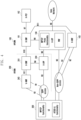
- FIG. 2 is a signaling diagram illustrating extension of the MA PDU session to the UE 300 which is registered on different PLMNs, according to an embodiment as disclosed herein.
- the UE 300 is registered with the HPLMN 100 of the home network for both 3GPP and non-3GPP access.
- the HPLMN 100 provides the required services to the UE 300 based on a subscriber data policy.
- the MA PDU Session for ATSSS is established when the UE 300 is camped on the same HPLMN 100 for both 3GPP and non-3GPP access.
- the UE 300 is moved to different PLMN (i.e., visited PLMN 200) for the 3GPP access.
- the MA PDU session is established by extending the ATSSS feature to the UE 300 by the HPLMN 100 where the UE 300 is registered with the HPLMN 100 for non-3GPP access and the VPLMN 200 for the 3GPP access.
- the proposed method ensures that the subscriber is not burdened with the roaming charges. Further, the proposed method allows the, home operator to control the data traffic of the UE 300.
- FIG. 3 is a schematic diagram, illustrating the UE 300 which is in non-roaming with local breakout architecture for the ATSSS support, according to prior art.
- ATSSS Currently TR agreement of 23.793 describes support of the MA PDU Session for the ATSSS when the UE 300 is camped on the same PLMN (i.e., same HPLMN 100/VPLMN 200) in both the 3GPP access and the N3GPP access in both home and roaming scenarios.
- the ATSSS policy is introduced to enhance the usage of existing network resources by diverting traffic using steering, switching, splitting of the data traffic.
- the ATSSS policy can be either pre-configured or provisioned during the establishment of the MA PDU session or modified dynamically based on the different factors like throughput, latency, signal conditions etc.
- the UE 300 is in non-roaming and is registered with the HPLMN 100 for both the 3GPP access and the non-3GPP access.
- the ATSSS feature is supported to the UE 300 when the UE 300 registered to 3GPP access, N3GPP access over the same HPLMN 100 (as shown in FIG. 3 ).
- the N11 interface is established between the H-AMF 143 of the HPLMN 100 and the H-SMF 141 of the HPLMN 100 indicating that the MA PDU session establishment request is received from the UE 300 which is registered over the non-3GPP access on the HPLMN 100.
- the ATSSS feature is supported to the UE 300 when the UE 300 registered to 3GPP access, N3GPP access over the same VPLMN 200 in LBO (Local Break Out).
- LBO Local Break Out
- the conventional method terminates the MA PDU session.
- FIG. 4 is architecture for providing an extension of the MA PDU session to the UE 300 which is registered on different PLMNs, according to an embodiment as disclosed herein.
- the UE 300 is in roaming.
- the required subscriber data is first requested by the VPLMN 200 from the subscriber's home network (i.e., from the HPLMN 100) to perform the authentication of the subscriber and for authorization for using the network services.
- the VLR 245 then enters the visiting subscriber's acquired information and the authorized network services are enabled.
- the UE 300 is registered to the VPLMN 200 via Home Routed (HR) VPLMN 200 over the 3GPP access and to the N3GPP access via HPLMN 100.
- HR Home Routed
- a H-SMF 141 shall indicate to both VSMF 241 and the UE 300 that the UE 300 is allowed to establish the MA PDU session.
- the UE 300 then proceeds with the MA PDU session establishment procedure for the requested PDU (if required) and thereby extending the ATSSS feature support in the Home Routed roaming case.
- the N16 interface established between the V-SMF 241 of the VPLMN 200 and the H-SMF 141 of the HPLMN 100 indicates that the MA PDU session establishment request is received from the UE 300 which is registered over the 3GPP access on the VPLMN 200. Further, the N11 interface is established between the H-AMF 143 of the HPLMN 100 and the H-SMF 141 of the HPLMN 100. In this case, the MA PDU session establishment request is received from the UE 300 which is registered over the non-3GPP access on the HPLMN 100.
- the H-SMF 141 shall send a "Least cost Access for Roaming" ATSSS policy to the UE 300 so that the HPLMN 100 can control the traffic flow of the subscriber.
- the "Least cost access for roaming" policy provides the configuration to divert (Switch/Split/Steer) the data traffic towards access registered to HPLMN 100, thereby increasing home operator revenue even in the roaming scenario.
- the H-SMF 141 is the anchor point for the ATSSS related decisions for the MA PDU session of the UE 300 between the H-SMF 141 and the V-SMF 241.
- the H-UPF 144 is the anchor point between the H-UPF 144 and the V-UPF 244 to provide the ATSSS related performance decision information to the UE 300.
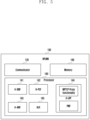
- FIG. 5 is a block diagram of the HPLMN 100 for traffic control in the wireless communication network when the UE 300 is registered on different PLMNs, according to an embodiment as disclosed herein.
- the Home Public Land Mobile Network (HPLMN) 100 identifies the PLMN (Public Land Mobile Network) in which the subscribers profile is held.
- the HLR 145 holds the subscribers profile with data including subscription data for the specific subscribers.
- the users roaming to other networks will receive subscription information from the HPLMN 100.
- the HPLMN 100 may transfer the subscription data to a VLR 245 of the VPLMN 200 (during registration in a PLMN).
- the HPLMN 100 may also contain various service nodes, such as a short message service centre (SMSC), service control point (SCP), etc.
- SMSC short message service centre
- SCP service control point
- the HPLMN 100 includes a communicator 120, a processor 140 and a memory 160.
- the processor 140 includes a home session management function (H-SMF) 141, a home Policy Control function (H-PCF) 142, an home access and mobility management function (H-AMF) 143, a home User Plane Function (H-UPF) 144 and a Home Location Register (HLR) 145.
- H-SMF home session management function
- H-PCF home Policy Control function
- H-AMF home access and mobility management function
- H-UPF home User Plane Function
- HLR Home Location Register
- the communicator 120 is configured to receive the MA PDU session request from the UE 300. Initially the MA PDU session request from the UE 300 is received over the first interface and after establishment of the MA PDU session over the first interface, the MA PDU session request is again received from the UE 300 over the second interface to establish of the MA PDU session over the second interface.
- the UE 300 is registered for 3GPP access over the VPLMN and non-3GPP access over the HPLMN 100 in the wireless communication network.
- the MA PDU session request includes the ATSSS Capability information of the UE 300. Further, the communicator 120 forwards the MA PDU session establishment request to the H-SMF 141.
- the H-PCF142 is configured to send a PCC policy to the H-SMF 141 including the ATSSS policy.
- the PCC policy may include new parameters to PCC rule such as for example Access Technology, Routing Factor (optional), Second Access Technology (optional) and Routing Factor (optional).
- the H-SMF 141 is configured to determine whether the MA PDU session can be establishment based on the home operator policy and the subscription data. In response to determining that the establishment of the MA PDU session is allowed based on the home operator policy and the subscription data, the H-SMF 141 establishes the MA PDU session context with the H-UPF 144.
- the H-SMF 141 is also configured to provide a N4 interface filter rules to the H-UPF 1441. Further, the H-SMF 141 generates the MA PDU session establishment accept message.
- the communicator 120 is configured to send the MA PDU session establishment accept message to the UE 300.
- the MA PDU session establishment accept message includes the ATSSS policy.
- the communicator 120 is configured to send the MA PDU session establishment accept message to the UE 300.
- the MA PDU session establishment accept message comprises the ATSSS policy.
- the first interface is a N11 interface and the second interface is a N16 interface.
- the first interface is a N16 interface and the second interface is a N11 interface.
- the N11 interface is established between the H-AMF 143 of the HPLMN 100 and the H-SMF 141 of the HPLMN 100 indicating that the MA PDU session establishment request is received from the UE 300 which is registered over the non-3GPP access on the HPLMN 100.
- the N16 interface is established between the V-SMF 241 of the VPLMN 200 and the H-SMF 141 of the HPLMN 100 indicating that the MA PDU session establishment request is received from the UE 300 which is registered over the 3GPP access on the VPLMN 200. Therefore, the H-SMF 141 is an anchor point for the ATSSS related decisions for the MA PDU session of the UE 300 between the H-SMF 141 and the V-SMF 241. Further, the H-UPF 144 is the anchor point between the H-UPF 144 and a V-UPF 244 and provides ATSSS related performance decision information to the UE 300.
- the memory 160 can include non-volatile storage elements. Examples of such non-volatile storage elements may include magnetic hard discs, optical discs, floppy discs, flash memories, or forms of electrically programmable memories (EPROM) or electrically erasable and programmable (EEPROM) memories.
- the memory 160 may, in some examples, be considered a non-transitory storage medium.
- the term "non-transitory” may indicate that the storage medium is not embodied in a carrier wave or a propagated signal. However, the term “non-transitory” should not be interpreted that the memory 160 is non-movable.
- the memory 160 can be configured to store larger amounts of information than the memory.
- a non-transitory storage medium may store data that can, over time, change (e.g., in Random Access Memory (RAM) or cache).
- RAM Random Access Memory
- FIG. 5 shows the hardware elements of the HPLMN 100 but it is to be understood that other embodiments are not limited thereon.
- the HPLMN device 100 may include less or more number of elements.
- the labels or names of the elements are used only for illustrative purpose and does not limit the scope of the invention.
- One or more components can be combined together to perform same or substantially similar function for enabling interaction on HPLMN 100.
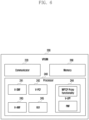
- FIG. 6 is a block diagram of the VPLMN 200 in the wireless communication network to which the UE 300 is registered, according to an embodiment as disclosed herein.
- the Visited PLMN (VPLMN) 200 is the network where a subscriber is currently registered after moving away from the home network.
- the subscriber is registered in the HPLMN 100 and hence the subscriber is outbound roaming (from HPLMN100's perspective) and inbounds roaming (from VPLMN 200's perspective).
- HPLMN100's perspective the Home LPN 100
- HPLMN 200's perspective the Home LPN 200
- the HPLMN 100 for one subscriber is the VPLMN 200 for the other subscriber.
- the required subscriber data must first be requested by the VPLMN 200 from the subscriber's home network (i.e., from the HPLMN 100) in order to authenticate the subscriber and for authorization for using the network services.
- the "visiting" subscriber acquires an entry in the VLR 245 and the authorized network services are enabled. If there is no roaming agreement between the two networks, i.e. the HPLMN 100 and the VPLMN 200 then the continuance of service becomes impossible, and service is denied by the visited network.
- the roaming subscriber is connected to the E-UTRAN, MME and S-GW of the visited network. However, by using a home network's PDN-GW, the user can have access to the home operator's services even while in the visited network.
- the VPLMN 200 includes a communicator 220, a processor 240 and a memory 260.
- the processor 240 includes a visitor session management function (V-SMF) 241, a visitor Policy Control function (V-PCF) 242, a visitor access and mobility management function (V-AMF) 243, a visitor User Plane Function (V-UPF) 244 and a visitor location register (VLR) 245.
- V-SMF visitor session management function
- V-PCF visitor Policy Control function
- V-AMF visitor access and mobility management function
- V-UPF visitor User Plane Function
- VLR visitor location register
- the UE 300 is registered for 3GPP access over the VPLMN 200.
- the N16 interface is established between the V-SMF 241 of the VPLMN 200 and the H-SMF 141 of the HPLMN 100 to extend the ATSSS policy of the HPLMN 100 to the UE 300 even when it is registered to the VPLMN 200 due to roaming. Therefore, the UE 300 receives the MA PDU session support even when the UE 300 is on the VPLMN 200 3GPP and N3GPP access with home routed support.
- the proposed method helps in enhancing the home operator's revenue and also avoids high roaming charges to the subscriber reported by VPLMN 200 for the services.
- FIG. 7 is a block diagram of the UE 300 which is registered on different PLMNs in the wireless communication network, according to an embodiment as disclosed herein.
- the UE 300 may be fixed or mobile and may also be called by another term, such as a Mobile Station (MS), a User Terminal (UT), a Subscriber Station (SS), a wireless device, a Personal Digital Assistant (PDA), a wireless modem, a handheld device, or an Access Terminal (AT).
- MS Mobile Station
- UT User Terminal
- SS Subscriber Station
- PDA Personal Digital Assistant
- AT Access Terminal
- the UE 300 includes a communicator 320, a processor 340 and a memory 360.
- the processor 340 includes a MA PDU session management engine 342 and an ATSSS policy management engine 344.
- the UE 300 is registered for 3GPP access over the VPLMN 200 and non-3GPP access over the HPLMN 100 in the wireless communication network.
- the MA PDU session management engine 342 is configured to indicate to the communicator 320, when the MA PDU session request needs to be sent to the HPLMN 100.
- the MA PDU session request comprises the ATSSS Capability information of the UE 300.
- the ATSSS policy management engine 344 provides the ATSSS capability information to the MA PDU session management engine 342.
- the MA PDU session management engine 342 appends the ATSSS capability information to the MA PDU session request which is sent to the HPLMN 100.
- the communicator 320 is configured to send the MA PDU session request to the HPLMN 100, requesting the HPLMN 100 to establish the MA PDU session over the first interface.
- the ATSSS capability may be discovered during initial MA PDU Session Establishment and the inter-PLMN mobility procedures where the network functions indicate the ATSSS support. If one of these network functions indicates no support for the ATSSS capability, corresponding MA PDU session will not have the ATSSS support.
- the communicator 320 is also configured to receive the MA PDU session establishment accept message from the HPLMN 100 over the first interface.
- the MA PDU session establishment accept message comprises the ATSSS policy.
- the ATSSS policy management engine 344 is further configured to receive the ATSSS policy.
- the ATSSS Policy defines the certain policies according to the application-specific information, the UE subscription data, user preference, local policy or any combination of them.
- the policies defined by the ATSSS Policy include Traffic steering policy, Traffic switching policy, Traffic splitting policy etc.
- the communicator 320 is also configured to send the MA PDU session request to establish the MA PDU session to the HPLMN 300 over the second interface and in response receive the MA PDU session establishment accept message from the HPLMN 300 over the second interface.
- the memory 360 can include non-volatile storage elements. Examples of such non-volatile storage elements may include magnetic hard discs, optical discs, floppy discs, flash memories, or forms of electrically programmable memories (EPROM) or electrically erasable and programmable (EEPROM) memories.
- the memory 360 may, in some examples, be considered a non-transitory storage medium.
- the term "non-transitory” may indicate that the storage medium is not embodied in a carrier wave or a propagated signal. However, the term “non-transitory” should not be interpreted that the memory 360 is non-movable.
- the memory 360 can be configured to store larger amounts of information than the memory.
- a non-transitory storage medium may store data that can, over time, change (e.g., in Random Access Memory (RAM) or cache).
- RAM Random Access Memory
- FIG. 7 shows the hardware elements of the UE 300 but it is to be understood that other embodiments are not limited thereon. In other embodiments, the UE 300 may include less or more number of elements. Further, the labels or names of the elements are used only for illustrative purpose and does not limit the scope of the invention. One or more components can be combined together to perform same or substantially similar function.
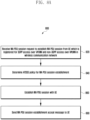
- FIG. 8A is a flowchart 800 for a method for the HPLMN-based traffic control in the wireless communication network when the UE 300 is registered on different PLMNs, according to an embodiment as disclosed herein.
- the HPLMN 100 receives the MA PDU session request to establish the MA PDU session from the UE 300 which is registered for 3GPP access over the VPLMN 200 and non-3GPP access over the HPLMN 100 in the wireless communication network.
- the communicator 140 can be configured to receive the MA PDU session request to establish the MA PDU session from the UE 300 which is registered for 3GPP access over the VPLMN 200 and non-3GPP access over the HPLMN 100 in the wireless communication network.
- the HPLMN 100 determines the ATSSS policy for the MA PDU session establishment.
- the H-SMF 141 can be configured to determine the ATSSS policy for the MA PDU session establishment.
- the HPLMN 100 establishes the MA PDU session with the UE 300.
- the H-SMF 141 can be configured to establish the MA PDU session with the UE 300.
- the HPLMN 100 sends the MA PDU session establishment accept message to the UE 300.
- the H-SMF 141 can be configured to send the MA PDU session establishment accept message to the UE 300.
- FIG. 8B is a flowchart for a method for establishing the MA PDU session with the UE 300, according to an embodiment as disclosed herein.
- the HPLMN 100 receives the MA PDU session establishment request from the UE 300 to the H-SMF 141 over the first interface.
- the processor 140 can be configured to receive the MA PDU session establishment request from the UE 300 to the H-SMF 141 over the first interface.
- the HPLMN 100 determines whether establishment of the MA PDU session is allowed by the H-SMF 141 of the HPLMN 100 based on the home operator policy and the subscription data.
- the processor 140 can be configured to determine whether establishment of the MA PDU session is allowed by the H-SMF 141 of the HPLMN 100 based on the home operator policy and the subscription data.
- the HPLMN 100 establishes the MA PDU session context with the H-UPF 144 of the HPLMN 100 by the H-SMF 141 of the HPLMN 100, where the H-SMF 141 of the HPLMN 100 provides the N4 filter rules to the H-UPF 144.
- the processor 140 can be configured to establish the MA PDU session context with the H-UPF 144 of the HPLMN 100 by the H-SMF 141 of the HPLMN 100, where the H-SMF 141 of the HPLMN 100 provides the N4 filter rules to the H-UPF 144.
- the HPLMN 100 establishes the MA PDU session with the UE 300 in response to determining that establishment of the MA PDU session is allowed.
- the processor 140 can be configured to establish the MA PDU session with the UE 300 in response to determining that establishment of the MA PDU session is allowed.
- the HPLMN 100 receives the MA PDU session establishment request to the H-SMF 141.
- the communicator 120 can be configured to receive the MA PDU session establishment request to the H-SMF 141.
- the HPLMN 100 determines whether establishment of the MA PDU session is allowed by the H-SMF 141 of the HPLMN 100 based on the home operator policy and the subscription data.
- the processor 140 can be configured to determine whether establishment of the MA PDU session is allowed by the H-SMF 141 of the HPLMN 100 based on the home operator policy and the subscription data.
- the HPLMN 100 establishes the MA PDU session context with the H-UPF 144 of the HPLMN 100 by the H-SMF 141 of the HPLMN 100.
- the processor 140 can be configured to establish the MA PDU session context with the H-UPF 144 of the HPLMN 100 by the H-SMF 141 of the HPLMN 100.
- the HPLMN 100 establishes the MA PDU session with the UE 300 in response to determining that establishment of the MA PDU session is allowed.
- the processor 140 can be configured to establish the MA PDU session with the UE 300 in response to determining that establishment of the MA PDU session is allowed.
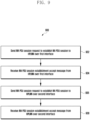
- FIG. 9 is a flowchart for a method for establishing the MA PDU session with the UE 300 with the different PLMNs, according to an embodiment as disclosed herein.
- the UE 300 sends the MA PDU session request to establish the MA PDU session to the HPLMN 100 over the first interface.
- the communicator 320 can be configured to send the MA PDU session request to establish the MA PDU session to the HPLMN 100 over the first interface.
- the UE 300 receives the MA PDU session establishment accept message from the HPLMN 100 over the first interface.
- the communicator 320 can be configured to receive the MA PDU session establishment accept message from the HPLMN 100 over the first interface.
- the UE 300 sends the MA PDU session request to establish the MA PDU session to the HPLMN 100 over the second interface.
- the communicator 320 can be configured to send the MA PDU session request to establish the MA PDU session to the HPLMN 100 over the second interface.
- the UE 300 receives the MA PDU session establishment accept message from the HPLMN 100 over the second interface.
- the communicator 320 can be configured to receives the MA PDU session establishment accept message from the HPLMN 100 over the second interface.
Landscapes
- Engineering & Computer Science (AREA)
- Computer Networks & Wireless Communication (AREA)
- Signal Processing (AREA)
- Databases & Information Systems (AREA)
- Business, Economics & Management (AREA)
- General Business, Economics & Management (AREA)
- Multimedia (AREA)
- Mobile Radio Communication Systems (AREA)
- Telephonic Communication Services (AREA)
Applications Claiming Priority (4)
| Application Number | Priority Date | Filing Date | Title |
|---|---|---|---|
| IN201841023269 | 2018-06-21 | ||
| PCT/KR2019/007551 WO2019245344A1 (en) | 2018-06-21 | 2019-06-21 | Method and system for hplmn-based traffic control when ue is registered on different plmns |
| EP22204404.2A EP4145949B1 (de) | 2018-06-21 | 2019-06-21 | Verfahren und system zur verkehrssteuerung auf hplmn-basis, wenn ein benutzergerät auf verschiedenen plmns registriert ist |
| EP19823166.4A EP3725127B1 (de) | 2018-06-21 | 2019-06-21 | Verfahren und system zur verkehrssteuerung auf hplmn-basis, wenn ein benutzergerät auf verschiedenen plmns registriert ist |
Related Parent Applications (3)
| Application Number | Title | Priority Date | Filing Date |
|---|---|---|---|
| EP19823166.4A Division EP3725127B1 (de) | 2018-06-21 | 2019-06-21 | Verfahren und system zur verkehrssteuerung auf hplmn-basis, wenn ein benutzergerät auf verschiedenen plmns registriert ist |
| EP22204404.2A Division EP4145949B1 (de) | 2018-06-21 | 2019-06-21 | Verfahren und system zur verkehrssteuerung auf hplmn-basis, wenn ein benutzergerät auf verschiedenen plmns registriert ist |
| EP22204404.2A Division-Into EP4145949B1 (de) | 2018-06-21 | 2019-06-21 | Verfahren und system zur verkehrssteuerung auf hplmn-basis, wenn ein benutzergerät auf verschiedenen plmns registriert ist |
Publications (3)
| Publication Number | Publication Date |
|---|---|
| EP4447409A2 true EP4447409A2 (de) | 2024-10-16 |
| EP4447409A3 EP4447409A3 (de) | 2024-12-18 |
| EP4447409B1 EP4447409B1 (de) | 2026-05-13 |
Family
ID=68983475
Family Applications (3)
| Application Number | Title | Priority Date | Filing Date |
|---|---|---|---|
| EP22204404.2A Active EP4145949B1 (de) | 2018-06-21 | 2019-06-21 | Verfahren und system zur verkehrssteuerung auf hplmn-basis, wenn ein benutzergerät auf verschiedenen plmns registriert ist |
| EP24197775.0A Active EP4447409B1 (de) | 2018-06-21 | 2019-06-21 | Verfahren und system zur verkehrssteuerung auf hplmn-basis, wenn ein benutzergerät auf verschiedenen plmns registriert ist |
| EP19823166.4A Active EP3725127B1 (de) | 2018-06-21 | 2019-06-21 | Verfahren und system zur verkehrssteuerung auf hplmn-basis, wenn ein benutzergerät auf verschiedenen plmns registriert ist |
Family Applications Before (1)
| Application Number | Title | Priority Date | Filing Date |
|---|---|---|---|
| EP22204404.2A Active EP4145949B1 (de) | 2018-06-21 | 2019-06-21 | Verfahren und system zur verkehrssteuerung auf hplmn-basis, wenn ein benutzergerät auf verschiedenen plmns registriert ist |
Family Applications After (1)
| Application Number | Title | Priority Date | Filing Date |
|---|---|---|---|
| EP19823166.4A Active EP3725127B1 (de) | 2018-06-21 | 2019-06-21 | Verfahren und system zur verkehrssteuerung auf hplmn-basis, wenn ein benutzergerät auf verschiedenen plmns registriert ist |
Country Status (5)
| Country | Link |
|---|---|
| US (2) | US11627622B2 (de) |
| EP (3) | EP4145949B1 (de) |
| KR (1) | KR102424256B1 (de) |
| CN (2) | CN117460000A (de) |
| WO (1) | WO2019245344A1 (de) |
Families Citing this family (18)
| Publication number | Priority date | Publication date | Assignee | Title |
|---|---|---|---|---|
| CN114868435B (zh) * | 2019-08-22 | 2023-12-26 | 欧芬诺有限责任公司 | 针对多址接入的策略控制 |
| CN110535552B (zh) | 2019-09-27 | 2021-07-20 | 腾讯科技(深圳)有限公司 | 网络节点执行的方法以及相应的网络节点 |
| WO2021134601A1 (zh) * | 2019-12-31 | 2021-07-08 | 华为技术有限公司 | 一种会话建立的方法及装置 |
| US12335430B2 (en) * | 2020-02-06 | 2025-06-17 | Lg Electronics Inc. | Communication associated with multi-access PDU session |
| CN115245040A (zh) | 2020-02-13 | 2022-10-25 | Idac控股公司 | 用于多址接入协议数据单元会话的方法、装置和系统 |
| US11902338B2 (en) * | 2020-02-13 | 2024-02-13 | Lg Electronics Inc. | Communication related to multi-access PDU sessions |
| EP4510765A3 (de) * | 2020-03-12 | 2025-03-12 | Samsung Electronics Co., Ltd. | Verfahren und vorrichtung zur bereitstellung einer zugangsverkehrslenkungsfunktion in einem drahtloskommunikationssystem |
| WO2022036336A1 (en) * | 2020-08-13 | 2022-02-17 | Alibaba Group Holding Limited | Network communication method and apparatus |
| KR102637605B1 (ko) * | 2020-11-05 | 2024-02-19 | 엘지전자 주식회사 | Qos 플로우에 관련된 측정 |
| EP4260494A1 (de) * | 2020-12-10 | 2023-10-18 | Nokia Technologies Oy | Roaming-aspekte für netzwerkdatenanalysefunktionen |
| KR20220106623A (ko) * | 2021-01-22 | 2022-07-29 | 삼성전자주식회사 | 이동통신 시스템에서 세션 관리 방법 및 장치 |
| US12568549B2 (en) * | 2021-04-29 | 2026-03-03 | Mediatek Inc. | MA PDU reactivation requested handling |
| CN115706975A (zh) * | 2021-08-06 | 2023-02-17 | 中国电信股份有限公司 | 会话策略控制方法、网元、存储介质和电子设备 |
| US11924915B2 (en) * | 2022-03-30 | 2024-03-05 | T-Mobile Usa, Inc. | Enhanced PLMN coverage for mobile devices |
| CN120814297A (zh) * | 2022-12-30 | 2025-10-17 | 三星电子株式会社 | 无线通信系统中的归属路由会话的plmn间切换的装置和方法 |
| KR102949783B1 (ko) * | 2023-04-17 | 2026-04-07 | 에스케이텔레콤 주식회사 | 세션 제어 장치 및 데이터 처리 장치와, 그 장치에서 수행되는 서로 다른 plmn 간 서비스 방법 |
| US12507304B2 (en) * | 2023-06-26 | 2025-12-23 | Verizon Patent And Licensing Inc. | System and method for supporting access traffic steering, switching and splitting-enabled evolved packet data gateway |
| CN116866890B (zh) * | 2023-07-28 | 2025-10-03 | 中国电信股份有限公司技术创新中心 | 业务分流方法、装置、系统、通信设备和存储介质 |
Family Cites Families (11)
| Publication number | Priority date | Publication date | Assignee | Title |
|---|---|---|---|---|
| CN101472262B (zh) * | 2008-05-04 | 2012-05-16 | 中兴通讯股份有限公司 | 一种接入网络的实现方法 |
| US10327174B2 (en) * | 2016-11-03 | 2019-06-18 | Motorola Mobility Llc | Offload bearing in a wireless communication system |
| US10667181B2 (en) * | 2016-04-04 | 2020-05-26 | Motorola Mobility Llc | PDU sessions with various types of session continuity |
| US20200245284A1 (en) * | 2017-02-07 | 2020-07-30 | Ipcom Gmbh & Co. Kg | Interworking function using untrusted network |
| US10779346B2 (en) * | 2017-03-27 | 2020-09-15 | Qualcomm Incorporated | Local area data network connectivity |
| US11128673B2 (en) * | 2017-08-04 | 2021-09-21 | Blackberry Limited | Method and system for access and use of multiple ISIM or ISIM credentials |
| CN110603850B (zh) * | 2017-09-30 | 2024-09-27 | Oppo广东移动通信有限公司 | 一种业务路径的切换方法、设备、存储介质及系统 |
| WO2019160300A1 (ko) * | 2018-02-19 | 2019-08-22 | 엘지전자 주식회사 | 복수의 네트워크 시스템에 접속할 수 있는 단말에 sm 신호를 전송하는 방법 |
| US10608947B2 (en) * | 2018-02-26 | 2020-03-31 | Qualcomm Incorporated | Per-flow jumbo MTU in NR systems |
| CN111937483B (zh) * | 2018-04-09 | 2024-04-23 | 联想(新加坡)私人有限公司 | 多接入数据连接上的数据分组引导 |
| WO2019223852A1 (en) * | 2018-05-22 | 2019-11-28 | Lenovo (Singapore) Pte. Ltd. | Measuring access network performance for a multi-access data connection |
-
2019
- 2019-06-21 CN CN202311298671.6A patent/CN117460000A/zh active Pending
- 2019-06-21 WO PCT/KR2019/007551 patent/WO2019245344A1/en not_active Ceased
- 2019-06-21 EP EP22204404.2A patent/EP4145949B1/de active Active
- 2019-06-21 KR KR1020207036353A patent/KR102424256B1/ko active Active
- 2019-06-21 US US16/963,549 patent/US11627622B2/en active Active
- 2019-06-21 EP EP24197775.0A patent/EP4447409B1/de active Active
- 2019-06-21 CN CN201980009450.8A patent/CN112438074B/zh active Active
- 2019-06-21 EP EP19823166.4A patent/EP3725127B1/de active Active
-
2023
- 2023-04-10 US US18/132,853 patent/US12200793B2/en active Active
Also Published As
| Publication number | Publication date |
|---|---|
| WO2019245344A1 (en) | 2019-12-26 |
| US20200389931A1 (en) | 2020-12-10 |
| CN112438074B (zh) | 2023-10-24 |
| EP3725127A1 (de) | 2020-10-21 |
| EP4145949A1 (de) | 2023-03-08 |
| KR102424256B1 (ko) | 2022-07-22 |
| US11627622B2 (en) | 2023-04-11 |
| US12200793B2 (en) | 2025-01-14 |
| EP3725127B1 (de) | 2023-10-25 |
| CN117460000A (zh) | 2024-01-26 |
| EP4447409A3 (de) | 2024-12-18 |
| EP4145949C0 (de) | 2025-07-30 |
| US20230247705A1 (en) | 2023-08-03 |
| KR20200144156A (ko) | 2020-12-28 |
| EP4447409B1 (de) | 2026-05-13 |
| EP3725127A4 (de) | 2021-01-13 |
| CN112438074A (zh) | 2021-03-02 |
| EP4145949B1 (de) | 2025-07-30 |
Similar Documents
| Publication | Publication Date | Title |
|---|---|---|
| US12200793B2 (en) | Method and system for HPLMN-based traffic control when UE is registered on different PLMNs | |
| US12256364B2 (en) | Method and UE for managing paging procedure in wireless communication network | |
| US12262447B2 (en) | Method and apparatus for supporting edge computing service for roaming UE in wireless communication system | |
| US12150035B2 (en) | Method and apparatus for managing cag related procedure in wireless communication network | |
| US12114380B2 (en) | Apparatus and method for providing interworking of network slices in wireless communication system | |
| US10123365B2 (en) | Method and apparatus for specified attach procedure and mobility and paging support in data communication network | |
| JP7246750B2 (ja) | 受動ローミング及びデータ利用権 | |
| JP2021503199A (ja) | 通信端末、接続を要求する方法、ネットワーク構成要素および通信端末にサービスを提供する方法 | |
| KR102536020B1 (ko) | 다중 액세스에 걸쳐 트래픽을 분할하기 위한 방법 및 컴퓨팅 디바이스 | |
| US20230156530A1 (en) | Method and device for supporting voice handover in wireless communication system | |
| US11582677B2 (en) | Method and apparatus for terminating cellular network connection of unauthenticated terminal | |
| KR102943011B1 (ko) | 차량 대 사물 서비스를 위한 슬라이스 지원 방법 | |
| JP7568868B2 (ja) | アプリケーション関連機能のためのリソース割り当てステータスサブスクリプション | |
| CN115396865A (zh) | 终端漫游数据处理方法及网络设备 | |
| CN103731829B (zh) | 资源授权的方法、装置以及系统 | |
| KR20190132168A (ko) | 사업자의 제한적인 서비스에 대한 망접속 제어 방법 및 장치 |
Legal Events
| Date | Code | Title | Description |
|---|---|---|---|
| PUAI | Public reference made under article 153(3) epc to a published international application that has entered the european phase |
Free format text: ORIGINAL CODE: 0009012 |
|
| STAA | Information on the status of an ep patent application or granted ep patent |
Free format text: STATUS: REQUEST FOR EXAMINATION WAS MADE |
|
| 17P | Request for examination filed |
Effective date: 20240830 |
|
| AC | Divisional application: reference to earlier application |
Ref document number: 3725127 Country of ref document: EP Kind code of ref document: P Ref document number: 4145949 Country of ref document: EP Kind code of ref document: P |
|
| AK | Designated contracting states |
Kind code of ref document: A2 Designated state(s): AL AT BE BG CH CY CZ DE DK EE ES FI FR GB GR HR HU IE IS IT LI LT LU LV MC MK MT NL NO PL PT RO RS SE SI SK SM TR |
|
| REG | Reference to a national code |
Ref country code: DE Ref legal event code: R079 Ipc: H04W0076160000 Ref country code: DE Ref legal event code: R079 Ref document number: 602019084940 Country of ref document: DE Free format text: PREVIOUS MAIN CLASS: H04L0065109500 Ipc: H04W0076160000 |
|
| PUAL | Search report despatched |
Free format text: ORIGINAL CODE: 0009013 |
|
| AK | Designated contracting states |
Kind code of ref document: A3 Designated state(s): AL AT BE BG CH CY CZ DE DK EE ES FI FR GB GR HR HU IE IS IT LI LT LU LV MC MK MT NL NO PL PT RO RS SE SI SK SM TR |
|
| RIC1 | Information provided on ipc code assigned before grant |
Ipc: H04L 65/1095 20220101ALI20241114BHEP Ipc: H04L 65/1073 20220101ALI20241114BHEP Ipc: H04L 65/1069 20220101ALI20241114BHEP Ipc: H04W 8/12 20090101ALI20241114BHEP Ipc: H04W 60/00 20090101ALI20241114BHEP Ipc: H04W 8/02 20090101ALI20241114BHEP Ipc: H04W 8/24 20090101ALI20241114BHEP Ipc: H04W 76/16 20180101AFI20241114BHEP |
|
| GRAP | Despatch of communication of intention to grant a patent |
Free format text: ORIGINAL CODE: EPIDOSNIGR1 |
|
| STAA | Information on the status of an ep patent application or granted ep patent |
Free format text: STATUS: GRANT OF PATENT IS INTENDED |
|
| INTG | Intention to grant announced |
Effective date: 20251203 |
|
| GRAS | Grant fee paid |
Free format text: ORIGINAL CODE: EPIDOSNIGR3 |
|
| GRAA | (expected) grant |
Free format text: ORIGINAL CODE: 0009210 |
|
| STAA | Information on the status of an ep patent application or granted ep patent |
Free format text: STATUS: THE PATENT HAS BEEN GRANTED |
|
| AC | Divisional application: reference to earlier application |
Ref document number: 4145949 Country of ref document: EP Kind code of ref document: P Ref document number: 3725127 Country of ref document: EP Kind code of ref document: P |
|
| AK | Designated contracting states |
Kind code of ref document: B1 Designated state(s): AL AT BE BG CH CY CZ DE DK EE ES FI FR GB GR HR HU IE IS IT LI LT LU LV MC MK MT NL NO PL PT RO RS SE SI SK SM TR |
|
| REG | Reference to a national code |
Ref country code: CH Ref legal event code: F10 Free format text: ST27 STATUS EVENT CODE: U-0-0-F10-F00 (AS PROVIDED BY THE NATIONAL OFFICE) Effective date: 20260513 |