EP4444009A1 - Verfahren und vorrichtung zur bestimmung des zeitschlitzversatzes zwischen hybriden automatischen wiederholungsanfragen sowie verfahren und vorrichtung zur anzeige des zeitschlitzversatzes zwischen hybriden automatischen wiederholungsanfragen - Google Patents
Verfahren und vorrichtung zur bestimmung des zeitschlitzversatzes zwischen hybriden automatischen wiederholungsanfragen sowie verfahren und vorrichtung zur anzeige des zeitschlitzversatzes zwischen hybriden automatischen wiederholungsanfragen Download PDFInfo
- Publication number
- EP4444009A1 EP4444009A1 EP21966062.8A EP21966062A EP4444009A1 EP 4444009 A1 EP4444009 A1 EP 4444009A1 EP 21966062 A EP21966062 A EP 21966062A EP 4444009 A1 EP4444009 A1 EP 4444009A1
- Authority
- EP
- European Patent Office
- Prior art keywords
- slot offset
- field
- dci
- offset information
- harq
- Prior art date
- Legal status (The legal status is an assumption and is not a legal conclusion. Google has not performed a legal analysis and makes no representation as to the accuracy of the status listed.)
- Withdrawn
Links
Images

Classifications
-
- H—ELECTRICITY
- H04—ELECTRIC COMMUNICATION TECHNIQUE
- H04L—TRANSMISSION OF DIGITAL INFORMATION, e.g. TELEGRAPHIC COMMUNICATION
- H04L1/00—Arrangements for detecting or preventing errors in the information received
- H04L1/12—Arrangements for detecting or preventing errors in the information received by using return channel
- H04L1/16—Arrangements for detecting or preventing errors in the information received by using return channel in which the return channel carries supervisory signals, e.g. repetition request signals
- H04L1/18—Automatic repetition systems, e.g. Van Duuren systems
- H04L1/1829—Arrangements specially adapted for the receiver end
- H04L1/1864—ARQ related signaling
-
- H—ELECTRICITY
- H04—ELECTRIC COMMUNICATION TECHNIQUE
- H04L—TRANSMISSION OF DIGITAL INFORMATION, e.g. TELEGRAPHIC COMMUNICATION
- H04L1/00—Arrangements for detecting or preventing errors in the information received
- H04L1/12—Arrangements for detecting or preventing errors in the information received by using return channel
- H04L1/16—Arrangements for detecting or preventing errors in the information received by using return channel in which the return channel carries supervisory signals, e.g. repetition request signals
- H04L1/18—Automatic repetition systems, e.g. Van Duuren systems
- H04L1/1812—Hybrid protocols; Hybrid automatic repeat request [HARQ]
- H04L1/1819—Hybrid protocols; Hybrid automatic repeat request [HARQ] with retransmission of additional or different redundancy
-
- H—ELECTRICITY
- H04—ELECTRIC COMMUNICATION TECHNIQUE
- H04L—TRANSMISSION OF DIGITAL INFORMATION, e.g. TELEGRAPHIC COMMUNICATION
- H04L1/00—Arrangements for detecting or preventing errors in the information received
- H04L1/12—Arrangements for detecting or preventing errors in the information received by using return channel
- H04L1/16—Arrangements for detecting or preventing errors in the information received by using return channel in which the return channel carries supervisory signals, e.g. repetition request signals
- H04L1/18—Automatic repetition systems, e.g. Van Duuren systems
- H04L1/1822—Automatic repetition systems, e.g. Van Duuren systems involving configuration of automatic repeat request [ARQ] with parallel processes
-
- H—ELECTRICITY
- H04—ELECTRIC COMMUNICATION TECHNIQUE
- H04L—TRANSMISSION OF DIGITAL INFORMATION, e.g. TELEGRAPHIC COMMUNICATION
- H04L1/00—Arrangements for detecting or preventing errors in the information received
- H04L1/12—Arrangements for detecting or preventing errors in the information received by using return channel
- H04L1/16—Arrangements for detecting or preventing errors in the information received by using return channel in which the return channel carries supervisory signals, e.g. repetition request signals
- H04L1/18—Automatic repetition systems, e.g. Van Duuren systems
- H04L1/1829—Arrangements specially adapted for the receiver end
- H04L1/1854—Scheduling and prioritising arrangements
-
- H—ELECTRICITY
- H04—ELECTRIC COMMUNICATION TECHNIQUE
- H04L—TRANSMISSION OF DIGITAL INFORMATION, e.g. TELEGRAPHIC COMMUNICATION
- H04L1/00—Arrangements for detecting or preventing errors in the information received
- H04L1/12—Arrangements for detecting or preventing errors in the information received by using return channel
- H04L1/16—Arrangements for detecting or preventing errors in the information received by using return channel in which the return channel carries supervisory signals, e.g. repetition request signals
- H04L1/18—Automatic repetition systems, e.g. Van Duuren systems
- H04L1/1867—Arrangements specially adapted for the transmitter end
- H04L1/1887—Scheduling and prioritising arrangements
-
- H—ELECTRICITY
- H04—ELECTRIC COMMUNICATION TECHNIQUE
- H04L—TRANSMISSION OF DIGITAL INFORMATION, e.g. TELEGRAPHIC COMMUNICATION
- H04L1/00—Arrangements for detecting or preventing errors in the information received
- H04L1/12—Arrangements for detecting or preventing errors in the information received by using return channel
- H04L1/16—Arrangements for detecting or preventing errors in the information received by using return channel in which the return channel carries supervisory signals, e.g. repetition request signals
- H04L1/18—Automatic repetition systems, e.g. Van Duuren systems
- H04L1/1867—Arrangements specially adapted for the transmitter end
- H04L1/1896—ARQ related signaling
-
- H—ELECTRICITY
- H04—ELECTRIC COMMUNICATION TECHNIQUE
- H04W—WIRELESS COMMUNICATION NETWORKS
- H04W72/00—Local resource management
- H04W72/04—Wireless resource allocation
- H04W72/044—Wireless resource allocation based on the type of the allocated resource
- H04W72/0446—Resources in time domain, e.g. slots or frames
-
- H—ELECTRICITY
- H04—ELECTRIC COMMUNICATION TECHNIQUE
- H04W—WIRELESS COMMUNICATION NETWORKS
- H04W72/00—Local resource management
- H04W72/12—Wireless traffic scheduling
Definitions
- the disclosure relates to the field of mobile communication technology, in particular to a method and an apparatus for determining a slot offset for Hybrid Automatic Repeat reQuest (HARQ), and a method and an apparatus for indicating a slot offset for HARQ.
- HARQ Hybrid Automatic Repeat reQuest
- IIoT Industrial Internet of Things
- uRLLC Ultra-reliable and low-latency communication
- 5G fifth generation
- the disclosure provides a method and an apparatus for determining a slot offset for Hybrid Automatic Repeat reQuest (HARQ) and a method and an apparatus for indicating a slot offset for HARQ, which fills a technical gap in the related art of how to indicate and determine a slot offset between a new HARQ transmission and a HARQ retransmission when one-shot retransmission is used for HARQ feedback, thereby facilitating the implementation of the HARQ feedback using the one-shot retransmission.
- HARQ Hybrid Automatic Repeat reQuest
- a method for determining a slot offset for the HARQ, performed by a user equipment (UE), includes: receiving Downlink Control Information (DCI) sent by a network device, in which one or more fields in the DCI are multiplexed to carry slot offset information between a new HARQ transmission and a HARQ retransmission; and obtaining, from the DCI, the slot offset information occupying a preset number of bits, and determining a slot offset between the new HARQ transmission and the HARQ retransmission based on the slot offset information.
- DCI Downlink Control Information
- the slot offset information is carried in a preset multiplexing priority order in one or more fields in the DCI.
- the one or more fields include one or more of a Modulation and coding scheme (MCS) field of a first Translation block (TB), a Redundancy Version (RV) field of the first TB, or a New data indicator (NDI) field of the first TB; in which the first TB is a first one among a plurality of TBs scheduled by the DCI; and a multiplexing priority of the MCS field is higher than a multiplexing priority of the RV field, and the multiplexing priority of the RV field is higher than a multiplexing priority of the NDI field.
- MCS Modulation and coding scheme
- RV Redundancy Version
- NDI New data indicator
- the slot offset information is carried in an order from low bit to high bit in the field.
- a bit that is not used to carry the slot offset information in each multiplexed field of the one or more fields is padded with 0.
- the preset number of bits is a fixed value or a changeable value range.
- the method further includes: determining the preset number of bits based on pre-agreed information.
- the method further includes: determining the preset number of bits based on a Radio Resource Control (RRC) configuration message sent by the network device.
- RRC Radio Resource Control
- the method further includes: determining a set of selectable values based on pre-agreed information for the preset number of bits; and selecting a value from the set of selectable values, as the preset number of bits, based on an RRC configuration message, a Media Access Control-Control Element (MAC-CE) signaling or DCI sent by the network device.
- MAC-CE Media Access Control-Control Element
- a method for indicating a slot offset for HARQ, performed by a network device includes: sending DCI to a UE, in which one or more fields in the DCI are multiplexed to carry slot offset information between a new HARQ transmission and a HARQ retransmission.
- the slot offset information is carried in a preset multiplexing priority order in one or more fields in the DCI.
- the one or more fields include one or more of a MCS field of a first TB, a RV field of the first TB, or a NDI field of the first TB; in which the first TB is a first one among a plurality of TBs scheduled by the DCI; and a multiplexing priority of the MCS field is higher than a multiplexing priority of the RV field, and the multiplexing priority of the RV field is higher than a multiplexing priority of the NDI field.
- the slot offset information is carried in an order from low bit to high bit in the field.
- a bit that is not used to carry the slot offset information in each multiplexed field of the one or more fields is padded with 0.
- a number of bits occupied by the slot offset information is a fixed value or a changeable value range.
- the method further includes: sending a RRC configuration message to the UE, the RRC configuration message being used to indicate a number of bits occupied by the slot offset information.
- the method further includes: sending an RRC configuration message, a MAC-CE signaling or another DCI to the UE, in which the RRC configuration message, the MAC-CE signaling or another DCI is used to indicate the UE to select a value from a set of selectable values as a number of bits occupied by the slot offset information, and the set of selectable values is determined by the UE based on pre-agreed information.
- an apparatus for determining a slot offset for HARQ includes: a transceiver module configured to receive DCI sent by a network device, in which one or more fields in the DCI are multiplexed to carry slot offset information between a new HARQ transmission and a HARQ retransmission; and a processing module configured to obtain, from the DCI, the slot offset information occupying a preset number of bits and determine a slot offset between the new HARQ transmission and the HARQ retransmission based on the slot offset information.
- an apparatus for indicating a slot offset for HARQ includes: a transceiver module configured to send DCI to a UE, in which one or more fields in the DCI are multiplexed to carry slot offset information between a new HARQ transmission and a HARQ retransmission.
- a communication device includes a transceiver, a memory, and a processor connected to the transceiver and the memory.
- the processor is configured to control transmitting and receiving of wireless signals of the transceiver by executing computer-executable instructions on the memory, and the processor is caused to perform the method for determining a slot offset for HARQ according to embodiments of the first aspect or the method for indicating a slot offset for HARQ according to embodiments of the second aspect.
- a computer storage medium having computer executable instructions stored thereon is provided.
- the method for determining a slot offset for HARQ according to embodiments of the first aspect or the method for indicating a slot offset for HARQ according to embodiments of the second aspect is performed.
- the UE receives the DCI sent by the network device, in which one or more fields in the DCI are multiplexed to carry the slot offset information between the new HARQ transmission and the HARQ retransmission.
- the UE obtains from the DCI the slot offset information occupying the preset number of bits, to determine the slot offset between the new HARQ transmission and the HARQ retransmission, which fills a technical gap in the related art of how to determine the slot offset between the new HARQ transmission and the HARQ retransmission when the one-shot retransmission is used for the HARQ feedback, thereby facilitating the implementation of the HARQ feedback using the one-shot retransmission.
- the network device sends the DCI to the UE, in which one or more fields in the DCI are multiplexed to carry slot offset information between a new HARQ transmission and a HARQ retransmission, which fills a technical gap in the related art of how to indicate a slot offset between the new HARQ transmission and the HARQ retransmission when the one-shot retransmission is used for the HARQ feedback, thereby facilitating the implementation of the HARQ feedback using the one-shot retransmission.
- FIG. 1 is a schematic diagram illustrating a communication system according to an embodiment of the disclosure.
- the communication system may include, but is not limited to, one network device and one User Equipment (UE).
- UE User Equipment
- the number and the form of devices illustrated in FIG. 1 are only for examples and do not constitute a limitation on embodiments of the disclosure, and two or more network devices and two or more UEs may be included in practical applications.
- the communication system illustrated in FIG. 1 includes, for example, one network device 101 and one UE 102.
- LTE long term evolution
- 5G 5th generation
- NR 5G new radio
- the network device 101 in embodiments of the disclosure is an entity for transmitting or receiving signals on a network side.
- the network device 101 may be an evolved NodeB (eNB), a transmission reception point (TRP), a next generation NodeB (gNB) in a NR system, a base station in other future mobile communication systems or an access node in a wireless fidelity (WiFi) system.
- eNB evolved NodeB
- TRP transmission reception point
- gNB next generation NodeB
- WiFi wireless fidelity
- the specific technology and specific device form adopted by the network device are not defined in embodiments of the disclosure.
- the network device according to embodiments of the disclosure may be composed of central unit(s) (CU) and distributed unit(s) (DU).
- the CU may also be called control unit.
- CU-DU structure allows to divide a protocol layer of the network device, such as a base station, such that some of the protocol layer functions are placed in the CU for centralized control, and some or all of the remaining functions of the protocol layer are distributed in the DU, and the DU is centrally controlled by the CU.
- the UE 102 is an entity for receiving or transmitting signals on a user side, such as a cellular phone.
- the UE 102 may also be referred to as terminal, mobile station (MS), mobile terminal (MT), and the like.
- the UE 102 may be a vehicle with communication functions, a smart vehicle, a mobile phone, a wearable device, a Pad, a computer with wireless transceiver functions, a virtual reality (VR) terminal device, an augmented reality (AR) terminal device, a wireless terminal device in industrial control, a wireless terminal device in self-driving, a wireless terminal device in remote medical surgery, a wireless terminal device in smart grid, a wireless terminal device in transportation safety, a wireless terminal device in smart city, a wireless terminal device in smart home, etc.
- the specific technology and specific device form adopted by the UE are not limited in embodiments of the disclosure.
- the disclosure provides a method and an apparatus for determining a slot offset for the HARQ and a method and an apparatus for indicating a slot offset for the HARQ, which fill a technical gap in the related art of how to indicate and determine a slot offset between a new HARQ transmission and a HARQ retransmission when one-shot retransmission is used for HARQ feedback, thereby facilitating the implementation of HARQ feedback using one-shot retransmission.
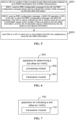
- FIG. 2 is a flowchart illustrating a method for determining a slot offset for the HARQ according to an embodiment of the disclosure. As illustrated in FIG. 2 , the method is performed by a UE. The method includes the following.
- step S201 downlink control information (DCI) sent by a network device is received.
- DCI downlink control information
- One or more fields in the DCI are multiplexed to carry slot offset information between a new HARQ transmission and a HARQ retransmission.
- the DCI is no longer used for scheduling Physical Downlink Shared Channel (PDSCH) data, so unused fields in the DCI may be used to indicate the slot offset between the new HARQ transmission and the HARQ retransmission.
- PDSCH Physical Downlink Shared Channel
- the slot offset information is carried in one or more fields in the DCI in a preset multiplexing priority order.
- One or more fields in the DCI may be multiplexed to carry the slot offset information in the preset multiplexing priority order. For example, each of the one or more fields in the DCI for carrying the slot offset information has a different multiplexing priority.
- One or more fields in the DCI may be multiplexed in a descending order of their multiplexing priorities or one or more fields in the DCI may be multiplexed in an ascending order of their multiplexing priorities. For example, when one or more fields in the DCI are multiplexed in the descending order of their multiplexing priorities, the field with the highest multiplexing priority may be multiplexed first. If the bits in this field is not enough for carrying the slot offset information, the field with the second highest multiplexing priority may be multiplexed, and so on, and the field with the lowest multiplexing priority is multiplexed last.
- the one or more fields include one or more of a Modulation and coding scheme (MCS) field of a first Translation block (TB), a Redundancy Version (RV) field of the first TB, or a New data indicator (NDI) field of the first TB; in which the first TB is a first one among a plurality of TBs scheduled by the DCI; and a multiplexing priority of the MCS field is higher than a multiplexing priority of the RV field, and the multiplexing priority of the RV field is higher than a multiplexing priority of the NDI field.
- MCS Modulation and coding scheme
- RV Redundancy Version
- NDI New data indicator
- one or more of the MCS field, the RV field or the NDI field of only the first one of the plurality of TBs scheduled by the DCI are used for multiplexing.
- the multiplexing priorities of the MCS field, the RV field and the NDI field are ranked in a descending order.
- the MCS field may be prioritized for multiplexing to carry the slot offset information, i.e., the slot offset information is carried in the MCS field.
- the RV field may be multiplexed, i.e., the slot offset information is carried in the MCS field and the RV field.
- the NDI field may be multiplexed. That is, the slot offset information may be carried in the MCS field, the RV field and the NDI field.
- N1 bits in the MCS field, N2 bits in the RV field and (N4-N1-N2) bits in the NDI field may be used to carry the information.
- the slot offset information may be carried in an order from low bit to high bit in the field.
- bits in the field may be multiplexed to carry the slot offset information from the low bit to the high bit.
- the usable bits in the MCS field are M 1 , M 2 ??M N1 from low bit to high bit
- the usable bits in the RV field are R 1 , R 2 ??R N2 from low bit to high bit
- the usable bits in the NDI field are N 1 , N 2 ?? N N3 from low bit to high bit.
- a bit that is not used to carry the slot offset information in each multiplexed field of the one or more fields is padded with 0.
- the slot offset information occupying a preset number of bits is obtained from the DCI, and a slot offset between the new HARQ transmission and the HARQ retransmission is determined based on the slot offset information.
- the preset number of bits i.e., a number of bits occupied by the slot offset information, may be a fixed value or a changeable value range.
- the UE may pre-agree with the network device on the number of bits occupied by the slot offset information. In another embodiment, the UE may determine the number of bits occupied by the slot offset information via a Radio Resource Control (RRC) configuration message.
- RRC Radio Resource Control
- the UE may pre-agree with the network device that the number of bits occupied by the slot offset information is 4 or the network device may indicate via the RRC configuration message that the number of bits occupied by the slot offset information is 4.
- the UE may pre-agree with the network device that the number of bits occupied by the slot offset information is a value selected from ⁇ 2, 4, 6, 8 ⁇ , and the network device further indicates the specific value via an RRC configuration message, a Media Access Control-Control Element (MAC-CE) signaling, or DCI.
- MAC-CE Media Access Control-Control Element
- the UE may pre-agree with the network device that the number of bits occupied by the slot offset information is a value selected from ⁇ 3, 4, 5, 6 ⁇ , or the network device may indicate via an RRC configuration message that the number of bits occupied by the slot offset information is a value selected from ⁇ 3, 4, 5, 6 ⁇ .
- the UE may obtain the slot offset information from the DCI in accordance with a preset number of bits. That is, the UE may pre-determine the number of bits occupied by the slot offset information and obtain, from the DCI, the slot offset information occupying the corresponding number of bits. The UE may determine a slot offset between the new HARQ transmission and the HARQ retransmission based on the slot offset information.
- the UE predetermines that the number of bits occupied by the slot offset information is 4, and the UE and the network device pre-agree to carry the slot offset information by sequentially multiplexing, in the descending order of multiplexing priority, the MCS field, the RV field and the NDI field of the first TB scheduled by the DCI.
- the UE may obtain 4-bit slot offset information from the multiplexed bits in each multiplexed field of the MCS field, the RV field and the NDI field of the first TB in turn.
- the UE predetermines that the number of bits occupied by the slot offset information is a value selected from ⁇ 3, 4, 5, 6 ⁇ , and the UE and the network device pre-agree to carry the slot offset information by sequentially, in the descending order of multiplexing priority, multiplexing the MCS field, the RV field and the NDI field of the first TB scheduled by the DCI.
- the UE may perform the blind detection on the MCS field, the RV field and the NDI field of the first TB to obtain the slot offset information from the multiplexed bits in these fields.
- the slot offset information is obtained from all bits in the MCS field and the first bit in the RV field.
- the UE may receive the DCI sent by the network device, in which one or more fields in the DCI are multiplexed to carry the slot offset information between the new HARQ transmission and the HARQ retransmission.
- the UE obtains from the DCI the slot offset information occupying the preset number of bits, to determine the slot offset between the new HARQ transmission and the HARQ retransmission, which fills a technical gap in the related art of how to determine the slot offset between the new HARQ transmission and the HARQ retransmission when the one-shot retransmission is used for HARQ feedback, thereby facilitating the implementation of the HARQ feedback using the one-shot retransmission.
- FIG. 3 is a flowchart illustrating a method for determining a slot offset for HARQ according to an embodiment of the disclosure. As illustrated in FIG. 3 , the method is performed by a UE. The method includes the following.
- step S301 DCI sent by a network device is received.
- One or more fields in the DCI are multiplexed to carry slot offset information between a new HARQ transmission and a HARQ retransmission.
- the slot offset information is carried in one or more fields in the DCI in a preset multiplexing priority order.
- the one or more fields include one or more of a MCS field of a first TB, a RV field of the first TB, or a NDI field of the first TB; in which the first TB is a first one among a plurality of TBs scheduled by the DCI; and a multiplexing priority of the MCS field is higher than a multiplexing priority of the RV field, and the multiplexing priority of the RV field is higher than a multiplexing priority of the NDI field.
- the slot offset information is carried in an order from low bit to high bit in the field.
- a bit that is not used to carry the slot offset information in each multiplexed field of the one or more fields is padded with 0.
- step S301 Detailed descriptions of the above step S301 and its related details may be referred to the descriptions of the step S201 and its related details, which will not be repeated here.
- a preset number of bits occupied by slot offset information is determined.
- the number of bits occupied by the slot offset information is a fixed value or a changeable value range.
- the number of bits occupied by the slot offset information may be 4, or the number of bits occupied by the slot offset information may be a value selected from ⁇ 2, 4, 6, 8 ⁇ , or the number of bits occupied by the slot offset information may be from 3 to 6.
- the above step S302 may include any of the following.
- the preset number of bits occupied by the slot offset information is determined based on pre-agreed information.
- the number of bits occupied by the slot offset information may be determined based on a protocol.
- the UE may pre-agree with the network device on the number of bits occupied by the slot offset information, and the UE determines the number of bits occupied by the slot offset information based on the agreement.
- the preset number of bits occupied by the slot offset information is determined based on a RRC configuration message sent by the network device.
- the number of bits occupied by the slot offset information may be indicated through the RRC configuration message.
- the network device may send an RRC configuration message to the UE, in which the RRC configuration message indicates the number of bits occupied by the slot offset information, so that the UE may determine the number of bits occupied by the slot offset information based on the RRC configuration message.
- a set of selectable values is determined for the preset number of bits occupied by the slot offset information based on pre-agreed information, and a value is selected, based on an RRC configuration message, a MAC-CE signaling or DCI sent by the network device, from the set of selectable values as the preset number of bits.
- the set of selectable values may be determined for the number of bits occupied by the slot offset information based on a protocol, and the number of bits occupied by the slot offset information may be determined, based on the RRC configuration message, the MAC-CE signaling, or the DCI sent by the network device, from the set of selectable values.
- the UE may pre-agree with the network device that the number of bits occupied by the slot offset information is a value selected from ⁇ 2, 4, 6, 8 ⁇ , and the network device further indicates the specific value via the RRC configuration message, the MAC-CE signaling or the DCI.
- the slot offset information occupying a preset number of bits is obtained from the DCI, and a slot offset between the new HARQ transmission and the HARQ retransmission is determined based on the slot offset information.
- step S303 Detailed descriptions of the above step S303 and its related details may be referred to the descriptions of the step S202 and its related details, which will not be repeated here.
- steps S301 to S303 described above is not necessary as described above, but may be executed in other orders.
- the step S302 may be executed at the same time as or before the step S301.
- the UE may receive the DCI sent by the network device, in which one or more fields in the DCI are multiplexed to carry the slot offset information between the new HARQ transmission and the HARQ retransmission.
- the UE obtains the slot offset information occupying the preset number of bits from the DCI, to determine the slot offset between the new HARQ transmission and the HARQ retransmission, which fills a technical gap in the related art of how to determine a slot offset between the new HARQ transmission and the HARQ retransmission when the one-shot retransmission is used for the HARQ feedback, thereby facilitating the implementation of the HARQ feedback using the one-shot retransmission.
- FIG. 4 is a flowchart illustrating a method for indicating a slot offset for HARQ according to an embodiment of the disclosure. As illustrated in FIG. 4 , the method is performed by a network device. The method includes the following.
- step S401 DCI is sent to a UE.
- One or more fields in the DCI are multiplexed to carry slot offset information between a new HARQ transmission and a HARQ retransmission.
- the DCI is no longer used for scheduling PDSCH data, so unused fields in the DCI may be used to indicate the slot offset between the new HARQ transmission and the HARQ retransmission.
- the slot offset information is carried in one or more fields in the DCI in a preset multiplexing priority order.
- One or more fields in the DCI may be multiplexed to carry the slot offset information in the preset multiplexing priority order. For example, each of the one or more fields in the DCI for carrying the slot offset information has a different multiplexing priority.
- One or more fields in the DCI may be multiplexed in a descending order of their multiplexing priorities or one or more fields in the DCI may be multiplexed in an ascending order of their multiplexing priorities. For example, when one or more fields in the DCI are multiplexed in the descending order of their multiplexing priorities, the field with the highest multiplexing priority may be multiplexed first. If the bits in this field are not enough for carrying the slot offset information, the field with the second highest multiplexing priority may be multiplexed, and so on, and the field with the lowest multiplexing priority is multiplexed last.
- the one or more fields include one or more of a MCS field of a first TB, a RV field of the first TB, or a NDI field of the first TB; in which the first TB is a first one among a plurality of TBs scheduled by the DCI; and a multiplexing priority of the MCS field is higher than a multiplexing priority of the RV field, and the multiplexing priority of the RV field is higher than a multiplexing priority of the NDI field.
- one or more of the MCS field, the RV field and the NDI field of only the first one of the plurality of TBs scheduled by the DCI are used for multiplexing.
- the multiplexing priorities of the MCS field, the RV field and the NDI field are ranked in a descending order.
- the slot offset information is carried in an order from low bit to high bit in the field.
- bits in the field may be multiplexed to carry the slot offset information from the low bit to the high bit.
- a bit that is not used to carry the slot offset information in each multiplexed field of the one or more fields is padded with 0.
- the MCS field of the first one of the plurality of TBs scheduled by the DCI has N1 usable bits
- the RV field of the first TB has N2 usable bits
- the NDI field of the first TB has N3 usable bits
- the number of bits occupied by the slot offset information is a fixed value or a changeable value range.
- the number of bits occupied by the slot offset information may be 4, or the number of bits occupied by the slot offset information may be a value selected from ⁇ 2, 4, 6, 8 ⁇ , or the number of bits occupied by the slot offset information may be from 3 to 6.
- the network device sends the DCI to the UE, in which one or more fields in the DCI are multiplexed to carry the slot offset information between the new HARQ transmission and the HARQ retransmission, which fills a technical gap in the related art of how to indicate a slot offset between the new HARQ transmission and the HARQ retransmission when the one-shot retransmission is used for the HARQ feedback, thereby facilitating the implementation of the HARQ feedback using the one-shot retransmission.
- FIG. 5 is a flowchart illustrating a method for indicating a slot offset for HARQ according to an embodiment of the disclosure. As illustrated in FIG. 5 , the method is performed by a network device. The method includes the following.
- a UE is informed of a number of bits occupied by slot offset information between a new HARQ transmission and a HARQ retransmission.
- the above step S501 may include any of the following.
- an RRC configuration message is sent to the UE, in which the RRC configuration message is used to indicate a number of bits occupied by the slot offset information.
- the number of bits occupied by the slot offset information is indicated by the RRC configuration message.
- the network device may send an RRC configuration message to the UE, in which the RRC configuration message indicates a number of bits occupied by the slot offset information, such that the UE may determine the number of bits occupied by the slot offset information based on the RRC configuration message.
- an RRC configuration message, a MAC-CE signaling or another DCI is sent to the UE, in which the RRC configuration message, the MAC-CE signaling or another DCI is used to indicate the UE to select a value from a set of selectable values as a number of bits occupied by the slot offset information, and the set of selectable values is determined by the UE based on pre-agreed information.
- the UE may determine the set of selectable values for the number of bits occupied by the slot offset information based on a protocol, and the network device may send the RRC configuration message, the MAC-CE signaling or the DCI to the UE to cause the UE to determine, based on the received RRC configuration message, MAC-CE signaling or DCI, the number of bits occupied by the slot offset information from the set of selectable values.
- the UE may pre-agree with the network device that the number of bits occupied by the slot offset information is a value selected from ⁇ 2, 4, 6, 8 ⁇ , and the network device further indicates the specific value via the RRC configuration message, the MAC-CE signaling or the DCI.
- step S502 DCI is sent to the UE.
- One or more fields in the DCI are multiplexed to carry slot offset information.
- the slot offset information is carried in a preset multiplexing priority order in one or more fields in the DCI.
- the one or more fields include one or more of a MCS field of a first TB, a RV field of the first TB, or a NDI field of the first TB; in which the first TB is a first one among a plurality of TBs scheduled by the DCI; and a multiplexing priority of the MCS field is higher than a multiplexing priority of the RV field, and the multiplexing priority of the RV field is higher than a multiplexing priority of the NDI field.
- the slot offset information is carried in an order from low bit to high bit in the field.
- a bit that is not used to carry the slot offset information in each multiplexed field of the one or more fields is padded with 0.
- the number of bits occupied by the slot offset information is a fixed value or a changeable value range.
- step S502 Detailed descriptions of the above step S502 and its related details may be referred to the descriptions of the step S401 and its related details, which will not be repeated here.
- the network device sends the DCI to the UE, in which one or more fields in the DCI are multiplexed to carry the slot offset information between the new HARQ transmission and the HARQ retransmission, which fills a technical gap in the related art of how to indicate a slot offset between the new HARQ transmission and the HARQ retransmission when the one-shot retransmission is used for the HARQ feedback, thereby facilitating the implementation of the HARQ feedback using the one-shot retransmission.
- the methods according to embodiments of the disclosure are described from the perspectives of the network device and the UE respectively.
- the network device and the UE may include a hardware structure or a software module, and implement each of the above-described functions in the form of a hardware structure, a software module, or a combination of the hardware structure and the software module.
- a certain function of the above functions may be performed in the form of a hardware structure, a software module, or a combination of the hardware structure and the software module.
- the disclosure also provides apparatuses for determining a slot offset for HARQ. Since the apparatuses for determining a slot offset for HARQ according to embodiments of the disclosure correspond to the methods for determining a slot offset for HARQ according to above-described embodiments, the implementations of the methods for determining a slot offset for HARQ are also applicable to the apparatuses for determining a slot offset for HARQ according to this embodiment and will not be described in detail in this embodiment.
- FIG. 6 is a block diagram illustrating an apparatus 600 for determining a slot offset for HARQ according to an embodiment of the disclosure.
- the apparatus 600 includes: a transceiver module 601 and a processing module 602.
- the transceiver module 601 is configured to receive DCI sent by a network device, in which one or more fields in the DCI are multiplexed to carry slot offset information between a new HARQ transmission and a HARQ retransmission.
- the processing module 602 is configured to obtain, from the DCI, the slot offset information occupying a preset number of bits, and determine a slot offset between the new HARQ transmission and the HARQ transmission based on the slot offset information.
- the UE may receive the DCI sent by the network device, in which one or more fields in the DCI are multiplexed to carry the slot offset information between the new HARQ transmission and the HARQ retransmission.
- the UE obtains, from the DCI, the slot offset information occupying the preset number of bits, to determine the slot offset between the new HARQ transmission and the HARQ retransmission, which fills a technical gap in the related art of how to determine a slot offset between the new HARQ transmission and the HARQ retransmission when the one-shot retransmission is used for the HARQ feedback, thereby facilitating the implementation of the HARQ feedback using the one-shot retransmission.
- the slot offset information is carried in one or more fields in the DCI in a preset multiplexing priority order.
- the one or more fields include one or more of a MCS field of a first TB, a RV field of the first TB, or a NDI field of the first TB; in which the first TB is a first one among a plurality of TBs scheduled by the DCI; and a multiplexing priority of the MCS field is higher than a multiplexing priority of the RV field, and the multiplexing priority of the RV field is higher than a multiplexing priority of the NDI field.
- the slot offset information is carried in an order from low bit to high bit in the field.
- a bit that is not used to carry the slot offset information in each multiplexed field of the one or more fields is padded with 0.
- the preset number of bits is a fixed value or a changeable value range.
- the processing module 602 is further configured to: determine the preset number of bits based on pre-agreed information.
- the processing module 602 is further configured to: determine the preset number of bits based on an RRC configuration message sent by the network device.
- the processing module 602 is further configured to: determine a set of selectable values for the preset number of bits based on pre-agreed information; and select a value from the set of selectable values as the preset number of bits based on an RRC configuration message, a MAC-CE signaling or DCI sent by the network device.
- the disclosure also provides apparatuses for indicating a slot offset for HARQ. Since the apparatuses for indicating a slot offset for HARQ according to embodiments of the disclosure correspond to the methods for indicating a slot offset for HARQ according to above-described embodiments, the implementations of the methods for indicating a slot offset for HARQ are also applicable to the apparatuses for indicating a slot offset for HARQ according to this embodiment and will not be described in detail in this embodiment.
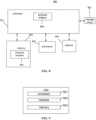
- FIG. 7 is a block diagram illustrating an apparatus 700 for indicating a slot offset for HARQ according to an embodiment of the disclosure.
- the apparatus 700 includes: a transceiver module 701.
- the transceiver module 701 is configured to send DCI to a UE, in which one or more fields in the DCI are multiplexed to carry slot offset information between a new HARQ transmission and a HARQ retransmission.
- the network device sends the DCI to the UE, in which one or more fields in the DCI are multiplexed to carry the slot offset information between the new HARQ transmission and the HARQ retransmission, which fills a technical gap in the related art of how to indicate a slot offset between the new HARQ transmission and the HARQ retransmission when the one-shot retransmission is used for the HARQ feedback, thereby facilitating the implementation of the HARQ feedback using the one-shot retransmission.
- the slot offset information is carried in one or more fields in the DCI in a preset multiplexing priority order.
- the one or more fields include one or more of a MCS field of a first TB, a RV field of the first TB, or a NDI field of the first TB; in which the first TB is a first one among a plurality of TBs scheduled by the DCI; and a multiplexing priority of the MCS field is higher than a multiplexing priority of the RV field, and the multiplexing priority of the RV field is higher than a multiplexing priority of the NDI field.
- the slot offset information is carried in an order from low bit to high bit in the field.
- a bit that is not used to carry the slot offset information in each multiplexed field of the one or more fields is padded with 0.
- the preset number of bits is a fixed value or a changeable value range.
- the transceiver module 701 is configured to: send an RRC configuration message to the UE, in which the RRC configuration message is used to indicate a number of bits occupied by the slot offset information.
- the transceiver module 701 is configured to: send an RRC configuration message, a MAC-CE signaling or another DCI to the UE, in which the RRC configuration message, the MAC-CE signaling or the DCI is used to indicate the UE to select a value from a set of selectable values as a number of bits occupied by the slot offset information, and the set of selectable values is determined by the UE based on pre-agreed information.
- FIG. 8 is a schematic diagram illustrating a communication device 800 according to an embodiment of the disclosure.
- the communication device 800 may be a network device or a UE, or the communication device 800 may be a chip, a chip system or a processor that supports the network device to realize the above-described methods, or the communication device 800 may be a chip, a chip system or a processor that supports the UE to realize the above-described methods.
- the device may be used to perform the methods described in the above method embodiments with reference to the description of the above-described method embodiments.
- the communication device 800 may include one or more processors 801.
- the processor 801 may be a general purpose processor or a dedicated processor, such as, a baseband processor and a central processor.
- the baseband processor is used for processing communication protocols and communication data.
- the central processor is used for controlling the communication device (e.g., a base station, a baseband chip, a terminal, a terminal chip, a DU, or a CU), executing a computer program, and processing data of the computer program.
- the communication device 800 may include one or more memories 802 on which a computer program 804 may be stored.
- the processor 801 executes the computer program 804 to cause the communication device 800 to perform the methods described in above method embodiments.
- the memory 802 may store data.
- the communication device 800 and the memory 802 may be provided separately or may be integrated together.
- the communication device 800 may also include a transceiver 805 and an antenna 806.
- the transceiver 805 may be referred to as a transceiver unit, a transceiver machine, or a transceiver circuit, for realizing receiving and transmission functions.
- the transceiver 805 may include a receiver and a transmitter.
- the receiver may be referred to as a receiving machine or a receiving circuit, for realizing the receiving function.
- the transmitter may be referred to as a transmitter machine or a transmitting circuit, for realizing the transmission function.
- the communication device 800 may also include one or more interface circuits 807.
- the interface circuit 807 is used to receive code instructions and transmit them to the processor 801.
- the processor 801 runs the code instructions to cause the communication device 800 to perform the methods described in method embodiments.
- the communication device 800 is a UE.
- the processor 801 is used to perform the step S202 in FIG. 2 , the step S302 (which includes the steps S3021 to S3023) and the step S303 in FIG. 3 .
- the transceiver 805 is used to perform the step S201 in FIG. 2 and the step S301 in FIG. 3 .
- the communication device 800 is a network device.
- the transceiver 805 is used to perform the step S401 in FIG. 4 , the step S501 (which includes the steps S5021 to S5022) and the step S502 in FIG. 5 .
- the processor 801 may include a transceiver for implementing the receiving and sending functions.
- the transceiver may be, for example, a transceiver circuit, an interface, or an interface circuit.
- the transceiver circuit, the interface, or the interface circuit for implementing the receiving and sending functions may be separated or may be integrated together.
- the transceiver circuit, the interface, or the interface circuit described above may be used for reading and writing code/data, or may be used for signal transmission or delivery.
- the processor 801 may store a computer program 803.
- the communication device 800 is caused to perform the methods described in method embodiments above.
- the computer program 803 may be solidified in the processor 801, and in such case the processor 801 may be implemented by hardware.
- the communication device 800 may include circuits.
- the circuits may implement the sending, receiving or communicating function in preceding method embodiments.
- the processor and the transceiver described in this disclosure may be implemented on integrated circuits (ICs), analog ICs, radio frequency integrated circuits (RFICs), mixed signal ICs, application specific integrated circuits (ASICs), printed circuit boards (PCBs), and electronic devices.
- ICs integrated circuits
- RFICs radio frequency integrated circuits
- ASICs application specific integrated circuits
- PCBs printed circuit boards
- the processor and the transceiver may also be produced using various IC process technologies, such as complementary metal oxide semiconductor (CMOS), nMetal-oxide-semiconductor (NMOS), positive channel metal oxide semiconductor (PMOS), bipolar junction transistor (BJT), bipolar CMOS (BiCMOS), silicon-germanium (SiGe), gallium arsenide (GaAs) and so on.
- CMOS complementary metal oxide semiconductor
- NMOS nMetal-oxide-semiconductor
- PMOS positive channel metal oxide semiconductor
- BJT bipolar junction transistor
- BiCMOS bipolar CMOS
- SiGe silicon-germanium
- GaAs gallium arsenide
- the communication device in the description of above embodiments may be a network device or a UE, but the scope of the communication device described in the disclosure is not limited thereto, and the structure of the communication device may not be limited by FIG. 8 .
- the communication device may be a stand-alone device or may be part of a larger device.
- the described communication device may be:
- the communication device may be a chip or a chip system
- the schematic structure of the chip is illustrated in FIG. 9 .
- the chip illustrated in FIG. 9 includes a processor 901 and an interface 902. There may be one or more processors 901 and a plurality of interfaces 902.
- the processor 901 is used to execute the step S202 in FIG. 2 , the step S302 (including the steps S3021 to S3023) and the step S303 in FIG. 3 , and the interface 902 is used to execute the step S201 in FIG. 2 and the step S301 in FIG. 3 .
- the interface 902 is used to perform the step S401 in FIG. 4 , the step S501 (including the steps S5021 to S5022) and the step S502 in FIG. 5 .
- the chip further includes a memory 903 for storing necessary computer programs and data.
- Embodiments of the disclosure also provide a system.
- the system includes a communication device acting as a UE described in embodiments of FIG. 6 and a communication device acting as a network device described in aforementioned embodiments of FIG. 7 .
- the system includes a communication device acting as a UE and a communication device acting as a network device described in aforementioned embodiment of FIG. 8 .
- the disclosure also provides a readable storage medium having instructions stored thereon. When the instructions are executed by a computer, the function of any of the method embodiments described above is implemented.
- the disclosure also provides a computer program product.
- the computer program product is executed by a computer, the function of any of the method embodiments described above is implemented.
- the above embodiments may be implemented in whole or in part by software, hardware, firmware, or any combination thereof.
- above embodiments may be implemented, in whole or in part, in the form of a computer program product.
- the computer program product includes one or more computer programs. When loading and executing the computer program on the computer, all or part of processes or functions described in embodiments of the disclosure is implemented.
- the computer may be a general-purpose computer, a dedicated computer, a computer network, or other programmable devices.
- the computer program may be stored in a computer-readable storage medium or transmitted from one computer-readable storage medium to another computer-readable storage medium.
- the computer program may be transmitted from one web site, computer, server, or data center to another web site, computer, server, or data center, in a wired manner (e.g., using coaxial cables, fiber optics, or digital subscriber lines (DSLs) or wireless manner (e.g., using infrared wave, wireless wave, or microwave).
- the computer-readable storage medium may be any usable medium to which the computer is capable to access or a data storage device such as a server integrated by one or more usable mediums and a data center.
- the usable medium may be a magnetic medium (e.g., a floppy disk, a hard disk, and a tape), an optical medium (e.g., a high-density digital video disc (DVD)), or a semiconductor medium (e.g., a solid state disk (SSD)).
- a magnetic medium e.g., a floppy disk, a hard disk, and a tape
- an optical medium e.g., a high-density digital video disc (DVD)
- DVD high-density digital video disc
- SSD solid state disk
- the term “at least one” in the disclosure may also be described as one or more, and the term “multiple” may be two, three, four, or more, which is not limited in the disclosure.
- “first”, “second”, and “third”, and “A”, “B”, “C” and “D” are used to distinguish different technical features of the type, the technical features described using the “first”, “second”, and “third”, and “A”, “B”, “C” and “D” do not indicate any order of precedence or magnitude.
- machine-readable medium and “computer-readable medium” refer to any computer program product, device and/or apparatus (e.g., disk, CD-ROM, memory, programmable logic device (PLD)) used to provide machine instructions and/or data to a programmable processor.
- the terms include a machine-readable medium that receives machine instructions as machine-readable signals.
- machine-readable signal refers to any signal used to provide machine instructions and/or data to a programmable processor.
- the systems and technologies described herein may be implemented in a computing system that includes background components (for example, a data server), or a computing system that includes middleware components (for example, an application server), or a computing system that includes front-end components (for example, a user computer with a graphical user interface or a web browser, through which the user may interact with the implementation of the systems and technologies described herein), or include such background components, intermediate computing components, or any combination of front-end components.
- the components of the system may be interconnected by any form or medium of digital data communication (e.g., a communication network). Examples of communication networks include: a Local Area Network (LAN), a Wide Area Network (WAN), and the Internet.
- the computer system may include a client and a server.
- the client and server are generally remote from each other and interacting through a communication network.
- the client-server relation is generated by a computer program running on the respective computers and having a client-server relation with each other.
Landscapes
- Engineering & Computer Science (AREA)
- Computer Networks & Wireless Communication (AREA)
- Signal Processing (AREA)
- Mobile Radio Communication Systems (AREA)
- Detection And Prevention Of Errors In Transmission (AREA)
Applications Claiming Priority (1)
| Application Number | Priority Date | Filing Date | Title |
|---|---|---|---|
| PCT/CN2021/135197 WO2023097630A1 (zh) | 2021-12-02 | 2021-12-02 | 混合自动重传的时隙偏移的确定、指示方法及装置 |
Publications (2)
| Publication Number | Publication Date |
|---|---|
| EP4444009A1 true EP4444009A1 (de) | 2024-10-09 |
| EP4444009A4 EP4444009A4 (de) | 2024-12-11 |
Family
ID=86611302
Family Applications (1)
| Application Number | Title | Priority Date | Filing Date |
|---|---|---|---|
| EP21966062.8A Withdrawn EP4444009A4 (de) | 2021-12-02 | 2021-12-02 | Verfahren und vorrichtung zur bestimmung des zeitschlitzversatzes zwischen hybriden automatischen wiederholungsanfragen sowie verfahren und vorrichtung zur anzeige des zeitschlitzversatzes zwischen hybriden automatischen wiederholungsanfragen |
Country Status (4)
| Country | Link |
|---|---|
| US (1) | US20250038896A1 (de) |
| EP (1) | EP4444009A4 (de) |
| CN (1) | CN116803178A (de) |
| WO (1) | WO2023097630A1 (de) |
Families Citing this family (1)
| Publication number | Priority date | Publication date | Assignee | Title |
|---|---|---|---|---|
| US20230232412A1 (en) * | 2022-01-20 | 2023-07-20 | Qualcomm Incorporated | Downlink control information configuration for triggering hybrid automatic repeat request codebook retransmission |
Family Cites Families (3)
| Publication number | Priority date | Publication date | Assignee | Title |
|---|---|---|---|---|
| US11646832B2 (en) * | 2020-04-09 | 2023-05-09 | Ofinno, Llc | HARQ feedback collision in unlicensed bands |
| CN112219414A (zh) * | 2020-09-09 | 2021-01-12 | 北京小米移动软件有限公司 | 下行传输方法、下行传输装置及存储介质 |
| WO2022077295A1 (zh) * | 2020-10-14 | 2022-04-21 | 北京小米移动软件有限公司 | 联合调度多个传输块的方法、装置、通信设备及存储介质 |
-
2021
- 2021-12-02 CN CN202180004217.8A patent/CN116803178A/zh active Pending
- 2021-12-02 US US18/715,649 patent/US20250038896A1/en active Pending
- 2021-12-02 WO PCT/CN2021/135197 patent/WO2023097630A1/zh not_active Ceased
- 2021-12-02 EP EP21966062.8A patent/EP4444009A4/de not_active Withdrawn
Also Published As
| Publication number | Publication date |
|---|---|
| CN116803178A (zh) | 2023-09-22 |
| US20250038896A1 (en) | 2025-01-30 |
| WO2023097630A1 (zh) | 2023-06-08 |
| EP4444009A4 (de) | 2024-12-11 |
Similar Documents
| Publication | Publication Date | Title |
|---|---|---|
| CN115004589B (zh) | 一种确定传输配置指示状态的方法及装置 | |
| EP4518202A1 (de) | Verfahren zur bestimmung des anzeigestatus einer übertragungskonfiguration und vorrichtung | |
| CN115004835A (zh) | 一种终端设备调度方法及其装置 | |
| US20240188054A1 (en) | Method and device for time-domain resource allocation | |
| EP4383879A1 (de) | Strahlanwendungsverfahren und -vorrichtung | |
| CN115299007A (zh) | 一种传输配置指示tci状态使用时间的确定方法及其装置 | |
| CN115956371A (zh) | 一种信道状态反馈的方法及其装置 | |
| US12542644B2 (en) | Uplink control information multiplexing method and apparatus | |
| CN114208354A (zh) | 物理下行共享信道pdsch配置方法及装置 | |
| EP4550706A1 (de) | Verfahren und vorrichtung zur bestimmung der rückkopplung von hybriden automatischen wiederholungsanfragen (harq) | |
| EP4444009A1 (de) | Verfahren und vorrichtung zur bestimmung des zeitschlitzversatzes zwischen hybriden automatischen wiederholungsanfragen sowie verfahren und vorrichtung zur anzeige des zeitschlitzversatzes zwischen hybriden automatischen wiederholungsanfragen | |
| CN112584532A (zh) | 上行信道的信息确定方法、终端及网络侧设备 | |
| US20240187280A1 (en) | Triggering method for joint channel estimation and user equipment | |
| EP4465719A1 (de) | Verfahren und vorrichtung zur bestimmung von verarbeitungszeitparametern eines gemeinsam genutzten physikalischen downlink-kanals | |
| CN113261235B (zh) | 一种混合自动重传请求确认的反馈方法及其装置 | |
| JP2025505255A (ja) | 端末デバイススケジューリング方法及びその装置 | |
| CN114026907A (zh) | 一种上行波束的测量方法及其装置 | |
| CN114026810A (zh) | 一种混合自动重传请求进程号的确定方法及其装置 | |
| EP4572201A1 (de) | Vorcodierungsanzeigeverfahren für nicht-codebuch-basierte pusch-übertragung | |
| EP4604434A1 (de) | Verfahren und vorrichtung zur übertragung eines gemeinsam genutzten physikalischen downlink-kanals (pdsch) | |
| RU2831520C2 (ru) | Способ и устройство для возврата подтверждения гибридного автоматического запроса на повторную передачу | |
| CN116171615B (zh) | 载波切换方法及装置 | |
| EP4637063A1 (de) | Konfigurationsverfahren für hybride automatische wiederholungsanfrage (harq) und vorrichtung | |
| US20250253980A1 (en) | Method and apparatus for determining initial transmission position of tb | |
| WO2024000201A1 (zh) | 一种指示方法及装置 |
Legal Events
| Date | Code | Title | Description |
|---|---|---|---|
| STAA | Information on the status of an ep patent application or granted ep patent |
Free format text: STATUS: THE INTERNATIONAL PUBLICATION HAS BEEN MADE |
|
| PUAI | Public reference made under article 153(3) epc to a published international application that has entered the european phase |
Free format text: ORIGINAL CODE: 0009012 |
|
| STAA | Information on the status of an ep patent application or granted ep patent |
Free format text: STATUS: REQUEST FOR EXAMINATION WAS MADE |
|
| 17P | Request for examination filed |
Effective date: 20240628 |
|
| AK | Designated contracting states |
Kind code of ref document: A1 Designated state(s): AL AT BE BG CH CY CZ DE DK EE ES FI FR GB GR HR HU IE IS IT LI LT LU LV MC MK MT NL NO PL PT RO RS SE SI SK SM TR |
|
| REG | Reference to a national code |
Ref country code: DE Ref legal event code: R079 Free format text: PREVIOUS MAIN CLASS: H04W0072120000 Ipc: H04L0001180000 |
|
| A4 | Supplementary search report drawn up and despatched |
Effective date: 20241113 |
|
| RIC1 | Information provided on ipc code assigned before grant |
Ipc: H04L 1/1867 20230101ALI20241107BHEP Ipc: H04L 1/1829 20230101ALI20241107BHEP Ipc: H04L 1/18 20230101AFI20241107BHEP |
|
| DAV | Request for validation of the european patent (deleted) | ||
| DAX | Request for extension of the european patent (deleted) | ||
| STAA | Information on the status of an ep patent application or granted ep patent |
Free format text: STATUS: THE APPLICATION HAS BEEN WITHDRAWN |
|
| 18W | Application withdrawn |
Effective date: 20260309 |