EP4465719A1 - Verfahren und vorrichtung zur bestimmung von verarbeitungszeitparametern eines gemeinsam genutzten physikalischen downlink-kanals - Google Patents
Verfahren und vorrichtung zur bestimmung von verarbeitungszeitparametern eines gemeinsam genutzten physikalischen downlink-kanals Download PDFInfo
- Publication number
- EP4465719A1 EP4465719A1 EP22919407.1A EP22919407A EP4465719A1 EP 4465719 A1 EP4465719 A1 EP 4465719A1 EP 22919407 A EP22919407 A EP 22919407A EP 4465719 A1 EP4465719 A1 EP 4465719A1
- Authority
- EP
- European Patent Office
- Prior art keywords
- harq process
- subcarrier spacing
- feedback
- harq
- processing
- Prior art date
- Legal status (The legal status is an assumption and is not a legal conclusion. Google has not performed a legal analysis and makes no representation as to the accuracy of the status listed.)
- Pending
Links
- 238000000034 method Methods 0.000 title claims abstract description 471
- 238000012545 processing Methods 0.000 title claims abstract description 231
- 238000004891 communication Methods 0.000 claims abstract description 79
- 238000013507 mapping Methods 0.000 claims description 83
- 230000004044 response Effects 0.000 claims description 68
- 238000004590 computer program Methods 0.000 claims description 33
- 230000015654 memory Effects 0.000 claims description 16
- 239000002699 waste material Substances 0.000 abstract description 16
- 230000006870 function Effects 0.000 description 19
- 238000010586 diagram Methods 0.000 description 8
- 238000013461 design Methods 0.000 description 4
- 239000004065 semiconductor Substances 0.000 description 4
- 238000005516 engineering process Methods 0.000 description 3
- 238000010295 mobile communication Methods 0.000 description 3
- 229910000577 Silicon-germanium Inorganic materials 0.000 description 2
- 230000006978 adaptation Effects 0.000 description 2
- 230000005540 biological transmission Effects 0.000 description 2
- 229910044991 metal oxide Inorganic materials 0.000 description 2
- 150000004706 metal oxides Chemical class 0.000 description 2
- JBRZTFJDHDCESZ-UHFFFAOYSA-N AsGa Chemical compound [As]#[Ga] JBRZTFJDHDCESZ-UHFFFAOYSA-N 0.000 description 1
- LEVVHYCKPQWKOP-UHFFFAOYSA-N [Si].[Ge] Chemical compound [Si].[Ge] LEVVHYCKPQWKOP-UHFFFAOYSA-N 0.000 description 1
- 238000003491 array Methods 0.000 description 1
- 238000013473 artificial intelligence Methods 0.000 description 1
- 230000003190 augmentative effect Effects 0.000 description 1
- 230000001413 cellular effect Effects 0.000 description 1
- 230000000295 complement effect Effects 0.000 description 1
- 238000012937 correction Methods 0.000 description 1
- 238000013500 data storage Methods 0.000 description 1
- 238000010304 firing Methods 0.000 description 1
- 230000007774 longterm Effects 0.000 description 1
- 230000003287 optical effect Effects 0.000 description 1
- 239000013307 optical fiber Substances 0.000 description 1
- 239000007787 solid Substances 0.000 description 1
- 238000006467 substitution reaction Methods 0.000 description 1
- 238000001356 surgical procedure Methods 0.000 description 1
- 238000012546 transfer Methods 0.000 description 1
Images
Classifications
-
- H—ELECTRICITY
- H04—ELECTRIC COMMUNICATION TECHNIQUE
- H04W—WIRELESS COMMUNICATION NETWORKS
- H04W72/00—Local resource management
- H04W72/04—Wireless resource allocation
- H04W72/044—Wireless resource allocation based on the type of the allocated resource
- H04W72/0446—Resources in time domain, e.g. slots or frames
-
- H—ELECTRICITY
- H04—ELECTRIC COMMUNICATION TECHNIQUE
- H04L—TRANSMISSION OF DIGITAL INFORMATION, e.g. TELEGRAPHIC COMMUNICATION
- H04L1/00—Arrangements for detecting or preventing errors in the information received
- H04L1/12—Arrangements for detecting or preventing errors in the information received by using return channel
- H04L1/16—Arrangements for detecting or preventing errors in the information received by using return channel in which the return channel carries supervisory signals, e.g. repetition request signals
- H04L1/18—Automatic repetition systems, e.g. Van Duuren systems
- H04L1/1867—Arrangements specially adapted for the transmitter end
- H04L1/1887—Scheduling and prioritising arrangements
-
- H—ELECTRICITY
- H04—ELECTRIC COMMUNICATION TECHNIQUE
- H04W—WIRELESS COMMUNICATION NETWORKS
- H04W72/00—Local resource management
- H04W72/12—Wireless traffic scheduling
- H04W72/1263—Mapping of traffic onto schedule, e.g. scheduled allocation or multiplexing of flows
- H04W72/1273—Mapping of traffic onto schedule, e.g. scheduled allocation or multiplexing of flows of downlink data flows
-
- H—ELECTRICITY
- H04—ELECTRIC COMMUNICATION TECHNIQUE
- H04L—TRANSMISSION OF DIGITAL INFORMATION, e.g. TELEGRAPHIC COMMUNICATION
- H04L1/00—Arrangements for detecting or preventing errors in the information received
- H04L1/12—Arrangements for detecting or preventing errors in the information received by using return channel
- H04L1/16—Arrangements for detecting or preventing errors in the information received by using return channel in which the return channel carries supervisory signals, e.g. repetition request signals
- H04L1/18—Automatic repetition systems, e.g. Van Duuren systems
- H04L1/1812—Hybrid protocols; Hybrid automatic repeat request [HARQ]
-
- H—ELECTRICITY
- H04—ELECTRIC COMMUNICATION TECHNIQUE
- H04L—TRANSMISSION OF DIGITAL INFORMATION, e.g. TELEGRAPHIC COMMUNICATION
- H04L1/00—Arrangements for detecting or preventing errors in the information received
- H04L1/12—Arrangements for detecting or preventing errors in the information received by using return channel
- H04L1/16—Arrangements for detecting or preventing errors in the information received by using return channel in which the return channel carries supervisory signals, e.g. repetition request signals
- H04L1/18—Automatic repetition systems, e.g. Van Duuren systems
- H04L1/1822—Automatic repetition systems, e.g. Van Duuren systems involving configuration of automatic repeat request [ARQ] with parallel processes
-
- H—ELECTRICITY
- H04—ELECTRIC COMMUNICATION TECHNIQUE
- H04L—TRANSMISSION OF DIGITAL INFORMATION, e.g. TELEGRAPHIC COMMUNICATION
- H04L1/00—Arrangements for detecting or preventing errors in the information received
- H04L1/12—Arrangements for detecting or preventing errors in the information received by using return channel
- H04L1/16—Arrangements for detecting or preventing errors in the information received by using return channel in which the return channel carries supervisory signals, e.g. repetition request signals
- H04L1/18—Automatic repetition systems, e.g. Van Duuren systems
- H04L1/1825—Adaptation of specific ARQ protocol parameters according to transmission conditions
-
- H—ELECTRICITY
- H04—ELECTRIC COMMUNICATION TECHNIQUE
- H04L—TRANSMISSION OF DIGITAL INFORMATION, e.g. TELEGRAPHIC COMMUNICATION
- H04L1/00—Arrangements for detecting or preventing errors in the information received
- H04L1/12—Arrangements for detecting or preventing errors in the information received by using return channel
- H04L1/16—Arrangements for detecting or preventing errors in the information received by using return channel in which the return channel carries supervisory signals, e.g. repetition request signals
- H04L1/18—Automatic repetition systems, e.g. Van Duuren systems
- H04L1/1829—Arrangements specially adapted for the receiver end
- H04L1/1854—Scheduling and prioritising arrangements
-
- H—ELECTRICITY
- H04—ELECTRIC COMMUNICATION TECHNIQUE
- H04L—TRANSMISSION OF DIGITAL INFORMATION, e.g. TELEGRAPHIC COMMUNICATION
- H04L1/00—Arrangements for detecting or preventing errors in the information received
- H04L1/12—Arrangements for detecting or preventing errors in the information received by using return channel
- H04L1/16—Arrangements for detecting or preventing errors in the information received by using return channel in which the return channel carries supervisory signals, e.g. repetition request signals
- H04L1/18—Automatic repetition systems, e.g. Van Duuren systems
- H04L1/1829—Arrangements specially adapted for the receiver end
- H04L1/1864—ARQ related signaling
-
- H—ELECTRICITY
- H04—ELECTRIC COMMUNICATION TECHNIQUE
- H04L—TRANSMISSION OF DIGITAL INFORMATION, e.g. TELEGRAPHIC COMMUNICATION
- H04L1/00—Arrangements for detecting or preventing errors in the information received
- H04L1/12—Arrangements for detecting or preventing errors in the information received by using return channel
- H04L1/16—Arrangements for detecting or preventing errors in the information received by using return channel in which the return channel carries supervisory signals, e.g. repetition request signals
- H04L1/18—Automatic repetition systems, e.g. Van Duuren systems
- H04L1/1867—Arrangements specially adapted for the transmitter end
- H04L1/1896—ARQ related signaling
-
- H—ELECTRICITY
- H04—ELECTRIC COMMUNICATION TECHNIQUE
- H04L—TRANSMISSION OF DIGITAL INFORMATION, e.g. TELEGRAPHIC COMMUNICATION
- H04L27/00—Modulated-carrier systems
- H04L27/26—Systems using multi-frequency codes
- H04L27/2601—Multicarrier modulation systems
- H04L27/2602—Signal structure
- H04L27/26025—Numerology, i.e. varying one or more of symbol duration, subcarrier spacing, Fourier transform size, sampling rate or down-clocking
-
- H—ELECTRICITY
- H04—ELECTRIC COMMUNICATION TECHNIQUE
- H04W—WIRELESS COMMUNICATION NETWORKS
- H04W72/00—Local resource management
- H04W72/20—Control channels or signalling for resource management
- H04W72/23—Control channels or signalling for resource management in the downlink direction of a wireless link, i.e. towards a terminal
- H04W72/231—Control channels or signalling for resource management in the downlink direction of a wireless link, i.e. towards a terminal the control data signalling from the layers above the physical layer, e.g. RRC or MAC-CE signalling
-
- H—ELECTRICITY
- H04—ELECTRIC COMMUNICATION TECHNIQUE
- H04W—WIRELESS COMMUNICATION NETWORKS
- H04W72/00—Local resource management
- H04W72/50—Allocation or scheduling criteria for wireless resources
- H04W72/53—Allocation or scheduling criteria for wireless resources based on regulatory allocation policies
Definitions
- the present disclosure relates to the field of communication technology, and more particularly, to a method and apparatus for determining a processing time parameter for a physical downlink shared channel.
- a scheduling limit time is defined for a physical downlink shared channel (PDSCH).
- PDSCH physical downlink shared channel
- the terminal device is not expected to feed back an HARQ demodulation result for the PDSCH.
- HARQ feedback disabled, how to accurately determine the scheduling limit time for the PDSCH has become an urgent problem to be solved at present.
- Embodiments of the present disclosure provide a method and apparatus for determining a processing time parameter for a physical downlink shared channel (PDSCH), which can determine a first time parameter required for processing the PDSCH carried by a hybrid automatic repeat request (HARQ) process of a terminal device according to a status of a feedback of the HARQ process of the terminal device.
- PDSCH physical downlink shared channel
- HARQ hybrid automatic repeat request
- embodiments of the present disclosure provide a method for determining a processing time parameter for a physical downlink shared channel (PDSCH).
- the method is performed by a terminal device, and includes: determining a first time parameter required for processing the PDSCH carried by a hybrid automatic repeat request (HARQ) process according to a status of a feedback of the HARQ process.
- HARQ hybrid automatic repeat request
- the terminal device determines the first time parameter required for processing the PDSCH carried by the HARQ process according to the status of the HARQ feedback of the HARQ process. In this way, the first time parameter determined thereby is more accurate, thereby not only avoiding the impact on the HARQ due to the short processing time, but also avoiding resource waste due to the long processing time.
- determining the first time parameter required for processing the PDSCH carried by the HARQ process according to the status of the feedback of the HARQ process includes: in response to the feedback of the HARQ process being enabled, determining the first time parameter required for processing the PDSCH carried by the HARQ process according to one of a first subcarrier spacing corresponding to a physical downlink control channel (PDCCH), a second subcarrier spacing corresponding to the PDSCH, and a third subcarrier spacing corresponding to an uplink physical channel for transmitting the HARQ feedback; or in response to the feedback of the HARQ process being disabled, determining the first time parameter required for processing the PDSCH carried by the HARQ process according to one of the first subcarrier spacing and the second subcarrier spacing.
- PDCH physical downlink control channel
- determining the first time parameter required for processing the PDSCH carried by the HARQ process according to the status of the feedback of the HARQ process includes: in response to the feedback of the HARQ process being enabled, determining the first time parameter required for processing the PDSCH carried by the HARQ process according to one of a first subcarrier spacing corresponding to a physical downlink control channel (PDCCH), a second subcarrier spacing corresponding to the PDSCH, and a first preset subcarrier spacing; or in response to the feedback of the HARQ process being disabled, determining the first time parameter required for processing the PDSCH carried by the HARQ process according to one of the first subcarrier spacing, the second subcarrier spacing, and a second preset subcarrier spacing.
- PDCCH physical downlink control channel
- the first preset subcarrier spacing is any of: a subcarrier spacing corresponding to an uplink physical channel for transmitting the HARQ feedback; a subcarrier spacing corresponding to an uplink physical channel assumed to transmit the HARQ feedback; or a subcarrier spacing corresponding to an uplink bandwidth part in an active status.
- the second preset subcarrier spacing is any of: a subcarrier spacing corresponding to an uplink physical channel assumed to transmit the HARQ feedback; or a subcarrier spacing corresponding to an uplink bandwidth part channel in an active status.
- determining the first time parameter required for processing the PDSCH carried by the HARQ process according to the status of the feedback of the HARQ process includes: determining candidate subcarrier spacings corresponding to the PDSCH carried by the HARQ process according to the status of the feedback of the HARQ process; determining second time parameters corresponding to the candidate subcarrier spacings respectively according to a preset mapping relationship between second time parameters and subcarrier spacings; determining a mapping relationship table between second time parameters and a number of symbols according to a capability of the terminal device; and determining a maximum first time parameter corresponding to the second time parameters according to a mapping relationship in the mapping relationship table.
- the method further includes: in response to the feedback of the HARQ process being enabled, determining an earliest time for transmitting the feedback of the HARQ process according to the first time parameter required for processing the PDSCH carried by the HARQ process; or in response to the feedback of the HARQ process being disabled, determining an earliest time for receiving another PDSCH carried by the HARQ process according to the first time parameter required for processing the PDSCH carried by the HARQ process.
- embodiments of the present disclosure provide a method for determining a processing time parameter for a physical downlink shared channel (PDSCH).
- the method is performed by a network device, and includes: determining, by the network device, a first time parameter required by a terminal device for processing the PDSCH carried by a hybrid automatic repeat request (HARQ) process according to a status of a feedback of the HARQ process.
- HARQ hybrid automatic repeat request
- the network device determines the first time parameter required for processing the PDSCH carried by the HARQ process according to the status of the HARQ feedback of the HARQ process. In this way, the first time parameter determined thereby is more accurate, thereby not only avoiding the impact on the HARQ due to the short processing time, but also avoiding resource waste due to the long processing time.
- determining, by the network device, the first time parameter required by the terminal device for processing the PDSCH carried by the HARQ process according to the status of the feedback of the HARQ process of the terminal device includes: in response to the feedback of the HARQ process of the terminal device being enabled, determining the first time parameter required for processing the PDSCH carried by the HARQ process according to one of a first subcarrier spacing corresponding to a physical downlink control channel (PDCCH), a second subcarrier spacing corresponding to the PDSCH, and a third subcarrier spacing corresponding to an uplink physical channel for transmitting the HARQ feedback; or in response to the feedback of the HARQ process of the terminal device being disabled, determining the first time parameter required for processing the PDSCH carried by the HARQ process according to one of the first subcarrier spacing and the second subcarrier spacing.
- PDCH physical downlink control channel
- determining, by the network device, the first time parameter required by the terminal device for processing the PDSCH carried by the HARQ process according to the status of the feedback of the HARQ process of the terminal device includes: in response to the feedback of the HARQ process of the terminal device being enabled, determining the first time parameter required by the terminal device for processing the PDSCH carried by the HARQ process according to one of a first subcarrier spacing corresponding to a physical downlink control channel (PDCCH), a second subcarrier spacing corresponding to the PDSCH, and a first preset subcarrier spacing; or in response to the feedback of the HARQ process being disabled, determining the first time parameter required by the terminal device for processing the PDSCH carried by the HARQ process according to one of the first subcarrier spacing, the second subcarrier spacing, and a second preset subcarrier spacing.
- PDCH physical downlink control channel
- the first preset subcarrier spacing is any of: a subcarrier spacing corresponding to an uplink physical channel for transmitting the HARQ feedback; a subcarrier spacing corresponding to an uplink physical channel assumed to transmit the HARQ feedback; or a subcarrier spacing corresponding to an uplink bandwidth part in an active status.
- the second preset subcarrier spacing is any of: a subcarrier spacing corresponding to an uplink physical channel assumed to transmit the HARQ feedback; or a subcarrier spacing corresponding to an uplink bandwidth part in an active status.
- determining, by the network device, the first time parameter required by the terminal device for processing the PDSCH carried by the HARQ process according to the status of the feedback of the HARQ process of the terminal device includes: determining candidate subcarrier spacings corresponding to the PDSCH carried by the HARQ process according to the status of the feedback of the HARQ process of the terminal device; determining second time parameters corresponding to the candidate subcarrier spacings respectively according to a preset mapping relationship between second time parameters and subcarrier spacings; determining a mapping relationship table between second time parameters and a number of symbols according to a capability of the terminal device; and determining a maximum first time parameter corresponding to the second time parameters according to a mapping relationship in the mapping relationship table.
- the method further includes: in response to the feedback of the HARQ process being enabled, determining an earliest time for transmitting the feedback of the HARQ process according to the first time parameter required for processing the PDSCH carried by the HARQ process; or in response to the feedback of the HARQ process being disabled, determining an earliest time for transmitting another PDSCH carried by the HARQ process according to the first time parameter required for processing the PDSCH carried by the HARQ process.
- embodiments of the present disclosure provide a communication apparatus, which is configured at a terminal device side and includes a processing module.
- the processing module is configured to determine a first time parameter required for processing a physical downlink shared channel (PDSCH) carried by a hybrid automatic repeat request (HARQ) process according to a status of a feedback of the HARQ process.
- PDSCH physical downlink shared channel
- HARQ hybrid automatic repeat request
- the processing module is configured to: in response to the feedback of the HARQ process being enabled, determine the first time parameter required for processing the PDSCH carried by the HARQ process according to one of a first subcarrier spacing corresponding to a physical downlink control channel (PDCCH), a second subcarrier spacing corresponding to the PDSCH, and a third subcarrier spacing corresponding to an uplink physical channel for transmitting the HARQ feedback; or in response to the feedback of the HARQ process being disabled, determine the first time parameter required for processing the PDSCH carried by the HARQ process according to one of the first subcarrier spacing and the second subcarrier spacing.
- a first subcarrier spacing corresponding to a physical downlink control channel (PDCCH)
- a second subcarrier spacing corresponding to the PDSCH a third subcarrier spacing corresponding to an uplink physical channel for transmitting the HARQ feedback
- determine the first time parameter required for processing the PDSCH carried by the HARQ process according to one of the first subcarrier spacing and the
- the processing module is configured to: in response to the feedback of the HARQ process being enabled, determine the first time parameter required for processing the PDSCH carried by the HARQ process according to one of a first subcarrier spacing corresponding to a physical downlink control channel (PDCCH), a second subcarrier spacing corresponding to the PDSCH, and a first preset subcarrier spacing; or in response to the feedback of the HARQ process being disabled, determine the first time parameter required for processing the PDSCH carried by the HARQ process according to one of the first subcarrier spacing, the second subcarrier spacing, and a second preset subcarrier spacing.
- PDCH physical downlink control channel
- the first preset subcarrier spacing is any of: a subcarrier spacing corresponding to an uplink physical channel for transmitting the HARQ feedback; a subcarrier spacing corresponding to an uplink physical channel assumed to transmit the HARQ feedback; or a subcarrier spacing corresponding to an uplink bandwidth part in an active status.
- the second preset subcarrier spacing is any of: a subcarrier spacing corresponding to an uplink physical channel assumed to transmit the HARQ feedback; or a subcarrier spacing corresponding to an uplink bandwidth part channel in an active status.
- the processing module is configured to: determine candidate subcarrier spacings corresponding to the PDSCH carried by the HARQ process according to the status of the feedback of the HARQ process; determine second time parameters corresponding to the candidate subcarrier spacings respectively according to a preset mapping relationship between second time parameters and subcarrier spacings; determine a mapping relationship table between second time parameters and a number of symbols according to a capability of the terminal device; and determine a maximum first time parameter corresponding to the second time parameters according to a mapping relationship in the mapping relationship table.
- the processing module is further configured to: in response to the feedback of the HARQ process being enabled, determine an earliest time for transmitting the feedback of the HARQ process according to the first time parameter required for processing the PDSCH carried by the HARQ process; or in response to the feedback of the HARQ process being disabled, determine an earliest time for receiving another PDSCH carried by the HARQ process according to the first time parameter required for processing the PDSCH carried by the HARQ process.
- embodiments of the present disclosure provide a communication apparatus, which is configured at a network device side, and includes a processing module.
- the processing module is configured to determine a first time parameter required by a terminal device for processing a physical downlink shared channel (PDSCH) carried by a hybrid automatic repeat request (HARQ) process of the terminal device according to a status of a feedback of the HARQ process.
- PDSCH physical downlink shared channel
- HARQ hybrid automatic repeat request
- the processing module is configured to: in response to the feedback of the HARQ process of the terminal device being enabled, determine the first time parameter required by the terminal device for processing the PDSCH carried by the HARQ process according to one of a first subcarrier spacing corresponding to a physical downlink control channel (PDCCH), a second subcarrier spacing corresponding to the PDSCH, and a first preset subcarrier spacing; or in response to the feedback of the HARQ process being disabled, determine the first time parameter required by the terminal device for processing the PDSCH carried by the HARQ process according to one of the first subcarrier spacing, the second subcarrier spacing, and a second preset subcarrier spacing.
- a first subcarrier spacing corresponding to a physical downlink control channel (PDCCH)
- a second subcarrier spacing corresponding to the PDSCH a first preset subcarrier spacing
- the first preset subcarrier spacing is any of: a subcarrier spacing corresponding to an uplink physical channel for transmitting the HARQ feedback; a subcarrier spacing corresponding to an uplink physical channel assumed to transmit the HARQ feedback; or a subcarrier spacing corresponding to an uplink bandwidth part in an active status.
- the second preset subcarrier spacing is any of: a subcarrier spacing corresponding to an uplink physical channel assumed to transmit the HARQ feedback; or a subcarrier spacing corresponding to an uplink bandwidth part in an active status.
- the processing module is configured to: determine candidate subcarrier spacings corresponding to the PDSCH carried by the HARQ process according to the status of the feedback of the HARQ process of the terminal device; determine second time parameters corresponding to the candidate subcarrier spacings respectively according to a preset mapping relationship between second time parameters and subcarrier spacings; determine a mapping relationship table between second time parameters and a number of symbols according to a capability of the terminal device; and determine a maximum first time parameter corresponding to the second time parameters according to a mapping relationship in the mapping relationship table.
- the processing module is further configured to: in response to the feedback of the HARQ process being enabled, determine an earliest time for transmitting the feedback of the HARQ process according to the first time parameter required for processing the PDSCH carried by the HARQ process; or in response to the feedback of the HARQ process being disabled, determine an earliest time for transmitting another PDSCH carried by the HARQ process according to the first time parameter required for processing the PDSCH carried by the HARQ process.
- inventions of the present disclosure provide a communication apparatus.
- the communication apparatus includes a processor, and the processor is configured to perform the method as described in the first aspect above when calling computer programs in a memory.
- inventions of the present disclosure provide a communication apparatus.
- the communication apparatus includes a processor, and the processor is configured to perform the method as described in the second aspect above when calling computer programs in a memory.
- inventions of the present disclosure provide a communication apparatus.
- the communication apparatus includes: a processor; and a memory having stored therein computer programs.
- the processor is configured to execute the computer programs stored in the memory to cause the communication apparatus to perform the method as described in the first aspect.
- inventions of the present disclosure provide a communication apparatus.
- the communication apparatus includes: a processor; and a memory having stored therein computer programs.
- the processor is configured to execute the computer programs stored in the memory to cause the communication apparatus to perform the method as described in the second aspect.
- embodiments of the present disclosure provide a communication apparatus, which includes a processor and an interface circuit.
- the interface circuit is configured to receive code instructions and transmit the code instructions to the processor.
- the processor is configured to run the code instructions to cause the communication apparatus to perform the method as described in the first aspect.
- embodiments of the present disclosure provide a communication apparatus, which includes a processor and an interface circuit.
- the interface circuit is configured to receive code instructions and transmit the code instructions to the processor.
- the processor is configured to run the code instructions to cause the communication apparatus to perform the method as described in the first aspect.
- embodiments of the present disclosure provide a communication system, the system includes the communication apparatus as described in the third aspect and the communication apparatus as described in the fourth aspect, or the system includes the communication apparatus as described in the fifth aspect and the communication apparatus as described in the sixth aspect, or the system includes the communication apparatus as described in the seventh aspect and the communication apparatus as described in the eighth aspect, or the system includes the communication apparatus as described in the ninth aspect and the communication apparatus as described in the tenth aspect.
- embodiments of the present disclosure provide a computer-readable storage medium for storing instructions to be used by the above terminal device, and when the instructions are executed, the terminal device performs the method as described in the first aspect.
- embodiments of the present disclosure provide a readable storage medium for storing instructions to be used by the above network device, and when the instructions are executed, the network device performs the method as described in the second aspect.
- the present disclosure also provides a computer program product, which includes computer programs that, when run on a computer, cause the computer to perform the method as described in the first aspect.
- the present disclosure also provides a computer program product, which includes computer programs that, when run on a computer, cause the computer to perform the method as described in the second aspect.
- the present disclosure provides a chip system, which includes at least one processor and at least one interface, for supporting a terminal device to implement functions involved in the first aspect, for example, to determine or process at least one of data or information involved in the above method.
- the chip system further includes a memory for storing necessary computer programs and data of the terminal device.
- the chip system may consist of chips, or may include chips and other discrete devices.
- the present disclosure provides a chip system, which includes at least one processor and at least one interface, for supporting a network device to implement functions involved in the second aspect, for example, to determine or process at least one of data or information involved in the above method.
- the chip system further includes a memory for storing necessary computer programs and data of the network device.
- the chip system may consist of chips, or may include chips and other discrete devices.
- the present disclosure provides a computer program that, when run on a computer, causes the computer to perform the method as described in the first aspect above.
- the present disclosure provides a computer program that, when run on a computer, causes the computer to perform the method as described in the second aspect above.
- PDSCH Physical downlink shared channel
- the PDSCH is used to carry data from a transmitting channel.
- PDCCH Physical downlink control channel
- the PDCCH channel is used to transmit downlink control information (DCI) related to a physical uplink shared channel (PUSCH) and the physical downlink shared channel (PDSCH).
- DCI information includes resource block (RB) allocation information, an HARQ process identifier, and the related contents. Only when the terminal device correctly decodes the DCI information, can it correctly process PDSCH data or the PUSCH data.
- the HARQ is a new communication technique developed based on forward error correction (FEC) and automatic repeat request (ARQ) for better anti-interference and anti-attenuation, and for improving system throughput (effectiveness) and reliability of data transmission.
- FEC forward error correction
- ARQ automatic repeat request
- HARQ feedback disabled means that after receiving a PDSCH carried by an HARQ process identifier/HARQ process number, a receiver does not need to feed back an HARQ acknowledgment (ACK) message or an HARQ negative acknowledgement (NACK) message to a sender based on a demodulation result.
- ACK HARQ acknowledgment
- NACK HARQ negative acknowledgement
- HARQ feedback enabled means that after receiving a PDSCH carried by an HARQ process identifier/HARQ process number, a receiver needs to feed back an HARQ acknowledgment (ACK) message or an HARQ negative acknowledgement (NACK) message to a sender based on a demodulation result.
- ACK HARQ acknowledgment
- NACK HARQ negative acknowledgement
- Bandwidth part is a subset of a total bandwidth, with which receiving and transmitting bandwidths of the terminal device are flexibly adjusted through bandwidth adaptation in a new radio (NR), so that the receiving and transmitting bandwidths of the terminal device do not need to be the same as the bandwidth of a cell in size.
- the terminal can only activate one uplink (UL) BWP and one downlink (DL) BWP at the same time, and each BWP is configured with a subcarrier spacing (SCS), and this SCS is used for all signals and channels on this BWP.
- SCS subcarrier spacing
- OFDM orthogonal frequency division multiplexing
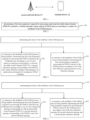
- FIG. 1 is a schematic architecture diagram of a communication system according to embodiments of the present disclosure.
- the communication system 10 may include, but not limited to, a network device and a terminal device 12.
- the number and form of the devices shown in FIG. 1 are only used as an example and do not constitute a limitation on embodiments of the present disclosure.
- the communication system may include two or more network devices and two or more terminal devices in practical applications.
- the communication system shown in FIG. 1 includes a network device 11 and a terminal device 12.
- LTE long term evolution
- 5G 5th generation
- NR 5G new radio
- the network device 11 in embodiments of the present disclosure is an entity at a network side for transmitting or receiving signals.
- the network device 101 may be an evolved NodeB (eNB), a transmission reception point (TRP), a next generation NodeB (gNB) in an NR system, a base station in other future mobile communication systems, or an access node in a wireless fidelity (WiFi) system.
- eNB evolved NodeB
- TRP transmission reception point
- gNB next generation NodeB
- WiFi wireless fidelity
- Embodiments of the present disclosure do not limit the specific technology and specific device form adopted by the network device.
- the network device according to embodiments of the present disclosure may be composed of a central unit (CU) and distributed units (DUs).
- the CU may also be called a control unit.
- the CU-DU structure allows to split protocol layers of the network device, such as a base station, functions of some protocol layers are centrally controlled in the CU, functions of some or all of the remaining protocol layers are distributed in the DUs, and the CU centrally controls the DUs.
- the terminal device 12 in embodiments of the present disclosure is an entity at a user side for receiving or transmitting signals, such as a mobile phone.
- the terminal device may also be called a terminal, a user equipment (UE), a mobile station (MS), a mobile terminal (MT), and so on.
- UE user equipment
- MS mobile station
- MT mobile terminal
- the terminal device may be a device with a communication function, such as a car, a smart car, a mobile phone, a wearable device, a tablet Pad, a computer with a wireless transceiving function, a virtual reality (VR) terminal device, an augmented reality (AR) terminal device, a wireless terminal device in an industrial control, a wireless terminal device in a self-driving, a wireless terminal device in a remote medical surgery, a wireless terminal device in a smart grid, a wireless terminal device in a transportation safety, a wireless terminal device in a smart city, a wireless terminal device in a smart home, etc.
- a communication function such as a car, a smart car, a mobile phone, a wearable device, a tablet Pad
- a computer with a wireless transceiving function such as a virtual reality (VR) terminal device, an augmented reality (AR) terminal device, a wireless terminal device in an industrial control, a wireless terminal device in a self-driving, a wireless terminal device in
- a terminal device After receiving a PDSCH carried by the HARQ process identifier or the HARQ process number, a terminal device needs to feed back an HARQ ACK or an HARQ NACK according to a demodulation result of the PDSCH, so the terminal device is not expected to feed back the HARQ ACK or the HARQ NACK before the demodulation of the PDSCH is completed and/or an uplink feedback is ready.
- the terminal device For an HARQ process with HARQ feedback disabled, after receiving a PDSCH carried by the HARQ process identifier/HARQ process number, the terminal device does not need to feed back an HARQ ACK message or an HARQ NACK message according to a demodulation result to the network device, so the terminal device is not expected to receive another PDSCH carried by the HARQ process before the demodulation of the current PDSCH is completed.
- Ni is defined in the PDSCH, and its value is related to a ⁇ value of the terminal device, and a relationship between ⁇ and a subcarrier spacing satisfies the following formula (2);
- T ext represents an additional processing time of an unlicensed band, d 1,1 represents a processing time in a specific case where a PDSCH mapping mode is A or B, d 2 represents a processing time in a case where uplink signals with different priorities overlap, Tc is a basic time unit in the communication system, and k is defined in clause 4.1 of a 3GPP TS38.214 standard.
- the subcarrier spacing may be the one of a subcarrier spacing corresponding to a PDCCH, a subcarrier spacing corresponding to a PDSCH and a subcarrier spacing corresponding to an uplink channel for transmitting the HARQ feedback message that results in the largest T proc.1 .
- the terminal device Since in the HARQ process with the HARQ feedback disabled, the terminal device does not need to feed back the HARQ ACK message or the HARQ NACK message to the network device according to the demodulation result, that is, in the HARQ process with the HARQ feedback disabled, the subcarrier spacing corresponding to the uplink channel for transmitting the HARQ feedback message does not need to be considered, the above manner of determining T proc.1 is not applicable to the HARQ process with the HARQ feedback disabled.
- the present disclosure proposes a method for determining a time parameter for processing a PDSCH carried by an HARQ process according to a status of a feedback of the HARQ process, with which the first time parameter determined is more accurate, thereby not only avoiding the impact on the HARQ due to the short processing time, but also avoiding resource waste due to the long processing time.
- FIG. 2 is a schematic flowchart of a method for determining a processing time parameter for a physical downlink shared channel according to embodiments of the present disclosure
- the method is performed by a terminal device. As shown in FIG. 2 , the method may include but not limited to a following step.
- a first time parameter required for processing the PDSCH carried by a hybrid automatic repeat request (HARQ) process is determined according to a status of a feedback of the HARQ process.
- HARQ hybrid automatic repeat request
- the first time parameter may be the above T proc.1 .
- a status of an HARQ feedback of each HARQ process may be determined first, and then candidate subcarrier spacing corresponding to the PDSCH carried by each HARQ process are determined according to an actual status of the HARQ feedback of each HARQ process, second time parameters corresponding to the candidate subcarrier spacings are determined respectively according to a preset mapping relationship between second time parameters ⁇ and subcarrier spacings, and a maximum first time parameter corresponding to the second time parameters ⁇ is determined according to a mapping relationship in a mapping relationship table between second time parameters and a number of symbols, and symbol lengths corresponding to the candidate subcarrier spacings respectively.
- the preset mapping relationship between second time parameters and subcarrier spacings may be specified by a protocol or may be configured by the network device. Its form may be as shown in the above formula (2), or may be other forms, which is not limited in the present disclosure.
- the mapping relationship between second time parameters and a number of symbols (Ni) corresponding to terminal devices of different capabilities may be different.
- the terminal device determines a mapping relationship table between second time parameters and the number of symbols (Ni) according to the capability of the terminal device itself, determines Ni values corresponding to the second time parameters respectively according to the mapping relationship table, and determines a maximum first time parameter corresponding to the second time parameters according to the mapping relationship between second time parameters and a number of symbols, and symbol lengths corresponding to the candidate subcarrier spacings respectively.
- the terminal device when the terminal device accesses the network device, it can report its capability information to the network device, so that the network device determines the mapping relationship between second time parameters and the number of symbols (Ni) corresponding to the terminal device according to the capability information of the terminal device.
- mapping relationship between second time parameters and Ni corresponding to a case where the terminal device has a processing capability 1 and that corresponding to a case where the terminal device has a processing capability 2 can refer to Table 5.3-1 and Table 5.3-2 in the 3GPP TS38.214 standard, respectively, which will not be repeated here.
- the enabled status for the HARQ feedback of the HARQ process may be an enabled status or a notdisabled status.
- each HARQ process may correspond to the same or different first time parameter values in different statuses of the HARQ feedback; and different HARQ processes may correspond to the same or different first time parameters in the same status of the HARQ feedback, which are not limited in the present disclosure.
- an HARQ process with HARQ feedback enabled corresponds to Ni
- an HARQ process with HARQ feedback disabled corresponds to N 1 ', which are not limited in the present disclosure.
- the terminal device after determining the first time parameter required for processing the PDSCH carried by it, the terminal device is able to determine an earliest time for feeding back the HARQ process according to the first time parameter. In this way, it avoids the inaccurate feedback of the HARQ ACK message or the HARQ ACK message due to a short processing time, and also avoids waste of channel resources due to a long processing time.
- the terminal device is able to determine an earliest time for receiving another PDSCH carried by the HARQ process according to the first time parameter. In this way, it avoids the influence of the received PDSCH on the demodulation of the HARQ due to a short processing time, and also avoids waste of channel resources due to a long processing time.
- the terminal device determines the first time parameter required for processing the PDSCH carried by the HARQ process according to the status of the HARQ feedback of the HARQ process. In this way, the first time parameter determined thereby is more accurate, thereby not only avoiding the impact on the HARQ due to the short processing time, but also avoiding resource waste due to the long processing time.
- FIG. 3 is a schematic flowchart of a method for determining a processing time parameter for a physical downlink shared channel according to embodiments of the present disclosure
- the method is performed by a terminal device. As shown in FIG. 3 , the method may include but not limited to following steps.
- step 301 the status of the feedback of the HARQ process is determined.
- the terminal device may determine a status of a current HARQ feedback according to various HARQ processes configuration information by the network device.
- the terminal device may receive the HARQ process configuration information via a radio resource control (RRC) message, which is not limited in the present disclosure.
- RRC radio resource control
- the first time parameter required for processing the PDSCH carried by the HARQ process is determined according to one of a first subcarrier spacing corresponding to a physical downlink control channel (PDCCH), a second subcarrier spacing corresponding to the PDSCH, and a third subcarrier spacing corresponding to an uplink physical channel for transmitting the HARQ feedback.
- a first subcarrier spacing corresponding to a physical downlink control channel (PDCCH) a second subcarrier spacing corresponding to the PDSCH
- a third subcarrier spacing corresponding to an uplink physical channel for transmitting the HARQ feedback is determined according to one of a first subcarrier spacing corresponding to a physical downlink control channel (PDCCH), a second subcarrier spacing corresponding to the PDSCH, and a third subcarrier spacing corresponding to an uplink physical channel for transmitting the HARQ feedback.
- PDCCH physical downlink control channel
- step 303 in response to the feedback of the HARQ process being disabled, the first time parameter required for processing the PDSCH carried by the HARQ process is determined according to one of the first subcarrier spacing and the second subcarrier spacing.
- the terminal device when the HARQ feedback of the HARQ process is enabled, after receiving the PDSCH carried by an HARQ identifier or an HARQ process number, the terminal device needs to return an HARQ ACK message or an HARQ NACK message to the network device according to the demodulation result of the PDSCH. That is, there exists the third subcarrier spacing corresponding to the uplink physical channel for transmitting the HARQ feedback of the HARQ process.
- the terminal device can determine the first subcarrier spacing, the second subcarrier spacing and the third subcarrier spacing as candidate subcarrier spacings, determine a maximum first time parameter corresponding the candidate subcarrier spacings according to a relationship between SCSs and second time parameters and a relationship between second time parameters and a number of symbols (Ni) corresponding to a processing capability of the terminal device, and determine an earliest time for transmitting the HARQ feedback according to the maximum first time parameter.
- the terminal device When the feedback of the HARQ process is disabled, after receiving the PDSCH carried by an HARQ process identifier or an HARQ process number, the terminal device does not need to return an HARQ ACK message or an HARQ NACK message to the network device according to the demodulation result, so that the terminal device can determine the first subcarrier spacing and the second subcarrier spacing as candidate subcarrier spacings, and determine a maximum first time parameter corresponding the candidate subcarrier spacings according to a relationship between SCSs and second time parameters and a relationship between second time parameters and a number of symbols (Ni) corresponding to a processing capability of the terminal device.
- Ni number of symbols
- the specific process for the terminal device to determine the first time parameter required for processing the PDSCH carried by the HARQ process according to the candidate subcarrier spacings corresponding to the HARQ process can refer to the detailed description of any embodiment of the present disclosure, which will not be elaborated here.
- the terminal device may determine an earliest time for transmitting the feedback of the HARQ process according to the first time parameter required for processing the PDSCH carried by the HARQ process.
- the terminal device may determine an earliest time for receiving another PDSCH carried by the HARQ process according to the first time parameter required for processing the PDSCH carried by the HARQ process.
- the terminal device determines the first time parameter required for processing the PDSCH carried by the HARQ process according to one of the first subcarrier spacing corresponding to the PDCCH, the second subcarrier spacing corresponding to the PDSCH, and the third subcarrier spacing corresponding to the uplink physical channel for transmitting the HARQ feedback; while when the feedback of the HARQ process is disabled, the terminal device determines the first time parameter required for processing the PDSCH carried by the HARQ process according to the first subcarrier spacing and the second subcarrier spacing.
- the first time parameter is determined according to different subcarrier spacings, so that the first time parameter determined thereby is more accurate, thereby not only avoiding the impact on the HARQ due to the short processing time, but also avoiding resource waste due to the long processing time.
- FIG. 4 is a schematic flowchart of a method for determining a processing time parameter for a physical downlink shared channel according to embodiments of the present disclosure
- the method is performed by a terminal device. As shown in FIG. 4 , the method may include but not limited to following steps.
- step 401 the status of the feedback of the HARQ process is determined.
- the first time parameter required for processing the PDSCH is determined according to one of a first subcarrier spacing corresponding to a physical downlink control channel (PDCCH), a second subcarrier spacing corresponding to the PDSCH, and a first preset subcarrier spacing.
- a physical downlink control channel PDCCH
- a second subcarrier spacing corresponding to the PDSCH PUCCH
- a first preset subcarrier spacing PUCCH
- step 403 in response to the HARQ feedback being disabled, the first time parameter required for processing the PDSCH is determined according to one of the first subcarrier spacing, the second subcarrier spacing, and a second preset subcarrier spacing.
- the first preset subcarrier spacing may be any of: a subcarrier spacing corresponding to an uplink physical channel for transmitting the HARQ feedback; a subcarrier spacing corresponding to an uplink physical channel assumed to transmit the HARQ feedback (also referred to as an uplink physical channel capable of transmitting the HARQ feedback); or a subcarrier spacing corresponding to an uplink (UL) bandwidth part (BWP) in an active status.
- a subcarrier spacing corresponding to an uplink physical channel for transmitting the HARQ feedback also referred to as an uplink physical channel capable of transmitting the HARQ feedback
- BWP bandwidth part
- the terminal device may correspond to multiple UL BWPs.
- an SCS corresponding to a UL BWP currently in an active status and corresponding to the terminal device may be determined as the first preset SCS.
- the second preset SCS may be any of: a subcarrier spacing corresponding to an uplink physical channel assumed to transmit the HARQ feedback (also referred to as an uplink physical channel capable of transmitting the HARQ feedback); or a subcarrier spacing corresponding to an uplink bandwidth part in an active status.
- the terminal device determines the first subcarrier spacing, the second subcarrier spacing, and the subcarrier spacing corresponding to the uplink physical channel for transmitting the HARQ feedback as the candidate subcarrier spacings; while if determining that the feedback of the HARQ process is disabled, the terminal device determines the first subcarrier spacing, the second subcarrier spacing, and the subcarrier spacing corresponding to the uplink bandwidth part in the active status as the candidate subcarrier spacings.
- the maximum first time parameter is determined according to the mapping relationship between subcarrier spacings and second time parameters and the mapping relationship between second time parameters and the number of symbols.
- the terminal device determines the first subcarrier spacing, the second subcarrier spacing, and the subcarrier spacing of the uplink physical channel assumed to transmit the HARQ feedback corresponding to the HARQ process as the candidate subcarrier spacings. Further, the maximum first time parameter is determined according to the mapping relationship between subcarrier spacings and second time parameters and the mapping relationship between second time parameters and the number of symbols.
- the process for the terminal device to determine the maximum first time parameter according to the mapping relationship between subcarrier spacings and second time parameters and the mapping relationship between second time parameters and the number of symbols (Ni) can refer to the detailed description of any embodiment of the present disclosure, which will not be elaborated here.
- the terminal device determines an earliest time for transmitting the feedback of the HARQ process according to the first time parameter required for processing the PDSCH carried by the HARQ process.
- the terminal device determines an earliest time for receiving another PDSCH carried by the HARQ process according to the first time parameter required for processing the PDSCH carried by the HARQ process.
- the terminal device determines the first time parameter required for processing the PDSCH carried by the HARQ process according to one of the first subcarrier spacing corresponding to the PDCCH, the second subcarrier spacing corresponding to the PDSCH and the first preset subcarrier spacing; while when the feedback of the HARQ process is disabled, the terminal device determines the first time parameter required for processing the PDSCH carried by the HARQ process according to one of the first subcarrier spacing, the second subcarrier spacing and the second preset subcarrier spacing.
- the first time parameter is determined according to the corresponding candidate subcarrier spacings, so that the first time parameter determined thereby is more accurate, thereby not only avoiding the impact on the HARQ due to the short processing time, but also avoiding resource waste due to the long processing time.
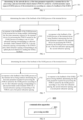
- FIG. 5 is a schematic flowchart of a method for determining a processing time parameter for a physical downlink shared channel according to embodiments of the present disclosure
- the method is performed by a network device. As shown in FIG. 5 , the method may include but not limited to a following step.
- the first time parameter may be the above T proc.1 .
- the preset mapping relationship between second time parameters and subcarrier spacings may be specified by a protocol or may be configured by the network device. Its form may be as shown in the above formula (2), or may be other forms, which is not limited in the present disclosure.
- the mapping relationship between second time parameters and a number of symbols (Ni) corresponding to terminal devices of different capabilities may be different.
- the network device determines a mapping relationship table between second time parameters and Ni according to the capability of the terminal device, determines Ni values corresponding to the second time parameters respectively according to the mapping relationship table, and determines a maximum first time parameter corresponding to the second time parameters according to the mapping relationship between second time parameters and a number of symbols, and symbol lengths corresponding to the candidate subcarrier spacings respectively.
- the terminal device when the terminal device accesses the network device, it can report its capability information to the network device, so that the network device determines the mapping relationship between second time parameters and Ni corresponding to the terminal device according to the capability information of the terminal device.
- the network device selects a largest time length from the three time lengths, and the Ni value corresponding to the largest time length is a finally determined N 1 .
- the maximum first time parameter can be calculated according to the finally determined N 1 and the corresponding second time parameter.
- the enabled status for the HARQ feedback of the HARQ process may be an enabled status or a notdisabled status.
- an HARQ process with HARQ feedback enabled corresponds to Ni
- an HARQ process with HARQ feedback disabled corresponds to N 1 ', which are not limited in the present disclosure.
- the network device is able to determine an earliest time for the terminal device to feed back the HARQ process according to the first time parameter. In this way, it avoids that the feedback message cannot be obtained due to a short processing time, and also avoids waste of channel resources due to a long processing time.
- the network device is able to determine an earliest time for transmitting another PDSCH carried by the HARQ process according to the first time parameter. In this way, it avoids the influence of the transmitted PDSCH on the demodulation of the HARQ due to a short processing time, and also avoids waste of channel resources due to a long processing time.
- the network device determines the first time parameter required for processing the PDSCH carried by the HARQ process according to the status of the HARQ feedback of the HARQ process. In this way, the first time parameter determined thereby is more accurate, thereby not only avoiding the impact on the HARQ due to the short processing time, but also avoiding resource waste due to the long processing time.
- FIG. 6 is a schematic flowchart of a method for determining a processing time parameter for a physical downlink shared channel according to embodiments of the present disclosure
- the method is performed by a network device. As shown in FIG. 6 , the method may include but not limited to following steps.
- step 601 the status of the feedback of the HARQ process of the terminal device is determined.
- the status of the HARQ feedback of the terminal device may be indicated by the network device.
- the network device may indicate the HARQ process configuration information via a radio resource control (RRC) message, which is not limited in the present disclosure.
- RRC radio resource control
- the first time parameter required by the terminal device for processing the PDSCH carried by the HARQ process is determined according to one of a first subcarrier spacing corresponding to a physical downlink control channel (PDCCH), a second subcarrier spacing corresponding to the PDSCH, and a third subcarrier spacing corresponding to an uplink physical channel for transmitting the HARQ feedback.
- a first subcarrier spacing corresponding to a physical downlink control channel (PDCCH) a second subcarrier spacing corresponding to the PDSCH
- a third subcarrier spacing corresponding to an uplink physical channel for transmitting the HARQ feedback is determined according to one of a first subcarrier spacing corresponding to a physical downlink control channel (PDCCH), a second subcarrier spacing corresponding to the PDSCH, and a third subcarrier spacing corresponding to an uplink physical channel for transmitting the HARQ feedback.
- PDCCH physical downlink control channel
- step 603 in response to the feedback of the HARQ process being disabled, the first time parameter required by the terminal device for processing the PDSCH carried by the HARQ process is determined according to one of the first subcarrier spacing and the second subcarrier spacing.
- the terminal device when the HARQ feedback of the HARQ process is enabled, after receiving the PDSCH carried by an HARQ identifier or an HARQ process number, the terminal device needs to return an HARQ ACK message or an HARQ NACK message to the network device according to the demodulation result of the PDSCH. That is, there exists the third subcarrier spacing corresponding to the uplink physical channel for transmitting the HARQ feedback of the HARQ process.
- the network device can determine the first subcarrier spacing, the second subcarrier spacing and the third subcarrier spacing as candidate subcarrier spacings, determine a maximum first time parameter corresponding the candidate subcarrier spacings according to a relationship between SCSs and second time parameters and a relationship between second time parameters and a number of symbols (Ni) corresponding to a processing capability of the terminal device, and determine an earliest time for transmitting the HARQ feedback according to the maximum first time parameter.
- the terminal device When the feedback of the HARQ process is disabled, after receiving the PDSCH carried by an HARQ process identifier or an HARQ process number, the terminal device does not need to return an HARQ ACK message or an HARQ NACK message to the network device according to the demodulation result, so that the network device can determine the first subcarrier spacing and the second subcarrier spacing as candidate subcarrier spacings, and determine a maximum first time parameter corresponding the candidate subcarrier spacings according to a relationship between SCSs and second time parameters and a relationship between second time parameters and a number of symbols (Ni) corresponding to a processing capability of the terminal device.
- Ni number of symbols
- the specific process for the network device to determine the first time parameter required for processing the PDSCH carried by the HARQ process according to the candidate subcarrier spacings corresponding to the PDSCH carried by the HARQ process can refer to the detailed description of any embodiment of the present disclosure, which will not be elaborated here.
- the network device determines an earliest time for receiving the feedback of the HARQ process according to the first time parameter required by the terminal device for processing the PDSCH carried by the HARQ process.
- the network device determines an earliest time for transmitting another PDSCH carried by the HARQ process according to the first time parameter required by the terminal device for processing the PDSCH carried by the HARQ process.
- the network device determines the first time parameter required by the terminal device for processing the PDSCH carried by the HARQ process according to one of the first subcarrier spacing corresponding to the PDCCH, the second subcarrier spacing corresponding to the PDSCH, and the third subcarrier spacing corresponding to the uplink physical channel for transmitting the HARQ feedback; while when the feedback of the HARQ process is disabled, the network device determines the first time parameter required by the terminal device for processing the PDSCH carried by the HARQ process according to the first subcarrier spacing and the second subcarrier spacing.
- the first time parameter is determined according to different subcarrier spacings, so that the first time parameter determined thereby is more accurate, thereby not only avoiding the impact on the HARQ due to the short processing time, but also avoiding resource waste due to the long processing time.
- FIG. 7 is a schematic flowchart of a method for determining a processing time parameter for a physical downlink shared channel according to embodiments of the present disclosure
- the method is performed by a network device. As shown in FIG. 7 , the method may include but not limited to following steps.
- step 701 the status of the feedback of the HARQ process of the terminal device is determined.
- step 702 in response to the HARQ feedback of the terminal device being enabled, the first time parameter required for processing the PDSCH carried by the HARQ is determined according to one of a first subcarrier spacing corresponding to a physical downlink control channel
- PDCCH Physical Downlink Control Channel
- second subcarrier spacing corresponding to the PDSCH
- first preset subcarrier spacing a second subcarrier spacing corresponding to the PDSCH
- step 703 in response to the HARQ feedback being disabled, the first time parameter required for processing the PDSCH is determined according to one of the first subcarrier spacing, the second subcarrier spacing, and a second preset subcarrier spacing.
- the first preset subcarrier spacing may be any of: a subcarrier spacing corresponding to an uplink physical channel for transmitting the HARQ feedback; a subcarrier spacing corresponding to an uplink physical channel assumed to transmit the HARQ feedback; or a subcarrier spacing corresponding to an uplink (UL) bandwidth part (BWP) in an active status.
- a subcarrier spacing corresponding to an uplink physical channel for transmitting the HARQ feedback may be any of: a subcarrier spacing corresponding to an uplink physical channel for transmitting the HARQ feedback; a subcarrier spacing corresponding to an uplink physical channel assumed to transmit the HARQ feedback; or a subcarrier spacing corresponding to an uplink (UL) bandwidth part (BWP) in an active status.
- UL uplink
- BWP bandwidth part
- the uplink physical channel assumed to transmit the HARQ feedback may be any uplink physical channel corresponding to the terminal device, which may be configured to transmit the HARQ feedback when needed.
- the terminal device may correspond to multiple UL BWPs.
- an SCS corresponding to a UL BWP currently in an active status and corresponding to the terminal device may be determined as the first preset SCS.
- the second preset SCS may be any of: a subcarrier spacing corresponding to an uplink physical channel assumed to transmit the HARQ feedback; or a subcarrier spacing corresponding to an uplink bandwidth part in an active status.
- the network device determines the candidate subcarrier spacings corresponding to the HARQ process
- the network device determines the first subcarrier spacing corresponding to the PDCCH, the second subcarrier spacing corresponding to the PDSCH, and the subcarrier spacing corresponding to the uplink physical channel for transmitting the HARQ feedback as the candidate subcarrier spacings; while if the network device determines that the feedback of the HARQ process is disabled, the network device determines the first subcarrier spacing, the second subcarrier spacing and a fifth subcarrier spacing corresponding to an uplink physical channel assumed to transmit the HARQ feedback as the candidate subcarrier spacings.
- the maximum first time parameter is determined according to the mapping relationship between subcarrier spacings and second time parameters and the mapping relationship between second time parameters and the number of symbols.
- the network device determines the first subcarrier spacing, the second subcarrier spacing, and the subcarrier spacing corresponding to the uplink physical channel for transmitting the HARQ feedback as the candidate subcarrier spacings; while if determining that the feedback of the HARQ process is disabled, the network device determines the first subcarrier spacing, the second subcarrier spacing, and the subcarrier spacing corresponding to the uplink bandwidth part in the active status as the candidate subcarrier spacings.
- the maximum first time parameter is determined according to the mapping relationship between subcarrier spacings and second time parameters and the mapping relationship between second time parameters and the number of symbols.
- the network device determines the first subcarrier spacing, the second subcarrier spacing, and the subcarrier spacing of the uplink physical channel assumed to transmit the HARQ feedback corresponding to the HARQ process as the candidate subcarrier spacings. Further, the maximum first time parameter is determined according to the mapping relationship between subcarrier spacings and second time parameters and the mapping relationship between second time parameters and the number of symbols.
- the network device determines the first subcarrier spacing, the second subcarrier spacing, and the subcarrier spacing corresponding to the uplink bandwidth part in the active status corresponding to the HARQ process as the candidate subcarrier spacings. Further, the maximum first time parameter is determined according to the mapping relationship between subcarrier spacings and second time parameters and the mapping relationship between second time parameters and the number of symbols.
- the process for the network device to determine the maximum first time parameter according to the mapping relationship between subcarrier spacings and second time parameters and the mapping relationship between second time parameters and the number of symbols (Ni) can refer to the detailed description of any embodiment of the present disclosure, which will not be elaborated here.
- the network device determines an earliest time for receiving the feedback of the HARQ process according to the first time parameter required by the terminal device for processing the PDSCH carried by the HARQ process.
- the network device determines an earliest time for transmitting another PDSCH carried by the HARQ process according to the first time parameter required by the terminal device for processing the PDSCH carried by the HARQ process.
- the network device determines the first time parameter required by the terminal device for processing the PDSCH carried by the HARQ process according to one of the first subcarrier spacing corresponding to the PDCCH, the second subcarrier spacing corresponding to the PDSCH and the first preset subcarrier spacing; while when the feedback of the HARQ process is disabled, the network device determines the first time parameter required by the terminal device for processing the PDSCH carried by the HARQ process according to one of the first subcarrier spacing, the second subcarrier spacing and the second preset subcarrier spacing.
- the first time parameter is determined according to the corresponding candidate subcarrier spacings, so that the first time parameter determined thereby is more accurate, thereby not only avoiding the impact on the HARQ due to the short processing time, but also avoiding resource waste due to the long processing time.
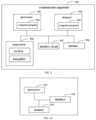
- FIG. 8 is a schematic block diagram of a communication apparatus 800 according to embodiments of the present disclosure
- the communication apparatus 800 shown in FIG. 8 may include a processing module 801.
- the communication apparatus 800 may be a terminal device, an apparatus in the terminal device, or an apparatus that can be matched with the terminal device to use.
- the communication apparatus 800 is configured at the terminal device side.
- the processing module 801 is configured to determine a first time parameter required for processing a physical downlink shared channel (PDSCH) carried by a hybrid automatic repeat request (HARQ) process according to a status of a feedback of the HARQ process.
- PDSCH physical downlink shared channel
- HARQ hybrid automatic repeat request
- the processing module 801 is configured to: in response to the feedback of the HARQ process being enabled, determine the first time parameter required for processing the PDSCH carried by the HARQ process according to one of a first subcarrier spacing corresponding to a physical downlink control channel (PDCCH), a second subcarrier spacing corresponding to the PDSCH, and a third subcarrier spacing corresponding to an uplink physical channel for transmitting the HARQ feedback; or in response to the feedback of the HARQ process being disabled, determine the first time parameter required for processing the PDSCH carried by the HARQ process according to one of the first subcarrier spacing and the second subcarrier spacing.
- PDCH physical downlink control channel
- the processing module 801 is configured to: in response to the feedback of the HARQ process being enabled, determine the first time parameter required for processing the PDSCH carried by the HARQ process according to one of a first subcarrier spacing corresponding to a physical downlink control channel (PDCCH), a second subcarrier spacing corresponding to the PDSCH, and a first preset subcarrier spacing; or in response to the feedback of the HARQ process being disabled, determine the first time parameter required for processing the PDSCH carried by the HARQ process according to one of the first subcarrier spacing, the second subcarrier spacing, and a second preset subcarrier spacing.
- PDCH physical downlink control channel
- the first preset subcarrier spacing is any of: a subcarrier spacing corresponding to an uplink physical channel for transmitting the HARQ feedback; a subcarrier spacing corresponding to an uplink physical channel assumed to transmit the HARQ feedback; or a subcarrier spacing corresponding to an uplink bandwidth part in an active status.
- the second preset subcarrier spacing is any of: a subcarrier spacing corresponding to an uplink physical channel assumed to transmit the HARQ feedback; or a subcarrier spacing corresponding to an uplink bandwidth part channel in an active status.
- the processing module 801 is configured to: determine candidate subcarrier spacings corresponding to the PDSCH carried by the HARQ process according to the status of the feedback of the HARQ process; determine second time parameters corresponding to the candidate subcarrier spacings respectively according to a preset mapping relationship between second time parameters and subcarrier spacings; determine a mapping relationship table between second time parameters and a number of symbols according to a capability of the terminal device; and determine a maximum first time parameter corresponding to the second time parameters according to a mapping relationship in the mapping relationship table.
- the processing module 801 is further configured to: in response to the feedback of the HARQ process being enabled, determine an earliest time for transmitting the feedback of the HARQ process according to the first time parameter required for processing the PDSCH carried by the HARQ process; or in response to the feedback of the HARQ process being disabled, determine an earliest time for receiving another PDSCH carried by the HARQ process according to the first time parameter required for processing the PDSCH carried by the HARQ process.
- the communication apparatus provides in the present disclosure is able to determine the first time parameter required for processing the PDSCH carried by the HARQ process according to the status of the feedback of the HARQ process. In this way, the first time parameter determined thereby is more accurate, thereby not only avoiding the impact on the HARQ due to the short processing time, but also avoiding resource waste due to the long processing time.
- the communication apparatus 800 may be a network device, an apparatus in the network device, or an apparatus that can be matched with the network device to use.
- the communication apparatus 800 is configured at the network device side, and includes a processing module 801.
- the processing module 801 is configured to determine a first time parameter required by a terminal device for processing a physical downlink shared channel (PDSCH) carried by a hybrid automatic repeat request (HARQ) process of the terminal device according to a status of a feedback of the HARQ process.
- PDSCH physical downlink shared channel
- HARQ hybrid automatic repeat request
- the processing module 801 is configured to: in response to the feedback of the HARQ process of the terminal device being enabled, determine the first time parameter required for processing the PDSCH carried by the HARQ process according to one of a first subcarrier spacing corresponding to a physical downlink control channel (PDCCH), a second subcarrier spacing corresponding to the PDSCH, and a third subcarrier spacing corresponding to an uplink physical channel for transmitting the HARQ feedback; or in response to the feedback of the HARQ process of the terminal device being disabled, determine the first time parameter required for processing the PDSCH carried by the HARQ process according to one of the first subcarrier spacing and the second subcarrier spacing.
- PDCH physical downlink control channel
- the processing module 801 is configured to: in response to the feedback of the HARQ process of the terminal device being enabled, determine the first time parameter required for processing the PDSCH carried by the HARQ process according to one of a first subcarrier spacing corresponding to a physical downlink control channel (PDCCH), a
- the processing module 801 is configured to: in response to the feedback of the HARQ process of the terminal device being enabled, determine the first time parameter required by the terminal device for processing the PDSCH carried by the HARQ process according to one of a first subcarrier spacing corresponding to a physical downlink control channel (PDCCH), a second subcarrier spacing corresponding to the PDSCH, and a first preset subcarrier spacing; or in response to the feedback of the HARQ process being disabled, determine the first time parameter required by the terminal device for processing the PDSCH carried by the HARQ process according to one of the first subcarrier spacing, the second subcarrier spacing, and a second preset subcarrier spacing.
- PDCH physical downlink control channel
- the first preset subcarrier spacing is any of: a subcarrier spacing corresponding to an uplink physical channel for transmitting the HARQ feedback; a subcarrier spacing corresponding to an uplink physical channel assumed to transmit the HARQ feedback; or a subcarrier spacing corresponding to an uplink bandwidth part in an active status.
- the second preset subcarrier spacing is any of: a subcarrier spacing corresponding to an uplink physical channel assumed to transmit the HARQ feedback; or a subcarrier spacing corresponding to an uplink bandwidth part in an active status.
- the processing module 801 is configured to: determine candidate subcarrier spacings corresponding to the PDSCH carried by the HARQ process according to the status of the feedback of the HARQ process of the terminal device; determine second time parameters corresponding to the candidate subcarrier spacings respectively according to a preset mapping relationship between second time parameters and subcarrier spacings; determine a mapping relationship table between second time parameters and a number of symbols according to a capability of the terminal device; and determine a maximum first time parameter corresponding to the second time parameters according to a mapping relationship in the mapping relationship table.
- the processing module 801 is further configured to: in response to the feedback of the HARQ process being enabled, determine an earliest time for transmitting the feedback of the HARQ process according to the first time parameter required for processing the PDSCH carried by the HARQ process; or in response to the feedback of the HARQ process being disabled, determine an earliest time for transmitting another PDSCH carried by the HARQ process according to the first time parameter required for processing the PDSCH carried by the HARQ process.
- the communication apparatus provides in the present disclosure is able to determine the first time parameter required by the terminal device for processing the PDSCH carried by the HARQ process according to the status of the feedback of the HARQ process of the terminal device. In this way, the first time parameter determined thereby is more accurate, thereby not only avoiding the impact on the HARQ due to the short processing time, but also avoiding resource waste due to the long processing time.
- FIG. 9 is a schematic block diagram of another communication apparatus 900 according to embodiments of the present disclosure.
- the communication apparatus 900 may be a network device, may also be a terminal device, may also be a chip, a chip system, or a processor that supports the network device to implement the above method, or may also be a chip, a chip system, or a processor that supports the terminal device to implement the above method.
- the apparatus may be used to implement the methods as described in the above method embodiments, and for details, reference may be made to the descriptions on the above method embodiments.
- the communication apparatus 900 may include one or more processors 901.
- the processor 901 may be a general-purpose processor or a special-purpose processor. For example, it may be a baseband processor or a central processing unit.
- the baseband processor may be configured to process a communication protocol and communication data
- the central processing unit may be configured to control a communication apparatus (such as a base station, a baseband chip, a terminal device, a terminal device chip, a DU or a CU, etc.), execute computer programs, and process data of computer programs.
- the communication apparatus 900 may further include one or more memories 902 that may have stored therein a computer program 904.
- the processor 901 executes the computer program 904 to cause the communication apparatus 900 to implement the methods as described in the above method embodiments.
- the memory 902 may have stored therein data.
- the communication apparatus 900 and the memory 902 may be set separately or integrated together.
- the communication apparatus 900 may further include a transceiver 905 and an antenna 906.
- the transceiver 905 may be called a transceiving element, a transceiving machine, a transceiving circuit or the like, for implementing a transceiving function.
- the transceiver 905 may include a receiver and a transmitter.
- the receiver may be called a receiving machine, a receiving circuit or the like, for implementing a receiving function.
- the transmitter may be called a transmitting machine, a transmitting circuit or the like for implementing a transmitting function.
- the communication apparatus 900 may further include one or more interface circuits 907.
- the interface circuit 907 is configured to receive a code instruction and transmit the code instruction to the processor 901.
- the processor 901 runs the code instruction to enable the communication apparatus 900 to execute the methods as described in the foregoing method embodiments.
- the communication apparatus 900 is the terminal device: the processor 901 is configured to execute the step 201 in FIG. 2 , the steps 301-303 in FIG. 3 , the steps 401-403 in FIG. 3 in FIG. 4 .
- the communication apparatus 900 is the network device: the processor 901 is configured to execute the step 501 in FIG. 5 , the steps 601-603 in FIG. 6 , the steps 701-703 in FIG. 3 in FIG. 7 .
- the processor 901 may include the transceiver configured to implement receiving and transmitting functions.
- the transceiver may be a transceiving circuit, an interface, or an interface circuit.
- the transceiving circuit, the interface or the interface circuit configured to implement the receiving and transmitting functions may be separated or may be integrated together.
- the above transceiving circuit, interface or interface circuit may be configured to read and write codes/data, or the above transceiving circuit, interface or interface circuit may be configured to transmit or transfer signals.
- the processor 901 may have stored therein a computer program 903 that, when run on the processor 901, causes the communication apparatus 900 to implement the method as described in the foregoing method embodiments.
- the computer program 903 may be solidified in the processor 901, and in this case, the processor 901 may be implemented by a hardware.
- the communication apparatus 900 may include a circuit, and the circuit may implement the transmitting, receiving or communicating function in the foregoing method embodiments.
- the processor and the transceiver described in the present disclosure may be implemented on an integrated circuit (IC), an analog IC, a radio frequency integrated circuit (RFIC), a mixed-signal IC, an application specific integrated circuit (ASIC), a printed circuit board (PCB), an electronic device, etc.
- the processor and the transceiver may also be manufactured using various IC process technologies, such as a complementary metal oxide semiconductor (CMOS), an nMetal-oxide-semiconductor (NMOS), a P-type metal oxide semiconductor (PMOS), a bipolar junction transistor (BJT), a bipolar CMOS (BiCMOS), silicon germanium (SiGe), gallium arsenide (GaAs), etc.
- CMOS complementary metal oxide semiconductor
- NMOS nMetal-oxide-semiconductor
- PMOS P-type metal oxide semiconductor
- BJT bipolar junction transistor
- BiCMOS bipolar CMOS
- SiGe silicon germanium
- GaAs gallium arsenide
- the communication apparatus described in the above embodiments may be the network device or the terminal device, but the scope of the communication apparatus described in the present disclosure is not limited thereto, and a structure of the communication apparatus is not limited by FIG. 9 .
- the communication apparatus may be a stand-alone device or may be a part of a larger device.
- the communication apparatus may be:
- the communication apparatus may be a chip or a chip system
- the communication apparatus may be a chip or a chip system
- the chip shown in FIG. 10 includes a processor 1001 and an interface 1002.
- processors 1001 may be provided, and more than one interface 1002 may be provided.
- the chip further includes a memory 1003 for storing necessary computer programs and data.
- the present disclosure also provides a readable storage medium having stored therein instructions that, when executed by a computer, cause functions of any of the above method embodiments to be implemented.
- the present disclosure also provides a computer program product that, when executed by a computer, causes functions of any of the above method embodiments to be implemented.
- the above embodiments may be implemented in whole or in part by a software, a hardware, a firmware or any combination thereof.
- the above embodiments may be implemented in whole or in part in a form of the computer program product.
- the computer program product includes one or more computer programs. When the computer program is loaded and executed on the computer, all or part of the processes or functions according to embodiments of the present disclosure will be generated.
- the computer may be a general purpose computer, a special purpose computer, a computer network, or other programmable devices.
- the computer program may be stored in a computer-readable storage medium or transmitted from one computer-readable storage medium to another computer-readable storage medium.
- the computer program may be transmitted from one website site, computer, server or data center to another website site, computer, server or data center in a wired manner (such as via a coaxial cable, an optical fiber, a digital subscriber line (DSL)) or a wireless manner (such as via infrared, wireless, or microwave, etc.).
- the computer-readable storage medium may be any available medium that can be accessed by the computer, or a data storage device such as a server or a data center integrated by one or more available media.
- the available medium may be a magnetic medium (for example, a floppy disk, a hard disk, or a magnetic tape), an optical medium (for example, a high-density digital video disc (DVD)), or a semiconductor medium (for example, a solid state disk (SSD)) etc.
- a magnetic medium for example, a floppy disk, a hard disk, or a magnetic tape
- an optical medium for example, a high-density digital video disc (DVD)
- DVD high-density digital video disc
- SSD solid state disk
- the term “at least one” used in the present disclosure may also be described as one or more, and the term “a plurality of' may cover two, three, four or more, which are not limited in the present disclosure.
- the technical features in this kind of technical features are distinguished by terms like “first”, “second”, “third”, “A”, “B”, “C” and “D”, etc., and these technical features described with the “first”, “second”, “third”, “A”, “B”, “C” and “D” have no order of priority and have no order of size.
- the correspondence shown in each table in the present disclosure may be configured or predefined.
- the values of various information in each table are just examples, and may be configured as other values, which are not limited in the present disclosure.
- the correspondences shown in some rows of a table in the present disclosure may not be configured.
- appropriate deformations or adjustments can be made based on the above table.
- the names of parameters shown in the titles of the above tables may also adopt other names understandable by the communication apparatus, and the values or representations of the parameters may also be other values or representations understandable by the communication apparatus.
- other data structures may also be used, for example, arrays, queues, containers, stacks, linear tables, pointers, linked lists, trees, graphs, structural body, classes, heaps, or hash tables may be used.
Landscapes
- Engineering & Computer Science (AREA)
- Computer Networks & Wireless Communication (AREA)
- Signal Processing (AREA)
- Physics & Mathematics (AREA)
- Mathematical Physics (AREA)
- Mobile Radio Communication Systems (AREA)
Applications Claiming Priority (1)
| Application Number | Priority Date | Filing Date | Title |
|---|---|---|---|
| PCT/CN2022/071680 WO2023133742A1 (zh) | 2022-01-12 | 2022-01-12 | 物理下行共享信道的处理时间参数的确定方法及装置 |
Publications (2)
| Publication Number | Publication Date |
|---|---|
| EP4465719A1 true EP4465719A1 (de) | 2024-11-20 |
| EP4465719A4 EP4465719A4 (de) | 2025-02-26 |
Family
ID=81489397
Family Applications (1)
| Application Number | Title | Priority Date | Filing Date |
|---|---|---|---|
| EP22919407.1A Pending EP4465719A4 (de) | 2022-01-12 | 2022-01-12 | Verfahren und vorrichtung zur bestimmung von verarbeitungszeitparametern eines gemeinsam genutzten physikalischen downlink-kanals |
Country Status (4)
| Country | Link |
|---|---|
| US (1) | US20250089045A1 (de) |
| EP (1) | EP4465719A4 (de) |
| CN (1) | CN114503753A (de) |
| WO (1) | WO2023133742A1 (de) |
Families Citing this family (1)
| Publication number | Priority date | Publication date | Assignee | Title |
|---|---|---|---|---|
| EP4233442A4 (de) * | 2020-10-21 | 2024-09-11 | Telefonaktiebolaget LM Ericsson (publ) | Verfahren und vorrichtung zur unterstützung mehrerer benutzer in einer multicast-gruppe |
Family Cites Families (11)
| Publication number | Priority date | Publication date | Assignee | Title |
|---|---|---|---|---|
| CN109803430B (zh) * | 2017-11-17 | 2021-02-23 | 华为技术有限公司 | 一种无线通信方法及设备 |
| KR20200012702A (ko) * | 2018-07-27 | 2020-02-05 | 삼성전자주식회사 | 무선 통신 시스템에서 전송 시간 결정 방법 및 장치 |
| KR102656606B1 (ko) * | 2018-08-10 | 2024-04-12 | 삼성전자주식회사 | 무선 통신 시스템에서 harq-ack 피드백을 송수신하는 방법 및 장치 |
| WO2020252708A1 (zh) * | 2019-06-19 | 2020-12-24 | Oppo广东移动通信有限公司 | 无线通信方法、终端设备和网络设备 |
| CN112311507B (zh) * | 2019-08-02 | 2023-04-28 | 中国信息通信研究院 | 一种车联网通信反馈定时方法、终端设备、网络设备、系统 |
| CN112399565B (zh) * | 2019-08-13 | 2024-04-12 | 华为技术有限公司 | 应用pdsch的处理时长的方法和装置 |
| CN112788779B (zh) * | 2019-11-06 | 2023-10-31 | 华硕电脑股份有限公司 | 无线通信系统中用于上行链路准予覆盖的方法和设备 |
| WO2021088619A1 (en) * | 2019-11-08 | 2021-05-14 | FG Innovation Company Limited | Communication methods and apparatuses for medium access control (mac) control element (ce) latency control |
| CN114788204B (zh) * | 2020-02-28 | 2023-11-10 | Oppo广东移动通信有限公司 | Harq进程的状态确定方法、装置及设备 |
| CN113472489A (zh) * | 2020-03-31 | 2021-10-01 | 华为技术有限公司 | 信息传输方法、装置及系统 |
| GB2605450A (en) * | 2021-04-01 | 2022-10-05 | Nec Corp | Communication System |
-
2022
- 2022-01-12 EP EP22919407.1A patent/EP4465719A4/de active Pending
- 2022-01-12 WO PCT/CN2022/071680 patent/WO2023133742A1/zh not_active Ceased
- 2022-01-12 US US18/728,065 patent/US20250089045A1/en active Pending
- 2022-01-12 CN CN202280000138.4A patent/CN114503753A/zh active Pending
Also Published As
| Publication number | Publication date |
|---|---|
| WO2023133742A1 (zh) | 2023-07-20 |
| CN114503753A (zh) | 2022-05-13 |
| EP4465719A4 (de) | 2025-02-26 |
| US20250089045A1 (en) | 2025-03-13 |
Similar Documents
| Publication | Publication Date | Title |
|---|---|---|
| EP4518213A1 (de) | Endgerätevorrichtungplanungsverfahren und vorrichtung dafür | |
| US20240340989A1 (en) | Transmission configuration indicator (tci) state configuration method and apparatus | |
| US20240188086A1 (en) | Resource mapping method and communication device for uplink control information (uci) | |
| EP4322648A1 (de) | Verfahren und vorrichtung zur zuweisung von zeitbereichsressourcen | |
| EP4383879A1 (de) | Strahlanwendungsverfahren und -vorrichtung | |
| US20240275508A1 (en) | Communication method and apparatus | |
| EP4322443A1 (de) | Frequenzsprungverfahren und -vorrichtung | |
| EP4362582A1 (de) | Verfahren und vorrichtung zur bestimmung der dienstzeit eines kreuzträgerwellenstrahls | |
| US20260046069A1 (en) | Harq feedback method and device | |
| US20250385759A1 (en) | Method and apparatus for determining hybrid automatic repeat request (harq) feedback | |
| EP4465719A1 (de) | Verfahren und vorrichtung zur bestimmung von verarbeitungszeitparametern eines gemeinsam genutzten physikalischen downlink-kanals | |
| EP4618460A1 (de) | Verfahren zur bestimmung der verarbeitungsverzögerung sowie vorrichtung, vorrichtung und speichermedium | |
| US20250151118A1 (en) | Terminal device scheduling method and apparatus | |
| CN113261235B (zh) | 一种混合自动重传请求确认的反馈方法及其装置 | |
| US20240348381A1 (en) | Method and apparatus for hybrid automatic repeat request feedback | |
| US20240214130A1 (en) | Timing method and apparatus for determining harq feedback information | |
| US20250386339A1 (en) | Indication method and apparatus | |
| EP4637063A1 (de) | Konfigurationsverfahren für hybride automatische wiederholungsanfrage (harq) und vorrichtung | |
| EP4572260A1 (de) | Verfahren zur erkennung von planungssignalisierung und vorrichtung | |
| RU2843342C2 (ru) | Способ и устройство планирования для терминального устройства | |
| US20240405930A1 (en) | Method and apparatus for sending hybrid automatic repeat request (harq), and method and apparatus for receiving harq | |
| US20240188052A1 (en) | Method and device for determining time domain resources |
Legal Events
| Date | Code | Title | Description |
|---|---|---|---|
| STAA | Information on the status of an ep patent application or granted ep patent |
Free format text: STATUS: THE INTERNATIONAL PUBLICATION HAS BEEN MADE |
|
| PUAI | Public reference made under article 153(3) epc to a published international application that has entered the european phase |
Free format text: ORIGINAL CODE: 0009012 |
|
| STAA | Information on the status of an ep patent application or granted ep patent |
Free format text: STATUS: REQUEST FOR EXAMINATION WAS MADE |
|
| 17P | Request for examination filed |
Effective date: 20240805 |
|
| AK | Designated contracting states |
Kind code of ref document: A1 Designated state(s): AL AT BE BG CH CY CZ DE DK EE ES FI FR GB GR HR HU IE IS IT LI LT LU LV MC MK MT NL NO PL PT RO RS SE SI SK SM TR |
|
| REG | Reference to a national code |
Ref country code: DE Ref legal event code: R079 Free format text: PREVIOUS MAIN CLASS: H04W0072040000 Ipc: H04L0001182200 |
|
| A4 | Supplementary search report drawn up and despatched |
Effective date: 20250128 |
|
| RIC1 | Information provided on ipc code assigned before grant |
Ipc: H04W 72/04 20230101ALI20250122BHEP Ipc: H04L 1/1867 20230101ALI20250122BHEP Ipc: H04L 1/1829 20230101ALI20250122BHEP Ipc: H04L 1/1825 20230101ALI20250122BHEP Ipc: H04L 1/1822 20230101AFI20250122BHEP |
|
| DAV | Request for validation of the european patent (deleted) | ||
| DAX | Request for extension of the european patent (deleted) |