EP4436216A1 - Verfahren und vorrichtung zur meldung von positionsinformationen - Google Patents
Verfahren und vorrichtung zur meldung von positionsinformationen Download PDFInfo
- Publication number
- EP4436216A1 EP4436216A1 EP22920000.1A EP22920000A EP4436216A1 EP 4436216 A1 EP4436216 A1 EP 4436216A1 EP 22920000 A EP22920000 A EP 22920000A EP 4436216 A1 EP4436216 A1 EP 4436216A1
- Authority
- EP
- European Patent Office
- Prior art keywords
- terminal device
- communication apparatus
- information
- procedure
- identifier
- Prior art date
- Legal status (The legal status is an assumption and is not a legal conclusion. Google has not performed a legal analysis and makes no representation as to the accuracy of the status listed.)
- Pending
Links
Images

Classifications
-
- H—ELECTRICITY
- H04—ELECTRIC COMMUNICATION TECHNIQUE
- H04W—WIRELESS COMMUNICATION NETWORKS
- H04W4/00—Services specially adapted for wireless communication networks; Facilities therefor
- H04W4/02—Services making use of location information
-
- H—ELECTRICITY
- H04—ELECTRIC COMMUNICATION TECHNIQUE
- H04W—WIRELESS COMMUNICATION NETWORKS
- H04W4/00—Services specially adapted for wireless communication networks; Facilities therefor
- H04W4/02—Services making use of location information
- H04W4/021—Services related to particular areas, e.g. point of interest [POI] services, venue services or geofences
-
- H—ELECTRICITY
- H04—ELECTRIC COMMUNICATION TECHNIQUE
- H04W—WIRELESS COMMUNICATION NETWORKS
- H04W4/00—Services specially adapted for wireless communication networks; Facilities therefor
- H04W4/02—Services making use of location information
- H04W4/025—Services making use of location information using location based information parameters
-
- H—ELECTRICITY
- H04—ELECTRIC COMMUNICATION TECHNIQUE
- H04W—WIRELESS COMMUNICATION NETWORKS
- H04W4/00—Services specially adapted for wireless communication networks; Facilities therefor
- H04W4/02—Services making use of location information
- H04W4/029—Location-based management or tracking services
-
- H—ELECTRICITY
- H04—ELECTRIC COMMUNICATION TECHNIQUE
- H04W—WIRELESS COMMUNICATION NETWORKS
- H04W52/00—Power management, e.g. Transmission Power Control [TPC] or power classes
- H04W52/02—Power saving arrangements
- H04W52/0203—Power saving arrangements in the radio access network or backbone network of wireless communication networks
-
- H—ELECTRICITY
- H04—ELECTRIC COMMUNICATION TECHNIQUE
- H04W—WIRELESS COMMUNICATION NETWORKS
- H04W60/00—Affiliation to network, e.g. registration; Terminating affiliation with the network, e.g. de-registration
- H04W60/04—Affiliation to network, e.g. registration; Terminating affiliation with the network, e.g. de-registration using triggered events
-
- H—ELECTRICITY
- H04—ELECTRIC COMMUNICATION TECHNIQUE
- H04W—WIRELESS COMMUNICATION NETWORKS
- H04W68/00—User notification, e.g. alerting and paging, for incoming communication, change of service or the like
- H04W68/02—Arrangements for increasing efficiency of notification or paging channel
-
- H—ELECTRICITY
- H04—ELECTRIC COMMUNICATION TECHNIQUE
- H04W—WIRELESS COMMUNICATION NETWORKS
- H04W74/00—Wireless channel access
- H04W74/002—Transmission of channel access control information
- H04W74/006—Transmission of channel access control information in the downlink, i.e. towards the terminal
-
- H—ELECTRICITY
- H04—ELECTRIC COMMUNICATION TECHNIQUE
- H04W—WIRELESS COMMUNICATION NETWORKS
- H04W74/00—Wireless channel access
- H04W74/08—Non-scheduled access, e.g. ALOHA
- H04W74/0833—Random access procedures, e.g. with 4-step access
-
- H—ELECTRICITY
- H04—ELECTRIC COMMUNICATION TECHNIQUE
- H04W—WIRELESS COMMUNICATION NETWORKS
- H04W64/00—Locating users or terminals or network equipment for network management purposes, e.g. mobility management
-
- H—ELECTRICITY
- H04—ELECTRIC COMMUNICATION TECHNIQUE
- H04W—WIRELESS COMMUNICATION NETWORKS
- H04W74/00—Wireless channel access
- H04W74/002—Transmission of channel access control information
-
- H—ELECTRICITY
- H04—ELECTRIC COMMUNICATION TECHNIQUE
- H04W—WIRELESS COMMUNICATION NETWORKS
- H04W74/00—Wireless channel access
- H04W74/08—Non-scheduled access, e.g. ALOHA
- H04W74/0833—Random access procedures, e.g. with 4-step access
- H04W74/0838—Random access procedures, e.g. with 4-step access using contention-free random access [CFRA]
-
- H—ELECTRICITY
- H04—ELECTRIC COMMUNICATION TECHNIQUE
- H04W—WIRELESS COMMUNICATION NETWORKS
- H04W76/00—Connection management
- H04W76/10—Connection setup
- H04W76/11—Allocation or use of connection identifiers
-
- H—ELECTRICITY
- H04—ELECTRIC COMMUNICATION TECHNIQUE
- H04W—WIRELESS COMMUNICATION NETWORKS
- H04W76/00—Connection management
- H04W76/20—Manipulation of established connections
- H04W76/27—Transitions between radio resource control [RRC] states
-
- H—ELECTRICITY
- H04—ELECTRIC COMMUNICATION TECHNIQUE
- H04W—WIRELESS COMMUNICATION NETWORKS
- H04W84/00—Network topologies
- H04W84/02—Hierarchically pre-organised networks, e.g. paging networks, cellular networks, WLAN [Wireless Local Area Network] or WLL [Wireless Local Loop]
- H04W84/04—Large scale networks; Deep hierarchical networks
- H04W84/06—Airborne or Satellite Networks
Definitions
- Embodiments of this application relate to the communication field, and more specifically, to a method and an apparatus for reporting location information.
- a conventional terrestrial network cannot provide seamless coverage for a terminal device, especially in a place where a base station cannot be deployed, such as the sea, the desert, or the air. Therefore, a non-terrestrial network (Non-Terrestrial Network, NTN) is introduced into a 5 th generation (5 th Generation) system.
- the non-terrestrial network provides seamless coverage for the terminal device through deployment of a base station or some base station functions on a high-altitude platform or a satellite.
- the high-altitude platform or the satellite is less affected by a natural disaster, so that reliability of the 5G system can be improved.
- a registration area (a TA list) is assigned to the terminal device by using a network, and the TA list of the terminal device may include one or more TAs.
- the TA is divided into cells.
- One TA may include one or more cells, but one cell belongs to only one TA.
- the network device needs to determine a location area of the terminal device.
- Embodiments of this application provide a communication method and a communication apparatus.
- the terminal device communicates with a network device by using a first procedure similar to a random access procedure without exiting the idle state or the inactive state, so that the network device can determine a location area of the terminal device, and update location information of the terminal device.
- the location information may correspond to a beam/cell/paging area/geographical location, so that in an NTN system, the network device may page the terminal device at a level of the beam/cell/paging area/geographical location, thereby reducing system energy consumption.
- a method for reporting location information includes: A terminal device determines that a trigger condition of a first procedure is satisfied.
- the first procedure is used by a network device to determine a location area of the terminal device, and the trigger condition includes at least one of the following:
- the terminal device switches the location area.
- a quantity of times that the terminal device switches the location area exceeds a first preset value.
- the terminal device has displacement, and the displacement exceeds a second preset value.
- a time interval since the last time the terminal device triggers the first procedure exceeds first time.
- the terminal device enters an idle state or an inactive state.
- the terminal device triggers the first procedure.
- the network device can determine the location area of the terminal device by performing the first procedure, and update location information of the terminal device in a case in which the terminal device does not exit the idle state.
- the location information may correspond to a beam/cell/paging area/geographical location, so that in an NTN system, the network device may page the terminal device at a level of the beam/cell/paging area/geographical location, thereby reducing system energy consumption.
- the location area may be a coverage range of a logical cell.
- the location area may be a coverage range of a physical cell.
- the location area may be a coverage range of a satellite beam.
- the first procedure is similar to a four-step random access procedure, and the first procedure may be as follows:
- the terminal device sends a first preamble sequence to the network device.
- the terminal device receives resource configuration information of the network device.
- the resource configuration information is for configuring a first resource.
- the terminal device sends first information to the network device over the first resource.
- the first information includes a first identifier, and the first identifier is for identifying the terminal device.
- the terminal device receives first indication information of the network device.
- the first indication information indicates the terminal device to remain in the idle state or the inactive state.
- the first procedure may include only the first step, or the first procedure may include only the first three steps. If the terminal device does not receive the first indication information, the terminal device may remain in the idle state or the inactive state by default.
- the first preamble sequence indicates that the first procedure is for determining the location area of the terminal device.
- the first identifier may be any one of the following:
- the first information may further include at least one of the following:
- the first procedure is similar to a two-step random access procedure, and the first procedure may be as follows:
- the terminal device sends second information to the network device.
- the second information includes a second preamble sequence and a second identifier, and the second identifier is for identifying the terminal device.
- the terminal device receives second indication information of the network device.
- the second indication information indicates the terminal device to remain in the idle state or the inactive state.
- the first procedure may include only the first step.
- the terminal device does not receive the second indication information, the terminal device remains in the idle state or the inactive state by default.
- the second preamble sequence indicates that the first procedure is for determining the location area of the terminal device.
- the network device determines the location area of the terminal device by using a beam or a channel used by the terminal device to send the first preamble sequence or the second preamble sequence in the first procedure. It should be noted that through the first procedure, the terminal device in the idle state or the inactive state can communicate with the network device without accessing the network device, so that the network device obtains the location area of the terminal device.
- the second identifier may be any one of the following:
- the second information may further include at least one of the following:
- the method further includes: The terminal device receives configuration information of the network device.
- the configuration information is for configuring the trigger condition of the first procedure.
- a method for reporting location information includes: A network device determines a location area of a terminal device based on a first procedure. The first procedure is triggered after the terminal device determines that a trigger condition of the first procedure is satisfied, and the trigger condition of the first procedure includes at least one of the following: The terminal device switches the location area.
- a quantity of times that the terminal device switches the location area exceeds a first preset value.
- the terminal device has displacement, and the displacement exceeds a second preset value.
- a time interval since the last time the terminal device triggers the first procedure exceeds first time.
- the terminal device enters an idle state or an inactive state.
- the network device updates the location area of the terminal device.
- the network device can determine the location area of the terminal device by performing the first procedure, and update the location area of the terminal device in a case in which the terminal device does not exit the idle state.
- the location area may correspond to a beam/cell/paging area/geographical location, so that in an NTN system, the network device may page the terminal device at a level of the beam/cell/paging area/geographical location, thereby reducing system energy consumption.
- the location area may be a coverage range of a logical cell.
- the location area may be a coverage range of a physical cell.
- the location area may be a coverage range of a satellite beam.
- the first procedure is similar to a four-step random access procedure, and the first procedure may be as follows:
- the network device receives a first preamble sequence sent by the terminal device.
- the network device sends resource configuration information to the terminal device.
- the resource configuration information is for configuring a first resource.
- the network device receives first information sent by the terminal device over the first resource.
- the first information includes a first identifier, and the first identifier is for identifying the terminal device.
- the network device sends first indication information to the terminal device.
- the first indication information indicates the terminal device to remain in the idle state or the inactive state.
- the first preamble sequence indicates that the first procedure is for determining the location area of the terminal device.
- the first identifier may be any one of the following:
- the first information may further include at least one of the following:
- the first procedure is similar to a two-step random access procedure, and the first procedure may be as follows:
- the network device receives second information sent by the terminal device.
- the second information includes a second preamble sequence and a second identifier, and the second identifier is for identifying the terminal device.
- the network device sends second indication information to the terminal device.
- the second indication information indicates the terminal device to remain in the idle state or the inactive state.
- the second preamble sequence indicates that the first procedure is for determining the location area of the terminal device.
- the second identifier may be any one of the following:
- the second information may further include at least one of the following:
- the method further includes: The network device sends configuration information to the terminal device.
- the configuration information is for configuring the trigger condition of the first procedure.
- a paging method includes: A terminal device receives a paging message sent by a network device.
- the paging message includes random access information, the random access information includes an identifier of the terminal device, a preamble sequence used by the terminal device for random access, and a first resource used by the terminal device to complete random access, and the first resource includes a time-frequency resource and a polarization direction.
- the terminal device completes random access based on the random access information.
- the network device includes, in the paging message, information such as an identifier of the terminal device, the preamble sequence, the time-frequency resource, and the polarization direction that are related to random access, so that when receiving the paging message, the terminal device obtains information required for subsequent random access, and the terminal device can complete the random access with the network device in a contention-free random access manner, thereby saving time and improving random access efficiency.
- a paging method includes: A network device sends a paging message to a terminal device.
- the paging message includes random access information.
- the random access information includes an identifier of the terminal device, a preamble sequence used by the terminal device for random access, and a first resource used by the terminal device to complete random access.
- the first resource includes a time-frequency resource and a polarization direction.
- the network device includes, in the paging message, information such as an identifier of the terminal device, the preamble sequence, the time-frequency resource, and the polarization direction that are related to random access, so that when receiving the paging message, the terminal device obtains information required for subsequent random access, and the terminal device can complete the random access with the network device in a contention-free random access manner, thereby saving time and improving random access efficiency.
- a communication apparatus includes units configured to perform the steps of the communication method in the first aspect or the third aspect and the implementations of the first aspect or the third aspect.
- the communication apparatus is a communication chip.
- the communication chip may include an input circuit or an interface configured to send information or data, and an output circuit or an interface configured to receive information or data.
- the communication apparatus is a communication device (for example, a terminal device), and the communication chip may include a transmitter configured to send information and a receiver configured to receive information or data.
- a communication apparatus includes units configured to perform the steps of the communication method in the second aspect or the fourth aspect and the implementations of the second aspect or the fourth aspect.
- the communication apparatus is a communication chip.
- the communication chip may include an input circuit or an interface configured to send information or data, and an output circuit or an interface configured to receive information or data.
- the communication apparatus is a communication device (for example, a network device), and the communication chip may include a transmitter configured to send information and a receiver configured to receive information or data.
- the communication chip may include a transmitter configured to send information and a receiver configured to receive information or data.
- a communication device includes a processor and a memory.
- the memory is configured to store a computer program.
- the processor is configured to call the computer program from the memory and run the computer program, to enable the communication device to perform the communication method in the first aspect to the fourth aspect and the implementations of the first aspect to the fourth aspect.
- processors there are one or more processors, and there are one or more memories.
- the memory may be integrated with the processor, or the memory and the processor are separately disposed.
- the communication device further includes a transmitter (transmitter) and a receiver (receiver).
- a computer program product includes a computer program (which may also be referred to as code or instructions).
- a computer program which may also be referred to as code or instructions.
- a computer-readable medium stores a computer program (which may also be referred to as code or instructions).
- the computer program When the computer program is run on a computer, the computer is enabled to perform the communication method in the first aspect to the fourth aspect or the implementations of the first aspect to the fourth aspect.
- a chip system includes a memory and a processor.
- the memory is configured to store a computer program.
- the processor is configured to call the computer program from the memory and run the computer program, so that a communication device with the chip system installed performs the communication method in the first aspect or the second aspect and the implementations of the first aspect or the second aspect.
- the chip system may include an input circuit or an interface configured to send information or data, and an output circuit or an interface configured to receive information or data.
- GSM Global System for Mobile communications
- CDMA code division multiple access
- WCDMA wideband code division multiple access
- GPRS General Packet Radio Service
- LTE Long Term Evolution
- FDD Frequency Division Duplex
- TDD Time Division Duplex
- Universal Mobile Telecommunications System Universal Mobile Telecommunications System
- WiMAX worldwide interoperability for microwave access
- 5G 5 th generation
- 5G new radio
- a terminal device in embodiments of this application may also be referred to as user equipment, an access terminal, a subscriber unit, a subscriber station, a mobile station, a remote station, a remote terminal, a mobile device, a user terminal, a terminal, a wireless communication device, a user agent, a user apparatus, or the like.
- the terminal device may alternatively be a cellular phone, a cordless phone, a session initiation protocol (Session Initiation Protocol, SIP) phone, a wireless local loop (Wireless Local Loop, WLL) station, a personal digital assistant (Personal Digital Assistant, PDA), a handheld device with a wireless communication function, a computing device, another processing device connected to a wireless modem, a vehicle-mounted device, a wearable device, a terminal device in a 5G network, a terminal device in an evolved public land mobile network (Public Land Mobile Network, PLMN), or the like. This is not limited in embodiments of this application.
- SIP Session Initiation Protocol
- WLL Wireless Local Loop
- PDA Personal Digital Assistant
- a network device in embodiments of this application may be a device configured to communicate with the terminal device.
- the network device may be a base transceiver station (Base Transceiver Station, BTS) in the global system for mobile communications (Global System for Mobile communications, GSM) or the code division multiple access (Code Division Multiple Access, CDMA) system, a NodeB (NodeB, NB) in the wideband code division multiple access (Wideband Code Division Multiple Access, WCDMA) system, an evolved NodeB (evolved NodeB, eNB or eNodeB) in the LTE system, or a radio controller in a cloud radio access network (Cloud Radio Access Network, CRAN) scenario.
- BTS Base Transceiver Station
- GSM Global System for Mobile communications
- CDMA Code Division Multiple Access
- NodeB NodeB
- WCDMA Wideband Code Division Multiple Access
- WCDMA Wideband Code Division Multiple Access
- evolved NodeB, eNB or eNodeB evolved NodeB
- the network device may be a relay station, an access point, a vehicle-mounted device, a wearable device, a network device in a 5G network, a network device in an evolved PLMN network, or the like. This is not limited in embodiments of this application.
- the method provided in embodiments of this application is mainly applied to satellite communication in an NTN system.
- the method in embodiments of this application can also be used into a terrestrial system. This is not limited in embodiments of this application.
- FIG. 1 is a diagram of a system architecture according to an embodiment of this application.
- FIG. 1 shows a system architecture obtained through integration of satellite communication and a 5G technology.
- a terrestrial terminal device accesses a network through 5G new radio.
- a 5G station is deployed on a satellite, and is connected to a terrestrial core network through a radio link.
- Network elements and interfaces of the network elements in FIG. 1 are described as follows:
- a terminal device is a mobile device that supports the 5G new radio, and is typically a mobile device such as a smartphone and a pad.
- the terminal device may access a satellite network through an air interface and initiate a service such as a call or Internet access.
- a 5G base station is a base station mainly provides a wireless access service, schedules radio resources for an access terminal device, and provides a reliable wireless transmission protocol and data encryption protocol, and the like.
- a 5G core network provides services such as user access control, mobility management, session management, user security authentication, and accounting.
- the 5G core network includes a plurality of functional units, which can be classified into control-plane functional entities and data-plane functional entities.
- An access and mobility management function (Access and Mobility management Function, AMF) is responsible for user access management, security authentication, and mobility management.
- a user plane function (User Plane Function, UPF) is responsible for managing functions such as user plane data transmission, traffic statistics collection, and security eavesdropping.
- a terrestrial station is responsible for forwarding signaling and service data between a satellite base station and a 5G core network.
- a 5G new radio is a radio link between a terminal device and a base station.
- An Xn interface is an interface between a 5G base station and a base station, and is for signaling exchange such as handover.
- An NG interface is an interface between a 5G base station and a 5G core network, and is for exchanging signaling such as NAS of the core network and service data of users.
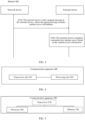
- FIG. 2 is an example of a method for reporting location information according to an embodiment of this application.
- the method may be applied to an NTN system, or may be applied to a terrestrial system. This is not limited in this embodiment of this application.
- location area information of a terminal device is reported by triggering a first procedure.
- the method 200 includes the following steps.
- S210 The terminal device determines that a trigger condition of the first procedure is satisfied.
- the trigger condition of the first procedure is preconfigured by a network device for the terminal device.
- the network device sends configuration information to the terminal device.
- the configuration information is for configuring the trigger condition of the first procedure.
- the network device may deliver a configuration of the first procedure.
- the configuration may include a configuration of a preamble sequence, or may include a configuration of a supported maximum data size.
- the first procedure is for determining the location area of the terminal device.
- the trigger condition includes at least one of the following:
- the terminal device switches the location area.
- a quantity of times that the terminal device switches the location area exceeds a first preset value.
- the terminal device has displacement, and the displacement exceeds a second preset value.
- a time interval since the last time the terminal device triggers the first procedure exceeds first time.
- the terminal device enters an idle state or an inactive state.
- the terminal device enters the idle state or the inactive state from a connected state.
- the location area of the terminal device may be a coverage range of a logical cell in which the terminal device is located.
- the location area of the terminal device may be a coverage range of a physical cell in which the terminal device is located.
- the location area of the terminal device may be a coverage range of a satellite beam corresponding to the terminal device.
- that the terminal device switches the location area may be that the terminal device moves from a coverage range of one logical cell to a coverage range of another logical cell.
- that the terminal device switches the location area may be that the terminal device moves from a coverage range of one physical cell to a coverage range of another physical cell.
- that the terminal device switches the location area may be that the terminal device moves from a coverage range of one satellite beam to a coverage range of another satellite beam.
- the following describes how to determine the location area of the terminal device by performing the first procedure.
- the first procedure may be similar to a step of four-step random access.
- the steps of the first procedure may include:
- the network device receives the first preamble sequence sent by the terminal device.
- the terminal device may send the first preamble sequence to the network device in a cell or a beam on which the terminal device currently camps.
- a process in which the terminal device sends the first preamble sequence to the network device may be a contention process.
- a process in which the terminal device sends the first preamble sequence to the network device may be a non-contention process.
- the first preamble sequence may indicate that the first procedure is for determining the location area of the terminal device.
- steps of the first procedure may be the same as steps of reusing early data transmission (Early Data Transmission, EDT) of the four-step random access procedure. Therefore, a specific first preamble sequence is configured to indicate that the first procedure is triggered for determining the location area of the terminal device, or indicate that the first procedure is triggered because the trigger condition of the first procedure is satisfied.
- EDT Early Data Transmission
- the terminal device may send the first preamble sequence to a radio access network (Radio Access Network, RAN) network element in the network device.
- RAN Radio Access Network
- the network device sends resource configuration information to the terminal device.
- the terminal device receives the resource configuration information sent by the network device.
- the resource configuration information is for configuring a first resource.
- the network device receives the first preamble sequence, and allocates, to the terminal device, the first resource required for sending information in step 3, and the network device sends the resource configuration information to the terminal device to configure the first resource for the terminal device.
- the terminal device sends first information to the network device over the first resource.
- the first information includes a first identifier.
- the network device receives the first information over the first resource.
- the first identifier is for identifying the terminal device.
- the first identifier may be an international mobile subscriber identity (International Mobile Subscriber Identity, IMSI).
- IMSI International Mobile Subscriber Identity
- the first identifier may be a temporary mobile subscriber identity (System Architecture Evolution Temporary Mobile Station Identity, S-TMSI).
- S-TMSI System Architecture Evolution Temporary Mobile Station Identity
- the first identifier may be a 5G temporary mobile subscriber identity 5G-S-TMSI.
- the first identifier may be an inactive radio network temporary identifier (Inactive Radio Network Temporary Identifier, I-RNTI).
- I-RNTI Inactive Radio Network Temporary Identifier
- the first information further includes a trigger reason of triggering the first procedure.
- the trigger reason may be that any one of the foregoing trigger conditions of the first procedure is triggered.
- the first information further includes camping beam information of the terminal device.
- the first information further includes a camping paging area identifier of the terminal device.
- the first information further includes a geographical location identifier of the terminal device.
- the geographical location identifier may be longitude and latitude coordinates of the terminal device, or may be a city in which the terminal device is located, or the like.
- the network device may determine the location area of the terminal device based on the camping beam information, the camping paging area identifier, the geographical location identifier, and the like.
- the first information may not include the foregoing identifiers, and the network device may determine the location area of the terminal device by using a process of the first procedure.
- the network device sends first indication information to the terminal device.
- the first indication information indicates the terminal device to remain in an idle state or an inactive state.
- the terminal device receives the first indication information of the network device.
- this step is optional, or the terminal device may remain in the idle state or the inactive state after initiating, by default, the first procedure for determining the location area of the terminal device.
- steps of the first procedure are similar to a step of two-step random access, and the first procedure may include:
- the network device receives the second information.
- the terminal device may send the second preamble sequence to the network device in a cell or a beam on which the terminal device currently camps.
- a process in which the terminal device sends the second preamble sequence to the network device may be a contention process.
- a process in which the terminal device sends the second preamble sequence to the network device may be a non-contention process.
- the second preamble sequence may indicate that the first procedure is for determining the location area of the terminal device.
- a specific second preamble sequence is configured to indicate that the first procedure is triggered for determining the location area of the terminal device, or indicate that the first procedure is triggered because the trigger condition of the first procedure is satisfied.
- the terminal device may send the second preamble sequence to a RAN network element in the network device.
- the second identifier is for identifying the terminal device.
- the second identifier may be an IMSI.
- the second identifier may be an S-TMSI.
- the second identifier may be a 5G-S-TMSI.
- the second identifier may be an I-RNTI.
- the second information further includes a trigger reason of triggering the first procedure.
- the trigger reason may be that any one of the foregoing trigger conditions of the first procedure is triggered.
- the second information further includes camping beam information of the terminal device.
- the second information further includes a camping paging area identifier of the terminal device.
- the second information further includes a geographical location identifier of the terminal device.
- the geographical location identifier may be longitude and latitude coordinates of the terminal device, or may be a city in which the terminal device is located, or the like.
- the network device may determine the location area of the terminal device based on the camping beam information, the camping paging area identifier, the geographical location identifier, and the like.
- the second information may not include the foregoing identifiers, and the network device may determine the location area of the terminal device by using a process of the first procedure.
- the network device sends second indication information to the terminal device.
- the second indication information indicates the terminal device to remain in an idle state or an inactive state.
- the terminal device receives the second indication information of the network device.
- this step is optional, or the terminal device may remain in the idle state or the inactive state after initiating, by default, the first procedure for determining the location area of the terminal device.
- S220 The terminal device triggers the first procedure.
- the network device determines the location area of the terminal device based on the first procedure.
- the network device updates location information of the terminal device (for example, a camping beam of the terminal device corresponding to the location area of the terminal device, a camping cell of the terminal device, a paging area of the terminal device, and a geographical location of the terminal device) based on the location area determined in the first procedure, and pages the terminal device at a new location.
- location information of the terminal device for example, a camping beam of the terminal device corresponding to the location area of the terminal device, a camping cell of the terminal device, a paging area of the terminal device, and a geographical location of the terminal device
- the network device may extend a paging range to an entire tracking area.
- the terminal device when a location of the terminal device changes or the terminal device enters the idle state or the inactive state from an active state, the terminal device communicates with the network device by performing the first procedure similar to a random access procedure without exiting the idle state or the inactive state, so that the network device can determine the location area of the terminal device and update location information of the terminal device.
- the network device may page the terminal device at a level of a beam/cell/paging area/geographical location, thereby reducing system energy consumption.
- FIG. 3 is an example of a paging method according to an embodiment of this application. As shown in FIG. 3 , the method 300 includes the following steps.
- S310 A network device sends a paging message to a terminal device, where the paging message includes random access information.
- the terminal device receives the paging message sent by the network device.
- the random access information is a newly added field in a paging field of an RRC message.
- the random access information is related information used by the terminal device to complete a random access procedure.
- the random access information includes an identifier of the terminal device, a preamble sequence used by the terminal device for random access, and a first resource used by the terminal device to complete random access.
- the first resource includes a time-frequency resource and a polarization direction.
- S320 The terminal device completes contention-free random access based on the random access information.
- the network device includes, in the paging message, information such as the identifier of the terminal device, the preamble sequence, the time-frequency resource, and the polarization direction that are related to random access, so that when receiving the paging message, the terminal device obtains information required for subsequent random access, and the terminal device can complete the random access with the network device in a contention-free random access manner, thereby saving time and improving random access efficiency.
- FIG. 4 is a diagram of an example of a communication apparatus according to an embodiment of this application.
- the communication apparatus 400 includes a transceiver unit 410 and a processing unit 420.
- the communication apparatus 400 may be configured to achieve a function of the terminal device in any one of the foregoing methods.
- the communication apparatus 400 may correspond to a terminal device.
- the communication apparatus 400 may be a terminal device, and performs the steps performed by the terminal device in the foregoing method embodiments.
- the transceiver unit 410 may be configured to support the communication apparatus 400 in performing communication, for example, performing sending and/or receiving actions performed by the terminal device in the foregoing method embodiments.
- the processing unit 420 may be configured to support the communication apparatus 400 in performing processing actions in the foregoing method embodiments, for example, performing processing actions performed by the terminal device in the foregoing method embodiments.
- the communication apparatus may further include a storage unit 430 (not shown in FIG. 4 ) configured to store program code and data of the communication apparatus.
- a storage unit 430 (not shown in FIG. 4 ) configured to store program code and data of the communication apparatus.
- the transceiver unit 410 is configured to trigger a first procedure.
- the processing unit 420 is configured to determine that a trigger condition of the first procedure is satisfied.
- the first procedure is used by the network device to determine a location area of the communication apparatus.
- the location area of the communication apparatus may be a coverage range of a logical cell.
- the location area of the communication apparatus may be a coverage range of a physical cell.
- the location area of the communication apparatus may be a coverage range of a satellite beam.
- the trigger condition of the first procedure may include at least one of the following:
- the communication apparatus switches the location area.
- a quantity of times that the communication apparatus switches the location area exceeds a first preset value.
- the communication apparatus has displacement, and the displacement exceeds a second preset value.
- a time interval since the last time the communication apparatus triggers the first procedure exceeds first time.
- the communication apparatus enters an idle state or an inactive state from a connected state.
- the first procedure may be as follows:
- the transceiver unit 410 sends a first preamble sequence to the network device.
- the transceiver unit 410 receives resource configuration information of the network device.
- the resource configuration information is for configuring a first resource.
- the transceiver unit 410 sends first information to the network device over the first resource.
- the first information includes a first identifier, and the first identifier is for identifying the communication apparatus.
- the transceiver unit 410 receives first indication information of the network device.
- the first indication information indicates the communication apparatus to remain in the idle state or the inactive state.
- the first preamble sequence indicates that the first procedure is for determining the location area of the communication apparatus.
- the first information further includes a trigger reason
- the trigger reason includes that the trigger condition of the first procedure is triggered.
- the first information further includes a camping beam of the communication apparatus.
- the first information further includes a camping cell of the communication apparatus.
- the first information further includes a camping paging area identifier of the communication apparatus.
- the first information further includes a geographical location identifier of the communication apparatus.
- the first identifier may be an international mobile subscriber identity IMSI.
- the first identifier may be a temporary mobile subscriber identity S-TMSI.
- the first identifier may be a 5G temporary mobile subscriber identity 5G-S-TMSI.
- the first identifier may be an inactive radio network temporary identifier I-RNTI.
- the first procedure may be as follows:
- the transceiver unit 410 sends second information to the network device.
- the second information includes a second preamble sequence and a second identifier, and the second identifier is for identifying the communication apparatus.
- the transceiver unit receives second indication information of the network device.
- the second indication information indicates the communication apparatus to remain in the idle state or the inactive state.
- the second preamble sequence indicates that the first procedure is for determining the location area of the communication apparatus.
- the second information further includes the trigger reason, and the trigger reason includes that the trigger condition of the first procedure is triggered.
- the second information further includes a camping beam of the communication apparatus.
- the second information further includes a camping cell of the communication apparatus.
- the second information further includes a camping paging area identifier of the communication apparatus.
- the second information further includes a geographical location identifier of the communication apparatus.
- the second identifier may be an international mobile subscriber identity IMSI.
- the second identifier may be a temporary mobile subscriber identity S-TMSI.
- the second identifier may be a 5G temporary mobile subscriber identity 5G-S-TMSI.
- the second identifier may be an inactive radio network temporary identifier I-RNTI.
- the communication apparatus 400 may be configured to achieve a function of the network device in any one of the foregoing methods.
- the communication apparatus 400 may correspond to a network device.
- the communication apparatus 400 may be a network device, and performs the steps performed by the network device in the foregoing method embodiments.
- the transceiver unit 410 may be configured to support the communication apparatus 400 in performing communication, for example, performing sending and/or receiving actions performed by the network device in the foregoing method embodiments.
- the processing unit 420 may be configured to support the communication apparatus 400 in performing processing actions in the foregoing method embodiments, for example, performing processing actions performed by the network device in the foregoing method embodiments.
- the communication apparatus may further include a storage unit 430 (not shown in FIG. 4 ) configured to store program code and data of the communication apparatus.
- a storage unit 430 (not shown in FIG. 4 ) configured to store program code and data of the communication apparatus.
- the transceiver unit 410 is configured to receive information of a first procedure triggered by a terminal device.
- the processing unit 420 is configured to determine a location area of the terminal device based on the first procedure.
- the first procedure is used by the communication apparatus to determine the location area of the terminal device.
- the location area of the terminal device may be a coverage range of a logical cell.
- the location area of the terminal device may be a coverage range of a physical cell.
- the location area of the terminal device may be a coverage range of a satellite beam.
- a trigger condition of the first procedure may include at least one of the following: The terminal device switches the location area.
- a quantity of times that the terminal device switches the location area exceeds a first preset value.
- the terminal device has displacement, and the displacement exceeds a second preset value.
- a time interval for triggering the first procedure by the terminal device exceeds first time.
- the terminal device enters an idle state or an inactive state from a connected state.
- the first procedure may be as follows:
- the transceiver unit 410 receives a first preamble sequence sent by the terminal device.
- the transceiver unit 410 sends resource configuration information to the terminal device.
- the resource configuration information is for configuring a first resource.
- the transceiver unit 410 receives first information sent by a terminal device over the first resource.
- the first information includes a first identifier, and the first identifier is for identifying the terminal device.
- the transceiver unit 410 sends first indication information to the terminal device.
- the first indication information indicates the terminal device to remain in the idle state or the inactive state.
- the first preamble sequence indicates that the first procedure is for determining the location area of the terminal device.
- the first information further includes a trigger reason
- the trigger reason includes that the trigger condition of the first procedure is triggered.
- the first information further includes a camping beam of the terminal device.
- the first information further includes a camping cell of the terminal device.
- the first information further includes a camping paging area identifier of the terminal device.
- the first information further includes a geographical location identifier of the terminal device.
- the first identifier may be an international mobile subscriber identity IMSI.
- the first identifier may be a temporary mobile subscriber identity S-TMSI.
- the first identifier may be a 5G temporary mobile subscriber identity 5G-S-TMSI.
- the first identifier may be an inactive radio network temporary identifier I-RNTI.
- the transceiver unit 410 receives second information sent by the terminal device.
- the second information includes a second preamble sequence and a second identifier, and the second identifier is for identifying the terminal device.
- the transceiver unit 410 sends second indication information to the terminal device.
- the second indication information indicates the terminal device to remain in the idle state or the inactive state.
- the second preamble sequence indicates that the first procedure is for determining the location area of the terminal device.
- the second information further includes the trigger reason, and the trigger reason includes that the trigger condition of the first procedure is triggered.
- the second information further includes a camping beam of the terminal device.
- the second information further includes a camping cell of the terminal device.
- the second information further includes a camping paging area identifier of the terminal device.
- the second information further includes a geographical location identifier of the terminal device.
- the second identifier may be an international mobile subscriber identity IMSI.
- the second identifier may be a temporary mobile subscriber identity S-TMSI.
- the second identifier may be a 5G temporary mobile subscriber identity 5G-S-TMSI.
- the second identifier may be an inactive radio network temporary identifier I-RNTI.
- FIG. 5 is a diagram of another example of a communication apparatus according to an embodiment of this application.
- the apparatus 500 includes a transceiver 510, a processor 520, and a memory 530.
- the memory 530 is configured to store instructions.
- the processor 520 is coupled to the memory 530, and is configured to execute the instructions stored in the memory, to perform the method provided in the foregoing embodiments of this application.
- the transceiver 510 in the apparatus 500 may correspond to the transceiver unit 410 in the apparatus 400, and the processor 520 in the communication apparatus 500 may correspond to the processing unit 520 in the communication apparatus 500.
- the memory 530 and the processor 520 may be combined into one processing apparatus, and the processor 520 is configured to execute program code stored in the memory 530 to achieve the foregoing functions.
- the memory 530 may alternatively be integrated into the processor 520, or may be independent of the processor 520.
- the disclosed system, apparatus, and method may be implemented in other manners.
- the described apparatus embodiment is merely an example.
- division into the units is merely logical function division and may be other division in actual implementation.
- a plurality of units or components may be combined or integrated into another system, or some features may be ignored or not performed.
- the displayed or discussed mutual couplings or direct couplings or communication connections may be implemented by using some interfaces.
- the indirect couplings or communication connections between the apparatuses or units may be implemented in electronic, mechanical, or other forms.
- the units described as separate parts may or may not be physically separate, and parts displayed as units may or may not be physical units, may be located in one position, or may be distributed on a plurality of network units. Some or all of the units may be selected based on actual requirements to achieve the objectives of the solutions of embodiments.
- function units in embodiments of this application may be integrated into one processing unit, or each of the units may exist alone physically, or two or more units may be integrated into one unit.
- the functions When the functions are implemented in the form of a software functional unit and sold or used as an independent product, the functions may be stored in a computer-readable storage medium. Based on such an understanding, the technical solutions of this application essentially, or the part contributing to the conventional technology, or some of the technical solutions may be implemented in a form of a software product.
- the computer software product is stored in a storage medium, and includes several instructions for instructing a computer device (which may be a personal computer, a server, a network device, or the like) to perform all or some of the steps of the methods described in embodiments of this application.
- the foregoing storage medium includes any medium that can store program code, such as a USB flash drive, a removable hard disk, a read-only memory (Read-Only Memory, ROM), a random access memory (Random Access Memory, RAM), a magnetic disk, or an optical disc.
- program code such as a USB flash drive, a removable hard disk, a read-only memory (Read-Only Memory, ROM), a random access memory (Random Access Memory, RAM), a magnetic disk, or an optical disc.
Landscapes
- Engineering & Computer Science (AREA)
- Computer Networks & Wireless Communication (AREA)
- Signal Processing (AREA)
- Mobile Radio Communication Systems (AREA)
Applications Claiming Priority (2)
| Application Number | Priority Date | Filing Date | Title |
|---|---|---|---|
| CN202210028208.9A CN116471534A (zh) | 2022-01-11 | 2022-01-11 | 上报位置信息的方法和装置 |
| PCT/CN2022/138634 WO2023134367A1 (zh) | 2022-01-11 | 2022-12-13 | 上报位置信息的方法和装置 |
Publications (2)
| Publication Number | Publication Date |
|---|---|
| EP4436216A1 true EP4436216A1 (de) | 2024-09-25 |
| EP4436216A4 EP4436216A4 (de) | 2025-06-18 |
Family
ID=87184759
Family Applications (1)
| Application Number | Title | Priority Date | Filing Date |
|---|---|---|---|
| EP22920000.1A Pending EP4436216A4 (de) | 2022-01-11 | 2022-12-13 | Verfahren und vorrichtung zur meldung von positionsinformationen |
Country Status (4)
| Country | Link |
|---|---|
| US (1) | US20240349230A1 (de) |
| EP (1) | EP4436216A4 (de) |
| CN (1) | CN116471534A (de) |
| WO (1) | WO2023134367A1 (de) |
Families Citing this family (4)
| Publication number | Priority date | Publication date | Assignee | Title |
|---|---|---|---|---|
| WO2026044614A1 (zh) * | 2024-08-29 | 2026-03-05 | Oppo广东移动通信有限公司 | 信号资源的配置方法、装置、设备及存储介质 |
| CN121692060A (zh) * | 2024-09-10 | 2026-03-17 | 荣耀终端股份有限公司 | 通信方法和通信装置 |
| CN122002309A (zh) * | 2024-11-06 | 2026-05-08 | 华为技术有限公司 | 一种通信方法以及相关装置 |
| CN121985395A (zh) * | 2025-11-13 | 2026-05-05 | 成都鼎桥通信技术有限公司 | 一种接入方法及程序产品 |
Family Cites Families (12)
| Publication number | Priority date | Publication date | Assignee | Title |
|---|---|---|---|---|
| KR100584446B1 (ko) * | 2004-02-11 | 2006-05-26 | 삼성전자주식회사 | 광대역 무선 접속 통신 시스템에서 단말의 동작 모드 제어방법 |
| US8498608B2 (en) * | 2010-01-19 | 2013-07-30 | Htc Corporation | Method of network paging user equipment for error recovery in wireless communication system and related communication device |
| US20170238136A1 (en) * | 2011-08-18 | 2017-08-17 | Rivada Research, Llc | Method and System for Improving the Location of Fixed Wireless CBSD Nodes |
| US9801014B2 (en) * | 2015-12-29 | 2017-10-24 | Hitachi, Ltd. | Predictive analytics for location estimation of idle UEs in a cellular network |
| CN107645753B (zh) * | 2017-09-15 | 2020-08-07 | 武汉虹信通信技术有限责任公司 | 一种ue小区重选时的位置上报方法 |
| WO2020167220A1 (en) * | 2019-02-14 | 2020-08-20 | Telefonaktiebolaget Lm Ericsson (Publ) | Network nodes and methods therein for enabling a switch between feeder links for an airbourne or orbital communication node in a non-terrestrial communications network |
| WO2020197271A1 (en) * | 2019-03-27 | 2020-10-01 | Lg Electronics Inc. | De-prioritization of non-terrestrial network cells not providing current tracking area code of user equipment |
| CN111866970B (zh) * | 2019-04-30 | 2021-12-28 | 华为技术有限公司 | 上报位置信息的方法和装置 |
| EP4325926B1 (de) * | 2019-06-14 | 2025-02-26 | Honor Device Co., Ltd. | Handhabung einer non-access-stratum-verbindung |
| US11758468B2 (en) * | 2020-07-09 | 2023-09-12 | Qualcomm Incorporated | Admission control for radio resource control setup procedure |
| CN118317383A (zh) * | 2020-07-30 | 2024-07-09 | 华为技术有限公司 | 一种通信方法及通信装置 |
| US20240349235A1 (en) * | 2021-07-26 | 2024-10-17 | Beijing Xiaomi Mobile Software Co., Ltd. | Method and apparatus for reporting position information of terminal in non-terrestrial network |
-
2022
- 2022-01-11 CN CN202210028208.9A patent/CN116471534A/zh active Pending
- 2022-12-13 WO PCT/CN2022/138634 patent/WO2023134367A1/zh not_active Ceased
- 2022-12-13 EP EP22920000.1A patent/EP4436216A4/de active Pending
-
2024
- 2024-06-27 US US18/756,648 patent/US20240349230A1/en active Pending
Also Published As
| Publication number | Publication date |
|---|---|
| CN116471534A (zh) | 2023-07-21 |
| US20240349230A1 (en) | 2024-10-17 |
| WO2023134367A1 (zh) | 2023-07-20 |
| EP4436216A4 (de) | 2025-06-18 |
Similar Documents
| Publication | Publication Date | Title |
|---|---|---|
| US20240349230A1 (en) | Method and apparatus for reporting location information | |
| CN111491338B (zh) | 上下文存储方法及装置 | |
| JP7637200B2 (ja) | 無線通信方法及び機器 | |
| US11197267B2 (en) | Communication method, access network device, and terminal | |
| CN110958671A (zh) | 通信方法及装置 | |
| EP3439340B1 (de) | Mobilitätsverwaltungsverfahren und -vorrichtung | |
| US12063697B2 (en) | Data transmission method and apparatus, and terminal | |
| CN111757358A (zh) | 用于寻呼的方法、接入网设备和终端设备 | |
| KR20220006577A (ko) | 무선 통신 방법, 네트워크 기기 및 단말 기기 | |
| CN113170389A (zh) | 一种参数配置方法及装置、网络设备、终端 | |
| JP7110235B2 (ja) | 通信方法および通信デバイス | |
| CN118235493B (zh) | 用于无线通信的方法及装置 | |
| US11483898B2 (en) | Session management method and session management network element | |
| EP3661278A1 (de) | Verfahren für funkruf sowie zugangsnetzwerkvorrichtung, endgerät und kernnetzwerkvorrichtung | |
| CN116803193A (zh) | Sdt失败上报的方法、终端设备和网络设备 | |
| US20240422673A1 (en) | Communication method and apparatus | |
| US20230292275A1 (en) | Transceiver device, network entity and base station | |
| CN112313979A (zh) | 一种信息传输方法及装置、网络设备 | |
| CN112205055A (zh) | 一种信息传输方法及装置、终端、网络设备 | |
| US20200112940A1 (en) | Communication method and device | |
| CN115606247B (zh) | 无线通信方法和设备 | |
| US20260046878A1 (en) | Communication method, communication apparatus, computer-readable storage medium, and program product | |
| US20210250727A1 (en) | Notification information presentation method and apparatus | |
| WO2019136598A1 (zh) | 部分带宽定时方法以及装置、通信系统 | |
| CN120934589A (zh) | 一种非地面网络通信方法和装置 |
Legal Events
| Date | Code | Title | Description |
|---|---|---|---|
| STAA | Information on the status of an ep patent application or granted ep patent |
Free format text: STATUS: THE INTERNATIONAL PUBLICATION HAS BEEN MADE |
|
| PUAI | Public reference made under article 153(3) epc to a published international application that has entered the european phase |
Free format text: ORIGINAL CODE: 0009012 |
|
| STAA | Information on the status of an ep patent application or granted ep patent |
Free format text: STATUS: REQUEST FOR EXAMINATION WAS MADE |
|
| 17P | Request for examination filed |
Effective date: 20240618 |
|
| AK | Designated contracting states |
Kind code of ref document: A1 Designated state(s): AL AT BE BG CH CY CZ DE DK EE ES FI FR GB GR HR HU IE IS IT LI LT LU LV MC ME MK MT NL NO PL PT RO RS SE SI SK SM TR |
|
| RIC1 | Information provided on ipc code assigned before grant |
Ipc: H04W 60/04 20090101ALI20250224BHEP Ipc: H04W 74/00 20090101ALI20250224BHEP Ipc: H04W 76/11 20180101ALI20250224BHEP Ipc: H04W 76/27 20180101ALI20250224BHEP Ipc: H04W 68/02 20090101ALI20250224BHEP Ipc: H04W 64/00 20090101ALI20250224BHEP Ipc: H04W 4/02 20180101AFI20250224BHEP |
|
| DAV | Request for validation of the european patent (deleted) | ||
| DAX | Request for extension of the european patent (deleted) | ||
| A4 | Supplementary search report drawn up and despatched |
Effective date: 20250519 |
|
| RIC1 | Information provided on ipc code assigned before grant |
Ipc: H04W 60/04 20090101ALI20250513BHEP Ipc: H04W 74/00 20090101ALI20250513BHEP Ipc: H04W 76/11 20180101ALI20250513BHEP Ipc: H04W 76/27 20180101ALI20250513BHEP Ipc: H04W 68/02 20090101ALI20250513BHEP Ipc: H04W 64/00 20090101ALI20250513BHEP Ipc: H04W 4/02 20180101AFI20250513BHEP |