EP4436078A2 - Verfahren und vorrichtungen zur konfiguration von harq-ack-rückkopplung - Google Patents
Verfahren und vorrichtungen zur konfiguration von harq-ack-rückkopplung Download PDFInfo
- Publication number
- EP4436078A2 EP4436078A2 EP24185421.5A EP24185421A EP4436078A2 EP 4436078 A2 EP4436078 A2 EP 4436078A2 EP 24185421 A EP24185421 A EP 24185421A EP 4436078 A2 EP4436078 A2 EP 4436078A2
- Authority
- EP
- European Patent Office
- Prior art keywords
- harq
- ack
- dci
- harq process
- shot
- Prior art date
- Legal status (The legal status is an assumption and is not a legal conclusion. Google has not performed a legal analysis and makes no representation as to the accuracy of the status listed.)
- Pending
Links
Images




Classifications
-
- H—ELECTRICITY
- H04—ELECTRIC COMMUNICATION TECHNIQUE
- H04L—TRANSMISSION OF DIGITAL INFORMATION, e.g. TELEGRAPHIC COMMUNICATION
- H04L1/00—Arrangements for detecting or preventing errors in the information received
- H04L1/12—Arrangements for detecting or preventing errors in the information received by using return channel
- H04L1/16—Arrangements for detecting or preventing errors in the information received by using return channel in which the return channel carries supervisory signals, e.g. repetition request signals
- H04L1/1607—Details of the supervisory signal
- H04L1/1685—Details of the supervisory signal the supervisory signal being transmitted in response to a specific request, e.g. to a polling signal
-
- H—ELECTRICITY
- H04—ELECTRIC COMMUNICATION TECHNIQUE
- H04L—TRANSMISSION OF DIGITAL INFORMATION, e.g. TELEGRAPHIC COMMUNICATION
- H04L1/00—Arrangements for detecting or preventing errors in the information received
- H04L1/12—Arrangements for detecting or preventing errors in the information received by using return channel
- H04L1/16—Arrangements for detecting or preventing errors in the information received by using return channel in which the return channel carries supervisory signals, e.g. repetition request signals
- H04L1/18—Automatic repetition systems, e.g. Van Duuren systems
- H04L1/1812—Hybrid protocols; Hybrid automatic repeat request [HARQ]
-
- H—ELECTRICITY
- H04—ELECTRIC COMMUNICATION TECHNIQUE
- H04L—TRANSMISSION OF DIGITAL INFORMATION, e.g. TELEGRAPHIC COMMUNICATION
- H04L1/00—Arrangements for detecting or preventing errors in the information received
- H04L1/12—Arrangements for detecting or preventing errors in the information received by using return channel
- H04L1/16—Arrangements for detecting or preventing errors in the information received by using return channel in which the return channel carries supervisory signals, e.g. repetition request signals
- H04L1/18—Automatic repetition systems, e.g. Van Duuren systems
- H04L1/1822—Automatic repetition systems, e.g. Van Duuren systems involving configuration of automatic repeat request [ARQ] with parallel processes
-
- H—ELECTRICITY
- H04—ELECTRIC COMMUNICATION TECHNIQUE
- H04L—TRANSMISSION OF DIGITAL INFORMATION, e.g. TELEGRAPHIC COMMUNICATION
- H04L1/00—Arrangements for detecting or preventing errors in the information received
- H04L1/12—Arrangements for detecting or preventing errors in the information received by using return channel
- H04L1/16—Arrangements for detecting or preventing errors in the information received by using return channel in which the return channel carries supervisory signals, e.g. repetition request signals
- H04L1/18—Automatic repetition systems, e.g. Van Duuren systems
- H04L1/1829—Arrangements specially adapted for the receiver end
- H04L1/1854—Scheduling and prioritising arrangements
-
- H—ELECTRICITY
- H04—ELECTRIC COMMUNICATION TECHNIQUE
- H04L—TRANSMISSION OF DIGITAL INFORMATION, e.g. TELEGRAPHIC COMMUNICATION
- H04L1/00—Arrangements for detecting or preventing errors in the information received
- H04L1/12—Arrangements for detecting or preventing errors in the information received by using return channel
- H04L1/16—Arrangements for detecting or preventing errors in the information received by using return channel in which the return channel carries supervisory signals, e.g. repetition request signals
- H04L1/18—Automatic repetition systems, e.g. Van Duuren systems
- H04L1/1829—Arrangements specially adapted for the receiver end
- H04L1/1861—Physical mapping arrangements
-
- H—ELECTRICITY
- H04—ELECTRIC COMMUNICATION TECHNIQUE
- H04L—TRANSMISSION OF DIGITAL INFORMATION, e.g. TELEGRAPHIC COMMUNICATION
- H04L1/00—Arrangements for detecting or preventing errors in the information received
- H04L1/12—Arrangements for detecting or preventing errors in the information received by using return channel
- H04L1/16—Arrangements for detecting or preventing errors in the information received by using return channel in which the return channel carries supervisory signals, e.g. repetition request signals
- H04L1/18—Automatic repetition systems, e.g. Van Duuren systems
- H04L1/1829—Arrangements specially adapted for the receiver end
- H04L1/1864—ARQ related signaling
-
- H—ELECTRICITY
- H04—ELECTRIC COMMUNICATION TECHNIQUE
- H04L—TRANSMISSION OF DIGITAL INFORMATION, e.g. TELEGRAPHIC COMMUNICATION
- H04L5/00—Arrangements affording multiple use of the transmission path
- H04L5/003—Arrangements for allocating sub-channels of the transmission path
- H04L5/0053—Allocation of signalling, i.e. of overhead other than pilot signals
- H04L5/0055—Physical resource allocation for ACK/NACK
-
- H—ELECTRICITY
- H04—ELECTRIC COMMUNICATION TECHNIQUE
- H04L—TRANSMISSION OF DIGITAL INFORMATION, e.g. TELEGRAPHIC COMMUNICATION
- H04L5/00—Arrangements affording multiple use of the transmission path
- H04L5/0091—Signalling for the administration of the divided path, e.g. signalling of configuration information
- H04L5/0094—Indication of how sub-channels of the path are allocated
-
- H—ELECTRICITY
- H04—ELECTRIC COMMUNICATION TECHNIQUE
- H04W—WIRELESS COMMUNICATION NETWORKS
- H04W72/00—Local resource management
- H04W72/04—Wireless resource allocation
- H04W72/044—Wireless resource allocation based on the type of the allocated resource
- H04W72/0446—Resources in time domain, e.g. slots or frames
-
- H—ELECTRICITY
- H04—ELECTRIC COMMUNICATION TECHNIQUE
- H04W—WIRELESS COMMUNICATION NETWORKS
- H04W72/00—Local resource management
- H04W72/20—Control channels or signalling for resource management
- H04W72/23—Control channels or signalling for resource management in the downlink direction of a wireless link, i.e. towards a terminal
-
- H—ELECTRICITY
- H04—ELECTRIC COMMUNICATION TECHNIQUE
- H04W—WIRELESS COMMUNICATION NETWORKS
- H04W72/00—Local resource management
- H04W72/20—Control channels or signalling for resource management
- H04W72/23—Control channels or signalling for resource management in the downlink direction of a wireless link, i.e. towards a terminal
- H04W72/231—Control channels or signalling for resource management in the downlink direction of a wireless link, i.e. towards a terminal the control data signalling from the layers above the physical layer, e.g. RRC or MAC-CE signalling
-
- H—ELECTRICITY
- H04—ELECTRIC COMMUNICATION TECHNIQUE
- H04W—WIRELESS COMMUNICATION NETWORKS
- H04W72/00—Local resource management
- H04W72/20—Control channels or signalling for resource management
- H04W72/23—Control channels or signalling for resource management in the downlink direction of a wireless link, i.e. towards a terminal
- H04W72/232—Control channels or signalling for resource management in the downlink direction of a wireless link, i.e. towards a terminal the control data signalling from the physical layer, e.g. DCI signalling
Definitions
- the present disclosure is directed generally to wireless communications. Particularly, the present disclosure relates to methods and devices for configuring hybrid automatic repeat request acknowledgement (HARQ-ACK) feedback.
- HARQ-ACK hybrid automatic repeat request acknowledgement
- Ultra-reliable low-latency communication may provide communication with a high reliability and low latency between a user equipment and wireless access network nodes.
- URLLC may be supported on a licensed frequency carrier and/or an unlicensed frequency carrier.
- the HARQ-ACK codebook may contains HARQ-ACK information for many configured HARQ processes so that the HARQ-ACK codebook may be large and impact the performance.
- the present disclosure may address at least some of issues associated with the existing system to improve the performance of the wireless communication.
- This document relates to methods, systems, and devices for wireless communication, and more specifically, for configuring hybrid automatic repeat request acknowledgement (HARQ-ACK) feedback.
- HARQ-ACK hybrid automatic repeat request acknowledgement
- the present disclosure describes a method for wireless communication.
- the method includes configuring hybrid automatic repeat request acknowledgement (HARQ-ACK) feedback for physical downlink shared channel (PDSCH) transmission by: receiving, by a user equipment (UE), a radio resource control (RRC) parameter to configure a one-shot HARQ-ACK feedback mode; receiving, by the UE, a medium access control (MAC) control element (CE) indicating a list of activated serving cells; receiving, by the UE, a downlink control information (DCI) comprising an one-shot request field with a positive value, the DCI triggering a one-shot HARQ-ACK codebook; and transmitting, by the UE, a one-shot HARQ-ACK feedback for the list of activated serving cells.
- RRC radio resource control
- the present disclosure describes a method for wireless communication.
- the method includes configuring hybrid automatic repeat request acknowledgement (HARQ-ACK) feedback for physical downlink shared channel (PDSCH) transmission by: receiving, by a user equipment (UE), a radio resource control (RRC) parameter to configure a one-shot HARQ-ACK feedback mode; receiving, by the UE, a downlink control information (DCI) comprising an one-shot request field with a positive value, the DCI triggering a one-shot HARQ-ACK codebook; and in response at least one HARQ process satisfying a preset condition, transmitting, by the UE, a one-shot HARQ-ACK feedback for the at least one HARQ process.
- DCI downlink control information
- the present disclosure describes a method for wireless communication.
- the method includes configuring hybrid automatic repeat request acknowledgement (HARQ-ACK) feedback for physical downlink shared channel (PDSCH) transmission by: receiving, by a user equipment (UE), a radio resource control (RRC) parameter to configure a one-shot HARQ-ACK feedback mode; receiving, by the UE, a downlink control information (DCI) comprising an one-shot request field with a positive value, the DCI triggering a one-shot HARQ-ACK feedback; and transmitting, by the UE, a first one-shot HARQ-ACK feedback with a first one-shot HARQ-ACK codebook for at least one non-semi-persistent scheduling (non-SPS) PDSCH and a second one-shot HARQ-ACK feedback with a second one-shot HARQ-ACK codebook for at least one SPS PDSCH.
- DCI downlink control information
- an apparatus for wireless communication may include a memory storing instructions and a processing circuitry in communication with the memory.
- the processing circuitry executes the instructions, the processing circuitry is configured to carry out the above methods.
- a device for wireless communication may include a memory storing instructions and a processing circuitry in communication with the memory.
- the processing circuitry executes the instructions, the processing circuitry is configured to carry out the above methods.
- a computer-readable medium comprising instructions which, when executed by a computer, cause the computer to carry out the above methods.
- terms, such as “a”, “an”, or “the”, again, may be understood to convey a singular usage or to convey a plural usage, depending at least in part upon context.
- the term “based on” or “determined by” may be understood as not necessarily intended to convey an exclusive set of factors and may, instead, allow for existence of additional factors not necessarily expressly described, again, depending at least in part on context.
- the present disclosure describes methods and devices for configuring hybrid automatic repeat request acknowledgement (HARQ-ACK) feedback.
- HARQ-ACK hybrid automatic repeat request acknowledgement
- New Radio (NR), or 5th generation (5G) wireless communication may provide a range of capabilities from downloading with fast speeds to support real-time low-latency communication.
- New Radio (NR) mobile communication system are moving the world toward an increasingly connected and networked society.
- High-speed and low-latency wireless communications rely on efficient network resource management and allocation between user equipment and wireless access network nodes (including but not limited to wireless base stations).
- a new generation network is expected to provide high speed, low latency and ultra-reliable communication capabilities and fulfil the requirements from different industries and users.
- Ultra-reliable low-latency communication URLLC
- URLLC may provide communication with a high reliability and low latency between a user equipment and wireless access network nodes.
- the wireless communication may be carried on licensed frequency bands and/or new radio unlicensed (NR-U) frequency bands.
- a URLLC service may configure one or more subslots within one slot. Each of the one or more subslots may be configured to transmit the feedback information, so as to lower the latency in the URLLC service on licensed carriers.
- problems exist so as to increase time needed for transmitting feedback information, thus increasing latency and worsening the performance of the communication system on NR-U frequency carriers.
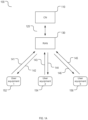
- FIG. 1A shows a wireless communication system 100 including a core network (CN) 110, a radio access network (RAN) 130, and one or more user equipment (UE) (152, 154, and 156).
- the RAN 130 may include a wireless network base station, or a NG radio access network (NG-RAN) base station or node, which may include a nodeB (NB, e.g., a gNB) in a mobile telecommunications context.
- NG-RAN NG radio access network
- NB nodeB
- the core network 110 may include a 5G core network (5GC)
- the interface 125 may include a new generation (NG) interface.
- 5GC 5G core network
- NG new generation
- a first UE 152 may wirelessly receive downlink communication 142 from the RAN 130 and wirelessly send uplink communication 141 to the RAN 130.
- a second UE 154 may wirelessly receive downlink communication 144 from the RAN 130 and wirelessly send uplink communication 143 to the RAN 130; and a third UE 156 may wirelessly receive downlink communication 146 from the RAN 130 and wirelessly send uplink communication 145 to the RAN 130.
- a downlink communication may include a physical downlink shared channel (PDSCH) or a physical downlink control channel (PDCCH)
- a uplink communication may include a physical uplink shared channel (PUSCH) or a physical uplink control channel (PUCCH).
- the downlink communication (142, 144, and/or 146) and/or uplink communication (141, 143, and/or 145) may be transmitted on licensed frequency carriers or NR-U frequency carriers.
- UE When URLLC operates on licensed carriers, UE may be configured with more than one HARQ-ACK codebooks by at least one radio resource control (RRC) parameter, for example but not limited to, pdsch-HARQ-ACK-Codebook-List-r16 and UCI-OnPUSCH-List-r16.
- RRC radio resource control
- the parameters for these HARQ-ACK codebooks such as candidate k1 set, the PUCCH resource set and UCI-OnPUSCH may be separately configured.
- the transmission of the two HARQ-ACK codebooks may be dependently in different PUCCH/PUSCH.
- Using unlicensed carriers to transmit data may increase the utilization rate of available transmission resources, thus improving URLLC performance.
- a transmitted wireless message may be lost or corrupted and uncorrectable due to channel quality imperfection and fluctuation in the communication resources.
- CCA clear channel assessment
- a device may perform a listening before talk (LBT) procedure (e.g., CCA) before sending data via an unlicensed carrier.
- LBT listening before talk
- CCA listening before talk
- URLLC operates in unlicensed carriers.
- the gNB/UE may not send data and the receiver may not receive the data correctly. These messages, which are not received correctly, may need to be retransmitted again, thus worsening the latency and reliability. Therefore, proper designs of control mechanisms for detection and retransmission of the lost or corrupted messages may help improve the efficiency of the wireless access network, particular for accessing unlicensed shared radio frequency bands.
- channel access procedure and control signaling need to be considered, and a communication system may support fast and reliability data transmission such as using unlicensed carriers for transmitting URLLC uplink HARQ-ACK feedback.
- UE may be configured with more than one HARQ-ACK-Codebook by RRC parameter pdsch-HARQ-ACK-Codebook-List-r16 or UCI-OnPUSCH-List-r16.
- RRC parameter pdsch-HARQ-ACK-Codebook-List-r16 or UCI-OnPUSCH-List-r16 When the UE is configured with two HARQ-ACK-Codebook, the parameters for these HARQ-ACK-Codebook, such as candidate k1 set, the PUCCH resource set and UCI-OnPUSCH may be separately configured.
- the two HARQ-ACK-Codebook transmission may be dependent in different PUCCH/PUSCH.
- the communication system may support fast and reliability data transmission such as using unlicensed carriers for transmitting URLLC uplink HARQ-ACK feedback.
- a type-3 HARQ-ACK codebook may be named as one-shot HARQ-ACK feedback scheme, which may be introduced for providing multiple transmission opportunity for ACK/NACK feedback.
- a UE When a UE is configured as one-shot feedback scheme (i.e, the one-shot feedback scheme is enabled) and the one-shot request bit filed in a DCI is 1, the UE may feedback of a HARQ-ACK codebook containing all downlink (DL) HARQ processes (one-shot feedback) for all serving/carrier cells (CCs) configured for the UE in the PUCCH group in the PUCCH/PUSCH.
- DL downlink
- CCs serving/carrier cells
- This present disclosure describes various embodiments including methods to reduce the codebook size, leading to a smaller HARQ-ACK payload and high reliability of the same resources.
- radio resource control (RRC) parameters for one-shot HARQ-ACK feedback such as pdsch-HARQ-ACK-OneShotFeedbackCBG-r16 and pdsch-HARQ-ACK-OneShotFeedbackNDI-r16 may be configured in the PhysicalCellGroupConfig information element (IE).
- the maximum number of serving cell configured to a UE may be 32, which is configured by maxNrofServingCells parameter. With a default process number of 8, the other supported HARQ process numbers may include 12, 4, 6, 10, 12, 16 ⁇ , which may be configured for is for each serving cell.
- the size of the one-shot codebook may be very large and the reliability may be negatively impacted.
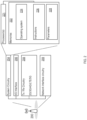
- an example for one-shot HARQ-ACK codebook may include 4 serving cells (CC1, CC2, CC3, and CC4). 8 HARQ processes are configured for the first three serving cells (CC11, CC2, and CC3), and 12 HARQ processes are configured for the fourth serving cell (CC4).
- CBG level HARQ-ACK and NDI are also included in the one-shot HARQ-ACK codebook.
- the HARQ-ACK codebook (for example, in FIG. 1B ) may be very large and may impact the performance.
- This present disclosure describes various embodiments including methods to reduce the codebook size, leading to a smaller HARQ-ACK payload and high reliability of the same resources.
- FIG. 2 shows an exemplary a radio access network or a wireless communication base station 200.
- the base station 200 may include radio transmitting/receiving (Tx/Rx) circuitry 208 to transmit/receive communication with one or more UEs, and/or one or more other base stations.
- the base station may also include network interface circuitry 209 to communicate the base station with other base stations and/or a core network, e.g., optical or wireline interconnects, Ethernet, and/or other data transmission mediums/protocols.
- the base station 200 may optionally include an input/output (I/O) interface 206 to communicate with an operator or the like.
- I/O input/output
- the base station may also include system circuitry 204.
- System circuitry 204 may include processor(s) 221 and/or memory 222.
- Memory 222 may include an operating system 224, instructions 226, and parameters 228.
- Instructions 226 may be configured for the one or more of the processors 124 to perform the functions of the base station.
- the parameters 228 may include parameters to support execution of the instructions 226. For example, parameters may include network protocol settings, bandwidth parameters, radio frequency mapping assignments, and/or other parameters.
- FIG. 3 shows an exemplary user equipment (UE) 300.
- the UE 300 may be a mobile device, for example, a smart phone or a mobile communication module disposed in a vehicle.
- the UE 300 may include communication interfaces 302, a system circuitry 304, an input/output interfaces (I/O) 306, a display circuitry 308, and a storage 309.
- the display circuitry may include a user interface 310.
- the system circuitry 304 may include any combination of hardware, software, firmware, or other logic/circuitry.
- the system circuitry 304 may be implemented, for example, with one or more systems on a chip (SoC), application specific integrated circuits (ASIC), discrete analog and digital circuits, and other circuitry.
- SoC systems on a chip
- ASIC application specific integrated circuits
- the system circuitry 304 may be a part of the implementation of any desired functionality in the UE 300.
- the system circuitry 304 may include logic that facilitates, as examples, decoding and playing music and video, e.g., MP3, MP4, MPEG, AVI, FLAC, AC3, or WAV decoding and playback; running applications; accepting user inputs; saving and retrieving application data; establishing, maintaining, and terminating cellular phone calls or data connections for, as one example, internet connectivity; establishing, maintaining, and terminating wireless network connections, Bluetooth connections, or other connections; and displaying relevant information on the user interface 310.
- decoding and playing music and video e.g., MP3, MP4, MPEG, AVI, FLAC, AC3, or WAV decoding and playback
- running applications accepting user inputs; saving and retrieving application data; establishing, maintaining, and terminating cellular phone calls or data connections for, as one example, internet connectivity; establishing, maintaining, and terminating wireless network connections, Bluetooth connections, or other connections; and displaying relevant information on the
- the user interface 310 and the inputs/output (I/O) interfaces 306 may include a graphical user interface, touch sensitive display, haptic feedback or other haptic output, voice or facial recognition inputs, buttons, switches, speakers and other user interface elements. Additional examples of the I/O interfaces 306 may include microphones, video and still image cameras, temperature sensors, vibration sensors, rotation and orientation sensors, headset and microphone input / output jacks, Universal Serial Bus (USB) connectors, memory card slots, radiation sensors (e.g., IR sensors), and other types of inputs.
- USB Universal Serial Bus
- the communication interfaces 302 may include a Radio Frequency (RF) transmit (Tx) and receive (Rx) circuitry 316 which handles transmission and reception of signals through one or more antennas 314.
- the communication interface 302 may include one or more transceivers.
- the transceivers may be wireless transceivers that include modulation / demodulation circuitry, digital to analog converters (DACs), shaping tables, analog to digital converters (ADCs), filters, waveform shapers, filters, pre-amplifiers, power amplifiers and/or other logic for transmitting and receiving through one or more antennas, or (for some devices) through a physical (e.g., wireline) medium.
- the transmitted and received signals may adhere to any of a diverse array of formats, protocols, modulations (e.g., QPSK, 16-QAM, 64-QAM, or 256-QAM), frequency channels, bit rates, and encodings.
- the communication interfaces 302 may include transceivers that support transmission and reception under the 2G, 3G, BT, WiFi, Universal Mobile Telecommunications System (UMTS), High Speed Packet Access (HSPA)+, 4G / Long Term Evolution (LTE) , and 5G standards.
- UMTS Universal Mobile Telecommunications System
- HSPA High Speed Packet Access
- LTE Long Term Evolution
- 5G 5G
- the system circuitry 304 may include one or more processors 321 and memories 322.
- the memory 322 stores, for example, an operating system 324, instructions 326, and parameters 328.
- the processor 321 is configured to execute the instructions 326 to carry out desired functionality for the UE 300.
- the parameters 328 may provide and specify configuration and operating options for the instructions 326.
- the memory 322 may also store any BT, WiFi, 3G, 4G, 5G or other data that the UE 300 will send, or has received, through the communication interfaces 302.
- a system power for the UE 300 may be supplied by a power storage device, such as a battery or a transformer.
- the present disclosure describes several embodiments of methods and devices for configuring hybrid automatic repeat request acknowledgement (HARQ-ACK) feedback for physical downlink shared channel (PDSCH) transmission, which may be implemented, partly or totally, on the wireless network base station and/or the user equipment described above in FIGS. 2 and 3 .
- HARQ-ACK hybrid automatic repeat request acknowledgement
- PDSCH physical downlink shared channel
- the present disclosure may improve the reliability of the one-shot HARQ-ACK codebook for URLLC operation on unlicensed band.
- a method 400 for wireless communication includes configuring hybrid automatic repeat request acknowledgement (HARQ-ACK) feedback for physical downlink shared channel (PDSCH) transmission.
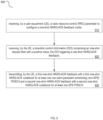
- the method 400 may include a portion or all of the following: step 410, receiving, by a user equipment (UE), a radio resource control (RRC) parameter to configure a one-shot HARQ-ACK feedback mode; step 420, receiving, by the UE, a medium access control (MAC) control element (CE) indicating a list of activated serving cells; step 430, receiving, by the UE, a downlink control information (DCI) comprising an one-shot request field with a positive value, the DCI triggering a one-shot HARQ-ACK codebook; and step 440, transmitting, by the UE, a one-shot HARQ-ACK feedback for the list of activated serving cells.
- the UE does not transmit HARQ-ACK feedback for non-activated serving cells one-shot HARQ-ACK codebook, where
- the UE may determine the one-shot HARQ-ACK codebook according to the list of the activated serving cells of the MAC CE, the one-shot HARQ-ACK codebook only comprising HARQ-ACK information for the list of activated serving cells.
- the one-shot request field with a positive value comprises the one-shot request field with a value of 1; and the RRC parameter indicating the one-shot HARQ-ACK feedback mode comprises a pdsch-HARQ-ACK-Codebook with pdsch-HARQ-ACK-OneShotFeedback-r16 enabled.
- a UE may determine the one-shot HARQ-ACK codebook according to the MAC CE for activated serving cell. That is one-shot HARQ-ACK codebook only contain the HARQ-ACK information for activated cell.
- the UE may only report the HARQ-ACK for these 4 activated cell, and the NACK information for other non-activated cells may not be reported.
- the size of the one-shot HARQ-ACK codebook may be reduced heavily and the reliability may be improved.
- a method 500 for wireless communication includes configuring hybrid automatic repeat request acknowledgement (HARQ-ACK) feedback for physical downlink shared channel (PDSCH) transmission.
- the method 500 may include a portion or all of the following: step 510, receiving, by a user equipment (UE), a radio resource control (RRC) parameter to configure a one-shot HARQ-ACK feedback mode; step 520, receiving, by the UE, a downlink control information (DCI) comprising an one-shot request field with a positive value, the DCI triggering a one-shot HARQ-ACK codebook; and step 530, in response at least one HARQ process satisfying a preset condition, transmitting, by the UE, a one-shot HARQ-ACK feedback for the at least one HARQ process.
- DCI downlink control information
- the one-shot request field with a positive value comprises the one-shot request field with a value of 1; and/or the RRC parameter indicating the one-shot HARQ-ACK feedback mode comprises a pdsch-HARQ-ACK-Codebook with pdsch-HARQ-ACK-OneShotFeedback-r16 enabled.
- one-shot HARQ-ACK codebook may only contain the HARQ-ACK information that have the same priority as indicated in the DCI triggering one-shot feedback and the HARQ processes that does not have the same priority may pad with NACK information.
- the DCI comprises a priority index.
- the priority index may include 0, or 1.
- the UE determines the one-shot HARQ-ACK codebook according to the at least one HARQ process.
- the UE pads the one-shot HARQ-ACK codebook with NACK information according to the at least one HARQ process.
- the one-shot HARQ-ACK codebook comprises HARQ-ACK information for the at least one HARQ process having the same priority index as the priority index in the DCI, and NACK for other HARQ process having a different priority index as the priority index in the DCI.
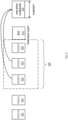
- FIG. 6 shows an example for the embodiment.
- the UE reports the one-shot HARQ-ACK codebook (650) that contains the HARQ-ACK for the HARQ process 1 (620) that has same priority index with the priority index of the DCI (610) triggering one-shot HARQ-ACK codebook.
- the UE reports NACK for HARQ process 2 (630) that has different priority index with the indication of DCI (610) triggering one-shot HARQ-ACK codebook.
- the HARQ-ACK information of the HARQ process may be dropped from the one-shot HARQ-ACK feedback and the HARQ-ACK of that HARQ process may not be reported.
- the HARQ-ACK information of the HARQ process may be included in the one-shot HARQ-ACK feedback and the HARQ-ACK of that HARQ process may be reported.
- Each of the at least one HARQ process includes an offset value in timeline.
- the UE determines a one-shot HARQ-ACK codebook according to the HARQ process; and/or the one-shot HARQ-ACK codebook comprises HARQ-ACK information for the HARQ process transmitted PDSCH.
- the UE determines not to report the second HARQ process in the one-shot HARQ-ACK feedback; and/or the one-shot HARQ-ACK codebook does not include HARQ-ACK information for the second HARQ process.
- the UE may receive a RRC message comprising the predefined value.
- the predefined value may be configured by a base station considering a data-processing speed/power of the UE.
- the predefined threshold may be 4.
- the offset value is larger than the threshold, and no new PDSCH is scheduled for this HARQ process, no ACK/NACK is reported for this HARQ process of one-shot HARQ-ACK codebook.
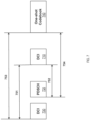
- the offset value in timeline may include various implementations, as shown in FIG. 7 .
- the DCI 710 is a DCI triggering the one-shot HARQ-ACK codebook.
- the DCI 730 may be a second DCI scheduling the HARQ process.
- the PDSCH 720 may be a transmitted PDSCH corresponding to the HARQ process.
- the one-shot codebook 740 may be a one-shot HARQ-ACK codebook corresponding to the triggering DCI 710.
- the offset value in timeline may be an offset value 751, which indicates a number of slot or subslot between the second DCI 730 scheduling the HARQ process and the DCI 710 triggering the one-shot HARQ-ACK codebook.
- the offset value in timeline may be an offset value 752, which indicates a number of slot or subslot between the transmitted PDSCH 720 corresponding to the HARQ process and the DCI 710 triggering the one-shot HARQ-ACK codebook.
- the offset value in timeline may be an offset value 753, which indicates a number of slot or subslot between the second DCI 730 scheduling the HARQ process and a slot transmitting the one-shot HARQ-ACK codebook 740.
- the offset value in timeline may be an offset value 754, which indicates a number of slot or subslot between the transmitted PDSCH 720 corresponding to the HARQ process and the slot transmitting the one-shot HARQ-ACK codebook 740.
- a UE may report the HARQ-ACK information for the PDSCH that transmitted in a time window 820 before a one-shot triggering DCI 810.
- the time window may be configured through RRC, for example but not limited to, 4 millisecond.
- the UE may report NACK.
- the UE may not report the HARQ-ACK information for this scheduled PDSCH.
- the UE receives a RRC message including a size indicating a time window 820 with the size before the DCI 810 triggering the one-shot HARQ-ACK codebook.
- a PDSCH (822, 824, and 826) corresponding to each of the at least one HARQ process being transmitted in the time window
- the UE determines a one-shot HARQ-ACK codebook (830) according to the at least one HARQ process.
- the PDSCH may include a semi-persistent scheduling (SPS) PDSCH and/or DCI grant (DG) PDSCH.
- SPS semi-persistent scheduling
- DG DCI grant
- the one-shot HARQ-ACK codebook 830 comprises HARQ-ACK information for the at least one HARQ process to which a PDSCH (822, 824, and 826) is transmitted in the time window, and does not comprise HARQ-ACK information for other HARQ process to which a PDSCH (842 and 844) is transmitted outside the time window.
- the last scheduled PDSCH (826) in the time window may have a short time process and the UE may have no time to obtain HARQ-ACK for this PDSCH (826).
- the UE may transmit NACK for any of the at least one HARQ process for which the UE has not obtain HARQ-ACK information.
- the UE may not transmit feedback information for any of the at least one HARQ process for which the UE has not obtain HARQ-ACK information.
- a bit field may be added to the DCI that trigger one-shot HARQ-ACK feedback, and the bit field may indicate to the UE which HARQ processes are triggered for report HARQ-ACK.
- the DCI comprises a bit field.
- the one-shot HARQ-ACK codebook comprises HARQ-ACK information for the at least one HARQ process indicated by the bit field in the DCI, and does not comprises HARQ-ACK information for other HARQ process not indicated by the bit field in the DCI.
- the bit fields may include various implementations.
- the bit number of the bit field may have the relation with activated cell and configured HARQ process number of each activated cell. When the activated cell number is 4 and the configured HARQ process number of each activated cell is 6, 24 bits may serve as the bit field and be added in the DCI to indicate to the UE which HARQ process of each activated cell are request for HARQ-ACK report.
- configured HARQ processes are divided into M groups of HARQ processes, and M is a positive integer.
- the bit field comprises M bits corresponding to the M groups of HARQ processes; and each bit of the bit filed indicates to perform one-shot HARQ-ACK feedback for each group of HARQ processes.
- the configured HARQ processes are divided into 8 groups of HARQ processes, and the bit field includes 8 bits, each of which indicate whether to perform HARQ-ACK feedback for the corresponding group of HARQ processes.
- configured HARQ processes are divided into M groups, and M is a positive integer.
- the bit field comprises ceil(log2M) bits, and ceil () is a ceiling function; and the bit field indicates to perform one-shot HARQ-ACK feedback for a (value of the bit field)th group of HARQ processes.
- the value of the bit field (for example, the bit field includes 110 with 6) indicates to the UE to perform HARQ-ACK feedback for the corresponding group (the 5th group) of HARQ processes.
- configured HARQ processes are divided into two groups, one even group and one odd group.
- the even group includes even number HARQ processes and the odd group includes odd number HARQ processes.
- the bit field comprises one bit, indicating which group to perform HARQ-ACK feedback. For example, the bit field being 0 indicates to perform one-shot HARQ-ACK feedback for the odd group; and the bit field being 1 indicates to perform one-shot HARQ-ACK feedback for the even group.
- some explicit bits may be added in the DCI to tell the UE which HARQ process of which activated carrier are needed to report HARQ-ACK information.
- a base station may dynamically request the HARQ-ACK information according to its received results recently.
- the DCI includes a group index.
- the UE determines the one-shot HARQ-ACK codebook according to the at least one HARQ process.
- the one-shot HARQ-ACK codebook comprises HARQ-ACK information for the at least one HARQ process having the same group index as the group index in the DCI, and does not comprises HARQ-ACK information for other HARQ process having a different group index as the group index in the DCI.
- the DCI comprises a HARQ process number (HPN).
- HPN HARQ process number
- the UE determines the one-shot HARQ-ACK codebook according to the at least one HARQ process.
- the one-shot HARQ-ACK codebook comprises HARQ-ACK information for the at least one HARQ process having the HPN within the offset number of the HPN in the DCI, and does not comprises HARQ-ACK information for other HARQ process having the HPN outside the offset number of the HPN in the DCI.
- the UE receives a RRC message comprising the offset number, for example but not limited to, 1, 2, and 3.
- the HARQ-ACK information of the subset HARQ processes that needed to report in the one-shot HARQ-ACK codebook is the HARQ processes number that is nearest to the HARQ process ID that indicated in the DCI triggering one-shot HARQ-ACK feedback.
- some bit fields related to scheduling PDSCH that are not used may be used to indicate which activated serving cells and which configured HARQ processes are needed to report HARQ-ACK information.
- one-shot feedback may be triggered more frequently and freely whenever needed and the one-shot HARQ-ACK codebook size may be controlled or reduced, improving the performance of the wireless system.
- the DCI comprises a bit field and the DCI does not schedule PDSCH.
- the UE determines the one-shot HARQ-ACK codebook according to the at least one HARQ process.
- the bit field comprises at least one of the following: a modulation and coding scheme of transport block 1 (MCS), a new data indicator of transport block 1 (NDI), a redundancy version of transport block 1 (RV), a HARQ process number (HPN), or at least one antenna port.
- the base station may use at least one of the MCS, NDI, RV, HPN bit feilds in the DCI that not scheduling PDSCH indicate to the UE to report the ACK/NACK information of a list of HARQ processes of a list of serving cells.
- a method 900 for wireless communication includes configuring hybrid automatic repeat request acknowledgement (HARQ-ACK) feedback for physical downlink shared channel (PDSCH) transmission.
- the method 900 may include a portion or all of the following: step 910, receiving, by a user equipment (UE), a radio resource control (RRC) parameter to configure a one-shot HARQ-ACK feedback mode; step 920, receiving, by the UE, a downlink control information (DCI) comprising an one-shot request field with a positive value, the DCI triggering a one-shot HARQ-ACK feedback; and step 930, transmitting, by the UE, a first one-shot HARQ-ACK feedback with a first one-shot HARQ-ACK codebook for at least one non-semi-persistent scheduling (non-SPS) PDSCH and a second one-shot HARQ-ACK feedback with a second one-shot HARQ-ACK codebook for at least one SPS PDSCH
- DCI downlink control information
- a UE may receive the one-shot feedback request to trigger scheduled PDSCH and SPS PDSCH HARQ-ACK feedback.
- a separate codebook may be constructed for transmitted SPS PDSCH.
- a first HARQ-ACK codebook for non-SPS/scheduled PDSCH and a second HARQ-ACK codebook for the SPS PDSCH may be transmit on different PUCCH/PUSCH.
- a value of K1 (PDSCH-to-HARQ_feedback timing indicator) is for the first HARQ-ACK codebook transmission for scheduled PDSCH in the DCI.
- the slot/sub-slot that transmitting the second HARQ-ACK codebook for SPS PDSCH is the nearest available uplink (UL) slot/sub-slot, such as the sub-slot next to the first HARQ-ACK codebook.
- the PUCCH resource indicator (PRI) of the PUCCH transmission carrying this HARQ-ACK codebook may be the same as indicated in the DCI triggered one-shot HARQ-ACK codebook.
- the DCI comprises a K and the UE transmits the first one-shot HARQ-ACK codebook for the at least one non-SPS PDSCH in a slot or subslot at the K after PDSCH corresponding to the DCI.
- the UE transmits the second one-shot HARQ-ACK codebook for the at least one SPS PDSCH in a nearest available slot or subslot after the slot or subslot transmitting the first one-shot HARQ-ACK codebook. For example, referring to FIG.
- the UE sends a first HARQ-ACK codebook 1040 for scheduled PDSCH 1030 in sub-slot n+K on the PUCCH resource that indicates in the DCI and transmit a second HARQ-ACK codebook 1050 for SPS PDSCH 1020 in sub-slot n+K+1.
- the UE may send the second HARQ-ACK codebook 1050 for SPS PDSCH in sub-slot n+K+2 and so on.
- a PUCCH resource indicator (PRI) of PUCCH transmission carrying the second one-shot HARQ-ACK codebook for the at least one SPS PDSCH is same as indicated in the DCI.
- the second one-shot HARQ-ACK feedback for the at least one SPS PDSCH does not comprise new data indication (NDI) with a configured pdsch-HARQ-ACK-OneShotFeedbackNDI-r16.
- NDI new data indication
- the NDI may not be included in the one-shot HARQ-ACK feedback, which is different compared with some methods of padding bit 0 for each PDSCH HARQ process.
- Some embodiments/implementations as described above may optionally include, in response to that the UE has previously transmitted HARQ-ACK information for a transport block (TB) t for a HARQ process number h on a serving cell c, and has not been scheduled for reception of another PDSCH corresponding to the TB t for the HARQ process number h on the serving cell c since the previous HARQ-ACK report, the UE does not report HARQ-ACK information for the HARQ process number h on the serving cell c in the one-shot HARQ-ACK codebook.
- TB transport block
- Some embodiments/implementations as described above may optionally include, when the UE has not yet obtained HARQ-ACK information for a transport block (TB) corresponding to a scheduled PDSCH reception, the UE may not report ACK/NACK information for this HARQ process number on a serving cell.
- TB transport block
- the present disclosure describes methods, apparatus, and computer-readable medium for wireless communication.
- the present disclosure addressed the issues with configuring hybrid automatic repeat request acknowledgement (HARQ-ACK) feedback for physical downlink shared channel (PDSCH) transmission.
- HARQ-ACK hybrid automatic repeat request acknowledgement
- the methods, devices, and computer-readable medium described in the present disclosure may facilitate the performance of wireless communication by configuring HARQ-ACK feedback for PDSCH transmission, thus improving efficiency and overall performance.
- the methods, devices, and computer-readable medium described in the present disclosure may improves the overall efficiency of the wireless communication systems.
Landscapes
- Engineering & Computer Science (AREA)
- Signal Processing (AREA)
- Computer Networks & Wireless Communication (AREA)
- Mobile Radio Communication Systems (AREA)
Priority Applications (1)
| Application Number | Priority Date | Filing Date | Title |
|---|---|---|---|
| EP24185421.5A EP4436078A3 (de) | 2020-07-02 | 2020-07-02 | Verfahren und vorrichtungen zur konfiguration von harq-ack-rückkopplung |
Applications Claiming Priority (3)
| Application Number | Priority Date | Filing Date | Title |
|---|---|---|---|
| EP24185421.5A EP4436078A3 (de) | 2020-07-02 | 2020-07-02 | Verfahren und vorrichtungen zur konfiguration von harq-ack-rückkopplung |
| PCT/CN2020/099811 WO2022000393A1 (en) | 2020-07-02 | 2020-07-02 | Methods and devices for configuring harq-ack feedback |
| EP20943322.6A EP4136793B1 (de) | 2020-07-02 | 2020-07-02 | Verfahren und vorrichtungen zur konfiguration von harq-ack-rückkopplung |
Related Parent Applications (2)
| Application Number | Title | Priority Date | Filing Date |
|---|---|---|---|
| EP20943322.6A Division EP4136793B1 (de) | 2020-07-02 | 2020-07-02 | Verfahren und vorrichtungen zur konfiguration von harq-ack-rückkopplung |
| EP20943322.6A Division-Into EP4136793B1 (de) | 2020-07-02 | 2020-07-02 | Verfahren und vorrichtungen zur konfiguration von harq-ack-rückkopplung |
Publications (2)
| Publication Number | Publication Date |
|---|---|
| EP4436078A2 true EP4436078A2 (de) | 2024-09-25 |
| EP4436078A3 EP4436078A3 (de) | 2024-12-04 |
Family
ID=79317758
Family Applications (2)
| Application Number | Title | Priority Date | Filing Date |
|---|---|---|---|
| EP24185421.5A Pending EP4436078A3 (de) | 2020-07-02 | 2020-07-02 | Verfahren und vorrichtungen zur konfiguration von harq-ack-rückkopplung |
| EP20943322.6A Active EP4136793B1 (de) | 2020-07-02 | 2020-07-02 | Verfahren und vorrichtungen zur konfiguration von harq-ack-rückkopplung |
Family Applications After (1)
| Application Number | Title | Priority Date | Filing Date |
|---|---|---|---|
| EP20943322.6A Active EP4136793B1 (de) | 2020-07-02 | 2020-07-02 | Verfahren und vorrichtungen zur konfiguration von harq-ack-rückkopplung |
Country Status (5)
| Country | Link |
|---|---|
| US (2) | US12432016B2 (de) |
| EP (2) | EP4436078A3 (de) |
| KR (1) | KR102939432B1 (de) |
| CN (2) | CN121283578A (de) |
| WO (1) | WO2022000393A1 (de) |
Cited By (1)
| Publication number | Priority date | Publication date | Assignee | Title |
|---|---|---|---|---|
| US20230269033A1 (en) * | 2020-08-07 | 2023-08-24 | Telefonaktiebolaget Lm Ericsson (Publ) | Methods for operating hybrid automatic repeat request with disabling per hybrid automatic repeat request process |
Families Citing this family (7)
| Publication number | Priority date | Publication date | Assignee | Title |
|---|---|---|---|---|
| EP4183209A4 (de) * | 2020-07-14 | 2024-08-07 | Sharp Kabushiki Kaisha | Endgerätevorrichtungen, basisstationen und kommunikationsverfahren |
| EP4189888A1 (de) * | 2020-07-29 | 2023-06-07 | Telefonaktiebolaget LM ERICSSON (PUBL) | Verbesserte übertragung eines harq-ack codebuchs mit einmaligem schritt |
| WO2022030991A1 (ko) * | 2020-08-06 | 2022-02-10 | 엘지전자 주식회사 | 무선 통신 시스템에서 무선 신호 송수신 방법 및 장치 |
| US12489566B2 (en) * | 2020-10-08 | 2025-12-02 | Qualcomm Incorporated | Additional details on reporting HARQ-ACK |
| KR20240004270A (ko) * | 2021-05-11 | 2024-01-11 | 인텔 코포레이션 | 취소 및 드롭된 harq 피드백 재전송 기법 |
| EP4693983A4 (de) * | 2023-03-31 | 2026-02-11 | Beijing Xiaomi Mobile Software Co Ltd | Anzeigeverfahren zur deaktivierung von harq-feedback und vorrichtung dafür |
| GB2628794A (en) * | 2023-04-04 | 2024-10-09 | Nokia Technologies Oy | Method, apparatus and computer program |
Citations (1)
| Publication number | Priority date | Publication date | Assignee | Title |
|---|---|---|---|---|
| WO2021087976A1 (en) * | 2019-11-08 | 2021-05-14 | Lenovo (Beijing) Limited | Method and apparatus for reducing one-shot harq-ack codebook size |
Family Cites Families (20)
| Publication number | Priority date | Publication date | Assignee | Title |
|---|---|---|---|---|
| US8614981B2 (en) * | 2010-01-29 | 2013-12-24 | Qualcomm Incorporated | Reporting of channel information to support coordinated multi-point data transmission |
| WO2015047149A1 (en) * | 2013-09-27 | 2015-04-02 | Telefonaktiebolaget L M Ericsson (Publ) | Aggregation groups for aggregating heterogeneous carriers |
| US11818717B2 (en) * | 2014-12-31 | 2023-11-14 | Texas Instruments Incorporated | Method and apparatus for uplink control signaling with massive Carrier Aggregation |
| JP6561130B2 (ja) * | 2015-03-04 | 2019-08-14 | 華為技術有限公司Huawei Technologies Co.,Ltd. | ハイブリッド自動再送要求−肯定応答伝送方法及び装置 |
| CN108292974B (zh) * | 2015-08-14 | 2021-09-10 | 联想创新有限公司(香港) | 确定无线通信系统中的harq-ack响应码本 |
| EP3346628B1 (de) * | 2015-09-25 | 2020-02-05 | Huawei Technologies Co., Ltd. | Rückkopplungsinformationsübertragungsverfahren sowie basisstation und benutzergerät |
| CN108737036B (zh) * | 2017-04-18 | 2020-11-06 | 华为技术有限公司 | 反馈信息接收方法、发送方法、装置及系统 |
| CN108809543B (zh) * | 2017-05-05 | 2021-12-31 | 华为技术有限公司 | 用于传输数据的方法和设备 |
| CN109152004B (zh) * | 2017-06-15 | 2023-07-28 | 中国移动通信有限公司研究院 | 微时隙指示及确定方法、通信设备及计算机存储介质 |
| CN109391381B (zh) * | 2017-08-11 | 2022-06-03 | 中兴通讯股份有限公司 | 数据的确认信息生成和反馈、数据传输方法和装置 |
| WO2019095314A1 (en) * | 2017-11-17 | 2019-05-23 | Zte Corporation | Codebook feedback for data retransmissions |
| CN110034902B (zh) * | 2018-01-12 | 2021-08-10 | 北京紫光展锐通信技术有限公司 | 混合式自动重传请求码本的生成方法、用户设备、介质 |
| CN112740592B (zh) * | 2018-08-07 | 2024-07-19 | 交互数字专利控股公司 | 用于harq增强的方法和装置 |
| CN111148077B (zh) * | 2018-11-02 | 2021-06-29 | 华为技术有限公司 | 传输方法和装置 |
| CN111130735B (zh) * | 2019-04-30 | 2021-11-23 | 维沃移动通信有限公司 | 一种反馈控制方法、ue及网络设备 |
| CN110708146B (zh) * | 2019-11-22 | 2022-06-21 | 北京紫光展锐通信技术有限公司 | Harq-ack信息反馈方法及装置 |
| CN114731684A (zh) * | 2019-12-31 | 2022-07-08 | 华为技术有限公司 | 数据传输方法及装置 |
| EP4057745B1 (de) * | 2020-01-23 | 2024-06-26 | Guangdong Oppo Mobile Telecommunications Corp., Ltd. | Verfahren und vorrichtung zur bestimmung eines harq-ack-codebuchs sowie vorrichtung und speichermedium |
| US11777663B2 (en) * | 2020-02-04 | 2023-10-03 | Qualcomm Incorporated | Type 3 hybrid automatic repeat request acknowledgment |
| US11838915B2 (en) * | 2020-02-12 | 2023-12-05 | Intel Corporation | One-shot feedback and SCell dormancy behavior in 5G NR networks |
-
2020
- 2020-07-02 WO PCT/CN2020/099811 patent/WO2022000393A1/en not_active Ceased
- 2020-07-02 CN CN202511333993.9A patent/CN121283578A/zh active Pending
- 2020-07-02 EP EP24185421.5A patent/EP4436078A3/de active Pending
- 2020-07-02 EP EP20943322.6A patent/EP4136793B1/de active Active
- 2020-07-02 CN CN202080102190.1A patent/CN115943583B/zh active Active
- 2020-07-02 KR KR1020227021319A patent/KR102939432B1/ko active Active
-
2022
- 2022-11-02 US US17/979,420 patent/US12432016B2/en active Active
-
2025
- 2025-09-29 US US19/343,813 patent/US20260031936A1/en active Pending
Patent Citations (1)
| Publication number | Priority date | Publication date | Assignee | Title |
|---|---|---|---|---|
| WO2021087976A1 (en) * | 2019-11-08 | 2021-05-14 | Lenovo (Beijing) Limited | Method and apparatus for reducing one-shot harq-ack codebook size |
Cited By (1)
| Publication number | Priority date | Publication date | Assignee | Title |
|---|---|---|---|---|
| US20230269033A1 (en) * | 2020-08-07 | 2023-08-24 | Telefonaktiebolaget Lm Ericsson (Publ) | Methods for operating hybrid automatic repeat request with disabling per hybrid automatic repeat request process |
Also Published As
| Publication number | Publication date |
|---|---|
| US20230057476A1 (en) | 2023-02-23 |
| CN115943583A (zh) | 2023-04-07 |
| EP4436078A3 (de) | 2024-12-04 |
| KR102939432B1 (ko) | 2026-03-13 |
| US20260031936A1 (en) | 2026-01-29 |
| WO2022000393A1 (en) | 2022-01-06 |
| CN121283578A (zh) | 2026-01-06 |
| US12432016B2 (en) | 2025-09-30 |
| CN115943583B (zh) | 2025-09-23 |
| KR20220163346A (ko) | 2022-12-09 |
| EP4136793A1 (de) | 2023-02-22 |
| EP4136793A4 (de) | 2023-06-07 |
| EP4136793B1 (de) | 2024-09-04 |
Similar Documents
| Publication | Publication Date | Title |
|---|---|---|
| US12432016B2 (en) | Methods and devices for configuring HARQ-ACK feedback | |
| US12381663B2 (en) | Methods and devices for configuring HARQ-ACK feedback | |
| US12295009B2 (en) | Methods and devices for scheduling multiple cells with single downlink control information | |
| US12519577B2 (en) | Methods and devices for generating HARQ-ACK feedback of multiple PDSCHs scheduled by single DCI | |
| US12489586B2 (en) | Methods and devices for configuring HARQ-ACK feedback | |
| US20240204937A1 (en) | Methods, devices, and systems for mapping multiple transport blocks in time domain | |
| WO2023060384A1 (en) | Methods, devices, and systems for mapping multiple transport blocks in frequency domain | |
| WO2023201505A1 (en) | Methods, devices, and systems for uci multiplexing with pusch | |
| WO2021093209A1 (en) | Methods and devices for transmitting feedback information | |
| WO2024103516A1 (en) | Methods and devices for uci multiplexing for pusch and pucch with repetitions | |
| CN114946143B (zh) | 用于为半静态调度构建harq-ack码本的方法和设备 | |
| WO2025156498A1 (en) | Methods, devices, and systems for harq process mechanism enhancement |
Legal Events
| Date | Code | Title | Description |
|---|---|---|---|
| PUAI | Public reference made under article 153(3) epc to a published international application that has entered the european phase |
Free format text: ORIGINAL CODE: 0009012 |
|
| STAA | Information on the status of an ep patent application or granted ep patent |
Free format text: STATUS: THE APPLICATION HAS BEEN PUBLISHED |
|
| AC | Divisional application: reference to earlier application |
Ref document number: 4136793 Country of ref document: EP Kind code of ref document: P |
|
| AK | Designated contracting states |
Kind code of ref document: A2 Designated state(s): AL AT BE BG CH CY CZ DE DK EE ES FI FR GB GR HR HU IE IS IT LI LT LU LV MC MK MT NL NO PL PT RO RS SE SI SK SM TR |
|
| REG | Reference to a national code |
Ref country code: DE Ref legal event code: R079 Free format text: PREVIOUS MAIN CLASS: H04L0001160700 Ipc: H04L0001182200 |
|
| PUAL | Search report despatched |
Free format text: ORIGINAL CODE: 0009013 |
|
| AK | Designated contracting states |
Kind code of ref document: A3 Designated state(s): AL AT BE BG CH CY CZ DE DK EE ES FI FR GB GR HR HU IE IS IT LI LT LU LV MC MK MT NL NO PL PT RO RS SE SI SK SM TR |
|
| RIC1 | Information provided on ipc code assigned before grant |
Ipc: H04L 1/1607 20230101ALI20241031BHEP Ipc: H04L 5/00 20060101ALI20241031BHEP Ipc: H04L 1/1829 20230101ALI20241031BHEP Ipc: H04L 1/1822 20230101AFI20241031BHEP |
|
| STAA | Information on the status of an ep patent application or granted ep patent |
Free format text: STATUS: REQUEST FOR EXAMINATION WAS MADE |
|
| 17P | Request for examination filed |
Effective date: 20250604 |
|
| STAA | Information on the status of an ep patent application or granted ep patent |
Free format text: STATUS: EXAMINATION IS IN PROGRESS |
|
| 17Q | First examination report despatched |
Effective date: 20250902 |
|
| GRAP | Despatch of communication of intention to grant a patent |
Free format text: ORIGINAL CODE: EPIDOSNIGR1 |
|
| STAA | Information on the status of an ep patent application or granted ep patent |
Free format text: STATUS: GRANT OF PATENT IS INTENDED |
|
| INTG | Intention to grant announced |
Effective date: 20260220 |