EP4434934A1 - Method for preparing hydrogen from ammonia by using pressure swing adsorption - Google Patents
Method for preparing hydrogen from ammonia by using pressure swing adsorption Download PDFInfo
- Publication number
- EP4434934A1 EP4434934A1 EP22895959.9A EP22895959A EP4434934A1 EP 4434934 A1 EP4434934 A1 EP 4434934A1 EP 22895959 A EP22895959 A EP 22895959A EP 4434934 A1 EP4434934 A1 EP 4434934A1
- Authority
- EP
- European Patent Office
- Prior art keywords
- ammonia
- hydrogen
- adsorption
- gas
- adsorbent
- Prior art date
- Legal status (The legal status is an assumption and is not a legal conclusion. Google has not performed a legal analysis and makes no representation as to the accuracy of the status listed.)
- Pending
Links
Images



Classifications
-
- B—PERFORMING OPERATIONS; TRANSPORTING
- B01—PHYSICAL OR CHEMICAL PROCESSES OR APPARATUS IN GENERAL
- B01D—SEPARATION
- B01D53/00—Separation of gases or vapours; Recovering vapours of volatile solvents from gases; Chemical or biological purification of waste gases, e.g. engine exhaust gases, smoke, fumes, flue gases, aerosols
- B01D53/02—Separation of gases or vapours; Recovering vapours of volatile solvents from gases; Chemical or biological purification of waste gases, e.g. engine exhaust gases, smoke, fumes, flue gases, aerosols by adsorption, e.g. preparative gas chromatography
- B01D53/04—Separation of gases or vapours; Recovering vapours of volatile solvents from gases; Chemical or biological purification of waste gases, e.g. engine exhaust gases, smoke, fumes, flue gases, aerosols by adsorption, e.g. preparative gas chromatography with stationary adsorbents
- B01D53/047—Pressure swing adsorption
-
- C—CHEMISTRY; METALLURGY
- C01—INORGANIC CHEMISTRY
- C01B—NON-METALLIC ELEMENTS; COMPOUNDS THEREOF; METALLOIDS OR COMPOUNDS THEREOF NOT COVERED BY SUBCLASS C01C
- C01B3/00—Hydrogen; Gaseous mixtures containing hydrogen; Separation of hydrogen from mixtures containing it; Purification of hydrogen; Reversible storage of hydrogen
- C01B3/02—Production of hydrogen; Production of gaseous mixtures containing hydrogen
- C01B3/04—Production of hydrogen; Production of gaseous mixtures containing hydrogen by decomposition of inorganic compounds
-
- C—CHEMISTRY; METALLURGY
- C01—INORGANIC CHEMISTRY
- C01B—NON-METALLIC ELEMENTS; COMPOUNDS THEREOF; METALLOIDS OR COMPOUNDS THEREOF NOT COVERED BY SUBCLASS C01C
- C01B3/00—Hydrogen; Gaseous mixtures containing hydrogen; Separation of hydrogen from mixtures containing it; Purification of hydrogen; Reversible storage of hydrogen
- C01B3/02—Production of hydrogen; Production of gaseous mixtures containing hydrogen
- C01B3/04—Production of hydrogen; Production of gaseous mixtures containing hydrogen by decomposition of inorganic compounds
- C01B3/047—Decomposition of ammonia
-
- C—CHEMISTRY; METALLURGY
- C01—INORGANIC CHEMISTRY
- C01B—NON-METALLIC ELEMENTS; COMPOUNDS THEREOF; METALLOIDS OR COMPOUNDS THEREOF NOT COVERED BY SUBCLASS C01C
- C01B3/00—Hydrogen; Gaseous mixtures containing hydrogen; Separation of hydrogen from mixtures containing it; Purification of hydrogen; Reversible storage of hydrogen
- C01B3/50—Separation of hydrogen or hydrogen-containing gases from gaseous mixtures, e.g. purification
- C01B3/56—Separation of hydrogen or hydrogen-containing gases from gaseous mixtures, e.g. purification by contacting with solids; Regeneration of used solids
-
- B—PERFORMING OPERATIONS; TRANSPORTING
- B01—PHYSICAL OR CHEMICAL PROCESSES OR APPARATUS IN GENERAL
- B01D—SEPARATION
- B01D2253/00—Adsorbents used in seperation treatment of gases and vapours
- B01D2253/10—Inorganic adsorbents
- B01D2253/102—Carbon
-
- B—PERFORMING OPERATIONS; TRANSPORTING
- B01—PHYSICAL OR CHEMICAL PROCESSES OR APPARATUS IN GENERAL
- B01D—SEPARATION
- B01D2253/00—Adsorbents used in seperation treatment of gases and vapours
- B01D2253/10—Inorganic adsorbents
- B01D2253/116—Molecular sieves other than zeolites
-
- B—PERFORMING OPERATIONS; TRANSPORTING
- B01—PHYSICAL OR CHEMICAL PROCESSES OR APPARATUS IN GENERAL
- B01D—SEPARATION
- B01D2256/00—Main component in the product gas stream after treatment
- B01D2256/16—Hydrogen
-
- B—PERFORMING OPERATIONS; TRANSPORTING
- B01—PHYSICAL OR CHEMICAL PROCESSES OR APPARATUS IN GENERAL
- B01D—SEPARATION
- B01D2257/00—Components to be removed
- B01D2257/40—Nitrogen compounds
- B01D2257/406—Ammonia
-
- C—CHEMISTRY; METALLURGY
- C01—INORGANIC CHEMISTRY
- C01B—NON-METALLIC ELEMENTS; COMPOUNDS THEREOF; METALLOIDS OR COMPOUNDS THEREOF NOT COVERED BY SUBCLASS C01C
- C01B2203/00—Integrated processes for the production of hydrogen or synthesis gas
- C01B2203/02—Processes for making hydrogen or synthesis gas
- C01B2203/0266—Processes for making hydrogen or synthesis gas containing a decomposition step
- C01B2203/0277—Processes for making hydrogen or synthesis gas containing a decomposition step containing a catalytic decomposition step
-
- C—CHEMISTRY; METALLURGY
- C01—INORGANIC CHEMISTRY
- C01B—NON-METALLIC ELEMENTS; COMPOUNDS THEREOF; METALLOIDS OR COMPOUNDS THEREOF NOT COVERED BY SUBCLASS C01C
- C01B2203/00—Integrated processes for the production of hydrogen or synthesis gas
- C01B2203/04—Integrated processes for the production of hydrogen or synthesis gas containing a purification step for the hydrogen or the synthesis gas
- C01B2203/042—Purification by adsorption on solids
-
- C—CHEMISTRY; METALLURGY
- C01—INORGANIC CHEMISTRY
- C01B—NON-METALLIC ELEMENTS; COMPOUNDS THEREOF; METALLOIDS OR COMPOUNDS THEREOF NOT COVERED BY SUBCLASS C01C
- C01B2203/00—Integrated processes for the production of hydrogen or synthesis gas
- C01B2203/04—Integrated processes for the production of hydrogen or synthesis gas containing a purification step for the hydrogen or the synthesis gas
- C01B2203/042—Purification by adsorption on solids
- C01B2203/043—Regenerative adsorption process in two or more beds, one for adsorption, the other for regeneration
-
- C—CHEMISTRY; METALLURGY
- C01—INORGANIC CHEMISTRY
- C01B—NON-METALLIC ELEMENTS; COMPOUNDS THEREOF; METALLOIDS OR COMPOUNDS THEREOF NOT COVERED BY SUBCLASS C01C
- C01B2203/00—Integrated processes for the production of hydrogen or synthesis gas
- C01B2203/04—Integrated processes for the production of hydrogen or synthesis gas containing a purification step for the hydrogen or the synthesis gas
- C01B2203/0465—Composition of the impurity
-
- C—CHEMISTRY; METALLURGY
- C01—INORGANIC CHEMISTRY
- C01B—NON-METALLIC ELEMENTS; COMPOUNDS THEREOF; METALLOIDS OR COMPOUNDS THEREOF NOT COVERED BY SUBCLASS C01C
- C01B2203/00—Integrated processes for the production of hydrogen or synthesis gas
- C01B2203/12—Feeding the process for making hydrogen or synthesis gas
- C01B2203/1205—Composition of the feed
-
- Y—GENERAL TAGGING OF NEW TECHNOLOGICAL DEVELOPMENTS; GENERAL TAGGING OF CROSS-SECTIONAL TECHNOLOGIES SPANNING OVER SEVERAL SECTIONS OF THE IPC; TECHNICAL SUBJECTS COVERED BY FORMER USPC CROSS-REFERENCE ART COLLECTIONS [XRACs] AND DIGESTS
- Y02—TECHNOLOGIES OR APPLICATIONS FOR MITIGATION OR ADAPTATION AGAINST CLIMATE CHANGE
- Y02E—REDUCTION OF GREENHOUSE GAS [GHG] EMISSIONS, RELATED TO ENERGY GENERATION, TRANSMISSION OR DISTRIBUTION
- Y02E60/00—Enabling technologies; Technologies with a potential or indirect contribution to GHG emissions mitigation
- Y02E60/30—Hydrogen technology
- Y02E60/36—Hydrogen production from non-carbon containing sources, e.g. by water electrolysis
Definitions
- the present disclosure relates to a method for manufacturing hydrogen from ammonia, and more specifically, to a method for manufacturing hydrogen from ammonia that can remove undecomposed ammonia by pressure swing adsorption (PSA) by using a carbon molecular sieve (CMS) adsorbent.
- PSA pressure swing adsorption
- CMS carbon molecular sieve
- a conventional ammonia removal processes has been commonly used in an ammonia recovery process to improve the performance of the Haber-Bosch method and an ammonia removal process to prevent emissions into the atmosphere.
- a hydrogen production process using ammonia is a process in which ammonia is decomposed into nitrogen and hydrogen by a catalyst under high temperature conditions as illustrated in Reaction 1 below, and depending on a decomposition rate, undecomposed ammonia is included in a decomposition gas (N 2 , H 2 ) and high-purity hydrogen is produced through a process to remove the same.
- Reaction 1 2NH 3 ⁇ N 2 + 3H 2
- TSA temperature swing adsorption
- ammonia is adsorbed and removed using an adsorbent
- a temperature of the adsorbent on which adsorption has been completed is raised to perform desorption/regeneration.
- issues such as maintaining a temperature inside an adsorption tower uniformly during desorption and cooling the inside of the adsorption tower to prepare for a subsequent adsorption process occurred, so there were various problems that were required to be solved before the method could be used in an actual process.
- a pressure swing adsorption (PSA) ammonia adsorption/regeneration process has recently been proposed, and studies are being conducted to confirm feasibility on a laboratory scale at a low concentration level of several thousand ppm.
- PSA pressure swing adsorption
- an ammonia decomposition hydrogen production process has recently been proposed to produce clean hydrogen, and there no examples proposing an adsorbent for the PSA-type ammonia adsorption/desorption process to remove undecomposed ammonia that may occur in this process and the corresponding process.
- a decomposition reaction of ammonia for producing hydrogen is carried out at normal pressure to 9 bar_g.
- an ammonia removal process and a process for purifying hydrogen located at the later stage of the decomposition process can be implemented using the PSA method, which has an advantage of simplifying the process configuration.
- Patent Document 1 Korean registered patent KR10-2247199B1
- an aspect of the present invention is to provide a method for manufacturing hydrogen from ammonia that can remove undecomposed ammonia using a pressure swing adsorption (PSA) method, in a process of decomposition of ammonia, removal of undecomposed ammonia, and separation/purification of hydrogen, which are main processes of an ammonia decomposition hydrogen extraction process using a catalyst.
- PSA pressure swing adsorption
- An object of the present disclosure is not limited to the above description.
- the object of the present disclosure will be understood from the entire content of the present specification, and a person skilled in the art to which the present disclosure pertains will understand an additional object of the present disclosure without difficulty.
- CMS loaded with metal chloride may be used as the adsorbent.
- the metal chloride may be one or more selected from MgCl 2 , CaCl2, SrCl2, MgBr 2 , CaBr 2 , and SrBr 2 .
- an adsorption amount of ammonia may be improved, and at the same time, desorption performance may be also secured, so that it is useful for removing decomposed ammonia (having a concentration of 0.5 to 11%) generated in a process for ammonia decomposition hydrogen production.
- PSA pressure swing adsorption
- CMS Carbon Molecular Sieve
- the efficiency of the overall hydrogen production process may be improved by effectively desorbing and removing undecomposed ammonia gas and using the same as a heat source in the process for ammonia decomposition hydrogen production.
- An aspect of the present disclosure is to provide an adsorbent that can be applied to the method of undecomposed ammonia adsorption/desorption process using a PSA method to supplant the existing TSA, in a process of extracting hydrogen from ammonia through a high temperature and high pressure reaction using a catalyst.
- undecomposed ammonia is removed by a PSA method by using carbon molecular sieve (CMS) as the adsorbent
- CMS carbon molecular sieve
- an aspect of the present disclosure is to provide a method of manufacturing hydrogen from ammonia that can improve the adsorption performance of undecomposed ammonia by a PSA method by using CMS loaded with metal chloride such as MgCl 2 as the adsorbent.
- a method for manufacturing hydrogen from ammonia by using pressure swing adsorption including steps of: generating hydrogen and nitrogen from ammonia gas through a high-temperature reaction by using a catalyst; performing purification by selectively adsorbing undecomposed ammonia gas from a gas containing undecomposed ammonia and low-purity hydrogen and nitrogen, which are supplied through the high-temperature reaction and cooled; and performing purification by separating high-purity hydrogen from the gas consisting of low-purity hydrogen and nitrogen, wherein purification is carried out by using a carbon molecular sieve (CMS) adsorbent so as to desorb the undecomposed ammonia gas through PSA.
- CMS carbon molecular sieve
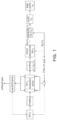
- FIG. 1 is a process diagram schematically illustrating a manufacturing process for manufacturing hydrogen from ammonia according to an embodiment of the present disclosure.
- a method of extracting hydrogen from ammonia first includes a process of generating hydrogen and nitrogen from ammonia gas through a high temperature reaction using a catalyst.
- ammonia is decomposed into nitrogen and hydrogen through a high-temperature reaction, and a concentration of undecomposed ammonia varies depending on decomposition conditions.
- Table 1 illustrates the concentration of undecomposed ammonia according to a decomposition rate of ammonia, a pressure for decomposing ammonia, and a temperature for removing undecomposed ammonia.
- an adsorbent that can be applied to a pressure swing adsorption (PSA) process under conditions of 0.5 to 11.1% residual ammonia, 40°C, 3 to 9bar_g, and a method for manufacturing hydrogen using the adsorbent are provided.
- PSA pressure swing adsorption
- purification is performed by selectively adsorbing undecomposed ammonia gas among a gas containing undecomposed ammonia and low-purity hydrogen and nitrogen, which are supplied through the high-temperature reaction process and cooled.
- undecomposed ammonia is removed by a PSA (pressure swing adsorption) method using an adsorbent carbon molecular sieve (CMS) as a technology for removing undecomposed ammonia generated in an ammonia decomposition hydrogen production process.
- CMS pressure swing adsorption
- undecomposed ammonia gas having an ammonia decomposition rate of 80 to 99%, a concentration of undecomposed ammonia of 0.5 to 11%, pressure of 3 barg to 9 barg, and a temperature of 20 to 50°C.
- CMS loaded with metal chloride is used as an adsorbent.
- CMS loaded with metal chloride is used as an adsorbent.
- At least one selected from MgCl 2 , CaCl2, SrCl2, MgBr 2 , CaBr 2 , and SrBr 2 is used as the metal chloride.
- an adsorption amount varies depending on temperature and pressure conditions, but when applied by a TSA method, it is known to have a working capacity of up to 0.6 mmol/g when not pretreated with metal halide and 2.1 mmol/g when treated with MgCl 2 .
- this process has a problem of making it difficult to process large volumes of gas due to low economic feasibility due to a time required for heating and cooling and a use of additional energy, and increasing greenhouse gas generation due to the use of additional energy.
- high-purity hydrogen may be produced by separating and purifying high-purity hydrogen from the gas composed of the low-purity hydrogen and nitrogen.
- various methods have been proposed for purifying such high-purity hydrogen, the present invention is not limited to specific process conditions, and various processes may be used without limitations.
- An ammonia adsorption/desorption test was performed using carbon molecular sieve (CMS) in a process for removing undecomposed ammonia.
- CMS carbon molecular sieve
- an adsorption/desorption test was also performed on CMS loaded with MgCl 2 to remove undecomposed ammonia.
- loading of MgCl 2 was performed, wherein distilled water containing MgCl 2 and CMS are mixed to a level of 4 wt% compared to CMS, and CMS was completely loaded in an MgCl 2 solution and then mixed and dried, and subsequently, dried in a nitrogen atmosphere at 200°C for 1 hour to completely remove residual moisture, additionally, which was used in an ammonia adsorption/desorption experiment.
- FIG. 2 is a cross-sectional schematic diagram of an ammonia adsorption/desorption test device configured to adsorb, desorb and remove unreacted ammonia gas using an adsorbent in an embodiment of the present disclosure.
- pressure in a reactor containing an adsorbent was controlled through a back pressure regulator to ensure that ammonia was continuously adsorbed to a target pressure, and an ammonia concentration in the gas to which ammonia was adsorbed was continuously analyzed using an ammonia analyzer.
- a valve of an existing gas line was closed, an N 2 flushing line in a lower portion was opened to lower a pressure, and then N 2 was supplied to an upper portion to perform a desorption process.
- experimental equipment was configured to supply a gas containing ammonia again to perform adsorption, and the adsorption/desorption performance of the adsorbent when applying the PSA (pressure swing adsorption) process was evaluated.
- PSA pressure swing adsorption
- ammonia adsorption/desorption tests were performed under various conditions depending on a temperature, pressure, and ammonia concentration, that may be applied to an ammonia decomposition hydrogen production process, and specific conditions thereof were illustrated in Table 2 below.
- adsorption was performed under the temperature and pressure conditions illustrated in Table 2 below, and desorption was performed under the same operating conditions or slightly higher than the adsorption temperature, and the adsorbed ammonia was desorbed while flowing nitrogen at normal pressure conditions. Thereafter, after ammonia was completely desorbed, the process of adsorbing/desorbing ammonia was repeated three times under the temperature and pressure conditions illustrated in Table 2 below. The results of the ammonia adsorption/desorption test under these various conditions were also illustrated in Table 2 below.
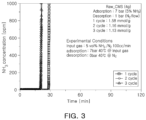
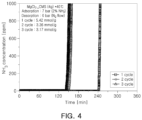
- FIGS. 3 to 7 illustrate an ammonia adsorption breakthrough curve by cycle when undecomposed ammonia (NH 3 ) gas was adsorbed under each condition.
- FIG. 3 is a diagram illustrating an ammonia adsorption breakthrough curve by cycle when undecomposed ammonia (NH 3 ) gas having a concentration of 5% was adsorbed at 7 bar pressure using a CMS as an adsorbent in an embodiment of the present disclosure.
- FIG. 4 is a diagram illustrating an ammonia adsorption breakthrough curve by cycle when undecomposed ammonia (NH 3 ) gas having a concentration of 2% was adsorbed at 7 bar pressure using a CMS loaded with 4wt% MgCl 2 as an adsorbent in an embodiment of the present disclosure.
- NH 3 undecomposed ammonia
- FIG. 5 is a diagram illustrating an ammonia adsorption breakthrough curve by cycle when undecomposed ammonia (NH 3 ) gas having a concentration of 5% was adsorbed at 7 bar pressure using a CMS loaded with 4wt% MgCl 2 as an adsorbent in an embodiment of the present disclosure.
- FIG. 6 is a diagram illustrating an ammonia adsorption breakthrough curve by cycle when undecomposed ammonia (NH 3 ) gas having a concentration of 2% was adsorbed at 5 bar pressure using a CMS loaded with 4wt% MgCl 2 as an adsorbent in an embodiment of the present disclosure.
- FIG. 7 is a diagram illustrating an ammonia adsorption breakthrough curve by cycle when undecomposed ammonia (NH 3 ) gas having a concentration of 5% was adsorbed at 5 bar pressure using a CMS loaded with 4wt% MgCl 2 as an adsorbent in an embodiment of the present disclosure.
- NH 3 undecomposed ammonia
- FIG. 7 Adsorbent Virgin CMS CMS loaded with 4 wt% MgCl 2 Adsorption pressure 0.7 MPa 0.7 MPa 0.5 MPa Temperature 40 °C Ammonia concentratio n 5% 2 % 5 % 2 % 5 % Adsorption Capacity 1.13 3.17 2.42 2.51 2.60 (mmol/g)
Landscapes
- Chemical & Material Sciences (AREA)
- Organic Chemistry (AREA)
- Engineering & Computer Science (AREA)
- Combustion & Propulsion (AREA)
- Inorganic Chemistry (AREA)
- Health & Medical Sciences (AREA)
- General Health & Medical Sciences (AREA)
- Analytical Chemistry (AREA)
- General Chemical & Material Sciences (AREA)
- Oil, Petroleum & Natural Gas (AREA)
- Chemical Kinetics & Catalysis (AREA)
- Solid-Sorbent Or Filter-Aiding Compositions (AREA)
- Separation Of Gases By Adsorption (AREA)
- Hydrogen, Water And Hydrids (AREA)
Abstract
Description
- The present disclosure relates to a method for manufacturing hydrogen from ammonia, and more specifically, to a method for manufacturing hydrogen from ammonia that can remove undecomposed ammonia by pressure swing adsorption (PSA) by using a carbon molecular sieve (CMS) adsorbent.
- A conventional ammonia removal processes has been commonly used in an ammonia recovery process to improve the performance of the Haber-Bosch method and an ammonia removal process to prevent emissions into the atmosphere.
- A hydrogen production process using ammonia is a process in which ammonia is decomposed into nitrogen and hydrogen by a catalyst under high temperature conditions as illustrated in
Reaction 1 below, and depending on a decomposition rate, undecomposed ammonia is included in a decomposition gas (N2, H2) and high-purity hydrogen is produced through a process to remove the same.
[Reaction 1] 2NH3 → N2 + 3H2
- For this purpose, as a conventionally applied process, a temperature swing adsorption (TSA) method has been mainly used, in which ammonia is adsorbed and removed using an adsorbent, and then a temperature of the adsorbent on which adsorption has been completed is raised to perform desorption/regeneration. In the case of this method, issues such as maintaining a temperature inside an adsorption tower uniformly during desorption and cooling the inside of the adsorption tower to prepare for a subsequent adsorption process occurred, so there were various problems that were required to be solved before the method could be used in an actual process.
- Accordingly, a pressure swing adsorption (PSA) ammonia adsorption/regeneration process has recently been proposed, and studies are being conducted to confirm feasibility on a laboratory scale at a low concentration level of several thousand ppm. Although there have been laboratory studies to remove low concentrations of ammonia, an ammonia decomposition hydrogen production process has recently been proposed to produce clean hydrogen, and there no examples proposing an adsorbent for the PSA-type ammonia adsorption/desorption process to remove undecomposed ammonia that may occur in this process and the corresponding process.
- Generally, a decomposition reaction of ammonia for producing hydrogen is carried out at normal pressure to 9 bar_g. There have been many studies into proceeding with decomposition under pressure for effective operation of a hydrogen purification process. When decomposition is performed in conditions under pressure, an ammonia removal process and a process for purifying hydrogen located at the later stage of the decomposition process can be implemented using the PSA method, which has an advantage of simplifying the process configuration. However, when ammonia is decomposed under pressure, as a decomposition rate of ammonia decreases, undecomposed ammonia remains at a % concentration level, and when undecomposed ammonia is not removed, load on a hydrogen purification facility may increase and finally produced hydrogen is likely to contain ammonia, which can cause problems such as unsatisfactory hydrogen quality.
- To this end, previous studies have used various adsorbents to remove ammonia, for example, zeolite, alumina, silica gel, and activated carbon were mainly used (AIChE Journal, 2000, 46(8)), or there were studies using metal halides (MgCl2, CaCl2, SrCl2, MgBr2, CaBr2, SrBr2) to improve adsorption performance (ACS Sustainable Chem. Eng, 2018. 6(5)).
- The AIChE Journal has published research conducted on various adsorbents, but only ammonia adsorption data (isothermal adsorption curve) may be used, so there is no additional data on whether it can be applied to a process of removing adsorbed ammonia (regeneration of adsorbent), so it is difficult to determine whether it may be applied using PSA. In particular, in the case of an adsorbent, hysteresis with different aspects of the adsorption and desorption curves is also observed, so it is difficult to determine whether PSA can be applied using only the isothermal adsorption curve. In addition, in ACS Sustainable Chem. In Eng, it was operated at a high temperature (150°C) and is applied for the temperature swing adsorption (TSA) process, so an operating method, different from the PSA method, was applied.
- Meanwhile, there have been some recent studies on adsorbents and adsorbent improvement for pressure swing adsorption (PSA) applications, but the studies were limitedly applied to a relatively low ammonia concentration region (<1000ppm), and the application of the undecomposed ammonia removal process using the PSA method in a undecomposed ammonia concentration range (% concentration level) that can be produced in the ammonia decomposition hydrogen production process, has not been implemented. In addition, the portion that can be utilized as working capacity according to the ammonia adsorption/desorption cycle is low, making it difficult to determine whether existing studies were aimed at PSA.
- (Patent Document 1) Korean registered patent
KR10-2247199B1 - Considering that various demands are arising, related to hydrogen production and transportation of hydrogen, to realize a hydrogen-powered society, the present invention focuses on ammonia as a means of transportation and production of hydrogen, which has recently been in the spotlight, and intends to remove undecomposed ammonia in a process of producing hydrogen by decomposing ammonia. Specifically, an aspect of the present invention is to provide a method for manufacturing hydrogen from ammonia that can remove undecomposed ammonia using a pressure swing adsorption (PSA) method, in a process of decomposition of ammonia, removal of undecomposed ammonia, and separation/purification of hydrogen, which are main processes of an ammonia decomposition hydrogen extraction process using a catalyst.
- An object of the present disclosure is not limited to the above description. The object of the present disclosure will be understood from the entire content of the present specification, and a person skilled in the art to which the present disclosure pertains will understand an additional object of the present disclosure without difficulty.
- According to an aspect of the present disclosure, in a method for manufacturing hydrogen from ammonia,
- the method including steps of: generating hydrogen and nitrogen from ammonia gas through a high-temperature reaction by using a catalyst; performing purification by selectively adsorbing undecomposed ammonia gas from a gas containing undecomposed ammonia and low-purity hydrogen and nitrogen, which are supplied through the high-temperature reaction and cooled; and performing purification by separating high-purity hydrogen from the gas consisting of low-purity hydrogen and nitrogen,
- wherein purification is carried out by using a carbon molecular sieve (CMS) adsorbent so as to desorb the undecomposed ammonia gas through PSA.
- In the present disclosure, CMS loaded with metal chloride may be used as the adsorbent.
- The metal chloride may be one or more selected from MgCl2, CaCl2, SrCl2, MgBr2, CaBr2, and SrBr2.
- As set forth above, according to the present disclosure as described above, by removing undecomposed ammonia by pressure swing adsorption (PSA) using a Carbon Molecular Sieve (CMS) adsorbent, an adsorption amount of ammonia may be improved, and at the same time, desorption performance may be also secured, so that it is useful for removing decomposed ammonia (having a concentration of 0.5 to 11%) generated in a process for ammonia decomposition hydrogen production.
- In addition, compared to conventional TSA or scrubbing methods, it consumes less energy and has a simple configuration, so it may be applied to the process for ammonia decomposition hydrogen production. Furthermore, in a process of producing hydrogen from ammonia, the efficiency of the overall hydrogen production process may be improved by effectively desorbing and removing undecomposed ammonia gas and using the same as a heat source in the process for ammonia decomposition hydrogen production.
-
-
FIG. 1 is a process diagram schematically illustrating a manufacturing process for producing hydrogen from ammonia according to an embodiment of the present disclosure. -
FIG. 2 is a cross-sectional schematic diagram of an ammonia adsorption/desorption test device configured to adsorb, desorb, and remove undecomposed ammonia gas using an adsorbent in an embodiment of the present disclosure. -
FIG. 3 is a diagram illustrating an ammonia adsorption breakthrough curve by cycle when undecomposed ammonia (NH3) gas having a concentration of 5% was adsorbed at 7 bar pressure using CMS as an adsorbent in an embodiment of the present disclosure. -
FIG. 4 is a diagram illustrating an ammonia adsorption breakthrough curve by cycle when undecomposed ammonia (NH3) gas having a concentration of 2% was adsorbed at 7 bar pressure using CMS loaded with 4 wt% MgCl2 as an adsorbent in an embodiment of the present disclosure. -
FIG. 5 is diagram illustrating an ammonia adsorption breakthrough curve by cycle when undecomposed ammonia (NH3) gas having a concentration of 5% was adsorbed at 7 bar pressure using CMS loaded with 4 wt% MgCl2 as an adsorbent in an embodiment of the present disclosure. -
FIG. 6 is diagram illustrating an ammonia adsorption breakthrough curve by cycle when undecomposed ammonia (NH3) gas having a concentration of 2% was adsorbed at 5 bar pressure using CMS loaded with 4 wt% MgCl2 as an adsorbent in an embodiment of the present disclosure. -
FIG. 7 is diagram illustrating an ammonia adsorption breakthrough curve by cycle when undecomposed ammonia (NH3) gas having a concentration of 5% was adsorbed at 5 bar pressure using CMS loaded with 4 wt% MgCl2 as an adsorbent in an embodiment of the present disclosure. - Hereinafter, the present disclosure will be described.
- An aspect of the present disclosure is to provide an adsorbent that can be applied to the method of undecomposed ammonia adsorption/desorption process using a PSA method to supplant the existing TSA, in a process of extracting hydrogen from ammonia through a high temperature and high pressure reaction using a catalyst. Specifically, in the present disclosure, undecomposed ammonia is removed by a PSA method by using carbon molecular sieve (CMS) as the adsorbent, and furthermore, an aspect of the present disclosure is to provide a method of manufacturing hydrogen from ammonia that can improve the adsorption performance of undecomposed ammonia by a PSA method by using CMS loaded with metal chloride such as MgCl2 as the adsorbent.
- In a method for manufacturing hydrogen from ammonia by using pressure swing adsorption (PSA), the method including steps of: generating hydrogen and nitrogen from ammonia gas through a high-temperature reaction by using a catalyst; performing purification by selectively adsorbing undecomposed ammonia gas from a gas containing undecomposed ammonia and low-purity hydrogen and nitrogen, which are supplied through the high-temperature reaction and cooled; and performing purification by separating high-purity hydrogen from the gas consisting of low-purity hydrogen and nitrogen, wherein purification is carried out by using a carbon molecular sieve (CMS) adsorbent so as to desorb the undecomposed ammonia gas through PSA.
-
FIG. 1 is a process diagram schematically illustrating a manufacturing process for manufacturing hydrogen from ammonia according to an embodiment of the present disclosure. - As illustrated in
FIG. 1 , generally, a method of extracting hydrogen from ammonia first includes a process of generating hydrogen and nitrogen from ammonia gas through a high temperature reaction using a catalyst. - Generally, ammonia is decomposed into nitrogen and hydrogen through a high-temperature reaction, and a concentration of undecomposed ammonia varies depending on decomposition conditions. Table 1 below illustrates the concentration of undecomposed ammonia according to a decomposition rate of ammonia, a pressure for decomposing ammonia, and a temperature for removing undecomposed ammonia.
- As illustrated in Table 1 below, when ammonia is typically decomposed to a 90% level, it can be seen that a level of about 5.3% (53,000 ppm) of ammonia remains. Accordingly, in the present disclosure, considering a level of a conversion rate that can be used in an ammonia decomposition hydrogen extraction process, an adsorbent that can be applied to a pressure swing adsorption (PSA) process under conditions of 0.5 to 11.1% residual ammonia, 40°C, 3 to 9bar_g, and a method for manufacturing hydrogen using the adsorbent are provided.
[Table 1] Conversion rate (%) NH3 (%) N2 (%) H2 (%) Temperature after cooling(° C) Pressure 80 11.1 22.2 66.7 40 3-9 bar_g 90 5.3 23.7 71.1 40 3-9 bar_g 95 2.6 24.4 73.1 40 3-9 bar_g 99 0.5 24.9 74.6 40 3-9 bar_g - Subsequently, in the present disclosure, purification is performed by selectively adsorbing undecomposed ammonia gas among a gas containing undecomposed ammonia and low-purity hydrogen and nitrogen, which are supplied through the high-temperature reaction process and cooled.
- In this case, in the present disclosure, undecomposed ammonia is removed by a PSA (pressure swing adsorption) method using an adsorbent carbon molecular sieve (CMS) as a technology for removing undecomposed ammonia generated in an ammonia decomposition hydrogen production process. By using the CMS as an ammonia adsorption/desorption adsorbent, working capacity for adsorption/desorption of undecomposed ammonia may be secured at a higher level than that of the conventional PSA process.
- As process conditions for adsorption and removal of undecomposed ammonia using the CMS of the present disclosure, it is preferable to use undecomposed ammonia gas having an ammonia decomposition rate of 80 to 99%, a concentration of undecomposed ammonia of 0.5 to 11%, pressure of 3 barg to 9 barg, and a temperature of 20 to 50°C.
- In addition, preferably, CMS loaded with metal chloride is used as an adsorbent. As a result, better adsorption performance, compared to when CMS, not loaded with metal chloride, is used as an adsorbent, may be shown.
- More preferably, at least one selected from MgCl2, CaCl2, SrCl2, MgBr2, CaBr2, and SrBr2 is used as the metal chloride.
- Meanwhile, in a working capacity of the ammonia adsorption/removal process using existing activated carbon as an adsorbent, an adsorption amount varies depending on temperature and pressure conditions, but when applied by a TSA method, it is known to have a working capacity of up to 0.6 mmol/g when not pretreated with metal halide and 2.1 mmol/g when treated with MgCl2. However, this process has a problem of making it difficult to process large volumes of gas due to low economic feasibility due to a time required for heating and cooling and a use of additional energy, and increasing greenhouse gas generation due to the use of additional energy. In addition, even when the adsorption/desorption process of undecomposed ammonia was applied using the PSA method using existing activated carbon as an adsorbent, it is known to have a working capacity of up to 0.77 mmol/g in activated carbon when not pretreated with metal halide and 1.57 mmol/g under 9 bar_g conditions when treated with MgCl2[Study on the adsorption and desorption characteristics of metal-impregnated activated carbon according to metal precursors for regeneration and concentration of ammonia (Clean Technol. 26(2) 2020, 137-144)].
- As described above, it can be seen that when the conventional activated carbon is used as an adsorbent, an adsorption capacity is lowered compared to when CMS of the present invention or CMS loaded with metal chloride, which will be described later, is used as an adsorbent.
- Subsequently, in the present disclosure, high-purity hydrogen may be produced by separating and purifying high-purity hydrogen from the gas composed of the low-purity hydrogen and nitrogen. Although various methods have been proposed for purifying such high-purity hydrogen, the present invention is not limited to specific process conditions, and various processes may be used without limitations.
- Hereinafter, the present invention will be described in detail through examples.
- An ammonia adsorption/desorption test was performed using carbon molecular sieve (CMS) in a process for removing undecomposed ammonia. For comparison, an adsorption/desorption test was also performed on CMS loaded with MgCl2 to remove undecomposed ammonia. Here, loading of MgCl2 was performed, wherein distilled water containing MgCl2 and CMS are mixed to a level of 4 wt% compared to CMS, and CMS was completely loaded in an MgCl2 solution and then mixed and dried, and subsequently, dried in a nitrogen atmosphere at 200°C for 1 hour to completely remove residual moisture, additionally, which was used in an ammonia adsorption/desorption experiment.
-
FIG. 2 is a cross-sectional schematic diagram of an ammonia adsorption/desorption test device configured to adsorb, desorb and remove unreacted ammonia gas using an adsorbent in an embodiment of the present disclosure. As illustrated inFIG. 2 , pressure in a reactor containing an adsorbent was controlled through a back pressure regulator to ensure that ammonia was continuously adsorbed to a target pressure, and an ammonia concentration in the gas to which ammonia was adsorbed was continuously analyzed using an ammonia analyzer. When adsorption was completed, a valve of an existing gas line was closed, an N2 flushing line in a lower portion was opened to lower a pressure, and then N2 was supplied to an upper portion to perform a desorption process. When desorption was completed, experimental equipment was configured to supply a gas containing ammonia again to perform adsorption, and the adsorption/desorption performance of the adsorbent when applying the PSA (pressure swing adsorption) process was evaluated. - Meanwhile, in this case, ammonia adsorption/desorption tests were performed under various conditions depending on a temperature, pressure, and ammonia concentration, that may be applied to an ammonia decomposition hydrogen production process, and specific conditions thereof were illustrated in Table 2 below. In this experiment, adsorption was performed under the temperature and pressure conditions illustrated in Table 2 below, and desorption was performed under the same operating conditions or slightly higher than the adsorption temperature, and the adsorbed ammonia was desorbed while flowing nitrogen at normal pressure conditions. Thereafter, after ammonia was completely desorbed, the process of adsorbing/desorbing ammonia was repeated three times under the temperature and pressure conditions illustrated in Table 2 below. The results of the ammonia adsorption/desorption test under these various conditions were also illustrated in Table 2 below.
- In addition,
FIGS. 3 to 7 illustrate an ammonia adsorption breakthrough curve by cycle when undecomposed ammonia (NH3) gas was adsorbed under each condition. -
FIG. 3 is a diagram illustrating an ammonia adsorption breakthrough curve by cycle when undecomposed ammonia (NH3) gas having a concentration of 5% was adsorbed at 7 bar pressure using a CMS as an adsorbent in an embodiment of the present disclosure. -
FIG. 4 is a diagram illustrating an ammonia adsorption breakthrough curve by cycle when undecomposed ammonia (NH3) gas having a concentration of 2% was adsorbed at 7 bar pressure using a CMS loaded with 4wt% MgCl2 as an adsorbent in an embodiment of the present disclosure. -
FIG. 5 is a diagram illustrating an ammonia adsorption breakthrough curve by cycle when undecomposed ammonia (NH3) gas having a concentration of 5% was adsorbed at 7 bar pressure using a CMS loaded with 4wt% MgCl2 as an adsorbent in an embodiment of the present disclosure. -
FIG. 6 is a diagram illustrating an ammonia adsorption breakthrough curve by cycle when undecomposed ammonia (NH3) gas having a concentration of 2% was adsorbed at 5 bar pressure using a CMS loaded with 4wt% MgCl2 as an adsorbent in an embodiment of the present disclosure. -
FIG. 7 is a diagram illustrating an ammonia adsorption breakthrough curve by cycle when undecomposed ammonia (NH3) gas having a concentration of 5% was adsorbed at 5 bar pressure using a CMS loaded with 4wt% MgCl2 as an adsorbent in an embodiment of the present disclosure.[Table 2] Adsorbent Virgin CMS CMS loaded with 4 wt% MgCl2 Adsorption pressure 0.7 MPa 0.7 MPa 0.5 MPa Temperature 40 °C Ammonia concentratio n 5% 2 % 5 % 2 % 5 % Adsorption Capacity 1.13 3.17 2.42 2.51 2.60 (mmol/g) - As illustrated in Table 2 and
FIGS. 3 to 7 , as a result of measuring an ammonia concentration in a gas having passed through an adsorption column during an adsorption experiment, when ammonia is well adsorbed, it can be seen that almost no ammonia is measured in an exhaust gas. - Typically, when MgCl2 is loaded in existing activated carbon, an adsorption/desorption working capacity was illustrated at a level of 1.4 mmol/g under 7bar_g conditions, but when CMS, an adsorbent of the present disclosure is used, an adsorption capacity, similar to that of the activated carbon-MgCl2 adsorbent even without loading of MgCl2 could be illustrated. Moreover, when MgCl2 was loaded in CMS, the working capacity was dramatically improved by about 2 times, which was a result, higher than the highest working capacity seen in the existing activated carbon-MgCl2 adsorbent.
- Meanwhile, looking at an adsorption curve, it can be seen that the highest level of adsorption amount was illustrated in a first adsorption cycle and the adsorption amount was somewhat decreased in a second, and a third adsorption cycle. This means that an entire amount, adsorbed on an absorbent continues to remain in the adsorbent without being desorbed.
- In this case, it is possible to completely remove the adsorbed ammonia when a TSA method is applied, but as described above, it is reasonable to apply a PSA method due to problems that may occur when applying the TSA method. In particular, by operating in the PSA method, it can be effectively used to remove undecomposed ammonia from the gas produced in an ammonia decomposition hydrogen production process while minimizing additional energy consumption.
- While example embodiments have been shown and described above, it will be apparent to those skilled in the art that modifications and variations could be made without departing from the scope of the present disclosure as defined by the appended claims.
Claims (4)
- In a method for manufacturing hydrogen from ammonia, the method comprising steps of:generating hydrogen and nitrogen from ammonia gas through a high-temperature reaction by using a catalyst;performing purification by selectively adsorbing undecomposed ammonia gas from a gas containing undecomposed ammonia and low-purity hydrogen and nitrogen, which are supplied through the high-temperature reaction and cooled; andperforming purification by separating high-purity hydrogen from the gas consisting of low-purity hydrogen and nitrogen,wherein purification is carried out by using a carbon molecular sieve (CMS) adsorbent so as to desorb the undecomposed ammonia gas through PSA.
- The method for manufacturing hydrogen from ammonia of claim 1, wherein CMS loaded with metal halide is used as the adsorbent.
- The method for manufacturing hydrogen from ammonia of claim 2, wherein the metal halide is one or more selected from MgCl2, CaCl2, SrCl2, MgBr2, CaBr2, and SrBr2.
- The method for manufacturing hydrogen from ammonia of claim 1, wherein the adsorbent is applied to undecomposed ammonia having an ammonia decomposition rate of 80 to 99%, a concentration of undecomposed ammonia of 0.5 to 11%, pressure of 3 barg to 9 barg, and a temperature of 20 to 50°C.
Applications Claiming Priority (2)
| Application Number | Priority Date | Filing Date | Title |
|---|---|---|---|
| KR1020210158745A KR20230072223A (en) | 2021-11-17 | 2021-11-17 | Method for manufacturing hydrogen gas from ammonia by using pressure swing adsorption |
| PCT/KR2022/017598 WO2023090752A1 (en) | 2021-11-17 | 2022-11-10 | Method for preparing hydrogen from ammonia by using pressure swing adsorption |
Publications (2)
| Publication Number | Publication Date |
|---|---|
| EP4434934A1 true EP4434934A1 (en) | 2024-09-25 |
| EP4434934A4 EP4434934A4 (en) | 2025-05-14 |
Family
ID=86397440
Family Applications (1)
| Application Number | Title | Priority Date | Filing Date |
|---|---|---|---|
| EP22895959.9A Pending EP4434934A4 (en) | 2021-11-17 | 2022-11-10 | PROCESS FOR THE PREPARATION OF HYDROGEN FROM AMMONIA BY PRESSURE SWING ADSORPTION |
Country Status (7)
| Country | Link |
|---|---|
| US (1) | US20240139669A1 (en) |
| EP (1) | EP4434934A4 (en) |
| JP (1) | JP7684438B2 (en) |
| KR (1) | KR20230072223A (en) |
| CN (1) | CN117255769A (en) |
| AU (1) | AU2022390711B2 (en) |
| WO (1) | WO2023090752A1 (en) |
Families Citing this family (1)
| Publication number | Priority date | Publication date | Assignee | Title |
|---|---|---|---|---|
| KR102667696B1 (en) * | 2021-12-31 | 2024-05-22 | 한국에너지기술연구원 | Pressure swing adsorption device for the production of hydrogen from ammonia decomposition gas and hydrogen purification method using the same |
Family Cites Families (22)
| Publication number | Priority date | Publication date | Assignee | Title |
|---|---|---|---|---|
| US3531246A (en) * | 1964-04-08 | 1970-09-29 | Exxon Research Engineering Co | Molecular sieve sorbent and process for the manufacture of ammonia |
| US3436352A (en) * | 1966-08-31 | 1969-04-01 | American Optical Corp | Adsorbent for ammonia gas |
| JPS5320954B2 (en) * | 1973-04-14 | 1978-06-29 | ||
| JPS54126689A (en) * | 1978-03-27 | 1979-10-02 | Daiyo Sanso | High purity hydrogen gas generating method |
| US4526887A (en) * | 1983-03-16 | 1985-07-02 | Calgon Carbon Corporation | Carbon molecular sieves and a process for their preparation and use |
| JPH05330802A (en) * | 1992-05-27 | 1993-12-14 | Kansai Coke & Chem Co Ltd | Production of ammonia-cracked gas and production of hydrogen |
| JP3302402B2 (en) * | 1992-05-27 | 2002-07-15 | 関西熱化学株式会社 | Ammonia decomposition catalyst |
| CN1034066C (en) * | 1992-11-19 | 1997-02-19 | 化学工业部上海化工研究院 | Method for preparation of low pressure high pure hydrogen nitrogen mixed gas |
| KR100236785B1 (en) * | 1995-04-27 | 2000-01-15 | 쓰치야 히로오 | Carbon adsorber, its manufacturing method and gas separation method and apparatus |
| CN1153134A (en) * | 1995-12-28 | 1997-07-02 | 中国科学院山西煤炭化学研究所 | Method and apparatus for producing hydrogen by pressure swing adsorption of ammonia relief gas using carbon molecular sieve |
| CN1153135A (en) * | 1995-12-28 | 1997-07-02 | 中国科学院山西煤炭化学研究所 | Method and apparatus for producing hydrogen by pressure swing adsorption of ammonolysis gas using carbon molecular sieve |
| SG76635A1 (en) * | 1999-03-10 | 2000-11-21 | Japan Pionics | Process and apparatus for recovering ammonia |
| GB0219735D0 (en) * | 2002-08-23 | 2002-10-02 | Boc Group Plc | Utilisation of waste gas streams |
| DE102005041140A1 (en) | 2005-08-30 | 2007-03-01 | Basf Ag | Method for aminating hydrocarbon involves physically removing hydrogen from the reaction mixture |
| JP2009035458A (en) * | 2007-08-03 | 2009-02-19 | Tama Tlo Kk | Hydrogen generator |
| JP2011146175A (en) * | 2010-01-12 | 2011-07-28 | Toyota Motor Corp | Fuel cell system |
| JP6810910B2 (en) * | 2015-12-07 | 2021-01-13 | 昭和電工株式会社 | Ammonia removal equipment, ammonia removal method, hydrogen gas production method |
| EP3648881B1 (en) * | 2017-07-31 | 2023-10-25 | Ohio State Innovation Foundation | Reactor system with unequal reactor assembly operating pressures |
| CN108744882B (en) * | 2018-05-29 | 2021-02-26 | 浙江天采云集科技股份有限公司 | Method for recycling waste gas in LED-MOCVD process through full-temperature-range pressure swing adsorption ammonia extraction |
| KR20220052186A (en) * | 2020-10-20 | 2022-04-27 | 현대자동차주식회사 | System and method for generating hydrogen using amonia absorption |
| CN112547007A (en) | 2020-11-08 | 2021-03-26 | 中贞(上海)环境能源科技有限公司 | Novel carbon molecular sieve waste gas deamination agent |
| KR102247199B1 (en) | 2020-12-28 | 2021-05-04 | (주)원익머트리얼즈 | Method for producing high purity hydrogen from ammonia, apparatus therefor and on-site type module system thereof |
-
2021
- 2021-11-17 KR KR1020210158745A patent/KR20230072223A/en active Pending
-
2022
- 2022-11-10 JP JP2023571617A patent/JP7684438B2/en active Active
- 2022-11-10 AU AU2022390711A patent/AU2022390711B2/en active Active
- 2022-11-10 EP EP22895959.9A patent/EP4434934A4/en active Pending
- 2022-11-10 US US18/288,515 patent/US20240139669A1/en active Pending
- 2022-11-10 CN CN202280032837.7A patent/CN117255769A/en active Pending
- 2022-11-10 WO PCT/KR2022/017598 patent/WO2023090752A1/en not_active Ceased
Also Published As
| Publication number | Publication date |
|---|---|
| AU2022390711A1 (en) | 2023-11-09 |
| JP7684438B2 (en) | 2025-05-27 |
| WO2023090752A1 (en) | 2023-05-25 |
| JP2024519064A (en) | 2024-05-08 |
| EP4434934A4 (en) | 2025-05-14 |
| KR20230072223A (en) | 2023-05-24 |
| US20240139669A1 (en) | 2024-05-02 |
| AU2022390711B2 (en) | 2026-02-05 |
| CN117255769A (en) | 2023-12-19 |
Similar Documents
| Publication | Publication Date | Title |
|---|---|---|
| KR100964854B1 (en) | Pressure swing adsorption method with improved recovery of high purity products | |
| KR101837535B1 (en) | Methane recovering method and methane recovering apparatus | |
| KR20240023427A (en) | Ammonia Decomposition for Green Hydrogen | |
| JP2007130611A (en) | Pressure fluctuation adsorption gas separation method and separation apparatus | |
| CN101279178B (en) | A method and device for recovering H2 in tail gas produced from trichlorosilane | |
| CN108557787A (en) | A kind of recycling crude argon method of purification again | |
| CN103569979B (en) | The purification process and purification devices of argon gas | |
| US20240139669A1 (en) | Method for preparing hydrogen from ammonia by using pressure swing adsorption | |
| JP4481112B2 (en) | Pressure fluctuation adsorption type gas separation method and apparatus | |
| CN121130931A (en) | A boron-nitrogen-doped alumina catalyst, its preparation method and application | |
| JP6655645B2 (en) | Purified gas production apparatus and purified gas production method | |
| JP2009249571A (en) | Method for eliminating hydrogen sulfide contained in biogas | |
| CN206444410U (en) | Transformation reclaims hydrogen adsorption tower | |
| CN102160955A (en) | One-stage pressure swing adsorption process in ammonia-urea synthesizing production | |
| KR101824771B1 (en) | Method for adsorptively separating carbon dioxide using activated carbons modified by surface reforming | |
| JP2001335305A (en) | Co gas/h2 gas recovery equipment and method for recovering co gas/h2 gas | |
| JPS621767B2 (en) | ||
| JPS60819A (en) | Method for separating and removing carbon dioxide in gaseous mixture containing carbon monoxide by using adsorption method | |
| CN101277898A (en) | Process for producing a hydrogen-enriched gas stream from a hydrocarbon-containing hydrogenated gas stream | |
| JP2587334B2 (en) | Method of separating CO gas not containing CH4 | |
| CN1411896A (en) | Practical pressure swing adsorption method | |
| JPH10263363A (en) | Nf3 collection and device therefor | |
| CN110550606A (en) | Device and method for preparing high-purity hydrogen from hydrogen-containing gas in unsteady state | |
| KR20250093091A (en) | Device for producing hydrogen from ammonia | |
| KR20000040605A (en) | Method for removing methane gas using activated carbon |
Legal Events
| Date | Code | Title | Description |
|---|---|---|---|
| STAA | Information on the status of an ep patent application or granted ep patent |
Free format text: STATUS: THE INTERNATIONAL PUBLICATION HAS BEEN MADE |
|
| PUAI | Public reference made under article 153(3) epc to a published international application that has entered the european phase |
Free format text: ORIGINAL CODE: 0009012 |
|
| STAA | Information on the status of an ep patent application or granted ep patent |
Free format text: STATUS: REQUEST FOR EXAMINATION WAS MADE |
|
| 17P | Request for examination filed |
Effective date: 20240523 |
|
| AK | Designated contracting states |
Kind code of ref document: A1 Designated state(s): AL AT BE BG CH CY CZ DE DK EE ES FI FR GB GR HR HU IE IS IT LI LT LU LV MC ME MK MT NL NO PL PT RO RS SE SI SK SM TR |
|
| DAV | Request for validation of the european patent (deleted) | ||
| DAX | Request for extension of the european patent (deleted) | ||
| A4 | Supplementary search report drawn up and despatched |
Effective date: 20250411 |
|
| RIC1 | Information provided on ipc code assigned before grant |
Ipc: B01D 53/047 20060101ALI20250407BHEP Ipc: C01B 3/56 20060101ALI20250407BHEP Ipc: C01B 3/04 20060101AFI20250407BHEP |