EP4431503A1 - Ligand compound targeting psma antigen, and chelate and use thereof in diagnosis and treatment of prostate cancer - Google Patents
Ligand compound targeting psma antigen, and chelate and use thereof in diagnosis and treatment of prostate cancer Download PDFInfo
- Publication number
- EP4431503A1 EP4431503A1 EP22892003.9A EP22892003A EP4431503A1 EP 4431503 A1 EP4431503 A1 EP 4431503A1 EP 22892003 A EP22892003 A EP 22892003A EP 4431503 A1 EP4431503 A1 EP 4431503A1
- Authority
- EP
- European Patent Office
- Prior art keywords
- ligand compound
- psma
- pharmaceutically acceptable
- integer
- solvate
- Prior art date
- Legal status (The legal status is an assumption and is not a legal conclusion. Google has not performed a legal analysis and makes no representation as to the accuracy of the status listed.)
- Pending
Links
Images






Classifications
-
- A—HUMAN NECESSITIES
- A61—MEDICAL OR VETERINARY SCIENCE; HYGIENE
- A61K—PREPARATIONS FOR MEDICAL, DENTAL OR TOILETRY PURPOSES
- A61K51/00—Preparations containing radioactive substances for use in therapy or testing in vivo
- A61K51/02—Preparations containing radioactive substances for use in therapy or testing in vivo characterised by the carrier, i.e. characterised by the agent or material covalently linked or complexing the radioactive nucleus
- A61K51/04—Organic compounds
- A61K51/08—Peptides, e.g. proteins, carriers being peptides, polyamino acids, proteins
- A61K51/088—Peptides, e.g. proteins, carriers being peptides, polyamino acids, proteins conjugates with carriers being peptides, polyamino acids or proteins
-
- C—CHEMISTRY; METALLURGY
- C07—ORGANIC CHEMISTRY
- C07D—HETEROCYCLIC COMPOUNDS
- C07D401/00—Heterocyclic compounds containing two or more hetero rings, having nitrogen atoms as the only ring hetero atoms, at least one ring being a six-membered ring with only one nitrogen atom
- C07D401/02—Heterocyclic compounds containing two or more hetero rings, having nitrogen atoms as the only ring hetero atoms, at least one ring being a six-membered ring with only one nitrogen atom containing two hetero rings
- C07D401/12—Heterocyclic compounds containing two or more hetero rings, having nitrogen atoms as the only ring hetero atoms, at least one ring being a six-membered ring with only one nitrogen atom containing two hetero rings linked by a chain containing hetero atoms as chain links
-
- A—HUMAN NECESSITIES
- A61—MEDICAL OR VETERINARY SCIENCE; HYGIENE
- A61K—PREPARATIONS FOR MEDICAL, DENTAL OR TOILETRY PURPOSES
- A61K51/00—Preparations containing radioactive substances for use in therapy or testing in vivo
- A61K51/02—Preparations containing radioactive substances for use in therapy or testing in vivo characterised by the carrier, i.e. characterised by the agent or material covalently linked or complexing the radioactive nucleus
- A61K51/04—Organic compounds
- A61K51/0402—Organic compounds carboxylic acid carriers, fatty acids
-
- A—HUMAN NECESSITIES
- A61—MEDICAL OR VETERINARY SCIENCE; HYGIENE
- A61K—PREPARATIONS FOR MEDICAL, DENTAL OR TOILETRY PURPOSES
- A61K51/00—Preparations containing radioactive substances for use in therapy or testing in vivo
- A61K51/02—Preparations containing radioactive substances for use in therapy or testing in vivo characterised by the carrier, i.e. characterised by the agent or material covalently linked or complexing the radioactive nucleus
- A61K51/04—Organic compounds
- A61K51/0497—Organic compounds conjugates with a carrier being an organic compounds
-
- A—HUMAN NECESSITIES
- A61—MEDICAL OR VETERINARY SCIENCE; HYGIENE
- A61P—SPECIFIC THERAPEUTIC ACTIVITY OF CHEMICAL COMPOUNDS OR MEDICINAL PREPARATIONS
- A61P35/00—Antineoplastic agents
-
- C—CHEMISTRY; METALLURGY
- C07—ORGANIC CHEMISTRY
- C07D—HETEROCYCLIC COMPOUNDS
- C07D257/00—Heterocyclic compounds containing rings having four nitrogen atoms as the only ring hetero atoms
- C07D257/02—Heterocyclic compounds containing rings having four nitrogen atoms as the only ring hetero atoms not condensed with other rings
-
- C—CHEMISTRY; METALLURGY
- C07—ORGANIC CHEMISTRY
- C07D—HETEROCYCLIC COMPOUNDS
- C07D403/00—Heterocyclic compounds containing two or more hetero rings, having nitrogen atoms as the only ring hetero atoms, not provided for by group C07D401/00
- C07D403/02—Heterocyclic compounds containing two or more hetero rings, having nitrogen atoms as the only ring hetero atoms, not provided for by group C07D401/00 containing two hetero rings
- C07D403/12—Heterocyclic compounds containing two or more hetero rings, having nitrogen atoms as the only ring hetero atoms, not provided for by group C07D401/00 containing two hetero rings linked by a chain containing hetero atoms as chain links
-
- A—HUMAN NECESSITIES
- A61—MEDICAL OR VETERINARY SCIENCE; HYGIENE
- A61K—PREPARATIONS FOR MEDICAL, DENTAL OR TOILETRY PURPOSES
- A61K2121/00—Preparations for use in therapy
-
- A—HUMAN NECESSITIES
- A61—MEDICAL OR VETERINARY SCIENCE; HYGIENE
- A61K—PREPARATIONS FOR MEDICAL, DENTAL OR TOILETRY PURPOSES
- A61K2123/00—Preparations for testing in vivo
Definitions
- the present invention belongs to the field of pharmaceutical chemistry, and particularly relates to a ligand compound targeting a PSMA antigen, a chelate thereof, and the use thereof as a reagent for diagnosing prostate cancer in nuclear medicine and the use thereof in the treatment of varying degrees of prostate cancer.
- the present invention discloses a novel ligand compound targeting PSMA and a chelate formed by binding the ligand compound to a radioactive metal, the ligand compound or the chelate can be used as a reagent for treating or diagnosing prostate cancer in nuclear medicine, for use in the treatment or diagnosis of varying degrees of prostate cancer, especially PSMA positive prostate cancer.
- the present invention discloses a ligand compound targeting a PSMA antigen, or a pharmaceutically acceptable salt or ester thereof or a solvate thereof, wherein the ligand compound targeting the PSMA antigen has the following chemical structural formula: wherein a and b are each independently any integer of 1 to 8, and c and d are each independently any integer of 1 to 4; preferably, a and b are each independently any integer of 2 to 6, and c and d are each independently any integer of 1 to 3; more preferably, a and b are 4, c is 2, and d is 1;
- L 1 has any one of the following chemical structural formulas: and preferably, L 1 is linked to other fragments in the structural formula of the ligand compound via amide bonds;
- the present invention discloses a ligand compound targeting a PSMA antigen, or a pharmaceutically acceptable salt or ester thereof or a solvate thereof, wherein the ligand compound targeting the PSMA antigen has the following chemical structural formula: wherein L 1 has any one of the following chemical structural formulas: and preferably, L 1 is linked to other fragments in the structural formula of the ligand compound via amide bonds;
- R 1 has any one of the following chemical structural formulas:
- Y is a radioactive metal chelator group, and can bind to a radioactive metal; preferably, the chelator is selected from one of: DOTA (1,4,7,10-tetraazacyclododecane-1,4,7,10-tetraacetic acid) or a derivative thereof, TETA (1,4,8,11-tetraazacyclotetradecane-1,4,8,11-tetraacetic acid) or a derivative thereof, SarAR (1-N-(4-aminobenzyl)-3,6,10,13,16,19-hexaazabicyclo[6.6.6]-eicosane-1,8-diamine) or a derivative thereof, NOTA (1,4,7-triazacyclononane-1,4,7-triacetic acid) or a derivative thereof, TRAP (1,4,7-triazacyclononane-1,4,7-trimethyl(2-carboxyethyl)phosphinic acid) or or a radioactive metal; preferably, the
- the present invention discloses a DOTA-based ligand compound targeting a PSMA antigen, or a pharmaceutically acceptable salt or ester thereof or a solvate thereof, wherein the DOTA-based ligand compound targeting the PSMA antigen has the following chemical structural formula:
- the DOTA-based ligand compound targeting PSMA antigen has the following chemical structural formula: wherein L 1 , R 1 are as defined in the chemical structural formula of the DOTA-based ligand compound targeting PSMA antigen.
- the aryl is phenyl, naphthyl or anthryl.
- the n is any integer of 4 to 18
- the alkoxy is alkoxy containing 1 to 10 carbon atoms
- the alkyl is alkyl containing 1 to 10 carbon atoms
- the q is any integer of 2 to 8
- the p is any integer of 0 to 6;
- the amino acid linker structure refers to the remaining structure of an amino acid in which a hydroxyl group is removed from the terminal carboxyl group and one hydrogen is removed from an amino group linked to the methylene group adjacent to the terminal carboxyl group; the amino group on the amino acid linker and a phenylalkanoic acid group form an amide bond, constituting R 1 structure; the amino acid is arginine, serine, histidine, lysine, glycine or glutamine.
- the R 1 has the following chemical structural formula: wherein the n is any integer of 4 to 18, preferably any integer of 6 to 16, more preferably any integer of 8 to 14.
- the R 1 has the following chemical structural formula: wherein R 5 is hydrogen, alkoxy containing 1 to 6 carbon atoms or alkyl containing 1 to 6 carbon atoms; more preferably, the alkoxy is alkoxy containing 1 to 3 carbon atoms, and the alkyl is alkyl containing 1 to 3 carbon atoms.
- the R 1 has the following chemical structural formula:
- the R 1 has the following chemical structural formula:
- the ligand compound targeting PSMA antigen or the DOTA-based ligand compound targeting PSMA antigen is one of PSMA-A, PSMA-B, PSMA-C, PSMA-D, PSMA-E, PSMA-F, PSMA-G, PSMA-H, PSMA-1, PSMA-J, PSMA-K, and PSMA-L.
- the present invention discloses a ligand compound having the following structural formula or a pharmaceutically acceptable salt or ester thereof or a solvate thereof:
- the present invention discloses a chelate, which comprises a ligand compound or a pharmaceutically acceptable salt or ester thereof or a solvate thereof, and a radioactive metal.
- the ligand compound is the above-mentioned ligand compound targeting PSMA antigen or the above-mentioned DOTA-based ligand compound targeting PSMA antigen, or the ligand compound as the particularly preferred example.
- the radioactive metal binds to the above-mentioned ligand compound through the radioactive metal chelator group Y, wherein the radioactive metal is 64 Cu, 67 Cu, 90 Y, 111 In, 68 Ga, 117m Sn, 153 Sm, 149 Tb, 161 Tb, 177 Lu, 225 Ac, 213 Bi, 224 Ra, 212 Bi, 212 Pb, 225 Ac, 227 Th, 223 Ra, 47 Sc, 186 Re, 188 Re, 68 Ga, 64 Cu, 111 In, 89 Zr, 44 Sc, 99m Tc, 86 Y, 152 Tb or 155 Tb.
- the radioactive metal is 64 Cu, 67 Cu, 90 Y, 111 In, 68 Ga, 117m Sn, 153 Sm, 149 Tb, 161 Tb, 177 Lu, 225 Ac, 213 Bi, 224 Ra, 212 Bi, 212 Pb, 225 Ac, 227 Th, 223 Ra, 47 Sc, 186
- the radioactive metal when the radioactive metal is a diagnostic radioactive metal (including but not limited to 68 Ga, 64 Cu, 111 In, 89 Zr, 44 Sc, 99m Tc, 86 Y, 152 Tb or 155 Tb), the chelate can be used for the diagnosis of prostate cancer, for use in the imaging diagnosis of patients with PSMA positive prostate cancer;
- the radioactive metal when the radioactive metal is a therapeutic radioactive metal (including but not limited to 64 Cu, 67 Cu, 90 Y, 111 In, 117m Sn, 153 Sm, 149 Tb, 161 Tb, 177 Lu, 225 Ac, 213 Bi, 224 Ra, 212 Bi, 212 Pb, 225 Ac, 227 Th, 223 Ra, 47 Sc, 186 Re or 188 Re), these compounds can be used for the treatment of prostate cancer, for use in the treatment of patients with PSMA positive prostate cancer.
- the radioactive metal is 177 Lu.
- the chelate comprises 177 Lu and a ligand compound having the following structure or a pharmaceutically acceptable salt or ester thereof or a solvate thereof:
- a composition comprises the above-mentioned chelate, and can further comprise a pharmaceutically acceptable excipient.
- a cancer diagnosis or treatment reagent comprises the above-mentioned chelate as an active ingredient, and can further comprise a pharmaceutically acceptable excipient.
- the present invention discloses the use of the above-mentioned composition, the above-mentioned chelate, and the above-mentioned ligand compound or the pharmaceutically acceptable salt or ester thereof or the solvate thereof in the preparation of a cancer diagnosis or treatment reagent.
- the ligand compound is the above-mentioned ligand compound targeting PSMA antigen or the above-mentioned DOTA-based ligand compound targeting PSMA antigen, or the ligand compound as the particularly preferred example.
- the diagnosis is an imaging diagnosis; the treatment is radiotherapy; the cancer is a solid tumor or a hematological tumor; further, the cancer is prostate cancer, more preferably prostate-specific membrane antigen positive prostate cancer.
- the present invention discloses a method for imaging a patient with prostate cancer, comprising the following steps: administering to the patient the above-mentioned chelate, or the above-mentioned composition, or the above-mentioned cancer diagnosis or treatment reagent, or a composition containing the above-mentioned cancer diagnosis reagent or the above-mentioned cancer treatment reagent and a pharmaceutically acceptable excipient (preferably in a diagnostically effective amount), and then performing tissue imaging; preferably, the prostate cancer is prostate-specific membrane antigen positive prostate cancer; the imaging is PET imaging or SPECT imaging.
- the present invention discloses a method for treating a patient with prostate cancer, comprising the following steps: administering to the patient the above-mentioned chelate, or the above-mentioned composition, or the above-mentioned cancer diagnosis or treatment reagent, or a composition containing the above-mentioned cancer diagnosis reagent and a pharmaceutically acceptable excipient (preferably in a diagnostically effective amount); preferably, the prostate cancer is prostate-specific membrane antigen positive prostate cancer; the treatment is radiotherapy.
- the present invention discloses the above-mentioned cancer diagnosis or treatment reagent, the above-mentioned chelate, and the above-mentioned ligand compound or the pharmaceutically acceptable salt or ester thereof or the solvate thereof, which are used for diagnosing and treating a cancer; preferably, the diagnosis is imaging (such as PET imaging or SPECT imaging) diagnosis, the treatment is radiotherapy, and the cancer is a solid tumor or a hematological tumor; further, the cancer is prostate cancer, more preferably prostate-specific membrane antigen positive prostate cancer.
- the ligand compound targeting PSMA antigen disclosed in the present invention has a lower toxicity to normal tissues, higher exposure dose at the tumor site, longer half-life in blood, better antigen affinity, better inhibitory effect on tumors, good stability of radiochemical purity and good safety in vivo, can be used for diagnosing (such as performing PET or SPECT imaging of) patients with prostate-specific membrane antigen (PSMA) positive prostate cancer, and can further be used for treating patients with prostate-specific membrane antigen positive prostate cancer.
- PSMA prostate-specific membrane antigen
- the radioactive metal is coordinated with the ligand compound targeting PSMA antigen disclosed in the present invention very stably, and does not fall off in vitro and in vivo, which is very beneficial for the production, transportation and preservation of drugs, and diagnosis and treatment in the later stage.
- the present invention discloses a compound of formula (I), or a salt, ester or solvate of the compound, or a pharmaceutically acceptable salt thereof or a solvate thereof; the compound of formula (I) is as follows:
- PSMA-617 has the following chemical structural formula:
- the raw materials of the present invention are all existing products, part of which are as shown as follows: Reagent name CAS number Reagent name CAS number DMF 68-12-2 Fmoc-Arg(Pbf)-OH 154445-77-9 DCM 75-09-2 Fmoc-His(Trt)-OH 109425-51-6 TEMP 768-66-1 DOTA 137076-54-1 DIEA 7087-68-5 Dde- Lys(F moc)-OH 156648-40-7 DIC 693-13-0 Fmoc-2-Nal-OH 112883-43-9 HOBT 2592-95-2 X6 167690-53-1 TFA 76-05-1 p-methoxyphenylbutyric acid 4521-28-2 Hydrazine hydrate 7803-57-8 Fmoc-Gln(Trt)-OH 132327-80-1 H-Glu(OtBu) 2 •HCl 32677-01-3 Fmoc-Ser(tBu)-OH 1789-33-8
- the above reagents are all conventionally purchased from commercial sources, and their purity is chemically pure (> 99.5%).
- Animal experiments used BALB/c mice (male, body weight 18-20 g) and SD rats (male, body weight 180-200 g), random grouping was performed, tumor bearing mouse models were conventionally constructed, and the animal experiments met the conventional animal experiment requirements.
- the crude product was purified by a reverse-phase high-performance liquid chromatograph, the chemical structure information of the product was characterized by MALDI-TOF mass spectrometry, and the purity was given by an analytical high-performance liquid chromatograph (Agela C18 4.6 ⁇ 250 mm, flow rate of 1 ml per min).
- Step (1) 1 g of Fmoc-Lys(Dde)-Wang resin (1 eq) was weighed and put into a reactor as an insoluble solid phase carrier, and swollen with 30 mL of DCM for 1 h. The liquid in the reactor was removed by suction filtration, 30 mL of TEMP/DMF (30%, i.e., a volume ratio of 3 : 10) was added to the resin, and a reaction was performed for 20 min to remove the Fmoc protecting group of the amino group.
- TEMP/DMF 30%, i.e., a volume ratio of 3 : 10
- the liquid in the reactor was removed by suction filtration, washing was performed 6 times alternately with 30 mL of DMF and 30 mL of DCM, then 8 eq of Urea (DSC) and 16 eq of DIEA were added, and a reaction was performed for 120 min to form a Urea (DSC)-Lys (Dde)-Wang resin.
- the liquid in the reactor was removed by suction filtration, washing was performed 6 times alternately with 30 mL of DMF and 30 mL of DCM, and then 8 eq of H-Glu(OtBu) 2 •HCl and 16 eq of DIEA were added for reacting with the Urea(DSC)-Lys(Dde)-Wang resin for 24 h to form a Glu(OtBu) 2 -Urea-Lys(Dde)-Wang resin.
- the liquid in the reactor was removed by suction filtration, washing was performed 6 times alternately with 30 mL of DMF and 30 mL of DCM, 30 mL of a 3% hydrazine/DMF (volume ratio) solution was added, and a reaction was performed for 20 min to remove the Dde protecting group of the side chain amino group of Lys.
- the liquid in the reactor was removed by suction filtration, washing was performed 6 times alternately with 30 mL of DMF and 30 mL of DCM, then 8 eq of Fmoc-2-Nal-OH, 8 eq of HOBT and 8 eq of DIC were added, and a reaction was performed for 2 h to obtain a peptide chain.
- the liquid in the reactor was removed by suction filtration, washing was performed 6 times alternately with 30 mL of DMF and 30 mL of DCM, then 30 mL of TEMP/DMF (30%) was added, and a reaction was performed for 20 min to remove the Fmoc protecting group of Fmoc-2-Nal-OH.
- the liquid in the reactor was removed by suction filtration, washing was performed 6 times alternately with 30 mL of DMF and 30 mL of DCM, 8 eq of trans-4-(Fmoc-aminomethyl)cyclohexanecarboxylic acid (X6), 8 eq of HOBT and 8 eq of DIC were added to the resin, and a reaction was performed for 2 h to obtain a peptide chain Glu(OtBu) 2 -Urea-Lys[(2-Nal)-X6-Fmoc]-Wang resin.
- X6 trans-4-(Fmoc-aminomethyl)cyclohexanecarboxylic acid
- the liquid in the reactor was removed by suction filtration, washing was performed 6 times alternately with 30 mL of DMF and 30 mL of DCM, then 30 mL of TEMP/DMF (30%) was added, and a reaction was performed for 20 min to remove the Fmoc protecting group of trans-4-(Fmoc-aminomethyl)cyclohexanecarboxylic acid.
- the liquid in the reactor was removed by suction filtration, washing was performed 6 times alternately with 30 mL of DMF and 30 mL of DCM, then 8 eq of Dde-Lys(Fmoc)-OH, 8 eq of HOBT and 8 eq of DIC were added, and a reaction was performed for 4 h to obtain a peptide chain Glu(OtBu) 2 -Urea-Lys ⁇ (2-Nal)-X6- ⁇ Dde-Lys(Fmoc)] ⁇ -Wang resin.
- Step (2) The peptide chain Glu(OtBu) 2 -Urea-Lys ⁇ (2-Nal)-X6- ⁇ Dde-Lys(Fmoc)] ⁇ -Wang resin was washed 6 times alternately with 30 mL of DMF and 30 mL of DCM, then 30 mL of 30% TEMP/DMF (volume ratio) was added, and a reaction was performed for 20 min to remove the Fmoc protecting group.
- the liquid in the reactor was removed by suction filtration, washing was performed 6 times alternately with 30 mL of DMF and 30 mL of DCM, then 8 eq of DOTA, 8 eq of HOBT and 8 eq of DIC were added, and a reaction was performed for 4 h to obtain a peptide chain Glu(OtBu) 2 -Urea-Lys ⁇ (2-Nal)-X6-[Dde-Lys(DOTA)] ⁇ -Wang resin.
- the liquid in the reactor was removed by suction filtration, washing was performed 6 times alternately with 30 mL of DMF and 30 mL of DCM, 30 mL of a 3% hydrazine/DMF (volume ratio) solution was added, and a reaction was performed for 20 min to remove the Dde protecting group.
- the liquid in the reactor was removed by suction filtration, washing was performed 6 times alternately with 30 mL of DMF and 30 mL of DCM, then 8 eq of amino acid raw material R, 8 eq of HOBT and 8 eq of DIC were added, and a reaction was performed for 2 h to obtain a peptide chain Glu(OtBu) 2 -Urea-Lys[(2-Nal)-X6-Lys(DOTA)-R].
- the liquid in the reactor was removed by suction filtration, washing was performed 6 times alternately with 30 mL of DMF and 30 mL of DCM, then 30 mL of TEMP/DMF (30%) was added, and a reaction was performed for 20 min to remove the Fmoc protecting group of R.
- the liquid in the reactor was removed by suction filtration, washing was performed 6 times alternately with 30 mL of DMF and 30 mL of DCM, then 8 eq of p-methoxyphenylbutyric acid (X8), 8 eq of HOBT and 8 eq of DIC were added, and a reaction was performed for 2 h to obtain a peptide chain.
- Step (1) 1 g of Fmoc-Lys(Dde)-Wang resin (1 eq) was weighed and put into a reactor as an insoluble solid phase carrier, and swollen with 30 mL of DCM for 1 h. The liquid in the reactor was removed by suction filtration, 30 mL of TEMP/DMF (30%, i.e., a volume ratio of 3 : 10) was added to the resin, and a reaction was performed for 20 min to remove the Fmoc protecting group of the amino group.
- TEMP/DMF 30%, i.e., a volume ratio of 3 : 10
- the liquid in the reactor was removed by suction filtration, washing was performed 6 times alternately with 30 mL of DMF and 30 mL of DCM, then 8 eq of Urea (DSC) and 16 eq of DIEA were added, and a reaction was performed for 120 min to form a Urea (DSC)-Lys (Dde)-Wang resin.
- the liquid in the reactor was removed by suction filtration, washing was performed 6 times alternately with 30 mL of DMF and 30 mL of DCM, and then 8 eq of H-Glu(OtBu) 2 •HCl and 16 eq of DIEA were added for reacting with the Urea(DSC)-Lys(Dde)-Wang resin for 24 h to form a Glu(OtBu) 2 -Urea-Lys(Dde)-Wang resin.
- the liquid in the reactor was removed by suction filtration, washing was performed 6 times alternately with 30 mL of DMF and 30 mL of DCM, 30 mL of a 3% hydrazine/DMF (volume ratio) solution was added, and a reaction was performed for 20 min to remove the Dde protecting group of the side chain amino group of Lys.
- the liquid in the reactor was removed by suction filtration, washing was performed 6 times alternately with 30 mL of DMF and 30 mL of DCM, then 8 eq of Fmoc-2-Nal-OH, 8 eq of HOBT and 8 eq of DIC were added, and a reaction was performed for 2 h to obtain a peptide chain.
- the liquid in the reactor was removed by suction filtration, washing was performed 6 times alternately with 30 mL of DMF and 30 mL of DCM, then 30 mL of TEMP/DMF (30%) was added, and a reaction was performed for 20 min to remove the Fmoc protecting group of Fmoc-2-Nal-OH.
- the liquid in the reactor was removed by suction filtration, washing was performed 6 times alternately with 30 mL of DMF and 30 mL of DCM, 8 eq of trans-4-(Fmoc-aminomethyl)cyclohexanecarboxylic acid (X6), 8 eq of HOBT and 8 eq of DIC were added to the resin, and a reaction was performed for 2 h to obtain a peptide chain Glu(OtBu) 2 -Urea-Lys[(2-Nal)-X6-Fmoc]-Wang resin.
- X6 trans-4-(Fmoc-aminomethyl)cyclohexanecarboxylic acid
- the liquid in the reactor was removed by suction filtration, washing was performed 6 times alternately with 30 mL of DMF and 30 mL of DCM, then 30 mL of TEMP/DMF (30%) was added, and a reaction was performed for 20 min to remove the Fmoc protecting group of trans-4-(Fmoc-aminomethyl)cyclohexanecarboxylic acid.
- the liquid in the reactor was removed by suction filtration, washing was performed 6 times alternately with 30 mL of DMF and 30 mL of DCM, then 8 eq of Dde-Lys(Fmoc)-OH, 8 eq of HOBT and 8 eq of DIC were added, and a reaction was performed for 4 h to obtain a peptide chain Glu(OtBu) 2 -Urea-Lys ⁇ (2-Nal)-X6- ⁇ Dde-Lys(Fmoc)] ⁇ -Wang resin.
- Step (2) The peptide chain Glu(OtBu) 2 -Urea-Lys ⁇ (2-Nal)-X6- ⁇ Dde-Lys(Fmoc)] ⁇ -Wang resin was washed 6 times alternately with 30 mL of DMF and 30 mL of DCM, then 30 mL of 30% TEMP/DMF (volume ratio) was added, and a reaction was performed for 20 min to remove the Fmoc protecting group of Dde-Lys(Fmoc).
- the liquid in the reactor was removed by suction filtration, washing was performed 6 times alternately with 30 mL of DMF and 30 mL of DCM, then 8 eq of DOTA, 8 eq of HOBT and 8 eq of DIC were added, and a reaction was performed for 4 h to obtain a peptide chain Glu(OtBu) 2 -Urea-Lys ⁇ (2-Nal)-X6-[Dde-Lys(DOTA)] ⁇ -Wang resin.
- the liquid in the reactor was removed by suction filtration, washing was performed 6 times alternately with 30mL of DMF and 30 mL of DCM, 30 mL of a 3% hydrazine/DMF (volume ratio) solution was added, and a reaction was performed for 20 min to remove the Dde protecting group.
- the liquid in the reactor was removed by suction filtration, washing was performed 6 times alternately with 30 mL of DMF and 30 mL of DCM, then 8 eq of a precursor compound of R 1 , 8 eq of HOBT and 8 eq of DIC were added, and a reaction was performed for 2 h to obtain a peptide chain Glu(OtBu) 2 -Urea-Lys[(2-Nal)-X6-Lys(DOTA)-R 1 ].
- the liquid in the reactor was removed by suction filtration, washing was performed 6 times alternately with 30 mL of DMF and 30 mL of DCM, the resin was conventionally dried, then mixed with TFA and H 2 O (a volume ratio of 95 : 5), a reaction was performed for 3 h, then the polypeptide was cleaved from the resin while removing the side chain protecting group, filtering was performed, the filtrate was added to ice absolute diethyl ether to precipitate the polypeptide, centrifuging was performed, the supernatant was poured out, then washing was performed with ice absolute diethyl ether, then centrifuging was performed, and the lower solid was dried to obtain the crude polypeptide.
- the crude product was purified by a reverse-phase high-performance liquid chromatograph, and the solvent was freeze-dried to obtain the pure polypeptide in a fluffy state, which was the product of the present invention, the ligand compound targeting PSMA antigen.
- Step (1) 1 g of Fmoc-Lys(Dde)-Wang resin (1 eq) was weighed and put into a reactor as an insoluble solid phase carrier, and swollen with 30 mL of DCM for 1 h. The liquid in the reactor was removed by suction filtration, 30 mL of TEMP/DMF (30%, i.e., a volume ratio of 3 : 10) was added to the resin, and a reaction was performed for 20 min to remove the Fmoc protecting group of the amino group.
- TEMP/DMF 30%, i.e., a volume ratio of 3 : 10
- the liquid in the reactor was removed by suction filtration, washing was performed 6 times alternately with 30 mL of DMF and 30 mL of DCM, then 8 eq of Urea (DSC) and 16 eq of DIEA were added, and a reaction was performed for 120 min to form a Urea (DSC)-Lys (Dde)-Wang resin.
- the liquid in the reactor was removed by suction filtration, washing was performed 6 times alternately with 30 mL of DMF and 30 mL of DCM, and then 8 eq of H-Glu(OtBu) 2 •HCl and 16 eq of DIEA were added for reacting with the Urea(DSC)-Lys(Dde)-Wang resin for 24 h to form a Glu(OtBu) 2 -Urea-Lys(Dde)-Wang resin.
- the liquid in the reactor was removed by suction filtration, washing was performed 6 times alternately with 30 mL of DMF and 30 mL of DCM, 30 mL of a 3% hydrazine/DMF (volume ratio) solution was added, and a reaction was performed for 20 min to remove the Dde protecting group of the side chain amino group of Lys.
- the liquid in the reactor was removed by suction filtration, washing was performed 6 times alternately with 30 mL of DMF and 30 mL of DCM, then 8 eq of Fmoc-2-Nal-OH, 8 eq of HOBT and 8 eq of DIC were added, and a reaction was performed for 2 h to obtain a peptide chain Glu(OtBu) 2 -Urea-Lys(2-Nal)-Wang resin.
- the liquid in the reactor was removed by suction filtration, washing was performed 6 times alternately with 30 mL of DMF and 30 mL of DCM, then 30 mL of TEMP/DMF (30%, i.e., a volume ratio of 3 : 10) was added, and a reaction was performed for 20 min to remove the Fmoc protecting group of Fmoc-2-Nal-OH.
- the liquid in the reactor was removed by suction filtration, washing was performed 6 times alternately with 30 mL of DMF and 30 mL of DCM, 8 eq of X9, 8 eq of HOBT and 8 eq of DIC were added to the resin, and a reaction was performed for 2 h to obtain a peptide chain Glu(OtBu)2-Urea-Lys[(2-Nal)-X9-Fmoc]-Wang resin.
- the liquid in the reactor was removed by suction filtration, washing was performed 6 times alternately with 30 mL of DMF and 30 mL of DCM, then 8 eq of Dde-Lys(Fmoc)-OH, 8 eq of HOBT and 8 eq of DIC were added, and a reaction was performed for 4 h to obtain a peptide chain Glu(OtBu) 2 -Urea-Lys ⁇ (2-Nal)-X9- ⁇ Dde-Lys(Fmoc)] ⁇ -Wang resin.
- Step (2) The peptide chain Glu(OtBu) 2 -Urea-Lys ⁇ (2-Nal)-X9- ⁇ Dde-Lys(Fmoc)] ⁇ -Wang resin was washed 6 times alternately with 30 mL of DMF and 30 mL of DCM, then 30 mL of 30% TEMP/DMF (volume ratio) was added, and a reaction was performed for 20 min to remove the Fmoc protecting group.
- the liquid in the reactor was removed by suction filtration, washing was performed 6 times alternately with 30 mL of DMF and 30 mL of DCM, then 8 eq of a precursor compound of R 1 , 8 eq of HOBT and 8 eq of DIC were added, and a reaction was performed for 2 h to obtain a peptide chain Glu(OtBu) 2 -Urea- Lys[(2-Nal)-X9-Lys(DOTA)-R 1 ].
- the liquid in the reactor was removed by suction filtration, washing was performed 6 times alternately with 30 mL of DMF and 30 mL of DCM, the resin was conventionally dried, then mixed with TFA and H 2 O (a volume ratio of 95 : 5), a reaction was performed for 3 h, then the polypeptide was cleaved from the resin while removing the side chain protecting group, filtering was performed, the filtrate was added to ice absolute diethyl ether to precipitate the polypeptide, centrifuging was performed, the supernatant was poured out, then washing was performed with ice absolute diethyl ether, then centrifuging was performed, and the lower solid was dried to obtain the crude polypeptide.
- step (2) The crude product was purified by a reverse-phase high-performance liquid chromatograph, and the solvent was freeze-dried to obtain the pure polypeptide in a fluffy state, which was the product of the present invention, the ligand compound targeting PSMA antigen.
- step (2) the above step (2):
- X56 had the following structure: which could be prepared according to the following reaction:
- reaction liquid was concentrated to a small amount, and back extracted three times with ethyl acetate, the aqueous phase was retained, the pH of the aqueous phase was adjusted to weakly acidic with HCl (4 N), extracting was performed with ethyl acetate, purification was performed by pre-HPLC after concentration, and freeze-drying was performed to obtain 1.1 g of compound X9 as a white solid.
- a metal bath reactor was opened and preheated to 95°C.
- the precursor (the ligand compound targeting PSMA antigen) was diluted to 100 ng/ ⁇ L with a 0.5 M sodium acetate buffer (pH 4.5) to obtain a precursor solution.
- 37 MBq (1 mCi) of a 177 LuCl 3 solution (about 50 pmol) was taken, then 15 times equivalent of the precursor solution was added, the resulting mixture was supplemented to 50 ⁇ L with a sodium acetate buffer, and a reaction was performed at 95°C under 800 rpm for 30 min to obtain a 177 Lu labeled precursor compound in a solution form.
- TLC purity test was performed using 1% EDTA as a developing agent. If the purity was greater than 95%, no subsequent treatment was required. If the purity was less than 95%, subsequent purification was required: desalting was performed using a C18 column to remove the uncoordinated 177 Lu.
- the 177 Lu labeled precursor compound was diluted to 7.4 MBq (200 ⁇ Ci)/200 ⁇ L with normal saline, and each tumor bearing mouse was given about 7.4 MBq (200 ⁇ Ci) of the drug via tail vein injection.
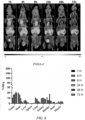
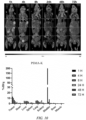
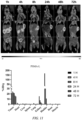
- SPECT/CT scanning was performed on the mice at 1, 4, 8, 24, 48 and 72 h after administration, respectively, with the mice under continuous anesthesia with isoflurane, lying prone on an examination bed.
- the acquisition method was static imaging 12 min SPECT, and medium resolution whole-body imaging CT. During the process, according to the recording table, the animal body weight, injection dose, injection time and residual dose were recorded, and the time of measuring the injection dose and the time of measuring the residual dose were recorded respectively. After scanning, the data were reconstructed, PMOD software was used to analyze and delineate each organ tissue and quantify the drug distribution therein, the images and data were saved, and the data were further subjected to statistical analysis.
- FIG. 1 to FIG. 11 showed the SPECT/CT scanning patterns of the compounds PSMA-617, PSMA-A, PSMA-B, PSMA-C, PSMA-E, PSMA-F, PSMA-G, PSMA-H, PSMA-I, PSMA-K and PSMA-L labeled with 177 Lu and the quantitative value of drug distribution in each tissue. Drug exposure in each tissue was calculated (Table 1, where the values involving PSMA-D were the predicted values).
- PSMA positive cells LNCaP were proliferated and cultured, digested, and then seeded in a 24-well plate at a density of 10 5 cells/well. After cell adherence, the culture medium was aspirated, and the 177 Lu labeled compound containing a gradient radioactive count and positive control PSMA-617 were added. The highest concentration was 5 ⁇ 10 6 cpm/0.5 mL, and gradient dilution was performed according to a dilution ratio of 1/3. After the labeled compound was added, the cells were incubated at 37°C for 1 h, the culture medium was aspirated, the cells were washed 3 times with PBS, and 0.2 mL of a 1 M NaOH solution was added for lysing the cells.
- FIG. 12 showed the binding of 177 Lu-PSMA-617 to LNCaP cells and the binding of 177 Lu-PSMA-L to LNCaP cells. It could be seen that the binding ability of 177 Lu-PSMA-L to LNCaP cells was stronger than that of 177 Lu-PSMA-617 to LNCaP cells, indicating that 177 Lu-PSMA-L had higher antigen affinity than 177 Lu-PSMA-617.
- mice Male, body weight 18-20 g, SD rats, male, body weight 180-200 g. Random grouping was performed (3 animals in each group). After anesthesia with isoflurane, tail vein injection of 1.85 MBq (50 ⁇ Ci) of the 177 Lu labeled compounds was performed respectively. 20 ⁇ L of blood was collected from the orbits at 1 min, 5 min, 10 min, 15 min, 0.5 h, 1 h, 2 h, 4 h, 8 h, 24 h and 72 h after administration into a pre-weighed centrifugal tube, respectively.
- the radioactive count of the blood in the centrifugal tube and the weight of the centrifugal tube having the blood were measured, and the radioactive count in the per unit weight of blood as a percentage of the amount administered was calculated.
- Drug-time curve diagrams were plotted, and the exposure of the compound of the present invention in blood and the exposure of the positive control compound PSMA-617 in blood were calculated.
- FIG. 13 showed the pharmacokinetic profiles of 177 Lu-PSMA-617 and 177 Lu-PSMA-L in mice and rats. It could be seen that 177 Lu-PSMA-L was metabolized more slowly than 177 Lu-PSMA-617 in both mice and rats, and had a longer blood half-life and higher drug exposure. Moreover, this higher blood drug concentration was only maintained 1 h after administration, and then 177 Lu-PSMA-L was also substantially cleared out of the blood, thereby increasing the action concentration and action time of the drug to the tumor without increasing toxic and side effects on normal tissues.
- FIG. 14 showed the stability of radiochemical purity of 177 Lu-PSMA-L in PBS buffer and the stability of radiochemical purity of 177 Lu-PSMA-L in 10% mouse serum. It could be seen that the stability of radiochemical purity of 177 Lu-PSMA-L in PBS buffer and the stability of radiochemical purity of 177 Lu-PSMA-L in 10% mouse serum were both maintained at 100% within 96 hours, which were very stable. In view of the results of scanning, it was indicated that 177 Lu was coordinated with PSMA-L very stably, and did not fall off in vitro and in vivo, which was very beneficial for the production, transportation and preservation of the drug, and diagnosis and treatment in the later stage.
- mice were randomly grouped according to their body weights, (5 mice in each group), each mouse was given 7.4 MBq (200 ⁇ Ci) or 14.8 MBq (400 ⁇ Ci) of the compound labeled with 177 Lu via tail vein injection, and the control group was given PBS. After 7 days, the animals were anesthetized, 1 mL or more of blood was collected and placed in an anti coagulation tube, and the content of leukocytes, hemoglobin and platelets in the blood was determined by a mouse-use blood biochemical analyzer. The control group and the administration group were compared to understand the degree of bone marrow suppression by the drug.
- FIG. 15 showed the effect of 177 Lu-PSMA-L on the leukocytes, hemoglobin, platelets in mouse blood. It could be seen that at the administration doses of 7.4 MBq (200 ⁇ Ci) and 14.8 MBq (400 ⁇ Ci), there was no significant difference in the content of leukocytes, hemoglobin and platelets in the blood of the mice between the administration group and the control PBS group, indicating that 177 Lu-PSMA-L had a very low hematotoxicity and weak bone marrow suppression.
- FIG. 16 showed the effect of 177 Lu-PSMA-L on the body weight of mice at different administration doses. It could be seen that at either the administration dose of 14.8 MBq (400 ⁇ Ci) or the administration dose of 29.6 MBq (800 ⁇ Ci), there was no significant decrease in the body weight of the mice, indicating that there was a very high dose tolerance of 177 Lu-PSMA-L in the mice and that the safety of 177 Lu-PSMA-L was good.
- PSMA positive LNCaP cells were proliferated and harvested, and then inoculated subcutaneously in mice at an amount of 1 ⁇ 10 7 /mouse.
- the mice were randomly grouped according to the tumor size (3-4 mice in each group), and were given the compound (400 ⁇ Ci) of the present invention labeled with 177 Lu or the positive control compound PSMA-617 labeled with 177 Lu via tail vein injection, respectively.
- the tumor sizes and body weights of the mice were measured every 3 days after administration, and the death of the mice was recorded.
- the control group and the administration group were compared to understand the inhibition on LNCaP tumors by different drugs.
- SPECT/CT scanning was performed on the administration group to understand the exposure of different drugs at the tumor sites during the treatment.
- FIG. 17 showed the inhibitory effects of 177 Lu-PSMA-617 and 177 Lu-PSMA-L on the tumor in LNCaP tumor bearing mice and the change in the body weight of animals during the treatment. It could be seen that 177 Lu-PSMA-L had a stronger inhibitory effect on the tumor in the LNCaP tumor bearing mice than 177 Lu-PSMA-617. During the treatment, there was no significant difference in the body weight of the animals in each group, indicating that the mice could tolerate both 14.8 MBq (400 ⁇ Ci) of 177 Lu-PSMA-617 and 14.8 MBq (400 ⁇ Ci) of 177 Lu-PSMA-L.
- FIG. 18 showed the radioactivity activity at the tumor site and the quantitative value of the radioactivity activity at the tumor site during the inhibition on the tumor in the LNCaP tumor bearing mice by 177 Lu-PSMA-617 and 177 Lu-PSMA-L. It could be seen that on day 6 after administration, the exposure of 177 Lu-PSMA-L at the tumor site was higher than that of 177 Lu-PSMA-617, which was also consistent with the results of the inhibitory effects on the tumor by the drugs.
- FIG. 19 showed the liquid chromatogram of the above compound PSMA-L
- FIG. 20 showed the mass spectrum of the above compound PSMA-L
- FIG. 21 showed the nuclear magnetic resonance pattern of the above compound PSMA-L, 1 H NMR (600 MHz, dmso);
- FIG. 22 showed the nuclear magnetic resonance pattern of the above compound PSMA-H, 1 H NMR (600 MHz, dmso).
- Prostate cancer is cancer that occurs in the prostate.
- the prostate is a walnut-shaped gland in the pelvis of men.
- CRPC castration-resistant prostate cancer
- Radioligand therapy combines a targeting compound that can bind to a marker expressed by a tumor with a radioisotope, and can cause DNA injury and inhibit tumor growth and replication. This therapy enables targeted delivery of radiation to tumors while limiting damage to surrounding normal tissues.
- Lu-PSMA-617 is a PSMA-targeted radioligand therapy for metastatic castration-resistant prostate cancer (mCRPC), and has entered clinical study.
- the chelate composed of the ligand compound of the present invention and the radioactive metal has a lower toxicity to normal tissues, higher exposure dose at the tumor site, longer half-life in blood, better antigen affinity, better inhibitory effect on tumor, good stability of radiochemical purity and good safety in vivo, and has high application value in the diagnosis and treatment of prostate cancer.
Landscapes
- Chemical & Material Sciences (AREA)
- Organic Chemistry (AREA)
- Health & Medical Sciences (AREA)
- Life Sciences & Earth Sciences (AREA)
- General Health & Medical Sciences (AREA)
- Public Health (AREA)
- Pharmacology & Pharmacy (AREA)
- Medicinal Chemistry (AREA)
- Animal Behavior & Ethology (AREA)
- Veterinary Medicine (AREA)
- Proteomics, Peptides & Aminoacids (AREA)
- Epidemiology (AREA)
- Physics & Mathematics (AREA)
- Optics & Photonics (AREA)
- Chemical Kinetics & Catalysis (AREA)
- General Chemical & Material Sciences (AREA)
- Nuclear Medicine, Radiotherapy & Molecular Imaging (AREA)
- Medicines Containing Antibodies Or Antigens For Use As Internal Diagnostic Agents (AREA)
- Peptides Or Proteins (AREA)
- Medicines That Contain Protein Lipid Enzymes And Other Medicines (AREA)
Applications Claiming Priority (2)
| Application Number | Priority Date | Filing Date | Title |
|---|---|---|---|
| CN202111329108 | 2021-11-10 | ||
| PCT/CN2022/130833 WO2023083209A1 (zh) | 2021-11-10 | 2022-11-09 | 一种靶向psma抗原的配体化合物及其螯合物与用于前列腺癌诊断和治疗的应用 |
Publications (1)
| Publication Number | Publication Date |
|---|---|
| EP4431503A1 true EP4431503A1 (en) | 2024-09-18 |
Family
ID=86335105
Family Applications (1)
| Application Number | Title | Priority Date | Filing Date |
|---|---|---|---|
| EP22892003.9A Pending EP4431503A1 (en) | 2021-11-10 | 2022-11-09 | Ligand compound targeting psma antigen, and chelate and use thereof in diagnosis and treatment of prostate cancer |
Country Status (9)
| Country | Link |
|---|---|
| US (1) | US20260069725A1 (https=) |
| EP (1) | EP4431503A1 (https=) |
| JP (1) | JP2024544870A (https=) |
| KR (1) | KR20240105380A (https=) |
| CN (1) | CN118176188A (https=) |
| AU (1) | AU2022384375A1 (https=) |
| CA (1) | CA3237743A1 (https=) |
| TW (1) | TW202321204A (https=) |
| WO (1) | WO2023083209A1 (https=) |
Families Citing this family (6)
| Publication number | Priority date | Publication date | Assignee | Title |
|---|---|---|---|---|
| CN118852043A (zh) * | 2021-09-03 | 2024-10-29 | 晶核生物医药科技(南京)有限公司 | 一种肽脲素衍生物、含其的药物组合物及其应用 |
| CN117069670B (zh) * | 2023-07-31 | 2026-04-10 | 复旦大学附属华山医院 | 靶向psma的二聚体化合物及其衍生物和应用 |
| CN119954773A (zh) * | 2023-10-31 | 2025-05-09 | 苏州威智创科生物有限公司 | Psma化合物、包含其的药物组合物及其用途 |
| WO2025167998A1 (zh) * | 2024-02-06 | 2025-08-14 | 北京昌平实验室 | 膦酸酯骨架的psma靶向偶联物 |
| CN118221764A (zh) * | 2024-03-05 | 2024-06-21 | 苏州大学 | 一种双靶向分子探针及其制备方法与应用 |
| WO2026002208A1 (zh) * | 2024-06-28 | 2026-01-02 | 思路迪生物医药(上海)有限公司 | 前列腺特异性膜抗原小分子抑制剂及其放射性核素配合物的制备及应用 |
Family Cites Families (3)
| Publication number | Priority date | Publication date | Assignee | Title |
|---|---|---|---|---|
| CA3060143A1 (en) * | 2017-05-24 | 2018-11-29 | Itm Isotopen Technologien Munchen Ag | Novel psma-binding agents and uses thereof |
| US20200339625A1 (en) * | 2017-10-22 | 2020-10-29 | Provincial Health Services Authority | Novel radiometal-binding compounds for diagnosis or treatment of prostate specific membrane antigen-expressing cancer |
| BR112021025810A2 (pt) * | 2019-06-21 | 2022-05-10 | Provincial Health Services Authority | Compostos radiomarcados direcionando o antígeno de membrana específico da próstata |
-
2022
- 2022-11-09 WO PCT/CN2022/130833 patent/WO2023083209A1/zh not_active Ceased
- 2022-11-09 EP EP22892003.9A patent/EP4431503A1/en active Pending
- 2022-11-09 TW TW111142867A patent/TW202321204A/zh unknown
- 2022-11-09 JP JP2024527096A patent/JP2024544870A/ja active Pending
- 2022-11-09 CN CN202280074508.9A patent/CN118176188A/zh active Pending
- 2022-11-09 KR KR1020247014634A patent/KR20240105380A/ko active Pending
- 2022-11-09 AU AU2022384375A patent/AU2022384375A1/en active Pending
- 2022-11-09 CA CA3237743A patent/CA3237743A1/en active Pending
- 2022-11-09 US US18/708,905 patent/US20260069725A1/en active Pending
Also Published As
| Publication number | Publication date |
|---|---|
| TW202321204A (zh) | 2023-06-01 |
| WO2023083209A1 (zh) | 2023-05-19 |
| CA3237743A1 (en) | 2023-05-19 |
| JP2024544870A (ja) | 2024-12-05 |
| KR20240105380A (ko) | 2024-07-05 |
| AU2022384375A1 (en) | 2024-05-09 |
| US20260069725A1 (en) | 2026-03-12 |
| CN118176188A (zh) | 2024-06-11 |
Similar Documents
| Publication | Publication Date | Title |
|---|---|---|
| EP4431503A1 (en) | Ligand compound targeting psma antigen, and chelate and use thereof in diagnosis and treatment of prostate cancer | |
| EP3524277B1 (en) | Psma-targeting compound and uses thereof | |
| NTinianow et al. | Evaluation of a 3-hydroxypyridin-2-one (2, 3-HOPO) based macrocyclic chelator for 89Zr4+ and its use for immunoPET imaging of HER2 positive model of ovarian carcinoma in mice | |
| CN102911256B (zh) | 一种放射性标记的多肽配合物及其制备方法和应用 | |
| CN118955478B (zh) | 谷氨酸尿素类化合物及其制备方法和应用、核素靶向探针及其制备方法和应用、药物组合物 | |
| EP4474379A1 (en) | Peptide urea derivative, pharmaceutical composition containing peptide urea derivative, and application of peptide urea derivative | |
| EP3880635B1 (en) | Chelating aazta conjugate, complexes thereof and use | |
| TWI893724B (zh) | 丹磺醯胺修飾的psma靶向化合物及其製備方法和應用 | |
| JP2024532521A (ja) | ペプチド-尿素誘導体、それを含む医薬組成物、及びそれらの使用 | |
| CN107308466B (zh) | 具有肿瘤血管靶向性的多肽、分子探针及其制备方法和应用 | |
| US20220152229A1 (en) | Conjugates and their use as imaging agents | |
| CN118666964A (zh) | 一种靶向肿瘤pd-l1的pet示踪剂、其标记前体、制备方法和应用 | |
| Furkina et al. | Preparation of 161Tb complexes based on prostate-specific membrane antigen ligands and their stability | |
| RU2457215C1 (ru) | Октапептид для получения радиофармацевтических средств, радиофармацевтическое средство на его основе и способ диагностики опухолей, экспрессирующих соматостатиновые рецепторы | |
| Dos Santos | Development of inhibitors of the prostate specific membrane antigen (PSMA) for imaging and endoradiotherapy | |
| WO2024051794A1 (zh) | 放射性核素偶联药物及其药物组合物和应用 | |
| CN121471308A (zh) | 具有肿瘤靶向性的异二聚体分子探针及其标记前体、制备方法和应用 | |
| CN121949455A (zh) | 一种sting靶向的前体化合物、核素标记物及其制备方法与应用、药物组合物及其应用 | |
| Thapa | Fluorine-18 labeling and simultaneous glycosylation of the model peptide demobesin 1 by the novel prosthetic group, keto-[18 F] FDG | |
| Beyer et al. | Request for additional beam time for 1994 for ISC/P42 and ISC/P48,(ISC 330 and ISC 331): use of radioactive ion beams for biomedical research | |
| JP2015083546A (ja) | 癌の原発巣・骨転移の検査・治療用放射性標識薬剤 |
Legal Events
| Date | Code | Title | Description |
|---|---|---|---|
| STAA | Information on the status of an ep patent application or granted ep patent |
Free format text: STATUS: THE INTERNATIONAL PUBLICATION HAS BEEN MADE |
|
| PUAI | Public reference made under article 153(3) epc to a published international application that has entered the european phase |
Free format text: ORIGINAL CODE: 0009012 |
|
| STAA | Information on the status of an ep patent application or granted ep patent |
Free format text: STATUS: REQUEST FOR EXAMINATION WAS MADE |
|
| 17P | Request for examination filed |
Effective date: 20240329 |
|
| AK | Designated contracting states |
Kind code of ref document: A1 Designated state(s): AL AT BE BG CH CY CZ DE DK EE ES FI FR GB GR HR HU IE IS IT LI LT LU LV MC ME MK MT NL NO PL PT RO RS SE SI SK SM TR |
|
| DAV | Request for validation of the european patent (deleted) | ||
| DAX | Request for extension of the european patent (deleted) | ||
| RAP1 | Party data changed (applicant data changed or rights of an application transferred) |
Owner name: CHENGDU STARRAY THERAPEUTICS CO., LTD. |