EP4425979A1 - Verfahren zur herstellung einer sicheren verbindung zwischen einem fahrzeug und einem benutzerendgerät und vorrichtungen dafür - Google Patents
Verfahren zur herstellung einer sicheren verbindung zwischen einem fahrzeug und einem benutzerendgerät und vorrichtungen dafür Download PDFInfo
- Publication number
- EP4425979A1 EP4425979A1 EP24158829.2A EP24158829A EP4425979A1 EP 4425979 A1 EP4425979 A1 EP 4425979A1 EP 24158829 A EP24158829 A EP 24158829A EP 4425979 A1 EP4425979 A1 EP 4425979A1
- Authority
- EP
- European Patent Office
- Prior art keywords
- secret
- vehicle
- control unit
- user terminal
- identifier
- Prior art date
- Legal status (The legal status is an assumption and is not a legal conclusion. Google has not performed a legal analysis and makes no representation as to the accuracy of the status listed.)
- Granted
Links
Images


Classifications
-
- H—ELECTRICITY
- H04—ELECTRIC COMMUNICATION TECHNIQUE
- H04W—WIRELESS COMMUNICATION NETWORKS
- H04W12/00—Security arrangements; Authentication; Protecting privacy or anonymity
- H04W12/06—Authentication
-
- H—ELECTRICITY
- H04—ELECTRIC COMMUNICATION TECHNIQUE
- H04W—WIRELESS COMMUNICATION NETWORKS
- H04W12/00—Security arrangements; Authentication; Protecting privacy or anonymity
- H04W12/03—Protecting confidentiality, e.g. by encryption
-
- H—ELECTRICITY
- H04—ELECTRIC COMMUNICATION TECHNIQUE
- H04L—TRANSMISSION OF DIGITAL INFORMATION, e.g. TELEGRAPHIC COMMUNICATION
- H04L63/00—Network architectures or network communication protocols for network security
- H04L63/18—Network architectures or network communication protocols for network security using different networks or channels, e.g. using out of band channels
-
- H—ELECTRICITY
- H04—ELECTRIC COMMUNICATION TECHNIQUE
- H04W—WIRELESS COMMUNICATION NETWORKS
- H04W12/00—Security arrangements; Authentication; Protecting privacy or anonymity
- H04W12/04—Key management, e.g. using generic bootstrapping architecture [GBA]
-
- H—ELECTRICITY
- H04—ELECTRIC COMMUNICATION TECHNIQUE
- H04W—WIRELESS COMMUNICATION NETWORKS
- H04W12/00—Security arrangements; Authentication; Protecting privacy or anonymity
- H04W12/50—Secure pairing of devices
-
- H—ELECTRICITY
- H04—ELECTRIC COMMUNICATION TECHNIQUE
- H04W—WIRELESS COMMUNICATION NETWORKS
- H04W12/00—Security arrangements; Authentication; Protecting privacy or anonymity
- H04W12/60—Context-dependent security
- H04W12/63—Location-dependent; Proximity-dependent
-
- H—ELECTRICITY
- H04—ELECTRIC COMMUNICATION TECHNIQUE
- H04W—WIRELESS COMMUNICATION NETWORKS
- H04W4/00—Services specially adapted for wireless communication networks; Facilities therefor
- H04W4/30—Services specially adapted for particular environments, situations or purposes
- H04W4/40—Services specially adapted for particular environments, situations or purposes for vehicles, e.g. vehicle-to-pedestrians [V2P]
-
- H—ELECTRICITY
- H04—ELECTRIC COMMUNICATION TECHNIQUE
- H04W—WIRELESS COMMUNICATION NETWORKS
- H04W4/00—Services specially adapted for wireless communication networks; Facilities therefor
- H04W4/80—Services using short range communication, e.g. near-field communication [NFC], radio-frequency identification [RFID] or low energy communication
Definitions
- the invention relates to the establishment of a secure connection between two devices, in particular in the automotive field.
- Vehicle manufacturers are launching digital key services (also known as phone-as-a-key services ) to replace traditional keys with a terminal such as a mobile phone.
- the terminal can be used, for example, to unlock a vehicle door or start the vehicle's engine.
- the terminal communicates with a vehicle device, usually called an ECU, via a secure channel.
- a vehicle device usually called an ECU
- a method has been proposed comprising the following steps: a server generates a first secret and a second secret, the server transmits the first secret to the ECU, and the second secret to the terminal.
- the terminal and the ECU jointly verify whether the first secret and the second secret are related by a predefined mathematical relationship.
- the secure channel is established only in the positive.
- the ECU Since the ECU is embedded in a vehicle, the ECU generally receives the first secret via a wireless radio communication network.
- a wireless radio communication network Since the ECU is embedded in a vehicle, the ECU generally receives the first secret via a wireless radio communication network.
- such a solution may be difficult to implement in the case where the network coverage of the ECU is poor, for example in a dead zone, and/or degraded, for example in an underground garage.
- An aim of the invention is therefore to set up a secure offline connection between the telecommunications device and the vehicle when the vehicle control unit cannot receive the first secret from the server.
- the device acts as a relay in the communication between the server and the vehicle. This allows the vehicle control unit to receive the first secret even when the control unit is located in an area preventing direct radio communications between the server and the control unit, such as an underground garage. Indeed, the device, having previously received the first secret, can transmit this first secret to the vehicle control unit, given their mutual proximity.
- the second secret may be provided to be transmitted to the user terminal by the system provided that a device-specific identifier transmitted by the vehicle control unit to the system and a vehicle-specific reference identifier stored in a database of the system are identical respectively to a first identifier and a second identifier transmitted by the user terminal to the system, the first identifier and the second identifier being previously transmitted by the device to the user terminal by wireless communication requiring proximity between the user terminal and the device.
- the first secret may be provided to be a password verifier configured to authorize establishment of the secure communication channel between the vehicle control unit and the user terminal provided that a candidate password transmitted by the user terminal to the vehicle control unit matches the second secret.
- the device can be predicted to be a smart card.
- the first identifier may, for example, be an identifier specific to the device and the second identifier may, for example, be an identifier specific to a vehicle.
- the system may be provided to include a third communication interface configured to receive a device-specific identifier transmitted by the vehicle control unit and a vehicle-specific identifier transmitted by the vehicle control unit.
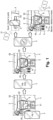
- a vehicle 4 comprises an internal reader 6 and a control unit 3.
- the first communication interface 61 may for example be located in the passenger compartment 63 of the vehicle, or at the door 64, or both.
- the first and second interfaces 31, 32 are configured as transmitters (according to the English terminology “ Poller ”) and/or receivers (according to the English terminology “Listener”) in a near-field communication mode, for example NFC (according to the English terminology “ NFC reader”) or Bluetooth, respectively with a device 2 and a user terminal 5.
- a near-field communication mode for example NFC (according to the English terminology “ NFC reader”) or Bluetooth, respectively with a device 2 and a user terminal 5.
- the first interface 31 is configured to receive from the device 2 a first secret and an identifier specific to the device 2. As a transmitter, the first interface 31 is configured to transmit to the device 2 an identifier specific to the vehicle 4.
- the second communication interface 32 is configured to establish a secure communication channel between the control unit 3 of the vehicle 4 and the user terminal 5.
- the establishment of the secure channel can for example follow a security protocol of the SPAKE2+ type by means of the first secret transmitted to the control unit 3 of the vehicle 4, for example a password verifier configured to authorize the establishment of the secure channel between the terminal 5 and the control unit 3 of the vehicle 4 provided that a candidate password transmitted by the user terminal 5 to the control unit 3 of the vehicle 4 corresponds to a second secret, for example a pairing password, previously transmitted to the user terminal 5 by a system 1.
- the control unit 3 of the vehicle 4 may further comprise a third communication interface 33 configured to transmit the identifier specific to the vehicle 4 and the identifier specific to the device 2 to the system 1.
- the memory of the control unit 3 of the vehicle 4 is configured to store data, for example the first secret.
- the memory of the control unit 3 of the vehicle 4 is configured to store the password verifier transmitted by the device 2.
- the memory of the control unit 3 of the vehicle 4 is configured to store the identifier specific to the vehicle 4 and the identifier specific to the device 2.
- the communication interface 21 of the device 2 comprises an NFC module, and an antenna coil.
- the antenna coil has one or more coplanar coaxial windings parallel to the plane of the card, and consequently has a magnetic axis perpendicular to the plane of the card.
- the communication interface 21 of the device 2 is configured to perform NFC (near-field contactless) communication with an external NFC terminal, for example the user terminal 5 (for example a smart phone or smartphone in English terminology) via the antenna coil.
- the antenna coil of the card is inductively coupled to an antenna coil of the external NFC terminal (user terminal 5), and data can be exchanged using conventional NFC techniques such as those defined by ISO 14443, ISO 15693.
- the antenna coil of the smart card is combined with passive components (e.g. capacitors) to form an antenna circuit tuned to a operating frequency of the external NFC terminal (user terminal 5), for example 13.56 MHz.
- the communication interface 21 of the device 2 is configured to transmit the first secret to the control unit 3 of the vehicle 4 via NFC communication.
- the communication interface 21 of the device 2 is configured to transmit the password verifier to the control unit 3 of the vehicle 4.
- the communication interface 21 of the device 2 is configured to transmit the first secret, for example the password verifier, by optical reading, by the control unit 3 of the vehicle 4, of a pattern representative of the first secret and displayed by the device 2, the pattern being for example a bar code or a QR code.
- the communication interface 21 of the device 2 is further configured to transmit a first identifier to the control unit 3 of the vehicle 4 and receive a second identifier by the control unit 3 of the vehicle 4.
- the first identifier and the second identifier being, respectively, the identifier specific to the device 2 and the identifier specific to the vehicle 4.
- the communication interface 21 of the device 2 is configured to transmit the first identifier and the second identifier to the user terminal 5 by near-field communication.
- the first identifier being specific to the device 2 and the second identifier being specific to the vehicle 4.
- the communication interface 21 of the device 2 is configured to transmit the first identifier and the second identifier to the user terminal 5 by optical reading, by the terminal 5, of a pattern representative of the first identifier and the second identifier and displayed by the device 2, the pattern being for example a bar code or a QR code.
- the memory of the device 2 is configured to store data, for example the first secret.
- the memory of the device 2 is configured to store the password verifier transmitted by the communication interface 21 of the device 2 to the control unit 3 of the vehicle 4.
- the memory is configured to store the first identifier specific to the device 2 and the second identifier specific to the vehicle 4.
- the user terminal 5 may be a mobile terminal, for example of the “smartphone” type, or a fixed terminal, for example a computer.
- the communication interface 51 of the user terminal 5 is configured to receive the first identifier and the second identifier transmitted by the device 2 by a near-field communication, for example of the NFC or Bluetooth type.
- the first identifier being specific to the device 2 and the second identifier being specific to the vehicle 4.
- the communication interface 51 of the terminal 5 is configured to receive the first identifier and the second identifier transmitted by the device 2 by an optical reading, by the user terminal 5, of a pattern representative of the first identifier and the second identifier and displayed by the device 2, the pattern being for example a bar code or a QR code.
- the second communication interface 52 of the user terminal 5 is configured to exchange data with the system 1.
- the communication interface 52 of the terminal 5 is configured to send the first identifier and the second identifier to the system 1 by radio communication, for example of the GSM type (for “Global System for Mobile communication” in English terminology) and receive the second secret transmitted by the system 1 by radio communication.
- GSM Global System for Mobile communication
- the third communication interface 53 of the user terminal 5 is configured to exchange data with the control unit 3 of the vehicle 4, by near-field communication, for example of the NFC or Bluetooth type.
- the third communication interface 53 of the user terminal 5 is configured to transmit the second secret to the control unit of the vehicle 4.
- the communication interfaces 51 and 53 are further configured to exchange data with the control unit 3 of the vehicle 4, and transmit data to the internal reader 6.
- the memory of the user terminal 5 is configured to store data, for example the second secret.
- the memory is configured to store the pairing password transmitted by the system 1.
- the memory of the user terminal 5 is configured to store the first identifier and the second identifier.
- the user terminal 5 may comprise a computer program product, for example a mobile phone application, comprising code instructions executed by a processor of the user terminal 5 configured to control the communication interfaces 51, 52, 53 of the user terminal 5 and the third memory of the user terminal 5.
- a computer program product for example a mobile phone application, comprising code instructions executed by a processor of the user terminal 5 configured to control the communication interfaces 51, 52, 53 of the user terminal 5 and the third memory of the user terminal 5.
- System 1 may further comprise several interconnected servers.
- the second secret can be a pairing password that can be recognized by the password checker.
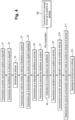
- a method jointly implemented by the system 1, the control unit 3 of the vehicle 4, the device 2 and the user terminal 5 comprises the following steps.
- the system 1 transmits the first secret to the device 2.
- the device 2 transmits the identifier specific to the device 2 to the control unit 3 of the vehicle 4 and the control unit 3 of the vehicle 4 transmits the identifier specific to the vehicle 4 to the device 2.
- vehicle 4 is started for the first time.
- the system 1 receives the identifier specific to the device 2 and the identifier specific to the vehicle 4 transmitted by the control unit 3 of the vehicle 4 and verifies the existence of a correspondence in the database between the identifier specific to the vehicle 4 received and the reference identifier specific to the vehicle 4 stored in the database.
- the identifier specific to the device 2 received is stored in the database to associate it with the reference identifier specific to the vehicle 4.
- a user of the vehicle 4 sends a request to the system 1 in order to start an attempt to pair the user terminal 5 with the vehicle 4, for example via the application of the automobile manufacturer of the vehicle 4.
- the user terminal 5 asks the user to approach the device 2 to the user terminal 5, for example by notifying him via the application by a message.
- the device 2 transmits the identifier specific to the device 2 and the identifier specific to the vehicle 4 to the user terminal 5 via wireless communication requiring proximity between the device 2 and the user terminal 5, for example by near-field communication (NFC), or optical reading by the user terminal 5 of a pattern representative of the identifiers and displayed by the device 2, the pattern being for example a bar code or a QR code.
- NFC near-field communication
- the user terminal 5 transmits the identifier specific to the device 2 and the vehicle identifier specific to the vehicle 4 to the system 1.
- the system 1 verifies the existence of a correspondence, in the database, between the reference identifiers specific to the vehicle 4 and specific to the device 2 which are stored therein, and, respectively, the identifiers specific to the vehicle 4 and specific to the device 2 transmitted by the terminal 5 to the system 1 in step E7.
- the system transmits during a step E9 the second secret associated with the pair of identifiers stored in the database to the user terminal 5.
- the device 2 transmits the first secret to the control unit 3 of the vehicle 4 via wireless communication requiring proximity between the device 2 and the control unit 3, for example by near-field communication (NFC), or optical reading by the control unit 3 of the vehicle 4 of a pattern representative of the first secret and displayed by the device 2, the pattern being for example a bar code or a QR code.
- NFC near-field communication
- the device 2 transmits the first secret to the control unit 3 of the vehicle 4 earlier, for example after starting the vehicle (step E3).
- the first secret may for example be the password verifier and the second secret the pairing password.
- the user terminal 5 transmits to the control unit 3 of the vehicle 4 via near-field communication (for example Bluetooth or NFC) a candidate password, the password verifier thus authorizing the establishment of the secure communication channel between the terminal 5 and the control unit 3 of the vehicle 4 provided that the candidate password transmitted by the user terminal 5 to the control unit 3 of the vehicle 4 corresponds to the pairing password transmitted by the system 1 to the user terminal 5.
- near-field communication for example Bluetooth or NFC
- the secure communication channel between the control unit 3 of the vehicle 4 and the user terminal 5 is established during a step E11.
- a step E12 the user is invited, for example by receiving a notification on his terminal 5 to pair his terminal 5 with the vehicle 4. He can for example place his terminal 5 near the internal reader 6 of the vehicle 4 to carry out the pairing.
- pairing we mean a procedure for generating, sharing and storing cryptographic keys between the control unit 3 of the vehicle 4 and the user terminal 5, via the secure communication channel, in order to allow the user terminal 5 to be able to interact with the vehicle 4 (for example, allowing the user terminal 5 to be able to control different parts of a vehicle, for example, opening the doors, or starting the engine).
- User terminal 5 is paired with vehicle 4.
- the user can then interact with the various components of the vehicle 4 in near-field communication. For example, he can bring his user terminal 5 or his device 2 close to the handle to unlock the doors of the vehicle 4 and then, when he takes his place in the passenger compartment, he can place his terminal 5 in the internal reader 6 of the vehicle 4 to start the engine.
- the system 1 transmits, during a step E81, to the user terminal 5 an error message instead of the second secret, the error message indicating that the user terminal 5 is not authorized to communicate with the vehicle 4, or to initiate the establishment of a secure channel.
Landscapes
- Engineering & Computer Science (AREA)
- Computer Networks & Wireless Communication (AREA)
- Signal Processing (AREA)
- Computer Security & Cryptography (AREA)
- Computer Hardware Design (AREA)
- Computing Systems (AREA)
- General Engineering & Computer Science (AREA)
- Lock And Its Accessories (AREA)
- Mobile Radio Communication Systems (AREA)
- Small-Scale Networks (AREA)
Applications Claiming Priority (1)
| Application Number | Priority Date | Filing Date | Title |
|---|---|---|---|
| FR2301844A FR3146252B3 (fr) | 2023-02-28 | 2023-02-28 | Procédés d’établissement d’une connexion sécurisée entre un véhicule et un terminal utilisateur et dispositifs associés |
Publications (3)
| Publication Number | Publication Date |
|---|---|
| EP4425979A1 true EP4425979A1 (de) | 2024-09-04 |
| EP4425979C0 EP4425979C0 (de) | 2025-11-05 |
| EP4425979B1 EP4425979B1 (de) | 2025-11-05 |
Family
ID=90038299
Family Applications (1)
| Application Number | Title | Priority Date | Filing Date |
|---|---|---|---|
| EP24158829.2A Active EP4425979B1 (de) | 2023-02-28 | 2024-02-21 | Verfahren zur herstellung einer sicheren verbindung zwischen einem fahrzeug und einem benutzerendgerät und vorrichtungen dafür |
Country Status (3)
| Country | Link |
|---|---|
| US (1) | US20240292211A1 (de) |
| EP (1) | EP4425979B1 (de) |
| FR (1) | FR3146252B3 (de) |
Citations (3)
| Publication number | Priority date | Publication date | Assignee | Title |
|---|---|---|---|---|
| JP2012193508A (ja) * | 2011-03-15 | 2012-10-11 | Toyota Motor Corp | 車両制御装置 |
| US20190299930A1 (en) * | 2018-03-27 | 2019-10-03 | Denso International America, Inc. | Passive Entry And Passive Start System And Method Using Temporary Keys |
| JP2020142584A (ja) * | 2019-03-05 | 2020-09-10 | 三菱自動車工業株式会社 | 車両の認証システム |
Family Cites Families (11)
| Publication number | Priority date | Publication date | Assignee | Title |
|---|---|---|---|---|
| US9471772B2 (en) * | 2011-06-01 | 2016-10-18 | Paypal, Inc. | Password check by decomposing password |
| US10688963B2 (en) * | 2017-11-14 | 2020-06-23 | Ford Global Technologies, Llc | Vehicle with extended range remote control key fob |
| US11094150B2 (en) * | 2020-01-06 | 2021-08-17 | Denso International America, Inc. | Vehicle controlled polling reduction at mobile device based on motion status reported by mobile device |
| US12437580B2 (en) * | 2020-12-30 | 2025-10-07 | Assa Abloy Ab | Second factor authentication as compensation for biometric temporal changes |
| US12183143B2 (en) * | 2020-12-30 | 2024-12-31 | Assa Abloy Ab | Facial recognition template stored on mobile credential |
| US12154403B2 (en) * | 2020-12-30 | 2024-11-26 | Assa Abloy Ab | Automated mass facial recognition enrollment |
| US12154404B2 (en) * | 2020-12-30 | 2024-11-26 | Assa Abloy Ab | Using facial recognition system to activate an automated verification protocol |
| US20220207915A1 (en) * | 2020-12-30 | 2022-06-30 | Assa Abloy Ab | Acquiring a plurality of mobile credentials in a plurality of readers |
| US12131581B2 (en) * | 2020-12-30 | 2024-10-29 | Assa Abloy Ab | Storing facial recognition elements as layers to blend facial changes |
| US12332983B2 (en) * | 2020-12-30 | 2025-06-17 | Assa Abloy Ab | Embedded encrypted watermark in photograph or facial recognition template to ensure authenticity |
| US12081542B2 (en) * | 2020-12-30 | 2024-09-03 | Assa Abloy Ab | Dynamic access control authentication confidence values based on multiauthentication modes |
-
2023
- 2023-02-28 FR FR2301844A patent/FR3146252B3/fr active Active
-
2024
- 2024-02-21 EP EP24158829.2A patent/EP4425979B1/de active Active
- 2024-02-28 US US18/589,622 patent/US20240292211A1/en active Pending
Patent Citations (3)
| Publication number | Priority date | Publication date | Assignee | Title |
|---|---|---|---|---|
| JP2012193508A (ja) * | 2011-03-15 | 2012-10-11 | Toyota Motor Corp | 車両制御装置 |
| US20190299930A1 (en) * | 2018-03-27 | 2019-10-03 | Denso International America, Inc. | Passive Entry And Passive Start System And Method Using Temporary Keys |
| JP2020142584A (ja) * | 2019-03-05 | 2020-09-10 | 三菱自動車工業株式会社 | 車両の認証システム |
Non-Patent Citations (1)
| Title |
|---|
| "Digital Key Release 3, Technical Spécification 1.1.0 - Car Connectivity Consortium", NETWORK WORKING GROUPE INTERNET DRAFT : SPAKE2+, AN AUGMENTED SPAKE, DRAFT-BAR-CFRG-SPAKE2PLUS-00, 9 March 2020 (2020-03-09) |
Also Published As
| Publication number | Publication date |
|---|---|
| FR3146252B3 (fr) | 2025-02-21 |
| FR3146252A3 (fr) | 2024-08-30 |
| EP4425979C0 (de) | 2025-11-05 |
| US20240292211A1 (en) | 2024-08-29 |
| EP4425979B1 (de) | 2025-11-05 |
Similar Documents
| Publication | Publication Date | Title |
|---|---|---|
| US10187793B2 (en) | Method for pairing a mobile telephone with a motor vehicle and locking/unlocking set | |
| EP3085131B1 (de) | Zur automatischen paarung mit einem kraftfahrzeug fähiges mobiltelefon und verfahren zur automatischen paarung | |
| CN100362786C (zh) | 在无线网络中执行保密数据传输的方法和设备 | |
| EP2008483B1 (de) | Verfahren für den sicheren zugriff auf ein proximitätskommunikationsmodul in einem mobilen endgerät | |
| EP4425984A1 (de) | Verfahren zur aufzeichnung digitaler schlüssel eines fahrzeugs in einer virtuellen geldbörse und zugehörige vorrichtungen | |
| KR101922171B1 (ko) | 장치 컨텐츠 공급 시스템 | |
| US20190238639A1 (en) | Method and apparatus for utilzing nfc to establish a secure connection | |
| EP3350030B1 (de) | Verfahren zur steuerung einer funktion eines fahrzeugs mittels eines benutzerendgeräts und zugehöriges steuerungsverfahren | |
| EP3308564B1 (de) | Verfahren zum laden einer virtuellen schlüssels und zugehöriges benutzerendgerät | |
| US20080167773A1 (en) | Method and System of Communication Between a Motor Vehicle and a Diagnostic Unit | |
| US11625492B2 (en) | Method and system for securely providing vehicle services data to a vehicle | |
| EP2094036A2 (de) | Speichersystem von mobilen Endgerät und Zugangssteuerverfahren | |
| EP4425979B1 (de) | Verfahren zur herstellung einer sicheren verbindung zwischen einem fahrzeug und einem benutzerendgerät und vorrichtungen dafür | |
| US9871659B2 (en) | Data transmission unit for a vehicle | |
| CN110430572B (zh) | 一种eUICC卡、eUICC卡与管理平台的通信方法及其通信系统 | |
| CN120937404A (zh) | 用于在新车辆钥匙与车辆之间建立通信连接的方法以及用于执行该方法的系统 | |
| CA2530908C (en) | Wireless personal area network having authentication and associated methods | |
| FR3122961A1 (fr) | Procédé, dispositif et système de contrôle d’accès et démarrage main libre pour véhicule | |
| WO2019175512A1 (fr) | Dispositifs et procédé de télémaintenance sécurisés de télémaintenance d'équipements industriels | |
| WO2017182597A1 (fr) | Procédé de connexion d'un appareil électronique à un système embarqué de véhicule, appareil électronique et système embarqué de véhicule associés | |
| WO2010149704A1 (fr) | Procede de configuration a distance d'un terminal mobile d'un reseau de telecommunications | |
| FR3139213A1 (fr) | Procédé et système pour authentifier une clé pour démarrer un véhicule automobile | |
| WO2025054124A1 (en) | Vehicle interaction authentication | |
| EP4395187A1 (de) | Schutz einer transaktion | |
| EP3175601B1 (de) | Verfahren zur behandlung einer defekten verbindung zu einem telekommunikationsnetzwerk |
Legal Events
| Date | Code | Title | Description |
|---|---|---|---|
| PUAI | Public reference made under article 153(3) epc to a published international application that has entered the european phase |
Free format text: ORIGINAL CODE: 0009012 |
|
| STAA | Information on the status of an ep patent application or granted ep patent |
Free format text: STATUS: THE APPLICATION HAS BEEN PUBLISHED |
|
| AK | Designated contracting states |
Kind code of ref document: A1 Designated state(s): AL AT BE BG CH CY CZ DE DK EE ES FI FR GB GR HR HU IE IS IT LI LT LU LV MC ME MK MT NL NO PL PT RO RS SE SI SK SM TR |
|
| STAA | Information on the status of an ep patent application or granted ep patent |
Free format text: STATUS: REQUEST FOR EXAMINATION WAS MADE |
|
| 17P | Request for examination filed |
Effective date: 20250304 |
|
| GRAP | Despatch of communication of intention to grant a patent |
Free format text: ORIGINAL CODE: EPIDOSNIGR1 |
|
| STAA | Information on the status of an ep patent application or granted ep patent |
Free format text: STATUS: GRANT OF PATENT IS INTENDED |
|
| INTG | Intention to grant announced |
Effective date: 20250515 |
|
| P01 | Opt-out of the competence of the unified patent court (upc) registered |
Free format text: CASE NUMBER: APP_23816/2025 Effective date: 20250519 |
|
| GRAJ | Information related to disapproval of communication of intention to grant by the applicant or resumption of examination proceedings by the epo deleted |
Free format text: ORIGINAL CODE: EPIDOSDIGR1 |
|
| STAA | Information on the status of an ep patent application or granted ep patent |
Free format text: STATUS: REQUEST FOR EXAMINATION WAS MADE |
|
| INTC | Intention to grant announced (deleted) | ||
| GRAP | Despatch of communication of intention to grant a patent |
Free format text: ORIGINAL CODE: EPIDOSNIGR1 |
|
| STAA | Information on the status of an ep patent application or granted ep patent |
Free format text: STATUS: GRANT OF PATENT IS INTENDED |
|
| GRAS | Grant fee paid |
Free format text: ORIGINAL CODE: EPIDOSNIGR3 |
|
| GRAA | (expected) grant |
Free format text: ORIGINAL CODE: 0009210 |
|
| STAA | Information on the status of an ep patent application or granted ep patent |
Free format text: STATUS: THE PATENT HAS BEEN GRANTED |
|
| INTG | Intention to grant announced |
Effective date: 20250926 |
|
| AK | Designated contracting states |
Kind code of ref document: B1 Designated state(s): AL AT BE BG CH CY CZ DE DK EE ES FI FR GB GR HR HU IE IS IT LI LT LU LV MC ME MK MT NL NO PL PT RO RS SE SI SK SM TR |
|
| REG | Reference to a national code |
Ref country code: CH Ref legal event code: F10 Free format text: ST27 STATUS EVENT CODE: U-0-0-F10-F00 (AS PROVIDED BY THE NATIONAL OFFICE) Effective date: 20251105 Ref country code: GB Ref legal event code: FG4D Free format text: NOT ENGLISH |
|
| REG | Reference to a national code |
Ref country code: IE Ref legal event code: FG4D Free format text: LANGUAGE OF EP DOCUMENT: FRENCH |
|
| U01 | Request for unitary effect filed |
Effective date: 20251119 |
|
| U07 | Unitary effect registered |
Designated state(s): AT BE BG DE DK EE FI FR IT LT LU LV MT NL PT RO SE SI Effective date: 20251125 |
|
| P04 | Withdrawal of opt-out of the competence of the unified patent court (upc) registered |
Free format text: CASE NUMBER: APP_23816_1/2025 Effective date: 20251125 |
|
| U20 | Renewal fee for the european patent with unitary effect paid |
Year of fee payment: 3 Effective date: 20260121 |
|
| PG25 | Lapsed in a contracting state [announced via postgrant information from national office to epo] |
Ref country code: ES Free format text: LAPSE BECAUSE OF FAILURE TO SUBMIT A TRANSLATION OF THE DESCRIPTION OR TO PAY THE FEE WITHIN THE PRESCRIBED TIME-LIMIT Effective date: 20251105 |
|
| PG25 | Lapsed in a contracting state [announced via postgrant information from national office to epo] |
Ref country code: NO Free format text: LAPSE BECAUSE OF FAILURE TO SUBMIT A TRANSLATION OF THE DESCRIPTION OR TO PAY THE FEE WITHIN THE PRESCRIBED TIME-LIMIT Effective date: 20260205 |
|
| PG25 | Lapsed in a contracting state [announced via postgrant information from national office to epo] |
Ref country code: HR Free format text: LAPSE BECAUSE OF FAILURE TO SUBMIT A TRANSLATION OF THE DESCRIPTION OR TO PAY THE FEE WITHIN THE PRESCRIBED TIME-LIMIT Effective date: 20251105 |
|
| PG25 | Lapsed in a contracting state [announced via postgrant information from national office to epo] |
Ref country code: RS Free format text: LAPSE BECAUSE OF FAILURE TO SUBMIT A TRANSLATION OF THE DESCRIPTION OR TO PAY THE FEE WITHIN THE PRESCRIBED TIME-LIMIT Effective date: 20260205 |
|
| PG25 | Lapsed in a contracting state [announced via postgrant information from national office to epo] |
Ref country code: IS Free format text: LAPSE BECAUSE OF FAILURE TO SUBMIT A TRANSLATION OF THE DESCRIPTION OR TO PAY THE FEE WITHIN THE PRESCRIBED TIME-LIMIT Effective date: 20260305 |
|
| PG25 | Lapsed in a contracting state [announced via postgrant information from national office to epo] |
Ref country code: PL Free format text: LAPSE BECAUSE OF FAILURE TO SUBMIT A TRANSLATION OF THE DESCRIPTION OR TO PAY THE FEE WITHIN THE PRESCRIBED TIME-LIMIT Effective date: 20251105 |