EP3308564B1 - Verfahren zum laden einer virtuellen schlüssels und zugehöriges benutzerendgerät - Google Patents
Verfahren zum laden einer virtuellen schlüssels und zugehöriges benutzerendgerät Download PDFInfo
- Publication number
- EP3308564B1 EP3308564B1 EP16729003.0A EP16729003A EP3308564B1 EP 3308564 B1 EP3308564 B1 EP 3308564B1 EP 16729003 A EP16729003 A EP 16729003A EP 3308564 B1 EP3308564 B1 EP 3308564B1
- Authority
- EP
- European Patent Office
- Prior art keywords
- user terminal
- datum
- vehicle
- electronic unit
- key
- Prior art date
- Legal status (The legal status is an assumption and is not a legal conclusion. Google has not performed a legal analysis and makes no representation as to the accuracy of the status listed.)
- Active
Links
Images

Classifications
-
- H—ELECTRICITY
- H04—ELECTRIC COMMUNICATION TECHNIQUE
- H04L—TRANSMISSION OF DIGITAL INFORMATION, e.g. TELEGRAPHIC COMMUNICATION
- H04L67/00—Network arrangements or protocols for supporting network services or applications
- H04L67/01—Protocols
- H04L67/12—Protocols specially adapted for proprietary or special-purpose networking environments, e.g. medical networks, sensor networks, networks in vehicles or remote metering networks
-
- G—PHYSICS
- G07—CHECKING-DEVICES
- G07C—TIME OR ATTENDANCE REGISTERS; REGISTERING OR INDICATING THE WORKING OF MACHINES; GENERATING RANDOM NUMBERS; VOTING OR LOTTERY APPARATUS; ARRANGEMENTS, SYSTEMS OR APPARATUS FOR CHECKING NOT PROVIDED FOR ELSEWHERE
- G07C9/00—Individual registration on entry or exit
- G07C9/00174—Electronically operated locks; Circuits therefor; Nonmechanical keys therefor, e.g. passive or active electrical keys or other data carriers without mechanical keys
- G07C9/00309—Electronically operated locks; Circuits therefor; Nonmechanical keys therefor, e.g. passive or active electrical keys or other data carriers without mechanical keys operated with bidirectional data transmission between data carrier and locks
-
- H—ELECTRICITY
- H04—ELECTRIC COMMUNICATION TECHNIQUE
- H04L—TRANSMISSION OF DIGITAL INFORMATION, e.g. TELEGRAPHIC COMMUNICATION
- H04L63/00—Network architectures or network communication protocols for network security
- H04L63/06—Network architectures or network communication protocols for network security for supporting key management in a packet data network
- H04L63/061—Network architectures or network communication protocols for network security for supporting key management in a packet data network for key exchange, e.g. in peer-to-peer networks
-
- H—ELECTRICITY
- H04—ELECTRIC COMMUNICATION TECHNIQUE
- H04W—WIRELESS COMMUNICATION NETWORKS
- H04W12/00—Security arrangements; Authentication; Protecting privacy or anonymity
- H04W12/50—Secure pairing of devices
-
- G—PHYSICS
- G07—CHECKING-DEVICES
- G07C—TIME OR ATTENDANCE REGISTERS; REGISTERING OR INDICATING THE WORKING OF MACHINES; GENERATING RANDOM NUMBERS; VOTING OR LOTTERY APPARATUS; ARRANGEMENTS, SYSTEMS OR APPARATUS FOR CHECKING NOT PROVIDED FOR ELSEWHERE
- G07C2209/00—Indexing scheme relating to groups G07C9/00 - G07C9/38
- G07C2209/04—Access control involving a hierarchy in access rights
-
- H—ELECTRICITY
- H04—ELECTRIC COMMUNICATION TECHNIQUE
- H04W—WIRELESS COMMUNICATION NETWORKS
- H04W4/00—Services specially adapted for wireless communication networks; Facilities therefor
- H04W4/80—Services using short range communication, e.g. near-field communication [NFC], radio-frequency identification [RFID] or low energy communication
Definitions
- the present invention relates to the control of certain functions of a vehicle by means of a user terminal.
- It relates more particularly to a method for loading a virtual key, as well as to an associated user terminal.
- the invention applies particularly advantageously in the case where it is desired that another user terminal can authorize this user terminal to control a functionality of a vehicle.
- the document US 2013/099 892 proposes to provide a first mobile telephone with a document by means of which the mobile telephone can authorize access to a vehicle.
- the first mobile telephone can transmit the proof to a second mobile telephone so that the latter in turn has the possibility of authorizing access in the vehicle.
- the present invention proposes a method for loading a virtual key in a user terminal according to independent claim 1.
- the use of the pairing data received from the other user terminal thus enables the user terminal to obtain the virtual key and to be able to control the functionality of the vehicle.
- the virtual key is however delivered by the electronic unit of the vehicle, which allows better control by the electronic unit of the existing virtual keys.
- the data transmitted can be the data pairing itself, or 'a datum determined from the pairing datum and which will allow the electronic control unit to verify (for example by using a challenge-response type protocol) that the terminal user holds ( ie . memorizes) the pairing data.
- the method can moreover comprise a step of verifying, by the electronic unit, the correspondence between the data transmitted and a corresponding data determined by the electronic unit, the virtual key then being transmitted only in the event of a positive verification.
- the pairing datum is for example determined as a function of the delegation datum and at least one time limit.
- the transmission of the data dependent on the apartment data and the reception of the virtual key can be carried out via a wireless link (for example of the Bluetooth type) established between the user terminal and the vehicle.
- a wireless link for example of the Bluetooth type
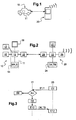
- the figure 1 represents an example of an initial context in which the invention can be implemented
- a vehicle 10 comprises an electronic control unit 11 (or ECU for “ Electronic Control Unit ”) which can enter into communication via a wireless link with a first user terminal 20, for example a mobile telephone (or cellular telephone ), possibly of the “ smart phone ” or “ smartphone ” type according to the commonly used Anglo-Saxon name, in order to exchange data with this first user terminal 20, for example with a view to controlling the functions of the vehicle 10 by means of the first user terminal 20 (such a functionality can be for example the unlocking of the doors of the vehicle 10).
- a first user terminal 20 for example a mobile telephone (or cellular telephone ), possibly of the “ smart phone ” or “ smartphone ” type according to the commonly used Anglo-Saxon name, in order to exchange data with this first user terminal 20, for example with a view to controlling the functions of the vehicle 10 by means of the first user terminal 20 (such a functionality can be for example the unlocking of the doors of the vehicle 10).
- the wireless link used to communicate between the electronic control unit 11 and the first user terminal 20 is for example of the Bluetooth type.
- the figure 2 schematically represents components, useful for understanding the invention, of the vehicle 10 and of the first user terminal 20,
- the vehicle 10 comprises in particular the electronic control unit 11 already mentioned, a first actuator 15 (designed here to allow the unlocking of the doors of the vehicle 10), a second actuator 17 (designed to allow the engine of the vehicle to be started), a wireless communication module 16 and a user interface 18.
- the electronic control unit comprises a processor 12 and a storage unit 14, for example a rewritable non-volatile memory or a hard disk.
- the storage unit 14 notably stores computer programs comprising instructions, the execution of which by the processor 12 allows the implementation by the electronic control unit 11 of the processes. described below.
- the storage unit 14 also stores data used in the context of the methods described below, in particular a root key (or master key) MK and a secret code S, used as explained below.
- the root key MK and / or the secret code S are for example entered in the storage unit 14 during the manufacture of the electronic control unit 11, before mounting this electronic control unit 11 in the vehicle 10.
- the first user terminal 20 comprises a processor 22, a memory 24 (for example a rewritable non-volatile memory), a user interface 21 (for example a touch screen), a wireless communication module 26 and a telecommunication module 28.
- the memory 24 of the first user terminal 20 stores a delegation key DK from which temporary pairing authorization keys can be derived, as explained below.
- This derivation key DK is for example loaded into the memory 24 according to the method described below with reference to the figure 3 .
- the delegation key DK can be used as a virtual key that can be used by the first user terminal 20 to control a functionality of the vehicle 10.
- the memory 24 of the first user terminal 20 can store an additional virtual key dedicated to control of vehicle functions 10.
- the memory 24 notably stores computer programs comprising instructions whose execution by the processor 22 allows the implementation by the first user terminal 20 of the methods described below.
- the wireless communication module 26 of the first user terminal 20 makes it possible to establish a wireless link (here of the Bluetooth type as already indicated) with the wireless communication module 16 of the vehicle 10 through which the processor 12 of the unit electronic control 11 and the processor 22 of the first user terminal 20 can exchange data, in particular as explained below.
- the telecommunications module 28 allows the first user terminal 20 (and specifically the processor 22 equipping this first user terminal 20) to exchange data with other electronic devices, in particularly with a second user terminal mentioned below.
- the telecommunication module 28 allows for this to be connected to a network to which these other electronic devices are also connected, for example a mobile telephone network or a computer network (such as a wireless local area network).
- the telecommunications module 28 can comprise a smart card which stores connection data associated with a subscription to a mobile telephone service and making it possible to establish the connection to the aforementioned mobile telephone network.
- the figure 3 presents, in the form of a flowchart, an example of a method for loading the delegation key DK into the memory 24 of the first user terminal 20.
- the data exchanges described below are carried out between the processor 12 of the electronic control unit 11 and the processor 22 of the first user terminal 20 via the wireless communication modules 16, 26.
- These data exchanges can be secured ( and in particular encrypted) using for example a security functionality (for example encryption) of the wireless communication modules 16, 26 or by using conventional means of security (for example encryption), such as those provided in an infrastructure to public key (or PKI for " Public Key Infrastructure ”) .
- step E2 The process of figure 3 begins at step E2 by sending, by the first user terminal 20 (that is to say in practice by its processor 22 via the wireless communication module 26), of a secret code S 'and d 'an Identifier I1 from the first user terminal 20 to the electronic control unit 11.
- the secret code S ' has for example been entered beforehand on the user interface 21 by the user of the first user terminal 20. To do this, the secret code S' is for example communicated to the user during the purchase. of the vehicle. As a variant, this secret code S 'can be written on a label affixed to the vehicle 10 (so as to be visible only by a person having access to the vehicle 10, typically by means of the physical key of the vehicle 10).
- the identifier I1 is for example a number associated with the user terminal 20, such as the call number assigned to the user as part of his subscription to the above-mentioned mobile telephone service (or MSISDN for “ Mobile Station ISDN number ”) , the subscriber number (or IMSI for “ International Subscriber Mobile Identity ”) of the user or the Identifier of the user terminal 20 (or IMEI for “ International Mobile Equipment Identity ”) .
- the electronic control unit 11 receives the secret code S 'and the identifier I1 and can thus compare in step E4 the received secret code S' with the secret code S stored in the storage unit 14 of the electronic unit order 11.
- step E8 In normal times (that is to say when the secret code S 'has actually been obtained by the user as indicated above following the purchase of the vehicle 10), the secret code received S' corresponds to the secret code stored S and the method continues at step E8 described below. It is also possible to provide that an additional condition must be fulfilled before proceeding to step E8, for example the user performing a particular action in the vehicle (such as validation on the user interface 18 ), or the detection of a physical key of the vehicle 10 nearby by the electronic control unit 11, or an action on the physical key of the vehicle 10.
- the received secret code S ' differs from the stored secret code S, this means that the secret code S' is not actually that associated with the vehicle 10 (either because of a user error, or because of fact that it is a fraud attempt) and the method ends in step E8 without loading the delegation key DK.
- the delegation key DK obtained and a time stamp TS (or " timestamp " according to the Anglo-Saxon name) generated by the processor 12 are transmitted from the electronic control unit 11 to the first user terminal 20 in step E10, here via the link established between the wireless communication module 16 and the wireless communication module 26.
- a time stamp TS or " timestamp " according to the Anglo-Saxon name
- this other virtual key can also be transmitted from the electronic control unit 11 to the first user 20 during step E10.
- the delegation key DK is thus received by the first user terminal 20 (specifically its processor 22) and can then be stored in the memory 24 of the first user terminal 20 in step E12.
- the processor 22 could control the storage in the memory 24 of the received time stamp TS, for example in association with the instant of reception of the time stamp TS, in order to have access to the time offset between the clock of the electronic control unit 11 and the clock of the first user terminal 20.
- a time stamp could on the contrary be transmitted from the first user terminal 20 to the electronic control unit 11 in order to be stored there (in association with the instant of reception of the time stamp and the identifier I1 of the first user terminal 20), the electronic control unit 11 in this case managing the aforementioned time shift.
- the secret code S is stored in the storage unit 14 during the production of the electronic control unit 11 and / or of the vehicle 10, then is required before issuing the delegation key DK (as well as possibly another virtual key for controlling the functions of the vehicle 10) to the first user terminal 20.
- the secret code S could be entered by the user at the level of the user interface 18 of the vehicle 10, in order to then be stored in the storage unit 14 of the electronic control unit.
- the user must then in this case enter an Identical secret code on his user terminal 20 so that this secret code S 'is transmitted to the electronic control unit 11 and authorizes the electronic control unit 11 to deliver the delegation key DK (as well as possibly another virtual key for controlling the functions of the vehicle 10).
- the issuance of the delegation key DK does not require the provision of a secret code, but can only be initiated. in the context of the execution by the electronic control unit 11 of a diagnostic service, such as those used in dealerships.
- the delegation key DK (as well as possibly another virtual key for controlling the functions of the vehicle 10) can be transmitted to the first user terminal 20 from a remote server, for example via the telecommunication module 28 (a session secure, allowing an encrypted data exchange, being for example previously set up between the processor 22 of the first user terminal 20 and this remote server).
- the figure 4 schematically shows the first user terminal 20 and a second user terminal 30 in a situation where they can exchange data as explained below.
- the second user terminal 30 is for example of the same type as the first user terminal 20, and thus comprises elements similar to those of the first user terminal 20, designated in figure 4 by a reference increased by ten with respect to the equivalent elements of the first user terminal 20.
- the second user terminal 30 will therefore not be described in detail and reference may be made to the description given above of the first user terminal 20 for more details. on the elements of the second user terminal 30.
- the second user terminal 30 thus comprises in particular a processor 32, a memory 34 (for example a rewritable non-volatile memory), a user interface 31 (for example a touch screen), a wireless communication module 36 (designed here to put implementing a Buletooth type link) and a telecommunication module 38 (designed to connect to a network, for example a wireless local area network or a mobile telephone network, to which the first terminal is also connected user 20).
- a processor 32 for example a rewritable non-volatile memory
- a user interface 31 for example a touch screen
- a wireless communication module 36 designed here to put implementing a Buletooth type link
- a telecommunication module 38 designed to connect to a network, for example a wireless local area network or a mobile telephone network, to which the first terminal is also connected user 20.
- the memory 34 notably stores computer programs comprising instructions, the execution of which by the processor 32 allows the implementation by the second user terminal 30 of the methods described below.
- the first user terminal 20 and the second user terminal 30 can thus exchange data either by means of a link (here of the Bluetooth type) established between the wireless communication modules 26, 36, or via a network (for example a wireless local network or a mobile telephone network) to which the first terminal 20 and the second user terminal 30 connect to this network respectively by means of the communication module 28 and the telecommunication module 38.
- a link here of the Bluetooth type
- a network for example a wireless local network or a mobile telephone network
- the user terminals 20, 30 use one of the two possibilities considered above to exchange data between them.
- the figure 5 presents, in the form of a logic diagram, an example of a method for transmitting a temporary pairing authorization key TK from the first user terminal 20 to the second user terminal 30.
- This method is implemented when it is desired to use the second user terminal 30 to control a functionality of the vehicle 10, here temporarily.
- step E20 the second user terminal 30 transmits to the first user terminal 20 a request for the temporary pairing authorization key TK (in order to be able to subsequently control a functionality of the vehicle).
- the second user terminal 30 for example attaches its Identifier I2 to this request.
- an identifier I2 is for example the call number assigned to the user as part of his subscription to the aforementioned mobile telephone service (or MSISDN for " Mobile Station ISDN number " ), the subscriber number (or IMSI for “ International Subscriber Mobile Identity ”) of the user or the identifier of the user terminal concerned (or IMEI for “ International Mobile Equipment Identity ”).
- the second user terminal 30 may further attach a list of vehicle features 10 that the user wishes to order by means of the second user terminal 30.
- the first user terminal 20 receives the request accompanied by the Identifier I2 of the second user terminal 30 and can thus calculate in step E22 the temporary pairing authorization key TK intended for the second user terminal 30, for example as follows.
- the temporary pairing authorization key TK makes it possible to obtain a virtual key VK valid between a time T1 and a time T2 (referenced here with respect to the clock of the electronic control unit 11).
- time limits T1, T2 are for example chosen by the user of the first user terminal 20 (possibly by input in the user interface 21) and define (between them) a period (for example of several days or several weeks) during which the second user terminal 30 will be able to control at least one functionality of the vehicle 10.
- the data set to which the second cryptographic function G is applied can comprise other data, for example a random number or a value representative of the functionalities that the second terminal user 30 will be able to order.
- a binary map or “ bitmap ” according to the English name
- the functionalities mentioned in the list generated by the first user terminal 20 or indicated in the binary map may for example be a subset of the list of desired functionalities.
- the first user terminal 20 then transmits to the second user terminal 30 the temporary pairing authorization key TK, the first time terminal T1, the second time terminal T2, its identifier I1 and the time stamp TS (step E24), thus that possibly the aforementioned random number and the list (or the representative bitmap) of the functionalities to be controlled.
- the second user terminal 30 receives these data and can thus store them in the memory 34 in step E26.
- the time stamp TS allows the second user terminal 30 to know the offset between its own clock and the clock of the electronic control unit 11, which is used as a reference as already indicated.
- the temporary pairing authorization key TK stored in the memory 34 of the second user terminal 30 can then be used to pair the second user terminal 30 and the electronic control unit 11 so that the second user terminal 30 obtains a virtual key.
- Vehicle functionality control VK 10 as now described.
- the figure 6 presents, in the form of a logic diagram, an example of a method of pairing between the second user terminal 30 and the electronic control unit 11 of the vehicle 10.
- This method is for example implemented when the second user terminal 30 is approached to the vehicle 10 and a link (here of the Bluetooth type) is established between the wireless communication module 16 of the vehicle 10 and the wireless communication module. wire 36 of the second user terminal 30.
- This link can be secured, for example by encryption of the data exchanged.
- the process of figure 6 begins at step E40 with the transmission, by the second user terminal 30, of the temporary pairing authorization key TK, of the first time terminal T1, of the second time terminal T2, of the identifier I1 of the first user terminal 20 and its identifier I2 intended for the electronic control unit 11.
- This transmission is for example initiated by an action by the user on the user interface 31 of the second terminal 30.
- a random number and a list (or a representative binary topogram) of the functionalities to be controlled are used, these elements are also transmitted to the electronic control unit in step E40.
- the processor 12 of the electronic control unit 11 can then calculate in step E42 the key TK 'normally associated with the time limits T1, T2, with the identifier I1 (associated with the delegation key DK assigned to the step E10 described above) and to the identifier I2 of the user terminal 30 which sent the data in step E40.
- the processor 12 of the electronic control unit 11 can thus verify in step E44 that the temporary pairing authorization key TK received from the second user terminal 30 is indeed equal to the key TK 'associated with the parameters T1, T2 , I1, I2.
- the pairing process is terminated without issuing a virtual key by the electronic control unit.
- step E44 the processor 12 checks in step E46 that the current instant t (given by the clock of the electronic control unit command 11) is clearly between the time limits T1 and T2, that is to say that we have: T1 ⁇ t ⁇ T2.
- step E46 If the verification of step E46 has a negative result, the delivery of a virtual key to the second user terminal 30 is not authorized and the pairing process is terminated.
- step E46 If the verification of step E46 is carried out correctly, the method continues at step E48.
- Other verifications can then optionally be carried out, for example verifying that the identifier I1 does indeed correspond to a identifier for which a delegation key has been issued (the identifier I1 being able to do this be stored in the storage unit 14 when going to step E8 described above) or the verification that the identifier I2 is the identifier of the user terminal with which the electronic control unit 11 is in communication via the wireless communication module 16.
- VK H MK (T1, T2).
- the processor 12 can also during this step E48 order the storage in the storage unit 12, in association with the identifier I2 of the second user terminal 30, the time limits T1, T2 and, optionally, the aforementioned random number and / or of the list (or of the representative binary topogram) of the functionalities to be controlled and / or of the virtual key VK.
- the virtual key VK can then be transmitted from the electronic control unit 11 to the second user terminal 30 in step E50.
- This transmission can be performed, like the previous exchanges, via the link established between the wireless communication module 16 of the vehicle 10 and the wireless communication module 36 of the second user terminal 30.
- this transmission could be carried out via another communication channel, for example by sending a text message by the electronic control unit 11 (provided in this case with a means of connection to a mobile telephone network) to destination of the second user terminal 30 (identified on this mobile telephone network by its identifier I2 when this identifier is its call number as indicated above), in which case the transmission uses the telecommunication module 38 of the second user terminal 30.
- the second user terminal 30 receives the virtual key VK and stores this virtual key VK in its memory 34 in step E52.
- the temporary pairing authorization key TK is transmitted to the electronic control unit 11 for verification of its value in step E44.
- the figure 7 presents, in the form of a logic diagram, an example of a method for controlling a functionality of the vehicle 10 by the second user terminal 30.
- the electronic control unit 11 of the vehicle 10 and the second user terminal 30 exchange data as indicated below via a wireless link (for example of the Bluetooth type) established beforehand between the wireless communication module 16 of the vehicle 10 and the wireless communication module 36 of the second user terminal 30.
- a wireless link for example of the Bluetooth type
- step E60 for sending by the second user terminal 30 a request to implement the functionality concerned, accompanied by its identifier I2 and an identifier FCT of the functionality, for example the unlocking of the doors of the vehicle 10 or starting the vehicle engine 10.
- This request is received by the electronic control unit 11; the processor 12 of the electronic control unit 11 then generates a challenge D (for example by drawing a random number) and transmits this challenge D to the second user terminal 30 in step E61.
- a challenge D for example by drawing a random number
- the second user terminal 30 receives the challenge D and generates in step E62, as a function of this challenge D and of the virtual key VK, a response R.
- the user terminal 30 can thus send the response R to the electronic control unit 11 (step E64).
- the response R is received by the electronic control unit 11 and the processor 12 of the electronic control unit 11 can thus verify this response R at step E66, for example by calculating the result of the application to challenge D of the fourth cryptographic function J with the virtual key stored in the storage unit 14 (from step E48 described above) in association with the identifier I2 of the second user terminal 30, and by comparing this result to the received response R.
- step E66 the processor 12 verifies in step E68 that the current instant t '(determined by the clock of the electronic control unit 11) is indeed included in the time interval defined by the time limits T1, T2, that is to say if we have: T1 ⁇ t ' ⁇ T2.
- step E68 If the verification of step E68 is not performed correctly, that is to say if the current instant is not part of the time period during which the control of the functionality of the vehicle by the second user terminal 30 is authorized, the functionality ordering process is terminated without performing this functionality.
- Step E88 may further comprise other checks, for example a check that the requested functionality identified by the FCT identifier is indeed authorized for the second user terminal 30 (by consulting the list or the binary map stored in the storage unit 14 in association with the identifier I2 in step E48 described above).
- the electronic control unit 11 can control the desired functionality, for example by controlling a dedicated actuator 15, 17 (step E70).
- the second user terminal 30 can thus control the functionalities of the vehicle 10 (and only, in certain cases, those indicated in the list of functionalities or in the binary map stored in association with the identifier I2) during the period of time defined by the time limits T1, T2.
- the second user terminal 30 does not store any delegation key and therefore cannot authorize another user terminal to control (even temporarily) functions of the vehicle 10.
Landscapes
- Engineering & Computer Science (AREA)
- Computer Networks & Wireless Communication (AREA)
- Signal Processing (AREA)
- Computing Systems (AREA)
- General Health & Medical Sciences (AREA)
- Medical Informatics (AREA)
- Health & Medical Sciences (AREA)
- Computer Security & Cryptography (AREA)
- Computer Hardware Design (AREA)
- General Engineering & Computer Science (AREA)
- Physics & Mathematics (AREA)
- General Physics & Mathematics (AREA)
- Lock And Its Accessories (AREA)
Claims (7)
- Verfahren zum Laden eines virtuellen Schlüssels (VK) auf ein Benutzerendgerät (30), die folgenden Schritte umfassend:- Bestimmung, durch eine Elektronikeinheit eines Fahrzeugs, eines Delegations-Datenelements (DK) durch Ableitung mittels der Anwendung einer ersten kryptographischen Funktion (F), die einen in einer Speichereinheit der Elektronikeinheit (11) des Fahrzeugs (10) gespeicherten Root-Schlüssel (MK) verwendet, auf eine Kennung eines anderen Benutzerendgerätes, die von dem anderen Benutzerendgerät kommend empfangen wurde;- Übertragung (E10) des Delegations-Datenelements (DK) von der Elektronikeinheit (11) an das andere Benutzerendgerät (20);- Bestimmung (E24), durch das andere Benutzerendgerät (20), eines Matching-Datenelements (TK) in Abhängigkeit von dem Delegations-Datenelement (DK);- Empfang (E26), durch das Benutzerendgerät (30), des von dem anderen Benutzerendgerät (20) stammenden Matching-Datenelements (TK);- Übertragung (E40), durch das Benutzerendgerät, eines von dem Matching-Datenelement (TK) abhängigen Datenelements an die Elektronikeinheit (11) ;- in Reaktion auf die Übertragung des von dem Matching-Datenelement abhängigen Datenelements, Empfang (E52), durch das Benutzerendgerät (30) von der Elektronikeinheit (11), eines virtuellen Schlüssels (VK) zur Steuerung wenigstens einer Funktionalität des Fahrzeugs (10);wobei die Übertragung des übertragenen Datenelements, das von dem Matching-Datenelement (TK) abhängig ist, und der Empfang des virtuellen Schlüssels (VK) über eine drahtlose Verbindung erfolgen, die zwischen dem Benutzerendgerät (30) und dem Fahrzeug (10) eingerichtet ist.
- Verfahren nach Anspruch 1, welches einen Schritt der Überprüfung (E44), durch die Elektronikeinheit, der Entsprechung zwischen dem von dem übertragenen Matching-Datenelement (TK) abhängigen Datenelement und einem entsprechenden Datenelement, das von der Elektronikeinheit (11) bestimmt wird, umfasst, wobei der virtuelle Schlüssel (VK) nur im Falle einer positiven Überprüfung übertragen wird.
- Verfahren nach Anspruch 1 oder 2, welches die folgenden Schritte umfasst:- Empfang (E62), durch das Benutzerendgerät (30), einer Challenge (D) von der Elektronikeinheit (11) ;- Bestimmung (E62), durch das Benutzerendgerät (30), eines Authentifizierungs-Datenelements (R) in Abhängigkeit von dem virtuellen Schlüssel (VK) und von der empfangenen Challenge (D);- Senden (E64), durch das Benutzerendgerät (30) und an die Elektronikeinheit (11), des Authentifizierungs-Datenelements (R).
- Verfahren nach Anspruch 3, welches die folgenden Schritte umfasst:- Überprüfung (E66), durch die Elektronikeinheit (11), des Authentifizierungs-Datenelements (R), das von dem Benutzerendgerät (30) kommend empfangen wurde;- Steuerung, durch die Elektronikeinheit (11), der Funktionalität des Fahrzeugs (10) im Falle einer positiven Überprüfung.
- Verfahren nach einem der vorhergehenden Ansprüche, wobei das Matching-Datenelement (TK) in Abhängigkeit von dem Delegations-Datenelement (DK) und von wenigstens einer zeitlichen Begrenzung (T1; T2) bestimmt wird.
- Verfahren nach Anspruch 5, wobei die Elektronikeinheit (11) den virtuellen Schlüssel (VK) in Abhängigkeit vom Ergebnis eines Vergleichs zwischen einem aktuellen Zeitpunkt und der zeitlichen Begrenzung (T1; T2) an das Benutzerendgerät (30) überträgt oder nicht.
- Verfahren nach Anspruch 5 oder 6, wobei die Ansprüche 5 und 6 von Anspruch 4 abhängig sind, wobei die Steuerung der Funktionalität in Abhängigkeit vom Ergebnis eines Vergleichs zwischen einem aktuellen Zeitpunkt und der zeitlichen Begrenzung (T1; T2) durchgeführt wird oder nicht.
Applications Claiming Priority (2)
| Application Number | Priority Date | Filing Date | Title |
|---|---|---|---|
| FR1552818A FR3034549B1 (fr) | 2015-04-01 | 2015-04-01 | Procede de chargement d'une cle virtuelle et terminal utilisateur associe |
| PCT/FR2016/000062 WO2016156681A1 (fr) | 2015-04-01 | 2016-04-01 | Procédé de chargement d'une clé virtuelle et terminal utilisateur associé |
Publications (2)
| Publication Number | Publication Date |
|---|---|
| EP3308564A1 EP3308564A1 (de) | 2018-04-18 |
| EP3308564B1 true EP3308564B1 (de) | 2020-11-18 |
Family
ID=54478090
Family Applications (1)
| Application Number | Title | Priority Date | Filing Date |
|---|---|---|---|
| EP16729003.0A Active EP3308564B1 (de) | 2015-04-01 | 2016-04-01 | Verfahren zum laden einer virtuellen schlüssels und zugehöriges benutzerendgerät |
Country Status (3)
| Country | Link |
|---|---|
| EP (1) | EP3308564B1 (de) |
| FR (1) | FR3034549B1 (de) |
| WO (1) | WO2016156681A1 (de) |
Families Citing this family (6)
| Publication number | Priority date | Publication date | Assignee | Title |
|---|---|---|---|---|
| CN110677436A (zh) * | 2016-10-20 | 2020-01-10 | 张桂兰 | 物体访问权限管理后台系统、装置、用户终端 |
| SG10201704077UA (en) * | 2017-05-18 | 2018-12-28 | Huawei Int Pte Ltd | Electronic key system for vehicles access based on portable devices |
| FR3071943B1 (fr) * | 2017-10-04 | 2019-10-25 | Oberthur Technologies | Controle d'acces a un service |
| FR3075536B1 (fr) * | 2017-12-20 | 2020-03-13 | Valeo Comfort And Driving Assistance | Procede d'authentification d'un dispositif electronique par une unite electronique equipant un vehicule |
| JP6962840B2 (ja) * | 2018-03-16 | 2021-11-05 | 本田技研工業株式会社 | 車両制御装置 |
| CN109067549B (zh) * | 2018-09-21 | 2021-11-12 | 北京仁信证科技有限公司 | 虚拟钥匙双向认证系统及方法 |
Family Cites Families (3)
| Publication number | Priority date | Publication date | Assignee | Title |
|---|---|---|---|---|
| US9800413B2 (en) * | 2008-08-15 | 2017-10-24 | Gm Global Technology Operations, Inc. | System and method for performing an asymmetric key exchange between a vehicle and a remote device |
| US8947202B2 (en) * | 2011-10-20 | 2015-02-03 | Apple Inc. | Accessing a vehicle using portable devices |
| US9002536B2 (en) * | 2013-03-14 | 2015-04-07 | Ford Global Technologies, Llc | Key fob security copy to a mobile phone |
-
2015
- 2015-04-01 FR FR1552818A patent/FR3034549B1/fr not_active Expired - Fee Related
-
2016
- 2016-04-01 EP EP16729003.0A patent/EP3308564B1/de active Active
- 2016-04-01 WO PCT/FR2016/000062 patent/WO2016156681A1/fr not_active Ceased
Non-Patent Citations (1)
| Title |
|---|
| None * |
Also Published As
| Publication number | Publication date |
|---|---|
| FR3034549A1 (fr) | 2016-10-07 |
| EP3308564A1 (de) | 2018-04-18 |
| FR3034549B1 (fr) | 2018-03-30 |
| WO2016156681A1 (fr) | 2016-10-06 |
Similar Documents
| Publication | Publication Date | Title |
|---|---|---|
| EP3348085B1 (de) | Verfahren zum laden eines virtuellen schlüssels in einem benutzerendgerät und zugehöriges benutzerendgerät | |
| EP3269108B1 (de) | Verfahren zur gesicherten übertragung eines virtuellen schlüssels und verfahren zur authentifizierung eines mobilen endgeräts | |
| EP3221815B1 (de) | Verfahren zur sicherung von zahlungstransaktionstoken | |
| EP3271901B1 (de) | Elektronikeinheit, in einer elektronikeinheit dieses typs ausgeführtes verfahren zur gemeinsamen nutzung eines zeitrahmens zwischen einem server und einer elektronikeinheit und verfahren zur synchronisierung eines servers und eine elektronikeinheit | |
| FR3022053A1 (fr) | Procede d'authentification d'une premiere entite electronique par une seconde entite electronique et entite electronique mettant en œuvre un tel procede | |
| WO2016156681A1 (fr) | Procédé de chargement d'une clé virtuelle et terminal utilisateur associé | |
| FR3030987A1 (fr) | Procede de reconnaissance automatique entre un appareil mobile et un vehicule automobile aptes a fonctionner selon le protocole ble | |
| EP3265344A1 (de) | Verfahren zur anmeldung eines benutzers bei einem dienst zur steuerung von mindestens einer fahrzeugfunktionalität mithilfe eines benutzerendgeräts | |
| FR2997525A1 (fr) | Procede de fourniture d’un service securise | |
| WO2016102831A1 (fr) | Procédé de sécurisation de transactions sans contact | |
| WO2016087754A1 (fr) | Procede mis en œuvre dans un document d'identite et document d'identite associe | |
| WO2016102833A1 (fr) | Entité électronique sécurisée, appareil électronique et procédé de vérification de l'intégrité de données mémorisées dans une telle entité électronique sécurisée | |
| EP3343967B1 (de) | Verfahren, die mithilfe einer vorrichtung und in einem netz umgesetzt werden, und entsprechende elektronikeinheit | |
| EP3667530B1 (de) | Sicherer zugriff auf geschriebene daten aus einem benutzerklemmen | |
| WO2016102834A1 (fr) | Procédé d'authentification d'un utilisateur et d'un module sécurisé, appareil électronique et système associes | |
| EP3427177B1 (de) | Verfahren zur überprüfung der integrität einer elektronischen vorrichtung und entsprechende elektronische vorrichtung | |
| FR3075536A1 (fr) | Procede d'authentification d'un dispositif electronique par une unite electronique equipant un vehicule | |
| WO2017001763A1 (fr) | Procede d'authentification pour connecter un dispositif compagnon lorsqu'il est deconnecte d'un dispositif souscripteur | |
| WO2016102832A1 (fr) | Procédé d'authentification d'une application, appareil électronique et programme d'ordinateur associés | |
| FR3025631A1 (fr) | Selection securisee d'une application dans une carte a puce ou equivalent | |
| EP2911365B1 (de) | Verfahren und System zur Sicherung von Transaktionen, die von einer Vielzahl von Diensten zwischen einem Mobilgerät eines Benutzers und einer Akzeptanzstelle angeboten werden | |
| FR3102322A1 (fr) | Technique de communication entre une application mettant en œuvre un service et un serveur | |
| WO2025125562A1 (fr) | Procédé d'authentification d'un individu pour la mise en œuvre d'une transaction sur un terminal marchand | |
| EP3360293A1 (de) | Mittel zur verwaltung des zugriffs auf daten | |
| WO2016051059A1 (fr) | Procédé de protection d'un terminal mobile contre des attaques |
Legal Events
| Date | Code | Title | Description |
|---|---|---|---|
| STAA | Information on the status of an ep patent application or granted ep patent |
Free format text: STATUS: THE INTERNATIONAL PUBLICATION HAS BEEN MADE |
|
| PUAI | Public reference made under article 153(3) epc to a published international application that has entered the european phase |
Free format text: ORIGINAL CODE: 0009012 |
|
| STAA | Information on the status of an ep patent application or granted ep patent |
Free format text: STATUS: REQUEST FOR EXAMINATION WAS MADE |
|
| 17P | Request for examination filed |
Effective date: 20180208 |
|
| AK | Designated contracting states |
Kind code of ref document: A1 Designated state(s): AL AT BE BG CH CY CZ DE DK EE ES FI FR GB GR HR HU IE IS IT LI LT LU LV MC MK MT NL NO PL PT RO RS SE SI SK SM TR |
|
| AX | Request for extension of the european patent |
Extension state: BA ME |
|
| DAV | Request for validation of the european patent (deleted) | ||
| DAX | Request for extension of the european patent (deleted) | ||
| STAA | Information on the status of an ep patent application or granted ep patent |
Free format text: STATUS: EXAMINATION IS IN PROGRESS |
|
| 17Q | First examination report despatched |
Effective date: 20191121 |
|
| REG | Reference to a national code |
Ref country code: DE Ref legal event code: R079 Ref document number: 602016048053 Country of ref document: DE Free format text: PREVIOUS MAIN CLASS: H04W0012040000 Ipc: H04W0012000000 |
|
| GRAP | Despatch of communication of intention to grant a patent |
Free format text: ORIGINAL CODE: EPIDOSNIGR1 |
|
| STAA | Information on the status of an ep patent application or granted ep patent |
Free format text: STATUS: GRANT OF PATENT IS INTENDED |
|
| RIC1 | Information provided on ipc code assigned before grant |
Ipc: H04L 29/06 20060101ALI20200715BHEP Ipc: H04W 4/00 20180101ALI20200715BHEP Ipc: H04W 12/04 20090101ALI20200715BHEP Ipc: H04W 12/00 20090101AFI20200715BHEP Ipc: H04L 29/08 20060101ALI20200715BHEP Ipc: G07C 9/00 20200101ALI20200715BHEP Ipc: H04W 4/80 20180101ALN20200715BHEP |
|
| INTG | Intention to grant announced |
Effective date: 20200727 |
|
| GRAS | Grant fee paid |
Free format text: ORIGINAL CODE: EPIDOSNIGR3 |
|
| GRAA | (expected) grant |
Free format text: ORIGINAL CODE: 0009210 |
|
| STAA | Information on the status of an ep patent application or granted ep patent |
Free format text: STATUS: THE PATENT HAS BEEN GRANTED |
|
| AK | Designated contracting states |
Kind code of ref document: B1 Designated state(s): AL AT BE BG CH CY CZ DE DK EE ES FI FR GB GR HR HU IE IS IT LI LT LU LV MC MK MT NL NO PL PT RO RS SE SI SK SM TR |
|
| REG | Reference to a national code |
Ref country code: GB Ref legal event code: FG4D Free format text: NOT ENGLISH |
|
| REG | Reference to a national code |
Ref country code: CH Ref legal event code: EP |
|
| REG | Reference to a national code |
Ref country code: IE Ref legal event code: FG4D Free format text: LANGUAGE OF EP DOCUMENT: FRENCH |
|
| REG | Reference to a national code |
Ref country code: DE Ref legal event code: R096 Ref document number: 602016048053 Country of ref document: DE |
|
| REG | Reference to a national code |
Ref country code: AT Ref legal event code: REF Ref document number: 1337077 Country of ref document: AT Kind code of ref document: T Effective date: 20201215 |
|
| REG | Reference to a national code |
Ref country code: AT Ref legal event code: MK05 Ref document number: 1337077 Country of ref document: AT Kind code of ref document: T Effective date: 20201118 |
|
| REG | Reference to a national code |
Ref country code: NL Ref legal event code: MP Effective date: 20201118 |
|
| PG25 | Lapsed in a contracting state [announced via postgrant information from national office to epo] |
Ref country code: NO Free format text: LAPSE BECAUSE OF FAILURE TO SUBMIT A TRANSLATION OF THE DESCRIPTION OR TO PAY THE FEE WITHIN THE PRESCRIBED TIME-LIMIT Effective date: 20210218 Ref country code: PT Free format text: LAPSE BECAUSE OF FAILURE TO SUBMIT A TRANSLATION OF THE DESCRIPTION OR TO PAY THE FEE WITHIN THE PRESCRIBED TIME-LIMIT Effective date: 20210318 Ref country code: RS Free format text: LAPSE BECAUSE OF FAILURE TO SUBMIT A TRANSLATION OF THE DESCRIPTION OR TO PAY THE FEE WITHIN THE PRESCRIBED TIME-LIMIT Effective date: 20201118 Ref country code: FI Free format text: LAPSE BECAUSE OF FAILURE TO SUBMIT A TRANSLATION OF THE DESCRIPTION OR TO PAY THE FEE WITHIN THE PRESCRIBED TIME-LIMIT Effective date: 20201118 Ref country code: GR Free format text: LAPSE BECAUSE OF FAILURE TO SUBMIT A TRANSLATION OF THE DESCRIPTION OR TO PAY THE FEE WITHIN THE PRESCRIBED TIME-LIMIT Effective date: 20210219 |
|
| PG25 | Lapsed in a contracting state [announced via postgrant information from national office to epo] |
Ref country code: SE Free format text: LAPSE BECAUSE OF FAILURE TO SUBMIT A TRANSLATION OF THE DESCRIPTION OR TO PAY THE FEE WITHIN THE PRESCRIBED TIME-LIMIT Effective date: 20201118 Ref country code: AT Free format text: LAPSE BECAUSE OF FAILURE TO SUBMIT A TRANSLATION OF THE DESCRIPTION OR TO PAY THE FEE WITHIN THE PRESCRIBED TIME-LIMIT Effective date: 20201118 Ref country code: LV Free format text: LAPSE BECAUSE OF FAILURE TO SUBMIT A TRANSLATION OF THE DESCRIPTION OR TO PAY THE FEE WITHIN THE PRESCRIBED TIME-LIMIT Effective date: 20201118 Ref country code: PL Free format text: LAPSE BECAUSE OF FAILURE TO SUBMIT A TRANSLATION OF THE DESCRIPTION OR TO PAY THE FEE WITHIN THE PRESCRIBED TIME-LIMIT Effective date: 20201118 Ref country code: IS Free format text: LAPSE BECAUSE OF FAILURE TO SUBMIT A TRANSLATION OF THE DESCRIPTION OR TO PAY THE FEE WITHIN THE PRESCRIBED TIME-LIMIT Effective date: 20210318 Ref country code: BG Free format text: LAPSE BECAUSE OF FAILURE TO SUBMIT A TRANSLATION OF THE DESCRIPTION OR TO PAY THE FEE WITHIN THE PRESCRIBED TIME-LIMIT Effective date: 20210218 |
|
| REG | Reference to a national code |
Ref country code: LT Ref legal event code: MG9D |
|
| PG25 | Lapsed in a contracting state [announced via postgrant information from national office to epo] |
Ref country code: HR Free format text: LAPSE BECAUSE OF FAILURE TO SUBMIT A TRANSLATION OF THE DESCRIPTION OR TO PAY THE FEE WITHIN THE PRESCRIBED TIME-LIMIT Effective date: 20201118 |
|
| PG25 | Lapsed in a contracting state [announced via postgrant information from national office to epo] |
Ref country code: CZ Free format text: LAPSE BECAUSE OF FAILURE TO SUBMIT A TRANSLATION OF THE DESCRIPTION OR TO PAY THE FEE WITHIN THE PRESCRIBED TIME-LIMIT Effective date: 20201118 Ref country code: EE Free format text: LAPSE BECAUSE OF FAILURE TO SUBMIT A TRANSLATION OF THE DESCRIPTION OR TO PAY THE FEE WITHIN THE PRESCRIBED TIME-LIMIT Effective date: 20201118 Ref country code: LT Free format text: LAPSE BECAUSE OF FAILURE TO SUBMIT A TRANSLATION OF THE DESCRIPTION OR TO PAY THE FEE WITHIN THE PRESCRIBED TIME-LIMIT Effective date: 20201118 Ref country code: SM Free format text: LAPSE BECAUSE OF FAILURE TO SUBMIT A TRANSLATION OF THE DESCRIPTION OR TO PAY THE FEE WITHIN THE PRESCRIBED TIME-LIMIT Effective date: 20201118 Ref country code: SK Free format text: LAPSE BECAUSE OF FAILURE TO SUBMIT A TRANSLATION OF THE DESCRIPTION OR TO PAY THE FEE WITHIN THE PRESCRIBED TIME-LIMIT Effective date: 20201118 Ref country code: RO Free format text: LAPSE BECAUSE OF FAILURE TO SUBMIT A TRANSLATION OF THE DESCRIPTION OR TO PAY THE FEE WITHIN THE PRESCRIBED TIME-LIMIT Effective date: 20201118 |
|
| REG | Reference to a national code |
Ref country code: DE Ref legal event code: R097 Ref document number: 602016048053 Country of ref document: DE |
|
| PG25 | Lapsed in a contracting state [announced via postgrant information from national office to epo] |
Ref country code: DK Free format text: LAPSE BECAUSE OF FAILURE TO SUBMIT A TRANSLATION OF THE DESCRIPTION OR TO PAY THE FEE WITHIN THE PRESCRIBED TIME-LIMIT Effective date: 20201118 |
|
| PLBE | No opposition filed within time limit |
Free format text: ORIGINAL CODE: 0009261 |
|
| STAA | Information on the status of an ep patent application or granted ep patent |
Free format text: STATUS: NO OPPOSITION FILED WITHIN TIME LIMIT |
|
| 26N | No opposition filed |
Effective date: 20210819 |
|
| PG25 | Lapsed in a contracting state [announced via postgrant information from national office to epo] |
Ref country code: NL Free format text: LAPSE BECAUSE OF FAILURE TO SUBMIT A TRANSLATION OF THE DESCRIPTION OR TO PAY THE FEE WITHIN THE PRESCRIBED TIME-LIMIT Effective date: 20201118 Ref country code: IT Free format text: LAPSE BECAUSE OF FAILURE TO SUBMIT A TRANSLATION OF THE DESCRIPTION OR TO PAY THE FEE WITHIN THE PRESCRIBED TIME-LIMIT Effective date: 20201118 Ref country code: AL Free format text: LAPSE BECAUSE OF FAILURE TO SUBMIT A TRANSLATION OF THE DESCRIPTION OR TO PAY THE FEE WITHIN THE PRESCRIBED TIME-LIMIT Effective date: 20201118 |
|
| PG25 | Lapsed in a contracting state [announced via postgrant information from national office to epo] |
Ref country code: SI Free format text: LAPSE BECAUSE OF FAILURE TO SUBMIT A TRANSLATION OF THE DESCRIPTION OR TO PAY THE FEE WITHIN THE PRESCRIBED TIME-LIMIT Effective date: 20201118 Ref country code: MC Free format text: LAPSE BECAUSE OF FAILURE TO SUBMIT A TRANSLATION OF THE DESCRIPTION OR TO PAY THE FEE WITHIN THE PRESCRIBED TIME-LIMIT Effective date: 20201118 |
|
| GBPC | Gb: european patent ceased through non-payment of renewal fee |
Effective date: 20210401 |
|
| PG25 | Lapsed in a contracting state [announced via postgrant information from national office to epo] |
Ref country code: LU Free format text: LAPSE BECAUSE OF NON-PAYMENT OF DUE FEES Effective date: 20210401 |
|
| REG | Reference to a national code |
Ref country code: BE Ref legal event code: MM Effective date: 20210430 |
|
| PG25 | Lapsed in a contracting state [announced via postgrant information from national office to epo] |
Ref country code: GB Free format text: LAPSE BECAUSE OF NON-PAYMENT OF DUE FEES Effective date: 20210401 Ref country code: ES Free format text: LAPSE BECAUSE OF FAILURE TO SUBMIT A TRANSLATION OF THE DESCRIPTION OR TO PAY THE FEE WITHIN THE PRESCRIBED TIME-LIMIT Effective date: 20201118 Ref country code: LI Free format text: LAPSE BECAUSE OF NON-PAYMENT OF DUE FEES Effective date: 20210430 Ref country code: CH Free format text: LAPSE BECAUSE OF NON-PAYMENT OF DUE FEES Effective date: 20210430 |
|
| PG25 | Lapsed in a contracting state [announced via postgrant information from national office to epo] |
Ref country code: IE Free format text: LAPSE BECAUSE OF NON-PAYMENT OF DUE FEES Effective date: 20210401 |
|
| PG25 | Lapsed in a contracting state [announced via postgrant information from national office to epo] |
Ref country code: IS Free format text: LAPSE BECAUSE OF FAILURE TO SUBMIT A TRANSLATION OF THE DESCRIPTION OR TO PAY THE FEE WITHIN THE PRESCRIBED TIME-LIMIT Effective date: 20210318 |
|
| PG25 | Lapsed in a contracting state [announced via postgrant information from national office to epo] |
Ref country code: BE Free format text: LAPSE BECAUSE OF NON-PAYMENT OF DUE FEES Effective date: 20210430 |
|
| PG25 | Lapsed in a contracting state [announced via postgrant information from national office to epo] |
Ref country code: CY Free format text: LAPSE BECAUSE OF FAILURE TO SUBMIT A TRANSLATION OF THE DESCRIPTION OR TO PAY THE FEE WITHIN THE PRESCRIBED TIME-LIMIT Effective date: 20201118 |
|
| P01 | Opt-out of the competence of the unified patent court (upc) registered |
Effective date: 20230528 |
|
| PG25 | Lapsed in a contracting state [announced via postgrant information from national office to epo] |
Ref country code: HU Free format text: LAPSE BECAUSE OF FAILURE TO SUBMIT A TRANSLATION OF THE DESCRIPTION OR TO PAY THE FEE WITHIN THE PRESCRIBED TIME-LIMIT; INVALID AB INITIO Effective date: 20160401 |
|
| PG25 | Lapsed in a contracting state [announced via postgrant information from national office to epo] |
Ref country code: MK Free format text: LAPSE BECAUSE OF FAILURE TO SUBMIT A TRANSLATION OF THE DESCRIPTION OR TO PAY THE FEE WITHIN THE PRESCRIBED TIME-LIMIT Effective date: 20201118 |
|
| PG25 | Lapsed in a contracting state [announced via postgrant information from national office to epo] |
Ref country code: MT Free format text: LAPSE BECAUSE OF FAILURE TO SUBMIT A TRANSLATION OF THE DESCRIPTION OR TO PAY THE FEE WITHIN THE PRESCRIBED TIME-LIMIT Effective date: 20201118 |
|
| PGFP | Annual fee paid to national office [announced via postgrant information from national office to epo] |
Ref country code: DE Payment date: 20250411 Year of fee payment: 10 |
|
| PGFP | Annual fee paid to national office [announced via postgrant information from national office to epo] |
Ref country code: FR Payment date: 20250429 Year of fee payment: 10 |
|
| PG25 | Lapsed in a contracting state [announced via postgrant information from national office to epo] |
Ref country code: TR Free format text: LAPSE BECAUSE OF FAILURE TO SUBMIT A TRANSLATION OF THE DESCRIPTION OR TO PAY THE FEE WITHIN THE PRESCRIBED TIME-LIMIT Effective date: 20201118 |