EP4425876A1 - Datenverarbeitungsverfahren und -vorrichtung sowie netzwerkvorrichtung und speichermedium - Google Patents
Datenverarbeitungsverfahren und -vorrichtung sowie netzwerkvorrichtung und speichermedium Download PDFInfo
- Publication number
- EP4425876A1 EP4425876A1 EP22960117.4A EP22960117A EP4425876A1 EP 4425876 A1 EP4425876 A1 EP 4425876A1 EP 22960117 A EP22960117 A EP 22960117A EP 4425876 A1 EP4425876 A1 EP 4425876A1
- Authority
- EP
- European Patent Office
- Prior art keywords
- packet
- scheduling queue
- scheduling
- data center
- service type
- Prior art date
- Legal status (The legal status is an assumption and is not a legal conclusion. Google has not performed a legal analysis and makes no representation as to the accuracy of the status listed.)
- Pending
Links
Images


Classifications
-
- H—ELECTRICITY
- H04—ELECTRIC COMMUNICATION TECHNIQUE
- H04L—TRANSMISSION OF DIGITAL INFORMATION, e.g. TELEGRAPHIC COMMUNICATION
- H04L45/00—Routing or path finding of packets in data switching networks
- H04L45/38—Flow based routing
-
- H—ELECTRICITY
- H04—ELECTRIC COMMUNICATION TECHNIQUE
- H04L—TRANSMISSION OF DIGITAL INFORMATION, e.g. TELEGRAPHIC COMMUNICATION
- H04L47/00—Traffic control in data switching networks
- H04L47/50—Queue scheduling
- H04L47/62—Queue scheduling characterised by scheduling criteria
- H04L47/625—Queue scheduling characterised by scheduling criteria for service slots or service orders
- H04L47/6275—Queue scheduling characterised by scheduling criteria for service slots or service orders based on priority
-
- H—ELECTRICITY
- H04—ELECTRIC COMMUNICATION TECHNIQUE
- H04L—TRANSMISSION OF DIGITAL INFORMATION, e.g. TELEGRAPHIC COMMUNICATION
- H04L45/00—Routing or path finding of packets in data switching networks
- H04L45/302—Route determination based on requested QoS
-
- H—ELECTRICITY
- H04—ELECTRIC COMMUNICATION TECHNIQUE
- H04L—TRANSMISSION OF DIGITAL INFORMATION, e.g. TELEGRAPHIC COMMUNICATION
- H04L45/00—Routing or path finding of packets in data switching networks
- H04L45/34—Source routing
-
- H—ELECTRICITY
- H04—ELECTRIC COMMUNICATION TECHNIQUE
- H04L—TRANSMISSION OF DIGITAL INFORMATION, e.g. TELEGRAPHIC COMMUNICATION
- H04L45/00—Routing or path finding of packets in data switching networks
- H04L45/72—Routing based on the source address
-
- H—ELECTRICITY
- H04—ELECTRIC COMMUNICATION TECHNIQUE
- H04L—TRANSMISSION OF DIGITAL INFORMATION, e.g. TELEGRAPHIC COMMUNICATION
- H04L45/00—Routing or path finding of packets in data switching networks
- H04L45/74—Address processing for routing
- H04L45/745—Address table lookup; Address filtering
-
- H—ELECTRICITY
- H04—ELECTRIC COMMUNICATION TECHNIQUE
- H04L—TRANSMISSION OF DIGITAL INFORMATION, e.g. TELEGRAPHIC COMMUNICATION
- H04L47/00—Traffic control in data switching networks
- H04L47/10—Flow control; Congestion control
- H04L47/24—Traffic characterised by specific attributes, e.g. priority or QoS
- H04L47/2408—Traffic characterised by specific attributes, e.g. priority or QoS for supporting different services, e.g. a differentiated services [DiffServ] type of service
-
- H—ELECTRICITY
- H04—ELECTRIC COMMUNICATION TECHNIQUE
- H04L—TRANSMISSION OF DIGITAL INFORMATION, e.g. TELEGRAPHIC COMMUNICATION
- H04L47/00—Traffic control in data switching networks
- H04L47/50—Queue scheduling
- H04L47/62—Queue scheduling characterised by scheduling criteria
- H04L47/6215—Individual queue per QOS, rate or priority
Definitions
- the application relates to the field of communications, and more particularly to a data processing method, apparatus, a network device and a storage medium.
- RDMA Remote Direct Memory Access
- the examples of the present disclosure aim to provide a data processing method, apparatus, a network device and a storage medium, so as to reduce the packet loss caused by uncertain time delay and jitter, and to improve the performance of services with high requirements on network transmission reliability, such as RDMA services, when applied to a WAN.
- the technical solutions are as follows.
- an example of the present disclosure provides a data processing method, which is applied to a network device in a WAN, wherein the network device is located on a specified path from a gateway of a first data center to a gateway of a second data center, and the method comprises:
- an example of the present disclosure provides a data processing apparatus, which is applied to a network device in a WAN, wherein the network device is located on a specified path from a gateway of a first data center to a gateway of a second data center, the apparatus comprises:
- an example of the present disclosure provides a network device, which comprises a processor and a machine-readable storage medium having stored therein a computer program that can be executed by the processor to cause the processor to perform any of the above data processing methods.
- an example of the present disclosure provides a machine-readable storage medium having stored therein a computer program which, when executed by a processor, cause the processor to perform any of the above data processing methods.
- an example of the present disclosure provides a computer program which, when executed by a processor, causes the processor to perform any of the above data processing methods.
- a network device in a WAN stores a packet of a target service type with high requirements on network transmission reliability, such as RDMA services, in a specified scheduling queue, and forwards the packet in the scheduling queue when the scheduling period of the scheduling queue is reached.
- a target service type with high requirements on network transmission reliability such as RDMA services
- forwarding the packet of the target service type with high requirements on network transmission reliability in the scheduling period of the specified scheduling queue can ensure that the transmission delay and jitter of the packet of the target service type are limited, realize the deterministic and bounded time delay transmission of the packet of the target service type, reduce the packet loss caused by uncertain time delay and jitter, and improve the performance of RDMA services and other services with high requirements on network transmission reliability when applied to the WAN.
- RDMA Remote Direct Memory Access: it aims to solve the delay of server-side data processing in network transmission; RDMA service allows user-mode applications to directly read from or write into a remote memory without kernel intervention and memory copying.
- RoCE RDMA over Converged Ethernet: it is a network protocol that allows RDMA to be used over Ethernet.
- SRv6 Segment Routing IPv6: it is a new generation IP (Internet Protocol) bearer protocol. SRv6 adopts the existing IPv6 forwarding technology and realizes network programmability through flexible IPv6 extension header.
- RDMA service puts forward very high requirements on network transmission, which is mainly manifested in the packet loss of the network.
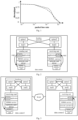
- the throughput of RDMA service read and write operations is shown in Fig. 1 .
- the short dashed line indicates the throughput of a read operation
- the long dashed line indicates the throughput of a write operation.
- the RDMA service is extremely sensitive to packet loss in Ethernet. When the packet loss rate in Ethernet exceeds 10 -3 , the effective throughput of the network drops sharply (the effective throughput is only about 75%). When the packet loss rate in Ethernet drops to 1%, the throughput of the RDMA service drops to 0.
- the packet loss rate needs to be less than one in 100,000, preferably there is no packet loss.
- RDMA services are mainly used in data centers, and are transmitted through lossless network combined with RoCE technology.
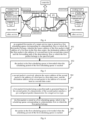
- all communication parties (comprising sending end and receiving end) belong to the same data center 1, and the lossless network comprises multiple spine nodes, such as spinel and spine2 in Fig. 2 , and also comprises multiple leaf nodes, such as leafl and leaf2 in Fig. 2 .
- the sending end and the receiving end are respectively provided with RDMA network cards.
- the network card driver drives the DMA network card to complete the transmission of the packet data of the RDMA service through the lossless network
- the receiving end drives the DMA network card by the network card driver to complete the reception of the packet data of the RDMA service through the lossless network and copy the packet data of the RDMA service to the buffer of the application.
- RDMA services expand also from inside a data center to between a data center and an edge computing center.
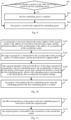
- WAN is needed to connect the data center and the edge computing center, which makes the communication parties of RDMA services distributed in different locations, as shown in Fig. 3 below.
- the RDMA service Without changing the existing implementation mechanism of an RDMA service, the RDMA service also puts forward the same requirements on the WAN connected between a data center and an edge computing center, which are mainly manifested in packet loss and time delay.
- packet loss in WAN one of which is excessive jitter caused by congestion, and the packet of an RDMA service is misjudged to be lost, which leads to the whole packet data of the RDMA service being retransmitted; in addition, in terms of time delay, if the time delay is sometimes big and sometimes small, it will also lead to a sharp decline in RDMA service performance.
- WAN carries a large number of various types of services, comprising video, voice, file transmission, etc.
- an example of the present disclosure provides a data processing method, which is applied to a network device in a WAN, which network device is located on a specified path from the gateway of the first data center to the gateway of the second data center, and the specific network architecture can be seen in Fig. 4 .
- the WAN comprises PE (Provider Edge) 1- PE2 and P (Provider) 1- P6, with PE1 being the gateway of data center 1 and PE2 being the gateway of data center 2.
- the data processing method provided by the example of the present disclosure can be implemented.
- the first data center and the second data center are any two data centers connected through a WAN, that is, the first data center and the second data center are located in different regions, such as data center 1 and data center 2 shown in Fig. 4 .
- the specified path is a predetermined path for transmitting packets from the gateway of the first data center to the gateway of the second data center, as shown in the thick solid line with double arrows in Fig. 4 .
- the network device may be the gateway of the first data center, the gateway of the second data center, or an intermediate device, and the intermediate device is a network device other than the gateway of the first data center and the gateway of the second data center on a specified path, such as P1, P2, P5 and P6 in Fig. 4 .
- the network device can be a router, a switch, a firewall device and another device with a communication function.
- the network device in the WAN stores the packet of the target service type with high requirements on network transmission reliability, such as RDMA services, in a specified scheduling queue, and forwards the packet in the scheduling queue when the scheduling period of the scheduling queue is reached. Because the scheduling period of the specified scheduling queue is determined, forwarding the packet of the target service type with high requirements on network transmission reliability in the scheduling period of the specified scheduling queue can ensure that the transmission delay and jitter of the packet of the target service type are limited, realize the deterministic and bounded delay transmission of the packet of the target service type, reduce the packet loss caused by uncertain time delay and jitter, and improve the performance of the RDMA services and other services with high requirements on network transmission reliability when applied to a WAN.
- network transmission reliability such as RDMA services
- Fig. 5 is a first schematic flow chart of a data processing method provided by an example of the present disclosure. The method is applied to a network device in a WAN, and the network device is located on a specified path from the gateway of a first data center to the gateway of a second data center, comprising the following blocks.
- an acquired first packet of a target service type is stored in a first scheduling queue corresponding to a deterministic flow to which the first packet belongs, wherein the source address of the first packet is the address of a first host in the first data center, the destination address of the first packet is the address of a second host in the second data center, and the forwarding path of the deterministic flow to which the first packet belongs is the specified path.
- the network device in the WAN stores the packet of the target service type with high requirements on network transmission reliability, such as RDMA services, in a specified scheduling queue, and forwards the packet in the scheduling queue when the scheduling period of the scheduling queue is reached. Because the scheduling period of the specified scheduling queue is determined, forwarding the packet of the target service type with high requirements on network transmission reliability in the scheduling period of the specified scheduling queue can ensure that the transmission delay and jitter of the packet of the target service type are limited, realize the deterministic and bounded delay transmission of the packet of the target service type, reduce the packet loss caused by uncertain time delay and jitter, and improve the performance of RDMA services and other services with high requirements on network transmission reliability when applied to the WAN.
- network transmission reliability such as RDMA services
- the service flow of the target service type may be the service flow of an RDMA service, or the service flow of any other service type with high requirements on network transmission reliability.
- One service flow of the target service type corresponds to one scheduling queue, and one scheduling queue can correspond to one or more service flows of the target service type, and the scheduling queue is used for buffering the received packets.
- the first packet is a packet of a service flow of a target service type, and the first packet can be a packet of the target service type sent by any host in the first data center to any host in the second data center.
- the service flow to which the first packet belongs is a deterministic flow
- the forwarding path of the deterministic flow to which the first packet belongs is the specified path, that is, the first packet is forwarded along the specified path.
- any host in the first data center is the first host
- any host in the second data center is the second host, which is not intended to limit the present disclosure.
- a lossless network can be used to transmit packets inside a data center.
- a host in the first data center transmits packets to the gateway of the first data center through the lossless network.
- the gateway of the second data center transmits the packet to the host in the second data center through the lossless network.
- the structure of the lossless network can be found in the lossless network structure in Fig. 2 and Fig. 3 above.
- the lossless network can be configured by an ECN (Explicit Congestion Notification), PFC (Priority Flow Control), DCBX (Data Center Bridging Exchange) and other technologies, which are not limited.
- the network device After acquiring the first packet of the target service type, the network device performs mapping and deterministic processing scheduling, that is, determines the scheduling queue corresponding to the service to which the first packet belongs, that is, determines the scheduling queue corresponding to the deterministic flow to which the first packet belongs.
- mapping and deterministic processing scheduling that is, determines the scheduling queue corresponding to the service to which the first packet belongs, that is, determines the scheduling queue corresponding to the deterministic flow to which the first packet belongs.
- the scheduling queue corresponding to the deterministic flow to which the packet of the target service type belongs is called the first scheduling queue, which is not intended to limit the present disclosure.
- the network device stores the first packet into the first scheduling queue.
- each scheduling queue corresponding to the deterministic flow of the target service type is configured with a scheduling period, and the scheduling period indicates the period for forwarding the packet in the corresponding scheduling queue.
- the scheduling period of the scheduling queue can be set by a controller according to packet transmission requirements, and can also be configured by the network device itself according to the initial time of starting the scheduling queue, link time delay and other information.
- the network device performs smooth shaping on the packet according to the period, for example, it can monitor the scheduling period of each scheduling queue in real time, and when the scheduling period of the first scheduling queue is monitored, the packet stored in the first scheduling queue, such as the above-mentioned first packet, is forwarded.
- the forwarding path of the deterministic flow to which the first packet belongs is the specified path, so when forwarding the first packet stored in the first scheduling queue, the first packet is actually forwarded along the specified path.
- the network device may be a gateway of the first data center, an intermediate device or a gateway of the second data center.
- the network devices are different types of devices, their data processing methods are different.
- an example of the present disclosure also provides a data processing method, as shown in Fig. 6 , which can comprise the following blocks.
- a second packet is received, wherein the source address of the second packet is the address of a first host in a first data center, and the destination address of the second packet is the address of a second host in a second data center.
- a first packet forwarded along a specified path is generated based on the second packet if a characteristic of the second packet matches a pre-configured packet characteristic for a target service type.
- the first packet is stored in a first scheduling queue, which is the scheduling queue corresponding to a deterministic flow to which the first packet belongs.
- Block S64 the packet in the first scheduling queue is forwarded when the scheduling period of the first scheduling queue is reached.
- Block S64 is same as the above block S52.
- the network device that is, the gateway of the first data center, identifies the packet of the target service type, and only transmits the packet of the target service type deterministically, but does not transmit the packet of other service types deterministically, which reduces the requirements of the network device and saves the bandwidth resources of the network device.
- the second packet may be a packet sent by any host in the first data center to any host in the second data center. That is, any host in the first data center can use lossless network technology to send the original packet to the gateway of the first data center.
- the gateway of the first data center receives the original packet sent by any host in the first data center, and the original packet received by the gateway of the first data center is the second packet.
- any host in the first data center is the first host
- any host in the second data center is the second host, for example, which is not intended to limit the present disclosure.
- the packet characteristic may comprise, but are not limited to, information such as port number, quintuple, etc.
- the gateway of the first data center extracts the characteristic of the second packet, identifies the packet of the target service type, that is, matches the characteristic of the second packet with the pre-configured packet characteristic for the target service type; if the characteristic of the second packet match the pre-configured packet characteristic for the target service type, that is, the characteristic of the second packet are the same as the pre-configured packet characteristic for the target service type, it means that the second packet is a packet of the target service type, and then a first packet is generated based on the second packet, which is forwarded along the specified path.
- the gateway of the first data center can determine the first scheduling queue corresponding to the deterministic flow to which the first packet belongs, that is, determine the first scheduling queue corresponding to the first packet, and then store the first packet in the first scheduling queue.
- the block of generating the first packet forwarded along the specified path in the above block S62 may comprise blocks S71-572.
- a target segment list corresponding to the specified path is obtained, wherein the segment identifier of the network device in the target segment list corresponds to the first scheduling queue.
- the gateway of the first data center can preset a segment list, i.e., segment identifier (SID) list, corresponding to the deterministic flow to which the packet of the target service type belongs, and the SID list corresponds to the specified path.
- SID segment identifier
- the SID information of the gateway of the first data center indicates the scheduling queue corresponding to the corresponding deterministic flow.
- the gateway of the first data center After receiving the second packet and determining that the second packet is the packet of the target service type, the gateway of the first data center obtains the segment list corresponding to the deterministic flow to which the second packet belongs, that is, the target segment list corresponding to the specified path, from the pre-stored segment list.
- the correspondence between the packet characteristic and the segment list is pre-stored in the gateway of the first data center.
- the gateway of the first data center extracts the characteristic of the second packet, and then obtains the segment list corresponding to the characteristic of the second packet as the target segment list according to the pre-stored correspondence between the packet characteristic and the segment list.
- the second packet is encapsulated as the first packet based on the target segment list, wherein the first packet is an SRv6 packet.
- the gateway of the first data center encapsulates the second packet as the first packet after obtaining the target segment list, for example, the second packet is encapsulated with an SRv6 header, which comprises the target segment list, and the second packet encapsulated with the SRv6 header is the first packet.
- the gateway of the first data center encapsulates the packet from the first data center as an SRv6 packet, and the header of the SRv6 packet comprises a segment list, which can uniquely indicate one path, namely the above-mentioned specified path, thus ensuring the deterministic transmission of the first packet.
- the controller may calculate the time delay and jitter of each path from the gateway of the first data center to the gateway of the second data center in advance, determine the path that meets the transmission indicator of the deterministic flow to which the first packet belongs, that is, the specified path, and then configure the route in each intermediate device on the specified path, so that the intermediate device can forward the first packet along the specified path when querying the route to forward the first packet after receiving the first packet.
- the gateway of the first data center can obtain the first SID of the gateway of the first data center and the second SID of the gateway of the second data center, and encapsulate the second packet as the first packet based on the first SID and the second SID, wherein the first packet is an SRv6 packet.
- the SRv6 header of the first packet may comprise an SRH (Segment Routing Header) or not.
- the SRv6 header of the first packet comprises an SRH
- the SRH in the SRv6 header of the first packet comprises a first SID and a second SID
- the source IP address of the IPv6 basic header in the SRv6 header of the first packet is the first SID and the destination IP address is the second SID
- the SRv6 header of the first packet comprises an SRH
- the source IP address of the IPv6 basic header in the SRv6 header of the first packet is the first SID
- the destination IP address is the second SID.
- the gateway of the first data center can determine the first scheduling queue based on the source IP address of the IPv6 basic header, and then store the first packet in the first scheduling queue. Accordingly, the gateway of the second data center can determine the first scheduling queue based on the destination IP address of the IPv6 basic header, and then store the first packet in the first scheduling queue.
- the gateway of the first data center can also generate the first packet forwarded along the specified path in other ways, which is not limited.
- an example of the present disclosure also provides a data processing method, as shown in Fig. 8 , which can comprise the following blocks.
- a second packet is received, wherein the source address of the second packet is the address of a first host in a first data center, and the destination address of the second packet is the address of a second host in a second data center.
- the first packet forwarded along the specified path is generated based on the second packet if the characteristic of the second packet matches the pre-configured packet characteristic for the target service type.
- the first packet in the first scheduling queue is stored, which is the scheduling queue corresponding to the deterministic flow to which the first packet belongs.
- the packet in the first scheduling queue is forwarded when the scheduling period of the first scheduling queue is reached.
- Blocks S81-S84 are the same as the above blocks S61-S64.
- a second scheduling queue is determined according to whether a packet of the target service type is received within a preset duration before the current moment if the characteristic of the second packet does not match the pre-configured packet characteristic for the target service type.
- the second packet is stored in the second scheduling queue.
- the gateway of the first data center can determine a scheduling queue in the scheduling queue of the network device as the second scheduling queue according to whether a packet of a target service type is received within a preset duration before the current moment, and store the second packet in the second scheduling queue.
- the gateway of the first data center can also determine the second scheduling queue corresponding to the characteristic of the second packet according to the pre-stored correspondence between the packet characteristic and the scheduling period, and then store the second packet in the second scheduling queue.
- the gateway of the first data center can also determine the second scheduling queue corresponding to the time slot for receiving the second packet according to the pre-stored correspondence between the time slot and the scheduling period, and then store the second packet in the second scheduling queue.
- the gateway of the first data center can determine the second scheduling queue, such as randomly selecting a scheduling queue as the second scheduling queue, which is not limited.
- the scheduling queue range of the second scheduling queue can be adjusted according to the actual situation.
- the gateway of the first data center can detect whether a packet of the target service type is received within a preset duration before the current moment. If the packet of the target service type is not received within the preset duration before the current moment, it means that there is the packet of the target service type in the current WAN, and the scheduling queue range of the second scheduling queue is determined to be all scheduling queues in the network device, that is, the second scheduling queue is determined from all scheduling queues in the network device.
- the gateway of the first data center preferably uses the first scheduling queue for the packet of the target service type, thus ensuring the deterministic transmission of the packet of the target service type and improving the availability of queue resources.
- the gateway of the first data center can pre-configure the packet forwarding mode of a non-target service type.
- the gateway of the first data center can process the second packet according to the pre-configured packet forwarding mode of the non-target service type, and store the processed second packet in the second scheduling queue.
- the above packet forwarding mode can be set according to the actual requirements of non-target service types.
- the packet forwarding mode may be to forward the original packet, in which case, the gateway of the first data center will directly store the received second packet to the second scheduling queue.
- the packet forwarding mode may be to forward the SRv6 packet, in which case, the gateway of the first data center will encapsulate the received second packet as an SRv6 packet, and store the encapsulated second packet in the second scheduling queue.
- the SRv6 header of the encapsulated second packet may or may not comprise an SRH.
- the encapsulated second packet is an SRv6 packet and the first packet is also an SRv6 packet
- the information carried in the SRv6 header of the encapsulated second packet and the first packet will be different.
- the segment identifier of the gateway of the first data center in the segment list of the first packet corresponds to a scheduling queue, while there is no scheduling queue corresponding to the segment identifier of the gateway of the first data center in the segment list of the second packet. Based on this, it is convenient for the intermediate device on the specified path and the gateway of the second data center to distinguish the packet of the target service type from the packet of the non-target service type.
- the packet in the second scheduling queue is forwarded according to the forwarding strategy corresponding to the second scheduling queue.
- the forwarding strategy corresponding to the second scheduling queue can be first-in-first-out, that is, the gateway of the first data center can extract the packets in the second scheduling queue in a first-in-first-out mode, then query the routing table and forward the packets in the second scheduling queue according to the query result.
- the gateway of the first data center stores two scheduling queues, namely queue 1 and queue 2.
- the gateway of the first data center stores the packet of non-target service type in queue 1 first, and then stores the packet of non-target service type in queue 2.
- the gateway of the first data center forwards the packet stored in queue 1 first, and then converts the packet stored in queue 2.
- the forwarding strategy corresponding to the second scheduling queue can also be forwarding according to the scheduling period of the scheduling queue, that is, when the gateway of the first data center reaches the scheduling period of the second scheduling queue, it can extract the packets in the second scheduling queue, then query the routing table and forward the packets in the second scheduling queue according to the query result.
- the forwarding strategy corresponding to the second scheduling queue may be in other forms, which is not limited.
- the above blocks S63 and S83 may comprise blocks S91-S93.
- block S91 it is detected whether a packet of any other service type is stored in the first scheduling queue. If yes, block S92 is executed; if not, it means that the first scheduling queue is the emptied first scheduling queue, and block S93 is executed.
- the first scheduling queue is a scheduling queue reserved for packets of the target service type.
- the gateway of the first data center can store the packets of other service types in the first scheduling queue when there are no packets of the target service type in the current WAN, as described in blocks S85-S86.
- a packet of the target service type When a packet of the target service type is received, such as the first packet, it means that there is no packet of the target service type in the current WAN, and the gateway of the first data center empties the first scheduling queue, such as discards packets of other service types stored in the first scheduling queue, or transferring packets of other service types stored in the first scheduling queue to other scheduling queues.
- the first packet is stored in the emptied first scheduling queue.
- the gateway of the first data center after empting the first scheduling queue, stores the first packet in the first scheduling queue, which prevents packets of other service types from occupying deterministic transmission resources and ensures the deterministic transmission of packets of the target service type.
- an example of the present disclosure also provides a data processing method, as shown in Fig. 10 , which can comprise the following blocks.
- a second packet is received, wherein the source address of the second packet is the address of a first host in the first data center, and the destination address of the second packet is the address of a second host in the second data center.
- the target segment list is obtained from the second packet if the second packet is an SRv6 packet, and the network device supports SRv6.
- the second packet is taken as the first packet of the target service type, and the first packet is stored in the first scheduling queue, which is the scheduling queue corresponding to the deterministic flow to which the first packet belongs.
- block S104 the packet is forwarded in the first scheduling queue when the scheduling period of the first scheduling queue is reached.
- Block 5104 is same as the above block S52.
- the gateway of the first data center encapsulates the packet from the first data center as an SRv6 packet, and the header of the SRv6 packet comprises a segment list, which can uniquely indicate one path, namely the above-mentioned specified path, thus ensuring the deterministic transmission of the packet of the target service type.
- the second packet received by the intermediate device or the gateway of the second data center is a packet forwarded by a host in the first data center through the gateway of the first data center.
- the second packet received by the intermediate device or the gateway of the second data center may be an original packet of a non-target service type forwarded by the gateway of the first data center, or the first packet of the target service type processed by the gateway of the first data center, or a packet obtained by encapsulating a packet of a non-target service type.
- the packet of the target service type is an SRv6 packet.
- the intermediate device monitors that the second packet is an SRv6 packet, and the intermediate device supports SRv6, the second packet is parsed to obtain the target segment list carried by the second packet.
- the gateway of the first data center encapsulates the packet of the target service type as an SRv6 packet, and then transmits the SRv6 packet.
- the gateway of the first data center obtains the SRv6 packet of the target service type, please refer to the example shown in Fig. 7 above.
- the intermediate device determines the second scheduling queue according to whether a packet of a target service type is received within a preset duration before the current moment, and stores the second packet in the second scheduling queue; and forwards the packet in the second scheduling queue according to the forwarding strategy corresponding to the second scheduling queue.
- the specific implementation of storing the second packet in the second scheduling queue and forwarding the packet in the second scheduling queue please refer to the related description of the above blocks S85-S87, which will not be repeated here.
- the intermediate device can pre-store the SID list corresponding to the deterministic flow to which the packet of the target service type belongs, and the SID information of the intermediate device in the SID list indicates the scheduling queue corresponding to the corresponding deterministic flow.
- the intermediate device determines the scheduling queue corresponding to the segment identifier of the intermediate device in the target segment list, that is, the first scheduling queue corresponding to the deterministic flow to which the first packet belongs. If the first scheduling queue is determined, it can mean that the second packet is the first packet of the target service type, and then the first packet is stored in the first scheduling queue.
- the SRv6 packet of the target service type may also carry indication information, which indicates that the segment identifier of this intermediate device in the target segment list corresponds to the first scheduling queue.
- the indication information can be added in the SID list or in any position of the load of the packet.
- the intermediate device determines whether the first packet carries the above indication information. If so, the first packet can be stored in the first scheduling queue indicated by the indication information.
- the second packet is an SRv6 packet
- the intermediate device supports SRv6, but no target segment list is obtained from the second packet, or the first scheduling queue corresponding to the segment identifier of this intermediate device in the target segment list is not determined, that is, there is no scheduling queue corresponding to the segment identifier of the intermediate device in the target segment list
- the second packet can be considered as a packet of a non-target service type
- the intermediate device determines the second scheduling queue according to whether a packet of a target service type is received within the preset duration before the current moment; forwards the packet in the second scheduling queue according to the forwarding strategy corresponding to the second scheduling queue.
- the specific implementation of storing the second packet in the second scheduling queue and forwarding the packet in the second scheduling queue please refer to the related description of the above blocks S85-S87, which will not be repeated here.
- the intermediate device does not need to determine whether the second packet is a packet of the target service type, and instead can directly determine the second scheduling queue according to whether a packet of a target service type is received within a preset duration before the current moment, and store the second packet in the second scheduling queue; and forward the packet in the second scheduling queue according to the forwarding strategy corresponding to the second scheduling queue.
- non-target service types there are two types of packets for non-target service types: original packets and encapsulated packets.
- the gateway of the second data center can directly forward the original packet in the second scheduling queue when forwarding the packet in the second scheduling queue.
- the gateway of the second data center can obtain the original packet corresponding to the packet in the second scheduling queue; then forward the original packet to the second data center.
- the encapsulated packet is an SRv6 packet.
- the gateway of the second data center forwards the packet in the second scheduling queue, the SRv6 encapsulation of the packet in the second scheduling queue can be removed to obtain the original packet, and then the original packet is forwarded to the second data center.
- storing the first packet in the first scheduling queue in block S103 may comprise: if a packet of any other service type have been stored in the first scheduling queue, the intermediate device emptying the first scheduling queue; and storing the first packet in the emptied first scheduling queue.
- a packet of any other service type have been stored in the first scheduling queue, the intermediate device emptying the first scheduling queue; and storing the first packet in the emptied first scheduling queue.
- block S104 in Fig. 10 may comprise blocks S111-S112.
- the packet of the target service type is an SRv6 packet
- the packet in the first scheduling queue is a packet of the target service type.
- the original packet is forwarded to the second host in the second data center.
- the gateway of the second data center removes the SRv6 encapsulation of the first packet to obtain the original packet, and then forwards the original packet to the second host in the second data center, which is convenient for the second host in the data center to process the original packet.
- a controller can be deployed in the WAN, such as the controller in Fig. 4 , and the controller can be an SDN (Software Defined Network) controller or controller of another type.
- SDN Software Defined Network
- the information pre-stored in the gateway of the first data center, the intermediate device and the gateway of the second data center, such as the SID list, the first scheduling queue corresponding to the deterministic flow to which the packet of the target service type belongs, the scheduling period of the first scheduling queue, the packet characteristic for the target service type, the correspondence between the first scheduling queue and the segment identifier of the network device in the target segment list, and the encapsulation information of the SRv6 packet, can be uniformly issued by the controller.
- the controller issues first path information to each network device, wherein the first path information comprises scheduling information and the scheduling period of the first scheduling queue, and the scheduling information indicates that the deterministic flow to which the packet of the target service type belongs corresponds to the first scheduling queue; the network device stores that received first path information, associates the deterministic flow to which the packet of the target service type belongs with the first scheduling queue in the network device based on the first path information, and configures the scheduling period of the first scheduling queue in the network device according to the scheduling period comprised in the first path information.
- the controller issues second path information to each network device, wherein the second path information one or more of: the target segment list corresponding to the specified path, the packet characteristic for the target service type, and the correspondence between the first scheduling queue and the segment identifier of the network device in the target segment list; the network device stores the received second path information, and performs at least one of the following operations based on the first path information:
- all information comprised in the first path information and the second path information can be issued by the controller; part of the information comprised in the first path information and the second path information is issued by the controller, and the information not issued by the controller is replaced by the information stored locally by the network device.
- the network device when forwarding the packet of the target service type, the network device will configure the relevant information in the network device based on the first path information issued by the controller and the second path information pre-stored by the network device to assistant the network device to forward the packet.
- the controller completes the configuration of path information in each network device, which facilitates the unified management of each network device in the WAN and ensures the deterministic transmission of the packet of the target service type.
- the controller can collect the specified network resource information of the WAN and establish the whole network resource model.
- the specified network resource information may comprise one or more of: network topology information, network bandwidth, network time delay and network jitter.
- the controller collects the transmission indicator of the deterministic flow of the target service type, calculates the deterministic path satisfying the transmission indicator and the encapsulation information of SRv6 packet according to the collected specified network resource information and the transmission indicator of the deterministic flow combined with the packet characteristic for the target service type to obtain the first path information and the second path information.
- the controller can obtain specified network resource information by detecting the WAN through an in-band network telemetry.
- the specified network resource information obtained through detection based on in-band network telemetry can accurately estimate the time delay and jitter required by each path, and then determine the deterministic path that meets the transmission indicator, and send the first path information and the second path information corresponding to the deterministic path to each network device.
- the time delay and jitter required by each path can be accurately estimated by in-band network telemetry.
- the selected deterministic path can be guaranteed to be valid within the QoS (Quality of Service) constraint range, and deterministic transmission can be realized, which reduces the requirements on the intermediate devices and further saves the network deployment cost.
- QoS Quality of Service
- the controller can flexibly schedule the resources of the WAN according to the specific service requirements, without occupying fixed bandwidth and other network resources, thus improving the network use efficiency.
- the data processing method provided by the example of the present disclosure has high network use efficiency and low requirements on network device, realizes deterministic transmission with bounded time delay, and can support more future application scenarios with WAN lossless requirements.
- Block 1 A host for a RDMA service in data center 1 sends an original packet to gateway PE1 through lossless network technology in data center 1.
- PE1 carries out the WAN data processing process starting from receiving the original packet. See Block 2.
- Block 2 PE1 identifies the packet of the RDMA service according to the packet characteristic for the RDMA service configured by the controller, performs mapping, deterministic processing and scheduling, performs smooth shaping on the packet according to the period, encapsulates it to obtain a corresponding SRv6 packet, and sends it to the intermediate device P. Please refer to the above description for Figs. 5-9 .
- Block 3 the device P analyzes the SID information carried in the SRv6 packet, performs deterministic related processing scheduling, and sends the SRv6 packet to the gateway PE2 of the data center 2.
- the gateway PE2 of the data center 2.
- Block 4 PE2 performs deterministic processing scheduling according to the SID information carried in the SRv6 packet, removes the SRv6 encapsulation, and sends the original packet to the device inside the data center 2. At this point, the data processing in the WAN is finished.
- PE2 performs deterministic processing scheduling according to the SID information carried in the SRv6 packet, removes the SRv6 encapsulation, and sends the original packet to the device inside the data center 2. At this point, the data processing in the WAN is finished.
- Fig. 5 and Figs. 10-11 please refer to the above description for Fig. 5 and Figs. 10-11 .
- the deterministic solution of WAN is combined with the lossless network technology in the data center, which can reduce the packet loss rate and realize the deterministic and bounded delay in the transmission process of RoCE service packets, and expand the lossless network technology from inside the data center to the WAN, thus achieving the effect of end-to-end lossless network across data centers.
- server 1 and server 2 send RoCE service packets, and simulate the delay and jitter parameters on the damage meter to observe and record the throughput of RoCE services.
- an example of the present disclosure provides a data processing apparatus, as shown in Fig. 13 , which is applied to a network device in a WAN, wherein the network device is located on a specified path from a gateway of a first data center to a gateway of a second data center, and the apparatus comprises:
- the network device is the gateway of the first data center.
- the first storage unit 131 can be specifically to:
- the first storage unit 131 may be specifically to:
- the first storage unit 131 may be further to determine a second scheduling queue according to whether a packet of the target service type is received within a preset duration before a current moment if the characteristic of the second packet does not match the pre-configured packet characteristic for the target service type, and store the second packet in the second scheduling queue; and the forwarding unit 132 may be further to forward the packet in the second scheduling queue according to a forwarding strategy corresponding to the second scheduling queue.
- the first storage unit 131 may be further to:
- the forwarding unit 132 may be specifically to:
- the forwarding unit 132 may be specifically to:
- the first storage unit 131 may be specifically to:
- the forwarding unit 132 may be specifically to:
- the first storage unit 131 may be specifically to:
- the above data processing apparatus may further comprise:
- the above data processing apparatus may further comprise:
- the first path information and the second path information may be determined by the controller according to specified network resource information of the WAN and a transmission indicator of the deterministic flow of the target service type.
- the specified network resource information may be obtained by detecting, by the controller, the WAN through an in-band network telemetry.
- the specified network resource information may comprise one or more of: network topology information, network bandwidth, network time delay and network jitter.
- the network device in a WAN stores the packet of a target service type with high requirements on network transmission reliability, such as RDMA services, in a specified scheduling queue, and forwards the packet in the scheduling queue when the scheduling period of the scheduling queue is reached. Because the scheduling period of the specified scheduling queue is determined, forwarding the packet of the target service type with high requirements on network transmission reliability in the scheduling period of the specified scheduling queue can ensure that the transmission delay and jitter of the packet of the target service type are limited, realize the deterministic and bounded time delay transmission of the packet of the target service type, reduce the packet loss caused by uncertain time delay and jitter, and improve the performance of RDMA services and other services with high requirements on network transmission reliability when applied to the WAN.
- a target service type with high requirements on network transmission reliability such as RDMA services
- the packet in the corresponding scheduling queue can be forwarded according to the specified scheduling period, and the deterministic and bounded time delay transmission of the service packet with high requirements on network transmission reliability can be realized.
- the technical solution provided by the example of the present disclosure reduces the requirements on the network device and saves the network deployment cost.
- An example of the present disclosure also provides a network device, as shown in Fig. 14 , which comprises a processor 141 and a machine-readable storage medium 142.
- the machine-readable storage medium 142 have stored therein machine-executable instructions that can be executed by the processor 141 to cause the processor 141 to perform the method described in any of the examples of Figs. 4-12 above.
- the network device may be a gateway of the first data center, an intermediate device or a gateway of the second data center.
- the machine readable storage medium may include a random access memory (RAM), or may include a non-volatile memory (NVM), for example at least one disk memory.
- the machine readable storage medium may also be at least one storage apparatus located away from the processor described above.
- the processor can be a general-purpose processor, such as a central processing unit (CPU), a network processor (NP), or the like; it can also be a digital signal processor (DSP), an application specific integrated circuit (ASIC), a field-programmable gate array (FPGA) or other programmable logic apparatus, a discrete gate or transistor logic apparatus, a discrete hardware component.
- CPU central processing unit
- NP network processor
- DSP digital signal processor
- ASIC application specific integrated circuit
- FPGA field-programmable gate array
- a machine-readable storage medium having stored therein a computer program which, when executed by a processor, cause the processor to perform he method described in any of the above-mentioned examples of Figs. 2- 12 .
- a computer program is also provided which, when executed by a processor, causes the processor to perform the method described in any of the above-mentioned examples of Figs. 2- 12 .
- the aforementioned examples it may be implemented in whole or in part by software, hardware, firmware, or any combination thereof.
- software it may be implemented in whole or in part in the form of a computer program product.
- the computer program product comprises one or more computer instructions.
- the processes or functions described in accordance with the examples of the present disclosure is produced in whole or in part, when the computer program instructions are loaded and executed on a computer.
- the computer may be a general-purpose computer, a dedicated computer, a computer network, or other programmable apparatus.
- the computer instructions may be stored in a computer-readable storage medium or may be transmitted from one computer-readable storage medium to another computer-readable storage medium, for example, the computer instructions may be transmitted from a web site, a computer, a server, or a data center to another web site, another computer, another server, or another data center via a cable (such as a coaxial cable, an optical fiber, a digital subscriber line (DSL)) or wireless (such as infrared, wireless, microwave, etc.).
- the computer-readable storage medium may be any available medium that may be accessed by a computer or a data storage apparatus such as a server or a data center containing one or more available medium integrations.
- the available media may be magnetic media (such as floppy disks, hard disks, magnetic tapes), optical media (such as DVDs), or semiconductor media (such as solid state disk (SSD)), etc.
Landscapes
- Engineering & Computer Science (AREA)
- Computer Networks & Wireless Communication (AREA)
- Signal Processing (AREA)
- Data Exchanges In Wide-Area Networks (AREA)
Applications Claiming Priority (1)
| Application Number | Priority Date | Filing Date | Title |
|---|---|---|---|
| PCT/CN2022/122841 WO2024065481A1 (zh) | 2022-09-29 | 2022-09-29 | 一种数据处理方法、装置、网络设备及存储介质 |
Publications (2)
| Publication Number | Publication Date |
|---|---|
| EP4425876A1 true EP4425876A1 (de) | 2024-09-04 |
| EP4425876A4 EP4425876A4 (de) | 2025-01-15 |
Family
ID=90475391
Family Applications (1)
| Application Number | Title | Priority Date | Filing Date |
|---|---|---|---|
| EP22960117.4A Pending EP4425876A4 (de) | 2022-09-29 | 2022-09-29 | Datenverarbeitungsverfahren und -vorrichtung sowie netzwerkvorrichtung und speichermedium |
Country Status (3)
| Country | Link |
|---|---|
| EP (1) | EP4425876A4 (de) |
| CN (1) | CN118120209A (de) |
| WO (1) | WO2024065481A1 (de) |
Families Citing this family (1)
| Publication number | Priority date | Publication date | Assignee | Title |
|---|---|---|---|---|
| CN121077997B (zh) * | 2025-11-10 | 2026-02-13 | 中国人民解放军国防科技大学 | 一种基于确定性调度的rdma传输方法、系统及装置 |
Family Cites Families (8)
| Publication number | Priority date | Publication date | Assignee | Title |
|---|---|---|---|---|
| US20160380886A1 (en) * | 2015-06-25 | 2016-12-29 | Ciena Corporation | Distributed data center architecture |
| US10547540B2 (en) * | 2015-08-29 | 2020-01-28 | Vmware, Inc. | Routing optimization for inter-cloud connectivity |
| CN110336759B (zh) * | 2018-12-26 | 2022-04-26 | 锐捷网络股份有限公司 | 基于rdma的协议报文转发方法及装置 |
| CN112448885B (zh) * | 2019-08-27 | 2023-06-06 | 华为技术有限公司 | 一种业务报文传输的方法及设备 |
| US11304115B2 (en) * | 2020-03-18 | 2022-04-12 | Equinix, Inc. | Network defined edge routing for an application workload |
| WO2022146466A1 (en) * | 2020-12-30 | 2022-07-07 | Oracle International Corporation | Class-based queueing for scalable multi-tenant rdma traffic |
| CN113472646B (zh) * | 2021-05-31 | 2023-02-10 | 华为技术有限公司 | 一种数据传输方法、节点、网络管理器及系统 |
| WO2023283902A1 (zh) * | 2021-07-15 | 2023-01-19 | 新华三技术有限公司 | 一种报文传输方法及装置 |
-
2022
- 2022-09-29 WO PCT/CN2022/122841 patent/WO2024065481A1/zh not_active Ceased
- 2022-09-29 EP EP22960117.4A patent/EP4425876A4/de active Pending
- 2022-09-29 CN CN202280003396.8A patent/CN118120209A/zh active Pending
Also Published As
| Publication number | Publication date |
|---|---|
| CN118120209A (zh) | 2024-05-31 |
| WO2024065481A1 (zh) | 2024-04-04 |
| EP4425876A4 (de) | 2025-01-15 |
| US20250039106A1 (en) | 2025-01-30 |
Similar Documents
| Publication | Publication Date | Title |
|---|---|---|
| US11184267B2 (en) | Intelligent in-band telemetry auto-configuration for IP networks | |
| EP4024778B1 (de) | Verfahren zur bestimmung der erforderlichen bandbreite zur datenstromübertragung sowie vorrichtungen und system | |
| CN113676361A (zh) | 针对体验质量度量的按需探测 | |
| CN114006937B (zh) | 应用服务级别协议的动态预测和管理 | |
| CN113542008B (zh) | 一种网络的oam方法及装置 | |
| EP3291493A1 (de) | Steuerung von netzwerkknoten in computernetzwerksystemen | |
| US12047295B2 (en) | Microburst detection and management | |
| US20090003225A1 (en) | Method and apparatus for probing of a communication network | |
| CN107770085B (zh) | 一种网络负载均衡方法、设备及系统 | |
| US8270309B1 (en) | Systems for monitoring delivery performance of a packet flow between reference nodes | |
| JP7623039B2 (ja) | パケット処理方法及び装置 | |
| US11888680B1 (en) | Early detection of telemetry data streaming interruptions | |
| US20240333824A1 (en) | Service Processing Method, Apparatus, and System | |
| CN116545936A (zh) | 拥塞控制方法、系统、装置、通信设备及存储介质 | |
| EP4425876A1 (de) | Datenverarbeitungsverfahren und -vorrichtung sowie netzwerkvorrichtung und speichermedium | |
| WO2022152230A1 (zh) | 信息流识别方法、网络芯片及网络设备 | |
| CN106464670A (zh) | 网络实体及服务策略管理方法 | |
| WO2026008024A1 (zh) | 通信方法、通信装置、通信设备、及存储介质 | |
| US12621249B2 (en) | Data processing method, apparatus, network device and storage medium | |
| JP3781663B2 (ja) | トラヒック情報収集装置およびトラヒック情報収集方法およびプログラムおよび記録媒体 | |
| CN113055291B (zh) | 一种数据包发送方法、路由器、数据包传输系统 | |
| EP3761579B1 (de) | Datenübertragungsverfahren und zugehörige vorrichtung | |
| JP2015220563A (ja) | 可用帯域を推定する情報処理装置、情報処理システム、可用帯域推定方法、及びそのためのプログラム | |
| CN110545196A (zh) | 一种数据传输方法及相关网络设备 | |
| CN121240046A (zh) | 用户业务计费方法、网元及相关设备 |
Legal Events
| Date | Code | Title | Description |
|---|---|---|---|
| STAA | Information on the status of an ep patent application or granted ep patent |
Free format text: STATUS: THE INTERNATIONAL PUBLICATION HAS BEEN MADE |
|
| PUAI | Public reference made under article 153(3) epc to a published international application that has entered the european phase |
Free format text: ORIGINAL CODE: 0009012 |
|
| STAA | Information on the status of an ep patent application or granted ep patent |
Free format text: STATUS: REQUEST FOR EXAMINATION WAS MADE |
|
| 17P | Request for examination filed |
Effective date: 20240529 |
|
| AK | Designated contracting states |
Kind code of ref document: A1 Designated state(s): AL AT BE BG CH CY CZ DE DK EE ES FI FR GB GR HR HU IE IS IT LI LT LU LV MC MK MT NL NO PL PT RO RS SE SI SK SM TR |
|
| REG | Reference to a national code |
Ref country code: DE Ref legal event code: R079 Free format text: PREVIOUS MAIN CLASS: H04L0045120000 Ipc: H04L0045302000 |
|
| A4 | Supplementary search report drawn up and despatched |
Effective date: 20241212 |
|
| RIC1 | Information provided on ipc code assigned before grant |
Ipc: H04L 47/62 20220101ALI20241209BHEP Ipc: H04L 45/00 20220101ALI20241209BHEP Ipc: H04L 45/12 20220101ALI20241209BHEP Ipc: H04L 45/302 20220101AFI20241209BHEP |
|
| DAV | Request for validation of the european patent (deleted) | ||
| DAX | Request for extension of the european patent (deleted) |