EP4412271A1 - Verfahren und vorrichtung zur verarbeitung benutzerbezogener datendienste und netzwerkelement - Google Patents
Verfahren und vorrichtung zur verarbeitung benutzerbezogener datendienste und netzwerkelement Download PDFInfo
- Publication number
- EP4412271A1 EP4412271A1 EP22874787.9A EP22874787A EP4412271A1 EP 4412271 A1 EP4412271 A1 EP 4412271A1 EP 22874787 A EP22874787 A EP 22874787A EP 4412271 A1 EP4412271 A1 EP 4412271A1
- Authority
- EP
- European Patent Office
- Prior art keywords
- data
- user
- information
- data service
- service
- Prior art date
- Legal status (The legal status is an assumption and is not a legal conclusion. Google has not performed a legal analysis and makes no representation as to the accuracy of the status listed.)
- Pending
Links
Images


Classifications
-
- H—ELECTRICITY
- H04—ELECTRIC COMMUNICATION TECHNIQUE
- H04W—WIRELESS COMMUNICATION NETWORKS
- H04W12/00—Security arrangements; Authentication; Protecting privacy or anonymity
- H04W12/06—Authentication
-
- H—ELECTRICITY
- H04—ELECTRIC COMMUNICATION TECHNIQUE
- H04L—TRANSMISSION OF DIGITAL INFORMATION, e.g. TELEGRAPHIC COMMUNICATION
- H04L63/00—Network architectures or network communication protocols for network security
- H04L63/08—Network architectures or network communication protocols for network security for authentication of entities
-
- H—ELECTRICITY
- H04—ELECTRIC COMMUNICATION TECHNIQUE
- H04L—TRANSMISSION OF DIGITAL INFORMATION, e.g. TELEGRAPHIC COMMUNICATION
- H04L63/00—Network architectures or network communication protocols for network security
- H04L63/08—Network architectures or network communication protocols for network security for authentication of entities
- H04L63/0892—Network architectures or network communication protocols for network security for authentication of entities by using authentication-authorization-accounting [AAA] servers or protocols
-
- H—ELECTRICITY
- H04—ELECTRIC COMMUNICATION TECHNIQUE
- H04W—WIRELESS COMMUNICATION NETWORKS
- H04W12/00—Security arrangements; Authentication; Protecting privacy or anonymity
- H04W12/08—Access security
-
- H—ELECTRICITY
- H04—ELECTRIC COMMUNICATION TECHNIQUE
- H04W—WIRELESS COMMUNICATION NETWORKS
- H04W60/00—Affiliation to network, e.g. registration; Terminating affiliation with the network, e.g. de-registration
- H04W60/04—Affiliation to network, e.g. registration; Terminating affiliation with the network, e.g. de-registration using triggered events
Definitions
- This application pertains to the field of communication technologies, and specifically relates to a method and an apparatus for processing a user-related data service and a network element.
- a network data analytics function (Network Data Analytics Function, NWDAF) is one of network functions of a core network-control plane of 5th-generation (5th-Generation, 5G) mobile communication, and is limited only to subscription events provided by the network functions of the control plane of the 5G core network, and does not support data collection of a core network-user plane, a radio access network, and user equipment (User Equipment, UE).
- NWDAF Network Data Analytics Function
- NWDAF Network Data Analytics Function
- NWDAF Network Data Analytics Function
- Embodiments of this application provide a method and an apparatus for processing a user-related data service and a network element, to resolve the problem that an existing network does not support authorization and registration of a user-related data service.
- a method for processing a user-related data service including:
- an apparatus for processing a user-related data service where the apparatus is used in a first data plane function, and the apparatus includes:
- a network element including a first data plane function includes a processor, a memory, and a program or an instruction that is stored in the memory and that can be run on the processor, where when the program or the instruction is executed by the processor, the steps of the method according to the first aspect are implemented.
- a network element having a first data plane function including a processor and a communication interface, where the communication interface is used to obtain user authorization information of a user-related data service; and the processor is configured to perform a first operation according to the user authorization information, where the first operation includes at least one of the following: determining whether to receive a user-related data service request; performing authentication and/or security configuration for a user; and establishing a user-level data service anchor for the user.
- a readable storage medium stores a program or an instruction, and when the program or the instruction is executed by a processor, the steps of the method according to the first aspect are implemented.
- a chip is provided, where the chip includes a processor and a communication interface, where the communication interface is coupled to the processor, and the processor is configured to run a program or an instruction to implement the method according to the first aspect.
- a computer program product is provided.
- the computer program product is stored in a non-transient storage medium.
- the computer program product is executed by at least one processor to implement the steps of the method according to the first aspect.
- an embodiment of this application provides a communication device, where the communication device is configured to perform the method according to the first aspect.
- the first user plane function determines whether to accept the user-related data service request, and/or performs authentication and/or security configuration for the user, and/or establishes the user-level data service anchor for the user, to authorize and register the user-related data service, so that the user has a complete control right over personal data, including data monetization according to a personal wish, data sharing within a set range according to a personal wish, and canceling or modifying an access permission according to changes.
- first, second, and the like in this specification and claims of this application are used to distinguish between similar objects instead of describing a specific order or sequence. It should be understood that, the terms used in such a way are interchangeable in proper circumstances, so that the embodiments of this application can be implemented in an order other than the order illustrated or described herein.
- Objects classified by “first” and “second” are usually of a same type, and the number of objects is not limited. For example, there may be one or more first objects.
- "and/or" represents at least one of connected objects, and the character “/” generally represents an "or” relationship between associated objects.
- technologies described in the embodiments of this application are not limited to a long time evolution (Long Time Evolution, LTE)/LTE-advanced (LTE-Advanced, LTE-A) system, and may further be applied to other wireless communication systems such as code division multiple access (Code Division Multiple Access, CDMA), time division multiple access (Time Division Multiple Access, TDMA), frequency division multiple access (Frequency Division Multiple Access, FDMA), orthogonal frequency division multiple access (Orthogonal Frequency Division Multiple Access, OFDMA), single-carrier frequency division multiple access (Single-carrier Frequency-Division Multiple Access, SC-FDMA), and other systems.
- code division multiple access Code Division Multiple Access
- TDMA time division multiple access
- FDMA frequency division multiple access
- OFDMA Orthogonal frequency division multiple access
- SC-FDMA single-carrier Frequency-Division Multiple Access
- SC-FDMA single-carrier Frequency-Division Multiple Access
- the technologies described can be applied to both the systems and the radio technologies mentioned above as well as to other systems and radio technologies.
- the following descriptions describe a new radio (New Radio, NR) system for example purposes, and NR terms are used in most of the following descriptions, but these technologies can also be applied to an application other than an NR system application, for example, a 6 th generation (6th Generation, 6G) communication system.
- NR New Radio
- 6G 6th Generation
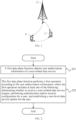
- FIG. 1 is a block diagram of a wireless communication system to which embodiments of this application are applicable.
- the wireless communication system includes a terminal 11 and a network side device 12.
- the terminal 11 may be a terminal side device such as a mobile phone, a tablet personal computer (Tablet Personal Computer), a laptop computer (Laptop Computer) (or referred to as a notebook computer), a personal digital assistant (Personal Digital Assistant, PDA), a palmtop computer, a netbook, an ultra-mobile personal computer (ultra-mobile personal computer, UMPC), a mobile internet device (Mobile Internet Device, MID), an augmented reality (Augmented reality, AR)/virtual reality (virtual Reality, VR) device, a robot, a wearable device (Wearable Device), vehicle user equipment (VUE), pedestrian user equipment (PUE), or a smart home (a home device having a wireless communication function, such as a refrigerator, a television, a washing machine, or furniture).
- a wireless communication function such as a refrigerator,
- the wearable device includes: a smartwatch, a smart bracelet, a smart headphone, smart glasses, smart jewelry (a smart bangle, a smart bracelet, a smart ring, a smart necklace, a smart anklet, a smart ankle chain, and the like), a smart wristband, smart clothing, a game console, and the like.
- the network side device 12 may be a base station or a core network.
- the base station may be referred to as a NodeB, an evolved NodeB, an access point, a base transceiver station (Base Transceiver Station, BTS), a radio base station, a radio transceiver, a basic service set (Basic Service Set, BSS), an extended service set (Extended Service Set, ESS), a NodeB, an evolved NodeB (eNB), a home NodeB, a home evolved NodeB, a wireless local area network (Wireless Local Area Network, WLAN) access point, a wireless fidelity (Wireless Fidelity, Wi-Fi) node, a transmitting receiving point (Transmitting Receiving Point, TRP), or another appropriate term in the art.
- the base station is not limited to a specified technical term. It should be noted that, in the embodiments of this application, only a base station in an NR system is used as an example, but a specific type of the base station is not limited.
- a network element provided in the embodiments of this application includes but is not limited to at least one of: a first function, a second function, a third function, a core network-control plane function, a core network-user plane function, an application function, a radio access network-user plane function, and a radio access network-control plane function, each with a corresponding network element, node, unit, module, or the like. This is not specifically limited herein.
- an embodiment of this application further provides a method for processing a user-related data service, including:
- the user-level service anchor interacts with the data plane function for extracting and storing data of user authorization, and providing a data service of the user for a user authorization function.
- the user-level data service anchor may be established on a side of a core network or on a side of a radio access network. This is not specifically limited herein.
- the first data plane function includes at least one of the following:
- the first function is one of core network-network functions, and may also be referred to as a core network-data plane function; and the second function is one of radio access network-network functions, and may also be referred to as a radio access network-data plane function.
- the core network-data plane function or the radio access network-data plane function determines whether to accept the user-related data service request, and/or performs authentication and/or security configuration for a user, to authorize and register the user-related data service, so that the user has a complete control right over personal data, including data monetization according to a personal wish, data sharing within a set range according to a personal wish, and canceling or modifying an access permission according to changes.
- the user-related data service includes at least one of the following:
- the user identifier may be a persistent identifier, such as a subscription permanent identifier (Subscription Permanent Identifier, SUPI), an external IP address, a media access control (Media Access Control, MAC) address, an internal IP address, a subscription concealed identifier (Subscription Concealed Identifier, SUCI), or the like; or may be a temporary identifier, such as a random access-radio network temporary identifier (Random Access-Radio Network Temporary Identifier, RA-RNTI), a temporary cell-radio network temporary identifier (Temporary Cell-RNTI, TC-RNTI), a cell-radio network temporary identifier (Cell-RNTI, C-RNTI), a configured scheduling-radio network temporary identifier (Configured Scheduling-RNTI, CS-RNTI), a modulation and coding scheme-cell-radio network temporary identifier (Modulation and coding scheme-C-RNTI, MCS-C-RNTI), or the like.
- the user authorization information of the user-related data service includes at least one of the following:
- the configuration information of data collection includes at least one of the following:
- the configuration information of data storage includes at least one of the following:
- the configuration information of data access includes at least one of the following:
- step 201 includes at least one of the following:
- the first data plane function obtains user-related data service subscription information, where the data service subscription information includes the user authorization information; and the data service subscription information may be stored in a core network storage function (for example, unified data management (Unified Data Management (UDM))), or may be stored in a data plane function having a subscription information storage function (for example, the core network-data plane function, the radio access network-data plane function, or the data plane function of the UE side);
- a core network storage function for example, unified data management (Unified Data Management (UDM)
- UDM Unified Data Management
- the method before the first data plane function performs authentication and/or security configuration for the user, the method further includes: The first data plane function receives a registration request message of the user data service anchor, where the registration request message includes at least one of the following:
- the configuration information of the user-level anchor requesting to be registered includes at least one of the following:
- the configuration information of data collection includes at least one of the following:
- the configuration information of data storage includes at least one of the following:
- the configuration information of data access includes at least one of the following:
- the method further includes: in a case that verification on the authentication and/or the security configuration succeeds, sending a registration acceptance message of the user data service anchor to a terminal, and establishing the user-level data service anchor for the user.
- the method further includes: In a case that the user-related data service request is received, and the data service request requires user data in which the user data service anchor has been established, the first data plane function queries related information of the user data service anchor, to determine whether to receive the user-related data service request.
- the first data plane function can collect and store user data according to the configuration of the user data service anchor.
- the first data plane function mainly determines whether the data service consumer is allowed to access the user data service requested by the user data consumer.
- the method further includes:
- the first data plane function sends request information to a terminal, where the request information is used to query the terminal whether the data service is allowed; and the first data plane function receives request response information sent by the terminal, where the request response information includes: the data service is allowed, or the data service is not allowed.
- the first data plane function may directly send the request information to the terminal, or send the request information to the terminal by using an access and mobility management function (Access and Mobility Management Function, AMF), or send the request information by using radio resource control (Radio Resource Control, RRC) signaling, or send the request information by using the application function AF.
- AMF Access and Mobility Management Function
- RRC Radio Resource Control
- the request information includes at least one of the following:
- the core network-data plane function or the radio access network-data plane function determines whether to accept the user-related data service request, and/or performs authentication and/or security configuration for a user, to authorize and register the user-related data service, so that the user has a complete control right over personal data, including data monetization according to a personal wish, data sharing within a set range according to a personal wish, and canceling or modifying an access permission according to changes.
- Example 1 user service authorization based on subscription information
- the system includes a data service consumer, a first data plane function, UDM, and UE.
- the first data plane function is a core network data service function or a radio access network data service function, including a control plane function of a data service, and/or a data plane function of the data service, and connected to a control plane function and a user plane function of a core network and/or a radio access network. This may be deployed either centrally or in a distributed manner according to the scenario, and is not specifically limited herein.
- the data service consumer may be one or more of: an application function (Application Function, AF), a core network-control plane (Core Network-Control Plane, CN-CP) function, a core network-user plane (Core Network-User Plane, CN-CP) function, a radio access network function (for example, a base station (gNB), a centralized unit (Centralized Unit, CU), a centralized unit-control plane (Centralized Unit-Control Plane, CU-CP), a centralized unit-user plane (Centralized Unit-User Plane, CU-UP), a distributed unit (Distributed Unit, DU), or the like), and UE.
- Application Function Application Function
- AF Application Function
- CN-CP Core Network-Control Plane
- CN-CP core network-user plane
- a radio access network function for example, a base station (gNB), a centralized unit (Centralized Unit, CU), a centralized unit-control plane (Centralized Unit-Control Plane,
- Example 2 User service authorization based on UE and/or an application function
- the AF is shown in FIG. 4 , where the system includes the application function AF, a data service consumer, a first data plane function, UDM, and the UE.
- the first data plane function is a core network data service function or a radio access network data service function, including a control plane function of a data service, and/or a data plane function of the data service, and connected to a control plane function and a user plane function of a core network and/or a radio access network. This may be deployed either centrally or in a distributed manner according to the scenario, and is not specifically limited herein.
- the data service consumer may be one or more of: an application function AF, a core network-control plane function, a core network-user plane function, a radio access network function (for example, a base station gNB, a centralized unit CU, a centralized unit-control plane CU-CP, a centralized unit-user plane CU-UP, a distribution unit DU, or the like) and UE.
- an application function AF for example, a base station gNB, a centralized unit CU, a centralized unit-control plane CU-CP, a centralized unit-user plane CU-UP, a distribution unit DU, or the like
- a radio access network function for example, a base station gNB, a centralized unit CU, a centralized unit-control plane CU-CP, a centralized unit-user plane CU-UP, a distribution unit DU, or the like
- UE for example, a base station gNB, a centralized unit CU, a centralized
- Step 41a and step 41b The UE and/or the AF send(s) user authorization information of a user-related data service to a network.
- the network may be UDM or a data plane function that has a user authorization information storage function.
- the UE may send the user authorization information to the UDM by using an AMF; or directly send the user authorization information to the data plane function, or send the user authorization information to the data plane function by using the AMF, or send the user authorization information to the data plane function by using radio access network RRC signaling.
- the AF may send the user authorization information to the data plane function or the UDM by using a network exposure function (Network Exposure Function, NEF), or directly send the user authorization information to the data plane function or the UDM.
- NEF Network Exposure Function
- the network may overwrite the subscription information of the user data service according to the received authorization information of the user data service.
- the network stores both the received authorization information of the user data service and the subscription information of the user data service.
- the network may store the authorization information of the user data service, and store the authorization information of the user data service into the UDM as temporary subscription information of the UE.
- Step 42 The first data plane function receives a data service request, where the data service request includes a description of a data service, and includes at least one of the following: content of the requested data service, use of the data service, a validity period of the data service, and service quality requirements for accuracy, a sampling frequency, a delay, and the like of the requested data service.
- the request includes a UE identifier or a UE group identifier (for example, network slice selection assistance information NSSAI).
- Step 43 If the request in step 42 includes a UE identifier, or the first data plane function determines, according to the received data service request, whether data collection, storage, or access per UE needs to be performed, and if data collection, storage, or access per UE needs to be performed, the first data plane function may determine UEs that need to participate or may request another function for UEs that need to participate.
- Step 44 The first data plane function requests the UDM to check data service subscription information of the related UE, to learn consent information of the user.
- the first data plane function having a user subscription information storage function may have known the subscription information of the user data service (for example, from a previous request, or the first data plane function pre-requests all user subscription information or user subscription information in which the data service is allowed).
- Step 45 The UDM feeds back user subscription information of the corresponding user-related data service.
- Step 46 If an authorization type that is of the data service and that is in the user subscription information is querying the user whether the user-related data service is allowed when the user-related data service arrives, request a data provider for whether the data service is allowed.
- the first data plane function may directly send request information to the UE, or send the request information by using an AMF, or send the request information by using radio access network RRC signaling, or send the request information by using the AF.
- the request information includes at least one of the following: description information of the data service, content including the requested data service, use of the data service, a validity period of the data service, and one or more of service quality requirements for accuracy, a sampling frequency, a delay, and the like of the requested data service.
- Request response information of the UE includes at least one of the following: the data service is allowed, or the data service is not allowed.
- Step 47 Accept or reject the data service request according to mutual information in step 45 and/or step 46.
- Example 3 registration of a user data service anchor
- FIG. 5 shows a registration scheme of the user data service anchor, where the user data service anchor is a function that can provide a service of user data collection, storage, or data access/acquisition.
- the system includes a data service consumer, a first data plane function, a (radio) access network function ((R)AN), the user data service anchor, and UE.
- R radio access network function
- the radio access network selects a data service function of a core network.
- the radio access network selects a data service function of the radio access network, where the data service function of the radio access network is responsible for data collection, storage, access, and the like of the radio access network.
- Step 53 The radio access network sends the registration request to a selected first data service function. If the data service function is one of core network functions, the registration request may be sent to the first data plane function by using an AFM or directly.
- Step 54 The first data plane function performs authentication and security configuration according to the user authorization information of the data service.
- the user authorization information may be based on subscription information and/or the authorization information of the user data service. This has been illustrated in Examples 1 and 2, and details are not described herein again.
- Step 55 If verification on the authentication and/or the security configuration succeeds, send a registration acceptance message of the user data service anchor to the UE.
- Step 56 If registration of the data service anchor succeeds, the first data plane function establishes the user-level data service anchor for the user according to registration information of the user for the data anchor; and collects data of the user for a related data providing function, and stores the data on the data service anchor of the user according to a configuration.
- Step 57 Optionally, if the user data service anchor can provide the user data service, the data consumer sends a data service request.
- Step 58 The first data plane function determines that the data service request requires data in which the user-level data service anchor has been established.
- Step 59 The first data plane function exchanges the data service request and response with the user-level data service anchor, to determine whether the request is allowed.
- Step 60 Accept or reject the data service request according to the information in step 59.
- the first data plane function collects and stores user data according to the configuration of the user data service anchor.
- the first data plane function mainly determines whether the data service consumer is allowed to access the user data service requested by the user data consumer.
- the method for processing a user-related data service provided in the embodiments of this application may be performed by an apparatus for processing a user-related data service or a control module that is in the apparatus for processing a user-related data service and that is configured to perform the method for processing a user-related data service.
- an example in which the apparatus for processing a user-related data service performs the method for processing a user-related data service is used to describe the apparatus for processing a user-related data service provided in the embodiments of this application.
- an embodiment of this application further provides an apparatus 600 for processing a user-related data service, where the apparatus 600 is used in a first data plane function, and the apparatus includes:
- the first data plane function includes at least one of the following:
- the user authorization information of the user-related data service includes at least one of the following:
- the user-related data service includes at least one of the following:
- the obtaining module includes at least one of the following:
- the apparatus further includes: a first receiving module, configured to receive a registration request message of the user data service anchor, where the registration request message includes at least one of the following:
- the configuration information of the user-level anchor requesting to be registered includes at least one of the following:
- the configuration information of data collection includes at least one of the following:
- the configuration information of data storage includes at least one of the following:
- the configuration information of data access includes at least one of the following:
- the apparatus further includes:
- the request information includes at least one of the following:
- the apparatus further includes: a second sending module, configured to: in a case that verification on the authentication and/or the security configuration succeeds, send a registration acceptance message of the user data service anchor to a terminal, and establish the user-level data service anchor for the user.
- a second sending module configured to: in a case that verification on the authentication and/or the security configuration succeeds, send a registration acceptance message of the user data service anchor to a terminal, and establish the user-level data service anchor for the user.
- the apparatus further includes: a determining module, configured to: in a case that the user-related data service request is received, and the data service request requires user data in which the user data service anchor has been established, query related information of the user data service anchor, to determine whether to receive the user-related data service request.
- a determining module configured to: in a case that the user-related data service request is received, and the data service request requires user data in which the user data service anchor has been established, query related information of the user data service anchor, to determine whether to receive the user-related data service request.
- the core network data plane function or the radio access network data plane function determines whether to accept the user-related data service request, and/or performs authentication and/or security configuration for a user, to authorize and register the user-related data service, so that the user has a complete control right over personal data, including data monetization according to a personal wish, data sharing within a set range according to a personal wish, and canceling or modifying an access permission according to changes.
- the apparatus for processing a user-related data service provided in the embodiments of this application is an apparatus that can perform the foregoing method for processing a user-related data service. Therefore, all embodiments of the foregoing method for processing a user-related data service are applicable to the apparatus, and same or similar beneficial effect can be achieved.
- the apparatus for processing a user-related data service in this embodiment of this application may be an apparatus or an apparatus or electronic device with an operating system, or may be a component, an integrated circuit, or a chip in a terminal.
- the apparatus or electronic device may be a mobile terminal, or a non-mobile terminal.
- the mobile terminal may include but is not limited to the types of the foregoing listed terminal 11, and the non-mobile terminal may be a server, a network attached storage (Network Attached Storage, NAS), a personal computer (personal computer, PC), a television (television, TV), a teller machine, a self-service machine, or the like. This is not specifically limited in this embodiment of this application.
- the apparatus for processing a user-related data service provided in this embodiment of this application can implement the processes implemented in the method embodiments in FIG. 1 to FIG. 5 , with the same technical effect achieved. To avoid repetition, details are not described herein again.
- an embodiment of this application further provides a network element 700 having a first data plane function, including a processor 701, a memory 702, and a program or an instruction that is stored in the memory 702 and that can be run on the processor 701, and when the program or the instruction is executed by the processor 701, the processes of the foregoing embodiment of the method for processing a user-related data service are implemented, and same technical effect can be achieved. To avoid repetition, details are not described herein again.
- An embodiment of this application further provides a network element having a first data plane function, including a processor and a communication interface, where the communication interface is used to obtain user authorization information of a user-related data service; and the processor is configured to perform a first operation according to the user authorization information, where the first operation includes at least one of the following: determining whether to receive a user-related data service request; performing authentication and/or security configuration for a user; and establishing a user-level data service anchor for the user.
- This embodiment of the network element corresponds to the foregoing method embodiment of the network element. Each implementation process and implementation of the foregoing method embodiment may be applicable to this embodiment of the network element, and same technical effect can be achieved.
- the network element 800 includes an antenna 81, a radio frequency apparatus 82, and a baseband apparatus 83.
- the antenna 81 is connected to the radio frequency apparatus 82.
- the radio frequency apparatus 82 receives information by using the antenna 81, and sends the received information to the baseband apparatus 83 for processing.
- the baseband apparatus 83 processes to-be-sent information, and sends the information to the radio frequency apparatus 82.
- the radio frequency apparatus 82 processes the received information and then sends the information by using the antenna 81.
- the frequency band processing apparatus may be located in the baseband apparatus 83.
- the method performed by the network element in the foregoing embodiment may be implemented in the baseband apparatus 83.
- the baseband apparatus 83 includes a processor 84 and a memory 85.
- the baseband apparatus 83 may include, for example, at least one baseband board, and a plurality of chips are disposed on the baseband board. As shown in FIG. 8 , one of the chips is, for example, the processor 84, which is connected to the memory 85, to invoke a program in the memory 85, so as to perform the operations of the network device shown in the foregoing method embodiments.
- the baseband apparatus 83 may further include a network interface 86, configured to exchange information with the radio frequency apparatus 82.
- the interface is a common public radio interface (Common Public Radio Interface, CPRI).
- the network element in this embodiment of the present invention further includes an instruction or a program that is stored in the memory 85 and that can be run on the processor 84.
- the processor 84 invokes the instruction or the program in the memory 85 to perform the method performed by the modules shown in FIG. 6 , and same technical effect is achieved. To avoid repetition, details are not described herein again.
- An embodiment of this application further provides a readable storage medium, where the readable storage medium stores a program or an instruction, and when the program or the instruction is executed by a processor, the processes of the foregoing embodiments of the method for processing a user-related data service are implemented, with the same technical effect achieved. To avoid repetition, details are not described herein again.
- the processor is a processor in the terminal in the foregoing embodiments.
- the readable storage medium includes a computer-readable storage medium, for example, a computer read-only memory (Read-Only Memory, ROM), a random access memory (Random Access Memory, RAM), a magnetic disk, or a compact disc.
- An embodiment of this application further provides a chip.
- the chip includes a processor and a communication interface, the communication interface is coupled to the processor, and the processor is configured to run a program or an instruction to implement the processes of the foregoing embodiment of the method for processing a user-related data service, and same technical effect can be achieved. To avoid repetition, details are not described herein again.
- the chip mentioned in this embodiment of this application may also be referred to as a system-level chip, a system chip, a chip system, or a system on chip.
- An embodiment of this application further provides a computer program product.
- the computer program product is stored in a non-volatile storage medium, and the computer program product is executed by at least one processor to implement the processes of the foregoing method embodiment, and same technical effect can be achieved. To avoid repetition, details are not described herein again.
- the term "include”, “including”, or any other variant is intended to cover non-exclusive inclusion, so that a process, method, article, or apparatus that includes a series of elements includes not only those elements but also other elements that are not explicitly listed, or includes elements inherent to such a process, method, article, or apparatus.
- An element limited by “includes a " does not, without more constraints, preclude the presence of additional identical elements in the process, method, article, or apparatus that includes the element.
- the scope of the method and the apparatus in the implementations of this application is not limited to performing functions in an illustrated or discussed sequence, and may further include performing functions in a basically simultaneous manner or in a reverse sequence according to the functions concerned.
- the described method may be performed in an order different from that described, and the steps may be added, omitted, or combined.
- features described with reference to some examples may be combined in other examples.
- the method in the foregoing embodiments may be implemented by software in addition to a necessary universal hardware platform or by hardware only. In most circumstances, the former is a better implementation.
- the technical solutions of this application essentially, or the part contributing to the prior art may be implemented in a form of a computer software product.
- the computer software product is stored in a storage medium (for example, a ROM/RAM, a magnetic disk, or a compact disc), and includes a plurality of instructions for instructing a terminal (which may be a mobile phone, a computer, a server, an air conditioner, a network device, or the like) to perform the method described in the embodiments of this application.
Landscapes
- Engineering & Computer Science (AREA)
- Computer Security & Cryptography (AREA)
- Computer Networks & Wireless Communication (AREA)
- Signal Processing (AREA)
- Computer Hardware Design (AREA)
- Computing Systems (AREA)
- General Engineering & Computer Science (AREA)
- Business, Economics & Management (AREA)
- Accounting & Taxation (AREA)
- Mobile Radio Communication Systems (AREA)
Applications Claiming Priority (2)
| Application Number | Priority Date | Filing Date | Title |
|---|---|---|---|
| CN202111163445.8A CN115915127A (zh) | 2021-09-30 | 2021-09-30 | 用户相关的数据服务的处理方法、装置及网元 |
| PCT/CN2022/120854 WO2023051401A1 (zh) | 2021-09-30 | 2022-09-23 | 用户相关的数据服务的处理方法、装置及网元 |
Publications (2)
| Publication Number | Publication Date |
|---|---|
| EP4412271A1 true EP4412271A1 (de) | 2024-08-07 |
| EP4412271A4 EP4412271A4 (de) | 2024-10-23 |
Family
ID=85767786
Family Applications (1)
| Application Number | Title | Priority Date | Filing Date |
|---|---|---|---|
| EP22874787.9A Pending EP4412271A4 (de) | 2021-09-30 | 2022-09-23 | Verfahren und vorrichtung zur verarbeitung benutzerbezogener datendienste und netzwerkelement |
Country Status (4)
| Country | Link |
|---|---|
| US (1) | US20240244431A1 (de) |
| EP (1) | EP4412271A4 (de) |
| CN (1) | CN115915127A (de) |
| WO (1) | WO2023051401A1 (de) |
Families Citing this family (6)
| Publication number | Priority date | Publication date | Assignee | Title |
|---|---|---|---|---|
| CN120018106A (zh) * | 2023-11-14 | 2025-05-16 | 华为技术有限公司 | 通信方法及装置 |
| WO2025222453A1 (zh) * | 2024-04-25 | 2025-10-30 | Oppo广东移动通信有限公司 | 无线通信的方法及通信设备 |
| WO2025222451A1 (zh) * | 2024-04-25 | 2025-10-30 | Oppo广东移动通信有限公司 | 无线通信方法以及通信设备 |
| WO2025251186A1 (zh) * | 2024-06-04 | 2025-12-11 | Oppo广东移动通信有限公司 | 通信方法和通信设备 |
| WO2026030859A1 (zh) * | 2024-08-05 | 2026-02-12 | Oppo广东移动通信有限公司 | 无线通信的方法和通信设备 |
| WO2026065298A1 (zh) * | 2024-09-29 | 2026-04-02 | Oppo广东移动通信有限公司 | 无线通信的方法和通信设备 |
Family Cites Families (10)
| Publication number | Priority date | Publication date | Assignee | Title |
|---|---|---|---|---|
| US20140344846A1 (en) * | 2011-05-20 | 2014-11-20 | Nippon Hoso Kyokai | Receiver, program and receiving method |
| US11196623B2 (en) * | 2016-12-30 | 2021-12-07 | Intel Corporation | Data packaging protocols for communications between IoT devices |
| CN108512878B (zh) * | 2017-02-28 | 2021-01-29 | 华为技术有限公司 | 一种业务管理方法及其装置 |
| KR102510545B1 (ko) * | 2017-07-03 | 2023-03-16 | 한국전자통신연구원 | 5g 네트워크 등록 방법 및 pdu 세션 앵커 재배치하는 방법 |
| CN109151817B (zh) * | 2018-07-27 | 2020-04-07 | 西安电子科技大学 | 一种面向5G用户的uRLLC切片及请求方法 |
| CN110621032B (zh) * | 2019-09-27 | 2021-06-15 | 腾讯科技(深圳)有限公司 | 一种通信的方法、相关装置及设备 |
| WO2021062793A1 (zh) * | 2019-09-30 | 2021-04-08 | 华为技术有限公司 | 一种通信方法、设备、系统及存储介质 |
| US11902104B2 (en) * | 2020-03-04 | 2024-02-13 | Intel Corporation | Data-centric service-based network architecture |
| CN111614767B (zh) * | 2020-05-22 | 2021-11-26 | 中国联合网络通信集团有限公司 | 一种数据存储方法及装置 |
| CN112437456B (zh) * | 2020-12-07 | 2023-05-26 | 中国联合网络通信集团有限公司 | 一种非公共网络中的通信方法及设备 |
-
2021
- 2021-09-30 CN CN202111163445.8A patent/CN115915127A/zh active Pending
-
2022
- 2022-09-23 EP EP22874787.9A patent/EP4412271A4/de active Pending
- 2022-09-23 WO PCT/CN2022/120854 patent/WO2023051401A1/zh not_active Ceased
-
2024
- 2024-03-29 US US18/621,525 patent/US20240244431A1/en active Pending
Also Published As
| Publication number | Publication date |
|---|---|
| CN115915127A (zh) | 2023-04-04 |
| WO2023051401A1 (zh) | 2023-04-06 |
| EP4412271A4 (de) | 2024-10-23 |
| US20240244431A1 (en) | 2024-07-18 |
Similar Documents
| Publication | Publication Date | Title |
|---|---|---|
| EP4412271A1 (de) | Verfahren und vorrichtung zur verarbeitung benutzerbezogener datendienste und netzwerkelement | |
| US20240244419A1 (en) | Data subscription method and apparatus, and network element | |
| CN117082591A (zh) | 网元选择方法、能力指示方法及装置 | |
| WO2024083045A1 (zh) | 鉴权确定方法、鉴权方法、装置及节点 | |
| WO2024120353A1 (zh) | 通信方法、终端及核心网功能 | |
| EP3763143B1 (de) | Verfahren, vorrichtungen und computerlesbares medium zur authentifizierung in der kommunikation | |
| EP4716277A1 (de) | Datenverarbeitungsverfahren und -vorrichtung | |
| CN116567626B (zh) | 设备鉴权方法、装置及通信设备 | |
| US20250071543A1 (en) | Privacy protection information processing method and apparatus, and communication device | |
| US20250024244A1 (en) | Data acquisition method and apparatus, and network-side device | |
| WO2024120293A1 (zh) | 同步信号传输方法、装置、终端及网络侧设备 | |
| CN117858264A (zh) | 随机接入配置方法、装置、终端及网络侧设备 | |
| CN118282883A (zh) | 参与数据采集的用户设备ue的确定方法、装置、网络侧设备及介质 | |
| CN117633851A (zh) | 设备关联方法及装置 | |
| CN116847328A (zh) | 用户面功能网元确定方法及装置 | |
| CN120380809A (zh) | 使用路由指示符 | |
| EP4668958A1 (de) | Verfahren und vorrichtung zur übertragung kleiner daten, endgerät und netzwerkseitige vorrichtung | |
| EP4583559A1 (de) | Zielinformationen, zielinformationserfassungsverfahren und -vorrichtung sowie vorrichtung | |
| WO2025148825A1 (zh) | 跟踪信号的处理方法、装置、终端及网络侧设备 | |
| CN117479158A (zh) | 设备授权方法、装置及网络侧设备 | |
| CN118785131A (zh) | 参数配置处理方法、装置及相关设备 | |
| WO2025148861A1 (zh) | 跟踪信号的处理方法、装置、终端及网络侧设备 | |
| CN119967350A (zh) | 一种获取定位数据的方法、装置和设备 | |
| WO2025065293A1 (zh) | 信息处理方法、终端、接入网设备、通信系统及存储介质 | |
| CN117998344A (zh) | 信息确定方法、装置、通信设备以及可读存储介质 |
Legal Events
| Date | Code | Title | Description |
|---|---|---|---|
| STAA | Information on the status of an ep patent application or granted ep patent |
Free format text: STATUS: THE INTERNATIONAL PUBLICATION HAS BEEN MADE |
|
| PUAI | Public reference made under article 153(3) epc to a published international application that has entered the european phase |
Free format text: ORIGINAL CODE: 0009012 |
|
| STAA | Information on the status of an ep patent application or granted ep patent |
Free format text: STATUS: REQUEST FOR EXAMINATION WAS MADE |
|
| 17P | Request for examination filed |
Effective date: 20240328 |
|
| AK | Designated contracting states |
Kind code of ref document: A1 Designated state(s): AL AT BE BG CH CY CZ DE DK EE ES FI FR GB GR HR HU IE IS IT LI LT LU LV MC MK MT NL NO PL PT RO RS SE SI SK SM TR |
|
| A4 | Supplementary search report drawn up and despatched |
Effective date: 20240924 |
|
| RIC1 | Information provided on ipc code assigned before grant |
Ipc: H04W 12/06 20210101AFI20240918BHEP |
|
| DAV | Request for validation of the european patent (deleted) | ||
| DAX | Request for extension of the european patent (deleted) | ||
| STAA | Information on the status of an ep patent application or granted ep patent |
Free format text: STATUS: EXAMINATION IS IN PROGRESS |
|
| 17Q | First examination report despatched |
Effective date: 20250407 |