EP4407057A1 - Hochfeste und hochzähe aluminiumgusslegierung der al-cu-serie, herstellungsverfahren dafür und verwendung davon in der radnabenherstellung - Google Patents
Hochfeste und hochzähe aluminiumgusslegierung der al-cu-serie, herstellungsverfahren dafür und verwendung davon in der radnabenherstellung Download PDFInfo
- Publication number
- EP4407057A1 EP4407057A1 EP23842150.7A EP23842150A EP4407057A1 EP 4407057 A1 EP4407057 A1 EP 4407057A1 EP 23842150 A EP23842150 A EP 23842150A EP 4407057 A1 EP4407057 A1 EP 4407057A1
- Authority
- EP
- European Patent Office
- Prior art keywords
- alloy
- strength
- toughness
- cast aluminum
- aluminum alloy
- Prior art date
- Legal status (The legal status is an assumption and is not a legal conclusion. Google has not performed a legal analysis and makes no representation as to the accuracy of the status listed.)
- Pending
Links
Images



Classifications
-
- C—CHEMISTRY; METALLURGY
- C22—METALLURGY; FERROUS OR NON-FERROUS ALLOYS; TREATMENT OF ALLOYS OR NON-FERROUS METALS
- C22C—ALLOYS
- C22C1/00—Making non-ferrous alloys
- C22C1/02—Making non-ferrous alloys by melting
- C22C1/03—Making non-ferrous alloys by melting using master alloys
-
- C—CHEMISTRY; METALLURGY
- C22—METALLURGY; FERROUS OR NON-FERROUS ALLOYS; TREATMENT OF ALLOYS OR NON-FERROUS METALS
- C22C—ALLOYS
- C22C21/00—Alloys based on aluminium
- C22C21/12—Alloys based on aluminium with copper as the next major constituent
- C22C21/16—Alloys based on aluminium with copper as the next major constituent with magnesium
-
- C—CHEMISTRY; METALLURGY
- C22—METALLURGY; FERROUS OR NON-FERROUS ALLOYS; TREATMENT OF ALLOYS OR NON-FERROUS METALS
- C22C—ALLOYS
- C22C1/00—Making non-ferrous alloys
- C22C1/02—Making non-ferrous alloys by melting
- C22C1/026—Alloys based on aluminium
-
- C—CHEMISTRY; METALLURGY
- C22—METALLURGY; FERROUS OR NON-FERROUS ALLOYS; TREATMENT OF ALLOYS OR NON-FERROUS METALS
- C22C—ALLOYS
- C22C21/00—Alloys based on aluminium
- C22C21/12—Alloys based on aluminium with copper as the next major constituent
- C22C21/14—Alloys based on aluminium with copper as the next major constituent with silicon
-
- C—CHEMISTRY; METALLURGY
- C22—METALLURGY; FERROUS OR NON-FERROUS ALLOYS; TREATMENT OF ALLOYS OR NON-FERROUS METALS
- C22F—CHANGING THE PHYSICAL STRUCTURE OF NON-FERROUS METALS AND NON-FERROUS ALLOYS
- C22F1/00—Changing the physical structure of non-ferrous metals or alloys by heat treatment or by hot or cold working
- C22F1/04—Changing the physical structure of non-ferrous metals or alloys by heat treatment or by hot or cold working of aluminium or alloys based thereon
- C22F1/057—Changing the physical structure of non-ferrous metals or alloys by heat treatment or by hot or cold working of aluminium or alloys based thereon of alloys with copper as the next major constituent
-
- Y—GENERAL TAGGING OF NEW TECHNOLOGICAL DEVELOPMENTS; GENERAL TAGGING OF CROSS-SECTIONAL TECHNOLOGIES SPANNING OVER SEVERAL SECTIONS OF THE IPC; TECHNICAL SUBJECTS COVERED BY FORMER USPC CROSS-REFERENCE ART COLLECTIONS [XRACs] AND DIGESTS
- Y02—TECHNOLOGIES OR APPLICATIONS FOR MITIGATION OR ADAPTATION AGAINST CLIMATE CHANGE
- Y02T—CLIMATE CHANGE MITIGATION TECHNOLOGIES RELATED TO TRANSPORTATION
- Y02T10/00—Road transport of goods or passengers
- Y02T10/80—Technologies aiming to reduce greenhouse gasses emissions common to all road transportation technologies
- Y02T10/86—Optimisation of rolling resistance, e.g. weight reduction
Definitions
- the present invention belongs to the field of non-ferrous metal alloy material preparation technology, and specifically relates to a high-strength and high-toughness Al-Cu series cast aluminum alloy, a preparation method therefor, and a use of the same in wheel hub manufacturing.
- Wheel hub components on transportation vehicles belong to chassis components and unsprung components in vehicles, have a significant fuel-saving effect after weight reduction, but are currently still based on cast iron materials, making them next important lightweight target components.
- the wheel hub components have high requirements for mechanical properties of materials because of bearing complex alternating stresses, need relatively low manufacturing costs under harsh market competition conditions, and also need to reduce the carbon footprint value as much as possible, making it difficult for ordinary aluminum alloys to meet the requirements.
- 201Z.5 alloy (ZLD205A) in GB/T8733: 2016 is an alloy having the highest strength among cast aluminum alloys, with mechanical properties similar to those of current cast iron materials in use.
- its material cost is high, and its Cd element content exceeds the requirement of less than 0.01% in national and international automotive prohibited substance standards. Meanwhile, its market promotion is very difficult due to its poor casting performance, difficult metal mold casting, use of sand mold casting for the majority, and low production efficiency.
- the present invention aims to provide a high-strength and high-toughness Al-Cu series cast aluminum alloy with low cost, strong process inclusiveness, and suitability for metal mold casting, a preparation method therefor, and a use of the same in wheel hub manufacturing.
- a high-strength and high-toughness Al-Cu series cast aluminum alloy, chemical components of the high-strength and high-toughness Al-Cu series cast aluminum alloy include the following elements in percentage by mass: 4.6-5.3% of Cu, 0.45-0.55% of Mn, 0.42-0.55% of Mg, 0.15-0.25% of Ti, 0.05-0.15% of Zr, and 0.001-0.02% of B.
- the mass ratio of Cu: Mg is (8-12): 1.
- the chemical components of the high-strength and high-toughness Al-Cu series cast aluminum alloy further include Fe and Si in percentage by mass, where 0.03 ⁇ Fe ⁇ 0.2% and the mass ratio of Fe: Si is (2-6): 1; and the balance being Al and inevitable impurities.
- 0.05 ⁇ Fe ⁇ 0.15% Preferably, 0.05 ⁇ Fe ⁇ 0.15%.
- the impurities include V ⁇ 0.05%, Ga ⁇ 0.03%, Ni ⁇ 0.01%, Zn ⁇ 0.03%, P ⁇ 0.002%, Be ⁇ 0.0008%, and Sn ⁇ 0.01%.
- Raw materials of the high-strength and high-toughness Al-Cu series cast aluminum alloy include several of aluminum, copper, manganese, magnesium, Al-Cu intermediate alloy, Al-Mn intermediate alloy, Al-Mg intermediate alloy, Al-Ti intermediate alloy, Al-Zr intermediate alloy, Al-Ti-B intermediate alloy, Al-B intermediate alloy, K 2 TiF 6 , KBF 4 , and K 2 ZrF 6 .
- the raw materials of the high-strength and high-toughness Al-Cu series cast aluminum alloy include a combination of several materials among aluminum ingots, molten aluminum, copper (cathode copper, etc.), metal manganese (electrolytic metal manganese), magnesium ingots, recycled aluminum alloy, Al-Cu intermediate alloy, Al-Mn intermediate alloy, Al-Mg intermediate alloy, Al-Ti intermediate alloy, Al-Zr intermediate alloy, Al-Ti-B intermediate alloy, Al-B intermediate alloy, K 2 TiF 6 , KBF 4 , and K 2 ZrF 6 . Recycled aluminum alloy in the testing process of this product can also be used.
- the present invention further provides a preparation method for a high-strength and high-toughness Al-Cu series cast aluminum alloy, including the following steps:
- step A includes the follows steps:
- the thermal treatment of the billets in step B specifically includes: first performing solution treatment on the billets at 515-525°C and preserving the heat for 8-20 hours; then performing artificial aging treatment at 175-185°C, preserving the heat for 4-20 hours, and then cooling in air.
- the preparation method for the high-strength and high-toughness Al-Cu series cast aluminum alloy includes the following steps:
- a use of the high-strength and high-toughness Al-Cu series cast aluminum alloy or the high-strength and high-toughness Al-Cu series cast aluminum alloy prepared by the preparation method in wheel hub manufacturing also falls within the scope of protection of the present invention.
- the present invention is based on the following principle:
- the ultimate solubility of Cu in ⁇ (Al) is 5.7%.
- the solution and aging strengthening effects are stronger, the tensile strength increases, but the elongation decreases.
- the presence of excess Al 2 Cu phase at grain boundaries should be reduced as much as possible.
- Adding Mn to Al-Cu alloy can form a T (Al 12 Mn 2 Cu) phase, thereby increasing the amount of eutectic in the structure, improving the hot cracking tendency of the alloy during solidification, increasing the tensile strength during aging precipitation, and decreasing the elongation.
- Research of the present invention found that when the addition amount (mass percentage) of Mn in an AI-5Cu series alloy exceeds 0.6%, residual T (Al 12 Mn 2 Cu) phase with coarse needle-like morphology appears at grain boundaries after solution treatment to significantly decrease the elongation.
- the content (mass percentage) of Mn exceeds 1%, the probability of forming a coarse brittle compound (FeMn)Al 6 increases to reduce the mechanical and process properties of the alloy.
- the intergranular corrosion phenomenon of the Al-Cu alloy is severe, and the intergranular corrosion will reduce the fatigue performance of the alloy. Adding a certain amount of Mg element to the Al-Cu alloy can reduce the intergranular corrosion phenomenon of the alloy.
- the mass ratio of Cu/Mg in the alloy is ⁇ 2.6
- the strengthening effect of formed S (Al 2 CuM 9 ) is higher than that of Al 2 Cu, which will significantly decrease the elongation.
- the research of the present invention found that when the mass ratio of Cu/Mg in the alloy is 8-12, the Al 2 Cu phase is still dominant in the alloy, with only a small amount of S (Al 2 CuM 9 ) phase, which not only ensures the elongation but also reduces the intergranular corrosion phenomenon of the alloy.
- the Mg content has a significant impact on the solidus of Al-5% Cu alloy.
- the Mg content mass percentage
- the solidus of the alloy shows a linear decreasing trend from ⁇ (Al) + Al 2 Cu binary eutectic temperature 548°C to ⁇ (Al) + Al 2 Cu + S (Al 2 CuMg) ternary eutectic temperature 507°C. Therefore, the Mg content is not only a key and important factor determining the temperature of the solution treatment process, but also a key factor affecting the hot cracking tendency of the alloy as the Mg content increases and the solidification temperature range of the alloy is further widened. In the studies of the present invention, it was found that the higher the Mg content, the greater the hot cracking tendency. Therefore, the use of the Mg element in the Al-Cu alloy to optimize various performances requires more scientific and technological analysis and experimental selection.
- Fine crystallization can not only improve the mechanical properties of the alloy, but also reduce the hot cracking tendency. Grain refining elements are also an important factor affecting material costs. This project meets performance requirements by optimizing the ratio of cost-effective elements such as Ti, Zr, and B, without selecting rare and precious metals such as Sc and V. Meanwhile, the segregation phenomenon of refining elements is controlled to be adapted to the re-melting and casting processes.
- Fe and Si are main impurity elements in electrolytic aluminum raw materials and determine the selection of raw materials and material costs, the lower their content, the higher the material grade and cost.
- Fe can form an ⁇ (Al)-insoluble AICuMnFe compound with Cu and Mn in the alloy, so that Cu and Mn in ⁇ (Al) are reduced, and the mechanical properties at room temperature and high temperature are reduced.
- the presence of a small amount of Si in the Al-Cu alloy is beneficial to the casting performance and density of the alloy, and can improve the hot cracking tendency.
- Experimental research found that the Fe/Si ratio is also a key factor affecting the structure and properties of the alloy.
- Ni and Cu form an AICuNi insoluble compound, which reduces the number of strengthening phases Al 2 Cu, Al 2 CuMg, and Al 12 Mn 2 Cu and the mechanical properties, so their content needs to be controlled.
- Zn has a little impact on the room temperature properties of the alloy, but greatly reduces the thermal strength of the alloy. Meanwhile, Zn can increase the tendency to form hot cracks during casting, so its content needs to be controlled.
- the purity of an alloy is a key factor affecting the mechanical properties of a casting.
- the main factors that reduce the purity of the alloy are non-metallic inclusions and dissolved gases (mainly hydrogen).
- Diaphragm-like non-metallic inclusions in the alloy, especially folded bi-films affect the quality of the aluminum alloy casting. From a macro perspective, a large number of small flaky bi-films are small cracks that cut a metal matrix apart, which not only reduce the mechanical properties such as tensile strength, yield strength, elongation, impact resistance, and fatigue strength, but also induce casting defects such as pores and small shrinkage cavities. From a microscopic perspective, reducing the refining effect of grain refining agents will increase the grain size and secondary dendrite spacing.
- the influence of dissolved gases is mainly due to gas precipitation in the solidification process, with small ones forming micro porosity and large ones forming pinholes. This not only forms stress concentration, but also directly reduces the effective stress area and reduces mechanical and physical properties and corrosion resistance of the alloy. Generally, for every level increase in pinhole grade, the mechanical property 6b decreases by about 3%, and ⁇ 5 decreases by about 5%.
- the wide crystallization temperature range of the Al-Cu alloy is prone to a decrease in various properties due to the formation of micro porosity.
- the purity of the alloy must be ensured, thereby reducing the decrease in the properties of the alloy due to non-metallic inclusions and pinholes, and even reducing the damage to the matrix due to more micro porosity induced by non-metallic inclusions and gas precipitation.
- the purity of molten aluminum namely, the refining effect of the alloy should be evaluated on site by a pinhole method or equivalent methods such as reduced pressure density, density equivalent, and hydrogen content of molten aluminum.
- the quenching cooling rate has a strong impact on the corrosion resistance of the alloy.
- the higher the quenching cooling rate the smaller the strength loss of the alloy, and the better the corrosion resistance.
- the higher the quenching cooling rate the greater the probability of casting deformation.
- rare earth elements that belong to national strategic resources are not selected.
- the high-strength and high-toughness Al-Cu series cast aluminum alloy has low cost, satisfies the market requirements on aluminum alloy parts such as vehicle wheel hubs, and therefore is of important significance in accelerating weight reduction of vehicles and achieving the objects of energy conservation and emission reduction.
- raw materials of an alloy include a combination of aluminum ingots (GB/T 1196) or molten aluminum for re-melting, cathode copper (GB/T 467), electrolytic metal manganese (YB/T 051), primary magnesium ingots (GB/T3499), recycled aluminum alloy, Al-Cu intermediate alloy, Al-Mn intermediate alloy, Al-Mg intermediate alloy, Al-Ti intermediate alloy, Al-Zr intermediate alloy, Al-Ti-B intermediate alloy, Al-B intermediate alloy, K 2 TiF 6 , KBF 4 , and K 2 ZrF 6 .
- Examples 1-9 provide a high-strength and high-toughness Al-Cu series cast aluminum alloy and a preparation method therefor. Chemical components and content of the alloy in Examples 1-9 are shown in Table 1. Table 1 (Unit: mass percentage %) Component Example 1 Example 2 Example 3 Example 4 Example 5 Example 6 Example 7 Example 8 Example 9 Cu 5.1 4.6 5.0 5.2 4.7 5.3 5.2 4.7 4.9 All oy co mp on ent Mg 0.45 0.54 0.42 0.54 0.46 0.55 0.44 0.54 0.46 Mn 0.51 0.54 0.47 0.46 0.45 0.55 0.54 0.46 0.51 Ti 0.17 0.25 0.18 0.16 0.18 0.17 0.15 0.17 0.20 Zr 0.09 0.05 0.08 0.10 0.11 0.12 0.15 0.09 0.10 B 0.004 0.005 0.011 0.008 0.006 0.003 0.004 0.005 0.004 Fe 0.15 0.06 0.12 0.15 0.05 0.12 0.10 0.03 0.20 Si 0.05 0.01 0.03 0.03 0.02 0.06 0.04 0.01 0.07 Ni
- This comparative example differed from Example 1 in that the Cu content was decreased to 3.5%.
- This comparative example differed from Example 1 in that the Mn content was increased to 0.6%, and the T (Al 12 Mn 2 Cu) phase had a coarse structure and was aggregated, which reduced the mechanical properties of the alloy.
- This comparative example differed from Example 1 in that the Si content was increased to 0.08%, Fe/Si was decreased from 3 to 1.5, and the thermal analysis curve showed that ⁇ (Al) + Si + Al 2 Cu + W (Al x Cu 4 Mg 5 Si 4 ) quaternary eutectic reaction occurred at around 505 °C, the structure was easily over-burned, the mechanical properties of the alloy were reduced, and the solidification temperature range and the hot cracking tendency increased.
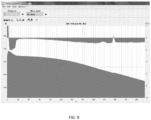
- This comparative example differed from Example 1 in that the Mg content was increased to 0.67%, and the thermal analysis curve showed that the solidus was decreased from 522°C to 514°C. Consequently, the theoretical solution treatment temperature was further lowered. It was tested by a constrained rod casting (CRC) method that the hot cracking index of the alloy increased from 359 to 684, about twice, indicating a significant increase in hot cracking tendency.
- CRC constrained rod casting
- This comparative example differed from Example 1 in that Mg was not added.
- This comparative example differed from Example 1 in that V was increased by 0.2%, resulting in a cost increase of approximately 6000 yuan/ton based on market prices at that time.
- This comparative example differed from Example 1 in that the Mg content was decreased to 0.4%.
- This comparative example differed from Example 1 in that the Si content was 0.15%.
- compositions prepared from the examples and comparative examples of the present invention were tested.
- the high-strength and high-toughness Al-Cu series cast aluminum alloy and the preparation method therefor in the present invention have low cost and strong process inclusiveness, satisfy the market requirements on aluminum alloy parts such as vehicle wheel hubs, and therefore are of important significance in accelerating weight reduction of vehicles and achieving the objects of energy conservation and emission reduction.
Landscapes
- Chemical & Material Sciences (AREA)
- Engineering & Computer Science (AREA)
- Materials Engineering (AREA)
- Mechanical Engineering (AREA)
- Metallurgy (AREA)
- Organic Chemistry (AREA)
- Physics & Mathematics (AREA)
- Thermal Sciences (AREA)
- Crystallography & Structural Chemistry (AREA)
- Manufacture And Refinement Of Metals (AREA)
- Continuous Casting (AREA)
Applications Claiming Priority (2)
| Application Number | Priority Date | Filing Date | Title |
|---|---|---|---|
| CN202210842425.1A CN115786787B (zh) | 2022-07-18 | 2022-07-18 | 一种高强韧Al-Cu系铸造铝合金及其制备方法 |
| PCT/CN2023/106671 WO2024017085A1 (zh) | 2022-07-18 | 2023-07-11 | 高强韧Al-Cu系铸造铝合金、制备方法及其在轮毂制备中的应用 |
Publications (2)
| Publication Number | Publication Date |
|---|---|
| EP4407057A1 true EP4407057A1 (de) | 2024-07-31 |
| EP4407057A4 EP4407057A4 (de) | 2025-04-16 |
Family
ID=85431367
Family Applications (1)
| Application Number | Title | Priority Date | Filing Date |
|---|---|---|---|
| EP23842150.7A Pending EP4407057A4 (de) | 2022-07-18 | 2023-07-11 | Hochfeste und hochzähe aluminiumgusslegierung der al-cu-serie, herstellungsverfahren dafür und verwendung davon in der radnabenherstellung |
Country Status (4)
| Country | Link |
|---|---|
| US (1) | US20250003033A1 (de) |
| EP (1) | EP4407057A4 (de) |
| CN (1) | CN115786787B (de) |
| WO (1) | WO2024017085A1 (de) |
Families Citing this family (2)
| Publication number | Priority date | Publication date | Assignee | Title |
|---|---|---|---|---|
| CN115786787B (zh) * | 2022-07-18 | 2024-02-23 | 山东浩信机械有限公司 | 一种高强韧Al-Cu系铸造铝合金及其制备方法 |
| CN118256783B (zh) * | 2024-04-12 | 2025-08-26 | 西安工业大学 | 一种高强韧铸造Al-Cu系合金材料及其制备方法 |
Family Cites Families (15)
| Publication number | Priority date | Publication date | Assignee | Title |
|---|---|---|---|---|
| FR1039856A (fr) * | 1951-07-16 | 1953-10-12 | Rolls Royce | Alliage d'aluminium et de cuivre |
| JPH0696756B2 (ja) * | 1990-04-18 | 1994-11-30 | 日本軽金属株式会社 | 加工用Al―Cu系アルミニウム合金鋳塊の熱処理法およびこれを用いた押出材の製造法 |
| FR2802946B1 (fr) * | 1999-12-28 | 2002-02-15 | Pechiney Rhenalu | Element de structure d'avion en alliage al-cu-mg |
| JP4992550B2 (ja) | 2007-05-30 | 2012-08-08 | 富士ゼロックス株式会社 | 情報処理プログラム及び情報処理システム |
| CN101319287B (zh) | 2008-07-09 | 2011-03-16 | 贵州大学 | 一种高强度铸造铝合金材料 |
| CN101363093B (zh) | 2008-07-09 | 2011-04-20 | 贵州铝厂 | 一种高强度铸造铝合金材料 |
| JP2010196112A (ja) * | 2009-02-25 | 2010-09-09 | Sumitomo Light Metal Ind Ltd | 高強度Al−Cu−Mg合金押出材およびその製造方法 |
| CN102002617B (zh) * | 2010-12-10 | 2013-01-23 | 河北立中有色金属集团有限公司 | 汽车用铸造铝合金及其制备方法 |
| CN105483477A (zh) * | 2015-11-27 | 2016-04-13 | 天津大学 | 含钪的高强高韧的Al-Cu-Mg-Zr合金及其制备方法 |
| CN109136697B (zh) | 2018-08-28 | 2020-12-22 | 兰州飞行控制有限责任公司 | 一种高强度铝铜系铝合金 |
| CN109182804A (zh) * | 2018-08-28 | 2019-01-11 | 兰州飞行控制有限责任公司 | 一种高强度铝铜系铝合金制备方法 |
| CN111041304B (zh) | 2019-12-11 | 2021-09-14 | 兰州飞行控制有限责任公司 | 一种抗热裂Al-Cu系铸造铝合金及其制备方法 |
| CN111020321B (zh) | 2019-12-11 | 2021-09-14 | 兰州飞行控制有限责任公司 | 一种适于锻造加工的Al-Cu系铸造合金及其制备方法 |
| CN112157220B (zh) * | 2020-08-30 | 2022-04-12 | 长沙合丰耐磨材料有限公司 | 一种Al-Cu-Mg-Mn系铝合金铸件制备方法 |
| CN115786787B (zh) * | 2022-07-18 | 2024-02-23 | 山东浩信机械有限公司 | 一种高强韧Al-Cu系铸造铝合金及其制备方法 |
-
2022
- 2022-07-18 CN CN202210842425.1A patent/CN115786787B/zh active Active
-
2023
- 2023-07-11 US US18/708,996 patent/US20250003033A1/en active Pending
- 2023-07-11 WO PCT/CN2023/106671 patent/WO2024017085A1/zh not_active Ceased
- 2023-07-11 EP EP23842150.7A patent/EP4407057A4/de active Pending
Also Published As
| Publication number | Publication date |
|---|---|
| US20250003033A1 (en) | 2025-01-02 |
| WO2024017085A1 (zh) | 2024-01-25 |
| CN115786787B (zh) | 2024-02-23 |
| EP4407057A4 (de) | 2025-04-16 |
| CN115786787A (zh) | 2023-03-14 |
Similar Documents
| Publication | Publication Date | Title |
|---|---|---|
| EP3650561B1 (de) | Plastische magnesiumknetlegierung und herstellungsverfahren dafür | |
| CN108425050B (zh) | 一种高强高韧铝锂合金及其制备方法 | |
| CN113061787A (zh) | 一种高强高韧Al-Si-Cu-Mg-Cr-Mn-Ti系铸造合金及其制备方法 | |
| CN115852217A (zh) | 一种高强度易挤压铝合金及其型材挤压方法 | |
| CN111187950A (zh) | 6系铝合金及其制备方法,移动终端 | |
| CN114480922B (zh) | 一种超轻铝锂合金及其制备方法和应用 | |
| US20250003033A1 (en) | High-strength and high-toughness al-cu series cast aluminum alloy, preparation method therefor, and use of same in wheel hub manufacturing | |
| WO2005075692A1 (en) | Aluminum alloy for producing high performance shaped castings | |
| CN114032429A (zh) | 一种高延伸率、高模量TiB2颗粒增强铝基复合材料及其制备方法 | |
| CN115323225B (zh) | 一种耐蚀高强韧铸造铝硅合金及其制备方法 | |
| CN118685669B (zh) | 一种可再生高强韧可热处理强化铝合金材料及其制备方法 | |
| EP4144875A1 (de) | Magnesiumlegierung für ein rad und herstellungsverfahren dafür | |
| CN117701957A (zh) | 一种高导电率高强度铝合金单丝材料及其制备方法 | |
| CN113897567B (zh) | 一种快速细化和均匀化铸态铝锂合金的均匀化形变热处理方法 | |
| CN118703846B (zh) | 一种铝合金及其制备方法和应用 | |
| CN114351014A (zh) | 一种铝合金及其制备方法与应用 | |
| CN118745542A (zh) | 一种高屈强比的高比强铝稀土合金及其制备方法 | |
| CN118422015A (zh) | 一种高耐热高塑性耐蚀铝合金材料及其制备方法 | |
| CN113502423B (zh) | 一种高塑性、高强度铸造铍铝合金及其制备方法 | |
| CN116657010A (zh) | 一种α单相高强韧Mg-Li合金材料及其制备方法 | |
| CN113862529A (zh) | 一种铝合金及其制备方法 | |
| CN118256783B (zh) | 一种高强韧铸造Al-Cu系合金材料及其制备方法 | |
| CN115505799B (zh) | 一种高强韧重力铸造铝合金及其制备方法和应用 | |
| CN116770153B (zh) | 一种共晶高熵软磁合金及其制备方法和应用 | |
| CN119753462A (zh) | 一种高强、高韧铝锂合金材料及其制备方法 |
Legal Events
| Date | Code | Title | Description |
|---|---|---|---|
| STAA | Information on the status of an ep patent application or granted ep patent |
Free format text: STATUS: THE INTERNATIONAL PUBLICATION HAS BEEN MADE |
|
| PUAI | Public reference made under article 153(3) epc to a published international application that has entered the european phase |
Free format text: ORIGINAL CODE: 0009012 |
|
| STAA | Information on the status of an ep patent application or granted ep patent |
Free format text: STATUS: REQUEST FOR EXAMINATION WAS MADE |
|
| 17P | Request for examination filed |
Effective date: 20240425 |
|
| AK | Designated contracting states |
Kind code of ref document: A1 Designated state(s): AL AT BE BG CH CY CZ DE DK EE ES FI FR GB GR HR HU IE IS IT LI LT LU LV MC ME MK MT NL NO PL PT RO RS SE SI SK SM TR |
|
| REG | Reference to a national code |
Ref country code: DE Ref legal event code: R079 Free format text: PREVIOUS MAIN CLASS: C22C0021060000 Ipc: C22C0001030000 |
|
| A4 | Supplementary search report drawn up and despatched |
Effective date: 20250319 |
|
| RIC1 | Information provided on ipc code assigned before grant |
Ipc: C22C 21/16 20060101ALI20250313BHEP Ipc: C22C 1/02 20060101ALI20250313BHEP Ipc: C22F 1/057 20060101ALI20250313BHEP Ipc: C22C 1/03 20060101AFI20250313BHEP |
|
| STAA | Information on the status of an ep patent application or granted ep patent |
Free format text: STATUS: EXAMINATION IS IN PROGRESS |
|
| 17Q | First examination report despatched |
Effective date: 20250820 |
|
| DAV | Request for validation of the european patent (deleted) | ||
| DAX | Request for extension of the european patent (deleted) | ||
| GRAP | Despatch of communication of intention to grant a patent |
Free format text: ORIGINAL CODE: EPIDOSNIGR1 |
|
| STAA | Information on the status of an ep patent application or granted ep patent |
Free format text: STATUS: GRANT OF PATENT IS INTENDED |
|
| INTG | Intention to grant announced |
Effective date: 20260205 |