EP4403914A2 - Verfahren zur reduzierung von krankheitserregern in der geflügelbrüterei - Google Patents
Verfahren zur reduzierung von krankheitserregern in der geflügelbrüterei Download PDFInfo
- Publication number
- EP4403914A2 EP4403914A2 EP24179130.0A EP24179130A EP4403914A2 EP 4403914 A2 EP4403914 A2 EP 4403914A2 EP 24179130 A EP24179130 A EP 24179130A EP 4403914 A2 EP4403914 A2 EP 4403914A2
- Authority
- EP
- European Patent Office
- Prior art keywords
- eggs
- egg
- day
- incubation
- viable
- Prior art date
- Legal status (The legal status is an assumption and is not a legal conclusion. Google has not performed a legal analysis and makes no representation as to the accuracy of the status listed.)
- Granted
Links
Images


Classifications
-
- A—HUMAN NECESSITIES
- A01—AGRICULTURE; FORESTRY; ANIMAL HUSBANDRY; HUNTING; TRAPPING; FISHING
- A01K—ANIMAL HUSBANDRY; AVICULTURE; APICULTURE; PISCICULTURE; FISHING; REARING OR BREEDING ANIMALS, NOT OTHERWISE PROVIDED FOR; NEW BREEDS OF ANIMALS
- A01K43/00—Testing, sorting or cleaning eggs ; Conveying devices ; Pick-up devices
-
- A—HUMAN NECESSITIES
- A01—AGRICULTURE; FORESTRY; ANIMAL HUSBANDRY; HUNTING; TRAPPING; FISHING
- A01K—ANIMAL HUSBANDRY; AVICULTURE; APICULTURE; PISCICULTURE; FISHING; REARING OR BREEDING ANIMALS, NOT OTHERWISE PROVIDED FOR; NEW BREEDS OF ANIMALS
- A01K45/00—Other aviculture appliances, e.g. devices for determining whether a bird is about to lay
- A01K45/007—Injecting or otherwise treating hatching eggs
-
- G—PHYSICS
- G01—MEASURING; TESTING
- G01N—INVESTIGATING OR ANALYSING MATERIALS BY DETERMINING THEIR CHEMICAL OR PHYSICAL PROPERTIES
- G01N33/00—Investigating or analysing materials by specific methods not covered by groups G01N1/00 - G01N31/00
- G01N33/02—Food
- G01N33/08—Eggs, e.g. by candling
-
- G—PHYSICS
- G01—MEASURING; TESTING
- G01N—INVESTIGATING OR ANALYSING MATERIALS BY DETERMINING THEIR CHEMICAL OR PHYSICAL PROPERTIES
- G01N33/00—Investigating or analysing materials by specific methods not covered by groups G01N1/00 - G01N31/00
- G01N33/02—Food
- G01N33/08—Eggs, e.g. by candling
- G01N33/085—Eggs, e.g. by candling by candling
-
- A—HUMAN NECESSITIES
- A01—AGRICULTURE; FORESTRY; ANIMAL HUSBANDRY; HUNTING; TRAPPING; FISHING
- A01K—ANIMAL HUSBANDRY; AVICULTURE; APICULTURE; PISCICULTURE; FISHING; REARING OR BREEDING ANIMALS, NOT OTHERWISE PROVIDED FOR; NEW BREEDS OF ANIMALS
- A01K41/00—Incubators for poultry
- A01K41/06—Egg-turning appliances for incubators
Definitions
- the present disclosure generally relates to egg processing in poultry hatcheries. More particularly, the present disclosure relates to a method for reducing the incidence of pathogens present in avian egg hatchery operations.
- the above and other needs are met by aspects of the present disclosure which, according to one aspect, provides a pathogen reduction tool implementing a method of processing eggs at a poultry hatchery.
- the method includes setting a production quantity of avian eggs in a setter incubator, the eggs being maintained in a plurality of egg flats.
- the avian eggs are removed from the setter incubator on a predetermined day of incubation, such predetermined day being during about day nine to day twelve of incubation.
- the avian eggs are subjected to an egg detection system on the predetermined day to determine which of the avian eggs are viable and non-viable.
- the non-viable avian eggs are removed from the egg flats on the predetermined day.
- the viable avian eggs remaining in the egg flats post-inspection by the egg detection system are incubated through hatch.
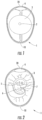
- FIG. 1 illustrates a live poultry egg 1 at about day one of incubation.
- FIG. 2 illustrates the live egg 1 at about day eleven of incubation.
- the egg 1 has a somewhat narrow end in the vicinity represented at 10 as well as an oppositely disposed broadened or blunt end portion in the vicinity shown at 20.
- an embryo 2 is represented atop the yolk 3.
- the egg 1 contains an air cell 4 adjacent the broadened end 20.
- the wings 5, legs 6, and beak 7 of a baby chick have developed.
- Eggs that do not hatch include eggs that were not fertilized, as well as fertilized eggs that have died.
- An egg may be a "clear” or “infertile” egg, meaning that it does not have an embryo. More particularly, a "clear” egg is an infertile egg that has not rotted.
- An egg may be an "early dead” egg, meaning that it has an embryo which died at about one to five days old.
- An egg may be a "mid-dead” egg, meaning that it has an embryo which died at about five to fifteen days old.
- An egg may be a "late-dead” egg, meaning that it has an embryo which died at about fifteen to eighteen days old.
- An egg may be a "rotted” egg, meaning that the egg includes a rotted infertile yolk (for example, as a result of a crack in the egg's shell) or, alternatively, a rotted, dead embryo. While an "early dead,” “mid-dead” or “late-dead egg” may be a rotted egg, those terms as used herein refer to such eggs which have not rotted. Clear, early-dead, mid-dead, late-dead, and rotted eggs may also be categorized as "non-viable” or "non-live” eggs because they do not include a living embryo.
- eggs are incubated for twenty-one days until hatch.
- the eggs are first placed in setter incubators and positioned in egg flats that maintain the eggs vertical along their longitudinal axis and allow air to circulate about the egg.
- transfer day Day 18 of incubation
- the eggs are transferred into a hatching basket and placed into a hatcher incubator.
- the hatching basket is configured to allow the chicks to hatch and then move around. Taking advantage of this transfer where the eggs are removed from the incubators, hatchery operators candle the eggs on transfer day so as to facilitate removal of non-live eggs from the egg flats prior to transfer into the hatching baskets.
- Egg candling refers to the process of distinguishing live eggs from non-live eggs using various technologies, as known by those of skill in the art.
- removal of the non-viable eggs early in the incubation process reduces the potential pathogenic load that may be otherwise present throughout the incubation period, thereby increasing the yield of viable eggs and increasing hatch percentage.
- mechanical handling of eggs at Day 18 of incubation typically causes the rotted eggs to explode and spread contaminants to other nearby or adjacent eggs (horizontal transmission).
- the disclosed methodology helps reduce this risk of horizontal transmission.
- There are other means of horizontal transmission of pathogens during Day 9 - Day 21 of incubation and the methodology disclosed herein is intended to reduce such risk associated therewith.
- poultry hatcheries candle eggs on day eighteen of incubation when the eggs are removed from the setter incubator, transferred from the egg flat carriers to hatching baskets, and placed into hatcher incubators.
- day eighteen of incubation the rotted eggs have likely contaminated otherwise viable eggs.
- early dead or mid-dead eggs may become rotted eggs that serve as breeding ground for pathogens.
- an operator may remove such early dead and mid-dead eggs before they become rotted eggs capable of contaminating otherwise viable eggs.
- Physiologically, safely handling an egg during incubation occurs between Day 9 and 12 of incubation.
- the egg becomes exothermic between about Day 12 and 13 of incubation, generating between about 0.1774 and 0.2559 BTU of heat. Cooling the egg is needed after Day 13 of incubation and thus removal of heat is an important function in incubation after that time. Slowing development of the embryo may occur if lower than optimal heat is given, regardless of timing, but excessive heat will eradicate the embryo, also regardless of timing. High heat in the incubating environment is more probable after Day 13 of incubation due to the embryo generating its own heat.
- non-viable eggs consist of infertile eggs as well as any eggs that contain embryos that die after incubation begins.
- the nutrient is not albumen; it is the yolk material.
- the yolk is captured in the vitelline membrane and suspended in the albumen, as shown in FIG. 1 .
- the yolk typically is not available for most bacterial and fungal access until after about 9 days of incubation.
- albumen breaks down and liquefies (water is liberated) due to time and incubation temperature, the yolk (fatty acid) "floats" up in the albumen and comes into contact with the inner shell membranes.
- Bacteria and fungus trapped in the inner/outer shell membrane matrix (from laying/cooling process), may then potentially access the yolk nutrient and contaminate the egg. Earlier contamination of these non-viable eggs may occur in incubation, but is caused by cracked or imperfect shells. Typically these cracked eggs may be culled and not included in production.
- removal of the non-viable infertile and early dead embryos at Day 9-12 removes the potential for bacterial and fungal growth at a safe time for development of the remaining live egg group, thus providing pathogen reduction by eliminating causative agents before contamination occurs.
- FIG. 3 illustrated is an exemplary method for processing avian eggs in order to reduce the incidence of pathogen exposure within a poultry hatchery operation.
- the process disclosed herein may be provided as a pathogen reduction tool for commercial poultry hatchery operations.
- a commercial production quantity of eggs may be delivered to the hatchery for hatching.
- the eggs may arrive in an egg flat or other similar container being configured based on the type of incubator equipment used by the hatchery.
- the egg flat may be specifically designed to expose as much of the egg as possible to air within the incubator, with the goal of achieving a uniform temperature environment about the egg.
- the incubation process may begin in a setter incubator (step 100) which has racks disposed therein that mate with the egg flats to facilitate movement of the eggs, thereby simulating the hen's movement of an egg in the nest.
- the first day of incubation is referred to as Day 1.
- the eggs may be removed from the setter incubator on about Day 9, Day 10, Day 11, or Day 12 of incubation (step 200).
- the data shown in FIG. 5 relate to eggs removed during Day 10 of incubation, but the present disclosure is not limited to such since it may be the case in which the days of incubation are calculated differently by individual hatcheries. That is, it will be understood that Day 10 as defined by Applicant as ten days from the start of incubation could be slightly different than that as defined by a hatchery that counts Day 0 as the first day of incubation such that Day 9 would be the equivalent of Applicant's Day 10. Accordingly, Applicant has provided the range of Day 9-12 of incubation as being in accordance with the present disclosure to account for such varied definitions. Moreover, it is expected that the process defined herein would be successful in reducing pathogenic load when implemented at any of Days 9-12 of incubation.
- the eggs may be candled once removed from the setter incubator (step 300) to distinguish the live eggs from the non-live eggs. That is, the eggs may be subjected to an egg candling system (generally referred to herein as an egg detection system) capable of discriminating among the eggs to determine the viability of the eggs.
- an egg candling system generally referred to herein as an egg detection system
- Various candling systems may be used in the disclosed process, including those implementing technology related to spectroscopy, egg opacity, heartbeat/pulse identification, or other such known system.
- the process disclosed herein may improve the accuracy of some candling systems, particularly egg opacity candling systems that determine live versus non-live based on the amount of infrared light transmitted through the egg.
- Such egg opacity candling systems may utilize infrared pulses of light to identify non-viable eggs (most effectively, infertile and early-dead embryos) that have died during incubation.
- infrared pulses of light to identify non-viable eggs (most effectively, infertile and early-dead embryos) that have died during incubation.
- egg opacity candling systems may distinguish mid-dead, late-dead or rotted eggs from a live egg since the embryo is almost at full size at Day 18 of incubation and therefore blocking most of the light from passing through the egg for detection.
- By moving the candling process earlier in the incubation period it may improve detection of rotted and/or mid-dead eggs so that these eggs can be removed to limit their potential negative impact or contamination on surrounding live eggs.
- removing the non-live eggs during Days 9-12 of incubation reduces the opportunity for the infertile, early-dead, and mid-dead eggs to turn into rotted eggs that can explode when mechanically processed (injected, transferred to hatching baskets, removed, etc.) downstream.
- the non-live eggs may be removed from the egg flats (step 400) by an egg remover device, which may employ vacuum or mechanical means for lifting the non-live eggs from the egg flats in an automated manner.
- the candling and removal functions may be performed by a single system (e.g., Embrex Egg Remover system, Embrex ® ERH system, both available from Zoetis Inc.) in which the candling device communicates with the removal device for identifying and removing non-live eggs.
- the candling system may employ technology for determining whether a heartbeat/pulse exists for a respective egg, or detecting movement of the embryo.
- Such a heartbeat/pulse signal or embryo movement signal may provide a positive indication that an embryo within the egg is alive. That is, such technology may rely upon determining whether there exists at least one of a periodic and aperiodic variation in an intensity of electromagnetic radiation transmitted through a respective egg corresponding to action of a heart or embryo movement, the existence of one of the periodic and aperiodic variations indicating that the avian egg is viable.
- This technology may rely upon the eggs being maintained within a certain temperature range such as, for example, between about 93°F (34°C) and 97°F (36°C) during the candling inspection process. As such, the eggs may be quickly moved to the candling system and passed therethrough, while monitoring of the egg temperatures is ongoing.
- the remaining live eggs may be returned for incubation.
- the live eggs may remain in the egg flats and be returned to the setter incubators.
- the eggs may be removed from the setter incubators and candled again to remove any remaining non-live eggs, particularly the late-dead eggs (embryos that died after the Day 9-12 candling procedure).
- the live eggs may be injected in some instances with a treatment substance such as a vaccine via an in ovo injection device (Embrex ® Inovoject ® system, available from Zoetis Inc.).
- the live eggs may be transferred to hatching baskets using an egg transfer table device (Embrex ® Transfer Table system, available from Zoetis Inc.). After placement into the hatching baskets, the live eggs are moved into a hatcher incubator where the eggs will hatch at about Day 21 of incubation.
- Embrex ® Transfer Table system available from Zoetis Inc.
- the live eggs may be transferred to hatching baskets via the egg transfer table device during Day 9-12 of incubation, rather than at the typical Day 18 of incubation.
- Such a transfer may be desirable during Day 9-12 of incubation if no further processing (e.g., candling, injection) of the eggs is desired prior to hatch, which may be acceptable due to the reduction in pathogenic load facilitated by the process disclosed herein.
- eggs were received from various farms of the hatchery and randomly split into two groups for segregated incubation and hatching.
- the control group eggs were incubated in a standard "Jamesway 84" (JW84) incubation tray (egg flat holding 84 eggs).
- JW84 Jamesway 84
- the control group was removed from the setter incubator on Day 18 of incubation.
- An Embrex ® Egg Remover system was used to candle the eggs and then remove the non-live eggs from the JW84 incubation tray.
- the eggs remaining in the JW84 incubation tray were transferred to hatching baskets via automation during Day 18 of incubation.
- the hatching baskets were moved into hatcher incubators until hatch.
- the treatment group eggs were incubated in a standard "Jamesway 36" (JW36) incubation tray (egg flat holding 36 eggs).
- JW36 Jamesway 36
- An Embrex ® ERH system was configured to utilize a JW36 incubation tray.
- the treatment group eggs were removed from the setter incubator during Day 10 of incubation and candled utilizing the ERH system.
- the ERH system processed two JW36 incubation trays at one time using 72 individual candling detection devices. All non-viable eggs were removed with selective vacuum cups.
- the live eggs remained in the JW36 incubation tray and were placed back into the setter incubator.
- Egg shell temperature was monitored during the ERH candling process and maintained between 97° F and 93° F. Eggs were removed from the setter incubators for approximately 20-35 minutes.
- the treatment group eggs were transferred by hand into hatching baskets.
- the treatment group eggs were hatched in separate hatcher incubators from the control group eggs.
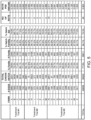
- FIG. 4 is a table of data generated with respect to the control group eggs for Trials 1-3.
- FIG. 5 is a table of data generated with respect to the treatment group eggs for Trials 1-3.
- Control Trial #1 and Treatment Trial #1 were conducted on the same date.
- Control Trial #2 and Treatment Trial #2 were conducted on the same date, but on a different date from Trial #1.
- Control Trial #3 and Treatment Trial #3 were conducted on the same date, but on a different date from Trial #1 and Trial #2. Improvements can be seen in production measurements of percentage hatch (“% Hatch Set”) and hatch of fertile eggs (“% Hatch Fertility”) due to treatment.
- the hatch of fertile eggs is based on the number of eggs determined to be live by the respective egg candling system.
- Table 1 shows a large reduction of rotten eggs and reduced late mortality (late-dead) found during necropsy of unhatched eggs.
- the data provided in Table 1 is the result of necropsy analysis of unhatched eggs for the respective Control and Treatment groups.
- the number of rots in Table 1 represents rotten eggs that were not removed during transfer (Day 18) due to candling limitations (either manual or automated), but were discovered during necropsy.
- the number of rots in Table 1 represents additional reduction in rots due to treatment as those tabulated in FIG. 5 . That is, Table shows the level of rots undetected at Day 18 transfer (visible) and represents an additional difference due to treatment. Table 2.
- Table 2 shows a summary of early-dead / infertile eggs and mid-dead eggs found during necropsy of unhatched eggs. This data shows the relative efficiency of the egg candling systems used to remove the non-viable eggs.
Landscapes
- Life Sciences & Earth Sciences (AREA)
- Environmental Sciences (AREA)
- Chemical & Material Sciences (AREA)
- Engineering & Computer Science (AREA)
- Food Science & Technology (AREA)
- Health & Medical Sciences (AREA)
- Animal Husbandry (AREA)
- Biodiversity & Conservation Biology (AREA)
- Physics & Mathematics (AREA)
- Medicinal Chemistry (AREA)
- Analytical Chemistry (AREA)
- Biochemistry (AREA)
- General Health & Medical Sciences (AREA)
- General Physics & Mathematics (AREA)
- Immunology (AREA)
- Pathology (AREA)
- Birds (AREA)
- Measuring Or Testing Involving Enzymes Or Micro-Organisms (AREA)
- Meat, Egg Or Seafood Products (AREA)
- Farming Of Fish And Shellfish (AREA)
Priority Applications (1)
| Application Number | Priority Date | Filing Date | Title |
|---|---|---|---|
| EP25200809.9A EP4636399A3 (de) | 2017-02-07 | 2018-02-02 | Verfahren zur reduzierung von krankheitserregern in der geflügelbrüterei |
Applications Claiming Priority (3)
| Application Number | Priority Date | Filing Date | Title |
|---|---|---|---|
| US201762455761P | 2017-02-07 | 2017-02-07 | |
| PCT/US2018/016578 WO2018148115A1 (en) | 2017-02-07 | 2018-02-02 | Method for reducing pathogens in poultry hatchery operations |
| EP18706045.4A EP3579690B1 (de) | 2017-02-07 | 2018-02-02 | Verfahren zur reduzierung von krankheitserregern in der geflügelbrüterei |
Related Parent Applications (1)
| Application Number | Title | Priority Date | Filing Date |
|---|---|---|---|
| EP18706045.4A Division EP3579690B1 (de) | 2017-02-07 | 2018-02-02 | Verfahren zur reduzierung von krankheitserregern in der geflügelbrüterei |
Related Child Applications (2)
| Application Number | Title | Priority Date | Filing Date |
|---|---|---|---|
| EP25200809.9A Division EP4636399A3 (de) | 2017-02-07 | 2018-02-02 | Verfahren zur reduzierung von krankheitserregern in der geflügelbrüterei |
| EP25200809.9A Division-Into EP4636399A3 (de) | 2017-02-07 | 2018-02-02 | Verfahren zur reduzierung von krankheitserregern in der geflügelbrüterei |
Publications (3)
| Publication Number | Publication Date |
|---|---|
| EP4403914A2 true EP4403914A2 (de) | 2024-07-24 |
| EP4403914A3 EP4403914A3 (de) | 2024-09-18 |
| EP4403914B1 EP4403914B1 (de) | 2025-10-15 |
Family
ID=61244719
Family Applications (3)
| Application Number | Title | Priority Date | Filing Date |
|---|---|---|---|
| EP18706045.4A Active EP3579690B1 (de) | 2017-02-07 | 2018-02-02 | Verfahren zur reduzierung von krankheitserregern in der geflügelbrüterei |
| EP24179130.0A Active EP4403914B1 (de) | 2017-02-07 | 2018-02-02 | Verfahren zur reduzierung von krankheitserregern in der geflügelbrüterei |
| EP25200809.9A Pending EP4636399A3 (de) | 2017-02-07 | 2018-02-02 | Verfahren zur reduzierung von krankheitserregern in der geflügelbrüterei |
Family Applications Before (1)
| Application Number | Title | Priority Date | Filing Date |
|---|---|---|---|
| EP18706045.4A Active EP3579690B1 (de) | 2017-02-07 | 2018-02-02 | Verfahren zur reduzierung von krankheitserregern in der geflügelbrüterei |
Family Applications After (1)
| Application Number | Title | Priority Date | Filing Date |
|---|---|---|---|
| EP25200809.9A Pending EP4636399A3 (de) | 2017-02-07 | 2018-02-02 | Verfahren zur reduzierung von krankheitserregern in der geflügelbrüterei |
Country Status (16)
| Country | Link |
|---|---|
| US (1) | US10798921B2 (de) |
| EP (3) | EP3579690B1 (de) |
| JP (1) | JP2020505954A (de) |
| KR (1) | KR102459253B1 (de) |
| CN (1) | CN110248540A (de) |
| AR (1) | AR111096A1 (de) |
| AU (2) | AU2018219151B2 (de) |
| BR (1) | BR112019016326A2 (de) |
| CA (1) | CA3052450C (de) |
| ES (1) | ES2986582T3 (de) |
| HU (1) | HUE067915T2 (de) |
| MX (1) | MX2019009327A (de) |
| PL (2) | PL4403914T3 (de) |
| PT (2) | PT4403914T (de) |
| SA (1) | SA519402348B1 (de) |
| WO (1) | WO2018148115A1 (de) |
Families Citing this family (1)
| Publication number | Priority date | Publication date | Assignee | Title |
|---|---|---|---|---|
| CN115697049A (zh) * | 2020-06-12 | 2023-02-03 | 股份公司南备尔 | 雏鸡的生产方法和雏鸡的生产系统 |
Family Cites Families (27)
| Publication number | Priority date | Publication date | Assignee | Title |
|---|---|---|---|---|
| US4955728A (en) * | 1990-01-23 | 1990-09-11 | Embrex, Inc. | Method and apparatus of distinguishing between live and dead poultry eggs |
| US5173737A (en) * | 1991-09-26 | 1992-12-22 | The United States Of America As Represented By The Secretary Of Agriculture | Measurement of avian embryo movement in intact eggs |
| GB9226179D0 (en) | 1992-12-16 | 1993-02-10 | British Tech Group | Method of hatching avian eggs |
| US5745228A (en) * | 1997-01-17 | 1998-04-28 | Embrex, Inc. | Method and apparatus for distinguishing live from infertile poultry eggs |
| US6234320B1 (en) * | 1999-05-11 | 2001-05-22 | Embrex, Inc. | Method and apparatus for selectively classifying poultry eggs |
| JP2001235460A (ja) * | 2000-02-22 | 2001-08-31 | Kubota Corp | 検卵装置 |
| US7041439B2 (en) * | 2001-04-17 | 2006-05-09 | Embrex, Inc. | Methods and apparatus for selectively processing eggs having identified characteristics |
| US7289196B2 (en) | 2001-04-20 | 2007-10-30 | Sidney James Reeves | Method and apparatus for determining the viability of eggs |
| US6860225B2 (en) * | 2002-05-06 | 2005-03-01 | Embrex, Inc. | Methods and apparatus for identifying live eggs by detecting embryo heart rate and/or motion |
| US6850316B2 (en) * | 2002-06-10 | 2005-02-01 | Embrex, Inc. | Methods and apparatus for harvesting vaccine from eggs |
| WO2004071324A2 (en) | 2003-02-11 | 2004-08-26 | Intralytix, Inc. | Method to reduce, eliminate, or prevent bacterial pathogen colonization in eggs and/or poultry using bacteriophages |
| US7333187B2 (en) * | 2004-10-14 | 2008-02-19 | Embrex, Inc. | Methods and apparatus for identifying and diagnosing live eggs using heart rate and embryo motion |
| US8235003B2 (en) * | 2005-07-29 | 2012-08-07 | Embrex, Inc. | Methods and apparatus for identifying live eggs |
| US7861673B2 (en) * | 2006-04-11 | 2011-01-04 | Life-Science Innovations, Llc | Egg incubation transport system and methods regarding same |
| US7611277B2 (en) * | 2006-12-21 | 2009-11-03 | Embrex, Inc. | Methods and apparatus for candling avian eggs via thermal cameras |
| CN102803952A (zh) * | 2009-06-25 | 2012-11-28 | 耶路撒冷希伯来大学伊萨姆研发有限公司 | 卵能育性和性别的高光谱识别 |
| JP6041236B2 (ja) | 2011-04-27 | 2016-12-07 | 條一郎 坪井 | 検卵装置 |
| BR112014028563B1 (pt) | 2012-05-18 | 2019-03-26 | Nabel Co., Ltd. | Aparelho de inspeção de ovo para incubação |
| US9332738B2 (en) * | 2012-06-05 | 2016-05-10 | Zoetis Services Llc | Processing system for transferring eggs, and associated method |
| CN102960265B (zh) * | 2012-12-05 | 2014-06-18 | 华中科技大学 | 一种非侵入式蛋胚存活状态检测方法及装置 |
| CN103026984B (zh) * | 2012-12-12 | 2014-08-27 | 华中农业大学 | 群体孵化蛋成活性的视觉检测分级装置及其方法 |
| CN104520693B (zh) | 2013-06-14 | 2017-07-28 | 株式会社Nabel | 种蛋检查装置以及种蛋检查方法 |
| JP2015035963A (ja) | 2013-08-12 | 2015-02-23 | 株式会社ナベル | 孵化途中卵検査装置および孵化途中卵検査方法 |
| US9513270B2 (en) | 2013-11-18 | 2016-12-06 | Zoetis Services Llc | Non-contact egg identification system for determining egg viability using transmission spectroscopy, and associated method |
| US9395346B2 (en) * | 2013-11-18 | 2016-07-19 | Zoetis Services Llc | Non-contact egg identification system for determining egg viability, and associated method |
| CN107430109B (zh) | 2014-03-24 | 2021-05-14 | 利弗艾格(2015)有限公司 | 用于检查蛋的方法和系统 |
| PT3465222T (pt) | 2016-05-24 | 2021-06-29 | In Ovo Holding B V | Método e sistema para a determinação in ovo não destrutiva do género de aves |
-
2018
- 2018-01-31 US US15/884,467 patent/US10798921B2/en active Active
- 2018-02-02 CN CN201880010377.1A patent/CN110248540A/zh active Pending
- 2018-02-02 KR KR1020197022797A patent/KR102459253B1/ko active Active
- 2018-02-02 PL PL24179130.0T patent/PL4403914T3/pl unknown
- 2018-02-02 PL PL18706045.4T patent/PL3579690T3/pl unknown
- 2018-02-02 AU AU2018219151A patent/AU2018219151B2/en active Active
- 2018-02-02 JP JP2019563326A patent/JP2020505954A/ja active Pending
- 2018-02-02 BR BR112019016326-3A patent/BR112019016326A2/pt not_active Application Discontinuation
- 2018-02-02 MX MX2019009327A patent/MX2019009327A/es unknown
- 2018-02-02 HU HUE18706045A patent/HUE067915T2/hu unknown
- 2018-02-02 PT PT241791300T patent/PT4403914T/pt unknown
- 2018-02-02 PT PT187060454T patent/PT3579690T/pt unknown
- 2018-02-02 CA CA3052450A patent/CA3052450C/en active Active
- 2018-02-02 EP EP18706045.4A patent/EP3579690B1/de active Active
- 2018-02-02 WO PCT/US2018/016578 patent/WO2018148115A1/en not_active Ceased
- 2018-02-02 ES ES18706045T patent/ES2986582T3/es active Active
- 2018-02-02 EP EP24179130.0A patent/EP4403914B1/de active Active
- 2018-02-02 EP EP25200809.9A patent/EP4636399A3/de active Pending
- 2018-02-06 AR ARP180100283A patent/AR111096A1/es active IP Right Grant
-
2019
- 2019-07-30 SA SA519402348A patent/SA519402348B1/ar unknown
-
2024
- 2024-04-22 AU AU2024202612A patent/AU2024202612A1/en active Pending
Also Published As
| Publication number | Publication date |
|---|---|
| EP3579690B1 (de) | 2024-07-03 |
| KR20190099074A (ko) | 2019-08-23 |
| CA3052450A1 (en) | 2018-08-16 |
| PT4403914T (pt) | 2025-12-15 |
| WO2018148115A1 (en) | 2018-08-16 |
| HUE067915T2 (hu) | 2024-11-28 |
| US10798921B2 (en) | 2020-10-13 |
| PL4403914T3 (pl) | 2026-02-09 |
| EP4636399A3 (de) | 2025-12-10 |
| EP4403914B1 (de) | 2025-10-15 |
| AU2018219151A1 (en) | 2019-08-08 |
| SA519402348B1 (ar) | 2022-09-01 |
| EP3579690A1 (de) | 2019-12-18 |
| BR112019016326A2 (pt) | 2020-03-31 |
| CN110248540A (zh) | 2019-09-17 |
| AU2018219151B2 (en) | 2024-02-22 |
| PL3579690T3 (pl) | 2024-10-14 |
| ES2986582T3 (es) | 2024-11-12 |
| JP2020505954A (ja) | 2020-02-27 |
| US20180220626A1 (en) | 2018-08-09 |
| PT3579690T (pt) | 2024-08-27 |
| CA3052450C (en) | 2021-05-04 |
| AU2024202612A1 (en) | 2024-05-09 |
| MX2019009327A (es) | 2019-09-19 |
| KR102459253B1 (ko) | 2022-10-26 |
| EP4636399A2 (de) | 2025-10-22 |
| EP4403914A3 (de) | 2024-09-18 |
| AR111096A1 (es) | 2019-06-05 |
Similar Documents
| Publication | Publication Date | Title |
|---|---|---|
| JP5663511B2 (ja) | 生きている卵を識別するための方法および装置 | |
| JP5495797B2 (ja) | 卵用トレイを安定化させるシステム | |
| JP5744951B2 (ja) | サーマルカメラを介して鳥類の卵をキャンドリングする方法及び装置 | |
| AU2024202612A1 (en) | Method for reducing pathogens in poultry hatchery operations | |
| CN106061245B (zh) | 用于繁育雏鸡的方法 | |
| EP4147570B1 (de) | Kükenherstellungsverfahren und kükenherstellungssystem | |
| CN109496971B (zh) | 一种斑嘴环企鹅的人工孵化方法 | |
| Tullett | Investigating hatchery practice | |
| CN108348597A (zh) | 用于提高家禽蛋的孵化率的方法中的灭活禽呼肠孤病毒疫苗 | |
| Palaniyandi et al. | Effect of in-ovo injection of glucose, lysine, threonine and β-hydroxy-β-methylbutarate (HMB) on the morphometry of digestive organs in commercial broilers | |
| Udawaththa et al. | Effect of multi-stage incubator types on hatchability and chick quality of broiler chicken. | |
| Jalil et al. | Serological survey of Salmonella infection in non-vaccinated commercial layer birds in Khulna District of Bangladesh | |
| Mauldin | Hatchery breeder tip: Impact of new hatchery equipment on chick well being |
Legal Events
| Date | Code | Title | Description |
|---|---|---|---|
| PUAI | Public reference made under article 153(3) epc to a published international application that has entered the european phase |
Free format text: ORIGINAL CODE: 0009012 |
|
| STAA | Information on the status of an ep patent application or granted ep patent |
Free format text: STATUS: REQUEST FOR EXAMINATION WAS MADE |
|
| 17P | Request for examination filed |
Effective date: 20240530 |
|
| AC | Divisional application: reference to earlier application |
Ref document number: 3579690 Country of ref document: EP Kind code of ref document: P |
|
| AK | Designated contracting states |
Kind code of ref document: A2 Designated state(s): AL AT BE BG CH CY CZ DE DK EE ES FI FR GB GR HR HU IE IS IT LI LT LU LV MC MK MT NL NO PL PT RO RS SE SI SK SM TR |
|
| REG | Reference to a national code |
Ref country code: DE Ipc: A01K0043000000 Ref country code: DE Ref legal event code: R079 Ref document number: 602018086506 Country of ref document: DE Free format text: PREVIOUS MAIN CLASS: G01N0033080000 Ipc: A01K0043000000 |
|
| PUAL | Search report despatched |
Free format text: ORIGINAL CODE: 0009013 |
|
| P01 | Opt-out of the competence of the unified patent court (upc) registered |
Free format text: CASE NUMBER: APP_43548/2024 Effective date: 20240725 |
|
| AK | Designated contracting states |
Kind code of ref document: A3 Designated state(s): AL AT BE BG CH CY CZ DE DK EE ES FI FR GB GR HR HU IE IS IT LI LT LU LV MC MK MT NL NO PL PT RO RS SE SI SK SM TR |
|
| RIC1 | Information provided on ipc code assigned before grant |
Ipc: G01N 33/08 20060101ALI20240812BHEP Ipc: A01K 43/00 20060101AFI20240812BHEP |
|
| GRAP | Despatch of communication of intention to grant a patent |
Free format text: ORIGINAL CODE: EPIDOSNIGR1 |
|
| STAA | Information on the status of an ep patent application or granted ep patent |
Free format text: STATUS: GRANT OF PATENT IS INTENDED |
|
| GRAS | Grant fee paid |
Free format text: ORIGINAL CODE: EPIDOSNIGR3 |
|
| GRAA | (expected) grant |
Free format text: ORIGINAL CODE: 0009210 |
|
| STAA | Information on the status of an ep patent application or granted ep patent |
Free format text: STATUS: THE PATENT HAS BEEN GRANTED |
|
| INTG | Intention to grant announced |
Effective date: 20250819 |
|
| AC | Divisional application: reference to earlier application |
Ref document number: 3579690 Country of ref document: EP Kind code of ref document: P |
|
| AK | Designated contracting states |
Kind code of ref document: B1 Designated state(s): AL AT BE BG CH CY CZ DE DK EE ES FI FR GB GR HR HU IE IS IT LI LT LU LV MC MK MT NL NO PL PT RO RS SE SI SK SM TR |
|
| REG | Reference to a national code |
Ref country code: GB Ref legal event code: FG4D Ref country code: CH Ref legal event code: F10 Free format text: ST27 STATUS EVENT CODE: U-0-0-F10-F00 (AS PROVIDED BY THE NATIONAL OFFICE) Effective date: 20251015 |
|
| REG | Reference to a national code |
Ref country code: DE Ref legal event code: R096 Ref document number: 602018086506 Country of ref document: DE |
|
| REG | Reference to a national code |
Ref country code: IE Ref legal event code: FG4D |
|
| PGFP | Annual fee paid to national office [announced via postgrant information from national office to epo] |
Ref country code: NL Payment date: 20251120 Year of fee payment: 9 |
|
| REG | Reference to a national code |
Ref country code: PT Ref legal event code: SC4A Ref document number: 4403914 Country of ref document: PT Date of ref document: 20251215 Kind code of ref document: T Free format text: AVAILABILITY OF NATIONAL TRANSLATION Effective date: 20251209 |
|
| REG | Reference to a national code |
Ref country code: NL Ref legal event code: FP |
|
| PGFP | Annual fee paid to national office [announced via postgrant information from national office to epo] |
Ref country code: GB Payment date: 20251203 Year of fee payment: 9 |
|
| PGFP | Annual fee paid to national office [announced via postgrant information from national office to epo] |
Ref country code: BE Payment date: 20251120 Year of fee payment: 9 |