EP4403549A1 - Linker compound and complex compound containing same - Google Patents
Linker compound and complex compound containing same Download PDFInfo
- Publication number
- EP4403549A1 EP4403549A1 EP22869790.0A EP22869790A EP4403549A1 EP 4403549 A1 EP4403549 A1 EP 4403549A1 EP 22869790 A EP22869790 A EP 22869790A EP 4403549 A1 EP4403549 A1 EP 4403549A1
- Authority
- EP
- European Patent Office
- Prior art keywords
- compound
- drug
- linker
- formula
- complex
- Prior art date
- Legal status (The legal status is an assumption and is not a legal conclusion. Google has not performed a legal analysis and makes no representation as to the accuracy of the status listed.)
- Pending
Links
Images








Classifications
-
- C—CHEMISTRY; METALLURGY
- C07—ORGANIC CHEMISTRY
- C07C—ACYCLIC OR CARBOCYCLIC COMPOUNDS
- C07C321/00—Thiols, sulfides, hydropolysulfides or polysulfides
- C07C321/24—Thiols, sulfides, hydropolysulfides, or polysulfides having thio groups bound to carbon atoms of six-membered aromatic rings
- C07C321/28—Sulfides, hydropolysulfides, or polysulfides having thio groups bound to carbon atoms of six-membered aromatic rings
-
- A—HUMAN NECESSITIES
- A61—MEDICAL OR VETERINARY SCIENCE; HYGIENE
- A61K—PREPARATIONS FOR MEDICAL, DENTAL OR TOILETRY PURPOSES
- A61K47/00—Medicinal preparations characterised by the non-active ingredients used, e.g. carriers or inert additives; Targeting or modifying agents chemically bound to the active ingredient
- A61K47/50—Medicinal preparations characterised by the non-active ingredients used, e.g. carriers or inert additives; Targeting or modifying agents chemically bound to the active ingredient the non-active ingredient being chemically bound to the active ingredient, e.g. polymer-drug conjugates
- A61K47/51—Medicinal preparations characterised by the non-active ingredients used, e.g. carriers or inert additives; Targeting or modifying agents chemically bound to the active ingredient the non-active ingredient being chemically bound to the active ingredient, e.g. polymer-drug conjugates the non-active ingredient being a modifying agent
- A61K47/68—Medicinal preparations characterised by the non-active ingredients used, e.g. carriers or inert additives; Targeting or modifying agents chemically bound to the active ingredient the non-active ingredient being chemically bound to the active ingredient, e.g. polymer-drug conjugates the non-active ingredient being a modifying agent the modifying agent being an antibody, an immunoglobulin or a fragment thereof, e.g. an Fc-fragment
- A61K47/6889—Conjugates wherein the antibody being the modifying agent and wherein the linker, binder or spacer confers particular properties to the conjugates, e.g. peptidic enzyme-labile linkers or acid-labile linkers, providing for an acid-labile immuno conjugate wherein the drug may be released from its antibody conjugated part in an acidic, e.g. tumoural or environment
-
- A—HUMAN NECESSITIES
- A61—MEDICAL OR VETERINARY SCIENCE; HYGIENE
- A61K—PREPARATIONS FOR MEDICAL, DENTAL OR TOILETRY PURPOSES
- A61K47/00—Medicinal preparations characterised by the non-active ingredients used, e.g. carriers or inert additives; Targeting or modifying agents chemically bound to the active ingredient
- A61K47/50—Medicinal preparations characterised by the non-active ingredients used, e.g. carriers or inert additives; Targeting or modifying agents chemically bound to the active ingredient the non-active ingredient being chemically bound to the active ingredient, e.g. polymer-drug conjugates
- A61K47/51—Medicinal preparations characterised by the non-active ingredients used, e.g. carriers or inert additives; Targeting or modifying agents chemically bound to the active ingredient the non-active ingredient being chemically bound to the active ingredient, e.g. polymer-drug conjugates the non-active ingredient being a modifying agent
- A61K47/62—Medicinal preparations characterised by the non-active ingredients used, e.g. carriers or inert additives; Targeting or modifying agents chemically bound to the active ingredient the non-active ingredient being chemically bound to the active ingredient, e.g. polymer-drug conjugates the non-active ingredient being a modifying agent the modifying agent being a protein, peptide or polyamino acid
- A61K47/64—Drug-peptide, drug-protein or drug-polyamino acid conjugates, i.e. the modifying agent being a peptide, protein or polyamino acid which is covalently bonded or complexed to a therapeutically active agent
-
- A—HUMAN NECESSITIES
- A61—MEDICAL OR VETERINARY SCIENCE; HYGIENE
- A61K—PREPARATIONS FOR MEDICAL, DENTAL OR TOILETRY PURPOSES
- A61K47/00—Medicinal preparations characterised by the non-active ingredients used, e.g. carriers or inert additives; Targeting or modifying agents chemically bound to the active ingredient
- A61K47/50—Medicinal preparations characterised by the non-active ingredients used, e.g. carriers or inert additives; Targeting or modifying agents chemically bound to the active ingredient the non-active ingredient being chemically bound to the active ingredient, e.g. polymer-drug conjugates
- A61K47/51—Medicinal preparations characterised by the non-active ingredients used, e.g. carriers or inert additives; Targeting or modifying agents chemically bound to the active ingredient the non-active ingredient being chemically bound to the active ingredient, e.g. polymer-drug conjugates the non-active ingredient being a modifying agent
- A61K47/62—Medicinal preparations characterised by the non-active ingredients used, e.g. carriers or inert additives; Targeting or modifying agents chemically bound to the active ingredient the non-active ingredient being chemically bound to the active ingredient, e.g. polymer-drug conjugates the non-active ingredient being a modifying agent the modifying agent being a protein, peptide or polyamino acid
- A61K47/64—Drug-peptide, drug-protein or drug-polyamino acid conjugates, i.e. the modifying agent being a peptide, protein or polyamino acid which is covalently bonded or complexed to a therapeutically active agent
- A61K47/645—Polycationic or polyanionic oligopeptides, polypeptides or polyamino acids, e.g. polylysine, polyarginine, polyglutamic acid or peptide TAT
-
- A—HUMAN NECESSITIES
- A61—MEDICAL OR VETERINARY SCIENCE; HYGIENE
- A61K—PREPARATIONS FOR MEDICAL, DENTAL OR TOILETRY PURPOSES
- A61K47/00—Medicinal preparations characterised by the non-active ingredients used, e.g. carriers or inert additives; Targeting or modifying agents chemically bound to the active ingredient
- A61K47/50—Medicinal preparations characterised by the non-active ingredients used, e.g. carriers or inert additives; Targeting or modifying agents chemically bound to the active ingredient the non-active ingredient being chemically bound to the active ingredient, e.g. polymer-drug conjugates
- A61K47/51—Medicinal preparations characterised by the non-active ingredients used, e.g. carriers or inert additives; Targeting or modifying agents chemically bound to the active ingredient the non-active ingredient being chemically bound to the active ingredient, e.g. polymer-drug conjugates the non-active ingredient being a modifying agent
- A61K47/68—Medicinal preparations characterised by the non-active ingredients used, e.g. carriers or inert additives; Targeting or modifying agents chemically bound to the active ingredient the non-active ingredient being chemically bound to the active ingredient, e.g. polymer-drug conjugates the non-active ingredient being a modifying agent the modifying agent being an antibody, an immunoglobulin or a fragment thereof, e.g. an Fc-fragment
- A61K47/6801—Drug-antibody or immunoglobulin conjugates defined by the pharmacologically or therapeutically active agent
- A61K47/6803—Drugs conjugated to an antibody or immunoglobulin, e.g. cisplatin-antibody conjugates
- A61K47/6807—Drugs conjugated to an antibody or immunoglobulin, e.g. cisplatin-antibody conjugates the drug or compound being a sugar, nucleoside, nucleotide, nucleic acid, e.g. RNA antisense
-
- A—HUMAN NECESSITIES
- A61—MEDICAL OR VETERINARY SCIENCE; HYGIENE
- A61K—PREPARATIONS FOR MEDICAL, DENTAL OR TOILETRY PURPOSES
- A61K47/00—Medicinal preparations characterised by the non-active ingredients used, e.g. carriers or inert additives; Targeting or modifying agents chemically bound to the active ingredient
- A61K47/50—Medicinal preparations characterised by the non-active ingredients used, e.g. carriers or inert additives; Targeting or modifying agents chemically bound to the active ingredient the non-active ingredient being chemically bound to the active ingredient, e.g. polymer-drug conjugates
- A61K47/51—Medicinal preparations characterised by the non-active ingredients used, e.g. carriers or inert additives; Targeting or modifying agents chemically bound to the active ingredient the non-active ingredient being chemically bound to the active ingredient, e.g. polymer-drug conjugates the non-active ingredient being a modifying agent
- A61K47/68—Medicinal preparations characterised by the non-active ingredients used, e.g. carriers or inert additives; Targeting or modifying agents chemically bound to the active ingredient the non-active ingredient being chemically bound to the active ingredient, e.g. polymer-drug conjugates the non-active ingredient being a modifying agent the modifying agent being an antibody, an immunoglobulin or a fragment thereof, e.g. an Fc-fragment
- A61K47/6801—Drug-antibody or immunoglobulin conjugates defined by the pharmacologically or therapeutically active agent
- A61K47/6803—Drugs conjugated to an antibody or immunoglobulin, e.g. cisplatin-antibody conjugates
- A61K47/6811—Drugs conjugated to an antibody or immunoglobulin, e.g. cisplatin-antibody conjugates the drug being a protein or peptide, e.g. transferrin or bleomycin
-
- A—HUMAN NECESSITIES
- A61—MEDICAL OR VETERINARY SCIENCE; HYGIENE
- A61P—SPECIFIC THERAPEUTIC ACTIVITY OF CHEMICAL COMPOUNDS OR MEDICINAL PREPARATIONS
- A61P35/00—Antineoplastic agents
-
- C—CHEMISTRY; METALLURGY
- C07—ORGANIC CHEMISTRY
- C07C—ACYCLIC OR CARBOCYCLIC COMPOUNDS
- C07C323/00—Thiols, sulfides, hydropolysulfides or polysulfides substituted by halogen, oxygen or nitrogen atoms, or by sulfur atoms not being part of thio groups
- C07C323/01—Thiols, sulfides, hydropolysulfides or polysulfides substituted by halogen, oxygen or nitrogen atoms, or by sulfur atoms not being part of thio groups containing thio groups and halogen atoms, or nitro or nitroso groups bound to the same carbon skeleton
- C07C323/09—Thiols, sulfides, hydropolysulfides or polysulfides substituted by halogen, oxygen or nitrogen atoms, or by sulfur atoms not being part of thio groups containing thio groups and halogen atoms, or nitro or nitroso groups bound to the same carbon skeleton having sulfur atoms of thio groups bound to carbon atoms of six-membered aromatic rings of the carbon skeleton
-
- C—CHEMISTRY; METALLURGY
- C07—ORGANIC CHEMISTRY
- C07C—ACYCLIC OR CARBOCYCLIC COMPOUNDS
- C07C323/00—Thiols, sulfides, hydropolysulfides or polysulfides substituted by halogen, oxygen or nitrogen atoms, or by sulfur atoms not being part of thio groups
- C07C323/10—Thiols, sulfides, hydropolysulfides or polysulfides substituted by halogen, oxygen or nitrogen atoms, or by sulfur atoms not being part of thio groups containing thio groups and singly-bound oxygen atoms bound to the same carbon skeleton
- C07C323/18—Thiols, sulfides, hydropolysulfides or polysulfides substituted by halogen, oxygen or nitrogen atoms, or by sulfur atoms not being part of thio groups containing thio groups and singly-bound oxygen atoms bound to the same carbon skeleton having the sulfur atom of at least one of the thio groups bound to a carbon atom of a six-membered aromatic ring of the carbon skeleton
- C07C323/20—Thiols, sulfides, hydropolysulfides or polysulfides substituted by halogen, oxygen or nitrogen atoms, or by sulfur atoms not being part of thio groups containing thio groups and singly-bound oxygen atoms bound to the same carbon skeleton having the sulfur atom of at least one of the thio groups bound to a carbon atom of a six-membered aromatic ring of the carbon skeleton with singly-bound oxygen atoms bound to carbon atoms of the same non-condensed six-membered aromatic ring
-
- C—CHEMISTRY; METALLURGY
- C07—ORGANIC CHEMISTRY
- C07C—ACYCLIC OR CARBOCYCLIC COMPOUNDS
- C07C323/00—Thiols, sulfides, hydropolysulfides or polysulfides substituted by halogen, oxygen or nitrogen atoms, or by sulfur atoms not being part of thio groups
- C07C323/50—Thiols, sulfides, hydropolysulfides or polysulfides substituted by halogen, oxygen or nitrogen atoms, or by sulfur atoms not being part of thio groups containing thio groups and carboxyl groups bound to the same carbon skeleton
- C07C323/62—Thiols, sulfides, hydropolysulfides or polysulfides substituted by halogen, oxygen or nitrogen atoms, or by sulfur atoms not being part of thio groups containing thio groups and carboxyl groups bound to the same carbon skeleton having the sulfur atom of at least one of the thio groups bound to a carbon atom of a six-membered aromatic ring of the carbon skeleton
Definitions
- the present invention relates to a linker compound used to form a complex compound in which a drug compound used for treatment is complexed with another compound, and a complex compound using the same.
- Cancer is a disease that ranks high in both morbidity and mortality in Japan and the world, and the establishment of a treatment method therefore is one of the most important problems.
- a biopharmaceutical having a relatively high molecular weight which is produced from a low-molecular weight drug by using a gene recombination technique, has been developed as a drug against cancer.
- an antibody drug has been developed using the distinguishability of an antibody.
- the antibody drug has the advantage of higher target specificity and fewer side effects as compared with the low-molecular-weight drug.
- the antibody drug is expected to be applicable to a method for treating cancer by specifically acting on cancer cells.
- the antibody drug can be developed in a short period of time by utilizing an existing drug and antibody, is expected to be developed by a drug development strategy with a relatively low development cost and a high probability of success, and is also expected in terms of potential for development of business and market in drug discovery.
- the antibody drug generally has many problems such as complicated production steps, high production and development costs, a drug made to have a high molecular weight, and antigenicity. Furthermore, due to the high molecular weight or the like, cell membrane permeability is extremely low, and thus, a target may be limited to an extracellular protein of a cell surface layer or the like.
- an antibody and a drug are bound to each other via a linker compound to form a complex (antibody-drug complex), and the linker compound is provided with a dissociable function to allow the drug to exert its function as a simple substance separate from the antibody.
- Patent Document 1 discloses a drug-antibody conjugate compound in which an antibody and a drug are bound via a linker compound.
- This drug-antibody conjugate compound is intended to form a complex of a pyrrolobenzodiazepine prodrug monomer (drug), an antibody, and a linker compound by forming a disulfide bond with cysteine in the Fc region of the antibody using the linker compound having a sulfide group.
- Non-Patent Document 1 discloses an alkane-type disulfide linker as a linker for binding an antibody and a drug.
- This linker cleaves the disulfide linker in a glutathione concentration-dependent manner, and the cleavage is to be evaluated using FRET.
- Non-Patent Document 2 discloses a dithiobenzylurethane linker as a linker for binding an antibody and a drug.
- This linker cleaves the disulfide linker in a glutathione concentration-dependent manner.
- Patent Document 1 JP 2019-534238 T
- an antibody and a compound constituting a drug are bound to each other via a disulfide bond of a linker compound, and the antibody and the compound constituting the drug are cleaved depending on the glutathione concentration, whereby the drug can exert a therapeutic function.
- concentration of glutathione is 5 to 25 ⁇ M in blood, and 0.4 mM or more and less than 10 mM in a normal cell.
- a range in which the glutathione concentration is more than three digits (on the order of mM) is identified as an intracellular concentration.
- the complex When an antibody-drug complex is administered into the blood, the complex remains formed because the glutathione concentration is low (on the order of ⁇ M). When the antibody-drug complex is transferred into a cell, the glutathione concentration becomes high (on the order of mM), the disulfide bond of the linker compound is cleaved, and the complex of the antibody and the compound constituting the drug is dissociated, allowing the drug to exert its efficacy in the cell.
- the linker compound can only dissociate a complex of an antibody and a compound constituting a drug only at a certain concentration depending on a structure of each compound.
- the complex dissociates when the concentration of glutathione is in the order of mM.
- the drug exerts its effect in the cell. Accordingly, the drug will also dissociate even in the normal cell, and thus, the drug may act on an undesired cell to cause a side effect.
- a cancer cell has a glutathione concentration of 10 to 100 times higher than that of a normal cell, averaging about 10 to 200 mM on average.
- the present inventors have considered that a cancer cell and a normal cell can be distinguished from each other by the difference in glutathione concentration between the cancer cell and the normal cell.
- the linker compound disclosed in Patent Document 1 due to the structure of the linker compound, it is possible to distinguish cells when their glutathione concentrations are in the order of ⁇ M and mM, respectively, but it is impossible to identify a more precise concentration difference such as the glutathione concentration difference between a cancer cell and a normal cell to cleave the linker compound.
- the disulfide bond linker used in Non-Patent Documents 1 and 2 is an alkane-type linker based on a thiol group such as cysteine.
- a thiol group such as cysteine.
- the ease of dissociation and binding can be adjusted by adjusting steric hindrance of an S atom, but it is difficult to provide high selectivity according to various glutathione concentrations.
- the glutathione concentration in a cancer cell varies depending on the type of cell and the state of cancer.
- a linker compound that dissociates at a certain glutathione concentration it may be insufficient for use in the treatment of various cancer cells and states of cancer.
- the present inventors have considered that various cancer cells can be identified, a target cell can be accurately selected, and an antibody-drug complex can be used for effective cancer treatment, by using a multifunctional linker compound having a higher degree of freedom of functions by design.
- the present inventors have considered that if the glutathione concentration at which the disulfide bond dissociates can be adjusted by molecular design, a multifunctional linker compound capable of identifying various cancer cells and states of cancer by the glutathione concentration can be obtained, and pursued further studies on the linker compound.
- the present invention has been made in view of the circumstances as described above, and the present invention is directed to providing a linker compound, for which a glutathione concentration at which a disulfide bond dissociates can be designed by molecular design, and which can accurately identify a cancer cell, is stable outside a target cell, and can effectively release a drug compound in the target cell, and a complex compound containing the same.
- the present invention has the following aspects.
- a linker compound for which a glutathione concentration at which a disulfide bond dissociates can be designed by molecular design, and which can accurately identify a cancer cell, is stable outside a target cell, and can effectively release a drug compound in the target cell, and a complex compound containing the same.
- a linker compound of the present embodiment is a linker compound used for a complex compound containing a drug compound, and has a structure represented by the following formula (1).
- R 1 and R 2 are each a compound containing hydrogen, carbon, oxygen, or a halogen element, or a derivative thereof.
- linker compound refers to a compound that is used to bind a plurality of other compounds to form a complex compound with the other compounds.
- the linker compound is bonded to another compound mainly by substitution on the benzene ring or for R 1 or R 2 of the formula (1) to form a complex compound.
- the linker compound is used for a complex compound containing a drug compound. That is, at least one of a plurality of compounds which are directly or indirectly bonded to the linker compound to form the complex compound is a drug compound.
- drug compound broadly refers to a compound that acts as a drug or a compound that exerts a therapeutic effect.
- the drug compound is used in the treatment of cancer.
- the complex compound is preferably used against a cancer cell.
- a linker binding portion dissociates depending on a glutathione concentration, and thus, the drug compound is separated from the complex compound when introduced into a cancer cell having a high glutathione concentration, and is suitable for functioning as a drug.
- R 1 and R 2 are each a substituent in the aromatic ring in the formula.
- R 1 and R 2 each may be a substituent at any position in the aromatic ring.
- R 1 is a substituent on one aromatic ring and R 2 is a substituent on the other aromatic ring, but each of R 1 and R 2 may be a plurality of substituents and may be a substituent at a plurality of positions on the aromatic ring.
- R 1 , R 2 , and a plurality of substituents which may be contained therein may be the same substituent or different substituents.
- the substituent may be located at any position of an ortho position, a meta position or a para position with respect to a position to which S is bonded on the aromatic ring.
- the present inventors have considered that, for a linker compound having an S-S bond, a condition under which the S-S bond dissociates, specifically a reducing condition such as the glutathione concentration, can be adjusted by adjusting an electron density of the S atom of the S-S bond.
- a thiol-disulfide exchange reaction between the S atom and the S-S bond is controlled by an acidity (pKa) of thiol, an electronic environment of the S atom, steric hindrance, entropy, or the like. For this reason, it is necessary to change the above factors to control reactivity of the disulfide linker with GSH.
- linker candidate compound As a linker candidate compound, it was expected to control the environment of the S atom and control the reactivity with GSH by adjusting the electronic environment in the aromatic ring by the substituent (-R) of the aromatic ring bonded to or adjacent to the S atom. Then, at first, attention was paid to use of benzylthiol derivatives (formula (10) and formula (11) described below) that can be synthesized from commercially available isophthalic acid. However, with the benzylthiol derivatives, it was impossible to obtain a difference in electron density by proton NMR depending on presence or absence of a substituent, and designing as a linker compound was considered to be difficult.
- the present inventors examined use of a thiophenol derivative (formula (1)) having a structure in which the S atom is closer to the aromatic ring than in the benzylthiol derivative and which is easily affected by the aromatic ring and the electron density of the substituent, that is, the S atom is directly bonded to the aromatic ring.
- a thiophenol derivative (formula (1)) having a structure in which the S atom is closer to the aromatic ring than in the benzylthiol derivative and which is easily affected by the aromatic ring and the electron density of the substituent, that is, the S atom is directly bonded to the aromatic ring.
- each of R 1 and R 2 is preferably a halogen element, a hydrocarbon group, an oxide group, or a nitride group.
- each of R 1 and R 2 is also preferably a halogen element, a methyl group, a t-butyl group, a methoxy group, a nitro group, a carboxyl group, a cyano group, or a dimethylamino group.
- the electron density of the S atom in the formula (1) can be variously designed by selecting R 1 and R 2 from the element, substituents, or compounds.
- the condition under which S-S in the above formula (1) disassociates can be controlled by the design.
- R 1 and R 2 are each a nitro group, fluorine, or a carboxyl group.
- the electron density of the S atom in the formula (1) can be designed to provide a structure suitable for selective dissociation depending on the glutathione concentration in a cancer cell.
- each of R 1 and R 2 is an ortho-coordinated carboxyl group, it is possible to obtain a structure in which 80% or more does not dissociate in normal cells one day after administration and nearly 100% dissociates in a cancer cell model having a glutathione concentration of 20 mM one day after administration.
- R 1 and R 2 are ortho-coordinated carboxyl groups and meta-coordinated fluorine elements, it is possible to obtain a structure in which 70% or more dissociates 100 minutes after administration to a cancer cell model having a glutathione concentration of 20 mM.
- R 1 and R 2 are ortho-coordinated carboxyl groups and meta-coordinated fluorine elements, it is possible to obtain a structure in which 70% or more dissociates 100 minutes after administration to a cancer cell model having a glutathione concentration of 20 mM.
- R 1 and R 2 are meta-coordinated carboxyl groups and para-coordinated nitro group elements, it is possible to obtain a structure in which 80% or more dissociates 100 minutes after administration to a cancer cell model having a glutathione concentration of 20 mM.
- the S-S bond is cleaved at a glutathione concentration of 10 to 200 mM.
- the S-S bond can be cleaved at glutathione concentrations in various cancer cells.
- the magnitude (order) of the glutathione concentration in a tissue is considered to be about 1 to 10 ⁇ M in blood, about 1 to 10 mM in a normal cell, and about 10 to 200 mM in a cancer cell in terms of molar concentration.
- the concentration may be in a range of 5 to 25 ⁇ M in blood, 0.4 mM or more and less than 10 mM in a normal cell, and 10 mM or more and 200 mM or less in a cancer cell. Accordingly, it is possible to design the linker compound in such a manner that the linker compound and a linker portion of the complex compound containing the same are cleaved at a glutathione concentration of a cancer cell under a specific condition included in 10 to 200 mM by configuring the linker compound in such a manner that the S-S bond is cleaved at a glutathione concentration of 10 to 200 mM.
- the structure of the compound of the formula (1) more specifically, the structures of R 1 and R 2 and the substitution position on the aromatic ring are designed, whereby it is possible to design the electron density of the S atom and control the glutathione concentration at which the S-S bond is cleaved.
- the linker compound of the present embodiment can be widely used to form a complex compound with a drug compound and another compound.
- the linker compound can be used for an antibody-drug complex compound in which the drug compound is complexed with an antibody via the linker compound.
- a complex compound of the present embodiment includes the linker compound. That is, the complex compound includes a drug compound and the linker compound.
- the complex compound includes a compound in which a drug compound is complexed with another compound via the linker compound.
- the complex compound is preferably an antibody-drug complex compound in which the drug compound is complexed with a drug compound-transporting peptide via the linker compound.
- drug compound-transporting peptide broadly refers to a peptide which is complexed with a drug compound and has a function of directing the drug compound to a target.
- peptide refers to a combination of a plurality of amino acids and broadly refers to a combination of several amino acids to a large polypeptide (so-called protein).
- target refers to, for example, a specific cell or a specific position in a cell.
- specific cell refers to a cell having a specific property such as a cancer cell, and the term “specific position in the cell” refers to the inside of the cell, the surface of the cell, or the like.
- the drug compound-transporting peptide is selected from the group consisting of antibodies and cell membrane permeable peptides.
- these effects include a function of guiding a desired drug to a desired site in such a manner that an antibody delivers a drug compound to a target cancer cell or a cell membrane permeable peptide such as a linker peptide delivers a drug compound into a cell.
- the cell membrane permeable peptide is also preferably a linker peptide (peptide linker) that binds the linker compound to another compound.
- an arginine linker having an oligoarginine sequence in which a plurality of arginines are bonded can be used as the cell membrane permeable peptide which is a linker peptide.
- a peptide having the oligoarginine sequence or an arginine-rich peptide promotes uptake into cells, and thus, such a peptide is used as an arginine linker to bind to another compound, which allows the compound to be taken into the cytoplasm from the outside the cells.
- the complex compound is an antibody-drug complex compound in which the drug compound is complexed with an antibody via the linker compound.
- the antibody-drug complex compound can be used as one kind of antibody drug. That is, the antibody-drug complex compound has high selectivity by specifically binding to a target (antigen) of the antibody. Furthermore, in the antibody-drug complex compound, the linker compound is cleaved depending on an intracellular environment, for example, a reducing environment (glutathione concentration) to release the drug compound from the antibody-drug complex compound. Thus, the combination of the antibody and the linker compound can exert particularly high selectivity.
- the drug compound is a so-called drug, an amino acid, an oligopeptide, a protein drug, or a nucleic acid drug, which has efficacy.
- the oligopeptide of the drug compound is also preferably an apoptosis-inducing peptide.
- the apoptosis-inducing peptide include PAD/kla (KLAKLAK) 2 .
- An apoptosis fusion peptide induces apoptosis of a cell, and thus can kill a cancer cell for therapeutic use.
- the linker compound of the present embodiment and the complex compound including the same can specifically target a cancer cell, and further a cancer cell under a specific condition, and thus can be used for treatment for killing a specific cancer cell.
- the drug compound of the present embodiment is also preferably a nucleic acid.
- the nucleic acid of the drug compound can be selected from those used as nucleic acid drugs.
- the nucleic acid drug is a therapeutic agent that targets a chromosomal DNA, various functional RNAs, and further a protein, and exerts efficacy by function control using a nucleic acid derivative.
- a target disease particularly in an antisense method targeting a functional RNA
- a nucleic acid drug in the related art it has been reported that a derivative having high affinity also forms a complex with a non-target RNA having a sequence similar to that of the target and causes a side effect called an off-target effect, which is a serious problem.
- the linker compound of the present embodiment When a nucleic acid drug is used as the drug compound of the present embodiment and the linker compound of the present embodiment is used to form a complex compound, the high selectivity of the linker compound can be obtained and a compound having selectivity can be selected as another compound constituting the complex compound. Thus, it is possible to obtain high selectivity for a specific target and to prevent a side effect.
- the linker compound of the present embodiment is applicable as a linker with polyethylene glycol (PEG) or the like, which is frequently used as a general-purpose DDS system, and can also be used as a linker compound that binds a drug to a peptide-based vector, a sugar chain-based vector such as GalNAc, or a pilot molecule. It can also be used as a coupled linker with a deactivated molecule as a prodrug.
- the drug to be bonded to and/or loaded with the linker compound is not limited to the above-described compounds, and the linker compound can be applied to various drugs.
- the linker compound can be used for a complex compound obtained by complexing these drugs.
- the complex compound of the present embodiment can appropriately select a target cell depending on a reducing condition, particularly a condition of the glutathione concentration.
- a reducing condition particularly a condition of the glutathione concentration.
- it is preferably used for a cancer cell.
- a cancer cell has a glutathione concentration in a specific range, and the complex compound of the present embodiment can specifically select a target.
- the linker compound has a structure represented by the formula (1), and a disulfide bond (S-S bond) in the structure of the formula (1) dissociates under a reducing condition.
- a disulfide bond S-S bond
- the reducing condition for dissociation such as the glutathione concentration, varies depending on the structure represented by the formula (1).
- an oxidation-reduction potential of the disulfide bond varies depending on a coordination position and a structure of a substituent R on the aromatic ring in the formula (1).
- the condition under which the disulfide bond dissociates can be set by design of the substituent R on the aromatic ring.
- the linker compound of the present embodiment identifies the glutathione concentration in the order of mM, specifically, the glutathione concentration within 10 to 200 mM, and dissociates when placed under a specific concentration condition.
- the linker compound does not dissociate under a specific concentration condition, for example, when introduced into blood or a normal cell having a glutathione concentration in the order of ⁇ M.
- the linker compound can dissociate when introduced into a target disease cell having a glutathione concentration above the specific concentration condition and a certain intracellular glutathione concentration.
- the linker compound of the present embodiment has the action as described above, and thus it is possible to particularly accurately identify a cancer cell.
- a condition under which the disulfide bond dissociates to dissociate the linker compound can be set in accordance with the difference in glutathione concentration between the normal cell and the cancer cell, or in accordance with the difference in glutathione concentration corresponding to the type of the cancer cell or the state of the cancer. Accordingly, it is possible to accurately identify the cancer cell and the type and state thereof, dissociate the linker compound, and release the drug compound in the cell. This results in a linker compound that is stable outside a target cell and can effectively release the drug compound in the target cell. That is, the linker composition of the present embodiment has designability and selectivity, and can be applied as a multifunctional linker exhibiting an advanced function.
- the linker compound of the present embodiment can also dissociate by other glutathione concentrations or reducing conditions, and can be widely applied as a linker compound that dissociates under various designable conditions in various situations.
- the complex compound of the present embodiment has a linker compound having the above-described action and effect.
- the complex compound of the present embodiment can be used in various situations where identification of a reduced state by the linker compound is applicable, for example, in drug delivery in the treatment of various diseases.
- the complex compound of the present embodiment can be widely used as a complex compound that can dissociate and release a drug compound depending on a glutathione concentration that can be variously designed in various situations, without being limited to discrimination between a normal cell and a cancer cell or presence or absence of dissociation in a cell.
- the complex compound in a case where a compound having specific selectivity such as an antibody and a drug compound are bound to each other via a linker compound to form a complex compound, the complex compound can be stable in and efficiently introduced into a cell other than the target and can effectively release the drug in the target cytoplasm.
- the complex compound of the present embodiment can be particularly suitably used for treatment of cancer.
- a drug delivery system (DDS) selective for cancer cells is required, which is capable of selective drug release in the vicinity of cancer cells, effective drug escape from endosomes, selective drug release in a cell environment characteristic of cancer cells, and the like.
- the complex compound of the present embodiment can be widely applied to the DDS because a cancer cell selection system by the linker compound of the present embodiment, effective drug escape from endosome, and selective drug release in a cell environment characteristic of cancer cells are possible in addition to cell membrane permeability and in vivo circulation characteristics.
- the compound of the formula (9) is called an Ellman's reagent and is used as a reagent for the quantitative determination of thiol.
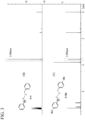
- FIG. 1 shows comparison of results of proton NMR spectra in CDCl3 for the compounds of the formula (2) and the formula (4).
- FIG. 2 shows a graph of comparison of the spectra of FIG. 1 in an overlapping manner.
- THF THF available from Wako Pure Chemical Industries, Ltd., product code 207-17765, super dehydrated, and stabilizer-free was used, and as the cell, a cell of 10 mm ⁇ 10 mm was used.
- the reaction was carried out using an excess amount (11 equivalents) of LiBH 4 relative to the oxidized form of the compound of the formula (2) (45 ⁇ M in THF).
- LiBH 4 was adjusted by diluting a commercially available THF 2M solution and used in the reaction.
- FIG. 4 shows changes in the UV spectrum with progress of the reaction.
- FIG. 5 shows a graph in which the absorption is 1.0 to 1.5 on the vertical axis and the wavelengths 216 to 228 nm on the horizontal axis in FIG. 4 are magnified.
- the pseudo first order reaction rate constant can be obtained from the change in UV spectrum of the compound, and can be useful for verification of the influence of the reductive cleavage reaction by the structure of the compound.
- the compounds of the formula (6), formula (7) and formula (8) each having the above-described substituent (-COOH) are designated as ArSSrA (H), ArSSrA (F), and ArSSrA (NO 2 ), respectively.
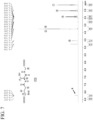
- NMR spectra of the reduced GSH are shown in FIG. 7 (formula (13) in the figure) and the oxidized GSSG shown in FIG. 8 (formula (14) in the figure) were measured.
- the NMR spectra of the respective compounds are shown in FIGS. 7 and 8 . Note that the peak is indicated by an in FIG. 7 is 2H of amide, and the integrated value is decreased by water-elimination (presaturation method) measurement.
- FIG. 9 shows an NMR spectrum of reduced ArSH (formula (15) in the figure)
- FIG. 10 shows an NMR spectrum of oxidized ArSSrA (formula (7)).
- a double tube SHIGEMI Co., Ltd., Model SP-405 was used and a TMS-containing CDCl3 solution (LOCK solvent) was placed in the outside to adjust an NMR tube.
- the water elimination (presaturation method) measurement was performed with reference to Casi, G. et al., J. Controlled Release. 2012, 161, 121, 422 to 428 , and the like.
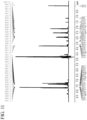
- FIG. 11 shows the overall NMR spectrum 25 minutes after the NMR tube was adjusted.
- FIG. 12 shows an overall view
- FIG. 13 shows a partially enlarged view at about 2 to 4 ppm
- FIG. 14 shows a partially enlarged view at about 7.2 to 8.4 ppm for comparison with the NMR spectra of the following chemical species considered to be present in the mixed system according to the reaction formula shown above, ArSH (H) of the formula (15), ArSSrA (H) of the formula (7), GSH of the formula (13), and GS-SG of the formula (14).
- ArSH (H) of the formula 15
- ArSSrA H
- GSH of the formula
- GS-SG of the formula
- ArS-SrA (H) of the formula (7) was administered to a cell model of a GSH concentration assuming a realistic intracellular drug concentration to examine the cleavage reaction of the linker compound.
- ArSSrA (F) shown in the following formula (18) was used under the same conditions as in Test Example 5 to examine whether a cleavage reaction occurs as in the case of ArSSrA (H).
- the analysis results are shown in Table 4. As shown in Table 4, it was found that about 40% of ArSSrA (F) remained without being cleaved after 1 day.
- ArSSrA (F) and ArSSrA (NO 2 ) were subjected to the same test as in Test Example 6 to examine their cleavage reactions in the normal cell model and the cancer cell model.
- the results of ArSSrA (F) and ArSSrA (NO 2 ) are shown in Table 6 and Table 7, respectively.
- Cultured cells were used to test whether cleavage by the linker compound of the present embodiment specifically occurs under the condition of a cancer cell.
- an Arg 8 -Dbs-linker-FAM compound was prepared in which FAM (formula (20)) and Dbs (formula (21))-Arg 8 were bonded to the two Rs of the linker of the formula (1) (formula (22)).
- Args functions as a cell membrane permeable peptide (arginine linker), and has an action of incorporating a bound compound into cytoplasm.
- FAM and Dbs develops color by fluorescence, but a compound to which FAM-Dbs is bound hardly develops color.
- FAM and DBS are separated and emit light, and thus, it is possible to detect distribution of FAM and DBS in a cell.
- FIG. 15 shows a view obtained by incubating various cells with the Arg 8 -Dbs-linker-FAM compound (formula (22)) (25 ⁇ M) in an F-12 (-) state for 30 minutes, and observing fluorescence development with a confocal microscope.
- the various cells are HeLa (human cervical epithelial carcinoma cell), HT-1080 (human fibroblast sarcoma cell), HepG2 (human hepatoma cell), and CHO-K1 (Chinese hamster ovary-derived cell), respectively.
- the compound bound by the linker compound of the present embodiment can be introduced into a cell by the cell membrane permeable peptide, and the linker compound can be cleaved only in a cancer cell having the glutathione concentration of a certain level or more.
- the glutathione concentration at which the disulfide bond dissociates can be designed by molecular design, a cancer cell can be accurately identified, and the linker compound is stable outside a target cell and can effectively release the drug compound in the target cell. Accordingly, the linker compound and the complex compound containing the same of the present invention can be widely applied to an antibody drug using an antibody-drug complex and a drug using another complex, and can be used for cancer treatment with fewer side effects.
Landscapes
- Health & Medical Sciences (AREA)
- Chemical & Material Sciences (AREA)
- Bioinformatics & Cheminformatics (AREA)
- Engineering & Computer Science (AREA)
- Life Sciences & Earth Sciences (AREA)
- Organic Chemistry (AREA)
- Veterinary Medicine (AREA)
- Medicinal Chemistry (AREA)
- Pharmacology & Pharmacy (AREA)
- Animal Behavior & Ethology (AREA)
- General Health & Medical Sciences (AREA)
- Public Health (AREA)
- Epidemiology (AREA)
- Immunology (AREA)
- Molecular Biology (AREA)
- Proteomics, Peptides & Aminoacids (AREA)
- Biochemistry (AREA)
- Chemical Kinetics & Catalysis (AREA)
- General Chemical & Material Sciences (AREA)
- Nuclear Medicine, Radiotherapy & Molecular Imaging (AREA)
- Medicinal Preparation (AREA)
Applications Claiming Priority (2)
| Application Number | Priority Date | Filing Date | Title |
|---|---|---|---|
| JP2021152092 | 2021-09-17 | ||
| PCT/JP2022/032220 WO2023042643A1 (ja) | 2021-09-17 | 2022-08-26 | リンカー化合物及びそれを含む複合体化合物 |
Publications (1)
| Publication Number | Publication Date |
|---|---|
| EP4403549A1 true EP4403549A1 (en) | 2024-07-24 |
Family
ID=85602753
Family Applications (1)
| Application Number | Title | Priority Date | Filing Date |
|---|---|---|---|
| EP22869790.0A Pending EP4403549A1 (en) | 2021-09-17 | 2022-08-26 | Linker compound and complex compound containing same |
Country Status (4)
| Country | Link |
|---|---|
| US (1) | US20240374750A1 (https=) |
| EP (1) | EP4403549A1 (https=) |
| JP (1) | JPWO2023042643A1 (https=) |
| WO (1) | WO2023042643A1 (https=) |
Family Cites Families (4)
| Publication number | Priority date | Publication date | Assignee | Title |
|---|---|---|---|---|
| GB9111376D0 (en) * | 1991-05-25 | 1991-07-17 | Boots Co Plc | Therapeutic agents |
| CN109689111B (zh) | 2016-08-11 | 2024-04-05 | 基因泰克公司 | 吡咯并苯并二氮杂䓬前药及其抗体缀合物 |
| EP3538501A1 (en) * | 2016-11-11 | 2019-09-18 | The United States of America, as represented by The Secretary, Department of Health and Human Services | Radiolabeling agents, methods of making, and methods of use thereof |
| JP2021152092A (ja) | 2020-03-24 | 2021-09-30 | 住友化学株式会社 | 熱可塑性エラストマー組成物 |
-
2022
- 2022-08-26 JP JP2023548386A patent/JPWO2023042643A1/ja active Pending
- 2022-08-26 WO PCT/JP2022/032220 patent/WO2023042643A1/ja not_active Ceased
- 2022-08-26 US US18/691,722 patent/US20240374750A1/en active Pending
- 2022-08-26 EP EP22869790.0A patent/EP4403549A1/en active Pending
Also Published As
| Publication number | Publication date |
|---|---|
| US20240374750A1 (en) | 2024-11-14 |
| JPWO2023042643A1 (https=) | 2023-03-23 |
| WO2023042643A1 (ja) | 2023-03-23 |
Similar Documents
| Publication | Publication Date | Title |
|---|---|---|
| Sarewicz et al. | Catalytic reactions and energy conservation in the cytochrome bc 1 and b 6 f complexes of energy-transducing membranes | |
| Ravichandiran et al. | Construction of a simple dual-channel fluorescence chemosensor for Cu2+ ion and GSSG detection and its mitochondria-targeting bioimaging applications | |
| Wang et al. | Based ‘successive’nucleophilic substitution mitochondrial-targeted H2S red light emissive fluorescent probe and its imaging in mice | |
| Bruemmer et al. | Development of a general aza-cope reaction trigger applied to fluorescence imaging of formaldehyde in living cells | |
| Guo et al. | Red and near-infrared fluorescent probe for distinguishing cysteine and homocysteine through single-wavelength excitation with distinctly dual emissions | |
| Pires et al. | Fluorescence imaging of cellular glutathione using a latent rhodamine | |
| Shaghaghi et al. | Multispectral and computational probing of the interactions between sitagliptin and serum albumin | |
| Solomatina et al. | Reactions of Cyclometalated Platinum (II)[Pt (N∧ C)(PR3) Cl] Complexes with Imidazole and Imidazole-Containing Biomolecules: Fine-Tuning of Reactivity and Photophysical Properties via Ligand Design | |
| Hamed-Akbari Tousi et al. | Comparing the interaction of cyclophosphamide monohydrate to human serum albumin as opposed to holo-transferrin by spectroscopic and molecular modeling methods: evidence for allocating the binding site | |
| Liu et al. | Polymers for fluorescence imaging of formaldehyde in living systems via the hantzsch reaction | |
| Puscas et al. | The high affinity of small-molecule antioxidants for hemoglobin | |
| US20190092822A1 (en) | BH4 Stabilized Peptides And Uses Thereof | |
| US10953110B2 (en) | Dual emissive metal nanoparticles as ratiometric pH indicators | |
| Otteson et al. | Nanohoop rotaxane design to enhance the selectivity of reaction-based probes: A proof-of-principle study | |
| Ryu et al. | Two-photon fluorescent probe for hydrogen sulfide based on a red-emitting benzocoumarin dye | |
| US20110033883A1 (en) | Imaging dyes and use thereof | |
| Bellavita et al. | Tuning peptide-based nanofibers for achieving selective Doxorubicin delivery in Triple-Negative Breast Cancer | |
| Tan et al. | Simultaneous quantitation of persulfides, biothiols, and hydrogen sulfide through sulfur exchange reaction with trityl spin probes | |
| Bhuvaneswari et al. | Rhenium (I)-based fluorescence resonance energy transfer probe for conformational changes of bovine serum albumin | |
| Mukherjee et al. | Switching of Trp-214 intrinsic rotamer population in human serum albumin: An insight into the aftermath of embracing therapeutic bioorganic luminophore azapodophyllotoxin into sudlow site I | |
| EP4403549A1 (en) | Linker compound and complex compound containing same | |
| Makowska et al. | Probing the binding of Cu2+ ions to a fragment of the Aβ (1–42) polypeptide using fluorescence spectroscopy, isothermal titration calorimetry and molecular dynamics simulations | |
| Jing et al. | An NIR-II Anionic Heptamethine Cyanine Probe Enables Real-Time In Vivo Imaging of Tumor-Associated Glutathione | |
| Vaher et al. | Reactivity of Cd7-metallothionein with Cu (II) ions: evidence for a cooperative formation of Cd3, Cu (I) 5-metallothionein | |
| US20100151582A1 (en) | Method for determining the amount of conjugated taxane in polyglut acid-taxane conjugates |
Legal Events
| Date | Code | Title | Description |
|---|---|---|---|
| STAA | Information on the status of an ep patent application or granted ep patent |
Free format text: STATUS: THE INTERNATIONAL PUBLICATION HAS BEEN MADE |
|
| PUAI | Public reference made under article 153(3) epc to a published international application that has entered the european phase |
Free format text: ORIGINAL CODE: 0009012 |
|
| STAA | Information on the status of an ep patent application or granted ep patent |
Free format text: STATUS: REQUEST FOR EXAMINATION WAS MADE |
|
| 17P | Request for examination filed |
Effective date: 20240314 |
|
| AK | Designated contracting states |
Kind code of ref document: A1 Designated state(s): AL AT BE BG CH CY CZ DE DK EE ES FI FR GB GR HR HU IE IS IT LI LT LU LV MC MK MT NL NO PL PT RO RS SE SI SK SM TR |
|
| DAV | Request for validation of the european patent (deleted) | ||
| DAX | Request for extension of the european patent (deleted) |