EP4399862B1 - Verfahren und system zur analyse von datenströmen - Google Patents
Verfahren und system zur analyse von datenströmen Download PDFInfo
- Publication number
- EP4399862B1 EP4399862B1 EP22773521.4A EP22773521A EP4399862B1 EP 4399862 B1 EP4399862 B1 EP 4399862B1 EP 22773521 A EP22773521 A EP 22773521A EP 4399862 B1 EP4399862 B1 EP 4399862B1
- Authority
- EP
- European Patent Office
- Prior art keywords
- protocol
- session
- detection
- data
- protocols
- Prior art date
- Legal status (The legal status is an assumption and is not a legal conclusion. Google has not performed a legal analysis and makes no representation as to the accuracy of the status listed.)
- Active
Links
Images








Classifications
-
- H—ELECTRICITY
- H04—ELECTRIC COMMUNICATION TECHNIQUE
- H04L—TRANSMISSION OF DIGITAL INFORMATION, e.g. TELEGRAPHIC COMMUNICATION
- H04L43/00—Arrangements for monitoring or testing data switching networks
- H04L43/18—Protocol analysers
-
- H—ELECTRICITY
- H04—ELECTRIC COMMUNICATION TECHNIQUE
- H04L—TRANSMISSION OF DIGITAL INFORMATION, e.g. TELEGRAPHIC COMMUNICATION
- H04L67/00—Network arrangements or protocols for supporting network services or applications
- H04L67/14—Session management
- H04L67/146—Markers for unambiguous identification of a particular session, e.g. session cookie or URL-encoding
-
- H—ELECTRICITY
- H04—ELECTRIC COMMUNICATION TECHNIQUE
- H04L—TRANSMISSION OF DIGITAL INFORMATION, e.g. TELEGRAPHIC COMMUNICATION
- H04L69/00—Network arrangements, protocols or services independent of the application payload and not provided for in the other groups of this subclass
- H04L69/18—Multiprotocol handlers, e.g. single devices capable of handling multiple protocols
-
- H—ELECTRICITY
- H04—ELECTRIC COMMUNICATION TECHNIQUE
- H04L—TRANSMISSION OF DIGITAL INFORMATION, e.g. TELEGRAPHIC COMMUNICATION
- H04L69/00—Network arrangements, protocols or services independent of the application payload and not provided for in the other groups of this subclass
- H04L69/22—Parsing or analysis of headers
Definitions
- Network monitoring and traffic management equipment typically includes network probes, which are designed to monitor a data stream received over a communications network.
- network probes are designed to process a fixed stream of data and monitor specific metrics of that data. As a result, whenever the data flow increases and/or a new data flow metric is identified for monitoring, these network probes must be redesigned to modify their processing capabilities to handle the changed stream of data.
- DPI Deep Packet Inspection
- Packet Sampling i.e., taking completely random packets from a network flow to sample them.
- Such a known solution avoids high processing overhead and higher network latencies.
- such a previous solution is not entirely satisfactory, because the analysis is performed restrictively on protocol chains or communication sessions comprising five fixed fields (source field, destination field, source port, destination port, communication protocol).
- the payload or attached content of a protocol layer is at least partly kept in memory first in the FPGA, then delegated to the processor and RAM.
- the hardware architecture does not allow to retain the state of a session long enough. The system is significantly slowed down when analyzing a high throughput data stream and prevents a posteriori identification of the protocols.
- the FPGA has limited memory, it must empty its cache periodically, which causes the loss of information and data packets, and can lead to inaccurate analysis statistics.
- the use of packet slicing, reassembly for analysis therefore implies a risk of information loss.
- managing the table of digital fingerprints calculated on the basis of five tuples implies the identification of a session on the basis of a digital fingerprint calculation taking into account only one layer of identification whereas in the case of sessions built on several tunneled or multiplexed protocols, the encapsulation creates several hidden sessions that become impossible to identify with a 5-tuple.
- the encryption of communications adds variation that will also distort comparisons with a database of malware digital fingerprints.
- the solution according to EP 1 788 490 takes the payload into account in the hash calculation which will cause too many variations in the analysis values to remain relevant in the context of a comparison, and the 5-tuple calculation approach.
- the present invention overcomes the drawbacks and improves the situation.
- the present invention relates to a method for analyzing a data stream of data packets received via a communication network, the data stream comprising batches of packets each defined by a chain of communication protocols attached to at least one session.
- Such an approach according to the invention has the advantage of allowing a higher labeling rate than previous approaches, insofar as it can be executed from layer 2 to layer 7 of the OSI model, in a single packet analysis pass. It also allows protocol chains to be identified in the case of tunneling protocols, or delayed detection protocols as well as continuous detection, and this, even if a protocol is not identified immediately, the detection of the following protocols continues.
- the present invention is faster than prior solutions based on all packet inspection.
- the method further comprises, after each classification step, a step of calculating a session fingerprint from a chosen hash function, said session fingerprint being calculated on the basis of the first identified protocol, and on the previously calculated digital fingerprint of the already identified protocol chain without taking into account the attached content, each digital fingerprint being calculated on the basis of parameters (or tuple) chosen and specific to each type of protocol, each type of protocol having its own number of defined markers; and a step of recording the session digital fingerprint calculated after each protocol identification step following the step of classifying each protocol by deep packet inspection or after the retroactive validation step, in a hash table integrated into the dynamic session database, each digital fingerprint being linked to at least one chosen session, said digital fingerprints calculated after each step of classifying each protocol by deep packet inspection being able to be updated retroactively in the event of delayed identification of a protocol according to the verification step.
- the Applicant observed that the dynamic management of digital fingerprints according to the invention allows the digital fingerprint of an unvalidated protocol to be updated a posteriori, this evolving as the packet is read.
- This unique algorithm allows all types of protocols to be detected with a single probe, including, but not limited to, simple, complex, tunneled and multiplexed protocol sequences.
- the management of digital fingerprints of the method according to the invention also has the advantage of avoiding a step of cutting the protocol chain (slicing in English) and thus eliminating the risk of loss of information, and also makes it possible to obtain truly unique identifiers on the protocol chain, regardless of the length of said protocol chain which makes up the packet(s).
- the method according to the invention makes it possible to obtain a unique digital fingerprint per channel, or branch of detected protocols, and thus avoid a loss of information such as two channels having the same identifier.
- the hash table is updated if detecting at least one protocol in a session requires implementing delayed detection across multiple packets.
- the knowledge database comprises a static knowledge database, wherein the static knowledge database comprises markers based on empirical knowledge of the characteristics of the protocols, and wherein the empirical knowledge comprises algorithmic means of detecting protocols based on location standards, logical links between communication protocols, queries for comments and frequency patterns of the communication protocols.
- the method according to the invention comprises performing data analysis followed by data extraction for the data packets based on the associated label.
- the execution of the protocol analysis and the execution, analysis and extraction of the data for a data packet are performed dynamically on a single processing core of a multi-core processor.
- the execution of the analysis and the extraction of the data for the data packet are performed on several processing cores of a multi-core processor.
- the method according to the invention comprises separating the data stream into a plurality of processing queues in which protocol analysis followed by data analysis and extraction are performed on data packets in each of the processing queues.
- the separation of the data flow into the plurality of processing queues is based on a receiving-side scaling RSS algorithm.
- the protocol analysis is executed dynamically on layers 2 to 7 of the OSI layer model.
- the invention also relates to a computer system for analyzing a data flow of data packets received via a communication network, the data flow comprising batches of packets each defined by a chain of communication protocols attached to at least one session.
- the system according to the invention further comprises a knowledge database comprising a static knowledge database in which the static knowledge database comprises markers, also called labels, based on empirical knowledge of the characteristics of the protocols, and in which the empirical knowledge comprises algorithmic means for detecting protocols based on standards on location, logical links between communication protocols, requests for feedback, and frequency patterns of communication protocols.
- the static knowledge database comprises markers, also called labels, based on empirical knowledge of the characteristics of the protocols, and in which the empirical knowledge comprises algorithmic means for detecting protocols based on standards on location, logical links between communication protocols, requests for feedback, and frequency patterns of communication protocols.
- system comprises a content analysis engine executable on at least one processing core to analyze and extract the data packet based on the associated label.
- the protocol analysis engine and the content analysis engine consecutively perform protocol analysis followed by data analysis and extraction for the data stream of data packets, and wherein the content analysis engine separately performs data analysis and extraction for differently labeled data packets.
- the system further includes a network interface card coupled to the processor, wherein the network card separates the data stream of data packets into a plurality of processing queues, and wherein the protocol analysis engine and the content analysis engine perform packet analysis and data extraction from the packets on each of the plurality of processing queues.
- the network interface card separates the data stream from the data packets based on the RSS scaling algorithm on the receiving side.
- the method and system according to the invention advantageously make it possible to identify protocol layers that have not been announced. In the case where these protocols do not announce themselves, or do not announce those that follow, and make it possible to search for a set of markers likely to validate the identification of a particular protocol.
- the system and method according to the invention also make it possible to carry out a validation by multiple and logical bounces of the analyzed protocols if a layer decreed as "safe" is validated, said "safe" layer thus making it possible to validate all of the classification choices made.
- the preceding stacks of protocols can be deduced correctly.
- the method and system according to the invention make it possible to wait for several packets to validate a chain. stacking of protocols for a given session, and to be able to maintain session uniqueness per branch while guaranteeing a unique digital fingerprint per session and per detection branch by carrying out continuous digital fingerprint calculations on each layer of protocols contained in a packet.
- the method and system according to the invention make it possible to maintain a very deep granularity of the analysis of network data, and thus limit protocol identification errors and guarantee reliable analysis data.
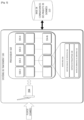
- FIG. 1 illustrates a computer system 100 for analyzing a data stream of data packets received via a communications network (not shown), in accordance with an example of the present invention.
- the computer system 100 may be either a stand-alone computer or a combination of multiple computer systems operating together in a distributed computing environment. Examples of the computer system 100 may include, but are not limited to, desktop computers, laptop computers, and smartphones, as well as personal digital assistants (PDAs).
- PDAs personal digital assistants
- the communications network may be a wireless or wired network, or a combination thereof.
- the communications network may be a collection of individual networks, interconnected to each other and operating as a single large network. Examples of such individual networks include, but are not limited to, the Global System for Mobile Communications (GSM) network, the Universal Mobile Telecommunications System (UMTS) network, the Long Term Evolution (LTE) network, the Personal Communications Services (PCS) network, the Time Division Multiple Access (CDMA) network, the CDMA network (Code-Division Multiple Access), Next Generation Network (NGN), Public Switched Telephone Network (PSTN), and Integrated Services Digital Network (ISDN).
- GSM Global System for Mobile Communications
- UMTS Universal Mobile Telecommunications System
- LTE Long Term Evolution
- PCS Personal Communications Services
- CDMA Time Division Multiple Access
- CDMA Code-Division Multiple Access
- NTN Next Generation Network
- PSTN Public Switched Telephone Network
- ISDN Integrated Services Digital Network
- the communications network includes various network entities, such as gateways and routers
- the exemplary implementations of the present invention may also be implemented on various devices or networks used by a network service provider, providing network connectivity to one or more subscribers, such as government organizations, multinational corporations, companies, enterprises, and other establishments.
- the network service provider may serve as a connecting conduit between the communication network and the computing devices of its subscribers.
- the network service provider may implement various other equipment, devices, network nodes interconnected by one or more wired or wireless network links to provide network connectivity to the subscribers.
- the network nodes may generally include switches, routers, access points, and data links that may facilitate communication between various subscriber hosts (e.g., server computers, client computers, mobile devices, etc.) that may produce and consume data traffic.
- the examples may be implemented on various network devices used by individual establishments/organizations, providing network connectivity and security to one or more of its users.
- the computing system 100 may include a processor 102, where the processor 102 includes at least one processing core 104.
- the computing system 100 may further include a protocol parsing engine 106 and a tagging engine 108.
- the protocol parsing engine 106 and the tagging engine 108 may be executable on at least one processing core 104.
- analysis engine 106 will be used to refer to the term “protocol analysis engine 106”.
- the processor 102 includes at least one processing core 104 configured to process a predetermined number of data packets per minute and a protocol analysis engine 106 on at least one processing core 104.
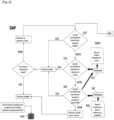
- the protocol analysis engine 106 analyzes the data stream comprising batches of packets each defined by a chain of communication protocols attached to at least one session. Said protocol analysis engine 106 is configured to analyze the first protocol Pi of a chain of communication protocols according to a classification by explicit detection S10, S11, S12, S13 to verify whether said first packet Pi announces the communication protocol of the following data packet Pi+1 of the chain of protocols.
- the analysis engine 106 is capable of analyzing the following packet Pi+1 to check whether it is attached to a known protocol chain stored in the dynamic database BDDS comprising protocol chains already identified, according to a classification by session detection S20, S21, S22.
- the protocol analysis engine 106 is configured to apply a session detection classification method S20 consisting of verifying whether the protocol Pi+1 is attached to a known protocol chain according to a dynamic decision tree by querying a dynamic session database BDDS comprising identified protocol chains.
- the computer system 100 is further coupled to the knowledge database 110 on the data packets comprising a dynamic BDDS stage suitable for storing the sessions, as will be described in more detail below, and a BDC stage suitable for storing knowledge relating to the protocols. It should be noted that if the knowledge database 110 on the data packets has been illustrated as thus distinct from the computer system 100, the knowledge database 110 on the data packets may also be hosted in the computer system 100 depending on its capabilities.
- the protocols of the known protocol chain are identified (step S100), the protocol Pi+1 is identified, and the analysis engine 106 is able to analyze the protocol Pi+2 by repeating the steps of classification by explicit detection S10, of classification by session detection S20.
- the analysis engine 106 is able to analyze the following protocol Pi+1 according to a classification by deep packet inspection S40, S42, S44, S46.
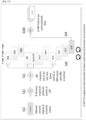
- the analysis engine 106 is configured to identify the communication protocol of the packet Pi+1 according to a dynamic decision tree correlated to a knowledge database BDC comprising protocol analysis parameters and a base of specific markers, also called labels (see Figure 11 And Figure 15 ) to each known protocol.
- the analysis engine 106 is capable of issuing a list of candidates of potential protocols to be taken into account according to at least two possible detection branches, each detection being attached to a determined sub-session to analyze the following protocol(s) Pi+n with n>_2 by repeating the analyses according to the classification by explicit detection S10, by session detection S20, and by deep packet inspection S40 until at least one protocol whose identity is certain is identified.
- said analysis engine 106 is capable of retroactively validating S60 the detection branch, and of discarding the other remaining unvalidated detection branches.
- the analysis engine 106 is able to classify the Pi+1 protocol as unknown S60 retroactively and continue the analysis of the following data packets.
- the protocol analysis engine 106 is further capable of calculating a session digital fingerprint Hi+n from a hash function chosen after each classification step S10, S20, S40, said digital fingerprint Hi+n being calculated on the basis of the first identified protocol, and on the fingerprint previously calculated numeric Hi+n-1 of the already identified protocol chain without taking into account the attached content or payload.
- Each digital fingerprint Hi+n is thus calculated on the basis of parameters or tuples chosen and specific to each type of protocol, each type of protocol having its own number of defined tuples, i.e. n-Tuples.
- the analysis engine 106 is then able to record the session digital fingerprint Hi+n calculated after each protocol identification step following step S40 or after the retroactive validation step S60, in a hash table integrated into the dynamic session database BDDS, each digital fingerprint Hi+n being linked to at least one chosen session, said digital fingerprints Hi+n calculated after each step of classification of each protocol by deep packet inspection S40 being able to be updated retroactively in the event of delayed identification of a protocol according to the verification step S60.
- the analysis engine 106 does not identify a protocol Pi+1, and emits a list of candidates of potential protocols to be taken into account according to at least two possible detection branches B1, B2 for delayed detection, each detection being attached to a determined sub-session to analyze the following protocol(s) Pi+n with n>_2 by repeating the analyses according to the classification by explicit detection S10, by session detection S20, and by deep packet inspection S40 until at least one protocol whose identity is certain is identified, the analysis engine 106 calculates a session digital fingerprint Hi+n from a chosen hash function, for each detection branch B1, B2 being attached to a determined sub-session to analyze the following protocol(s) Pi+n.
- the Hi+n session fingerprints thus calculated allow the a posteriori identification of one or more previously unidentified protocols, even if the detection of the session requires several packets, the hash table can be updated to take into account these new elements and thus never lose a single packet or associated data.
- the analysis engine 106 records the session fingerprint Hi+n of each detection branch B1, B2 attached to a protocol chain, the recording being configured to assign a unique identifier to each detection branch.
- the digital fingerprints H1, H2, and H3 are calculated respectively after identifying the protocols Pi, Pi+1, and Pi+2 of the protocol chain, and when the classification according to a deep packet inspection S40 fails to identify the protocol Pi+1, a digital fingerprint H2T is calculated, and in the case where the identification of the protocol Pi+3 validates the protocol chain, and Pi+1 can be deduced, then Pi+1 is validated and the digital fingerprint H2T is updated by calculating and recording a new digital fingerprint H2.
- the analysis engine 106 in the event of detection of tunneled, multiplexed, or multichannel protocols detected with certainty, is capable of generating at least one detection branch A1, A2, B1, B2, C1, C2 per verified protocol to be taken into account for subsequent detection.
- the calculated hash evolves as the data packet is read, making it possible to analyze and detect all protocols with a single probe (i.e. simple, complex, tunneled, multi-channel and multiplexed chains), and thanks to this repetition of hash calculation, on each layer, each of the identifiers is truly unique, regardless of the length of the protocol chain that makes up the packet(s).
- the system 100 further comprises the labeling engine 108, capable of associating a label with the data packets according to the protocols thus identified.
- the analysis engine 106 is able to record the session state if the current session is unknown with a digital fingerprint calculated with n-tuples S31, 32 and S33.
- FIG. 2 illustrates the diagrams of the computer system 100 for analyzing the data flow of data packets received via the communication network, in accordance with an exemplary implementation of the present invention.
- the computer system 100 may include the processor 102, or the processor 102 may include multiple processing cores 104-1, 104-2, 104-3, ..., 104-n.
- the functions of the functional block labeled as "processor(s)" may be provided by the use of dedicated hardware as well as hardware capable of executing instructions.
- the functions may be provided by a single dedicated processor, by a single shared processor, or by a plurality of individual processors, some of which may be shared.
- processor would not be construed to refer exclusively to hardware capable of executing instructions and may implicitly include, but not be limited to, digital signal processor (DSP) hardware, network processor, application-specific integrated circuit (ASIC), field programmable gate array (FPGA), read-only memory (ROM) for storing instructions, random access memory (RAM), non-volatile storage.
- DSP digital signal processor
- ASIC application-specific integrated circuit
- FPGA field programmable gate array
- ROM read-only memory
- RAM random access memory
- non-volatile storage non-volatile storage.
- Other hardware both standard and/or custom, may also be included.
- the computer system 100 may further include a memory 202 coupled to the processor 102, where the memory 202 may include any computer-readable medium, including, for example, volatile memory (e.g., RAM) and/or non-volatile memory (e.g., EPROM, flash memory, etc.).
- volatile memory e.g., RAM
- non-volatile memory e.g., EPROM, flash memory, etc.
- the computer system 100 may include a network interface card (NIC) 204 coupled to the processor 102 and the memory 202.
- NIC network interface card
- the network card 204 may be an integrated component of the computer system 100 or may be a separate component, externally coupled to the computer system 100.
- the computer system 100 may further include the engines 206, or the engines 206 may include the protocol analysis engine 106, the engine labeling engine 108 and the content analysis engine 112.
- the engines 206 may be implemented as a combination of hardware and firmware.
- the engine firmware may be executable processor instructions stored on a non-transitory, machine-readable storage medium and the engine hardware may include a processing resource (e.g., implemented as a single processor or a combination of multiple processors) to execute those instructions.
- the machine-readable storage medium may store instructions that, when executed by the processing resource, implement the functionality of the engine.
- the computer system 100 may include the machine-readable storage medium storing the instructions and the processing resource for executing the instructions.
- the machine-readable storage medium may be located in a different location, but accessible to the computer system 100 and the processor 102.
- the computer system 100 may further include the data 208, which serves, among other things, as a repository for storing data that may be retrieved, processed, received, or generated by the protocol analysis engine 106, the tagging engine 108, and the content analysis engine 112.
- the data 208 may include the protocol analysis data 210, the tagging data 212, the content analysis data 214, and other data 216.
- the data 208 may be stored in the memory 202.
- the network card 204 may receive the data stream of data packets via the communication network.
- the network card 204 may separate the data stream into multiple processing RX queues and allocate each processing queue to at least one processing core 104-1, 104-2, 104-3, ..., 104-n.
- the network card 204 may separate the data stream into the multiple processing queues based on the Receive Side Scaling (RSS) algorithm.
- RSS Receive Side Scaling
- Such an algorithm allows packets to be distributed across multiple queues Psa, Psb. (receive queues). There are several distribution algorithms, the most used is called “Toeplitz” from Microsoft (registered trademark).
- each of the multiple processing cores 104-1, 104-2, 104-3, ..., 104-n may allow different instances of the multiple engines to be executed thereon.
- separate instances of the protocol parsing engine 106, the tagging engine 108, and the content parsing engine 112 may be executed in parallel on each of the processing cores 104-1, 104-2, 104-3, ..., 104-n.
- the following implementation example has been explained with respect to a single processing core 104-1 of the processor 102, hereinafter referred to as the processing core 104.
- the network card 204 receives the packets according to step S200.
- step S202 the network card directly sends the packets to the cache memory 202.
- the network card sends the packet fields to multiple RX queues and chooses the correct queue according to the RSS (receive side scaling) algorithm scaled on the receiving side.
- each CPU core is bound to an RX queue.
- each CPU core retrieves a batch LOT of packets from the cache memory (RAM) 202.
- step S210 the packet Pn is received by a CPU core, the first protocol in the protocol chain (or stack) is analyzed according to the DAP analysis (S212) according to the invention.
- the BDDS session dynamic packet database may be stored in the protocol analysis data 210. In another example, the BDDS database may be included in the data packet knowledge database 110.
- the data packet knowledge database 110 may also include a static data packet database.
- the static data packet database may include markers based on empirical knowledge of the characteristics of the protocols, and in which Empirical knowledge includes algorithmic means of detecting standards-based protocols on location, logical links between communication protocols, RFC requests for comments, and frequency patterns of communication protocols.
- the protocol analysis engine 106 can also store the communication protocol thus identified in the labeling data 212.
- the labeling engine 108 can then access the labeling data 212 and associate a label on the data packets thus analyzed and whose protocols are thus identified.
- the tagging engine 108 then transmits the tagged data packets to the content analysis engine 112.
- the content analysis engine 112 analyzes and extracts the data packets based on the tag associated with them. For example, the content analysis engine 112 may analyze and extract a first data packet with a tag indicating a first communication protocol based on the first communication protocol. Similarly, the content analysis engine 112 may analyze and extract a second data packet with the tag indicating a second communication protocol differently than the first data packet. The content analysis engine 112 may then store the analyzed and extracted data packets in the content analysis data 214.
- the content analysis engine 112 may analyze and extract the data packets (or metadata from said packets) to monitor and visualize data traffic, detect a reduction in quality of service, detect cyberattacks, and identify any inconsistencies in the network configuration. If the content analysis engine 112 detects any of the aforementioned events based on the data analysis and extraction, the content analysis engine 112 may generate a trigger indicating the occurrence of the event upon analyzing the data and extracting a set of data packets from the data stream. In such a situation, the set of data packets may be stored for further processing. In one example, the set of data packets may be stored in the other data 216.
- the system computing system 100 may include the processor 102 having multiple processing cores 104-1, 104-2, 104-3, ..., 104-n.
- the computing system 100 may further include the network card 204 coupled to the processor 102 and the multiple processing cores 104-1, 104-2, 104-3, ..., 104-n included therein.
- each of the multiple processing cores 104-1, 104-2, 104-3, ..., 104-n may enable separate instances of the protocol analysis engine 106, the tagging engine 108, and the content analysis engine 112 to be executed.
- the computing system 100 may be coupled to the packet knowledge database 110.
- the content analysis engine 112 running on the processing core 104-1, can then analyze and extract the first data packet based on the data tag associated with it.
- the protocol analysis engine 106 and the content analysis engine 112 may sequentially perform DAP protocol analysis as illustrated in figures 6 And 7 , followed by analyzing and extracting DAC data for the data stream received via the communications network. For example, once the protocol analysis engine 106 has identified the communications protocol for the first data packet, the first data packet may be labeled and forwarded to the content analysis engine 112 for analyzing and extracting data.
- the protocol analysis engine 106 may simultaneously begin performing the DAP analysis for a second data packet Pn+1 following the first data packet in the data stream Pn.
- DAP analysis can be followed sequentially by DAC data analysis and extraction for data packets on a single CPU processing core.
- DAP analysis and DAC extraction of data following DAP analysis can be processed in parallel on one or more cores or dedicated machines, which facilitates scalability to handle a higher flow of data received from the communication network.
- the techniques described above can facilitate the processing of data streams having data traffic exceeding 100 Gbps.
- one instance of the protocol analysis engine 106 as well as several instances of the content analysis engine 112 may be executed on the processing core 104-1. That is, once the protocol analysis engine 106 has performed the DAP analysis on the data packets of the data stream and identified the communication protocol for the data packets, the processing core 104-1 may allow the parallel execution of several instances of the content analysis engine 112 to process data packets based on different labels associated with the data packets, the different labels being associated according to the communication protocol identified for the data packets of the data stream.
- a single processor core consecutively processes DAP protocol analysis followed by DAC content analysis and extraction.
- designing a solution based on asynchronous, two-step processing of packets allows for a physical break, by separating DAP processing from DAC processing (here, DAC processing is after DAP processing for the same data packet). Based on user requirements, the resources allocated to DACs may become congested. This break then allows dedicating certain cores to a single DAC job. Beyond the cores of a single CPU processor, it is then possible to dedicate entire processors to the DAC, or even entire machines.
- the invention also relates to a method for analyzing a data flow of data packets received via a communication network, the data flow comprising batches of packets each defined by a chain of communication protocols attached to at least one session.
- the method according to the invention comprises an analysis of DAP protocols according to a first step of analysis of the first protocol Pi of a chain of communication protocols according to a step of classification by explicit detection S10 configured to verify whether the first protocol Pi announces the following communication protocol Pi+1 of the chain of protocols.
- the method according to the invention is configured to analyze the following protocol Pi+1 according to a classification step by session detection S20.
- the session detection classification step S20 is configured to verify whether the protocol Pi+1 is attached to a known protocol chain according to a dynamic decision tree by querying a dynamic session database BDDS comprising identified protocol chains.
- the dynamic session database BDDS is updated.
- protocol Pi+1 is identified, and protocol Pi+2 is analyzed by repeating the steps of classification by explicit detection S10, classification by session detection S20.
- the Pi+1 protocol is analyzed according to a deep packet inspection classification step S40.
- the deep packet inspection classification step S40 is configured to identify the communication protocol of the packet Pi+1 according to a dynamic decision tree correlated to a knowledge database BDC comprising protocol analysis parameters and a base of markers specific to each known protocol.
- the dynamic session database BDDS is updated.
- the method according to the invention comprises a sub-step of transmitting a list of candidates of potential protocols for Pi+1, to be taken into account according to at least two detection branches B1, B2, each detection being attached to a determined sub-session to analyze the following protocol(s) Pi+n with n>_2 by repeating the steps of classification by explicit detection S10, classification by session detection S20, and classification by deep packet inspection S40 until at least one protocol whose identity is certain is identified.
- a detection branch B1, B2 will be generated based on a hypothesis of a given potential protocol, and the identification of protocol Pi+n after Pi+1 will be implemented by repeating the classification steps S10, S20 and S40.
- the detection branch B1, B2 will be retroactively validated, and the remaining unvalidated detection branches will be discarded.
- the dynamic session database BDDS is updated.
- the Pi+1 protocol is then classified as unknown S60 retroactively.
- updating the dynamic session database BDDS allows for an acceleration of the identification process, and to limit the protocols labeled as unknown.
- the method further comprises a labeling step comprising associating a label with the data packets based on each session for which the protocols have been identified.
- the method according to the invention further comprises, after each classification step S10, S20, S40, a step of calculating a session digital fingerprint Hi+n from a chosen hash function, said digital fingerprint Hi+n being calculated on the basis of the first identified protocol, and on the previously calculated digital fingerprint Hi+n-1 of the already identified protocol chain without taking into account the attached content.
- each digital fingerprint Hi+n is calculated on the basis of dynamic parameters or tuples chosen and specific to each type of protocol, each type of protocol having its own number of defined markers also called n-Tuples.
- the defined markers also called n-Tuples can be, but not limited to, the group formed by destination IP, source IP, destination port, source port, protocol, IP address, port, QoS quality of service parameters, network tag, session volume, packet size, retry count, version, type and version of the encryption algorithm, encryption type, CERT (Computer Emergency Response Team) of the certificate, SNI value (Server Name Indication), packet size, returned IP, error flag, domain name, client version, server version, encryption algorithm version, compression algorithm, timestamp, IP version, host name, lease-time, URL, user agent, number of bytes of attached content, content type, status code, cookie header, client name, request service, error code value, request type, protocol value, response timestamp, privilege level, keyboard type and language, product identification, screen size, or any other similar specific metadata extracted from the protocols in one or more data packets of the validated session, similar specific metadata extracted from the content attached to one or more data packets of the validated session
- each protocol can with a specific set of n-tuples: ⁇ i> ⁇ u>Table of sample extractable metadata for a list of selected protocols.
- HTTP Url user-agent, number of payload bytes, content-type, status code, cookie header, ... Kerberos client name, service requested, error code value, request type, protocol value, response timestamp, privilege level, encryption type, ... LDAP session duration, number of logon errors, end of session flag, query result code, error code, ... RDP cookie username, keyboard type and language, client version, product ID, screen size, ...
- the step of calculating the digital fingerprint Hi+n is followed by a step of recording said session digital fingerprint Hi+n calculated after each protocol identification step following step S40 or after the retroactive validation step S60.
- the recording is done in a hash table integrated into the dynamic session database BDDS, each digital fingerprint Hi+n being linked to at least one chosen session.
- the hash table is updated if the detection of at least one protocol of a session requires the implementation of delayed detection on several S60 packets.
- the method according to the invention comprises a first sub-step of generating at least one detection branch A1, A2, B1, B2, C1, C2 per verified protocol to be taken into account for the subsequent analysis.
- each detection branch A1, A2, B1, B2, C1, C2 will be treated as a unique protocol chain capable of being analyzed, and comprises a sub-step of calculating a unique digital session fingerprint Hi+n from a chosen hash function, attached to a sub-session determined for each detection branch A1, A2, B1, B2, C1, C2, and making it possible to analyze the following protocol(s) Pi+n.
- the detection of tunneled, multiplexed, or multichannel protocols comprises a final sub-step of recording the digital session fingerprint Hi+n of each detection branch A1, A2, B1, B2, C1, C2, attached to a protocol chain, the recording step being configured to assign a unique identifier to each detection branch A1, A2, B1, B2, C1, C2 of the tunneled, multiplexed, or multichannel protocol(s) detected, and thus advantageously not to confuse two sub-sessions which could lead to erroneous analysis information.
- LOT1 includes four individual packets PO, P1, P2, and P3.
- the PO packet supports the ETHERNET ETH protocol.
- the P1 packet supports the INTERNET IP protocol.
- the P2 packet supports the TCP protocol, and the P3 packet supports the HTTP protocol.
- step SLD2 the analysis engine checks whether the P0 packet announces the protocol of the next packet P1.
- P1 IP.
- step SDL3 the engine checks whether packet P1 advertises the protocol of the next packet P2.
- IP advertises TCP.
- step SLD5 if the session is unknown (for example P3 is not http) then create a digital fingerprint of the IPs of source A, recipient B, ports A and B and a protocol identifier. Then the session thus recognized for the first time is stored in the dynamic session database for later analysis.
- the session is unknown (for example P3 is not http) then create a digital fingerprint of the IPs of source A, recipient B, ports A and B and a protocol identifier. Then the session thus recognized for the first time is stored in the dynamic session database for later analysis.
- the DNS protocol is identified as the most likely, and will therefore be tested by attempting to identify markers specific to the DNS protocol.
- the QUIC protocol is identified using its own markers by the analysis engine 106.
- S40 deep inspection classification analysis cannot identify the associated protocol if the protocol does not include sufficient markers to be identified.
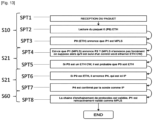
- LOT2 includes four individual packets PO, P1, P2, and P3.
- the PO packet supports the ETHERNET ETH protocol.
- the P1 packet supports the MPLS protocol.
- the P2 packet supports the ETH CW protocol, and the P3 packet supports the IP protocol.
- step SPT3 the analysis engine 106 checks whether the packet P0 announces the protocol of the next packet P1 according to the explicit classification step S10.
- ETH always announces the protocol that follows.
- P1 MPLS.
- step SPT4 the engine checks whether packet P1 advertises the protocol of the next packet P2.
- MPLS does not necessarily advertise the protocol of the next packet.
- the protocol analysis according to the invention implements an analysis according to a classification by session detection S20 and by deep packet inspection S40, for which the most probable protocols are tested.
- the method according to the invention will further comprise a step of assuming the most probable remaining protocol, and will continue the detection on the following protocol by testing the protocol(s) normally following the first assumed protocol.
- step SPT8 the protocol chain is validated, P2 is retroactively validated as ETH CW.
- the detection method according to the invention comprising management of a dynamic hash table on a basis of n-tuples, associated with protocol identification according to explicit classifications S10, by session detection S20, by deep packet inspection S40, and by a posteriori detection, makes it possible to significantly limit the loss of visibility and eliminate cascading errors during the analysis of a very high-speed data flow, unlike systems of the prior art and in particular those based on a 5-tuple type digital fingerprint calculation.
Landscapes
- Engineering & Computer Science (AREA)
- Computer Networks & Wireless Communication (AREA)
- Signal Processing (AREA)
- Computer Security & Cryptography (AREA)
- Data Exchanges In Wide-Area Networks (AREA)
Claims (19)
- Verfahren zur Analyse von Datenpaketen eines über ein Kommunikationsnetz empfangenen Datenstroms, wobei der Datenstrom Stapel von Paketen umfasst, wobei die Pakete jeweils durch eine Kette von Kommunikationsprotokollen definiert sind, die mindestens einer Sitzung zugeordnet ist, dadurch gekennzeichnet, dass das Verfahren eine Protokollanalyse (DAP) gemäß den folgenden Schritten umfasst:- Analyse des ersten Protokolls (Pi) einer Kette von Kommunikationsprotokollen in einem Schritt der Klassifizierung durch explizite Erkennung (S10), der so aufgebaut ist, dass überprüft wird, ob das erste Protokoll (Pi) das nächste Kommunikationsprotokoll (Pi+1) der Protokollkette ankündigt:- im Falle einer Ankündigung wird das so angekündigte nächste Protokoll (Pi+1) identifiziert;- wohingegen im Falle einer Nichtankündigung das nächste Protokoll (Pi+1) in einem Schritt der Klassifizierung durch Sitzungserkennung (S20) analysiert wird; wobei der Schritt der Klassifizierung durch Sitzungserkennung (S20) so aufgebaut ist, dass überprüft wird, ob das Protokoll Pi+1 an eine bekannte Protokollkette gemäß einem dynamischen Entscheidungsbaum angehängt ist, indem eine dynamische Sitzungsdatenbank (DSDB) mit identifizierten Protokollketten abgefragt wird:- im Falle eines angehängten Protokolls Pi+1 wird dieses identifiziert und das Protokoll Pi+2 analysiert, indem die Schritte der Klassifizierung durch explizite Erkennung (S10) und der Klassifizierung durch Sitzungserkennung (S20) wiederholt werden;- wohingegen bei fehlendem Anhang das Protokoll Pi+1 in einem Schritt der Klassifizierung durch Deep Packet Inspection (S40) analysiert wird, wobei der Schritt der Klassifizierung durch Deep Packet Inspection (S40) so aufgebaut ist, dass das Kommunikationsprotokoll des Pakets Pi+1 gemäß einem dynamischen Entscheidungsbaum identifiziert wird, der mit einer Wissensdatenbank (KDB) korreliert ist, die Protokollanalyseparameter und eine Datenbank von Markern umfasst, die für jedes bekannte Protokoll spezifisch sind;- bei Nichtidentifizierung des Protokolls Pi+1 wird eine Liste von potenziellen Protokollkandidaten ausgegeben, die gemäß mindestens zwei Erkennungszweigen zu berücksichtigen sind, wobei jede Erkennung einer bestimmten Untersitzung zugeordnet ist, um das oder die folgenden Protokolle Pi+n mit n≥2 durch Wiederholung der Schritte der Klassifizierung durch explizite Erkennung (S10), der Klassifizierung durch Sitzungserkennung (S20) und der Klassifizierung durch Deep Packet Inspection (S40) zu analysieren, bis mindestens ein Protokoll identifiziert wird, dessen Identität sicher ist;- - im Falle der Identifizierung eines Pi+n-Protokolls, dessen Identität auf einem Erkennungszweig sicher ist, werden der Erkennungszweig rückwirkend validiert (S60) und die verbleibenden, nicht validierten Erkennungszweige verworfen;- bei Nichtidentifizierung eines Protokolls Pi+n, dessen Identität auf einem Erkennungszweig sicher ist, wird das Protokoll Pi+1 rückwirkend als unbekannt (S60) klassifiziert; und- den Datenpaketen auf der Grundlage jeder Sitzung, für die die Protokolle identifiziert wurden, ein Label zugeordnet.
- Verfahren zur Analyse eines Datenstroms von Datenpaketen, die über ein Kommunikationsnetz nach Anspruch 1 empfangen werden, dadurch gekennzeichnet, dass nach jedem Klassifizierungsschritt (S10, S20, S40):- ein Sitzungs-Fingerabdruck (Hi+n) anhand einer ausgewählten Hash-Funktion berechnet wird, wobei der Fingerabdruck (Hi+n) auf der Grundlage des ersten identifizierten Protokolls und des zuvor berechneten Fingerabdrucks (Hi+n-1) der bereits identifizierten Protokollkette ohne Berücksichtigung des angehängten Inhalts berechnet wird, wobei jeder Fingerabdruck (Hi+n) auf der Grundlage ausgewählter, für jeden Protokolltyp spezifischer Parameter (oder Tupel) berechnet wird, wobei jeder Protokolltyp über eine eigene Anzahl von definierten Markern (n-Tupel) verfügt;- der Sitzungs-Fingerabdruck (Hi+n), der nach jedem Schritt der Identifizierung des Protokolls gemäß Schritt S40 oder nach dem Schritt der rückwirkenden Validierung (S60) berechnet wird, in einer in die dynamische Sitzungsdatenbank (BDDS) integrierten Hash-Tabelle gespeichert wird, wobei jeder Fingerabdruck (Hi+n) mit mindestens einer ausgewählten Sitzung verbunden ist, wobei die Fingerabdrücke (Hi+n), die nach jedem Schritt der Klassifizierung jedes Protokolls durch Deep Packet Inspection (S40) berechnet werden, im Falle einer verzögerten Identifizierung eines Protokolls gemäß dem Verifizierungsschritt (S60) rückwirkend aktualisiert werden können.
- Verfahren zur Analyse eines Datenstroms von Datenpaketen, die über ein Kommunikationsnetz nach Anspruch 2 empfangen werden, dadurch gekennzeichnet, dass das Verfahren gemäß Erfindung im Falle der sicheren Erkennung von getunnelten, gemultiplexten, mehrkanaligen Protokollen die folgenden Teilschritte umfasst:- Generieren von mindestens einem Erkennungszweig pro verifiziertem Protokoll, der bei der späteren Erkennung zu berücksichtigen ist,- Berechnen eines Sitzungs-Fingerabdrucks (Hi+n) ausgehend von einer für jeden Erkennungszweig ausgewählten Hash-Funktion, wobei jeder Erkennungszweig einer bestimmten Untersitzung zugeordnet ist, um das oder die folgenden Protokolle Pi+n zu analysieren; und- Speichern des Sitzungs-Fingerabdrucks (Hi+n) jedes Erkennungszweigs, der einer Protokollkette zugeordnet ist, wobei der Schritt der Speicherung so gestaltet ist, dass er jedem Erkennungszweig des/der erkannten getunnelten, gemultiplexten, mehrkanaligen Protokolls/e eine eindeutige Kennung zuweist.
- Verfahren zur Analyse eines Datenstroms von Datenpaketen, die über ein Kommunikationsnetz nach Anspruch 2 oder Anspruch 3 empfangen werden, dadurch gekennzeichnet, dass die Hash-Tabelle aktualisiert wird, wenn die Erkennung mindestens eines Protokolls einer Sitzung die Durchführung einer verzögerten Erkennung über mehrere Pakete (S60) erfordert.
- Verfahren nach einem der Ansprüche 1 bis 4, in dem die Wissensdatenbank (KDB) eine statische Wissensdatenbank umfasst, wobei die statische Wissensdatenbank Marker umfasst, die auf empirischem Wissen betreffend die Eigenschaften der Protokolle basieren, wobei das empirische Wissen algorithmische Mittel zur Erkennung von Protokollen umfasst, die auf Normen über den Standort, logische Verbindungen zwischen den Kommunikationsprotokollen, Anfragen für Kommentare (RFCs) und Frequenzmodelle der Kommunikationsprotokolle basieren.
- Verfahren nach einem der Ansprüche 1 bis 5, das außerdem die Durchführung einer Datenanalyse gefolgt von einer Datenextraktion (DAC) für die Datenpakete auf der Grundlage des zugehörigen Labels umfasst.
- Verfahren nach Anspruch 6, wobei die Ausführung der Protokollanalyse (DAP) und die Ausführung der Datenanalyse und -extraktion (DAC) für ein Datenpaket dynamisch auf einem einzelnen Verarbeitungskern eines Multicore-Prozessors erfolgt.
- Verfahren nach Anspruch 6 oder 7, in dem die Durchführung der Analyse und die Extraktion der Daten (DAC) für das Datenpaket auf mehreren Verarbeitungskernen eines Multicore-Prozessors durchgeführt werden.
- Verfahren nach einem der Ansprüche 6 bis 8, das ferner das Aufteilen des Datenstroms in eine Vielzahl von Verarbeitungswarteschlangen umfasst, wobei die Protokollanalyse (DAP), gefolgt von der Datenanalyse und -extraktion (DAC), an Datenpaketen in jeder Verarbeitungswarteschlange durchgeführt wird.
- Verfahren nach Anspruch 9, in dem die Aufteilung des Datenstroms in eine Vielzahl von Verarbeitungswarteschlangen auf einem RSS-Algorithmus zur empfangsseitigen Skalierung beruht.
- Verfahren nach einem der Ansprüche 1 bis 10, in dem die Protokollanalyse (DAP) dynamisch auf den Schichten 2 bis 7 des Schichtenmodells (OSI) ausgeführt wird.
- Computersystem zur Analyse von Datenpaketen eines über ein Kommunikationsnetz empfangenen Datenstroms, wobei der Datenstrom Stapel von Paketen umfasst, wobei jedes Paket jeweils durch eine Kette von Kommunikationsprotokollen definiert ist, die mindestens einer Sitzung zugeordnet sind, dadurch gekennzeichnet, dass das System einen Prozessor mit mindestens einem Verarbeitungskern zur Verarbeitung einer vorgegebenen Anzahl von Datenpaketen pro Minute und eine Protokollanalyse-Engine (106) auf mindestens einem Verarbeitungskern umfasst, wobei die Protokollanalyse-Engine (106) so aufgebaut ist, dass sie die folgenden Schritte ausführt:- Analyse des ersten Protokolls (Pi) einer Kette von Kommunikationsprotokollen gemäß einem Schritt der Klassifizierung durch explizite Erkennung (S10), die so aufgebaut ist, dass geprüft wird, ob das erste Protokoll (Pi) das nächste Kommunikationsprotokoll (Pi+1) der Protokollkette ankündigt, wobei im Falle einer Ankündigung das so angekündigte nächste Protokoll (Pi+1) identifiziert wird, während im Falle einer Nicht-Ankündigung die Protokollanalyse-Engine (106) das Protokoll (Pi+1) in einem Schritt der Klassifizierung durch Sitzungserkennung (S20) analysieren kann;- Analyse in einem Schritt der Klassifizierung durch Sitzungserkennung (S20), der so aufgebaut ist, dass geprüft wird, ob das Protokoll Pi+1 an eine bekannte Protokollkette gemäß einem dynamischen Entscheidungsbaum angehängt ist, indem eine dynamische Sitzungsdatenbank (DSDB) mit identifizierten Protokollketten abgefragt wird:- im Falle eines angehängten Protokolls Pi+1 dieses identifiziert wird und die Protokollanalyse-Engine (106) das Protokoll Pi+2 durch Wiederholung der Schritte der Klassifizierung durch explizite Erkennung (S10) und der Klassifizierung durch Sitzungserkennung (S20) analysieren kann;- wohingegen bei nichtangehängtem Protokoll die Protokollanalyse-Engine (106) das Protokoll Pi+1 gemäß einem Deep Packet Inspection-Klassifikationsschritt (S40) analysieren kann;- Analyse des Protokolls Pi+1 in einem Schritt der Klassifizierung durch Deep Packet Inspection (S40), der so aufgebaut ist, dass er das Kommunikationsprotokoll des Pakets Pi+1 gemäß einem dynamischen Entscheidungsbaum identifiziert, der mit einer Wissensdatenbank (WDB) korreliert ist, die Protokollanalyseparameter und eine Datenbank von Markern umfasst, die für jedes bekannte Protokoll spezifisch sind;- bei Nichtidentifizierung des Protokolls Pi+1 kann die Protokollanalyse-Engine (106) eine Liste von potenziellen Protokollkandidaten ausgeben, die gemäß mindestens zwei Erkennungszweigen zu berücksichtigen sind, wobei jede Erkennung einer bestimmten Untersitzung zugeordnet ist, um das oder die folgenden Protokolle Pi+n mit n≥ 2 durch Wiederholung der Schritte der Klassifizierung durch explizite Erkennung (S10), durch Sitzungserkennung (S20) und durch Deep Packet Inspection (S40) zu analysieren, bis mindestens ein Protokoll identifiziert wird, dessen Identität sicher ist;- im Fall der Identifizierung eines Protokolls Pi+n, dessen Identität auf einem Erkennungszweig sicher ist, kann die Protokollanalyse-Engine (106) den Erkennungszweig rückwirkend validieren (S60) und die verbleibenden, nicht validierten Erkennungszweige verwerfen;- bei fehlender Identifizierung eines Protokolls Pi+n, dessen Identität auf einem Erkennungszweig sicher ist, ist die Protokollanalyse-Engine (106) in der Lage, das Protokoll Pi+1 rückwirkend als unbekannt (S60) zu klassifizieren; und- eine Label-Engine ist in der Lage, den Datenpaketen entsprechend den so identifizierten Protokollen ein Label zuzuordnen.
- Computersystem nach Anspruch 12, dadurch gekennzeichnet, dass die Protokollanalyse-Engine (106):- einen Sitzungs-Fingerabdruck der Sitzung (Hi+n) anhand einer Hash-Funktion berechnet, die nach jedem Klassifizierungsschritt (S10, S20, S40) ausgewählt wird, wobei der Fingerabdruck (Hi+n) auf der Grundlage des ersten identifizierten Protokolls berechnet wird, auf dem zuvor berechneten Fingerabdruck (Hi+n-1) der bereits identifizierten Protokollkette ohne Berücksichtigung des angehängten Inhalts, wobei jeder Fingerabdruck (Hi+n) auf der Grundlage von ausgewählten Parametern (oder Tupeln) berechnet wird, die für jeden Protokolltyp spezifisch sind, wobei jeder Protokolltyp über eine eigene Anzahl von definierten Markern (n-Tupel) verfügt;- den Sitzungs-Fingerabdruck (Hi+n), der nach jedem Schritt der Protokollidentifizierung gemäß Schritt S40 oder nach dem Schritt der rückwirkenden Validierung (S60) berechnet wird, in einer Hash-Tabelle speichert, die in die dynamische Sitzungsdatenbank (BDDS) integriert ist, wobei jeder Fingerabdruck (Hi+n) mit mindestens einer ausgewählten Sitzung verknüpft ist, wobei die digitalen Fingerabdrücke (Hi+n), die nach jedem Schritt der Klassifizierung jedes Protokolls durch Deep Packet Inspection (S40) berechnet werden, im Falle einer verzögerten Identifizierung eines Protokolls gemäß dem Verifizierungsschritt (S60) rückwirkend aktualisiert werden können.
- Computersystem nach Anspruch 12 oder 13, dadurch gekennzeichnet, dass die Protokollanalyse-Engine (106) im Falle der Erkennung von sicher erkannten getunnelten, gemultiplexten, mehrkanaligen Protokollen,- mindestens einen Erkennungszweig pro verifiziertem Protokoll erzeugt, der bei der späteren Erkennung berücksichtigt wird,- einen Sitzungs-Fingerabdruck (Hi+n) aus einer Hash-Funktion berechnet, die für jeden Erkennungszweig ausgewählt wurde, wobei jeder Erkennungszweig einer Untersitzung zugeordnet ist, die bestimmt wurde, um das oder die folgenden Protokolle Pi+n zu analysieren; und- den Sitzungs-Fingerabdruck (Hi+n) jedes an eine Protokollkette angehängten Erkennungszweigs speichert, wobei die Speicherung so aufgebaut ist, dass sie jedem Erkennungszweig des/der erkannten getunnelten, gemultiplexten, mehrkanaligen Protokolls/Protokolle eine eindeutige Kennung zuweist.
- Computersystem nach einem der Ansprüche 12 bis 14, wobei die Wissensdatenbank zusätzlich eine statische Wissensdatenbank umfasst, wobei die statische Wissensdatenbank Marker umfasst, die auf empirischem Wissen über die Eigenschaften von Protokollen basieren, wobei das empirische Wissen algorithmische Mittel zur Erkennung von Protokollen umfasst, die auf Normen über den Standort, logische Verbindungen zwischen Kommunikationsprotokollen, Anfragen für Kommentare (RFCs) und Frequenzmodellen von Kommunikationsprotokollen basieren.
- Computersystem nach einem der Ansprüche 12 bis 15, das außerdem eine Inhaltsanalyse-Engine (112) umfasst, die auf mindestens einem Verarbeitungskern ausführbar ist, um das Datenpaket auf der Grundlage des zugehörigen Labels zu analysieren und zu extrahieren.
- Computersystem nach Anspruch 16, wobei die Protokollanalyse-Engine (106) und die Inhaltsanalyse-Engine (112) nacheinander die Protokollanalyse (DAP) gefolgt von der Datenanalyse und -extraktion (DAC) für den Datenstrom von Datenpaketen durchführen, und wobei die Inhaltsanalyse-Engine die Datenanalyse und -extraktion (DAC) für unterschiedlich gekennzeichnete Datenpakete getrennt durchführt.
- Computersystem nach Anspruch 16 oder 17, ferner umfassend eine mit dem Prozessor gekoppelte Netzwerkschnittstellenkarte (NIC), wobei die Netzwerkkarte den Datenstrom der Datenpakete in eine Vielzahl von Verarbeitungswarteschlangen aufteilt und wobei die Protokollanalyse-Engine (DAP) und die Inhaltsanalyse-Engine (112) die Paketanalyse (DAP) und die Datenextraktion (DAC) der Pakete auf jeder der Vielzahl von Verarbeitungswarteschlangen durchführen.
- Computersystem nach Anspruch 18, bei dem die Netzwerkkarte (NIC) den Datenstrom von den Datenpaketen entsprechend dem RSS-Algorithmus zur Skalierung auf der Empfangsseite trennt.
Applications Claiming Priority (2)
| Application Number | Priority Date | Filing Date | Title |
|---|---|---|---|
| FR2109379A FR3126830A1 (fr) | 2021-09-07 | 2021-09-07 | Procede et système d’analyse de flux de données |
| PCT/EP2022/074915 WO2023036846A1 (fr) | 2021-09-07 | 2022-09-07 | Procédé et système d'analyse de flux de données |
Publications (3)
| Publication Number | Publication Date |
|---|---|
| EP4399862A1 EP4399862A1 (de) | 2024-07-17 |
| EP4399862C0 EP4399862C0 (de) | 2025-05-28 |
| EP4399862B1 true EP4399862B1 (de) | 2025-05-28 |
Family
ID=89658242
Family Applications (1)
| Application Number | Title | Priority Date | Filing Date |
|---|---|---|---|
| EP22773521.4A Active EP4399862B1 (de) | 2021-09-07 | 2022-09-07 | Verfahren und system zur analyse von datenströmen |
Country Status (3)
| Country | Link |
|---|---|
| US (1) | US12489820B2 (de) |
| EP (1) | EP4399862B1 (de) |
| CA (1) | CA3226756A1 (de) |
Families Citing this family (3)
| Publication number | Priority date | Publication date | Assignee | Title |
|---|---|---|---|---|
| US20240330910A1 (en) * | 2023-03-30 | 2024-10-03 | Mastercard International Incorporated | Systems and methods for use in account credential conversion |
| CN119906769B (zh) * | 2025-01-24 | 2025-08-01 | 北京天云信安科技有限公司 | 一种大带宽网络流量协议识别解析方法及系统 |
| CN120050092B (zh) * | 2025-02-21 | 2025-11-25 | 青岛视讯通智能科技有限公司 | 一种新型网络信息安全的防御方法和系统 |
Family Cites Families (15)
| Publication number | Priority date | Publication date | Assignee | Title |
|---|---|---|---|---|
| WO2001001272A2 (en) | 1999-06-30 | 2001-01-04 | Apptitude, Inc. | Method and apparatus for monitoring traffic in a network |
| US6578084B1 (en) * | 1999-10-15 | 2003-06-10 | Cisco Technology, Inc. | Packet processing using encapsulation and decapsulation chains |
| DE60120466T2 (de) * | 2000-10-11 | 2007-01-18 | Broadcom Corp., Irvine | Effiziente Übertragung von RTP Paketen in einem Netzwerk |
| FR2842970B1 (fr) | 2002-07-29 | 2005-03-18 | Qosmos | Procede de reconnaissance et d'analyse de protocoles dans des reseaux de donnees |
| US20040156389A1 (en) * | 2003-02-11 | 2004-08-12 | Lucent Technologies Inc. | Cross-layer communication solution(s) across different communication protocols |
| US20060182143A1 (en) * | 2005-02-11 | 2006-08-17 | Lu Hongqian K | System and method for filtering communications packets on electronic devices |
| US8073012B2 (en) * | 2007-05-02 | 2011-12-06 | Innovative Sonic Limited | Method and related apparatus for handling packet discard in a wireless communications system |
| US8923285B2 (en) * | 2008-04-30 | 2014-12-30 | Qualcomm Incorporated | Apparatus and methods for transmitting data over a wireless mesh network |
| JP2013219655A (ja) * | 2012-04-11 | 2013-10-24 | Sony Corp | プロトコル変換装置及びプロトコル変換方法 |
| CN102938722B (zh) * | 2012-10-30 | 2017-11-10 | 中兴通讯股份有限公司 | 一种网络设备周期性协议发包的方法及装置 |
| US20160112287A1 (en) | 2014-10-16 | 2016-04-21 | WildPackets, Inc. | Storing and analyzing network traffic data |
| WO2017008203A1 (zh) * | 2015-07-10 | 2017-01-19 | 华为技术有限公司 | 一种协议帧传输方法、装置、节点设备以及系统 |
| US10694006B1 (en) * | 2017-04-23 | 2020-06-23 | Barefoot Networks, Inc. | Generation of descriptive data for packet fields |
| US11082494B2 (en) * | 2019-12-05 | 2021-08-03 | Western Digital Technologies, Inc. | Cross storage protocol access response for object data stores |
| US11336542B2 (en) | 2020-06-03 | 2022-05-17 | Capital One Services, Llc | Network packet capture manager |
-
2022
- 2022-09-07 US US18/690,226 patent/US12489820B2/en active Active
- 2022-09-07 CA CA3226756A patent/CA3226756A1/fr active Pending
- 2022-09-07 EP EP22773521.4A patent/EP4399862B1/de active Active
Also Published As
| Publication number | Publication date |
|---|---|
| EP4399862C0 (de) | 2025-05-28 |
| US20240406274A1 (en) | 2024-12-05 |
| CA3226756A1 (fr) | 2023-03-16 |
| EP4399862A1 (de) | 2024-07-17 |
| US12489820B2 (en) | 2025-12-02 |
Similar Documents
| Publication | Publication Date | Title |
|---|---|---|
| EP4399862B1 (de) | Verfahren und system zur analyse von datenströmen | |
| US8931088B2 (en) | Adaptive distinct counting for network-traffic monitoring and other applications | |
| US9083740B1 (en) | Network traffic pattern matching using adaptive deterministic finite automata | |
| EP3278516B1 (de) | Auf verhaltensanalyse basierendes system zur erkennung und klassifizierung von dns-tunnelierung für netzwerksicherheit | |
| US8180916B1 (en) | System and method for identifying network applications based on packet content signatures | |
| CN108701187B (zh) | 用于混合硬件软件分布式威胁分析的设备和方法 | |
| US9369435B2 (en) | Method for providing authoritative application-based routing and an improved application firewall | |
| US8676729B1 (en) | Network traffic classification using subspace clustering techniques | |
| CN112087415B (zh) | 基于应用路径的网络业务控制 | |
| US8111629B2 (en) | Media session identification method for IP networks | |
| US11070440B2 (en) | Efficient detection and prediction of data pattern changes in a cloud-based application acceleration as a service environment | |
| WO2008056041A1 (fr) | Methode et appareil pour fournir un equilibrage de charge base sur le flux | |
| CN102932203B (zh) | 异构平台间的深度报文检测方法及装置 | |
| EP3364601A1 (de) | Testverfahren, -vorrichtung und -system | |
| US20220407722A1 (en) | Method for detecting anomalies in ssl and/or tls communications, corresponding device, and computer program product | |
| CN110324198A (zh) | 丢包处理方法和丢包处理装置 | |
| US9100326B1 (en) | Automatic parsing of text-based application protocols using network traffic data | |
| US11916765B2 (en) | Correlation score based commonness indication associated with a point anomaly pertinent to data pattern changes in a cloud-based application acceleration as a service environment | |
| Datta et al. | Network traffic classification in encrypted environment: a case study of google hangout | |
| CN116055411A (zh) | 基于机器学习的upf数据流分类方法、系统、设备及介质 | |
| Mazhar Rathore et al. | Exploiting encrypted and tunneled multimedia calls in high-speed big data environment | |
| CN101854366B (zh) | 一种对等网络流量识别的方法及装置 | |
| WO2023036846A1 (fr) | Procédé et système d'analyse de flux de données | |
| CN111988271B (zh) | 一种通信流处理方法及装置 | |
| Lukashin et al. | Distributed packet trace processing method for information security analysis |
Legal Events
| Date | Code | Title | Description |
|---|---|---|---|
| STAA | Information on the status of an ep patent application or granted ep patent |
Free format text: STATUS: UNKNOWN |
|
| STAA | Information on the status of an ep patent application or granted ep patent |
Free format text: STATUS: THE INTERNATIONAL PUBLICATION HAS BEEN MADE |
|
| PUAI | Public reference made under article 153(3) epc to a published international application that has entered the european phase |
Free format text: ORIGINAL CODE: 0009012 |
|
| STAA | Information on the status of an ep patent application or granted ep patent |
Free format text: STATUS: REQUEST FOR EXAMINATION WAS MADE |
|
| 17P | Request for examination filed |
Effective date: 20240313 |
|
| AK | Designated contracting states |
Kind code of ref document: A1 Designated state(s): AL AT BE BG CH CY CZ DE DK EE ES FI FR GB GR HR HU IE IS IT LI LT LU LV MC MK MT NL NO PL PT RO RS SE SI SK SM TR |
|
| DAV | Request for validation of the european patent (deleted) | ||
| DAX | Request for extension of the european patent (deleted) | ||
| GRAP | Despatch of communication of intention to grant a patent |
Free format text: ORIGINAL CODE: EPIDOSNIGR1 |
|
| STAA | Information on the status of an ep patent application or granted ep patent |
Free format text: STATUS: GRANT OF PATENT IS INTENDED |
|
| INTG | Intention to grant announced |
Effective date: 20250129 |
|
| GRAS | Grant fee paid |
Free format text: ORIGINAL CODE: EPIDOSNIGR3 |
|
| GRAA | (expected) grant |
Free format text: ORIGINAL CODE: 0009210 |
|
| STAA | Information on the status of an ep patent application or granted ep patent |
Free format text: STATUS: THE PATENT HAS BEEN GRANTED |
|
| AK | Designated contracting states |
Kind code of ref document: B1 Designated state(s): AL AT BE BG CH CY CZ DE DK EE ES FI FR GB GR HR HU IE IS IT LI LT LU LV MC MK MT NL NO PL PT RO RS SE SI SK SM TR |
|
| REG | Reference to a national code |
Ref country code: GB Ref legal event code: FG4D Free format text: NOT ENGLISH |
|
| REG | Reference to a national code |
Ref country code: CH Ref legal event code: EP |
|
| REG | Reference to a national code |
Ref country code: IE Ref legal event code: FG4D Free format text: LANGUAGE OF EP DOCUMENT: FRENCH Ref country code: DE Ref legal event code: R096 Ref document number: 602022015258 Country of ref document: DE |
|
| U01 | Request for unitary effect filed |
Effective date: 20250611 |
|
| U07 | Unitary effect registered |
Designated state(s): AT BE BG DE DK EE FI FR IT LT LU LV MT NL PT RO SE SI Effective date: 20250630 |
|
| U1N | Appointed representative for the unitary patent procedure changed after the registration of the unitary effect |
Representative=s name: BONCEA, OANA-LAURA; LU |
|
| PG25 | Lapsed in a contracting state [announced via postgrant information from national office to epo] |
Ref country code: ES Free format text: LAPSE BECAUSE OF FAILURE TO SUBMIT A TRANSLATION OF THE DESCRIPTION OR TO PAY THE FEE WITHIN THE PRESCRIBED TIME-LIMIT Effective date: 20250528 |
|
| PG25 | Lapsed in a contracting state [announced via postgrant information from national office to epo] |
Ref country code: GR Free format text: LAPSE BECAUSE OF FAILURE TO SUBMIT A TRANSLATION OF THE DESCRIPTION OR TO PAY THE FEE WITHIN THE PRESCRIBED TIME-LIMIT Effective date: 20250829 Ref country code: NO Free format text: LAPSE BECAUSE OF FAILURE TO SUBMIT A TRANSLATION OF THE DESCRIPTION OR TO PAY THE FEE WITHIN THE PRESCRIBED TIME-LIMIT Effective date: 20250828 |
|
| PG25 | Lapsed in a contracting state [announced via postgrant information from national office to epo] |
Ref country code: PL Free format text: LAPSE BECAUSE OF FAILURE TO SUBMIT A TRANSLATION OF THE DESCRIPTION OR TO PAY THE FEE WITHIN THE PRESCRIBED TIME-LIMIT Effective date: 20250528 |
|
| PG25 | Lapsed in a contracting state [announced via postgrant information from national office to epo] |
Ref country code: HR Free format text: LAPSE BECAUSE OF FAILURE TO SUBMIT A TRANSLATION OF THE DESCRIPTION OR TO PAY THE FEE WITHIN THE PRESCRIBED TIME-LIMIT Effective date: 20250528 |
|
| PG25 | Lapsed in a contracting state [announced via postgrant information from national office to epo] |
Ref country code: RS Free format text: LAPSE BECAUSE OF FAILURE TO SUBMIT A TRANSLATION OF THE DESCRIPTION OR TO PAY THE FEE WITHIN THE PRESCRIBED TIME-LIMIT Effective date: 20250828 |
|
| PGFP | Annual fee paid to national office [announced via postgrant information from national office to epo] |
Ref country code: IE Payment date: 20250918 Year of fee payment: 4 |
|
| PG25 | Lapsed in a contracting state [announced via postgrant information from national office to epo] |
Ref country code: IS Free format text: LAPSE BECAUSE OF FAILURE TO SUBMIT A TRANSLATION OF THE DESCRIPTION OR TO PAY THE FEE WITHIN THE PRESCRIBED TIME-LIMIT Effective date: 20250928 |
|
| U20 | Renewal fee for the european patent with unitary effect paid |
Year of fee payment: 4 Effective date: 20250926 |
|
| PG25 | Lapsed in a contracting state [announced via postgrant information from national office to epo] |
Ref country code: SM Free format text: LAPSE BECAUSE OF FAILURE TO SUBMIT A TRANSLATION OF THE DESCRIPTION OR TO PAY THE FEE WITHIN THE PRESCRIBED TIME-LIMIT Effective date: 20250528 |
|
| PG25 | Lapsed in a contracting state [announced via postgrant information from national office to epo] |
Ref country code: CZ Free format text: LAPSE BECAUSE OF FAILURE TO SUBMIT A TRANSLATION OF THE DESCRIPTION OR TO PAY THE FEE WITHIN THE PRESCRIBED TIME-LIMIT Effective date: 20250528 |
|
| PG25 | Lapsed in a contracting state [announced via postgrant information from national office to epo] |
Ref country code: SK Free format text: LAPSE BECAUSE OF FAILURE TO SUBMIT A TRANSLATION OF THE DESCRIPTION OR TO PAY THE FEE WITHIN THE PRESCRIBED TIME-LIMIT Effective date: 20250528 |
|
| PLBE | No opposition filed within time limit |
Free format text: ORIGINAL CODE: 0009261 |
|
| STAA | Information on the status of an ep patent application or granted ep patent |
Free format text: STATUS: NO OPPOSITION FILED WITHIN TIME LIMIT |
|
| REG | Reference to a national code |
Ref country code: CH Ref legal event code: L10 Free format text: ST27 STATUS EVENT CODE: U-0-0-L10-L00 (AS PROVIDED BY THE NATIONAL OFFICE) Effective date: 20260409 |
|
| REG | Reference to a national code |
Ref country code: CH Ref legal event code: H13 Free format text: ST27 STATUS EVENT CODE: U-0-0-H10-H13 (AS PROVIDED BY THE NATIONAL OFFICE) Effective date: 20260425 |