EP4398352A2 - Systems and methods for operating a fuel cell - Google Patents
Systems and methods for operating a fuel cell Download PDFInfo
- Publication number
- EP4398352A2 EP4398352A2 EP24150020.6A EP24150020A EP4398352A2 EP 4398352 A2 EP4398352 A2 EP 4398352A2 EP 24150020 A EP24150020 A EP 24150020A EP 4398352 A2 EP4398352 A2 EP 4398352A2
- Authority
- EP
- European Patent Office
- Prior art keywords
- fuel cell
- battery
- flow
- voltage
- ampere
- Prior art date
- Legal status (The legal status is an assumption and is not a legal conclusion. Google has not performed a legal analysis and makes no representation as to the accuracy of the status listed.)
- Pending
Links
Images



Classifications
-
- H—ELECTRICITY
- H01—ELECTRIC ELEMENTS
- H01M—PROCESSES OR MEANS, e.g. BATTERIES, FOR THE DIRECT CONVERSION OF CHEMICAL ENERGY INTO ELECTRICAL ENERGY
- H01M8/00—Fuel cells; Manufacture thereof
- H01M8/04—Auxiliary arrangements, e.g. for control of pressure or for circulation of fluids
- H01M8/04298—Processes for controlling fuel cells or fuel cell systems
- H01M8/04694—Processes for controlling fuel cells or fuel cell systems characterised by variables to be controlled
- H01M8/04746—Pressure; Flow
-
- H—ELECTRICITY
- H01—ELECTRIC ELEMENTS
- H01M—PROCESSES OR MEANS, e.g. BATTERIES, FOR THE DIRECT CONVERSION OF CHEMICAL ENERGY INTO ELECTRICAL ENERGY
- H01M8/00—Fuel cells; Manufacture thereof
- H01M8/06—Combination of fuel cells with means for production of reactants or for treatment of residues
- H01M8/0662—Treatment of gaseous reactants or gaseous residues, e.g. cleaning
-
- H—ELECTRICITY
- H01—ELECTRIC ELEMENTS
- H01M—PROCESSES OR MEANS, e.g. BATTERIES, FOR THE DIRECT CONVERSION OF CHEMICAL ENERGY INTO ELECTRICAL ENERGY
- H01M8/00—Fuel cells; Manufacture thereof
- H01M8/04—Auxiliary arrangements, e.g. for control of pressure or for circulation of fluids
- H01M8/04223—Auxiliary arrangements, e.g. for control of pressure or for circulation of fluids during start-up or shut-down; Depolarisation or activation, e.g. purging; Means for short-circuiting defective fuel cells
- H01M8/04238—Depolarisation
-
- H—ELECTRICITY
- H01—ELECTRIC ELEMENTS
- H01M—PROCESSES OR MEANS, e.g. BATTERIES, FOR THE DIRECT CONVERSION OF CHEMICAL ENERGY INTO ELECTRICAL ENERGY
- H01M10/00—Secondary cells; Manufacture thereof
- H01M10/42—Methods or arrangements for servicing or maintenance of secondary cells or secondary half-cells
- H01M10/48—Accumulators combined with arrangements for measuring, testing or indicating the condition of cells, e.g. the level or density of the electrolyte
-
- H—ELECTRICITY
- H01—ELECTRIC ELEMENTS
- H01M—PROCESSES OR MEANS, e.g. BATTERIES, FOR THE DIRECT CONVERSION OF CHEMICAL ENERGY INTO ELECTRICAL ENERGY
- H01M16/00—Structural combinations of different types of electrochemical generators
- H01M16/003—Structural combinations of different types of electrochemical generators of fuel cells with other electrochemical devices, e.g. capacitors, electrolysers
-
- H—ELECTRICITY
- H01—ELECTRIC ELEMENTS
- H01M—PROCESSES OR MEANS, e.g. BATTERIES, FOR THE DIRECT CONVERSION OF CHEMICAL ENERGY INTO ELECTRICAL ENERGY
- H01M16/00—Structural combinations of different types of electrochemical generators
- H01M16/003—Structural combinations of different types of electrochemical generators of fuel cells with other electrochemical devices, e.g. capacitors, electrolysers
- H01M16/006—Structural combinations of different types of electrochemical generators of fuel cells with other electrochemical devices, e.g. capacitors, electrolysers of fuel cells with rechargeable batteries
-
- H—ELECTRICITY
- H01—ELECTRIC ELEMENTS
- H01M—PROCESSES OR MEANS, e.g. BATTERIES, FOR THE DIRECT CONVERSION OF CHEMICAL ENERGY INTO ELECTRICAL ENERGY
- H01M8/00—Fuel cells; Manufacture thereof
- H01M8/04—Auxiliary arrangements, e.g. for control of pressure or for circulation of fluids
- H01M8/04007—Auxiliary arrangements, e.g. for control of pressure or for circulation of fluids related to heat exchange
- H01M8/04037—Electrical heating
-
- H—ELECTRICITY
- H01—ELECTRIC ELEMENTS
- H01M—PROCESSES OR MEANS, e.g. BATTERIES, FOR THE DIRECT CONVERSION OF CHEMICAL ENERGY INTO ELECTRICAL ENERGY
- H01M8/00—Fuel cells; Manufacture thereof
- H01M8/04—Auxiliary arrangements, e.g. for control of pressure or for circulation of fluids
- H01M8/04082—Arrangements for control of reactant parameters, e.g. pressure or concentration
- H01M8/04089—Arrangements for control of reactant parameters, e.g. pressure or concentration of gaseous reactants
- H01M8/04119—Arrangements for control of reactant parameters, e.g. pressure or concentration of gaseous reactants with simultaneous supply or evacuation of electrolyte; Humidifying or dehumidifying
- H01M8/04156—Arrangements for control of reactant parameters, e.g. pressure or concentration of gaseous reactants with simultaneous supply or evacuation of electrolyte; Humidifying or dehumidifying with product water removal
-
- H—ELECTRICITY
- H01—ELECTRIC ELEMENTS
- H01M—PROCESSES OR MEANS, e.g. BATTERIES, FOR THE DIRECT CONVERSION OF CHEMICAL ENERGY INTO ELECTRICAL ENERGY
- H01M8/00—Fuel cells; Manufacture thereof
- H01M8/04—Auxiliary arrangements, e.g. for control of pressure or for circulation of fluids
- H01M8/04082—Arrangements for control of reactant parameters, e.g. pressure or concentration
- H01M8/04201—Reactant storage and supply, e.g. means for feeding, pipes
-
- H—ELECTRICITY
- H01—ELECTRIC ELEMENTS
- H01M—PROCESSES OR MEANS, e.g. BATTERIES, FOR THE DIRECT CONVERSION OF CHEMICAL ENERGY INTO ELECTRICAL ENERGY
- H01M8/00—Fuel cells; Manufacture thereof
- H01M8/04—Auxiliary arrangements, e.g. for control of pressure or for circulation of fluids
- H01M8/04298—Processes for controlling fuel cells or fuel cell systems
- H01M8/04313—Processes for controlling fuel cells or fuel cell systems characterised by the detection or assessment of variables; characterised by the detection or assessment of failure or abnormal function
- H01M8/0432—Temperature; Ambient temperature
- H01M8/04358—Temperature; Ambient temperature of the coolant
-
- H—ELECTRICITY
- H01—ELECTRIC ELEMENTS
- H01M—PROCESSES OR MEANS, e.g. BATTERIES, FOR THE DIRECT CONVERSION OF CHEMICAL ENERGY INTO ELECTRICAL ENERGY
- H01M8/00—Fuel cells; Manufacture thereof
- H01M8/04—Auxiliary arrangements, e.g. for control of pressure or for circulation of fluids
- H01M8/04298—Processes for controlling fuel cells or fuel cell systems
- H01M8/04313—Processes for controlling fuel cells or fuel cell systems characterised by the detection or assessment of variables; characterised by the detection or assessment of failure or abnormal function
- H01M8/0438—Pressure; Ambient pressure; Flow
-
- H—ELECTRICITY
- H01—ELECTRIC ELEMENTS
- H01M—PROCESSES OR MEANS, e.g. BATTERIES, FOR THE DIRECT CONVERSION OF CHEMICAL ENERGY INTO ELECTRICAL ENERGY
- H01M8/00—Fuel cells; Manufacture thereof
- H01M8/04—Auxiliary arrangements, e.g. for control of pressure or for circulation of fluids
- H01M8/04298—Processes for controlling fuel cells or fuel cell systems
- H01M8/04313—Processes for controlling fuel cells or fuel cell systems characterised by the detection or assessment of variables; characterised by the detection or assessment of failure or abnormal function
- H01M8/04537—Electric variables
- H01M8/04574—Current
- H01M8/04582—Current of the individual fuel cell
-
- H—ELECTRICITY
- H01—ELECTRIC ELEMENTS
- H01M—PROCESSES OR MEANS, e.g. BATTERIES, FOR THE DIRECT CONVERSION OF CHEMICAL ENERGY INTO ELECTRICAL ENERGY
- H01M8/00—Fuel cells; Manufacture thereof
- H01M8/04—Auxiliary arrangements, e.g. for control of pressure or for circulation of fluids
- H01M8/04298—Processes for controlling fuel cells or fuel cell systems
- H01M8/04313—Processes for controlling fuel cells or fuel cell systems characterised by the detection or assessment of variables; characterised by the detection or assessment of failure or abnormal function
- H01M8/04537—Electric variables
- H01M8/04604—Power, energy, capacity or load
- H01M8/04619—Power, energy, capacity or load of fuel cell stacks
-
- H—ELECTRICITY
- H01—ELECTRIC ELEMENTS
- H01M—PROCESSES OR MEANS, e.g. BATTERIES, FOR THE DIRECT CONVERSION OF CHEMICAL ENERGY INTO ELECTRICAL ENERGY
- H01M8/00—Fuel cells; Manufacture thereof
- H01M8/04—Auxiliary arrangements, e.g. for control of pressure or for circulation of fluids
- H01M8/04298—Processes for controlling fuel cells or fuel cell systems
- H01M8/04313—Processes for controlling fuel cells or fuel cell systems characterised by the detection or assessment of variables; characterised by the detection or assessment of failure or abnormal function
- H01M8/04537—Electric variables
- H01M8/04604—Power, energy, capacity or load
- H01M8/04626—Power, energy, capacity or load of auxiliary devices, e.g. batteries, capacitors
-
- H—ELECTRICITY
- H01—ELECTRIC ELEMENTS
- H01M—PROCESSES OR MEANS, e.g. BATTERIES, FOR THE DIRECT CONVERSION OF CHEMICAL ENERGY INTO ELECTRICAL ENERGY
- H01M8/00—Fuel cells; Manufacture thereof
- H01M8/04—Auxiliary arrangements, e.g. for control of pressure or for circulation of fluids
- H01M8/04298—Processes for controlling fuel cells or fuel cell systems
- H01M8/04313—Processes for controlling fuel cells or fuel cell systems characterised by the detection or assessment of variables; characterised by the detection or assessment of failure or abnormal function
- H01M8/04537—Electric variables
- H01M8/04634—Other electric variables, e.g. resistance or impedance
- H01M8/04641—Other electric variables, e.g. resistance or impedance of the individual fuel cell
-
- H—ELECTRICITY
- H01—ELECTRIC ELEMENTS
- H01M—PROCESSES OR MEANS, e.g. BATTERIES, FOR THE DIRECT CONVERSION OF CHEMICAL ENERGY INTO ELECTRICAL ENERGY
- H01M8/00—Fuel cells; Manufacture thereof
- H01M8/04—Auxiliary arrangements, e.g. for control of pressure or for circulation of fluids
- H01M8/04298—Processes for controlling fuel cells or fuel cell systems
- H01M8/04694—Processes for controlling fuel cells or fuel cell systems characterised by variables to be controlled
- H01M8/04746—Pressure; Flow
- H01M8/04753—Pressure; Flow of fuel cell reactants
-
- H—ELECTRICITY
- H01—ELECTRIC ELEMENTS
- H01M—PROCESSES OR MEANS, e.g. BATTERIES, FOR THE DIRECT CONVERSION OF CHEMICAL ENERGY INTO ELECTRICAL ENERGY
- H01M8/00—Fuel cells; Manufacture thereof
- H01M8/04—Auxiliary arrangements, e.g. for control of pressure or for circulation of fluids
- H01M8/04298—Processes for controlling fuel cells or fuel cell systems
- H01M8/04694—Processes for controlling fuel cells or fuel cell systems characterised by variables to be controlled
- H01M8/04858—Electric variables
- H01M8/04865—Voltage
-
- H—ELECTRICITY
- H01—ELECTRIC ELEMENTS
- H01M—PROCESSES OR MEANS, e.g. BATTERIES, FOR THE DIRECT CONVERSION OF CHEMICAL ENERGY INTO ELECTRICAL ENERGY
- H01M8/00—Fuel cells; Manufacture thereof
- H01M8/04—Auxiliary arrangements, e.g. for control of pressure or for circulation of fluids
- H01M8/04298—Processes for controlling fuel cells or fuel cell systems
- H01M8/04694—Processes for controlling fuel cells or fuel cell systems characterised by variables to be controlled
- H01M8/04858—Electric variables
- H01M8/04865—Voltage
- H01M8/0488—Voltage of fuel cell stacks
-
- H—ELECTRICITY
- H01—ELECTRIC ELEMENTS
- H01M—PROCESSES OR MEANS, e.g. BATTERIES, FOR THE DIRECT CONVERSION OF CHEMICAL ENERGY INTO ELECTRICAL ENERGY
- H01M8/00—Fuel cells; Manufacture thereof
- H01M8/10—Fuel cells with solid electrolytes
- H01M8/1004—Fuel cells with solid electrolytes characterised by membrane-electrode assemblies [MEA]
-
- H—ELECTRICITY
- H01—ELECTRIC ELEMENTS
- H01M—PROCESSES OR MEANS, e.g. BATTERIES, FOR THE DIRECT CONVERSION OF CHEMICAL ENERGY INTO ELECTRICAL ENERGY
- H01M8/00—Fuel cells; Manufacture thereof
- H01M8/10—Fuel cells with solid electrolytes
- H01M2008/1095—Fuel cells with polymeric electrolytes
-
- H—ELECTRICITY
- H01—ELECTRIC ELEMENTS
- H01M—PROCESSES OR MEANS, e.g. BATTERIES, FOR THE DIRECT CONVERSION OF CHEMICAL ENERGY INTO ELECTRICAL ENERGY
- H01M2250/00—Fuel cells for particular applications; Specific features of fuel cell system
- H01M2250/20—Fuel cells in motive systems, e.g. vehicle, ship, plane
-
- H—ELECTRICITY
- H01—ELECTRIC ELEMENTS
- H01M—PROCESSES OR MEANS, e.g. BATTERIES, FOR THE DIRECT CONVERSION OF CHEMICAL ENERGY INTO ELECTRICAL ENERGY
- H01M2250/00—Fuel cells for particular applications; Specific features of fuel cell system
- H01M2250/40—Combination of fuel cells with other energy production systems
- H01M2250/402—Combination of fuel cell with other electric generators
-
- H—ELECTRICITY
- H01—ELECTRIC ELEMENTS
- H01M—PROCESSES OR MEANS, e.g. BATTERIES, FOR THE DIRECT CONVERSION OF CHEMICAL ENERGY INTO ELECTRICAL ENERGY
- H01M8/00—Fuel cells; Manufacture thereof
- H01M8/04—Auxiliary arrangements, e.g. for control of pressure or for circulation of fluids
- H01M8/04223—Auxiliary arrangements, e.g. for control of pressure or for circulation of fluids during start-up or shut-down; Depolarisation or activation, e.g. purging; Means for short-circuiting defective fuel cells
- H01M8/04268—Heating of fuel cells during the start-up of the fuel cells
-
- H—ELECTRICITY
- H01—ELECTRIC ELEMENTS
- H01M—PROCESSES OR MEANS, e.g. BATTERIES, FOR THE DIRECT CONVERSION OF CHEMICAL ENERGY INTO ELECTRICAL ENERGY
- H01M8/00—Fuel cells; Manufacture thereof
- H01M8/04—Auxiliary arrangements, e.g. for control of pressure or for circulation of fluids
- H01M8/04298—Processes for controlling fuel cells or fuel cell systems
- H01M8/04313—Processes for controlling fuel cells or fuel cell systems characterised by the detection or assessment of variables; characterised by the detection or assessment of failure or abnormal function
- H01M8/04537—Electric variables
- H01M8/04544—Voltage
- H01M8/04559—Voltage of fuel cell stacks
-
- H—ELECTRICITY
- H01—ELECTRIC ELEMENTS
- H01M—PROCESSES OR MEANS, e.g. BATTERIES, FOR THE DIRECT CONVERSION OF CHEMICAL ENERGY INTO ELECTRICAL ENERGY
- H01M8/00—Fuel cells; Manufacture thereof
- H01M8/04—Auxiliary arrangements, e.g. for control of pressure or for circulation of fluids
- H01M8/04298—Processes for controlling fuel cells or fuel cell systems
- H01M8/04313—Processes for controlling fuel cells or fuel cell systems characterised by the detection or assessment of variables; characterised by the detection or assessment of failure or abnormal function
- H01M8/04537—Electric variables
- H01M8/04574—Current
- H01M8/04589—Current of fuel cell stacks
-
- Y—GENERAL TAGGING OF NEW TECHNOLOGICAL DEVELOPMENTS; GENERAL TAGGING OF CROSS-SECTIONAL TECHNOLOGIES SPANNING OVER SEVERAL SECTIONS OF THE IPC; TECHNICAL SUBJECTS COVERED BY FORMER USPC CROSS-REFERENCE ART COLLECTIONS [XRACs] AND DIGESTS
- Y02—TECHNOLOGIES OR APPLICATIONS FOR MITIGATION OR ADAPTATION AGAINST CLIMATE CHANGE
- Y02E—REDUCTION OF GREENHOUSE GAS [GHG] EMISSIONS, RELATED TO ENERGY GENERATION, TRANSMISSION OR DISTRIBUTION
- Y02E60/00—Enabling technologies; Technologies with a potential or indirect contribution to GHG emissions mitigation
- Y02E60/30—Hydrogen technology
- Y02E60/50—Fuel cells
Definitions
- This invention relates in general to systems and methods for operating a fuel cell system and more particularly to systems and methods for reducing contaminants in a proton exchange membrane of a fuel cell system.
- Fuel cells electrochemically convert fuels and oxidants to electricity and heat and can be categorized according to the type of electrolyte (e.g., solid oxide, molten carbonate, alkaline, phosphoric acid or solid polymer) used to accommodate ion transfer during operation. Moreover, fuel cell assemblies can be employed in many (e.g., automotive to aerospace to industrial to residential) environments, for multiple applications.
- electrolyte e.g., solid oxide, molten carbonate, alkaline, phosphoric acid or solid polymer
- fuel cell assemblies can be employed in many (e.g., automotive to aerospace to industrial to residential) environments, for multiple applications.
- Two or more fuel cells can be connected together to increase the overall power output of the assembly.
- the cells are connected in series, wherein one side of a plate serves as an anode plate for one cell and the other side of the plate is the cathode plate for the adjacent cell.
- These are commonly referred to as bipolar plates.
- the anode plate of one cell is electrically connected to the separate cathode plate of an adjacent cell.
- these two plates are connected back to back and are often bonded together (e.g., bonded by adhesive, weld, or polymer). This bonded pair becomes as one, also commonly called a bipolar plate, since anode and cathode plates represent the positive and negative poles, electrically.
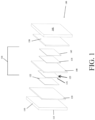
- FIG. 1 depicts a schematic exploded view of an example of an internal subassembly 100 of a fuel cell stack (e.g., a fuel cell 20 of FIG. 2 ) including a cathodic plate separator 110 at an outer end 115 and a plate separator seal 120 on an inner side thereof.
- a membrane electrode assembly (MEA) 130 is located between seal 120 and a second plate separator seal 150.
- An anode plate separator 160 is on a second end 165 of subassembly 100.
- MEA membrane electrode assembly
- MEA 130 includes a membrane 140 (e.g., an ion conducting membrane) between a cathode side catalyst layer 125 having a catalyst surface 126 and an anode side catalyst layer 135.
- a cathode side gas diffusion layer (GDL) 122 is located between cathode side catalyst layer 125 of the membrane electrode assembly 130 and plate separator 110.
- An anode side gas diffusion layer 145 is located between anode side catalyst layer 135 of membrane electrode assembly 130 and anode plate separator 160.
- Seal 120 and seal 150 may be received in a channel of on an inner side of plate separator 110 and anode plate separator 160, respectively. In another example, such seals may be injection molded around a membrane electrode assembly (e.g., membrane electrode assembly 130) or another fuel cell component.
- an electrical demand by a load 60 for example, an industrial electric vehicle (e.g., an electrically powered forklift truck), or any other load, such as any electric device, light bulb, radio, electric heater, a resistor 34, or fan motor, may be connected to energy storage device or a battery 30 and fuel cell stack (e.g., fuel cell 20) in parallel by an electrical connection.
- energy storage device or a battery 30 and fuel cell stack e.g., fuel cell 20
- power may flow from energy storage device or battery 30, fuel cell 20, or both to load 60.
- power may flow from both fuel cell 20 and energy storage device / battery 30 to load 60.
- power may flow to load 60 from fuel cell 20, while excess power from fuel cell 20 may flow into energy storage device or battery 30 to recharge energy storage device or battery 30 when required.
- loads that can source power such as regenerative braking
- power may flow from such a load (e.g., load 60) to energy storage device or battery 30.
- Resistor 34 may be a coolant heater (e.g., an electrical resistive heater) configured to heat a coolant in fluid communication with an interior of a fuel cell stack (e.g., fuel cell 20) to allow a temperature of the fuel cell stack (e.g., fuel cell 20) to be controlled.
- the coolant may be heated to heat the fuel cell stack (e.g., fuel cell 20) at the time of starting of operation of the stack.
- a controller 180 may control an operation of resistor 34 (e.g., an electrical resistive heater), such as by controlling a connection of the resistor to the fuel cell.
- the process of reducing voltage as described may be performed at intervals during regular operation of the stack (e.g., fuel cell 20) to produce electricity such that the stack may be maintained with contaminants at an acceptable level.
- a controller e.g., controller 180
- a fuel cell stack e.g., fuel cell 20
- resistor 34 e.g., a coolant heater
- a length of such a voltage cycle may range from several seconds up to a minute, for example.
- the cycling of voltage as described may be more desirable during lower load profiles when a fuel cell stack (e.g., fuel cell 20) may be sitting idle for longer periods of time because the increased idling allows for more contaminants to build up on cathode side catalyst surface 126 of catalyst layer 125.
- system controller 180 may determine that a voltage bleed down may or may not be necessary and not begin a voltage bleed down.
- Other sensors may include a voltage sensor 74 that may be connected to fuel cell 20 and system controller 180, a current sensor 70 that may be connected to fuel cell 20 and system controller 180, a sensor for measuring the air flow of oxidants from oxidant source that may be connected to oxidant source 150 and system controller 180, and any other sensors that measure parameters of fuel cell system.
- System controller 180 may use one or multiple sensors to sense, control, time, and determine various aspects of the voltage bleed down and the frequency that the voltage bleed down occurs.
- system controller 180 may have an oxidant source 150 supplying oxidants to cathode inlet 128 of fuel cell 20 at an air flow rate suitable for power production from fuel cell 20 to battery 30 to load 60.
- system controller 180 may have battery 30 connected to fuel cell 20 such that fuel cell 20 is supplying power to battery 30 and battery 30 is supplying power to load 60.
- system controller 180 may have resistor 34 disconnected from fuel cell 20 such that fuel cell 20 is not supplying an electrical current to resistor 34.
- system controller 180 may start the voltage bleed down cycle by cutting off air flow from oxidant source 150 to fuel cell 20 to prepare the fuel cell 20 for oxygen starvation and decontamination of contaminants in fuel cell 20.
- a certain ampere-hour threshold e.g. 10-25 ampere-hours
- system controller 180 may move on a Run Purge state 270, characterized by the increasing of current and returning fuel cell 20 to conditions for power production. In this state, system controller 180 may decide to gradually increase the flow of oxidants until the system controller 180 determines, based on feedback from current sensor, that the current of fuel cell 20 has returned to its normal current operating conditions.
- Ramp Down 210, Discharge 220, H2 Inventory 230, Start Up 240, Prepurge Ramp 250, and Run Airramp 260 states may indicate an example of one voltage bleed down in between Run state 200 and Resume Run state 280 of fuel cell.
- System controller 180 may decide at a later time during Run state 200 or Resume Run state 280 to disconnect resistor 34 based on the temperature of fuel cell 20.
Landscapes
- Engineering & Computer Science (AREA)
- Life Sciences & Earth Sciences (AREA)
- Sustainable Development (AREA)
- Sustainable Energy (AREA)
- Chemical & Material Sciences (AREA)
- Chemical Kinetics & Catalysis (AREA)
- Electrochemistry (AREA)
- General Chemical & Material Sciences (AREA)
- Manufacturing & Machinery (AREA)
- Fuel Cell (AREA)
Abstract
Description
- The present application claims the benefit of and priority, under 35 U.S.C. 119(e), to
U.S. Provisional Application Serial No. 63/477,974 filed on December 30, 2022 - This invention relates in general to systems and methods for operating a fuel cell system and more particularly to systems and methods for reducing contaminants in a proton exchange membrane of a fuel cell system.
- Fuel cells electrochemically convert fuels and oxidants to electricity and heat and can be categorized according to the type of electrolyte (e.g., solid oxide, molten carbonate, alkaline, phosphoric acid or solid polymer) used to accommodate ion transfer during operation. Moreover, fuel cell assemblies can be employed in many (e.g., automotive to aerospace to industrial to residential) environments, for multiple applications.
- A Proton Exchange Membrane (hereinafter "PEM") fuel cell converts the chemical energy of fuels such as hydrogen and oxidants such as air directly into electrical energy. The PEM is a sold polymer electrolyte that permits the passage of protons (i.e., H+ ions) from the "anode" side of the fuel cell to the "cathode" side of the fuel cell while preventing passage therethrough of reactant fluids (e.g., hydrogen and air gases). The Membrane Electrode Assembly (hereinafter "MEA") is placed between two electrically conductive plates, each of which has a flow channel/passage to direct the fuel to the anode side and oxidant to the cathode side of the PEM.
- Two or more fuel cells can be connected together to increase the overall power output of the assembly. Generally, the cells are connected in series, wherein one side of a plate serves as an anode plate for one cell and the other side of the plate is the cathode plate for the adjacent cell. These are commonly referred to as bipolar plates. Alternately, the anode plate of one cell is electrically connected to the separate cathode plate of an adjacent cell. Commonly these two plates are connected back to back and are often bonded together (e.g., bonded by adhesive, weld, or polymer). This bonded pair becomes as one, also commonly called a bipolar plate, since anode and cathode plates represent the positive and negative poles, electrically. Such a series of connected multiple fuel cells is referred to as a fuel cell stack. The stack typically includes means for directing the fuel and the oxidant to the anode and cathode flow field channels, respectively. The stack usually includes a means for directing a coolant fluid to interior channels within the stack to absorb heat generated by the exothermic reaction of hydrogen and oxygen within the fuel cells. The stack generally includes means for exhausting the excess fuel and oxidant gases, as well as product water.
- The stack also includes an endplate, insulators, membrane electrode assemblies, gaskets, separator plates, electrical connectors and collector plates, among other components, that are integrated together to form the working stack designed to produce electricity. The different plates may be abutted against each other and connected to each other to facilitate the performance of particular functions.
- Fuel cells during operation can be contaminated from several sources. Two of the primary sources of contaminants are the air, which can contain VOCs, sulfur compounds, NOx, metals, and anions internal to the fuel cell construction itself. Another contaminant is carbon monoxide. The contaminants may contain impurities that inhibit the desired electrochemical reaction of the fuel cell. These impurities can form deposits on the surface of a catalyst later, blocking the active catalysts sites and preventing portions of the catalyst layer from inducing a desired electrochemical fuel oxidation or oxidant reduction reaction. These deposits thus result in reduced voltage output of the fuel cell.
- Thus, there is a need for improved fuel cell systems and improved methods of operating fuel cells that minimize contamination of the fuel cells during operation and are more robust to operation in non-ideal environments.
- The present invention provides, in a first aspect, a method for operating of a fuel cell, including flowing oxidant and fuel to a cathode and an anode of a fuel cell to provide a flow of electrical current from the fuel cell to a battery, disconnecting the fuel cell from the battery, stopping a flow of the oxidant to the cathode, passing current from the fuel cell through a resistor coupled to the fuel cell, and allowing a voltage of the fuel cell to decrease to clean off the catalyst surface of a membrane of a membrane electrode assembly of the fuel cell by allowing a buildup of contaminants to be expelled through wastewater produced from the fuel cell. After the contaminants have been expelled, the method further includes increasing the flow of oxidant to the cathode and reconnecting the battery to the fuel cell to provide electrical current to the battery again.
- The present invention provides, in a second aspect, a fuel cell system, including a fuel cell having a membrane electrode assembly with a membrane having a catalyst surface, an oxidant source supplying a flow of oxidants to the fuel cell, a battery electrically connected to the fuel cell; and a controller. The controller is configured to stop the flow of oxidants to the fuel cell, disconnect the battery from the fuel cell, and connect a resistor to the fuel cell such that current passes from the fuel cell through the resistor to allow a voltage of the fuel cell to go below a predetermined voltage to clean off the catalyst surface of the membrane of the membrane electrode assembly of the fuel cell.
-
-
FIG. 1 is an exploded assembly view of a portion of a single fuel cell of a fuel cell system; -
FIG. 2 is a block diagram of a fuel cell system in accordance with the invention; -
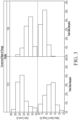
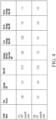
FIG. 3 shows two graphs, the graph on the left showing that a high load profile of a fuel cell system tends to result in a lower battery state of charge, with the graph on the right showing that a low load profile tends to result in a higher battery state of charge; - IG. 4 is a table that shows the power and operation time differences between the two different fuel cell systems demonstrated in the graphs of
FIG. 3 ; -
FIG. 5 shows two graphs that shows the current versus the voltage of the two different load profiles described inFIG. 4 , showing the effect of voltage cycles on system polarization curves between high load (left) and light load (right) applications; -
FIG. 6 shows four graphs of an extended run of the fuel cell system ofFIG. 1 , showing the load power of the fuel cell system ofFIG. 1 , the battery state of charge, the fuel cell stack power, and the cumulative voltage cycles of the fuel cell system ofFIG. 1 ; -
FIG. 7 shows four graphs demonstrating the different phases of a single voltage cycle, showing the current of the fuel cell ofFIG. 1 , whether the resistor ofFIG. 1 is connected, whether the battery ofFIG. 1 is connected, and the voltage of the fuel cell system ofFIG. 1 ; -
FIG. 8 is a graph that shows the frequency of bleed down when compared to the baseline frequency of bleed down comparing the high load versus the light load fuel cell systems ofFIG. 4 ; and -
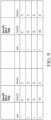
FIG. 9 is a table that shows the frequency of voltage cycling as a function of the battery state of charge and the electric charge of the fuel cell ofFIG. 1 . - The present invention will be discussed hereinafter in detail in terms of various exemplary embodiments according to the present invention with reference to the accompanying drawings. In the following detailed description, numerous specific details are set forth in order to provide a thorough understanding of the present invention. It will be obvious, however, to those skilled in the art that the present invention may be practiced without these specific details. In other instances, well-known structures are not shown in detail in order to avoid unnecessary obscuring of the present invention.
- Thus, all the implementations described below are exemplary implementations provided to enable persons skilled in the art to make or use the embodiments of the disclosure and are not intended to limit the scope of the disclosure, which is defined by the claims. As used herein, the word "exemplary" or "illustrative" means "serving as an example, instance, or illustration." Any implementation described herein as "exemplary" or "illustrative" is not necessarily to be construed as preferred or advantageous over other implementations. Moreover, in the present description, the terms "upper", "lower", "left", "rear", "right", "front", "vertical", "horizontal", and derivatives thereof shall relate to the invention as oriented in
FIG. 1 . - Furthermore, there is no intention to be bound by any expressed or implied theory presented in the preceding technical field, background, brief summary or the following detailed description. It is also to be understood that the specific devices and processes illustrated in the attached drawings, and described in the following specification, are simply exemplary embodiments of the inventive concepts defined in the appended claims. Hence, specific dimensions and other physical characteristics relating to the embodiments disclosed herein are not to be considered as limiting, unless the claims expressly state otherwise.
- In an example,
FIG. 1 depicts a schematic exploded view of an example of aninternal subassembly 100 of a fuel cell stack (e.g., afuel cell 20 ofFIG. 2 ) including acathodic plate separator 110 at anouter end 115 and aplate separator seal 120 on an inner side thereof. A membrane electrode assembly (MEA) 130 is located betweenseal 120 and a secondplate separator seal 150. Ananode plate separator 160 is on a second end 165 ofsubassembly 100. - MEA 130 includes a membrane 140 (e.g., an ion conducting membrane) between a cathode
side catalyst layer 125 having acatalyst surface 126 and an anodeside catalyst layer 135. A cathode side gas diffusion layer (GDL) 122 is located between cathodeside catalyst layer 125 of themembrane electrode assembly 130 andplate separator 110. An anode sidegas diffusion layer 145 is located between anodeside catalyst layer 135 ofmembrane electrode assembly 130 andanode plate separator 160.Seal 120 andseal 150 may be received in a channel of on an inner side ofplate separator 110 andanode plate separator 160, respectively. In another example, such seals may be injection molded around a membrane electrode assembly (e.g., membrane electrode assembly 130) or another fuel cell component. - Referring to
FIG. 2 , an electrical demand by aload 60, for example, an industrial electric vehicle (e.g., an electrically powered forklift truck), or any other load, such as any electric device, light bulb, radio, electric heater, aresistor 34, or fan motor, may be connected to energy storage device or abattery 30 and fuel cell stack (e.g., fuel cell 20) in parallel by an electrical connection. Depending on the demand, power may flow from energy storage device orbattery 30,fuel cell 20, or both to load 60. In times of high demand in excess of the maximum power output offuel cell 20, power may flow from bothfuel cell 20 and energy storage device /battery 30 to load 60. In times of low demand, power may flow to load 60 fromfuel cell 20, while excess power fromfuel cell 20 may flow into energy storage device orbattery 30 to recharge energy storage device orbattery 30 when required. In the case of loads that can source power, such as regenerative braking, power may flow from such a load (e.g., load 60) to energy storage device orbattery 30. -
Resistor 34 may be a coolant heater (e.g., an electrical resistive heater) configured to heat a coolant in fluid communication with an interior of a fuel cell stack (e.g., fuel cell 20) to allow a temperature of the fuel cell stack (e.g., fuel cell 20) to be controlled. In such an example, the coolant may be heated to heat the fuel cell stack (e.g., fuel cell 20) at the time of starting of operation of the stack. Acontroller 180 may control an operation of resistor 34 (e.g., an electrical resistive heater), such as by controlling a connection of the resistor to the fuel cell. - As discussed above, contaminants may accumulate in fuel cells (e.g., fuel cell 20). One way of reducing contaminants may be through voltage cycling through an in-situ preventive method that minimizes recoverable voltage decay by cleaning off a catalyst surface (e.g., cathode
side catalyst surface 126 of catalyst layer 125) and maximizing the fraction of open sites in a converter-less fuel cell system. For example, during an operation of a fuel cell stack (e.g., fuel cell 20) voltage may be reduced in a stack, or portion of a stack, to reduce contaminants (e.g., volatile organic contaminants) on a catalyst surface (e.g., catalyst surface 126) by expelling contaminants in wastewater from the stack via an air outlet (i.e., a cathode or oxidant outlet) or directly through themembrane electrode assembly 130. Voltage may be reduced (e.g., to below 0.3 V per cell) by reducing or stopping a flow of oxidant (e.g., air) to thecathode inlet 128 of the stack. Further, current fromfuel cell 20 may be directed toresistor 34, such as a coolant heater, to reduce the voltage.Fuel cell 20 may then be reactivated by increasing the oxidant supply, and such steps of reducing and increasing oxidant supply may be performed to provide the voltage cycling. - The process of reducing voltage as described may be performed at intervals during regular operation of the stack (e.g., fuel cell 20) to produce electricity such that the stack may be maintained with contaminants at an acceptable level. For example, a controller (e.g., controller 180) of a fuel cell stack (e.g., fuel cell 20) could reduce or stop flow of oxidants while directing a flow of current to resistor 34 (e.g., a coolant heater) at a rate which may depend on a battery state of charge and an energy usage over a particular duration, as depicted for example in
FIG 3 . A length of such a voltage cycle may range from several seconds up to a minute, for example. - Such voltage cycling could be done based on a load profile. For example, a higher load profile (e.g., a run 1013) may lead to a lower battery state of charge, and therefore less cycles as depicted in
FIG. 3 . In contrast, a lower load profile (e.g., a run 1169) could lead to a high battery state of charge and therefore higher cycles rate as depicted inFIG. 3 . As an example,FIG. 4 demonstrates the difference between a higher load cycle and a higher load example. One example of a higher load cycle may have an average power kW of 6.13, as depicted byrun 1013 inFIGS. 3 and4 and a lower load cycle may have an average kW of 2.04 kW, as depicted byrun 1169 inFIGS. 3 and4 . Returning toFIG. 3 , the cycling of voltage as described may be more desirable during lower load profiles when a fuel cell stack (e.g., fuel cell 20) may be sitting idle for longer periods of time because the increased idling allows for more contaminants to build up on cathodeside catalyst surface 126 ofcatalyst layer 125. -
Controller 180 may be coupled to fans, valves, switches and other balance of plant devices to control a flow of fuel and oxidant (e.g., toanode inlet 148 andcathode inlet 128 of fuel cell 20) as described along with controlling an electrical connection withload 60 and/or other such loads. - The benefits of voltage cycling as described above are more critical in light load applications where a fuel cell is idling more, as demonstrated in
FIG. 5 , whose values correspond to the numbers described inFIG. 4 . As demonstrated inFIG. 5 , the high load application is depicted on the right, while the light load application is depicted on the left.Trendline 12 refers to the relatively highest frequency of cycles,trendline 27 refers to a relatively moderate frequency of cycles, andtrendline 255 refers to the relatively lowest frequency of voltage cycles. As can be seen in the higher load application as indicated by the current and voltage, when the frequency of voltage cycles increases, the fuel cell tends to increase its performance. With lighter load applications, when the frequency of voltage cycles increases, the fuel cell first increases its performance when there is the least amount of cycles to the moderate amount of cycles, but then performance dips below the moderate amount of cycles with the highest amount of cycles. Thus, it would follow that light load applications have more system downtime where a fuel cell catalyst surface (e.g., cathode side catalyst surface 126) can be more contaminated by coolant and MEA ionomer, both of which have been shown to degrade fuel cell performance. In addition, idling of a fuel cell (e.g., fuel cell 20) can cause oxides to form on the catalyst surface (e.g., cathode side catalyst surface 126). For example,FIG. 6 demonstrates a fuel cell's (e.g., fuel cell 20) performance when voltage cycles do not occur.FIG. 6 depicts a scenario where a fuel cell (e.g., fuel cell 20) ceases performing voltage cycles at approximately 10 PM on January 29, 2022. After that time, the battery state of charge gradually decreases until approximately 11:45 PM on January 29, 2022 where a voltage cycle occurs and the battery state of charge increases. Thus,FIG. 6 demonstrates how not utilizing voltage cycles can degrade fuel cell performance, but the utilization of a voltage cycle can increase fuel cell performance. Returning toFIG. 5 , the difference between light load and heavy load applications is counter intuitive to common understanding of fuel cell operation as more air contaminants are picked up in high load application where the fuel cell is used more frequently. It would be beneficial to utilize frequent "breaks" in producing fuel cell power where a voltage cycle can occur. Extended runs without a voltage cycle to clean the catalyst can lead to significant voltage decay. Voltage cycling cleans off the catalyst surface and allows desorption into the available fuel cell water, which is produced concurrently allowing the contaminants to be removed. - In accordance with the principles of the present invention, fuel cell systems and methods for operating fuel cell systems to reduce contamination of particulate buildup in fuel cells that degrade fuel cell performance are provided. In an example depicted in
FIG. 7 , a fuel cell system 10 (FIG. 2 ) may use periodic oxygen starvation and voltage bleed down / reduction of the fuel cell system 10 (FIG. 2 ) to expel contaminants through wastewater produced by the fuel cell system 10 (FIG. 2 ) through a membrane electrode assembly. A voltage bleed down refers to a process where the voltage of fuel cell 20 (FIG. 2 ) is lowered and fuel cell 20 (FIG. 2 ) is accompanied by a lowering and/or cessation of air flow to fuel cell 20 (FIG. 2 ) to deprive fuel cell 20 (FIG. 2 ) of oxidants. This voltage bleed down may cause built-up contaminants in fuel cell 20 (FIG. 2 ) to be expelled, such as through wastewater produced as a byproduct of fuel cell operation. Voltage bleed down may also refer to a cycle of voltage alteration which includes the first above described lowering of the voltage of fuel cell 20 (FIG. 2 ) and an accompanying expulsion of contaminants from fuel cell 20 (FIG. 2 ), and then an increase in the voltage of fuel cell 20 (FIG. 2 ), another lowering of the voltage of fuel cell 20 (FIG. 2 ) which may be shorter in duration than the first lowering of the voltage of fuel cell 20 (FIG. 2 ), another possible expulsion of contaminants from fuel cell 20 (FIG. 2 ), and an increase of the voltage of fuel cell 20 (FIG. 2 ) resulting in the normal current running through fuel cell 20 (FIG. 2 ), returningfuel cell system 10 to a standard power producing phase of fuel cell 20 (FIG. 2 ). - As depicted in
FIG. 2 , afuel cell system 10 is referred to as the assembled, or complete, system which functionally together with all parts thereof produces electricity and typically includesfuel cell 20 andbattery 30 connected tofuel cell 20.FIG. 2 uses solid lines to indicate a coupling or a connection, one-way directional arrows to indicate either a one-way flow or a one-way transmission of information from one source to another, two-way directional arrows to indicate either a flowing and/or a transmission of information between two parts, a dashed box to indicate that several parts are part of a subsystem (e.g., fuel cell 20), and dashed lines to indicate a coupling between a sensor and asystem controller 180 where a sensor intermittently or continuously transmits information tosystem controller 180. As depicted,fuel cell 20 may comprisemembrane electrode assembly 130 withmembrane layer 140, cathodeside catalyst surface 125 coupled to a side ofmembrane layer 140, anodeside catalyst surface 135 coupled to an opposite side ofmembrane layer 140 opposing cathodeside catalyst surface 125. Acathode inlet 128 may be connected to a side of cathodeside catalyst surface 125 that functions to receive a flow of oxidants via anexternal oxidant source 150 and ananode inlet 148 may be connected to an anodeside catalyst surface 135 abuttingmembrane electrode assembly 140 that functions to receive a flow of fuel via anexternal fuel source 160. - Excess water and contaminants from an oxygen deprivation may be exhausted directly from
membrane electrode assembly 140 and out into a surrounding environment (not illustrated).Fuel cell 20 may supply energy tobattery 30 that is releasably connected tofuel cell 20 through an electrical current that connectsfuel cell 20 tobattery 30.Battery 30 may be connected to and supply power to load 60.Fuel cell 20 may be releasably connected toresistor 34, such as a resistive coolant heater.Resistor 34 may receive power fromfuel cell 20 at a lower load thanbattery 30, allowing the voltage offuel cell 20 to lower to a predetermined voltage. Another resistor, coolant heater, or other heating device may also be configured to control a temperature offuel cell 20 and/or coolant flowing throughfuel cell 20, and/or prevent and/or limit voltage fluctuation and ensure a relatively steady lowering of voltage during voltage bleed down. - Multiple sensors may be connected to different parts of the
fuel cell system 10 and tosystem controller 180 as depicted inFIG. 2 . For example, a state ofcharge sensor 78 that measures a state of charge ofbattery 20 may be connected tobattery 20 andsystem controller 180.System controller 180 may receive a measurement of the state of charge ofbattery 20 and determine that a voltage bleed down may occur whenbattery 20 has a charge within a certain range, for example, whenbattery 20 has between 10 to 25% state of charge. Ifbattery 20 has below 10% state of charge,system controller 180 may determine that a voltage bleed down is not viable andfuel cell 20 should continue to operate until the state of charge of thebattery 20 has increased to 10% or above. If the state of charge is above 25%,system controller 180 may determine that a voltage bleed down may or may not be necessary and not begin a voltage bleed down. Other sensors may include avoltage sensor 74 that may be connected tofuel cell 20 andsystem controller 180, acurrent sensor 70 that may be connected tofuel cell 20 andsystem controller 180, a sensor for measuring the air flow of oxidants from oxidant source that may be connected tooxidant source 150 andsystem controller 180, and any other sensors that measure parameters of fuel cell system.System controller 180 may use one or multiple sensors to sense, control, time, and determine various aspects of the voltage bleed down and the frequency that the voltage bleed down occurs. For example,system controller 180 may control the flow of oxidants fromoxidant source 150 intofuel cell 20 via blower, conduit(s) and valve(s), andsystem controller 180 may connect and/or disconnect the flow of electricity fromfuel cell 20 tobattery 30 and/orresistor 34 via controlled switches. - As depicted in
FIG. 7 using the fuel cell system depicted inFIG. 2 , in a first state of the system depicted by aRun state 200 offuel cell system 10 before voltage bleed down occurs in aDischarge state 220, system controller 180 (FIG. 2 ) may have anoxidant source 150 supplying oxidants tocathode inlet 128 offuel cell 20 at an air flow rate suitable for power production fromfuel cell 20 tobattery 30 to load 60. InRun state 200,system controller 180 may havebattery 30 connected tofuel cell 20 such thatfuel cell 20 is supplying power tobattery 30 andbattery 30 is supplying power to load 60. Further, inRun state 200,system controller 180 may haveresistor 34 disconnected fromfuel cell 20 such thatfuel cell 20 is not supplying an electrical current toresistor 34. Based on feedback from sensors, for examplecurrent sensor 70 thatfuel cell 20 has discharged a certain ampere-hour threshold (e.g., 10-25 ampere-hours),system controller 180 may start the voltage bleed down cycle by cutting off air flow fromoxidant source 150 tofuel cell 20 to prepare thefuel cell 20 for oxygen starvation and decontamination of contaminants infuel cell 20. - In a second state of the system depicted by the Ramp Down
state 210,fuel cell system 10 may be preparing for oxygen deprivation by steadily lowering the voltage offuel cell 20 to a predetermined voltage (e.g., between 0.4 to 0.1 V).System controller 180 may facilitate the Ramp Downstate 210 by connectingresistor 34 tofuel cell 20.Resistor 34, another resistor, coolant heater, or other heating device may be used to prevent voltage fluctuation or voltage spring.System controller 180 may also cut the flow of oxidants fromoxidant source 150 to cathode inlet 128 (e.g., by stopping a fan or blower providing such oxidant to cathode inlet 128). Connectingresistor 34 and cutting off oxidant flow may steadily reduce the current tofuel cell 20. As the current offuel cell 20 decreases,system controller 180 may determine based on feedback from sensors (e.g., from current sensor 170 that around a certain current threshold) to startDischarge state 220 of the system. - In a third state of the system as depicted by
Discharge state 220, built up contaminants offuel cell system 10 may be cleaned from catalystside catalyst surface 126 and expelled through available wastewater throughmembrane electrode assembly 130. InDischarge state 220,system controller 180 may reach the desired predetermined voltage (e.g., between 0.4 to 0.1 V). In order to reach the predetermined voltage,system controller 180 may disconnectbattery 30 fromfuel cell 20, allowing the fuel cell voltage to reach the desired predetermined voltage with no oxidant flowing intofuel cell 20. - After
Discharge State 220,system controller 180 may have various states such as theH2 Inventory state 230 and Start Upstate 240, characterized by thesystem controller 180 disconnecting and later reconnectingresistor 34, andsystem controller 180 re-engaging air flow at a rate less than the rate duringRun state 200 in order to prepare thefuel cell 20 to return to move to aResume Run state 280. - After a period of time either predetermined or determined based on feedback from sensors,
system controller 180 may determine to transitionfuel cell system 10 to ResumeRun state 280. To move the system to ResumeRun state 280,system controller 180 may institute aPrepurge Ramp state 250 characterized bysystem controller 180 cutting off flow of oxidants fromoxidant source 150 intofuel cell 20.Prepurge Ramp state 250 may cause the conditions for aRun Airramp state 260, which is a state of brief voltage reduction and oxygen deprivation that may also expel contaminants through available wastewater. During this state,system controller 180 may reconnectbattery 30 tofuel cell 20. Thus, the voltage bleed down may characterized by two states of contaminant expulsion,Discharge state 220 where the current is being ramped down and the voltage is being lowered andRun Airramp state 260 where the voltage is briefly lowered. - Then,
system controller 180 may move on aRun Purge state 270, characterized by the increasing of current and returningfuel cell 20 to conditions for power production. In this state,system controller 180 may decide to gradually increase the flow of oxidants until thesystem controller 180 determines, based on feedback from current sensor, that the current offuel cell 20 has returned to its normal current operating conditions. Thus,Ramp Down 210,Discharge 220,H2 Inventory 230, Start Up 240,Prepurge Ramp 250, andRun Airramp 260 states may indicate an example of one voltage bleed down in betweenRun state 200 and ResumeRun state 280 of fuel cell.System controller 180 may decide at a later time duringRun state 200 or ResumeRun state 280 to disconnectresistor 34 based on the temperature offuel cell 20. - In general, repeating the previous steps and deciding when to perform periodic oxygen starvation and at what frequency to optimize system longevity may be determined (e.g., by controller 180) on a frequency determined by the load profile, battery state of charge, state of health of the system, and/or other parameters. As depicted in
FIG. 8 , the bleed down rate factor, which refers to the ratio of actual voltage bleed down frequency versus a baseline voltage bleed down frequency, versus current running through fuel cell may result in a higher bleed down rate factor in lighter load applications at lower currents than heavier load applications. However, as the current running through fuel cell may increase, the bleed down rate factor may be approximately similar. Or, as depicted inFIG. 9 , different levels of voltage cycling may occur when the current and ampere-hour discharge of a fuel cell operate at certain values or within certain ranges. - The described release of contaminants from catalyst surface 126 (e.g., via desorbing and transport by water) may be useful for anion contamination from the ionomer of cathode
side catalyst layer 125 andmembrane layer 140 asmembrane layer 140 degrades, for example. - Several features of the present invention have been described herein with a specific number or type of features, however, any number of features that may accomplish the process of contaminant expulsion through a fuel cell (e.g., fuel cell 20) through oxygen deprivation through voltage reduction may be used. For example, a coolant heater is described as one type of resistor (e.g., resistor 34); however, other types of resistors may also be used. In another example,
FIG. 2 uses the illustration of a single battery (e.g., battery 30) and a single resistor (e.g., resistor 34); however, afuel cell system 10 may use multiple batteries and/or multiple resistors and/or multiple other loads to facilitate a voltage bleed down. In another example,FIG. 2 depicts the use of three sensors (i.e.,current sensor 70,voltage sensor 74, and state of charge sensor 78). However, a system controller (e.g., system controller 180) may also use more or less sensors of the same or different types to institute a voltage bleed down based on other parameters, such as load profile of a fuel cell (e.g., fuel cell 20), time of operation of a fuel cell (e.g., fuel cell 20), etc. In an example of a system controller (e.g., system controller 180) using less sensors, a system controller (e.g., system controller 180) may start Ramp Downstate 210 of a voltage bleed down using a current sensor (e.g., current sensor 70) or another sensor and then end Ramp Downstate 210 after a certain predetermined amount of time instead of using a measure of voltage to instituteDischarge state 220. A transition from one state to the next (e.g.,Run state 200 to Ramp Downstate 210, Ramp Downstate 210 to Dischargestate 220,Discharge state 220 toH2 Inventory state 230,H2 Inventory state 230 to Start Upstate 240, Start Upstate 240 toPrepurge Ramp state 250,Prepurge Ramp state 250 toRun Airramp state 260,Run Airramp state 260 to RunPurge state 270,Run Purge state 270 to Resume Run state 280) may similarly occur after a predetermined amount of time instead of through the measurement of different parameters through sensors (e.g.,current sensor 70,voltage sensor 74, state of charge sensor 78). Using a predetermined amount of time may be accomplished if, for example, repeated runs of the samefuel cell system 10 has determined that a voltage bleed down repeatedly and dependably takes the same amount of time between each stage to reliably clean off contaminants from the fuel cell (e.g., fuel cell 20) and thus, measuring the parameters to institute each state may become superfluous as system performance becomes standardized or more well understood. - While several aspects of the present invention have been described and depicted herein, alternative aspects may be effected by those skilled in the art to accomplish the same objectives. Accordingly, it is intended to cover all such alternative aspects as fall within the true spirit and scope of the invention.
- It is to be understood that the above description is intended to be illustrative, and not restrictive. Numerous changes and modifications may be made herein by one of ordinary skill in the art without departing from the general spirit and scope of the disclosure as defined by the following claims and the equivalents thereof. For example, the above-described embodiments (and/or aspects thereof) may be used in combination with each other. In addition, many modifications may be made to adapt a particular situation or material to the teachings of the various embodiments without departing from their scope. While the dimensions and types of materials described herein are intended to define the parameters of the various embodiments, they are by no means limiting and are merely exemplary. Many other embodiments will be apparent to those of skill in the art upon reviewing the above description.
- The terminology used herein is for the purpose of describing particular embodiments only and is not intended to be limiting of the disclosure. As used herein, the singular forms "a", "an" and "the" are intended to include the plural forms as well, unless the context clearly indicates otherwise. It will be further understood that the terms "comprise" (and any form of comprise, such as "comprises" and "comprising"), "have" (and any form of have, such as "has", and "having"), "include" (and any form of include, such as "includes" and "including"), and "contain" (and any form of contain, such as "contains" and "containing") are open-ended linking verbs. As a result, a method or device that "comprises," "has," "includes," or "contains" one or more steps or elements possesses those one or more steps or elements, but is not limited to possessing only those one or more steps or elements. Likewise, a step of a method or an element of a device that "comprises," "has," "includes," or "contains" one or more features possesses those one or more features, but is not limited to possessing only those one or more features. Furthermore, a device or structure that is configured in a certain way is configured in at least that way, but may also be configured in ways that are not listed.
- It is to be understood that not necessarily all such objects or advantages described above may be achieved in accordance with any particular embodiment. Thus, for example, those skilled in the art will recognize that the systems and techniques described herein may be embodied or carried out in a manner that achieves or optimizes one advantage or group of advantages as taught herein without necessarily achieving other objects or advantages as may be taught or suggested herein.
- While the present disclosure has been described in detail in connection with only a limited number of embodiments, it should be readily understood that the present disclosure is not limited to such disclosed embodiments. Rather, the invention can be modified to incorporate any number of variations, alterations, substitutions or equivalent arrangements not heretofore described, but which are commensurate with the spirit and scope of the present disclosure. Additionally, while various embodiments of the present disclosure have been described, it is to be understood that aspects of the disclosure may include only some of the described embodiments.
Claims (16)
- A method for reducing fuel cell contaminants of a fuel cell, comprising:flowing oxidant to a cathode and fuel to an anode of the fuel cell to provide a first flow of electrical current to a battery;disconnecting the fuel cell from the battery;stopping a flow of the oxidant to a cathode inlet of the fuel cell;passing current from the fuel cell through a resistor coupled to the fuel cell;allowing a voltage of the fuel cell to go below a predetermined voltage to clean off a catalyst surface of a membrane of a membrane electrode assembly of the fuel cell;increasing the flow of the oxidant to the cathode; andreconnecting the battery to the fuel cell to provide a second flow of the electrical current to the battery.
- The method of claim 1, further comprising operating the fuel cell for a period of time; and re-disconnecting the fuel cell from the battery.
- The method of claim 2, further comprising determining the period of time based on a state of charge of the battery, wherein the state of charge is between 10 to 25%.
- The method of claim 2, further comprising determining the period of time based on an ampere-hour usage of the fuel cell, wherein the ampere-hour usage is between 10 and 25 ampere-hours.
- The method of claim 1, where the predetermined voltage is 0.3 V.
- The method of claim 1 wherein the flowing the oxidant to the cathode and the fuel to the anode of the fuel cell to provide the first flow of electrical current to the battery comprises flowing an amount of the oxidant through the fuel cell to generate less than 1 kW in electrical power.
- The method of claim 1, wherein the stopping the flow of the oxidant to the cathode inlet of the fuel cell occurs when the fuel cell discharges 10 to 25 ampere-hours of electric charge.
- A fuel cell system, comprising:a fuel cell having a membrane electrode assembly with a membrane having a catalyst surface;an oxidant source supplying a flow of oxidants to the fuel cell;a controller configured to stop the flow of oxidants to the fuel cell;a battery electrically connected to the fuel cell;the controller configured to disconnect the battery from the fuel cell; andthe controller configured to connect a resistor to the fuel cell such that current passes from the fuel cell through the resistor to allow a voltage of the fuel cell to go below a predetermined voltage to clean off the catalyst surface of the membrane of the membrane electrode assembly of the fuel cell.
- The fuel cell system of claim 8, wherein the controller is configured to stop the flow of oxidants to the fuel cell based on an ampere-hour usage of the fuel cell, wherein the ampere-hour usage is between 10 and 25 ampere-hours.
- The fuel cell system of claim 8, wherein the controller is configured to disconnect the resistor from the fuel cell when the voltage of the fuel cell reaches a predetermined voltage, wherein the predetermined voltage is 0.3V.
- The fuel cell system of claim 8, wherein the controller is configured to connect the resistor to the fuel cell when the ampere-hour usage of the fuel cell is between 10 and 25 ampere-hours.
- The fuel cell system of claim 8, wherein the oxidant source is supplying the flow of oxidants to the fuel cell for a period of time before disconnecting the battery from the fuel cell, such that the controller determines the period of time based on the ampere-hour usage of the fuel cell, wherein the ampere-hour usage is between 10 and 25 ampere-hours.
- The fuel cell system of claim 8, wherein the cleaning comprises desorbing contaminants from the catalyst and expelling the contaminants in water flowing through an outlet of the fuel cell.
- The fuel cell system of claim 8, wherein the controller is configured to control the supplying the flow of oxidants to the fuel cell for a period of time before the controller disconnects the battery from the fuel cell, wherein the controller determines the period of time based on a state of charge of the battery.
- The fuel cell system of claim 8, wherein the resistor is a resistive coolant heater of the fuel cell configured to control a temperature of coolant flowing through the fuel cell.
- The fuel cell system of claim 8, wherein the battery comprises a higher load than the resistor.
Applications Claiming Priority (1)
| Application Number | Priority Date | Filing Date | Title |
|---|---|---|---|
| US202263477974P | 2022-12-30 | 2022-12-30 |
Publications (2)
| Publication Number | Publication Date |
|---|---|
| EP4398352A2 true EP4398352A2 (en) | 2024-07-10 |
| EP4398352A3 EP4398352A3 (en) | 2025-03-12 |
Family
ID=89430092
Family Applications (1)
| Application Number | Title | Priority Date | Filing Date |
|---|---|---|---|
| EP24150020.6A Pending EP4398352A3 (en) | 2022-12-30 | 2024-01-02 | Systems and methods for operating a fuel cell |
Country Status (7)
| Country | Link |
|---|---|
| US (1) | US20240222670A1 (en) |
| EP (1) | EP4398352A3 (en) |
| JP (1) | JP2024096109A (en) |
| KR (1) | KR20240109226A (en) |
| CN (1) | CN118281265A (en) |
| AU (1) | AU2024200004A1 (en) |
| CA (1) | CA3225322A1 (en) |
Families Citing this family (1)
| Publication number | Priority date | Publication date | Assignee | Title |
|---|---|---|---|---|
| US20260006965A1 (en) | 2024-06-26 | 2026-01-01 | Samsung Display Co., Ltd. | Display device and electronic device including the same |
Family Cites Families (4)
| Publication number | Priority date | Publication date | Assignee | Title |
|---|---|---|---|---|
| JP3870665B2 (en) * | 2000-06-01 | 2007-01-24 | 日産自動車株式会社 | Fuel cell system |
| US6399231B1 (en) * | 2000-06-22 | 2002-06-04 | Utc Fuel Cells, Llc | Method and apparatus for regenerating the performance of a PEM fuel cell |
| JP6683953B2 (en) * | 2016-10-05 | 2020-04-22 | 三菱自動車工業株式会社 | Fuel cell system |
| US12444758B2 (en) * | 2021-08-19 | 2025-10-14 | Cummins Inc. | Fuel cell regeneration |
-
2023
- 2023-12-29 CA CA3225322A patent/CA3225322A1/en active Pending
-
2024
- 2024-01-02 KR KR1020240000567A patent/KR20240109226A/en active Pending
- 2024-01-02 CN CN202410002928.7A patent/CN118281265A/en active Pending
- 2024-01-02 AU AU2024200004A patent/AU2024200004A1/en active Pending
- 2024-01-02 US US18/402,007 patent/US20240222670A1/en active Pending
- 2024-01-02 EP EP24150020.6A patent/EP4398352A3/en active Pending
- 2024-01-04 JP JP2024000090A patent/JP2024096109A/en active Pending
Also Published As
| Publication number | Publication date |
|---|---|
| CN118281265A (en) | 2024-07-02 |
| US20240222670A1 (en) | 2024-07-04 |
| KR20240109226A (en) | 2024-07-10 |
| JP2024096109A (en) | 2024-07-11 |
| CA3225322A1 (en) | 2024-06-30 |
| EP4398352A3 (en) | 2025-03-12 |
| AU2024200004A1 (en) | 2024-07-18 |
Similar Documents
| Publication | Publication Date | Title |
|---|---|---|
| CN101606260B (en) | Fuel cell system | |
| US8173313B2 (en) | Method of stopping a solid polymer type fuel cell system | |
| US9653744B2 (en) | Method of starting fuel cell system for vehicle and fuel cell system | |
| US6696190B2 (en) | Fuel cell system and method | |
| KR102681375B1 (en) | Method for performance recovery of fuel cell stack | |
| EP1998397B1 (en) | Fuel cell system and method of starting operation of fuel cell system | |
| EP4398352A2 (en) | Systems and methods for operating a fuel cell | |
| US20120025619A1 (en) | Method for high voltage bus control in fuel cell vehicles | |
| US8647784B2 (en) | Fuel cell stack start method preventing cathode deterioration | |
| US9673462B2 (en) | Fuel cell-vehicle communications systems and methods | |
| WO2007139715A2 (en) | Fuel cell anode purge systems and methods | |
| WO2020138338A1 (en) | Fuel cell activation method and apparatus | |
| JP3583914B2 (en) | Auxiliary power supply for fuel cell | |
| CN115708238A (en) | Fuel cell regeneration | |
| KR101572033B1 (en) | Apparatus for activating of fuel cell stack | |
| US8993185B2 (en) | Method for determining an average cell voltage for fuel cells | |
| JP5333717B2 (en) | Fuel cell system | |
| JP7057540B2 (en) | Fuel cell system | |
| CN117219826A (en) | Dynamic control of parallel fuel cell systems | |
| BR102023027854A2 (en) | SYSTEMS AND METHODS FOR OPERATING A FUEL CELL | |
| KR101592682B1 (en) | Method for controlling fuel cell stack | |
| KR101601377B1 (en) | A heat exchange unit of suppling air to fuel cell cathod and a heat exchange method thereof | |
| JP2011113661A (en) | Fuel cell stack and fuel cell system | |
| KR20160098591A (en) | Redox Flow Energy Storage Device and Method for Controlling the same | |
| JP2007250216A (en) | Fuel cell system and operation method thereof |
Legal Events
| Date | Code | Title | Description |
|---|---|---|---|
| PUAI | Public reference made under article 153(3) epc to a published international application that has entered the european phase |
Free format text: ORIGINAL CODE: 0009012 |
|
| STAA | Information on the status of an ep patent application or granted ep patent |
Free format text: STATUS: THE APPLICATION HAS BEEN PUBLISHED |
|
| AK | Designated contracting states |
Kind code of ref document: A2 Designated state(s): AL AT BE BG CH CY CZ DE DK EE ES FI FR GB GR HR HU IE IS IT LI LT LU LV MC ME MK MT NL NO PL PT RO RS SE SI SK SM TR |
|
| PUAL | Search report despatched |
Free format text: ORIGINAL CODE: 0009013 |
|
| AK | Designated contracting states |
Kind code of ref document: A3 Designated state(s): AL AT BE BG CH CY CZ DE DK EE ES FI FR GB GR HR HU IE IS IT LI LT LU LV MC ME MK MT NL NO PL PT RO RS SE SI SK SM TR |
|
| RIC1 | Information provided on ipc code assigned before grant |
Ipc: H01M 10/48 20060101ALI20250203BHEP Ipc: H01M 8/04858 20160101ALI20250203BHEP Ipc: H01M 8/04746 20160101ALI20250203BHEP Ipc: H01M 8/04537 20160101ALI20250203BHEP Ipc: H01M 8/04007 20160101ALI20250203BHEP Ipc: H01M 16/00 20060101ALI20250203BHEP Ipc: H01M 8/04223 20160101AFI20250203BHEP |
|
| STAA | Information on the status of an ep patent application or granted ep patent |
Free format text: STATUS: REQUEST FOR EXAMINATION WAS MADE |
|
| 17P | Request for examination filed |
Effective date: 20250912 |