EP4397765A2 - Verfahren zur änderung der interzellulären mobilität einer mrna - Google Patents
Verfahren zur änderung der interzellulären mobilität einer mrna Download PDFInfo
- Publication number
- EP4397765A2 EP4397765A2 EP24171803.0A EP24171803A EP4397765A2 EP 4397765 A2 EP4397765 A2 EP 4397765A2 EP 24171803 A EP24171803 A EP 24171803A EP 4397765 A2 EP4397765 A2 EP 4397765A2
- Authority
- EP
- European Patent Office
- Prior art keywords
- trna
- gene
- mrna
- organism
- transcript
- Prior art date
- Legal status (The legal status is an assumption and is not a legal conclusion. Google has not performed a legal analysis and makes no representation as to the accuracy of the status listed.)
- Pending
Links
Images













Classifications
-
- C—CHEMISTRY; METALLURGY
- C12—BIOCHEMISTRY; BEER; SPIRITS; WINE; VINEGAR; MICROBIOLOGY; ENZYMOLOGY; MUTATION OR GENETIC ENGINEERING
- C12N—MICROORGANISMS OR ENZYMES; COMPOSITIONS THEREOF; PROPAGATING, PRESERVING, OR MAINTAINING MICROORGANISMS; MUTATION OR GENETIC ENGINEERING; CULTURE MEDIA
- C12N15/00—Mutation or genetic engineering; DNA or RNA concerning genetic engineering, vectors, e.g. plasmids, or their isolation, preparation or purification; Use of hosts therefor
- C12N15/09—Recombinant DNA-technology
- C12N15/63—Introduction of foreign genetic material using vectors; Vectors; Use of hosts therefor; Regulation of expression
- C12N15/79—Vectors or expression systems specially adapted for eukaryotic hosts
- C12N15/82—Vectors or expression systems specially adapted for eukaryotic hosts for plant cells, e.g. plant artificial chromosomes (PACs)
- C12N15/8216—Methods for controlling, regulating or enhancing expression of transgenes in plant cells
-
- C—CHEMISTRY; METALLURGY
- C12—BIOCHEMISTRY; BEER; SPIRITS; WINE; VINEGAR; MICROBIOLOGY; ENZYMOLOGY; MUTATION OR GENETIC ENGINEERING
- C12N—MICROORGANISMS OR ENZYMES; COMPOSITIONS THEREOF; PROPAGATING, PRESERVING, OR MAINTAINING MICROORGANISMS; MUTATION OR GENETIC ENGINEERING; CULTURE MEDIA
- C12N15/00—Mutation or genetic engineering; DNA or RNA concerning genetic engineering, vectors, e.g. plasmids, or their isolation, preparation or purification; Use of hosts therefor
- C12N15/09—Recombinant DNA-technology
- C12N15/10—Processes for the isolation, preparation or purification of DNA or RNA
- C12N15/102—Mutagenizing nucleic acids
-
- C—CHEMISTRY; METALLURGY
- C12—BIOCHEMISTRY; BEER; SPIRITS; WINE; VINEGAR; MICROBIOLOGY; ENZYMOLOGY; MUTATION OR GENETIC ENGINEERING
- C12N—MICROORGANISMS OR ENZYMES; COMPOSITIONS THEREOF; PROPAGATING, PRESERVING, OR MAINTAINING MICROORGANISMS; MUTATION OR GENETIC ENGINEERING; CULTURE MEDIA
- C12N15/00—Mutation or genetic engineering; DNA or RNA concerning genetic engineering, vectors, e.g. plasmids, or their isolation, preparation or purification; Use of hosts therefor
- C12N15/09—Recombinant DNA-technology
- C12N15/63—Introduction of foreign genetic material using vectors; Vectors; Use of hosts therefor; Regulation of expression
- C12N15/79—Vectors or expression systems specially adapted for eukaryotic hosts
- C12N15/82—Vectors or expression systems specially adapted for eukaryotic hosts for plant cells, e.g. plant artificial chromosomes (PACs)
- C12N15/8241—Phenotypically and genetically modified plants via recombinant DNA technology
- C12N15/8261—Phenotypically and genetically modified plants via recombinant DNA technology with agronomic (input) traits, e.g. crop yield
- C12N15/8287—Phenotypically and genetically modified plants via recombinant DNA technology with agronomic (input) traits, e.g. crop yield for fertility modification, e.g. apomixis
- C12N15/8289—Male sterility
Definitions
- the present invention relates to a method for changing the intercellular mobility of an mRNA of a gene in an organism.
- DNA comprises genes, which can be transcribed into messenger RNA (mRNA) molecules, and these mRNA molecules are subsequently translated into proteins.
- mRNA messenger RNA
- mRNA messenger RNA
- the DNA is contained inside an organelle which is located inside the cytoplasm of a eukaryotic cell (i.e. a nucleus, mitochondrion or chloroplast).
- the mRNA transcript needs to be exported out of that organelle, because translation typically takes place in the cytoplasm of the cell, which is where the ribosomes required for translation are located.
- mRNA transcripts are transported across organellar membranes, from one subcellular compartment to another subcellular compartment.
- a cell's genetic information is efficiently translated into a large number of different proteins that work together to enable the cell to maintain its own functionality and metabolism, and to respond adequately to its environment and to signals from other cells in the organism, and to signals from the organism's environment.
- This so-called cell-autonomy thus leads to a situation in which a cell's phenotype and behaviour is directly linked to that cell's own genetic information, in a multicellular organism.
- RNA motifs that trigger mobility, the extent of their transport, and their potential to be translated into functional proteins after transport is however unknown in the prior art.
- mRNA transcripts that are present in the phloem sap of plants (and that are enriched in the pool of mRNA transcripts that move across chimeric graft junctions) comprise a tRNA-like structure (TLS). It was demonstrated that tRNA-like structures are sufficient to mobilise mRNA transcripts, by showing that mRNAs harbouring distinctive TLS move from transgenic roots into wild-type leaves and from transgenic leaves into wild-type flowers or roots, when wild-type and transgenic plants are grafted onto each other. It was furthermore shown that these mobile mRNA transcripts are translated into proteins after their transport. It was also found that bicistronic mRNA::tRNA transcripts (i.e.
- mRNA transcripts harbouring a TLS are frequently produced in Arabidopsis thaliana, and that they are enriched in the population of graft-mobile mRNAs.
- "Graft-mobile mRNAs” are mRNAs that are capable of moving across a graft junction.
- RNA molecules are arguably the most functionally diverse biological macromolecules found in cells, and their diverse roles are determined by both their complex three-dimensional structure and by their primary sequence.
- An additional biological role of tRNA sequences (or tRNA-like structures, TLSs) has now been uncovered in plants: they harbour a motif mediating mRNA transport to distant plant cells.
- transcript mobility was induced by tRNA Met and tRNA Gly , but not by one particular tRNA Ile , which correlates with the absence of this tRNA Ile in pumpkin phloem sap.
- the present invention can be applied to change the intercellular mobility of an mRNA of a gene in an organism.
- the mobility of an mRNA transcript that is mobile in a wild-type organism can be prevented, by modifying the tRNA-like structure that is naturally present in said mRNA transcript in such a way that it no longer promotes mobility of the mRNA transcript.
- tRNA-like structure as used in this application not only comprises intact tRNA structures that are present in the mRNA transcript of a gene, but also incomplete tRNA structures that lack one or more stem-loop structures but that still retain the ability to enable the intercellular mobility of the mRNA transcript of said gene.
- tRNA-like structure as used in the context of the present invention thus also encompasses tRNA structures that lack the D stem-loop, the D and T stem-loops, or the D and A stem-loops.
- the present invention relates to a method for changing the intercellular mobility of an mRNA of a gene in an organism, wherein the gene is a non-endogenous gene in at least part of the organism.
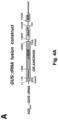
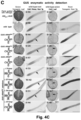
- Example 2 wherein the addition of a TLS to the 3'UTR of the ⁇ -glucuronidase-encoding gene ( GUS ) makes the GUS transcript mobile, and leads to translation of the protein in distant parts of the plant, across a graft junction.
- GUS ⁇ -glucuronidase-encoding gene
- Means by which introduction can be achieved comprise, for example, injection into the blood stream of animals, injection into the vascular tissue or apoplast of plants, or exogenous application on the surface of the organism.
- the use of cell-penetrating peptides may for example facilitate the entry of the mRNA transcript into the organism.
- the tRNA-like structure comprises a tRNA anticodon with a sequence from 5' to 3' in the transcribed mRNA selected from the group consisting of AGC, CGC, UGC, ACG, CCG, CCU, UCG, UCU, GUU, GUC, GCA, CUG, UUG, CUC, UUC, ACC, CCC, GCC, UCC, GUG, AAU, AAG, CAA, CAG, GAG, UAA, UAG, CUU, UUU, CAU, GAA, AGG, CGG, UGG, AGA, CGA, GCU, GGA, UGA, AGU, CGU, UGU, CCA, GUA, AAC, CAC, UAC.
- some tRNA-like structures exist that have a tridimensional structure that does not promote intercellular mobility of an mRNA transcript, such as tRNA Ile with anticodon UAU.
- the present invention relates to a method for changing the intercellular mobility of an mRNA of a gene in a plant, wherein said plant consists of a rootstock of a first plant upon which a scion of a second plant has been grafted, and wherein the intercellular mobility of an mRNA of a gene in the first and/or the second plant has been changed.
- This embodiment has been illustrated in Examples 1-3, with Arabidopsis and Nicotiana (tobacco).
- the phenotype of the rootstock and/or scion is changed. This may for example be achieved by the movement of a mobile mRNA transcript across the graft junction, where it complements for the absence of that mRNA transcript in either the rootstock or the scion due to a mutation.
- This thus represents a method for mutant complementation, by grafting a mutant plant onto a wild-type plant and rescuing the mutant phenotype by means of a mobile mRNA transcript that compensates for the absence of the corresponding endogenous mRNA transcript.
- a non-endogenous gene may be rendered mobile in an organism.
- the use of non-endogenous genes, such as reporter genes, is common practice in molecular biology, but the expression pattern of such non-endogenous genes depends entirely on the use of a suitable promoter, that is able to drive a gene's expression in the organism. Suitable promoters have been discussed above in this text. This situation is illustrated in Example 2, with ⁇ -glucuronidase (GUS).
- the guide RNA is a duplex between crRNA and tracrRNA, but a single guide RNA (sgRNA) molecule comprising both crRNA and tracrRNA has been shown to work equally well ( Jinek et al, 2012, Science 337: 816-821 ).
- sgRNA single guide RNA
- the advantage of using an sgRNA is that it reduces the complexity of the CRISPR-Cas9 system down to two components, instead of three. For use in an experimental setup ( in vitro or in vivo ) this is an important simplification.
- Cas9 creates blunt ends.
- RNA-guided endonuclease and/or guide RNAs in eukaryotic cells.
- One or more DNA constructs encoding an RNA-guided endonuclease and at least one guide RNA can be introduced into a cell or organism by means of stable transformation (wherein the DNA construct is integrated into the genome) or by means of transient expression (wherein the DNA construct is not integrated into the genome, but it expresses an RNA-guided endonuclease and at least one guide RNA in a transient manner).
- This approach requires the use of a transformation vector and a suitable promoter for expression in said cell or organism.
- Organisms into which foreign DNA has been introduced are considered to be Genetically Modified Organisms (GMOs), and the same applies to cells derived therefrom and to offspring of these organisms.
- GMOs Genetically Modified Organisms
- transgenic food is not allowed for human consumption, and not appreciated by the public.
- DNA-free delivery method of CRISPR-Cas components into intact plants that does not involve the introduction of DNA constructs into the cell or organism.
- RNP complexes comprising an RNA-guided endonuclease protein (for example Cas9) and at least one guide RNA, and subsequently introducing the RNP complex into a cell or organism.
- RNA-guided endonuclease protein for example Cas9
- guide RNA guide RNA
- RNP complexes have been introduced by means of, for example, injection, electroporation, nanoparticles, vesicles, and with the help of cell-penetrating peptides.
- the RNP complexes can only perform their function in cells where they have been introduced into, and this limits the efficiency of this approach.
- CRISPR-Cas components move between cells.
- a specific application of the present invention involves the mobilisation of an RNA-guided endonuclease-encoding mRNA in a plant.
- mRNA transcripts that are present in the phloem of a plant are able to reach the plant's male spores.
- RNA-guided endonuclease-encoding mRNA it is therefore not only possible to modify the genome of a plant's somatic cells, but also the genome of its male germline, in the presence of at least one suitable guide RNA.
- the latter category of genome modifications is heritable, as they can be transmitted to the next generation.
- the RNA-guided endonuclease gene can be encoded by a DNA construct that is integrated into the genome of one plant, onto which another plant is subsequently grafted.
- the cells of the rootstock harbour a transgenic construct, but the cells of the scion do not.
- the mRNA transcript encoding the RNA-guided endonuclease comprises a TLS, it is rendered mobile and it is able to cross the graft junction, and the RNA-guided endonuclease-encoding transcript can be delivered into cells of the scion, where the RNA-guided endonuclease protein can be translated.
- cells of the scion produce a protein that is not encoded in their own genome, and this protein is capable of modifying a chromosomal sequence in said cells, when at least one suitable guide RNA is present in said cells.
- the cells can be used to produce plants that harbour said modification in their genome, using any plant regeneration method known in the art (such as in vitro tissue culture).
- the nucleic acid sequence encoding a modified, non-naturally occurring RNA-guided endonuclease protein may be a transgene that is stably integrated or transiently expressed.
- the localisation signal is suitably selected from the group comprising a nuclear localisation signal, a chloroplast targeting signal, a mitochondrial targeting signal.
- the promoter sequence confers onto the transgenic nucleic acid sequence an expression profile that encompasses roots.
- Providing the at least one guide RNA or DNA encoding the at least one guide RNA to at least one cell or spore of the scion of the second plant is suitably accomplished by means of injection, Agrobacterium-mediated transformation, exogenous application, or stable integration or transient expression of a DNA-construct.
- a chromosomal sequence of at least one cell or spore of the second plant is genetically modified without the insertion of external genetic material.
- the first plant and the second plant belong to the same plant family.
- the first plant and the second plant belong to the same genus, in particular to the same plant species.
- the plant belongs to one of the following genera: Beta, Brassica, Capsicum, Cichorium, Citrullus , Cucumis, Cucurbita, Benincasa, Daucus, Eruca, Lactuca, Lagenaria , Luffa , Phaseolus, Pisum, Raphanus, Solanum, Spinacia, Valerianella , Nicotiana, Petunia, Arabidopsis, Capsella, Arabis, Malus, Pyrus, Prunus, Vitis, Rosa, Fragaria, Populus, Fagus, Pinus, Picea, Ginkgo, Larix, Betula, Quercus, Salix , Alnus, Corylus, Amygdalus , Vaccinium, Rubus, Persea, Citrus, Castanea, Acer, Fraxinus, Coffea, Camellia, Theobroma, Olea, Cicer, Juglans, Pistacia, Arachis, Anacardium ,
- DN DMC1 a dominant-negative A. thaliana DMC1 variant
- Figure 1A the N-terminal 92 amino acid residues
- Samples were prepared in 1 mL Trizol reagent (Invitrogen) (0.5 ml/100 mg tissue) as described previously (Zhang et al., 2009). After centrifugation (10,000 g, 10 minutes at 4°C), the supernatant ( ⁇ 1 ml) was transferred to a new RNase-free tube and extracted once with 200 ⁇ l and once with 50 ⁇ l chloroform. To precipitate the RNA the supernatant was supplemented with two volumes of 99% isopropanol, 0.1 volumes of 3 M sodium acetate (pH 5.2), 1 ⁇ g of linear acrylamide (Invitrogen), and incubated > 1h at -20°C.
- Trizol reagent Invitrogen
- Reverse transcription reaction was performed with 1 U/ ⁇ l AMV reverse transcriptase (Promega) with following modifications: total RNA ( ⁇ 4 ⁇ g) was denatured at 70°C for 10 minutes in the presence of oligo (dT) primer followed by a 5 minutes annealing incubation at 37°C prior to the RT-reaction, then incubated at 42°C for one hour, and 72°C for 10 minutes for deactivation.
- RT-PCR was conducted under standard PCR conditions with 40-45 cycles. Oligonucleotides used for RT-PCR are listed in Table 2. Table 2. Oligonucleotides used in the study.
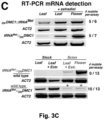
- DN DMC1 Purpose / Size of PCR fragment DN DMC1::StBEL5 FK868-F 5'-GATGCTCCGAATCTCGCTGA-3' FK869-R 5'-GTTGCTTGCTGCTGGTGAAG-3' 491 bp DN DMC1:: Met tRNA FK868-F 5'-GATGCTCCGAATCTCGCTGA-3' FK851-R 5'-TTCCGCTGCGCCACTCTGATT-3' 260 bp DMC1:: Met tRNA FK868-F 5'-GATGCTCCGAATCTCGCTGA-3' FK851-R 5'-TTCCGCTGCGCCACTCTGATT-3' 260 bp DN DMC1::ZmKN1HD FK868-F 5'-GATGCTCCGAATCTCGCTGA-3' FK779-R 5'-TAGAAGGCATTGGTGGTG-3' 495 bp Met tRNA:::
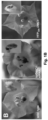
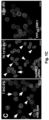
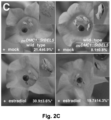
- DN DMC1 itself is not mobile and, thus, is suitable as a transcript mobility reporter producing a pollen phenotype ( Figure 2A ).
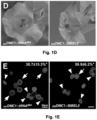
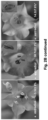
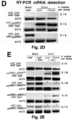
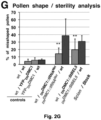
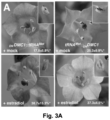
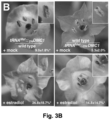
- the mobility of the fusion transcripts was addressed by grafting DN DMC1::StBEL5 , DN DMC1::tRNA Met or tRNA Me t :: DN DMC1 transgenic plants with wild-type plants, and pollen sterility and the presence of the fusion transcript in wild-type flowers examined ( Figure 2B -G; Figure 3 ).
- the DN DMC1:tRNA Met plants with a reporter line producing a yellow fluorescent YFP- DN DMC1 fusion protein were grafted.
- no systemic siRNA mediated silencing of the YFP- DN DMC1 reporter construct could be detected in sepals ( Figure 2F ).
- the DN DMC1:: tRNA Met fusion transcript does not induce systemic silencing, and the observed defects in pollen formation in grafted plants ( Figure 2G ) can be attributed to the systemic delivery of the DN DMC1 fusion transcripts.
- tRNAs harbour a signal for systemic mRNA movement
- A. thaliana seeds of wild type (Col-0), and transgenic 35S pro : ⁇ -GUS , ck1.1 (SALK_070759), ck1.2 (SALK_023420) plants of ecotype Col-0 were used and grown in controlled environmental chambers for growth assays or on soil in the greenhouse (relative humidity: 60%; day temperature: 22°C; night temperature: 19°C; diurnal cycle: 16 h light/8 h darkness; light intensity: 170-200 ⁇ E ⁇ m -2 ⁇ s -1 ).
- the SALK- lines were obtained from the Salk Institute Genomic Analysis Laboratory, California (Alonso et al., 2003).
- A. thaliana hypocotyl grafting was performed as described (Thieme et al., 2015). In short, plants were grown vertically on solid 0.5 MS medium (1% sucrose) at 22°C with a photoperiod of 8h light (fluence rate of 100 ⁇ mol m -2 s -1 ). The temperature was increased to 26°C 4 days after germination to reduce adventitious root formation. 6 to 7 days after germination seedlings were used for grafting under sterile conditions as described (Thieme et al., 2015).
Landscapes
- Genetics & Genomics (AREA)
- Health & Medical Sciences (AREA)
- Life Sciences & Earth Sciences (AREA)
- Engineering & Computer Science (AREA)
- Chemical & Material Sciences (AREA)
- Bioinformatics & Cheminformatics (AREA)
- Zoology (AREA)
- Biomedical Technology (AREA)
- Biotechnology (AREA)
- General Engineering & Computer Science (AREA)
- Organic Chemistry (AREA)
- Wood Science & Technology (AREA)
- Molecular Biology (AREA)
- Physics & Mathematics (AREA)
- Microbiology (AREA)
- Plant Pathology (AREA)
- Biophysics (AREA)
- Biochemistry (AREA)
- General Health & Medical Sciences (AREA)
- Cell Biology (AREA)
- Crystallography & Structural Chemistry (AREA)
- Micro-Organisms Or Cultivation Processes Thereof (AREA)
- Breeding Of Plants And Reproduction By Means Of Culturing (AREA)
- Measuring Or Testing Involving Enzymes Or Micro-Organisms (AREA)
- Control Of Eletrric Generators (AREA)
- Preparation Of Compounds By Using Micro-Organisms (AREA)
Applications Claiming Priority (4)
| Application Number | Priority Date | Filing Date | Title |
|---|---|---|---|
| EP2016058282 | 2016-04-14 | ||
| EP23177043.9A EP4282967A3 (de) | 2016-04-14 | 2017-04-13 | Verfahren zur änderung der interzellulären mobilität einer mrna |
| PCT/EP2017/059029 WO2017178633A1 (en) | 2016-04-14 | 2017-04-13 | Method for changing the intercellular mobility of an mrna |
| EP17717712.8A EP3443102B1 (de) | 2016-04-14 | 2017-04-13 | Verfahren zur änderung der interzellulären mobilität einer mrna |
Related Parent Applications (2)
| Application Number | Title | Priority Date | Filing Date |
|---|---|---|---|
| EP17717712.8A Division EP3443102B1 (de) | 2016-04-14 | 2017-04-13 | Verfahren zur änderung der interzellulären mobilität einer mrna |
| EP23177043.9A Division EP4282967A3 (de) | 2016-04-14 | 2017-04-13 | Verfahren zur änderung der interzellulären mobilität einer mrna |
Publications (2)
| Publication Number | Publication Date |
|---|---|
| EP4397765A2 true EP4397765A2 (de) | 2024-07-10 |
| EP4397765A3 EP4397765A3 (de) | 2024-12-04 |
Family
ID=55794957
Family Applications (3)
| Application Number | Title | Priority Date | Filing Date |
|---|---|---|---|
| EP17717712.8A Active EP3443102B1 (de) | 2016-04-14 | 2017-04-13 | Verfahren zur änderung der interzellulären mobilität einer mrna |
| EP24171803.0A Pending EP4397765A3 (de) | 2016-04-14 | 2017-04-13 | Verfahren zur änderung der interzellulären mobilität einer mrna |
| EP23177043.9A Pending EP4282967A3 (de) | 2016-04-14 | 2017-04-13 | Verfahren zur änderung der interzellulären mobilität einer mrna |
Family Applications Before (1)
| Application Number | Title | Priority Date | Filing Date |
|---|---|---|---|
| EP17717712.8A Active EP3443102B1 (de) | 2016-04-14 | 2017-04-13 | Verfahren zur änderung der interzellulären mobilität einer mrna |
Family Applications After (1)
| Application Number | Title | Priority Date | Filing Date |
|---|---|---|---|
| EP23177043.9A Pending EP4282967A3 (de) | 2016-04-14 | 2017-04-13 | Verfahren zur änderung der interzellulären mobilität einer mrna |
Country Status (7)
| Country | Link |
|---|---|
| US (4) | US11142771B2 (de) |
| EP (3) | EP3443102B1 (de) |
| CN (1) | CN109072250A (de) |
| AU (3) | AU2017248614B2 (de) |
| ES (1) | ES2974086T3 (de) |
| IL (3) | IL316797A (de) |
| WO (1) | WO2017178633A1 (de) |
Families Citing this family (17)
| Publication number | Priority date | Publication date | Assignee | Title |
|---|---|---|---|---|
| EP3443102B1 (de) * | 2016-04-14 | 2024-01-24 | Rijk Zwaan Zaadteelt en Zaadhandel B.V. | Verfahren zur änderung der interzellulären mobilität einer mrna |
| WO2018204412A1 (en) * | 2017-05-01 | 2018-11-08 | Thomas Jefferson University | Systems-level analysis of tcga cancers reveals disease trna fragmentation patterns and associations with messenger rnas and repeat |
| US20210163898A1 (en) * | 2018-04-16 | 2021-06-03 | The Children's Hospital Of Philadelphia | Mitochondrial rna import for treating mitochondrial disease |
| WO2021041001A2 (en) * | 2019-08-09 | 2021-03-04 | Regents Of The University Of Minnesota | AUGMENTED sgRNAS AND METHODS FOR THEIR USE TO ENHANCE SOMATIC AND GERMLINE PLANT GENOME ENGINEERING |
| WO2021081200A1 (en) * | 2019-10-22 | 2021-04-29 | Inari Agriculture, Inc. | Genomic alteration of plant germline |
| US20240279669A1 (en) * | 2020-10-07 | 2024-08-22 | Cibus Us Llc | Grafted plant for delivery of genome editing reagents |
| CN112997709A (zh) * | 2021-01-28 | 2021-06-22 | 海南照德农业科技有限公司 | 一种牧草嫁接甘蔗的方法 |
| CN112715185B (zh) * | 2021-02-02 | 2022-11-04 | 成都大学 | 一种荞麦的嫁接方法 |
| CN113430197B (zh) * | 2021-05-17 | 2022-07-29 | 西北农林科技大学 | 促进砧木根系发育及抗旱的可移动miRNA及鉴定方法 |
| EP4095248A1 (de) * | 2021-05-25 | 2022-11-30 | Max-Planck-Gesellschaft zur Förderung der Wissenschaften e.V. | Circrnas für gen-silencing |
| WO2025014969A1 (en) * | 2023-07-13 | 2025-01-16 | Inari Agriculture Technology, Inc. | Rapid generation of fixed plant genomic edits |
| WO2025049420A1 (en) * | 2023-08-28 | 2025-03-06 | The Texas A&M University System | Compositions and methods for genome editing across graft-junctions |
| WO2025059327A1 (en) * | 2023-09-15 | 2025-03-20 | Inari Agriculture Technology, Inc. | Bacteria-mediated delivery of components for gene editing |
| WO2025059337A1 (en) * | 2023-09-15 | 2025-03-20 | Inari Agriculture Technology, Inc. | Microinjection of guide rna for gene editing by cas enzymes |
| WO2025076141A1 (en) | 2023-10-03 | 2025-04-10 | Inari Agriculture Technology, Inc. | Viral delivery of grna to the scion |
| CN118166032A (zh) * | 2024-05-14 | 2024-06-11 | 北京林业大学 | 一种针叶树外源基因的全株表达方法及其应用 |
| CN118726382B (zh) * | 2024-06-11 | 2025-01-24 | 中国农业大学 | 一种黄瓜CsaTRM4基因在促进南瓜CmoCK1砧穗间长距离运输的应用 |
Citations (3)
| Publication number | Priority date | Publication date | Assignee | Title |
|---|---|---|---|---|
| WO2013017683A1 (en) | 2011-08-04 | 2013-02-07 | Rijk Zwaan Zaadteelt En Zaadhandel B.V | Method for systemically influencing processes in the male meiocyte |
| EP2918161A1 (de) | 2012-11-07 | 2015-09-16 | Hirosaki University | Verfahren zur züchtung von feldfrüchten durch pfropfung mithilfe von zuchtkeimen |
| WO2015200539A1 (en) | 2014-06-25 | 2015-12-30 | Monsanto Technology Llc | Methods and compositions for delivering nucleic acids to plant cells and regulating gene expression |
Family Cites Families (2)
| Publication number | Priority date | Publication date | Assignee | Title |
|---|---|---|---|---|
| US7579150B1 (en) * | 2004-07-01 | 2009-08-25 | Iowa State University Research Foundation, Inc. | Mobile RNA acts as a signal to regulate plant growth and development |
| EP3443102B1 (de) * | 2016-04-14 | 2024-01-24 | Rijk Zwaan Zaadteelt en Zaadhandel B.V. | Verfahren zur änderung der interzellulären mobilität einer mrna |
-
2017
- 2017-04-13 EP EP17717712.8A patent/EP3443102B1/de active Active
- 2017-04-13 IL IL316797A patent/IL316797A/en unknown
- 2017-04-13 US US16/093,772 patent/US11142771B2/en active Active
- 2017-04-13 AU AU2017248614A patent/AU2017248614B2/en active Active
- 2017-04-13 WO PCT/EP2017/059029 patent/WO2017178633A1/en not_active Ceased
- 2017-04-13 IL IL261833A patent/IL261833B2/en unknown
- 2017-04-13 EP EP24171803.0A patent/EP4397765A3/de active Pending
- 2017-04-13 US US15/519,048 patent/US10351865B2/en active Active
- 2017-04-13 IL IL303427A patent/IL303427B2/en unknown
- 2017-04-13 EP EP23177043.9A patent/EP4282967A3/de active Pending
- 2017-04-13 CN CN201780022936.6A patent/CN109072250A/zh active Pending
- 2017-04-13 ES ES17717712T patent/ES2974086T3/es active Active
-
2021
- 2021-09-03 US US17/446,931 patent/US11981901B2/en active Active
-
2023
- 2023-06-06 AU AU2023203527A patent/AU2023203527B2/en active Active
-
2024
- 2024-04-10 US US18/631,246 patent/US20240425869A1/en active Pending
-
2025
- 2025-12-18 AU AU2025283546A patent/AU2025283546A1/en active Pending
Patent Citations (3)
| Publication number | Priority date | Publication date | Assignee | Title |
|---|---|---|---|---|
| WO2013017683A1 (en) | 2011-08-04 | 2013-02-07 | Rijk Zwaan Zaadteelt En Zaadhandel B.V | Method for systemically influencing processes in the male meiocyte |
| EP2918161A1 (de) | 2012-11-07 | 2015-09-16 | Hirosaki University | Verfahren zur züchtung von feldfrüchten durch pfropfung mithilfe von zuchtkeimen |
| WO2015200539A1 (en) | 2014-06-25 | 2015-12-30 | Monsanto Technology Llc | Methods and compositions for delivering nucleic acids to plant cells and regulating gene expression |
Non-Patent Citations (17)
| Title |
|---|
| ALONSO, J.M.STEPANOVA, A.N.LEISSE, T.J.KIM, C.J.CHEN, H.SHINN, P.STEVENSON, D.K.ZIMMERMAN, J.BARAJAS, P.CHEUK, R.: "Genome-wide insertional mutagenesis of Arabidopsis thaliana", SCIENCE, vol. 301, 2003, pages 653 - 657, XP002300984, DOI: 10.1126/science.1086391 |
| CHO, S.K.SHARMA, P.BUTLER, N.M.KANG, I.H.SHAH, S.RAO, A.G.HANNAPEL, D.J.: "Polypyrimidine tract-binding proteins of potato mediate tuberization through an interaction with StBEL5 RNA", J EXP BOT, vol. 66, 2015, pages 6835 - 6847 |
| CURTIS, M.D.GROSSNIKLAUS, U: "A gateway cloning vector set for high-throughput functional analysis of genes in planta", PLANT PHYSIOL, vol. 133, 2003, pages 462 - 469, XP055257706, DOI: 10.1104/pp.103.027979 |
| JINEK ET AL., SCIENCE, vol. 337, 2012, pages 816 - 821 |
| JUHLING, F.MORL, M.HARTMANN, R.K.SPRINZL, M.STADLER, P.F.PUTZ, J.: "tRNAdb 2009: compilation of tRNA sequences and tRNA genes", NUCLEIC ACIDS RES, vol. 37, 2009, pages D159 - 162 |
| KOH ET AL., PROC. NAT. ACAD. SCI. USA, vol. 111, 2014, pages 7361 - 7366 |
| LAMESCH, P.BERARDINI, T.Z.LI, D.SWARBRECK, D.WILKS, C.SASIDHARAN, R.MULLER, R.DREHER, K.ALEXANDER, D.L.GARCIA-HERNANDEZ, M.: "The Arabidopsis Information Resource (TAIR): improved gene annotation and new tools", NUCLEIC ACIDS RES, vol. 40, 2012, pages D1202 - 1210 |
| LOHSE, M.BOLGER, A.M.NAGEL, A.FERNIE, A.R.LUNN, J.E.STITT, M.USADEL, B: "RobiNA: a user-friendly, integrated software solution for RNA-Seq-based transcriptomics", NUCLEIC ACIDS RES, vol. 40, 2012, pages W622 - 627 |
| MACKE, T.J.ECKER, D.J.GUTELL, R.R.GAUTHERET, D.CASE, D.A.SAMPATH, R: "RNAMotif, an RNA secondary structure definition and search algorithm", NUCLEIC ACIDS RESEARCH, vol. 29, 2001, pages 4724 - 4735, XP055198539, DOI: 10.1093/nar/29.22.4724 |
| NISAR, N.VERMA, S.POGSON, B.J.CAZZONELLI, C.I.: "Inflorescence stem grafting made easy in Arabidopsis", PLANT METHODS, vol. 8, 2012, pages 50, XP021140001, DOI: 10.1186/1746-4811-8-50 |
| PROBST ET AL., GENE THER., vol. 14, 2007, pages 1175 - 1180 |
| TANI ET AL., ANTICANCER RES, vol. 27, 2007, pages 1207 - 1212 |
| THIEME, C.J.ROJAS-TRIANA, M.STECYK, E.SCHUDOMA, C.ZHANG, W.YANG, L.MIAMBRES, M.WALTHER, D.SCHULZE, W.X.PAZ-ARES, J.: "Endogenous Arabidopsis messenger RNAs transported to distant tissues", NATURE PLANTS, vol. 1, 2015, pages 15025, XP055322854, DOI: 10.1038/nplants.2015.25 |
| WOO ET AL., NAT. BIOTECH., vol. 33, 2015, pages 1162 - 1164 |
| ZARETSKY ET AL., MOL. CANCER, vol. 5, 2006, pages 57 |
| ZHANG, S.SUN, L.KRAGLER, F.: "The phloem-delivered RNA pool contains small noncoding RNAs and interferes with translation", PLANT PHYSIOLOGY, vol. 150, 2009, pages 378 - 387, XP055323102, DOI: 10.1104/pp.108.134767 |
| ZHANG, W.KOLLWIG, G.STECYK, E.APELT, F.DIRKS, R.KRAGLER, F.: "Graft-transmissible movement of inverted-repeat-induced siRNA signals into flowers", THE PLANT JOURNAL, vol. 80, 2014, pages 106 - 121, XP055322921, DOI: 10.1111/tpj.12622 |
Also Published As
| Publication number | Publication date |
|---|---|
| EP3443102A1 (de) | 2019-02-20 |
| AU2023203527B2 (en) | 2025-12-11 |
| US20170342427A1 (en) | 2017-11-30 |
| US11142771B2 (en) | 2021-10-12 |
| AU2025283546A1 (en) | 2026-01-15 |
| EP3443102B1 (de) | 2024-01-24 |
| WO2017178633A1 (en) | 2017-10-19 |
| IL303427A (en) | 2023-08-01 |
| EP4282967A3 (de) | 2024-03-20 |
| IL261833B1 (en) | 2025-03-01 |
| US11981901B2 (en) | 2024-05-14 |
| IL303427B2 (en) | 2025-04-01 |
| EP4282967A2 (de) | 2023-11-29 |
| IL261833B2 (en) | 2025-07-01 |
| AU2023203527A1 (en) | 2023-06-29 |
| US10351865B2 (en) | 2019-07-16 |
| IL303427B1 (en) | 2024-12-01 |
| CN109072250A (zh) | 2018-12-21 |
| AU2017248614A1 (en) | 2018-09-20 |
| US20240425869A1 (en) | 2024-12-26 |
| US20200010839A1 (en) | 2020-01-09 |
| IL261833A (en) | 2018-10-31 |
| AU2017248614B2 (en) | 2023-04-27 |
| ES2974086T3 (es) | 2024-06-25 |
| IL316797A (en) | 2025-01-01 |
| US20220056462A1 (en) | 2022-02-24 |
| EP4397765A3 (de) | 2024-12-04 |
Similar Documents
| Publication | Publication Date | Title |
|---|---|---|
| US11981901B2 (en) | Method for changing the intercellular mobility of an mRNA | |
| US20230242927A1 (en) | Novel plant cells, plants, and seeds | |
| Zhang et al. | tRNA-related sequences trigger systemic mRNA transport in plants | |
| US11492630B2 (en) | Methods and hybrids for targeted nucleic acid editing in plants using CRISPR/Cas systems | |
| US11578334B2 (en) | Targeted endonuclease activity of the RNA-guided endonuclease CasX in eukaryotes | |
| JP2018531024A6 (ja) | マーカーフリーゲノム改変のための方法および組成物 | |
| JP2018531024A (ja) | マーカーフリーゲノム改変のための方法および組成物 | |
| WO2019238772A1 (en) | Polynucleotide constructs and methods of gene editing using cpf1 | |
| US11802288B1 (en) | Methods for efficient soybean genome editing | |
| AU2015209181B2 (en) | Zea mays regulatory elements and uses thereof | |
| JP2022081655A (ja) | 植物調節エレメント及びその使用 | |
| CA2411649C (en) | Ires enabled gene trapping in plants | |
| EP3052633B1 (de) | Zea-mays-metallothionein-artige regulationselemente und verwendungen davon | |
| KR102799159B1 (ko) | 반수체 식물을 유도하는 pPLAⅡγ 유전자 및 이의 용도 | |
| JP7616514B2 (ja) | 腋芽メリステムを用いた植物の改変方法 | |
| Zhang et al. | tRNA-Related Sequences Trigger Systemic mRNA Transport in PlantsOPEN | |
| US20060168677A1 (en) | Transcriptional termination of transgene expression using host genomic terminators | |
| da Rocha | Promoter trapping in Arabidopsis thaliana: Characterization of T-DNA tagged lines | |
| JP2002272469A (ja) | 高等植物のdna損傷応答性遺伝子発現制御能を示すシス制御配列 |
Legal Events
| Date | Code | Title | Description |
|---|---|---|---|
| PUAI | Public reference made under article 153(3) epc to a published international application that has entered the european phase |
Free format text: ORIGINAL CODE: 0009012 |
|
| STAA | Information on the status of an ep patent application or granted ep patent |
Free format text: STATUS: THE APPLICATION HAS BEEN PUBLISHED |
|
| AC | Divisional application: reference to earlier application |
Ref document number: 3443102 Country of ref document: EP Kind code of ref document: P Ref document number: 4282967 Country of ref document: EP Kind code of ref document: P |
|
| AK | Designated contracting states |
Kind code of ref document: A2 Designated state(s): AL AT BE BG CH CY CZ DE DK EE ES FI FR GB GR HR HU IE IS IT LI LT LU LV MC MK MT NL NO PL PT RO RS SE SI SK SM TR |
|
| PUAL | Search report despatched |
Free format text: ORIGINAL CODE: 0009013 |
|
| AK | Designated contracting states |
Kind code of ref document: A3 Designated state(s): AL AT BE BG CH CY CZ DE DK EE ES FI FR GB GR HR HU IE IS IT LI LT LU LV MC MK MT NL NO PL PT RO RS SE SI SK SM TR |
|
| RIC1 | Information provided on ipc code assigned before grant |
Ipc: C12N 15/82 20060101AFI20241028BHEP |
|
| STAA | Information on the status of an ep patent application or granted ep patent |
Free format text: STATUS: REQUEST FOR EXAMINATION WAS MADE |
|
| 17P | Request for examination filed |
Effective date: 20250604 |