EP4389985B1 - Konstruktionsverfahren für wasserkörperersatzlagerplatz und lagerplatz - Google Patents
Konstruktionsverfahren für wasserkörperersatzlagerplatz und lagerplatz Download PDFInfo
- Publication number
- EP4389985B1 EP4389985B1 EP23852034.0A EP23852034A EP4389985B1 EP 4389985 B1 EP4389985 B1 EP 4389985B1 EP 23852034 A EP23852034 A EP 23852034A EP 4389985 B1 EP4389985 B1 EP 4389985B1
- Authority
- EP
- European Patent Office
- Prior art keywords
- water
- warehouses
- ballast
- enclosure
- storage
- Prior art date
- Legal status (The legal status is an assumption and is not a legal conclusion. Google has not performed a legal analysis and makes no representation as to the accuracy of the status listed.)
- Active
Links
Images

Classifications
-
- E—FIXED CONSTRUCTIONS
- E02—HYDRAULIC ENGINEERING; FOUNDATIONS; SOIL SHIFTING
- E02B—HYDRAULIC ENGINEERING
- E02B3/00—Engineering works in connection with control or use of streams, rivers, coasts, or other marine sites; Sealings or joints for engineering works in general
- E02B3/04—Structures or apparatus for, or methods of, protecting banks, coasts, or harbours
- E02B3/06—Moles; Piers; Quays; Quay walls; Groynes; Breakwaters ; Wave dissipating walls; Quay equipment
-
- E—FIXED CONSTRUCTIONS
- E02—HYDRAULIC ENGINEERING; FOUNDATIONS; SOIL SHIFTING
- E02B—HYDRAULIC ENGINEERING
- E02B3/00—Engineering works in connection with control or use of streams, rivers, coasts, or other marine sites; Sealings or joints for engineering works in general
- E02B3/04—Structures or apparatus for, or methods of, protecting banks, coasts, or harbours
- E02B3/12—Revetment of banks, dams, watercourses, or the like, e.g. the sea-floor
- E02B3/121—Devices for applying linings on banks or the water bottom
-
- E—FIXED CONSTRUCTIONS
- E02—HYDRAULIC ENGINEERING; FOUNDATIONS; SOIL SHIFTING
- E02B—HYDRAULIC ENGINEERING
- E02B3/00—Engineering works in connection with control or use of streams, rivers, coasts, or other marine sites; Sealings or joints for engineering works in general
- E02B3/04—Structures or apparatus for, or methods of, protecting banks, coasts, or harbours
- E02B3/12—Revetment of banks, dams, watercourses, or the like, e.g. the sea-floor
- E02B3/14—Preformed blocks or slabs for forming essentially continuous surfaces; Arrangements thereof
-
- E—FIXED CONSTRUCTIONS
- E02—HYDRAULIC ENGINEERING; FOUNDATIONS; SOIL SHIFTING
- E02B—HYDRAULIC ENGINEERING
- E02B3/00—Engineering works in connection with control or use of streams, rivers, coasts, or other marine sites; Sealings or joints for engineering works in general
- E02B3/18—Reclamation of land from water or marshes
-
- E—FIXED CONSTRUCTIONS
- E02—HYDRAULIC ENGINEERING; FOUNDATIONS; SOIL SHIFTING
- E02D—FOUNDATIONS; EXCAVATIONS; EMBANKMENTS; UNDERGROUND OR UNDERWATER STRUCTURES
- E02D27/00—Foundations as substructures
- E02D27/32—Foundations for special purposes
- E02D27/40—Foundations for dams across valleys or for dam constructions
-
- E—FIXED CONSTRUCTIONS
- E02—HYDRAULIC ENGINEERING; FOUNDATIONS; SOIL SHIFTING
- E02B—HYDRAULIC ENGINEERING
- E02B11/00—Drainage of soil, e.g. for agricultural purposes
-
- E—FIXED CONSTRUCTIONS
- E02—HYDRAULIC ENGINEERING; FOUNDATIONS; SOIL SHIFTING
- E02B—HYDRAULIC ENGINEERING
- E02B3/00—Engineering works in connection with control or use of streams, rivers, coasts, or other marine sites; Sealings or joints for engineering works in general
- E02B3/04—Structures or apparatus for, or methods of, protecting banks, coasts, or harbours
- E02B3/10—Dams; Dykes; Sluice ways or other structures for dykes, dams, or the like
-
- E—FIXED CONSTRUCTIONS
- E02—HYDRAULIC ENGINEERING; FOUNDATIONS; SOIL SHIFTING
- E02B—HYDRAULIC ENGINEERING
- E02B3/00—Engineering works in connection with control or use of streams, rivers, coasts, or other marine sites; Sealings or joints for engineering works in general
- E02B3/20—Equipment for shipping on coasts, in harbours or on other fixed marine structures, e.g. bollards
-
- E—FIXED CONSTRUCTIONS
- E02—HYDRAULIC ENGINEERING; FOUNDATIONS; SOIL SHIFTING
- E02D—FOUNDATIONS; EXCAVATIONS; EMBANKMENTS; UNDERGROUND OR UNDERWATER STRUCTURES
- E02D17/00—Excavations; Bordering of excavations; Making embankments
- E02D17/02—Foundation pits
- E02D17/04—Bordering surfacing or stiffening the sides of foundation pits
-
- E—FIXED CONSTRUCTIONS
- E02—HYDRAULIC ENGINEERING; FOUNDATIONS; SOIL SHIFTING
- E02D—FOUNDATIONS; EXCAVATIONS; EMBANKMENTS; UNDERGROUND OR UNDERWATER STRUCTURES
- E02D19/00—Keeping dry foundation sites or other areas in the ground
- E02D19/02—Restraining of open water
- E02D19/04—Restraining of open water by coffer-dams, e.g. made of sheet piles
Definitions
- the present application belongs to the field of water transport engineering, and particularly relates to a water replacement storage field construction method and a storage field obtained by the construction method.
- the storage field is one of the main infrastructures for storing bulk cargo in the water transport engineering. Since the storage field needs to be close to the wharf, in the prior construction methods, an enclosure is often built first to enclose a part of the water area, the enclosed water area is then turned into land by hydraulic fill or land reclamation, and a storage field is constructed thereon.
- the existing storage field construction methods have the following problems:
- the filler e.g., sand and gravel
- the enclosed space is reduced by the investment for filling.
- the filler mainly functions to turn a water environment into a water-free land environment, thereby facilitating material storage.
- CN110921342A discloses a construction of a water-stop enclosure, exposing a pit, stacking-reclaiming device, and warehouses.
- the step of constructing of the water-stop enclosure further includes: firstly, inserting a plurality of cylindrical steel plates into a soft soil foundation by a vibration hammer set; then, inserting two auxiliary steel plates into the soft soil foundation between every two adjacent cylindrical steel plates along mortise grooves on outer walls of the cylindrical steel plates by the vibration hammer set, so as to close the gap between adjacent cylindrical steel plates; and, back-filling interiors of the cylindrical steel plates and an inner cavity formed between the two auxiliary steel plates to form the water-stop enclosure.
- the step of construction of drainage after enclosing further includes: after forming the dry construction condition, leveling the pit, usually without filling for elevation, and constructing the stacking yard on the leveled pit.
- the water replacement storage field construction method further includes the construction of riprap mounds: constructing the riprap mounds at the inner and outer sides of the water-stop enclosure, respectively, so that the riprap mounds roughly form a right-angled trapezoid shape fitted with the water-stop enclosure at the inner and outer sides, and upper surfaces of the riprap mounds are roughly flush with an upper surface of the water-stop enclosure.
- a wave wall extending upward can be constructed in an upper portion of the water-stop enclosure or in an upper portion of the riprap mound at the outer side.
- the low-level terrace in the step of constructing of the stacking yard, is 3 m to 20 m lower than the average water level at the outer side of the water-stop enclosure.
- an average depth from the pit to a top of the water-stop enclosure is L1
- a depth from a surface of the low-level terrace to the top of the water-stop enclosure is L2
- a water permeable cushion, a water blocking cushion, a waterproof layer and a baseplate layer are formed sequentially from bottom up in the drained pit, so as to form the low-level terrace. More specifically, the water permeable cushion is formed by paving water permeable material in the pit; the water blocking cushion is formed by casting cement or concrete on the water permeable cushion; the waterproof layer is formed by coating waterproof material or paving a physical waterproof layer on the water blocking cushion; and, the baseplate layer is formed by casting cement or concrete.
- the baseplate layer is further provided with ground beams arranged at intervals; and the ground beams are plate structures and extend downward into the pit.
- support plates used for supporting the main road are arranged in the warehouses corresponding to the main road, and the support plates are steel plates or reinforced concrete plates vertically arranged; and, the long sidewalls of the ballast warehouses are made of reinforced concrete or steel structures and have a height substantially equal to a height of the main road of the high-level terrace to form the branch roads on the ballast warehouses, and the long sidewalls of the ballast warehouses are used as walking tracks of the stacking-reclaiming device.
- connecting beams for connecting the two long sidewalls are provided.
- a second aspect of the present application provides application of a water replacement storage field construction method in building a storage field at a port, which can adopt the construction method described in any one of the above examples.
- a third aspect of the present application provides a water replacement storage field, which can be constructed by the construction method described in any one of the above examples.
- the water replacement storage field includes a water-stop enclosure and a stacking yard; wherein the stacking yard is constructed in an internal space enclosed by the water-stop enclosure, and located on a pit formed inside the water-stop enclosure after water drainage.
- the stacking yard includes a lower low-level terrace and a higher high-level terrace; wherein the low-level terrace is lower than an average water level at an outer side of the water-stop enclosure, and warehouses are constructed on the low-level terrace; and, the high-level terrace is able to be used for walking a stacking-reclaiming device.
- the pit is leveled, usually without filling for elevation; and the stacking yard is located on the leveled pit.
- the water-stop enclosure includes a plurality of cylindrical steel plates and auxiliary steel plates located between adjacent cylindrical steel plates; wherein the cylindrical steel plates are distributed at intervals in a length direction of the water-stop enclosure; and the auxiliary steel plates are arc-shaped and are closely connected to the cylindrical steel plates through mortise grooves on the cylindrical steel plates.
- Two auxiliary steel plates arranged oppositely are provided between adjacent cylindrical steel plates, an arc-shaped convex surface of each auxiliary steel plate faces outward, and an inner cavity is formed; and, interiors of the cylindrical steel plates and the inner cavity of the auxiliary steel plates are back-filled with soil.
- riprap mounds are arranged at the inner and outer sides of the water-stop enclosure, respectively, and a wave wall extending upward is arranged on a top of the water-stop enclosure.
- the low-level terrace is 3 m to 20 m lower than the average water level at the outer side of the water-stop enclosure.
- an average depth from the pit to the top of the water-stop enclosure is L1
- a depth from a surface of the low-level terrace to the top of the water-stop enclosure is L2, where 100% ⁇ L2/L1 ⁇ 50%.
- the low-level terrace includes a water permeable cushion, a water blocking cushion, a waterproof layer and a baseplate layer from bottom up.
- the water permeable cushion is formed by paving water permeable material in the pit;
- the water blocking cushion is formed by casting cement or concrete on the water permeable cushion;
- the waterproof layer is formed by coating waterproof material or paving a physical waterproof layer on the water blocking cushion;
- the baseplate layer is formed by casting cement or concrete.
- the baseplate layer is further provided with ground beams arranged at intervals, and the ground beams are plate structures and extend downward into the pit.
- storage warehouses and ballast warehouses are arranged on the low-level terrace, wherein the ballast warehouses are distributed around the storage warehouses, the storage warehouses are able to be used for storing material, and the ballast warehouses are able to be used for filling ballasts.
- the storage warehouses and the ballast warehouses are rectangular and arranged at intervals; adjacent storage warehouse and ballast warehouse share the same long sidewall, and the short sidewalls of multiple storage warehouses and multiple ballast warehouses in parallel form a common sidewall; wherein a width of the storage warehouse is greater than a width of the ballast warehouse.
- the high-level terrace is located on the warehouses, and includes a main road and branch roads communicated with the main road, allowing the stacking-reclaiming device to walk thereon; the main road is arranged in a direction substantially perpendicular to the rectangular warehouses; and, the branch roads are located above the ballast warehouses.
- support plates used for supporting the main road are arranged in the warehouses corresponding to the main road, and the support plates are steel plates or reinforced concrete plates vertically arranged; and, the long sidewalls of the ballast warehouses are made of reinforced concrete or steel structures and have a height substantially equal to a height of the main road of the high-level terrace to form the branch roads on the ballast warehouses, and the long sidewalls of the ballast warehouses are used as the foundation of the walking tracks of the stacking-reclaiming device.
- multiple connecting beams for connecting the two long sidewalls are provided.
- a fourth aspect of the present application provides application of a water replacement storage field in a storage field at a port, which can adopt the water replacement storage field described in any one of the above examples.
- the water replacement storage field provided by at least one embodiment of the present application adopts a water-stop enclosure to stop water instead of reclamation, changes the water environment into a water-free environment, and replaces the space occupied by the water body within the water-stop enclosure into storage space, which expands the stacking yard capacity, saves reclamation costs, and greatly improves the cost-effectiveness of the project.
- the water replacement storage field uses inserted cylindrical structures to reinforce the foundation of the enclosure and serve as a water stop and enclosure structure; it can not only quickly build a vehicle driving passage in the water, but also form a water-stop enclosure; meanwhile, the enclosure can be quickly built, forming dry construction condition for the stacking yard within the water-stop enclosure, creating parallel construction condition for the stacking yard and the water-stop enclosure, and greatly shortening the construction period.
- first and second are used for descriptive purposes only, and cannot be understood as indicating or implying the relative importance, or implicitly indicating the number of indicated technical features. Therefore, the features defined with “first” and “second” may explicitly or implicitly include one or more of these features.
- connection In the description of the present application, it should be noted that the terms “connect”, “connecting” and “connected” should be understood in a broad sense unless otherwise clearly specified and limited. For example, they might be fixed connection, detachable connection, or integrated connection; might be direct connection or indirect connection through an intermediate medium, and might be internal connection of two elements. For those of ordinary skill in the art, the specific meanings of the above-mentioned terms in the present application can be understood under specific circumstances.
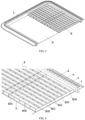
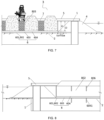
- a first implementation of the present application provides a water replacement type storage field construction method, as shown in Figs. 1-5 , including the following steps:
- each cylindrical structure 101 may be inserted in the water to reinforce the enclosure foundation and also act as water stop and enclosure structures to form a water-stop enclosure 1.
- each cylindrical structure 101 includes a cylindrical steel plate 1011 and auxiliary steel plates 1012, as shown in Figs. 1 and 2 .
- each cylindrical steel plate 1011 is inserted into a soft soil foundation to enhance the shear strength of the soil foundation.
- the construction of inserting the cylindrical steel plates 1011 into the soft soil foundation may be completed by a process of hoisting a vibration hammer set using a crane ship to vibrate and sink.
- auxiliary steel plates 1012 are inserted into the soft soil foundation between every two adjacent cylindrical steel plates 1011 along the mortise grooves (which are not shown and may be mortises in the prior art) on outer walls of the adjacent cylindrical steel plates 1011 to close the gap between the adjacent cylindrical steel plates 1011. Sealing material is applied at the junctions of the auxiliary steel plates 1012 and the mortise grooves to realize water tightness.
- the auxiliary steel plates 1012 may also be inserted into the soft soil foundation by the process of hoisting a vibration hammer set using a crane ship to vibrate and sink.
- the sealing material may be a mixture of sawdust, asphalt or other materials, and is placed in the mortise grooves in advance so as to keep water tightness in the process of inserting the auxiliary steel plates 1012 into the mortise grooves.
- the sealing material may also be cement paste, and is injected into the mortise grooves through preset pipes after the auxiliary steel plates 1012 are inserted into the mortise grooves, so as to realize water tightness.
- each cylindrical steel plate 1011 and the inner cavity 1013 formed between every two opposite auxiliary steel plates 1012 are back-filled to form the water-stop enclosure 1.
- Sand and gravel may be used for the back-filling, and may be carried out on the water by using a belt ship, or may be carried by using a land device, so that the water-stop enclosure 1 keeps the shape of each cylindrical steel plate from shrinking by means of the silo pressure of the sand and gravel.
- the cylindrical steel plates are kept from buckling and breaking by means of the strength of the sand and gravel and the cylindrical structures 101, and the water-stop enclosure 1 is kept from toppling and slipping by means of the gravity of the sand and gravel, the gravity of the cylindrical structures 101 and the frictional resistance of the buried part, thereby overall stability is maintained.
- the top of the water-stop enclosure 1 may also be leveled and compacted to form a construction road for the construction and passage of construction machines and vehicles.
- the pit 2 may be leveled according to the actual conditions for further construction of a stacking yard 3 inside the water-stop enclosure 1.
- the leveling is to level the pit completely or partially, excluding filling in the conventional sense.
- the main purpose of filling is for elevation, and the material consumption thereof will be significantly higher than that of the leveling.
- riprap mounds 4 may be constructed at the inner and outer sides of the water-stop enclosure 1, respectively.
- the riprap mounds 4 roughly form a right-angled trapezoid shape fitted with the water-stop enclosure 1 at the inner and outer sides respectively, and the upper surfaces of the riprap mounds 4 are roughly flush with the upper surface of the water-stop enclosure 1.
- the parts of the riprap mounds 4 below the water surface may be dump-filled on the water by using a riprap ship, or may be partially dump-filled by using a land device and the left dump-filled on the water by using a riprap ship; and, the parts of the riprap mounds 4 above the water surface may be dump-filled by using a land device.
- the riprap mounds 102 at the inner side of the water-stop enclosure may be all filled by using a land device.
- a wave wall 5 extending upward may be constructed in an upper portion of the water-stop enclosure 1 or in upper portions of the riprap mounds 4 at the outer side, so as to reduce the amount of wave entering the water-stop enclosure 1.
- the wave wall 5 may be formed by casting reinforced concrete.
- the construction of the stacking yard 3 is carried out, including constructing a low-level terrace 6 and a high-level terrace 7; wherein, the low-level terrace 6 is lower than the average water level at the outer side of the water-stop enclosure 1, and may be 3 m to 20 mm lower than the average water level according to the actual water depth and the construction environment so as to form the material stacking condition. Or, as shown in Fig.
- the average depth from the pit 2 to the top of the water-stop enclosure 1 is L1 and the depth from the surface of the low-level terrace 6 to the top of the water-stop enclosure 1 is L2, then 100% ⁇ L2/L1 ⁇ 50%, for example, L2/L1 ⁇ 60%, L2/L1 ⁇ 65%, L2/L1 ⁇ 70%, L2/L1 ⁇ 75%, L2/L1 ⁇ 80%, etc.. Since the surface of the low-level terrace 6 is below the water surface, a larger available space is formed thereabove.
- the high-level terrace 7 can be built based on the low-level terrace 6, and has a larger height to form the conditions of mounting and running the stacking-reclaiming device.
- a water permeable cushion 601, a water blocking cushion 602, a waterproof layer 603 and a baseplate layer 604 are formed sequentially from bottom up in the drained pit 2, so as to form the low-level terrace 6.
- the water permeable cushion 601 can be formed by paving water permeable gravel in the pit 2. Since water seepage may occur in the pit 2, a buoyancy force will be produced to the low-level terrace 6 and may burst the low-level terrace 6.
- the pressure from water may be reduced or eliminated to protect other layers above the water permeable cushion from damage.
- the water permeable cushion 601 has the functions of filtration, decompression and drainage.
- the water blocking cushion 602 can be formed by casting cement or concrete on the water permeable cushion 601.
- the water blocking cushion 602 can block water to a certain extent, which facilitates the subsequence construction of the waterproof layer 603 and becomes a joint layer of the water permeable cushion 601 and the waterproof layer 603.
- the waterproof layer 603 can be formed by coating waterproof material or paving a physical waterproof layer (e.g., multilayer and partially laminated waterproof geotextile) on the water blocking cushion 602, and plays a main waterproof function to prevent water seepage from entering the surface of the low-level terrace 6.
- the baseplate layer 604 located on the waterproof layer 603 is conventionally formed by casting cement or concrete. As shown in Fig. 8 , the baseplate layer 604 is further provided with ground beams 6041 which are arranged at intervals and extend downward. The ground beams 6041 are plate structures and extend into the pit 2, so that the bearing capability of the low-level terrace 6 is higher.
- warehouses 8 including storage warehouses 801 and ballast warehouses 802 are arranged on the low-level terrace 6, wherein the ballast warehouses 802 are evenly distributed nearby the storage warehouses 801.
- the storage warehouses 801 are mainly used for storing materials (e.g., ore, coal, food, etc.), and the ballast warehouses 802 are mainly used for filling ballast (e.g., filling sand, stone, etc.) when the storage warehouses 801 are light.
- ballasts may be filled in the ballast warehouses 802 to increase the back pressure of the low-level terrace 6 to the water seepage. It should be understood that the storage warehouses 801 and the ballast warehouses 802 may be mixed.
- the materials may be stored in both the storage warehouses and the ballast warehouses 802, so that the ballast warehouses 802 function as storage warehouses 801; and, when there are few materials, ballasts may also be filled in the storage warehouses 801, so that the storage warehouses 801 function as ballast warehouses 802.
- the storage warehouses 801 and the ballast warehouses 802 may be arranged in regions, sections and layers, so that the space above the low-level terrace 6 is reasonably utilized. Since the low-level terrace 6 is located blow the average water level, the space provided above the low-level terrace is much larger than the space formed by a stacking yard obtained by a conventional filling method, so that the height and volume of the storage warehouses 801 are greatly increased, and more materials can be stored.
- each storage warehouse 801 and each ballast warehouse 802 are elongated and arranged at intervals. As shown in Figs. 3-6 , each storage warehouses 801 and each ballast warehouses 802 are rectangular, adjacent storage warehouse 801 and ballast warehouse 802 share the same long sidewall 803, and the short sidewalls of multiple storage warehouses 801 and multiple ballast warehouses 802 in parallel form one common sidewall 804. In order to store more materials, the width of the storage warehouse 801 is greater than the width of the ballast warehouse 802.
- a waterproof layer may be formed on the four sides and bottom of each storage warehouse 801 (that is, a second waterproof layer may be constructed on the baseplate layer 604) to enhance the waterproof effect.
- the stacking-reclaiming device used in a storage field mainly includes a stacker and a reclaimer, and is very heavy.
- the stacking-reclaiming device in order to facilitate the walking of the stacking-reclaiming device, it is often necessary to drive piles on the foundation, then lay a track beam on the ground and lay a track for allowing the stacking-reclaiming device to walk thereon on the track beam.
- the stacking-reclaiming device also requires a special walking track.
- a high-level terrace 7 with a larger height may be built based on the low-level terrace 6, thereby forming the walking condition of the stacking-reclaiming device.
- the high-level terrace 7 will occupy more space, thereby squeezing the space for the warehouses 8.
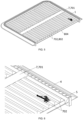
- the high-level terrace 7 can be built on the warehouses 8. More specifically, as shown in Figs. 3-6 , a main road 701 of the high-level terrace 7 is constructed in a direction roughly perpendicular to the length direction of the elongated or rectangular warehouses 8; and, the warehouses 8 corresponding below the main road 701 are provided with support plates 805, and the support plates 805 may be steel plates or reinforced concrete plates, forming the condition of supporting the stacking-reclaiming device to walk on the main road 701. As shown in Figs.
- branch roads 702 of the high-level terrace 7 are formed above the ballast warehouses 802 to communicate with the main road 701, and can also allow the stacking-reclaiming device to walk thereon.
- the long sidewalls 803 of the ballast warehouses 802 can be made of reinforced concrete, steel structures or other materials with high strength, and have a height roughly equal to that of the high-level terrace 7 (or the main road 701), so that the walking track of the stacker and the reclaimer can be paved on the long sidewalls 803 of the ballast warehouses 802.
- the stacking-reclaiming device from the main rod 701 can reach each branch road 702 so as to stack or reclaim material in the length direction of the storage warehouses 801.
- the stacker can walk along the branch road 702 on the ballast warehouses 802 in the second row, so as to stack material in the storage warehouse 801 in the second row.
- Figs. 5 and 6 are schematic diagrams after material stacking.
- connecting beams 806 are provided on the long sidewalls 803 of each ballast warehouse 802, and are located in the upper portions of the long sidewalls 803 of the ballast warehouse 802 to connect two adjacent long sidewalls 803 in the ballast warehouse 802.
- the plurality of connecting beams 803 may be arranged between the two long sidewalls by welding. With this arrangement, the upper portions of the long sidewalls 803 can be connected together to overcome the outward lateral pressure applied to the long sidewalls 803 by the above load (e.g., the stacker/reclaimer), thereby improving the bearing stability.
- the staking yard/warehouse space is increased. Furthermore, in the implementation, since most of the area in the pit 2 is directly used as the stacking yard/warehouses, the conventional engineering of filling the pit 2 is avoided, a large amount of consumption of the filler and labor and machinery is saved, and the cost-effectiveness ratio of engineering is greatly improved.
- a second implementation of the present application provides a water replacement type storage field, which can be constructed by the construction method described in any one of the above implementations.
- the water replacement type storage field includes a water-stop enclosure 1 and a stacking yard 3, wherein an outer side of the water-stop enclosure 1 abuts to water body; and, the stacking yard 3 is formed in an inner space enclosed by the water-stop enclosure 1 and located on a pit 2 formed after draining water in the water-stop enclosure 1.
- the water-stop enclosure 1 has a water stop function and prevents the water body at the outer side from entering the water-stop enclosure 1.
- the water-stop enclosure 1 may be constructed by a method for constructing an enclosure 1 in the prior art.
- the water-stop enclosure 1 includes a plurality of cylindrical steel plates 1011 and auxiliary steel plates 1012 located between adjacent cylindrical steel plates 1011.
- the cylindrical steel plates 1011 are cylindrical, and are distributed at intervals in the length direction of the water-stop enclosure 1.
- the auxiliary steel plates 1012 are arc-shaped, and are closely connected with the cylindrical steel plates 1011 through mortise grooves on the cylindrical steel plates 1011 to stop water.
- auxiliary steel plates 1012 arranged oppositely are provided between adjacent cylindrical steel plates, the arc-shaped convex surface of each auxiliary steel plate 1012 faces outward, and an inner cavity 1013 is formed. Backfilling soil is back-filled to the interiors of the cylindrical steel plates 1011 and the inner cavities 1012 to increase the stability of the water-stop enclosure 1.
- riprap mounds 4 are arranged at the inner and outer sides of the water-stop enclosure 1, respectively.
- the lateral pressure on the water-stop enclosure 1 by the stacking material on the inner side can be reduced and a back pressure can be produced for the foundation; the acting force on the water-stop enclosure 1 by the wave or water flow is reduced, and a back pressure is produced for the foundation; and, the stability of the water-stop enclosure 1 is improved.
- a wave wall 5 may be provided on the top of the water-stop enclosure 1 to reduce overtopping waves.
- the stacking yard 3 includes a lower low-level terrace 6 and a higher high-level terrace 7.
- the low-level terrace 6 includes a water permeable cushion 601, a water blocking cushion 602, a waterproof layer 603 and a baseplate layer 604 distributed bottom up.
- the water permeable cushion 601 has a water permeable function, may be formed by paving water permeable material (e.g., gravel, sand) in the pit 2, and has a thickness of 200 mm to 3000 mm.
- the water blocking cushion 602 is a cement layer or a concrete layer, has a certain water blocking effect, and has a thickness of 100 mm to 300 mm.
- the waterproof layer 603 is formed by coating waterproof material or paving a physical waterproof layer on the water blocking cushion 602, and has a thickness of 0.1 mm to 10 mm.
- the baseplate layer 604 is a cement layer or a concrete layer which is a working surface layer, and has a thickness of 300 mm to 2500 mm.
- the baseplate layer 604 is further provided with ground beams 6041 arranged at intervals, and the ground beams 6041 are a plurality of plate structures arranged in parallel and are formed by extending the baseplate layer 604 downward.
- the surface of the low-level terrace 6 is at least 1 m (for example, 1 m to 20 m, such as 2 m, 3 m, 5 m, 8 m, 10 m, 12 m, 15 m or 18 m) lower than the average water level at the outer side of the water-stop enclosure 1.
- the space originally occupied by the water body is utilized, and the material storage space is greatly increased.
- Warehouses 8 including storage warehouses 801 and ballast warehouses 802 are arranged on the low-level terrace 6.
- the storage warehouses 801 and the ballast warehouses 802 are distributed adjacent to each other.
- the storage warehouses 801 are used for storing material
- the ballast warehouses 802 are used for filling ballasts to complement the weight of the storage warehouses 801 when the weight of the storage warehouses 801 is insufficient, to increase the downward loading force of the low-level terrace 6.
- the storage warehouses 801 and the ballast warehouses 802 are rectangular and arranged at intervals, and the width of the storage warehouses 801 is greater than that of the ballast warehouses 802. Adjacent storage warehouses 801 and ballast warehouses 802 share the same long sidewall 803, and the short sidewalls of multiple storage warehouses 801 and multiple ballast warehouses 802 in parallel form one common sidewall 804.
- the high-level terrace 7 can be built on the low-level terrace 6 and used for allowing the stacking-reclaiming device to walk thereon.
- the high-level terrace 7 includes a main road 701 and a plurality of branch roads 702 communicated with the main road 701.
- the main road 701 is arranged perpendicular to the length direction of the storage warehouses 801 and the ballast warehouses 802 and located above the storage warehouses 801 and the ballast warehouses 802, and the branch roads 702 are formed above the ballast warehouses 802.
- support plates 805 are vertically arranged in the warehouses 8 (the storage warehouses 801 and the ballast warehouses 802) located below the main road 701, and are reinforced concrete plates or steel plates used for supporting the main road 701.
- the long sidewalls 803 of the ballast warehouses are reinforced concrete and steel structures and have a height equal to the height of the main road 701, so that the upper portions of the ballast warehouses 802 act as the branch roads 702 for paving the track of the stacking-reclaiming device, as shown in Fig. 7 .
- a plurality of connecting beams 806 can be arranged in each ballast warehouse 802 and is located between the upper portions of two opposite long sidewalls 803 of the ballast warehouse to connect the two sidewalls, thereby improving the pressure resistance.
- the long sidewalls of the ballast warehouse can also be used as the foundation of the walking track of the stacking-reclaiming device, without occupying the additional space for establishing the track foundation, so that the storage space of the warehouses 8 is increased.
Landscapes
- Engineering & Computer Science (AREA)
- General Engineering & Computer Science (AREA)
- Civil Engineering (AREA)
- Structural Engineering (AREA)
- Ocean & Marine Engineering (AREA)
- Environmental & Geological Engineering (AREA)
- Mechanical Engineering (AREA)
- Paleontology (AREA)
- Mining & Mineral Resources (AREA)
- General Life Sciences & Earth Sciences (AREA)
- Life Sciences & Earth Sciences (AREA)
- Sewage (AREA)
- Underground Structures, Protecting, Testing And Restoring Foundations (AREA)
- Revetment (AREA)
- Buildings Adapted To Withstand Abnormal External Influences (AREA)
Claims (10)
- Konstruktionsverfahren für ein Wasserersatzlagerfeld, wobei es die folgenden Schritte beinhaltet:Konstruktion eines Wasserstoppgehäuses (1): Konstruktion eines Gehäuses, das Wasser stoppen kann;Konstruktion der Entwässerung nach dem Einschließen: nach dem Einschließen des Wasserstoppgehäuses (1), Entwässern von Wasser in einem eingeschlossenen Bereich des Wasserstoppgehäuses (1), Freilegen einer Grube (2), um einen trockenen Konstruktionszustand auszubilden;Konstruktion eines Stapelplatzes (3): unter den Bedingungen der trockenen Konstruktion, Konstruktion des Stapelplatzes (3) auf der Grube (2), einschließlich des Konstruieren einer unteren Terrasse (6) auf niedriger Ebene und einer höheren Terrasse (7) auf hoher Ebene; wobei die Terrasse (6) auf niedriger Ebene niedriger ist als ein durchschnittlicher Wasserstand an einer Außenseite des Wasserstoppgehäuses (1), wobei die Terrasse (7) auf hoher Ebene verwendet werden kann, um eine Stapelrückgewinnungsvorrichtung gehen zu lassen, und die Stapelrückgewinnungsvorrichtung Material zu oder von Lagerhallen (8) befördern kann; undKonstruktion der Lagerhäuser (8): Konstruieren von Lagerhäusern (8) auf der Terrasse (6) auf niedriger Ebene;wobei,in dem Schritt des Konstruierens der Lagerhäuser (8) Lagerhäuser (801) und Ballastlagerhäuser (802) auf der Terrasse (6) auf niedriger Ebene angeordnet sind, wobei die Ballastlagerhäuser (802) um die Lagerhäuser (801) herum verteilt sind; die Lagerhäuser (801) für die Lagerung von Material verwendet werden können, und die Ballastlagerhäuser (802) zum Befüllen von Ballast verwendet werden können;das Lagerhaus (801) und das Ballastlagerhaus (802) länglich und in Abständen angeordnet sind; sich ein benachbartes Lagerhaus (801) und Ballastlagerhaus (802) dieselbe lange Seitenwand (803) teilen und die kurzen Seitenwände mehrerer Lagerhäuser (801) und mehrerer Ballastlagerhäuser (802) parallel eine gemeinsame Seitenwand (804) ausbilden; wobei eine Breite des Lagerhauses (801) größer ist als eine Breite des Ballastlagerhauses (802);dadurch gekennzeichnet, dass,in dem Schritt des Konstruierens des Stapelplatzes (3) die Terrasse (7) auf hoher Ebene auf dem Lagerhaus (8) konstruiert wird; wodurch eine Hauptstraße (701) der Terrasse (7) auf hoher Ebene in einer Richtung im Wesentlichen rechtwinklig zu einer Längsrichtung der länglichen Lagerhäuser (8) konstruiert wird; Nebenstraßen (702) der Terrasse (7) auf hoher Ebene über den Ballastlagerhäusern (802) ausgebildet werden, die mit der Hauptstraße (701) in Verbindung stehen; und die Hauptstraße (701) und die Nebenstraßen (702) das Gehen der Stapelrückgewinnungsvorrichtung ermöglichen.
- Konstruktionsverfahren für ein Wasserersatzlagerfeld nach Anspruch 1, wobei in dem Schritt des Konstruierens des Stapelplatzes (3) die Terrasse (6) auf niedriger Ebene 3 m bis 20 m tiefer liegt als der durchschnittliche Wasserstand an der Außenseite des Wasserstoppgehäuses (1).
- Konstruktionsverfahren für ein Wasserersatzlagerfeld nach Anspruch 1 oder 2, wobei in dem Schritt des Konstruierens des Stapelplatzes (3) eine durchschnittliche Tiefe von der Grube (2) bis zu einer Oberseite des Wasserstoppgehäuses (1) L1 ist, eine Tiefe von einer Oberfläche der Terrasse (6) auf niedriger Ebene bis zu der Oberseite des Wasserstoppgehäuses (1) L2 ist, und L2/L1 ≥ 50 % ist.
- Konstruktionsverfahren für ein Wasserersatzlagerfeld nach einem der Ansprüche 1 bis 3, wobei der Schritt des Konstruierens der Entwässerung nach dem Einschließen ferner beinhaltet: nach dem Ausbilden des trockenen Konstruktionszustands, Nivellieren der Grube (2) ohne Aufschüttung für die Anhebung und Konstruieren des Stapelplatzes (3) auf der nivellierten Grube.
- Konstruktionsverfahren für ein Wasserersatzlagerfeld nach einem der Ansprüche 1 bis 4, wobei Stützplatten (805), die für die Stützung der Hauptstraße (701) verwendet werden, in den Lagerhäusern (8) angeordnet sind, die der Hauptstraße (701) entsprechen, und die Stützplatten (805) Stahlplatten oder Stahlbetonplatten sind, die vertikal angeordnet sind; die langen Seitenwände der Ballastlagerhäuser (802) aus Stahlbeton oder Stahlstrukturen hergestellt sind und eine Höhe aufweisen, die im Wesentlichen einer Höhe der Hauptstraße (701) der Terrasse (7) auf hoher Ebene entspricht, um die Nebenstraßen (702) auf den Ballastlagerhäusern (802) auszubilden, und die langen Seitenwände der Ballastlagerhäuser (802) als Laufwege der Stapelrückgewinnungsvorrichtung verwendet werden; und in oberen Abschnitten von zwei langen Seitenwänden des Ballastlagerhauses (802) Verbindungsbalken (806) zum Verbinden der zwei langen Seitenwände bereitgestellt sind.
- Konstruktionsverfahren für ein Wasserersatzlagerfeld nach einem der Ansprüche 1-5, wobei der Konstruktionsschritt des Wasserstoppgehäuses (1) ferner beinhaltet: erstens, Einsetzen einer Mehrzahl von zylindrischen Stahlplatten in ein weiches Bodenfundament durch einem Vibrationshammersatz; dann Einsetzen von zwei Hilfsstahlplatten in das weiche Bodenfundament zwischen jeweils zwei benachbarte zylindrische Stahlplatten entlang von Stemmlochrillen an den Außenwänden der zylindrischen Stahlplatten durch den Vibrationshammersatz, um den Spalt zwischen benachbarten zylindrischen Stahlplatten zu schließen; und dann erneutes Auffüllen von Innenräumen der zylindrischen Stahlplatten und eines inneren Hohlraums, der zwischen den zwei Hilfsstahlplatten ausgebildet wird, um das Wasserstoppgehäuse (1) auszubilden.
- Konstruktionsverfahren für ein Wasserersatzlagerfeld nach einem der Ansprüche 1-5, das ferner die Konstruktion von Steinschüttungshügeln (4) beinhaltet: Konstruieren der Steinschüttungshügel (4) an den Innen- beziehungsweise Außenseiten des Wasserstoppgehäuses (1), sodass die Steinschüttungshügel (4) im Wesentlichen eine rechtwinklige Trapezform ausbilden, die mit dem Wasserstoppgehäuse (1) an den Innen- und Außenseiten angepasst sind; und die oberen Oberflächen der Steinschüttungshügel (4) im Wesentlichen bündig mit einer oberen Oberfläche des Wasserstoppgehäuses (1) abschließen.
- Konstruktionsverfahren für ein Wasserersatzlagerfeld nach Anspruch 7, wobei eine sich nach oben erstreckende Wellenwand (5) in einem oberen Abschnitt des Wasserstoppgehäuses (1) oder in einem oberen Abschnitt des Steinschüttungshügels (4) an der Außenseite konstruiert wird.
- Konstruktionsverfahren für ein Wasserersatzlagerfeld nach einem der Ansprüche 1-8, wobei in dem Schritt des Konstruierens des Stapelplatzes (3) ein wasserdurchlässiges Kissen (601), ein wasserabweisendes Kissen (602), eine wasserdichte Schicht (603) und eine Grundplattenschicht (604) nacheinander von unten nach oben in der entwässerten Grube ausgebildet werden, um die Terrasse (6) auf niedriger Ebene auszubilden; wobei das wasserdurchlässige Kissen (601) durch Befestigen von wasserdurchlässigem Material in der Grube ausgebildet wird; das wasserabweisende Kissen (602) ausgebildet wird, indem Zement oder Beton auf das wasserdurchlässige Kissen (601) gegossen wird; die wasserundurchlässige Schicht (603) durch Beschichtung mit wasserdichtem Material oder durch Befestigen einer physikalischen wasserdichten Schicht auf das wasserabweisende Kissen (602) ausgebildet wird; und die Grundplattenschicht (604) ausgebildet wird, indem Zement oder Beton gegossen wird.
- Wasserersatzlagerfeld, das durch das Konstruktionsverfahren für ein Wasserersatzlagerfeld nach einem der Ansprüche 1-9 konstruiert wird; wobei das Wasserersatzlagerfeld das Wasserstoppgehäuse (1) und den Stapelplatz (3) beinhaltet; wobei der Stapelplatz (3) in einem Innenraum konstruiert ist, der von dem Wasserstoppgehäuse (1) eingeschlossen ist und sich nach dem Entwässern von Wasser auf der innerhalb des Wasserstoppgehäuses (1) ausgebildeten Grube (2) befindet; der Stapelplatz (3) die niedrigere Terrasse (6) auf niedriger Ebene und die höhere Terrasse (7) auf hoher Ebene beinhaltet, wobei die Terrasse (6) auf niedriger Ebene niedriger ist als der durchschnittliche Wasserstand an der Außenseite des Wasserstoppgehäuses (1) und die Lagerhäuser (8) auf der Terrasse (6) auf niedriger Ebene konstruiert sind; und die Terrasse (7) auf hoher Ebene verwendet werden kann, um die Stapelrückgewinnungsvorrichtung gehen zu lassen; die Lagerhäuser (801) und die Ballastlagerhäuser (802) auf der Terrasse (6) auf niedriger Ebene angeordnet sind, wobei die Ballastlagerhäuser (802) um die Lagerhäuser (801) herum verteilt sind; und die Lagerhäuser (801) für die Lagerung von Material verwendet werden können, und die Ballastlagerhäuser (802) für die Befüllung von Ballast verwendet werden können;die Lagerhäuser (801) und die Ballastlagerhäuser (802) rechteckig und in Abständen angeordnet sind; sich ein benachbartes Lagerhaus (801) und Ballastlagerhaus (802) dieselbe lange Seitenwand (803) teilen und die kurzen Seitenwände mehrerer Lagerhäuser und mehrerer Ballastlagerhäuser parallel eine gemeinsame Seitenwand (804) ausbilden; wobei die Breite des Lagerhauses (801) größer ist als die Breite des Ballastlagerhauses (802);sich die Terrasse (7) auf hoher Ebene auf den Lagerhäusern (8) befindet und die Hauptstraße (701) und Nebenstraßen (702) beinhaltet, die mit der Hauptstraße (701) in Kommunikation stehen, sodass die Stapelrückgewinnungsvorrichtung darauf gehen kann; die Hauptstraße (701) in der Richtung im Wesentlichen senkrecht zu den rechteckigen Lagerhäusern (8) angeordnet ist; und sich die Nebenstraßen (702) oberhalb der Ballastlagerhäuser (802) befinden.
Applications Claiming Priority (2)
| Application Number | Priority Date | Filing Date | Title |
|---|---|---|---|
| CN202211293054.2A CN115573363B (zh) | 2022-10-21 | 2022-10-21 | 水体置换式储存场施工方法及应用 |
| PCT/CN2023/116436 WO2024032815A1 (zh) | 2022-10-21 | 2023-09-01 | 水体置换式储存场施工方法及储存场 |
Publications (4)
| Publication Number | Publication Date |
|---|---|
| EP4389985A1 EP4389985A1 (de) | 2024-06-26 |
| EP4389985A4 EP4389985A4 (de) | 2025-01-01 |
| EP4389985C0 EP4389985C0 (de) | 2025-06-11 |
| EP4389985B1 true EP4389985B1 (de) | 2025-06-11 |
Family
ID=84586264
Family Applications (1)
| Application Number | Title | Priority Date | Filing Date |
|---|---|---|---|
| EP23852034.0A Active EP4389985B1 (de) | 2022-10-21 | 2023-09-01 | Konstruktionsverfahren für wasserkörperersatzlagerplatz und lagerplatz |
Country Status (5)
| Country | Link |
|---|---|
| US (1) | US12215470B2 (de) |
| EP (1) | EP4389985B1 (de) |
| JP (1) | JP7588276B1 (de) |
| CN (2) | CN115573363B (de) |
| WO (1) | WO2024032815A1 (de) |
Families Citing this family (2)
| Publication number | Priority date | Publication date | Assignee | Title |
|---|---|---|---|---|
| CN115573363B (zh) * | 2022-10-21 | 2025-09-12 | 中交第一航务工程局有限公司 | 水体置换式储存场施工方法及应用 |
| CN120520246B (zh) * | 2025-07-21 | 2025-09-26 | 福州市规划设计研究院集团有限公司 | 一种市政施工用基坑防护装置及其操作方法 |
Family Cites Families (14)
| Publication number | Priority date | Publication date | Assignee | Title |
|---|---|---|---|---|
| JPH02504050A (ja) * | 1987-05-29 | 1990-11-22 | リンゲステン ビヨルン | 道路及び路盤構造体の形成方法 |
| JPH07216915A (ja) * | 1994-02-04 | 1995-08-15 | Kajima Corp | 地下式貯槽の構築法およびそれに使用する着底用フロート |
| US5803659A (en) * | 1995-12-08 | 1998-09-08 | Chattey; Nigel | Modular caissons for use in constructing, expanding and modernizing ports and harbors. |
| NO333199B1 (no) * | 2009-10-23 | 2013-04-08 | Birken & Co As | Anordning ved kaianlegg samt framgangsmate ved lagring av en ankerkjetting i tilknytning til en vedlikeholdsoperasjon pa en ankerkjetting |
| CN102345300A (zh) * | 2011-07-12 | 2012-02-08 | 中交四航工程研究院有限公司 | 海岸及人工岛地下结构建造方法 |
| CN102720203A (zh) * | 2012-06-05 | 2012-10-10 | 中交第一航务工程局有限公司 | 人工岛钢圆筒围堰的止水结构 |
| CN204897690U (zh) * | 2015-08-18 | 2015-12-23 | 湖南艾布鲁环保科技有限公司 | 一种河道或湖泊疏挖底泥处置的干化场 |
| CN206448584U (zh) * | 2017-02-14 | 2017-08-29 | 中国水利水电第五工程局有限公司 | 一种砂石骨料堆存仓 |
| CN208856516U (zh) * | 2018-03-29 | 2019-05-14 | 中交第四航务工程勘察设计院有限公司 | 一种新型江海联运自动化集装箱码头结构 |
| CN109056654A (zh) * | 2018-09-17 | 2018-12-21 | 天津市北洋水运水利勘察设计研究院有限公司 | 一种土工格室围埝及其施工方法 |
| CN209443476U (zh) * | 2018-12-29 | 2019-09-27 | 河源弘稼农业科技有限公司 | 淤泥堆放场结构 |
| CN110080169B (zh) * | 2019-04-03 | 2020-11-24 | 温州大学 | 一种基于地下室利用的围海造地的施工方法 |
| CN110921342A (zh) * | 2019-12-16 | 2020-03-27 | 王静波 | 自动化集装箱港口及施工安装方法 |
| CN115573363B (zh) * | 2022-10-21 | 2025-09-12 | 中交第一航务工程局有限公司 | 水体置换式储存场施工方法及应用 |
-
2022
- 2022-10-21 CN CN202211293054.2A patent/CN115573363B/zh active Active
- 2022-10-21 CN CN202310056278.XA patent/CN115852902B/zh active Active
-
2023
- 2023-09-01 WO PCT/CN2023/116436 patent/WO2024032815A1/zh not_active Ceased
- 2023-09-01 EP EP23852034.0A patent/EP4389985B1/de active Active
- 2023-09-01 JP JP2024529496A patent/JP7588276B1/ja active Active
-
2024
- 2024-05-03 US US18/654,280 patent/US12215470B2/en active Active
Also Published As
| Publication number | Publication date |
|---|---|
| JP7588276B1 (ja) | 2024-11-21 |
| US12215470B2 (en) | 2025-02-04 |
| EP4389985A1 (de) | 2024-06-26 |
| JP2024544363A (ja) | 2024-11-29 |
| CN115852902B (zh) | 2025-09-16 |
| US20240368852A1 (en) | 2024-11-07 |
| EP4389985C0 (de) | 2025-06-11 |
| EP4389985A4 (de) | 2025-01-01 |
| CN115852902A (zh) | 2023-03-28 |
| CN115573363B (zh) | 2025-09-12 |
| CN115573363A (zh) | 2023-01-06 |
| WO2024032815A1 (zh) | 2024-02-15 |
Similar Documents
| Publication | Publication Date | Title |
|---|---|---|
| US12215470B2 (en) | Water replacement type storage field construction method and storage field | |
| US6082931A (en) | Modular maritime dock design | |
| EA027027B1 (ru) | Способ создания подпорной стенки | |
| US10557248B2 (en) | Post-grouting method for immersed tube joint base | |
| CN106192880B (zh) | L型箱式码头及其建造方法 | |
| CN1382876A (zh) | 软土地基上的筒型基础深水重力式码头结构 | |
| JPS58120924A (ja) | 組立式擁壁用ブロツク | |
| CN112627208B (zh) | 适用于岩基的装配式围堰及其施工方法 | |
| KR100433653B1 (ko) | 교량의 교대 뒷채움 배수로 시공방법 | |
| CN101748735A (zh) | 软土地区减少桩偏斜的基坑开挖方法 | |
| CN110004934B (zh) | 淤泥质基坑开挖施工方法 | |
| CN111636726A (zh) | 一种施工于深厚软土地基的双层原料场结构及其施工方法 | |
| KR101104957B1 (ko) | 블록 | |
| CN214460593U (zh) | 一种便于道路路面加宽的挡墙加固结构 | |
| CN118326948A (zh) | 一种支护桩和护堤及其施工方法 | |
| CN211973356U (zh) | 一种软土地基堤防结构 | |
| CN109629587B (zh) | 用于库岸陡坡的钢沉箱桩体结构及施工方法 | |
| JPH11293675A (ja) | 軽量盛土工法、軽量盛土構造、及び軽量盛土用コンクリートブロック | |
| CN116641339B (zh) | 一种桩井式沉箱码头结构的施工方法 | |
| JP2004162325A (ja) | 管理型護岸の遮水工法 | |
| US1394571A (en) | Subaqueous structure and method | |
| CN221877945U (zh) | 一种水上抛石集装箱式临时码头结构 | |
| RU2054503C1 (ru) | Способ возведения подземного сооружения | |
| JPH08113935A (ja) | 人工島 | |
| KR102762119B1 (ko) | 변단면 각관(Trapezoid Steel Pipe)공법을 이용한 해상 방파호안 조성방법 |
Legal Events
| Date | Code | Title | Description |
|---|---|---|---|
| STAA | Information on the status of an ep patent application or granted ep patent |
Free format text: STATUS: THE INTERNATIONAL PUBLICATION HAS BEEN MADE |
|
| PUAI | Public reference made under article 153(3) epc to a published international application that has entered the european phase |
Free format text: ORIGINAL CODE: 0009012 |
|
| STAA | Information on the status of an ep patent application or granted ep patent |
Free format text: STATUS: REQUEST FOR EXAMINATION WAS MADE |
|
| 17P | Request for examination filed |
Effective date: 20240321 |
|
| AK | Designated contracting states |
Kind code of ref document: A1 Designated state(s): AL AT BE BG CH CY CZ DE DK EE ES FI FR GB GR HR HU IE IS IT LI LT LU LV MC ME MK MT NL NO PL PT RO RS SE SI SK SM TR |
|
| A4 | Supplementary search report drawn up and despatched |
Effective date: 20241129 |
|
| RIC1 | Information provided on ipc code assigned before grant |
Ipc: E02B 3/18 20060101ALI20241125BHEP Ipc: E02D 19/04 20060101AFI20241125BHEP |
|
| STAA | Information on the status of an ep patent application or granted ep patent |
Free format text: STATUS: EXAMINATION IS IN PROGRESS |
|
| DAV | Request for validation of the european patent (deleted) | ||
| DAX | Request for extension of the european patent (deleted) | ||
| 17Q | First examination report despatched |
Effective date: 20250207 |
|
| REG | Reference to a national code |
Ref legal event code: R079 Ipc: E02B0003180000 Ref country code: DE Ref legal event code: R079 Ref document number: 602023003992 Country of ref document: DE Free format text: PREVIOUS MAIN CLASS: E02D0019040000 Ipc: E02B0003180000 |
|
| GRAP | Despatch of communication of intention to grant a patent |
Free format text: ORIGINAL CODE: EPIDOSNIGR1 |
|
| STAA | Information on the status of an ep patent application or granted ep patent |
Free format text: STATUS: GRANT OF PATENT IS INTENDED |
|
| GRAS | Grant fee paid |
Free format text: ORIGINAL CODE: EPIDOSNIGR3 |
|
| GRAA | (expected) grant |
Free format text: ORIGINAL CODE: 0009210 |
|
| RIC1 | Information provided on ipc code assigned before grant |
Ipc: E02D 19/04 20060101ALN20250404BHEP Ipc: E02D 17/04 20060101ALN20250404BHEP Ipc: E02B 11/00 20060101ALN20250404BHEP Ipc: E02B 3/20 20060101ALN20250404BHEP Ipc: E02B 3/10 20060101ALN20250404BHEP Ipc: E02D 27/40 20060101ALI20250404BHEP Ipc: E02B 3/18 20060101AFI20250404BHEP |
|
| STAA | Information on the status of an ep patent application or granted ep patent |
Free format text: STATUS: THE PATENT HAS BEEN GRANTED |
|
| INTG | Intention to grant announced |
Effective date: 20250423 |
|
| AK | Designated contracting states |
Kind code of ref document: B1 Designated state(s): AL AT BE BG CH CY CZ DE DK EE ES FI FR GB GR HR HU IE IS IT LI LT LU LV MC ME MK MT NL NO PL PT RO RS SE SI SK SM TR |
|
| REG | Reference to a national code |
Ref country code: GB Ref legal event code: FG4D |
|
| REG | Reference to a national code |
Ref country code: CH Ref legal event code: EP |
|
| REG | Reference to a national code |
Ref country code: IE Ref legal event code: FG4D |
|
| REG | Reference to a national code |
Ref country code: DE Ref legal event code: R096 Ref document number: 602023003992 Country of ref document: DE |
|
| U01 | Request for unitary effect filed |
Effective date: 20250612 |
|
| U07 | Unitary effect registered |
Designated state(s): AT BE BG DE DK EE FI FR IT LT LU LV MT NL PT RO SE SI Effective date: 20250623 |
|
| U20 | Renewal fee for the european patent with unitary effect paid |
Year of fee payment: 3 Effective date: 20250826 |
|
| PG25 | Lapsed in a contracting state [announced via postgrant information from national office to epo] |
Ref country code: ES Free format text: LAPSE BECAUSE OF FAILURE TO SUBMIT A TRANSLATION OF THE DESCRIPTION OR TO PAY THE FEE WITHIN THE PRESCRIBED TIME-LIMIT Effective date: 20250611 |
|
| PG25 | Lapsed in a contracting state [announced via postgrant information from national office to epo] |
Ref country code: GR Free format text: LAPSE BECAUSE OF FAILURE TO SUBMIT A TRANSLATION OF THE DESCRIPTION OR TO PAY THE FEE WITHIN THE PRESCRIBED TIME-LIMIT Effective date: 20250912 Ref country code: NO Free format text: LAPSE BECAUSE OF FAILURE TO SUBMIT A TRANSLATION OF THE DESCRIPTION OR TO PAY THE FEE WITHIN THE PRESCRIBED TIME-LIMIT Effective date: 20250911 |
|
| PG25 | Lapsed in a contracting state [announced via postgrant information from national office to epo] |
Ref country code: HR Free format text: LAPSE BECAUSE OF FAILURE TO SUBMIT A TRANSLATION OF THE DESCRIPTION OR TO PAY THE FEE WITHIN THE PRESCRIBED TIME-LIMIT Effective date: 20250611 |
|
| PG25 | Lapsed in a contracting state [announced via postgrant information from national office to epo] |
Ref country code: RS Free format text: LAPSE BECAUSE OF FAILURE TO SUBMIT A TRANSLATION OF THE DESCRIPTION OR TO PAY THE FEE WITHIN THE PRESCRIBED TIME-LIMIT Effective date: 20250911 |
|
| PG25 | Lapsed in a contracting state [announced via postgrant information from national office to epo] |
Ref country code: IS Free format text: LAPSE BECAUSE OF FAILURE TO SUBMIT A TRANSLATION OF THE DESCRIPTION OR TO PAY THE FEE WITHIN THE PRESCRIBED TIME-LIMIT Effective date: 20251011 |
|
| PG25 | Lapsed in a contracting state [announced via postgrant information from national office to epo] |
Ref country code: SM Free format text: LAPSE BECAUSE OF FAILURE TO SUBMIT A TRANSLATION OF THE DESCRIPTION OR TO PAY THE FEE WITHIN THE PRESCRIBED TIME-LIMIT Effective date: 20250611 |
|
| PG25 | Lapsed in a contracting state [announced via postgrant information from national office to epo] |
Ref country code: CZ Free format text: LAPSE BECAUSE OF FAILURE TO SUBMIT A TRANSLATION OF THE DESCRIPTION OR TO PAY THE FEE WITHIN THE PRESCRIBED TIME-LIMIT Effective date: 20250611 |
|
| PG25 | Lapsed in a contracting state [announced via postgrant information from national office to epo] |
Ref country code: PL Free format text: LAPSE BECAUSE OF FAILURE TO SUBMIT A TRANSLATION OF THE DESCRIPTION OR TO PAY THE FEE WITHIN THE PRESCRIBED TIME-LIMIT Effective date: 20250611 |
|
| PG25 | Lapsed in a contracting state [announced via postgrant information from national office to epo] |
Ref country code: SK Free format text: LAPSE BECAUSE OF FAILURE TO SUBMIT A TRANSLATION OF THE DESCRIPTION OR TO PAY THE FEE WITHIN THE PRESCRIBED TIME-LIMIT Effective date: 20250611 |
|
| PLBE | No opposition filed within time limit |
Free format text: ORIGINAL CODE: 0009261 |
|
| STAA | Information on the status of an ep patent application or granted ep patent |
Free format text: STATUS: NO OPPOSITION FILED WITHIN TIME LIMIT |
|
| REG | Reference to a national code |
Ref country code: CH Ref legal event code: L10 Free format text: ST27 STATUS EVENT CODE: U-0-0-L10-L00 (AS PROVIDED BY THE NATIONAL OFFICE) Effective date: 20260423 |