EP4379818A1 - Farblaminierte fotovoltaische vorrichtung - Google Patents
Farblaminierte fotovoltaische vorrichtung Download PDFInfo
- Publication number
- EP4379818A1 EP4379818A1 EP22862754.3A EP22862754A EP4379818A1 EP 4379818 A1 EP4379818 A1 EP 4379818A1 EP 22862754 A EP22862754 A EP 22862754A EP 4379818 A1 EP4379818 A1 EP 4379818A1
- Authority
- EP
- European Patent Office
- Prior art keywords
- layer
- refractive index
- photovoltaic device
- color
- optical reflective
- Prior art date
- Legal status (The legal status is an assumption and is not a legal conclusion. Google has not performed a legal analysis and makes no representation as to the accuracy of the status listed.)
- Pending
Links
Images


Classifications
-
- H—ELECTRICITY
- H10—SEMICONDUCTOR DEVICES; ELECTRIC SOLID-STATE DEVICES NOT OTHERWISE PROVIDED FOR
- H10K—ORGANIC ELECTRIC SOLID-STATE DEVICES
- H10K30/00—Organic devices sensitive to infrared radiation, light, electromagnetic radiation of shorter wavelength or corpuscular radiation
- H10K30/50—Photovoltaic [PV] devices
- H10K30/57—Photovoltaic [PV] devices comprising multiple junctions, e.g. tandem PV cells
-
- H—ELECTRICITY
- H10—SEMICONDUCTOR DEVICES; ELECTRIC SOLID-STATE DEVICES NOT OTHERWISE PROVIDED FOR
- H10F—INORGANIC SEMICONDUCTOR DEVICES SENSITIVE TO INFRARED RADIATION, LIGHT, ELECTROMAGNETIC RADIATION OF SHORTER WAVELENGTH OR CORPUSCULAR RADIATION
- H10F10/00—Individual photovoltaic cells, e.g. solar cells
- H10F10/10—Individual photovoltaic cells, e.g. solar cells having potential barriers
- H10F10/17—Photovoltaic cells having only PIN junction potential barriers
- H10F10/172—Photovoltaic cells having only PIN junction potential barriers comprising multiple PIN junctions, e.g. tandem cells
-
- H—ELECTRICITY
- H10—SEMICONDUCTOR DEVICES; ELECTRIC SOLID-STATE DEVICES NOT OTHERWISE PROVIDED FOR
- H10F—INORGANIC SEMICONDUCTOR DEVICES SENSITIVE TO INFRARED RADIATION, LIGHT, ELECTROMAGNETIC RADIATION OF SHORTER WAVELENGTH OR CORPUSCULAR RADIATION
- H10F10/00—Individual photovoltaic cells, e.g. solar cells
- H10F10/10—Individual photovoltaic cells, e.g. solar cells having potential barriers
- H10F10/19—Photovoltaic cells having multiple potential barriers of different types, e.g. tandem cells having both PN and PIN junctions
-
- H—ELECTRICITY
- H10—SEMICONDUCTOR DEVICES; ELECTRIC SOLID-STATE DEVICES NOT OTHERWISE PROVIDED FOR
- H10F—INORGANIC SEMICONDUCTOR DEVICES SENSITIVE TO INFRARED RADIATION, LIGHT, ELECTROMAGNETIC RADIATION OF SHORTER WAVELENGTH OR CORPUSCULAR RADIATION
- H10F19/00—Integrated devices, or assemblies of multiple devices, comprising at least one photovoltaic cell covered by group H10F10/00, e.g. photovoltaic modules
- H10F19/40—Integrated devices, or assemblies of multiple devices, comprising at least one photovoltaic cell covered by group H10F10/00, e.g. photovoltaic modules comprising photovoltaic cells in a mechanically stacked configuration
-
- H—ELECTRICITY
- H10—SEMICONDUCTOR DEVICES; ELECTRIC SOLID-STATE DEVICES NOT OTHERWISE PROVIDED FOR
- H10F—INORGANIC SEMICONDUCTOR DEVICES SENSITIVE TO INFRARED RADIATION, LIGHT, ELECTROMAGNETIC RADIATION OF SHORTER WAVELENGTH OR CORPUSCULAR RADIATION
- H10F77/00—Constructional details of devices covered by this subclass
-
- H—ELECTRICITY
- H10—SEMICONDUCTOR DEVICES; ELECTRIC SOLID-STATE DEVICES NOT OTHERWISE PROVIDED FOR
- H10F—INORGANIC SEMICONDUCTOR DEVICES SENSITIVE TO INFRARED RADIATION, LIGHT, ELECTROMAGNETIC RADIATION OF SHORTER WAVELENGTH OR CORPUSCULAR RADIATION
- H10F77/00—Constructional details of devices covered by this subclass
- H10F77/10—Semiconductor bodies
- H10F77/12—Active materials
-
- H—ELECTRICITY
- H10—SEMICONDUCTOR DEVICES; ELECTRIC SOLID-STATE DEVICES NOT OTHERWISE PROVIDED FOR
- H10F—INORGANIC SEMICONDUCTOR DEVICES SENSITIVE TO INFRARED RADIATION, LIGHT, ELECTROMAGNETIC RADIATION OF SHORTER WAVELENGTH OR CORPUSCULAR RADIATION
- H10F77/00—Constructional details of devices covered by this subclass
- H10F77/30—Coatings
- H10F77/306—Coatings for devices having potential barriers
- H10F77/311—Coatings for devices having potential barriers for photovoltaic cells
-
- H—ELECTRICITY
- H10—SEMICONDUCTOR DEVICES; ELECTRIC SOLID-STATE DEVICES NOT OTHERWISE PROVIDED FOR
- H10F—INORGANIC SEMICONDUCTOR DEVICES SENSITIVE TO INFRARED RADIATION, LIGHT, ELECTROMAGNETIC RADIATION OF SHORTER WAVELENGTH OR CORPUSCULAR RADIATION
- H10F77/00—Constructional details of devices covered by this subclass
- H10F77/40—Optical elements or arrangements
- H10F77/42—Optical elements or arrangements directly associated or integrated with photovoltaic cells, e.g. light-reflecting means or light-concentrating means
-
- H—ELECTRICITY
- H10—SEMICONDUCTOR DEVICES; ELECTRIC SOLID-STATE DEVICES NOT OTHERWISE PROVIDED FOR
- H10K—ORGANIC ELECTRIC SOLID-STATE DEVICES
- H10K30/00—Organic devices sensitive to infrared radiation, light, electromagnetic radiation of shorter wavelength or corpuscular radiation
- H10K30/40—Organic devices sensitive to infrared radiation, light, electromagnetic radiation of shorter wavelength or corpuscular radiation comprising a p-i-n structure, e.g. having a perovskite absorber between p-type and n-type charge transport layers
-
- H—ELECTRICITY
- H10—SEMICONDUCTOR DEVICES; ELECTRIC SOLID-STATE DEVICES NOT OTHERWISE PROVIDED FOR
- H10K—ORGANIC ELECTRIC SOLID-STATE DEVICES
- H10K30/00—Organic devices sensitive to infrared radiation, light, electromagnetic radiation of shorter wavelength or corpuscular radiation
- H10K30/80—Constructional details
- H10K30/87—Light-trapping means
-
- H—ELECTRICITY
- H10—SEMICONDUCTOR DEVICES; ELECTRIC SOLID-STATE DEVICES NOT OTHERWISE PROVIDED FOR
- H10K—ORGANIC ELECTRIC SOLID-STATE DEVICES
- H10K30/00—Organic devices sensitive to infrared radiation, light, electromagnetic radiation of shorter wavelength or corpuscular radiation
- H10K30/10—Organic devices sensitive to infrared radiation, light, electromagnetic radiation of shorter wavelength or corpuscular radiation comprising heterojunctions between organic semiconductors and inorganic semiconductors
- H10K30/15—Sensitised wide-bandgap semiconductor devices, e.g. dye-sensitised TiO2
-
- H—ELECTRICITY
- H10—SEMICONDUCTOR DEVICES; ELECTRIC SOLID-STATE DEVICES NOT OTHERWISE PROVIDED FOR
- H10K—ORGANIC ELECTRIC SOLID-STATE DEVICES
- H10K85/00—Organic materials used in the body or electrodes of devices covered by this subclass
- H10K85/50—Organic perovskites; Hybrid organic-inorganic perovskites [HOIP], e.g. CH3NH3PbI3
-
- Y—GENERAL TAGGING OF NEW TECHNOLOGICAL DEVELOPMENTS; GENERAL TAGGING OF CROSS-SECTIONAL TECHNOLOGIES SPANNING OVER SEVERAL SECTIONS OF THE IPC; TECHNICAL SUBJECTS COVERED BY FORMER USPC CROSS-REFERENCE ART COLLECTIONS [XRACs] AND DIGESTS
- Y02—TECHNOLOGIES OR APPLICATIONS FOR MITIGATION OR ADAPTATION AGAINST CLIMATE CHANGE
- Y02E—REDUCTION OF GREENHOUSE GAS [GHG] EMISSIONS, RELATED TO ENERGY GENERATION, TRANSMISSION OR DISTRIBUTION
- Y02E10/00—Energy generation through renewable energy sources
- Y02E10/50—Photovoltaic [PV] energy
- Y02E10/52—PV systems with concentrators
Definitions
- the disclosure relates to the technical field of solar batteries, and in particular to a color tandem photovoltaic device.
- Photovoltaic technology as a very potential renewable energy technology, has attracted more and more attention and application.
- the photovoltaic market is mainly based on crystalline silicon batteries and modules, limited by the light-trapping structure and antireflection film on the surface of crystalline silicon batteries, crystalline silicon batteries and modules usually present blue, deep blue, blue-black, or black.
- crystalline silicon batteries and modules usually present blue, deep blue, blue-black, or black.
- a conventional solution for a color photovoltaic device is to provide an optical structure on the front surface of the device (a main light incident surface), by means such as adjusting an antireflection layer, arranging a grating, and printing a color ink, namely, arranging the optical structure on a photoelectric conversion unit (photoelectric conversion devices include a single-junction or multi-junction solar battery) of the device (according to the main light incident direction), and presenting a specific color by means of reflecting a specific waveband spectrum.
- the visible light band presenting colors concentrates in the waveband of 450 ⁇ 700 nm (excluding blue), and other colors except red are more concentrated in the waveband of 500 ⁇ 600 nm.
- Conventional color photovoltaic devices generally represent a specific color by adjusting an antireflection film on the surface of a battery to reflect a specific waveband, printing ink or using a grating and the like.
- a photovoltaic device represents a specific color, it means that the device has a higher reflectivity for a corresponding visible light waveband.
- a reflection peak for enabling the device to present a color should be set as narrow as possible, and the utilization of the device for the spectrum outside the reflection peak should be improved.
- the reflection peak of an optical structure usually presenting color still has a certain width (usually not less than 100 nm waveband), which greatly affects the transmittance of light in the remaining waveband. Accordingly, a conventional method for providing an optical structure on the front surface of a device to achieve color generally results in a relatively low efficiency of the device.
- the disclosure proposes a color tandem photovoltaic device, in which an optical reflective layer is inserted between a top cell and a bottom cell, so that the whole tandem photovoltaic device has a reflection peak at a waveband of 450 ⁇ 800 nm. Therefore, a problem that a color reflection peak at a visible light waveband and the spectral energy at other wavebands cannot be absorbed and utilized by the top cell is solved, and it can also ensure that the top cell of the tandem photovoltaic device has relatively high efficiency at the visible light waveband, so that the whole tandem photovoltaic device has relatively high photoelectric conversion efficiency while presenting a color.
- the disclosure provides a color tandem photovoltaic device, including a bottom cell, an optical reflective layer, a series connection layer, and a top cell.
- the series connection layer connects the bottom cell and the top cell; the optical reflective layer is located between the bottom cell and the top cell such that the color tandem photovoltaic device presents color.
- a waveband and reflectivity of a reflection peak of the optical reflective layer are adjusted by adjusting a structure and a material of the optical reflective layer and a band gap or a thickness of the top cell, so that the optical reflective layer has a reflection peak in a waveband of 450 ⁇ 800 nm and a reflectivity of the reflection peak is greater than 30%, and a color presented by the color tandem photovoltaic device is further controlled.
- the area of the projection of the optical reflective layer on the surface of the top cell absorption layer is not less than 80% of the surface area of the top cell absorption layer.
- the top cell includes a top cell absorption layer
- the color presented by the color tandem photovoltaic device is orange, orange-yellow, yellow, green, dark green, blue, or purple; or when the thickness of the top cell absorption layer is 300 ⁇ 800 nm, the color presented by the color tandem photovoltaic device is red or brick red.
- the top cell includes a top cell absorption layer; when the band gap of the top cell absorption layer is greater than or equal to the energy of the wavelength corresponding to the reflection peak, and the optical reflective layer has a reflection peak at a waveband of 650 ⁇ 800 nm, the color tandem photovoltaic device has a reflection peak at a waveband of 650 ⁇ 800 nm.
- the band gap of the top cell absorption layer is 1.6-3.0 ev
- the top cell absorption layer is made of a perovskite material; the color tandem photovoltaic device presents a red or brick red color.
- the optical reflective layer includes at least one low refractive index layer and at least one high refractive index layer that are stacked.
- the refractive index of the low refractive index layer is 1.5 or less; the refractive index of the high refractive index layer is 2.1 or more.
- the optical reflective layer includes n low refractive index layers and m high refractive index layers that are stacked, where n and m are integers greater than 1; the low refractive index layer and the high refractive index layer are alternatively stacked.
- adjusting the structure and material of the optical reflective layer includes adjusting any one or two or more of the thickness of the low refractive index layer, the thickness of the high refractive index layer, the material of the low refractive index layer, the material of the high refractive index layer, and the stacking order of the low refractive index layer and the high refractive index layer.
- the waveband and the reflectivity of the reflection peak of the optical reflective layer are adjusted by adjusting the thickness of the low refractive index layer, the thickness of the high refractive index layer, the material of the low refractive index layer, the material of the high refractive index layer and the stacking order of the low refractive index layer and the high refractive index layer, thereby the color presented by the color tandem photovoltaic device is controlled.
- the optical reflective layer is inserted between the top cell and the bottom cell, and the optical reflective layer can reflect the light in the waveband of 450 ⁇ 800 nm that is transmitted through the top cell and irradiates on the optical reflective layer, so that the whole tandem photovoltaic device has a reflection peak at a waveband of 450 ⁇ 800 nm.
- tandem solar batteries with high efficiency As photoelectric conversion units, it is a feasible way to use tandem solar batteries with high efficiency as photoelectric conversion units.
- a two-terminal two-junction tandem solar battery of crystalline silicon, perovskite has the advantages of high efficiency and simple structure, and is a next generation of potential tandem photovoltaic device.
- the surface of the device is provided with an optical structure for reflecting incident light in a specific waveband to achieve color, which would result in a high loss in the efficiency of the tandem photovoltaic device.
- the spectral response range of the top cell is mainly in the waveband of 400 ⁇ 700 nm, covering most of the visible light wavelength range.
- the optical structure arranged on the front surface of the tandem device mainly affects the spectral response of the top cell, resulting in a significant decrease of the photo-generated current of the top cell.
- the two-terminal tandem device meets the requirement of current adaptation, and the overall current of the tandem photovoltaic device is limited by the minimum current of the subcell; therefore, arranging an optical structure on the upper surface of the tandem photovoltaic device would result in a greater loss of the overall efficiency of the tandem photovoltaic device.
- the disclosure provides a color tandem photovoltaic device, including a top cell, an optical reflective layer 3 and a bottom cell that are stacked in sequence from top to bottom.
- the top cell includes a top cell upper functional layer 13, a top cell absorption layer 11 and a top cell lower functional layer 12 that are stacked in sequence from top to bottom.
- the bottom cell includes a bottom cell upper functional layer 23, a bottom cell absorption layer 21 and a bottom cell lower functional layer 22 that are arranged in sequence from top to bottom.
- the color tandem photovoltaic device includes a top cell upper functional layer 13, a top cell absorption layer 11, a top cell lower functional layer 12, an optical absorption layer, a bottom cell upper functional layer 23, a bottom cell absorption layer 21 and a bottom cell lower functional layer 22 that are stacked in sequence from top to bottom.
- the color tandem photovoltaic device is a two-junction color tandem photovoltaic device, and the color tandem photovoltaic device further includes a series connection layer 4.
- the series connection layer 4 is respectively connected to the top cell and the bottom cell for connecting the top cell and the bottom cell in series, and the series connection layer 4 may be disposed at any position.
- the color tandem photovoltaic device includes a top cell upper functional layer 13, a top cell absorption layer 11, a top cell lower functional layer 12, an optical reflective layer 3, a bottom cell upper functional layer 23, a bottom cell absorption layer 21, and a bottom cell lower functional layer 22, which are stacked in sequence from top to bottom.
- a plurality of through holes penetrating the optical reflective layer 3 are arranged in the optical reflective layer 3, the series connection layer 4 is located in the through holes, and the series connection layer 4 is respectively connected to the bottom cell upper functional layer 23 and the top cell lower functional layer 12.
- the color tandem photovoltaic device includes a top cell upper functional layer 13, a top cell absorption layer 11, a top cell lower functional layer 12, an optical reflective layer 3, a bottom cell upper functional layer 23, a bottom cell absorption layer 21, and a bottom cell lower functional layer 22, that are stacked in sequence from top to bottom.
- the series connection layer 4 is located outside the color tandem photovoltaic device, and the series connection layer 4 is respectively connected to the bottom cell upper functional layer 23 and the top cell lower functional layer 12.
- different color tandem photovoltaic devices as shown in FIG. 1 or FIG. 2 can be formed based on different arrangements of the series connection layer 4.
- the materials of the series connection layer 4 used in the photovoltaic device as shown in FIG. 1 or the photovoltaic device as shown in FIG. 2 may be the same.
- the series connection layer 4 uses a conductive material.
- the conductive material may be a transparent conductive semiconductor material, such as indium tin oxide (ITO), aluminum-doped zinc oxide (AZO), and may also be a metallic material, a mixed material of multiple metals, etc.
- the top cell upper functional layer 13 is a multilayer stacked structure, and can play one or more functions of interface passivation, carrier selective contact and transport, and upper surface antireflection, etc.
- the top cell upper functional layer 13 may include an antireflection layer, a transparent conductive layer, and a carrier transporting layer.
- the upper antireflection layer may be provided by a silicon oxynitride layer and a magnesium fluoride layer stacked.
- the transparent conductive layer may include but not limited to an FTO layer, an ITO layer, or an AZO layer.
- the carrier transporting layer may be a hole transporting layer or an electron transporting layer.
- the hole transporting layer may be a molybdenum oxide or a Spiro-OMeTAD layer
- the electron transporting layer may be a SnO 2 layer, a tin oxide layer, a C60 layer, or a C60-PCBM layer, including but not limited thereto, as long as the function in the disclosure can be achieved.
- the top cell lower functional layer 12 is a multilayer stacked structure and can play one or more functions such as interface passivation, carrier selective contact and transport, and lower surface antireflection.
- the top cell lower functional layer 12 may include an antireflection layer, a transparent conductive layer, and a carrier transporting layer.
- the upper antireflection layer may be formed by a silicon oxynitride layer and a magnesium fluoride layer stacked.
- the transparent conductive layer may be an FTO layer, an ITO layer, or an AZO layer, including but not limited to these.
- the carrier transporting layer may be a hole transporting layer or an electron transporting layer.
- the hole transporting layer may be a molybdenum oxide or a Spiro-OMeTAD layer, and the electron transporting layer may be a SnO 2 layer, a tin oxide layer, a C60 layer, or a C60-PCBM layer, including but not limited thereto, as long as the function in the disclosure can be achieved.
- the top cell upper functional layer 13 and the top cell lower functional layer 12 contact and transport different types of carriers. For example, when the top cell upper functional layer 13 conducts holes, the top cell lower functional layer 12 conducts electrons; when the top cell upper functional layer 13 conducts electrons, the top cell lower functional layer 12 conducts holes.
- the top cell absorption layer 11 is a perovskite absorption layer, and can be used to convert sunlight into electrical energy.
- the band gap of the top cell absorption layer 11 may be 1.6-3.0 ev, for example, 1.6 ev, 1.7 ev, 1.8 ev, 1.9 ev, 2.0 ev, 2.1 ev, 2.2 ev, 2.3 ev, 2.4 ev, 2.5 ev, 2.6 ev, 2.7 ev, 2.8 ev, 2.9 ev, and 3.0 ev.
- the material of the top cell absorption layer 11 may be an organic-inorganic hybrid perovskite material, a wide band gap perovskite such as CsSnBr 3 and MaPbBr 3 , or a hybrid perovskite material.
- an upper electrode 5 is disposed on the upper surface of the top cell, one end of the upper electrode 5 penetrates into the top cell upper functional layer, and the upper electrode 5 may partially or completely penetrate through the top cell upper functional layer 13.
- the bottom surface of the top cell is further provided with a lower electrode, one end of the lower electrode penetrates into the top cell lower functional layer, and the lower electrode may partially or completely penetrate through the top cell lower functional layer 12.
- the upper electrode 5 and the lower electrode may be made of metallic silver, copper, aluminum, or various metal alloys.
- the bottom cell upper functional layer 23 is a multilayer stacked structure and can play one or more functions of interface passivation, carrier selective contact and transport, and upper surface antireflection, etc.
- the bottom cell upper functional layer 23 may conduct holes or may conduct electrons.
- the bottom cell upper functional layer 23 conducts holes, it is formed by an intrinsic amorphous silicon layer and a p-type amorphous silicon layer that are stacked, or formed by an intrinsic amorphous silicon layer, a p-type amorphous silicon layer, and an ITO layer that are stacked.
- the bottom cell upper functional layer 23 conducts electrons, it is formed by an intrinsic amorphous silicon layer, an n-type amorphous silicon layer, and an ITO layer that are stacked.
- the bottom cell lower functional layer 22 is a multilayer stacked structure and can play one or more functions of interface passivation, carrier selective contact and transport, and lower surface antireflection, etc.
- the bottom cell lower functional layer 22 may conduct holes or may conduct electrons.
- the bottom cell lower functional layer 22 conducts holes, it is formed by an intrinsic amorphous silicon layer and a p-type amorphous silicon layer that are stacked, or formed by an intrinsic amorphous silicon layer, a p-type amorphous silicon layer, and an ITO layer that are stacked.
- the bottom cell lower functional layer 22 When the bottom cell lower functional layer 22 conducts electrons, it is formed by an intrinsic amorphous silicon layer, an n-type amorphous silicon layer, and an ITO layer that are stacked.
- the bottom cell lower functional layer 22 also includes an antireflection layer that is a silicon nitride film.
- the bottom cell upper functional layer 23 and the bottom cell lower functional layer 22 contact and transport different types of carriers. For example, when the bottom cell upper functional layer 23 conducts holes, the bottom cell lower functional layer 22 conducts electrons. When the bottom cell upper functional layer 23 conducts electrons, the bottom cell lower functional layer 22 conducts holes.
- the bottom cell absorption layer 21 is a crystalline silicon absorption layer, and specifically, the crystalline silicon absorption layer may be a monocrystalline silicon absorption layer, a polycrystalline silicon absorption layer, or a microcrystalline silicon absorption layer.
- an upper electrode is disposed on the upper surface of the bottom cell, one end of the upper electrode penetrates into the bottom cell upper functional layer, and the upper electrode may partially or completely penetrate through the bottom cell upper functional layer 23.
- the lower surface of the bottom cell is further provided with a lower electrode 6, one end of which penetrates into the bottom cell lower functional layer, and the lower electrode 6 may partially or completely penetrate through the bottom cell lower functional layer 22.
- the upper electrode and the lower electrode 6 may be made of metallic silver, copper, aluminum, or various metal alloys.
- a core feature is that the optical reflective layer 3 is arranged between the bottom cell and the top cell, and the color presented by the color tandem photovoltaic device is controlled by adjusting the structure and material of the optical reflective layer 3 and the band gap or thickness of the top cell absorption layer 11.
- the reflectivity and waveband of the reflection peak of the optical reflective layer 3 are adjusted, so that the optical reflective layer has a reflection peak in the waveband of 450 ⁇ 800 nm, and the reflectivity of the reflection peak is more than 30%, thereby controlling the color presented by the color tandem photovoltaic device.
- the inventors of the application creatively arranged the optical reflective layer 3 between the bottom cell and the top cell, thereby solving the problem of a high loss in the efficiency of a color tandem photovoltaic device, and further enabling the photovoltaic device to present different colors well by matching the structures of the optical reflective layer 3 and the top cell.
- the band gap or the thickness of the top cell is determined to be a given value, it is possible to make a color tandem photovoltaic device have a reflection peak in the waveband of 650 ⁇ 800 nm.
- the specific waveband and reflectivity of the reflection peak of the optical reflective layer 3 can be adjusted by adjusting the structure and material of the optical reflective layer 3.
- the band gap of the top cell is determined to be 1.6-3.0 ev, it is possible to achieve a color tandem photovoltaic device having a reflection peak in the waveband of 650 ⁇ 800 nm.
- the specific waveband and reflectivity of the reflection peak of the optical reflective layer 3 can be adjusted by adjusting the structure and material of the optical reflective layer 3.
- the optical reflective layer 3 also has a reflection peak in the waveband of 650 ⁇ 800 nm.
- the band gap of the top cell is greater than or equal to the energy of the wavelength corresponding to the central peak of the reflection peak on the optical reflective layer 3 (namely, E g ⁇ 1240 ⁇ , where E g is the band gap of the top cell and ⁇ is a central wavelength of the reflection peak), so that the light corresponding to the central peak position of the reflection peak is not absorbed by the upper absorption layer.
- the color tandem photovoltaic device When the color tandem photovoltaic device has a reflection peak in the waveband of 650 ⁇ 800 nm, the color tandem photovoltaic device as a whole presents a red or brick red color, and the photoelectric conversion efficiency of the color tandem photovoltaic device is the highest.
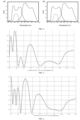
- a relationship between the reflection peak central peak position of the optical reflective layer 3 and EQE (External Quantum Efficiency) of the top cell and the bottom cell of the color tandem photovoltaic device is shown in FIG. 3(a) . As shown in FIG.
- the reflection peak central peak position of the optical reflective layer 3 is located near the absorption edge of the top cell, and the top cell does not absorb light corresponding to the central peak position of the reflection peak; therefore, light corresponding to the central waveband of the reflection peak can transmit through the top cell to present red or brick red to the outside, and at the same time, short-wave parts other than central peak position of the reflection peak can be absorbed and used by the top cell.
- the short-wave part of the central peak position of the reflection peak presenting color is reflected out of the device and cannot be absorbed and used by the color tandem photovoltaic device, and therefore the short-circuit current of the top cell is lower than that in FIG. 3(a) , thereby limiting the entire current of the color tandem photovoltaic device, resulting in that the efficiency of the color tandem photovoltaic device as a whole is lower than that in FIG. 3(a) of the disclosure.
- the thickness of the top cell absorption layer is determined to be 300 to 800 nm, it is possible to realize a color tandem photovoltaic device having a reflection peak in a waveband of 650 ⁇ 800 nm.
- the specific waveband and reflectivity of the reflection peak of the optical reflective layer 3 can be adjusted by adjusting the structure and material of the optical reflective layer 3.
- the optical reflective layer 3 also has a reflection peak in the waveband of 650 ⁇ 800 nm, and in this case, the color tandem photovoltaic device has a reflection peak in the waveband of 650 ⁇ 800 nm.
- the specific waveband and reflectivity of the reflection peak of the optical reflective layer 3 are adjusted by adjusting the structure and material of the optical reflective layer 3.
- adjusting the structure and material of the optical reflective layer 3 refers to a stacked arrangement and the material of each layer.
- the optical reflective layer 3 includes at least one low refractive index layer and at least one high refractive index layer that are stacked.
- n low refractive index layers and m high refractive index layers there may be n low refractive index layers and m high refractive index layers that are stacked, where n and m are integers greater than 1.
- the low refractive index layer and the high refractive index layer are alternatively stacked.
- adjusting the structure and material of the optical reflective layer 3 refers to adjusting any one or two or more of: the thickness of the low refractive index layer, the thickness of the high refractive index layer, the material of the low refractive index layer, the material of the high refractive index layer, the stacking order of the low refractive index layer and the high refractive index layer.
- adjusting the structure and material of the optical reflective layer 3 includes: a combination of simultaneously adjusting the thickness of the low refractive index layer and the material of the low refractive index layer; a combination of simultaneously adjusting the thickness of the low refractive index layer and the thickness of the high refractive index layer; the combination of simultaneously adjusting the thickness of the low refractive index layer and the material of the high refractive index layer; a combination of simultaneously adjusting the thickness of the low refractive index layer and the stacking order of the high refractive index layer and the low refractive index layer; a combination of simultaneously adjusting the material of the low refractive index layer and the material of the high refractive index layer; a combination of simultaneously adjusting the material of the low refractive index layer and the thickness of the high refractive index layer; a combination of simultaneously adjusting the material of the low refractive index layer and the stacking order of the high refractive index layer and the low refractive index layer; a combination of simultaneously adjusting the thickness of the high refractive index layer;
- the thickness of the top cell absorption layer 11 is determined to be a given value, it is possible to achieve a color tandem photovoltaic device having a reflection peak in the 450 ⁇ 650 nm waveband.
- the specific waveband and reflectivity of the reflection peak of the optical reflective layer 3 can be adjusted by adjusting the structure and material of the optical reflective layer 3.
- the specific waveband and reflectivity of the reflection peak of the optical reflective layer 3 can be adjusted by adjusting the structure and material of the optical reflective layer 3.
- the color tandem photovoltaic device has a reflection peak in the waveband of 450 ⁇ 650 nm.
- the light corresponding to the waveband having the strongest reflectivity of the optical reflective layer 3 can transmit through the top cell, then be reflected on the optical reflective layer 3, and transmit out of the color tandem photovoltaic device, so that the color tandem photovoltaic device presents the color of the waveband having the strongest reflectivity.
- Light corresponding to the remaining waveband is absorbed by the top cell or the bottom cell.
- the color tandem photovoltaic device may present a color other than red or brick red, such as orange, orange-yellow, yellow, green, dark green, blue, purple, and the like (including but not limited to these colors).
- the color tandem photovoltaic device may present a color of visible light of short waveband, and the photoelectric conversion efficiency of the color tandem photovoltaic device is lower than above-mentioned tandem photovoltaic device presents red or brick red color.
- the relationship between the central peak position of the reflection peak of the optical reflective layer 3 and EQE of the top cell and the bottom cell of the color tandem photovoltaic device is shown in FIG. 4(a) .
- the top cell cannot completely absorb the energy of incident visible light in a short waveband, and in this case, light corresponding to the central peak position reflected by the optical reflective layer 3 can transmit through the top cell to present color to the outside.
- EQE of the top cell and the photoelectric conversion efficiency of the color tandem photovoltaic device are ensured, so that only light in a waveband corresponding to the reflection peak of the optical reflective layer 3 can pass through the top cell, and light corresponding to the remaining waveband is used by the top cell or the bottom cell, and considering the requirements of current adaptation of the two terminal tandem devices, a higher EQE of the top cell allows the color tandem photovoltaic device to have a higher efficiency.
- the specific waveband and reflectivity of the reflection peak of the optical reflective layer 3 are adjusted by adjusting the structure and material of the optical reflective layer 3.
- adjusting the structure and material of the optical reflective layer 3 refers to adjusting the stacking arrangement and the material of each layer.
- the optical reflective layer 3 includes at least one low refractive index layer and at least one high refractive index layer that are stacked.
- n low refractive index layers and m high refractive index layers there may be n low refractive index layers and m high refractive index layers that are stacked, wherein n and m are integers greater than 1.
- the low refractive index layer and the high refractive index layer are alternatively arranged.
- adjusting the structure and material of the optical reflective layer 3 refers to adjusting any one or two or more of the thickness of the low refractive index layer, the thickness of the high refractive index layer, the material of the low refractive index layer, the material of the high refractive index layer, the stacking order of the low refractive index layer and the high refractive index layer.
- adjusting the structure and material of the optical reflective layer 3 includes: a combination of simultaneously adjusting the thickness of the low refractive index layer and the material of the low refractive index layer; a combination of simultaneously adjusting the thickness of the low refractive index layer and the thickness of the high refractive index layer; a combination of simultaneously adjusting the thickness of the low refractive index layer and the material of the high refractive index layer; a combination of simultaneously adjusting the thickness of the low refractive index layer and the stacking order of the high refractive index layer and the low refractive index layer; a combination of simultaneously adjusting the material of the low refractive index layer and the material of the high refractive index layer; a combination of simultaneously adjusting the material of the low refractive index layer and the thickness of the high refractive index layer; a combination of simultaneously adjusting the material of the low refractive index layer and the stacking order of the high refractive index layer and the low refractive index layer; a combination of simultaneously adjusting the thickness of the high refractive index layer
- the optical reflective layer 3 includes at least one low refractive index layer and at least one 1 high refractive index layer, and the low refractive index layer and the high refractive index layer are stacked.
- the refractive index of the low refractive index layer is below 1.5.
- the high refractive index layer has a refractive index above 2.1. refractive index as used herein refers to the average refractive index of a material in the range of 50 nm at or around the reflection peak wavelength.
- the material of the low refractive index layer may be silicon oxide, silicon oxynitride, alkali metal fluoride (e.g. sodium fluoride, lithium fluoride, etc.), alkaline earth metal fluoride (e.g. magnesium fluoride, calcium fluoride), or organic material (e.g. sprio-OMe TAD, PCBM, etc.).
- alkali metal fluoride e.g. sodium fluoride, lithium fluoride, etc.
- alkaline earth metal fluoride e.g. magnesium fluoride, calcium fluoride
- organic material e.g. sprio-OMe TAD, PCBM, etc.
- the material of the high refractive index layer may be a carbon material (e.g. C60, diamond, etc.), a transition metal oxide (e.g. titanium oxide, molybdenum oxide, tungsten oxide, vanadium oxide, zinc oxide, etc.), a nitride (e.g. aluminum nitride, zirconium oxide, silicon nitride, aluminum oxynitride, etc.), a sulfide (e.g. tungsten sulfide, molybdenum sulfide, lead sulfide, boron carbide, silicon carbide, etc.).
- a carbon material e.g. C60, diamond, etc.
- a transition metal oxide e.g. titanium oxide, molybdenum oxide, tungsten oxide, vanadium oxide, zinc oxide, etc.
- a nitride e.g. aluminum nitride, zirconium oxide, silicon nitride, aluminum oxynit
- the optical reflective layer 3 includes n low refractive index layers and m high refractive index layers that are stacked, where n and m are integers greater than 1.
- the low refractive index layer and the high refractive index layer are alternatively stacked. That is to say, when the optical reflective layer 3 is a multilayer stacked structure, the optical reflective layer 3 has two types of stacking order, the first arrangement being that the low refractive index layer and the high refractive index layer are alternatively stacked in sequence, and the low refractive index layer is stacked with, and the second arrangement being that the high refractive index layer and the low refractive index layer are alternatively stacked in sequence, and the high refractive index layer is stacked with the top cell lower functional layer.
- the color tandem photovoltaic device will present different colors.
- adjusting the structure and material of the optical reflective layer includes adjusting any one or two or more of the thickness of the low refractive index layer, the thickness of the high refractive index layer, the material of the low refractive index layer, the material of the high refractive index layer, and the stacking order of the low refractive index layer and the high refractive index layer.
- the waveband and reflectivity of the reflection peak of the optical reflective layer are adjusted by adjusting the thickness of the low refractive index layer, the thickness of the high refractive index layer, the material of the low refractive index layer, the material of the high refractive index layer and the stacking order of the low refractive index layer and the high refractive index layer of the optical reflective layer 3, namely, by adjusting the thickness of the low refractive index layer, the thickness of the high refractive index layer and the material of the low refractive index layer, the material of the high refractive index layer and the stacking order of the low refractive index layer and the high refractive index layer, the waveband and reflectivity of the reflection peak of the optical reflective layer are calculated, thereby adjusting the color presented by the color tandem photovoltaic device.
- the thickness of the low refractive index layer, the thickness of the high refractive index layer, the material of the low refractive index layer, the material of the high refractive index layer and the stacking order of the low refractive index layer and the high refractive index layer, and the waveband of the reflection peak of the optical reflective layer meet the following formula (Fresnel equation):
- ⁇ i representing the incident angle of the incident light at the i th layer structure of the optical reflective layer 3 can be determined according to the incident angle ⁇ 0
- ⁇ i is calculated by taking ⁇ , n i and ⁇ i into Formula II
- ⁇ i is calculated by taking n i and ⁇ i into Formula III.
- the values of A, B, C, and D in the matrix are then determined by taking the calculated ⁇ i and ⁇ i into Formula I.
- the reflectivity R of the optical reflective layer 3 having an m-layer structure for incident light of wavelength ⁇ can be determined.
- the multilayer structure of the optical reflective layer 3 can be inversely calculated and designed to determine the quantity of the low refractive index layer and the high refractive index layer included in the optical reflective layer 3, the refractive indices of the low refractive index layer and the high refractive index layer.
- the refractive index corresponding to the low refractive index material included in the low refractive index layer and the thickness of the low refractive index layer can be determined according to the refractive index possessed by the low refractive index layer, so that the low refractive index layer constituted by the low refractive index material of the thickness has a corresponding refractive index; also, after determining the refractive index possessed by the high refractive index layer, the corresponding refractive index of the high reflectivity material included in the high refractive index layer and the thickness of the high refractive index layer may be determined according to the refractive index possessed by the high refractive index layer, so that the high refractive index layer constituted by the high refractive index material of the thickness has the corresponding refractive index.
- the number of layers of the optical reflective layer 3, the thickness of each layer, and the refractive index of each layer can be calculated from the above-mentioned Formula I, Formula II and Formula III.
- the reflection peak of the color tandem photovoltaic device can be calculated by the above-mentioned Formula I, Formula II and Formula III to determine the color presented by the color tandem photovoltaic device.
- the reflectivity of the reflection peak of the optical reflective layer 3 can be calculated by Formula IV, and the greater the reflectivity, the greater the brightness of the light presented by the color tandem photovoltaic device, and the smaller the reflectivity, the less the brightness of the light presented by the color tandem photovoltaic device.
- the actual calculations may be performed using corresponding simulation calculations or computer program software.
- a variety of commercial computing software may be employed, such as finite element simulation software, optical simulation software, etc.
- the color implementation method of the color tandem photovoltaic device is as follows: in order to make the whole of the color tandem photovoltaic device present a specific color to the outside, light of a specific waveband needs to be transmitted through a top cell to be output to the outside, and in practical cases, the reflected light of the optical reflective layer 3 is a single or multiple reflection peaks, and the reflection peaks have a certain wavelength width; setting a target peak waveband according to the target color, and if it is desired to obtain an orange tandem photovoltaic device, then the whole tandem photovoltaic device needs to obtain a reflection peak with a wavelength of 600 nm as a central wavelength to the outside; the waveband below 600 nm may have an additional reflection peak, and the relationship between the intensity of the additional reflection peak and the intensity of the target reflection peak is not limited, so that the color tandem photovoltaic device only presents the color of the target reflection peak central peak position to the outside.
- the area of the projection of the optical reflective layer 3 on the surface of the top cell absorption layer 11 is not less than 80% of the surface area of the top cell absorption layer 11. Namely, in a direction perpendicular to the light incident direction, the area of the projection of the optical reflective layer 3 on the surface of the top cell absorption layer is not less than 80% of the surface area of the top cell absorption layer 11. For example, it may be 80%, 85% or 90%, etc. The larger the projected area of the optical reflective layer 3 on the surface of the top cell absorption layer 11, the more light reflected by the optical reflective layer 3, the stronger the light reflection, and the brighter the color presented by the device.
- the optical reflective layer 3 does not function as an electrical connection, and therefore the material of the optical reflective layer 3 is not limited on whether the material can conduct electricity.
- the reflection peak of the optical reflective layer 3 corresponds to red light when being at 770 ⁇ 622 nm
- the reflection peak of the optical reflective layer 3 corresponds to orange light when being at 622 ⁇ 597 nm
- the reflection peak of the optical reflective layer 3 corresponds to yellow light when being at 597 ⁇ 577 nm
- the reflection peak of the optical reflective layer 3 corresponds to green light when being at 577 ⁇ 492 nm
- the reflection peak of the optical reflective layer 3 corresponds to blue light when being at 492 ⁇ 450 nm.
- the reflection waveband of the color tandem photovoltaic device of this embodiment was 450 ⁇ 650 nm
- the color tandem photovoltaic device includes a top cell, an optical reflective layer 3 and a bottom cell, that are stacked in sequence from top to bottom.
- the top cell includes a top cell upper functional layer 13, a top cell absorption layer 11 and a top cell lower functional layer 12, that are stacked in sequence from top to bottom.
- the bottom cell includes a bottom cell upper functional layer 23, a bottom cell absorption layer 21 and a bottom cell lower functional layer 22, that are stacked in sequence from top to bottom.
- a plurality of through holes penetrating the optical reflective layer 3 are disposed in the optical reflective layer 3, a series connection layer 4 is located in the through holes, and the series connection layer 4 connects the bottom cell upper functional layer 23 and the top cell lower functional layer 12 in series.
- the top cell was a perovskite cell with a wide band gap, the band gap width of the top cell was 1.7 ev;
- the top cell absorption layer 11 is a perovskite absorption layer, the material of the perovskite absorption layer is an organic-inorganic hybrid perovskite material, and the thickness of the top cell absorption layer 11 is 250 nm.
- the top cell upper functional layer 13 includes an upper antireflection layer, a transparent conductive layer and a carrier transporting layer that are stacked.
- the upper antireflection layer is formed by a silicon oxynitride layer and a magnesium fluoride layer that are stacked;
- the carrier transporting layer is a hole transporting layer, namely, a molybdenum oxide layer and the thickness thereof is 20 nm;
- the transparent conductive layer is an ITO layer and the thickness thereof is 60 nm.
- the top cell lower functional layer 12 includes a carrier transporting layer that is an electron transporting layer, namely, the carrier transporting layer is formed by a C60 layer and a tin oxide layer that are stacked, the thickness of the C60 layer is 20 nm, and the thickness of the tin oxide layer is 30 nm.
- An upper electrode is disposed on an upper surface of the top cell, and a lower electrode is disposed on a lower surface of the top cell (not shown in FIG. 1 ).
- the bottom cell is a crystalline silicon-amorphous silicon heterojunction solar cell, and both the upper and lower surfaces of the bottom cell have a textured surface, and the bottom cell absorption layer 21 is an n-type silicon wafer.
- the bottom cell upper functional layer 23 may conduct holes, which is formed by an intrinsic amorphous silicon layer and a p-type amorphous silicon layer that are stacked.
- the bottom cell lower functional layer 22 could conduct electrons, which is formed by an intrinsic amorphous silicon layer, an n-type amorphous silicon layer, an ITO layer, and a silicon nitride film that are stacked.
- An upper electrode (not shown in FIG. 1 ) is disposed on the upper surface of the bottom cell, and a lower electrode is disposed on the lower surface of the bottom cell.
- the optical reflective layer 3 includes a first high refractive index layer, a first low refractive index layer, a second high refractive index layer, and a second low refractive index layer that are stacked in sequence from top to bottom.
- the first high refractive index layer is a titanium oxide layer with a thickness of 160 nm
- the first low refractive index layer is a magnesium fluoride layer with a thickness of 32 nm
- the second high refractive index layer is a titanium oxide layer with a thickness of 240 nm
- the second low refractive index layer is a magnesium fluoride layer with a thickness of 32 nm.
- the reflection effect of the optical reflective layer 3 is as shown in FIG. 5 .
- the optical reflective layer 3 As shown in FIG.5 , light of a short wave below 400 nm is absorbed by the top cell, the optical reflective layer 3 has the strongest central reflection peak at 600 nm (the 600 nm waveband corresponds to orange-yellow light), the reflectivity of the central reflection peak is 43%, and the color tandem photovoltaic device presents an orange-yellow color.
- the optical reflective layer 3 in Embodiment 2 includes a first high refractive index layer, a first low refractive index layer, a second high refractive index layer, and a second low refractive index layer that are stacked in sequence from top to bottom.
- the first high refractive index layer is a titanium oxide layer with a thickness of 120 nm
- the first low refractive index layer is a magnesium fluoride layer with a thickness of 70 nm
- the second high refractive index layer is a titanium oxide layer with a thickness of 280 nm
- the second low refractive index layer is a magnesium fluoride layer with a thickness of 60 nm.
- the reflection effect of the optical reflective layer 3 is shown in FIG. 6 .
- short-wave light below 400 nm is absorbed by the top cell; the optical reflective layer 3 has the strongest central reflection peak at 500 nm (a waveband of 500 nm corresponds to green light), and the reflectivity of the central reflection peak is 75%; however, the reflection peak at 700 nm (a waveband of 700 nm corresponds to red light) will have a certain effect on the color of the color tandem photovoltaic device, and the intensity of the reflection peak at 500 nm is twice the intensity of the reflection peak at 700 nm; therefore, the final color of the color tandem photovoltaic device is mainly green, and comprehensively presents dark green.
- the optical reflective layer 3 in embodiment 3 includes a first high refractive index layer, a first low refractive index layer, a second high refractive index layer, a second low refractive index layer, a third high refractive index layer and a third low refractive index layer stacked in sequence from top to bottom, where the first high refractive index layer is a titanium oxide layer with a thickness of 45 nm, the first low refractive index layer is a magnesium fluoride layer with a thickness of 40 nm, the second high refractive index layer is a titanium oxide layer with a thickness of 34 nm, and the second low refractive index layer is a magnesium fluoride layer with a thickness of 279 nm, the third high refractive index layer is a titanium oxide layer with a thickness of 45 nm, and the third low refractive index layer is a magnesium fluoride layer with a thickness of 18 nm.
- the reflection effect of the optical reflective layer 3 is shown in FIG. 7 .
- light of a short wave below 400 nm is absorbed by the top cell, the optical reflective layer 3 has the strongest central reflection peak at 450 nm (a waveband of 450nm corresponds to blue light), the reflectivity of the central reflection peak is 51%, and the color tandem photovoltaic device presents a blue color.
- the reflection waveband of the color tandem photovoltaic device of this embodiment is 650 ⁇ 800 nm
- the color tandem photovoltaic device includes a top cell, an optical reflective layer 3, and a bottom cell, that are stacked in sequence from top to bottom
- the top cell includes a top cell upper functional layer 13, a top cell absorption layer 11 and a top cell lower functional layer 12 that are stacked in sequence from top to bottom
- the bottom cell includes a bottom cell upper functional layer 23, a bottom cell absorption layer 21 and a bottom cell lower functional layer 22 that are stacked in sequence from top to bottom.
- a plurality of through holes penetrating the optical reflective layer 3 are arranged in the optical reflective layer 3, a series connection layer 4 is located in the through holes, and the series connection layer 4 connects the bottom cell upper functional layer 23 and the top cell lower functional layer 12 in series.
- the top cell is a perovskite cell with a wide band gap, the band gap width of the top cell is 1.9 ev, the top cell absorption layer 11 is a perovskite absorption layer, the material of the perovskite absorption layer is CsSnBr 3 , and the thickness of the top cell absorption layer 11 is 300 nm.
- the upper functional layer 13 includes an upper antireflection layer, a transparent conductive layer and a carrier transporting layer that are stacked, where the upper antireflection layer is formed by a silicon nitride layer and a magnesium fluoride layer that are stacked; the carrier transporting layer is a hole transporting layer, namely, a Spiro-OMeTAD layer with a thickness of 20 nm, and the transparent conductive layer is an ITO layer with a thickness 60 nm.
- the top cell lower functional layer 12 includes a carrier transporting layer and a transparent conductive layer, where the carrier transporting layer is an electron transporting layer, namely, a C60-PCBM layer with a thickness of 30 nm, and the transparent conductive layer is an ITO layer with a thickness of 70 nm.
- the carrier transporting layer is an electron transporting layer, namely, a C60-PCBM layer with a thickness of 30 nm
- the transparent conductive layer is an ITO layer with a thickness of 70 nm.
- An upper electrode is disposed on an upper surface of the top cell, and a lower electrode is disposed on a lower surface of the top cell (not shown in FIG. 1 ).
- the upper electrode is in contact with the ITO layer in the top cell upper functional layer 13, and the lower electrode is in contact with the ITO layer in the top cell lower functional layer 12.
- the bottom cell is a heterogeneous crystalline silicon battery, and both the upper and lower surfaces of the bottom cell have a textured surface, and the bottom cell absorption layer 21 is an n-type silicon wafer.
- the bottom cell upper functional layer 23 can conduct holes, i.e. formed by an intrinsic amorphous silicon layer, a p-type amorphous silicon layer, and an ITO layer that are stacked.
- the bottom cell lower functional layer 22 can conduct electrons, i.e. is formed by an intrinsic amorphous silicon layer, an n-type amorphous silicon layer, an ITO layer, and a silicon nitride film that are stacked.
- An upper electrode (not shown in FIG. 1 ) is disposed on the upper surface of the bottom cell, and a lower electrode is disposed on the lower surface of the bottom cell, the upper electrode being in contact with the ITO layer in the bottom cell upper functional layer 23, and the lower electrode being in contact with the ITO layer in the bottom cell lower functional layer 22.
- the optical reflective layer 3 includes a first low refractive index layer, a first high refractive index layer, a second low refractive index layer, a second high refractive index layer, a third low refractive index layer, and a third high refractive index layer that are stacked in sequence from top to bottom, where the first low refractive index layer is a magnesium fluoride layer with a thickness of 90 nm, the first high refractive index layer is a tungsten sulfide layer with a thickness of 17 nm, the second low refractive index layer is a magnesium fluoride layer with a thickness of 90 nm, the second high refractive index layer is a tungsten sulfide layer with a thickness of 65 nm, and the third low refractive index layer is a magnesium fluoride layer with a thickness of 14 nm and the third high refractive index layer is a tungsten sulfide layer with a thickness of 50 nm.
- the reflection effect of the optical reflective layer 3 is shown in FIG. 8 .
- the optical reflective layer 3 As shown in FIG. 8 , light of a short wave below 600 nm is absorbed by the top cell, the optical reflective layer 3 has the strongest central reflection peak at 680 nm (the 680 nm waveband corresponds to light of a dark red), and the reflectivity of the central reflection peak at 680 nm is 75%, and the color tandem photovoltaic device presents a dark red.
- the optical reflective layer 3 in Embodiment 5 includes a first low refractive index layer and a first high refractive index layer that are stacked in sequence from top to bottom, where the first low refractive index layer is a magnesium fluoride layer with a thickness of 80 nm, and the first high refractive index layer is a tungsten sulfide layer with a thickness of 12 nm.
- the reflection effect of the optical reflective layer 3 is shown in FIG. 9 .
- the optical reflective layer 3 As shown in FIG.9 , light of a short wave below 600 nm is absorbed by the top cell, the optical reflective layer 3 has the strongest central reflection peak at 640 nm (the 640 nm waveband corresponds to red light), and the reflectivity of the central reflection peak at 640 nm is 64%, and the color tandem photovoltaic device represents red.
- the optical reflective layer 3 in Embodiment 6 includes a first high refractive index layer and a first low refractive index layer stacked in sequence from top to bottom, where the first low refractive index layer is a magnesium fluoride layer with a thickness of 80 nm, and the first high refractive index layer is a tungsten sulfide layer with a thickness of 12 nm.
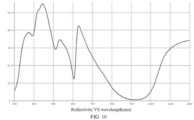
- the reflection effect of the optical reflective layer 3 is shown in FIG. 10 .
- the reflectivity of the central reflection peak at 630 nm is 42.8%. Changing the order of stacking layers of the reflective layer has little effect on the position of the central peak position, but significantly affects the intensity of the reflection peak.
Landscapes
- Physics & Mathematics (AREA)
- Electromagnetism (AREA)
- Engineering & Computer Science (AREA)
- Chemical & Material Sciences (AREA)
- Materials Engineering (AREA)
- Photovoltaic Devices (AREA)
- Life Sciences & Earth Sciences (AREA)
- Sustainable Development (AREA)
- Sustainable Energy (AREA)
Applications Claiming Priority (2)
| Application Number | Priority Date | Filing Date | Title |
|---|---|---|---|
| CN202111029107.5A CN115763607B (zh) | 2021-09-01 | 2021-09-01 | 彩色叠层光伏器件 |
| PCT/CN2022/095202 WO2023029612A1 (zh) | 2021-09-01 | 2022-05-26 | 彩色叠层光伏器件 |
Publications (2)
| Publication Number | Publication Date |
|---|---|
| EP4379818A1 true EP4379818A1 (de) | 2024-06-05 |
| EP4379818A4 EP4379818A4 (de) | 2025-08-13 |
Family
ID=85332354
Family Applications (1)
| Application Number | Title | Priority Date | Filing Date |
|---|---|---|---|
| EP22862754.3A Pending EP4379818A4 (de) | 2021-09-01 | 2022-05-26 | Farblaminierte fotovoltaische vorrichtung |
Country Status (5)
| Country | Link |
|---|---|
| US (1) | US20240355950A1 (de) |
| EP (1) | EP4379818A4 (de) |
| CN (1) | CN115763607B (de) |
| AU (1) | AU2022337499B2 (de) |
| WO (1) | WO2023029612A1 (de) |
Families Citing this family (1)
| Publication number | Priority date | Publication date | Assignee | Title |
|---|---|---|---|---|
| CN119335638A (zh) * | 2024-08-12 | 2025-01-21 | 上海交通大学 | 一种用于热光伏的滤光片及其设计方法 |
Family Cites Families (9)
| Publication number | Priority date | Publication date | Assignee | Title |
|---|---|---|---|---|
| CN101286531A (zh) * | 2007-04-09 | 2008-10-15 | 台达电子工业股份有限公司 | 太阳能电池 |
| US8058549B2 (en) * | 2007-10-19 | 2011-11-15 | Qualcomm Mems Technologies, Inc. | Photovoltaic devices with integrated color interferometric film stacks |
| KR101066394B1 (ko) * | 2009-09-02 | 2011-09-23 | 한국철강 주식회사 | 광기전력 장치 및 광기전력 장치의 제조 방법 |
| KR101203452B1 (ko) * | 2011-02-25 | 2012-11-21 | 한국철강 주식회사 | 탄뎀형 집적 광기전력 모듈 및 이의 제조방법 |
| CN103367549B (zh) * | 2013-07-22 | 2016-08-10 | 山东力诺太阳能电力股份有限公司 | 一种带图案彩色太阳能电池组件制备方法 |
| WO2016138514A1 (en) * | 2015-02-27 | 2016-09-01 | The Regents Of The University Of Michigan | Mechanically stacked tandem photovoltaic cells with intermediate optical filters |
| KR102541379B1 (ko) * | 2017-05-29 | 2023-06-08 | 상라오 징코 솔라 테크놀러지 디벨롭먼트 컴퍼니, 리미티드 | 페로브스카이트 실리콘 탠덤 태양전지 및 제조 방법 |
| CN111653640A (zh) * | 2020-06-10 | 2020-09-11 | 昆山富世通自动化设备有限公司 | 一种彩色光伏组件及其彩色化方法 |
| CN112635595A (zh) * | 2020-12-31 | 2021-04-09 | 福斯特(滁州)新材料有限公司 | 光伏组件 |
-
2021
- 2021-09-01 CN CN202111029107.5A patent/CN115763607B/zh active Active
-
2022
- 2022-05-26 AU AU2022337499A patent/AU2022337499B2/en active Active
- 2022-05-26 EP EP22862754.3A patent/EP4379818A4/de active Pending
- 2022-05-26 WO PCT/CN2022/095202 patent/WO2023029612A1/zh not_active Ceased
- 2022-05-26 US US18/688,055 patent/US20240355950A1/en active Pending
Also Published As
| Publication number | Publication date |
|---|---|
| AU2022337499A1 (en) | 2024-03-28 |
| AU2022337499B2 (en) | 2025-05-22 |
| CN115763607A (zh) | 2023-03-07 |
| US20240355950A1 (en) | 2024-10-24 |
| EP4379818A4 (de) | 2025-08-13 |
| WO2023029612A1 (zh) | 2023-03-09 |
| CN115763607B (zh) | 2024-10-29 |
Similar Documents
| Publication | Publication Date | Title |
|---|---|---|
| US20230052989A1 (en) | Transparent photovoltaic cells | |
| US20090165849A1 (en) | Transparent solar cell module | |
| EP4365962A1 (de) | Laminierte solarzelle und photovoltaikanordnung | |
| US8088990B1 (en) | Color building-integrated photovoltaic (BIPV) panel | |
| KR101858570B1 (ko) | 창호형 박막 태양전지 및 이의 제조방법 | |
| CN101499492B (zh) | 透明型太阳能电池模块 | |
| CN108140735A (zh) | 多接合型光电转换装置和光电转换模块 | |
| JP2004508729A (ja) | 着色された太陽電池ユニット | |
| AU2021404771B2 (en) | Laminated photovoltaic device | |
| CN107507928A (zh) | 一种调控钙钛矿/硅叠层电池中顶、底电池光电流匹配的方法 | |
| CN105895746A (zh) | 具有叠层减反特性的晶体硅异质太阳电池及其制备方法 | |
| US20090277500A1 (en) | Transparent solar cell module | |
| EP4379818A1 (de) | Farblaminierte fotovoltaische vorrichtung | |
| EP2341547A2 (de) | Dünnfilmsolarzelle und Herstellungsverfahren dafür | |
| CN102034888A (zh) | 一种薄膜太阳能电池及其制备方法 | |
| CN219352269U (zh) | 一种彩色太阳能叠层电池、彩色电池组件及光伏系统 | |
| CN212967729U (zh) | 一种叠层电池 | |
| Takeda et al. | Scalable all‐perovskite double‐and triple‐junction solar modules: Modeling for configuration optimization | |
| KR102690610B1 (ko) | 투명도와 색상을 독립적으로 조절할 수 있는 박막태양전지 및 그 제조방법 | |
| CN219679160U (zh) | 光伏电池 | |
| CN115915797A (zh) | 一种彩色太阳能叠层电池、彩色电池组件及光伏系统 | |
| CN119967952A (zh) | 基于不对称仿生电极的彩色半透明光伏系统 | |
| CN120711936A (zh) | 太阳能电池及其制备方法、光伏组件 | |
| Parikh et al. | Transparent back contacts and interconnect junctions for CdTe top cells |
Legal Events
| Date | Code | Title | Description |
|---|---|---|---|
| STAA | Information on the status of an ep patent application or granted ep patent |
Free format text: STATUS: THE INTERNATIONAL PUBLICATION HAS BEEN MADE |
|
| PUAI | Public reference made under article 153(3) epc to a published international application that has entered the european phase |
Free format text: ORIGINAL CODE: 0009012 |
|
| STAA | Information on the status of an ep patent application or granted ep patent |
Free format text: STATUS: REQUEST FOR EXAMINATION WAS MADE |
|
| 17P | Request for examination filed |
Effective date: 20240229 |
|
| AK | Designated contracting states |
Kind code of ref document: A1 Designated state(s): AL AT BE BG CH CY CZ DE DK EE ES FI FR GB GR HR HU IE IS IT LI LT LU LV MC MK MT NL NO PL PT RO RS SE SI SK SM TR |
|
| DAV | Request for validation of the european patent (deleted) | ||
| DAX | Request for extension of the european patent (deleted) | ||
| REG | Reference to a national code |
Ref country code: DE Ref legal event code: R079 Free format text: PREVIOUS MAIN CLASS: H01L0031072500 Ipc: H10K0050000000 |
|
| A4 | Supplementary search report drawn up and despatched |
Effective date: 20250715 |
|
| RIC1 | Information provided on ipc code assigned before grant |
Ipc: H10K 50/00 20230101AFI20250709BHEP Ipc: H10F 10/19 20250101ALI20250709BHEP Ipc: H10F 19/40 20250101ALI20250709BHEP Ipc: H10F 77/42 20250101ALI20250709BHEP Ipc: H10K 30/57 20230101ALI20250709BHEP Ipc: H10K 30/87 20230101ALI20250709BHEP |