EP4375489B1 - Combined power generation system and operation control method thereof - Google Patents
Combined power generation system and operation control method thereof Download PDFInfo
- Publication number
- EP4375489B1 EP4375489B1 EP23198853.6A EP23198853A EP4375489B1 EP 4375489 B1 EP4375489 B1 EP 4375489B1 EP 23198853 A EP23198853 A EP 23198853A EP 4375489 B1 EP4375489 B1 EP 4375489B1
- Authority
- EP
- European Patent Office
- Prior art keywords
- pressure
- compressed air
- flow path
- medium
- low
- Prior art date
- Legal status (The legal status is an assumption and is not a legal conclusion. Google has not performed a legal analysis and makes no representation as to the accuracy of the status listed.)
- Active
Links
Images

Classifications
-
- F—MECHANICAL ENGINEERING; LIGHTING; HEATING; WEAPONS; BLASTING
- F01—MACHINES OR ENGINES IN GENERAL; ENGINE PLANTS IN GENERAL; STEAM ENGINES
- F01K—STEAM ENGINE PLANTS; STEAM ACCUMULATORS; ENGINE PLANTS NOT OTHERWISE PROVIDED FOR; ENGINES USING SPECIAL WORKING FLUIDS OR CYCLES
- F01K23/00—Plants characterised by more than one engine delivering power external to the plant, the engines being driven by different fluids
- F01K23/02—Plants characterised by more than one engine delivering power external to the plant, the engines being driven by different fluids the engine cycles being thermally coupled
- F01K23/06—Plants characterised by more than one engine delivering power external to the plant, the engines being driven by different fluids the engine cycles being thermally coupled combustion heat from one cycle heating the fluid in another cycle
- F01K23/10—Plants characterised by more than one engine delivering power external to the plant, the engines being driven by different fluids the engine cycles being thermally coupled combustion heat from one cycle heating the fluid in another cycle with exhaust fluid of one cycle heating the fluid in another cycle
- F01K23/106—Plants characterised by more than one engine delivering power external to the plant, the engines being driven by different fluids the engine cycles being thermally coupled combustion heat from one cycle heating the fluid in another cycle with exhaust fluid of one cycle heating the fluid in another cycle with water evaporated or preheated at different pressures in exhaust boiler
-
- F—MECHANICAL ENGINEERING; LIGHTING; HEATING; WEAPONS; BLASTING
- F01—MACHINES OR ENGINES IN GENERAL; ENGINE PLANTS IN GENERAL; STEAM ENGINES
- F01K—STEAM ENGINE PLANTS; STEAM ACCUMULATORS; ENGINE PLANTS NOT OTHERWISE PROVIDED FOR; ENGINES USING SPECIAL WORKING FLUIDS OR CYCLES
- F01K23/00—Plants characterised by more than one engine delivering power external to the plant, the engines being driven by different fluids
- F01K23/02—Plants characterised by more than one engine delivering power external to the plant, the engines being driven by different fluids the engine cycles being thermally coupled
- F01K23/06—Plants characterised by more than one engine delivering power external to the plant, the engines being driven by different fluids the engine cycles being thermally coupled combustion heat from one cycle heating the fluid in another cycle
- F01K23/10—Plants characterised by more than one engine delivering power external to the plant, the engines being driven by different fluids the engine cycles being thermally coupled combustion heat from one cycle heating the fluid in another cycle with exhaust fluid of one cycle heating the fluid in another cycle
-
- F—MECHANICAL ENGINEERING; LIGHTING; HEATING; WEAPONS; BLASTING
- F01—MACHINES OR ENGINES IN GENERAL; ENGINE PLANTS IN GENERAL; STEAM ENGINES
- F01D—NON-POSITIVE DISPLACEMENT MACHINES OR ENGINES, e.g. STEAM TURBINES
- F01D17/00—Regulating or controlling by varying flow
- F01D17/10—Final actuators
- F01D17/12—Final actuators arranged in stator parts
- F01D17/14—Final actuators arranged in stator parts varying effective cross-sectional area of nozzles or guide conduits
- F01D17/141—Final actuators arranged in stator parts varying effective cross-sectional area of nozzles or guide conduits by means of shiftable members or valves obturating part of the flow path
- F01D17/145—Final actuators arranged in stator parts varying effective cross-sectional area of nozzles or guide conduits by means of shiftable members or valves obturating part of the flow path by means of valves, e.g. for steam turbines
-
- F—MECHANICAL ENGINEERING; LIGHTING; HEATING; WEAPONS; BLASTING
- F01—MACHINES OR ENGINES IN GENERAL; ENGINE PLANTS IN GENERAL; STEAM ENGINES
- F01D—NON-POSITIVE DISPLACEMENT MACHINES OR ENGINES, e.g. STEAM TURBINES
- F01D21/00—Shutting-down of machines or engines, e.g. in emergency; Regulating, controlling, or safety means not otherwise provided for
- F01D21/003—Arrangements for testing or measuring
-
- F—MECHANICAL ENGINEERING; LIGHTING; HEATING; WEAPONS; BLASTING
- F01—MACHINES OR ENGINES IN GENERAL; ENGINE PLANTS IN GENERAL; STEAM ENGINES
- F01K—STEAM ENGINE PLANTS; STEAM ACCUMULATORS; ENGINE PLANTS NOT OTHERWISE PROVIDED FOR; ENGINES USING SPECIAL WORKING FLUIDS OR CYCLES
- F01K11/00—Plants characterised by the engines being structurally combined with boilers or condensers
- F01K11/02—Plants characterised by the engines being structurally combined with boilers or condensers the engines being turbines
-
- F—MECHANICAL ENGINEERING; LIGHTING; HEATING; WEAPONS; BLASTING
- F01—MACHINES OR ENGINES IN GENERAL; ENGINE PLANTS IN GENERAL; STEAM ENGINES
- F01K—STEAM ENGINE PLANTS; STEAM ACCUMULATORS; ENGINE PLANTS NOT OTHERWISE PROVIDED FOR; ENGINES USING SPECIAL WORKING FLUIDS OR CYCLES
- F01K23/00—Plants characterised by more than one engine delivering power external to the plant, the engines being driven by different fluids
- F01K23/02—Plants characterised by more than one engine delivering power external to the plant, the engines being driven by different fluids the engine cycles being thermally coupled
- F01K23/06—Plants characterised by more than one engine delivering power external to the plant, the engines being driven by different fluids the engine cycles being thermally coupled combustion heat from one cycle heating the fluid in another cycle
-
- F—MECHANICAL ENGINEERING; LIGHTING; HEATING; WEAPONS; BLASTING
- F02—COMBUSTION ENGINES; HOT-GAS OR COMBUSTION-PRODUCT ENGINE PLANTS
- F02C—GAS-TURBINE PLANTS; AIR INTAKES FOR JET-PROPULSION PLANTS; CONTROLLING FUEL SUPPLY IN AIR-BREATHING JET-PROPULSION PLANTS
- F02C6/00—Plural gas-turbine plants; Combinations of gas-turbine plants with other apparatus; Adaptations of gas-turbine plants for special use
- F02C6/18—Plural gas-turbine plants; Combinations of gas-turbine plants with other apparatus; Adaptations of gas-turbine plants for special use using the waste heat of gas-turbine plants outside the plants themselves, e.g. gas-turbine power heat plants
-
- F—MECHANICAL ENGINEERING; LIGHTING; HEATING; WEAPONS; BLASTING
- F02—COMBUSTION ENGINES; HOT-GAS OR COMBUSTION-PRODUCT ENGINE PLANTS
- F02C—GAS-TURBINE PLANTS; AIR INTAKES FOR JET-PROPULSION PLANTS; CONTROLLING FUEL SUPPLY IN AIR-BREATHING JET-PROPULSION PLANTS
- F02C7/00—Features, components parts, details or accessories, not provided for in, or of interest apart form groups F02C1/00 - F02C6/00; Air intakes for jet-propulsion plants
- F02C7/12—Cooling of plants
- F02C7/16—Cooling of plants characterised by cooling medium
- F02C7/18—Cooling of plants characterised by cooling medium the medium being gaseous, e.g. air
-
- F—MECHANICAL ENGINEERING; LIGHTING; HEATING; WEAPONS; BLASTING
- F02—COMBUSTION ENGINES; HOT-GAS OR COMBUSTION-PRODUCT ENGINE PLANTS
- F02C—GAS-TURBINE PLANTS; AIR INTAKES FOR JET-PROPULSION PLANTS; CONTROLLING FUEL SUPPLY IN AIR-BREATHING JET-PROPULSION PLANTS
- F02C9/00—Controlling gas-turbine plants; Controlling fuel supply in air- breathing jet-propulsion plants
- F02C9/16—Control of working fluid flow
- F02C9/18—Control of working fluid flow by bleeding, bypassing or acting on variable working fluid interconnections between turbines or compressors or their stages
-
- F—MECHANICAL ENGINEERING; LIGHTING; HEATING; WEAPONS; BLASTING
- F02—COMBUSTION ENGINES; HOT-GAS OR COMBUSTION-PRODUCT ENGINE PLANTS
- F02C—GAS-TURBINE PLANTS; AIR INTAKES FOR JET-PROPULSION PLANTS; CONTROLLING FUEL SUPPLY IN AIR-BREATHING JET-PROPULSION PLANTS
- F02C9/00—Controlling gas-turbine plants; Controlling fuel supply in air- breathing jet-propulsion plants
- F02C9/26—Control of fuel supply
- F02C9/28—Regulating systems responsive to plant or ambient parameters, e.g. temperature, pressure, rotor speed
-
- F—MECHANICAL ENGINEERING; LIGHTING; HEATING; WEAPONS; BLASTING
- F22—STEAM GENERATION
- F22B—METHODS OF STEAM GENERATION; STEAM BOILERS
- F22B1/00—Methods of steam generation characterised by form of heating method
- F22B1/02—Methods of steam generation characterised by form of heating method by exploitation of the heat content of hot heat carriers
- F22B1/18—Methods of steam generation characterised by form of heating method by exploitation of the heat content of hot heat carriers the heat carrier being a hot gas, e.g. waste gas such as exhaust gas of internal-combustion engines
- F22B1/1807—Methods of steam generation characterised by form of heating method by exploitation of the heat content of hot heat carriers the heat carrier being a hot gas, e.g. waste gas such as exhaust gas of internal-combustion engines using the exhaust gases of combustion engines
- F22B1/1815—Methods of steam generation characterised by form of heating method by exploitation of the heat content of hot heat carriers the heat carrier being a hot gas, e.g. waste gas such as exhaust gas of internal-combustion engines using the exhaust gases of combustion engines using the exhaust gases of gas-turbines
-
- F—MECHANICAL ENGINEERING; LIGHTING; HEATING; WEAPONS; BLASTING
- F22—STEAM GENERATION
- F22B—METHODS OF STEAM GENERATION; STEAM BOILERS
- F22B35/00—Control systems for steam boilers
- F22B35/007—Control systems for waste heat boilers
-
- F—MECHANICAL ENGINEERING; LIGHTING; HEATING; WEAPONS; BLASTING
- F22—STEAM GENERATION
- F22D—PREHEATING, OR ACCUMULATING PREHEATED, FEED-WATER FOR STEAM GENERATION; FEED-WATER SUPPLY FOR STEAM GENERATION; CONTROLLING WATER LEVEL FOR STEAM GENERATION; AUXILIARY DEVICES FOR PROMOTING WATER CIRCULATION WITHIN STEAM BOILERS
- F22D1/00—Feed-water heaters, i.e. economisers or like preheaters
- F22D1/003—Feed-water heater systems
-
- F—MECHANICAL ENGINEERING; LIGHTING; HEATING; WEAPONS; BLASTING
- F22—STEAM GENERATION
- F22G—SUPERHEATING OF STEAM
- F22G3/00—Steam superheaters characterised by constructional features; Details or component parts thereof
- F22G3/001—Steam tube arrangements not dependent of location
-
- F—MECHANICAL ENGINEERING; LIGHTING; HEATING; WEAPONS; BLASTING
- F28—HEAT EXCHANGE IN GENERAL
- F28D—HEAT-EXCHANGE APPARATUS, NOT PROVIDED FOR IN ANOTHER SUBCLASS, IN WHICH THE HEAT-EXCHANGE MEDIA DO NOT COME INTO DIRECT CONTACT
- F28D21/00—Heat-exchange apparatus not covered by any of the groups F28D1/00 - F28D20/00
- F28D21/0001—Recuperative heat exchangers
- F28D21/0003—Recuperative heat exchangers the heat being recuperated from exhaust gases
- F28D21/001—Recuperative heat exchangers the heat being recuperated from exhaust gases for thermal power plants or industrial processes
-
- Y—GENERAL TAGGING OF NEW TECHNOLOGICAL DEVELOPMENTS; GENERAL TAGGING OF CROSS-SECTIONAL TECHNOLOGIES SPANNING OVER SEVERAL SECTIONS OF THE IPC; TECHNICAL SUBJECTS COVERED BY FORMER USPC CROSS-REFERENCE ART COLLECTIONS [XRACs] AND DIGESTS
- Y02—TECHNOLOGIES OR APPLICATIONS FOR MITIGATION OR ADAPTATION AGAINST CLIMATE CHANGE
- Y02E—REDUCTION OF GREENHOUSE GAS [GHG] EMISSIONS, RELATED TO ENERGY GENERATION, TRANSMISSION OR DISTRIBUTION
- Y02E20/00—Combustion technologies with mitigation potential
- Y02E20/16—Combined cycle power plant [CCPP], or combined cycle gas turbine [CCGT]
Definitions
- the present invention relates to a combined power generation system and an operation control method thereof and, more particularly, to a combined power generation system in which a heat recovery steam generator (HRSG) is provided with a heat exchanger for cooling compressed air with exhaust gases from a gas turbine, and an operation control method thereof.
- HRSG heat recovery steam generator
- a combined power generation system is a power generation system that combines a gas turbine and a steam turbine to achieve high efficiency by guiding high-temperature exhaust gas from the gas turbine to a heat recovery steam generator (HRSG) and generating steam using thermal energy retained in the exhaust gas.
- HRSG heat recovery steam generator
- This steam enables power generation by the steam turbine and can be combined with the power generated by the gas turbine to improve higher thermal efficiency leveraging the thermal energy retained in the exhaust gas. This improvement is in contrast to the autonomous power production solely through the gas turbine.
- a gas turbine is a power engine that mixes compressed air compressed by a compressor and fuel, burns an air-fuel mixture, and rotates a turbine with high-temperature combustion gas. Gas turbines are used to drive generators, aircrafts, ships, trains, and the like.
- a combustor and a turbine section of a gas turbine are heated by combustion gases and need to be cooled, and compressed air from a compressor is used to cool the combustor or turbine section.
- the compressed air for cooling is also heated during the compression process and needs to be cooled by a refrigerator before being supplied to a heat source.
- the refrigerator cools the compressed air by performing heat exchange between the feedwater supplied from the HRSG and the compressed air.
- the compressed air for cooling does not undergo sufficient cooling within the refrigerator, there may be a problem that the gas turbine is overheated.
- compressed air for turbine cooling is cooled by a separate external heat exchanger such as a kettle boiler.
- CA2164648 and US2020332681 give examples of combined cycle power generation with cooling of compressed air as known in the art.
- an objective of the present disclosure is to provide a combined power generation system in which a plurality of heat exchangers is provided inside a heat recovery steam generator (HRSG) so that exhaust gases are utilized as a cooling source to shorten startup time and there is no need to provide a separate construction site for a cooling system, and an operation control method thereof.
- HRSG heat recovery steam generator
- a combined power generation system including: a gas turbine including a compressor configured to compress air, a combustor configured to mix the compressed air from the compressor and fuel and combust a mixture of the compressed air and fuel, and a turbine section configued to rotate a turbine with combustion gases generated by the combustor and discharge exhaust gases; a heat recovery steam generator (HRSG) in which steam is generated by heat of the exhaust gases from the gas turbine; and a steam turbine driven by the steam generated by the HRSG, wherein the HRSG includes a plurality of heat exchangers provided to cool the compressed air by performing heat exchange between the compressed air and the exhaust gases.
- a gas turbine including a compressor configured to compress air, a combustor configured to mix the compressed air from the compressor and fuel and combust a mixture of the compressed air and fuel, and a turbine section configued to rotate a turbine with combustion gases generated by the combustor and discharge exhaust gases; a heat recovery steam generator (HRSG) in which steam is generated by heat of the exhaust gases from the
- the plurality of heat exchangers supplies cooled compressed air to the turbine section.
- the plurality of heat exchangers may include: a medium-pressure heat exchanger disposed upstream of a medium-pressure evaporator; and a low-pressure heat exchanger disposed upstream of a low-pressure evaporator to re-cool the compressed air having been cooled by the medium-pressure heat exchanger.
- the combined power generation system may further include: a compressed air flow path that flows the compressed air from the compressor to the plurality of heat exchangers; a cooling air flow path that flows the cooled compressed air from the plurality of heat exchangers to the turbine section; a bypass flow path that flows the compressed air from the compressed air flow path to the cooling air flow path; a main valve installed in the compressed air flow path; and a bypass valve installed in the bypass flow path.
- the combined power generation system may further include a plurality of temperature sensors installed in the cooling air flow path to measure the temperature of the cooled compressed air entering the turbine section.
- the plurality of temperature sensors may include a first temperature sensor installed near an inlet of the turbine section in the cooling air flow path; and a second temperature sensor installed at a point in the cooling air flow path before the cooling air flow path is joined by the bypass flow path.
- the HRSG may sequentially include a high-pressure superheater, a second medium-pressure superheater, a high-pressure evaporator disposed below a high-pressure drum, a high-pressure economizer, a first medium-pressure superheater, a medium-pressure evaporator disposed below a medium-pressure drum, a second low-pressure superheater, a medium-pressure economizer, a first low-pressure superheater, a low-pressure evaporator disposed below a low-pressure drum, and a low-pressure economizer, according to a flow direction of the exhaust gases, wherein the medium-pressure heat exchanger is disposed between the first medium-pressure superheater and the medium-pressure evaporator, and the low-pressure heat exchanger is disposed between the first low-pressure superheater and the low-pressure evaporator according to a flow direction of the exhaust gases.
- the combined power generation system may further include a controller configured to regulate opening degrees of the main valve and the bypass valve, wherein the controller is configured to increase the opening degree of the bypass valve when the measured temperature of the cooled compressed air by the temperature sensor is lower than a target value, and decrease the opening degree of the bypass valve when the measured temperature of the cooled compressed air by the temperature sensor is higher than the target value.
- the combined power generation system may further include a controller configured to regulate opening degrees of the main valve and the bypass valve, wherein the controller is configured to regulate the opening degree of the main valve when the temperature control by the bypass valve fails, and when the temperature control by the bypass valve does not fail, increase the opening degree of the bypass valve when the measured temperature of the cooled compressed air by the temperature sensor is less than the target value, and decrease the opening degree of the bypass valve when the measured temperature of the cooled compressed air by the temperature sensor is greater than the target value.
- a controller configured to regulate opening degrees of the main valve and the bypass valve, wherein the controller is configured to regulate the opening degree of the main valve when the temperature control by the bypass valve fails, and when the temperature control by the bypass valve does not fail, increase the opening degree of the bypass valve when the measured temperature of the cooled compressed air by the temperature sensor is less than the target value, and decrease the opening degree of the bypass valve when the measured temperature of the cooled compressed air by the temperature sensor is greater than the target value.
- the plurality of heat exchangers may include a high-pressure heat exchanger disposed downstream of a high-pressure evaporator, a medium-pressure heat exchanger disposed upstream of a medium-pressure evaporator to re-cool the compressed air that has been cooled by the high-pressure heat exchanger, and a low-pressure heat exchanger disposed upstream of a low-pressure evaporator to re-cool the compressed air having been cooled by the medium-pressure heat exchanger.
- the combined power generation system may further include: a compressed air flow path from the compressor to the plurality of heat exchangers; a cooling air flow path from the plurality of heat exchangers to the turbine section; a bypass flow path from the compressed air flow path to the cooling air flow path; a main valve installed in the compressed air flow path; and a bypass valve installed in the bypass flow path.
- the combined power generation system may further include a plurality of temperature sensors installed in the cooling air flow path to measure the temperature of the cooled compressed air entering the turbine section.
- the plurality of temperature sensors may include a first temperature sensor installed near an inlet of the turbine section in the cooling air flow path; and a second temperature sensor installed at a point in the cooling air flow path before the cooling air flow path joins the bypass flow path.
- the HRSG may sequentially include a high-pressure superheater, a second medium-pressure superheater, a high-pressure evaporator disposed below a high-pressure drum, a high-pressure economizer, a first medium-pressure superheater, a medium-pressure evaporator disposed below a medium-pressure drum, a second low-pressure superheater, a medium-pressure economizer, a first low-pressure superheater, a low-pressure evaporator disposed below a low-pressure drum, and a low-pressure economizer, according to a flow direction of the exhaust gases, wherein the high-pressure heat exchanger is disposed between the high-pressure evaporator and the high-pressure economizer, the medium-pressure heat exchanger is disposed between the first medium-pressure superheater and the medium-pressure evaporator, and the low-pressure heat exchanger is disposed between the first low-pressure superheater and the low-pressure evaporator according to
- an operation control method of a combined power generation system including: a gas turbine including a compressor, a combustor, and a turbine section; a heat recovery steam generator (HRSG); a steam turbine, and a plurality of heat exchangers provided in the HRSG to cool compressed air by heat exchange between the compressed air and exhaust gases, the method including: determining whether the temperature measured by a temperature sensor installed in a cooling air flow path connecting, and flowing the cooled compressed air, from the heat exchangers to the turbine section is within a target range; when the measured temperature is not within the target range and is lower than a target value, increasing an opening degree of a bypass valve installed in a bypass flow path connecting, and flowing the compressed air, from a compressed air flow path to the cooling air flow path; when the measured temperature is not within the target range and is higher than the target value, decreasing the opening degree of the bypass valve; and, when the measured temperature is within the target range, completing the adjustment of the opening degree of the bypass valve.
- a temperature sensor installed in a cooling air flow path connecting
- the compressed air flow path may connect, and flow the compressed air, from the compressor to the plurality of heat exchangers and the cooling air flow path may connect, and flow the cooled compressed air, from the heat exchangers to the turbine section.
- the plurality of heat exchangers may include: a medium-pressure heat exchanger disposed upstream of a medium-pressure evaporator; and a low-pressure heat exchanger disposed upstream of a low-pressure evaporator to re-cool the compressed air having been cooled by the medium-pressure heat exchanger.
- the plurality of heat exchangers may further include a high-pressure heat exchanger disposed downstream of a high-pressure evaporator.
- an operation control method of a combined power generation system including: a gas turbine including a compressor, a combustor, and a turbine section; a heat recovery steam generator (HRSG); a steam turbine, and a plurality of heat exchangers provided in the HRSG to cool compressed air by performing heat exchange between the compressed air and exhaust gases and supply cooled compressed air, the method including: determining whether the temperature measured by a temperature sensor installed in a cooling air flow path connecting, and flowing the cooled compressed air, from the heat exchangers to the turbine section is within a target range; determining whether temperature control by a bypass valve installed in a bypass flow path connecting, and flowing the compressed air, from a compressed air flow path to the cooling air flow path has failed, the compressed air flow path connecting, and flowing the compressed air, from the compressor to the plurality of heat exchangers; when the temperature control by the bypass valve is determined to fail, adjusting an opening degree of a main valve installed in the
- the plurality of heat exchangers may include: a medium-pressure heat exchanger disposed upstream of a medium-pressure evaporator; and a low-pressure heat exchanger disposed upstream of a low-pressure evaporator to re-cool the compressed air having been cooled by the medium-pressure heat exchanger.
- the plurality of heat exchangers may further include a high-pressure heat exchanger disposed downstream of a high-pressure evaporator.
- the plurality of heat exchangers is provided inside the HRSG so that exhaust gases are utilized as a cooling source to shorten startup time and there is no need to provide a separate construction site for a cooling system.
- FIG. 1 is a block diagram illustrating a combined power generation system according to an embodiment of the present disclosure.
- the combined power generation system 100 of the present disclosure includes: a gas turbine 110 including a compressor 111 that compresses air, a combustor 113 that combusts a mixture of the compressed air compressed by the compressor and fuel, and a turbine section 115 that obtains rotational power by the combustion gases generated by the combustor; a heat recovery steam generator (HRSG) 130 in which steam is generated by heat of exhaust gases from the gas turbine; and a steam turbine 120 driven by the steam generated by the HRSG.
- a gas turbine 110 including a compressor 111 that compresses air, a combustor 113 that combusts a mixture of the compressed air compressed by the compressor and fuel, and a turbine section 115 that obtains rotational power by the combustion gases generated by the combustor; a heat recovery steam generator (HRSG) 130 in which steam is generated by heat of exhaust gases from the gas turbine; and a steam turbine 120 driven by the steam generated by the HRSG.
- HRSG heat recovery steam generator
- the compressor 111 sucks and compresses ambient air.
- the compressor 111 is connected to the turbine section 115 by a rotary shaft so that the compressor can rotate with the rotation of the turbine section 115.
- the compressor 111 has a plurality of blades and vanes in multiple stages to compress the incoming air.
- the combustor 113 may combust a mixture of fuel and compressed air compressed by the
- the rotary shaft of the turbine section 115 may be rotated by the combustion gases generated by the combustor 113.
- the turbine section 115 has the plurality of blades and vanes arranged in multiple stages so that the rotary shaft is rotated by the combustion gases.
- the HRSG 130 may also be referred to as a heat recovery boiler.
- the HRSG 130 may recover heat from the high-temperature exhaust gases from the gas turbine. This heat is utilized to heat water, ultimately resulting in generation of steam. The generated steam can be piped to drive the steam turbine 120.
- a central rotary shaft of the steam turbine 120 may be rotated by the steam generated in the HRSG 130.
- the steam turbine 120 may include a high-pressure turbine section 121, a medium-pressure turbine section 123, and a low-pressure turbine section 125, with a rotary shaft connected therebetween.
- the high-pressure turbine section 121, the medium-pressure turbine section 123, and the low-pressure turbine section 125 may be supplied with high-pressure steam, medium-pressure steam, and low-pressure steam, respectively, from the steam generated by the HRSG 130.
- the HRSG 130 may generate steam using exhaust gases from the steam turbine 120.
- the HRSG 130 may have a plurality of superheaters, economizers, reheaters, and evaporators sequentially arranged according to steam pressure to heat exchange with the exhaust gases.
- the HRSG 130 according to the present disclosure may include a plurality of heat exchangers 151, 152 to cool the compressed air by performing a heat exchange process between a portion of the compressed air from the compressor 111 and the exhaust gases from the turbine section 115. In a normal state operation of the gas turbine 110, the temperature of the exhaust gases remains lower than the temperature of the compressed air. This temperature difference allows the exhaust gases to serve as cooling fluid for lowering the temperature of the compressed air. This cooling action may facilitate to maintain the optimal operating temperature of the internal components within the turbine section 115.
- the HRSG 130 sequentially includes a high-pressure superheater 137, a second medium-pressure superheater 138B, a high-pressure evaporator 134 disposed below a high-pressure drum 131, a high-pressure economizer 141, a first medium-pressure superheater 138A, and a medium-pressure evaporator 135 disposed below a medium-pressure drum 132, a second low-pressure superheater 139B, a medium-pressure economizer 142, a first low-pressure superheater 139A, a low-pressure evaporator 136 disposed below a low-pressure drum 133, and a low-pressure economizer 143, according to a flow direction of the exhaust gas.
- the superheaters 137, 138A, 138B, 139A, 139B may heat the saturated steam generated in the drums 131, 132, 133, to generate superheated steam with a higher temperature.
- the superheated steam generated by the high-pressure superheater 137 may be supplied to the high-pressure turbine section 121.
- a high-pressure valve 122 may be installed in a high-pressure superheated steam flow path between the high-pressure superheater 137 and the high-pressure turbine section 121 to regulate a flow rate of superheated steam.
- the superheated steam generated by the first medium-pressure superheater 138A and the second medium-pressure superheater 138B may be supplied to the medium-pressure turbine section 123.
- a medium-pressure valve 124 may be installed in a medium-pressure superheated steam flow path between the first/second medium-pressure superheater 138A, 138B and the medium-pressure turbine section 123 to regulate a flow rate of superheated steam.
- the first medium-pressure superheater 138A may be configured as a reheater.
- the reheater may reheat the steam that has dropped in temperature after working in the high-pressure turbine section 121 to increase the superheat degree.
- the superheated steam generated by the first low-pressure superheater 139A and the second low-pressure superheater 139B may be supplied to the low-pressure turbine section 125.
- a low-pressure valve 126 may be installed in a low-pressure superheated steam flow path between the first/second low-pressure super heater 139A, 139B and the low-pressure turbine section 125 to regulate a flow rate of superheated steam.
- the evaporator evaporates water supplied to the HRSG 130 to generate steam.
- the high-pressure evaporator 134 may be disposed below the high-pressure drum 131, the medium-pressure evaporator 135 may be disposed below the medium-pressure drum 132, and the low-pressure evaporator 136 may be disposed below the low-pressure drum 133.
- the feedwater may flow sequentially through the low-pressure evaporator 136, the medium-pressure evaporator 135, and the high-pressure evaporator 134, in which the feedwater is evaporated by the exhaust gases to generate steam.
- the economizers, 141, 142, 143 also known as a feedwater preheater, use heat from the exhaust gases to raise the feedwater temperature to recover lost heat, increase boiler efficiency, and save fuel.
- the high-pressure economizer 141 may be disposed downstream of the high-pressure evaporator 134 to preheat the feedwater.
- the medium-pressure economizer 142 may be disposed downstream of the medium-pressure evaporator 135 to preheat the feedwater.
- the low-pressure economizer 143 may be disposed downstream of the low-pressure evaporator 136 to preheat the feedwater.
- the exhaust gases may enter the HRSG 130 and pass from the high-pressure superheater 137 to the low-pressure economizer 143 for heat exchange before being discharged to an exhaust stack 145.
- the HRSG 130 may further include a medium-pressure heat exchanger 151 and a low-pressure heat exchanger 152.
- the medium-pressure heat exchanger 151 may be disposed upstream of the medium-pressure evaporator 135 and cools the compressed air by heat exchange between the compressed air and the exhaust gas.
- the low-pressure heat exchanger 152 may be disposed upstream of the low-pressure evaporator 136 to re-cool the compressed air that has been cooled by the medium-pressure heat exchanger 151.
- the medium-pressure heat exchanger 151 may be disposed nearby the upstream side of the medium-pressure evaporator 135 to perform heat exchange between the compressed air and the exhaust gases to cool the compressed air. Specifically, the medium-pressure heat exchanger 151 may be disposed between the first medium-pressure superheater 138A and the medium-pressure evaporator 135.
- the low-pressure heat exchanger 152 may be disposed nearby the upstream side of the low-pressure evaporator 136 to perform heat exchange between the compressed air and the exhaust gases to further cool the compressed air. Specifically, the low-pressure heat exchanger 152 may be disposed between the first low-pressure superheater 139A and the low-pressure evaporator 136.
- the combined power generation system 100 may further include a compressed air flow path 161 connecting, and flowing (i.e., delivering) the compressed air, from the compressor 111 to the plurality of heat exchangers 151, 152, a cooling air flow path 165 connecting, and flowing (i.e., delivering) the cooled compressed air, from the plurality of heat exchangers 151, 152 to the turbine section 115.
- the combined power generation system 100 may further include a bypass flow path 167 connecting, flow (i.e., delivering) the compressed air from the compressed air flow path to the cooling air flow path.
- the compressed air flow path 161 may branch off from a flow path from the compressor 111 to the combustor 113 (the "compressor-combustor path") and connect to the medium-pressure heat exchanger 151, and connect from the medium-pressure heat exchanger 151 to the low-pressure heat exchanger 152.
- an upstream part of the compressed air flow path 161 may be disposed between and connecting the compressor-combustor path and the medium-pressure heat exchanger 151 and a downstream part of the compressed air flow path 161 may be disposed between and connecting the medium-pressure heat changer 151 and the low-pressure heat exchanger 152.
- the cooling air flow path 165 may connect from the low-pressure heat exchanger 152 to a cooling air inlet of the turbine section 115.
- the bypass flow path 167 may connect from an upstream midpoint of the compressed air flow path 161 to a downstream midpoint of the cooling air flow path 165.
- the downstream midpoint of the cooling air flow path 165 where the bypass flow path 167 joins may be referred to as a bypass flow joint point. Accordingly, the portion of the compressed air introduced into the compressed air flow path 161 may flow through the bypass flow path 167 directly into the turbine section 115 without flowing through the plurality of heat exchangers 151 and 152.
- a main valve 170 may be installed in the compressed air flow path 161 to regulate the air flow rate in the compressed air flow path 161.
- a bypass valve 180 may be installed in the bypass flow path 167 to regulate the air flow rate in the bypass flow path 167.
- the combined power generation system 100 of the present disclosure may further include a plurality of temperature sensors including temperature sensors 190, 195 installed in the cooling air flow path 165 to measure the temperature of the cooling air (i.e., "the cooled compressed air" throughout the specification) entering the turbine section 115.
- a plurality of temperature sensors including temperature sensors 190, 195 installed in the cooling air flow path 165 to measure the temperature of the cooling air (i.e., "the cooled compressed air" throughout the specification) entering the turbine section 115.
- the first temperature sensor 190 may be installed near the cooling air inlet of the turbine section 115 in the cooling air flow path 165 between the cooling air inlet of the turbine section 115 and the bypass flow joint point.
- the second temperature sensor 195 may be installed in the cooling air flow path 165 at a point before the bypass flow j oint point (i.e., at a point upstream than the bypass flow joint point based on the flow direction of the cooled compressed air).
- the first temperature sensor 190 may measure the temperature of the cooling air within the cooling air flow path 165 immediately before the cooling air enters the turbine section 115. Thus, the first temperature sensor 190 may measure the temperature of a mixture of two airs: the cooled compressed air that has been cooled by passing through the plurality of heat exchangers 151 and 152 and the compressed air that has flowed through the bypass flow path 167.
- the second temperature sensor 195 may be installed in the middle of the cooling air flow path 165 before the cooling air flow path meets the bypass flow path 167.
- the second temperature sensor 195 may measure the temperature of the cooling air (i.e., the cooled compressed air) that has been cooled through flowing through the plurality of heat exchangers 151 and 152.
- the combined power generation system 100 of the present disclosure may further include a controller 200 that regulates the opening degree of the main valve 170 and the bypass valve 180.
- the controller 200 may be configured to increase the opening degree of the bypass valve 180 when the measured temperature of the cooling air from the temperature sensor 190 is lower than a target value, and to decrease the opening degree of the bypass valve 180 when the measured temperature of the cooling air from the temperature sensor 190 is higher than the target value.
- the controller 200 may receive a temperature measurement signal of the cooling air from the first temperature sensor 190 to control the main valve 170 and the bypass valve 180 depending on the temperature of the cooling air.
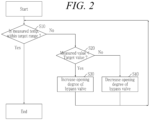
- the controller determines whether the measured temperature of the cooling air is within a target range, i.e., a set temperature range (S10).
- a target range i.e., a set temperature range (S10).
- the controller 200 may keep the opening degree of the main valve 170 and the bypass valve 180 unchanged.
- the controller 200 determines whether the measured temperature is lower than the target range (S20).
- the controller may increase the opening degree of the bypass valve 180 (S30) to allow more of the compressed air to flow through the bypass flow path 167 without passing through the plurality of heat exchangers 151 and 152, thereby further increasing the temperature of the cooling air.
- the controller may decrease the opening degree of the bypass valve 180 (S40) to allow more of the compressed air to pass through the plurality of heat exchangers 151 and 152, thereby further lowering the temperature of the cooling air.
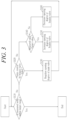
- FIG. 3 is a flowchart illustrating a method of controlling an operation of the combined power generation system according to another embodiment of the present disclosure.
- the controller 200 may be configured to controls the temperature of the cooling air by regulating the opening degree of the main valve 170 when it is determined that the temperature control by the bypass valve 180 fails (i.e., being not operable), and controls the temperature of the cooling air by regulating the opening degree of the bypass value 180 when it is determined that the temperature control by the bypass valve 180 is operable.
- the controller 200 may determine whether the measured temperature of the cooling air from the temperature sensor 190 is within a target range, i.e., a set temperature range (S110). When the measured temperature of the cooling air by the temperature sensor 190 is within the target range, the controller 200 may keep the opening degree of the main valve 170 and the bypass valve 180 unchanged.
- a target range i.e., a set temperature range (S110).
- the controller determines whether the temperature control by the bypass valve 180 has failed (S120).
- the controller 200 may attempt to regulate the temperature of the cooling air by adjusting the opening degree of the main valve 170 only (S130).
- the controller determines whether the measured temperature of the cooling air is lower than the target range (S140).
- the controller may increase the opening degree of the bypass valve 180 (S150) to allow more of the compressed air to flow through the bypass flow path 167 without passing through the plurality of heat exchangers 151 and 152, thereby further increasing the temperature of the cooling air.
- the controller may decrease the opening degree of the bypass valve 180 (S160) to allow more of the compressed air to pass through the plurality of heat exchangers 151 and 152, thereby further lowering the temperature of the cooling air.
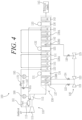
- FIG. 4 is a diagram illustrating a combined power generation system according to another embodiment of the present disclosure.
- the plurality of heat exchangers may further include a high-pressure heat exchanger 153 disposed downstream of the high-pressure evaporator 134.
- the high-pressure heat exchanger 153 may be disposed between the high-pressure evaporator 134 and the high-pressure economizer 141 in the HRSG 130.
- the compressed air flow path 161 may connect from the compressor 110 to the high-pressure heat exchanger 153, connect from the high-pressure heat exchanger 153 to the medium-pressure heat exchanger 151, and then connect from the medium-pressure heat exchanger 151 to the low-pressure heat exchanger 152.
- an upstream portion of the compressed air flow path 161 may be disposed between and connecting the compressor 110 and the high-pressure heat exchanger 153
- a middle portion of the compressed air flow path 161 may be disposed between and connecting the high-pressure heat exchanger 153 and the medium-pressure heat exchanger 151
- a downstream portion of the compressed air flow path 161 may be disposed between and connecting the medium-pressure heat changer 151 and the low-pressure heat exchanger 152.
- the cooling air flow path 165 may connect from the low-pressure heat exchanger 152 to the compressor 110, as in the embodiment described above.
- the bypass flow path 167 may connect from the middle of the compressed air flow path 161 to the middle of the cooling air flow path 165.
- the combined power generation system 130 may be further equipped with an additional heat exchanger to perform heat exchange between the compressed air and the exhaust gases to further cool the compressed air using the exhaust gases.
- the plurality of heat exchangers is provided inside the HRSG so that exhaust gases are additionally utilized as a cooling source to cool the compressed air, thereby shortening startup time. Furthermore, no separate construction site is necessary for the cooling system to cool the compressed air.
Landscapes
- Engineering & Computer Science (AREA)
- Chemical & Material Sciences (AREA)
- Combustion & Propulsion (AREA)
- Mechanical Engineering (AREA)
- General Engineering & Computer Science (AREA)
- Physics & Mathematics (AREA)
- Thermal Sciences (AREA)
- Fluid Mechanics (AREA)
- Life Sciences & Earth Sciences (AREA)
- Sustainable Development (AREA)
- Sustainable Energy (AREA)
- Engine Equipment That Uses Special Cycles (AREA)
Description
- The present invention relates to a combined power generation system and an operation control method thereof and, more particularly, to a combined power generation system in which a heat recovery steam generator (HRSG) is provided with a heat exchanger for cooling compressed air with exhaust gases from a gas turbine, and an operation control method thereof.
- A combined power generation system is a power generation system that combines a gas turbine and a steam turbine to achieve high efficiency by guiding high-temperature exhaust gas from the gas turbine to a heat recovery steam generator (HRSG) and generating steam using thermal energy retained in the exhaust gas. This steam enables power generation by the steam turbine and can be combined with the power generated by the gas turbine to improve higher thermal efficiency leveraging the thermal energy retained in the exhaust gas. This improvement is in contrast to the autonomous power production solely through the gas turbine.
- A gas turbine is a power engine that mixes compressed air compressed by a compressor and fuel, burns an air-fuel mixture, and rotates a turbine with high-temperature combustion gas. Gas turbines are used to drive generators, aircrafts, ships, trains, and the like.
- A combustor and a turbine section of a gas turbine are heated by combustion gases and need to be cooled, and compressed air from a compressor is used to cool the combustor or turbine section. However, the compressed air for cooling is also heated during the compression process and needs to be cooled by a refrigerator before being supplied to a heat source.
- The refrigerator cools the compressed air by performing heat exchange between the feedwater supplied from the HRSG and the compressed air. However, when the compressed air for cooling does not undergo sufficient cooling within the refrigerator, there may be a problem that the gas turbine is overheated.
- Traditionally, compressed air for turbine cooling is cooled by a separate external heat exchanger such as a kettle boiler.
- However, the use of an external heat exchanger requires piping between the HRSG and the heat exchanger, requires an additional construction site, and cannot utilize water during a sub cycle as a cooling source when the turbine section is started.
-
CA2164648 andUS2020332681 give examples of combined cycle power generation with cooling of compressed air as known in the art. - The foregoing is intended merely to aid in the understanding of the background of the present disclosure, and is not intended to mean that the present disclosure falls within the purview of the related art that is already known to those skilled in the art.
- Accordingly, the present disclosure has been made keeping in mind the above problems occurring in the related art, and an objective of the present disclosure is to provide a combined power generation system in which a plurality of heat exchangers is provided inside a heat recovery steam generator (HRSG) so that exhaust gases are utilized as a cooling source to shorten startup time and there is no need to provide a separate construction site for a cooling system, and an operation control method thereof.
- In an aspect of the present invention, which is defined by the features of the independent apparatus claim, there is provided a combined power generation system including: a gas turbine including a compressor configured to compress air, a combustor configured to mix the compressed air from the compressor and fuel and combust a mixture of the compressed air and fuel, and a turbine section configued to rotate a turbine with combustion gases generated by the combustor and discharge exhaust gases; a heat recovery steam generator (HRSG) in which steam is generated by heat of the exhaust gases from the gas turbine; and a steam turbine driven by the steam generated by the HRSG, wherein the HRSG includes a plurality of heat exchangers provided to cool the compressed air by performing heat exchange between the compressed air and the exhaust gases.
- In the combined power generation system, the plurality of heat exchangers supplies cooled compressed air to the turbine section.
- The plurality of heat exchangers may include: a medium-pressure heat exchanger disposed upstream of a medium-pressure evaporator; and a low-pressure heat exchanger disposed upstream of a low-pressure evaporator to re-cool the compressed air having been cooled by the medium-pressure heat exchanger.
- The combined power generation system may further include: a compressed air flow path that flows the compressed air from the compressor to the plurality of heat exchangers; a cooling air flow path that flows the cooled compressed air from the plurality of heat exchangers to the turbine section; a bypass flow path that flows the compressed air from the compressed air flow path to the cooling air flow path; a main valve installed in the compressed air flow path; and a bypass valve installed in the bypass flow path.
- The combined power generation system may further include a plurality of temperature sensors installed in the cooling air flow path to measure the temperature of the cooled compressed air entering the turbine section.
- The plurality of temperature sensors may include a first temperature sensor installed near an inlet of the turbine section in the cooling air flow path; and a second temperature sensor installed at a point in the cooling air flow path before the cooling air flow path is joined by the bypass flow path.
- The HRSG may sequentially include a high-pressure superheater, a second medium-pressure superheater, a high-pressure evaporator disposed below a high-pressure drum, a high-pressure economizer, a first medium-pressure superheater, a medium-pressure evaporator disposed below a medium-pressure drum, a second low-pressure superheater, a medium-pressure economizer, a first low-pressure superheater, a low-pressure evaporator disposed below a low-pressure drum, and a low-pressure economizer, according to a flow direction of the exhaust gases, wherein the medium-pressure heat exchanger is disposed between the first medium-pressure superheater and the medium-pressure evaporator, and the low-pressure heat exchanger is disposed between the first low-pressure superheater and the low-pressure evaporator according to a flow direction of the exhaust gases.
- The combined power generation system may further include a controller configured to regulate opening degrees of the main valve and the bypass valve, wherein the controller is configured to increase the opening degree of the bypass valve when the measured temperature of the cooled compressed air by the temperature sensor is lower than a target value, and decrease the opening degree of the bypass valve when the measured temperature of the cooled compressed air by the temperature sensor is higher than the target value.
- The combined power generation system may further include a controller configured to regulate opening degrees of the main valve and the bypass valve, wherein the controller is configured to regulate the opening degree of the main valve when the temperature control by the bypass valve fails, and when the temperature control by the bypass valve does not fail, increase the opening degree of the bypass valve when the measured temperature of the cooled compressed air by the temperature sensor is less than the target value, and decrease the opening degree of the bypass valve when the measured temperature of the cooled compressed air by the temperature sensor is greater than the target value.
- In a combined power generation system according to another embodiment of the present disclosure, the plurality of heat exchangers may include a high-pressure heat exchanger disposed downstream of a high-pressure evaporator, a medium-pressure heat exchanger disposed upstream of a medium-pressure evaporator to re-cool the compressed air that has been cooled by the high-pressure heat exchanger, and a low-pressure heat exchanger disposed upstream of a low-pressure evaporator to re-cool the compressed air having been cooled by the medium-pressure heat exchanger.
- The combined power generation system may further include: a compressed air flow path from the compressor to the plurality of heat exchangers; a cooling air flow path from the plurality of heat exchangers to the turbine section; a bypass flow path from the compressed air flow path to the cooling air flow path; a main valve installed in the compressed air flow path; and a bypass valve installed in the bypass flow path.
- The combined power generation system may further include a plurality of temperature sensors installed in the cooling air flow path to measure the temperature of the cooled compressed air entering the turbine section.
- The plurality of temperature sensors may include a first temperature sensor installed near an inlet of the turbine section in the cooling air flow path; and a second temperature sensor installed at a point in the cooling air flow path before the cooling air flow path joins the bypass flow path.
- The HRSG may sequentially include a high-pressure superheater, a second medium-pressure superheater, a high-pressure evaporator disposed below a high-pressure drum, a high-pressure economizer, a first medium-pressure superheater, a medium-pressure evaporator disposed below a medium-pressure drum, a second low-pressure superheater, a medium-pressure economizer, a first low-pressure superheater, a low-pressure evaporator disposed below a low-pressure drum, and a low-pressure economizer, according to a flow direction of the exhaust gases, wherein the high-pressure heat exchanger is disposed between the high-pressure evaporator and the high-pressure economizer, the medium-pressure heat exchanger is disposed between the first medium-pressure superheater and the medium-pressure evaporator, and the low-pressure heat exchanger is disposed between the first low-pressure superheater and the low-pressure evaporator according to a flow direction of the exhaust gases.
- In another aspect of the present disclosure, there is provided an operation control method of a combined power generation system including: a gas turbine including a compressor, a combustor, and a turbine section; a heat recovery steam generator (HRSG); a steam turbine, and a plurality of heat exchangers provided in the HRSG to cool compressed air by heat exchange between the compressed air and exhaust gases, the method including: determining whether the temperature measured by a temperature sensor installed in a cooling air flow path connecting, and flowing the cooled compressed air, from the heat exchangers to the turbine section is within a target range; when the measured temperature is not within the target range and is lower than a target value, increasing an opening degree of a bypass valve installed in a bypass flow path connecting, and flowing the compressed air, from a compressed air flow path to the cooling air flow path; when the measured temperature is not within the target range and is higher than the target value, decreasing the opening degree of the bypass valve; and, when the measured temperature is within the target range, completing the adjustment of the opening degree of the bypass valve.
- The compressed air flow path may connect, and flow the compressed air, from the compressor to the plurality of heat exchangers and the cooling air flow path may connect, and flow the cooled compressed air, from the heat exchangers to the turbine section.
- The plurality of heat exchangers may include: a medium-pressure heat exchanger disposed upstream of a medium-pressure evaporator; and a low-pressure heat exchanger disposed upstream of a low-pressure evaporator to re-cool the compressed air having been cooled by the medium-pressure heat exchanger.
- The plurality of heat exchangers may further include a high-pressure heat exchanger disposed downstream of a high-pressure evaporator.
- In a further aspect of the present invention, which is defined by the features of the independent method claim, there is provided an operation control method of a combined power generation system including: a gas turbine including a compressor, a combustor, and a turbine section; a heat recovery steam generator (HRSG); a steam turbine, and a plurality of heat exchangers provided in the HRSG to cool compressed air by performing heat exchange between the compressed air and exhaust gases and supply cooled compressed air, the method including: determining whether the temperature measured by a temperature sensor installed in a cooling air flow path connecting, and flowing the cooled compressed air, from the heat exchangers to the turbine section is within a target range; determining whether temperature control by a bypass valve installed in a bypass flow path connecting, and flowing the compressed air, from a compressed air flow path to the cooling air flow path has failed, the compressed air flow path connecting, and flowing the compressed air, from the compressor to the plurality of heat exchangers; when the temperature control by the bypass valve is determined to fail, adjusting an opening degree of a main valve installed in the compressed air flow path; when the temperature control by the bypass valve is determined to not fail, determining whether the measured temperature is lower than a target value; when the measured temperature is lower than the target value, increasing an opening degree of the bypass valve installed in the bypass flow path; when the measured temperature is higher than the target value, decreasing the opening degree of the bypass valve; and, when the measured temperature is within the target range, completing the adjustment of the opening degree of the bypass valve.
- The plurality of heat exchangers may include: a medium-pressure heat exchanger disposed upstream of a medium-pressure evaporator; and a low-pressure heat exchanger disposed upstream of a low-pressure evaporator to re-cool the compressed air having been cooled by the medium-pressure heat exchanger.
- The plurality of heat exchangers may further include a high-pressure heat exchanger disposed downstream of a high-pressure evaporator.
- According to the combined power generation system and the operation control method thereof, the plurality of heat exchangers is provided inside the HRSG so that exhaust gases are utilized as a cooling source to shorten startup time and there is no need to provide a separate construction site for a cooling system.
-
-
FIG. 1 is a diagram illustrating a combined power generation system according to an embodiment of the present disclosure; -
FIG. 2 is a flowchart illustrating an operation control method of the combined power generation system according to an embodiment of the present disclosure; -
FIG. 3 is a flowchart illustrating an operation control method of the combined power generation system according to another embodiment of the present disclosure; and -
FIG. 4 is a diagram illustrating a combined power generation system according to another embodiment of the present disclosure. - Hereinafter, exemplary embodiments of the present invention will be described in detail with reference to the accompanying drawings.
- Terms used herein are used to merely describe specific embodiments, and are not intended to limit the present disclosure. As used herein, an element expressed as a singular form includes a plurality of elements, unless the context clearly indicates otherwise. Further, it will be understood that the term "comprising" or "including" specifies the presence of stated features, numbers, steps, operations, elements, parts, or combinations thereof, but does not preclude the presence or addition of one or more other features, numbers, steps, operations, elements, parts, or combinations thereof.
- Hereinafter, preferred embodiments of the invention will be described in detail with reference to the accompanying drawings. It is noted that like elements are denoted in the drawings by like reference symbols whenever possible. Further, the detailed description of known functions and configurations that may obscure the gist of the present disclosure will be omitted. For the same reason, some of the elements in the drawings are exaggerated, omitted, or schematically illustrated.
-
FIG. 1 is a block diagram illustrating a combined power generation system according to an embodiment of the present disclosure. - The combined
power generation system 100 of the present disclosure includes: agas turbine 110 including acompressor 111 that compresses air, acombustor 113 that combusts a mixture of the compressed air compressed by the compressor and fuel, and aturbine section 115 that obtains rotational power by the combustion gases generated by the combustor; a heat recovery steam generator (HRSG) 130 in which steam is generated by heat of exhaust gases from the gas turbine; and asteam turbine 120 driven by the steam generated by the HRSG. - The
compressor 111 sucks and compresses ambient air. Thecompressor 111 is connected to theturbine section 115 by a rotary shaft so that the compressor can rotate with the rotation of theturbine section 115. Thecompressor 111 has a plurality of blades and vanes in multiple stages to compress the incoming air. - The
combustor 113 may combust a mixture of fuel and compressed air compressed by the - The rotary shaft of the
turbine section 115 may be rotated by the combustion gases generated by thecombustor 113. Theturbine section 115 has the plurality of blades and vanes arranged in multiple stages so that the rotary shaft is rotated by the combustion gases. - The HRSG 130 may also be referred to as a heat recovery boiler. The
HRSG 130 may recover heat from the high-temperature exhaust gases from the gas turbine. This heat is utilized to heat water, ultimately resulting in generation of steam. The generated steam can be piped to drive thesteam turbine 120. - A central rotary shaft of the
steam turbine 120 may be rotated by the steam generated in theHRSG 130. Thesteam turbine 120 may include a high-pressure turbine section 121, a medium-pressure turbine section 123, and a low-pressure turbine section 125, with a rotary shaft connected therebetween. The high-pressure turbine section 121, the medium-pressure turbine section 123, and the low-pressure turbine section 125 may be supplied with high-pressure steam, medium-pressure steam, and low-pressure steam, respectively, from the steam generated by theHRSG 130. - The
HRSG 130 may generate steam using exhaust gases from thesteam turbine 120. TheHRSG 130 may have a plurality of superheaters, economizers, reheaters, and evaporators sequentially arranged according to steam pressure to heat exchange with the exhaust gases. TheHRSG 130 according to the present disclosure may include a plurality ofheat exchangers compressor 111 and the exhaust gases from theturbine section 115. In a normal state operation of thegas turbine 110, the temperature of the exhaust gases remains lower than the temperature of the compressed air. This temperature difference allows the exhaust gases to serve as cooling fluid for lowering the temperature of the compressed air. This cooling action may facilitate to maintain the optimal operating temperature of the internal components within theturbine section 115. - The
HRSG 130 sequentially includes a high-pressure superheater 137, a second medium-pressure superheater 138B, a high-pressure evaporator 134 disposed below a high-pressure drum 131, a high-pressure economizer 141, a first medium-pressure superheater 138A, and a medium-pressure evaporator 135 disposed below a medium-pressure drum 132, a second low-pressure superheater 139B, a medium-pressure economizer 142, a first low-pressure superheater 139A, a low-pressure evaporator 136 disposed below a low-pressure drum 133, and a low-pressure economizer 143, according to a flow direction of the exhaust gas. - The
superheaters drums pressure superheater 137 may be supplied to the high-pressure turbine section 121. A high-pressure valve 122 may be installed in a high-pressure superheated steam flow path between the high-pressure superheater 137 and the high-pressure turbine section 121 to regulate a flow rate of superheated steam. - The superheated steam generated by the first medium-
pressure superheater 138A and the second medium-pressure superheater 138B may be supplied to the medium-pressure turbine section 123. A medium-pressure valve 124 may be installed in a medium-pressure superheated steam flow path between the first/second medium-pressure superheater pressure turbine section 123 to regulate a flow rate of superheated steam. - According to an embodiment, the first medium-
pressure superheater 138A may be configured as a reheater. The reheater may reheat the steam that has dropped in temperature after working in the high-pressure turbine section 121 to increase the superheat degree. - The superheated steam generated by the first low-
pressure superheater 139A and the second low-pressure superheater 139B may be supplied to the low-pressure turbine section 125. A low-pressure valve 126 may be installed in a low-pressure superheated steam flow path between the first/second low-pressuresuper heater pressure turbine section 125 to regulate a flow rate of superheated steam. - The evaporator evaporates water supplied to the
HRSG 130 to generate steam. The high-pressure evaporator 134 may be disposed below the high-pressure drum 131, the medium-pressure evaporator 135 may be disposed below the medium-pressure drum 132, and the low-pressure evaporator 136 may be disposed below the low-pressure drum 133. The feedwater may flow sequentially through the low-pressure evaporator 136, the medium-pressure evaporator 135, and the high-pressure evaporator 134, in which the feedwater is evaporated by the exhaust gases to generate steam. - The economizers, 141, 142, 143, also known as a feedwater preheater, use heat from the exhaust gases to raise the feedwater temperature to recover lost heat, increase boiler efficiency, and save fuel.
- When upstream/downstream directions are defined based on the flow direction of the exhaust gas, the high-
pressure economizer 141 may be disposed downstream of the high-pressure evaporator 134 to preheat the feedwater. The medium-pressure economizer 142 may be disposed downstream of the medium-pressure evaporator 135 to preheat the feedwater. The low-pressure economizer 143 may be disposed downstream of the low-pressure evaporator 136 to preheat the feedwater. - The exhaust gases may enter the
HRSG 130 and pass from the high-pressure superheater 137 to the low-pressure economizer 143 for heat exchange before being discharged to anexhaust stack 145. - The
HRSG 130 may further include a medium-pressure heat exchanger 151 and a low-pressure heat exchanger 152. The medium-pressure heat exchanger 151 may be disposed upstream of the medium-pressure evaporator 135 and cools the compressed air by heat exchange between the compressed air and the exhaust gas. The low-pressure heat exchanger 152 may be disposed upstream of the low-pressure evaporator 136 to re-cool the compressed air that has been cooled by the medium-pressure heat exchanger 151. - The medium-
pressure heat exchanger 151 may be disposed nearby the upstream side of the medium-pressure evaporator 135 to perform heat exchange between the compressed air and the exhaust gases to cool the compressed air. Specifically, the medium-pressure heat exchanger 151 may be disposed between the first medium-pressure superheater 138A and the medium-pressure evaporator 135. - The low-
pressure heat exchanger 152 may be disposed nearby the upstream side of the low-pressure evaporator 136 to perform heat exchange between the compressed air and the exhaust gases to further cool the compressed air. Specifically, the low-pressure heat exchanger 152 may be disposed between the first low-pressure superheater 139A and the low-pressure evaporator 136. - The combined
power generation system 100 may further include a compressedair flow path 161 connecting, and flowing (i.e., delivering) the compressed air, from thecompressor 111 to the plurality ofheat exchangers air flow path 165 connecting, and flowing (i.e., delivering) the cooled compressed air, from the plurality ofheat exchangers turbine section 115. The combinedpower generation system 100 may further include abypass flow path 167 connecting, flow (i.e., delivering) the compressed air from the compressed air flow path to the cooling air flow path. - According to an embodiment, the compressed
air flow path 161 may branch off from a flow path from thecompressor 111 to the combustor 113 (the "compressor-combustor path") and connect to the medium-pressure heat exchanger 151, and connect from the medium-pressure heat exchanger 151 to the low-pressure heat exchanger 152. In other words, an upstream part of the compressedair flow path 161 may be disposed between and connecting the compressor-combustor path and the medium-pressure heat exchanger 151 and a downstream part of the compressedair flow path 161 may be disposed between and connecting the medium-pressure heat changer 151 and the low-pressure heat exchanger 152. - The cooling
air flow path 165 may connect from the low-pressure heat exchanger 152 to a cooling air inlet of theturbine section 115. - According to an embodiment, the
bypass flow path 167 may connect from an upstream midpoint of the compressedair flow path 161 to a downstream midpoint of the coolingair flow path 165. The downstream midpoint of the coolingair flow path 165 where thebypass flow path 167 joins may be referred to as a bypass flow joint point. Accordingly, the portion of the compressed air introduced into the compressedair flow path 161 may flow through thebypass flow path 167 directly into theturbine section 115 without flowing through the plurality ofheat exchangers - According to an embodiment a
main valve 170 may be installed in the compressedair flow path 161 to regulate the air flow rate in the compressedair flow path 161. In addition, abypass valve 180 may be installed in thebypass flow path 167 to regulate the air flow rate in thebypass flow path 167. - The combined
power generation system 100 of the present disclosure may further include a plurality of temperature sensors includingtemperature sensors air flow path 165 to measure the temperature of the cooling air (i.e., "the cooled compressed air" throughout the specification) entering theturbine section 115. - The
first temperature sensor 190 may be installed near the cooling air inlet of theturbine section 115 in the coolingair flow path 165 between the cooling air inlet of theturbine section 115 and the bypass flow joint point. Thesecond temperature sensor 195 may be installed in the coolingair flow path 165 at a point before the bypass flow j oint point (i.e., at a point upstream than the bypass flow joint point based on the flow direction of the cooled compressed air). - The
first temperature sensor 190 may measure the temperature of the cooling air within the coolingair flow path 165 immediately before the cooling air enters theturbine section 115. Thus, thefirst temperature sensor 190 may measure the temperature of a mixture of two airs: the cooled compressed air that has been cooled by passing through the plurality ofheat exchangers bypass flow path 167. - The
second temperature sensor 195 may be installed in the middle of the coolingair flow path 165 before the cooling air flow path meets thebypass flow path 167. Thesecond temperature sensor 195 may measure the temperature of the cooling air (i.e., the cooled compressed air) that has been cooled through flowing through the plurality ofheat exchangers - The combined
power generation system 100 of the present disclosure may further include acontroller 200 that regulates the opening degree of themain valve 170 and thebypass valve 180. - As illustrated in
FIG. 2 , thecontroller 200 may be configured to increase the opening degree of thebypass valve 180 when the measured temperature of the cooling air from thetemperature sensor 190 is lower than a target value, and to decrease the opening degree of thebypass valve 180 when the measured temperature of the cooling air from thetemperature sensor 190 is higher than the target value. - The
controller 200 may receive a temperature measurement signal of the cooling air from thefirst temperature sensor 190 to control themain valve 170 and thebypass valve 180 depending on the temperature of the cooling air. - First, the controller determines whether the measured temperature of the cooling air is within a target range, i.e., a set temperature range (S10). When the measured temperature of the cooling air is within the target range, the
controller 200 may keep the opening degree of themain valve 170 and thebypass valve 180 unchanged. - When the measured temperature of the cooling air is out of the target range, the
controller 200 determines whether the measured temperature is lower than the target range (S20). - When the measured temperature is lower than the target value, the controller may increase the opening degree of the bypass valve 180 (S30) to allow more of the compressed air to flow through the
bypass flow path 167 without passing through the plurality ofheat exchangers - Conversely, when the measured temperature is higher than the target value, the controller may decrease the opening degree of the bypass valve 180 (S40) to allow more of the compressed air to pass through the plurality of
heat exchangers -
FIG. 3 is a flowchart illustrating a method of controlling an operation of the combined power generation system according to another embodiment of the present disclosure. - The
controller 200 may be configured to controls the temperature of the cooling air by regulating the opening degree of themain valve 170 when it is determined that the temperature control by thebypass valve 180 fails (i.e., being not operable), and controls the temperature of the cooling air by regulating the opening degree of thebypass value 180 when it is determined that the temperature control by thebypass valve 180 is operable. - Specifically, first, the
controller 200 may determine whether the measured temperature of the cooling air from thetemperature sensor 190 is within a target range, i.e., a set temperature range (S110). When the measured temperature of the cooling air by thetemperature sensor 190 is within the target range, thecontroller 200 may keep the opening degree of themain valve 170 and thebypass valve 180 unchanged. - When the measured temperature of the cooling air measured by the
temperature sensor 190 is out of the target range, the controller determines whether the temperature control by thebypass valve 180 has failed (S120). When the temperature of the cooling air cannot be regulated by thebypass valve 180 due to a failure of thebypass valve 180 or the like, thecontroller 200 may attempt to regulate the temperature of the cooling air by adjusting the opening degree of themain valve 170 only (S130). - Next, when the temperature control by the
bypass valve 180 has not failed, i.e., when the temperature control by thebypass valve 180 is possible, the controller determines whether the measured temperature of the cooling air is lower than the target range (S140). - When the measured temperature is lower than the target value, the controller may increase the opening degree of the bypass valve 180 (S150) to allow more of the compressed air to flow through the
bypass flow path 167 without passing through the plurality ofheat exchangers - Conversely, when the measured temperature is higher than the target value, the controller may decrease the opening degree of the bypass valve 180 (S160) to allow more of the compressed air to pass through the plurality of
heat exchangers -
FIG. 4 is a diagram illustrating a combined power generation system according to another embodiment of the present disclosure. - In this combined
power generation system 100, the plurality of heat exchangers may further include a high-pressure heat exchanger 153 disposed downstream of the high-pressure evaporator 134. - The high-
pressure heat exchanger 153 may be disposed between the high-pressure evaporator 134 and the high-pressure economizer 141 in theHRSG 130. - The compressed
air flow path 161 may connect from thecompressor 110 to the high-pressure heat exchanger 153, connect from the high-pressure heat exchanger 153 to the medium-pressure heat exchanger 151, and then connect from the medium-pressure heat exchanger 151 to the low-pressure heat exchanger 152. In other words, an upstream portion of the compressedair flow path 161 may be disposed between and connecting thecompressor 110 and the high-pressure heat exchanger 153, a middle portion of the compressedair flow path 161 may be disposed between and connecting the high-pressure heat exchanger 153 and the medium-pressure heat exchanger 151, and a downstream portion of the compressedair flow path 161 may be disposed between and connecting the medium-pressure heat changer 151 and the low-pressure heat exchanger 152. - The cooling
air flow path 165 may connect from the low-pressure heat exchanger 152 to thecompressor 110, as in the embodiment described above. In addition, thebypass flow path 167 may connect from the middle of the compressedair flow path 161 to the middle of the coolingair flow path 165. - According to this embodiment, the combined
power generation system 130 may be further equipped with an additional heat exchanger to perform heat exchange between the compressed air and the exhaust gases to further cool the compressed air using the exhaust gases. - Since the operation control method of the combined
power generation system 100 of the present embodiment is as described in the above embodiment, a redundant description will be omitted. - According to the combined power generation system and the operation control method thereof, the plurality of heat exchangers is provided inside the HRSG so that exhaust gases are additionally utilized as a cooling source to cool the compressed air, thereby shortening startup time. Furthermore, no separate construction site is necessary for the cooling system to cool the compressed air.
- While the embodiments of the invention have been described, it will be apparent to those skilled in the art that various modifications and variations can be within the scope of the present invention. Also, it is noted that any one feature of an embodiment of the present disclosure described in the specification may be applied to another embodiment of the present disclosure.
Claims (15)
- A combined power generation system (100) comprising:a gas turbine (110) including a compressor (111) configured to compress air, a combustor (113) configured to combust a mixture of the compressed air and fuel and generate combustion gases, and a turbine section (115) configured to rotate a turbine with the combustion gases and discharge exhaust gases;a heat recovery steam generator HRSG (130) in which steam is generated by heat of the exhaust gases from the gas turbine (110); anda steam turbine (120) driven by the steam generated by the HRSG (130),characterized in thatthe HRSG (130) includes a plurality of heat exchangers provided to cool the compressed air by performing heat exchange between the compressed air and the exhaust gases.
- The combined power generation system of claim 1, wherein the plurality of heat exchangers comprises:a medium-pressure heat exchanger (151) disposed upstream of a medium-pressure evaporator (135); anda low-pressure heat exchanger (152) disposed upstream of a low-pressure evaporator (136) to re-cool the compressed air that has been cooled by the medium-pressure heat exchanger (135).
- The combined power generation system of claim 2, further comprising:a compressed air flow path (161) that flows the compressed air from the compressor (111) to the plurality of heat exchangers;a cooling air flow path (165) that flows the cooled compressed air from the plurality of heat exchangers to the turbine section (115);a bypass flow path (167) that flows the compressed air from the compressed air flow path to the cooling air flow path (165);a main valve (170) installed in the compressed air flow path (161); anda bypass valve (180) installed in the bypass flow path (167).
- The combined power generation system of claim 3, further comprising: a plurality of temperature sensors installed in the cooling air flow path (165) to measure the temperature of the cooled compressed air entering the turbine section.
- The combined power generation system of claim 4, wherein the plurality of temperature sensors comprises:a first temperature sensor (190) installed near an inlet of the turbine section in the cooling air flow path (165); anda second temperature sensor (195) installed at a point in the cooling air flow path (165) before the cooling air flow path is joined by the bypass flow path (167).
- The combined power generation system of claim 2, wherein the HRSG (130) sequentially comprises:a high-pressure superheater (137);a second medium-pressure superheater (138B);a high-pressure evaporator (134) disposed below a high-pressure drum (131);a high-pressure economizer (141);a first medium-pressure superheater (138A);a medium-pressure evaporator (135) disposed below a medium-pressure drum (132);a second low-pressure superheater (139B);a medium-pressure economizer(142);a first low-pressure superheater (139A);a low-pressure evaporator (136) disposed below a low-pressure drum (133); anda low-pressure economizer (143),according to a flow direction of the exhaust gases,wherein the medium-pressure heat exchanger (151) is disposed between the first medium-pressure superheater (138A) and the medium-pressure evaporator (135), and the low-pressure heat exchanger (152) is disposed between the first low-pressure superheater (139A) and the low-pressure evaporator (136) according to the flow direction of the exhaust gases.
- The combined power generation system of claim 4, further comprising:a controller (200) configured to regulate an opening degree of the main valve (170) and the bypass valve (180),wherein the controller (200) is configured to increase the opening degree of the bypass valve (180) when the measured temperature of the cooled compressed air by the temperature sensor is lower than a target value, and decrease the opening degree of the bypass valve (180) when the measured temperature of the cooled compressed air by the temperature sensor is higher than the target value.
- The combined power generation system of claim 4, further comprising:a controller (200) configured to regulate opening degrees of the main valve (170) and the bypass valve (180),wherein the controller (200) is configured to regulate the opening degree of the main valve (170) when the temperature control by the bypass valve (180) is determined to have failed, and when the temperature control by the bypass valve (180) is determined to not have failed, increase the opening degree of the bypass valve (180) when the measured temperature of the cooled compressed air by the temperature sensor is lower than the target value, and decrease the opening degree of the bypass valve (180) when the measured temperature of the cooled compressed air by the temperature sensor is higher than the target value.
- The combined power generation system of claim 1, wherein the plurality of heat exchangers comprises:a high-pressure heat exchanger (153) disposed downstream of a high-pressure evaporator (134),a medium-pressure heat exchanger (151) disposed upstream of a medium-pressure evaporator (135) to re-cool the compressed air that has been cooled by the high-pressure heat exchanger (134), anda low-pressure heat exchanger (152) disposed upstream of a low-pressure evaporator (136) to re-cool the compressed air that has been cooled by the medium-pressure heat exchanger (151).
- The combined power generation system of claim 9, further comprising:a compressed air flow path (161) from the compressor (111) to the plurality of heat exchangers;a cooling air flow path (165) from the plurality of heat exchangers to the turbine section (115);a bypass flow path (167) from the compressed air flow path (161) to the cooling air flow path (165);a main valve (170) installed in the compressed air flow path (161); anda bypass valve (180) installed in the bypass flow path (167).
- The combined power generation system of claim 10, further comprising:
a plurality of temperature sensors installed in the cooling air flow path (165) to measure the temperature of the cooled compressed air entering the turbine section. - The combined power generation system of claim 10, wherein the HRSG (130) sequentially comprises:a high-pressure superheater (137);a second medium-pressure superheater (138B);a high-pressure evaporator (134) disposed below a high-pressure drum (131);a high-pressure economizer (141);a first medium-pressure superheater (138A);a medium-pressure evaporator (135) disposed below a medium-pressure drum (132);a second low-pressure superheater (139B);a medium-pressure economizer(142);a first low-pressure superheater (139A);a low-pressure evaporator (136) disposed below a low-pressure drum (133); anda low-pressure economizer (143),according to a flow direction of the exhaust gases,wherein the high-pressure heat exchanger (153) is disposed between the high-pressure evaporator (134) and the high-pressure economizer (141), the medium-pressure heat exchanger (151) is disposed between the first medium-pressure superheater (138A) and the medium-pressure evaporator (135), and the low-pressure heat exchanger (152) is disposed between the first low-pressure superheater (139A) and the low-pressure evaporator (136) according to the flow direction of the exhaust gases.
- A method of controlling an operation of a combined power generation system (100) comprising: a gas turbine (110) comprising a compressor (111), a combustor (113), and a turbine section (115); a heat recovery steam generator (HRSG) (130); a steam turbine (120); and a plurality of heat exchangers provided in the HRSG (130) to cool compressed air by performing heat exchange between the compressed air and exhaust gases and supply cooled compressed air, the method comprising:determining whether the temperature measured by a temperature sensor installed in a cooling air flow path (165) connecting, and flowing the cooled compressed air, from the heat exchangers to the turbine section (115) is within a target range;when the measured temperature is not within the target range and is lower than a target value, increasing an opening degree of a bypass valve (180) installed in a bypass flow path (167) connecting, and flowing the compressed air, from a compressed air flow path (161) to the cooling air flow path (165);when the measured temperature is not within the target range and is higher than the target value, decreasing the opening degree of the bypass valve (180); andwhen the measured temperature is within the target range, completing the adjustment of the opening degree of the bypass valve (180).
- The method of claim 13, wherein the plurality of heat exchangers comprises:a medium-pressure heat exchanger (151) disposed upstream of a medium-pressure evaporator (135); anda low-pressure heat exchanger (152) disposed upstream of a low-pressure evaporator (136) to re-cool the compressed air that has been cooled by the medium-pressure heat exchanger (151).
- The method of claim 14, wherein the plurality of heat exchangers further comprises a high-pressure heat exchanger (153) disposed downstream of a high-pressure evaporator (134).
Applications Claiming Priority (1)
| Application Number | Priority Date | Filing Date | Title |
|---|---|---|---|
| KR1020220159702A KR102737033B1 (en) | 2022-11-24 | 2022-11-24 | Combined power plant and operating method of the same |
Publications (2)
| Publication Number | Publication Date |
|---|---|
| EP4375489A1 EP4375489A1 (en) | 2024-05-29 |
| EP4375489B1 true EP4375489B1 (en) | 2025-02-12 |
Family
ID=88147267
Family Applications (1)
| Application Number | Title | Priority Date | Filing Date |
|---|---|---|---|
| EP23198853.6A Active EP4375489B1 (en) | 2022-11-24 | 2023-09-21 | Combined power generation system and operation control method thereof |
Country Status (3)
| Country | Link |
|---|---|
| US (1) | US12258885B2 (en) |
| EP (1) | EP4375489B1 (en) |
| KR (1) | KR102737033B1 (en) |
Family Cites Families (23)
| Publication number | Priority date | Publication date | Assignee | Title |
|---|---|---|---|---|
| JPH06212910A (en) | 1993-01-21 | 1994-08-02 | Mitsubishi Heavy Ind Ltd | Electric power generating plant |
| CA2164648A1 (en) * | 1995-11-17 | 1997-05-18 | Branko Stankovic | Closed combined cycle with high-temperature exhaust gas |
| JP3782567B2 (en) * | 1997-12-10 | 2006-06-07 | 株式会社東芝 | Thermal power plant |
| JP4099944B2 (en) | 1998-10-23 | 2008-06-11 | 株式会社日立製作所 | Gas turbine power generation equipment and air humidifier |
| US6145295A (en) * | 1998-11-23 | 2000-11-14 | Siemens Westinghouse Power Corporation | Combined cycle power plant having improved cooling and method of operation thereof |
| US6584776B2 (en) | 2000-03-20 | 2003-07-01 | Exxonmobil Chemical Patents Inc. | Method for generating power |
| JP4395254B2 (en) | 2000-11-13 | 2010-01-06 | 三菱重工業株式会社 | Combined cycle gas turbine |
| JP4488631B2 (en) | 2001-01-18 | 2010-06-23 | 株式会社東芝 | Combined cycle power generation facility and operation method thereof |
| US6412285B1 (en) * | 2001-06-20 | 2002-07-02 | General Electric Company | Cooling air system and method for combined cycle power plants |
| JP3854156B2 (en) | 2002-01-15 | 2006-12-06 | 株式会社日立製作所 | Regenerative gas turbine combined cycle power generation system |
| JP2005344528A (en) | 2004-05-31 | 2005-12-15 | Toshiba Corp | Combined cycle power plant and start-up operation method thereof |
| JP4373420B2 (en) | 2006-09-13 | 2009-11-25 | 株式会社日立製作所 | Combined power plant and closed air cooled gas turbine system |
| EP2831385B1 (en) | 2012-03-28 | 2016-11-09 | General Electric Technology GmbH | Combined cycle power plant and method for operating such a combined cycle power plant |
| JP6368611B2 (en) | 2014-10-03 | 2018-08-01 | 三菱日立パワーシステムズ株式会社 | Gas turbine, combined cycle plant, gas turbine start-up method |
| JP6550659B2 (en) | 2015-07-24 | 2019-07-31 | 三菱日立パワーシステムズ株式会社 | Water supply method, water supply system for carrying out this method, steam generating equipment provided with water supply system |
| KR102165976B1 (en) * | 2016-03-29 | 2020-10-15 | 미츠비시 쥬고교 가부시키가이샤 | Gas turbine plant and its operating method |
| CN207178041U (en) | 2017-07-31 | 2018-04-03 | 中国电力工程顾问集团西北电力设计院有限公司 | A kind of OTC cooling systems for Combined cycle gas-steam turbine |
| JP2019044678A (en) * | 2017-08-31 | 2019-03-22 | 三菱重工業株式会社 | Steam turbine system and combined cycle plant |
| JP6962798B2 (en) | 2017-12-01 | 2021-11-05 | 三菱重工業株式会社 | Circulation boiler system, thermal power plant, and waste heat recovery method |
| JP7016753B2 (en) * | 2018-03-29 | 2022-02-07 | 三菱重工業株式会社 | Gas turbine plant |
| JP7014661B2 (en) * | 2018-03-29 | 2022-02-01 | 三菱重工業株式会社 | Boiler plant and its operation method |
| KR102434627B1 (en) * | 2021-03-30 | 2022-08-19 | 두산에너빌리티 주식회사 | Combined power plant and operating method of the same |
| EP4071338B1 (en) * | 2021-04-08 | 2024-01-31 | General Electric Technology GmbH | Gas turbine system having serial heat exchangers |
-
2022
- 2022-11-24 KR KR1020220159702A patent/KR102737033B1/en active Active
-
2023
- 2023-09-21 EP EP23198853.6A patent/EP4375489B1/en active Active
- 2023-09-28 US US18/477,427 patent/US12258885B2/en active Active
Also Published As
| Publication number | Publication date |
|---|---|
| EP4375489A1 (en) | 2024-05-29 |
| KR20240078485A (en) | 2024-06-04 |
| US20240175394A1 (en) | 2024-05-30 |
| US12258885B2 (en) | 2025-03-25 |
| KR102737033B1 (en) | 2024-12-02 |
Similar Documents
| Publication | Publication Date | Title |
|---|---|---|
| JP7619824B2 (en) | Gas turbine plant and fuel supply method therefor | |
| JP4337960B2 (en) | Apparatus and method for supplying auxiliary steam in a combined cycle system | |
| US9074494B2 (en) | System and apparatus for controlling temperature in a heat recovery steam generator | |
| KR101984438B1 (en) | A water supply method, a water supply system that executes this method, and a steam generation facility having a water supply system | |
| US20120272649A1 (en) | Method for operating a forced-flow steam generator operating at a steam temperature above 650°c and forced-flow steam generator | |
| US20110305556A1 (en) | Methods and systems for variable geometry inlets nozzles for use in turboexpanders | |
| US10428695B2 (en) | Combined cycle plant, device for controlling said plant, and method for starting up said plant | |
| US10900418B2 (en) | Fuel preheating system for a combustion turbine engine | |
| US11719156B2 (en) | Combined power generation system with feedwater fuel preheating arrangement | |
| JP5725913B2 (en) | Combined cycle plant | |
| KR102799306B1 (en) | Combined heat and power system using integrated heater and circuit pump | |
| JP5050013B2 (en) | Combined power plant and control method thereof | |
| EP4375489B1 (en) | Combined power generation system and operation control method thereof | |
| US11661867B2 (en) | Gas turbine exhaust heat recovery plant | |
| WO2016047400A1 (en) | Boiler, combined cycle plant, and steam cooling method for boiler | |
| KR102737031B1 (en) | Combined power plant and operating method of the same | |
| KR102737032B1 (en) | Combined power plant and operating method of the same | |
| WO2016125300A1 (en) | Steam turbine plant, combined cycle plant provided with same, and method of operating steam turbine plant | |
| US10619519B2 (en) | Bypass conduits for reducing thermal fatigue and stress in heat recovery steam generators of combined cycle power plant systems | |
| CN113874611B (en) | Gas turbine and control method thereof, and combined cycle equipment | |
| JPS629801B2 (en) | ||
| JP2012140910A (en) | Combined cycle power generation plant and gas turbine system, and gas turbine fuel gas heating system | |
| JP2001214758A (en) | Gas turbine combined cycle power plant equipment | |
| WO2019167276A1 (en) | Fuel gas storage system for gas turbine and method for supplying fuel gas to gas turbine | |
| KR20250164371A (en) | Combined heat and power system of directly supplies high temperature water to district heating heater using integrated heater |
Legal Events
| Date | Code | Title | Description |
|---|---|---|---|
| PUAI | Public reference made under article 153(3) epc to a published international application that has entered the european phase |
Free format text: ORIGINAL CODE: 0009012 |
|
| STAA | Information on the status of an ep patent application or granted ep patent |
Free format text: STATUS: REQUEST FOR EXAMINATION WAS MADE |
|
| 17P | Request for examination filed |
Effective date: 20230921 |
|
| AK | Designated contracting states |
Kind code of ref document: A1 Designated state(s): AL AT BE BG CH CY CZ DE DK EE ES FI FR GB GR HR HU IE IS IT LI LT LU LV MC ME MK MT NL NO PL PT RO RS SE SI SK SM TR |
|
| RBV | Designated contracting states (corrected) |
Designated state(s): AL AT BE BG CH CY CZ DE DK EE ES FI FR GB GR HR HU IE IS IT LI LT LU LV MC ME MK MT NL NO PL PT RO RS SE SI SK SM TR |
|
| GRAP | Despatch of communication of intention to grant a patent |
Free format text: ORIGINAL CODE: EPIDOSNIGR1 |
|
| STAA | Information on the status of an ep patent application or granted ep patent |
Free format text: STATUS: GRANT OF PATENT IS INTENDED |
|
| RIC1 | Information provided on ipc code assigned before grant |
Ipc: F01K 23/10 20060101ALI20240912BHEP Ipc: F01K 23/06 20060101AFI20240912BHEP |
|
| INTG | Intention to grant announced |
Effective date: 20241009 |
|
| GRAS | Grant fee paid |
Free format text: ORIGINAL CODE: EPIDOSNIGR3 |
|
| GRAA | (expected) grant |
Free format text: ORIGINAL CODE: 0009210 |
|
| STAA | Information on the status of an ep patent application or granted ep patent |
Free format text: STATUS: THE PATENT HAS BEEN GRANTED |
|
| AK | Designated contracting states |
Kind code of ref document: B1 Designated state(s): AL AT BE BG CH CY CZ DE DK EE ES FI FR GB GR HR HU IE IS IT LI LT LU LV MC ME MK MT NL NO PL PT RO RS SE SI SK SM TR |
|
| REG | Reference to a national code |
Ref country code: GB Ref legal event code: FG4D |
|
| REG | Reference to a national code |
Ref country code: CH Ref legal event code: EP |
|
| REG | Reference to a national code |
Ref country code: DE Ref legal event code: R096 Ref document number: 602023002008 Country of ref document: DE |
|
| REG | Reference to a national code |
Ref country code: IE Ref legal event code: FG4D |
|
| REG | Reference to a national code |
Ref country code: NL Ref legal event code: MP Effective date: 20250212 |
|
| PG25 | Lapsed in a contracting state [announced via postgrant information from national office to epo] |
Ref country code: RS Free format text: LAPSE BECAUSE OF FAILURE TO SUBMIT A TRANSLATION OF THE DESCRIPTION OR TO PAY THE FEE WITHIN THE PRESCRIBED TIME-LIMIT Effective date: 20250512 |
|
| PG25 | Lapsed in a contracting state [announced via postgrant information from national office to epo] |
Ref country code: FI Free format text: LAPSE BECAUSE OF FAILURE TO SUBMIT A TRANSLATION OF THE DESCRIPTION OR TO PAY THE FEE WITHIN THE PRESCRIBED TIME-LIMIT Effective date: 20250212 |
|
| PG25 | Lapsed in a contracting state [announced via postgrant information from national office to epo] |
Ref country code: PL Free format text: LAPSE BECAUSE OF FAILURE TO SUBMIT A TRANSLATION OF THE DESCRIPTION OR TO PAY THE FEE WITHIN THE PRESCRIBED TIME-LIMIT Effective date: 20250212 |
|
| PG25 | Lapsed in a contracting state [announced via postgrant information from national office to epo] |
Ref country code: ES Free format text: LAPSE BECAUSE OF FAILURE TO SUBMIT A TRANSLATION OF THE DESCRIPTION OR TO PAY THE FEE WITHIN THE PRESCRIBED TIME-LIMIT Effective date: 20250212 |
|
| REG | Reference to a national code |
Ref country code: LT Ref legal event code: MG9D |
|
| PG25 | Lapsed in a contracting state [announced via postgrant information from national office to epo] |
Ref country code: IS Free format text: LAPSE BECAUSE OF FAILURE TO SUBMIT A TRANSLATION OF THE DESCRIPTION OR TO PAY THE FEE WITHIN THE PRESCRIBED TIME-LIMIT Effective date: 20250612 Ref country code: NO Free format text: LAPSE BECAUSE OF FAILURE TO SUBMIT A TRANSLATION OF THE DESCRIPTION OR TO PAY THE FEE WITHIN THE PRESCRIBED TIME-LIMIT Effective date: 20250512 |
|
| PG25 | Lapsed in a contracting state [announced via postgrant information from national office to epo] |
Ref country code: NL Free format text: LAPSE BECAUSE OF FAILURE TO SUBMIT A TRANSLATION OF THE DESCRIPTION OR TO PAY THE FEE WITHIN THE PRESCRIBED TIME-LIMIT Effective date: 20250212 |
|
| PG25 | Lapsed in a contracting state [announced via postgrant information from national office to epo] |
Ref country code: HR Free format text: LAPSE BECAUSE OF FAILURE TO SUBMIT A TRANSLATION OF THE DESCRIPTION OR TO PAY THE FEE WITHIN THE PRESCRIBED TIME-LIMIT Effective date: 20250212 |
|
| PG25 | Lapsed in a contracting state [announced via postgrant information from national office to epo] |
Ref country code: LV Free format text: LAPSE BECAUSE OF FAILURE TO SUBMIT A TRANSLATION OF THE DESCRIPTION OR TO PAY THE FEE WITHIN THE PRESCRIBED TIME-LIMIT Effective date: 20250212 Ref country code: PT Free format text: LAPSE BECAUSE OF FAILURE TO SUBMIT A TRANSLATION OF THE DESCRIPTION OR TO PAY THE FEE WITHIN THE PRESCRIBED TIME-LIMIT Effective date: 20250612 |
|
| PG25 | Lapsed in a contracting state [announced via postgrant information from national office to epo] |
Ref country code: GR Free format text: LAPSE BECAUSE OF FAILURE TO SUBMIT A TRANSLATION OF THE DESCRIPTION OR TO PAY THE FEE WITHIN THE PRESCRIBED TIME-LIMIT Effective date: 20250513 Ref country code: BG Free format text: LAPSE BECAUSE OF FAILURE TO SUBMIT A TRANSLATION OF THE DESCRIPTION OR TO PAY THE FEE WITHIN THE PRESCRIBED TIME-LIMIT Effective date: 20250212 |
|
| PG25 | Lapsed in a contracting state [announced via postgrant information from national office to epo] |
Ref country code: SE Free format text: LAPSE BECAUSE OF FAILURE TO SUBMIT A TRANSLATION OF THE DESCRIPTION OR TO PAY THE FEE WITHIN THE PRESCRIBED TIME-LIMIT Effective date: 20250212 |
|
| PG25 | Lapsed in a contracting state [announced via postgrant information from national office to epo] |
Ref country code: SM Free format text: LAPSE BECAUSE OF FAILURE TO SUBMIT A TRANSLATION OF THE DESCRIPTION OR TO PAY THE FEE WITHIN THE PRESCRIBED TIME-LIMIT Effective date: 20250212 |
|
| PG25 | Lapsed in a contracting state [announced via postgrant information from national office to epo] |
Ref country code: DK Free format text: LAPSE BECAUSE OF FAILURE TO SUBMIT A TRANSLATION OF THE DESCRIPTION OR TO PAY THE FEE WITHIN THE PRESCRIBED TIME-LIMIT Effective date: 20250212 |
|
| PGFP | Annual fee paid to national office [announced via postgrant information from national office to epo] |
Ref country code: DE Payment date: 20250702 Year of fee payment: 3 |
|
| PG25 | Lapsed in a contracting state [announced via postgrant information from national office to epo] |
Ref country code: AT Free format text: LAPSE BECAUSE OF FAILURE TO SUBMIT A TRANSLATION OF THE DESCRIPTION OR TO PAY THE FEE WITHIN THE PRESCRIBED TIME-LIMIT Effective date: 20250212 |
|
| PGFP | Annual fee paid to national office [announced via postgrant information from national office to epo] |
Ref country code: FR Payment date: 20250708 Year of fee payment: 3 |
|
| PG25 | Lapsed in a contracting state [announced via postgrant information from national office to epo] |
Ref country code: EE Free format text: LAPSE BECAUSE OF FAILURE TO SUBMIT A TRANSLATION OF THE DESCRIPTION OR TO PAY THE FEE WITHIN THE PRESCRIBED TIME-LIMIT Effective date: 20250212 Ref country code: CZ Free format text: LAPSE BECAUSE OF FAILURE TO SUBMIT A TRANSLATION OF THE DESCRIPTION OR TO PAY THE FEE WITHIN THE PRESCRIBED TIME-LIMIT Effective date: 20250212 |
|
| PG25 | Lapsed in a contracting state [announced via postgrant information from national office to epo] |
Ref country code: RO Free format text: LAPSE BECAUSE OF FAILURE TO SUBMIT A TRANSLATION OF THE DESCRIPTION OR TO PAY THE FEE WITHIN THE PRESCRIBED TIME-LIMIT Effective date: 20250212 |
|
| PG25 | Lapsed in a contracting state [announced via postgrant information from national office to epo] |
Ref country code: SK Free format text: LAPSE BECAUSE OF FAILURE TO SUBMIT A TRANSLATION OF THE DESCRIPTION OR TO PAY THE FEE WITHIN THE PRESCRIBED TIME-LIMIT Effective date: 20250212 |
|
| REG | Reference to a national code |
Ref country code: DE Ref legal event code: R097 Ref document number: 602023002008 Country of ref document: DE |
|
| PLBE | No opposition filed within time limit |
Free format text: ORIGINAL CODE: 0009261 |
|
| STAA | Information on the status of an ep patent application or granted ep patent |
Free format text: STATUS: NO OPPOSITION FILED WITHIN TIME LIMIT |
|
| PGFP | Annual fee paid to national office [announced via postgrant information from national office to epo] |
Ref country code: IT Payment date: 20250930 Year of fee payment: 3 |
|
| 26N | No opposition filed |
Effective date: 20251113 |