EP4375364A2 - Verfahren zur konditionierung und konservierung von pollenfeldern - Google Patents
Verfahren zur konditionierung und konservierung von pollenfeldern Download PDFInfo
- Publication number
- EP4375364A2 EP4375364A2 EP24169438.9A EP24169438A EP4375364A2 EP 4375364 A2 EP4375364 A2 EP 4375364A2 EP 24169438 A EP24169438 A EP 24169438A EP 4375364 A2 EP4375364 A2 EP 4375364A2
- Authority
- EP
- European Patent Office
- Prior art keywords
- pollen
- viability
- kpa
- moisture content
- storage
- Prior art date
- Legal status (The legal status is an assumption and is not a legal conclusion. Google has not performed a legal analysis and makes no representation as to the accuracy of the status listed.)
- Pending
Links
Images









Classifications
-
- A—HUMAN NECESSITIES
- A01—AGRICULTURE; FORESTRY; ANIMAL HUSBANDRY; HUNTING; TRAPPING; FISHING
- A01H—NEW PLANTS OR NON-TRANSGENIC PROCESSES FOR OBTAINING THEM; PLANT REPRODUCTION BY TISSUE CULTURE TECHNIQUES
- A01H1/00—Processes for modifying genotypes ; Plants characterised by associated natural traits
- A01H1/02—Methods or apparatus for hybridisation; Artificial pollination ; Fertility
-
- C—CHEMISTRY; METALLURGY
- C12—BIOCHEMISTRY; BEER; SPIRITS; WINE; VINEGAR; MICROBIOLOGY; ENZYMOLOGY; MUTATION OR GENETIC ENGINEERING
- C12M—APPARATUS FOR ENZYMOLOGY OR MICROBIOLOGY; APPARATUS FOR CULTURING MICROORGANISMS FOR PRODUCING BIOMASS, FOR GROWING CELLS OR FOR OBTAINING FERMENTATION OR METABOLIC PRODUCTS, i.e. BIOREACTORS OR FERMENTERS
- C12M3/00—Tissue, human, animal or plant cell, or virus culture apparatus
Definitions
- This invention relates generally to a novel pollen field conditioning and preservation method for increasing the overall viability and fertility of pollen for use in making pollinations conducted with either fresh pollen or pollen that has been preserved.
- the current invention has application to the field of pollen longevity and viability.
- Pollen longevity varies significantly among species and is significantly influenced by environmental conditions, most notably temperature and relative humidity.
- Pollen which is naturally shed from the flowers or flowering structures of angiosperms, is subject to rapid loss of viability once it is shed from the plant. Viability can be lost in minutes to hours depending on species and environmental conditions. Exposure to dry air and high temperature is particularly detrimental to pollen viability and longevity once it is shed from the plant.
- pollen has a limited lifespan during which it remains viable, referred to in this application as the "viability window.”
- pollen from the Poaeceae (Gramineae) family of plants commonly referred to as grasses, is particularly vulnerable and short-lived ( Barnabas & Kovacs (1997) In: Pollen Biotechnology For Crop Production And Improvement. (1997). Sawhney, V.K., and K.R. Shivanna (eds). Cambridge University Press. pp. 293-314 ).
- This family of plants includes many economically important cereal crops, including maize. Methods to improve pollen viability and extend the duration of its viability are of significant value to the agricultural industry.
- pollen collected from plants can be stored in a viable state for a period of time, this pollen may be used to pollinate female flowers as desired in a number of advantageous ways. Utilizing stored pollen allows for pollination which is not dependent on active pollen shed, temporal synchrony with pistil (female flower) receptivity, use of male sterility, and/or physical isolation from other pollen sources.
- pistil female flower
- mechanical, physical, and/or genetic interventions are required to ensure female plants are cross pollinated, and not self-pollinated, so that pollen of a specific genetic constitution is employed to produce hybrid seed.
- Such measures are used routinely to produce hybrid maize and rice seed. In some crops, however, even these measures are not effective to ensure cost-effective cross pollination by a specific desired pollen source. Currently, it is not possible, or is very difficult to, produce these crops commercially as hybrids. Examples of these crops include, but are not limited to, wheat and soy.
- maize pollen held at low temperature can more than double its in vitro germinability compared to initial, pre-storage vitality or compared to storage at 35°C ( Pfahler, P.L. and Linskens, H.F., (1973) Planta, 111(3), pp.253-259 ; Frova, C.B. and Feder, W.A., (1979) Ann Bot, 43(1), pp.75-79 ).
- Dehydration can be achieved by vacuum drying or exposing pollen to a relative humidity and temperature (i.e., vapor pressure deficit) that causes water to diffuse out of the pollen.
- Vapor pressure deficits favorable for pollen drying can be produced in a number of ways, such as with desiccants, mechanical equipment designed to control temperature and relative humidity in an enclosed chamber and with saturated salt solutions held in a closed space ( Jackson, M.A. and Payne, A.R. (2007) Biocontrol Sci Techn, 17(7), pp.709-719 ), Greenspan, L., (1977) J Res Nat Bur Stand, 81(1), pp.89-96 )
- cryopreserved pollen Upon thawing after short or long term storage, cryopreserved pollen can be viable and fertile, but fertility is not always exhibited and some members of the Gramineae family, such as maize, sorghum, oat and wheat, can be difficult to cryopreserve (Collins, F.C., et al. (1973) Crop Sci, 13(4), pp.493-494 ).
- One explanation offered for this recalcitrance is excess drying or aging of the pollen ( Collins, F.C., et al. (1973) Crop Sci, 13(4), pp.493-494 ).
- Desiccation is known to have a direct impact on pollen viability.
- Barnabas (1985) Ann Bot 55:201-204 and Fonseca and Westgate (2005) Field Crops Research 94: 114-125 demonstrated that freshly harvested maize pollen could survive a reduction in original water content of approximately 50%, but few pollen grains demonstrated viability or a capacity for normal pollen tube formation with an additional water loss beyond that level.
- Early work by Barnabas and Rajki ((1976), Euphytica 25: 747-752 ) demonstrated that pollen with reduced water content would retain viability when cryogenically stored at -196°C.
- US Patent 5,596,838 from Greaves, et al. discloses a method of storing pollen that involves a reduction in moisture level by exposing pollen to reduced atmospheric pressures prior to storage. This technique prepared small quantities of pollen, such as from a single maize plant, for subsequent storage under sub-zero conditions.
- the Greaves et al. method has drawbacks. For example, the methodology and mechanical system requirements lack the capacity to produce stored pollen in quantities large enough to enable commercial seed production or grain production applications. These requirements effectively negate any opportunity to advance the technology beyond research level investigations. For example, the ability to create a vacuum chamber large enough for production-level field pollination preservations would require a very large vacuum chamber capable of rapidly changing pressure levels.
- Production-level parent increase fields are typically an acre or more, while hybrid production fields are typically 10 acres or more in size. Such fields require a considerable amount of pollen and thus a large vacuum chamber would be needed.
- a chamber of the Greaves, et al. specifications would require the ability to pump down to a pressure of 5 Torr (0.67 kPa) or less, with the added ability to rapidly up cycle and down cycle this level of pressure.
- 5 Torr 0.67 kPa
- storage of pollen in organic solvents creates hazardous chemical requirements.
- the genetics of a particular hybrid seed is determined at the beginning of a growing season by the genotype of the pollen-donating male plants and pollen-receiving female plants planted together in the field.
- a hybrid seed producer responding to changing market opportunities can decide at the time of pollination to use a different male pollen (i.e., genetic source) for pollination to produce more valuable hybrid seed.
- stored pollen can be used to deliver unique genetic traits or genes that enhance seed quality characteristics to highly productive female inbreds. For example, traits for resistance to select insect pests which are present might be delivered.
- the embodiments of the present disclosure also ensure a high level of genetic purity in the hybrid seed. As such, methods of improving pollen viability for multiple crop species and extending the duration of its viability are of significant value to the agricultural industry.
- a method of preserving pollen for multiple crop species comprising collecting fresh pollen and introducing the pollen to a controlled environment with a temperature ranging from about -10 °C to about 10 °C and an adjustable air pressure.
- the method results in the pollen being dehydrated in the controlled environment to achieve a pollen moisture content of about 15% to about 35%, after which time the temperature and the relative humidity in the controlled environment are adjustable and maintain the pollen moisture content at about 15% to about 35%.
- controlled environment of the method may include a flow of one or more continuously refreshed, selected gases, wherein said gas displaces oxygen.
- a second method of preserving pollen for multiple crop species comprising collecting fresh pollen and introducing the pollen to a controlled environment with a relative humidity ranging from about 50% to about 100%, a temperature ranging from about -10 °C to about 10 °C; and an air pressure ranging from about 15 kPa to about 150 kPa.
- the method results in the pollen being dehydrated in the controlled environment to achieve a pollen moisture content of about 40% to about 58%, after which time the temperature and the relative humidity in the controlled environment are adjusted as necessary to maximize pollen viability and fertility and maintain the pollen moisture content at about 40% to about 58%.
- the controlled environment of the second method may include a flow of one or more continuously refreshed, selected gases, wherein the gas displaces the oxygen in the controlled environment and reduces humidity.
- Embodiments of the methods of the invention include the use of fresh pollen that is collected from actively shedding plants or is collected from anthers by crushing, grinding, or otherwise disrupting the anther in order to obtain its pollen.
- the dehydration of the pollen for the methods of the invention can be achieved in various ways, including, but not limited to, by heat drying, drying by means of a saturated salt solution, silica drying, sun drying, microwave drying, vacuum drying; and drying using a combination of controlled humidity and ventilation.
- the controlled environment used in the embodiments of the methods may be a sealed container or a vented container. In other embodiments, the controlled environment may be a room with a controlled atmosphere.
- the relative humidity level of the controlled environment can be controlled in various ways, including by using a saturated salt solution, a two-pressure process, a two-temperature process, or an apparatus, including a dew-point generator; an atomizer; a mixed-flow generator, or a sonicator.
- the gas used to displace oxygen is nitrogen gas, and the concentration of nitrogen gas is about 78% to about 100% of the controlled atmosphere.
- the continuous, adjustable, positive or negative air flow allows for the air in the controlled environment to be exchanged at a rate of 1 to 10 times per hour.
- a further step is undertaken to field condition the pollen prior to the dehydration steps.
- the field conditioning of the pollen comprises subjecting the pollen to a controlled environment with a relative humidity ranging from about 50% to about 100%, a temperature ranging from about -10 °C to about 10 °C; and an air pressure ranging from about15 kPa to about 150 kPa.
- the initial pollen moisture content increases or decreases from the moisture content at the point of collection to reach a target moisture content of about 40% to about 58%.
- the field conditioning controlled embodiment may include a flow of one or more continuously refreshed, selected gases wherein said gas displaces oxygen.
- a further step is undertaken to field condition the pollen prior to the dehydration steps.
- the field conditioning of the pollen comprises subjecting the pollen to a controlled environment with a relative humidity ranging from about 50% to about 100%, a temperature ranging from about -10 °C to about 10 °C; an air pressure ranging from about15 kPa to about 150 kPa, and a flow of one or more continuously refreshed, selected gases, wherein said gas displaces oxygen.
- the initial pollen moisture content increases or decreases from the moisture content at the point of collection to reach a target moisture content of about 50% to about 57%.
- the pollen may be collected from actively shedding plants or, alternately, the pollen to be field conditioned may have been previously collected and stored according to numerous methods known in the art that maintain pollen viability over a period of time. Such methods include, for example, freezing, freeze-drying, storing in liquid nitrogen, etc.
- the pollen is maintained in, or transferred to, a storage chamber that permits the modification and/or maintenance of changes to one or more of relative humidity, temperature, atmospheric pressure, and gaseous component concentrations of the atmosphere present in the chamber.
- a storage chamber that permits the modification and/or maintenance of changes to one or more of relative humidity, temperature, atmospheric pressure, and gaseous component concentrations of the atmosphere present in the chamber.
- the term "chamber" is used to mean an enclosure suitable for containing and storing pollen.
- a chamber can vary in size and material of construction.
- the chamber may be of any size that is suitable for containing a quantity of pollen, and may be any kind of container, vessel, enclosure, or space in which pollen is being stored, wherein the space serves as a chamber for the storage of large quantities of pollen.
- the chamber must be one in which the environmental conditions can be regulated for selected parameters such as, but not limited to, temperature, relative humidity, composition of gases, and pressure.
- the chamber may be equipped with a vent or other means to allow pressure to escape from the system and to allow moisture removed from the pollen to be removed from the chamber.
- viability is used to describe pollen that is able to germinate and grow a pollen tube to at least a length twice the diameter of the pollen grain.
- pollen can be judged viable by demonstration that the cellular nature of the material remains integral and is judged to maintain intactness such that normal cellular processes of metabolism and intracellular functioning is possible.
- the viability of pollen can be assessed in numerous ways, including, but not limited to, assessment of pollen tube growth on artificial media or excised stigmas or styles, assessment of cellular intactness by vital staining of numerous sorts, absence of electrolyte (e.g., potassium) leakage, and impedance flow cytometry.
- electrolyte e.g., potassium
- Viable pollen can successfully germinate and commonly possesses the vigor necessary to promote fertilization and initiation of seed development. Not all viable pollen is also fertile pollen. In some cases, even when a pollen grain is viable and commences with pollen tube growth, it may lack the vigor necessary to reach the ovule and promote fertilization. Non-viable pollen grains cannot successfully germinate. Viability can refer to a single pollen grain or a population of pollen grains. When a percentage value is used to describe pollen viability, the value is typically being applied to a population of pollen.
- pollen with good viability is pollen that is desirable for use with the methods in the present disclosure.
- the “viability window” refers to the limited lifespan during which pollen remains viable.
- the term “fertile” or “fertility” is used to describe the ability of pollen to deliver the sperm nuclei to the ovule and thereby effect double fertilization.
- double fertilization refers to one sperm nucleus fusing with the polar nuclei to produce the endosperm tissues, and the other sperm nucleus fusing with the egg nucleus to produce the embryo.
- loss of viability and “loss of fertility” are terms used to describe pollen. These terms mean, respectively, that the viability and fertility of the pollen has fallen to a level below that required for successful initiation of seed development.
- the level of viability and fertility required for successful pollinations is typically defined to be an average of 4 grains of fresh pollen per ovule, or 4 to 8 grains of preserved pollen which has been preserved according to the methods of the present disclosure.
- the term “longevity” is used to describe the length of time that pollen remains both viable and fertile.
- polystyrene field conditioning or field conditioning is used to describe the process disclosed in this application of treating freshly-collected pollen in the field to maintain or improve its viability, allowing for more successful pollen storage. Storage success is measured by the percentage of a population of pollen that remains both viable and fertile throughout a period of storage.
- Field conditioning typically takes place in the field where the pollen is being collected, such that the field conditioning is conducted prior to transporting the pollen to a laboratory or other location. It is an immediate process that is conducted upon the gathering of the pollen.
- Field conditioning may also take place in other locations where plants are grown and where pollen collection takes place, such as a growth chamber, a greenhouse, a glasshouse, a shade house, a hoop house, a vertical farming facility, a hydroponic facility, or any growing facility providing cultured tassels, as described below.
- Field conditioning includes any intentional regulation of environmental conditions (e.g., relative humidity, temperature, gaseous composition, pressure, light, etc.) of a confined space in which freshly-collected pollen is held immediately following its collection and prior to transportation to any other location. Periods of field conditioning can be brief, on the order of minutes to hours, or extended up to several days.
- revive or “revival” is used to describe the nature of the pollen during the field conditioning process.
- to "revive” pollen during the field conditioning process may include improving one or more of the viability, germinability, or fertility of the pollen.
- the term “storage” means any period of pollen containment with the intent of using the pollen at a later time or date.
- the term “preservation” means any storage of pollen that results in a level of viability, fertility, or both, which is different than the level of viability, fertility or both, which would occur if the pollen were held in unregulated ambient environmental conditions. Pollen may, optionally, be field-conditioned prior to storage or preservation.
- female plant is used to mean a plant that is being used as the recipient of the pollen, and which has receptive flowers that are being fertilized. In the case of maize, and many other species, the plant is monoecious and contains male and female inflorescences on a single plant. In the practice of breeding, pollination, cross-pollination, and hybridization, some plants act as the "male plant” from which pollen is collected for use in pollinations, and some plants act as the "female plant” being the recipient of the pollen. In the case of self-pollinations, a single plant is acting as both the "male plant” and the "female plant” because the female flowers are fertilized by pollen from its own male flowers.
- freshness when applied to pollen means pollen released from the anthers of a flower which, in its natural pattern of organ growth and development, releases pollen upon dehiscence in response to promotive environmental conditions.
- pollen may be collected from freshly shedding flowers or male flower structures produced in any variety of manners.
- pollen is collected from freshly-shedding male flowers borne on tassels, which may be attached, or detached, from the plant.
- the pollen may be collected from plants grown in any environment suitable for plant growth. Such environments include, but are not limited to, a field, a growth chamber, a greenhouse, a glasshouse, a shade house, a hoop house, a vertical farming facility or a hydroponic facility.
- pollen may be collected directly from anthers by crushing or grinding the anthers, thereby releasing the pollen and allowing for its collection.
- pollen may be collected from a tassel culture facility ( Pareddy DR, Greyson RI, Walden DB (1989) Production of normal, germinable and viable pollen from in vitro-cultured maize tassels. Theor Appl Genet 77:521 - 526 .).
- Cultured tassels may be mature tassels that have been removed from plants in any type of growing facility or environment, including a field or other type of growing facilities, and placed into water in a controlled environment to collect pollen or cultured tassels may be tissue that has been harvested from flowering structures at immature stages and then cultured to develop into a fully mature flowering structure or tassel.
- Field conditioning and storage of pollen may be achieved through placement of the material into a chamber where environmental conditions are regulated.
- a refrigeration chamber with controlled temperature and the ability to control relative humidity could be used to field condition and/or preserve the collected pollen.
- the unit would also have an inlet for flushing various gases or mixtures of gases, such as nitrogen, carbon dioxide, and/or oxygen, into the chamber.
- a room suitable for storing larger volumes of pollen which is supplied by a mechanical form of humidification (sonic, ionized, etc.), dehumidification, is temperature controlled, and permits sampling, monitoring and balancing of gases or gaseous mixture supply in the ambient air, is a chamber.
- the relative humidity may be, for example, any value ranging from about 75% humidity to about 100% humidity, including about 75%, about 76%, about 77%, about 78%, about 79%, about 80%, about 81%, about 82%, about 83%, about 84%, about 85%, about 86%, about 87%, about 88%, about 89%, about 90%, about 91%, about 92%, about 93%, about 94%, about 95%, about 96%, about 97%, about 98%, about 99%, and about 100% humidity.
- a relatively low temperature may be, for example, any value ranging from about -10° C to about 10° C, including about - 10° C, about -9° C, about -8° C, about -7° C, about -6° C, about -5° C, about -4° C, about -3° C, about -2° C, about -1° C, about 0° C, about 1° C, about 2° C, about 3° C, about 4° C, about 5° C, about 6° C, about 7° C, about 8° C, about 9° C and about 10° C.
- Field conditioning is conducted at an air pressure ranging from about 15 kPa to about 150kPa, including about 15 kPa, about 20 kPa, about 25 kPa, about 30 kPa, about 35 kPa, about 40 kPa, about 45 kPa, about 50 kPa, about 55 kPa, about 60 kPa, about 65 kPa, about 70 kPa, about 75 kPa, about 80 kPa, about 85 kPa, about 90 kPa, about 95 kPa, about 100 kPa, about 105 kPa, about 110 kPa, about 115 kPa, about 120 kPa, about 125 kPa, about 130 kPa, about 135 kPa, about 140 kPa, about 145 kPa, or about 150 kPa.
- the field conditioning environment may have a flow of one or more continuously refreshed, selected gases, wherein the gas displaces oxygen. Examples of such a field conditioning environment can be found in Example 11 and Example 12. It is anticipated that many gases may be used for this purpose, including but not limited to inert gases. In some embodiments, gases including nitrogen, carbon dioxide, or combinations thereof may be used. In one preferred embodiment, nitrogen gas may be used.
- the concentration of nitrogen (N 2 gas) present in the chamber may be moderated from about atmospheric percentage to about 100%, including about 78%, about 79%, about 80%, about 81%, about 82%, about 83%, about 84%, about 85%, about 86%, about 87%, about 88%, about 89%, about 90%, about 91%, about 92%, about 93%, about 94%, about 95%, about 96%, about 97%, about 98%, about 99%, and about 100% nitrogen.
- the concentration of oxygen (O 2 gas) present in the chamber may be moderated from about the prevailing atmospheric percentage to about 0%, including about 21%, about 20%, about 19%, about 18%, about 17%, about 16%, about 15%, about 14%, about 13%, about 12%, about 11%, about 10%, about 9%, about 8%, about 7%, about 6%, about 5%, about 4%, about 3%, about 2%, about 1%, and about 0% oxygen.
- the pollen When the pollen is in this environment with high relative humidity and relatively low temperature, it is being field conditioned. The period of field conditioning will enhance pollen health and viability. After field conditioning, the pollen may be subjected to further preservation techniques or it may be stored.
- a variety of means known in the art may be employed. These include, but are not limited to, using an apparatus such as a dew-point generator, an atomizer, a mixed-flow generator, a sonicator, or other apparatus designed to increase relative humidity. It can also be achieved using a two-pressure process, a two-temperature process, or a saturated salt solution.
- the two-pressure humidity generation process involves saturating air or nitrogen with water vapor at a known temperature and pressure.
- the saturated high-pressure air flows from the saturator, through a pressure reducing valve, where the air is isothermally reduced to test pressure at test temperature.
- the two-temperature method circulates an air stream through a precise temperature controlled saturator (water spray or bubble column).
- the air becomes saturated at the temperature of the water.
- the air travels through a mist elimination device to insure liquid water does not go beyond the saturator.
- the air is then reheated to the desired dry bulb temperature.
- the temperature of the saturator would equal the dew point temperature.
- RH is calculated from the dew point and dry bulb temperatures (two temperature method).
- Example 1 freshly-collected maize pollen from eight diverse genetic backgrounds shows significant variation in viability, even when sampled on a single day under the same conditions. Pollen originating from diverse genetic backgrounds shows significant differences in ability to tolerate heat stress and vapor pressure deficits. Subsequent experimentation on pollen collected from two different genetic backgrounds (see Example 2) showed that freshly-shed pollen rapidly declines in its ability to germinate successfully when exposed to ambient laboratory conditions.
- the loss of moisture impacts the viability of pollen, with greater moisture loss resulting in greater viability loss, and eventually the death of the pollen grain.
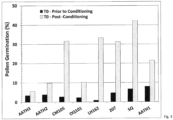
- the rate of moisture loss is dependent upon a number of factors, including, but not limited to, ambient temperature, relative humidity, and wind conditions. Pollen death occurs most quickly in hot, dry conditions, such as those conditions expected during a drought. Placing pollen which is losing moisture content into an environment which has high relative humidity and relatively low temperature allows the pollen to recover its moisture content almost to its pre-shed level, however, it does not completely stop the pollen from metabolic activity, which consumes vital resources. This is demonstrated in Example 3, which demonstrates improvement in pollen germination rates following field conditioning at high humidity and low temperature. Further experimentation demonstrated that field conditioning pollen at high humidity elevated low viability within one hour, but additional benefit was gained from field conditioning at low temperature.
- the rate of moisture removal from pollen has a direct impact on preservation success.
- the disclosed method allows removal of moisture at rates which exceed what a vacuum can accomplish, which was the previously known method for moisture removal from pollen.
- the disclosed novel process also permits alteration of the rate of drying. For example, moisture may be removed at a rapid rate to start with, and then the relative humidity levels can be altered in order to reach the target of 15-30% pollen moisture content at a more gradual rate. Experimental data have shown that drying below 15% pollen moisture content results in much lower viability of the preserved pollen.
- pollen viability can be preserved, and even enhanced, as a result of field conditioning following collection. While it was previously known that freshly-collected pollen of grass species could be stored, it has not previously been demonstrated that post-collection field conditioning of such pollen using both temperature and humidity can, on a large-scale basis, improve pollen viability and enhance storage.
- a large-scale basis is defined as quantities of pollen measuring about 5 grams or more, including quantities measured as kilograms of pollen.
- pollen under vapor pressure deficit stress collected from a range of maize inbreds showed significant improvement in percent germination after being subjected to a brief field conditioning treatment.
- the field conditioning treatment served to "rescue" stressed, dehydrated pollen grains thereby reversing their decline in viability and improving their capacity for germination.
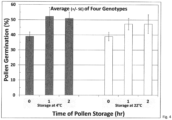
- the field conditioning of stressed pollen grains with 100% relative humidity improved germination by 21%, on average.
- Adding cold treatment at 4 °C produced a synergistic effect that increased germination by 33%.
- the field conditioning effect was detectable within one hour. Hot, dry conditions, which are typical during peak pollen shed in the field, cause pollen to lose moisture content and expire more rapidly.
- the combined treatment of high relative humidity and low temperature slows pollen metabolism while maintaining moisture content, thereby extending its viability.
- Pollen that has been subjected to the field conditioning process can subsequently be subjected to further preservation techniques or can be stored. If desired, the pollen can be subjected to the field conditioning step and then used in pollinations.
- Pollen can be subjected to additional preservation steps in order to increase its ability to retain viability and fertility over storage periods. It is beneficial to field condition the pollen as previously described prior to such preservation techniques or storage, in order to maximize pollen health and viability prior to any storage.
- the preparation of pollen for storage requires a careful process including an environment with known relative humidity levels, as well as specific temperature and atmospheric pressure conditions. In addition, the presence of useful gases will assist in maximizing storage success.
- the relative humidity in the drying environment should be any value ranging from about 0% to about 30% relative humidity including about 0%, about 1%, about 2%, about 3%, about 4%, about 5%, about 6%, about 7%, about 8%, about 9%, about 10%, about 11%, about 12%, about 13%, about 14%, about 15%, about 16%, about 17%, about 18%, about 19%, about 20%, about 21%, about 22%, about 23%, about 24%, about 25% about 26%, about 27%, about 28%, about 29%, and about 30% humidity.
- the lower the relative humidity level threshold the faster moisture is removed from the pollen.
- the moisture content of fully hydrated pollen is typically about 60%.
- a target moisture content of the pollen prior to cryogenic storage is a value in the range of about 15% to about 35%, including about 35%, about 34%, about 33%, about 32%, about 32%, about 30%, about 29%, about 28%, about 27%, about 26%, about 25%, about 24%, about 23%, about 22%, about 21%, about 20%, about 19%, about 18%, about 17%, about 16% and about 15% moisture content.
- the relative humidity can be adjusted over time to allow the rate of drying to increase or decrease.
- pollen which falls below 30% moisture content has lost viability completely for in vitro germination ( Fonseca and Westgate (2005) Field Crops Research 94: 114-125 ).
- pollen fertility and viability are maintained when pollen moisture content is reduced under cold conditions in an environment that achieves target pollen moisture content.
- the critical factor is a very controlled drying process, which cannot be achieved in the field.
- the process of reducing the pollen moisture content may be conducted at different temperatures ranging from -10 to 25°C.
- a vacuum may be optimal, whereas in other embodiments pressures at or above atmospheric pressure may be optimal. Experimentation based on the examples provided herein below will allow for optimization of the pressure to maximize the preservation of the pollen's viability.
- storage at about 15 kPa - 150 kPa is optimal, as shown in Example 6.
- storage at reduced pressures of about 67 kPa - 94 kPa may be most optimal, including pressures about 67 kPa, 68 kPa, 69 kPa, 70 kPa, 71 kPa, 72 kPa, 73 kPa, 74 kPa, 75 kPa, 76 kPa, 77 kPa, 78 kPa, 79 kPa, 80 kPa, 81 kPa, 82 kPa, 83 kPa, 84 kPa, 85 kPa, 86 kPa, 87 kPa, 88 kPa, 89 kPa, 90 kPa, 91 kPa, 92 kPa, 93 kPa, and 94 kPa.
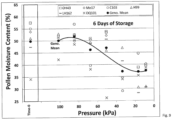
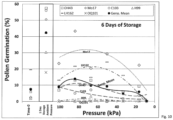
- a reduced pressure around 84.3 kPa may provide for pollen viability which is nearly doubled compared to storage at atmospheric pressure. Accordingly, storage in reduced pressure, combined with increased humidity and low temperature improves pollen viability. Moreover, storage under reduced pressure may maintain increased viability for all periods of preservation and storage and allow pollen to be held for extended periods for later use.
- the optimal pressure conditions and improvements to viability may differ across plant species and within each species across genetic backgrounds.
- adjustment of the initial PMC may provide advantages, as demonstrated below in Example 8.
- dehydration of the pollen prior to storage improves viability of the stored pollen.
- Typical fresh pollen moisture content is about 60%.
- dehydration of the pollen during a field conditioning step combined with a specific relative humidity level during storage may provide optimal pollen storage conditions to prevent and/or reduce loss of viability.
- the equilibrium moisture content of the stored pollen may be optimized to maintain and/or slow loss of viability.
- equilibrium moisture content of about 45%, about 46%, about 47%, about 48%, about 49%, about 50%, about 51%, about 52%, about 53%, about 54%, about 55%, about 56%, about 57%, and/or about 58% may maintain and/or slow loss of viability.
- striving for an optimized equilibrium moisture content has shown to provide better results than simply storing pollen in a high humidity environment.
- gases such as nitrogen (N 2 ) or carbon dioxide (CO 2 ) serve several functions in preparing the pollen for storage, as shown in Examples 10, 11, and 12 below.
- the first function is that the gases can serve as drying agents.
- the moisture content of these gases is typically below 1.0%. Constantly flowing a refreshed source of gas to the chamber where the pollen is being retained ensures that the moisture liberated from the pollen is exhausted from the system.
- the gases also serve to displace oxygen from the chamber.
- Oxygen is required by the pollen for metabolic activity, and promotes accumulation of reactive oxygen species (ROS). Reducing metabolic activity helps field condition the pollen and prepare it for storage.
- ROS reactive oxygen species
- the chamber containing the pollen intended for storage is subjected to a positive pressure, or a flow of treated air to the chamber.
- This pressure may be established through the pumping of treated air into the chamber as demonstrated in Examples 10, 11, and 12.
- the positive pressure of the treated air flow may extract, add, or maintain pollen moisture and further may extract, add, or maintain chamber moisture, allowing for the careful control of the relative humidity (RH) level.
- RH and temperature of the air can be established using any combination of desiccants, salt solutions, heat, or other treatments to maximize its effectiveness in controlling drying of the pollen.
- the air in the chamber containing the pollen is maintained from about -10° C to about 10° C, including about -10° C, about -9° C, about -8° C, about -7° C, about -6° C, about -5° C, about -4° C, about -3° C, about -2° C, about -1° C, about 0° C, about 1° C, about 2° C, about 3° C, about 4° C, about 5° C, about 6° C, about 7° C, about 8° C, about 9° C and about 10° C.
- This can be achieved by placing the chamber in a chilled room or by introducing chilled air into the chamber through a variety of means.
- the pollen contained within the chamber may be agitated mechanically.
- the agitation serves to expose the maximum surface area of the pollen to the air in the chamber, thereby providing for more even drying and preventing clumping of the pollen. This may be achieved in a number of different ways, including the use of vibration, forced air, rotation, or other means.
- the pollen Once the pollen has reached the optimal moisture content of 15 to 35% moisture, it can be stored. Storage can be achieved by placing the chamber of pollen in liquid nitrogen, in freezing conditions of -80 °C to 0 °C, in refrigeration, or at atmospheric conditions. The choice of conditions in which to store the pollen may depend upon the timeframe in which the pollen is expected to be used.
- the relative humidity of the chamber containing the pollen may be maintained at any value ranging from about 75% humidity to about 100% humidity, including about 75%, about 76%, about 77%, about 78%, about 79%, about 80%, about 81%, about 82%, about 83%, about 84%, about 85%, about 86%, about 87%, about 88%, about 89%, about 90%, about 91%, about 92%, about 93%, about 94%, about 95%, about 96%, about 97%, about 98%, about 99%, and about 100% humidity
- the temperature of the chamber containing the pollen may be maintained from about -10° C to about 10° C, including about -10° C, about -9° C, about -8° C, about -7° C, about - 6° C, about -5° C, about -4° C, about -3° C, about -2° C, about -1° C, about 0° C, about 1° C, about 2° C, about 3° C, about 4° C, about 5° C, about 6° C, about 7° C, about 8° C, about 9° C and about 10° C.
- the concentration of oxygen (O 2 gas) present in the chamber may be moderated from about the prevailing atmospheric percentage to about 0%, including about 21%, about 20%, about 19%, about 18%, about 17%, about 16%, about 15%, about 14%, about 13%, about 12%, about 11%, about 10%, about 9%, about 8%, about 7%, about 6%, about 5%, about 4%, about 3%, about 2%, about 1%, and about 0% oxygen.
- the concentration of nitrogen (N 2 gas) present in the chamber may be moderated from about atmospheric percentage to about 100%, including about 78%, about 79%, about 80%, about 81%, about 82%, about 83%, about 84%, about 85%, about 86%, about 87%, about 88%, about 89%, about 90%, about 91%, about 92%, about 93%, about 94%, about 95%, about 96%, about 97%, about 98%, about 99%, and about 100% nitrogen.
- the atmospheric pressure and carbon dioxide (CO 2 gas) concentration within the chamber may be modified to improve viability as outlined below.
- the atmospheric pressure inside the chamber may be modified in a manner that supports the tight control of humidity levels.
- the modification of air pressure allows for the prevention of oxidation of the pollen.
- Appropriate atmospheric pressures range from about 15 kPa to about 150kPa, including about 15 kPa, about 20 kPa, about 25 kPa, about 30 kPa, about 35 kPa, about 40 kPa, about 45 kPa, about 50 kPa, about 55 kPa, about 60 kPa, about 65 kPa, about 70 kPa, about 75 kPa, about 80 kPa, about 85 kPa, about 90 kPa, about 95 kPa, about 100 kPa, about 105 kPa, about 110 kPa, about 115 kPa, about 120 kPa, about 125 kPa, about 130 kPa, about 135 kPa, about 140 kPa, about 145 kPa, or about 150 kPa.
- the concentration of CO 2 present in the chamber may be moderated from about atmospheric percentage (about 0.04%) to about 100%, including about 1%, about 10%, about 20%, about 30%, about 40%, about 50%, about 60%, about 70%, about 75%, about 80%, about 81%, about 82%, about 83%, about 84%, about 85%, about 86%, about 87%, about 88%, about 89%, about 90%, about 91%, about 92%, about 93%, about 94%, about 95%, about 96%, about 97%, about 98%, about 99%, and about 100% CO 2 .
- the pollen is maintained in the defined conditions for a period of time to allow the improvements in pollen viability to take place, and as a result, extending the viability of the pollen.
- Even such field conditioning for a short period of time, including but not limited to 60 minutes, can improve the viability of the pollen and extend the duration of the viability window.
- Initial laboratory results have shown the overall viability of maize pollen improved significantly, more than four-fold for many genetic backgrounds, after 24 hours in the field conditioning environment (see Example 3).
- the window of viability of maize pollen has been extended with this field conditioning method. Laboratory results have shown that maize pollen, which normally has a viability window of approximately less than 2 hours, has a viability window extended to approximately 17 days, following treatment with the method of the invention (Example 8).
- pollen may be collected from actively shedding plants and placed into a preservation chamber.
- the preservation chamber may include a constant flow of nitrogen gas.
- the preservation chamber is adjusted for a target pollen moisture content, such as about 30%.
- the temperature in the chamber can slowly be adjusted downward, also, such as to about -5° C.
- the temperature adjustment occurs without freezing the pollen.
- the relative humidity levels in the chamber can also be adjusted to increase or decrease the rate of pollen dehydration.
- the relative humidity in the chamber may eventually be increased if necessary to stabilize the final pollen moisture content at about 30%. Optimally, this process is accomplished in approximately 100 minutes, although other time periods may be used without departing from the scope of the invention and with success.
- Pollen subjected to such a method may be used in any application where pollen is a commercial or experimental unit.
- the field conditioned and preserved pollen may be used to produce seed, hybrid, parent, or otherwise, in any setting, including but not limited to a laboratory, greenhouse, and field.
- the field conditioned and preserved pollen may be used to produce grain, hybrid or otherwise, in any setting, including but not limited to a laboratory, greenhouse, and field.
- such a method may be applied to pollen from the Poaeceae (Gramineae) family of plants, as well as any other plant species wherein it is desired to field condition and preserve pollen.
- the field conditioning and preservation techniques disclosed in this invention are intended to successfully treat and preserve pollen such that the field-conditioned and/or preserved pollen maintains its viability to the extent that about 4 to about 20 grains of pollen are sufficient to successfully pollinate an embryo.
- the invention has applicability to maize and the maize industry, the invention is applicable to storage and preservation of all types of pollen.
- rice pollen may be successfully preserved, as provided in Example 9 below. Specifically, in the provided Example, rice pollen was preserved at 4°C and 100% relative humidity for 20 hours. The preserved pollen showed a germination rate of 25%, proving that the methods of the present invention are applicable to other plant species.
- using the experimental methods described herein one skilled in the art may optimize the present invention for a desired species of pollen. The following examples illustrate the present invention in more detail and are illustrative of how the invention described herein could be implemented in maize.
- Field conditioning involved spreading a thin layer of pollen in the bottom of a 15 cm petri plate that had prechilled water-moistened blotter paper held in the upper half of the plate. Following field conditioning, pollen within each plate was gently mixed to obtain homogeneity and a small portion assayed for viability. In vitro germination was used to assess viability by incubating pollen in an artificial media (438 mM sucrose, 1.6 mM H 3 BO 3 , 3.0 mM CaCl 2 -H 2 O) for one hour at 22°C. Duplicate assays were conducted. With the aid of a microscope, percent germination was measured as the number of pollen grains with a pollen tube length more than twice the diameter of the grain from a random sample of typically 200 grains.
- Table 1 Difference in viability of pollen among eight diverse genetic backgrounds of maize Genetic Background In Vitro Percent Germination (Mean +/- SE) AATH3 54 (+/- 1) 207 56 (+/- 0) H99 28 (+/- 0) CM105 63 (+/- 7) C103 45 (+/- 8) OQ101 63 (+/- 9) LH162 50 (+/- 0) OH43 39 (+/- 4)
- the pollen was mixed to obtain homogeneity and sampled for measurement of viability at 0, 1, 2, 3 and 23 hours after the start of the experiment.
- the environmental conditions of the laboratory were very unfavorable for maintenance of viability in pollen of the two genetic backgrounds examined.
- the occurrence of high temperature stress in maize pollen is normally known to occur at temperatures in excess of 35°C and, since the laboratory was 21-23°C, it is most likely that viability was lost quickly from these samples because the ambient relative humidity rapidly dehydrated the pollen over a three-hour period. Dehydration is known to affect the viability, and sometimes, fertility, of maize pollen.
- Tassels of the plants were vigorously brushed free of loosely held anthers and pollen at 9:00 am the same day and each subsequently covered with a paper bag. At least six plants of each genetic background were bagged. Upon collection, tassels were shaken in the bags and material retrieved from the bags of each genotype passed through a screen (150 micron pore size) to collect the pollen. Each genetic pool of pollen was mixed thoroughly to obtain homogeneity. Assays for in vitro germination were immediately initiated in the field by sampling the pollen collected for each background (assay described in Example 1). In addition, each pool was sampled to measure pollen moisture content (PMC), which was calculated after weighing 50-100 mg pollen before and after drying at 104°C for 24 hours.
- PMC pollen moisture content
- the pools of pollen were subjected to field conditioning, held there for 120 minutes, and assayed again for in vitro germination, as described in Example 1.
- a single assay was conducted for each genetic background at each time and approximately 335 pollen grains were examined for each test.
- Fresh maize pollen typically has a PMC of roughly 60%, but in this experiment PMC values of freshly collected pollen ranged from 22.8-46.9%, with an average of 35.4% ( Fig. 2 ).
- Genetic differences in PMC of freshly collected pollen were apparent, as similarly reported by other researchers.
- Example 3 A study was undertaken to determine whether the chilling or the high relative humidity produced the rescue effect noted in Example 3, and to determine how quickly this effect occurred.
- Fresh pollen was collected from field grown maize plants of four genetic backgrounds (Mo17, C103, AATH1, AATH3) in Slater, IA on July 27, 2016. The genetic backgrounds were selected to represent diverse maize germplasm, and included hybrid and inbred lines.
- Tassels were vigorously brushed free of loosely held pollen, bagged, and pollen collected as described in Example 3.
- Assays for in vitro germination were immediately initiated in the field and pollen sampled for PMC as also described in Example 3. Promptly upon collection, the pools of pollen were placed into field conditioning, using thin layers of pollen in hydrated 6 cm petri plates, as described in Example 1.
- Example 1 The samples were field conditioned, at the field location, at either 4°C or 22°C for two hours. Pollen was sampled every hour for in vitro germination, as detailed in Example 1. A single assay was conducted for each genetic background at each time point and approximately 206 pollen grains were examined for each test.
- Pollen field conditioning was performed with a single, high level of relative humidity (ca. 100%) and two incubation temperatures. A factorial treatment scheme with level of relative humidity for field conditioning was not possible at the test location. Hence, the experiment examined how field conditioning with high humidity influenced pollen viability compared to its initial level (i.e., time of pollen collection) and whether the combination of high humidity with low temperature provided any unique benefit.
- the PMC of pollen at time of collection ranged from 51.9% to 59.2%, so none of the inbreds or hybrids demonstrated severe dehydration or stress of the pollen. Average viability of the four genetic backgrounds across treatments is shown in Fig. 4 . Pollen hydration was good, to excellent, at the start of field conditioning but viability was slightly low, as indicated by pollen average in vitro germination rates of 39%. After 60 minutes or less, at "normal" temperature (22°C), hydration of fresh pollen increased germination by 21%, on average. Hydration plus cold treatment (4°C) increased germination 33%, on average. In summary, field conditioning the pollen elevated low viability samples within one hour, primarily due to the presence of high humidity, but additional benefit was gained from storage at low temperature.
- the genetic backgrounds were selected to represent diverse heterotic groups known in maize breeding, and included hybrid and inbred lines.
- Pollen of hybrid AATH1 was sampled from plants grown in two different areas of the field. Tassels were vigorously brushed free of loosely held pollen and bagged the evening before the day of use. Pollen was collected as described in Example 3.
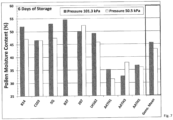
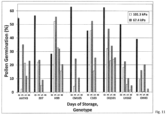
- Each genetically unique pool of pollen was sampled for PMC immediately after collection. PMC was measured as described in Example 3. Each pool of pollen was then split into halves and promptly placed as a thin layer in the lower half of a 6 cm petri plate. Each plate was loosely covered with a paper fiber wipe (Kimwipe). As collected, covered petri plates were placed on a rack held in a 3.78L stainless steel vacuum chamber. In the bottom of each chamber was 200 mL of prechilled water. Each tank was covered with an acrylic lid tightly secured by rubber bands or vacuum. One half of each pollen sample was placed in a chamber with atmospheric pressure (101.3 kPa) or a vacuum (50.5 kPa pressure).
- the chambers were surrounded by ice in coolers while samples were collected in the field and then transferred to a 5°C incubator in the laboratory. After six days of storage, chambers were opened, pollen samples mixed to homogeneity, sampled for PMC, and pollen assayed for in vitro germination as described in Example 1. A single assay was conducted for each genetic background and an average 298 pollen grains were examined for each test.
- Pollen was collected and immediately (i.e., Time-0) sampled for determination of PMC and in vitro germination, as described in Example 3.
- each genetic background was set on a rack that was placed into one of seven 3.78 L stainless steel vacuum chambers. In the bottom of each chamber was 200 mL of prechilled water. Each chamber was covered with an acrylic lid and held at ambient pressure (101.3 kPa) and 5°C for 24 hours. After one day of field conditioning, one of the chambers were briefly opened and pollen subsampled again for in vitro germination assay. Air was then evacuated from the chambers to 84.3, 67.4, 50.5, 33.5, 16.6, or 8.5 kPa pressure. One chamber remained at 101.3 kPa. All chambers were then incubated at 5°C for six days before a final measurement of PMC and in vitro germination. A single germination assay was conducted for each genetic background at each time and approximately 285 pollen grains were examined for each test.
- Genotypes differed in how well storage under a slightly reduced pressure improved longevity of the pollen but, as a rule, maize pollen can maintain its viability better if stored under a slight vacuum with high humidity and low temperature. This is the first report to demonstrate the advantage of, and optimization for, preserving Gramineae pollen viability at reduced pressure and/or reduced oxygen.
- the chambers were incubated at 5°C and very briefly opened after 3, 5, and 8 days of storage to again sample pollen pools for in vitro germination. Measurements of in vitro germination were conducted in duplicate on Day-0 of storage but as single assays at all other times. An average of 254 pollen grains were examined for each in vitro germination assay.
- Table 2 Average viability of pollen from eight genetic backgrounds stored at atmospheric pressure (101.3 kPa) or under slight vacuum (67.5 kPa). Days of Storage In Vitro Germination (%) Percent Improvement with Storage at 67.5 kPa Storage at 101.3 kPa Storage at 67.5 kPa 3 23.3 34.5 48.4 5 13.0 19.1 47.1 8 5.2 9.5 82.5
- Freshly-shed maize pollen typically has a PMC of about 60% ( Fonseca and Westgate (2005) Field Crops Research 94: 114-125 ).
- the PMC may be lower and the pollen partially dehydrated if the pollen is shed during periods of stress, such as when unfavorable vapor pressure deficit exists (Example 3). Stress commonly compromises pollen viability. In these circumstances, the state of pollen hydration can often be improved and viability revived, either partially or in whole, through field conditioning (Example 4, Fig. 5 ). But full restoration of PMC and viability to "normal" levels is not always achieved and so it was of interest to investigate how dehydration prior to storage affected pollen viability.
- the tassels were from a mix of several maize inbred genotypes and one variety of sweetcorn. Although the genetic identity of plants used was known in most cases, no attempt was made to determine the proportional contribution each genotype made in providing a pool of pollen for daily use. Collected pollen was separated from debris by screening (150 micron pore size), immediately placed into field conditioning (Example 1), and held as such for 2-24 hours.
- experiment-A field conditioned pollen was dehydrated to varying degrees by passing dry nitrogen gas over the pollen at 9°C.
- the pollen was held on a screen (45 micron pore size) in a small (1.0 L) desiccator and nitrogen continuously streamed through the desiccator in a manner akin to that used by others ( Barnabas, B. and Rajki, E. (1981). Ann Bot, 48(6), pp.861-864 ).
- Subsamples of pollen were taken from the desiccator at 30 minute intervals, analyzed for viability, and loaded into uncapped 0.5 mL polyethylene microfuge tubes until the tube was approximately 20% full.
- the tubes were placed in a 3.78 L stainless steel sealed chamber that had a pressure of 67.4 kPa (i.e., vacuum) and was stored at 5°C. The chamber was removed after 6, 9, and 17 days of storage to retest viability.
- experiment-B field conditioned pollen was measured for PMC and viability before being treated with varying conditions of relative humidity.
- Pollen was spread as a thin layer in aluminum weigh boats (4.3 cm dia.) which were placed on a raised platform in 0.5 L glass storage containers that seal air-tight.
- the glass containers contained approximately 200 mL of water or a saturated solution of (ACS reagent grade) potassium sulfate, potassium nitrate, or strontium nitrate which, respectively, produce a calculated relative humidity of 100%, 98.5%, 96.5% or 92.4% in an enclosed container at 5°C ( Greenspan, L., (1977) J Res Nat Bur Stand, 81(1), pp.89-96 ).
- the glass containers were stored at 5°C and opened for less than 20 seconds after 6 and 11 days of incubation to subsample pollen and retest PMC and viability.
- Impedance Flow Cytometry A Novel Technique in Pollen Analysis. PloS one, 11(11), p.e0165531 ). Roughly 3,000 pollen grains were measured for each assay. For determination of PMC, samples were handled as described in Example 3.
- Relative humidity in the sealed chamber was primarily determined by laboratory ambient air conditions at the time the chamber was closed. Laboratory air typically had a relative humidity of about 30% at the time of year experiment-A was conducted.
- Maize pollen in experiment-B was stored with the intent of having the PMC at EMC reach approximately 45-55%. This approximates the PMC levels of pollen that remained most viable during storage in experiment-A.
- Controlled relative humidity levels employed in storage chambers of experiment-B were chosen carefully and employed saturated solutions of potassium sulfate, potassium nitrate, and strontium nitrate (as well as pure water). Hence, the range of relative humidity used as treatment was 92.4-100%.
- testing was conducted using rice as a pollen source.
- pollen from 2 different rice genotypes were collected from actively shedding rice plants and bulked together. Pollen from the bulk was aliquoted into 2 different types of destination vessels.
- a light dusting of pollen was applied across the bottom of two VWR brand 100 mm wide by 15 mm deep petri dishes. The lids to the petri dishes were intentionally left off to allow the pollen to interact with the pollen preservation environment.
- just enough rice pollen was added to a 0.5 mL flip cap tube to fill the rounded area at the bottom of the tube. This pollen volume was estimated at 5 ⁇ L in each tube.
- the lids to the tubes were closed after adding the pollen. With the lids in the closed position, the temperature in the tube could be changed, but the relative humidity could not be changed.
- Each pollen preservation vessel was placed into an 887 mL Rubbermaid storage container with a sealable lid. Enough H 2 0 was added to fill the bottom of each Rubbermaid container prior to sealing the container.
- Each sealed Rubbermaid container was placed into a 4°C environment for a preservation period of 20 hours.
- the pollen preservation vessels received one of two treatments.
- treatment 1 the petri dishes were treated at 4°C with 100% relative humidity for 20 hours.
- treatment 2 the 0.5 mL flip cap tubes were treated at 4°C for 20 hours.
- each sample of pollen was placed in a germination media which allows the pollen tube to grow if the pollen is viable. After 60 minutes of time in the media, images were captured. Each image was scored for number of pollen tubes relative to the overall number of pollen grains present.
- Rice pollen stored in the flip cap tubes showed an overall germination rate of less than 1% after 20 hours of storage at 4C, and no control of relative humidity. It should be noted that this germination percent is consistent with the petri dish pollen stored at 4°C and 100% relative humidity germinating in culture after 20 hours of preservation that yielded 1% germination as both scenarios would reflect an environment that fail to keep humidity near 100%.
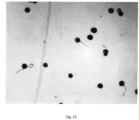
- Fig. 15 provides an image of the germinated rice from the petri dish having a germination rate of 25%
- Fig. 16 provides an image of rice pollen stored at 4° C without relative humidity control.
- Example 10 Maize pollen preservation using 75% humidity and positive air flow
- This example outlines experiments conducted to prepare pollen for preservation. Pollen used in these experiments was sourced from tassels taken from field and greenhouse grown maize. The tassels were detached from plants and transported to the laboratory where 4 cm of each tassel's stem was cut off and discarded. The freshly cut ends of tassels were inserted into a beaker containing water. The tassels were kept in an incubator programmed for 25°/15°C day/night temperature and 65%/80% day/night relative humidity, as well as daytime lighting. Tassels were acclimated to the incubator environment for at least 24 hours before collection of pollen.
- each sample was immediately sub-sampled and measured (time 0) for viability using amphasys, which is discussed in detail above.
- Initial viability readings confirmed that all pollen samples had high initial viability of greater than 60%.
- the remaining pollen for each sample was then placed on a forced air drying apparatus with approximately 75% humidity (enabled by a saturated NaCl solution) at 5°C and dried for approximately 20 hours.
- the samples were stored at -80°C for time periods ranging from 4 hours to 38 days and counting.
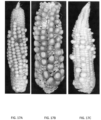
- Figures 17A, 17B, and 17C provides examples of confirmed viability of preserved pollen stored at -80°C. Specifically, the photographs shown in Figures 17A, 17B, and 17C reflect the results of pollinations conducted with preserved pollen following storage periods of 4 hours to 38 days. The presence of developing kernels was assessed two to three weeks after pollination or at kernel maturity, as shown in Table 3 below. Table 3: Presence of developing kernels for example 10 wherein genotype indicates the source of pollen and female indicates the inbred pollinated by the preserved pollen.
- Example 11 Maize pollen preservation using nitrogen gas and positive pressure
- This example outlines an experiment conducted to prepare pollen for preservation.
- Pollen used in this experiment was sourced from tassels taken from the field. The tassels from a single sweetcorn hybrid were detached and transported to the laboratory where 4 cm of each tassel's stem was cut off and discarded. The freshly cut ends of tassels were inserted into a beaker containing water. The tassels were kept in an incubator programmed for 25°/15°C day/night temperature and 65%/80% day/night relative humidity, as well as daytime lighting. Tassels were acclimated to the incubator environment for at least 24 hours before collection of pollen. Following acclimation, pollen was shaken from freshly-shedding tassels approximately two to four hours after the start of the daytime environmental conditions. Pollen samples were separated from debris by screening (150 micron pore size).
- a sub-sample was measured (time 0) for viability using amphasys as described above, which confirmed that the pollen had high initial viability of greater than 95%.
- the remaining sample was then placed on a forced nitrogen drying apparatus at 5-10°C (temperature varied).
- the nitrogen gas served the dual purpose of depleting the environment of oxygen while also decreasing the humidity. Relative humidity varied during drying from 40% at time 0 to 12% after 110 minutes.
- Three sub-samples of pollen were removed at 80, 85, 90, 95, 100, and 110 minutes.
- the first sub-sample was used to measure pollen moisture content (PMC) of the sample. This PMC is reported in Table 4.
- the second sub-sample was used to measure pollen viability before freezing.
- the third sub-sample was stored at -80°C for 120 minutes and used to measure pollen viability after freezing.
- Table 4 shows percent viability of the pollen used in this experiment. Results show that there is a range of PMCs from 15 to 35in which pollen is more stable and can be stored more effectively while minimizing the drop in viability.
- Table 4. Percent viability for pollen dried to different percent moisture content (PMC).
- Example 12 Maize pollen preserved using nitrogen gas, positive pressure, and adjustable humidity and temperature.
- Pollen that has been collected from actively shedding plants is placed into the preservation chamber.
- a constant flow of nitrogen gas flows to the chamber.
- the nitrogen gas serves the dual purpose of depleting the environment of oxygen, which is required for metabolism to occur, while also decreasing the humidity, which accordingly begins reducing the pollen moisture content to low levels, such as a target level of about 30%.
- the temperature in the chamber can slowly be adjusted down to well below 0°C (-5°C for example) without freezing the pollen.
- the relative humidity levels in the chamber can also be adjusted to increase or decrease the rate of pollen dehydration.
- the humidity in the chamber can also be adjusted up to stabilize the final pollen moisture content at about 30%.
- maize pollen was collected from several different actively shedding genotypes and bulked into a single source tube.
- 50 mL of liquid nitrogen was poured into a 100 mL borosilicate beaker.
- the fresh pollen was then dropped into the liquid nitrogen to achieve the rapid freeze.
- the pollen remained in the liquid nitrogen until the entire 50 mL volume had boiled away.
- the rapidly frozen pollen was immediately added to room temperature maize pollen germination media to achieve a rapid thaw rate of the pollen.
- the results of the germination test were captured in images which were subsequently scored for percent pollen tube growth compared to overall number of pollen grains.
- the vast majority of the pollen rapidly degraded during the pollen tube germination assay. Significant leakage of the cellular contents was noted as a large amount of debris became evident in the media during the germination process.
- the final germination rate was scored at 1/221 grains of pollen, or less than 0.5%.
- Fig. 18 shows the final germination media results from the above-described rapidly frozen and rapidly thawed maize pollen. Overall germination was scored at less than 0.5%.
- the methods of the present invention provide a number of advantages which have heretofore been lacking in the industry.
- the present invention provides large scale pollen preservation methods.
- the methods of the present invention maintain and increase pollen viability during collection, as well as during preservation.
- the methods of the present invention are applicable to, but not limited to, two specific advantageous situations.
- First, the method is applicable to instances where pollen will be used within 30 days of collection in support of the current growth cycle at the time of collection.
- the invention allows indefinite storage duration, which allows for pollen to be stored for years prior to delivery as desired to receptive female plants.
- the majority of prior pollen preservation methods rely on freezing and subsequent freeze drying of the pollen (including, but not limited to, the Greaves, et al. and Nath and Anderson methods described above) to achieve dehydration of pollen to conditions wherein the pollen may be stored.
- the lengthy time necessary to freeze dry the pollen reduces the amount of time wherein the pollen may be used for field applications.
- the methods of the prior art do not control the pollen moisture content, which in some embodiments may be important to preserving the pollen. Failure to fall within the sensitive pollen moisture content range which allows pollen to be preserved results in significant loss of viability.
- the pressure requirements of the present invention allow for increased scalability and portability over methods of the prior art, which require more extreme pressure conditions. Methods of the current invention provide for quick dehydration of pollen and also enables the pollen to be held at the optimum pollen moisture content.
Landscapes
- Life Sciences & Earth Sciences (AREA)
- Health & Medical Sciences (AREA)
- Genetics & Genomics (AREA)
- General Health & Medical Sciences (AREA)
- Engineering & Computer Science (AREA)
- Environmental Sciences (AREA)
- Developmental Biology & Embryology (AREA)
- Botany (AREA)
- Wood Science & Technology (AREA)
- Bioinformatics & Cheminformatics (AREA)
- Biomedical Technology (AREA)
- Zoology (AREA)
- Chemical & Material Sciences (AREA)
- Organic Chemistry (AREA)
- Biotechnology (AREA)
- Sustainable Development (AREA)
- General Engineering & Computer Science (AREA)
- Biochemistry (AREA)
- Virology (AREA)
- Cell Biology (AREA)
- Microbiology (AREA)
- Breeding Of Plants And Reproduction By Means Of Culturing (AREA)
- Agricultural Chemicals And Associated Chemicals (AREA)
Applications Claiming Priority (4)
| Application Number | Priority Date | Filing Date | Title |
|---|---|---|---|
| US201662321914P | 2016-04-13 | 2016-04-13 | |
| US15/192,519 US10398099B2 (en) | 2015-06-25 | 2016-06-24 | Grain production |
| EP17718712.7A EP3442323B1 (de) | 2016-04-13 | 2017-04-13 | Pollenfeldkonditionierung und -konservierungsverfahren |
| PCT/US2017/027381 WO2017180849A1 (en) | 2016-04-13 | 2017-04-13 | Pollen field conditioning and preservation method |
Related Parent Applications (2)
| Application Number | Title | Priority Date | Filing Date |
|---|---|---|---|
| EP17718712.7A Division-Into EP3442323B1 (de) | 2016-04-13 | 2017-04-13 | Pollenfeldkonditionierung und -konservierungsverfahren |
| EP17718712.7A Division EP3442323B1 (de) | 2016-04-13 | 2017-04-13 | Pollenfeldkonditionierung und -konservierungsverfahren |
Publications (2)
| Publication Number | Publication Date |
|---|---|
| EP4375364A2 true EP4375364A2 (de) | 2024-05-29 |
| EP4375364A3 EP4375364A3 (de) | 2024-09-04 |
Family
ID=60042750
Family Applications (2)
| Application Number | Title | Priority Date | Filing Date |
|---|---|---|---|
| EP24169438.9A Pending EP4375364A3 (de) | 2016-04-13 | 2017-04-13 | Verfahren zur konditionierung und konservierung von pollenfeldern |
| EP17718712.7A Active EP3442323B1 (de) | 2016-04-13 | 2017-04-13 | Pollenfeldkonditionierung und -konservierungsverfahren |
Family Applications After (1)
| Application Number | Title | Priority Date | Filing Date |
|---|---|---|---|
| EP17718712.7A Active EP3442323B1 (de) | 2016-04-13 | 2017-04-13 | Pollenfeldkonditionierung und -konservierungsverfahren |
Country Status (11)
| Country | Link |
|---|---|
| EP (2) | EP4375364A3 (de) |
| CN (1) | CN109310059B (de) |
| BR (1) | BR112018071134A2 (de) |
| CA (1) | CA3020871A1 (de) |
| CL (1) | CL2018002926A1 (de) |
| ES (1) | ES2994394T3 (de) |
| HU (1) | HUE068106T2 (de) |
| PL (1) | PL3442323T3 (de) |
| RU (1) | RU2743791C9 (de) |
| UA (1) | UA127161C2 (de) |
| WO (1) | WO2017180849A1 (de) |
Families Citing this family (7)
| Publication number | Priority date | Publication date | Assignee | Title |
|---|---|---|---|---|
| HUE066963T2 (hu) * | 2017-07-06 | 2024-09-28 | Accelerated Ag Tech Llc | Eljárás pollen tartósítására |
| FR3073367B1 (fr) * | 2017-11-15 | 2021-08-13 | Xeda International | Procede et ensemble de traitement de l'atmosphere d'un stockage de produits vegetaux a haute humidite relative |
| US11653604B2 (en) | 2019-10-01 | 2023-05-23 | Monsanto Technology Llc | Cross pollination through liquid-mediated delivery of pollen to enclosed stigmas of flowers from recipient plants |
| CN110663541B (zh) * | 2019-10-08 | 2021-05-25 | 江西省农业科学院作物研究所 | 一种直接获得刚果野芝麻与栽培种远缘杂种的方法和栽培方法 |
| US11730099B2 (en) | 2020-04-04 | 2023-08-22 | Monsanto Technology Llc | Compositions and methods for liquid-mediated delivery of pollen |
| CN115281185B (zh) * | 2022-07-05 | 2024-07-19 | 河北省农林科学院生物技术与食品科学研究所 | 一种延长小麦花药保存时间的方法 |
| EP4651706A1 (de) * | 2023-01-17 | 2025-11-26 | Accelerated AG Technologies, LLC | Pollenkonservierung und stabilisierungsverfahren für poaceae |
Citations (1)
| Publication number | Priority date | Publication date | Assignee | Title |
|---|---|---|---|---|
| US5596838A (en) | 1994-06-15 | 1997-01-28 | Zenco (No. 4) Limited | Method and instrument for the preparation of pollen for cryogenic storage |
Family Cites Families (7)
| Publication number | Priority date | Publication date | Assignee | Title |
|---|---|---|---|---|
| SU1685321A1 (ru) * | 1989-09-13 | 1991-10-23 | Институт Экологической Гнетики Ан Мсср | Способ получени засухоустойчивых форм кукурузы |
| US5689914A (en) * | 1994-06-15 | 1997-11-25 | Zenco (No. 4) Limited | Method of hybrid crop production using dehydrated pollen from storage |
| WO2009073937A1 (en) * | 2007-12-10 | 2009-06-18 | Vilani Oliveira Junior Jose | Dehumidification or dehydration unit for apicultural use |
| BR112015031826A2 (pt) * | 2013-06-24 | 2017-07-25 | Pioneer Hi Bred Int | método e aparelho para colheita controlada de pólen |
| CN104396946B (zh) * | 2014-11-30 | 2016-02-10 | 河北省农林科学院旱作农业研究所 | 玉米花粉自扰动常温变压活性脱湿装置及用其脱湿的方法 |
| CN104488857A (zh) * | 2015-01-12 | 2015-04-08 | 河北双星种业有限公司 | 甜瓜花粉超低温保存的方法 |
| CN114501986A (zh) * | 2019-08-30 | 2022-05-13 | 艾乐速Ag技术有限公司 | 用于谷类作物授粉时间的方法和系统 |
-
2017
- 2017-04-13 HU HUE17718712A patent/HUE068106T2/hu unknown
- 2017-04-13 CN CN201780036688.0A patent/CN109310059B/zh active Active
- 2017-04-13 EP EP24169438.9A patent/EP4375364A3/de active Pending
- 2017-04-13 CA CA3020871A patent/CA3020871A1/en active Pending
- 2017-04-13 EP EP17718712.7A patent/EP3442323B1/de active Active
- 2017-04-13 WO PCT/US2017/027381 patent/WO2017180849A1/en not_active Ceased
- 2017-04-13 RU RU2018135966A patent/RU2743791C9/ru active
- 2017-04-13 ES ES17718712T patent/ES2994394T3/es active Active
- 2017-04-13 UA UAA201810161A patent/UA127161C2/uk unknown
- 2017-04-13 BR BR112018071134-9A patent/BR112018071134A2/pt active IP Right Grant
- 2017-04-13 PL PL17718712.7T patent/PL3442323T3/pl unknown
-
2018
- 2018-10-12 CL CL2018002926A patent/CL2018002926A1/es unknown
Patent Citations (1)
| Publication number | Priority date | Publication date | Assignee | Title |
|---|---|---|---|---|
| US5596838A (en) | 1994-06-15 | 1997-01-28 | Zenco (No. 4) Limited | Method and instrument for the preparation of pollen for cryogenic storage |
Non-Patent Citations (27)
| Title |
|---|
| ANDRONESCU, DEMETRIUS I.: "Thesis for degree of Ph.D.", 1915, UNIVERSITY OF ILLINOIS, article "The physiology of the pollen of Zea mays with special regard to vitality" |
| BARNABAS, ANN BOT, vol. 55, 1985, pages 201 - 204 |
| BARNABAS, B. ET AL., EUPHYTICA, vol. 39, no. 3, 1988, pages 221 - 225 |
| BARNABAS, B.FRIDVALSZKY, L., ACTA BOT HUNG, vol. 30, 1984, pages 329 - 332 |
| BARNABAS, B.RAJKI, E., ANN BOT, vol. 48, no. 6, 1981, pages 861 - 864 |
| BARNABASKOVACS: "Pollen Biotechnology For Crop Production And Improvement.", 1997, CAMBRIDGE UNIVERSITY PRESS, pages: 293 - 314 |
| BARNABASRAJKI, EUPHYTICA, vol. 25, 1976, pages 747 - 752 |
| COLLINS, F.C. ET AL., CROP SCI, vol. 13, no. 4, 1973, pages 493 - 494 |
| CONNOR, K.F.TOWILL, L.E., EUPHYTICA, vol. 68, no. 1, 1993, pages 77 - 84 |
| FONSECAWESTGATE, FIELD CROPS RESEARCH, vol. 94, 2005, pages 114 - 125 |
| FROVA, C.B.FEDER, W.A., ANN BOT, vol. 43, no. 1, 1979, pages 75 - 79 |
| GREENSPAN, L., J RES NAT BUR STAND, vol. 81, no. 1, 1977, pages 89 - 96 |
| HEIDMANN, I.SCHADE-KAMPMANN, G.LAMBALK, J.OTTIGER, M.DI BERARDINO, M.: "Impedance Flow Cytometry: A Novel Technique in Pollen Analysis", PLOSONE, vol. 11, no. 11, 2016, pages e0165531 |
| HERRERO, M.P. AND JOHNSON, R.R., CROP SCI, vol. 20, no. 6, 1980, pages 796 - 800 |
| HOEKSTRA, FA.: "Membranes, Metabolism and Dry Organisn s", 1986, COMSTOCK PUBLISHING ASSOCIATES, pages: 102 - 122 |
| JACKSON, M.A.PAYNE, A.R., BIOCONTROL SCI TECHN, vol. 17, no. 7, 2007, pages 709 - 719 |
| JONES, M.D.NEWELL, L.C., J AMER SOC AGRON, vol. 40, 1948, pages 195 - 204 |
| KAEFER, K.A.C. ET AL., AFR J AGR RES, vol. 11, no. 12, 2016, pages 1040 - 104 |
| KNOWLTON, HE: "Studies in pollen with special reference to longevity", vol. 52, 1922, CORNELL UNIVERSITY |
| NATH, J.ANDERSON, J. O.: "Effect of freezing and freeze-drying on the viability and storage of Lilium longiflorum L. and Zea mays L. pollen", CRYOBIOLOGY, vol. 12, no. 1, 1975, pages 81 - 88 |
| PAREDDY DRGREYSON RIWALDEN DB: "Production of normal, germinable and viable pollen from in vitro-cultured maize tassels", THEOR APPL GENET, vol. 77, 1989, pages 521 - 526 |
| PFAHLER, P.L.LINSKENS, H.F., PLANTA, vol. 111, no. 3, 1973, pages 253 - 259 |
| SARTORIS, G.B., AM J BOT, 1942, pages 395 - 400 |
| SARTORIS, G.B., AM JBOT, 1942, pages 395 - 400 |
| SCHOPER, J.B. ET AL., CROP SCI, vol. 27, no. 1, 1987, pages 27 - 31 |
| SHIVANNA, K.R. ET AL., THEOR APPL GENET, vol. 81, no. 1, 1991, pages 38 - 42 |
| WALDEN, D.B., CROP SCIENCE, vol. 7, no. 5, 1967, pages 441 - 444 |
Also Published As
| Publication number | Publication date |
|---|---|
| EP3442323C0 (de) | 2024-05-29 |
| WO2017180849A1 (en) | 2017-10-19 |
| RU2743791C9 (ru) | 2021-04-26 |
| RU2018135966A (ru) | 2020-05-13 |
| EP3442323B1 (de) | 2024-05-29 |
| EP3442323A1 (de) | 2019-02-20 |
| HUE068106T2 (hu) | 2024-12-28 |
| CA3020871A1 (en) | 2017-10-19 |
| BR112018071134A2 (pt) | 2019-01-29 |
| PL3442323T3 (pl) | 2024-10-14 |
| CN109310059A (zh) | 2019-02-05 |
| UA127161C2 (uk) | 2023-05-24 |
| ES2994394T3 (en) | 2025-01-23 |
| CN109310059B (zh) | 2022-12-20 |
| EP4375364A3 (de) | 2024-09-04 |
| RU2743791C2 (ru) | 2021-02-26 |
| RU2018135966A3 (de) | 2020-07-07 |
| CL2018002926A1 (es) | 2019-01-18 |
Similar Documents
| Publication | Publication Date | Title |
|---|---|---|
| US11844348B2 (en) | Pollen preservation and storage method | |
| EP3442323B1 (de) | Pollenfeldkonditionierung und -konservierungsverfahren | |
| US20240365779A1 (en) | Pollen preservation compositions | |
| Teixeira da Silva et al. | In vitro conservation of Dendrobium germplasm | |
| US20240237637A1 (en) | Poaceae pollen preservation and stabilization method | |
| Walters et al. | Cryopreservation of recalcitrant (ie desiccation-sensitive) seeds | |
| Gowthami et al. | Cryopreservation of two-celled pollen: a model system for studying the cellular mechanisms of cryoinjury and recovery | |
| Ortíz et al. | Cryopreservation of encapsulated sugarcane apices: effect of storage temperature and storage duration | |
| Wu et al. | Cryopreservation of orchid genetic resources by desiccation: A case study of Bletilla formosana | |
| US20260041085A1 (en) | Poaceae pollen preservation using diluents blended with starch | |
| Ngobese et al. | Cryopreservation of the embryonic axes of Phoenix reclinata, a representative of the intermediate seed category | |
| RU2799580C2 (ru) | Способ обеспечения сохранности пыльцы | |
| Efendi et al. | Effect of immersion time in PVS2 and mesotesta removing on cryopreservation of Papaya (Carica Papaya L.‘Sukma’) seeds | |
| Pirondini et al. | Effect of cryopreservation on in vitro seed germination and protocorm growth of Mediterranean orchids | |
| Purwoko et al. | Effect of immersion time in PVS2 and mesotesta removing on cryopreservation of papaya (Carica papaya L.'Sukma') seeds | |
| Nadarajan | Plant germplasm cryopreservation: challenges, successes and the advances in cryo-engineering and ‘omic’technologies |
Legal Events
| Date | Code | Title | Description |
|---|---|---|---|
| PUAI | Public reference made under article 153(3) epc to a published international application that has entered the european phase |
Free format text: ORIGINAL CODE: 0009012 |
|
| STAA | Information on the status of an ep patent application or granted ep patent |
Free format text: STATUS: THE APPLICATION HAS BEEN PUBLISHED |
|
| AC | Divisional application: reference to earlier application |
Ref document number: 3442323 Country of ref document: EP Kind code of ref document: P |
|
| AK | Designated contracting states |
Kind code of ref document: A2 Designated state(s): AL AT BE BG CH CY CZ DE DK EE ES FI FR GB GR HR HU IE IS IT LI LT LU LV MC MK MT NL NO PL PT RO RS SE SI SK SM TR |
|
| REG | Reference to a national code |
Ref country code: DE Ref legal event code: R079 Free format text: PREVIOUS MAIN CLASS: C12M0003000000 Ipc: A01H0001020000 |
|
| PUAL | Search report despatched |
Free format text: ORIGINAL CODE: 0009013 |
|
| AK | Designated contracting states |
Kind code of ref document: A3 Designated state(s): AL AT BE BG CH CY CZ DE DK EE ES FI FR GB GR HR HU IE IS IT LI LT LU LV MC MK MT NL NO PL PT RO RS SE SI SK SM TR |
|
| RIC1 | Information provided on ipc code assigned before grant |
Ipc: C12M 3/00 20060101ALI20240730BHEP Ipc: A01H 1/02 20060101AFI20240730BHEP |
|
| RAP3 | Party data changed (applicant data changed or rights of an application transferred) |
Owner name: POWERPOLLEN, INC. |
|
| STAA | Information on the status of an ep patent application or granted ep patent |
Free format text: STATUS: REQUEST FOR EXAMINATION WAS MADE |
|
| 17P | Request for examination filed |
Effective date: 20250303 |
|
| STAA | Information on the status of an ep patent application or granted ep patent |
Free format text: STATUS: EXAMINATION IS IN PROGRESS |
|
| 17Q | First examination report despatched |
Effective date: 20250731 |