EP4368607B1 - Verfahren zur gewinnung von essigsäure und anderen wertstoffen aus celluloseacetatabfällen mittels hydrothermaler verflüssigung - Google Patents
Verfahren zur gewinnung von essigsäure und anderen wertstoffen aus celluloseacetatabfällen mittels hydrothermaler verflüssigung Download PDFInfo
- Publication number
- EP4368607B1 EP4368607B1 EP23207544.0A EP23207544A EP4368607B1 EP 4368607 B1 EP4368607 B1 EP 4368607B1 EP 23207544 A EP23207544 A EP 23207544A EP 4368607 B1 EP4368607 B1 EP 4368607B1
- Authority
- EP
- European Patent Office
- Prior art keywords
- acetic acid
- cellulose acetate
- waste
- valuable materials
- diethyl phthalate
- Prior art date
- Legal status (The legal status is an assumption and is not a legal conclusion. Google has not performed a legal analysis and makes no representation as to the accuracy of the status listed.)
- Active
Links
Images

Classifications
-
- C—CHEMISTRY; METALLURGY
- C07—ORGANIC CHEMISTRY
- C07C—ACYCLIC OR CARBOCYCLIC COMPOUNDS
- C07C51/00—Preparation of carboxylic acids or their salts, halides or anhydrides
- C07C51/09—Preparation of carboxylic acids or their salts, halides or anhydrides from carboxylic acid esters or lactones
-
- C—CHEMISTRY; METALLURGY
- C07—ORGANIC CHEMISTRY
- C07C—ACYCLIC OR CARBOCYCLIC COMPOUNDS
- C07C51/00—Preparation of carboxylic acids or their salts, halides or anhydrides
- C07C51/42—Separation; Purification; Stabilisation; Use of additives
- C07C51/43—Separation; Purification; Stabilisation; Use of additives by change of the physical state, e.g. crystallisation
- C07C51/44—Separation; Purification; Stabilisation; Use of additives by change of the physical state, e.g. crystallisation by distillation
-
- C—CHEMISTRY; METALLURGY
- C07—ORGANIC CHEMISTRY
- C07C—ACYCLIC OR CARBOCYCLIC COMPOUNDS
- C07C51/00—Preparation of carboxylic acids or their salts, halides or anhydrides
- C07C51/42—Separation; Purification; Stabilisation; Use of additives
- C07C51/48—Separation; Purification; Stabilisation; Use of additives by liquid-liquid treatment
-
- C—CHEMISTRY; METALLURGY
- C07—ORGANIC CHEMISTRY
- C07C—ACYCLIC OR CARBOCYCLIC COMPOUNDS
- C07C67/00—Preparation of carboxylic acid esters
- C07C67/48—Separation; Purification; Stabilisation; Use of additives
- C07C67/52—Separation; Purification; Stabilisation; Use of additives by change in the physical state, e.g. crystallisation
- C07C67/54—Separation; Purification; Stabilisation; Use of additives by change in the physical state, e.g. crystallisation by distillation
-
- C—CHEMISTRY; METALLURGY
- C07—ORGANIC CHEMISTRY
- C07C—ACYCLIC OR CARBOCYCLIC COMPOUNDS
- C07C67/00—Preparation of carboxylic acid esters
- C07C67/48—Separation; Purification; Stabilisation; Use of additives
- C07C67/58—Separation; Purification; Stabilisation; Use of additives by liquid-liquid treatment
-
- C—CHEMISTRY; METALLURGY
- C08—ORGANIC MACROMOLECULAR COMPOUNDS; THEIR PREPARATION OR CHEMICAL WORKING-UP; COMPOSITIONS BASED THEREON
- C08L—COMPOSITIONS OF MACROMOLECULAR COMPOUNDS
- C08L1/00—Compositions of cellulose, modified cellulose or cellulose derivatives
- C08L1/08—Cellulose derivatives
- C08L1/10—Esters of organic acids, i.e. acylates
- C08L1/12—Cellulose acetate
Definitions
- the present invention relates to an innovative process for recovering acetic acid useful for the production of acetic anhydride and other valuable materials from cellulose acetate waste and scrap by means of hydrothermal liquefaction.
- Cellulose acetate is an environmentally friendly product from production to degradation processes. Like all other cellulose derivatives, the synthesis thereof is based on the replacement of the cellulose hydroxyl groups with other functional groups which in this case are the acetyl group.
- CN112047827 A discloses a method for obtaining acetic acid from waste cellulose acetate slurry, which comprises an acid degradation treatment in the presence of sulfuric acid at 90-100°C. Then, acetic acid is extracted with isopropyl acetate and separated by distillation.
- Plastic eyeglasses are better suited to the role of eyeglasses as an expression of fashion as, in addition to the model, plastic creates games of colors and structures through the three-dimensionality thereof.
- eyeglasses milled from a sheet of cellulose acetate a polymer of natural origin which is synthesized from cotton or wood pulp with the addition of acetic acid.
- the production of eyeglasses from sheets includes cutting a rectangle (170x70mm) from a sheet of different sizes (600x1400m; 170x1400mm; 170x700mm). The thickness of the sheet varies from 5 to 8 m.
- the weight of the eyeglasses can be about 20 g, while the rectangle can weigh from 92 g to 122 g, with waste therefore ranging from 78% to 84%.
- the eyeglasses production process although virtuous from the "aesthetic result" point of view, is flawed from the point of view of "efficiency,” as it registers significant scraps in sheets which go partly to landfill and are partly used as a by-product (in the form of granules obtained from the extrusion of the waste) for items without performance expectations.
- the sheet production centers are in Italy for about 3,000 tons/year and China for about 16,000 tons/year and the eyeglasses production centers are also located in Italy and China with some exceptions for some productions of little importance in Europe.
- acetic anhydride for the production of cellulose acetate dates back to the 1930s with studies on synthetic-artificial plastic materials, what we commonly call "plastic” today. It was discovered then that by reacting cellulose not with nitric acid, but with acetic anhydride, a new material is obtained: cellulose acetate. It is non-flammable and the production process is simple and fast. It can perfectly replace the use of celluloid, so much so that it is still among the most used materials today.
- cellulose acetate depend on the average degree of substitution (DS) or the amount of acetic acid in terms of percentage "acetic acid %".
- the cellulose acetate DS is always greater than 2 and typically 2.45.
- Cellulose acetate needs to be plasticized to be used as a polymer so as to lower the melting temperature thereof, which in the absence of the plasticizer is too close to the decomposition temperature thereof.
- the use of the plasticizer makes the polymer more flexible, durable and workable, lowering the transition temperature of the macromolecule.
- cellulose acetate plasticizers are triacetin (TA) and diethyl phthalate (DEP). Diethyl phthalate is one of the most common plasticizers of cellulose acetate but, due to some toxicity/safety issues, its industrial use will be reduced in the near future and replaced by the more ecological triacetin plasticizers. A significant amount of plasticizer is generally used (between 25 and 30% by weight depending on the type of use).
- the task of the inventors was to develop a technology for decomposing cellulose acetate which had the advantage of producing mainly acetic acid and diethyl phthalate, focusing on hydrothermal liquefaction.
- Hydrothermal liquefaction is a thermochemical process which occurs at medium temperature (about 270-330 °C) and at high pressure (5-15 MPa) in the presence of water. During the process, the water is in a subcritical state and acts as a solvent and reagent.
- the decomposition mechanism of cellulose acetate is hydrolysis starting from the ester bonds of the side chain which bind acetic acid to cellulose and then proceeding with the hydrolysis of the cellulose polymer.
- the first investigation carried out was to analyze the degradation rate of cellulose acetate under hydrothermal conditions at different temperatures and reaction times.
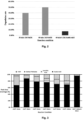
- Fig. 2 shows the degradation rate of hydrothermal treatment with cellulose acetate with acidic and basic catalysts at 190 °C.
- aqueous phase products were analyzed by means of GC-MS (Gas Chromatography-Mass Spectrometry) and GC-FID (Gas Chromatography-Flame Ionization Detector).
- the main compounds are acetic acid, levulinic acid, diethyl phthalate and HMF, and the percentages related to the peak area are shown in Fig 3 .
- Diethyl phthalate is the plasticizer used in the production of cellulose acetate.
- Acetic acid could be produced by the hydrolysis of the acetyl group and also by the decomposition of the cellulose structure.
- Levulinic acid and HMF are the typical products of the hydrothermal liquefaction of cellulose in an acidic environment.
- the possible reaction route of the hydrothermal degradation of cellulose was proposed by Sudong Yin and Zhongchao Tan [l].
- the cellulose was first hydrolyzed in monosaccharide (glucose), then converted into 5-HMF and finally transformed into levulinic acid and formic acid. The same phenomenon was found in the Applicant's work: together with the progress of the reaction, HMF was generated first, then levulinic acid was observed.
- the liquid phase is first separated from the residual solid, for example by decantation or filtration, and then subjected to a recovery process of acetic acid and diethyl phthalate including a first solvent extraction through which all the organic components are extracted and then a distillation to separate the different components from each other.
- the acetic acid thus recovered can be sent to a plant for the traditional production of cellulose acetate, while advantageously the recovered diethyl phthalate can be mixed with the cellulose acetate produced, thus lowering the consumption of total diethyl phthalate.
- liquid fraction remaining from the recovery of acetic acid and diethyl phthalate can instead be treated to recover high added value compounds such as levulinic acid and HMF, thus increasing the total recovery of the plant.
Landscapes
- Chemical & Material Sciences (AREA)
- Organic Chemistry (AREA)
- Engineering & Computer Science (AREA)
- Oil, Petroleum & Natural Gas (AREA)
- Crystallography & Structural Chemistry (AREA)
- Health & Medical Sciences (AREA)
- Chemical Kinetics & Catalysis (AREA)
- Medicinal Chemistry (AREA)
- Polymers & Plastics (AREA)
- Organic Low-Molecular-Weight Compounds And Preparation Thereof (AREA)
- Polysaccharides And Polysaccharide Derivatives (AREA)
Claims (11)
- Verfahren zur Gewinnung von Essigsäure und anderen Wertstoffen aus Celluloseacetatabfällen, dadurch gekennzeichnet, dass es umfasst:a) Unterziehen des Celluloseacetatabfalls einem hydrothermalen Verfahren bei hohem Druck zwischen 5 und 15 MPa, bei einer Temperatur zwischen 190 und 250 °C mit Reaktionszeiten zwischen 10 und 240 min, wobei der Reaktor mit einer Zufuhr aus Celluloseacetat und Wasser in einem Gewichtsverhältnis zwischen 1:5 und 1:10 in Gegenwart von sauren und basischen Katalysatoren gespeist wird;b) Abtrennung der flüssigen Phase vom restlichen Feststoff;c) Weiterleiten der abgetrennten flüssigen Phase zu einem Verfahren zur Gewinnung von Essigsäure und Diethylphthalat; undd) Weiterleiten der gewonnenen Essigsäure an die Anlage zur herkömmlichen Herstellung von Celluloseacetat.
- Verfahren zur Gewinnung von Essigsäure und anderen Wertstoffen aus Abfällen nach Anspruch 1, dadurch gekennzeichnet, dass die Trennung der flüssigen Phase vom festen Rest durch Dekantieren oder Filtrieren erfolgt.
- Verfahren zur Gewinnung von Essigsäure und anderen Wertstoffen aus Celluloseacetatabfällen nach Anspruch 1, dadurch gekennzeichnet, dass das Verfahren zur Gewinnung von Essigsäure und Diethylphthalat aus der in b) abgetrennten flüssigen Phase in zwei Schritten erfolgt, die eine Extraktionskolonne mit Lösungsmittel und eine anschließende Destillation umfassen.
- Verfahren zur Gewinnung von Essigsäure und anderen Wertstoffen aus Celluloseacetatabfällen nach Anspruch 1, dadurch gekennzeichnet, dass das gewonnene Diethylphthalat mit dem hergestellten Celluloseacetat gemischt wird, wodurch der Verbrauch an Gesamtdiethylphthalat gesenkt wird.
- Verfahren zur Gewinnung von Essigsäure und anderen Wertstoffen aus Abfällen nach Anspruch 1, dadurch gekennzeichnet, dass die bei der Gewinnung von Essigsäure und Diethylphthalat verbleibende flüssige Fraktion behandelt wird, um Verbindungen mit hohem Mehrwert, wie Lävulinsäure und HMF, zu gewinnen, wodurch die Gesamtgewinnung der Anlage erhöht wird.
- Verfahren nach Anspruch 1, dadurch gekennzeichnet, dass höhere Temperaturen und längere Reaktionszeiten den Abbau von Celluloseacetat fördern, wobei die für einen nahezu vollständigen Abbau erforderlichen Bedingungen sind: 250°C 30 Min., 230°C 60 Min., 210°C 60 Min. und 190°C 240 Min.
- Verfahren nach Anspruch 1, dadurch gekennzeichnet, dass bei Temperaturen von 250 °C und Reaktionszeiten von 30 min die Gewinnung von Essigsäure größer als 60 % ist.
- Verfahren nach Anspruch 1, dadurch gekennzeichnet, dass basische Katalysatoren zur Beschleunigung des Hydrolyseprozesses verwendet werden können.
- Verfahren nach Anspruch 1, dadurch gekennzeichnet, dass die Zugabe eines alkalischen Katalysators die Abbaugeschwindigkeit von Celluloseacetat von 6% der Blinprobe auf 50% bei 190°C für 60 min deutlich erhöht.
- Verfahren nach Anspruch 1, dadurch gekennzeichnet, dass der alkalische Katalysator NaOH ist.
- Verfahren nach Anspruch 1, dadurch gekennzeichnet, dass die hydrothermale Verflüssigung von Cellulose bei 250°C in einer sauren pH-Umgebung zur Herstellung von 73,7% HMF (Hydroxymethylfurfuran), 17,9% Essigsäure und 6,7% Lävulinsäure führt.
Applications Claiming Priority (1)
| Application Number | Priority Date | Filing Date | Title |
|---|---|---|---|
| IT102022000023355A IT202200023355A1 (it) | 2022-11-11 | 2022-11-11 | Processo di recupero dell’acido acetico e di altri materiali di valore dagli scarti di acetato di cellulosa mediante liquefazione idrotermale |
Publications (3)
| Publication Number | Publication Date |
|---|---|
| EP4368607A1 EP4368607A1 (de) | 2024-05-15 |
| EP4368607B1 true EP4368607B1 (de) | 2025-06-18 |
| EP4368607C0 EP4368607C0 (de) | 2025-06-18 |
Family
ID=85172764
Family Applications (1)
| Application Number | Title | Priority Date | Filing Date |
|---|---|---|---|
| EP23207544.0A Active EP4368607B1 (de) | 2022-11-11 | 2023-11-02 | Verfahren zur gewinnung von essigsäure und anderen wertstoffen aus celluloseacetatabfällen mittels hydrothermaler verflüssigung |
Country Status (3)
| Country | Link |
|---|---|
| EP (1) | EP4368607B1 (de) |
| CN (1) | CN117185900B (de) |
| IT (1) | IT202200023355A1 (de) |
Families Citing this family (1)
| Publication number | Priority date | Publication date | Assignee | Title |
|---|---|---|---|---|
| CN120058025B (zh) * | 2025-02-27 | 2026-02-17 | 山东省三利轮胎制造有限公司 | 一种含增塑剂废液的回收处理与复用分析方法及系统 |
Family Cites Families (6)
| Publication number | Priority date | Publication date | Assignee | Title |
|---|---|---|---|---|
| DE1902939A1 (de) * | 1969-01-22 | 1970-08-27 | Joerg Begemann | Fussbodenbelag aus Textilabfaellen |
| SU823385A1 (ru) * | 1978-07-19 | 1981-04-23 | Владимирский химический завод | Способ получени ацетатов целлюлозы |
| US20100175691A1 (en) * | 2009-01-15 | 2010-07-15 | Celanese Acetate Llc | Process for recycling cellulose acetate ester waste |
| CN107673962A (zh) * | 2017-11-01 | 2018-02-09 | 中峰化学有限公司 | 一种醋酯废渣液回收醋酸的方法及系统 |
| FI129548B2 (en) * | 2020-06-26 | 2025-11-25 | Upm Kymmene Corp | Controlling hydrothermal liquefaction |
| CN112047827A (zh) * | 2020-08-14 | 2020-12-08 | 南通醋酸纤维有限公司 | 废弃醋酸纤维浆液的处理方法及处理系统 |
-
2022
- 2022-11-11 IT IT102022000023355A patent/IT202200023355A1/it unknown
-
2023
- 2023-09-08 CN CN202311156304.2A patent/CN117185900B/zh active Active
- 2023-11-02 EP EP23207544.0A patent/EP4368607B1/de active Active
Also Published As
| Publication number | Publication date |
|---|---|
| CN117185900A (zh) | 2023-12-08 |
| IT202200023355A1 (it) | 2024-05-11 |
| EP4368607A1 (de) | 2024-05-15 |
| EP4368607C0 (de) | 2025-06-18 |
| CN117185900B (zh) | 2024-06-18 |
Similar Documents
| Publication | Publication Date | Title |
|---|---|---|
| US8759575B2 (en) | Method for catalytically producing formic acid | |
| CN101868441B (zh) | 对苯二酸组合物及其生产方法 | |
| JP6069199B2 (ja) | 2,5−フランジカルボン酸の合成方法 | |
| US20110300596A1 (en) | Preparation method for alcohol from carboxylic acid by one-step process | |
| EP2970170B1 (de) | Verfahren zur herstellung von 2,5-furandicarbonsäure | |
| EP4368607B1 (de) | Verfahren zur gewinnung von essigsäure und anderen wertstoffen aus celluloseacetatabfällen mittels hydrothermaler verflüssigung | |
| Mankar et al. | High yield synthesis of hexitols and ethylene glycol through one-pot hydrolytic hydrogenation of cellulose | |
| JP2012523442A5 (de) | ||
| EP4034518B1 (de) | Vorbehandlung von lignocellulosezugaben zur herstellung von glykolen | |
| US20170029350A1 (en) | Synthesis of shorter chain polyols | |
| KR20100032242A (ko) | 바이오매스의 분별 당화 공정 및 그 장치 | |
| CA2997373C (en) | Process for recovering a metallic component | |
| EP4034517B1 (de) | Vorbehandlung von lignocellulosezugaben zur herstellung von glykolen | |
| WO2011043798A1 (en) | Vinyl acetate production process | |
| CN107382714A (zh) | 一种木质纤维定向液化制备乙酰丙酸的综合利用方法 | |
| EP3891120B1 (de) | Verfahren zur herstellung von oxidierten holzprodukten | |
| EP4368606B1 (de) | Verfahren zur gewinnung von essigsäure und anderen wertstoffen aus celluloseacetatabfällen mittels pyrolyse | |
| JPWO2014097800A1 (ja) | 植物性バイオマスの加水分解方法 | |
| CN118063310B (zh) | 一种高纯度的乳酸乙酯的制备方法 | |
| Nguyen et al. | Efficient Conversion of Carbohydrates into 2, 5-Diformylfuran using Bi2O3-Cr2O3 Supported on N-Doped Carbon Nanotubes: A Green Tandem Approach | |
| Xuan et al. | Solvent-free mechanochemical recycling of poly (ethylene terephthalate) at the hundred-kilogram scale under ambient conditions | |
| Mombarg et al. | Oxidation of Methyl α-D-Glucopyranoside and Some Related Compounds Catalysed by Nickel Peroxide | |
| ITCE20080002A1 (it) | Procedimento di produzione dell'acido levulinico e suoi esteri a partire da materie prima rinnovabili e da prodotti di scarto di origine vegetale. | |
| JP2001213902A (ja) | 水または/およびアルコール類を用いる酢酸セルロース類の分解方法 | |
| JP2016037477A (ja) | レブリン酸の製造方法 |
Legal Events
| Date | Code | Title | Description |
|---|---|---|---|
| PUAI | Public reference made under article 153(3) epc to a published international application that has entered the european phase |
Free format text: ORIGINAL CODE: 0009012 |
|
| STAA | Information on the status of an ep patent application or granted ep patent |
Free format text: STATUS: THE APPLICATION HAS BEEN PUBLISHED |
|
| AK | Designated contracting states |
Kind code of ref document: A1 Designated state(s): AL AT BE BG CH CY CZ DE DK EE ES FI FR GB GR HR HU IE IS IT LI LT LU LV MC ME MK MT NL NO PL PT RO RS SE SI SK SM TR |
|
| STAA | Information on the status of an ep patent application or granted ep patent |
Free format text: STATUS: REQUEST FOR EXAMINATION WAS MADE |
|
| 17P | Request for examination filed |
Effective date: 20241030 |
|
| RBV | Designated contracting states (corrected) |
Designated state(s): AL AT BE BG CH CY CZ DE DK EE ES FI FR GB GR HR HU IE IS IT LI LT LU LV MC ME MK MT NL NO PL PT RO RS SE SI SK SM TR |
|
| GRAP | Despatch of communication of intention to grant a patent |
Free format text: ORIGINAL CODE: EPIDOSNIGR1 |
|
| STAA | Information on the status of an ep patent application or granted ep patent |
Free format text: STATUS: GRANT OF PATENT IS INTENDED |
|
| INTG | Intention to grant announced |
Effective date: 20250121 |
|
| GRAS | Grant fee paid |
Free format text: ORIGINAL CODE: EPIDOSNIGR3 |
|
| GRAA | (expected) grant |
Free format text: ORIGINAL CODE: 0009210 |
|
| STAA | Information on the status of an ep patent application or granted ep patent |
Free format text: STATUS: THE PATENT HAS BEEN GRANTED |
|
| AK | Designated contracting states |
Kind code of ref document: B1 Designated state(s): AL AT BE BG CH CY CZ DE DK EE ES FI FR GB GR HR HU IE IS IT LI LT LU LV MC ME MK MT NL NO PL PT RO RS SE SI SK SM TR |
|
| REG | Reference to a national code |
Ref country code: GB Ref legal event code: FG4D |
|
| REG | Reference to a national code |
Ref country code: CH Ref legal event code: EP |
|
| REG | Reference to a national code |
Ref country code: DE Ref legal event code: R096 Ref document number: 602023004090 Country of ref document: DE |
|
| REG | Reference to a national code |
Ref country code: CH Ref legal event code: EP |
|
| REG | Reference to a national code |
Ref country code: IE Ref legal event code: FG4D |
|
| U01 | Request for unitary effect filed |
Effective date: 20250715 |
|
| U07 | Unitary effect registered |
Designated state(s): AT BE BG DE DK EE FI FR IT LT LU LV MT NL PT RO SE SI Effective date: 20250721 |
|
| PG25 | Lapsed in a contracting state [announced via postgrant information from national office to epo] |
Ref country code: GR Free format text: LAPSE BECAUSE OF FAILURE TO SUBMIT A TRANSLATION OF THE DESCRIPTION OR TO PAY THE FEE WITHIN THE PRESCRIBED TIME-LIMIT Effective date: 20250919 Ref country code: NO Free format text: LAPSE BECAUSE OF FAILURE TO SUBMIT A TRANSLATION OF THE DESCRIPTION OR TO PAY THE FEE WITHIN THE PRESCRIBED TIME-LIMIT Effective date: 20250918 |
|
| PG25 | Lapsed in a contracting state [announced via postgrant information from national office to epo] |
Ref country code: HR Free format text: LAPSE BECAUSE OF FAILURE TO SUBMIT A TRANSLATION OF THE DESCRIPTION OR TO PAY THE FEE WITHIN THE PRESCRIBED TIME-LIMIT Effective date: 20250618 |
|
| PG25 | Lapsed in a contracting state [announced via postgrant information from national office to epo] |
Ref country code: RS Free format text: LAPSE BECAUSE OF FAILURE TO SUBMIT A TRANSLATION OF THE DESCRIPTION OR TO PAY THE FEE WITHIN THE PRESCRIBED TIME-LIMIT Effective date: 20250918 |
|
| U20 | Renewal fee for the european patent with unitary effect paid |
Year of fee payment: 3 Effective date: 20251128 |
|
| PG25 | Lapsed in a contracting state [announced via postgrant information from national office to epo] |
Ref country code: IS Free format text: LAPSE BECAUSE OF FAILURE TO SUBMIT A TRANSLATION OF THE DESCRIPTION OR TO PAY THE FEE WITHIN THE PRESCRIBED TIME-LIMIT Effective date: 20251018 |
|
| PG25 | Lapsed in a contracting state [announced via postgrant information from national office to epo] |
Ref country code: SM Free format text: LAPSE BECAUSE OF FAILURE TO SUBMIT A TRANSLATION OF THE DESCRIPTION OR TO PAY THE FEE WITHIN THE PRESCRIBED TIME-LIMIT Effective date: 20250618 |
|
| PG25 | Lapsed in a contracting state [announced via postgrant information from national office to epo] |
Ref country code: CZ Free format text: LAPSE BECAUSE OF FAILURE TO SUBMIT A TRANSLATION OF THE DESCRIPTION OR TO PAY THE FEE WITHIN THE PRESCRIBED TIME-LIMIT Effective date: 20250618 |
|
| PG25 | Lapsed in a contracting state [announced via postgrant information from national office to epo] |
Ref country code: PL Free format text: LAPSE BECAUSE OF FAILURE TO SUBMIT A TRANSLATION OF THE DESCRIPTION OR TO PAY THE FEE WITHIN THE PRESCRIBED TIME-LIMIT Effective date: 20250618 |
|
| PG25 | Lapsed in a contracting state [announced via postgrant information from national office to epo] |
Ref country code: SK Free format text: LAPSE BECAUSE OF FAILURE TO SUBMIT A TRANSLATION OF THE DESCRIPTION OR TO PAY THE FEE WITHIN THE PRESCRIBED TIME-LIMIT Effective date: 20250618 |
|
| PG25 | Lapsed in a contracting state [announced via postgrant information from national office to epo] |
Ref country code: ES Free format text: LAPSE BECAUSE OF FAILURE TO SUBMIT A TRANSLATION OF THE DESCRIPTION OR TO PAY THE FEE WITHIN THE PRESCRIBED TIME-LIMIT Effective date: 20250618 |
|
| PLBE | No opposition filed within time limit |
Free format text: ORIGINAL CODE: 0009261 |
|
| STAA | Information on the status of an ep patent application or granted ep patent |
Free format text: STATUS: NO OPPOSITION FILED WITHIN TIME LIMIT |