EP4366296A1 - Verfahren und vorrichtung zur verarbeitung von videoanrufen, vorrichtung und speichermedium - Google Patents
Verfahren und vorrichtung zur verarbeitung von videoanrufen, vorrichtung und speichermedium Download PDFInfo
- Publication number
- EP4366296A1 EP4366296A1 EP22863134.7A EP22863134A EP4366296A1 EP 4366296 A1 EP4366296 A1 EP 4366296A1 EP 22863134 A EP22863134 A EP 22863134A EP 4366296 A1 EP4366296 A1 EP 4366296A1
- Authority
- EP
- European Patent Office
- Prior art keywords
- frame
- layer
- video
- bytes
- receivers
- Prior art date
- Legal status (The legal status is an assumption and is not a legal conclusion. Google has not performed a legal analysis and makes no representation as to the accuracy of the status listed.)
- Pending
Links
Images


Classifications
-
- H—ELECTRICITY
- H04—ELECTRIC COMMUNICATION TECHNIQUE
- H04N—PICTORIAL COMMUNICATION, e.g. TELEVISION
- H04N7/00—Television systems
- H04N7/14—Systems for two-way working
- H04N7/141—Systems for two-way working between two video terminals, e.g. videophone
-
- H—ELECTRICITY
- H04—ELECTRIC COMMUNICATION TECHNIQUE
- H04N—PICTORIAL COMMUNICATION, e.g. TELEVISION
- H04N7/00—Television systems
- H04N7/14—Systems for two-way working
- H04N7/141—Systems for two-way working between two video terminals, e.g. videophone
- H04N7/147—Communication arrangements, e.g. identifying the communication as a video-communication, intermediate storage of the signals
-
- H—ELECTRICITY
- H04—ELECTRIC COMMUNICATION TECHNIQUE
- H04L—TRANSMISSION OF DIGITAL INFORMATION, e.g. TELEGRAPHIC COMMUNICATION
- H04L41/00—Arrangements for maintenance, administration or management of data switching networks, e.g. of packet switching networks
- H04L41/08—Configuration management of networks or network elements
- H04L41/0896—Bandwidth or capacity management, i.e. automatically increasing or decreasing capacities
-
- H—ELECTRICITY
- H04—ELECTRIC COMMUNICATION TECHNIQUE
- H04L—TRANSMISSION OF DIGITAL INFORMATION, e.g. TELEGRAPHIC COMMUNICATION
- H04L65/00—Network arrangements, protocols or services for supporting real-time applications in data packet communication
- H04L65/40—Support for services or applications
- H04L65/403—Arrangements for multi-party communication, e.g. for conferences
-
- H—ELECTRICITY
- H04—ELECTRIC COMMUNICATION TECHNIQUE
- H04N—PICTORIAL COMMUNICATION, e.g. TELEVISION
- H04N7/00—Television systems
- H04N7/14—Systems for two-way working
- H04N7/15—Conference systems
-
- H—ELECTRICITY
- H04—ELECTRIC COMMUNICATION TECHNIQUE
- H04N—PICTORIAL COMMUNICATION, e.g. TELEVISION
- H04N7/00—Television systems
- H04N7/14—Systems for two-way working
- H04N7/15—Conference systems
- H04N7/152—Multipoint control units therefor
Definitions
- Embodiments of the present disclosure relate to the field of video call technologies, such as a method and apparatus for processing video calls, and a device and a storage medium thereof.
- a server is capable of adopting a transparent transmission architecture as a peer terminal is unique, such that a bandwidth detection algorithm is able to sense limited bandwidths of both terminals at the same time, thereby directly adjusting a terminal side encoding amount.
- a bandwidth detection algorithm is able to sense limited bandwidths of both terminals at the same time, thereby directly adjusting a terminal side encoding amount.
- network conditions of a plurality of peer terminals may be different. It is difficult for the server in the related art to forward video frames reasonably, and this issue needs to be addressed.
- Embodiments of the present disclosure provide a method and apparatus for processing video calls, and a device and a storage medium thereof, which improve multi-person video call processing solutions in the related art.
- a method for processing video calls includes:
- an apparatus for processing video calls includes:
- a computer device includes a memory, a processor and a computer program stored in the memory and executable on the processor.
- the processor when loading and running the computer program, is caused to perform the method for processing video calls as defined in above embodiments of the present disclosure.
- a computer-readable storage medium is provided.
- a computer program in the computer-readable storage medium when loaded and run by a processor, causes the processor to perform the method for processing video calls as defined in the above embodiments of the present disclosure.
- FIG. 1 is a scenario architecture diagram of an application scenario to which a method for processing video calls according to some embodiments of the present disclosure is applicable.
- the application scenario is a multi-person video call scenario.
- the multi-person video call includes a multi-person video conference, a multi-person video chat, and the like.
- the application scenario includes a plurality of clients and a server 200, wherein a specific number of the clients is not limited and the number of the clients is generally greater than or equal to three.
- only three clients are shown in the figure for schematic explanation, namely, a first client 101, a second client 102 and a third client 103.
- any client can be a transmitter or a receiver.
- the first client 101 sends video data as an example
- the first client 101 sends local video data to the server 200
- the server 200 forwards the video data to the second client 102 and the third client 103.
- the first client 101 is the transmitter
- the second client 102 and the third client 103 are the receivers.
- the first client 101 receives the video data as an example
- the first client 102 and the third client 103 send local video data to the server 200
- the server 200 forwards the two channels of video data to the first client 101.
- the second client 102 and the third client 103 are the transmitters and the first client 101 is the receiver.
- each of the clients is generally both the transmitter and the receiver at the same time, and each video data forwarding corresponds to at least two receivers.
- a downlink bandwidth is limited, it is difficult to forward all video frames.
- all of video data to be forwarded to the receivers are subjected to the same frame extraction processing based on a certain frame extraction ratio, but due to different network conditions of different receivers, it is impossible to take into account video call effects of different receivers.
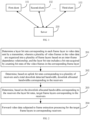
- FIG. 2 is a schematic flow diagram of a method for processing video calls according to some embodiments of the present disclosure.
- the method is performed by an apparatus for processing video calls, wherein the apparatus is implemented by software and/or hardware, and the apparatus is generally integrated in a computer device such as a server.
- the method includes following processes.
- a layer bit rate corresponding to each frame layer in video data sent by a transmitter is determined, wherein a plurality of video frames in the video data are organized into a plurality of frame layers based on an inter-frame dependency relationship, and the layer bit rate includes a bit rate acquired by counting bit rates of video frames in a corresponding frame layer.
- each client is generally the transmitter and the receiver at the same time.
- uplink video data sent by each client is also referred to as video data sent by the transmitter, that is, the video data here may include a plurality pieces of uplink video stream data, and for example, the video data is sent in the form of data packets.
- the receiver is understood as a client that needs to receive other video data other than the video data sent by the receiver per se.
- the client in order to ensure timeliness of a video call, the client usually encodes the video data to be sent by compression encoding prior to sending to the server.
- the video frames in the video data are organized into a plurality of frame layers based on the inter-frame dependency relationship, wherein the inter-frame dependency relationship is understood as a dependency relationship between different video frames, and for example, the inter-frame dependency relationship is determined by an adopted encoding way.
- the video frames are organized into the frame layers based on the inter-frame dependency relationship.
- a group of pictures is understood as a group of consecutive pictures of layer dependence.
- the GOP can be decoded independently, and there is no dependency relationship between the GOPs.
- a first frame of the GOP is usually a key frame (also referred to as frame I) to ensure that the subsequent frames in the GOP are decoded correctly.
- FIG. 3 is a schematic diagram of the inter-frame dependency relationship of the video frames according to some embodiments of the present disclosure. Part of video frames in one GOP are shown in FIG. 3 . Based on the inter-frame dependency relationship, these video frames are categorized into five categories, which are marked as A, B, C, D and E respectively. Generally, A is frame K, B needs to depend on A, C needs to depend on B, D needs to depend on C, and E needs to depend on D. It should be noted that the above dependency relationship is only a schematic illustration, and there are other forms of dependency relationships. During categorization, the frame layers can be categorized based on the specific inter-frame dependency relationship and a required division granularity. Taking the inter-frame dependency relationship shown in FIG.
- the frame layers are categorized based on different categories.
- each category corresponds to one frame layer, and the corresponding frame layers are marked as layer a (corresponding to A), layer b (corresponding to B), layer c (corresponding to C), layer d (corresponding to D) and layer e (corresponding to E).
- a plurality of categories correspond to one frame layer, and the corresponding frame layers are marked as layer f (corresponding to A), layer g (corresponding to B and C) and layer h (corresponding to D and E).
- levels between the frame layers are determined based on the inter-frame dependency relationship. For example, in response to determining that a first video frame depends on a second video frame, a level of a frame layer to which the second video frame belongs is lower than or equal to a level of a frame layer to which the first video frame belongs.
- a level of the layer a is lower than a level of the layer b
- the level of the layer b is lower than a level of the layer c, and so on.
- the layer a has a lowest level and may be also referred to as a bottom layer
- the layer e has a highest level and may be also referred to as a top layer.
- the server upon receiving uplink data packets, distinguishes video packets from non-video packets.
- the non-video packets include data other than the video frame data, such as audio stream data or file data.
- the statistics of layer bit rates are carried out.
- the specific statistical way is not limited. For example, the statistical way is solving of an average value or a median value, or the like.
- determining the layer bit rate corresponding to each frame layer in the video data sent by the transmitter includes: determining, for each frame layer in the video data sent by the transmitter, a target statistical window corresponding to a current frame layer, and acquiring a layer bit rate corresponding to the current frame layer by calculating an average bit rate of video frames belonging to the current frame layer falling within the target statistical window.
- the bit rate of each frame layer is calculated more accurately by counting the average bit rate using a window.
- the target statistical window is a sliding window.
- a length of the target statistical window is measured by a time length.
- the layer bit rate is a sum of data amounts of a plurality of video frames in the target statistical window divided by the length of the target statistical window.
- the lengths of the target statistical window corresponding to different frame layers are the same or different. The length is determined based on the number of video frames that need to be included in some embodiments. For example, the length of the target statistical window is positively proportional to an interval between two adjacent video frames in the corresponding frame layer.
- a longer window is applied to a base layer frame with a lower frame rate, and stability and rapidity of bit rate statistics are both considered for the top layer frame with a higher frame rate.
- a shorter statistical window is applied for bit rate statistics in some embodiments.
- downlink allocated bandwidths corresponding to the receivers are determined.
- a downlink bandwidth (which is also referred to as bandwidth prediction).
- the specific detection way is not limited, for example, the detection is performed based on indicators such as packet loss, time delay, sending bit rate and receiving bit rate.
- the detected bandwidth is also referred to as the total downlink detected bandwidth.
- the statistics of the layer bit rates are performed for a plurality of video streams, and each of the video streams corresponds to one client.
- a corresponding uplink bit rate is a sum of a plurality of layer bit rates plus bit rates of the non-video packets.
- a downlink bandwidth resource that can be occupied by the receivers is allocated, that is, downlink allocated bandwidths corresponding to the receivers are determined.
- the specific allocation way is not limited. For example, equal proportion allocation is performed based on the uplink bit rates, that is, a proportion of each of the uplink bit rates in the sum of uplink bit rates is calculated, and the corresponding downlink allocated bandwidth is acquired by multiplying the proportion by the total downlink detected bandwidth.
- equivalent allocation is performed based on the uplink bit rates, that is, the downlink allocated bandwidth is equal to the uplink bit rate, and at this time, the sum of the uplink bit rates is generally less than or equal to the total downlink detected bandwidth.
- the bandwidth of the receiver with higher uplink bit rate is limited on the basis of equivalent allocation.
- the downlink bandwidth resource is relatively sufficient, the downlink bandwidth may not be allocated, or the subsequent frame extraction processing may not be performed, but all the video frames in the video data are forwarded to corresponding receivers.
- target frame layers corresponding to the receivers are determined.
- the target frame layer is understood as a frame layer that needs frame extraction processing, and the frame extraction processing is understood as abandoning the forwarding of a certain number of video frames to ensure fluency of the video call.
- the corresponding target frame layer is determined for each of the receivers.
- the low-level frame layers of lower levels are preferentially excluded, all the video frames in the low-level frame layers are forwarded, and part or all the other high-level frame layers are selected as the target frame layers.
- a boundary between the low-level frame layers and the high-level frame layers is determined based on the layer bit rate corresponding to each of the frame layers in the video data needing to be received by the receiver and the downlink allocated bandwidth corresponding to the receiver. For example, a sum of the layer bit rates corresponding to the low-level frame layer is less than or equal to the downlink allocated bandwidth.
- video data subjected to frame extraction processing for the target frame layers is forwarded to corresponding receivers.
- the specific frame extraction processing way is not limited, for example, the video frames in the target frame layer are extracted at equal intervals based on a certain frame extraction ratio, or whether a current video frame in the target frame layer needs to be forwarded or extracted (that is, to abandon forwarding) is dynamically decided based on actual network conditions.
- the downlink allocated bandwidth of a certain receiver is equal to the uplink bit rate, it is indicated that the downlink allocated bandwidth of the receiver is relatively sufficient, and the video data to be sent may be directly sent to the receiver without frame extraction processing. That is, in this process, the corresponding receivers include part or all the receivers corresponding to the transmitter, depending on the allocation condition of the downlink bandwidth specifically.
- the layer bit rate corresponding to each of the frame layers in the video data sent by the transmitter is determined, the downlink allocated bandwidths corresponding to the receivers are determined based on the total downlink detected bandwidth and the uplink bit rates corresponding to the receivers, the target frame layers corresponding to the receivers are determined based on the layer bit rates and the downlink distribution bandwidths corresponding to the receivers, and the video data subjected to frame extraction processing for the target frame layers is forwarded to the corresponding receivers.
- the layer bit rate statistics are performed with the frame layer as a unit, the downlink bandwidth is reasonably allocated based on the total downlink detected bandwidth and the uplink bit rate of each of the receivers, and the target frame layers needing frame extraction processing are dynamically determined in combination with the downlink allocated bandwidths and the layer bit rates, such that the frame extraction is performed more reasonably, and a call effect of the multi-person video call is improved.
- forwarding the video data subjected to frame extraction processing for the target frame layer to the corresponding receiver includes: for each receiver of which the downlink allocated bandwidth is less than the uplink bit rate, forwarding video frames of a first frame layer to the receiver, determining video frames to be sent in a corresponding target frame layer based on a predetermined frame extraction strategy, forwarding the video frames to be sent to the receiver, and discarding video frames in the target frame layer other than the video frames to be sent and video frames in a second frame layer, wherein a level of the first frame layer is lower than a level of the corresponding target frame layer, and a level of the second frame layer is higher than a level of the corresponding target frame layer.
- video frames of the frame layer below the target frame layer are directly forwarded.
- video frames of the frame layer above the target frame layer can be discarded, that is, a whole frame layer is extracted, thereby greatly improving the frame extraction efficiency under the condition of slightly affecting a video picture quality.
- Discarding the video frames of the second frame layer is understood as prohibiting the forwarding of the video frames of the second frame layer for the current client.
- determining the video frames to be sent in the corresponding target frame layer based on the predetermined frame extraction strategy includes: determining, for a third video frame in the target frame layer corresponding to a first receiver, whether a size of the third video frame is less than or equal to a first threshold of number of bytes corresponding to the first receiver, and determining, based on the size of the third video frame is less than or equal to the first threshold of number of bytes corresponding to the first receiver, the third video frame as the video frame to be sent; wherein the first threshold of number of bytes is determined based on a first type number of bytes corresponding to the first receiver, the first type number of bytes is a dynamically maintained number of bytes, and the first type number of bytes is dynamically reduced based on a size of actual forwarded data corresponding to the first receiver and dynamically increased based on a speed of the downlink allocated bandwidth corresponding to the first receiver, actual forwarded data including video data and non-video data. In this way, the change in the detected bandwidth is
- the first receiver is any one of the above receivers
- the third video frame is any video frame in the target frame layer corresponding to the first receiver
- the third video frame is understood as the video frame needing to be subjected to frame extraction judgment at present.
- a concept of a frame extraction bucket is proposed in the embodiment of the present disclosure.
- a downlink bit rate is made to correctly track the bandwidth by maintaining an available number of bytes in a standard stream control mode. The available number of bytes is consumed along with transmission of the data packets and regularly reverted based on a speed of the downlink bandwidth, and such a structure is also referred to as a frame extraction bucket.
- the first type number of bytes is understood as a current available number of bytes in the frame extraction bucket, and the first type number of bytes represents an available link resource.
- each receiver corresponds to one frame extraction bucket
- the threshold of number of bytes is determined based on the first type number of bytes corresponding to the receiver, that is, each receiver corresponds to one threshold of number of bytes
- the threshold of number of bytes corresponding to the first receiver is marked as the first threshold of number of bytes.
- the first type number of bytes corresponding to the first receiver is dynamically reduced based on the size of the actual forwarded data corresponding to the first receiver (that is, the available number of bytes is consumed along with the transmission of the data packets mentioned above), and the first type number of bytes corresponding to the first receiver is dynamically increased based on the speed of the downlink allocated bandwidth corresponding to the first receiver (that is, equivalent to the regular revert based on the speed of the downlink bandwidth mentioned above).
- the size of the third video frame is less than or equal to the first threshold of number of bytes corresponding to the first receiver, it is indicated that the available downlink resource of the first receiver is sufficient to support transmission of the third video frame. Therefore, the third video frame is determined as the video frame to be sent.
- the third video frame is not a video frame to be sent and needs to be extracted, that is, forwarding is abandoned.
- the first type number of bytes corresponding to the first receiver is determined by: acquiring an updated first type number of bytes by subtracting, upon sending first data to the first receiver, a size of the first data from a current first type number of bytes; and determining, upon detecting that a predetermined increase event is triggered, a first time interval between a current moment and last time the predetermined increase event is triggered, determining a first increase number of bytes based on a product of the first time interval and a first target bit rate corresponding to the first receiver, and acquiring the updated first type number of bytes by adding the first increase number of bytes to the current first type number of bytes; wherein the first target bit rate is matched with the downlink allocated bandwidth corresponding to the first receiver.
- the predetermined increase event may be triggered at regular intervals, such as every predetermined time length, wherein the predetermined time length is set based on an actual situation, such as 10 milliseconds or 100 milliseconds, which is generally less than 1 second.
- the predetermined increase event may be triggered under specified conditions, for example, the predetermined increase event is triggered once every time one data packet is received.
- the first threshold of number of bytes is determined based on a sum of the first type number of bytes corresponding to the first receiver and a second type number of bytes; wherein the second type number of bytes is determined based on a product of a prediction time window length and the corresponding downlink allocated bandwidth, and a predetermined time window length is determined based on a time series length occupied by video frames depending on a current video frame.
- the link resource consumption possibly caused by the video frames needing to be forwarded is fully predicted, and lagging caused by discarding of a large video frame is prevented.
- the second type number of bytes is also referred to as a prediction number of bytes, representing data amount allowed to be sent in a period in the future.
- the predetermined time window length is understood as a length of a prediction time window, wherein the prediction time window is determined by the level of the frame layer, and essentially depends on the time series length occupied by the video frames in the subsequent frame layer of the current frame.
- the prediction time window is determined by the level of the frame layer, and essentially depends on the time series length occupied by the video frames in the subsequent frame layer of the current frame.
- the current frame is No. 5 frame
- there are No. 6 frame, No. 7 frame and No. 8 frame which depend on No. 5 frame
- the time interval between No. 5 frame and No. 8 frame is regarded as the predetermined time window length.
- the size of No. 5 frame is greater than the corresponding first type number of bytes, it is indicated that the current available downlink resource is insufficient to support the sending of No. 5 frame.
- No. 5 frame is not sent, even though the subsequent No.
- determining whether the size of the third video frame is less than or equal to the first threshold of number of bytes and determining, based on the size of the third video frame is less than or equal to the first threshold of number of bytes, the third video frame as the video frame to be sent includes: determining whether the size of the third video frame is less than or equal to the first threshold of number of bytes, determining, based on the size of the third video frame is less than or equal to the first threshold of number of bytes, whether a total size of the video frames to be determined corresponding to the receivers is less than or equal to a total threshold of number of bytes, wherein the third video frame is included in the video frames to be determined, and determining, based on the total size of the video frames to be determined corresponding to the receivers is less than or equal to the total threshold of number of bytes, the third video frame as the video frame to be sent; wherein the total threshold of number of bytes is determined based on a third type number of bytes, and the third type number of by
- the first threshold of number of bytes is set relatively loose.
- the available number of bytes maintained in the frame extraction bucket is negative within a certain range, that is, the available number of bytes are overdrawn within a certain range. In this way, in a case that the available downlink resource of a certain receiver is less, a small amount of available downlink resource of other receivers are occupied to better cope with individual network fluctuations.
- the total threshold of number of bytes is configured for uniform restriction, such that exceeding the total downlink detected bandwidth is avoided.
- the third type number of bytes is understood as a current available number of bytes in one total frame extraction bucket.
- the frame extraction bucket corresponding to each receiver is considered as a sub-bucket, and the total frame extraction bucket is considered as a combined bucket.
- the sub-bucket is mainly configured to limit the forwarding based on the allocated bandwidth to ensure fairness of a plurality of streams.
- the combined bucket is mainly configured to uniformly limit an export bit rate to avoid an excessive forwarding phenomenon, which is also understood as preventing the amount of forwarded data from exceeding a carrying capacity of the downlink bandwidth.
- the total threshold of number of bytes is determined based on a sum of the third type number of bytes and a fourth type number of bytes, wherein the fourth type number of bytes is determined based on a sum of the second type numbers of bytes corresponding to the video frames to be determined corresponding to all receivers.
- determining, based on the uplink bit rates corresponding to the receivers and the total downlink detected bandwidth, the downlink allocated bandwidths corresponding to the receivers includes: making a sum of the downlink allocated bandwidths corresponding to the receivers is equal to the total downlink detected bandwidth by reducing, in response to determining that a sum of the uplink bit rates corresponding to the receivers is greater than the total downlink detected bandwidth, an initial allocated bandwidth corresponding to at least one receiver in a descending order of the uplink bit rates, wherein the initial allocated bandwidth is matched with a value of the corresponding uplink bit rate. In this way, an initial bandwidth allocation is carried out based on the uplink bit rate of the receiver.
- determining, based on the downlink allocated bandwidths corresponding to the receivers and the layer bit rates, the target frame layers corresponding to the receivers includes: acquiring an accumulated value of layer bit rate by sequentially accumulating, for each receiver of which the downlink allocated bandwidth is less than the uplink bit rate, the layer bit rates corresponding to the frame layers from the frame layer of a lowest level in a level ascending order, and determining, in response to determining that the accumulated value of layer bit rate is greater than a corresponding downlink allocated bandwidth for the first time, a latest accumulated frame layer as the target frame layer. In this way, the target frame layer is quickly and accurately determined.
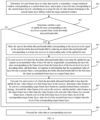
- FIG. 4 is a schematic flow diagram of another method for processing video calls according to some embodiments of the present disclosure
- FIG. 5 is a schematic principle diagram of a video call processing process according to some embodiments of the present disclosure, which is refined on the basis of the above exemplary embodiments. As shown in FIG. 4 , the method includes following processes.
- a target statistical window corresponding to a current frame layer is determined, and a layer bit rate corresponding to the current frame layer is acquired by calculating an average bit rate of video frames belonging to the current frame layer falling within the target statistical window.
- the video frames in the video data are organized into a plurality of frame layers based on an inter-frame dependency relationship, and a length of the target statistical window is positively proportional to the interval between two adjacent video frames in the corresponding frame layer.
- a length of the target statistical window is positively proportional to the interval between two adjacent video frames in the corresponding frame layer.
- the lengths of the corresponding target statistical windows decrease in turn, that is, the length of the target statistical window of layer a is the largest and the length of the target statistical window of layer e is the smallest.
- this process is performed by the uplink controller, and the uplink controller sends relevant information such as the layer bit rate after statistics to the downlink controller, and other processes are performed by the downlink controllers.
- this process is performed by other module such as register, wherein the register is a centralized BitrateRegister in some embodiments.
- the module is configured to uniformly store the layer bit rate statistical information of a plurality of uplink streams.
- the information stored in this module is dynamically updated along with the addition, exit and layer bit rate statistical condition of the uplink streams, and the downlink controller actively accesses the module to acquire the layer bit rate information of the uplink streams at the peer terminal.
- Such a design can avoid repeated forwarding of the uplink statistical information towards a plurality of peer terminal downlink controllers.
- process 403 is performed based on the sum of the uplink bit rates corresponding to the receivers is greater than the total downlink detected bandwidth; and process 406 is performed based on the sum of the uplink bit rates corresponding to the receivers is less than or equal to the total downlink detected bandwidth.
- a bandwidth detection module is configured in the server, wherein the bandwidth detection module is configured to detect the downlink bandwidth, and acquire the total downlink detected bandwidth upon receiving a detection result of the bandwidth detection module.
- the bandwidth detection module is configured to detect the downlink bandwidth, and acquire the total downlink detected bandwidth upon receiving a detection result of the bandwidth detection module.
- the sum of downlink allocated bandwidths corresponding to the receivers is made to be equal to the total downlink detected bandwidth by reducing an initial allocated bandwidth corresponding to at least one receiver in a descending order of the uplink bit rates.
- the downlink controller in the server upon receiving the layer bit rate statistical information, performs bandwidth allocation based on the bit rates of a plurality of uplink streams (that is, the uplink bit rates of the receivers) and the detected bandwidth (that is, the total downlink detected bandwidth). For example, downlink bandwidth allocation is performed by using a waterfilling algorithm.
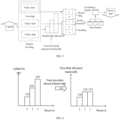
- FIG. 6 is a schematic diagram of a bandwidth allocation process according to some embodiments of the present disclosure.
- the corresponding uplink bit rates are 100kbps (kilobits per second), 200kbps and 300kbps respectively, and the total downlink detected bandwidth is 400kbps, then the sum of the uplink bit rates is greater than the total downlink detected bandwidth, and bandwidth allocation is needed.
- stream X is all forwarded, while about 50kbps and 150kbps of frame data of high frame layers are extracted from stream Y and stream Z respectively in the subsequent frame extraction link.
- an accumulated value of layer bit rate is acquired by sequentially accumulating the layer bit rates corresponding to the frame layers from the frame layer of the lowest level in a level ascending order, and in response to determining that the accumulated value of layer bit rate is greater than a corresponding downlink allocated bandwidth for the first time, the latest accumulated frame layer is determined as a target frame layer.
- process 406 is performed instead of process 404.
- ⁇ i 0 N br i > BWE .
- Level represents the target frame layer
- min represents the minimum value
- N represents the number of frame layers
- i represents the frame layer level
- br represents the layer bit rate
- BWE represents the downlink allocated bandwidth
- FIG. 7 is a schematic diagram of a target frame layer determination process according to some embodiments of the present disclosure.
- the frame layer levels start from 0 to 4, and there are five frame layers in total, which are marked as a, b, c, d and e respectively, the corresponding layer bit rates are 30kpbs, 60kpbs, 80kpbs, 80kpbs and 120kpbs respectively.
- the layer c is the target frame layer.
- video frames of a first frame layer are forwarded to the receiver, video frames to be sent in a corresponding target frame layer are determined based on a predetermined frame extraction strategy, the video frames to be sent are forwarded to the receiver, and the video frames in the target frame layer other than the video frames to be sent and video frames in a second frame layer are discarded, wherein a level of the first frame layer is lower than a level of the corresponding target frame layer, and a level of the second frame layer is higher than the level of the corresponding target frame layer.
- the first frame layer includes the layer a and the layer b
- the target frame layer is the layer c
- the second frame layer includes the layer d and the layer e.
- the corresponding video frames are forwarded to the corresponding receivers.
- the forwarding of corresponding video frames is abandoned.
- the layer c whether forwarding is determined frame by frame.
- each receiver corresponds to one frame extraction bucket, wherein the frame extraction bucket is considered as a sub-bucket. All the receivers correspond to one total frame extraction bucket, wherein the total frame extraction bucket is considered as a combined bucket.
- the available number of bytes is dynamically maintained in the frame extraction bucket, and the available number of bytes represents the available link resource.
- the available number of bytes is reverted based on the speed of the corresponding target bandwidth (wherein the sub-bucket corresponds to the downlink allocated bandwidth, and the combined bucket corresponds to the total downlink detected bandwidth), and the available number of bytes is consumed based on the size of an actual forwarded packet, such that the video stream tracks the target bandwidth. In an ideal state, the reversion and consumption cancel each other out, such that the available number of bytes is close to zero. In this way, the bandwidth resource is effectively utilized and the phenomenon of excessive exceeding is avoided.
- the determinations of the sub-bucket and the combined bucket are performed.
- the determination basis is simply summarized as: where a frame size is less than or equal to a sum of available number of bytes and prediction number of bytes, the video frame will be forwarded; and where the frame size is greater than the sum of the available number of bytes and the prediction number of bytes, the video frame will be discarded.
- the available number of bytes is determined based on the available number of bytes maintained in the sub-bucket.
- the available number of bytes is determined based on the available number of bytes maintained in the combined bucket. The prediction number of bytes and details of the related determination process are referred to the above and not be repeated.
- the video data is forwarded to corresponding receiver.
- the concept of frame extraction bucket is proposed.
- the video data forwarding is optimized by combining the two dimensions of stream dividing and layering.
- the resistance of a server algorithm to fluctuation networks and the rapidity of response are improved without sacrificing the terminal side smoothness.
- the controller tracks the bandwidth information as soon as receiving the bandwidth information, which reduces excessive adjustment. From the user's point of view, when the network suddenly deteriorates, the video call experience is improved by reducing the delay and shortening the emptying period.
- the fairness principle of the sub-bucket design ensures that group calls will not be smooth at one terminal and poor at the other.
- the new frame extraction logic based on the inter-frame dependency relationship considers whether to perform frame extraction with the frame layer as a unit, and determines the target frame layer frame by frame, which is able to extract the most complete frames, avoid the waste of bandwidth resource, and fully predict the link resource consumption possibly caused by the video frames that need to be forwarded, such that the video halting and unbearable delay is avoided to the maximum extent.
- FIG. 8 is a structural block diagram of an apparatus for processing video calls according to some embodiments of the present disclosure.
- the apparatus is implemented by software and/or hardware and generally integrated into a computer device.
- the apparatus performs video call processing by performing the method for processing video calls.
- the apparatus includes:
- the layer bit rate corresponding to each frame layer in the video data sent by the transmitter is determined, the downlink distribution bandwidths corresponding to the receivers are determined based on the uplink bit rates corresponding to the receivers and the total downlink detected bandwidth, the target frame layers corresponding to the receivers are determined based on the layer bit rates and the downlink distribution bandwidths corresponding to the receivers, and the video data subjected to frame extraction processing for the target frame layers is forwarded to the corresponding receivers.
- the layer bit rate statistics are performed with the frame layer as a unit, the downlink bandwidth is reasonably allocated based on the total downlink detected bandwidth and the uplink bit rates of the receivers, and the target frame layers needing frame extraction processing are dynamically determined in combination with the downlink allocated bandwidths and the layer bit rates, such that the frame extraction is performed more reasonably, and a call effect of the multi-person video call is improved.
- FIG. 9 is a structural block diagram of a computer device according to some embodiments of the present disclosure.
- the computer device 900 includes a memory 901, a processor 902 and a computer program stored in the memory 901 and executable on the processor 902.
- the processor 902 when executing the computer program, is caused to perform the method for processing video calls as defined in the embodiments of the present disclosure.
- a storage medium is provided in the embodiments of the present disclosure.
- An computer-executable instruction in the storage medium when executed by a computer processor, causes the processor to perform the method for processing video calls as defined in the embodiments of the present disclosure.
- the storage medium is a non-transitory computer-readable storage medium.
- the apparatus for processing video calls, the device and the storage medium according to the above embodiments execute the method for processing video calls as defined in any one of the embodiments of the present disclosure, and have corresponding functional modules for executing the method and beneficial effects.
- the method for processing video calls according to any one of the embodiments of the present disclosure please refer to the method for processing video calls according to any one of the embodiments of the present disclosure.
Landscapes
- Engineering & Computer Science (AREA)
- Signal Processing (AREA)
- Multimedia (AREA)
- Computer Networks & Wireless Communication (AREA)
- Data Exchanges In Wide-Area Networks (AREA)
- Two-Way Televisions, Distribution Of Moving Picture Or The Like (AREA)
Applications Claiming Priority (2)
| Application Number | Priority Date | Filing Date | Title |
|---|---|---|---|
| CN202111014687.0A CN113747102B (zh) | 2021-08-31 | 2021-08-31 | 视频通话处理方法、装置、设备及存储介质 |
| PCT/CN2022/112959 WO2023029994A1 (zh) | 2021-08-31 | 2022-08-17 | 视频通话处理方法、装置、设备及存储介质 |
Publications (2)
| Publication Number | Publication Date |
|---|---|
| EP4366296A1 true EP4366296A1 (de) | 2024-05-08 |
| EP4366296A4 EP4366296A4 (de) | 2025-04-09 |
Family
ID=78734322
Family Applications (1)
| Application Number | Title | Priority Date | Filing Date |
|---|---|---|---|
| EP22863134.7A Pending EP4366296A4 (de) | 2021-08-31 | 2022-08-17 | Verfahren und vorrichtung zur verarbeitung von videoanrufen, vorrichtung und speichermedium |
Country Status (4)
| Country | Link |
|---|---|
| US (1) | US20250337857A1 (de) |
| EP (1) | EP4366296A4 (de) |
| CN (1) | CN113747102B (de) |
| WO (1) | WO2023029994A1 (de) |
Families Citing this family (3)
| Publication number | Priority date | Publication date | Assignee | Title |
|---|---|---|---|---|
| CN113747102B (zh) * | 2021-08-31 | 2024-04-26 | 百果园技术(新加坡)有限公司 | 视频通话处理方法、装置、设备及存储介质 |
| CN114221870B (zh) * | 2021-12-16 | 2023-01-20 | 北京达佳互联信息技术有限公司 | 用于服务器的带宽分配方法和装置 |
| CN116996709A (zh) * | 2022-04-25 | 2023-11-03 | 广州迈聆信息科技有限公司 | 一种视频流传输方法、系统、服务器及存储介质 |
Family Cites Families (22)
| Publication number | Priority date | Publication date | Assignee | Title |
|---|---|---|---|---|
| US7483487B2 (en) * | 2002-04-11 | 2009-01-27 | Microsoft Corporation | Streaming methods and systems |
| CN100444637C (zh) * | 2005-04-14 | 2008-12-17 | 中兴通讯股份有限公司 | 一种在网络中传输视频流的方法 |
| US8345083B2 (en) * | 2007-07-31 | 2013-01-01 | Cisco Technology, Inc. | Dynamic management of picture quality in a video conference with diversified constraints |
| CN100593953C (zh) * | 2008-04-10 | 2010-03-10 | 清华大学 | 基于pid控制和接收帧率稳定模型的视频传输控制方法 |
| US8345545B2 (en) * | 2009-01-28 | 2013-01-01 | Nec Laboratories America, Inc. | Methods and systems for rate matching and rate shaping in a wireless network |
| CN101552913B (zh) * | 2009-05-12 | 2011-07-06 | 腾讯科技(深圳)有限公司 | 多路视频通讯系统及处理方法 |
| US9232244B2 (en) * | 2011-12-23 | 2016-01-05 | Cisco Technology, Inc. | Efficient frame forwarding in large scale real-time screen content sharing meetings |
| CN103379044A (zh) * | 2012-04-26 | 2013-10-30 | 鸿富锦精密工业(深圳)有限公司 | 网络装置及其动态调整带宽的方法 |
| CN105306385B (zh) * | 2014-07-31 | 2019-09-10 | 腾讯科技(深圳)有限公司 | 下行网络带宽的控制方法及装置 |
| CN105357592B (zh) * | 2015-10-26 | 2018-02-27 | 山东大学苏州研究院 | 一种流媒体自适应传输选择性丢帧方法 |
| CN105392001B (zh) * | 2015-11-16 | 2019-05-28 | 四川大学 | 基于梯度的自适应高性能视频编码码率控制方法 |
| CN105791260A (zh) * | 2015-11-30 | 2016-07-20 | 武汉斗鱼网络科技有限公司 | 一种网络自适应的流媒体服务质量控制方法及装置 |
| CN105681793B (zh) * | 2016-01-06 | 2018-10-23 | 四川大学 | 基于视频内容复杂度自适应的极低延迟高性能视频编码帧内码率控制方法 |
| WO2017124083A1 (en) * | 2016-01-15 | 2017-07-20 | Vid Scale, Inc. | Scalable coding based video distribution |
| EP3244585A1 (de) * | 2016-05-12 | 2017-11-15 | Thomson Licensing | Vorrichtung und verfahren zur kombination verschiedener signalschichten von ldm-signalen |
| US10924526B2 (en) * | 2018-08-10 | 2021-02-16 | Verizon Patent And Licensing Inc. | Adapting an audio bit rate based on changing network conditions |
| CN110418140A (zh) * | 2019-07-26 | 2019-11-05 | 华北电力大学 | 视频的优化传输方法及系统 |
| CN111107297B (zh) * | 2019-12-30 | 2021-06-01 | 广州市百果园网络科技有限公司 | 一种视频传输方法、装置、资源服务器和存储介质 |
| CN113038128B (zh) * | 2021-01-25 | 2022-07-26 | 腾讯科技(深圳)有限公司 | 数据传输方法、装置、电子设备及存储介质 |
| CN112468764B (zh) * | 2021-01-28 | 2021-05-04 | 浙江华创视讯科技有限公司 | 一种流媒体自适应传输的方法、系统、服务器和存储介质 |
| US11277460B1 (en) * | 2021-04-05 | 2022-03-15 | Agora Lab, Inc. | Video communications network with value optimization |
| CN113747102B (zh) * | 2021-08-31 | 2024-04-26 | 百果园技术(新加坡)有限公司 | 视频通话处理方法、装置、设备及存储介质 |
-
2021
- 2021-08-31 CN CN202111014687.0A patent/CN113747102B/zh active Active
-
2022
- 2022-08-17 WO PCT/CN2022/112959 patent/WO2023029994A1/zh not_active Ceased
- 2022-08-17 EP EP22863134.7A patent/EP4366296A4/de active Pending
- 2022-08-17 US US18/686,968 patent/US20250337857A1/en active Pending
Also Published As
| Publication number | Publication date |
|---|---|
| WO2023029994A1 (zh) | 2023-03-09 |
| US20250337857A1 (en) | 2025-10-30 |
| EP4366296A4 (de) | 2025-04-09 |
| CN113747102A (zh) | 2021-12-03 |
| CN113747102B (zh) | 2024-04-26 |
Similar Documents
| Publication | Publication Date | Title |
|---|---|---|
| EP4366296A1 (de) | Verfahren und vorrichtung zur verarbeitung von videoanrufen, vorrichtung und speichermedium | |
| US9998338B2 (en) | System and method for dynamic effective rate estimation for real-time video traffic | |
| CN110365600B (zh) | 一种基于bbr的拥塞控制方法、装置、设备和存储介质 | |
| KR101576704B1 (ko) | 사용자 장비의 결정된 리소스 메트릭에 기초한 미디어 콘텐츠 전달의 최적화 | |
| CN105191209B (zh) | 一种用于调度相同频带内的视频点播流和尽力而为流的方法和装置 | |
| US9455925B2 (en) | Method, device, and system for self-adaptively adjusting data transmission rate | |
| US10382356B2 (en) | Scheduling transmissions of adaptive bitrate streaming flows | |
| CN111615006A (zh) | 基于网络状态自评估的视频编码转换传输控制系统 | |
| US8867347B2 (en) | Method and apparatus for congestion control | |
| WO2021164670A1 (zh) | 视频编码方法、装置、设备及存储介质 | |
| CN113891172B (zh) | 一种适于无线Mesh网络的基于RTT的自适应码率控制方法 | |
| CN104394440A (zh) | 一种http视频流调度方法及装置 | |
| US9319325B2 (en) | Adaptive method and system of regulation of yellow traffic in a network | |
| EP3366060B1 (de) | Zuweisung von funkressourcen in einem zellularen netzwerk | |
| US9402260B2 (en) | Method and device for improving cell throughput based on streaming media service | |
| RU2851521C2 (ru) | Способ и устройство для обработки видеозвонка, вычислительное устройство и носитель данных | |
| JP6276206B2 (ja) | 帯域割り当て制御装置及び帯域割り当て制御方法 | |
| Kim et al. | An effective cross-layer designed packet scheduling, call admission control, and handover system for video streaming services over LTE network | |
| JP6374799B2 (ja) | ネットワーク制御装置及びネットワーク制御方法 | |
| CN115460401A (zh) | 一种优化视频码率分配的方法 | |
| CN115037701B (zh) | 视频处理方法、装置、服务器及介质 | |
| Chandur et al. | Quality of experience aware video scheduling in LTE networks | |
| Wheatman | Optimal Resource Allocation in Wireless Networks for Multimedia Applications | |
| Chen et al. | User Interest-Based Skip Prediction for Optimized Video Streaming Efficiency | |
| CN121000902A (zh) | 视频数据传输方法、装置、电子设备、存储介质和程序产品 |
Legal Events
| Date | Code | Title | Description |
|---|---|---|---|
| STAA | Information on the status of an ep patent application or granted ep patent |
Free format text: STATUS: THE INTERNATIONAL PUBLICATION HAS BEEN MADE |
|
| PUAI | Public reference made under article 153(3) epc to a published international application that has entered the european phase |
Free format text: ORIGINAL CODE: 0009012 |
|
| STAA | Information on the status of an ep patent application or granted ep patent |
Free format text: STATUS: REQUEST FOR EXAMINATION WAS MADE |
|
| 17P | Request for examination filed |
Effective date: 20240202 |
|
| AK | Designated contracting states |
Kind code of ref document: A1 Designated state(s): AL AT BE BG CH CY CZ DE DK EE ES FI FR GB GR HR HU IE IS IT LI LT LU LV MC MK MT NL NO PL PT RO RS SE SI SK SM TR |
|
| DAV | Request for validation of the european patent (deleted) | ||
| DAX | Request for extension of the european patent (deleted) | ||
| A4 | Supplementary search report drawn up and despatched |
Effective date: 20250312 |
|
| RIC1 | Information provided on ipc code assigned before grant |
Ipc: H04N 21/647 20110101ALI20250306BHEP Ipc: H04N 7/14 20060101AFI20250306BHEP |