EP4350133A1 - System zur erfassung von kohlendioxid und schwefeloxiden und verwendung von kohlenstoff für schiffe - Google Patents
System zur erfassung von kohlendioxid und schwefeloxiden und verwendung von kohlenstoff für schiffe Download PDFInfo
- Publication number
- EP4350133A1 EP4350133A1 EP22816254.1A EP22816254A EP4350133A1 EP 4350133 A1 EP4350133 A1 EP 4350133A1 EP 22816254 A EP22816254 A EP 22816254A EP 4350133 A1 EP4350133 A1 EP 4350133A1
- Authority
- EP
- European Patent Office
- Prior art keywords
- carbon dioxide
- flue gas
- basic alkaline
- absorption tower
- reactant
- Prior art date
- Legal status (The legal status is an assumption and is not a legal conclusion. Google has not performed a legal analysis and makes no representation as to the accuracy of the status listed.)
- Pending
Links
Images
Classifications
-
- B—PERFORMING OPERATIONS; TRANSPORTING
- B01—PHYSICAL OR CHEMICAL PROCESSES OR APPARATUS IN GENERAL
- B01D—SEPARATION
- B01D53/00—Separation of gases or vapours; Recovering vapours of volatile solvents from gases; Chemical or biological purification of waste gases, e.g. engine exhaust gases, smoke, fumes, flue gases, aerosols
- B01D53/14—Separation of gases or vapours; Recovering vapours of volatile solvents from gases; Chemical or biological purification of waste gases, e.g. engine exhaust gases, smoke, fumes, flue gases, aerosols by absorption
- B01D53/1456—Removing acid components
- B01D53/1475—Removing carbon dioxide
-
- B—PERFORMING OPERATIONS; TRANSPORTING
- B63—SHIPS OR OTHER WATERBORNE VESSELS; RELATED EQUIPMENT
- B63H—MARINE PROPULSION OR STEERING
- B63H21/00—Use of propulsion power plant or units on vessels
- B63H21/32—Arrangements of propulsion power-unit exhaust uptakes; Funnels peculiar to vessels
-
- B—PERFORMING OPERATIONS; TRANSPORTING
- B01—PHYSICAL OR CHEMICAL PROCESSES OR APPARATUS IN GENERAL
- B01D—SEPARATION
- B01D53/00—Separation of gases or vapours; Recovering vapours of volatile solvents from gases; Chemical or biological purification of waste gases, e.g. engine exhaust gases, smoke, fumes, flue gases, aerosols
- B01D53/14—Separation of gases or vapours; Recovering vapours of volatile solvents from gases; Chemical or biological purification of waste gases, e.g. engine exhaust gases, smoke, fumes, flue gases, aerosols by absorption
- B01D53/1406—Multiple stage absorption
-
- B—PERFORMING OPERATIONS; TRANSPORTING
- B01—PHYSICAL OR CHEMICAL PROCESSES OR APPARATUS IN GENERAL
- B01D—SEPARATION
- B01D53/00—Separation of gases or vapours; Recovering vapours of volatile solvents from gases; Chemical or biological purification of waste gases, e.g. engine exhaust gases, smoke, fumes, flue gases, aerosols
- B01D53/14—Separation of gases or vapours; Recovering vapours of volatile solvents from gases; Chemical or biological purification of waste gases, e.g. engine exhaust gases, smoke, fumes, flue gases, aerosols by absorption
- B01D53/1412—Controlling the absorption process
-
- B—PERFORMING OPERATIONS; TRANSPORTING
- B01—PHYSICAL OR CHEMICAL PROCESSES OR APPARATUS IN GENERAL
- B01D—SEPARATION
- B01D53/00—Separation of gases or vapours; Recovering vapours of volatile solvents from gases; Chemical or biological purification of waste gases, e.g. engine exhaust gases, smoke, fumes, flue gases, aerosols
- B01D53/14—Separation of gases or vapours; Recovering vapours of volatile solvents from gases; Chemical or biological purification of waste gases, e.g. engine exhaust gases, smoke, fumes, flue gases, aerosols by absorption
- B01D53/1456—Removing acid components
- B01D53/1481—Removing sulfur dioxide or sulfur trioxide
-
- B—PERFORMING OPERATIONS; TRANSPORTING
- B01—PHYSICAL OR CHEMICAL PROCESSES OR APPARATUS IN GENERAL
- B01D—SEPARATION
- B01D53/00—Separation of gases or vapours; Recovering vapours of volatile solvents from gases; Chemical or biological purification of waste gases, e.g. engine exhaust gases, smoke, fumes, flue gases, aerosols
- B01D53/14—Separation of gases or vapours; Recovering vapours of volatile solvents from gases; Chemical or biological purification of waste gases, e.g. engine exhaust gases, smoke, fumes, flue gases, aerosols by absorption
- B01D53/18—Absorbing units; Liquid distributors therefor
- B01D53/185—Liquid distributors
-
- B—PERFORMING OPERATIONS; TRANSPORTING
- B01—PHYSICAL OR CHEMICAL PROCESSES OR APPARATUS IN GENERAL
- B01D—SEPARATION
- B01D53/00—Separation of gases or vapours; Recovering vapours of volatile solvents from gases; Chemical or biological purification of waste gases, e.g. engine exhaust gases, smoke, fumes, flue gases, aerosols
- B01D53/34—Chemical or biological purification of waste gases
- B01D53/46—Removing components of defined structure
- B01D53/48—Sulfur compounds
- B01D53/50—Sulfur oxides
- B01D53/501—Sulfur oxides by treating the gases with a solution or a suspension of an alkali or earth-alkali or ammonium compound
- B01D53/502—Sulfur oxides by treating the gases with a solution or a suspension of an alkali or earth-alkali or ammonium compound characterised by a specific solution or suspension
-
- B—PERFORMING OPERATIONS; TRANSPORTING
- B01—PHYSICAL OR CHEMICAL PROCESSES OR APPARATUS IN GENERAL
- B01D—SEPARATION
- B01D53/00—Separation of gases or vapours; Recovering vapours of volatile solvents from gases; Chemical or biological purification of waste gases, e.g. engine exhaust gases, smoke, fumes, flue gases, aerosols
- B01D53/34—Chemical or biological purification of waste gases
- B01D53/46—Removing components of defined structure
- B01D53/62—Carbon oxides
-
- B—PERFORMING OPERATIONS; TRANSPORTING
- B01—PHYSICAL OR CHEMICAL PROCESSES OR APPARATUS IN GENERAL
- B01D—SEPARATION
- B01D53/00—Separation of gases or vapours; Recovering vapours of volatile solvents from gases; Chemical or biological purification of waste gases, e.g. engine exhaust gases, smoke, fumes, flue gases, aerosols
- B01D53/34—Chemical or biological purification of waste gases
- B01D53/74—General processes for purification of waste gases; Apparatus or devices specially adapted therefor
- B01D53/75—Multi-step processes
-
- B—PERFORMING OPERATIONS; TRANSPORTING
- B01—PHYSICAL OR CHEMICAL PROCESSES OR APPARATUS IN GENERAL
- B01D—SEPARATION
- B01D53/00—Separation of gases or vapours; Recovering vapours of volatile solvents from gases; Chemical or biological purification of waste gases, e.g. engine exhaust gases, smoke, fumes, flue gases, aerosols
- B01D53/34—Chemical or biological purification of waste gases
- B01D53/74—General processes for purification of waste gases; Apparatus or devices specially adapted therefor
- B01D53/77—Liquid phase processes
- B01D53/78—Liquid phase processes with gas-liquid contact
-
- B—PERFORMING OPERATIONS; TRANSPORTING
- B01—PHYSICAL OR CHEMICAL PROCESSES OR APPARATUS IN GENERAL
- B01D—SEPARATION
- B01D53/00—Separation of gases or vapours; Recovering vapours of volatile solvents from gases; Chemical or biological purification of waste gases, e.g. engine exhaust gases, smoke, fumes, flue gases, aerosols
- B01D53/34—Chemical or biological purification of waste gases
- B01D53/74—General processes for purification of waste gases; Apparatus or devices specially adapted therefor
- B01D53/77—Liquid phase processes
- B01D53/79—Injecting reactants
-
- B—PERFORMING OPERATIONS; TRANSPORTING
- B01—PHYSICAL OR CHEMICAL PROCESSES OR APPARATUS IN GENERAL
- B01D—SEPARATION
- B01D53/00—Separation of gases or vapours; Recovering vapours of volatile solvents from gases; Chemical or biological purification of waste gases, e.g. engine exhaust gases, smoke, fumes, flue gases, aerosols
- B01D53/34—Chemical or biological purification of waste gases
- B01D53/74—General processes for purification of waste gases; Apparatus or devices specially adapted therefor
- B01D53/86—Catalytic processes
- B01D53/8603—Removing sulfur compounds
- B01D53/8609—Sulfur oxides
-
- C—CHEMISTRY; METALLURGY
- C02—TREATMENT OF WATER, WASTE WATER, SEWAGE, OR SLUDGE
- C02F—TREATMENT OF WATER, WASTE WATER, SEWAGE, OR SLUDGE
- C02F1/00—Treatment of water, waste water, or sewage
- C02F1/66—Treatment of water, waste water, or sewage by neutralisation; pH adjustment
-
- F—MECHANICAL ENGINEERING; LIGHTING; HEATING; WEAPONS; BLASTING
- F01—MACHINES OR ENGINES IN GENERAL; ENGINE PLANTS IN GENERAL; STEAM ENGINES
- F01N—GAS-FLOW SILENCERS OR EXHAUST APPARATUS FOR MACHINES OR ENGINES IN GENERAL; GAS-FLOW SILENCERS OR EXHAUST APPARATUS FOR INTERNAL-COMBUSTION ENGINES
- F01N3/00—Exhaust or silencing apparatus having means for purifying, rendering innocuous, or otherwise treating exhaust
- F01N3/08—Exhaust or silencing apparatus having means for purifying, rendering innocuous, or otherwise treating exhaust for rendering innocuous
- F01N3/0807—Exhaust or silencing apparatus having means for purifying, rendering innocuous, or otherwise treating exhaust for rendering innocuous by using absorbents or adsorbents
- F01N3/0828—Exhaust or silencing apparatus having means for purifying, rendering innocuous, or otherwise treating exhaust for rendering innocuous by using absorbents or adsorbents characterised by the absorbed or adsorbed substances
- F01N3/085—Sulfur or sulfur oxides
-
- F—MECHANICAL ENGINEERING; LIGHTING; HEATING; WEAPONS; BLASTING
- F01—MACHINES OR ENGINES IN GENERAL; ENGINE PLANTS IN GENERAL; STEAM ENGINES
- F01N—GAS-FLOW SILENCERS OR EXHAUST APPARATUS FOR MACHINES OR ENGINES IN GENERAL; GAS-FLOW SILENCERS OR EXHAUST APPARATUS FOR INTERNAL-COMBUSTION ENGINES
- F01N3/00—Exhaust or silencing apparatus having means for purifying, rendering innocuous, or otherwise treating exhaust
- F01N3/08—Exhaust or silencing apparatus having means for purifying, rendering innocuous, or otherwise treating exhaust for rendering innocuous
- F01N3/0807—Exhaust or silencing apparatus having means for purifying, rendering innocuous, or otherwise treating exhaust for rendering innocuous by using absorbents or adsorbents
- F01N3/0828—Exhaust or silencing apparatus having means for purifying, rendering innocuous, or otherwise treating exhaust for rendering innocuous by using absorbents or adsorbents characterised by the absorbed or adsorbed substances
- F01N3/0857—Carbon oxides
-
- B—PERFORMING OPERATIONS; TRANSPORTING
- B01—PHYSICAL OR CHEMICAL PROCESSES OR APPARATUS IN GENERAL
- B01D—SEPARATION
- B01D2251/00—Reactants
- B01D2251/30—Alkali metal compounds
- B01D2251/304—Alkali metal compounds of sodium
-
- B—PERFORMING OPERATIONS; TRANSPORTING
- B01—PHYSICAL OR CHEMICAL PROCESSES OR APPARATUS IN GENERAL
- B01D—SEPARATION
- B01D2251/00—Reactants
- B01D2251/60—Inorganic bases or salts
- B01D2251/606—Carbonates
-
- B—PERFORMING OPERATIONS; TRANSPORTING
- B01—PHYSICAL OR CHEMICAL PROCESSES OR APPARATUS IN GENERAL
- B01D—SEPARATION
- B01D2257/00—Components to be removed
- B01D2257/30—Sulfur compounds
- B01D2257/302—Sulfur oxides
-
- B—PERFORMING OPERATIONS; TRANSPORTING
- B01—PHYSICAL OR CHEMICAL PROCESSES OR APPARATUS IN GENERAL
- B01D—SEPARATION
- B01D2257/00—Components to be removed
- B01D2257/50—Carbon oxides
- B01D2257/504—Carbon dioxide
-
- B—PERFORMING OPERATIONS; TRANSPORTING
- B01—PHYSICAL OR CHEMICAL PROCESSES OR APPARATUS IN GENERAL
- B01D—SEPARATION
- B01D2258/00—Sources of waste gases
- B01D2258/01—Engine exhaust gases
-
- B—PERFORMING OPERATIONS; TRANSPORTING
- B01—PHYSICAL OR CHEMICAL PROCESSES OR APPARATUS IN GENERAL
- B01D—SEPARATION
- B01D2258/00—Sources of waste gases
- B01D2258/02—Other waste gases
- B01D2258/0283—Flue gases
-
- B—PERFORMING OPERATIONS; TRANSPORTING
- B01—PHYSICAL OR CHEMICAL PROCESSES OR APPARATUS IN GENERAL
- B01D—SEPARATION
- B01D2259/00—Type of treatment
- B01D2259/45—Gas separation or purification devices adapted for specific applications
- B01D2259/4566—Gas separation or purification devices adapted for specific applications for use in transportation means
-
- C—CHEMISTRY; METALLURGY
- C02—TREATMENT OF WATER, WASTE WATER, SEWAGE, OR SLUDGE
- C02F—TREATMENT OF WATER, WASTE WATER, SEWAGE, OR SLUDGE
- C02F1/00—Treatment of water, waste water, or sewage
- C02F1/72—Treatment of water, waste water, or sewage by oxidation
- C02F1/722—Oxidation by peroxides
-
- C—CHEMISTRY; METALLURGY
- C02—TREATMENT OF WATER, WASTE WATER, SEWAGE, OR SLUDGE
- C02F—TREATMENT OF WATER, WASTE WATER, SEWAGE, OR SLUDGE
- C02F2101/00—Nature of the contaminant
- C02F2101/10—Inorganic compounds
- C02F2101/101—Sulfur compounds
-
- C—CHEMISTRY; METALLURGY
- C02—TREATMENT OF WATER, WASTE WATER, SEWAGE, OR SLUDGE
- C02F—TREATMENT OF WATER, WASTE WATER, SEWAGE, OR SLUDGE
- C02F2209/00—Controlling or monitoring parameters in water treatment
- C02F2209/06—Controlling or monitoring parameters in water treatment pH
-
- C—CHEMISTRY; METALLURGY
- C02—TREATMENT OF WATER, WASTE WATER, SEWAGE, OR SLUDGE
- C02F—TREATMENT OF WATER, WASTE WATER, SEWAGE, OR SLUDGE
- C02F2209/00—Controlling or monitoring parameters in water treatment
- C02F2209/40—Liquid flow rate
-
- C—CHEMISTRY; METALLURGY
- C02—TREATMENT OF WATER, WASTE WATER, SEWAGE, OR SLUDGE
- C02F—TREATMENT OF WATER, WASTE WATER, SEWAGE, OR SLUDGE
- C02F2209/00—Controlling or monitoring parameters in water treatment
- C02F2209/42—Liquid level
-
- F—MECHANICAL ENGINEERING; LIGHTING; HEATING; WEAPONS; BLASTING
- F01—MACHINES OR ENGINES IN GENERAL; ENGINE PLANTS IN GENERAL; STEAM ENGINES
- F01N—GAS-FLOW SILENCERS OR EXHAUST APPARATUS FOR MACHINES OR ENGINES IN GENERAL; GAS-FLOW SILENCERS OR EXHAUST APPARATUS FOR INTERNAL-COMBUSTION ENGINES
- F01N2570/00—Exhaust treating apparatus eliminating, absorbing or adsorbing specific elements or compounds
- F01N2570/04—Sulfur or sulfur oxides
-
- F—MECHANICAL ENGINEERING; LIGHTING; HEATING; WEAPONS; BLASTING
- F01—MACHINES OR ENGINES IN GENERAL; ENGINE PLANTS IN GENERAL; STEAM ENGINES
- F01N—GAS-FLOW SILENCERS OR EXHAUST APPARATUS FOR MACHINES OR ENGINES IN GENERAL; GAS-FLOW SILENCERS OR EXHAUST APPARATUS FOR INTERNAL-COMBUSTION ENGINES
- F01N2570/00—Exhaust treating apparatus eliminating, absorbing or adsorbing specific elements or compounds
- F01N2570/10—Carbon or carbon oxides
-
- F—MECHANICAL ENGINEERING; LIGHTING; HEATING; WEAPONS; BLASTING
- F01—MACHINES OR ENGINES IN GENERAL; ENGINE PLANTS IN GENERAL; STEAM ENGINES
- F01N—GAS-FLOW SILENCERS OR EXHAUST APPARATUS FOR MACHINES OR ENGINES IN GENERAL; GAS-FLOW SILENCERS OR EXHAUST APPARATUS FOR INTERNAL-COMBUSTION ENGINES
- F01N2590/00—Exhaust or silencing apparatus adapted to particular use, e.g. for military applications, airplanes, submarines
- F01N2590/02—Exhaust or silencing apparatus adapted to particular use, e.g. for military applications, airplanes, submarines for marine vessels or naval applications
-
- Y—GENERAL TAGGING OF NEW TECHNOLOGICAL DEVELOPMENTS; GENERAL TAGGING OF CROSS-SECTIONAL TECHNOLOGIES SPANNING OVER SEVERAL SECTIONS OF THE IPC; TECHNICAL SUBJECTS COVERED BY FORMER USPC CROSS-REFERENCE ART COLLECTIONS [XRACs] AND DIGESTS
- Y02—TECHNOLOGIES OR APPLICATIONS FOR MITIGATION OR ADAPTATION AGAINST CLIMATE CHANGE
- Y02A—TECHNOLOGIES FOR ADAPTATION TO CLIMATE CHANGE
- Y02A50/00—TECHNOLOGIES FOR ADAPTATION TO CLIMATE CHANGE in human health protection, e.g. against extreme weather
- Y02A50/20—Air quality improvement or preservation, e.g. vehicle emission control or emission reduction by using catalytic converters
-
- Y—GENERAL TAGGING OF NEW TECHNOLOGICAL DEVELOPMENTS; GENERAL TAGGING OF CROSS-SECTIONAL TECHNOLOGIES SPANNING OVER SEVERAL SECTIONS OF THE IPC; TECHNICAL SUBJECTS COVERED BY FORMER USPC CROSS-REFERENCE ART COLLECTIONS [XRACs] AND DIGESTS
- Y02—TECHNOLOGIES OR APPLICATIONS FOR MITIGATION OR ADAPTATION AGAINST CLIMATE CHANGE
- Y02C—CAPTURE, STORAGE, SEQUESTRATION OR DISPOSAL OF GREENHOUSE GASES [GHG]
- Y02C20/00—Capture or disposal of greenhouse gases
- Y02C20/40—Capture or disposal of greenhouse gases of CO2
Definitions
- the present disclosure relates to a carbon dioxide and sulfur oxide capture system for ships that can capture carbon dioxide in flue gas using a basic alkali mixture and use the captured carbon dioxides to capture sulfur oxides in the flue gas.
- flue gas containing many harmful substances is discharged from the ship into the atmosphere.
- Representative harmful substances among these flue gases include fine particles, nitrogen oxides, sulfur oxides, carbon dioxide, and the like.
- carbon dioxide is designated as a greenhouse gas that causes global warming, and although the global warming index of carbon dioxide is lower than that of other greenhouse gases, it is important that carbon dioxide accounts for 80% of all greenhouse gas emissions and can regulate emissions. For this reason, the International Maritime Organization (IMO) finally decided to introduce the energy efficiency design index (EEDI) for new ships to be built in the future, and ships will have to reduce greenhouse gases by an average of 30% by 2025.
- EEDI energy efficiency design index
- CCS carbon capture and storage
- EOS enhanced oil recovery
- the present disclosure is to provide a system for reducing carbon dioxide and sulfur oxide in flue gas generated from ships.
- Another objective of the present disclosure is to provide a carbon dioxide and sulfur oxide capture system for ships that can capture carbon dioxide in flue gas using a basic alkaline mixture and use the captured carbon dioxide to capture sulfur oxide in the flue gas.
- an embodiment of the present disclosure provides a carbon dioxide and sulfur oxide capture system for ships, the system including: a mixer for supplying a basic alkaline mixture; an absorption tower for capturing carbon dioxide in the flue gas by reacting the basic alkaline mixture supplied from the mixer and the flue gas having fine droplets through a bubbler installed at the bottom; a separator for collecting a reactant containing carbon dioxide captured in the absorption tower and separating a carbon dioxide reactant and a waste solution from the reactant; and a discharge unit for sending carbon dioxide reactants from the separator to the absorption tower to capture sulfur oxides in the flue gas, and discharging the captured sulfur oxides, carbon dioxide reactants, and residual flue gas.
- the bubbler may form flue gas microbubbles using the flue gas.
- the mixer may be one in which the basic alkaline solution supplied from the basic alkaline solution storage tank and the water supplied from the water supply source are mixed.
- the basic alkaline solution and water may be mixed in a ratio of 1:1 to 1:5.
- the average pH of the basic alkaline mixture may be at least pH 12.
- the basic alkaline mixture may include at least one oxide selected from the group consisting of SiO 2 , Al 2 O 3 , Fe 2 O 3 , TiO 2 , MgO, MnO, CaO, Na 2 O, K 2 O, and P 2 O 3 ; at least one metal selected from the group consisting of Li, Cr, Co, Ni, Cu, Zn, Ga, Sr, Cd, and Pb; and at least one liquid composition selected from the group consisting of sodium tetraborate (Na 2 B 4 O 7 ⁇ 10H 2 O), sodium hydroxide (NaOH), sodium silicate (Na 2 SiO 3 ), and hydrogen peroxide (H 2 O 2 ).
- oxide selected from the group consisting of SiO 2 , Al 2 O 3 , Fe 2 O 3 , TiO 2 , MgO, MnO, CaO, Na 2 O, K 2 O, and P 2 O 3
- at least one metal selected from the group consisting of Li, Cr, Co, Ni, Cu, Zn, Ga
- the absorption tower may be supplied with the basic alkaline mixture from the mixer through a plurality of nozzles installed on the top thereof.
- the absorption tower may be configured in series, parallel, or a series and parallel complex arrangement.
- the carbon dioxide and sulfur oxide capture system for ships may further include: a monitoring unit for monitoring the filling level and pH of the basic alkaline mixture in the absorption tower; and a control unit for controlling the supply amount of the basic alkaline mixture by the monitoring unit.
- the carbon dioxide reactant may include sodium carbonate (Na 2 CO 3 ) or sodium hydrogen carbonate (NaHCO 3 ).
- the carbon dioxide and sulfur oxide capture system for ships may reduce carbon dioxide by capturing carbon dioxide in the flue gas discharged from the ship, and use the captured carbon dioxide to produce sodium carbonate or sodium hydrogen carbonate.
- the carbon dioxide and sulfur oxide capture system for ships uses sodium carbonate or sodium hydrogen carbonate produced from the captured carbon dioxide as a desulfurization agent to capture sulfur oxides from flue gases discharged from ships so that carbon dioxide and sulfur oxides can be simultaneously captured as one system.
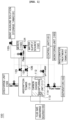
- FIG. 1 is a schematic diagram illustrating a carbon dioxide and sulfur oxide capture system for ships according to the present disclosure.
- first and second may be used to describe various elements, but the elements should not be limited by the terms. The above terms are used only for the purpose of distinguishing one component from another. For example, without departing from the scope of the present disclosure, a first component may be referred to as a second component, and similarly, the second component may also be referred to as a first component.
- the term "include” or “have” is intended to designate that a feature, number, step, operation, component, part, or a combination thereof described in the specification exists and should be understood not to preclude the existence or addition of one or more other features, number, operation, component, component, or combination thereof.
- the present disclosure provides a carbon dioxide and sulfur oxide capture system for ships, the system includes: a mixer for supplying a basic alkaline mixture; an absorption tower for capturing carbon dioxide in the flue gas by reacting the basic alkaline mixture supplied from the mixer, and the flue gas having fine droplets through a bubbler installed at the bottom; a separator for collecting a reactant containing carbon dioxide captured in the absorption tower and separating a carbon dioxide reactant and a waste solution from the reactant; and a discharge unit for sending carbon dioxide reactants from the separator to the absorption tower to collect sulfur oxides in the flue gas, and discharge the captured sulfur oxides, carbon dioxide reactants, and residual flue gas.
- FIG. 1 is a schematic diagram illustrating a carbon dioxide and sulfur oxide capture system 100 for ships according to the present disclosure.
- the capture system 100 for ships captures carbon dioxide in the flue gas discharged from the ship using a basic alkaline solution and uses the captured carbon dioxide to capture sulfur oxide in the flue gas.
- the capture system includes an absorption tower 110, a carbon dioxide capturing unit 111 including a bubbler 113, a flue gas discharge source 120, a mixer 130, a separator 140, and a discharge unit 150.
- the absorption tower 110 may refer to a facility, a building, or a facility for capturing carbon dioxide.
- the carbon dioxide capturing unit 111 positioned at the lower end of the absorption tower 110 is a part of the absorption tower 110 and may mean a part for capturing carbon dioxide by bubbling the flue gas.
- the absorption tower 110 includes a carbon dioxide capturing unit 111 that captures carbon dioxide at the bottom and captures only carbon dioxide in the flue gas by reacting the basic alkaline mixture with the flue gas (flue gas microbubbles).
- the absorption tower 110 has a nozzle installed at the top, and the basic alkaline mixture is sprayed from the mixer 130 through the nozzle into the absorption tower 110 and gathered in the carbon dioxide capturing unit 111 at the bottom.
- the basic alkaline mixture is sprayed, the flue gas supplied from the flue gas discharge source 120 passes through the bubbler 113 in the carbon dioxide capturing unit 111 under the absorption tower 110, and the flue gas generated with microbubbles is supplied, and the basic alkaline mixture and the flue gas microbubbles react in the carbon dioxide capturing unit 111 to capture carbon dioxide.
- the microbubbles are formed as the reactant passes through the bubbler 113, having a fine hole formed in the outlet of the flue gas discharge source 120.
- the absorption tower 110 may include a level indicator 112 inside to detect the filling level of the solution in the absorption tower 110.
- the nozzle may include a plurality of nozzles and may be formed in one or more stages.
- the nozzle may be connected to the mixer 130 to supply the basic alkaline mixed solution from the mixer 130.
- the bubbler 113 may form microbubbles in the flue gas by passing through the flue gas supplied from the flue gas discharge source 120, and the smaller the bubble, the larger the reaction area between the flue gas and the alkaline solution, thereby increasing the carbon dioxide capturing capacity.
- a microbubble may mean air bubbles existing in an aqueous solution having a size of about 50 ⁇ m or less.
- the absorption tower 110 may be configured in series, parallel, or a series and parallel complex arrangement.
- the absorption tower 110 may be arranged in series when the flow rate of the flue gas is high.
- the absorption tower can be installed in series to capture unreacted CO 2 .
- the absorption tower 110 may be arranged in parallel when the amount of the flow of the flue gas is large.
- the amount of carbon dioxide that can be captured may be increased by installing the absorption towers in parallel.
- the flue gas discharge source 120 may utilize all gases that discharge carbon dioxide and sulfur oxide, for example, the rear end of power plant flue gas or the rear end of engine flue gas, and in this disclosure, the flue gas discharged from a ship's boiler, incinerator, engine, etc.
- the mixer 130 mixes the basic alkaline solution supplied from the basic alkaline solution storage tank 131 and the water supplied from the water supply source 132 and supplies the mixture to the nozzle of the absorption tower 110.
- the basic alkaline mixture in which the basic alkaline solution and water are mixed may be supplied using a separately connected bypass line 136 when a supply amount or a required amount of the mixture increases.
- the basic alkaline solution and water may be mixed in a ratio of 1:1 to 1:5.
- the basic alkaline solution and water may be mixed in a ratio of 1:1 to 1:4, 1:1 to 1:3, 1:1 to 1:2, 1:2 to 1:5, 1:2 to 1:3 or 1:3 to 1:5.
- the basic alkaline mixture may include at least one oxide selected from the group consisting of SiO 2 , Al 2 O 3 , Fe 2 O 3 , TiO 2 , MgO, MnO, CaO, Na 2 O, K 2 O, and P 2 O 3 ; at least one metal selected from the group consisting of Li, Cr, Co, Ni, Cu, Zn, Ga, Sr, Cd, and Pb; and at least one liquid composition selected from the group consisting of sodium tetraborate (Na 2 B 4 O 7 ⁇ 10H 2 O), sodium hydroxide (NaOH), sodium silicate (Na 2 SiO 3 ), and hydrogen peroxide (H 2 O 2 ).
- oxide selected from the group consisting of SiO 2 , Al 2 O 3 , Fe 2 O 3 , TiO 2 , MgO, MnO, CaO, Na 2 O, K 2 O, and P 2 O 3
- at least one metal selected from the group consisting of Li, Cr, Co, Ni, Cu, Zn, Ga
- the water supply source 132 may include all water that may be easily obtained at a system installation site and may be, for example, seawater.
- the average pH of the basic alkaline mixture may be at least pH 12.
- the pH may be pH 12 to pH 12.5, pH 12, pH 12.2, pH 12.3, or pH 12.5.
- the pH of the basic alkaline mixed solution may be measured with a pH meter in the absorption tower 110, and when the pH of the basic alkaline mixed solution in the absorption tower 110 is less than 10.5, carbon dioxide cannot be captured anymore. Therefore, in order to match the pH of the basic alkaline mixture, the amount of the basic alkaline solution and the water may be adjusted to 0 to 100% by each valve 132 and 133 and supplied to mixer 130.
- valve 135 When the filling level of the basic alkaline mixture solution in the absorption tower 110 is lowered to less than 90% (measured by a level indicator), valve 135 is adjusted so that the basic alkaline mixture solution is introduced from the mixer 130, and the input may be stopped when the filling level of the solution reaches 100%. At the same time, the basic alkaline solution and water may be mixed until the pH of the basic alkaline mixed solution becomes 12.
- the carbon dioxide capture system can be continuously maintained.
- the valve 135 (including the bypass valve if necessary) is adjusted so that the same amount of the basic alkali mixed solution as the flow meter value installed in the line from the absorption tower 110 to the separator 140 is supplied to the absorption tower 110, thereby making the net flow to 0.
- the reactant containing carbon dioxide captured in the absorption tower 110 moves to the separator 140 to separate the carbon dioxide reactant and the waste solution from the reactant.
- the carbon dioxide reactant may be in a liquid state
- the waste solution may be in a gel state.
- the separator 140 may separate a liquid carbon dioxide reactant and a gel waste solution using a centrifugal separation method.
- the waste solution excluding the carbon dioxide reactant from the reactant, is moved to the wastewater treatment tank 141 and discarded.
- the waste solution may include a basic alkaline mixture (illite mineral, water, etc.) that has finished the role of a catalyst.
- the carbon dioxide reactant may include sodium carbonate (Na 2 CO 3 ) or sodium hydrogen carbonate (NaHCO 3 ).
- the carbon dioxide reactant may be produced by reacting a basic alkaline mixture with carbon dioxide, as shown in Formula 1 below.
- Formula 1 2NaOH + CO 2 ⁇ Na 2 CO 3 + H 2 O Na 2 CO 3 + H 2 O + CO 2 ⁇ 2NaHCO 3
- the carbon dioxide reactant separated in the separator 140 is sent to the absorption tower 110 to capture sulfur oxides in the remaining flue gas after carbon dioxide is captured.
- the carbon dioxide reactant may be recycled as a desulfurization catalyst for removing sulfur oxides. Accordingly, it is possible to capture carbon dioxide and recycle the captured carbon dioxide in one system.
- the carbon dioxide reactant and sulfur oxides in the residual flue gas may be captured by reacting, as shown in Formula 2 below.
- Formula 2 [Formula 2] 2NaHCO 3 + SO 2 + 1/2O 2 ⁇ Na 2 SO 4 + 2CO 2 + H 2 O Na 2 CO 3 + SO 2 + 1/2O 2 ⁇ Na 2 SO 4 + 2CO 2
- the solution containing the captured sulfur oxides present in the absorption tower 110, the carbon dioxide reactant, and the residual flue gas from which carbon dioxide and sulfur oxides are removed may be discharged to the outside through the discharge unit 150.
- the material discharged to the discharge unit 150 may discharge residual flue gas (N 2 , O 2 , etc.) from which carbon dioxide and sulfur oxides have been removed, and sodium sulfate (Na 2 SO 4 ) formed by removing sulfur oxide by reacting carbon dioxide reactant with a sulfur oxide.
- the sodium sulfate may be floated in a solid state having a very small particle size and then emitted together with the residual flue gas.
- the solution containing the captured sulfur oxides may be sodium sulfate (Na 2 SO 4 ), and the carbon dioxide reactant may be sodium carbonate (Na 2 CO 3 ) or sodium hydrogen carbonate (NaHCO 3 ).
- the carbon dioxide and sulfur oxide capture system 100 for ships may further include: a monitoring unit 160 for monitoring the filling level and pH of the basic alkaline mixture in the absorption tower; and a control unit 161 for controlling the supply amount of the basic alkaline mixture by the monitoring unit 160.
- the monitoring unit 160 manages the values of the gas meter, the pH meter, and the flow meter measured in all processes of the carbon dioxide and sulfur oxide capture system 100 for ships, and the control unit 161 is adjusted based on the values indicated by the monitoring unit 160.
- the valves 114, 133, 134, and 135 may be adjusted as a percentage with respect to a value input from the control unit 161.
- the carbon dioxide and sulfur oxide capture system 100 for ships may reduce carbon dioxide by capturing carbon dioxide in the flue gas discharged from the ship and use the captured carbon dioxide to produce sodium carbonate or sodium hydrogen carbonate.
- the present disclosure can be widely used in a carbon dioxide and sulfur oxide capture system for ships.
Landscapes
- Engineering & Computer Science (AREA)
- Chemical & Material Sciences (AREA)
- Chemical Kinetics & Catalysis (AREA)
- Analytical Chemistry (AREA)
- General Chemical & Material Sciences (AREA)
- Oil, Petroleum & Natural Gas (AREA)
- Environmental & Geological Engineering (AREA)
- Health & Medical Sciences (AREA)
- Biomedical Technology (AREA)
- Combustion & Propulsion (AREA)
- Mechanical Engineering (AREA)
- General Engineering & Computer Science (AREA)
- Ocean & Marine Engineering (AREA)
- Life Sciences & Earth Sciences (AREA)
- Hydrology & Water Resources (AREA)
- Water Supply & Treatment (AREA)
- Organic Chemistry (AREA)
- Treating Waste Gases (AREA)
- Gas Separation By Absorption (AREA)
Applications Claiming Priority (2)
| Application Number | Priority Date | Filing Date | Title |
|---|---|---|---|
| KR1020210069998A KR102470193B1 (ko) | 2021-05-31 | 2021-05-31 | 선박용 이산화탄소 및 황산화물 포집, 및 탄소자원화 시스템 |
| PCT/KR2022/001990 WO2022255590A1 (ko) | 2021-05-31 | 2022-02-09 | 선박용 이산화탄소 및 황산화물 포집, 및 탄소자원화 시스템 |
Publications (2)
| Publication Number | Publication Date |
|---|---|
| EP4350133A1 true EP4350133A1 (de) | 2024-04-10 |
| EP4350133A4 EP4350133A4 (de) | 2025-05-21 |
Family
ID=84235627
Family Applications (1)
| Application Number | Title | Priority Date | Filing Date |
|---|---|---|---|
| EP22816254.1A Pending EP4350133A4 (de) | 2021-05-31 | 2022-02-09 | System zur erfassung von kohlendioxid und schwefeloxiden und verwendung von kohlenstoff für schiffe |
Country Status (5)
| Country | Link |
|---|---|
| US (1) | US20230311057A1 (de) |
| EP (1) | EP4350133A4 (de) |
| KR (1) | KR102470193B1 (de) |
| CN (1) | CN117242243A (de) |
| WO (1) | WO2022255590A1 (de) |
Families Citing this family (5)
| Publication number | Priority date | Publication date | Assignee | Title |
|---|---|---|---|---|
| IL298940A (en) | 2020-06-09 | 2023-02-01 | Global Thermostat Operations Llc | Continuous-direct motion air capture system |
| KR20250003953A (ko) | 2022-05-27 | 2025-01-07 | 제로 카본 시스템즈, 인크. | 고처리량 이동 패널 직접 공기 포집 시스템 |
| KR102927782B1 (ko) * | 2022-12-27 | 2026-02-13 | 주식회사 나노텍세라믹스 | 이산화탄소 저감 시스템 |
| CN117085465A (zh) * | 2023-08-23 | 2023-11-21 | 上海船舶研究设计院 | 船舶碳捕捉设备布置结构 |
| US12102959B1 (en) * | 2024-02-22 | 2024-10-01 | Cameron International Corporation | Systems and methods of carbon capture using produced water |
Family Cites Families (8)
| Publication number | Priority date | Publication date | Assignee | Title |
|---|---|---|---|---|
| JP2678697B2 (ja) * | 1991-07-19 | 1997-11-17 | 株式会社日立製作所 | 燃焼排ガスから酸性ガスの除去方法 |
| JP2006320879A (ja) * | 2005-05-18 | 2006-11-30 | Susumu Namekawa | 二酸化炭素の除去装置 |
| KR20100037627A (ko) | 2007-08-01 | 2010-04-09 | 제로젠 피티와이 리미티드 | 발전 방법 및 시스템 |
| EP2574393A1 (de) * | 2011-09-30 | 2013-04-03 | Alfa Laval Aalborg A/S | Wäschersystem und -verfahren |
| KR101379856B1 (ko) * | 2013-11-08 | 2014-04-01 | (주)대우건설 | 해수와 알칼리 현탁액을 이용한 선박용 이산화탄소 포집장치 및 방법 |
| DK178135B1 (en) * | 2014-03-28 | 2015-06-15 | Man Diesel & Turbo Deutschland | An internal combustion engine, and a method of removing sulphur oxides from exhaust gas |
| KR102387171B1 (ko) | 2015-10-30 | 2022-04-15 | 대우조선해양 주식회사 | 선박의 이산화탄소 처리 시스템 및 방법 |
| JP6953877B2 (ja) * | 2017-08-08 | 2021-10-27 | 株式会社Ihi | 二酸化炭素固定方法及び装置と排煙脱硫設備 |
-
2021
- 2021-05-31 KR KR1020210069998A patent/KR102470193B1/ko active Active
-
2022
- 2022-02-09 WO PCT/KR2022/001990 patent/WO2022255590A1/ko not_active Ceased
- 2022-02-09 EP EP22816254.1A patent/EP4350133A4/de active Pending
- 2022-02-09 US US18/040,582 patent/US20230311057A1/en active Pending
- 2022-02-09 CN CN202280032721.3A patent/CN117242243A/zh active Pending
Also Published As
| Publication number | Publication date |
|---|---|
| WO2022255590A1 (ko) | 2022-12-08 |
| US20230311057A1 (en) | 2023-10-05 |
| EP4350133A4 (de) | 2025-05-21 |
| KR102470193B1 (ko) | 2022-11-24 |
| CN117242243A (zh) | 2023-12-15 |
Similar Documents
| Publication | Publication Date | Title |
|---|---|---|
| EP4350133A1 (de) | System zur erfassung von kohlendioxid und schwefeloxiden und verwendung von kohlenstoff für schiffe | |
| EP4349452A1 (de) | Landbasiertes system zur erfassung von kohlendioxid und schwefeloxid und zur umwandlung in eine kohlenstoffressource | |
| US9040005B2 (en) | Scrubber system and method | |
| US7780932B2 (en) | Flue gas desulfurization process | |
| EP4471259A1 (de) | Kohlendioxidabscheidungs- und kohlenstoffabscheidungs- und nutzungssystem für schiffe und verfahren dafür | |
| EP4467226A1 (de) | Kohlendioxid- und schwefeloxidabscheidung sowie kohlenstoffressourcenumwandlungssystem zur kohlegefeuerten stromerzeugung | |
| CN109126458A (zh) | 船舶烟气脱硫方法及装置 | |
| CN116507795A (zh) | 船舶的温室气体减排装置及具备其的船舶 | |
| CN105195017A (zh) | 船舶柴油机废气高效洗涤脱硫除尘工艺设备 | |
| CN103007691A (zh) | 一种船用燃机烟气脱硫脱硝一体化方法及设备 | |
| CN107754607B (zh) | 一种船舶柴油机废气综合处理方法及装置 | |
| CN109475809A (zh) | 用于减少海洋二氧化硫排放的方法和系统 | |
| KR102761539B1 (ko) | 해수 및 배가스를 이용한 선박용 이산화탄소 포집 및 탄소자원화 시스템 | |
| CN101636217A (zh) | 烟道气脱硫方法 | |
| CN118541565A (zh) | 二氧化碳捕获反应物储藏系统 | |
| KR102757058B1 (ko) | 석탄가스화 복합발전용 이산화탄소 및 황산화물 포집, 및 탄소자원화 시스템 | |
| EP3858468A1 (de) | Verfahren und absorptionseinheit zur entfernung von co2 aus kraftfahrzeugabgas | |
| US20250214026A1 (en) | System for carbon dioxide capture and carbon recycling for steel mill | |
| Kim et al. | Marine flue gas desulfurization processes: recent developments, challenges, and perspectives |
Legal Events
| Date | Code | Title | Description |
|---|---|---|---|
| STAA | Information on the status of an ep patent application or granted ep patent |
Free format text: STATUS: THE INTERNATIONAL PUBLICATION HAS BEEN MADE |
|
| PUAI | Public reference made under article 153(3) epc to a published international application that has entered the european phase |
Free format text: ORIGINAL CODE: 0009012 |
|
| STAA | Information on the status of an ep patent application or granted ep patent |
Free format text: STATUS: REQUEST FOR EXAMINATION WAS MADE |
|
| 17P | Request for examination filed |
Effective date: 20231121 |
|
| AK | Designated contracting states |
Kind code of ref document: A1 Designated state(s): AL AT BE BG CH CY CZ DE DK EE ES FI FR GB GR HR HU IE IS IT LI LT LU LV MC MK MT NL NO PL PT RO RS SE SI SK SM TR |
|
| DAV | Request for validation of the european patent (deleted) | ||
| DAX | Request for extension of the european patent (deleted) | ||
| A4 | Supplementary search report drawn up and despatched |
Effective date: 20250423 |
|
| RIC1 | Information provided on ipc code assigned before grant |
Ipc: B63H 21/32 20060101ALN20250415BHEP Ipc: B01D 53/75 20060101ALI20250415BHEP Ipc: B01D 53/62 20060101ALI20250415BHEP Ipc: B01D 53/50 20060101ALI20250415BHEP Ipc: B01D 53/18 20060101ALI20250415BHEP Ipc: C02F 1/66 20230101ALI20250415BHEP Ipc: B01D 53/79 20060101ALI20250415BHEP Ipc: B01D 53/78 20060101ALI20250415BHEP Ipc: B01D 53/14 20060101ALI20250415BHEP Ipc: F01N 11/00 20060101ALI20250415BHEP Ipc: F01N 3/00 20060101ALI20250415BHEP Ipc: F01N 3/04 20060101AFI20250415BHEP |
|
| STAA | Information on the status of an ep patent application or granted ep patent |
Free format text: STATUS: EXAMINATION IS IN PROGRESS |
|
| 17Q | First examination report despatched |
Effective date: 20260202 |