EP4345554B1 - Verfahren für eine computer-gestützte installation von räumlich dezentral angeordneten, elektrischen komponenten einer maschine - Google Patents
Verfahren für eine computer-gestützte installation von räumlich dezentral angeordneten, elektrischen komponenten einer maschine Download PDFInfo
- Publication number
- EP4345554B1 EP4345554B1 EP22199162.3A EP22199162A EP4345554B1 EP 4345554 B1 EP4345554 B1 EP 4345554B1 EP 22199162 A EP22199162 A EP 22199162A EP 4345554 B1 EP4345554 B1 EP 4345554B1
- Authority
- EP
- European Patent Office
- Prior art keywords
- installation
- connection
- component
- user
- machine
- Prior art date
- Legal status (The legal status is an assumption and is not a legal conclusion. Google has not performed a legal analysis and makes no representation as to the accuracy of the status listed.)
- Active
Links
Images


Classifications
-
- G—PHYSICS
- G05—CONTROLLING; REGULATING
- G05B—CONTROL OR REGULATING SYSTEMS IN GENERAL; FUNCTIONAL ELEMENTS OF SUCH SYSTEMS; MONITORING OR TESTING ARRANGEMENTS FOR SUCH SYSTEMS OR ELEMENTS
- G05B19/00—Programme-control systems
- G05B19/02—Programme-control systems electric
- G05B19/418—Total factory control, i.e. centrally controlling a plurality of machines, e.g. direct or distributed numerical control [DNC], flexible manufacturing systems [FMS], integrated manufacturing systems [IMS] or computer integrated manufacturing [CIM]
- G05B19/41805—Total factory control, i.e. centrally controlling a plurality of machines, e.g. direct or distributed numerical control [DNC], flexible manufacturing systems [FMS], integrated manufacturing systems [IMS] or computer integrated manufacturing [CIM] characterised by assembly
-
- G—PHYSICS
- G06—COMPUTING OR CALCULATING; COUNTING
- G06F—ELECTRIC DIGITAL DATA PROCESSING
- G06F3/00—Input arrangements for transferring data to be processed into a form capable of being handled by the computer; Output arrangements for transferring data from processing unit to output unit, e.g. interface arrangements
- G06F3/16—Sound input; Sound output
-
- G—PHYSICS
- G05—CONTROLLING; REGULATING
- G05B—CONTROL OR REGULATING SYSTEMS IN GENERAL; FUNCTIONAL ELEMENTS OF SUCH SYSTEMS; MONITORING OR TESTING ARRANGEMENTS FOR SUCH SYSTEMS OR ELEMENTS
- G05B2219/00—Program-control systems
- G05B2219/30—Nc systems
- G05B2219/31—From computer integrated manufacturing till monitoring
- G05B2219/31027—Computer assisted manual assembly CAA, display operation, tool, result
-
- G—PHYSICS
- G05—CONTROLLING; REGULATING
- G05B—CONTROL OR REGULATING SYSTEMS IN GENERAL; FUNCTIONAL ELEMENTS OF SUCH SYSTEMS; MONITORING OR TESTING ARRANGEMENTS FOR SUCH SYSTEMS OR ELEMENTS
- G05B2219/00—Program-control systems
- G05B2219/30—Nc systems
- G05B2219/31—From computer integrated manufacturing till monitoring
- G05B2219/31034—Component identifier and location indicator corresponding to component
-
- G—PHYSICS
- G05—CONTROLLING; REGULATING
- G05B—CONTROL OR REGULATING SYSTEMS IN GENERAL; FUNCTIONAL ELEMENTS OF SUCH SYSTEMS; MONITORING OR TESTING ARRANGEMENTS FOR SUCH SYSTEMS OR ELEMENTS
- G05B2219/00—Program-control systems
- G05B2219/30—Nc systems
- G05B2219/31—From computer integrated manufacturing till monitoring
- G05B2219/31046—Aid for assembly, show display on screen next workpiece, task, position to be assembled, executed
Definitions
- the present invention relates generally to the field of planning and assembly of machines such as automation systems, and to computer-aided installation of spatially decentralized electrical components of a machine.
- EP 3 244 286 A1 discloses a computer-implemented method, a computer program product and a computer system for installing a first physical element on or in a second physical element.
- WO 2022/020787 A1 Techniques for managing electrical devices are described. Embodiments include a method for managing the retrofit of electrical devices.
- the subject matter of the invention is a method for a computer-aided electrical installation of spatially decentralized electrical components of a machine, in the form of a system.
- the machine can be designed as a machine with a modular character or as a mobile or movable machine in which individual parts of the machine are installed modularly according to an installation specification. This installation is carried out at least partially manually by a user such as a worker.
- the electrical components can be connection modules that enable a decentralized and modular connection of installation elements.
- Decentralized can refer to the fact that the connection modules at least partially replace a central control cabinet, in that the connection modules only provide some of the connections for the machine, but enable these connections to be made decentrally in the field.
- a point-to-point connection is particularly referred to, i.e. the start point, the connection and the end point are clearly defined.
- the following components can be provided for a machine, for example: devices such as actuators and/or sensors, the connection modules, installation elements, e.g. for cabling.
- the method thus enables simpler, faster and error-free assignment of installation elements to components and can thus provide a user with significant support for installing the machine and simplify the process. Furthermore, in this way, a support system for installation, in particular for cabling, can be provided spatially directly on the identified component for guided orientation of the user, in which a data processing device can carry out the process steps automatically.
- the data processing device In particular, a device for data processing according to the invention can advantageously communicate with individual components and thus enable the output of the installation information.
- the data processing device can have at least one interface for communication.
- a user can be, for example, an installer and/or system mechanic and/or electrician and/or worker and/or planner and/or mechanical designer or developer and/or electrical designer or developer and/or PLC programmer and/or commissioning engineer and/or maintenance engineer and/or machine operator. It is possible for the user to use the method according to the invention by making the method available to the user via a computer. For this purpose, a computer program can be executed at least partially by the computer and/or another computer in order to carry out the method steps according to the invention.
- the steps of a method according to the invention can also be carried out multiple times and/or at least partially in parallel. For example, the steps are carried out at least partially simultaneously for at least two or at least three or at least four users.
- Each of these installation elements can be assigned an identifier by which the installation elements can be uniquely identified.
- the identifier can accordingly be information that can be processed digitally, for example.
- the respective installation element can have the identifier in that a physical means of identification is provided and/or attached to the installation element.
- the installation elements can be, for example, cables or components that are a functional part of the machine.
- the identifier advantageously comprises a unique and, in particular, one-to-one identifier. This makes it possible to clearly identify the installation element using the identifier in connection with the machine and/or other machines and/or the installation of the machine.
- One or more pieces of information about the installation element can be assigned to the identifier.
- the at least one piece of information can comprise at least one of the following pieces of information: at least one piece of status information, the output installation information, an identifier of the identified component, at least one of the documentation specifications described in more detail below, such as component type, machine type, system type, user, connection point designation, time stamp date and time, installation duration, Address in a bus system, equipment identification, cable length, port assignment, properties of the open cable, temperature, humidity, current project status during assembly, plan deviation and reason.
- a digital storage of at least one piece of information assigned to the identifier thus makes it possible to create a digital twin of the installation element. In this way, a passive smartification of the installation element can be made possible.
- Smartification is understood in particular as an extension of an industrial product such as a component and/or a part and/or an installation element, such as a cable, to include intelligent properties. With the help of information technologies, it can be made possible for components to process data and offer additional added value. Passive smartification can be provided as a corresponding preliminary stage using a passive intelligent component such as an NFC chip (near field communication, abbreviated to NFC) and/or a machine-readable code. This can create a basis for automated recording or for changes and their effects on the function of a machine. The clear, preferably one-to-one identification in conjunction with access to an external database can enable the active enrichment of information and thus passive smartification.
- NFC chip near field communication, abbreviated to NFC
- the installation elements are used to operate the machine's devices such as actuators and/or sensors, i.e. preferably to control and/or read them.
- a control device such as a PLC (programmable logic controller) can be provided to operate the devices, which can carry out the electrical operation of the devices via the installation elements and components.
- the control device can be electrically connected to the components.
- the installation element comprises a cable and/or a component, whereby the cable can have at least or exactly one connector and can preferably be assembled on one side, i.e. has a female or male connector on one side and an open end on the other side.
- the cable can also be assembled on both sides, i.e. the cable has a female or male connector on each side.
- the at least one installation information item contains installation instructions to support a user such as a worker and/or
- the installation instructions can also include instructions for installation, e.g. step-by-step instructions.
- the display element lighting up can indicate the connection point on the component to which the installation element should be connected. Furthermore, the display element lighting up can make it possible to indicate a correctly or incorrectly assigned connection point.
- the component can have several of the display elements which are assigned to corresponding connection points of the component, e.g. by being arranged next to one another on a connection element.
- connection point in particular a connection port, which is provided according to the installation specification for connecting the installation element with the received identifier, can be queried, for example, via the received identifier from the installation specification.
- the installation specification can enable an electronic query, e.g. using a database and/or a list and/or the like.
- connection point on the user interface can, for example, comprise a graphical representation of the connection points of the component, whereby the connection point intended for the connection of the installation element with the received identifier is graphically highlighted.
- the user interface can be a graphical user interface that is displayed on a screen, preferably a computer.
- the computer can be, for example, a portable computer such as a laptop or tablet.
- the display using augmented reality can be done, for example, by a user using VR (virtual reality) glasses to display additional information and/or by recording the user's surroundings with a camera and processing the camera image to incorporate additional information into the camera image.
- the additional information includes, for example, highlighting the connection point if the physical connection point of the component is visible in the camera image.
- an acoustic output can also be provided, which includes, for example, controlling a loudspeaker.
- the acoustic output can, for example, be a voice output through which the connection designation of the connection point is spoken.
- the method comprises the following further step: determining a connection state between the installation element and the electrical component in order to determine whether the connection has been established.
- determining a connection state can also include: receiving an installation message based on an input from the user and/or from the electrical component.
- the received installation message can indicate that the connection of the installation element to the electrical component, preferably to a displayed connection point of the electrical component, has been established. Accordingly, it can be checked that the connection point that was displayed has actually been connected to the installation element. It is possible that by determining the Establishing the connection, e.g. by a manual acknowledgement by a user and/or an automatic acknowledgement by establishing the connection, if, for example, both sides of a cable have been connected, documentation is triggered. During documentation, for example, installation documentation is stored, as will be described in more detail below. This documentation can be carried out repeatedly if necessary, e.g. every time an activity is acknowledged, in order to gradually build up the documentation of the installation.
- the system and preferably the device according to the invention can communicate with the components.
- the control device can optionally be programmed and/or the component(s) configured on the basis of the documentation. For this reason, it is possible that the component does not know in advance what task it has to perform in the future machine. This can also be referred to as "unconfigured".
- verification can be carried out based on the determination of the connection status. Verification thus makes it possible to assess whether the user has correctly followed the installation instructions.
- the result of the verification can be used to store the marking in the installation specification.
- the installation specification can thus be used at a later point in time to check whether the installation specification was followed and/or to what extent the installation deviated from the installation specification.
- a user can be provided with the option of entering an installation parameter, for example via the user interface and/or an input device such as voice input and/or a keyboard and/or a mouse and/or a touchscreen.
- an input device such as voice input and/or a keyboard and/or a mouse and/or a touchscreen.
- At least one of the following steps can be carried out: storing an identification of the connection point as a changed connected connection point in the installation specification, preferably based on an installation parameter entered by the user, in particular a reason or cause for the change, wherein preferably an indication of the cause or cause for the change is also stored, and preferably: initiating a correction of the connection in accordance with the installation specification.
- the correction can, for example, include an adjustment of the installation specification if the new connection is justified and thus contributes advantageously to the desired installation.
- the specified measurement value can be a reference value, which is compared with the transmitted measurement value as the current measurement value.
- the establishment of the connection can be considered to be correct and/or complete, for example, if the transmitted measurement value meets a predefined condition such as exceeding the reference value.
- the at least one installation information comprises an installation instruction to assist a user in rebuilding the machine, wherein preferably the initiation of the output at least following step: initiating an output of an installation sequence using the at least one installation information for the installation of the machine.
- the installation information can, for example, include installation instructions, which also specify an installation sequence. This simplifies installation for a user and speeds up installation, since a complex interpretation of a circuit diagram and in particular a connection plan is at least partially no longer necessary.
- the initiation of the output includes the initiation of a bidirectional communication with the identified component via a bus system.
- the output can be triggered, for example, by a specific message, preferably a command, being transmitted to the component via the communication.
- a computer program can be executed by a data processing device, wherein the data processing device is connected to the bus system.
- the invention can provide that at least one of the following specifications is received, preferably by the installation message, in order to create a digital twin of the installation element and/or the electrical component based on the received identifier and the identified component: component type, machine type, system type, user, connection point designation, time stamp date and time, installation duration, address in a bus system, equipment identification, cable length, port assignment, properties of the open cable, temperature, humidity, current project status during assembly, plan deviation and reason.
- the at least one specification can also be referred to as a documentation specification in the context of this invention.
- the installation message can, for example, have been generated on the basis of an input from a user, whereby the user can have specified the at least one specification in the input. It is also possible for the specification to be determined automatically, e.g. by the component and/or a data processing device, in particular based on the received identifier. For this purpose, the at least one specification can, for example, be stored in the component and/or in the installation element.
- the installation information comprises an installation configuration and/or installation documentation, preferably for disassembly and/or reassembly of the machine, which is stored for documentation purposes, preferably stored in a data storage device and/or transferred to the electrical component.
- the data storage device can be a non-volatile Data storage must be implemented to reliably enable later evaluation of the installation configuration and/or the installation documentation.
- the installation configuration and/or the installation documentation can, for example, include the stored label based on the verification.
- the installation information comprises a unique identifier which identifies the installation element and/or the identified component, wherein the installation information is stored in the installation specification, in particular in a digitized construction plan, preferably comprising ECAD and/or MCAD data, and/or wherein the installation element is selected from a plurality of similar installation elements based on the identifier and/or the identified component is selected from a plurality of similar components.
- the installation specification thus makes it possible to query the assignment of the installation elements to the components based on the identifier and/or the identifier.
- the installation specification can comprise a link between the identifiers and/or with the identifiers.
- the identifier can optionally be uniquely assigned to one of the identifiers of the installation elements and/or the identifier can correspond to this identifier.
- the installation specification includes a predefined specification for a modular and/or decentralized structure of the machine, in particular the system, preferably based on predetermined ECAD and/or MCAD data, in particular for interconnecting the installation elements in the form of cables and/or components by means of the component in the form of connection modules, preferably comprising an electrical connection plan, wherein the installation specification is preferably determined by linking the ECAD and MCAD data.
- the installation specification can thus include a digital circuit diagram and/or construction plan and/or installation plan of the machine.
- a configuration of the component is carried out on the basis of the identifier in order to transfer the component from a basic configured state, in which the component is preferably configured for bidirectional communication by means of a bus system and/or functional control by a control device, preferably a PLC, is excluded, to a state with an extended configuration for functional control by the control device.
- a control device preferably a PLC
- the received identifier makes it possible to identify which installation element has been connected (or is to be connected) to the component. This identification can be used to automate the configuration of the components required for installation, which significantly reduces the configuration effort required for a component during installation.
- the received identifier and the installation specification are used to determine which of the components is (or will be) connected to the installation element.
- the component can be configured accordingly for this installation element so that for later functional control by the control device, the control device knows that the installation element is connected to this component. This enables the control device, for example, to operate at least one device of the machine, such as an actuator and/or sensor, via this component and/or the installation element.
- the invention also relates to a system for computer-assisted installation of spatially decentrally arranged electrical components of a machine, comprising a detection device, in particular a scanner such as a handheld scanner or a camera, for providing an identifier of an installation element, preferably a cable or a component, further comprising at least one electrical component, preferably in the form of a connection module for connection to the installation element and other installation elements, and a device for data processing, comprising means for carrying out the steps of a method according to the invention.
- a detection device in particular a scanner such as a handheld scanner or a camera
- an identifier of an installation element preferably a cable or a component
- at least one electrical component preferably in the form of a connection module for connection to the installation element and other installation elements
- a device for data processing comprising means for carrying out the steps of a method according to the invention.
- a device for data processing comprising means for carrying out the steps of a method according to the invention, can also be the subject of the invention.
- the device can be adapted to communicate with the components, in particular modules of the machine, in particular system, preferably without the modules being preconfigured and/or connected to a control device.
- the identifier is encoded in a machine-readable code assigned to the installation element, in particular arranged on it, wherein the machine-readable code is machine-readable by means of the detection device.
- the components and a computer and/or a control device are connected via a bus system for bidirectional communication are connected to one another, wherein the bidirectional communication is provided on the basis of a communication protocol for a fieldbus system, in particular on the basis of a ProfiNet, Ethernet/IP, EtherCAT or 802.3 standard, and/or the bidirectional communication is provided wired via a bus system or wirelessly by means of Bluetooth or WLAN, on the basis of a standard according to IEEE 802.11 or on the basis of a mobile radio telecommunications standard.
- a communication protocol for a fieldbus system in particular on the basis of a ProfiNet, Ethernet/IP, EtherCAT or 802.3 standard
- the bidirectional communication is provided wired via a bus system or wirelessly by means of Bluetooth or WLAN, on the basis of a standard according to IEEE 802.11 or on the basis of a mobile radio telecommunications standard.
- the invention also relates to a computer program comprising instructions which, when the program is executed by a computer such as the data processing device according to the invention, cause the computer to carry out the steps of a method according to the invention.
- the computer program according to the invention therefore brings with it the same advantages as have been described in detail with reference to a method according to the invention.
- the invention may also relate to a further method for computer-assisted installation of spatially decentralized electrical components of a machine, in which the installation is carried out by at least two users simultaneously and/or at least partially simultaneously.
- a handover between the different users can be provided.
- a processing status of the respective user can be digitally documented automatically and in real time. In this way, the two or more users can work on different areas of the machine at the same time without endangering the integrity of the electrical installation or having to carry out lengthy coordination processes.
- At least two users carry out the installation of spatially decentralized electrical components of a machine.
- Each user can log in via the user interface of a computer, preferably a portable computer, and then, for example, select a work order to be processed in order to begin the installation.
- the selection of a work order or installation instruction blocks it for the other users.
- Each of the users can log in and make the selection on their own computer.
- the computers are connected to each other and/or to a server, for example, via a network in order to synchronize the selection with each other.
- any user can use a detection device, in particular a scanner or a camera, as a reading device. This allows the respective user to electronically and data-technically link the reading device used with the user's current order in order to be able to document the individual assembly progress.
- a detection device in particular a scanner or a camera
- a unique identifier can be provided for each user in order to identify the user by means of the identifier.
- the identifier can, for example, be linked to a user name which is specified by the user when logging in.
- the computer program can access the user-related data and issue the installation instructions to the user according to his or her abilities. For first-time users of the system, only new data can be recorded or collected in order to create a corresponding profile for repeated use or installations to be carried out. By documenting the time required per Standard values can be determined for each installation step in order to classify users as "fast/slow/average" according to their installation skills. This means that permissions or roles can be customized for each user in advance.
- the level of detail of the instructions can also be adjusted using the data stored on the user's level of training. By documenting user-related work steps, the computer program can access the last installation step performed and display it to the user.
- the installation can be started on the machine or continued on the last component, in particular a segment, of the machine that the user edited.
- a new work step can be initiated if necessary.
- the initiated work step can advantageously be clearly assigned to an area in the machine and within the installation plan.
- this step is saved in the system along with the user ID so that in the event of a change of user, the latest status can be viewed and continued.
- the invention may also relate to a further method for a computer-aided installation, in particular electrical, installation of spatially decentralized and/or electrical components of a machine, in particular of a system.
- installation instructions can be issued to multiple users so that the users can carry out the installation at least partially simultaneously. It is possible that the installation instructions are not only dependent on the segment of the machine that is installed by the respective user, but also on other user-specific criteria. For this purpose, at least one or more installation reference(s) and/or user-specific criteria can be provided.
- the installation specification includes a specification on a topological arrangement of the electrical components in which the electrical components are interconnected.
- the identifier is encoded in a machine-readable code assigned to the installation element, in particular arranged on it, wherein the machine-readable code is transmitted by means of a installer using a reading device assigned to a unique identifier; and/or wherein the components and a computer and/or a control device are each connected to one another via a bus system for bidirectional communication, wherein the bidirectional communication is provided on the basis of a communication protocol based on a ProfiNet, Ethernet or 802.3 standard and/or the bidirectional communication is provided wired via a bus system or wirelessly by means of Bluetooth or WLAN, based on a standard in accordance with IEEE 802.11 or based on a mobile radio telecommunications standard.
- FIG. 1 A central interconnection by means of a control cabinet 9 is shown schematically in order to compare this with a decentralized interconnection by means of spatially decentralized electrical components 4 of a machine 1 in Fig. 2
- a control cabinet 9 instead of connecting all devices 5 such as sensors and actuators directly to the control cabinet 9 as in Fig. 1 shown, can be used for decentralized interconnection in Fig. 2 several components 4, in particular connection modules, can be used.
- these enable the devices 5 to be coupled to a control device 8 such as a PLC.
- the connection modules 4 can be provided in a decentralized manner and distributed close to the devices 5.
- connection modules 4 thus only partially connect the devices 5, with the connection modules 4 together or, for example, one and/or several connection modules 4 via one and/or several hubs 6 each carrying out the entire connection.
- a master module 3 can be connected upstream of several of the individual connection modules 4. It is also possible for the connection to be further subdivided using at least one hub 6.
- a system 2 which can be provided for a computer-aided installation of spatially decentrally arranged electrical components 4 of a machine 1.
- the system 2 can comprise a detection device 22, in particular a scanner 22 or a camera 22, for providing an identifier 11 of an installation element 10, a cable 11 or a component 11.
- the system 2 can have at least one electrical component 4, preferably in the form of a connection module 4 for connection to the installation element 10 and other installation elements 10.
- a device 30 for data processing is also part of the system 2, wherein this data processing device 30 can comprise means for carrying out the steps of a method 100 according to embodiments of the invention.
- the identifier 11 can be encoded in a machine-readable code 12 associated with the installation element 10, in particular arranged on it, wherein the machine-readable code 12 can be machine-readable by means of the detection device 22. This makes it possible for a user to scan the code 12 by means of the detection device 22 and thus transmit the identifier 11 to the data processing device 30.
- the components 4 and at least one computer 30, 31 and/or a control device 8 can each be connected to one another via a bus system 21 for bidirectional communication, wherein the bidirectional communication can be provided on the basis of a communication protocol for a fieldbus system, in particular on the basis of a ProfiNet, Ethernet/IP or 802.3 standard, and/or the bidirectional communication can be provided wired via a bus system 21 or wirelessly using Bluetooth or WLAN, on the basis of a standard according to IEEE 802.11 or on the basis of a mobile radio telecommunications standard.
- the component 4 can also be connected to a power supply 13.
- a computer program 20 which comprises instructions which, when the program is executed by a computer 30, cause the computer 30 to carry out the steps of the method 100 according to embodiments of the invention.
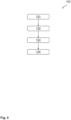
- Fig. 4 and 5 process steps of the process 100 are visualized.
- a first process step 101 the identifier 11 of the installation element 10 is thus received.
- an installation specification 200 is provided, which specifies an assignment of the installation element 10 for connection to an electrical component 4, preferably in the form of a connection module 4 for connection to the installation element 10 and other installation elements 10.
- the electrical component 4 is identified using the provided installation specification 200.
- a fourth method step 104 it is possible to initiate an output of at least one installation information item based on the received identifier 11 and the identified component 4.
- the at least one installation information item can comprise installation instructions to assist a user during installation.
- Initiating the output may initiate an activation of a Fig. 3 illustrated display element 41 on the electrical component 4 in order to display a connection point 42, in particular a slot 42, for the installation element 10 to be connected by the display element 41.
- initiating the output can comprise initiating a display of a connection point 42, in particular a slot 42, of the electrical component 4 for the installation element 10 on a user interface 32 of a computer 31.
- the user interface 32 can visualize a digital twin of at least part of the machine 1, and preferably a mechanical and/or an electrical structure of the part of the machine 1.
- connection point 42 in particular a slot 42, of the electrical component 4 for the installation element 10 by means of augmented reality and/or an output of the installation instructions as an instruction for the user to connect the installation element 10 to a specific connection point 42 of the electrical component 4, wherein the connection point 42 is preferably determined based on the installation specification 200.
- an acoustic output of the installation instructions can also be provided so that a user can follow the installation instructions without seeing the computer 31. In this case, for example, an identifier of the component 4 and/or the corresponding connection point 42 is output verbally.
- the installation information includes an installation configuration and/or installation documentation, which is stored in a data memory 33 and/or transmitted to the electrical component 4.
- an automated storage in the system can be advantageous.
- all Information is stored in the right place. The person carrying out the respective step then only has to acknowledge the entries.
- the installation documentation can be used to document at least one of the following pieces of information: User work steps with additional information on the work steps such as processing time, which machine is being used, which user, for example which installer or fitter, carried out the activities and when, which component has been wired and/or cabled, has the assembly step been completed, which port/connection point was used, are there any open cables and what are the properties of the open cable, e.g. length, environmental parameters, e.g. temperature, humidity, current project status, protection class, e.g. IP67, the user, especially the worker, can also enter the reason for the plan deviation in the event of deviations from the plan.
- the installation documentation can be stored in a database, for example. A user can trigger the documentation with physical actions (key press, screen, double click) if necessary.
- an evaluation unit can be provided which evaluates the documented information, preferably the processing times of the user for the respective work steps.
- an artificial intelligence method can also be used, which, for example, optimizes the results of the evaluation unit.
- the Results show the user potential for optimization in order to make a machine more efficient in the future, optimize components or assemblies, and improve assembly and disassembly processes. Furthermore, the comments are taken into account in the event of deviations from the plan.
- the documentation can work with components that are not preconfigured or connected to a PLC. This avoids errors that can arise from using modules that are externally identical but differently configured. Thanks to the ability of these components to communicate and the integration of all relevant information, the system can also be used to guide the user when installing the automation technology.
- the systematic collection and documentation of all relevant information such as the components used, the execution of installation and maintenance tasks or problems that have occurred, also leads to reliable knowledge about the current system status.
- the automated collection and assignment of this information significantly speeds up the process and relieves human installers of the documentation task.
- the automated collection and storage of information to be documented can significantly reduce the risk of missing and/or incorrect documentation.
- FIG. 4 A method 100 according to embodiments of the invention is visualized with further details.
- Fig. 3 On the computer 31 shown, such as a tablet or laptop, a user can first carry out a user registration 301. To do this, the user can use a graphical user interface 32, which is provided by the computer 31.
- a project selection 302 can also be made via the user interface 32, through which, for example, an installation specification 200 for a desired project is loaded. This makes it possible to initiate a start 303 for instructing the user on how to install the machine 1 by means of at least one installation instruction.
- a representation 304 of the last step carried out can be shown, for example the last installation instruction and/or another instruction for the installation.
- an identification 305 of an installation element 10 can be carried out by the user, for example by using a detection device 22 such as a handheld scanner to scan an identification means 12 on the installation element 10.
- the identifier 11 can then be determined using the scanned identification means 12 and transmitted to the computer 31 and/or a device 30 for data processing.
- the electrical component 4 and its connection point 42 to which the installation element 10 is to be connected can then be identified using the identifier 11 and the installation specification 200.
- the installation specification 200 includes, for example, a matrix in which various installation elements 10 are assigned to the components 4.
- the user can then be informed via the installation instructions which of the components 4 has been identified.
- a display element 41 on the component 4 lights up. This can be made possible by a signal transmission 306 from the data processing device 30 to component 4.
- the user can then establish a connection 307 between the installation element 10 and the component.
- the installation specification 200 can be used to confirm 308 that the assembly has been correct.
- at least partially automated documentation 309 of the correct assembly and documentation 310 of the completion of the work step in the installation specification 200 is possible. This can be done, for example, by a representation 311 in a machine overview with a green tick or, for example, by displaying the connection in question in an electrical circuit diagram and presenting it to the user via the user interface 32.
- An installation element 312 can then be identified again.
- the user can then establish a connection between the installation element and a device, such as an actuator and/or a hub and/or a sensor (not shown). Correct assembly can be confirmed using installation specification 200. Then, at least partially automated documentation of correct assembly and documentation of completion of the work step is possible in installation specification 200. This can be done, for example, by displaying it in a machine overview with a green tick or, for example, by displaying the connection in question in an electrical circuit diagram and showing it to the user via user interface 32. These work steps correspond in principle to work steps 307 to 311.
- a transmission of the information can be carried out as a bidirectional information transfer between the system 2 and the components 4. This can be carried out without the individual components 4 being connected to a control system of the machine 1 (PLC 8) and/or being preconfigured for their future tasks in the machine 1.
- PLC control system of the machine 1
- aspects have been described in connection with a device, it is clear that these aspects also represent a description of the corresponding method, where an element or device corresponds to a method step or a feature of a method step. Analogously, aspects described in connection with a method step also represent a description of a corresponding block or element or feature of a corresponding device.
- Embodiments of the disclosure may be implemented on a computer system.
- the computer system may be a local computing device (e.g., personal computer, laptop, tablet computer, or mobile phone) having one or more processors and one or more storage devices, or a distributed computing system (e.g., a cloud computing system having one or more processors and one or more storage devices distributed at different locations, e.g., at a local client and/or one or more remote server farms and/or data centers).
- the computer system may include any circuit or combination of circuits.
- the computer system may include one or more processors of any type.
- processor may refer to any type of computing circuit, such as a microprocessor, a microcontroller, a complex instruction set computing (CISC) microprocessor, a reduced instruction set computing (RISC) microprocessor, a very long instruction word (VLIW) microprocessor, a graphics processor, a digital signal processor (DSP), a multi-core processor, a field programmable gate array (FPGA), or any other type of processor or processing circuit.
- CISC complex instruction set computing
- RISC reduced instruction set computing
- VLIW very long instruction word
- DSP digital signal processor
- FPGA field programmable gate array
- circuitry may be a custom circuit, an application specific integrated circuit (ASIC), or the like, such as one or more circuits (e.g., a communications circuit) for use in wireless devices such as cellular phones, tablet computers, laptop computers, two-way radios, and similar electronic systems.
- the computer system may include one or more memory devices, which may include one or more storage elements suitable for the particular application, such as a flash memory or a memory card.
- B. a main memory in the form of random access memory (RAM), one or more hard disks, and/or one or more disk drives that handle removable storage devices such as compact disks (CDs), flash memory cards, digital video disks (DVDs), and the like.
- Some or all of the method steps may be performed by (or using) a hardware device, such as a processor, a microprocessor, a programmable computer, or an electronic circuit. In some embodiments, some or more of the key method steps may be performed by such a device.
- a hardware device such as a processor, a microprocessor, a programmable computer, or an electronic circuit. In some embodiments, some or more of the key method steps may be performed by such a device.
- embodiments of the invention may be implemented in hardware or in software.
- the implementation may be carried out using a non-transferable storage medium such as a digital storage medium, for example a floppy disk, a DVD, a Blu-Ray, a CD, a ROM, a PROM, an EPROM, an EEPROM or a FLASH memory, on which electronically readable control signals are stored that interact (or can interact) with a programmable computer system so that the respective method is carried out. Therefore, the digital storage medium may be computer readable.
- Some embodiments of the invention include a data carrier with electronically readable control signals capable of cooperating with a programmable computer system to perform one of the methods described herein.
- embodiments of the present invention can be implemented as a computer program product with a program code, wherein the program code serves to carry out one of the methods when the computer program product is run on a computer.
- the program code can, for example, be stored on a machine-readable carrier.
- embodiments include the computer program for carrying out one of the methods described herein stored on a machine-readable medium.
- one embodiment of the present invention is therefore a computer program with a program code for carrying out one of the methods described herein when the computer program runs on a computer.
- Another embodiment of the present disclosure is therefore a storage medium (or a data carrier or a computer-readable medium) on which the computer program for carrying out one of the methods described herein is stored when executed by a processor.
- the data carrier, digital storage medium or recorded medium is typically tangible and/or non-transferable.
- Another embodiment of the present invention is a device as described herein, comprising a processor and the storage medium.
- a further embodiment of the disclosure is therefore a data stream or a sequence of signals that represent the computer program for carrying out one of the methods described herein.
- the data stream or the signal sequence can, for example, be designed such that it can be transmitted via a data communication connection, e.g. via the Internet.
- Another embodiment includes a processing means, e.g., a computer or programmable logic device, configured or adapted to perform any of the methods described herein.
- a processing means e.g., a computer or programmable logic device, configured or adapted to perform any of the methods described herein.
- a further embodiment comprises a computer on which the computer program for carrying out one of the methods described herein is installed.
- Another embodiment includes a device or system configured to transmit a computer program for performing one of the methods described herein to a recipient (e.g., electronically or optically).
- the recipient may be, for example, a computer, a mobile device, a storage device, or the like.
- the device or system may, for example, include a file server for transmitting the computer program to the recipient.
- a programmable logic device e.g., a field programmable gate array
- a field programmable gate array may cooperate with a microprocessor to perform any of the methods described herein. In general, the methods are preferably performed by any hardware device.
Landscapes
- Engineering & Computer Science (AREA)
- General Engineering & Computer Science (AREA)
- Physics & Mathematics (AREA)
- General Physics & Mathematics (AREA)
- Theoretical Computer Science (AREA)
- Manufacturing & Machinery (AREA)
- Quality & Reliability (AREA)
- Automation & Control Theory (AREA)
- Human Computer Interaction (AREA)
- Health & Medical Sciences (AREA)
- Audiology, Speech & Language Pathology (AREA)
- General Health & Medical Sciences (AREA)
- Management, Administration, Business Operations System, And Electronic Commerce (AREA)
- Programmable Controllers (AREA)
- Electric Cable Installation (AREA)
Priority Applications (49)
| Application Number | Priority Date | Filing Date | Title |
|---|---|---|---|
| RS20250087A RS66443B1 (sr) | 2022-09-30 | 2022-09-30 | Postupak za kompjuterski podržanu instalaciju prostorno decentralizovano postavljenih, električnih komponenata mašine |
| ES22199162T ES3003784T3 (en) | 2022-09-30 | 2022-09-30 | Method for computer-assisted installation of electrical components of a machine arranged in a spatially decentralised manner |
| EP22199162.3A EP4345554B1 (de) | 2022-09-30 | 2022-09-30 | Verfahren für eine computer-gestützte installation von räumlich dezentral angeordneten, elektrischen komponenten einer maschine |
| PL22199162.3T PL4345554T3 (pl) | 2022-09-30 | 2022-09-30 | Sposób komputerowo wspomaganej instalacji zdecentralizowanych przestrzennie elektrycznych elementów maszyny |
| HUE22199162A HUE070165T2 (hu) | 2022-09-30 | 2022-09-30 | Módszer egy gép térben decentralizált elektromos komponenseinek számítógépes telepítésére |
| PL22205851.3T PL4345555T3 (pl) | 2022-09-30 | 2022-11-07 | Sposób wspomaganego komputerowo sprawdzania i dokumentowania czynności instalacyjnej użytkownika w celu instalacji przestrzennie zdecentralizowanych elementów maszyny |
| EP22205899.2A EP4345556B1 (de) | 2022-09-30 | 2022-11-07 | Verfahren für eine computer-gestützte installation von räumlich dezentral angeordneten komponenten einer maschine |
| RS20250002A RS66384B1 (sr) | 2022-09-30 | 2022-11-07 | Postupak za kompjuterski podržano proveravanje i dokumentovanje radnje instaliranja koju vrši korisnik, za instalaciju prostorno decentralizovano raspoređenih komponenti mašine |
| HUE22205851A HUE070184T2 (hu) | 2022-09-30 | 2022-11-07 | A felhasználó által végzett telepítési mûvelet számítógépes tesztelésére és dokumentálására szolgáló módszer egy gép térben decentralizált komponenseinek telepítéséhez |
| RS20250033A RS66397B1 (sr) | 2022-09-30 | 2022-11-07 | Postupak za kompjuterski podržanu instalaciju prostorno decentralizovano raspoređenih komponenti mašine |
| HUE22205918A HUE072209T2 (hu) | 2022-09-30 | 2022-11-07 | Módszer egy gép térben decentralizált elektromos komponenseinek több felhasználó általi, számítógépes támogatással történó, számítógépes telepítésére, felhasználó-specifikus támogatással |
| EP22205851.3A EP4345555B1 (de) | 2022-09-30 | 2022-11-07 | Ein verfahren zur computer-gestützten prüfung und dokumentation einer installationshandlung eines benutzers zur installation von räumlich dezentral angeordneten komponenten einer maschine |
| ES22205851T ES3000808T3 (en) | 2022-09-30 | 2022-11-07 | A method for computer-assisted verification and documentation of a user's installation action for installing decentralised components of a machine |
| PL22205899.2T PL4345556T3 (pl) | 2022-09-30 | 2022-11-07 | Sposób komputerowo wspomaganej instalacji zdecentralizowanych przestrzennie elementów maszyny |
| HUE22205899A HUE070349T2 (hu) | 2022-09-30 | 2022-11-07 | Módszer egy gép térben decentralizált komponenseinek számítógépes telepítésére |
| PL22205918.0T PL4345557T3 (pl) | 2022-09-30 | 2022-11-07 | Sposób komputerowego wspomagania instalacji przestrzennie rozproszonych elektrycznych elementów maszyny przez wielu użytkowników ze specyficznym wsparciem użytkownika |
| ES22205899T ES3008946T3 (en) | 2022-09-30 | 2022-11-07 | Method for computer-assisted installation of components of a machine arranged in a spatially decentralised manner |
| EP22205918.0A EP4345557B1 (de) | 2022-09-30 | 2022-11-07 | Verfahren für eine computer-gestützte installation von räumlich dezentral angeordneten, elektrischen komponenten einer maschine durch mehrere benutzer mit benutzerspezifischer unterstützung |
| HUE22206798A HUE071722T2 (hu) | 2022-09-30 | 2022-11-10 | Módszer csatlakozómodul mûködtetésére |
| EP22206798.5A EP4345558B1 (de) | 2022-09-30 | 2022-11-10 | Verfahren zum betreiben eines verbindungsmoduls |
| PL22206798.5T PL4345558T3 (pl) | 2022-09-30 | 2022-11-10 | Sposób użytkowania modułu połączeniowego |
| RS20250003A RS66466B1 (sr) | 2022-09-30 | 2022-11-10 | Postupak za pogon priključnog modula |
| ES22206798T ES3000657T3 (en) | 2022-09-30 | 2022-11-10 | Method for operating a connection module |
| DE112023003097.9T DE112023003097A5 (de) | 2022-09-30 | 2023-09-20 | Verfahren für eine computer-gestützte Installation von räumlich dezentral angeordneten, elektrischen Komponenten einer Maschine |
| PCT/EP2023/075916 WO2024068390A1 (de) | 2022-09-30 | 2023-09-20 | Verfahren für eine computer-gestützte installation von räumlich dezentral angeordneten, elektrischen komponenten einer maschine |
| KR1020257014385A KR20250078551A (ko) | 2022-09-30 | 2023-09-20 | 기계의 공간적으로 분산된 전기 컴포넌트들의 컴퓨터 지원 설치를 위한 방법 |
| EP23771888.7A EP4581437A1 (de) | 2022-09-30 | 2023-09-20 | Verfahren für eine computer-gestützte installation von räumlich dezentral angeordneten, elektrischen komponenten einer maschine |
| CN202380069038.1A CN119948419A (zh) | 2022-09-30 | 2023-09-20 | 用于机器的空间分散式电气部件的计算机辅助安装的方法 |
| JP2025518890A JP2025531559A (ja) | 2022-09-30 | 2023-09-20 | 機械の空間的に分散されて配置された電気的なコンポーネントをコンピュータ支援によって設置するための方法 |
| CN202380068343.9A CN119948418A (zh) | 2022-09-30 | 2023-09-27 | 用于机器的空间分散布置组件的计算机辅助安装的方法 |
| DE112023003196.7T DE112023003196A5 (de) | 2022-09-30 | 2023-09-27 | Verfahren für eine computer-gestützte Installation von räumlich dezentral angeordneten Komponenten einer Maschine |
| EP23776397.4A EP4584650A1 (de) | 2022-09-30 | 2023-09-27 | Verfahren für eine computer-gestützte installation von räumlich dezentral angeordneten komponenten einer maschine |
| PCT/EP2023/076721 WO2024068742A1 (de) | 2022-09-30 | 2023-09-27 | Verfahren für eine computer-gestützte installation von räumlich dezentral angeordneten komponenten einer maschine |
| DE112023003184.3T DE112023003184A5 (de) | 2022-09-30 | 2023-09-27 | Ein Verfahren zur computer-gestützten Prüfung und Dokumentation einer Installationshandlung eines Benutzers zur Installation von räumlich dezentral angeordneten Komponenten einer Maschine |
| PCT/EP2023/076720 WO2024068741A1 (de) | 2022-09-30 | 2023-09-27 | Ein verfahren zur computer-gestützten prüfung und dokumentation einer installationshandlung eines benutzers zur installation von räumlich dezentral angeordneten komponenten einer maschine |
| DE112023003187.8T DE112023003187A5 (de) | 2022-09-30 | 2023-09-28 | Verfahren für eine computer-gestützte Installation von räumlich dezentral angeordneten, elektrischen Komponenten einer Maschine durch mehrere Benutzer mit benutzerspezifischer Unterstützung |
| DE112023003166.5T DE112023003166A5 (de) | 2022-09-30 | 2023-09-28 | Verfahren zum Betreiben eines Verbindungsmoduls |
| PCT/EP2023/076841 WO2024068816A1 (de) | 2022-09-30 | 2023-09-28 | Verfahren zum betreiben eines verbindungsmoduls |
| CN202380068214.XA CN119998747A (zh) | 2022-09-30 | 2023-09-28 | 操作连接模块的方法 |
| EP23782220.0A EP4584651A1 (de) | 2022-09-30 | 2023-09-28 | Verfahren zum betreiben eines verbindungsmoduls |
| PCT/EP2023/076923 WO2024068855A1 (de) | 2022-09-30 | 2023-09-28 | Verfahren für eine computer-gestützte installation von räumlich dezentral angeordneten, elektrischen komponenten einer maschine durch mehrere benutzer mit benutzerspezifischer unterstützung |
| PCT/EP2023/077004 WO2024068899A1 (de) | 2022-09-30 | 2023-09-29 | Verfahren zur computer-gestützten bereitstellung einer anpassungsspezifikation für eine elektrotechnische installationstechnik |
| EP23786498.8A EP4594827A1 (de) | 2022-09-30 | 2023-09-29 | Verfahren zur computer-gestützten bereitstellung einer anpassungsspezifikation für eine elektrotechnische installationstechnik |
| KR1020257014387A KR20250078552A (ko) | 2022-09-30 | 2023-09-29 | 전기공학적 설치 기술에 대한 수정 사양의 컴퓨터 지원 제공 방법 |
| DE112023003167.3T DE112023003167A5 (de) | 2022-09-30 | 2023-09-29 | Verfahren zur computer-gestützten bereitstellung einer anpassungsspezifikation für eine elektrotechnische installationstechnik |
| JP2025518891A JP2025533634A (ja) | 2022-09-30 | 2023-09-29 | 電気技術設置技術のための適応仕様のコンピュータ支援による提供方法 |
| CN202380069909.XA CN119968597A (zh) | 2022-09-30 | 2023-09-29 | 用于以计算机辅助方式为电气安装技术提供适配规范的方法 |
| MX2025003699A MX2025003699A (es) | 2022-09-30 | 2025-03-27 | Procedimiento para una instalacion asistida por computadora de componentes electricos descentralizados espacialmente de una maquina |
| MX2025003683A MX2025003683A (es) | 2022-09-30 | 2025-03-27 | Metodo para una provision asistida por computadora de una especificacion de modificacion para una tecnologia de instalacion electrotecnica |
Applications Claiming Priority (1)
| Application Number | Priority Date | Filing Date | Title |
|---|---|---|---|
| EP22199162.3A EP4345554B1 (de) | 2022-09-30 | 2022-09-30 | Verfahren für eine computer-gestützte installation von räumlich dezentral angeordneten, elektrischen komponenten einer maschine |
Publications (3)
| Publication Number | Publication Date |
|---|---|
| EP4345554A1 EP4345554A1 (de) | 2024-04-03 |
| EP4345554C0 EP4345554C0 (de) | 2024-12-04 |
| EP4345554B1 true EP4345554B1 (de) | 2024-12-04 |
Family
ID=83593821
Family Applications (6)
| Application Number | Title | Priority Date | Filing Date |
|---|---|---|---|
| EP22199162.3A Active EP4345554B1 (de) | 2022-09-30 | 2022-09-30 | Verfahren für eine computer-gestützte installation von räumlich dezentral angeordneten, elektrischen komponenten einer maschine |
| EP22205851.3A Active EP4345555B1 (de) | 2022-09-30 | 2022-11-07 | Ein verfahren zur computer-gestützten prüfung und dokumentation einer installationshandlung eines benutzers zur installation von räumlich dezentral angeordneten komponenten einer maschine |
| EP22205899.2A Active EP4345556B1 (de) | 2022-09-30 | 2022-11-07 | Verfahren für eine computer-gestützte installation von räumlich dezentral angeordneten komponenten einer maschine |
| EP22205918.0A Active EP4345557B1 (de) | 2022-09-30 | 2022-11-07 | Verfahren für eine computer-gestützte installation von räumlich dezentral angeordneten, elektrischen komponenten einer maschine durch mehrere benutzer mit benutzerspezifischer unterstützung |
| EP22206798.5A Active EP4345558B1 (de) | 2022-09-30 | 2022-11-10 | Verfahren zum betreiben eines verbindungsmoduls |
| EP23771888.7A Pending EP4581437A1 (de) | 2022-09-30 | 2023-09-20 | Verfahren für eine computer-gestützte installation von räumlich dezentral angeordneten, elektrischen komponenten einer maschine |
Family Applications After (5)
| Application Number | Title | Priority Date | Filing Date |
|---|---|---|---|
| EP22205851.3A Active EP4345555B1 (de) | 2022-09-30 | 2022-11-07 | Ein verfahren zur computer-gestützten prüfung und dokumentation einer installationshandlung eines benutzers zur installation von räumlich dezentral angeordneten komponenten einer maschine |
| EP22205899.2A Active EP4345556B1 (de) | 2022-09-30 | 2022-11-07 | Verfahren für eine computer-gestützte installation von räumlich dezentral angeordneten komponenten einer maschine |
| EP22205918.0A Active EP4345557B1 (de) | 2022-09-30 | 2022-11-07 | Verfahren für eine computer-gestützte installation von räumlich dezentral angeordneten, elektrischen komponenten einer maschine durch mehrere benutzer mit benutzerspezifischer unterstützung |
| EP22206798.5A Active EP4345558B1 (de) | 2022-09-30 | 2022-11-10 | Verfahren zum betreiben eines verbindungsmoduls |
| EP23771888.7A Pending EP4581437A1 (de) | 2022-09-30 | 2023-09-20 | Verfahren für eine computer-gestützte installation von räumlich dezentral angeordneten, elektrischen komponenten einer maschine |
Country Status (11)
| Country | Link |
|---|---|
| EP (6) | EP4345554B1 (pl) |
| JP (1) | JP2025531559A (pl) |
| KR (1) | KR20250078551A (pl) |
| CN (1) | CN119948419A (pl) |
| DE (1) | DE112023003097A5 (pl) |
| ES (4) | ES3003784T3 (pl) |
| HU (5) | HUE070165T2 (pl) |
| MX (1) | MX2025003699A (pl) |
| PL (5) | PL4345554T3 (pl) |
| RS (1) | RS66443B1 (pl) |
| WO (1) | WO2024068390A1 (pl) |
Families Citing this family (2)
| Publication number | Priority date | Publication date | Assignee | Title |
|---|---|---|---|---|
| EP4632512A1 (de) * | 2024-04-10 | 2025-10-15 | Murrelektronik GmbH | Verfahren zur ausgabe einer räumlichen angabe bei einer industriellen anlage |
| WO2025214879A1 (de) * | 2024-04-10 | 2025-10-16 | Murrelektronik Gmbh | Verfahren zur ausgabe einer räumlichen angabe bei einer industriellen anlage |
Family Cites Families (13)
| Publication number | Priority date | Publication date | Assignee | Title |
|---|---|---|---|---|
| DE19849293A1 (de) | 1998-10-26 | 2000-04-27 | Ibtl Ing Buero Lang & Partner | Vorrichtung und Verfahren zum Erfassen von Meßwerten an einer Viehlzahl von Meßstellen eines Meßobjekts |
| EP1159657B1 (de) * | 1999-03-02 | 2003-08-20 | Siemens Aktiengesellschaft | Augmented-reality-system mit sprachbasierter erfassung von informationsdaten, insbesondere von serviceberichten |
| DE102005044917A1 (de) * | 2005-09-20 | 2007-04-19 | As Tech Industrie- Und Spannhydraulik Gmbh | Anordnung zur Erfassung von Messgrößen in Schraubverbindungen |
| CA2625348C (en) * | 2005-10-07 | 2015-03-17 | Ops Solutions Llc | Light guided assembly system |
| US20090192644A1 (en) * | 2008-01-30 | 2009-07-30 | Meyer Thomas J | Method and system for manufacturing an article using portable hand-held tools |
| CA2825726C (en) * | 2011-02-11 | 2019-05-21 | Paul Ryznar | Light guided assembly system and method |
| ITBO20130466A1 (it) * | 2013-08-29 | 2015-03-01 | Umpi Elettronica Societa A Respo Nsabilita Lim | Metodo di ispezione e/o manutenzione di una parte di un impianto industriale mediante realta' aumentata, e corrispondente sistema per guidare l'ispezione e/o la manutenzione della parte di impianto industriale |
| US20150227943A1 (en) * | 2014-02-07 | 2015-08-13 | Qvolve, LLC | System and Method for Documenting Regulatory Compliance |
| US10998699B2 (en) * | 2016-05-02 | 2021-05-04 | Woehner Gmbh & Co. | Method and system for configuring a switch cabinet |
| EP3244286B1 (en) * | 2016-05-13 | 2020-11-04 | Accenture Global Solutions Limited | Installation of a physical element |
| DE102016120081A1 (de) * | 2016-10-21 | 2018-04-26 | Minimax Gmbh & Co. Kg | Verfahren zur Inbetriebnahme und/oder Wartung einer Brandmelder- und/oder Löschsteuerzentrale sowie Vorrichtung dafür |
| US11392112B2 (en) * | 2019-09-26 | 2022-07-19 | Rockwell Automation Technologies, Inc. | Virtual design environment |
| BR112023001215A2 (pt) * | 2020-07-24 | 2023-04-04 | Schneider Electric Usa Inc | Gerenciamento de equipamento elétrico |
-
2022
- 2022-09-30 PL PL22199162.3T patent/PL4345554T3/pl unknown
- 2022-09-30 EP EP22199162.3A patent/EP4345554B1/de active Active
- 2022-09-30 HU HUE22199162A patent/HUE070165T2/hu unknown
- 2022-09-30 ES ES22199162T patent/ES3003784T3/es active Active
- 2022-09-30 RS RS20250087A patent/RS66443B1/sr unknown
- 2022-11-07 HU HUE22205899A patent/HUE070349T2/hu unknown
- 2022-11-07 ES ES22205851T patent/ES3000808T3/es active Active
- 2022-11-07 EP EP22205851.3A patent/EP4345555B1/de active Active
- 2022-11-07 EP EP22205899.2A patent/EP4345556B1/de active Active
- 2022-11-07 HU HUE22205851A patent/HUE070184T2/hu unknown
- 2022-11-07 PL PL22205851.3T patent/PL4345555T3/pl unknown
- 2022-11-07 EP EP22205918.0A patent/EP4345557B1/de active Active
- 2022-11-07 PL PL22205918.0T patent/PL4345557T3/pl unknown
- 2022-11-07 HU HUE22205918A patent/HUE072209T2/hu unknown
- 2022-11-07 ES ES22205899T patent/ES3008946T3/es active Active
- 2022-11-07 PL PL22205899.2T patent/PL4345556T3/pl unknown
- 2022-11-10 HU HUE22206798A patent/HUE071722T2/hu unknown
- 2022-11-10 PL PL22206798.5T patent/PL4345558T3/pl unknown
- 2022-11-10 EP EP22206798.5A patent/EP4345558B1/de active Active
- 2022-11-10 ES ES22206798T patent/ES3000657T3/es active Active
-
2023
- 2023-09-20 CN CN202380069038.1A patent/CN119948419A/zh active Pending
- 2023-09-20 KR KR1020257014385A patent/KR20250078551A/ko active Pending
- 2023-09-20 EP EP23771888.7A patent/EP4581437A1/de active Pending
- 2023-09-20 WO PCT/EP2023/075916 patent/WO2024068390A1/de not_active Ceased
- 2023-09-20 DE DE112023003097.9T patent/DE112023003097A5/de active Pending
- 2023-09-20 JP JP2025518890A patent/JP2025531559A/ja active Pending
-
2025
- 2025-03-27 MX MX2025003699A patent/MX2025003699A/es unknown
Also Published As
Similar Documents
| Publication | Publication Date | Title |
|---|---|---|
| EP3452928B1 (de) | Verfahren und system zur konfiguration eines schaltschrankes | |
| EP3392987B1 (de) | Verfahren und system zur automatisierten unterstützung eines anschlussvorgangs, insbesondere von in einem schaltschrank oder an einem montagesystem angeordneten komponenten | |
| EP4345554B1 (de) | Verfahren für eine computer-gestützte installation von räumlich dezentral angeordneten, elektrischen komponenten einer maschine | |
| WO2018069314A1 (de) | Handarbeitsplatzeinheit, abseits-datenverarbeitungsvorrichtung, handarbeitsplatzbetreibungssystem, handarbeitsplatzbetriebsverfahren und handarbeitsplatzbereitstellungsverfahren | |
| EP3699704B1 (de) | System und verfahren zum überprüfen von systemanforderungen von cyber-physikalischen systemen | |
| EP3969970B1 (de) | Verfahren zur darstellung und bedienung von produktionsmitteln, insbesondere für die kunststoffverarbeitende industrie | |
| DE102016105480A1 (de) | Verfahren und System zum Installieren, Verwalten und/oder Warten von Komponenten in einem Gebäudekomplex | |
| EP4345703B1 (de) | Verfahren für eine computer-gestützte installation von räumlich dezentral angeordneten, elektrischen komponenten einer maschine | |
| WO2024068855A1 (de) | Verfahren für eine computer-gestützte installation von räumlich dezentral angeordneten, elektrischen komponenten einer maschine durch mehrere benutzer mit benutzerspezifischer unterstützung | |
| EP4365807B1 (de) | Verfahren für eine computer-gestützte prüfung eines installationselements für eine installationsumgebung | |
| EP4584650A1 (de) | Verfahren für eine computer-gestützte installation von räumlich dezentral angeordneten komponenten einer maschine | |
| EP4345547A1 (de) | Verfahren für eine computer-gestützte installation von räumlich dezentral angeordneten, elektrischen komponenten einer maschine | |
| WO2024068816A1 (de) | Verfahren zum betreiben eines verbindungsmoduls | |
| EP4365691B1 (de) | Verfahren für eine computer-gestützte ermittlung der effizienz bei der installation von räumlich dezentral angeordneten, elektrischen komponenten einer maschine | |
| EP4485097A1 (de) | Verfahren für eine computer-gestützte installation von räumlich dezentral angeordneten, elektrischen komponenten einer maschine | |
| EP3904985B1 (de) | Änderungsverfolgung von projektierungsdaten eines leitsystems einer technischen anlage | |
| WO2024068741A1 (de) | Ein verfahren zur computer-gestützten prüfung und dokumentation einer installationshandlung eines benutzers zur installation von räumlich dezentral angeordneten komponenten einer maschine | |
| EP4345674A1 (de) | Verfahren für eine computer-gestützte erstellung einer dezentralen, elektrischen topologie für eine maschine | |
| WO2024068899A1 (de) | Verfahren zur computer-gestützten bereitstellung einer anpassungsspezifikation für eine elektrotechnische installationstechnik | |
| EP3847516B1 (de) | Identifizieren von steuergeräten in automatisierungssystemen | |
| WO2025163094A1 (de) | Verfahren zum computer-gestützten abgleichen von mindestens zwei unterschiedlichen darstellungsvarianten einer industriellen anlage | |
| DE102010056078A1 (de) | Gemeinsames Kommunikationssystem für mehrere artfremde Automatisierungssysteme eines automatisierungstechnischen Verbundes |
Legal Events
| Date | Code | Title | Description |
|---|---|---|---|
| PUAI | Public reference made under article 153(3) epc to a published international application that has entered the european phase |
Free format text: ORIGINAL CODE: 0009012 |
|
| STAA | Information on the status of an ep patent application or granted ep patent |
Free format text: STATUS: EXAMINATION IS IN PROGRESS |
|
| 17P | Request for examination filed |
Effective date: 20231113 |
|
| AK | Designated contracting states |
Kind code of ref document: A1 Designated state(s): AL AT BE BG CH CY CZ DE DK EE ES FI FR GB GR HR HU IE IS IT LI LT LU LV MC MK MT NL NO PL PT RO RS SE SI SK SM TR |
|
| GRAP | Despatch of communication of intention to grant a patent |
Free format text: ORIGINAL CODE: EPIDOSNIGR1 |
|
| STAA | Information on the status of an ep patent application or granted ep patent |
Free format text: STATUS: GRANT OF PATENT IS INTENDED |
|
| INTG | Intention to grant announced |
Effective date: 20240527 |
|
| GRAS | Grant fee paid |
Free format text: ORIGINAL CODE: EPIDOSNIGR3 |
|
| RIN1 | Information on inventor provided before grant (corrected) |
Inventor name: PFESTORF, SEBASTIAN Inventor name: DR.-ING. ZELLER, PAUL Inventor name: DR.-ING. VIETHEN, ULRICH |
|
| GRAA | (expected) grant |
Free format text: ORIGINAL CODE: 0009210 |
|
| STAA | Information on the status of an ep patent application or granted ep patent |
Free format text: STATUS: THE PATENT HAS BEEN GRANTED |
|
| AK | Designated contracting states |
Kind code of ref document: B1 Designated state(s): AL AT BE BG CH CY CZ DE DK EE ES FI FR GB GR HR HU IE IS IT LI LT LU LV MC MK MT NL NO PL PT RO RS SE SI SK SM TR |
|
| REG | Reference to a national code |
Ref country code: CH Ref legal event code: EP |
|
| REG | Reference to a national code |
Ref country code: DE Ref legal event code: R096 Ref document number: 502022002294 Country of ref document: DE |
|
| REG | Reference to a national code |
Ref country code: IE Ref legal event code: FG4D Free format text: LANGUAGE OF EP DOCUMENT: GERMAN |
|
| U01 | Request for unitary effect filed |
Effective date: 20241212 |
|
| U07 | Unitary effect registered |
Designated state(s): AT BE BG DE DK EE FI FR IT LT LU LV MT NL PT RO SE SI Effective date: 20241223 |
|
| REG | Reference to a national code |
Ref country code: SK Ref legal event code: T3 Ref document number: E 45692 Country of ref document: SK |
|
| REG | Reference to a national code |
Ref country code: GR Ref legal event code: EP Ref document number: 20250400098 Country of ref document: GR Effective date: 20250211 |
|
| REG | Reference to a national code |
Ref country code: ES Ref legal event code: FG2A Ref document number: 3003784 Country of ref document: ES Kind code of ref document: T3 Effective date: 20250311 |
|
| PG25 | Lapsed in a contracting state [announced via postgrant information from national office to epo] |
Ref country code: HR Free format text: LAPSE BECAUSE OF FAILURE TO SUBMIT A TRANSLATION OF THE DESCRIPTION OR TO PAY THE FEE WITHIN THE PRESCRIBED TIME-LIMIT Effective date: 20241204 |
|
| REG | Reference to a national code |
Ref country code: HU Ref legal event code: AG4A Ref document number: E070165 Country of ref document: HU |
|
| PG25 | Lapsed in a contracting state [announced via postgrant information from national office to epo] |
Ref country code: SM Free format text: LAPSE BECAUSE OF FAILURE TO SUBMIT A TRANSLATION OF THE DESCRIPTION OR TO PAY THE FEE WITHIN THE PRESCRIBED TIME-LIMIT Effective date: 20241204 |
|
| PG25 | Lapsed in a contracting state [announced via postgrant information from national office to epo] |
Ref country code: IS Free format text: LAPSE BECAUSE OF FAILURE TO SUBMIT A TRANSLATION OF THE DESCRIPTION OR TO PAY THE FEE WITHIN THE PRESCRIBED TIME-LIMIT Effective date: 20250404 |
|
| REG | Reference to a national code |
Ref country code: CH Ref legal event code: U11 Free format text: ST27 STATUS EVENT CODE: U-0-0-U10-U11 (AS PROVIDED BY THE NATIONAL OFFICE) Effective date: 20251001 |
|
| PLBE | No opposition filed within time limit |
Free format text: ORIGINAL CODE: 0009261 |
|
| STAA | Information on the status of an ep patent application or granted ep patent |
Free format text: STATUS: NO OPPOSITION FILED WITHIN TIME LIMIT |
|
| PGFP | Annual fee paid to national office [announced via postgrant information from national office to epo] |
Ref country code: NO Payment date: 20250919 Year of fee payment: 4 Ref country code: GR Payment date: 20250918 Year of fee payment: 4 |
|
| PGFP | Annual fee paid to national office [announced via postgrant information from national office to epo] |
Ref country code: TR Payment date: 20250923 Year of fee payment: 4 Ref country code: PL Payment date: 20250919 Year of fee payment: 4 |
|
| REG | Reference to a national code |
Ref country code: CH Ref legal event code: L10 Free format text: ST27 STATUS EVENT CODE: U-0-0-L10-L00 (AS PROVIDED BY THE NATIONAL OFFICE) Effective date: 20251015 |
|
| U20 | Renewal fee for the european patent with unitary effect paid |
Year of fee payment: 4 Effective date: 20250908 |
|
| PGFP | Annual fee paid to national office [announced via postgrant information from national office to epo] |
Ref country code: HU Payment date: 20250928 Year of fee payment: 4 |
|
| PGFP | Annual fee paid to national office [announced via postgrant information from national office to epo] |
Ref country code: IE Payment date: 20250919 Year of fee payment: 4 Ref country code: RS Payment date: 20250917 Year of fee payment: 4 Ref country code: CZ Payment date: 20250917 Year of fee payment: 4 |
|
| PGFP | Annual fee paid to national office [announced via postgrant information from national office to epo] |
Ref country code: SK Payment date: 20250922 Year of fee payment: 4 |
|
| 26N | No opposition filed |
Effective date: 20250905 |