EP4344770A2 - Durch biomoleküle homogen funktionalisierte kolloidale partikel - Google Patents
Durch biomoleküle homogen funktionalisierte kolloidale partikel Download PDFInfo
- Publication number
- EP4344770A2 EP4344770A2 EP24157456.5A EP24157456A EP4344770A2 EP 4344770 A2 EP4344770 A2 EP 4344770A2 EP 24157456 A EP24157456 A EP 24157456A EP 4344770 A2 EP4344770 A2 EP 4344770A2
- Authority
- EP
- European Patent Office
- Prior art keywords
- drops
- oil
- colloidal particles
- colloid
- functionalized
- Prior art date
- Legal status (The legal status is an assumption and is not a legal conclusion. Google has not performed a legal analysis and makes no representation as to the accuracy of the status listed.)
- Pending
Links
Images



Classifications
-
- B—PERFORMING OPERATIONS; TRANSPORTING
- B01—PHYSICAL OR CHEMICAL PROCESSES OR APPARATUS IN GENERAL
- B01J—CHEMICAL OR PHYSICAL PROCESSES, e.g. CATALYSIS OR COLLOID CHEMISTRY; THEIR RELEVANT APPARATUS
- B01J13/00—Colloid chemistry, e.g. the production of colloidal materials or their solutions, not otherwise provided for; Making microcapsules or microballoons
- B01J13/0004—Preparation of sols
- B01J13/0039—Post treatment
-
- B—PERFORMING OPERATIONS; TRANSPORTING
- B01—PHYSICAL OR CHEMICAL PROCESSES OR APPARATUS IN GENERAL
- B01J—CHEMICAL OR PHYSICAL PROCESSES, e.g. CATALYSIS OR COLLOID CHEMISTRY; THEIR RELEVANT APPARATUS
- B01J13/00—Colloid chemistry, e.g. the production of colloidal materials or their solutions, not otherwise provided for; Making microcapsules or microballoons
- B01J13/0004—Preparation of sols
- B01J13/0026—Preparation of sols containing a liquid organic phase
-
- B—PERFORMING OPERATIONS; TRANSPORTING
- B01—PHYSICAL OR CHEMICAL PROCESSES OR APPARATUS IN GENERAL
- B01J—CHEMICAL OR PHYSICAL PROCESSES, e.g. CATALYSIS OR COLLOID CHEMISTRY; THEIR RELEVANT APPARATUS
- B01J13/00—Colloid chemistry, e.g. the production of colloidal materials or their solutions, not otherwise provided for; Making microcapsules or microballoons
- B01J13/0004—Preparation of sols
- B01J13/0047—Preparation of sols containing a metal oxide
-
- C—CHEMISTRY; METALLURGY
- C09—DYES; PAINTS; POLISHES; NATURAL RESINS; ADHESIVES; COMPOSITIONS NOT OTHERWISE PROVIDED FOR; APPLICATIONS OF MATERIALS NOT OTHERWISE PROVIDED FOR
- C09K—MATERIALS FOR MISCELLANEOUS APPLICATIONS, NOT PROVIDED FOR ELSEWHERE
- C09K23/00—Use of substances as emulsifying, wetting, dispersing, or foam-producing agents
-
- C—CHEMISTRY; METALLURGY
- C12—BIOCHEMISTRY; BEER; SPIRITS; WINE; VINEGAR; MICROBIOLOGY; ENZYMOLOGY; MUTATION OR GENETIC ENGINEERING
- C12Q—MEASURING OR TESTING PROCESSES INVOLVING ENZYMES, NUCLEIC ACIDS OR MICROORGANISMS; COMPOSITIONS OR TEST PAPERS THEREFOR; PROCESSES OF PREPARING SUCH COMPOSITIONS; CONDITION-RESPONSIVE CONTROL IN MICROBIOLOGICAL OR ENZYMOLOGICAL PROCESSES
- C12Q1/00—Measuring or testing processes involving enzymes, nucleic acids or microorganisms; Compositions therefor; Processes of preparing such compositions
- C12Q1/02—Measuring or testing processes involving enzymes, nucleic acids or microorganisms; Compositions therefor; Processes of preparing such compositions involving viable microorganisms
-
- G—PHYSICS
- G01—MEASURING; TESTING
- G01N—INVESTIGATING OR ANALYSING MATERIALS BY DETERMINING THEIR CHEMICAL OR PHYSICAL PROPERTIES
- G01N15/00—Investigating characteristics of particles; Investigating permeability, pore-volume or surface-area of porous materials
- G01N15/10—Investigating individual particles
- G01N15/1012—Calibrating particle analysers; References therefor
-
- G—PHYSICS
- G01—MEASURING; TESTING
- G01N—INVESTIGATING OR ANALYSING MATERIALS BY DETERMINING THEIR CHEMICAL OR PHYSICAL PROPERTIES
- G01N15/00—Investigating characteristics of particles; Investigating permeability, pore-volume or surface-area of porous materials
- G01N15/10—Investigating individual particles
- G01N15/1012—Calibrating particle analysers; References therefor
- G01N2015/1014—Constitution of reference particles
Definitions
- the present invention relates to a process for obtaining a colloid comprising functionalized liquid colloidal particles.
- liquid colloidal drops also called particles
- lipid-functionalized emulsion drops are generally obtained by direct dissolution of lipids in an oil followed by drop fabrication [1, 5–6], using a water-insoluble carrier solvent. such as chloroform for mixing lipids with oil before emulsification [4, 7], or by dissolving lipids in water in the presence of drops after fragmentation [8].
- the inventors have developed a new drop functionalization protocol making it possible to improve the homogeneity and kinetics of the insertion of lipids on the surface of the drops within a given emulsion.
- the process which is the subject of the present invention involves the prior manufacture of the drops, followed by the insertion of the lipids on the surface of the drops in a second step. ( Fig. 1 ). It is based on the use of a polar co-solvent promoting the dissolution of lipids in the continuous aqueous phase, and makes it possible to obtain drops which are distinguished by very high homogeneity and speed of functionalization.
- Such drops can in particular be used for the calibration of flow cytometers.
- a flow cytometer requires rigorous optical alignment of its components and precise calibration of light sources and detectors to provide reliable measurements. Calibration is commonly carried out using micrometric fluorescent beads. These are characterized by a high monodispersity in size, obtained thanks to their mode of synthesis, and a very low variation in fluorescence within the same sample. These solid particles nevertheless tend to aggregate over storage time, which makes measurements more difficult to carry out.
- the oil 1 dispersed in the aqueous solution 2 may be a mineral oil, a vegetable oil such as soybean oil, a silicone oil, a halogenated oil (in particular a fluorinated oil, an iodized oil or a brominated oil ), an animal oil such as squalene or a mixture thereof.
- the liquid core of the oil drops may comprise one or more active agents, chosen from cosmetic, pharmaceutical, edible, or lubricating agents, which may be hydrophilic or hydrophobic.
- the liquid core may optionally comprise suspended solid particles, such as metal nanoparticles, mineral particles or composite particles for example.
- the size of said particles is between 10 nm and 10 ⁇ m.
- the liquid core may optionally comprise suspended liquid particles, such as drops of water-in-oil type emulsion, the size of said particles is between 10 nm and 10 ⁇ m.
- oil 1 corresponds to a vegetable oil, in particular a soybean oil.
- oil 1 corresponds to a mineral oil optionally comprising Fe 2 O 3 nanoparticles in suspension.
- fragmentation surfactant is meant, within the meaning of the present invention, any molecule known to those skilled in the art facilitating the dispersion of the oil 1 in the aqueous solution 2. It may be an anionic surfactant, cationic, zwitterionic or non-ionic, of natural or synthetic origin.
- anionic surfactants mention may in particular be made of the salts (eg sodium) of linear or branched fatty alcohol sulfate, saturated or unsaturated, of 8 to 20 carbon atoms, such as sodium lauryl sulfate (also called sodium dodecyl sulfate or SDS).
- salts eg sodium
- linear or branched fatty alcohol sulfate saturated or unsaturated, of 8 to 20 carbon atoms
- sodium lauryl sulfate also called sodium dodecyl sulfate or SDS.
- cetrimonium bromide or chloride also called hexadecyltrimethylammonium bromide and chloride or CTAB and CTAC.
- coco-betaine also called cocamidopropyl betaine or CAPB.
- non-ionic surfactants mention may in particular be made of polyoxyethylenic sorbitan esters (known under the trade name “Tween”), polyethylene glycol ethers (in particular the commercial series “Brij” and “Triton”), poloxamers (known under the trade name “Pluronic”), such as the Pluronic F68.
- Teween polyoxyethylenic sorbitan esters
- Polyethylene glycol ethers in particular the commercial series “Brij” and “Triton”
- poloxamers known under the trade name “Pluronic”
- the fragmentation surfactant is a poloxamer such as Pluronic F68.
- Step a) is an emulsification step, which can be carried out according to all the methods well known to those skilled in the art.
- the dispersion of the oil 1 in the aqueous solution 2 can in particular be carried out by manual emulsification, using membranes, a Couette emulsifier or a microfluidic device, or according to the method described by Obey and Vincent [J. Colloid Interface Sci. 163, 454 (1994 )].
- the drops of oil obtained suspended in the aqueous phase of emulsion 3 have a diameter of between 1 and 20 ⁇ m, in particular between 2 and 15 ⁇ m, advantageously between 3 and 10 ⁇ m.
- the diameter of the drops is determined by microscopy and image analysis, as described in the Examples.
- polar aprotic solvent is meant, within the meaning of the present invention, a solvent which has a non-zero dipole moment and which does not contain any acidic hydrogen atom, that is to say no hydrogen atom linked to a heteroatom such as N, O or S. It may in particular be a ketone, a sulfoxide, an N,N-disubstituted amide, an ester, a tertiary amine, or a heterocycle.
- ketone means a compound R 1 -CO-R 2 , in which R 1 and R 2 are (C 1 -C 6 ) alkyl groups, identical or different.
- R 1 and R 2 are (C 1 -C 6 ) alkyl groups, identical or different.
- propanone and butanone we can cite propanone and butanone.
- sulfoxide means a compound R 3 -SO-R 4 , in which R 3 and R 4 are (C 1 -C 6 ) alkyl groups, identical or different.
- DMSO dimethyl sulfoxide
- N,N-disubstituted amide is meant within the meaning of the present invention a compound R 5 -CO- NR 6 R 7 , in which R 5 is a hydrogen atom or a group (C 1 -C 6 ) alkyl, and R 6 and R 7 are (C 1 -C 6 ) alkyl groups, identical or different.
- R 5 is a hydrogen atom or a group (C 1 -C 6 ) alkyl
- R 6 and R 7 are (C 1 -C 6 ) alkyl groups, identical or different.
- DMF N,N-dimethylformamide
- ester is meant for the purposes of the present invention a compound R 9 -COO-R 10 , in which R 9 and R 10 are (C 1 -C 6 ) alkyl groups, identical or different.
- the ester may in particular be an acetate, that is to say a CH 3 COO-R 10 compound.
- acetate that is to say a CH 3 COO-R 10 compound.
- tertiary amine is meant for the purposes of the present invention a compound NR 11 R 12 R 13 , in which R 11 , R 12 and R 13 are (C 1 -C 6 ) alkyl groups, identical or different.
- R 11 , R 12 and R 13 are (C 1 -C 6 ) alkyl groups, identical or different.
- (C 1 -C 6 ) alkyl group is meant, for the purposes of the present invention, a saturated hydrocarbon chain, linear or branched, comprising 1 to 6, preferably 1 to 4, carbon atoms.
- a saturated hydrocarbon chain linear or branched, comprising 1 to 6, preferably 1 to 4, carbon atoms.
- heterocycle is meant, within the meaning of the present invention, a saturated or unsaturated ring, aromatic or not, and containing one or more heteroatoms, such as for example sulfur, nitrogen or oxygen atoms. It may in particular be a 5- or 6-membered heterocycle containing advantageously 1 to 4, even more advantageously 1 or 2, heteroatoms. As an example, we can cite pyridine.
- the polar aprotic solvent is selected from the group consisting of DMSO, ethyl acetate, acetonitrile, pyridine, butanone, triethylamine, N,N-dimethylformamide (DMF) , and their mixtures.
- DMSO dimethylsulfoxide
- ethyl acetate ethyl acetate
- acetonitrile pyridine
- butanone triethylamine
- N,N-dimethylformamide (DMF) N,N-dimethylformamide
- amphiphilic lipid known to those skilled in the art, natural or synthetic, can be used during step b) resulting in obtaining the functionalization solution 4.
- fluorescent lipid It may or may not be a fluorescent lipid.
- fluorescent lipids mention may in particular be made of 1,2-dioleoyl-sn-glycero-3-phosphoethanolamine carboxyfluorescein (also called DOPE CF).
- the lipids are phospholipids, in particular phosphoglycerides, phosphorylated sphingolipids or phosphatidylinositols.
- phosphatidylethanolamines such as 1,2-dioleoyl-sn-glycero-3-phosphoethanolamine (DOPE) and 1,2-distearoyl-sn-glycero-3-phosphoethanolamine (DSPE); phosphatidylcholines and phosphatidylserines.
- DOPE 1,2-dioleoyl-sn-glycero-3-phosphoethanolamine
- DSPE 1,2-distearoyl-sn-glycero-3-phosphoethanolamine
- glycophosphatidylinositols examples include glycophosphatidylinositols (GPI).
- the lipids are phospholipids, in particular phosphatidylethanolamines such as DOPE or DSPE.
- the lipids comprise at least one fluorophore group and/or at least one biomolecule, which can be grafted using a linker.
- Said linker may be initially present in the lipid used during step b), or grafted subsequently.
- PEG polyethylene glycol
- NTA nitriloacetate
- Ni-NTA nickel
- fluorophore group mention may be made, for example, of 6-carboxyfluorescein (CF), fluorescein, rhodamine, the fluorophores from the commercial ranges “Alexa Fluor” and “DyLight”, advantageously 6-carboxyfluorescein.
- CF 6-carboxyfluorescein
- fluorescein fluorescein
- rhodamine the fluorophores from the commercial ranges “Alexa Fluor” and “DyLight”, advantageously 6-carboxyfluorescein.
- the biomolecule may in particular be a vitamin, such as biotin, a peptide, such as arginyl glycyl aspartic acid (RGD), a protein, such as streptavidin, an enzyme, an antibody, in particular an immunoglobulin type G (igG ) or a combination of these.
- a vitamin such as biotin
- a peptide such as arginyl glycyl aspartic acid (RGD)
- a protein such as streptavidin
- an enzyme an antibody
- igG immunoglobulin type G
- It may or may not be fluorescent, and its fluorescence may be intrinsic or result from the presence of a fluorophore group.
- the biomolecule is a biotin.
- a lipid grafted with a biotin by means of a PEG chain may be designated by the term “biotinylated lipid”.
- the lipids are phospholipids, in particular phosphatidylethanolamines such as DOPE or DSPE, optionally grafted with at least one fluorophore group and/or at least one biomolecule, optionally by means of a linker .
- the lipids are selected from the group consisting of DOPE-CF, DSPE-PEG-RGD, DSPE-PEG-Biotin and mixtures thereof.
- the lipids are selected from the group consisting of DOPE-CF, DSPE-PEG-Biotin and their mixtures.
- a dispersing surfactant is added in step c).
- dispersion surfactant is meant, within the meaning of the present invention, any amphiphilic molecule making it possible to avoid the formation of aggregates.
- the dispersion surfactant optionally added in step c) is non-denaturing with respect to proteins.
- non-ionic surfactant in particular a polyoxyethylene sorbitan ester or a polyethylene glycol ether (“Tween” or “Brij” series), or a poloxamer, or a zwitterionic surfactant, such as sulfobetaine.
- the dispersion surfactant added in step c) is Tween 20 or Pluronic F68.
- its concentration in the functionalization mixture 5 is less than 5 times its critical micellar concentration (CMC), preferably less than 2 times its CMC, in particular less than 1, 5 times its CMC, advantageously less than or equal to its CMC.
- CMC critical micellar concentration
- a buffer solution 6 is added in step c).
- its pH is between 5 and 9, in particular between 6 and 8, for example its pH is approximately 7. It may in particular be a phosphate buffer.
- the volume fraction of the polar aprotic solvent in the functionalization mixture 5 obtained during step c) is between 1 and 15%, preferably between 5 and 15%, advantageously between 8 and 15%.
- incubation step d) is carried out at a temperature of between 15°C and 40°C, preferably between 20°C and 30°C, and advantageously for a period of between 10 min and 10 a.m., preferably between 30 min and 5 a.m., advantageously between 1 a.m. and 3 a.m.
- the oil 1 dispersed in the aqueous solution 2 comprises Fe 2 O 3 nanoparticles in suspension.
- the implementation of such a process according to the invention thus makes it possible to obtain a colloid comprising magnetic functionalized liquid colloidal particles.
- oil 1 is preferably a mineral oil.
- the oil 1 dispersed in the aqueous solution 2 has a density greater than 1.
- the implementation of such a process according to the invention thus makes it possible to obtain a colloid comprising functionalized liquid colloidal particles denser than the aqueous phase of the colloid.
- oil 1 is preferably a halogenated oil.
- the method according to the invention comprises after step e) an additional step f) of grafting biomolecules onto the lipids adsorbed on the surface of the oil drops.
- the biomolecules grafted during this step f) may in particular be vitamins, peptides, proteins, such as streptavidin, enzymes, antibodies, in particular type G immunoglobulins (igGs).
- They may or may not be fluorescent, and their fluorescence may be intrinsic or result from the presence of a fluorophore group.
- lipids adsorbed on the surface of the oil drops are biotinylated lipids
- molecules of streptavidin, avidin, monomeric avidin, neutravidin or anti-biotin IgGs can be grafted during step f).
- a second object of the present invention relates to a colloid comprising functionalized liquid colloidal particles capable of being obtained by the process previously described.
- the polar aprotic solvent is as defined above and advantageously selected from the group consisting of DMSO, ethyl acetate, acetonitrile, pyridine, butanone, triethylamine, N, N-dimethylformamide (DMF), and mixtures thereof.
- DMSO dimethylsulfoxide
- ethyl acetate ethyl acetate
- acetonitrile pyridine
- butanone triethylamine
- N, N-dimethylformamide (DMF) ethylamine
- DMF N-dimethylformamide
- the oil may be a mineral oil, a vegetable oil such as soybean oil, a silicone oil, a halogenated oil (including a fluorinated oil, an iodized oil or a brominated oil), or a mixture thereof.
- the oil drops are drops of mineral oil and comprise Fe 2 O 3 nanoparticles in suspension.
- the oil has a density greater than 1.
- it is a halogenated oil.
- amphiphilic lipid known to those skilled in the art, natural or synthetic, can be adsorbed on the surface of the oil drops.
- fluorescent lipid It may or may not be a fluorescent lipid.
- fluorescent lipids mention may in particular be made of 1,2-dioleoyl-sn-glycero-3-phosphoethanolamine carboxyfluorescein (also called DOPE CF).
- the lipids are phospholipids, in particular phosphoglycerides, phosphorylated sphingolipids or phosphatidylinositols.
- phosphatidylethanolamines such as 1,2-dioleoyl-sn-glycero-3-phosphoethanolamine (DOPE) and 1,2-distearoyl-sn-glycero-3-phosphoethanolamine (DSPE); phosphatidylcholines and phosphatidylserines.
- DOPE 1,2-dioleoyl-sn-glycero-3-phosphoethanolamine
- DSPE 1,2-distearoyl-sn-glycero-3-phosphoethanolamine
- glycophosphatidylinositols examples include glycophosphatidylinositols (GPI).
- the lipids are phospholipids, in particular phosphatidylethanolamines such as DOPE or DSPE.
- the lipids comprise at least one fluorophore group and/or at least one biomolecule, which can be grafted using a linker.
- Said linker may comprise a polyethylene glycol (PEG) chain or a nitriloacetate (NTA) group optionally complexed with nickel (Ni-NTA).
- PEG polyethylene glycol
- NTA nitriloacetate
- Ni-NTA nickel
- it is a PEG chain.
- fluorophore group mention may be made, for example, of 6-carboxyfluorescein (CF), fluorescein, rhodamine, the fluorophores from the commercial ranges “Alexa Fluor” and “DyLight”, advantageously 6-carboxyfluorescein.
- CF 6-carboxyfluorescein
- fluorescein fluorescein
- rhodamine the fluorophores from the commercial ranges “Alexa Fluor” and “DyLight”, advantageously 6-carboxyfluorescein.
- the biomolecule may in particular be a vitamin, such as biotin, a peptide, such as arginyl glycyl aspartic acid (RGD), a protein, such as streptavidin, an enzyme, an antibody, in particular an immunoglobulin type G (igG ) or a combination of these.
- a vitamin such as biotin
- a peptide such as arginyl glycyl aspartic acid (RGD)
- a protein such as streptavidin
- an enzyme an antibody
- igG immunoglobulin type G
- It may or may not be fluorescent, and its fluorescence may be intrinsic or result from the presence of a fluorophore group.
- the biomolecule is a biotin, typically grafted using a PEG chain.
- the PEG-biotin fragment can then itself represent a linker, onto which a biomolecule having an affinity for biotin, such as streptavidin, avidin, monomeric avidin, neutravidin or an anti-biotin IgG can be grafted. .
- the lipids are phospholipids, in particular phosphatidylethanolamines such as DOPE or DSPE, optionally grafted with at least one fluorophore group and/or at least one biomolecule, optionally by means of a linker .
- the lipids are selected from the group consisting of DOPE-CF, DSPE-PEG-RGD, DSPE-PEG-Biotin and mixtures thereof.
- the lipids are selected from the group consisting of DOPE-CF, DSPE-PEG-Biotin and their mixtures.
- the colloid is such that, within a subpopulation of particles having a diameter equal to d +/- 15%, the coefficient of variation of the quantity of lipid adsorbed on the surface of the drops is less than or equal to 20%.
- the present invention further relates to the use of a colloid as described above for the calibration of a flow cytometer.
- the present invention further relates to the use of a colloid comprising functionalized liquid colloidal particles capable of being obtained by the method of the present invention for the calibration of a flow cytometer.
- the present invention further relates to the use of a colloid as described above for the study of their ingestion by cells, such as phagocytosis by macrophages.
- the density of the oil constituting the functionalized liquid colloidal particles is then greater than 1. Typically, it is a halogenated oil.
- the present invention further relates to the use of a colloid comprising functionalized liquid colloidal particles capable of being obtained by the method of the present invention for the study of their ingestion by cells, such as phagocytosis by macrophages.
- the density of the oil constituting the functionalized liquid colloidal particles is then greater than 1. Typically, it is a halogenated oil.
- Soybean oil (CAS No. 8001-22-7 ), mineral oil ( CAS No. 8042-47-5 ), the Pluronic F68 ( CAS No. 9003-11-6 ), the Tween 20 ( CAS No. 9005-64-5 ), oleic acid ( CAS No. 112-80-1 ), sodium alginate ( CAS No. 9005-38-3 ), DMSO, acetonitrile, DMF, pyridine, butanone, ethyl acetate and triethylamine were purchased from Sigma-Aldrich (St Quentin Fallavier, France).
- DOPE-CF and DSPE-PEG-biotin were purchased from Avanti Polar Lipids.
- Alexa Fluor 488-conjugated mouse anti-biotin IgG (Cat. No. 200-542-211) was purchased from Jackson Immunoresearch (West Grove, PA, USA).
- Streptavidin FluoProbes 488 was purchased from Interchim.
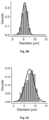
- the crude emulsion was sheared in a Couette cell apparatus following the method developed by Mason et al. [9] to fabricate two quasi-monodisperse emulsion samples with average diameters of 8 ⁇ 2 ⁇ m (emulsion A, Fig. 2A ) And 5 .5 ⁇ 2 ⁇ m (emulsion B, Fig. 2B ), respectively.
- the emulsions were diluted to an oil fraction of 60 wt% with 1 wt% Pluronic F68 in the continuous phase and stored at 12 °C in a Peltier cooling cabinet for Several weeks.
- the lipids are first dissolved in a polar solvent at the concentration of 1 mg/mL for DOPE-CF and 10 mg/mL for DSPE-PEG-Biotin.
- Functionalization solutions were prepared with DMSO, acetonitrile, DMF, pyridine, butanone, ethyl acetate, and triethylamine.
- the suspension is centrifuged and rinsed 4 times with phosphate buffer to reduce the quantity of Pluronic F68 in the continuous phase. After the final rinsing step, most of the aqueous solution is removed from the microtube to obtain 10 ⁇ L of emulsion. We then add between 0 and 10% v/v of functionalization solution, and finally the phosphate buffer with Tween 20 (CMC) to reach a final volume of 200 ⁇ L of suspension.
- CMC phosphate buffer with Tween 20
- the drops are incubated for 90 minutes at room temperature in the presence of the lipids in the continuous phase, and are finally rinsed several times with the PB/Tween 20 CMC mixture to remove non-adsorbed phospholipids from the solution.
- the quantity of phospholipids initially available in the continuous phase is adjusted by diluting the functionalization solution using its co-solvent so that the volume fraction of the co-solvent is the same in all experiments. In most cases, DMSO was used as a co-solvent, at a volume fraction of 10% v/v.
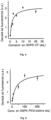
- the lipid concentration in the continuous phase is expressed as droplet surface area equivalents relative to the number of molecules required to cover the droplet interface with a compact monolayer of lipids.
- the surface area per lipid head is 12 nm 2 for DSPE-PEG-Biotin [11] and 0.5 nm 2 for DOPE-CF [12], which corresponds respectively to a volume of functionalization solution equal to 0 .04 ⁇ L and 3.55 ⁇ L to achieve a surface equivalent of phospholipids for a suspension of 8 ⁇ m drops containing approximately 5.10 6 drops.
- PB phosphate buffer
- the volume of stock solution to be used to obtain a concentration corresponding to a surface equivalent of IgG on the drops is equal to 2.5 ⁇ L if we consider a molecular surface area of 120 nm 2 per drop. igG [13].
- the drops are rinsed several times in the same buffer to eliminate unreacted IgGs and observed by microscopy.
- Streptavidins are specifically adsorbed on the surface of the drops functionalized with biotinylated lipids.
- PB phosphate buffer
- the volume of stock solution to be used to obtain a concentration corresponding to one surface equivalent of streptavidin on the drops is equal to 5.78 ⁇ L if we consider a molecular surface area of 16.6 nm 2 by streptavidin [13].
- the drops are rinsed several times in the same buffer to remove unreacted streptavidin and observed by microscopy.
- Brightfield and fluorescent images were acquired on a Zeiss Axio Observer Z1 microscope (Oberkochen, Germany) connected to a PCO Edge 4.2 sCMOS camera (PCO, Germany). Epi-illumination was carried out with a Lumencor Spectra X LED system. The size distribution and fluorescence of the emulsion drops were measured by microscopy and image analysis. All calculations were carried out with the Fiji / ImageJ [5] and R [6] software. The drops are observed with a Zeiss x40 objective. Spinning disk microscopy recordings were made using a Leica SD AF microscope, with a ⁇ 40 objective.
- the emulsion drops were characterized using a BD Accuri C6 cytometer (BD Biosciences, New Jersey, USA).
- the device is made of PDMS, using standard soft lithography techniques [14].
- An SU-8 master (SU-8 20XX, Microchem) was fabricated on a silicon wafer using a direct-write laser masker (Kloe Dilase 650), followed by PDMS casting (RTV 615, ratio 1:10 for the crosslinking agent, RTV 615, Momentive Performance Materials) was carried out, followed by heat treatment at 80 °C for two hours.
- the PDMS surfaces and the glass coverslip (VWR, 50 ⁇ 24 mm) that closes the channel were treated with O2 plasma (Cute Plasma, Korea) before sealing the two parts of the chip together.
- the ferrofluid consists of maghemite (Fe 2 O 3 ) nanoparticles produced by co-precipitation in an aqueous phase of Fe (II) and Fe (III) under alkaline conditions, following the method developed by Massart [15].
- the size of the nanoparticles is between 5 and 20 nm and depends on the kinetics of the reaction. For the experiments described below, particles with a size distribution of 7 ⁇ 1.6 nm were used.
- the aqueous phase is exchanged with chloroform using an excess of oleic acid acting as a surfactant and stabilizer.
- the iron concentration in the final product was characterized and is equal to 1.57 M.
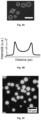
- FIG. 3A represents an image of the drops using spinning disk confocal microscopy. The drops exhibit a homogeneous fluorescent interface and a nearly black central portion, indicating that the fluorescent phospholipids are present only on the surface (see also Fig. 3B ).
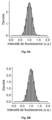
- the 3D figure presents the fluorescence distribution of an emulsion subsample (emulsion C, Fig. 2C ) having a diameter of 8 ⁇ 1 ⁇ m.
- the fluorescence is very homogeneous and follows a normal distribution with a standard deviation of 9%.
- emulsion drops can be functionalized with adhesive proteins such as streptavidin [2] or immunoglobulins [4]. This is usually achieved by first inserting DSPE-PEG-biotin molecules at the oil/water interface onto which anti-biotin-igGs or streptavidin are then grafted specifically.
- adhesive proteins such as streptavidin [2] or immunoglobulins [4].
- soybean oil drops (8 ⁇ m, emulsion C) are biotinylated using a PB/Tween 20 CMC buffer solution containing 10% v/v DMSO and containing 100 equivalents of DSPE-PEG-biotin , concentration 3 times greater than that corresponding to the association constant of these biotinylated lipids.
- the manufacture of functionalized drops involves two surfactants, the first (Pluronic F68) being used during the emulsification step, while the second (Tween 20) is used during the functionalization stage.
- Pluronic F68 is usually removed to reach a concentration below its CMC.
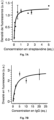
- the average fluorescence intensity was measured for IgG-grafted drops, for which the types and concentrations of surfactants in the presence of DSPE- PEG-biotin during the functionalization step were varied.
- Table 1 below shows the average fluorescence and standard deviation measured for drops coated with IgGs, which were previously functionalized by DSPE-PEG-Biotin in the absence of surfactant in the phospholipid solution (sample 1), in the presence of Pluronic F68 or Tween 20 at concentrations equal to their respective CMC (samples 2 and 4) or much higher than their CMC (samples 3 and 5).
- the IgGs grafting step was carried out in all cases with PB/Tween 20 CMC buffer.
- An emulsion comprising drops functionalized by IgGs and comprising a magnetic core was prepared, using a dispersed phase composed of a ferrofluid of Fe 2 O 3 nanoparticles suspended in mineral oil.
- the drops After emulsification, the drops are functionalized with biotinylated phospholipids and fluorescent IgGs according to the protocols described in the Materials and Methods section, sections D) and E).
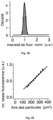
- the homogeneity of fluorescence within the sample is very high ( Fig. 13A ), with a CV close to 10% as shown in Figure 12B .
- the drops align ( Fig. 13B ) thanks to the superparamagnetic nature of their core, which is the expected behavior for such objects.
- a density diagram representing fluorescence (FL) as a function of lateral diffusion (SSC) was drawn for drops functionalized with DSPE-PEG-biotin, onto which fluorescent IgGs are then grafted according to the protocols described in the Materials and Materials section. Methods, sections D) and E).
- emulsion drops were prepared using a protocol described in the prior art [4], during which lipids are introduced into the oil before emulsification: A solution of DSPE-PEG-biotin in chloroform was prepared, and the amount necessary to reach a lipid concentration of 0.05 mg.mL -1 was added into the soybean oil. After evaporation of chloroform from the oil by heating and sonication, monodisperse drops were generated with the Couette apparatus, then fluorescent anti-biotin IgGs were grafted onto their surface.
- a density diagram representing fluorescence (FL) as a function of lateral scattering (SSC) was plotted for the functionalized drops according to the protocol described in the prior art (see section 12).
- the fluorescence distribution obtained with the method of the invention is narrower and follows a normal distribution, with a CV always less than 20% ( Fig. 6B ).
- RAW 264.7 murine macrophages purchased from ECACC are cultured in untreated T-80 flasks (VWR) filled with DMEM 4.5 g/L L-glucose supplemented with 10% v/v Fetal Bovine Serum and 1 % Penicillin Streptomycin, in an incubator at 37°C and 5% CO 2 . 24 hours before the experiment, they are detached with TryPLE and mechanical stirring, and seeded in Petri dishes with optical glass bottoms (Fluorodish F35-100, WPI) at a rate of 10 6 cells per coverslip. A schematic representation of these Petri dishes is presented on the Figure 16A .
- Biotinylated phospholipids DSPE-PEG2000-biotin were dissolved in soybean oil at 0.05 mg/mL.
- the aqueous phase of the emulsion consists of 15% w/w F68, and 0.5-2% w/w sodium alginate depending on the desired drop size.
- the halogenated oil is added drop by drop into the aqueous phase while gently stirring with a spatula to obtain a coarse emulsion, until reaching 75% oil by mass.
- This emulsion is then sheared in a Couette rheometer at 5000 s -1 , which makes it possible to reduce the size distribution of the drops.
- the sheared emulsion is diluted to achieve a mass fraction of oil of 5% and F-68 of 1%. This suspension is decanted several times with a 1% F-68 solution in order to eliminate small residual drops.
- the targets are washed and centrifuged 3 times with 0.007% Tween 20 phosphate buffer. They are then incubated with Alexa 488 anti-biotin antibodies, at a rate of 1 antibody for 1 DSPE-PEG2000-biotin present on the surface of the drops for 45 minutes at room temperature. They are then washed again 3 times with 0.007% Tween20 phosphate buffer, before returning to a final suspension of 2.10 5 targets/ ⁇ L.
- Step 3 Contacting targets and cells .
- the target suspension is injected into the chamber.
- the chambers are incubated at 37°C and 5% CO 2 for 45 minutes.
- the coverslip seeded with cells must be at the top, so that the less dense drops rise in contact with them, conversely in the case of polystyrene beads the seeded coverslip must be at the bottom to that the balls sediment upon contact.
- the chambers rinsed with PBS to remove any drops that are not internalized, and fixed with 4% paraformaldehyde solution for 20 minutes at room temperature.
- the coverslips are first incubated with 50 mM NH 4 Cl for 2 minutes, then permeabilized with Triton X-100 0.1% v/v for 10 minutes, and saturated with a solution of bovine serum albumin 4% w/w. They are incubated with 1 ⁇ g/slip of rat anti-mouse Cd16/Cd32 antibodies for 15 minutes, then rinsed with 4% BSA solution.
- the fixed samples are observed on a Leica TCS SP8 confocal microscope, with a 40x oil immersion objective, and the image is taken by 2 Leica hybrid detectors.
- Lasers at 405, 488, 552 and 638 nm are used to illuminate the fluorophores present; the light emitted by the sample is not filtered but separated by a prism.
- the wavelength windows collected are determined on a case-by-case basis based on the fluorophores present in order to minimize interference between signals.
- FIGS. 16B and 16C show two representative images of the phagocytosis experiments of emulsion drops whose functionalization protocol is described above.
- the drops are functionalized with biotinylated lipids ( Fig. 16B ) then by anti-biotin antibodies ( Fig.16C ) recognized by macrophage receptors involved in phagocytosis.
- the number of drops internalized is greater in the Fig. 16C that in the Fig. 16B which constitutes the control experiment.
Landscapes
- Chemical & Material Sciences (AREA)
- Organic Chemistry (AREA)
- Dispersion Chemistry (AREA)
- Life Sciences & Earth Sciences (AREA)
- Engineering & Computer Science (AREA)
- Chemical Kinetics & Catalysis (AREA)
- Health & Medical Sciences (AREA)
- General Health & Medical Sciences (AREA)
- Biochemistry (AREA)
- Analytical Chemistry (AREA)
- Proteomics, Peptides & Aminoacids (AREA)
- Physics & Mathematics (AREA)
- Zoology (AREA)
- Immunology (AREA)
- Wood Science & Technology (AREA)
- Materials Engineering (AREA)
- Biophysics (AREA)
- Biotechnology (AREA)
- Molecular Biology (AREA)
- Bioinformatics & Cheminformatics (AREA)
- General Engineering & Computer Science (AREA)
- Microbiology (AREA)
- Genetics & Genomics (AREA)
- General Physics & Mathematics (AREA)
- Pathology (AREA)
- Investigating, Analyzing Materials By Fluorescence Or Luminescence (AREA)
- Medicinal Preparation (AREA)
- Colloid Chemistry (AREA)
Applications Claiming Priority (3)
| Application Number | Priority Date | Filing Date | Title |
|---|---|---|---|
| FR1854366A FR3081350B1 (fr) | 2018-05-24 | 2018-05-24 | Particules colloidales fonctionnalisees de maniere homogene par des biomolecules |
| EP19725378.4A EP3801867B1 (de) | 2018-05-24 | 2019-05-24 | Verfahren zur herstellung durch biomoleküle homogen funktionalisierte kolloidale partikel |
| PCT/EP2019/063521 WO2019224375A1 (fr) | 2018-05-24 | 2019-05-24 | Particules colloidales fonctionnalisees de maniere homogene par des biomolecules |
Related Parent Applications (2)
| Application Number | Title | Priority Date | Filing Date |
|---|---|---|---|
| EP19725378.4A Division-Into EP3801867B1 (de) | 2018-05-24 | 2019-05-24 | Verfahren zur herstellung durch biomoleküle homogen funktionalisierte kolloidale partikel |
| EP19725378.4A Division EP3801867B1 (de) | 2018-05-24 | 2019-05-24 | Verfahren zur herstellung durch biomoleküle homogen funktionalisierte kolloidale partikel |
Publications (2)
| Publication Number | Publication Date |
|---|---|
| EP4344770A2 true EP4344770A2 (de) | 2024-04-03 |
| EP4344770A3 EP4344770A3 (de) | 2024-05-22 |
Family
ID=63722491
Family Applications (2)
| Application Number | Title | Priority Date | Filing Date |
|---|---|---|---|
| EP19725378.4A Active EP3801867B1 (de) | 2018-05-24 | 2019-05-24 | Verfahren zur herstellung durch biomoleküle homogen funktionalisierte kolloidale partikel |
| EP24157456.5A Pending EP4344770A3 (de) | 2018-05-24 | 2019-05-24 | Durch biomoleküle homogen funktionalisierte kolloidale partikel |
Family Applications Before (1)
| Application Number | Title | Priority Date | Filing Date |
|---|---|---|---|
| EP19725378.4A Active EP3801867B1 (de) | 2018-05-24 | 2019-05-24 | Verfahren zur herstellung durch biomoleküle homogen funktionalisierte kolloidale partikel |
Country Status (5)
| Country | Link |
|---|---|
| US (2) | US12269000B2 (de) |
| EP (2) | EP3801867B1 (de) |
| ES (1) | ES2985227T3 (de) |
| FR (1) | FR3081350B1 (de) |
| WO (1) | WO2019224375A1 (de) |
Family Cites Families (6)
| Publication number | Priority date | Publication date | Assignee | Title |
|---|---|---|---|---|
| FR2608988B1 (fr) * | 1986-12-31 | 1991-01-11 | Centre Nat Rech Scient | Procede de preparation de systemes colloidaux dispersibles d'une substance, sous forme de nanoparticules |
| FR2753376B1 (fr) | 1996-09-18 | 1998-10-16 | Synthelabo | Compositions pharmaceutiques comprenant de l'amisulpride et leurs applications therapeutiques |
| FR2828378B1 (fr) * | 2001-08-09 | 2005-06-24 | Gervais Danone Sa | Emulsion multiple alimentaire composee d'une emulsion primaire inverse dispersee au sein d'une phase continue aqueuse |
| WO2008102065A1 (fr) | 2007-02-14 | 2008-08-28 | Commissariat A L'energie Atomique | Emulsions fluorescentes pour l'imagerie optique |
| FR2921253B1 (fr) * | 2007-09-26 | 2012-11-16 | Lvmh Rech | Composition cosmetique sous la forme d'une emulsion comprenant une phase aqueuse continue et une phase grasse dispersee et son procede de preparation |
| FR2998175A1 (fr) * | 2012-11-16 | 2014-05-23 | Agronomique Inst Nat Rech | Procede pour la fabrication d'une emulsion seche en poudre contenant au moins un principe actif lipophile, et emulsion seche obtenue par ce procede |
-
2018
- 2018-05-24 FR FR1854366A patent/FR3081350B1/fr active Active
-
2019
- 2019-05-24 ES ES19725378T patent/ES2985227T3/es active Active
- 2019-05-24 EP EP19725378.4A patent/EP3801867B1/de active Active
- 2019-05-24 WO PCT/EP2019/063521 patent/WO2019224375A1/fr not_active Ceased
- 2019-05-24 EP EP24157456.5A patent/EP4344770A3/de active Pending
- 2019-05-24 US US17/058,277 patent/US12269000B2/en active Active
-
2025
- 2025-03-05 US US19/070,790 patent/US20250196086A1/en active Pending
Non-Patent Citations (15)
| Title |
|---|
| A.R. THIAMN. BREMONDJ. BIBETTE, LANGMUIR, vol. 28, 2012, pages 6291 |
| D.S. BANKSC. FRADIN, BIOPHYS. J., vol. 89, 2005, pages 2960 |
| J. FATTACCIOLIJ. BAUDRYN. HENRYF. BROCHARD-WYARTJ. BIBETTE, SOFT MATTER, vol. 4, 2008, pages 2434 |
| K. BEN M'BAREKD. MOLINOS. QUIGNARDM. PLAMONTY. CHENP. CHAVRIERJ. FATTACCIOLI, BIOMATERIALS, vol. 51, 2015, pages 270 |
| K.L. MITTAL, J. PHARM. SCI., vol. 61, 1972, pages 1334 |
| L. FENGL.-L. PONTANIR. DREYFUSP. CHAIKINJ. BRUJIC, SOFT MATTER, vol. 9, 2013, pages 9816 |
| M. HADORNE. BOENZLIK.T. SORENSENH. FELLERMANNP. EGGENBERGER HOTZM.M. HANCZYCP. EGGENBERGERM.M. HANCZYCP. EGGENBERGER HOTZ, PROC. NATL. ACAD. SCI. U. S. A., vol. 109, 2012, pages 20320 |
| N. BOUROUINAJ. HUSSONF. WAHARTER.B. PANSUN. HENRY, SOFT MATTER, vol. 7, 2011, pages 9130 |
| N.V. EFREMOVAB. BONDURANTD.F. O'BRIEND. LECKBAND, BIOCHEMISTRY, vol. 39, 2000, pages 3441 |
| O. CAMPÀS, T. MAMMOTO, S. HASSO, R. A SPERLING, D. O'CONNELL, A.G. BISCHOF, R. MAAS, D. A WEITZ, L. MAHADEVAN, D.E. INGBER, NAT. METHODS, vol. 11, 2013, pages 183 |
| OBEYVINCENT, J. COLLOID INTERFACE SCI., vol. 163, 1994, pages 454 |
| R. MASSART, IEEE TRANS. MAGN., vol. 17, 1981, pages 1247 |
| T. MASONJ. BIBETTE, PHYS. REV. LETT., vol. 77, 1996, pages 3481 |
| T.C. WERNERJ.R. BUNTINGR.E. CATHOU, PROC. NATL. ACAD. SCI. U. S. A., vol. 69, 1972, pages 795 |
| Y. XIAG.M. WHITESIDES, ANGEW. CHEMIE INT. ED., vol. 37, 1998, pages 550 |
Also Published As
| Publication number | Publication date |
|---|---|
| ES2985227T3 (es) | 2024-11-04 |
| EP3801867A1 (de) | 2021-04-14 |
| FR3081350A1 (fr) | 2019-11-29 |
| EP3801867C0 (de) | 2024-03-27 |
| WO2019224375A1 (fr) | 2019-11-28 |
| EP3801867B1 (de) | 2024-03-27 |
| US20250196086A1 (en) | 2025-06-19 |
| US20210213410A1 (en) | 2021-07-15 |
| FR3081350B1 (fr) | 2020-08-28 |
| US12269000B2 (en) | 2025-04-08 |
| EP4344770A3 (de) | 2024-05-22 |
Similar Documents
| Publication | Publication Date | Title |
|---|---|---|
| Briuglia et al. | Influence of cholesterol on liposome stability and on in vitro drug release | |
| EP0344040B1 (de) | Insbesondere zum Tragen von biologisch aktiven Molekülen geeignetes teilchenförmiges Vektorsystem und Verfahren zu seiner Herstellung | |
| EP0464077B1 (de) | Verfahren zur herstellung eines ligand-rezeptor-komprexes | |
| FR2689418A1 (fr) | Procédé de préparation de micro-capsules ou de liposomes de tailles contrôlées par application d'un cisaillement constant sur une phase lamellaire. | |
| EP3394622B1 (de) | Reagenzverdünnungsmittel | |
| CA2757105C (fr) | Procede de preparation de capsules lipidiques fonctionnalisees | |
| Takechi-Haraya et al. | Membrane rigidity determined by atomic force microscopy is a parameter of the permeability of liposomal membranes to the hydrophilic compound calcein | |
| Plochberger et al. | HDL particles incorporate into lipid bilayers–a combined AFM and single molecule fluorescence microscopy study | |
| WO2014132012A1 (fr) | Particules de type cœur-ecorce a base de polydopamine et d'huile vegetale | |
| EP0491921B1 (de) | Verfahren zur herstellung eines durch einbau einer lipophilen wirksubstanz modifizierten lipoproteins | |
| EP3801867B1 (de) | Verfahren zur herstellung durch biomoleküle homogen funktionalisierte kolloidale partikel | |
| Zemljič Jokhadar et al. | GPMVs in variable physiological conditions: could they be used for therapy delivery? | |
| Gupta et al. | Uptake of fluorescent labeled small extracellular vesicles in vitro and in spinal cord | |
| Flormann | Physical charaterization of red blood cell aggregation | |
| CN102293260B (zh) | 一种鱼油包合方法 | |
| WO2017103534A2 (fr) | Assemblages de nanoparticules hydrophobes en milieu aqueux | |
| EP0277849A1 (de) | Aufnahme von einem oder mehreren lipophilen, aktiven Bestandteilen in Lipoproteinen, hergestellte Lipoproteine und pharmazeutische Zusammensetzungen | |
| Auquière et al. | Critical evaluation of saponin as a permeabilizer for anandamide encapsulation in extracellular vesicles | |
| FR2593394A1 (fr) | Procede de preparation de liposomes contenant une subtance active lipophile, notamment de l'amphotericine, liposomes et nouveau medicament obtenus | |
| Khaleseh et al. | Optimum surfactant concentration for preparation of amiodarone loaded solid lipid nanoparticles: Theoretical estimation versus experimental results by box-behnken design | |
| EP0122201A1 (de) | Verfahren zum Nachweis und zur Bestimmung mittels Fluoreszenz einer von Zellmembran-Proteinen abhängigen Zellendocytose | |
| Sterin et al. | Standard purification methods are not sufficient to remove micellular lipophilic dye from polymer nanoparticle solution | |
| CN120305205A (zh) | 一种肾靶向的小分子多肽纳米脂质体及其制备方法与应用 | |
| JP2026029038A (ja) | 細胞サイズリポソーム、細胞サイズリポソームを利用するカプロン酸エチル濃度推定方法、細胞サイズリポソームの観察結果と検量線を利用するカプロン酸エチル濃度推定方法、およびカプロン酸エチル濃度測定方法 | |
| Briuglia et al. | Lamprou, Dimitrios (2015) Influence of cholesterol on liposome stability and on in vitro drug release. Drug Delivery and Translational Research. ISSN 2190-393X (In Press), http://dx. doi. org/10.1007/s13346-015-0220-8 |
Legal Events
| Date | Code | Title | Description |
|---|---|---|---|
| PUAI | Public reference made under article 153(3) epc to a published international application that has entered the european phase |
Free format text: ORIGINAL CODE: 0009012 |
|
| STAA | Information on the status of an ep patent application or granted ep patent |
Free format text: STATUS: REQUEST FOR EXAMINATION WAS MADE |
|
| 17P | Request for examination filed |
Effective date: 20240213 |
|
| AC | Divisional application: reference to earlier application |
Ref document number: 3801867 Country of ref document: EP Kind code of ref document: P |
|
| AK | Designated contracting states |
Kind code of ref document: A2 Designated state(s): AL AT BE BG CH CY CZ DE DK EE ES FI FR GB GR HR HU IE IS IT LI LT LU LV MC MK MT NL NO PL PT RO RS SE SI SK SM TR |
|
| PUAL | Search report despatched |
Free format text: ORIGINAL CODE: 0009013 |
|
| AK | Designated contracting states |
Kind code of ref document: A3 Designated state(s): AL AT BE BG CH CY CZ DE DK EE ES FI FR GB GR HR HU IE IS IT LI LT LU LV MC MK MT NL NO PL PT RO RS SE SI SK SM TR |
|
| RIC1 | Information provided on ipc code assigned before grant |
Ipc: B01J 13/00 20060101AFI20240416BHEP |
|
| STAA | Information on the status of an ep patent application or granted ep patent |
Free format text: STATUS: EXAMINATION IS IN PROGRESS |
|
| 17Q | First examination report despatched |
Effective date: 20260323 |