EP4333867B1 - Covid-19-bindendes peptid - Google Patents
Covid-19-bindendes peptid Download PDFInfo
- Publication number
- EP4333867B1 EP4333867B1 EP22719598.9A EP22719598A EP4333867B1 EP 4333867 B1 EP4333867 B1 EP 4333867B1 EP 22719598 A EP22719598 A EP 22719598A EP 4333867 B1 EP4333867 B1 EP 4333867B1
- Authority
- EP
- European Patent Office
- Prior art keywords
- peptide
- peptides
- amino acid
- spike
- sars
- Prior art date
- Legal status (The legal status is an assumption and is not a legal conclusion. Google has not performed a legal analysis and makes no representation as to the accuracy of the status listed.)
- Active
Links
Images




Classifications
-
- A—HUMAN NECESSITIES
- A61—MEDICAL OR VETERINARY SCIENCE; HYGIENE
- A61K—PREPARATIONS FOR MEDICAL, DENTAL OR TOILETRY PURPOSES
- A61K38/00—Medicinal preparations containing peptides
- A61K38/04—Peptides having up to 20 amino acids in a fully defined sequence; Derivatives thereof
- A61K38/10—Peptides having 12 to 20 amino acids
-
- C—CHEMISTRY; METALLURGY
- C07—ORGANIC CHEMISTRY
- C07K—PEPTIDES
- C07K7/00—Peptides having 5 to 20 amino acids in a fully defined sequence; Derivatives thereof
- C07K7/04—Linear peptides containing only normal peptide links
- C07K7/08—Linear peptides containing only normal peptide links having 12 to 20 amino acids
-
- A—HUMAN NECESSITIES
- A61—MEDICAL OR VETERINARY SCIENCE; HYGIENE
- A61P—SPECIFIC THERAPEUTIC ACTIVITY OF CHEMICAL COMPOUNDS OR MEDICINAL PREPARATIONS
- A61P31/00—Antiinfectives, i.e. antibiotics, antiseptics, chemotherapeutics
- A61P31/12—Antivirals
- A61P31/14—Antivirals for RNA viruses
-
- C—CHEMISTRY; METALLURGY
- C07—ORGANIC CHEMISTRY
- C07K—PEPTIDES
- C07K14/00—Peptides having more than 20 amino acids; Gastrins; Somatostatins; Melanotropins; Derivatives thereof
- C07K14/005—Peptides having more than 20 amino acids; Gastrins; Somatostatins; Melanotropins; Derivatives thereof from viruses
-
- A—HUMAN NECESSITIES
- A61—MEDICAL OR VETERINARY SCIENCE; HYGIENE
- A61K—PREPARATIONS FOR MEDICAL, DENTAL OR TOILETRY PURPOSES
- A61K38/00—Medicinal preparations containing peptides
Definitions
- the present invention relates to novel peptides which can block the binding interaction of novel coronavirus SARS-CoV-2 in mammals, specifically by inhibiting the interaction between the spike protein of coronaviruses and the ACE2 receptor.
- the invention further relates to said peptides for use in treatment of COVID-19.
- the present invention relates to the peptides of the invention for use in inducing an immune response in a mammal by administration of said peptides.
- infectious diseases particularly due to viruses, have been one of the most important contributors to human morbidity and mortality. They account for a large proportion of death and disability worldwide and remain in certain regions the most important cause of ill health. The burden of viral diseases and disorders is illustrated by the recent outbreak of coronavirus disease 2019 (COVID-19).
- COVID-19 is an infectious disease caused by the recently discovered coronavirus Severe Acute Respiratory Syndrome CoronaVirus 2 (SARS-CoV-2), often referred to as the COVID-19 virus.
- SARS-CoV-2 coronavirus Severe Acute Respiratory Syndrome CoronaVirus 2
- Viral airway infection COVID-19 is also referred to as 2019-nCoV acute respiratory disease (2019-nCoV ARD) and novel coronavirus pneumonia (NCP).
- 2019-nCoV acute respiratory disease 2019-nCoV ARD
- NCP novel coronavirus pneumonia
- the current COVID-19 pandemic has caused havoc in the worlds, including the number of medical problems from mild symptoms up to severe and critical symptoms, and even death, in addition to the enormous economic problems associated with worldwide lockdown.
- the main problem is that this pandemic was caused by a new, hereto unknown virus, now classified as SARS-CoV-2, which triggered fear how this highly infectious and unknown virus will affect human population.
- SARS-CoV-2 virus belongs to the group of coronaviruses, which are RNA viruses. Coronaviruses are widely spread in nature, mostly infecting animals, but some are capable of infecting humans as well, usually with mild or non-existent symptoms.
- coronavirus has infected humans, via animals, and causing severe problems, namely SARS (Severe Acute Respiratory Syndrome, 2003), MERS (Middle East Respiratory Syndrome, 2012) and COVID-19 (SARS-CoV-2).
- SARS-CoV-2 is a completely new virus, there is an urgent need to investigate all aspects of SARS-CoV-2 virus infection and its activity.
- the present inventors have designed novel peptides, which are capable of blocking the interaction between the angiotensin-converting enzyme 2 (ACE2) receptor found on cell surfaces, and the Spike-S1 protein of the SARS-CoV-2 coronavirus.
- ACE2 angiotensin-converting enzyme 2
- the present invention concerns a peptide, wherein the peptide comprises an amino acid sequence selected from the group consisting of SEQ ID NO: 1, SEQ ID NO: 2, SEQ ID NO: 3, SEQ ID NO: 4, SEQ ID NO: 5, and SEQ ID NO: 6, or a sequence variant thereof differing by one or two amino acid residues from said SEQ ID NO.
- novel peptides of the invention may be formulated as part of a composition for administration to a subject.
- the composition may also be formulated to comprising polynucleotides, vectors, host cells and/or other means of delivering the peptides of the invention to a subject.
- the present invention concerns a composition comprising the peptides of the invention.
- the present invention concerns a polynucleotide encoding the peptides of the invention.
- the present invention concerns a vector comprising a polynucleotide encoding the peptides of the invention.
- the present invention concerns a host cell comprising the polynucleotide encoding the peptides of the invention, or the vector comprising said polynucleotide.
- the present invention concerns the peptide, the composition, the polynucleotide, the vector, and/or the host cell as disclosed above and defined in the claims, for use as a medicament.
- the present invention concerns the peptide, the composition, the polynucleotide, the vector, and/or the host cell as disclosed above and defined in the claims, for use in prevention and/or treatment of a SARS-CoV-2-related disease in a subject.
- the present invention concerns the peptide, the composition, the polynucleotide, the vector, and/or the host cell as disclosed above and defined in the claims, for inducing an immune response in a subject.
- the present invention concerns a vaccine for use in prevention and/or treatment of COVID-19, the vaccine comprising the peptide, the composition, the polynucleotide, the vector, and/or the host cell as disclosed above and defined in the claims.
- the spike glycoprotein of coronaviruses is the first part of the virus particle which attach to a host cell to initiate the infection. Consequently, disruption of this mechanism could be the most relevant target for design of treatments.
- To be able to design a universal treatment for all coronaviruses common characteristic parameters for spike proteins from different strains should be identified and then use these parameters for further drug design.
- the inventors of the present application have utilised the Resonant Recognition Model (RRM), which proposes that protein biological function is characterised by certain periodicities or frequencies, within the distribution of free electron energies along a given protein.
- the RRM model is capable of identifying common characteristics for proteins having the same biological function and/or interaction, but not necessarily a high degree of homology.
- novel peptides of the present invention are capable of modulating and/or inhibiting the ACE2/Spike-S1 interaction associated with SARS-CoV-2 viral infection in humans.
- the present inventors have achieved this effect by designing peptides to have a characteristic frequency which matches the characteristic frequency of the spike S1 protein of coronaviruses found to cause infections in humans.
- the peptide, the composition, the polynucleotide, the vector, or the host cell, of the invention is for use as a medicament.
- the peptide, the composition, the polynucleotide, the vector, or the host cell, of the invention is for use in prevention and/or treatment of a SARS-CoV-2 related disease in a subject.
- the disease treated herein is COVID-19.
- the peptide, the composition, the polynucleotide, the vector, or the host cell, of the invention is for inducing an immune response in a subject.
- the immune response is a mucosal immune response.
- the mucosal immune response is against SARS-CoV-2.
- the present disclosure concerns a vaccine for use in prevention and/or treatment of COVID-19, the vaccine comprising the peptide, the composition, the polynucleotide, the vector, or the host cell, of the invention and as defined in the claims.
- the peptide, the composition, the polynucleotide, the vector, or the host cell, as defined herein is capable of reducing the relative binding of spike S1 protein to ACE2 by 10%, such as by 20%, such as by 30%, such as by 40%, such as by 50%, such as by 60%, such as by 70%, such as by 80%, compared to a control receiving no treatment.
- the peptide, the composition, the polynucleotide, the vector, or the host cell, as defined herein is useful for treatment and/or prevention and/or amelioration of COVID-19 by prevention of CPE.
- the usefulness of the peptide in treatment and/or prevention and/or amelioration of COVID-19 is evaluated on the observation of cytopathic effect (CPE) or lack thereof, such as structural changes in a host cell resulting from viral infection.
- CPE occurs when the infecting virus causes lysis (dissolution) of the host cell or when the cell dies without lysis because of its inability to reproduce.
- RRM Resonant Recognition Model
- All proteins can be considered as a linear sequence of their constitutive elements, i.e., amino acids and biological function of proteins is determined primarily by this linear sequence.
- the RRM (Cosic, 1994 and Cosic, 1997) interprets this linear information by transforming a protein sequence into a numerical series and then into the frequency domain using digital signal processing methods Fast Fourier Transform (FFT).
- FFT Fast Fourier Transform
- Protein primary structure can be presented as a numerical series by assigning the relevant physical parameter value to each amino acid. It has been shown that the best correlation can be achieved with parameters which are related to the energy of delocalised electrons of each amino acid (calculated as Electron Ion Interaction Potential (EIIP), as presented in Table 1), (Cosic, 1994; Cosic, 1997 and Pirogova at al, 2003). The resulting numerical series represents the distribution of the free electron's energies along the protein molecule.
- EIIP Electron Ion Interaction Potential
- Protein numerical series are converted into spectra using FFT, pertaining the same information as original sequence.
- the RRM technique revealed that proteins and their interacting targets share the same matching characteristic frequency with opposite phase at this frequency (Cosic, 1994; Cosic, 1997; Cosic at al, 2016 and Cosic at al, 2019).
- the peptides determined by the RRM technique are artificial peptides, the sequences of which have been designed to have only desired RRM frequency and phase, consequently expressing desired biological function/interaction.
- the present invention makes use of the above RRM procedure for design of peptides capable to block SARS-CoV-2 spike proteins interaction with human ACE2 receptor.
- Table 1 - list of calculated EIIP values for all 20 natural amino acids Amino Acids PEII (Ry*) Leu (L) 0.0000 Ile (I) 0.0000 Asn (N) 0.0036 Gly (G) 0.0050 Val (V) 0.0057 Glu (E) 0.0058 Pro (P) 0.0198 His (H) 0.0242 Lys (K) 0.0371 Ala (a) 0.0373 Tyr (Y) 0.0516 Trp (W) 0.0548 Gln (Q) 0.0761 Met (M) 0.0823 Ser (S) 0.0829 Cys (C) 0.0829 Thr (T) 0.0941 Phe (F) 0.0946 Arg (R) 0.0959 Asp (D) 0.1263 * Ry Rydberg unit
- the peptides of the invention are characterized by frequency components that match the S1/ACE2 interaction compatible with SARS-CoV-2 infections.
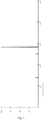
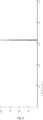
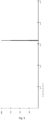
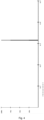
- the one or more characteristic frequency component is selected from f1 and f2.
- the one or more characteristic frequency component f1 is 0.2827 ⁇ 0.0009, and f2 is 0.3145 ⁇ 0.0019.
- Retro-peptides are peptides consisting of the same sequence of amino acids, but in reverse order.
- Inverso-peptides are peptides consisting of the same sequence but composed of D-amino acids. Retro-inverso peptides are thus peptides whose amino acid sequence is reversed and the ⁇ -center chirality of the amino acid subunits is inverted as well.
- these types of peptides are designed by including D-amino acids in the reverse sequence to help maintain side chain topology similar to that of the original L-amino acid peptide and make them more resistant to proteolytic degradation.
- Retro-inverse Peptides All-D-Retro Peptides, Retro-Enantio Peptides, Retro-Inverso Analogs, Retro-Inverso Analogues, Retro-Inverso Derivatives, and Retro-Inverso Isomers.
- the peptides of the present invention are formulated as peptidomimetics, such as retro-peptides, inverso-peptides, and retro-inverso peptides.
- the peptides of the present invention may comprise any range from all L-amino acids to all D-amino acids.
- the present disclosure provides in one embodiment a peptide, wherein the peptide comprises an amino acid sequence selected from the group consisting of SEQ ID NO: 1, SEQ ID NO: 2, SEQ ID NO: 3, SEQ ID NO: 4, SEQ ID NO: 5, and SEQ ID NO: 6, or a sequence variant thereof differing by one or two amino acid residues from said SEQ ID NO.
- sequence variant differs by one amino acid.
- the differing one or two amino acids of the sequence variant are generated by substitution, addition and/or deletion.
- Sequence variants may differ by one or more conservative and/or semi-conservative amino acid substitutions, which typically have minimal influence on the secondary and tertiary structure and hydrophobic/hydrophilic nature of a protein and/or peptide. Sequence variants may also differ by one or more non-conservative amino acid substitutions, deletions, or insertions, which do not abolish the native biological activity.
- sequence variant comprises one or more of conservative, semi-conservative, and non-conservative substitutions.
- the peptides of the present invention comprise at least 16 amino acid residues, such as at least 17 amino acid residues, such as at least 18 amino acid residues, such as at least 20 amino acid residues, such as at least 21 amino acid residues, such as at least 22 amino acid residues, such as at least 30 amino acid residues, such as at least 50 amino acid residues.
- the peptides of the present invention comprise no more than 50 amino acid residues, such as no more than 30 amino acid residues, such as no more than 22 amino acid residues, such as no more than 21 amino acid residues, such as no more than 20 amino acid residues, such as no more than 19 amino acid residues, such as no more than 18 amino acid residues.
- the peptides of the present invention comprise in the range of 16 to 50 amino acid residues, such as in the range of 16 to 30 amino acid residues, such as in the range of 16 to 22 amino acid residues, such as in the range of 16 to 20 amino acid residues, such as in the range of 17 to 19 amino acid residues.
- the peptides of the present invention are capable of binding to the SARS-CoV-2 Spike S1 protein.
- the peptides of the present invention are capable of inhibiting and/or blocking the binding of the Spike-S1 protein of SARS-CoV-2 to the human ACE2 receptor.
- the peptides of the present invention are further conjugated to a moiety.
- the moiety is selected from the group consisting of PEG, monosaccharides, fluorophores, chromophores, and radioactive compounds.
- the moiety is a detectable moiety.
- the peptides of the present invention are further modified by glycosylation, phosphorylation, PEGylation, amidation, esterification, acylation, acetylation and/or alkylation.
- the peptides of the present invention are further modified by alkylation, such as C 1-6 alkylated.
- the peptides of the present invention comprise either proteinogenic or non-proteinogenic amino acids.
- the peptides of the present invention comprise SEQ ID NO: 1 or a sequence variant thereof differing by one or two amino acid residues.
- the peptides comprise or consist of the amino acid sequence HRWKQWWWAQCPYDKLDM (SEQ ID NO: 1)
- the peptide comprises or consists of the amino acid sequence LWDKERTNWDAERRGYDY (SEQ ID NO: 2)
- the peptide comprises or consists of the amino acid sequence QDEWDHKDAPDWGRCLTR (SEQ ID NO: 3)
- the peptide comprises or consists of the amino acid sequence RHWFWWQQCWARMVTDLY (SEQ ID NO: 4)
- the peptide comprises or consists of the amino acid sequence DWNTDPKDQICDPHDQLQ (SEQ ID NO: 5)
- the peptide comprises or consists of the amino acid sequence YEDQNRTLCRVWDPKDKP (SEQ ID NO: 6)
- One embodiment of the present disclosure is a polynucleotide encoding the peptide as defined herein.
- One embodiment of the present disclosure is a vector comprising a polynucleotide encoding the peptide as defined herein.
- One embodiment of the present disclosure is a host cell comprising a polynucleotide, or a vector comprising a polynucleotide, encoding the peptide as defined herein.
- the host cell is selected from the group consisting of bacterial cell, mammalian cell, and human cell.
- composition comprising the peptides of the invention is for use in the treatment of viral diseases or disorders as described herein in a subject in need thereof.
- the subject is infected with a coronavirus.
- the treatment is prophylactic and administered to a subject in risk of being infected with SARS-CoV-2.
- the subject is infected with SARS-CoV-2
- the subject is a mammal.
- the subject may be a human.
- the subject is an animal, such as a pet, including for example a cat, a dog, a rabbit, a horse, or a farm animal such as cattle or poultry, for example a cow, a bull, a sheep, a goat, a mink, a pig, a chicken, or a turkey.
- a pet including for example a cat, a dog, a rabbit, a horse, or a farm animal such as cattle or poultry, for example a cow, a bull, a sheep, a goat, a mink, a pig, a chicken, or a turkey.
- subjects are elderly above 65 years of age.
- elderly subjects are 70 years of age or above.
- composition comprising the peptides of the invention, or a pharmaceutically acceptable derivative thereof as disclosed herein, comprises, separately or together, one or more additional active pharmaceutical ingredients.
- said one or more additional active pharmaceutical ingredients are used for the treatment of a viral disease or disorder.
- said one or more additional active pharmaceutical ingredients are used for the treatment of symptomatic COVID-19.
- composition comprising the peptides of the invention, or a pharmaceutically acceptable derivative thereof for use as disclosed herein is an add-on therapy to existing therapies.
- composition comprising the peptides of the invention, or a pharmaceutically acceptable derivative thereof for use as disclosed herein is an add-on therapy to one or more additional therapies used for the treatment of viral diseases or disorders.
- said add-on therapy includes one or more of oxygen on nasal catheter and mechanical ventilation.
- the preferred route of administration will depend on the general condition and age of the subject to be treated, the nature of the condition to be treated, the location of the tissue to be treated in the body and the active ingredient chosen.
- the administration is by systemic administration, local administration, enteral administration, or parenteral administration.
- Appropriate dosage forms for such administration may be prepared by conventional techniques.
- Systemic administration is capable of introducing the compound into the blood stream to ultimately target the sites of desired action.
- Such routes of administration are any suitable routes, such as an enteral route, the oral, rectal, nasal, pulmonary, buccal, sublingual, transdermal, intracisternal, intraperitoneal, and parenteral (including subcutaneous, intramuscular, intrathecal, intravenous, and intradermal) route.
- the administration route is intravenous, oral, mucosal, or sublingual.
- Oral administration is normally for enteral drug delivery, wherein the compound is delivered through the enteral mucosa.
- Syrups and solid oral dosage forms such as tablets, capsules, and the like, are commonly used.
- composition comprising any one of SEQ ID NOs: 1 to 6 is administered by oral administration.
- Parenteral administration is any administration route not being the oral/enteral route whereby the medicament avoids first-pass degradation in the liver. Accordingly, parenteral administration includes any injections and infusions, for example bolus injection or continuous infusion, such as intravenous administration, intramuscular administration, subcutaneous administration. Furthermore, parenteral administration includes inhalations and topical administration.
- the compound may be administered topically to cross any mucosal membrane of an animal to which the biologically active substance is to be given, e.g. in the nose, vagina, eye, mouth, genital tract, lungs, gastrointestinal tract, or rectum, preferably the mucosa of the nose, or mouth, and accordingly, parenteral administration may also include buccal, sublingual, nasal, rectal, vaginal and intraperitoneal administration as well as pulmonal and bronchial administration by inhalation or installation. Also, the compound may be administered topically to cross the skin.
- composition comprising any one of SEQ ID NOs: 1 to 6 is administered by parenteral administration
- composition comprising any one of SEQ ID NOs: 1 to 6 is administered by topical administration
- the peptides or compositions as disclosed herein is in one embodiment used as a local treatment, i.e., is introduced directly to the site(s) of action. Accordingly, the peptide or composition may be applied to the skin or mucosa directly, or the peptide or composition may be injected into the site of action, for example into the diseased tissue or to an end artery leading directly to the diseased tissue.
- composition comprising the peptides of the invention is administered to individuals in need of treatment in pharmaceutically effective doses.
- a therapeutically effective amount of a compound is an amount sufficient to cure, prevent, reduce the risk of, alleviate or partially arrest the clinical manifestations of a given disease and its complications.
- the amount that is effective for a particular therapeutic purpose will depend on the severity and the sort of the disorder as well as on the weight and general state of the subject.
- the compound may be administered one or several times per day, such as from 1 to 8 times per day, such as from 1 to 6 times per day, such as from 1 to 5 times per day, such as from 1 to 4 times per day, such as from 1 to 3 times per day, such as from 1 to 2 times per day, such as from 2 to 4 times per day, such as from 2 to 3 times per day.
- the compound may be administered less than once a day, for example once a day, such as once every second day, for example once every third day, such as once every fourth day, for example once every fifth day, such as once every sixth day, for example once every week.
- composition comprising the peptides of the invention is administered in a therapeutically effective amount, such as in an amount of 1 mg to 1000 mg of a peptide comprising any one of SEQ ID NOs: 1 to 6 per day.
- composition comprising the peptides of the invention is administered in an amount of 1 mg to 1000 mg, such as 1 to 200 mg, 200 to 400 mg, 400 to 600 mg, 600 to 800 mg, 800 to 1000 mg, for example 500 to 1000 mg per day.
- Per day means the dosage may be given in one dosage or divided in multiple dosages per day, including once a day (QD), twice a day (BID) and/or three times a day (TID).
- QD once a day
- BID twice a day
- TID three times a day
- composition comprising the peptides of the invention is administered in an amount of 100 mg once daily, 200 mg once daily, 300 mg once daily, 400 mg once daily, 500 mg once daily, 600 mg once daily, 700 mg once daily, 800 mg once daily, 900 mg once daily or 1000 mg once daily.
- composition comprising the peptides of the invention is administered in an amount of 0.01 mg/kg bodyweight to 40 mg/ kg bodyweight, such as 0.01 mg/ kg bodyweight to 0.5 mg/ kg bodyweight, 0.5 mg to 5 mg/ kg bodyweight, 5 to 20 mg/ kg bodyweight, 20 to 40 mg/ kg bodyweight.
- the present invention further provides a pharmaceutical formulation, which comprises the peptides of the present invention or a pharmaceutically acceptable salt thereof, and a pharmaceutically acceptable carrier, therefore.
- the pharmaceutical formulations may be prepared by conventional techniques, e.g., as described in Remington: The Science and Practice of Pharmacy 2005, Lippincott, Williams & Wilkins .
- One embodiment of the present disclosure is a composition comprising the peptides of the invention.
- composition comprising the peptides of the invention is a pharmaceutical composition, such as a pharmaceutically safe composition.
- composition comprising the peptides of the invention may be administered in any suitable way e.g., orally, sublingually, or parenterally, and it may be presented in any suitable form for such administration, e.g., in the form of solutions, suspension, aerosols, tablets, capsules, powders, syrups, implant or dispersions for injection.
- composition comprising the peptides of the invention is formulated as a suspension.
- composition comprising the peptides of the invention is formulated as an aerosol.
- the composition comprising the peptides of the invention is formulated as an oral dose form, such as a solid oral dose form or pharmaceutical entity, such as tablets or capsules, or a liquid oral dose form.
- an oral dose form such as a solid oral dose form or pharmaceutical entity, such as tablets or capsules, or a liquid oral dose form.
- composition comprising the peptides of the invention is formulated as an injectable dose form.
- compositions comprising the peptides of the invention may be administered alone or in combination with pharmaceutically acceptable carriers or excipients, in either single or multiple doses.
- the pharmaceutical compositions may be formulated with pharmaceutically acceptable carriers or diluents as well as any other known adjuvants and excipients in accordance with conventional techniques such as those disclosed in Remington: The Science and Practice of Pharmacy, 19 Edition, Gennaro, Ed., Mack Publishing Co., Easton, Pa., 1995 .
- composition comprising the peptides of the invention comprises one or more independently selected from each of adjuvants, excipients, carriers, and nutrients.
- the algorithm was applied to a total of 27 viral spike proteins.
- the analysis procedure comprises the following steps:
- the peptides obtained in this way have the common spectral characteristics with the 27 viral spike proteins used in the basis set and can be proposed to exhibit a same function/interaction properties, although they do not have any sequence similarity with any of these viral spike proteins.
- Example 2 Applying the procedure as set out in Example 1, multiple cross-spectral analysis was then applied over each group of the protein sequences (9 human interacting coronavirus spike S1 protein fragments and 10 ACE2 receptor proteins) to extract common characteristic frequency components for the interaction.
- Example 2 Applying the procedure as set out in Example 1, multiple cross-spectral analysis was then applied over each group of the protein sequences (9 human interacting coronavirus spike S1 protein fragments and 5 RBC Band3 proteins) to extract common characteristic frequency components for the interaction.
- Peptide CovA having both frequencies f1 and f2 with the same phases as virus spike proteins.
- Peptide CovB having only frequency f1 with the same phase as virus spike protein.
- Peptide CovC having only frequency f2 with the same phase as virus S1 spike protein.
- Peptide CovD having both frequencies f1 and f2 with the opposite phases as virus spike proteins.
- Peptide CovE having only frequency f1 with the opposite phase as virus spike protein.
- Peptide CovF having only frequency f2 with the opposite phase as virus S1 spike protein.
- Peptides were provided by a third party manufacturer and made to order.
- the ordered peptides were supplied as lyophilized powder and stored at room temperature before use. All peptides were at least 95% purity as evidenced by HPLC and MS analysis.
- PBS phosphate-buffered saline
- the peptides of the invention were incubated with either ACE2-His or SARS-CoV-2 Spike-S1-Biotin using either the ACE2 Inhibitor Screening Assay Kit or the SARS-CoV-2 Spike inhibitor Screening Assay Kit as procured from BPS Bioscience, San Diego, CA, US.
- the tests were made according to the manufacturer's instructions.
- peptides Prior to the test, peptides were thawed at room temperature for 30 minutes before being kept in a thermoblock at 37°C for an additional 30 minutes.
- the employed assays are ELISA assays, and the read-out is evaluated based on the chemiluminescence as measured using a Citation 3 Imaging Reader (BioTek, US).
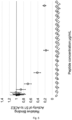
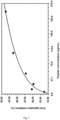
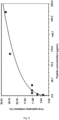
- a value of 1 represents the relative value of a positive control (0 ⁇ g/mL of peptide concentration), which means the highest binding activity between native SARS-CoV-2 Spike S1 and native ACE2. If the addition of peptides of the invention induces deviation from the value 1 to lower values which are significantly different than the value obtained by the positive control, it means that the tested peptide has an inhibitory effect on the SARS-CoV-2 Spike S1 -ACE2 interaction.
- the presented data clearly shows a statistically significant reduction in the relative binding activity between Spike S1 of SARS-CoV-2 and ACE2. Specifically, when applying the highest effective peptide concentration of 200 ⁇ g/mL, 80% of the binding between Spike S1 of SARS-CoV-2 and ACE2 is prevented, compared to baseline (0 ⁇ g/mL).
- Serial twofold dilutions of the tested peptide were prepared in cell culture medium containing 4% or 2% DMSO.
- the working dilution of SARS-CoV-2 virus 100 TCID50 units was prepared in cell culture medium containing 4% or 2% DMSO.
- An equal volume (25 ⁇ l) of serial twofold dilutions of peptide and working dilution of SARS-CoV-2 were mixed in a cell culture plate and incubated at 37° C for an hour.
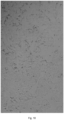
- the efficacy of CovA peptide towards SARS-CoV-2 was screened at two concentrations, 25 ⁇ g/mL and 200 ⁇ g/mL. Both concentrations demonstrated good tolerability as evaluated based on lack of CPE in both the cell culture control sample (200 ⁇ g/mL, Figure 11 ) comprising 2% DMSO, and the CovA control sample (200 ⁇ g/mL, Figure 12 ), also comprising 2% DMSO.
- the CovA peptide was incubated with SARS-CoV-2 virus partial inhibition was observed, as a reduced CPE (200 ⁇ g/mL, Figure 10 ), compared to the virus back titration control sample (200 ⁇ g/mL, Figure 13 ).
- Peptide concentration based on the obtained results from previous examples, the maximal chosen concentration of the peptide was 200 ⁇ g/mL and peptide were serially diluted in two-fold dilutions up to 1:128. Serial two-fold dilutions of the tested peptide were prepared in cell culture medium containing 2 % DMSO.
- Virus concentration A concentration of 50 TCID50 units was chosen as maximum virus concentration that was used in the tests. Serial two-fold dilutions of the virus up to 1:128 were prepared in cell culture medium.
- Optimisation of the peptide - virus concentration was performed in quadruplicate (each peptide dilution per each virus dilution in 4 wells of the 96-well microtiter plate), so the interpretation of the results based on four replicates were possible. The results were determined on the observed cytopathic effect (cpe).
- An equal volume (25 ⁇ l) of serial twofold dilutions of peptide and serial twofold dilutions of SARS-CoV-2 were mixed in a cell culture plate and incubated at 37° C for an hour. After the incubation, 50 ⁇ l of 3 ⁇ 10 5 Vero E6 cells/ml were added to each well. The plates were incubated at 37° C with 5% CO 2 atmosphere for 5 days and the results of the inhibition/neutralisation were evaluated based on cytopathic effect (CPE).
- RNA by real-time PCR and quantification of viral load by calculation of the ⁇ Ct values The results are given in the Ct values.
- Ct value indicated threshold cycle which reflects cycle number at which the fluorescence generated within a reaction crosses the threshold (positive-negative cut-off value). It is inversely correlated to the logarithm of the initial copy number of RNA.
- ⁇ Ct means the difference between the Ct value of a sample obtained after incubation and the Ct for the sample obtained before incubation in case that in both occasion RNA was extracted from the equal volume of the sample.
- peptide CovA inhibits the SARS-CoV-2 in a concentration dependant manner.
- the viral replication was inhibited in the highest number (46 %) of wells at the highest (200 ug/ml) concentration of the peptide and the lowest (21 %) at the 6.25 ug/ml concentration.
- Lower peptide concentrations (3.125 and 1.5625 ug/ml) were omitted from the present analysis but included in Figure 8 for completeness.
Landscapes
- Health & Medical Sciences (AREA)
- Life Sciences & Earth Sciences (AREA)
- Chemical & Material Sciences (AREA)
- Organic Chemistry (AREA)
- Medicinal Chemistry (AREA)
- General Health & Medical Sciences (AREA)
- Molecular Biology (AREA)
- Virology (AREA)
- Proteomics, Peptides & Aminoacids (AREA)
- Veterinary Medicine (AREA)
- Biophysics (AREA)
- Animal Behavior & Ethology (AREA)
- Pharmacology & Pharmacy (AREA)
- Public Health (AREA)
- Genetics & Genomics (AREA)
- Biochemistry (AREA)
- Gastroenterology & Hepatology (AREA)
- Oncology (AREA)
- Communicable Diseases (AREA)
- Chemical Kinetics & Catalysis (AREA)
- General Chemical & Material Sciences (AREA)
- Nuclear Medicine, Radiotherapy & Molecular Imaging (AREA)
- Bioinformatics & Cheminformatics (AREA)
- Engineering & Computer Science (AREA)
- Immunology (AREA)
- Epidemiology (AREA)
- Peptides Or Proteins (AREA)
- Medicines That Contain Protein Lipid Enzymes And Other Medicines (AREA)
Claims (13)
- Peptid, wobei das Peptid die Aminosäuresequenz von SEQ ID NO: 1 umfasst oder eine Sequenzvariante davon, die sich durch einen oder zwei Aminosäurereste von der SEQ ID NO unterscheidet.
- Peptid nach einem der vorhergehenden Ansprüche, wobei die eine oder zwei Aminosäuren der Sequenzvariante durch Substitution, Addition und/oder Deletion realisiert sind.
- Peptid nach einem der vorhergehenden Ansprüche, wobei das Peptid im Bereich von 16 bis 50 Aminosäureresten, wie z. B. im Bereich von 16 bis 30 Aminosäureresten, wie z. B. im Bereich von 16 bis 22 Aminosäureresten, wie z. B. im Bereich von 16 bis 20 Aminosäureresten, wie z. B. im Bereich von 17 bis 19 Aminosäureresten umfasst.
- Peptid nach einem der vorhergehenden Ansprüche, wobei das Peptid in der Lage ist, an das SARS-CoV-2-Spike-S1-Protein zu binden.
- Peptid nach einem der vorhergehenden Ansprüche, wobei das Peptid in der Lage ist, Binden des Spike-S1-Proteins von SARS-CoV-2 an den menschlichen ACE2-Rezeptor zu hemmen.
- Peptid nach einem der vorhergehenden Ansprüche, wobei das Peptid ferner an einen Teil konjugiert ist.
- Peptid nach einem der vorhergehenden Ansprüche, wobei das Peptid ferner durch Glykosylierung, Phosphorylierung, PEGylierung, Amidierung, Veresterung, Acylierung, Acetylierung und/oder Alkylierung modifiziert ist.
- Zusammensetzung, umfassend das Peptid nach einem der Ansprüche 1 bis 7.
- Zusammensetzung nach Anspruch 8, wobei die Zusammensetzung einen oder mehrere unabhängig voneinander ausgewählte Hilfsstoffe, Arzneiträger, Trägerstoffe und Nährstoffe umfasst.
- Peptid nach einem der Ansprüche 1 bis 7 oder Zusammensetzung nach Anspruch 8 zur Verwendung als ein Medikament.
- Peptid nach einem der Ansprüche 1 bis 7 oder Zusammensetzung nach Anspruch 8 zur Verwendung bei der Prävention und/oder Behandlung einer SARS-CoV-2-bezogenen Krankheit in einem Subjekt.
- Peptid nach einem der Ansprüche 1 bis 7 oder Zusammensetzung nach Anspruch 8 zur Verwendung nach Anspruch 11, wobei die Krankheit COVID-19 ist.
- Peptid nach einem der Ansprüche 1 bis 7, Zusammensetzung nach Anspruch 8, wobei der Verabreichungsweg systemisch, lokal, enteral oder parenteral ist.
Applications Claiming Priority (3)
| Application Number | Priority Date | Filing Date | Title |
|---|---|---|---|
| EP21171841 | 2021-05-03 | ||
| EP21176473 | 2021-05-28 | ||
| PCT/EP2022/061825 WO2022233856A1 (en) | 2021-05-03 | 2022-05-03 | Peptides inhibiting covid-19 |
Publications (3)
| Publication Number | Publication Date |
|---|---|
| EP4333867A1 EP4333867A1 (de) | 2024-03-13 |
| EP4333867C0 EP4333867C0 (de) | 2024-12-18 |
| EP4333867B1 true EP4333867B1 (de) | 2024-12-18 |
Family
ID=81392631
Family Applications (1)
| Application Number | Title | Priority Date | Filing Date |
|---|---|---|---|
| EP22719598.9A Active EP4333867B1 (de) | 2021-05-03 | 2022-05-03 | Covid-19-bindendes peptid |
Country Status (3)
| Country | Link |
|---|---|
| US (1) | US20240218020A1 (de) |
| EP (1) | EP4333867B1 (de) |
| WO (1) | WO2022233856A1 (de) |
Family Cites Families (1)
| Publication number | Priority date | Publication date | Assignee | Title |
|---|---|---|---|---|
| FR2687404B1 (fr) | 1992-02-19 | 1994-05-20 | Centre Nal Recherc Scientifique | Peptides immunologiquement apparentes aux proteines d'un agent viral et leurs applications biologiques. |
-
2022
- 2022-05-03 EP EP22719598.9A patent/EP4333867B1/de active Active
- 2022-05-03 WO PCT/EP2022/061825 patent/WO2022233856A1/en not_active Ceased
- 2022-05-03 US US18/556,772 patent/US20240218020A1/en active Pending
Also Published As
| Publication number | Publication date |
|---|---|
| US20240218020A1 (en) | 2024-07-04 |
| EP4333867A1 (de) | 2024-03-13 |
| EP4333867C0 (de) | 2024-12-18 |
| WO2022233856A1 (en) | 2022-11-10 |
Similar Documents
| Publication | Publication Date | Title |
|---|---|---|
| KR102489519B1 (ko) | 급성 호흡기 바이러스 감염 치료용 항바이러스 면역 억제제 | |
| US9839666B2 (en) | Peptide and a use thereof | |
| US11154587B2 (en) | Use of peptides to stimulate the immune system | |
| CN103200955A (zh) | 包含肽和病毒神经氨酸酶抑制剂的组合物 | |
| JPH06507386A (ja) | 治療用ペプチド | |
| WO2023123722A1 (zh) | 一种抗冠状病毒的多肽、其衍生物及其应用 | |
| US20230149515A1 (en) | Inhibition of sars-cov-2 viral entry through oral administration of lactoferrin and uses thereof | |
| EP4333867B1 (de) | Covid-19-bindendes peptid | |
| CN111671886A (zh) | 一种预防高危易感人群感染冠状病毒或发生冠状病毒感染疾病的药物组合及其用途 | |
| EP4121092B1 (de) | Hybrid-interferone zur behandlung von viralen infektionen | |
| CN116322681A (zh) | 利拉鲁肽和吉非替尼的抗病毒用途 | |
| EP4361170A1 (de) | Antikörperinduzierendes polypeptid und impfstoff | |
| WO2018038168A1 (ja) | ヘマグルチニン結合ペプチド、および、これを含むインフルエンザウイルス感染症の予防・治療薬 | |
| NL2027924B1 (en) | Antimicrobial peptide for prevention and treatment of virusinfections | |
| JP2023522880A (ja) | コロナウイルスの感染および/または該感染に起因する疾患の予防用および/または治療用のブロモドメイン阻害剤 | |
| WO2021181279A1 (en) | Compositions and methods for treating covid-19 infections and/or symptoms thereof | |
| KR20220013612A (ko) | Ps 펩타이드 유도체를 유효성분으로 포함하는 내독소혈증 또는 패혈증의 예방 또는 치료용 조성물 | |
| CN116763902B (zh) | 抗冠状病毒脂肽在治疗和预防流行性感冒中的用途 | |
| EP4137209A1 (de) | Verwendung von tff2 protein und ifn-? proteinkombination bei der behandlung einer neuartigen coronavirusinfektion | |
| KR20240086772A (ko) | 개선된 코로나 바이러스 억제용 펩타이드 및 그 용도 | |
| EP4238560B1 (de) | Therapeutikum für covid-19 | |
| WO2021188854A1 (en) | Ribonucleases for treating viral infections | |
| WO2024019496A1 (ko) | Icp-ni를 포함하는 covid-19 치료 또는 예방용 약학적 조성물 | |
| CN113546154A (zh) | 用于治疗或预防病毒感染的组合物和方法 | |
| CN117229358A (zh) | 一种短肽抑制剂及其在制备治疗牙周病药物中的应用 |
Legal Events
| Date | Code | Title | Description |
|---|---|---|---|
| STAA | Information on the status of an ep patent application or granted ep patent |
Free format text: STATUS: UNKNOWN |
|
| STAA | Information on the status of an ep patent application or granted ep patent |
Free format text: STATUS: THE INTERNATIONAL PUBLICATION HAS BEEN MADE |
|
| PUAI | Public reference made under article 153(3) epc to a published international application that has entered the european phase |
Free format text: ORIGINAL CODE: 0009012 |
|
| STAA | Information on the status of an ep patent application or granted ep patent |
Free format text: STATUS: REQUEST FOR EXAMINATION WAS MADE |
|
| 17P | Request for examination filed |
Effective date: 20231103 |
|
| AK | Designated contracting states |
Kind code of ref document: A1 Designated state(s): AL AT BE BG CH CY CZ DE DK EE ES FI FR GB GR HR HU IE IS IT LI LT LU LV MC MK MT NL NO PL PT RO RS SE SI SK SM TR |
|
| DAV | Request for validation of the european patent (deleted) | ||
| DAX | Request for extension of the european patent (deleted) | ||
| GRAP | Despatch of communication of intention to grant a patent |
Free format text: ORIGINAL CODE: EPIDOSNIGR1 |
|
| STAA | Information on the status of an ep patent application or granted ep patent |
Free format text: STATUS: GRANT OF PATENT IS INTENDED |
|
| INTG | Intention to grant announced |
Effective date: 20240823 |
|
| GRAS | Grant fee paid |
Free format text: ORIGINAL CODE: EPIDOSNIGR3 |
|
| GRAA | (expected) grant |
Free format text: ORIGINAL CODE: 0009210 |
|
| STAA | Information on the status of an ep patent application or granted ep patent |
Free format text: STATUS: THE PATENT HAS BEEN GRANTED |
|
| AK | Designated contracting states |
Kind code of ref document: B1 Designated state(s): AL AT BE BG CH CY CZ DE DK EE ES FI FR GB GR HR HU IE IS IT LI LT LU LV MC MK MT NL NO PL PT RO RS SE SI SK SM TR |
|
| REG | Reference to a national code |
Ref country code: CH Ref legal event code: EP |
|
| REG | Reference to a national code |
Ref country code: DE Ref legal event code: R096 Ref document number: 602022008890 Country of ref document: DE |
|
| REG | Reference to a national code |
Ref country code: IE Ref legal event code: FG4D |
|
| U01 | Request for unitary effect filed |
Effective date: 20250116 |
|
| U07 | Unitary effect registered |
Designated state(s): AT BE BG DE DK EE FI FR IT LT LU LV MT NL PT RO SE SI Effective date: 20250122 |
|
| PG25 | Lapsed in a contracting state [announced via postgrant information from national office to epo] |
Ref country code: HR Free format text: LAPSE BECAUSE OF FAILURE TO SUBMIT A TRANSLATION OF THE DESCRIPTION OR TO PAY THE FEE WITHIN THE PRESCRIBED TIME-LIMIT Effective date: 20241218 |
|
| PG25 | Lapsed in a contracting state [announced via postgrant information from national office to epo] |
Ref country code: NO Free format text: LAPSE BECAUSE OF FAILURE TO SUBMIT A TRANSLATION OF THE DESCRIPTION OR TO PAY THE FEE WITHIN THE PRESCRIBED TIME-LIMIT Effective date: 20250318 |
|
| PG25 | Lapsed in a contracting state [announced via postgrant information from national office to epo] |
Ref country code: GR Free format text: LAPSE BECAUSE OF FAILURE TO SUBMIT A TRANSLATION OF THE DESCRIPTION OR TO PAY THE FEE WITHIN THE PRESCRIBED TIME-LIMIT Effective date: 20250319 |
|
| PG25 | Lapsed in a contracting state [announced via postgrant information from national office to epo] |
Ref country code: RS Free format text: LAPSE BECAUSE OF FAILURE TO SUBMIT A TRANSLATION OF THE DESCRIPTION OR TO PAY THE FEE WITHIN THE PRESCRIBED TIME-LIMIT Effective date: 20250318 |
|
| U20 | Renewal fee for the european patent with unitary effect paid |
Year of fee payment: 4 Effective date: 20250514 |
|
| PG25 | Lapsed in a contracting state [announced via postgrant information from national office to epo] |
Ref country code: SM Free format text: LAPSE BECAUSE OF FAILURE TO SUBMIT A TRANSLATION OF THE DESCRIPTION OR TO PAY THE FEE WITHIN THE PRESCRIBED TIME-LIMIT Effective date: 20241218 |
|
| PG25 | Lapsed in a contracting state [announced via postgrant information from national office to epo] |
Ref country code: PL Free format text: LAPSE BECAUSE OF FAILURE TO SUBMIT A TRANSLATION OF THE DESCRIPTION OR TO PAY THE FEE WITHIN THE PRESCRIBED TIME-LIMIT Effective date: 20241218 |
|
| PG25 | Lapsed in a contracting state [announced via postgrant information from national office to epo] |
Ref country code: ES Free format text: LAPSE BECAUSE OF FAILURE TO SUBMIT A TRANSLATION OF THE DESCRIPTION OR TO PAY THE FEE WITHIN THE PRESCRIBED TIME-LIMIT Effective date: 20241218 |
|
| PG25 | Lapsed in a contracting state [announced via postgrant information from national office to epo] |
Ref country code: IS Free format text: LAPSE BECAUSE OF FAILURE TO SUBMIT A TRANSLATION OF THE DESCRIPTION OR TO PAY THE FEE WITHIN THE PRESCRIBED TIME-LIMIT Effective date: 20250418 |
|
| PGFP | Annual fee paid to national office [announced via postgrant information from national office to epo] |
Ref country code: CH Payment date: 20250601 Year of fee payment: 4 |
|
| PG25 | Lapsed in a contracting state [announced via postgrant information from national office to epo] |
Ref country code: SK Free format text: LAPSE BECAUSE OF FAILURE TO SUBMIT A TRANSLATION OF THE DESCRIPTION OR TO PAY THE FEE WITHIN THE PRESCRIBED TIME-LIMIT Effective date: 20241218 |
|
| PG25 | Lapsed in a contracting state [announced via postgrant information from national office to epo] |
Ref country code: CZ Free format text: LAPSE BECAUSE OF FAILURE TO SUBMIT A TRANSLATION OF THE DESCRIPTION OR TO PAY THE FEE WITHIN THE PRESCRIBED TIME-LIMIT Effective date: 20241218 |
|
| PGFP | Annual fee paid to national office [announced via postgrant information from national office to epo] |
Ref country code: IE Payment date: 20250513 Year of fee payment: 4 |
|
| PLBE | No opposition filed within time limit |
Free format text: ORIGINAL CODE: 0009261 |
|
| STAA | Information on the status of an ep patent application or granted ep patent |
Free format text: STATUS: NO OPPOSITION FILED WITHIN TIME LIMIT |
|
| REG | Reference to a national code |
Ref country code: CH Ref legal event code: L10 Free format text: ST27 STATUS EVENT CODE: U-0-0-L10-L00 (AS PROVIDED BY THE NATIONAL OFFICE) Effective date: 20251029 |
|
| 26N | No opposition filed |
Effective date: 20250919 |
|
| PG25 | Lapsed in a contracting state [announced via postgrant information from national office to epo] |
Ref country code: MC Free format text: LAPSE BECAUSE OF FAILURE TO SUBMIT A TRANSLATION OF THE DESCRIPTION OR TO PAY THE FEE WITHIN THE PRESCRIBED TIME-LIMIT Effective date: 20241218 |