EP4332904B1 - Bildverarbeitungsverfahren und elektronisches gerät zur verbesserung von animationseffekten - Google Patents
Bildverarbeitungsverfahren und elektronisches gerät zur verbesserung von animationseffekten Download PDFInfo
- Publication number
- EP4332904B1 EP4332904B1 EP22868422.1A EP22868422A EP4332904B1 EP 4332904 B1 EP4332904 B1 EP 4332904B1 EP 22868422 A EP22868422 A EP 22868422A EP 4332904 B1 EP4332904 B1 EP 4332904B1
- Authority
- EP
- European Patent Office
- Prior art keywords
- skeleton point
- target
- skeleton
- determining
- colliding body
- Prior art date
- Legal status (The legal status is an assumption and is not a legal conclusion. Google has not performed a legal analysis and makes no representation as to the accuracy of the status listed.)
- Active
Links
Images




Classifications
-
- G—PHYSICS
- G06—COMPUTING OR CALCULATING; COUNTING
- G06T—IMAGE DATA PROCESSING OR GENERATION, IN GENERAL
- G06T13/00—Animation
- G06T13/20—Three-dimensional [3D] animation
- G06T13/40—Three-dimensional [3D] animation of characters, e.g. humans, animals or virtual beings
-
- G—PHYSICS
- G06—COMPUTING OR CALCULATING; COUNTING
- G06T—IMAGE DATA PROCESSING OR GENERATION, IN GENERAL
- G06T19/00—Manipulating three-dimensional [3D] models or images for computer graphics
-
- G—PHYSICS
- G06—COMPUTING OR CALCULATING; COUNTING
- G06T—IMAGE DATA PROCESSING OR GENERATION, IN GENERAL
- G06T19/00—Manipulating three-dimensional [3D] models or images for computer graphics
- G06T19/20—Editing of three-dimensional [3D] images, e.g. changing shapes or colours, aligning objects or positioning parts
-
- G—PHYSICS
- G06—COMPUTING OR CALCULATING; COUNTING
- G06T—IMAGE DATA PROCESSING OR GENERATION, IN GENERAL
- G06T7/00—Image analysis
- G06T7/50—Depth or shape recovery
-
- G—PHYSICS
- G06—COMPUTING OR CALCULATING; COUNTING
- G06T—IMAGE DATA PROCESSING OR GENERATION, IN GENERAL
- G06T7/00—Image analysis
- G06T7/60—Analysis of geometric attributes
-
- G—PHYSICS
- G06—COMPUTING OR CALCULATING; COUNTING
- G06T—IMAGE DATA PROCESSING OR GENERATION, IN GENERAL
- G06T2207/00—Indexing scheme for image analysis or image enhancement
- G06T2207/20—Special algorithmic details
- G06T2207/20036—Morphological image processing
- G06T2207/20044—Skeletonization; Medial axis transform
-
- G—PHYSICS
- G06—COMPUTING OR CALCULATING; COUNTING
- G06T—IMAGE DATA PROCESSING OR GENERATION, IN GENERAL
- G06T2210/00—Indexing scheme for image generation or computer graphics
- G06T2210/21—Collision detection, intersection
-
- G—PHYSICS
- G06—COMPUTING OR CALCULATING; COUNTING
- G06T—IMAGE DATA PROCESSING OR GENERATION, IN GENERAL
- G06T2219/00—Indexing scheme for manipulating 3D models or images for computer graphics
- G06T2219/20—Indexing scheme for editing of 3D models
- G06T2219/2016—Rotation, translation, scaling
Definitions
- Embodiments of the present disclosure relate to the field of image processing technology, for example, an image processing method and apparatus, an electronic device, and a storage medium.
- VR virtual reality
- the manner in which the prompt information is sent to the user may be, for example, in the form of a pop-up window in which the prompt information may be presented in text. Additionally, the pop-up window may also carry a selection control for the user to select "agree” or “disagree” to determine whether to provide personal information for the electronic device.
- Solutions of the present disclosure may be applied to the scenario where a body animation exists in a display interface.
- This scenario may be, for example, animation retargeting or artificial intelligence body recognition.
- the body animation may be triggered by a button displayed in the display interface or may be triggered by a preset continuous motion process of a target part of a target subject. For example, in a game, a user clicks a button or touches the screen to control a target character release skill in the display interface to make a target part of a target character move to display a special skill effect.
- the apparatus for performing the image processing method of any embodiment of the present disclosure may be integrated in application software having the image processing function.
- This software may be installed in an electronic device such as a mobile terminal or a PC terminal.
- This application software may be image or video processing software. Examples of this software are not enumerated here as long as this software can implement image or video processing.
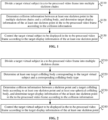
- FIG. 1 is a flowchart of an image processing method according to an embodiment of the present disclosure.
- This embodiment of the present disclosure is applicable to the scenario where collision information between multiple skeleton points in a target virtual subject and a colliding body is acquired in real time or periodically, and then the display positions of the corresponding skeleton points in a display interface are adjusted according to the collision information.
- the method may be performed by an image processing apparatus.
- the apparatus may be implemented in software and/or hardware, for example, an electronic device.
- the electronic device may be, for example, a mobile terminal, a PC terminal, or a server.
- the method includes the steps below.
- a target virtual subject in a to-be-processed video frame is divided into multiple skeleton chains.
- each video frame may be used as a to-be-processed video frame.
- a video is generated in real time.
- a to-be-processed video frame may contain a target virtual subject or may not contain a target virtual subject.
- the solution of this embodiment of the present disclosure may be used to determine whether a skeleton point of the target virtual subject collides with a colliding body. If no collision occurs, the skeleton point is directly displayed. If a collision occurs, the solution of this embodiment of the present disclosure may be used to determine the display position of the skeleton point in a display interface.
- the target virtual subject may be a three-dimensional subject constructed in a virtual scene.
- the target virtual subject may be, for example, a virtual human or a virtual animal.
- a skeleton chain may be a skeleton model that constitutes the target virtual subject.
- the skeleton chain may include at least one skeleton point. Skeleton points in the skeleton chain correspond to different articular points in the skeleton chain.
- a skeleton point in the skeleton chain may be a shoulder skeleton point, an upper arm skeleton point, an elbow skeleton point, a lower arm skeleton point, or a wrist skeleton point.
- a target virtual subject is composed of at least one part, for example, a shoulder, a hand, or a leg; therefore, the target virtual subject may be divided into multiple skeleton chains according to the at least one part.
- dividing the target virtual subject in the to-be-processed video frame into the multiple skeleton chains includes dividing the target virtual subject into multiple detection parts according to a preset part division rule; and determining the multiple skeleton chains corresponding to the multiple detection parts.
- a detection part may be any part in the target virtual subject.
- a detection part may be a face, a shoulder, a hand, or a leg.
- the entire skeleton of the target virtual subject is a tree structure that may be divided into 5 skeleton chains: a trunk skeleton chain, two arm skeleton chains, and two leg skeleton chains.
- a to-be-processed video frame may be acquired, and a target virtual subject in the to-be-processed video frame may be determined.
- the target virtual subject may be divided into body parts according to a preset body part division standard to obtain at least one detection part, and then a skeleton chain corresponding to each detection part may be determined so that a corresponding analysis may be performed on each detection part.
- collision information of each skeleton point in the skeleton chain and the corresponding target display information are determined accurately so that each skeleton point of the target virtual subject is corrected accurately.
- collision information between at least one skeleton point in the multiple skeleton chains and a colliding body is determined, and target display information of the at least one skeleton point in the to-be-processed video frame is determined according to the collision information.
- the colliding body may correspond to another component in the to-be-processed video frame or may correspond to the target virtual subject.
- different parts of the target virtual subject correspond to different colliding bodies.
- the arm collides with the colliding body corresponding to the trunk of the target virtual subject so that the body part of the target virtual subject is occluded when displayed.
- the colliding body corresponds to the trunk of the target virtual subject.
- the collision information may indicate whether a skeleton point collides with a colliding body.
- collision information between the skeleton point and a colliding body may be reflected by whether an overlap or "clipping through" occurs between two models.
- collision detection is performed between skeleton points and colliding bodies and the corresponding collision information is determined, to avoid a collision, it is required to move the display position of a colliding skeleton point in the display interface according to the collision information such that the skeleton point and the corresponding colliding body do not pass through each other.
- the skeleton point is displayed, in the to-be-processed video frame, with the current display position information of the skeleton point, and the position information of the skeleton point finally displayed in the display interface is used as the target display information.
- the target virtual subject is controlled to be displayed in the to-be-processed video frame according to the target display information of the at least one skeleton point.
- the display position of a skeleton point in the display interface may be adjusted according to the target display information so as to avoid "clipping through” caused by a collision, and thus the display screen effect and verisimilitude are improved.
- controlling the target virtual subject to be displayed in the to-be-processed video frame according to the target display information of the at least one skeleton point includes rendering the target virtual subject in the to-be-processed video frame according to the adjusted target display position of the at least one skeleton point.
- the target display position may be the position information finally displayed in the to-be-processed video frame in the case where multiple skeleton points do not collide with a colliding body.
- the display position of each skeleton point in the display interface may be adjusted from the initial display position to the target display position according to the target display position of each skeleton point.
- the target virtual subject is rendered in the to-be-processed video frame to display the target virtual subject in the to-be-processed video according to the target display position of the skeleton point in the display interface to improve the display effect and verisimilitude of the target virtual subject in the to-be-processed video frame.
- the solution of this embodiment of the present disclosure includes dividing a target virtual subject in a to-be-processed video frame into multiple skeleton chains; determining collision information between the at least one skeleton point in the multiple skeleton chains and a colliding body and determining target display information of the at least one skeleton point in the to-be-processed video frame according to the collision information; and controlling the target virtual subject to be displayed in the to-be-processed video frame according to the target display information of the at least one skeleton point.
- a skeleton point of the target virtual subject is prevented from colliding with a colliding subject.
- mutual penetration and superimposition between the skeleton point and the colliding subject is prevented, and thus a poor animation display effect is prevented.
- the display position of the skeleton point of the target virtual subject in the display interface is automatically adjusted when "clipping through” is detected in the display interface; thereby, the verisimilitude of display screen is improved, the animation display effect is improved, and the user experience is improved.
- FIG. 2 is a flowchart of an image processing method according to an embodiment of the present disclosure. Based on the preceding embodiment, for different types of colliding bodies, the target display information of skeleton points is determined in different manners. This embodiment is described by using a spherical colliding body as an example. The explanation of a term identical to or corresponding to the previous embodiment is not repeated here.
- the method includes the steps below.
- a target virtual subject in a to-be-processed video frame is divided into multiple skeleton chains.
- At least one target colliding body corresponding to the target virtual subject and a corresponding colliding-body type are determined.
- the target colliding body may be an subject that collides with a target virtual subject in a virtual scene.
- the box is a target colliding body; or when a target virtual subject displayed in a to-be-processed video frame passes through a wall in a virtual scene, the wall is a target colliding body.
- the colliding-body type may be obtained by division according to the display shape of a colliding body in a virtual scene. There may be multiple colliding-body types.
- a target virtual subject in the display interface may collide with one or more colliding bodies to which the target virtual subject belongs when a limb of the target virtual subject is moving.
- the target virtual subject may probably collide with, depending on the amplitude of the waving, a colliding body to which a shoulder skeleton point of the target virtual subject belongs and/or a colliding body to which each trunk skeleton point belongs.
- the display position of a skeleton point colliding with only one target colliding body is adjusted.
- the display position of a skeleton point in the display interface may also be adjusted using the method of this embodiment of the present disclosure.
- a skeleton point is adjusted in different manners after colliding with the different colliding bodies. Therefore, when collision information between each skeleton point and a colliding body is determined, it is required to determine at least one colliding body colliding with a target virtual subject and determine the colliding-body type of each colliding body so that the corresponding collision information can be determined according to each type of colliding body, thereby improving the display effect of the target virtual subject.
- collision information between a skeleton point and at least one target colliding body is determined according to at least one skeleton point and at least one spherical colliding body, and target display information of the at least one skeleton point in the to-be-processed video frame is determined according to the collision information.
- collision information between skeleton points and corresponding target colliding bodies is determined in different manners, and colliding skeleton points are adjusted differently. Therefore, collision information between a skeleton point and a target colliding body may be determined according to the type of the target colliding body.
- determining collision information between the skeleton point and the at least one target colliding body according to the at least one skeleton point and the colliding-body type includes, for two adjacent skeleton points in the same skeleton chain in a first direction, determining collision information between the two adjacent skeleton points and a target colliding body according to the target colliding body, a first colliding body to which a parent skeleton point belongs, and a second colliding body to which a child skeleton point belongs.
- the first direction points from the parent skeleton point to the child skeleton point.
- the parent skeleton point and the child skeleton point may be two adjacent nodes that are located in the same skeleton chain and that have a parent-child relationship.
- the parent skeleton point is a skeleton point away from the first direction.
- the child skeleton point is a skeleton point pointed to by the first direction.
- the parent skeleton point and the child skeleton point are relative to each other.
- an arm skeleton chain includes a shoulder skeleton point, an elbow skeleton point, and a wrist skeleton point in the first direction.
- the shoulder skeleton point is a parent skeleton point
- the elbow skeleton point is a child skeleton point
- the elbow skeleton point is a parent skeleton point
- the wrist skeleton point is a child skeleton point.
- the first colliding body to which the parent skeleton point belongs may be a colliding body centered on the parent skeleton point.
- the second colliding body to which the child skeleton point belongs may be a colliding body centered on the child skeleton point.
- the first colliding body and the second colliding body are each a body part in the target virtual subject.
- the target virtual subject is a virtual character
- the parent skeleton point is a shoulder skeleton point
- the child skeleton point is an upper arm articular skeleton point
- the first colliding body is a shoulder of the target virtual subject
- the second colliding body is an upper arm of the target virtual subject.
- collision information between a first colliding body to which the parent skeleton point belongs and a target colliding body is different from collision information between a second colliding body to which the child skeleton point belongs and the target colliding body. Therefore, collision information between the first colliding body and the target colliding body and collision information between the second colliding body and the target colliding body may be determined separately. In this manner, the relative positions between colliding bodies corresponding to different skeleton points and the target colliding body can be determined accurately, and collision information between the skeleton points and the target colliding body can be determined accurately. Thereby, the verisimilitude of display of the target virtual subject in the to-be-processed video frame can be improved.
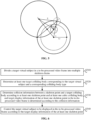
- the sphere to which point S belongs is a target colliding body
- point B is a child skeleton point
- the sphere centered on point B is a second colliding body
- point A is a parent skeleton point
- the sphere centered on point A is a first colliding body.
- determining collision information between the skeleton point and the target colliding body according to the target colliding body, the first colliding body to which the parent skeleton point belongs, and the second colliding body to which the child skeleton point belongs includes, for the parent skeleton point, determining a first sphere center distance between the first colliding body and the target colliding body and determining collision information between the target colliding body and at least one of the parent skeleton point or the child skeleton point according to the first sphere center distance and a target sphere radius of the target colliding body; and for the child skeleton point, determining a second sphere center distance between the second colliding body and the target colliding body and determining collision information between the child skeleton point and the target colliding body according to the second sphere center distance, the target sphere radius, and a second sphere radius of the second colliding body.
- the first sphere center distance may be the linear distance between the parent skeleton point and the node where the sphere center of the target colliding body is located.
- the target sphere radius may be a line segment connecting the sphere center of the target colliding subject to any point on the sphere surface of the target colliding subject.
- the second sphere center distance may be the linear distance between the child skeleton point and the node where the sphere center of the target colliding body is located.
- the second sphere radius may be a line segment connecting the child skeleton point to any point on the surface of the second colliding subject.
- is the distance between point S and point A
- is the distance between point S and point B.
- determining collision information between the target colliding body and the parent skeleton point and/or the child skeleton point according to the first sphere center distance and the target sphere radius of the target colliding body includes, in response to determining that the first sphere center distance is less than the target sphere radius, determining that collision information of the parent skeleton point is first collision information; and in response to determining that the first sphere center distance is greater than the target sphere radius, determining that collision information of the child skeleton point is second collision information.
- the first collision information is that the parent skeleton point is inside the target colliding body.
- the second collision information is that the child skeleton point is inside the target colliding body.
- the first sphere center distance is compared with the target sphere radius to determine collision information between the parent skeleton point and the target colliding body and collision information between the child skeleton point and the target colliding body.
- the parent skeleton point is inside the target colliding body, and the corresponding collision information is the first collision information.
- the first sphere center distance is greater than the target sphere radius
- at least one skeleton point in the current skeleton chain collides with the target colliding body, and the parent skeleton point and the child skeleton point adjacent to each other in the same skeleton chain are connected to each other; therefore, when the distance between the parent skeleton point and the sphere center of the target colliding body is greater than the target sphere radius, the child skeleton point adjacent to the parent skeleton point is inside the target colliding body, and the corresponding collision information is the second collision information.
- the radius of the colliding body S is Sr, and the radius of colliding body A and the radius of colliding body B are both Br. If
- determining collision information between the child skeleton point and the target colliding body according to the second sphere center distance, the target sphere radius, and the second sphere radius of the second colliding body includes determining a first sum radius according to the target sphere radius and the second sphere radius; in response to determining that the second sphere center distance is greater than the first sum radius, determining that the collision information is third collision information; and in response to determining that the second sphere center distance is less than the first sum radius, determining that the collision information is second collision information.
- the first sum radius may be the distance obtained from the sum of the target sphere radius and the second sphere radius.
- the third collision information is that the child skeleton point is not in collision with the target colliding body.
- the second collision information is that the child skeleton point is inside the target colliding body.
- the target sphere radius and the second sphere radius of the second colliding body to which the child skeleton point belongs it is feasible to add up the target sphere radius and the second sphere radius of the second colliding body to which the child skeleton point belongs to obtain the first sum radius.
- the first sum radius is compared with the second sphere center distance, and collision information between the child skeleton point and the target colliding body is determined according to the comparison result.
- the second sphere center distance is greater than the first sum radius, the second colliding body to which the child skeleton point belongs is not in contact with and thus not in collision with the target colliding body.
- the second collision information determination subunit is configured to, in response to determining that the first sphere center distance is greater than the target sphere radius, determine that collision information of the child skeleton point is second collision information, where the second collision information is that the child skeleton point is inside the target colliding body.
- the colliding-body type is a cubic colliding body
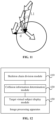
- the collision information determination submodule is also configured to, for a skeleton point in the same skeleton chain in a first direction, determine collision information between the skeleton point and a target colliding body according to child coordinates of the skeleton point and a preset function.
- the fourth collision information determination unit is configured to, in response to determining that the maximum depth value of the depth values is less than a preset value, determine that collision information between the skeleton point and the target colliding body is fourth collision information.
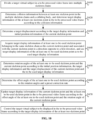
- the target displacement determination module is configured to determine a target displacement according to the target display information and initial position information of the current skeleton point.
- the to-be-used target display information determination module is configured to acquire target display information of at least one to-be-used skeleton point belonging to the same skeleton chain as the current skeleton point and associated with the current skeleton point in a direction opposite to a first direction and use target display information of the at least one to-be-used skeleton point as to-be-used target display information.
- the rotation angle determination module is configured to determine rotation angles of the at least one to-be-used skeleton point and the current skeleton point according to the to-be-used target display information, the target displacement, and the target display information of the current skeleton point.
- the offset angle determination module is configured to determine an offset angle of the at least one to-be-used skeleton point according to the rotation angles and a preset correction rate.
- the apparatus also includes a first initial skeleton point determination module.
- the first initial skeleton point determination module is configured to, in response to determining that the current skeleton point is the Nth consecutive skeleton point inside the target colliding body and in the skeleton chain, when determining the rotation angle of the next skeleton point of the current skeleton point, use the next skeleton point as the initial skeleton point.
- the initial skeleton point is a skeleton point whose rotation angle is not determined depending on the target display information of the at least one to-be-used skeleton point.
- the apparatus also includes a second initial skeleton point determination module.
- the second initial skeleton point determination module is configured to, in response to determining that a to-be-used skeleton point belonging to the same skeleton chain as the current skeleton point and located before the current skeleton point in the direction opposite to the first direction is not inside the target colliding body, use the current skeleton point as the initial skeleton point.
- the solution of this embodiment of the present disclosure includes dividing a target virtual subject in a to-be-processed video frame into multiple skeleton chains; determining collision information between the at least one skeleton point in the multiple skeleton chains and a colliding body and determining target display information of the at least one skeleton point in the to-be-processed video frame according to the collision information; and controlling the target virtual subject to be displayed in the to-be-processed video frame according to the target display information of the at least one skeleton point.
- a skeleton point of the target virtual subject is prevented from colliding with a colliding subject.
- mutual penetration and superimposition between the skeleton point and the colliding subject is prevented, and thus a poor animation display effect is prevented.
- the display position of the skeleton point of the target virtual subject in the display interface is automatically adjusted when "clipping through” is detected in the display interface; thereby, the verisimilitude of display screen is improved, the animation display effect is improved, and the user experience is improved.
- the image processing apparatus of this embodiment of the present disclosure can perform the image processing method of any embodiment of the present disclosure and has function modules and beneficial effects corresponding to the performed method.
- Units and modules included in the preceding apparatus are divided according to function logic. These units and modules may also be divided in other manners as long as the corresponding functions can be implemented. Moreover, names of these function units are used for distinguishing between these function units and not intended to limit the scope of this embodiment of the present disclosure.
- FIG. 13 is a diagram illustrating the structure of an electronic device according to an embodiment of the present disclosure.
- FIG. 13 is a diagram illustrating the structure of an electronic device (for example, a terminal device or server in FIG. 13 ) 300 for implementing embodiments of the present disclosure.
- a terminal device in the embodiments of the present disclosure may include, but is not limited to, mobile terminals such as a mobile phone, a laptop, a digital broadcast receiver, a personal digital assistant (PDA), a PAD, a portable media player (PMP), and an in-vehicle terminal (such as an in-vehicle navigation terminal) and stationary terminals such as a digital television (TV) and a desktop computer.
- PDA personal digital assistant
- PMP portable media player
- in-vehicle terminal such as an in-vehicle navigation terminal
- stationary terminals such as a digital television (TV) and a desktop computer.
- TV digital television
- the electronic device shown in FIG. 13 is merely an example and is not intended to limit
- the electronic device 300 may include a processing apparatus (such as a central processing unit and a graphics processing unit) 301.
- the processing apparatus 301 may perform various types of appropriate operations and processing based on a program stored in a read-only memory (ROM) 302 or a program loaded from a storage apparatus 306 to a random-access memory (RAM) 303.
- the RAM 303 also stores various programs and data required for the operation of the electronic device 300.
- the processing apparatus 301, the ROM 302 and the RAM 303 are connected to each other through a bus 304.
- An input/output (I/O) interface 305 is also connected to the bus 304.
- the following apparatuses may be connected to the I/O interface 305: an input apparatus 306 such as a touch screen, a touch pad, a keyboard, a mouse, a camera, a microphone, an accelerometer and a gyroscope; an output apparatus 307 such as a liquid crystal display (LCD), a speaker and a vibrator; the storage apparatus 308 such as a magnetic tape and a hard disk; and a communication apparatus 309.
- the communication apparatus 309 may allow the electronic device 300 to perform wireless or wired communication with other devices so as to exchange data.
- FIG. 13 shows the electronic device 300 having various apparatuses, it is to be understood that not all the apparatuses shown herein need to be implemented or present. Alternatively, more or fewer apparatuses may be implemented or present.
- the process described above with reference to the flowchart may be implemented as a computer software program.
- the embodiments of the present disclosure include a computer program product.
- the computer program product includes a computer program carried in a non-transitory computer-readable medium.
- the computer program includes program codes for executing the method shown in the flowchart.
- the computer program may be downloaded from a network and installed through the communication apparatus 309, or may be installed from the storage apparatus 306, or may be installed from the ROM 302.
- the processing apparatus 301 the preceding functions defined in the method of the embodiments of the present disclosure are executed.
- Names of messages or information exchanged between apparatuses in embodiments of the present disclosure are illustrative and not to limit the scope of the messages or information.
- the electronic device of this embodiment of the present disclosure belongs to the same concept as the image processing methods provided in the preceding embodiments, and for the technical details not described in detail in the embodiment, reference may be made to the preceding embodiments, and the embodiment has the same beneficial effects as the preceding embodiments.
- An embodiment of the present disclosure provides a computer storage medium storing a computer program which, when executed by a processor, implements the image processing method provided in the preceding embodiments.
- the preceding computer-readable medium in the present disclosure may be a computer-readable signal medium or a computer-readable storage medium or any combination thereof.
- the computer-readable storage medium may be, but is not limited to, an electronic, magnetic, optical, electromagnetic, infrared or semiconductor system, apparatus or device or any combination thereof.
- the computer-readable storage medium may include, but are not limited to, an electrical connection with one or more wires, a portable computer magnetic disk, a hard disk, a random-access memory (RAM), a read-only memory (ROM), an erasable programmable read-only memory (EPROM), a flash memory, an optical fiber, a portable compact disk read-only memory (CD-ROM), an optical memory device, a magnetic memory device, or any appropriate combination thereof.
- the computer-readable storage medium may be any tangible medium including or storing a program. The program may be used by or used in conjunction with an instruction execution system, apparatus, or device.
- the computer-readable signal medium may include a data signal propagated on a baseband or as a part of a carrier, and computer-readable program codes are carried in the data signal.
- the data signal propagated in this manner may be in multiple forms and includes, and is not limited to, an electromagnetic signal, an optical signal, or any suitable combination thereof.
- the computer-readable signal medium may further be any computer-readable medium other than the computer-readable storage medium.
- the computer-readable signal medium may send, propagate, or transmit a program used by or in conjunction with an instruction execution system, apparatus, or device.
- the program codes included on the computer-readable medium may be transmitted via any appropriate medium which includes, but is not limited to, a wire, an optical cable, a radio frequency (RF), or any appropriate combination thereof.
- RF radio frequency
- clients and servers may communicate using any currently known or future developed network protocol, such as HTTP (HyperText Transfer Protocol), and may be interconnected with any form or medium of digital data communication (such as a communication network).
- HTTP HyperText Transfer Protocol
- Examples of the communication network include a local area network (LAN), a wide area network (WAN), an internet (such as the Internet), and a peer-to-peer network (such as an Ad-Hoc network), as well as any currently known or future developed network.
- the computer-readable medium may be included in the electronic device or may exist alone without being assembled into the electronic device.
- the computer-readable medium carries one or more programs which, when executed by the electronic device, cause the electronic device to perform the following steps: dividing a target virtual subject in a to-be-processed video frame into multiple skeleton chains, where each of the multiple skeleton chains includes at least one skeleton point; determining collision information between at least one skeleton point in the multiple skeleton chains and a colliding body and determining target display information of the at least one skeleton point in the to-be-processed video frame according to the collision information; and controlling the target virtual subject to be displayed in the to-be-processed video frame according to the target display information of the at least one skeleton point.
- Computer program codes for performing the operations in the present disclosure may be written in one or more programming languages or combination thereof.
- the preceding one or more programming languages include, but are not limited to, subject-oriented programming languages such as Java, Smalltalk and C++, as well as conventional procedural programming languages such as C or similar programming languages.
- Program codes may be executed entirely on a user computer, partly on a user computer, as a stand-alone software package, partly on a user computer and partly on a remote computer, or entirely on a remote computer or a server.
- the remote computer may be connected to the user computer via any kind of network including a local area network (LAN) or a wide area network (WAN), or may be connected to an external computer (for example, via the Internet through an Internet service provider).
- LAN local area network
- WAN wide area network
- Internet service provider for example, via the Internet through an Internet service provider
- each block in the flowcharts or block diagrams may represent a module, a program segment, or part of codes that contains one or more executable instructions for implementing specified logical functions.
- the functions marked in the blocks may occur in an order different from those marked in the drawings. For example, two successive blocks may, in fact, be executed substantially in parallel or in a reverse order, which depends on the functions involved.
- each block in the block diagrams and/or flowcharts and a combination of blocks in the block diagrams and/or flowcharts may be implemented by a special-purpose hardware-based system which executes specified functions or operations, or a combination of special-purpose hardware and computer instructions.
- the units involved in the embodiments of the present disclosure may be implemented by software or hardware.
- the name of a unit is not intended to limit the unit in a certain circumstance.
- the first acquisition unit may also be described as a "unit for acquiring at least two Internet Protocol addresses".
- example types of hardware logic components include: a field-programmable gate array (FPGA), an application-specific integrated circuit (ASIC), an application-specific standard product (ASSP), system on a chip (SOC), a complex programmable logic device (CPLD) and the like.
- FPGA field-programmable gate array
- ASIC application-specific integrated circuit
- ASSP application-specific standard product
- SOC system on a chip
- CPLD complex programmable logic device
- the machine-readable medium may be a tangible medium that may include or store a program that is used by or used in conjunction with an instruction execution system, apparatus or device.
- the machine-readable medium may be a machine-readable signal medium or a machine-readable storage medium.
- the machine-readable medium may include, but is not limited to, an electronic, magnetic, optical, electromagnetic, infrared or semiconductor system, apparatus or device, or any suitable combination thereof.
- machine-readable storage medium may include an electrical connection based on one or more wires, a portable computer disk, a hard disk, a random-access memory (RAM), a read-only memory (ROM), an erasable programmable read-only memory (EPROM) or a flash memory, an optical fiber, a portable compact disc read-only memory (CD-ROM), an optical storage device, a magnetic storage device, or any suitable combination thereof.
Landscapes
- Engineering & Computer Science (AREA)
- Physics & Mathematics (AREA)
- General Physics & Mathematics (AREA)
- Theoretical Computer Science (AREA)
- Computer Graphics (AREA)
- Computer Hardware Design (AREA)
- General Engineering & Computer Science (AREA)
- Software Systems (AREA)
- Computer Vision & Pattern Recognition (AREA)
- Geometry (AREA)
- Architecture (AREA)
- Processing Or Creating Images (AREA)
Claims (15)
- Bildverarbeitungsverfahren, umfassend:Aufteilen (S110, S210, S310, S410) eines virtuellen Zielobjekts in einem zu verarbeitenden Videobild in eine Vielzahl von Skelettketten, wobei jede der Vielzahl von Skelettketten mindestens einen Skelettpunkt umfasst;Bestimmen (S120, S420) von Kollisionsinformationen zwischen mindestens einem Skelettpunkt in der Vielzahl von Skelettketten und einem Kollisionskörper und Bestimmen von Zielanzeigeinformationen des mindestens einen Skelettpunkts in dem zu verarbeitenden Videobild gemäß den Kollisionsinformationen; und Steuern (S130, S240, S340, S480) des in dem zu verarbeitenden Videobild anzuzeigenden virtuellen Zielobjekts gemäß den Zielanzeigeinformationen des mindestens einen Skelettpunkts; wobeiAufteilen (S110, S210, S310, S410) des virtuellen Zielobjekts im zu verarbeitenden Videobild in die Vielzahl von Skelettketten Folgendes umfasst:Aufteilen des virtuellen Zielobjekts in eine Vielzahl von Erkennungsteilen gemäß einer voreingestellten Teilaufteilungsregel; undBestimmen der Vielzahl von Skelettketten des Skelettmodells, die der Vielzahl von Erkennungsteilen entsprechen; undwobei Bestimmen von Zielanzeigeinformationen des mindestens einen Skelettpunkts im zu verarbeitenden Videobild gemäß den Kollisionsinformationen Folgendes umfasst:automatisches Anpassen einer Zielanzeigeposition des mindestens einen Skelettpunkts, so dass der Skelettpunkt und der entsprechende Kollisionskörper einander nicht durchqueren; undwobei Steuern des im zu verarbeitenden Videobild anzuzeigenden virtuellen Zielobjekts gemäß den Zielanzeigeinformationen des mindestens einen Skelettpunkts Folgendes umfasst:
Rendern des virtuellen Zielobjekts im zu verarbeitenden Videobild gemäß der angepassten Zielanzeigeposition des mindestens einen Skelettpunkts. - Verfahren nach Anspruch 1, wobei Bestimmen (S120, S420) der Kollisionsinformationen zwischen dem mindestens einen Skelettpunkt in der Vielzahl von Skelettketten und dem Kollisionskörper Folgendes umfasst: Bestimmen (S220, S320) mindestens eines Zielkollisionskörpers, der dem virtuellen Zielobjekt entspricht, und eines entsprechenden Kollisionskörpertyps; undBestimmen von Kollisionsinformationen zwischen dem mindestens einen Skelettpunkt und dem mindestens einen Zielkollisionskörper gemäß dem mindestens einen Skelettpunkt und dem Kollisionskörpertyp;wobei der Kollisionskörpertyp ein kugelförmiger Kollisionskörper ist und Bestimmen der Kollisionsinformationen zwischen dem mindestens einen Skelettpunkt und dem mindestens einen Zielkollisionskörper gemäß dem mindestens einen Skelettpunkt und dem Kollisionskörpertyp Folgendes umfasst:
für zwei benachbarte Skelettpunkte in einer gleichen Skelettkette der Vielzahl von Skelettketten in einer ersten Richtung Bestimmen von Kollisionsinformationen zwischen den zwei benachbarten Skelettpunkten und einem Zielkollisionskörper des mindestens einen Zielkollisionskörpers gemäß dem Zielkollisionskörper, einem ersten Kollisionskörper, zu dem ein übergeordneter Skelettpunkt gehört, und einem zweiten Kollisionskörper, zu dem ein untergeordneter Skelettpunkt gehört, wobei der übergeordnete Skelettpunkt ein Skelettpunkt entfernt von der ersten Richtung ist und der untergeordnete Skelettpunkt ein Skelettpunkt ist, auf den die erste Richtung zeigt. - Verfahren nach Anspruch 2, wobei Bestimmen der Kollisionsinformationen zwischen den zwei benachbarten Skelettpunkten und dem Zielkollisionskörper gemäß dem Zielkollisionskörper, dem ersten Kollisionskörper, zu dem der übergeordnete Skelettpunkt gehört, und dem zweiten Kollisionskörper, zu dem der untergeordnete Skelettpunkt gehört, Folgendes umfasst:für den übergeordneten Skelettpunkt Bestimmen eines ersten Kugelmittelpunktabstands zwischen dem ersten Kollisionskörper und dem Zielkollisionskörper und Bestimmen von Kollisionsinformationen zwischen dem Zielkollisionskörper und mindestens einem der übergeordneten Skelettpunkte oder untergeordneten Skelettpunkte gemäß dem ersten Kugelmittelpunktabstand und einem Zielkugelradius des Zielkollisionskörpers; undfür den untergeordneten Skelettpunkt Bestimmen eines zweiten Kugelmittelpunktabstands zwischen dem zweiten Kollisionskörper und dem Zielkollisionskörper und Bestimmen von Kollisionsinformationen zwischen dem untergeordneten Skelettpunkt und dem Zielkollisionskörper gemäß dem zweiten Kugelmittelpunktabstand, dem Zielkugelradius und einem zweiten Kugelradius des zweiten Kollisionskörpers.
- Verfahren nach Anspruch 3,
wobei Bestimmen von Kollisionsinformationen zwischen dem übergeordneten Skelettpunkt und dem Zielkollisionskörper gemäß dem ersten Kugelmittelpunktabstand und dem Zielkugelradius des Zielkollisionskörpers Folgendes umfasst:als Reaktion auf Bestimmen, dass der erste Kugelmittelpunktabstand kleiner als der Zielkugelradius ist, Bestimmen, dass Kollisionsinformationen des übergeordneten Skelettpunkts erste Kollisionsinformationen sind, wobei die ersten Kollisionsinformationen darin bestehen, dass sich der übergeordnete Skelettpunkt innerhalb des Zielkollisionskörpers befindet; undals Reaktion auf Bestimmen, dass der erste Kugelmittelpunktabstand größer als der Zielkugelradius ist, Bestimmen, dass die Kollisionsinformationen des untergeordneten Skelettpunkts zweite Kollisionsinformationen sind, wobei die zweiten Kollisionsinformationen darin bestehen, dass sich der untergeordnete Skelettpunkt innerhalb des Zielkollisionskörpers befindet; - Verfahren nach Anspruch 3, wobei Bestimmen der Kollisionsinformationen zwischen dem untergeordneten Skelettpunkt und dem Zielkollisionskörper gemäß dem zweiten Kugelmittelpunktabstand, dem Zielkugelradius und dem zweiten Kugelradius des zweiten Kollisionskörpers Folgendes umfasst:Bestimmen eines ersten Summenradius, der dem Zielkugelradius und dem zweiten Kugelradius entspricht;als Reaktion auf Bestimmen, dass der zweite Kugelmittelpunktabstand größer als der erste Summenradius ist, Bestimmen, dass die Kollisionsinformationen dritte Kollisionsinformationen sind, wobei die dritten Kollisionsinformationen darin bestehen, dass der untergeordnete Skelettpunkt nicht mit dem Zielkollisionskörper kollidiert; undals Reaktion auf Bestimmen, dass der zweite Kugelmittelpunktabstand kleiner als der erste Summenradius ist, Bestimmen, dass die Kollisionsinformationen zweite Kollisionsinformationen sind, wobei die zweiten Kollisionsinformationen darin bestehen, dass sich der Punkt des untergeordneten Skelettpunkts innerhalb des Zielkollisionskörpers befindet.
- Verfahren nach Anspruch 4, wobei Bestimmen der Zielanzeigeinformationen des mindestens einen Skelettpunkts in dem zu verarbeitenden Videobild gemäß den Kollisionsinformationen Folgendes umfasst:als Reaktion auf Bestimmen, dass die Kollisionsinformationen die ersten Kollisionsinformationen sind, Anpassen einer Zielanzeigeposition des übergeordneten Skelettpunkts im zu verarbeitenden Videobild gemäß den Zielkugelmittelpunktkoordinaten des Zielkollisionskörpers, den ersten Kugelmittelpunktkoordinaten des ersten Kollisionskörpers, den zweiten Kugelmittelpunktkoordinaten des zweiten Kollisionskörpers und einem ersten Summenradius, wobeider übergeordnete Skelettpunkt den ersten Kugelmittelpunktkoordinaten entspricht, der untergeordnete Skelettpunkt den zweiten Kugelmittelpunktkoordinaten entspricht und die Zielanzeigeinformationen die Zielanzeigeposition enthalten.
- Verfahren nach Anspruch 4 oder 5, wobei Bestimmen der Zielanzeigeinformationen des mindestens einen Skelettpunkts im zu verarbeitenden Videobild gemäß den Kollisionsinformationen Folgendes umfasst:
als Reaktion auf Bestimmen, dass die Kollisionsinformationen die zweiten Kollisionsinformationen sind, Bestimmen von Zielanzeigeinformationen des untergeordneten Skelettpunkts im zu verarbeitenden Videobild gemäß einem ersten Summenradius, dem ersten Kugelmittelpunktabstand, den ersten Kugelmittelpunktkoordinaten des übergeordneten Skelettpunkts und den zweiten Kugelmittelpunktkoordinaten des untergeordneten Skelettpunkts. - Verfahren nach Anspruch 7, wobei Bestimmen der Zielanzeigeinformationen des untergeordneten Skelettpunkts im zu verarbeitenden Videobild gemäß dem ersten Summenradius, dem ersten Kugelmittelpunktabstand, den ersten Kugelmittelpunktkoordinaten des übergeordneten Skelettpunkts und den zweiten Kugelmittelpunktkoordinaten des untergeordneten Skelettpunkts Folgendes umfasst:Bestimmen eines ersten Übergangswerts gemäß dem ersten Kugelmittelpunktabstand, dem ersten Summenradius und einem dritten Kugelmittelpunktabstand zwischen den ersten Kugelmittelpunktkoordinaten und den zweiten Kugelmittelpunktkoordinaten;Bestimmen eines ersten Einheitsvektors gemäß den ersten Kugelmittelpunktkoordinaten und den Zielkugelmittelpunktkoordinaten;Bestimmen eines zweiten Übergangswerts gemäß dem ersten Übergangswert, den ersten Kugelmittelpunktkoordinaten und dem ersten Einheitsvektor; undBestimmen der Zielanzeigeinformationen gemäß dem zweiten Übergangswert, dem ersten Einheitsvektor und den zweiten Kugelmittelpunktkoordinaten.
- Verfahren nach Anspruch 8, wobei Bestimmen der Zielanzeigeinformationen gemäß dem zweiten Übergangswert, dem ersten Einheitsvektor und den zweiten Kugelmittelpunktkoordinaten Folgendes umfasst:Bestimmen eines dritten Übergangswerts gemäß dem ersten Kugelmittelpunktabstand, dem dritten Kugelmittelpunktabstand und dem ersten Summenradius;Bestimmen eines vierten Übergangswerts gemäß dem dritten Übergangswert, den zweiten Kugelmittelpunktkoordinaten, dem ersten Einheitsvektor und einem zweiten Einheitsvektor, der aus dem zweiten Übergangswert und den zweiten Kugelmittelpunktkoordinaten erhalten wird; undBestimmen der Zielanzeigeinformationen des untergeordneten Skelettpunkts gemäß dem vierten Übergangswert, dem zweiten Übergangswert und dem dritten Übergangswert.
- Verfahren nach Anspruch 2, wobei der Kollisionskörpertyp ein kubischer Kollisionskörper ist und Bestimmen der Kollisionsinformationen zwischen dem mindestens einen Skelettpunkt und dem mindestens einen Zielkollisionskörper gemäß dem mindestens einen Skelettpunkt und dem Kollisionskörpertyp Folgendes umfasst:
für einen Skelettpunkt in derselben Skelettkette der Vielzahl von Skelettketten in einer ersten Richtung Bestimmen von Kollisionsinformationen zwischen dem Skelettpunkt in der ersten Richtung und einem Zielkollisionskörper des mindestens einen Zielkollisionskörpers gemäß untergeordneten Koordinaten des Skelettpunkts und einer voreingestellten Funktion. - Verfahren nach Anspruch 10, wobei Bestimmen der Kollisionsinformationen zwischen dem Skelettpunkt in der ersten Richtung und dem Zielkollisionskörper gemäß den untergeordneten Koordinaten des Skelettpunkts und der voreingestellten Funktion Folgendes umfasst:Bestimmen von Tiefenwerten des Skelettpunkts in einer Vielzahl von Dimensionen gemäß den untergeordneten Koordinaten und der voreingestellten Funktion; undals Reaktion auf Bestimmen, dass ein maximaler Tiefenwert der Tiefenwerte kleiner als ein voreingestellter Wert ist, Bestimmen, dass die Kollisionsinformationen zwischen dem Skelettpunkt in der ersten Richtung und dem Zielkollisionskörper vierte Kollisionsinformationen sind.
- Verfahren nach Anspruch 11, wobei Bestimmen der Zielanzeigeinformationen des mindestens einen Skelettpunkts in dem zu verarbeitenden Videobild gemäß den Kollisionsinformationen Folgendes umfasst:
als Reaktion auf Bestimmen, dass die Kollisionsinformationen die vierten Kollisionsinformationen sind, Bestimmen der Zielanzeigeinformationen des mindestens einen Skelettpunkts im zu verarbeitenden Videobild gemäß übergeordneten Koordinateninformationen eines übergeordneten Skelettpunkts, von dem der Skelettpunkt abhängig ist, den untergeordneten Koordinaten und Längeninformationen des Zielkollisionskörpers in einer Vielzahl von Dimensionen. - Verfahren nach Anspruch 1, wobei, nachdem sich ein aktueller Skelettpunkt innerhalb eines Zielkollisionskörpers befindet und nachdem Zielanzeigeinformationen bestimmt wurden, die dem aktuellen Skelettpunkt entsprechen, das Verfahren weiter Folgendes umfasst:Bestimmen (S430) einer Zielverschiebung gemäß den Zielanzeigeinformationen und den Informationen zur Anfangsposition des aktuellen Skelettpunkts;Erfassen (S440) von Zielanzeigeinformationen von mindestens einem zu verwendenden Skelettpunkt, der zu einer selben Skelettkette gehört wie der aktuelle Skelettpunkt und dem aktuellen Skelettpunkt in einer Richtung zugeordnet ist, die einer ersten Richtung entgegengesetzt ist, und Verwenden von Zielanzeigeinformationen des mindestens einen zu verwendenden Skelettpunkts als zu verwendende Zielanzeigeinformationen;Bestimmen (S450) von Drehwinkeln des mindestens einen zu verwendenden Skelettpunkts und des aktuellen Skelettpunkts gemäß den Informationen zur Anfangsposition, den Zielanzeigeinformationen und der Zielverschiebung des aktuellen Skelettpunkts und den zu verwendenden Zielanzeigeinformationen;Bestimmen (S460) eines Versatzwinkels des mindestens einen zu verwendenden Skelettpunkts gemäß den Drehwinkeln und einer voreingestellten Korrekturrate; undAktualisieren (S470) von Zielanzeigeinformationen des aktuellen Skelettpunkts und des mindestens einen zu verwendenden Skelettpunkts im zu verarbeitenden Videobild gemäß dem Versatzwinkel des mindestens einen zu verwendenden Skelettpunkts und einem Drehwinkel des aktuellen Skelettpunkts.
- Verfahren nach Anspruch 13,wobei das Verfahren weiter Folgendes umfasst:als Reaktion auf Bestimmen, dass der aktuelle Skelettpunkt ein N-ter aufeinanderfolgender Skelettpunkt innerhalb des Zielkollisionskörpers und in der Skelettkette ist, Verwenden, bei Bestimmen eines Drehwinkels eines nächsten Skelettpunkts des aktuellen Skelettpunkts, des nächsten Skelettpunkts als einen anfänglichen Skelettpunkt, wobeiN ein voreingestellter Wert ist und der anfängliche Skelettpunkt ein Skelettpunkt ist, dessen Drehwinkel als nicht von den Zielanzeigeinformationen des mindestens einen zu verwendenden Skelettpunkts abhängig bestimmt ist; oderwobei das Verfahren weiter Folgendes umfasst:
als Reaktion auf Bestimmen, dass ein zu verwendender Skelettpunkt, der zur gleichen Skelettkette wie der aktuelle Skelettpunkt gehört und sich vor dem aktuellen Skelettpunkt in der der ersten Richtung entgegengesetzten Richtung befindet, nicht innerhalb des Zielkollisionskörpers liegt, Verwenden des aktuellen Skelettpunkts als einen anfänglichen Skelettpunkt. - Elektronische Vorrichtung (300), umfassend:einen oder mehrere Prozessoren (301); undeine Speichereinrichtung (303), die zum Speichern von einem oder mehreren Programmen konfiguriert ist;wobei der eine oder die mehreren Prozessoren (301) so konfiguriert sind, dass sie beim Ausführen des einen oder der mehreren Programme das Bildverarbeitungsverfahren nach einem der Ansprüche 1 bis 14 durchführen.
Applications Claiming Priority (2)
| Application Number | Priority Date | Filing Date | Title |
|---|---|---|---|
| CN202210837536.3A CN115131478B (zh) | 2022-07-15 | 2022-07-15 | 图像处理方法、装置、电子设备及存储介质 |
| PCT/CN2022/129460 WO2024011792A1 (zh) | 2022-07-15 | 2022-11-03 | 图像处理方法、装置、电子设备及存储介质 |
Publications (4)
| Publication Number | Publication Date |
|---|---|
| EP4332904A1 EP4332904A1 (de) | 2024-03-06 |
| EP4332904A4 EP4332904A4 (de) | 2024-05-22 |
| EP4332904C0 EP4332904C0 (de) | 2025-04-02 |
| EP4332904B1 true EP4332904B1 (de) | 2025-04-02 |
Family
ID=83383341
Family Applications (1)
| Application Number | Title | Priority Date | Filing Date |
|---|---|---|---|
| EP22868422.1A Active EP4332904B1 (de) | 2022-07-15 | 2022-11-03 | Bildverarbeitungsverfahren und elektronisches gerät zur verbesserung von animationseffekten |
Country Status (4)
| Country | Link |
|---|---|
| US (1) | US12555295B2 (de) |
| EP (1) | EP4332904B1 (de) |
| CN (1) | CN115131478B (de) |
| WO (1) | WO2024011792A1 (de) |
Families Citing this family (3)
| Publication number | Priority date | Publication date | Assignee | Title |
|---|---|---|---|---|
| CN115131478B (zh) * | 2022-07-15 | 2025-09-12 | 北京字跳网络技术有限公司 | 图像处理方法、装置、电子设备及存储介质 |
| CN116152404B (zh) * | 2023-04-19 | 2023-07-14 | 苏州浪潮智能科技有限公司 | 动画重定向方法、装置、计算机设备及存储介质 |
| CN116206026B (zh) * | 2023-05-06 | 2023-07-18 | 腾讯科技(深圳)有限公司 | 轨迹信息处理方法、装置、计算机设备和可读存储介质 |
Family Cites Families (14)
| Publication number | Priority date | Publication date | Assignee | Title |
|---|---|---|---|---|
| US6798415B2 (en) * | 2001-06-21 | 2004-09-28 | Intel Corporation | Rendering collisions of three-dimensional models |
| EP2674913B1 (de) | 2012-06-14 | 2014-07-23 | Softkinetic Software | Modellierungsanpassung und -verfolgung für dreidimensionales Objekt |
| CN105976418A (zh) | 2016-06-28 | 2016-09-28 | 珠海金山网络游戏科技有限公司 | 一种人物动态骨骼的设计系统和方法 |
| CN106846129A (zh) * | 2017-03-22 | 2017-06-13 | 北京太阳花互动科技有限公司 | 一种虚拟试衣的碰撞检测方法和系统 |
| CN108984087B (zh) * | 2017-06-02 | 2021-09-14 | 腾讯科技(深圳)有限公司 | 基于三维虚拟形象的社交互动方法及装置 |
| US10751621B2 (en) * | 2017-09-01 | 2020-08-25 | Square Enix Limited | Method and system for rendering video game images |
| CN108133505A (zh) * | 2017-12-28 | 2018-06-08 | 北京像素软件科技股份有限公司 | 骨骼柔体实现方法、装置及电子设备 |
| WO2020084662A1 (ja) * | 2018-10-22 | 2020-04-30 | 株式会社ソニー・インタラクティブエンタテインメント | スケルトンモデル更新装置、スケルトンモデル更新方法及びプログラム |
| CN111589125B (zh) * | 2020-04-22 | 2022-06-10 | 腾讯科技(深圳)有限公司 | 虚拟对象控制方法、装置、计算机设备及存储介质 |
| CN112001989B (zh) * | 2020-07-28 | 2022-08-05 | 完美世界(北京)软件科技发展有限公司 | 虚拟对象的控制方法及装置、存储介质、电子装置 |
| CN112562072B (zh) | 2020-12-25 | 2025-02-28 | 北京爱奇艺科技有限公司 | 一种动作重定向方法、装置、设备及存储介质 |
| CN114602177B (zh) * | 2022-03-28 | 2025-08-26 | 百果园技术(新加坡)有限公司 | 虚拟角色的动作控制方法、装置、设备和存储介质 |
| CN114742952B (zh) * | 2022-04-26 | 2025-09-19 | 咪咕动漫有限公司 | 三维服装仿真方法、装置、终端设备以及存储介质 |
| CN115131478B (zh) * | 2022-07-15 | 2025-09-12 | 北京字跳网络技术有限公司 | 图像处理方法、装置、电子设备及存储介质 |
-
2022
- 2022-07-15 CN CN202210837536.3A patent/CN115131478B/zh active Active
- 2022-11-03 EP EP22868422.1A patent/EP4332904B1/de active Active
- 2022-11-03 WO PCT/CN2022/129460 patent/WO2024011792A1/zh not_active Ceased
- 2022-11-03 US US18/027,865 patent/US12555295B2/en active Active
Also Published As
| Publication number | Publication date |
|---|---|
| WO2024011792A1 (zh) | 2024-01-18 |
| EP4332904A1 (de) | 2024-03-06 |
| EP4332904C0 (de) | 2025-04-02 |
| CN115131478A (zh) | 2022-09-30 |
| US12555295B2 (en) | 2026-02-17 |
| US20240378784A1 (en) | 2024-11-14 |
| CN115131478B (zh) | 2025-09-12 |
| EP4332904A4 (de) | 2024-05-22 |
Similar Documents
| Publication | Publication Date | Title |
|---|---|---|
| EP4332904B1 (de) | Bildverarbeitungsverfahren und elektronisches gerät zur verbesserung von animationseffekten | |
| CN109583391B (zh) | 关键点检测方法、装置、设备及可读介质 | |
| CN109754464B (zh) | 用于生成信息的方法和装置 | |
| US12579680B2 (en) | Image processing method and apparatus, electronic device, and storage medium | |
| US20250232513A1 (en) | Image rendering method, electronic device, and storage medium | |
| US20250166213A1 (en) | Image display method and apparatus, electronic device, and storage medium | |
| US20250291468A1 (en) | Image processing method, electronic device, and storage medium | |
| CN114116081B (zh) | 交互式动态流体效果处理方法、装置及电子设备 | |
| US20240282031A1 (en) | Animation display method and apparatus, and device | |
| EP4672156A1 (de) | Verfahren und vorrichtung zur montage virtueller objekte, vorrichtung und medium | |
| WO2024169691A1 (zh) | 视频处理方法、装置、电子设备及存储介质 | |
| CN116188742A (zh) | 虚拟对象的控制方法、装置、设备及存储介质 | |
| CN110717467A (zh) | 头部姿势的估计方法、装置、设备及存储介质 | |
| US20250259364A1 (en) | Method and device for controlling motion of virtual object | |
| US20250209714A1 (en) | Method and apparatus for generating special effect video, and device and storage medium | |
| CN109816791B (zh) | 用于生成信息的方法和装置 | |
| CN114937059B (zh) | 显示对象的运动控制方法及设备 | |
| US20240428507A1 (en) | Mesh model processing method, electronic device and medium | |
| US20240220406A1 (en) | Collision processing method and apparatus for virtual object, and electronic device and storage medium | |
| US20240290026A1 (en) | Method and apparatus for controlling motion of moving object, device, and storage medium | |
| EP4672157A1 (de) | Bildverarbeitungsverfahren und -vorrichtung, vorrichtung und medium | |
| CN117994482A (zh) | 基于图像进行三维模型重建的方法、装置、介质和设备 | |
| CN112473138B (zh) | 游戏的显示控制方法及装置、可读存储介质、电子设备 | |
| CN115761197A (zh) | 图像渲染方法、装置、设备及存储介质 | |
| CN115297271A (zh) | 视频确定方法、装置、电子设备及存储介质 |
Legal Events
| Date | Code | Title | Description |
|---|---|---|---|
| STAA | Information on the status of an ep patent application or granted ep patent |
Free format text: STATUS: UNKNOWN |
|
| STAA | Information on the status of an ep patent application or granted ep patent |
Free format text: STATUS: THE INTERNATIONAL PUBLICATION HAS BEEN MADE |
|
| PUAI | Public reference made under article 153(3) epc to a published international application that has entered the european phase |
Free format text: ORIGINAL CODE: 0009012 |
|
| STAA | Information on the status of an ep patent application or granted ep patent |
Free format text: STATUS: REQUEST FOR EXAMINATION WAS MADE |
|
| 17P | Request for examination filed |
Effective date: 20230321 |
|
| AK | Designated contracting states |
Kind code of ref document: A1 Designated state(s): AL AT BE BG CH CY CZ DE DK EE ES FI FR GB GR HR HU IE IS IT LI LT LU LV MC ME MK MT NL NO PL PT RO RS SE SI SK SM TR |
|
| A4 | Supplementary search report drawn up and despatched |
Effective date: 20240424 |
|
| RIC1 | Information provided on ipc code assigned before grant |
Ipc: G06T 13/40 20110101AFI20240418BHEP |
|
| STAA | Information on the status of an ep patent application or granted ep patent |
Free format text: STATUS: EXAMINATION IS IN PROGRESS |
|
| 17Q | First examination report despatched |
Effective date: 20240523 |
|
| GRAP | Despatch of communication of intention to grant a patent |
Free format text: ORIGINAL CODE: EPIDOSNIGR1 |
|
| STAA | Information on the status of an ep patent application or granted ep patent |
Free format text: STATUS: GRANT OF PATENT IS INTENDED |
|
| DAV | Request for validation of the european patent (deleted) | ||
| DAX | Request for extension of the european patent (deleted) | ||
| INTG | Intention to grant announced |
Effective date: 20241205 |
|
| GRAS | Grant fee paid |
Free format text: ORIGINAL CODE: EPIDOSNIGR3 |
|
| GRAA | (expected) grant |
Free format text: ORIGINAL CODE: 0009210 |
|
| STAA | Information on the status of an ep patent application or granted ep patent |
Free format text: STATUS: THE PATENT HAS BEEN GRANTED |
|
| AK | Designated contracting states |
Kind code of ref document: B1 Designated state(s): AL AT BE BG CH CY CZ DE DK EE ES FI FR GB GR HR HU IE IS IT LI LT LU LV MC ME MK MT NL NO PL PT RO RS SE SI SK SM TR |
|
| REG | Reference to a national code |
Ref country code: GB Ref legal event code: FG4D |
|
| REG | Reference to a national code |
Ref country code: CH Ref legal event code: EP |
|
| REG | Reference to a national code |
Ref country code: IE Ref legal event code: FG4D |
|
| REG | Reference to a national code |
Ref country code: DE Ref legal event code: R096 Ref document number: 602022012714 Country of ref document: DE |
|
| U01 | Request for unitary effect filed |
Effective date: 20250425 |
|
| U07 | Unitary effect registered |
Designated state(s): AT BE BG DE DK EE FI FR IT LT LU LV MT NL PT RO SE SI Effective date: 20250502 |
|
| U1N | Appointed representative for the unitary patent procedure changed after the registration of the unitary effect |
Representative=s name: MARKS & CLERK LLP; GB |
|
| PG25 | Lapsed in a contracting state [announced via postgrant information from national office to epo] |
Ref country code: ES Free format text: LAPSE BECAUSE OF FAILURE TO SUBMIT A TRANSLATION OF THE DESCRIPTION OR TO PAY THE FEE WITHIN THE PRESCRIBED TIME-LIMIT Effective date: 20250402 |
|
| PG25 | Lapsed in a contracting state [announced via postgrant information from national office to epo] |
Ref country code: NO Free format text: LAPSE BECAUSE OF FAILURE TO SUBMIT A TRANSLATION OF THE DESCRIPTION OR TO PAY THE FEE WITHIN THE PRESCRIBED TIME-LIMIT Effective date: 20250702 Ref country code: GR Free format text: LAPSE BECAUSE OF FAILURE TO SUBMIT A TRANSLATION OF THE DESCRIPTION OR TO PAY THE FEE WITHIN THE PRESCRIBED TIME-LIMIT Effective date: 20250703 |
|
| PG25 | Lapsed in a contracting state [announced via postgrant information from national office to epo] |
Ref country code: PL Free format text: LAPSE BECAUSE OF FAILURE TO SUBMIT A TRANSLATION OF THE DESCRIPTION OR TO PAY THE FEE WITHIN THE PRESCRIBED TIME-LIMIT Effective date: 20250402 |
|
| PG25 | Lapsed in a contracting state [announced via postgrant information from national office to epo] |
Ref country code: HR Free format text: LAPSE BECAUSE OF FAILURE TO SUBMIT A TRANSLATION OF THE DESCRIPTION OR TO PAY THE FEE WITHIN THE PRESCRIBED TIME-LIMIT Effective date: 20250402 |
|
| PG25 | Lapsed in a contracting state [announced via postgrant information from national office to epo] |
Ref country code: RS Free format text: LAPSE BECAUSE OF FAILURE TO SUBMIT A TRANSLATION OF THE DESCRIPTION OR TO PAY THE FEE WITHIN THE PRESCRIBED TIME-LIMIT Effective date: 20250702 |
|
| PG25 | Lapsed in a contracting state [announced via postgrant information from national office to epo] |
Ref country code: IS Free format text: LAPSE BECAUSE OF FAILURE TO SUBMIT A TRANSLATION OF THE DESCRIPTION OR TO PAY THE FEE WITHIN THE PRESCRIBED TIME-LIMIT Effective date: 20250802 |
|
| U20 | Renewal fee for the european patent with unitary effect paid |
Year of fee payment: 4 Effective date: 20251110 |
|
| PG25 | Lapsed in a contracting state [announced via postgrant information from national office to epo] |
Ref country code: SM Free format text: LAPSE BECAUSE OF FAILURE TO SUBMIT A TRANSLATION OF THE DESCRIPTION OR TO PAY THE FEE WITHIN THE PRESCRIBED TIME-LIMIT Effective date: 20250402 |
|
| PG25 | Lapsed in a contracting state [announced via postgrant information from national office to epo] |
Ref country code: CZ Free format text: LAPSE BECAUSE OF FAILURE TO SUBMIT A TRANSLATION OF THE DESCRIPTION OR TO PAY THE FEE WITHIN THE PRESCRIBED TIME-LIMIT Effective date: 20250402 |
|
| PG25 | Lapsed in a contracting state [announced via postgrant information from national office to epo] |
Ref country code: SK Free format text: LAPSE BECAUSE OF FAILURE TO SUBMIT A TRANSLATION OF THE DESCRIPTION OR TO PAY THE FEE WITHIN THE PRESCRIBED TIME-LIMIT Effective date: 20250402 |
|
| PLBE | No opposition filed within time limit |
Free format text: ORIGINAL CODE: 0009261 |
|
| STAA | Information on the status of an ep patent application or granted ep patent |
Free format text: STATUS: NO OPPOSITION FILED WITHIN TIME LIMIT |
|
| REG | Reference to a national code |
Ref country code: CH Ref legal event code: L10 Free format text: ST27 STATUS EVENT CODE: U-0-0-L10-L00 (AS PROVIDED BY THE NATIONAL OFFICE) Effective date: 20260211 |
|
| 26N | No opposition filed |
Effective date: 20260105 |