EP4331746B1 - Gittermetall mit variabler dichte und schwingungsdämpfenden eigenschaften, verfahren zur generativen herstellung und verwendung desselben - Google Patents
Gittermetall mit variabler dichte und schwingungsdämpfenden eigenschaften, verfahren zur generativen herstellung und verwendung desselben Download PDFInfo
- Publication number
- EP4331746B1 EP4331746B1 EP22883012.1A EP22883012A EP4331746B1 EP 4331746 B1 EP4331746 B1 EP 4331746B1 EP 22883012 A EP22883012 A EP 22883012A EP 4331746 B1 EP4331746 B1 EP 4331746B1
- Authority
- EP
- European Patent Office
- Prior art keywords
- lattice metal
- variable density
- pore
- metal
- density lattice
- Prior art date
- Legal status (The legal status is an assumption and is not a legal conclusion. Google has not performed a legal analysis and makes no representation as to the accuracy of the status listed.)
- Active
Links
Images


Classifications
-
- C—CHEMISTRY; METALLURGY
- C21—METALLURGY OF IRON
- C21D—MODIFYING THE PHYSICAL STRUCTURE OF FERROUS METALS; GENERAL DEVICES FOR HEAT TREATMENT OF FERROUS OR NON-FERROUS METALS OR ALLOYS; MAKING METAL MALLEABLE, e.g. BY DECARBURISATION OR TEMPERING
- C21D6/00—Heat treatment of ferrous alloys
- C21D6/004—Heat treatment of ferrous alloys containing Cr and Ni
-
- B—PERFORMING OPERATIONS; TRANSPORTING
- B22—CASTING; POWDER METALLURGY
- B22F—WORKING METALLIC POWDER; MANUFACTURE OF ARTICLES FROM METALLIC POWDER; MAKING METALLIC POWDER; APPARATUS OR DEVICES SPECIALLY ADAPTED FOR METALLIC POWDER
- B22F10/00—Additive manufacturing of workpieces or articles from metallic powder
- B22F10/20—Direct sintering or melting
- B22F10/28—Powder bed fusion, e.g. selective laser melting [SLM] or electron beam melting [EBM]
-
- B—PERFORMING OPERATIONS; TRANSPORTING
- B22—CASTING; POWDER METALLURGY
- B22F—WORKING METALLIC POWDER; MANUFACTURE OF ARTICLES FROM METALLIC POWDER; MAKING METALLIC POWDER; APPARATUS OR DEVICES SPECIALLY ADAPTED FOR METALLIC POWDER
- B22F10/00—Additive manufacturing of workpieces or articles from metallic powder
- B22F10/30—Process control
- B22F10/36—Process control of energy beam parameters
- B22F10/366—Scanning parameters, e.g. hatch distance or scanning strategy
-
- B—PERFORMING OPERATIONS; TRANSPORTING
- B22—CASTING; POWDER METALLURGY
- B22F—WORKING METALLIC POWDER; MANUFACTURE OF ARTICLES FROM METALLIC POWDER; MAKING METALLIC POWDER; APPARATUS OR DEVICES SPECIALLY ADAPTED FOR METALLIC POWDER
- B22F10/00—Additive manufacturing of workpieces or articles from metallic powder
- B22F10/60—Treatment of workpieces or articles after build-up
- B22F10/64—Treatment of workpieces or articles after build-up by thermal means
-
- B—PERFORMING OPERATIONS; TRANSPORTING
- B22—CASTING; POWDER METALLURGY
- B22F—WORKING METALLIC POWDER; MANUFACTURE OF ARTICLES FROM METALLIC POWDER; MAKING METALLIC POWDER; APPARATUS OR DEVICES SPECIALLY ADAPTED FOR METALLIC POWDER
- B22F3/00—Manufacture of workpieces or articles from metallic powder characterised by the manner of compacting or sintering; Apparatus specially adapted therefor ; Presses and furnaces
- B22F3/10—Sintering only
- B22F3/11—Making porous workpieces or articles
- B22F3/1103—Making porous workpieces or articles with particular physical characteristics
- B22F3/1109—Inhomogenous pore distribution
-
- B—PERFORMING OPERATIONS; TRANSPORTING
- B22—CASTING; POWDER METALLURGY
- B22F—WORKING METALLIC POWDER; MANUFACTURE OF ARTICLES FROM METALLIC POWDER; MAKING METALLIC POWDER; APPARATUS OR DEVICES SPECIALLY ADAPTED FOR METALLIC POWDER
- B22F3/00—Manufacture of workpieces or articles from metallic powder characterised by the manner of compacting or sintering; Apparatus specially adapted therefor ; Presses and furnaces
- B22F3/10—Sintering only
- B22F3/11—Making porous workpieces or articles
- B22F3/1103—Making porous workpieces or articles with particular physical characteristics
- B22F3/1115—Making porous workpieces or articles with particular physical characteristics comprising complex forms, e.g. honeycombs
-
- B—PERFORMING OPERATIONS; TRANSPORTING
- B22—CASTING; POWDER METALLURGY
- B22F—WORKING METALLIC POWDER; MANUFACTURE OF ARTICLES FROM METALLIC POWDER; MAKING METALLIC POWDER; APPARATUS OR DEVICES SPECIALLY ADAPTED FOR METALLIC POWDER
- B22F5/00—Manufacture of workpieces or articles from metallic powder characterised by the special shape of the product
- B22F5/10—Manufacture of workpieces or articles from metallic powder characterised by the special shape of the product of articles with cavities or holes, not otherwise provided for in the preceding subgroups
-
- B—PERFORMING OPERATIONS; TRANSPORTING
- B33—ADDITIVE MANUFACTURING TECHNOLOGY
- B33Y—ADDITIVE MANUFACTURING, i.e. MANUFACTURING OF THREE-DIMENSIONAL [3D] OBJECTS BY ADDITIVE DEPOSITION, ADDITIVE AGGLOMERATION OR ADDITIVE LAYERING, e.g. BY 3D PRINTING, STEREOLITHOGRAPHY OR SELECTIVE LASER SINTERING
- B33Y10/00—Processes of additive manufacturing
-
- B—PERFORMING OPERATIONS; TRANSPORTING
- B33—ADDITIVE MANUFACTURING TECHNOLOGY
- B33Y—ADDITIVE MANUFACTURING, i.e. MANUFACTURING OF THREE-DIMENSIONAL [3D] OBJECTS BY ADDITIVE DEPOSITION, ADDITIVE AGGLOMERATION OR ADDITIVE LAYERING, e.g. BY 3D PRINTING, STEREOLITHOGRAPHY OR SELECTIVE LASER SINTERING
- B33Y40/00—Auxiliary operations or equipment, e.g. for material handling
- B33Y40/20—Post-treatment, e.g. curing, coating or polishing
-
- B—PERFORMING OPERATIONS; TRANSPORTING
- B33—ADDITIVE MANUFACTURING TECHNOLOGY
- B33Y—ADDITIVE MANUFACTURING, i.e. MANUFACTURING OF THREE-DIMENSIONAL [3D] OBJECTS BY ADDITIVE DEPOSITION, ADDITIVE AGGLOMERATION OR ADDITIVE LAYERING, e.g. BY 3D PRINTING, STEREOLITHOGRAPHY OR SELECTIVE LASER SINTERING
- B33Y50/00—Data acquisition or data processing for additive manufacturing
- B33Y50/02—Data acquisition or data processing for additive manufacturing for controlling or regulating additive manufacturing processes
-
- B—PERFORMING OPERATIONS; TRANSPORTING
- B33—ADDITIVE MANUFACTURING TECHNOLOGY
- B33Y—ADDITIVE MANUFACTURING, i.e. MANUFACTURING OF THREE-DIMENSIONAL [3D] OBJECTS BY ADDITIVE DEPOSITION, ADDITIVE AGGLOMERATION OR ADDITIVE LAYERING, e.g. BY 3D PRINTING, STEREOLITHOGRAPHY OR SELECTIVE LASER SINTERING
- B33Y80/00—Products made by additive manufacturing
-
- C—CHEMISTRY; METALLURGY
- C22—METALLURGY; FERROUS OR NON-FERROUS ALLOYS; TREATMENT OF ALLOYS OR NON-FERROUS METALS
- C22C—ALLOYS
- C22C1/00—Making non-ferrous alloys
- C22C1/04—Making non-ferrous alloys by powder metallurgy
- C22C1/0433—Nickel- or cobalt-based alloys
-
- C—CHEMISTRY; METALLURGY
- C22—METALLURGY; FERROUS OR NON-FERROUS ALLOYS; TREATMENT OF ALLOYS OR NON-FERROUS METALS
- C22C—ALLOYS
- C22C33/00—Making ferrous alloys
- C22C33/02—Making ferrous alloys by powder metallurgy
-
- C—CHEMISTRY; METALLURGY
- C22—METALLURGY; FERROUS OR NON-FERROUS ALLOYS; TREATMENT OF ALLOYS OR NON-FERROUS METALS
- C22F—CHANGING THE PHYSICAL STRUCTURE OF NON-FERROUS METALS AND NON-FERROUS ALLOYS
- C22F1/00—Changing the physical structure of non-ferrous metals or alloys by heat treatment or by hot or cold working
- C22F1/10—Changing the physical structure of non-ferrous metals or alloys by heat treatment or by hot or cold working of nickel or cobalt or alloys based thereon
-
- G—PHYSICS
- G06—COMPUTING OR CALCULATING; COUNTING
- G06F—ELECTRIC DIGITAL DATA PROCESSING
- G06F30/00—Computer-aided design [CAD]
- G06F30/10—Geometric CAD
- G06F30/17—Mechanical parametric or variational design
-
- G—PHYSICS
- G06—COMPUTING OR CALCULATING; COUNTING
- G06F—ELECTRIC DIGITAL DATA PROCESSING
- G06F30/00—Computer-aided design [CAD]
- G06F30/20—Design optimisation, verification or simulation
- G06F30/23—Design optimisation, verification or simulation using finite element methods [FEM] or finite difference methods [FDM]
-
- F—MECHANICAL ENGINEERING; LIGHTING; HEATING; WEAPONS; BLASTING
- F16—ENGINEERING ELEMENTS AND UNITS; GENERAL MEASURES FOR PRODUCING AND MAINTAINING EFFECTIVE FUNCTIONING OF MACHINES OR INSTALLATIONS; THERMAL INSULATION IN GENERAL
- F16F—SPRINGS; SHOCK-ABSORBERS; MEANS FOR DAMPING VIBRATION
- F16F2224/00—Materials; Material properties
- F16F2224/02—Materials; Material properties solids
- F16F2224/0225—Cellular, e.g. microcellular foam
-
- F—MECHANICAL ENGINEERING; LIGHTING; HEATING; WEAPONS; BLASTING
- F16—ENGINEERING ELEMENTS AND UNITS; GENERAL MEASURES FOR PRODUCING AND MAINTAINING EFFECTIVE FUNCTIONING OF MACHINES OR INSTALLATIONS; THERMAL INSULATION IN GENERAL
- F16F—SPRINGS; SHOCK-ABSORBERS; MEANS FOR DAMPING VIBRATION
- F16F2228/00—Functional characteristics, e.g. variability, frequency-dependence
- F16F2228/001—Specific functional characteristics in numerical form or in the form of equations
-
- F—MECHANICAL ENGINEERING; LIGHTING; HEATING; WEAPONS; BLASTING
- F16—ENGINEERING ELEMENTS AND UNITS; GENERAL MEASURES FOR PRODUCING AND MAINTAINING EFFECTIVE FUNCTIONING OF MACHINES OR INSTALLATIONS; THERMAL INSULATION IN GENERAL
- F16F—SPRINGS; SHOCK-ABSORBERS; MEANS FOR DAMPING VIBRATION
- F16F2228/00—Functional characteristics, e.g. variability, frequency-dependence
- F16F2228/001—Specific functional characteristics in numerical form or in the form of equations
- F16F2228/005—Material properties, e.g. moduli
- F16F2228/007—Material properties, e.g. moduli of solids, e.g. hardness
-
- F—MECHANICAL ENGINEERING; LIGHTING; HEATING; WEAPONS; BLASTING
- F16—ENGINEERING ELEMENTS AND UNITS; GENERAL MEASURES FOR PRODUCING AND MAINTAINING EFFECTIVE FUNCTIONING OF MACHINES OR INSTALLATIONS; THERMAL INSULATION IN GENERAL
- F16F—SPRINGS; SHOCK-ABSORBERS; MEANS FOR DAMPING VIBRATION
- F16F7/00—Vibration-dampers; Shock-absorbers
-
- G—PHYSICS
- G06—COMPUTING OR CALCULATING; COUNTING
- G06F—ELECTRIC DIGITAL DATA PROCESSING
- G06F2119/00—Details relating to the type or aim of the analysis or the optimisation
- G06F2119/08—Thermal analysis or thermal optimisation
-
- G—PHYSICS
- G06—COMPUTING OR CALCULATING; COUNTING
- G06F—ELECTRIC DIGITAL DATA PROCESSING
- G06F2119/00—Details relating to the type or aim of the analysis or the optimisation
- G06F2119/14—Force analysis or force optimisation, e.g. static or dynamic forces
-
- Y—GENERAL TAGGING OF NEW TECHNOLOGICAL DEVELOPMENTS; GENERAL TAGGING OF CROSS-SECTIONAL TECHNOLOGIES SPANNING OVER SEVERAL SECTIONS OF THE IPC; TECHNICAL SUBJECTS COVERED BY FORMER USPC CROSS-REFERENCE ART COLLECTIONS [XRACs] AND DIGESTS
- Y02—TECHNOLOGIES OR APPLICATIONS FOR MITIGATION OR ADAPTATION AGAINST CLIMATE CHANGE
- Y02P—CLIMATE CHANGE MITIGATION TECHNOLOGIES IN THE PRODUCTION OR PROCESSING OF GOODS
- Y02P10/00—Technologies related to metal processing
- Y02P10/25—Process efficiency
Definitions
- the present invention relates to the technical field of additive manufacturing of lattice metals, and more particularly, to a variable density lattice metal having vibration damping characteristics, an additive manufacturing method therefor, and use thereof.
- the functional structure with vibration reduction is to transform the mechanical energy of vibration into other forms of energy under the action of external excitation through the structural design and the damping performance of the material itself, to achieve the purpose of reducing vibration and noise.
- Common damping materials include polymer damping materials, high-damping metal materials and porous metals.
- Polymer damping materials have been used in the fields of aerospace and ship vibration and noise reduction to some extent, but the natural disadvantages of easy aging and low stiffness make it difficult to guarantee the long-term effective performance, which has become a huge obstacle and technical bottleneck that restricts their further application and development.
- High-damping metal materials and porous metals based on metal materials have obvious advantages in mechanical properties, anti-aging properties, and corrosion resistance, showing broad application prospects and scientific value.
- Porous metals are mainly divided into metal foam and lattice metals.
- the lattice metal has the advantages of the free design of pore structure, free adjustment of porosity, and the use of existing high-damping metal materials as the base material.
- There is a large region for innovation of the lattice metal but the current design of some lattice metals mainly focuses on the mechanical properties, and has not yet involved the design of variable density lattice metal pore structure based on the improvement of vibration damping performance.
- the forming process of using selective laser melting of the additively manufacturing lattice metal has the outstanding characteristics of small cross-section discontinuous scanning, which is easy to cause defects such as cracks on the surface of pore struts of the lattice metal, and the surface quality of lattice metal is poor, so that it seriously affects the actual service performance of the lattice metals.
- variable density lattice metal is driven, the variable density lattice metal is designed by a modal strain energy method, and the variable density lattice metal is prepared by a selective laser melting additive manufacturing process, and no relevant reports have been found about that.
- US 2006/147332 A1 discloses a method of producing a three-dimensional porous tissue in-growth structure.
- the method includes the steps of depositing a first layer of metal powder and scanning the first layer of metal powder with a laser beam to form a portion of a plurality of predetermined unit cells. Depositing at least one additional layer of metal powder onto a previous layer and repeating the step of scanning a laser beam for at least one of the additional layers in order to continuing forming the predetermined unit cells.
- the method further includes continuing the depositing and scanning steps to form a medical implant.
- US 2022/142783 A1 discloses an implant for in-vivo implantation which comprises an assembly of two or more constructive elements which are movable relative to each other.
- Each constructive element is partly or completely porous and comprises a porous part with a matrix of open cells.
- a first matrix of the first element comprises a first overlapping part with a form-closed connection to a second overlapping part of a second matrix of the second of the constructive elements through which the first overlapping part extends.
- the overlapping parts are movable relative to each other to change a combined shape of the overlapping parts.
- US 2021/045880 A1 discloses a method for manufacturing an implant includes pre-selecting a designed porous microstructure having a lattice composed of cells, including selecting one or more predetermined cell topologies, selecting a predetermined porosity, cell strut thickness and packing factor of the lattice, and selecting an arrangement of the cells within the lattice to have a periodic and/or aperiodic arrangement. Additive manufacturing is used to form the designed porous lattice microstructure in at least a region of at least an external surface of the implant.
- US 2014/363481 A1 discloses a methodology integrating multiscale analysis and design optimization to design a novel bone replacement implant made of a functionally graded cellular material that meets fatigue requirements imposed by cyclic loadings.
- the pore microarchitecture described by interconnectivity, porosity, pore size as well as pore topology, is optimally designed for tissue regeneration and mechanical strength. The method can contribute to the development of a new generation of bone replacement implants with a graded cellular microstructure.
- US 2019/137972 A1 discloses exemplified methods and systems facilitate manufacturing of a new class of mechanical, loading-bearing components having optimized stress/strain three-dimensional meta-structure structures as finite-element-based 3D volumetric mesh structures.
- the resulting three-dimensional meta-structure structures provide high strength, ultra-light connectivity, with programmable interlinkage properties (e.g., density/porosity of linkages).
- the object is achieved by the features of the respective independent claims. Further embodiments are defined by the respective dependent claims.
- This embodiment is to design and prepare a variable density lattice metal with a porosity of 40% and having vibration damping properties.
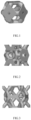
- the tetradecahedron structure is used as the cell structure of the lattice metal, as shown in FIG. 1 .
- the modal shape of the structure is calculated by finite element software, and the settlement results are post-processed to extract the modal strain.
- the modal strain energy point cloud diagram is constructed by using the MATLAB software, as shown in FIG. 4 .
- the continuous gradient change of lattice metal pore strut diameter is driven by a strain energy field function.
- the diameter of lattice metal pore strut is the largest in the area with large modal strain energy, which is set to be 2 mm, and the diameter of lattice metal pore strut is the smallest in the area with small modal strain energy, which is set to be 0.5mm, the diameter of the metal pore strut of the variable density lattice changes continuously in the range of 0.5-2mm, the step size of the gradient change is 0.08mm, and the cell size is 5mm.
- the above mentioned modal strain energy method is used to drive the design of variable density lattice metal cells, and expand in space to from the variable density lattice metal.
- variable density lattice metal having vibration damping characteristics is prepared by selective laser melting additive manufacturing process, including the following steps:
- variable density lattice metal prepared in this embodiment under vibration excitation conditions is shown in FIG. 8 . It can be seen that the vibration response signal decays rapidly in the variable density lattice metal, which has good vibration damping characteristics. At the same time, the variable density lattice metal in this embodiment has both a smooth compressive stress-strain curve and an obvious plastic yield platform. The compressive stress-strain curve is shown in FIG. 9 , and the yield platform stress is about 23 MPa.
- This experiment is a comparative example of Example 1; in the process of designing and preparing the variable density lattice metal with a porosity of 40% with vibration damping characteristics, the change position of the pore strut diameter and the connection position of the pore strut of the variable density lattice metal is not smoothed, and the scanning strategy adopts the linear scanning method. Its structural design and other preparation process parameters are completely consistent with Embodiment 1, and the specific preparation steps are as follows:
- variable-density lattice metal prepared in this comparative example is relatively large, and there are many microcracks on the surface of the pore strut; the compressive stress-strain curve is jagged, and there is no obvious plastic yield platform.
- This embodiment is to design and prepare a variable density lattice metal with a porosity of 60% and having vibration damping characteristics.
- the combined structure of dodecahedron and tetradecahedron is used as the cell structure of lattice metal, as shown in FIG. 2 .
- the modal shape of the structure is calculated by the finite element software, and the calculation results are post-processed to extract the modal strain.
- the modal strain energy point cloud diagram is constructed by using MATLAB software, and the continuous gradient change of the lattice metal pore-strut diameter is driven by the strain energy field function.
- the pore strut diameter of the lattice metal in the area with large modal strain energy is the largest, which is set to be 3mm; the pore strut diameter of the lattice metal in the area with small modal strain energy is the smallest, which is set to be 1mm, and the pore strut diameter of variable density lattice metal is continuously changed in the range of 1-3mm, the step size of the gradient change is 0.1mm, and the cell size is 7mm.
- the above mentioned modal strain energy method is used to drive the design of variable density lattice metal, and expand in space to form the variable density lattice metal.
- variable density lattice metal having vibration damping characteristics is prepared by the selective laser melting additive manufacturing process, including the following steps:
- This embodiment is to design and prepare a variable density lattice metal with a porosity of 90% and having vibration damping characteristics.
- the truncated octahedral structure is used as the cell structure of the lattice metal, as shown in FIG. 3 .
- the modal shape of the structure is calculated by the finite element software, and the calculation results are post-processed to extract the modal strain.
- the modal strain energy point cloud diagram is constructed by using MATLAB software, and the continuous gradient change of the pore strut diameter of the lattice metal pore is driven by the strain energy field function.
- the pore strut diameter of the lattice metal in the area with large modal strain energy is the largest, which is set to be 5mm, and the pore strut diameter of the lattice metal in the area with small modal strain energy is the smallest, which is set to be 1mm, and the pore strut diameter of the variable density lattice metal is continuously changed in the range of 1 to 5mm, the step size of the gradient change is 0.2mm, and the cell size is 10mm.
- the above-mentioned modal strain energy method is used to drive the design of the variable density lattice metal, and expand in space to form the variable density lattice metal.
- variable density lattice metal having vibration damping characteristics is prepared by the selective laser melting additive manufacturing process, including the following steps:
- variable density lattice metal of this embodiment has vibration damping characteristics, and simultaneously has a smooth compressive stress-strain curve and an obvious plastic yield platform, and the yield platform stress is 5MPa.
Landscapes
- Engineering & Computer Science (AREA)
- Chemical & Material Sciences (AREA)
- Materials Engineering (AREA)
- Physics & Mathematics (AREA)
- Manufacturing & Machinery (AREA)
- Mechanical Engineering (AREA)
- Geometry (AREA)
- Metallurgy (AREA)
- Theoretical Computer Science (AREA)
- Organic Chemistry (AREA)
- Thermal Sciences (AREA)
- General Physics & Mathematics (AREA)
- Evolutionary Computation (AREA)
- General Engineering & Computer Science (AREA)
- Computer Hardware Design (AREA)
- Crystallography & Structural Chemistry (AREA)
- Computational Mathematics (AREA)
- Mathematical Analysis (AREA)
- Mathematical Optimization (AREA)
- Pure & Applied Mathematics (AREA)
- Automation & Control Theory (AREA)
- Plasma & Fusion (AREA)
- Vibration Dampers (AREA)
- Powder Metallurgy (AREA)
- Micromachines (AREA)
Claims (6)
- Gittermetall mit variabler Dichte, das schwingungsdämpfende Eigenschaften aufweist, dadurch gekennzeichnet, dass jede der Zellen des Gittermetalls eine Tetraederstruktur, eine Kombinationsstruktur aus einem Dodekaeder und einem Tetraeder oder eine Oktaederstumpfstruktur aufweist, und wobei die Zellen erweitert werden, um das Gittermetall zu bilden;wobei das Gittermetall basiert ist auf einem modalen Verformungsenergieverfahren, um die Auslegung von Porenverstrebungsdurchmessern zu steuern, und wobei die gesamte Strukturdichte eine nicht-homogene kontinuierliche Gradientenveränderung zeigt, wobei das modale Verformungsenergieverfahren verwendet wird, um eine modale Gestalt der Struktur durch eine Finite-Elemente-Software zu berechnen, wobei eine modale Verformung extrahiert wird und ein Punktwolkendiagramm einer modalen Verformungsenergie aufgebaut wird, wobei eine kontinuierliche Gradientenveränderung der Porenverstrebungsdurchmesser des Gittermetalls durch eine Verformungsenergiefeldfunktion gesteuert wird, und wobei der Wert der Porenverstrebungsdurchmesser des Gittermetalls in einem Bereich mit einer großen modalen Verformungsenergie größer ist als in einem Bereich einer geringen Verformungsenergie, wobei die Gradientenveränderung der Porenverstrebungsdurchmesser des Gittermetalls mit variabler Dichte nicht in einer einzigen Richtung erfolgt;wobei das Gittermetall mit variabler Dichte durch einen generativen Herstellungsprozess mit einem selektiven Laserschmelzen vorbereitet wird;wobei die Porosität des Gittermetalls von 40% bis 90% reicht, wobei sich die Porenverstrebungsdurchmesser kontinuierlich in einem Bereich von 0,5 mm bis 5 mm verändern, wobei die Schrittgröße der kontinuierlichen Gradientenveränderung der Porenverstrebungsdurchmesser des Gittermetalls zwischen 0,08 und 0,2 mm liegt und wobei die Zellengröße des Gittermetalls von 5 bis 10 mm reicht.
- Gittermetall mit variabler Dichte, das schwingungsdämpfende Eigenschaften aufweist, nach Anspruch 1, dadurch gekennzeichnet, dass die zusammenpressende mechanische Eigenschaft des Gittermetalls mit variabler Dichte eine glatte Spannungs-Dehnungs-Kurve und eine offensichtliche plastische Streckplattform aufweist, und wobei der Spannungsbereich der plastischen Streckplattform zwischen 5 und 23 MPa liegt.
- Herstellungsverfahren für das Gittermetall mit variabler Dichte, das schwingungsdämpfende Eigenschaften aufweist, nach Anspruch 1, dadurch gekennzeichnet, dass das Herstellungsverfahren die folgenden Schritte: umfasst:Schritt 1: Verwenden einer dreidimensionalen Gestaltungssoftware, um eine Gestaltung einer Prozessanpassungsfähigkeit der Porenstruktur des Gittermetalls mit variabler Dichte auszuführen, Glätten einer Veränderungsposition des Porenverstrebungsdurchmessers und einer Verbindungsposition der Porenverstrebung des Gittermetalls mit variabler Dichte, und Einrichten eines 3D-Modells des Gittermetalls mit variabler Dichte, wobei die Parameter der Glättungsbehandlung sind: der Glättungsradius beträgt 0,1 bis 0,5 mm und die Glättungshäufigkeit liegt bei 2 bis 3 Mal;Schritt 2: Verwenden einer Slicing-Software, um das 3D-Modell des Gittermetalls mit variabler Dichte, das im Schritt 1 eingerichtet wurde, basierend auf den Eigenschaften einer diskontinuierlichen Abtastung kleiner Abschnitte in dem Gittermetallbildungsprozess, in Scheiben zu schneiden, Einstellen der Abtaststrategie und der Prozessparameter, und Verarbeiten eines Matrixmaterials in ein Gittermetall mit variabler Dichte unter dem Schutz eines Inertgases, wobei die Abtaststrategie eine kreisförmige Abtaststrategie ist, Zentrieren auf einen Durchmesser der Ebene der Porenverstrebung der Scheibe des Gittermetalls, und allmähliches Erweitern des Abtastens nach außen in der Form von konzentrischen Kreisen, wobei das Abtastintervall zwischen 30 und 110 µm liegt, und wobei die Abtastleistung zwischen 60 und 220 W liegt, wobei die Abtastgeschwindigkeit zwischen 100 und 2000 mm/s liegt und wobei die Schichtdicke zwischen 20 und 50 µm liegt; undSchritt 3: Wärmebehandlung des Gittermetalls mit variabler Dichte, das im Schritt 2 erhalten wurde.
- Herstellungsverfahren nach Anspruch 3, dadurch gekennzeichnet, dass das Matrixmaterial ein GH4169 Superlegierungspulver oder ein 304 Edelstahlpulver ist und dass die Partikelgröße des Pulvers zwischen 15 und 53 µm liegt.
- Herstellungsverfahren nach Anspruch 3, dadurch gekennzeichnet, dass im Schritt 3, wenn das Matrixmaterial ein GH4169 Superlegierungspulver ist, der Wärmebehandlungsprozess wie folgt abläuft: erstens, eine Wärmeaufrechterhaltung bei 960°C für 1 Stunde und eine Wasserkühlung, danach eine Wärmeaufrechterhaltung bei 720°C für 8 Stunden und abschließend eine Offenkühlung auf 620°C mit einer Kühlrate von 50°C/h, Wärmeaufrechterhaltung für 8 Stunden und eine Luftkühlung; wenn das Matrixmaterial ein 304 Edelstahl ist, der Wärmebehandlungsprozess eine Lösungsbehandlung ist, wobei die Behandlungstemperatur zwischen 800 und 1100° C liegt und die Behandlungszeit zwischen 3 und 15 Stunden liegt.
- Nutzung des Gittermetalls mit variabler Dichte, das schwingungsdämpfende Eigenschaften aufweist und das durch das Herstellungsverfahren nach Anspruch 3, vorbereitet wurde, in einer Komponente eines Schwingungsübertragungspfads, in einer Schwingungsdämpfungskomponente oder in einer Schwingungsisolierungskomponente eines Schiffs, einer Luftfahrtausrüstung und einer Schienentransportausrüstung.
Applications Claiming Priority (2)
| Application Number | Priority Date | Filing Date | Title |
|---|---|---|---|
| CN202211277283.5A CN115958203B (zh) | 2022-10-19 | 2022-10-19 | 一种具有减振特性的变密度点阵金属 |
| PCT/CN2022/131912 WO2023066408A2 (zh) | 2022-10-19 | 2022-11-15 | 一种具有减振特性的变密度点阵金属及其增材制造方法 |
Publications (4)
| Publication Number | Publication Date |
|---|---|
| EP4331746A2 EP4331746A2 (de) | 2024-03-06 |
| EP4331746A4 EP4331746A4 (de) | 2024-11-27 |
| EP4331746B1 true EP4331746B1 (de) | 2025-06-11 |
| EP4331746C0 EP4331746C0 (de) | 2025-06-11 |
Family
ID=85886951
Family Applications (1)
| Application Number | Title | Priority Date | Filing Date |
|---|---|---|---|
| EP22883012.1A Active EP4331746B1 (de) | 2022-10-19 | 2022-11-15 | Gittermetall mit variabler dichte und schwingungsdämpfenden eigenschaften, verfahren zur generativen herstellung und verwendung desselben |
Country Status (3)
| Country | Link |
|---|---|
| EP (1) | EP4331746B1 (de) |
| CN (1) | CN115958203B (de) |
| WO (1) | WO2023066408A2 (de) |
Families Citing this family (8)
| Publication number | Priority date | Publication date | Assignee | Title |
|---|---|---|---|---|
| CN116774429A (zh) * | 2023-07-13 | 2023-09-19 | 同济大学 | 多工况约束的增材制造点阵轻质结构反射镜的设计方法 |
| CN116882104B (zh) * | 2023-09-07 | 2023-11-17 | 北京精雕科技集团有限公司 | 机床薄弱环节的识别方法、装置、电子设备及存储介质 |
| CN117183318A (zh) * | 2023-10-11 | 2023-12-08 | 西北工业大学 | 一种各单元力学性能可调节的魔方式超材料体系 |
| CN117340275A (zh) * | 2023-12-04 | 2024-01-05 | 烟台核电智能技术研究院有限公司 | 一种点阵填充材料及其增材制造方法和应用 |
| CN118951023B (zh) * | 2024-09-02 | 2025-03-28 | 中南大学 | 一种增材制造的多孔合金螺钉结构的制备方法及其多孔合金螺钉结构 |
| CN119532364B (zh) * | 2024-10-18 | 2026-03-10 | 哈尔滨工业大学 | 一种利用空腔内粘性流体实现的空心金属点阵粘弹性结构及其制备方法 |
| CN120072146B (zh) * | 2025-02-12 | 2025-11-25 | 南昌航空大学 | 一种针对激光选区熔化成形钛合金梯度晶格结构的轻量化方法 |
| CN120509066B (zh) * | 2025-07-21 | 2025-10-28 | 中国人民解放军国防科技大学 | 一种发动机被动热防护金属喷管结构及方法 |
Family Cites Families (21)
| Publication number | Priority date | Publication date | Assignee | Title |
|---|---|---|---|---|
| EP1418013B1 (de) * | 2002-11-08 | 2005-01-19 | Howmedica Osteonics Corp. | Lasererzeugte poröse Oberfläche |
| US20060147332A1 (en) * | 2004-12-30 | 2006-07-06 | Howmedica Osteonics Corp. | Laser-produced porous structure |
| CA2860013C (en) * | 2011-12-23 | 2020-09-22 | The Royal Institution For The Advancement Of Learning/Mcgill University | Bone replacement implants with mechanically biocompatible cellular material |
| EP3137125B1 (de) * | 2014-05-02 | 2020-03-04 | The Royal Institution for the Advancement of Learning / McGill University | Aus strukturell porösem biomaterial geformtes implantat und verfahren zur herstellung von diesem |
| CN104252564A (zh) * | 2014-09-18 | 2014-12-31 | 重庆大学 | 基于模态应变能法的约束阻尼鼓筒的减振优化设计方法 |
| CN105543747B (zh) * | 2015-12-21 | 2017-11-21 | 西北工业大学 | 一种保留有Laves相的增材制造镍基高温合金的制备方法 |
| US10639719B2 (en) * | 2016-09-28 | 2020-05-05 | General Electric Company | Grain boundary engineering for additive manufacturing |
| US10915675B2 (en) * | 2017-05-12 | 2021-02-09 | Dassault Systemes Simulia Corp. | Structural optimization of additively manufactured parts accounting for manufacturing-induced states |
| US10585420B2 (en) * | 2017-11-06 | 2020-03-10 | Abemis LLC | Method and system to generate three-dimensional meta-structure model of a workpiece |
| CN108197399A (zh) * | 2018-01-11 | 2018-06-22 | 武汉大学 | 相对密度和棱径尺寸可控的纳米多孔介质建模方法及系统 |
| NL2021874B1 (en) * | 2018-10-25 | 2020-05-13 | Am Solutions Holding B V | Implants, assemblies and methods of manufacturing such implants or assemblies |
| US10635088B1 (en) * | 2018-11-09 | 2020-04-28 | Autodesk, Inc. | Hollow topology generation with lattices for computer aided design and manufacturing |
| CN109766656B (zh) * | 2019-01-25 | 2021-03-09 | 北京航空航天大学 | 一种基于拓扑优化的梯度点阵结构设计方法 |
| CN112355277B (zh) * | 2019-10-29 | 2022-02-08 | 沈阳铸造研究所有限公司 | 一种高熔点Kelvin结构点阵金属及其制备方法与应用 |
| US12164846B2 (en) * | 2019-12-10 | 2024-12-10 | Dassault Systemes Americas Corp. | Geometrical dimensionality control in optimization |
| CN110929358B (zh) * | 2020-01-21 | 2020-05-08 | 中国人民解放军国防科技大学 | 一种参数化功能梯度立方点阵结构设计方法及材料 |
| CN111451505A (zh) * | 2020-05-15 | 2020-07-28 | 中国航发北京航空材料研究院 | 一种金属点阵结构变密度梯度材料的激光选区熔化制备工艺 |
| CN111570793A (zh) * | 2020-05-15 | 2020-08-25 | 中国航发北京航空材料研究院 | 多孔结构变密度梯度金属材料的激光选区熔化制备方法 |
| CN112008081B (zh) * | 2020-10-21 | 2021-02-19 | 沈阳铸造研究所有限公司 | 一种基于激光增材制造高熔点Kelvin结构点阵金属的制备方法 |
| CN112765856B (zh) * | 2021-01-22 | 2021-10-19 | 三峡大学 | 一种功能梯度多孔结构拓扑优化的混合水平集方法 |
| CN115090903B (zh) * | 2022-05-11 | 2023-04-21 | 华南理工大学 | 一种基于分子筛功能基元的医疗植入件及其制备方法 |
-
2022
- 2022-10-19 CN CN202211277283.5A patent/CN115958203B/zh active Active
- 2022-11-15 WO PCT/CN2022/131912 patent/WO2023066408A2/zh not_active Ceased
- 2022-11-15 EP EP22883012.1A patent/EP4331746B1/de active Active
Also Published As
| Publication number | Publication date |
|---|---|
| CN115958203B (zh) | 2023-06-20 |
| WO2023066408A2 (zh) | 2023-04-27 |
| EP4331746A2 (de) | 2024-03-06 |
| CN115958203A (zh) | 2023-04-14 |
| EP4331746A4 (de) | 2024-11-27 |
| WO2023066408A3 (zh) | 2023-06-15 |
| EP4331746C0 (de) | 2025-06-11 |
Similar Documents
| Publication | Publication Date | Title |
|---|---|---|
| EP4331746B1 (de) | Gittermetall mit variabler dichte und schwingungsdämpfenden eigenschaften, verfahren zur generativen herstellung und verwendung desselben | |
| Hussein et al. | Advanced lattice support structures for metal additive manufacturing | |
| Song et al. | Dynamic mechanical behavior of additively manufactured bio-inspired metallic lattice structure subjected to high strain rate impact loading | |
| CN107931609B (zh) | 一种TiAl合金涡轮叶片的制备方法 | |
| WO2021227539A1 (zh) | 一种基于激光增材制造高熔点Kelvin结构点阵金属的制备方法 | |
| US20120213659A1 (en) | Method and device for producing a component of a turbomachine | |
| CN106466494B (zh) | 一种多孔材料及制备方法 | |
| WO2021082277A1 (zh) | 一种高熔点Kelvin结构点阵金属及其制备方法与应用 | |
| CN112475319B (zh) | 变形回复快速响应的镍钛合金构件的4d成形方法及产品 | |
| JP2017064785A (ja) | 鋳造コア装置及び鋳造方法 | |
| Singerman et al. | Titanium metal matrix composites for aerospace applications | |
| CN115870516B (zh) | 一种基于增材制造的三维点阵超结构及其应用 | |
| Wang et al. | A novel method of indirect rapid prototyping to fabricate the ordered porous aluminum with controllable dimension variation and their properties | |
| CN114178509A (zh) | 一种轻质高刚度三维网络结构镁基复合材料及其制备方法 | |
| CN112008082A (zh) | 一种空心风扇叶片粉末热等静压近净成形制备方法 | |
| CN119018339A (zh) | 一种仿生减振减阻防结冰机翼蒙皮及其制备方法 | |
| CN115161508A (zh) | 一种可设计金属/陶瓷双相三维连通防护材料的制备方法及其产品 | |
| CN110238403B (zh) | 轻量化夹心结构的复合材料及其制备方法 | |
| Sun et al. | Fabrication of regular polystyrene foam structures with selective laser sintering | |
| CN107138727B (zh) | 一种具有点阵冷却结构的扇形封严块制备方法 | |
| EP3434452B1 (de) | Herstellung von gebogenen platten durch generative schichtfertigung | |
| Peng et al. | Investigation on effect of pillar size on the comprehensive properties of Ti6Al4V lattice fabricated by selective laser melting | |
| CN109277573B (zh) | 一种飞机起落架活塞杆的制作方法 | |
| CN111085683B (zh) | 一种环状异型构件的制造方法 | |
| CN112380696A (zh) | 一种基于增材制造工艺的涡轮气冷叶片设计方法 |
Legal Events
| Date | Code | Title | Description |
|---|---|---|---|
| STAA | Information on the status of an ep patent application or granted ep patent |
Free format text: STATUS: THE INTERNATIONAL PUBLICATION HAS BEEN MADE |
|
| PUAI | Public reference made under article 153(3) epc to a published international application that has entered the european phase |
Free format text: ORIGINAL CODE: 0009012 |
|
| STAA | Information on the status of an ep patent application or granted ep patent |
Free format text: STATUS: REQUEST FOR EXAMINATION WAS MADE |
|
| 17P | Request for examination filed |
Effective date: 20231128 |
|
| AK | Designated contracting states |
Kind code of ref document: A2 Designated state(s): AL AT BE BG CH CY CZ DE DK EE ES FI FR GB GR HR HU IE IS IT LI LT LU LV MC ME MK MT NL NO PL PT RO RS SE SI SK SM TR |
|
| REG | Reference to a national code |
Ref country code: DE Ref legal event code: R079 Free format text: PREVIOUS MAIN CLASS: B22F0003105000 Ipc: B22F0003110000 Ref document number: 602022015935 Country of ref document: DE |
|
| A4 | Supplementary search report drawn up and despatched |
Effective date: 20241025 |
|
| RIC1 | Information provided on ipc code assigned before grant |
Ipc: G06F 119/14 20200101ALN20241022BHEP Ipc: G06F 119/08 20200101ALN20241022BHEP Ipc: F16F 7/00 20060101ALN20241022BHEP Ipc: G06F 30/23 20200101ALI20241022BHEP Ipc: G06F 30/17 20200101ALI20241022BHEP Ipc: C22F 1/10 20060101ALI20241022BHEP Ipc: C22C 33/02 20060101ALI20241022BHEP Ipc: C22C 1/04 20230101ALI20241022BHEP Ipc: C21D 6/00 20060101ALI20241022BHEP Ipc: B33Y 80/00 20150101ALI20241022BHEP Ipc: B33Y 50/02 20150101ALI20241022BHEP Ipc: B33Y 40/20 20200101ALI20241022BHEP Ipc: B33Y 10/00 20150101ALI20241022BHEP Ipc: B22F 10/64 20210101ALI20241022BHEP Ipc: B22F 10/366 20210101ALI20241022BHEP Ipc: B22F 10/28 20210101ALI20241022BHEP Ipc: B22F 5/10 20060101ALI20241022BHEP Ipc: B22F 3/11 20060101AFI20241022BHEP |
|
| GRAP | Despatch of communication of intention to grant a patent |
Free format text: ORIGINAL CODE: EPIDOSNIGR1 |
|
| STAA | Information on the status of an ep patent application or granted ep patent |
Free format text: STATUS: GRANT OF PATENT IS INTENDED |
|
| RIC1 | Information provided on ipc code assigned before grant |
Ipc: G06F 119/14 20200101ALN20250318BHEP Ipc: G06F 119/08 20200101ALN20250318BHEP Ipc: F16F 7/00 20060101ALN20250318BHEP Ipc: G06F 30/23 20200101ALI20250318BHEP Ipc: G06F 30/17 20200101ALI20250318BHEP Ipc: C22F 1/10 20060101ALI20250318BHEP Ipc: C22C 33/02 20060101ALI20250318BHEP Ipc: C22C 1/04 20230101ALI20250318BHEP Ipc: C21D 6/00 20060101ALI20250318BHEP Ipc: B33Y 80/00 20150101ALI20250318BHEP Ipc: B33Y 50/02 20150101ALI20250318BHEP Ipc: B33Y 40/20 20200101ALI20250318BHEP Ipc: B33Y 10/00 20150101ALI20250318BHEP Ipc: B22F 10/64 20210101ALI20250318BHEP Ipc: B22F 10/366 20210101ALI20250318BHEP Ipc: B22F 10/28 20210101ALI20250318BHEP Ipc: B22F 5/10 20060101ALI20250318BHEP Ipc: B22F 3/11 20060101AFI20250318BHEP |
|
| GRAS | Grant fee paid |
Free format text: ORIGINAL CODE: EPIDOSNIGR3 |
|
| INTG | Intention to grant announced |
Effective date: 20250404 |
|
| GRAA | (expected) grant |
Free format text: ORIGINAL CODE: 0009210 |
|
| STAA | Information on the status of an ep patent application or granted ep patent |
Free format text: STATUS: THE PATENT HAS BEEN GRANTED |
|
| REG | Reference to a national code |
Ref country code: DE Ref legal event code: R081 Ref document number: 602022015935 Country of ref document: DE Owner name: SHENYANG RESEARCH INSTITUTE OF FOUNDRY CO., LT, CN Free format text: FORMER OWNER: SHENYANG RESEARCH INSTITUTE OF FOUNDRY CO., LTD., SHENYANG, LIAONING, CN |
|
| AK | Designated contracting states |
Kind code of ref document: B1 Designated state(s): AL AT BE BG CH CY CZ DE DK EE ES FI FR GB GR HR HU IE IS IT LI LT LU LV MC ME MK MT NL NO PL PT RO RS SE SI SK SM TR |
|
| DAV | Request for validation of the european patent (deleted) | ||
| DAX | Request for extension of the european patent (deleted) | ||
| REG | Reference to a national code |
Ref country code: GB Ref legal event code: FG4D |
|
| REG | Reference to a national code |
Ref country code: CH Ref legal event code: EP |
|
| REG | Reference to a national code |
Ref country code: IE Ref legal event code: FG4D |
|
| REG | Reference to a national code |
Ref country code: DE Ref legal event code: R096 Ref document number: 602022015935 Country of ref document: DE |
|
| U01 | Request for unitary effect filed |
Effective date: 20250616 |
|
| U07 | Unitary effect registered |
Designated state(s): AT BE BG DE DK EE FI FR IT LT LU LV MT NL PT RO SE SI Effective date: 20250626 |
|
| PG25 | Lapsed in a contracting state [announced via postgrant information from national office to epo] |
Ref country code: ES Free format text: LAPSE BECAUSE OF FAILURE TO SUBMIT A TRANSLATION OF THE DESCRIPTION OR TO PAY THE FEE WITHIN THE PRESCRIBED TIME-LIMIT Effective date: 20250611 |
|
| PG25 | Lapsed in a contracting state [announced via postgrant information from national office to epo] |
Ref country code: GR Free format text: LAPSE BECAUSE OF FAILURE TO SUBMIT A TRANSLATION OF THE DESCRIPTION OR TO PAY THE FEE WITHIN THE PRESCRIBED TIME-LIMIT Effective date: 20250912 Ref country code: NO Free format text: LAPSE BECAUSE OF FAILURE TO SUBMIT A TRANSLATION OF THE DESCRIPTION OR TO PAY THE FEE WITHIN THE PRESCRIBED TIME-LIMIT Effective date: 20250911 |
|
| PG25 | Lapsed in a contracting state [announced via postgrant information from national office to epo] |
Ref country code: HR Free format text: LAPSE BECAUSE OF FAILURE TO SUBMIT A TRANSLATION OF THE DESCRIPTION OR TO PAY THE FEE WITHIN THE PRESCRIBED TIME-LIMIT Effective date: 20250611 |
|
| PG25 | Lapsed in a contracting state [announced via postgrant information from national office to epo] |
Ref country code: RS Free format text: LAPSE BECAUSE OF FAILURE TO SUBMIT A TRANSLATION OF THE DESCRIPTION OR TO PAY THE FEE WITHIN THE PRESCRIBED TIME-LIMIT Effective date: 20250911 |
|
| U20 | Renewal fee for the european patent with unitary effect paid |
Year of fee payment: 4 Effective date: 20251017 |
|
| PG25 | Lapsed in a contracting state [announced via postgrant information from national office to epo] |
Ref country code: IS Free format text: LAPSE BECAUSE OF FAILURE TO SUBMIT A TRANSLATION OF THE DESCRIPTION OR TO PAY THE FEE WITHIN THE PRESCRIBED TIME-LIMIT Effective date: 20251011 |
|
| PG25 | Lapsed in a contracting state [announced via postgrant information from national office to epo] |
Ref country code: SM Free format text: LAPSE BECAUSE OF FAILURE TO SUBMIT A TRANSLATION OF THE DESCRIPTION OR TO PAY THE FEE WITHIN THE PRESCRIBED TIME-LIMIT Effective date: 20250611 |
|
| PG25 | Lapsed in a contracting state [announced via postgrant information from national office to epo] |
Ref country code: CZ Free format text: LAPSE BECAUSE OF FAILURE TO SUBMIT A TRANSLATION OF THE DESCRIPTION OR TO PAY THE FEE WITHIN THE PRESCRIBED TIME-LIMIT Effective date: 20250611 |
|
| PG25 | Lapsed in a contracting state [announced via postgrant information from national office to epo] |
Ref country code: PL Free format text: LAPSE BECAUSE OF FAILURE TO SUBMIT A TRANSLATION OF THE DESCRIPTION OR TO PAY THE FEE WITHIN THE PRESCRIBED TIME-LIMIT Effective date: 20250611 |
|
| PG25 | Lapsed in a contracting state [announced via postgrant information from national office to epo] |
Ref country code: SK Free format text: LAPSE BECAUSE OF FAILURE TO SUBMIT A TRANSLATION OF THE DESCRIPTION OR TO PAY THE FEE WITHIN THE PRESCRIBED TIME-LIMIT Effective date: 20250611 |
|
| PLBE | No opposition filed within time limit |
Free format text: ORIGINAL CODE: 0009261 |
|
| STAA | Information on the status of an ep patent application or granted ep patent |
Free format text: STATUS: NO OPPOSITION FILED WITHIN TIME LIMIT |
|
| REG | Reference to a national code |
Ref country code: CH Ref legal event code: L10 Free format text: ST27 STATUS EVENT CODE: U-0-0-L10-L00 (AS PROVIDED BY THE NATIONAL OFFICE) Effective date: 20260423 |