EP4316692A1 - Method for preparing negative-pressure film-coated frozen sand mold - Google Patents
Method for preparing negative-pressure film-coated frozen sand mold Download PDFInfo
- Publication number
- EP4316692A1 EP4316692A1 EP22891177.2A EP22891177A EP4316692A1 EP 4316692 A1 EP4316692 A1 EP 4316692A1 EP 22891177 A EP22891177 A EP 22891177A EP 4316692 A1 EP4316692 A1 EP 4316692A1
- Authority
- EP
- European Patent Office
- Prior art keywords
- sand mold
- sand
- film
- frozen
- covering
- Prior art date
- Legal status (The legal status is an assumption and is not a legal conclusion. Google has not performed a legal analysis and makes no representation as to the accuracy of the status listed.)
- Granted
Links
Images
Classifications
-
- B—PERFORMING OPERATIONS; TRANSPORTING
- B22—CASTING; POWDER METALLURGY
- B22C—FOUNDRY MOULDING
- B22C9/00—Moulds or cores; Moulding processes
- B22C9/12—Treating moulds or cores, e.g. drying, hardening
- B22C9/126—Hardening by freezing
-
- B—PERFORMING OPERATIONS; TRANSPORTING
- B22—CASTING; POWDER METALLURGY
- B22D—CASTING OF METALS; CASTING OF OTHER SUBSTANCES BY THE SAME PROCESSES OR DEVICES
- B22D18/00—Pressure casting; Vacuum casting
- B22D18/06—Vacuum casting, i.e. making use of vacuum to fill the mould
-
- B—PERFORMING OPERATIONS; TRANSPORTING
- B22—CASTING; POWDER METALLURGY
- B22C—FOUNDRY MOULDING
- B22C9/00—Moulds or cores; Moulding processes
- B22C9/02—Sand moulds or like moulds for shaped castings
-
- B—PERFORMING OPERATIONS; TRANSPORTING
- B22—CASTING; POWDER METALLURGY
- B22C—FOUNDRY MOULDING
- B22C9/00—Moulds or cores; Moulding processes
- B22C9/02—Sand moulds or like moulds for shaped castings
- B22C9/03—Sand moulds or like moulds for shaped castings formed by vacuum-sealed moulding
-
- B—PERFORMING OPERATIONS; TRANSPORTING
- B22—CASTING; POWDER METALLURGY
- B22C—FOUNDRY MOULDING
- B22C9/00—Moulds or cores; Moulding processes
- B22C9/12—Treating moulds or cores, e.g. drying, hardening
Definitions
- the present invention relates to the field of frozen sand mold manufacturing technology, in particular to a method for preparing a negative pressure film-covering frozen sand mold.
- the conventional casting industry consumes a lot of energy and resources, is long in casting manufacturing cycle for wooden/metal mold rollover, and has problems such as many production processes, high labor intensity, expensive product development, and harsh working environment.
- the conventional casting industry urgently needs breakthroughs and reforms in green processes to promote energy conservation, emission reduction, and green sustainable development in the manufacturing industry.
- Frozen sand molds for casting are a new type of molds casted from water as a binder and various sand particles as refractory aggregates. After a frozen sand blank is prepared through water freezing in a low-temperature environment, the frozen sand mold is rapidly prototyped through a numerical model-free casting technology based on a cutting shaping principle. However, in a pouring process, if the temperature of molten metal is too high, a large amount of water in the frozen sand mold is evaporated. As a result, the strength of the sand mold decreases, and the mold cavity is prone to deformation, which are not conducive to filling the mold with the molten metal.
- the surface of the cavity of the frozen sand mold is directly in contact with the high-temperature molten metal, and water vapor generated instantly forms bubbles in the molten metal, so that the surface quality of a casting is damaged, the mechanical properties of the casting are affected, and even the frozen sand mold collapses prematurely in the pouring process. Therefore, a new direction needs to be broken through in the green casting industry in order to make up for the shortcoming of easy collapse of the frozen sand mold in the pouring process, ensure that the high-temperature molten metal is smoothly filled in the cavity of the frozen sand mold, prevent the phenomenon of "one-touch scattering" in the pouring process, and enable the casting to be clear in contour, accurate in size, and low in machining allowance.
- the present invention provides a method for preparing a negative pressure film-covering frozen sand mold, which makes up for the shortcoming of easy collapse of a frozen sand mold in a pouring process and prevents the generation of a large amount of water vapor in the pouring process.
- a side wall of the sand mold is reserved with an air extraction hole for continuous vacuum extraction in molding and pouring processes, so that water vapor in the frozen sand mold can be quickly discharged to reduce the defects of air holes and pinholes in a casting. It is a new direction that needs to be broken through in the green casting industry.
- a method for preparing a negative pressure film-covering frozen sand mold includes the following steps:
- the frozen sand mold is provided with an air extraction hole, which is prepared by embedding a metal needle in the frozen sand blank and pulling out the metal needle during initial setting of the sand blank; or an air extraction hole is directly machined out on the frozen sand blank by using a numerically controlled drilling technology.
- a sand box for the sand mold is the air extraction sand box with a vacuum chamber, and the vacuum pump cooperates with the air extraction hole and a filtering extraction pipe to extract air.
- the thermal insulation coating is a barrier type thermal insulation coating, a main material of which is aerogel or the like.
- a vacuum degree may be controlled at 0.03-0.04 MPa in the film covering and pressure maintaining processes.
- the upper and lower boxes are closed to form the integral sand mold with a casting head and the mold cavity, the sand mold is maintained in a negative pressure state (a vacuum degree of 0.05-0.06 MPa and a large air extraction amount) during direct pouring at room temperature or low temperature, and gases such as water vapor generated during pouring are promptly extracted away through the air extraction hole.
- a negative pressure state a vacuum degree of 0.05-0.06 MPa and a large air extraction amount
- the thin film is one of an EVA plastic film, an LDPE (low-density polyethylene film), and polyester amine fibers.
- the thin film is heated by a heater for softening at about 70°C and then spread on the mold cavity of the sand mold.
- a junction of a parting surface and the thin film is bound with an adhesive tape to prevent defects such as sand inclusion caused by falling sand.
- the thermal insulation coating brushed in this method can protect the surface of the mold cavity of the frozen sand mold from being damaged by the high-temperature thin film, and can also bind the film to better adhere to the surface of the mold cavity in the early stage of film covering; and during pouring, the frozen sand mold maintain its shape mainly by means of a transitional shell formed on the sand mold by residues after film vaporization.
- the coating is replaced with special sand (such as brown fused alumina).
- special sand such as brown fused alumina.
- the sand mold obtained from 100/200 mesh brown fused alumina sand has higher hardness than that from 70-100 mesh ordinary sand, and the brown fused alumina sand increases refractoriness of the sand mold.
- the periphery of the casting head is brushed with a little coating to reduce erosion of molten metal on the sand mold and sand sticking defects.
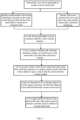
- FIG. 1 is a process flow diagram of the present invention.
- FIG. 1 shows a method for preparing a negative pressure film-covering frozen sand mold in this embodiment.
- a frozen sand blank is numerically machined to obtain upper and lower boxes of a sand mold, the sand mold is brushed with a thermal insulation coating and then covered with a thin film, air is extracted through an air extraction box, a mold cavity and an outer surface of the sand mold are covered with a thin film and a back film separately, the upper and lower boxes are closed to form an integral sand mold with a casting head, the mold cavity, and an air extraction hole, and direct pouring is performed at room temperature or low temperature while the sand mold is maintained in a negative pressure state.
- the method includes the following steps:
- this method may alternatively use special sand or other heat-resistant sand instead of the thermal insulation coating, depending on the main principle that residue after film vaporization forms a transitional shell on the sand mold to maintain a shape, and molten metal quickly solidifies on the surface of the mold cavity to form a metal shell with certain strength, thereby improving the density, dimensional accuracy, and the like of a casting.
- the thin film blocks direct contact between the high-temperature molten metal and an ice crystal bonding bridge in the frozen sand mold, the strength of the sand mold is protected, and the generation of a large amount of water vapor in the pouring process is prevented. Meanwhile, the sand mold is maintained in negative pressure throughout the pouring process, and the generated water vapor can be quickly discharged, thereby accelerating filling of the molten metal and reducing defects such as air holes on the surface of the casting.
Landscapes
- Engineering & Computer Science (AREA)
- Mechanical Engineering (AREA)
- Mold Materials And Core Materials (AREA)
Abstract
Description
- The present invention relates to the field of frozen sand mold manufacturing technology, in particular to a method for preparing a negative pressure film-covering frozen sand mold.
- The conventional casting industry consumes a lot of energy and resources, is long in casting manufacturing cycle for wooden/metal mold rollover, and has problems such as many production processes, high labor intensity, expensive product development, and harsh working environment. The conventional casting industry urgently needs breakthroughs and reforms in green processes to promote energy conservation, emission reduction, and green sustainable development in the manufacturing industry.
- Frozen sand molds for casting are a new type of molds casted from water as a binder and various sand particles as refractory aggregates. After a frozen sand blank is prepared through water freezing in a low-temperature environment, the frozen sand mold is rapidly prototyped through a numerical model-free casting technology based on a cutting shaping principle. However, in a pouring process, if the temperature of molten metal is too high, a large amount of water in the frozen sand mold is evaporated. As a result, the strength of the sand mold decreases, and the mold cavity is prone to deformation, which are not conducive to filling the mold with the molten metal. Moreover, the surface of the cavity of the frozen sand mold is directly in contact with the high-temperature molten metal, and water vapor generated instantly forms bubbles in the molten metal, so that the surface quality of a casting is damaged, the mechanical properties of the casting are affected, and even the frozen sand mold collapses prematurely in the pouring process. Therefore, a new direction needs to be broken through in the green casting industry in order to make up for the shortcoming of easy collapse of the frozen sand mold in the pouring process, ensure that the high-temperature molten metal is smoothly filled in the cavity of the frozen sand mold, prevent the phenomenon of "one-touch scattering" in the pouring process, and enable the casting to be clear in contour, accurate in size, and low in machining allowance.
- To solve the above problems, the present invention provides a method for preparing a negative pressure film-covering frozen sand mold, which makes up for the shortcoming of easy collapse of a frozen sand mold in a pouring process and prevents the generation of a large amount of water vapor in the pouring process. Moreover, a side wall of the sand mold is reserved with an air extraction hole for continuous vacuum extraction in molding and pouring processes, so that water vapor in the frozen sand mold can be quickly discharged to reduce the defects of air holes and pinholes in a casting. It is a new direction that needs to be broken through in the green casting industry.
- A method for preparing a negative pressure film-covering frozen sand mold includes the following steps:
- step 1: numerically cutting a frozen sand blank mixed with an appropriate amount of water in a low-temperature machining environment through a numerical model-free freeze casting technology based on a cutting shaping principle to prepare a frozen sand mold;
- step 2: fixing the prepared frozen sand mold in an air extraction sand box that matches the sand mold in size, and brushing a surface of a mold cavity with a layer of thermal insulation coating;
- step 3: heating a thin film until softened to cover the surface of the mold cavity of the sand mold brushed with the thermal insulation coating;
- step 4: covering an outer surface of the sand mold with a back film to seal the sand box; and
- step 5: starting a vacuum pump to provide vacuum suction force, so that the thin film tightly adheres to the sand mold; covering upper and lower boxes of the sand mold with a film under negative pressure, and then closing the upper and lower boxes to obtain an integral sand mold.
- Further, the frozen sand mold is provided with an air extraction hole, which is prepared by embedding a metal needle in the frozen sand blank and pulling out the metal needle during initial setting of the sand blank; or an air extraction hole is directly machined out on the frozen sand blank by using a numerically controlled drilling technology.
- Further, a sand box for the sand mold is the air extraction sand box with a vacuum chamber, and the vacuum pump cooperates with the air extraction hole and a filtering extraction pipe to extract air.
- Further, the thermal insulation coating is a barrier type thermal insulation coating, a main material of which is aerogel or the like.
- Further, a vacuum degree may be controlled at 0.03-0.04 MPa in the film covering and pressure maintaining processes.
- Further, the upper and lower boxes are closed to form the integral sand mold with a casting head and the mold cavity, the sand mold is maintained in a negative pressure state (a vacuum degree of 0.05-0.06 MPa and a large air extraction amount) during direct pouring at room temperature or low temperature, and gases such as water vapor generated during pouring are promptly extracted away through the air extraction hole.
- Further, the thin film is one of an EVA plastic film, an LDPE (low-density polyethylene film), and polyester amine fibers.
- Further, the thin film is heated by a heater for softening at about 70°C and then spread on the mold cavity of the sand mold.
- Further, a junction of a parting surface and the thin film is bound with an adhesive tape to prevent defects such as sand inclusion caused by falling sand.
- Further, the thermal insulation coating brushed in this method can protect the surface of the mold cavity of the frozen sand mold from being damaged by the high-temperature thin film, and can also bind the film to better adhere to the surface of the mold cavity in the early stage of film covering; and during pouring, the frozen sand mold maintain its shape mainly by means of a transitional shell formed on the sand mold by residues after film vaporization.
- Preferably, the coating is replaced with special sand (such as brown fused alumina). The sand mold obtained from 100/200 mesh brown fused alumina sand has higher hardness than that from 70-100 mesh ordinary sand, and the brown fused alumina sand increases refractoriness of the sand mold.
- Preferably, when an upper mold is made, the periphery of the casting head is brushed with a little coating to reduce erosion of molten metal on the sand mold and sand sticking defects.
- Beneficial effects of the present invention are as follows:
- 1. In the pouring process, the thin film instantly blocks direct contact between the high-temperature molten metal and the surface of the mold cavity of the frozen sand mold, and the residues after film vaporization form a transitional shell on the sand mold to maintain the shape. Meanwhile, the negative pressure pouring accelerates filling of the molten metal, and the molten metal quickly solidifies on the surface of the mold cavity to form a layer of metal shell with certain strength, so as to improve the density, dimensional accuracy, and the like of a casting.
- 2. Because the thin film blocks direct contact between the high-temperature molten metal and an ice crystal bonding bridge in the frozen sand mold, the strength of the sand mold is protected, and the generation of a large amount of water vapor in the pouring process is prevented. Moreover, the side wall of the sand mold is reserved with the air extraction hole for continuous vacuum extraction in the molding and pouring processes, so that water vapor in the frozen sand mold can be quickly discharged to reduce the defects of air holes and pinholes in the casting.
-
FIG. 1 is a process flow diagram of the present invention. - The present invention will be further illustrated below with reference to the accompanying drawing and specific embodiments. It should be understood that the following specific embodiments are merely used to explain the present invention and not to limit the scope of the present invention. It should be noted that the terms "front", "back", "left", "right", "up", and "down" used in the following description refer to directions in the drawings, and the terms "inside" and "outside" refer to directions towards or away from a geometric center of a specific component respectively.
-
FIG. 1 shows a method for preparing a negative pressure film-covering frozen sand mold in this embodiment. A frozen sand blank is numerically machined to obtain upper and lower boxes of a sand mold, the sand mold is brushed with a thermal insulation coating and then covered with a thin film, air is extracted through an air extraction box, a mold cavity and an outer surface of the sand mold are covered with a thin film and a back film separately, the upper and lower boxes are closed to form an integral sand mold with a casting head, the mold cavity, and an air extraction hole, and direct pouring is performed at room temperature or low temperature while the sand mold is maintained in a negative pressure state. - Specifically, the method includes the following steps:
- Step 1: Numerically cut a frozen sand blank mixed with an appropriate amount of water directly in a low-temperature machining environment through a numerical model-free freeze casting technology based on a cutting shaping principle to prepare a frozen sand mold. In this embodiment, 100 mesh brown fused alumina is selected, the frozen sand blank contains 4% of pure water by mass, and a metal needle is embedded in a side wall of the sand blank, frozen at -30°C, and pulled out during initial setting of the sand blank.
- Step 2: Fix the prepared frozen sand mold in an air extraction sand box that matches the sand mold in size, where the air extraction sand box has a vacuum chamber, and a vacuum pump cooperates with the air extraction hole and a filtering extraction pipe to extract air; and brush the surface of the mold cavity with a layer of thermal insulation coating, where a main material of the thermal insulation coating is aerogel, which is used to protect the mold cavity from heat damage and adhesion of the thin film.
- Step 3: Cover the surface of the mold cavity of the sand mold with a thin film softened by heating. The thin film is an EVA plastic film, and a mass percentage of vinyl acetate (VA) in EVA is controlled at 14%-19%. The thin film is heated by a heater for softening at about 70°C and then spread on the mold cavity of the sand mold.
- Step 4: Cover the outer surface of the sand mold with the back film to seal the sand box. A junction of a parting surface and the EVA plastic film is bound with an adhesive tape to reduce sand inclusion defects and mold shift caused by improper operation and falling sand.
- Step 5: Start the vacuum pump to provide vacuum suction force, so that the thin film tightly adheres to the sand mold, thereby completing the upper and lower boxes of the sand mold. A vacuum degree of the sand mold is controlled at 0.03-0.04 MPa in the film covering and pressure maintaining processes, and the vacuum degree is controlled at 0.05-0.06 MPa in the pouring process after the upper and lower boxes are closed.
- From the above description, the embodiment of the present invention achieves the following technical effects: this method may alternatively use special sand or other heat-resistant sand instead of the thermal insulation coating, depending on the main principle that residue after film vaporization forms a transitional shell on the sand mold to maintain a shape, and molten metal quickly solidifies on the surface of the mold cavity to form a metal shell with certain strength, thereby improving the density, dimensional accuracy, and the like of a casting. Moreover, because the thin film blocks direct contact between the high-temperature molten metal and an ice crystal bonding bridge in the frozen sand mold, the strength of the sand mold is protected, and the generation of a large amount of water vapor in the pouring process is prevented. Meanwhile, the sand mold is maintained in negative pressure throughout the pouring process, and the generated water vapor can be quickly discharged, thereby accelerating filling of the molten metal and reducing defects such as air holes on the surface of the casting.
- The technical means disclosed in the solution of the present invention are not limited to the technical means disclosed in the foregoing embodiment, but also include technical solutions formed by any combination of the above technical features.
Claims (10)
- A method for preparing a negative pressure film-covering frozen sand mold, comprising the following steps:step 1: numerically cutting a frozen sand blank mixed with water directly in a low-temperature machining environment through a numerical model-free freeze casting technology based on a cutting shaping principle to obtain upper and lower boxes of a sand mold;step 2: fixing the prepared frozen sand mold in an air extraction sand box that matches the sand mold in size, and brushing a surface of a mold cavity of the sand mold of the upper and lower boxes with a layer of thermal insulation coating;step 3: heating a thin film until softened to cover the surface of the mold cavity of the sand mold brushed with the thermal insulation coating;step 4: covering an outer surface of the sand mold with a back film to seal the sand box; andstep 5: starting a vacuum pump to provide vacuum suction force, so that the thin film tightly adheres to the sand mold; covering the upper and lower boxes of the sand mold with a film under negative pressure, and then closing the upper and lower boxes to obtain an integral sand mold.
- The method for preparing a negative pressure film-covering frozen sand mold according to claim 1, wherein in step 1, the frozen sand mold is provided with an air extraction hole, which is prepared by embedding a metal needle in the frozen sand blank and pulling out the metal needle during initial setting of the sand blank; or an air extraction hole is directly drilled out on a side wall of the sand mold by numerically controlled machining.
- The method for preparing a negative pressure film-covering frozen sand mold according to claim 1, wherein a sand box for the sand mold is the air extraction sand box with a vacuum chamber, and the vacuum pump cooperates with the air extraction hole and a filtering extraction pipe to extract air.
- The method for preparing a negative pressure film-covering frozen sand mold according to claim 1, wherein a vacuum degree is controlled at 0.03-0.04 MPa in the film covering and pressure maintaining processes.
- The method for preparing a negative pressure film-covering frozen sand mold according to claim 1, wherein the thermal insulation coating is a barrier type thermal insulation coating.
- The method for preparing a negative pressure film-covering frozen sand mold according to claim 1, wherein the upper and lower boxes are closed to form the integral sand mold with a casting head, the mold cavity, and the air extraction hole; and direct pouring is performed at room temperature or low temperature while the sand mold is maintained in a negative pressure state.
- The method for preparing a negative pressure film-covering frozen sand mold according to claim 1, wherein the thin film is one of an EVA plastic film, a low-density polyethylene film, and polyester amine fibers.
- The method for preparing a negative pressure film-covering frozen sand mold according to claim 1, wherein the thin film has a thickness of 0.1 mm.
- The method for preparing a negative pressure film-covering frozen sand mold according to claim 1, wherein the thin film is heated by a heater for softening at 65°C-75°C, cooled, and then spread on the mold cavity of the sand mold.
- The method for preparing a negative pressure film-covering frozen sand mold according to claim 1, wherein a junction of a parting surface and the thin film is bound with an adhesive tape.
Applications Claiming Priority (2)
| Application Number | Priority Date | Filing Date | Title |
|---|---|---|---|
| CN202210533241.7A CN114888265B (en) | 2022-05-17 | 2022-05-17 | Preparation method of negative-pressure laminating frozen sand mold |
| PCT/CN2022/117063 WO2023221341A1 (en) | 2022-05-17 | 2022-09-05 | Method for preparing negative-pressure film-coated frozen sand mold |
Publications (3)
| Publication Number | Publication Date |
|---|---|
| EP4316692A1 true EP4316692A1 (en) | 2024-02-07 |
| EP4316692A4 EP4316692A4 (en) | 2025-04-16 |
| EP4316692B1 EP4316692B1 (en) | 2025-11-05 |
Family
ID=82723744
Family Applications (1)
| Application Number | Title | Priority Date | Filing Date |
|---|---|---|---|
| EP22891177.2A Active EP4316692B1 (en) | 2022-05-17 | 2022-09-05 | Method for preparing negative-pressure film-coated frozen sand mold |
Country Status (5)
| Country | Link |
|---|---|
| US (1) | US12128474B2 (en) |
| EP (1) | EP4316692B1 (en) |
| JP (1) | JP7605535B2 (en) |
| CN (1) | CN114888265B (en) |
| WO (1) | WO2023221341A1 (en) |
Families Citing this family (10)
| Publication number | Priority date | Publication date | Assignee | Title |
|---|---|---|---|---|
| CN114888265B (en) * | 2022-05-17 | 2022-11-25 | 南京航空航天大学 | Preparation method of negative-pressure laminating frozen sand mold |
| CN115625290B (en) * | 2022-11-04 | 2023-06-13 | 南京航空航天大学 | Efficient refrigerating method and device for multipath internal micropores of frozen sand mold |
| KR102898861B1 (en) | 2022-11-04 | 2025-12-11 | 난징 유니버시티 오브 에어로노틱스 앤드 애스트로노틱스 | High-efficiency freezing method and device through multiple paths of freezing molds using internal micropores |
| CN115740360B (en) * | 2022-11-30 | 2023-07-18 | 南京航空航天大学 | Frozen sand mold green casting industrial-grade high-flexibility mold rapid cooling method and device |
| CN116352028B (en) * | 2022-12-08 | 2024-01-09 | 南京航空航天大学 | Multidirectional negative-pressure compaction device and method for rotary sand box of freezing casting revolving body |
| CN115921822B (en) * | 2023-03-01 | 2023-09-08 | 南京航空航天大学 | A method for forming green cast titanium alloy components using frozen sand molds for graphite sleeves |
| CN117900408A (en) * | 2024-01-09 | 2024-04-19 | 中北大学 | Freezing casting device with controllable partition solidification rate and freezing casting method |
| CN119187467B (en) * | 2024-09-23 | 2025-09-26 | 南京航空航天大学 | Precise design of high-throughput heat transfer parameters and low-stress manufacturing method for frozen sand molds |
| CN119549661A (en) * | 2024-12-09 | 2025-03-04 | 南京航空航天大学 | Integrated forming method for design and manufacturing of composite frozen sand mold with face and back sand |
| CN121200195B (en) * | 2025-11-26 | 2026-02-17 | 淄博艾杰旭刚玉材料有限公司 | AZS shrinkage-cavity-free product heat preservation annealing structure and annealing process |
Family Cites Families (21)
| Publication number | Priority date | Publication date | Assignee | Title |
|---|---|---|---|---|
| US4157109A (en) * | 1975-09-18 | 1979-06-05 | Nippon Gakki Seizo Kabushiki Kaisha | Method for manufacturing a mold for metal casting |
| JPS5460223A (en) * | 1977-10-21 | 1979-05-15 | Nippon Musical Instruments Mfg | Blocking material for casting vacuum mold |
| JPS5916860B2 (en) * | 1979-10-08 | 1984-04-18 | ヤマハ株式会社 | Reduced pressure mold casting method |
| JPS58349A (en) * | 1981-06-25 | 1983-01-05 | Agency Of Ind Science & Technol | Production of frozen mold |
| EP1731242A4 (en) * | 2004-04-01 | 2007-09-12 | Sintokogio Ltd | Method and device for pouring molten metal in vacuum molding and casting |
| CN101693282B (en) * | 2009-10-22 | 2011-06-29 | 南阳市汇森精密仪器铸造有限公司 | Method for producing pressure-bearing aluminum alloy tank body of ultra-high voltage switch by V method casting |
| CN101823122A (en) | 2010-03-24 | 2010-09-08 | 河南省前卫实业有限公司 | Negative-pressure molding process of casting refractory material product |
| JP5437950B2 (en) | 2010-08-12 | 2014-03-12 | 株式會社三共合金鑄造所 | Model for freeze casting and method for producing frozen mold using the model |
| CN103658527B (en) * | 2013-11-26 | 2016-08-17 | 滁州金诺实业有限公司 | A kind of vacuum sealed molding method of refrigerator cold closet plastic adsorption mould mould cast |
| CN103658525B (en) * | 2013-11-26 | 2016-01-13 | 滁州金诺实业有限公司 | A kind of V method mould casting electronic appliance mold strand |
| CN104707952A (en) * | 2013-12-17 | 2015-06-17 | 廉哲 | Depth automatic control sand tire boring equipment |
| CN104399882B (en) | 2014-11-07 | 2016-06-29 | 滁州金诺实业有限公司 | V method casting technique is adopted to produce the secondary formative method of casing class aluminium alloy castings |
| CN104439066A (en) * | 2014-11-28 | 2015-03-25 | 柳州市正龙机械制造有限公司 | V-method casting process |
| CN105665637B (en) * | 2016-03-11 | 2018-07-13 | 北京机科国创轻量化科学研究院有限公司 | A kind of containerless casting manufacturing process of frost sand mold |
| CN109332578A (en) * | 2018-10-23 | 2019-02-15 | 北京机科国创轻量化科学研究院有限公司 | A kind of moldless casting forming method of frozen clay sand |
| CN110102713A (en) | 2019-05-31 | 2019-08-09 | 台州巨东精密铸造有限公司 | A kind of casting and pouring moulding process based on evaporative pattern |
| CN110270676B (en) * | 2019-07-15 | 2021-12-17 | 太湖县光华铝业有限公司 | Aluminum-silicon alloy casting process |
| CN113579161B (en) * | 2021-07-28 | 2022-11-01 | 南京航空航天大学 | Large complex freezing sand mold low-temperature forming and over-cold-control cooperative manufacturing method |
| CN113560486A (en) * | 2021-07-28 | 2021-10-29 | 南京航空航天大学 | A kind of preparation method of frozen sand mold mixed with short fibers |
| CN114472804A (en) | 2022-02-11 | 2022-05-13 | 安徽合力股份有限公司合肥铸锻厂 | Process for casting rear seat of large-scale loader of ductile iron by V method |
| CN114888265B (en) | 2022-05-17 | 2022-11-25 | 南京航空航天大学 | Preparation method of negative-pressure laminating frozen sand mold |
-
2022
- 2022-05-17 CN CN202210533241.7A patent/CN114888265B/en active Active
- 2022-09-05 WO PCT/CN2022/117063 patent/WO2023221341A1/en not_active Ceased
- 2022-09-05 JP JP2023553430A patent/JP7605535B2/en active Active
- 2022-09-05 US US18/037,783 patent/US12128474B2/en active Active
- 2022-09-05 EP EP22891177.2A patent/EP4316692B1/en active Active
Also Published As
| Publication number | Publication date |
|---|---|
| CN114888265B (en) | 2022-11-25 |
| WO2023221341A1 (en) | 2023-11-23 |
| US12128474B2 (en) | 2024-10-29 |
| CN114888265A (en) | 2022-08-12 |
| JP7605535B2 (en) | 2024-12-24 |
| EP4316692A4 (en) | 2025-04-16 |
| EP4316692B1 (en) | 2025-11-05 |
| US20230398601A1 (en) | 2023-12-14 |
| JP2024522420A (en) | 2024-06-21 |
Similar Documents
| Publication | Publication Date | Title |
|---|---|---|
| US12128474B2 (en) | Method for preparing negative pressure film-covering frozen sand mold | |
| CN114850449A (en) | Negative pressure type freezing sand mold casting device and method for complex metal product | |
| CN108907095B (en) | Casting method for rapid casting of large precision castings based on 3D printing technology | |
| CN108889907B (en) | Casting method for casting high-end large precision castings | |
| CN103192063B (en) | Casting mold for producing high-temperature alloy single crystal blades and directional solidification device thereof | |
| CN100439033C (en) | Method of casting thin wall water chamber for high power diesel engine | |
| CN101693282A (en) | Method for producing voltage-bearing aluminum alloy tank body of ultra-high voltage switch by V-process | |
| CN105364047B (en) | Gypsum type rapid precision casting method for nonferrous metal | |
| CN102218505A (en) | Precise casting technology for green sand vacuum sealing model | |
| CN107552725B (en) | A kind of STMMA large-size solid type casting plate lost foam and preparation method thereof | |
| CN114888237B (en) | Preparation method of vanishing model shell and application of vanishing model shell in model casting | |
| CN102366821A (en) | Green lost foam casting technology | |
| CN104972063A (en) | Method for manufacturing wax mould for precision investment casting | |
| CN101143460B (en) | Method for producing casting fireproof material by negative pressure hollow type method | |
| CN101700560B (en) | Plaster mold investment casting method | |
| CN203495140U (en) | Negative-pressure casting system of coated sand mould | |
| CN115625290A (en) | Method and device for efficiently refrigerating multi-path internal micropores of frozen sand mold | |
| CN103341592B (en) | Overlay film sand mold vacuum-assist pouring method and running gate system | |
| CN108838334B (en) | A method of manufacturing a shell mold for high-end casting molding | |
| CN107052243A (en) | A kind of cast iron lost foam casting process | |
| CN106001421A (en) | Hollow lost foam casting method and pipe feeding device thereof | |
| CN107570664A (en) | A kind of method that large scale disc-like ironcasting is produced using lost foam casting | |
| CN111922287B (en) | A kind of open infusion method lost foam casting process | |
| CN108607954B (en) | Manufacturing process of anti-kick machine bed | |
| CN113828729A (en) | High-temperature alloy supporting tube investment casting mold and pouring process thereof |
Legal Events
| Date | Code | Title | Description |
|---|---|---|---|
| STAA | Information on the status of an ep patent application or granted ep patent |
Free format text: STATUS: UNKNOWN |
|
| STAA | Information on the status of an ep patent application or granted ep patent |
Free format text: STATUS: THE INTERNATIONAL PUBLICATION HAS BEEN MADE |
|
| PUAI | Public reference made under article 153(3) epc to a published international application that has entered the european phase |
Free format text: ORIGINAL CODE: 0009012 |
|
| STAA | Information on the status of an ep patent application or granted ep patent |
Free format text: STATUS: REQUEST FOR EXAMINATION WAS MADE |
|
| 17P | Request for examination filed |
Effective date: 20231103 |
|
| AK | Designated contracting states |
Kind code of ref document: A1 Designated state(s): AL AT BE BG CH CY CZ DE DK EE ES FI FR GB GR HR HU IE IS IT LI LT LU LV MC MK MT NL NO PL PT RO RS SE SI SK SM TR |
|
| A4 | Supplementary search report drawn up and despatched |
Effective date: 20250313 |
|
| RIC1 | Information provided on ipc code assigned before grant |
Ipc: B22C 9/03 20060101ALI20250307BHEP Ipc: B22C 9/02 20060101ALI20250307BHEP Ipc: B22C 9/12 20060101ALI20250307BHEP Ipc: B22D 18/06 20060101AFI20250307BHEP |
|
| GRAP | Despatch of communication of intention to grant a patent |
Free format text: ORIGINAL CODE: EPIDOSNIGR1 |
|
| STAA | Information on the status of an ep patent application or granted ep patent |
Free format text: STATUS: GRANT OF PATENT IS INTENDED |
|
| DAV | Request for validation of the european patent (deleted) | ||
| DAX | Request for extension of the european patent (deleted) | ||
| INTG | Intention to grant announced |
Effective date: 20250703 |
|
| GRAS | Grant fee paid |
Free format text: ORIGINAL CODE: EPIDOSNIGR3 |
|
| GRAA | (expected) grant |
Free format text: ORIGINAL CODE: 0009210 |
|
| STAA | Information on the status of an ep patent application or granted ep patent |
Free format text: STATUS: THE PATENT HAS BEEN GRANTED |
|
| AK | Designated contracting states |
Kind code of ref document: B1 Designated state(s): AL AT BE BG CH CY CZ DE DK EE ES FI FR GB GR HR HU IE IS IT LI LT LU LV MC MK MT NL NO PL PT RO RS SE SI SK SM TR |
|
| REG | Reference to a national code |
Ref country code: CH Ref legal event code: F10 Free format text: ST27 STATUS EVENT CODE: U-0-0-F10-F00 (AS PROVIDED BY THE NATIONAL OFFICE) Effective date: 20251105 Ref country code: GB Ref legal event code: FG4D |
|
| REG | Reference to a national code |
Ref country code: DE Ref legal event code: R096 Ref document number: 602022024672 Country of ref document: DE |
|
| REG | Reference to a national code |
Ref country code: IE Ref legal event code: FG4D |
|
| REG | Reference to a national code |
Ref country code: NL Ref legal event code: MP Effective date: 20251105 |
|
| PG25 | Lapsed in a contracting state [announced via postgrant information from national office to epo] |
Ref country code: ES Free format text: LAPSE BECAUSE OF FAILURE TO SUBMIT A TRANSLATION OF THE DESCRIPTION OR TO PAY THE FEE WITHIN THE PRESCRIBED TIME-LIMIT Effective date: 20251105 |
|
| REG | Reference to a national code |
Ref country code: LT Ref legal event code: MG9D |
|
| PG25 | Lapsed in a contracting state [announced via postgrant information from national office to epo] |
Ref country code: NO Free format text: LAPSE BECAUSE OF FAILURE TO SUBMIT A TRANSLATION OF THE DESCRIPTION OR TO PAY THE FEE WITHIN THE PRESCRIBED TIME-LIMIT Effective date: 20260205 |
|
| PG25 | Lapsed in a contracting state [announced via postgrant information from national office to epo] |
Ref country code: HR Free format text: LAPSE BECAUSE OF FAILURE TO SUBMIT A TRANSLATION OF THE DESCRIPTION OR TO PAY THE FEE WITHIN THE PRESCRIBED TIME-LIMIT Effective date: 20251105 Ref country code: AT Free format text: LAPSE BECAUSE OF FAILURE TO SUBMIT A TRANSLATION OF THE DESCRIPTION OR TO PAY THE FEE WITHIN THE PRESCRIBED TIME-LIMIT Effective date: 20251105 Ref country code: FI Free format text: LAPSE BECAUSE OF FAILURE TO SUBMIT A TRANSLATION OF THE DESCRIPTION OR TO PAY THE FEE WITHIN THE PRESCRIBED TIME-LIMIT Effective date: 20251105 |
|
| REG | Reference to a national code |
Ref country code: AT Ref legal event code: MK05 Ref document number: 1853827 Country of ref document: AT Kind code of ref document: T Effective date: 20251105 |
|
| PG25 | Lapsed in a contracting state [announced via postgrant information from national office to epo] |
Ref country code: NL Free format text: LAPSE BECAUSE OF FAILURE TO SUBMIT A TRANSLATION OF THE DESCRIPTION OR TO PAY THE FEE WITHIN THE PRESCRIBED TIME-LIMIT Effective date: 20251105 |
|
| PG25 | Lapsed in a contracting state [announced via postgrant information from national office to epo] |
Ref country code: RS Free format text: LAPSE BECAUSE OF FAILURE TO SUBMIT A TRANSLATION OF THE DESCRIPTION OR TO PAY THE FEE WITHIN THE PRESCRIBED TIME-LIMIT Effective date: 20260205 |
|
| PG25 | Lapsed in a contracting state [announced via postgrant information from national office to epo] |
Ref country code: IS Free format text: LAPSE BECAUSE OF FAILURE TO SUBMIT A TRANSLATION OF THE DESCRIPTION OR TO PAY THE FEE WITHIN THE PRESCRIBED TIME-LIMIT Effective date: 20260305 |
|
| PG25 | Lapsed in a contracting state [announced via postgrant information from national office to epo] |
Ref country code: PT Free format text: LAPSE BECAUSE OF FAILURE TO SUBMIT A TRANSLATION OF THE DESCRIPTION OR TO PAY THE FEE WITHIN THE PRESCRIBED TIME-LIMIT Effective date: 20260305 |
|
| PG25 | Lapsed in a contracting state [announced via postgrant information from national office to epo] |
Ref country code: PL Free format text: LAPSE BECAUSE OF FAILURE TO SUBMIT A TRANSLATION OF THE DESCRIPTION OR TO PAY THE FEE WITHIN THE PRESCRIBED TIME-LIMIT Effective date: 20251105 |
|
| PG25 | Lapsed in a contracting state [announced via postgrant information from national office to epo] |
Ref country code: LV Free format text: LAPSE BECAUSE OF FAILURE TO SUBMIT A TRANSLATION OF THE DESCRIPTION OR TO PAY THE FEE WITHIN THE PRESCRIBED TIME-LIMIT Effective date: 20251105 |
|
| PG25 | Lapsed in a contracting state [announced via postgrant information from national office to epo] |
Ref country code: BG Free format text: LAPSE BECAUSE OF FAILURE TO SUBMIT A TRANSLATION OF THE DESCRIPTION OR TO PAY THE FEE WITHIN THE PRESCRIBED TIME-LIMIT Effective date: 20251105 |