EP4313365B1 - Wasserabscheider mit einem drosselelement, verwendung eines wasserabscheiders und brennstoffzellensystem mit einem wasserabscheider - Google Patents
Wasserabscheider mit einem drosselelement, verwendung eines wasserabscheiders und brennstoffzellensystem mit einem wasserabscheider Download PDFInfo
- Publication number
- EP4313365B1 EP4313365B1 EP22713622.3A EP22713622A EP4313365B1 EP 4313365 B1 EP4313365 B1 EP 4313365B1 EP 22713622 A EP22713622 A EP 22713622A EP 4313365 B1 EP4313365 B1 EP 4313365B1
- Authority
- EP
- European Patent Office
- Prior art keywords
- water separator
- throttle element
- water outlet
- water
- fuel cell
- Prior art date
- Legal status (The legal status is an assumption and is not a legal conclusion. Google has not performed a legal analysis and makes no representation as to the accuracy of the status listed.)
- Active
Links
Images




Classifications
-
- B—PERFORMING OPERATIONS; TRANSPORTING
- B01—PHYSICAL OR CHEMICAL PROCESSES OR APPARATUS IN GENERAL
- B01D—SEPARATION
- B01D45/00—Separating dispersed particles from gases or vapours by gravity, inertia, or centrifugal forces
- B01D45/12—Separating dispersed particles from gases or vapours by gravity, inertia, or centrifugal forces by centrifugal forces
- B01D45/16—Separating dispersed particles from gases or vapours by gravity, inertia, or centrifugal forces by centrifugal forces generated by the winding course of the gas stream, the centrifugal forces being generated solely or partly by mechanical means, e.g. fixed swirl vanes
-
- F—MECHANICAL ENGINEERING; LIGHTING; HEATING; WEAPONS; BLASTING
- F02—COMBUSTION ENGINES; HOT-GAS OR COMBUSTION-PRODUCT ENGINE PLANTS
- F02M—SUPPLYING COMBUSTION ENGINES IN GENERAL WITH COMBUSTIBLE MIXTURES OR CONSTITUENTS THEREOF
- F02M35/00—Combustion-air cleaners, air intakes, intake silencers, or induction systems specially adapted for, or arranged on, internal-combustion engines
- F02M35/02—Air cleaners
- F02M35/022—Air cleaners acting by gravity, by centrifugal, or by other inertial forces, e.g. with moistened walls
- F02M35/0223—Air cleaners acting by gravity, by centrifugal, or by other inertial forces, e.g. with moistened walls by centrifugal forces, e.g. cyclones
-
- F—MECHANICAL ENGINEERING; LIGHTING; HEATING; WEAPONS; BLASTING
- F02—COMBUSTION ENGINES; HOT-GAS OR COMBUSTION-PRODUCT ENGINE PLANTS
- F02M—SUPPLYING COMBUSTION ENGINES IN GENERAL WITH COMBUSTIBLE MIXTURES OR CONSTITUENTS THEREOF
- F02M35/00—Combustion-air cleaners, air intakes, intake silencers, or induction systems specially adapted for, or arranged on, internal-combustion engines
- F02M35/02—Air cleaners
- F02M35/08—Air cleaners with means for removing dust, particles or liquids from cleaners; with means for indicating clogging; with by-pass means; Regeneration of cleaners
- F02M35/088—Water, snow or ice proofing; Separation or drainage of water, snow or ice
-
- H—ELECTRICITY
- H01—ELECTRIC ELEMENTS
- H01M—PROCESSES OR MEANS, e.g. BATTERIES, FOR THE DIRECT CONVERSION OF CHEMICAL ENERGY INTO ELECTRICAL ENERGY
- H01M8/00—Fuel cells; Manufacture thereof
- H01M8/06—Combination of fuel cells with means for production of reactants or for treatment of residues
- H01M8/0662—Treatment of gaseous reactants or gaseous residues, e.g. cleaning
-
- H—ELECTRICITY
- H01—ELECTRIC ELEMENTS
- H01M—PROCESSES OR MEANS, e.g. BATTERIES, FOR THE DIRECT CONVERSION OF CHEMICAL ENERGY INTO ELECTRICAL ENERGY
- H01M8/00—Fuel cells; Manufacture thereof
- H01M8/04—Auxiliary arrangements, e.g. for control of pressure or for circulation of fluids
- H01M8/04082—Arrangements for control of reactant parameters, e.g. pressure or concentration
- H01M8/04089—Arrangements for control of reactant parameters, e.g. pressure or concentration of gaseous reactants
- H01M8/04119—Arrangements for control of reactant parameters, e.g. pressure or concentration of gaseous reactants with simultaneous supply or evacuation of electrolyte; Humidifying or dehumidifying
- H01M8/04156—Arrangements for control of reactant parameters, e.g. pressure or concentration of gaseous reactants with simultaneous supply or evacuation of electrolyte; Humidifying or dehumidifying with product water removal
- H01M8/04164—Arrangements for control of reactant parameters, e.g. pressure or concentration of gaseous reactants with simultaneous supply or evacuation of electrolyte; Humidifying or dehumidifying with product water removal by condensers, gas-liquid separators or filters
-
- Y—GENERAL TAGGING OF NEW TECHNOLOGICAL DEVELOPMENTS; GENERAL TAGGING OF CROSS-SECTIONAL TECHNOLOGIES SPANNING OVER SEVERAL SECTIONS OF THE IPC; TECHNICAL SUBJECTS COVERED BY FORMER USPC CROSS-REFERENCE ART COLLECTIONS [XRACs] AND DIGESTS
- Y02—TECHNOLOGIES OR APPLICATIONS FOR MITIGATION OR ADAPTATION AGAINST CLIMATE CHANGE
- Y02E—REDUCTION OF GREENHOUSE GAS [GHG] EMISSIONS, RELATED TO ENERGY GENERATION, TRANSMISSION OR DISTRIBUTION
- Y02E60/00—Enabling technologies; Technologies with a potential or indirect contribution to GHG emissions mitigation
- Y02E60/30—Hydrogen technology
- Y02E60/50—Fuel cells
Definitions
- the invention relates to a water separator with a throttle element, a use of a water separator and a fuel cell system with a water separator.
- EP 1167743 B1 discloses a water separator which is designed as a swirl separator.
- the water separator comprises an inner tube and an outer tube which are arranged one after the other in the axial direction, wherein the inner tube projects into the outer tube with an axial section and the outer tube has a water outlet which is arranged tangentially in the swirl direction.
- CN 106 523 210 A DE 10 2015 015715 A1 , DE 10 2019 110247 A1 and US 2018/026281 A1 also show relevant water separators.
- An object of the invention is to provide an improved water separator.
- a further object of the invention is to specify a use of a water separator.
- a further task is to create a fuel cell system with such a water separator.
- a water separator comprising a flow-guiding interior space and a water outlet which is connected to the interior space, wherein the water outlet has a flow-guiding throttle element which is designed as an insert part and is embedded in the water outlet in a form-fitting and/or force-fitting manner.
- the objects are achieved by using a water separator for limiting gas flow in a drainage line.
- the objects are achieved by a fuel cell system with a cathode supply air path and a cathode exhaust air path of a fuel cell unit and with at least one water separator according to the invention, wherein the at least one water separator is arranged in the cathode exhaust air path and is provided for air flow limitation in a drainage path of the water separator.
- a water separator comprising a flow-guiding interior space and a water outlet which is connected to the interior space, wherein the water outlet has a flow-guiding throttle element which is designed as an insert part and is embedded in the water outlet in a form-fitting and/or force-fitting manner.
- the water separator can advantageously be made of plastic.
- at least the water outlet is made of plastic.
- the water separator can advantageously be designed as a swirl separator, in which the water outlet is arranged tangentially in the swirl direction in the intended state.
- the water separator can be designed as a swirl separator in which the water outlet is arranged radially outwards and at an angle to the longitudinal axis.
- the interior of the water separator has an inner tube and an outer tube, which are arranged one after the other in the axial direction, wherein the The inner pipe at the transition to the outer pipe has a smaller diameter than the outer pipe and the outer pipe has the water outlet.
- the throttle element can be embedded in the water outlet by means of a hot insertion process or injection molding process.
- the insert In the hot insert process, also known as the heat-set insert process, the insert is heated and pressed into a cavity in the water outlet. The temperature of the insert locally melts the plastic of the water outlet. After solidification, the insert is firmly connected, in particular in a form-fitting manner, to the material of the water outlet.
- the insert part is placed in the corresponding tool and overmolded with the material, in particular plastic material, which forms the water outlet or the water separator. After the plastic material has solidified, the insert part is firmly, in particular in a form-fitting manner, at least partially surrounded by the material of the water outlet.
- the insert can be embedded in the water outlet.
- the insert can be provided with an external thread, in particular a self-tapping external thread, and screwed into the water outlet.
- the throttle element can have a constriction with a diameter of between 1 mm and 4 mm, in particular between 1.5 mm and 3 mm.
- the constriction allows water to escape, but limits the escape of the gas that is drained in the water separator.
- the length of the constriction in the direction of flow can be selected depending on the intended area of application and the conditions prevailing there.
- the flow-guiding throttle element designed as an insert, has a tapering, in particular conical inflow cross-section, which is followed by the actual throttle area with a small diameter.
- the throttle area can be designed, for example, as a short, cylindrical channel section in relation to the entire throttle element. Downstream of the throttle area, a channel section with an expanding cross-section can follow, which slows the flow and absorbs the energy of the fluid flowing at high speed through the throttle area.
- the expanding cross-section can, for example, have a sudden or continuous cross-sectional expansion. With such a structure, a material with less resistance than the material of the throttle element can be used downstream of the throttle element.
- the fluid Downstream of the throttle element, the fluid can be guided in a plastic line or an elastomer hose, for example.
- the flow-guiding throttle element has a first cylindrical cross-section and, downstream, a second short, cylindrical cross-section with a significantly smaller cross-section than the throttle area.
- the throttle area can be followed by a third channel section with a larger cross-section, for example with a cross-section equal to or similar to the cross-section of the first channel section.
- the throttle element can be made of metal, plastic or ceramic.
- metal particularly advantageously allows a throttle element with very fine structures, such as very small constrictions, which can only be manufactured in plastic using very high-quality and expensive plastic materials.
- the throttle element can be designed for a flow speed close to the speed of sound of the fluid, in particular at least 90% of the speed of sound, for special operating conditions.
- the throttle element By embedding the throttle element in the water outlet, the throttle element can also withstand high loads over the long term.
- the throttle element can have a cylindrical outer casing. This shape is favorable for a Hot insertion process to embed the throttle element as an insert into the water outlet.
- a knurled structure or other recesses on the outer casing of the throttle element are particularly advantageous in order to form a positive connection with the material of the water outlet.
- the throttle element can have a cylindrical outer casing, which has one or more circumferential grooves on the outer circumference or grooves or knurled structures pointing in the axial direction or at an angle to the longitudinal direction. Curved depressions on the casing surface or individual depressions in the form of holes or dents are also possible. Individual forms of these or a combination of the forms are advantageous for an injection molding process in which the throttle element is inserted as an insert into an injection molding tool and can wedge itself securely into the surrounding plastic with the structured outer surface.
- the interior of the water separator can be designed for swirl separation of the water.
- the water separator can advantageously have an outer pipe in the interior that has an expanding separation area for the water.
- the water separator can also advantageously have an inner pipe in the interior that has an expanding delay area.
- the water outlet can also advantageously be connected to the interior via a funnel-shaped area.
- a use of a water separator according to the invention for limiting gas flow in a drainage line that transports liquid extracted from a gas flow.
- the water separator comprises a flow-guiding interior and a water outlet that is connected to the interior, wherein the water outlet has a flow-guiding throttle element that is designed as an insert and is embedded in the water outlet in a form-fitting and/or force-fitting manner.
- a fuel cell system is proposed, with a cathode supply air path and a cathode exhaust air path of a fuel cell unit and with at least one water separator according to the invention, wherein the at least one water separator is arranged in the cathode exhaust air path and is provided in a drainage path for limiting the air flow.
- the water separator according to the invention can be arranged in the anode circuit of a fuel cell system in order to separate water, for example before it enters the fuel cell.
- the throttle element can reduce a loss of exhaust air from the fuel cell unit, so that a turbine of a turbocharger driven by the exhaust air can be operated with high efficiency.
- Figures 1 to 3 an embodiment of the invention.
- Figure 1 shows a water separator 10 in a vertical arrangement in a side view with a partially cut-away water outlet 30.
- the inlet of the fluid is from above, the water outlet is from the side.
- Figure 2 shows a sectional view of the water separator 10 in a horizontal arrangement with a flow-guiding throttle element 50 according to Figure 1
- the fluid inlet is from the right, the water outlet is at the bottom.
- Figure 3 shows an enlarged detail of the sectional view of the throttle element 50 from Figure 2 .
- the water separator 10 is advantageously designed as a swirl separator and comprises an inner tube 12 and an outer tube 22 in an interior space 18 of a housing 11, which are arranged one after the other in the axial direction.
- the inner tube 12 has a smaller diameter at the transition to the outer tube 22 than the outer tube 22.
- the outer tube 22 has the pin-shaped water outlet 30, wherein the throttle element 50 is arranged at the free end of the water outlet 30, which is designed as an insert and is embedded in the water outlet 30 in a form-fitting and/or force-fitting manner.
- the transition between the inner pipe 12 and the outer pipe 22 is arranged within a separation area 24 of the water separator 10, to which the cone-shaped water outlet 30 is connected via a funnel-shaped area 20. In this way, separated water can be collected and reach the water outlet 30 by the force of gravity.
- FIG 4 is a top view of the water separator 10 from Figure 2 with the funnel-shaped area 20 between the interior 18 and the cone-shaped water outlet 30.
- the water outlet 30 extends radially outwards from the center line of the separator. In the installation position of the water separator, the outlet 30 is located at the lowest point in the circumference of the water separator, as for example in Fig. 2 shown.
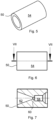
- FIGS 5 to 7 show a first embodiment of a throttle element 50, wherein Figure 5 an isometric view, Figure 6 a side view and Figure 7 a view of a cutting plane along the Figure 6 drawn line VII-VII through the throttle element 50 Figure 5 shows.
- the throttle element 50 has a tapering, in particular conical, inflow cross-section in a first channel section 62 in the flow direction, which is followed by the actual throttle area of the constriction 60.
- This throttle area can be designed as a short, cylindrical section in relation to the length of the entire throttle element 50.
- the cross-section of the channel section 64 widens further in sections in the flow direction towards the end of the throttle element 50.
- the constriction 60 is arranged between two channel areas 62, 64.
- the outer casing 54 of the throttle element 50 is cylindrical and smooth. This design is possible for a hot-insertion method for embedding the throttle element 50 in the water outlet in the event that the throttle element is at least partially enclosed in the longitudinal direction by the material of the water outlet.
- FIGs 8 to 10 show another embodiment of a throttle element 50, wherein Figure 8 an isometric view, Figure 9 a side view and Figure 10 a plan view of a cutting plane along the Figure 9 drawn line XX through the throttle element 50 Figure 8 shows.
- constriction 60 is arranged between two channel areas 62, 64.
- the outer casing 54 of the throttle element 50 is cylindrical and has axially directed grooves 56. This design is favorable for an injection molding process for embedding the throttle element 50 in the water outlet.
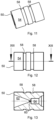
- FIGS 11 to 13 show another embodiment of a throttle element 50, wherein Figure 11 an isometric view, Figure 12 a side view and Figure 13 a plan view of a cutting plane along the Figure 12 drawn line XIII-XIII through the throttle element 50 Figure 11 shows.
- the constriction 60 is arranged between two channel areas 62, 64.
- the outer casing 54 of the throttle element 50 is cylindrical and has circumferential grooves 58. This design is favorable for an injection molding process for embedding the throttle element 50 in the water outlet.
- Figure 14 shows a simplified representation of a known fuel cell system 100 with a fuel cell unit 120 with a cathode supply air path 122 and cathode exhaust air path 124.
- Ambient air is supplied to the fuel cell unit 120 via the cathode supply air path 122, which is filtered via a cleaning stage 102 and is sucked in and compressed via a compressor of a turbocharger 110.
- the compressed air is cooled in a heat exchanger 104 and provided with a defined humidity using a humidifier 106.
- the oxygen in the air reacts with hydrogen to form water, which is discharged from the fuel cell unit 120 as an air/water mixture via the cathode exhaust air path 124.
- the cathode exhaust air in the humidifier 106 can release some of the water into the cathode supply air.
- a water separator 10 Downstream of the humidifier, a water separator 10 is connected, which can be designed in accordance with the above embodiments and in particular has a flow-guiding throttle element 50 embedded in the water outlet of the water separator 10. The separated water is discharged in a drainage path 130, while the dried cathode exhaust air is fed to the turbine of the turbocharger 110.
- the positioning of the water separator 10 upstream of the turbine of the turbocharger 110 is particularly favorable.
- the throttle element 50 can reduce the loss of cathode exhaust air, which is energetically favorable for the operation of the turbocharger 110.
- the throttle element 50 reduces the fluid flow in the drainage path 130, which would be unacceptably large without the throttle element due to the different pressure levels upstream and downstream of the turbine.
- the loads on the water separator 10 during operation are high.
- a significant pressure drop of up to several bar can occur at the water separator 10.
- the cathode exhaust air flowing through the water separator 10 can reach a speed close to the speed of sound of the fluid, in particular at least 90% of the speed of sound, or exceed the speed of sound, with temperatures of up to 100°C being possible.
- the throttle element 50 can be made of a resistant material, while a less high-quality material can be used for the water separator 10.
Landscapes
- Engineering & Computer Science (AREA)
- Chemical & Material Sciences (AREA)
- Chemical Kinetics & Catalysis (AREA)
- Sustainable Energy (AREA)
- Manufacturing & Machinery (AREA)
- Sustainable Development (AREA)
- Life Sciences & Earth Sciences (AREA)
- Electrochemistry (AREA)
- General Chemical & Material Sciences (AREA)
- Combustion & Propulsion (AREA)
- Mechanical Engineering (AREA)
- General Engineering & Computer Science (AREA)
- Fuel Cell (AREA)
Description
- Die Erfindung betrifft einen Wasserabscheider mit einem Drosselelement, eine Verwendung eines Wasserabscheiders und ein Brennstoffzellensystem mit einem Wasserabscheider.
-
EP 1167743 B1 offenbart einen Wasserabscheider, der als Drallabscheider ausgebildet ist. Der Wasserabscheider umfasst ein Innenrohr und ein Außenrohr, welche in axialer Richtung aufeinander folgend angeordnet sind, wobei das Innenrohr mit einem axialen Abschnitt in das Außenrohr hineinragt und das Außenrohr über einen Wasserauslass verfügt, der tangential in Drallrichtung angeordnet ist. -
CN 106 523 210 A ,DE 10 2015 015715 A1 ,DE 10 2019 110247 A1 undUS 2018/026281 A1 zeigen ebenfalls relevante Wasserabscheider. - Eine Aufgabe der Erfindung ist es, einen verbesserten Wasserabscheider zu schaffen. Eine weitere Aufgabe der Erfindung ist es, eine Verwendung eines Wasserabscheiders anzugeben.
- Eine weitere Aufgabe besteht in der Schaffung eines Brennstoffzellensystems mit einem derartigen Wasserabscheider.
- Die vorgenannten Aufgaben werden nach einem Aspekt der Erfindung gelöst mit einem Wasserabscheider, umfassend einen strömungsführenden Innenraum und einen Wasserauslass, der an den Innenraum angeschlossen ist, wobei der Wasserauslass ein strömungsführendes Drosselelement aufweist, das als Einlegeteil ausgebildet und formschlüssig und/oder kraftschlüssig in den Wasserauslass eingebettet ist.
- Nach einem weiteren Aspekt der Erfindung werden die Aufgaben gelöst durch eine Verwendung eines Wasserabscheiders zur Gasstrombegrenzung in einer Drainageleitung.
- Nach einem weiteren Aspekt der Erfindung werden die Aufgaben gelöst durch ein Brennstoffzellensystem mit einem Kathodenzuluftpfad und einem Kathodenabluftpfad einer Brennstoffzelleneinheit und mit wenigstens einem erfindungsgemäßen Wasserabscheider, wobei der wenigstens eine Wasserabscheider in dem Kathodenabluftpfad angeordnet und zur Luftstrombegrenzung in einem Drainagepfad des Wasserabscheiders vorgesehen ist.
- Günstige Ausgestaltungen und Vorteile der Erfindung ergeben sich aus den weiteren Ansprüchen, der Beschreibung und der Zeichnung.
- Es wird nach einem Aspekt der Erfindung ein Wasserabscheider vorgeschlagen, umfassend einen strömungsführenden Innenraum und einen Wasserauslass, der an den Innenraum angeschlossen ist, wobei der Wasserauslass ein strömungsführendes Drosselelement aufweist, das als Einlegeteil ausgebildet und formschlüssig und/oder kraftschlüssig in den Wasserauslass eingebettet ist.
- Dadurch, dass das Einlegeteil in den Wasserauslass eingebettet ist, sind keine zusätzlichen Dichtungen oder Befestigungsmittel nötig, um das Drosselelement mit dem Wasserauslass zu verbinden. Dies ist kostengünstig. Zudem wird der Zusammenbau vereinfacht. Ferner ist dies günstig für die Lebensdauer des Drosselelements.
- Vorteilhaft kann der Wasserabscheider aus Kunststoff gebildet sein. Vorzugsweise ist zumindest der Wasserauslass aus Kunststoff gebildet.
- Vorteilhaft kann der Wasserabscheider als Drallabscheider ausgebildet sein, bei dem der Wasserauslass im bestimmungsgemäßen Zustand tangential in Drallrichtung angeordnet ist.
- In einer alternativen Ausgestaltung kann der Wasserabscheider als Drallabscheider ausgebildet sein, bei dem der Wasserauslass radial nach außen und in einem Winkel zur Längsachse angeordnet ist.
- Günstigerweise weist der Innenraum des Wasserabscheiders ein Innenrohr und ein Außenrohr auf, welche in axialer Richtung aufeinanderfolgend angeordnet sind, wobei das Innenrohr am Übergang zum Außenrohr einen kleineren Durchmesser aufweist, als das Außenrohr und das Außenrohr den Wasserauslass aufweist.
- Gemäß einer günstigen Ausgestaltung des Wasserabscheiders kann das Drosselelement mittels eines Heißeinsatzverfahrens oder Spritzgussverfahrens in den Wasserauslass eingebettet sein.
- Beim Heißeinsatzverfahren, auch als Heat-Set-Insert Verfahren bekannt, wird das Einlegeteil erhitzt und in einen Hohlraum des Wasserauslasses eingepresst. Die Temperatur des Einlegeteils schmilzt lokal den Kunststoff des Wasserauslasses auf. Nach dem Erstarren ist das Einlegeteil fest, insbesondere formschlüssig, mit dem Material des Wasserauslasses verbunden.
- Beim Spritzgussverfahren oder Umspritzverfahren wird das Einlegeteil in das entsprechende Werkzeug eingelegt und mit dem Material, insbesondere Kunststoffmaterial, welches den Wasserauslass bzw. den Wasserabscheider bildet, umspritzt. Nach dem Erstarren des Kunststoffmaterials ist das Einlegeteil fest, insbesondere formschlüssig, zumindest teilweise mit dem Material des Wasserauslasses umgeben.
- Alternativ sind andere Befestigungsmethoden denkbar, mit denen das Einlegeteil in den Wasserauslass eingebettet werden kann. Beispielsweise kann das Einlegeteil mit einem Außengewinde, insbesondere einem selbstschneidenden Außengewinde, versehen sein und in den Wasserauslass eingeschraubt sein.
- Gemäß einer günstigen Ausgestaltung des Wasserabscheiders kann das Drosselelement eine Engstelle mit einem Durchmesser zwischen 1 mm und 4 mm, insbesondere zwischen 1,5 mm und 3 mm, aufweisen. Die Engstelle erlaubt den Austritt von Wasser, limitiert jedoch den Austritt des Gases, das im Wasserabscheider entwässert wird. Die Länge der Engstelle in Strömungsrichtung kann abhängig von dem beabsichtigten Einsatzgebiet und den dort herrschenden Rahmenbedingungen gewählt werden.
- Vorteilhaft weist das strömungsführende Drosselelement, ausgebildet als Einlegeteil, in einem in Strömungsrichtung ersten Abschnitt einen sich verjüngenden, insbesondere konischen, Einströmquerschnitt auf, dem sich der eigentliche Drosselbereich mit geringem Durchmesser anschließt. Der Drosselbereich kann beispielsweise als ein im Verhältnis zum gesamten Drosselelement kurzer, zylindrischer Kanalabschnitt ausgebildet sein. Stromabwärts des Drosselbereichs kann sich ein Kanalabschnitt mit sich aufweitendem Querschnitt anschließen, der die Strömung verlangsamt und die Energie des mit hoher Geschwindigkeit durch den Drosselbereich strömenden Fluids aufnimmt. Der sich aufweitende Querschnitt kann beispielsweise eine sprunghafte oder kontinuierliche Querschnittserweiterung aufweisen. Bei einem derartigen Aufbau kann stromabwärts des Drosselelements ein Werkstoff mit geringerer Widerstandskraft als das Material des Drosselelements verwendet werden. Stromab des Drosselelements kann das Fluid beispielsweise in einer Kunststoffleitung oder einem Elastomerschlauch geführt werden. In einer alternativen Ausführung weist das strömungsführende Drosselelement einen ersten zylindrischen Querschnitt auf und daran stromabwärts angrenzenden zweiten kurzen, zylindrischen Querschnitt mit einem deutlich geringeren Querschnitt als der Drosselbereich auf. Dem Drosselbereich kann sich ein dritter Kanalabschnitt mit einem größeren Querschnitt, beispielweise mit einem Querschnitt gleich oder ähnlich dem Querschnitt des ersten Kanalabschnitts anschließen.
- Gemäß einer günstigen Ausgestaltung des Wasserabscheiders kann das Drosselelement aus Metall oder Kunststoff oder Keramik gebildet sein. Die Verwendung von Metall erlaubt besonders vorteilhaft ein Drosselelement mit sehr feinen Strukturen, wie etwa sehr klein dimensionierten Engstellen, die in Kunststoff nur mit sehr hochwertigen und teuren Kunststoffmaterialien herzustellen sind.
- Gemäß einer günstigen Ausgestaltung des Wasserabscheiders kann das Drosselelement für eine Strömungsgeschwindigkeit nahe der Schallgeschwindigkeit des Fluids, insbesondere mindestens 90% der Schallgeschwindigkeit, für besondere Betriebszustände ausgebildet sein. Durch das Einbetten des Drosselelements in den Wasserauslass kann das Drosselelement auch hohen Belastungen dauerhaft standhalten.
- Gemäß einer günstigen Ausgestaltung des Wasserabscheiders kann das Drosselelement einen zylinderförmigen Außenmantel aufweisen. Diese Form ist günstig für ein Heißeinsatzverfahren, um das Drosselelement als Einlegeteil in den Wasserauslass einzubetten.
- Besonders vorteilhaft ist eine Rändelstruktur oder andere Vertiefungen an dem Außenmantel des Drosselelements, um einen Formschluss mit dem Material des Wasserauslasses zu bilden.
- Gemäß einer günstigen Ausgestaltung des Wasserabscheiders kann das Drosselelement einen zylinderförmigen Außenmantel aufweisen, der am Außenumfang ein oder mehrere umlaufende Nuten oder in axialer Richtung oder in einem Winkel zur Längsrichtung weisende Riefen oder Rändelstrukturen aufweist. Möglich sind auch gekrümmte Vertiefungen an der Mantelfläche oder einzelne Vertiefungen in Form von Bohrungen oder Eindellungen. Einzelne Formen davon oder eine Kombination der Formen ist vorteilhaft für ein Spritzgussverfahren, bei dem das Drosselelement als Einlegeteil in ein Spritzwerkzeug eingelegt wird und sich mit der strukturierten Außenfläche mit dem umgebenden Kunststoff verliersicher verkeilen kann.
- Gemäß einer günstigen Ausgestaltung des Wasserabscheiders kann der Innenraum des Wasserabscheiders zur Drallabscheidung des Wassers ausgebildet sein. Vorteilhaft kann der Wasserabscheider im Innenraum ein Außenrohr aufweisen, das einen sich erweiternden Abscheidebereich für das Wasser aufweist. Weiterhin vorteilhaft kann der Wasserabscheider im Innenraum ein Innenrohr aufweisen, das einen sich erweiternden Verzögerungsbereich aufweist. Ebenso vorteilhaft kann der Wasserauslass mit dem Innenraum über einen trichterförmigen Bereich verbunden sein.
- Nach einem weiteren Aspekt der Erfindung wird eine Verwendung eines erfindungsgemäßen Wasserabscheiders vorgeschlagen zur Gasstrombegrenzung in einer Drainageleitung, die aus einem Gasstrom extrahierte Flüssigkeit transportiert. Der Wasserabscheider umfasst einen strömungsführenden Innenraum und einen Wasserauslass, der an den Innenraum angeschlossen ist, wobei der Wasserauslass ein strömungsführendes Drosselelement aufweist, das als Einlegeteil ausgebildet und formschlüssig und/oder kraftschlüssig in den Wasserauslass eingebettet ist. Durch das Einbetten des Drosselelements in den Wasserauslass kann ein Verlust eines Anteils des Gasstroms, der mit dem abgeschiedenen Wasser aus dem Wasserauslass austritt, begrenzt werden.
- Zusätzliche Dichtungen und Verbindungsmittel können eingespart werden. Die Verbindung zwischen Drosselelement und Wasserauslass ist vorteilhaft dauerfest auch bei hohen Belastungen.
- Nach einem weiteren Aspekt der Erfindung wird ein Brennstoffzellensystem vorgeschlagen, mit einem Kathodenzuluftpfad und einem Kathodenabluftpfad einer Brennstoffzelleneinheit und mit wenigstens einem erfindungsgemäßen Wasserabscheider, wobei der wenigstens eine Wasserabscheider in dem Kathodenabluftpfad angeordnet und zur Luftstrombegrenzung in einem Drainagepfad vorgesehen ist.
- In einer weiteren vorteilhaften Ausführung der Erfindung kann der erfindungsgemäße Wasserabscheider in dem Anodenkreislauf eines Brennstoffzellensystems angeordnet sein, um Wasser abzuscheiden, beispielsweise vor dem Eintritt in die Brennstoffzelle.
- Vorteilhaft kann das Drosselelement einen Verlust der Abluft der Brennstoffzelleneinheit verringern, so dass eine von der Abluft angetriebene Turbine eines Turboladers mit hoher Effizienz betrieben werden kann.
- Durch das Einbetten des Drosselelements in den Wasserauslass kann ein Verlust eines Anteils des Gasstroms, der mit dem abgeschiedenen Wasser aus dem Wasserauslass austritt, begrenzt werden. Zusätzliche Dichtungen und Verbindungsmittel können eingespart werden. Die Verbindung zwischen Drosselelement und Wasserauslass ist vorteilhaft dauerfest auch bei hohen Belastungen.
- Weitere Vorteile ergeben sich aus der folgenden Zeichnungsbeschreibung. In den Zeichnungen sind Ausführungsbeispiele der Erfindung dargestellt. Die Zeichnungen, die Beschreibung und die Ansprüche enthalten zahlreiche Merkmale in Kombination. Der Fachmann wird die Merkmale zweckmäßigerweise auch einzeln betrachten und zu sinnvollen weiteren Kombinationen zusammenfassen. Es zeigen beispielhaft:
- Figur 1
- eine Seitenansicht eines Wasserabscheiders nach einem Ausführungsbeispiel der Erfindung mit teilweise aufgeschnittenem Wasserauslass;
- Figur 2
- eine Schnittdarstellung des Wasserabscheiders mit einem Drosselelement nach
Figur 1 ; - Figur 3
- ein vergrößertes Detail der Schnittdarstellung des Drosselelements aus Figur 2;
- Figur 4
- eine Draufsicht auf den Wasserabscheider aus
Figur 1 mit trichterförmigem Wasserauslass; - Figur 5
- eine isometrische Ansicht einer ersten Ausführung eines Drosselelements;
- Figur 6
- eine Seitenansicht des Drosselelements aus
Figur 5 ; - Figur 7
- ein Schnitt durch das Drosselelement aus
Figur 5 ; - Figur 8
- eine isometrische Ansicht einer ersten Ausführung eines Drosselelements;
- Figur 9
- eine Seitenansicht des Drosselelements aus
Figur 8 ; - Figur 10
- ein Schnitt durch das Drosselelement aus
Figur 8 ; - Figur 11
- eine isometrische Ansicht einer ersten Ausführung eines Drosselelements;
- Figur 12
- eine Seitenansicht des Drosselelements aus
Figur 11 ; - Figur 13
- ein Schnitt durch das Drosselelement aus
Figur 11 ; und - Figur 14
- eine vereinfachte Darstellung eines Brennstoffzellensystems mit Kathodenzuluftpfad und Kathodenabluftpfad.
- In den Figuren sind gleiche oder gleichartige Komponenten mit gleichen Bezugszeichen beziffert. Die Figuren zeigen lediglich Beispiele und sind nicht beschränkend zu verstehen.
- Zur Erläuterung der Erfindung zeigen
Figuren 1 bis 3 ein Ausführungsbeispiel der Erfindung.Figur 1 zeigt einen Wasserabscheider 10 in einer senkrechten Anordnung in einer Seitenansicht mit teilweise aufgeschnittenem Wasserauslass 30. Der Einlass des Fluids ist in dieser Darstellung von oben, der Wasserauslass seitlich.Figur 2 zeigt eine Schnittdarstellung des Wasserabscheiders 10 in einer waagrechten Anordnung mit einem strömungsführenden Drosselelement 50 nachFigur 1 . Der Einlass des Fluids ist in dieser Darstellung von rechts, der Wasserauslass nach unten.Figur 3 zeigt eine vergrößertes Detail der Schnittdarstellung des Drosselelements 50 ausFigur 2 . - Der Wasserabscheider 10 ist günstigerweise als Drallabscheider ausgebildet und umfasst in einem Innenraum 18 eines Gehäuses 11 ein Innenrohr 12 und ein Außenrohr 22, welche in axialer Richtung aufeinanderfolgend angeordnet sind. Das Innenrohr 12 weist am Übergang zum Außenrohr 22 einen kleineren Durchmesser auf; als das Außenrohr 22. Das Außenrohr 22 weist den zapfenförmigen Wasserauslass 30 auf, wobei am freien Ende des Wasserauslasses 30 das Drosselelement 50 angeordnet ist, das als Einlegeteil ausgebildet und formschlüssig und/oder kraftschlüssig in den Wasserauslass 30 eingebettet ist.
- Der Übergang zwischen Innenrohr 12 und Außenrohr 22 ist innerhalb eines Abscheidebereichs 24 des Wasserabscheiders 10 angeordnet, an den sich der zapfenförmige Wasserauslass 30 über einen trichterförmigen Bereich 20 anschließt. So kann abgeschiedenes Wasser gesammelt und durch die wirkende Schwerkraft zum Wasserauslass 30 gelangen.
- Dies ist in
Figur 4 im Detail dargestellt, die eine Draufsicht des Wasserabscheiders 10 ausFigur 2 mit dem trichterförmigem Bereich 20 zwischen Innenraum 18 und dem zapfenförmigen Wasserauslass 30 zeigt. Der Wasserauslass 30 erstreckt sich von der Mittellinie des Abscheiders radial nach außen. In der Einbaulage des Wasserabscheiders befindet sich der Auslass 30 am tiefsten Punkt im Umfang des Wasserabscheiders, wie beispielsweise inFig. 2 dargestellt. -
Figuren 5 bis 7 zeigen ein erstes Ausführungsbeispiel eines Drosselelements 50, wobeiFigur 5 eine isometrische Ansicht,Figur 6 eine Seitenansicht undFigur 7 eine Ansicht auf eine Schnittebene entlang der inFigur 6 eingezeichneten Linie VII-VII durch das Drosselelement 50 ausFigur 5 zeigt. - Das Drosselelement 50 weist in einem in Strömungsrichtung ersten Kanalabschnitt 62 einen sich verjüngenden, insbesondere konischen, Einströmquerschnitt auf, dem sich der eigentliche Drosselbereich der Engstelle 60 anschließt. Dieser Drosselbereich kann im Verhältnis zur Länge des gesamten Drosselelements 50 als kurzer, zylindrischer Abschnitt ausgebildet sein. Stromabwärts des Drosselbereichs mit der Engstelle 60 schließt sich ein zylindrischer Kanalabschnitt 64 mit gegenüber der Engstelle aufgeweitetem Querschnitt an. Der Querschnitt des Kanalabschnitts 64 weitet sich in Strömungsrichtung zum Ende des Drosselelements 50 in Abschnitten weiter auf.
- Im Innenbereich ist die Engstelle 60 zwischen zwei Kanalbereichen 62, 64 angeordnet. Der Außenmantel 54 des Drosselelements 50 ist zylindrisch und glatt ausgebildet. Diese Ausgestaltung ist möglich für ein Heißeinsatzverfahren zum Einbetten des Drosselelements 50 in den Wasserauslass für den Fall, dass das Drosselelement zumindest teilweise in Längsrichtung vom Material des Wasserauslasses umschlossen ist.
-
Figuren 8 bis 10 zeigen ein weiteres Ausführungsbeispiel eines Drosselelements 50, wobeiFigur 8 eine isometrische Ansicht,Figur 9 eine Seitenansicht undFigur 10 eine Draufsicht auf eine Schnittebene entlang der inFigur 9 eingezeichneten Linie X-X durch das Drosselelement 50 ausFigur 8 zeigt. - Im Innenbereich ist die Engstelle 60 zwischen zwei Kanalbereichen 62, 64 angeordnet. Der Außenmantel 54 des Drosselelements 50 ist zylindrisch ausgebildet und weist axial gerichtete Riefen 56 auf. Diese Ausgestaltung ist günstig für ein Spritzgussverfahren zum Einbetten des Drosselelements 50 in den Wasserauslass.
-
Figuren 11 bis 13 zeigen ein weiteres Ausführungsbeispiel eines Drosselelements 50, wobeiFigur 11 eine isometrische Ansicht,Figur 12 eine Seitenansicht undFigur 13 eine Draufsicht auf eine Schnittebene entlang der inFigur 12 eingezeichneten Linie XIII-XIII durch das Drosselelement 50 ausFigur 11 zeigt. - Im Innenbereich ist die Engstelle 60 zwischen zwei Kanalbereichen 62, 64 angeordnet. Der Außenmantel 54 des Drosselelements 50 ist zylindrisch ausgebildet und weist umlaufende Nuten 58 auf. Diese Ausgestaltung ist günstig für ein Spritzgussverfahren zum Einbetten des Drosselelements 50 in den Wasserauslass.
-
Figur 14 zeigt eine vereinfachte Darstellung eines an sich bekannten Brennstoffzellensystems 100 mit einer Brennstoffzelleneinheit 120 mit einem Kathodenzuluftpfad 122 und Kathodenabluftpfad 124. Über den Kathodenzuluftpfad 122 wird der Brennstoffzelleneinheit 120 Umgebungsluft zugeführt, die über eine Reinigungsstufe 102 gefiltert und über einen Kompressor eines Turboladers 110 angesaugt und verdichtet wird. Die verdichtete Luft wird in einem Wärmetauscher 104 abgekühlt und mit einem Befeuchter 106 mit definierter Feuchte versehen. - In der Brennstoffzelleneinheit 120 reagiert der Luftsauerstoff mit Wasserstoff zu Wasser, das als Luft/Wassergemisch über den Kathodenabluftpfad 124 aus der Brennstoffzelleneinheit 120 abgeführt wird. Einen Teil des Wassers kann die Kathodenabluft im Befeuchter 106 an die Kathodenzuluft abgeben. Stromab des Befeuchters ist ein Wasserabscheider 10 angeschlossen, der entsprechend den vorstehenden Ausführungsbeispielen ausgebildet sein kann und insbesondere ein in den Wasserauslass des Wasserabscheiders 10 eingebettetes strömungsführendes Drosselelement 50 aufweist. Das abgeschiedene Wasser wird in einem Drainagepfad 130 abgeführt, während die getrocknete Kathodenabluft der Turbine des Turboladers 110 zugeführt wird.
- Die Positionierung des Wasserabscheiders 10 stromauf der Turbine des Turboladers 110 ist besonders günstig. Durch das Drosselelement 50 kann der Verlust an Kathodenabluft vermindert werden, was energetisch günstig für den Betrieb des Turboladers 110 ist. Das Drosselelement 50 vermindert den Fluidstrom im Drainagepfad 130, der ohne das Drosselelement aufgrund der unterschiedlichen Druckniveaus stromauf und stromab der Turbine unzulässig groß wäre.
- Es sind im Brennstoffzellensystem 100 weitere nicht näher bezeichnete Wasserabscheider eingezeichnet. Diese können ebenfalls ein derartiges Drosselelement aufweisen, oder ohne ein solches ausgebildet sein.
- In einem derartigen System sind die Belastungen des Wasserabscheiders 10 im Betrieb hoch. Es kann ein erheblicher Druckabfall am Wasserabscheider 10 bis zu mehreren bar auftreten. Die durch den Wasserabscheider 10 strömende Kathodenabluft kann in diesem Bereich eine Geschwindigkeit nahe der Schallgeschwindigkeit des Fluids, insbesondere mindestens 90% der Schallgeschwindigkeit, erreichen oder die Schallgeschwindigkeit überschreiten, wobei Temperaturen bis 100°C möglich sind.
- Durch die Verwendung eines Wasserabscheiders 10 mit im Wasserauslass eingebettetem Drosselelement 50 kann vorteilhaft trotz derartig hohen Belastungen ein stabiler dauerhafter Betrieb erreicht werden. Das Drosselelement 50 kann aus widerstandsfähigem Material ausgebildet sein, während für den Wasserabscheider 10 weniger hochwertiges Material verwendet werden kann.
Claims (10)
- Wasserabscheider (10), umfassend einen strömungsführenden Innenraum (18) und einen Wasserauslass (30), der an den Innenraum (18) angeschlossen ist, wobei der Wasserauslass (30) ein strömungsführendes Drosselelement (50) aufweist, dadurch gekennzeichnet, dass das Drosselelement (50) als Einlegeteil ausgebildet und formschlüssig und/oder kraftschlüssig in den Wasserauslass (30) eingebettet ist.
- Wasserabscheider nach Anspruch 1, wobei das Drosselelement (50) mittels eines Heißeinsatzverfahrens oder Spritzgussverfahrens in den Wasserauslass (30) integriert ist.
- Wasserabscheider nach Anspruch 1 oder 2, wobei das Drosselelement (50) eine Engstelle (60) mit einem Durchmesser zwischen 1 mm und 4 mm, insbesondere zwischen 1,5 mm und 3 mm, aufweist.
- Wasserabscheider nach einem der vorhergehenden Ansprüche, wobei das Drosselelement (50) aus Metall oder Kunststoff oder Keramik gebildet ist.
- Wasserabscheider nach einem der vorhergehenden Ansprüche, wobei das Drosselelement (50) einen zylinderförmigen Außenmantel (54) aufweist.
- Wasserabscheider nach Anspruch 5, wobei der zylinderförmige Außenmantel (54) am Außenumfang in axialer Richtung weisende Riefen (56) oder ein oder mehrere umlaufende Nuten (58) oder eine Rändelstruktur aufweist.
- Wasserabscheider nach einem der vorhergehenden Ansprüche, wobei der Wasserauslass (30) tangential in Drallrichtung oder radial nach außen und in einem Winkel zur Längsachse des Wasserabscheiders angeordnet ist.
- Wasserabscheider nach einem der vorhergehenden Ansprüche, wobei der Wasserauslass (30) mit dem Innenraum (18) über einen trichterförmigen Bereich verbunden ist.
- Verwendung eines Wasserabscheiders (10) nach einem der vorhergehenden Ansprüche, zur Gasstrombegrenzung in einem Drainagepfad (130), die aus einem Gasstrom extrahierte Flüssigkeit transportiert.
- Brennstoffzellensystem (100) mit einem Kathodenzuluftpfad (122) und einem Kathodenabluftpfad (124) einer Brennstoffzelleneinheit (120) und mit wenigstens einem Wasserabscheider (10) nach einem der Ansprüche 1 bis 8, wobei der wenigstens eine Wasserabscheider (10) in dem Kathodenabluftpfad (124) angeordnet und zur Luftstrombegrenzung in einem Drainagepfad (130) vorgesehen ist.
Applications Claiming Priority (2)
| Application Number | Priority Date | Filing Date | Title |
|---|---|---|---|
| DE102021107639.0A DE102021107639A1 (de) | 2021-03-26 | 2021-03-26 | Wasserabscheider mit einem Drosselelement, Verwendung eines Wasserabscheiders und Brennstoffzellensystem mit einem Wasserabscheider |
| PCT/EP2022/056040 WO2022200047A1 (de) | 2021-03-26 | 2022-03-09 | Wasserabscheider mit einem drosselelement, verwendung eines wasserabscheiders und brennstoffzellensystem mit einem wasserabscheider |
Publications (2)
| Publication Number | Publication Date |
|---|---|
| EP4313365A1 EP4313365A1 (de) | 2024-02-07 |
| EP4313365B1 true EP4313365B1 (de) | 2025-01-22 |
Family
ID=80978918
Family Applications (1)
| Application Number | Title | Priority Date | Filing Date |
|---|---|---|---|
| EP22713622.3A Active EP4313365B1 (de) | 2021-03-26 | 2022-03-09 | Wasserabscheider mit einem drosselelement, verwendung eines wasserabscheiders und brennstoffzellensystem mit einem wasserabscheider |
Country Status (5)
| Country | Link |
|---|---|
| US (1) | US20230420707A1 (de) |
| EP (1) | EP4313365B1 (de) |
| CN (1) | CN117098586A (de) |
| DE (1) | DE102021107639A1 (de) |
| WO (1) | WO2022200047A1 (de) |
Families Citing this family (4)
| Publication number | Priority date | Publication date | Assignee | Title |
|---|---|---|---|---|
| DE102022131312A1 (de) * | 2022-11-28 | 2024-05-29 | Mann+Hummel Gmbh | Fluidabscheider und Brennstoffzellensystem mit einem Flüssigkeitsabscheider |
| DE102023115366A1 (de) * | 2023-06-13 | 2024-12-19 | Mann+Hummel Gmbh | Wasserabscheider zum Abscheiden von Wasser aus einer Fluidströmung |
| DE102023205881A1 (de) * | 2023-06-22 | 2024-12-24 | Mahle International Gmbh | Wasserabscheider |
| DE102023120878A1 (de) * | 2023-08-07 | 2025-02-13 | Mann+Hummel Gmbh | Abscheideelement für ein Fluid |
Family Cites Families (19)
| Publication number | Priority date | Publication date | Assignee | Title |
|---|---|---|---|---|
| US3424098A (en) * | 1967-01-12 | 1969-01-28 | Lloyd F Bender | Dump valve for fluid conveying apparatus |
| DE4334180A1 (de) | 1993-10-07 | 1995-04-13 | Bosch Gmbh Robert | Drosselvorrichtung |
| DE10029498A1 (de) | 2000-06-21 | 2002-01-03 | Mann & Hummel Filter | Ansaugsystem |
| JP2005090419A (ja) | 2003-09-19 | 2005-04-07 | Denso Corp | 内燃機関用スロットル装置 |
| JP4984543B2 (ja) * | 2005-07-21 | 2012-07-25 | 日産自動車株式会社 | 燃料電池システム |
| JP5600893B2 (ja) * | 2009-06-18 | 2014-10-08 | トヨタ自動車株式会社 | 燃料電池システム |
| DE102011114732A1 (de) * | 2011-10-01 | 2013-04-04 | Daimler Ag | Gasstrahlpumpe und Brennstoffzellensystem |
| DE102015013517A1 (de) | 2015-10-20 | 2017-04-20 | Borsig Gmbh | Wärmeübertrager |
| DE102015015715B4 (de) * | 2015-12-07 | 2022-06-09 | Mann+Hummel Gmbh | Abscheideelement und Brennstoffzellensystem |
| US20180026281A1 (en) * | 2016-07-22 | 2018-01-25 | Ford Global Technologies, Llc | Knock-out valve with an extension tube for fuel cell purging |
| DE102016115012A1 (de) | 2016-08-12 | 2018-02-15 | Audi Ag | Wasserabscheider für ein Brennstoffzellensystem, Brennstoffzellensystem und Verfahren zum Betrieb eines Brennstoffzellensystems |
| DE102016118346A1 (de) | 2016-09-28 | 2018-03-29 | Audi Ag | Kathodenversorgung für eine Brennstoffzelle |
| DE102016221566A1 (de) * | 2016-11-03 | 2018-05-03 | Bayerische Motoren Werke Aktiengesellschaft | Wasserabscheider zum Abscheiden von Wasser in einem Fahrzeug |
| CN106523210A (zh) * | 2016-12-16 | 2017-03-22 | 安徽江淮汽车集团股份有限公司 | 一种汽车空滤器进气道结构 |
| JP6905440B2 (ja) * | 2017-09-29 | 2021-07-21 | 株式会社デンソー | 液体回収装置 |
| DE102019110247A1 (de) * | 2018-04-19 | 2019-10-24 | Mann+Hummel Gmbh | Rohrabschnitt eines Ansaugrohrs für einen Luftansaugtrakt einer Brennkraftmaschine |
| DE102018131098A1 (de) | 2018-12-06 | 2020-06-10 | Schaeffler Technologies AG & Co. KG | Ventil und Vorrichtung zur Regelung von Drücken eines Strömungsmittels in einem Fahrzeuggetriebe mit einem Ventil |
| JP7283168B2 (ja) | 2019-03-27 | 2023-05-30 | 株式会社アイシン | 気液分離器 |
| JP7279601B2 (ja) * | 2019-09-26 | 2023-05-23 | 株式会社アイシン | 気液分離器 |
-
2021
- 2021-03-26 DE DE102021107639.0A patent/DE102021107639A1/de active Pending
-
2022
- 2022-03-09 WO PCT/EP2022/056040 patent/WO2022200047A1/de not_active Ceased
- 2022-03-09 CN CN202280025124.8A patent/CN117098586A/zh active Pending
- 2022-03-09 EP EP22713622.3A patent/EP4313365B1/de active Active
-
2023
- 2023-09-08 US US18/464,037 patent/US20230420707A1/en active Pending
Also Published As
| Publication number | Publication date |
|---|---|
| EP4313365A1 (de) | 2024-02-07 |
| WO2022200047A1 (de) | 2022-09-29 |
| US20230420707A1 (en) | 2023-12-28 |
| CN117098586A (zh) | 2023-11-21 |
| DE102021107639A1 (de) | 2022-09-29 |
Similar Documents
| Publication | Publication Date | Title |
|---|---|---|
| EP4313365B1 (de) | Wasserabscheider mit einem drosselelement, verwendung eines wasserabscheiders und brennstoffzellensystem mit einem wasserabscheider | |
| DE3310529C2 (de) | Vorrichtung zum Kühlen des Rotors einer Gasturbine | |
| EP2690266B1 (de) | Turbine für eine Brennkraftmaschine | |
| DE112015001237B4 (de) | Abgasturbolader | |
| DE102006007347A1 (de) | Verdichter für eine Brennkraftmaschine | |
| DE102007007090A1 (de) | Gasturbine mit Kühlluft-Übertragungssystem | |
| EP2455665A2 (de) | Gasturbinenbrennkammer mit einer Kühlluftzuführvorrichtung | |
| DE102007048666A1 (de) | Twin-scroll Abgasturbolader | |
| EP2788583B1 (de) | Turbinenleitschaufel mit einem drosselelement | |
| DE102010025611A1 (de) | Abgasstrang für ein Kraftfahrzeug | |
| DE10311205B3 (de) | Leitapparat für eine Radialturbine | |
| DE3230511A1 (de) | Verdichteranlage | |
| DE69603715T2 (de) | Venturi mischvorrichtung | |
| EP2574795B1 (de) | Abgasturbolader für eine Verbrennungskraftmaschine | |
| EP3643396B1 (de) | Kontinuierlich arbeitende und fluidatmende fluidmischeinrichtung und verfahren zum betrieb einer solchen | |
| EP1153219B1 (de) | Diffusor ohne pulsation der stoss-grenzschicht und verfahren zum unterdrücken der stoss-grenzschicht-pulsation von diffusoren | |
| WO2025157631A1 (de) | Strömungsoptimierter schnellverbinder | |
| DE102017127628A1 (de) | Turbine und Turbolader | |
| EP1687512B1 (de) | Turbolader mit einer reinigungsvorrichtung | |
| DE102008060943A1 (de) | Mehrflutiges Turbinengehäuse | |
| DE102014018035A1 (de) | Luftleitung für einen Ansaugtrakt einer Verbrennungskraftmaschine | |
| DE102022131312A1 (de) | Fluidabscheider und Brennstoffzellensystem mit einem Flüssigkeitsabscheider | |
| DE102013223438A1 (de) | Verbindung zwischen einem Gehäuseteil eines Abgasturboladers und einem weiteren abgasführenden Bauteil | |
| DE102012207735B4 (de) | Schaufelgitter einer Strömungsmaschine | |
| EP1058782B1 (de) | Ansaugvorrichtung für eine brennkraftmaschine |
Legal Events
| Date | Code | Title | Description |
|---|---|---|---|
| STAA | Information on the status of an ep patent application or granted ep patent |
Free format text: STATUS: UNKNOWN |
|
| STAA | Information on the status of an ep patent application or granted ep patent |
Free format text: STATUS: THE INTERNATIONAL PUBLICATION HAS BEEN MADE |
|
| PUAI | Public reference made under article 153(3) epc to a published international application that has entered the european phase |
Free format text: ORIGINAL CODE: 0009012 |
|
| STAA | Information on the status of an ep patent application or granted ep patent |
Free format text: STATUS: REQUEST FOR EXAMINATION WAS MADE |
|
| 17P | Request for examination filed |
Effective date: 20230814 |
|
| AK | Designated contracting states |
Kind code of ref document: A1 Designated state(s): AL AT BE BG CH CY CZ DE DK EE ES FI FR GB GR HR HU IE IS IT LI LT LU LV MC MK MT NL NO PL PT RO RS SE SI SK SM TR |
|
| DAV | Request for validation of the european patent (deleted) | ||
| DAX | Request for extension of the european patent (deleted) | ||
| GRAP | Despatch of communication of intention to grant a patent |
Free format text: ORIGINAL CODE: EPIDOSNIGR1 |
|
| STAA | Information on the status of an ep patent application or granted ep patent |
Free format text: STATUS: GRANT OF PATENT IS INTENDED |
|
| INTG | Intention to grant announced |
Effective date: 20240918 |
|
| GRAS | Grant fee paid |
Free format text: ORIGINAL CODE: EPIDOSNIGR3 |
|
| GRAA | (expected) grant |
Free format text: ORIGINAL CODE: 0009210 |
|
| STAA | Information on the status of an ep patent application or granted ep patent |
Free format text: STATUS: THE PATENT HAS BEEN GRANTED |
|
| AK | Designated contracting states |
Kind code of ref document: B1 Designated state(s): AL AT BE BG CH CY CZ DE DK EE ES FI FR GB GR HR HU IE IS IT LI LT LU LV MC MK MT NL NO PL PT RO RS SE SI SK SM TR |
|
| REG | Reference to a national code |
Ref country code: GB Ref legal event code: FG4D Free format text: NOT ENGLISH |
|
| REG | Reference to a national code |
Ref country code: CH Ref legal event code: EP |
|
| REG | Reference to a national code |
Ref country code: DE Ref legal event code: R096 Ref document number: 502022002720 Country of ref document: DE |
|
| REG | Reference to a national code |
Ref country code: IE Ref legal event code: FG4D Free format text: LANGUAGE OF EP DOCUMENT: GERMAN |
|
| P01 | Opt-out of the competence of the unified patent court (upc) registered |
Free format text: CASE NUMBER: APP_6094/2025 Effective date: 20250205 |
|
| REG | Reference to a national code |
Ref country code: NL Ref legal event code: MP Effective date: 20250122 |
|
| PG25 | Lapsed in a contracting state [announced via postgrant information from national office to epo] |
Ref country code: NL Free format text: LAPSE BECAUSE OF FAILURE TO SUBMIT A TRANSLATION OF THE DESCRIPTION OR TO PAY THE FEE WITHIN THE PRESCRIBED TIME-LIMIT Effective date: 20250122 |
|
| PG25 | Lapsed in a contracting state [announced via postgrant information from national office to epo] |
Ref country code: RS Free format text: LAPSE BECAUSE OF FAILURE TO SUBMIT A TRANSLATION OF THE DESCRIPTION OR TO PAY THE FEE WITHIN THE PRESCRIBED TIME-LIMIT Effective date: 20250422 |
|
| PG25 | Lapsed in a contracting state [announced via postgrant information from national office to epo] |
Ref country code: FI Free format text: LAPSE BECAUSE OF FAILURE TO SUBMIT A TRANSLATION OF THE DESCRIPTION OR TO PAY THE FEE WITHIN THE PRESCRIBED TIME-LIMIT Effective date: 20250122 |
|
| PG25 | Lapsed in a contracting state [announced via postgrant information from national office to epo] |
Ref country code: PL Free format text: LAPSE BECAUSE OF FAILURE TO SUBMIT A TRANSLATION OF THE DESCRIPTION OR TO PAY THE FEE WITHIN THE PRESCRIBED TIME-LIMIT Effective date: 20250122 |
|
| PG25 | Lapsed in a contracting state [announced via postgrant information from national office to epo] |
Ref country code: ES Free format text: LAPSE BECAUSE OF FAILURE TO SUBMIT A TRANSLATION OF THE DESCRIPTION OR TO PAY THE FEE WITHIN THE PRESCRIBED TIME-LIMIT Effective date: 20250122 |
|
| REG | Reference to a national code |
Ref country code: LT Ref legal event code: MG9D |
|
| PG25 | Lapsed in a contracting state [announced via postgrant information from national office to epo] |
Ref country code: IS Free format text: LAPSE BECAUSE OF FAILURE TO SUBMIT A TRANSLATION OF THE DESCRIPTION OR TO PAY THE FEE WITHIN THE PRESCRIBED TIME-LIMIT Effective date: 20250522 Ref country code: NO Free format text: LAPSE BECAUSE OF FAILURE TO SUBMIT A TRANSLATION OF THE DESCRIPTION OR TO PAY THE FEE WITHIN THE PRESCRIBED TIME-LIMIT Effective date: 20250422 |
|
| PG25 | Lapsed in a contracting state [announced via postgrant information from national office to epo] |
Ref country code: HR Free format text: LAPSE BECAUSE OF FAILURE TO SUBMIT A TRANSLATION OF THE DESCRIPTION OR TO PAY THE FEE WITHIN THE PRESCRIBED TIME-LIMIT Effective date: 20250122 |
|
| PG25 | Lapsed in a contracting state [announced via postgrant information from national office to epo] |
Ref country code: PT Free format text: LAPSE BECAUSE OF FAILURE TO SUBMIT A TRANSLATION OF THE DESCRIPTION OR TO PAY THE FEE WITHIN THE PRESCRIBED TIME-LIMIT Effective date: 20250522 Ref country code: LV Free format text: LAPSE BECAUSE OF FAILURE TO SUBMIT A TRANSLATION OF THE DESCRIPTION OR TO PAY THE FEE WITHIN THE PRESCRIBED TIME-LIMIT Effective date: 20250122 |
|
| PG25 | Lapsed in a contracting state [announced via postgrant information from national office to epo] |
Ref country code: BG Free format text: LAPSE BECAUSE OF FAILURE TO SUBMIT A TRANSLATION OF THE DESCRIPTION OR TO PAY THE FEE WITHIN THE PRESCRIBED TIME-LIMIT Effective date: 20250122 Ref country code: GR Free format text: LAPSE BECAUSE OF FAILURE TO SUBMIT A TRANSLATION OF THE DESCRIPTION OR TO PAY THE FEE WITHIN THE PRESCRIBED TIME-LIMIT Effective date: 20250423 |
|
| PG25 | Lapsed in a contracting state [announced via postgrant information from national office to epo] |
Ref country code: SE Free format text: LAPSE BECAUSE OF FAILURE TO SUBMIT A TRANSLATION OF THE DESCRIPTION OR TO PAY THE FEE WITHIN THE PRESCRIBED TIME-LIMIT Effective date: 20250122 |
|
| PG25 | Lapsed in a contracting state [announced via postgrant information from national office to epo] |
Ref country code: SM Free format text: LAPSE BECAUSE OF FAILURE TO SUBMIT A TRANSLATION OF THE DESCRIPTION OR TO PAY THE FEE WITHIN THE PRESCRIBED TIME-LIMIT Effective date: 20250122 |
|
| PG25 | Lapsed in a contracting state [announced via postgrant information from national office to epo] |
Ref country code: DK Free format text: LAPSE BECAUSE OF FAILURE TO SUBMIT A TRANSLATION OF THE DESCRIPTION OR TO PAY THE FEE WITHIN THE PRESCRIBED TIME-LIMIT Effective date: 20250122 |
|
| PG25 | Lapsed in a contracting state [announced via postgrant information from national office to epo] |
Ref country code: MC Free format text: LAPSE BECAUSE OF FAILURE TO SUBMIT A TRANSLATION OF THE DESCRIPTION OR TO PAY THE FEE WITHIN THE PRESCRIBED TIME-LIMIT Effective date: 20250122 |
|
| PG25 | Lapsed in a contracting state [announced via postgrant information from national office to epo] |
Ref country code: IT Free format text: LAPSE BECAUSE OF FAILURE TO SUBMIT A TRANSLATION OF THE DESCRIPTION OR TO PAY THE FEE WITHIN THE PRESCRIBED TIME-LIMIT Effective date: 20250122 |
|
| PG25 | Lapsed in a contracting state [announced via postgrant information from national office to epo] |
Ref country code: EE Free format text: LAPSE BECAUSE OF FAILURE TO SUBMIT A TRANSLATION OF THE DESCRIPTION OR TO PAY THE FEE WITHIN THE PRESCRIBED TIME-LIMIT Effective date: 20250122 Ref country code: CZ Free format text: LAPSE BECAUSE OF FAILURE TO SUBMIT A TRANSLATION OF THE DESCRIPTION OR TO PAY THE FEE WITHIN THE PRESCRIBED TIME-LIMIT Effective date: 20250122 |
|
| REG | Reference to a national code |
Ref country code: CH Ref legal event code: H13 Free format text: ST27 STATUS EVENT CODE: U-0-0-H10-H13 (AS PROVIDED BY THE NATIONAL OFFICE) Effective date: 20251023 Ref country code: DE Ref legal event code: R097 Ref document number: 502022002720 Country of ref document: DE |
|
| PG25 | Lapsed in a contracting state [announced via postgrant information from national office to epo] |
Ref country code: RO Free format text: LAPSE BECAUSE OF FAILURE TO SUBMIT A TRANSLATION OF THE DESCRIPTION OR TO PAY THE FEE WITHIN THE PRESCRIBED TIME-LIMIT Effective date: 20250122 |
|
| PG25 | Lapsed in a contracting state [announced via postgrant information from national office to epo] |
Ref country code: SK Free format text: LAPSE BECAUSE OF FAILURE TO SUBMIT A TRANSLATION OF THE DESCRIPTION OR TO PAY THE FEE WITHIN THE PRESCRIBED TIME-LIMIT Effective date: 20250122 |
|
| PG25 | Lapsed in a contracting state [announced via postgrant information from national office to epo] |
Ref country code: LU Free format text: LAPSE BECAUSE OF NON-PAYMENT OF DUE FEES Effective date: 20250309 |
|
| PLBE | No opposition filed within time limit |
Free format text: ORIGINAL CODE: 0009261 |
|
| STAA | Information on the status of an ep patent application or granted ep patent |
Free format text: STATUS: NO OPPOSITION FILED WITHIN TIME LIMIT |
|
| REG | Reference to a national code |
Ref country code: BE Ref legal event code: MM Effective date: 20250331 |
|
| 26N | No opposition filed |
Effective date: 20251023 |
|
| PG25 | Lapsed in a contracting state [announced via postgrant information from national office to epo] |
Ref country code: BE Free format text: LAPSE BECAUSE OF NON-PAYMENT OF DUE FEES Effective date: 20250331 |
|
| PG25 | Lapsed in a contracting state [announced via postgrant information from national office to epo] |
Ref country code: CH Free format text: LAPSE BECAUSE OF NON-PAYMENT OF DUE FEES Effective date: 20250331 |
|
| PG25 | Lapsed in a contracting state [announced via postgrant information from national office to epo] |
Ref country code: IE Free format text: LAPSE BECAUSE OF NON-PAYMENT OF DUE FEES Effective date: 20250309 |
|
| PGFP | Annual fee paid to national office [announced via postgrant information from national office to epo] |
Ref country code: GB Payment date: 20260324 Year of fee payment: 5 |
|
| PGFP | Annual fee paid to national office [announced via postgrant information from national office to epo] |
Ref country code: DE Payment date: 20260319 Year of fee payment: 5 |
|
| PGFP | Annual fee paid to national office [announced via postgrant information from national office to epo] |
Ref country code: AT Payment date: 20260301 Year of fee payment: 5 |
|
| PGFP | Annual fee paid to national office [announced via postgrant information from national office to epo] |
Ref country code: FR Payment date: 20260323 Year of fee payment: 5 |