EP4301529B1 - Entfernung von arsen, antimon und toxischen metallen aus kontaminiertem substrat - Google Patents
Entfernung von arsen, antimon und toxischen metallen aus kontaminiertem substrat Download PDFInfo
- Publication number
- EP4301529B1 EP4301529B1 EP22709748.2A EP22709748A EP4301529B1 EP 4301529 B1 EP4301529 B1 EP 4301529B1 EP 22709748 A EP22709748 A EP 22709748A EP 4301529 B1 EP4301529 B1 EP 4301529B1
- Authority
- EP
- European Patent Office
- Prior art keywords
- substrate
- washing
- chelator
- toxic
- edta
- Prior art date
- Legal status (The legal status is an assumption and is not a legal conclusion. Google has not performed a legal analysis and makes no representation as to the accuracy of the status listed.)
- Active
Links
Images



Classifications
-
- C—CHEMISTRY; METALLURGY
- C02—TREATMENT OF WATER, WASTE WATER, SEWAGE, OR SLUDGE
- C02F—TREATMENT OF WATER, WASTE WATER, SEWAGE, OR SLUDGE
- C02F9/00—Multistage treatment of water, waste water or sewage
-
- B—PERFORMING OPERATIONS; TRANSPORTING
- B09—DISPOSAL OF SOLID WASTE; RECLAMATION OF CONTAMINATED SOIL
- B09B—DISPOSAL OF SOLID WASTE NOT OTHERWISE PROVIDED FOR
- B09B3/00—Destroying solid waste or transforming solid waste into something useful or harmless
- B09B3/70—Chemical treatment, e.g. pH adjustment or oxidation
-
- B—PERFORMING OPERATIONS; TRANSPORTING
- B09—DISPOSAL OF SOLID WASTE; RECLAMATION OF CONTAMINATED SOIL
- B09C—RECLAMATION OF CONTAMINATED SOIL
- B09C1/00—Reclamation of contaminated soil
- B09C1/02—Extraction using liquids, e.g. washing, leaching, flotation
-
- B—PERFORMING OPERATIONS; TRANSPORTING
- B09—DISPOSAL OF SOLID WASTE; RECLAMATION OF CONTAMINATED SOIL
- B09C—RECLAMATION OF CONTAMINATED SOIL
- B09C1/00—Reclamation of contaminated soil
- B09C1/08—Reclamation of contaminated soil chemically
-
- G—PHYSICS
- G21—NUCLEAR PHYSICS; NUCLEAR ENGINEERING
- G21F—PROTECTION AGAINST X-RADIATION, GAMMA RADIATION, CORPUSCULAR RADIATION OR PARTICLE BOMBARDMENT; TREATING RADIOACTIVELY CONTAMINATED MATERIAL; DECONTAMINATION ARRANGEMENTS THEREFOR
- G21F9/00—Treating radioactively contaminated material; Decontamination arrangements therefor
- G21F9/04—Treating liquids
- G21F9/06—Processing
- G21F9/12—Processing by absorption; by adsorption; by ion-exchange
-
- B—PERFORMING OPERATIONS; TRANSPORTING
- B09—DISPOSAL OF SOLID WASTE; RECLAMATION OF CONTAMINATED SOIL
- B09B—DISPOSAL OF SOLID WASTE NOT OTHERWISE PROVIDED FOR
- B09B2101/00—Type of solid waste
- B09B2101/30—Incineration ashes
-
- B—PERFORMING OPERATIONS; TRANSPORTING
- B09—DISPOSAL OF SOLID WASTE; RECLAMATION OF CONTAMINATED SOIL
- B09B—DISPOSAL OF SOLID WASTE NOT OTHERWISE PROVIDED FOR
- B09B2101/00—Type of solid waste
- B09B2101/90—Soil, e.g. excavated soil from construction sites
-
- C—CHEMISTRY; METALLURGY
- C02—TREATMENT OF WATER, WASTE WATER, SEWAGE, OR SLUDGE
- C02F—TREATMENT OF WATER, WASTE WATER, SEWAGE, OR SLUDGE
- C02F1/00—Treatment of water, waste water, or sewage
- C02F1/28—Treatment of water, waste water, or sewage by sorption
- C02F1/286—Treatment of water, waste water, or sewage by sorption using natural organic sorbents or derivatives thereof
-
- C—CHEMISTRY; METALLURGY
- C02—TREATMENT OF WATER, WASTE WATER, SEWAGE, OR SLUDGE
- C02F—TREATMENT OF WATER, WASTE WATER, SEWAGE, OR SLUDGE
- C02F1/00—Treatment of water, waste water, or sewage
- C02F1/66—Treatment of water, waste water, or sewage by neutralisation; pH adjustment
-
- C—CHEMISTRY; METALLURGY
- C02—TREATMENT OF WATER, WASTE WATER, SEWAGE, OR SLUDGE
- C02F—TREATMENT OF WATER, WASTE WATER, SEWAGE, OR SLUDGE
- C02F1/00—Treatment of water, waste water, or sewage
- C02F1/68—Treatment of water, waste water, or sewage by addition of specified substances, e.g. trace elements, for ameliorating potable water
- C02F1/683—Treatment of water, waste water, or sewage by addition of specified substances, e.g. trace elements, for ameliorating potable water by addition of complex-forming compounds
-
- C—CHEMISTRY; METALLURGY
- C02—TREATMENT OF WATER, WASTE WATER, SEWAGE, OR SLUDGE
- C02F—TREATMENT OF WATER, WASTE WATER, SEWAGE, OR SLUDGE
- C02F1/00—Treatment of water, waste water, or sewage
- C02F1/70—Treatment of water, waste water, or sewage by reduction
- C02F1/705—Reduction by metals
-
- C—CHEMISTRY; METALLURGY
- C02—TREATMENT OF WATER, WASTE WATER, SEWAGE, OR SLUDGE
- C02F—TREATMENT OF WATER, WASTE WATER, SEWAGE, OR SLUDGE
- C02F11/00—Treatment of sludge; Devices therefor
- C02F11/004—Sludge detoxification
-
- C—CHEMISTRY; METALLURGY
- C02—TREATMENT OF WATER, WASTE WATER, SEWAGE, OR SLUDGE
- C02F—TREATMENT OF WATER, WASTE WATER, SEWAGE, OR SLUDGE
- C02F1/00—Treatment of water, waste water, or sewage
- C02F1/42—Treatment of water, waste water, or sewage by ion-exchange
- C02F2001/425—Treatment of water, waste water, or sewage by ion-exchange using cation exchangers
-
- C—CHEMISTRY; METALLURGY
- C02—TREATMENT OF WATER, WASTE WATER, SEWAGE, OR SLUDGE
- C02F—TREATMENT OF WATER, WASTE WATER, SEWAGE, OR SLUDGE
- C02F2101/00—Nature of the contaminant
- C02F2101/10—Inorganic compounds
- C02F2101/103—Arsenic compounds
-
- C—CHEMISTRY; METALLURGY
- C02—TREATMENT OF WATER, WASTE WATER, SEWAGE, OR SLUDGE
- C02F—TREATMENT OF WATER, WASTE WATER, SEWAGE, OR SLUDGE
- C02F2101/00—Nature of the contaminant
- C02F2101/10—Inorganic compounds
- C02F2101/20—Heavy metals or heavy metal compounds
-
- C—CHEMISTRY; METALLURGY
- C02—TREATMENT OF WATER, WASTE WATER, SEWAGE, OR SLUDGE
- C02F—TREATMENT OF WATER, WASTE WATER, SEWAGE, OR SLUDGE
- C02F2101/00—Nature of the contaminant
- C02F2101/10—Inorganic compounds
- C02F2101/20—Heavy metals or heavy metal compounds
- C02F2101/206—Manganese or manganese compounds
-
- C—CHEMISTRY; METALLURGY
- C02—TREATMENT OF WATER, WASTE WATER, SEWAGE, OR SLUDGE
- C02F—TREATMENT OF WATER, WASTE WATER, SEWAGE, OR SLUDGE
- C02F2101/00—Nature of the contaminant
- C02F2101/10—Inorganic compounds
- C02F2101/20—Heavy metals or heavy metal compounds
- C02F2101/22—Chromium or chromium compounds, e.g. chromates
-
- C—CHEMISTRY; METALLURGY
- C02—TREATMENT OF WATER, WASTE WATER, SEWAGE, OR SLUDGE
- C02F—TREATMENT OF WATER, WASTE WATER, SEWAGE, OR SLUDGE
- C02F2303/00—Specific treatment goals
- C02F2303/18—Removal of treatment agents after treatment
Definitions
- the chelators are also known to form stable, water-soluble complexes (chelates) with toxic metals which are in this way efficiently removed from substrate by washing ( US patent 9108233 B2 entitled “Washing of contaminated soils” and US patent 10124378 B2 entitled “Soil and sediment remediation” of the same applicant).
- the patent is furthermore silent on activation of chelator for more efficient removal of toxic metals and metalloids from substrate and shorter extraction time.
- the uses of polysaccharides for alkaline adsorption of toxic metals and their removal from waste washing and rinsing solutions is mandatory.
- EP 3492187 A , KR 20190033142 A and EP 3153246 A disclose the removal of toxic metalloids and toxic metals from a contaminated substrate by washing, extraction, leaching, flushing and rinsing the substrate with a solution containing polycarboxylic acids, chelators and reductants.
- the present invention aids in treatment of waste washing and rinsing solutions generated from washing the substrate contaminated with toxic metalloids, notably As and Sb, and with toxic metals, notably Pb, Zn, Cd, Cu, Ni, Hg, Mo, Mn, T1, Cr, Cs, Sr, Th and U.
- toxic metalloids notably As and Sb
- toxic metals notably Pb, Zn, Cd, Cu, Ni, Hg, Mo, Mn, T1, Cr, Cs, Sr, Th and U.
- the invention furthermore aids in reclamation of washing and rinsing solutions, reagents and other materials, and in activation of recycled chelator for more efficient removal of toxic metals from substrate.
- the present invention provides a batch process for washing of Fe containing substrate, such as soil, sediment or sludge, to remove toxic metalloids As and Sb and/or toxic metals selected from the group consisting of Pb, Zn, Cd, Cu, Ni, Hg, Mo, Mn, Tl, Cr, Cs, Sr, Th and U, in a series of batch processes, according to claim 1.
- the process according to invention is a batch process of slurrying and washing of Fe containing substrate contaminated with toxic metalloids and toxic metals with solution containing polycarboxylic acid, Na-dithionite and chelator as reagents.
- the washed substrate and waste washing solution are separated.
- the washed substrate is further rinsed with one or several rinsing solutions to remove toxic metalloids, toxic metals and reagents which remained in pore water of the washed substrate.
- the washed and rinsed substrate and the waste rinsing solutions are separated by filtration or other means known by one skilled in art.
- the concentration of Na ions in washing and rinsing solutions is prevented by Na adsorption on solid surfaces of the substrate.
- Materials with cation exchange properties may be added into the slurry to enhance Na adsorption.
- the waste washing and rinsing solutions are treated by addition of Ca-containing base (a) to precipitate polycarboxylic acid as Ca salt, (b) to co-precipitate toxic metalloids and Fe at pH > 8.0, and (c) to precipitate toxic metal hydroxides and optionally adsorb toxic metals on polysaccharide material at pH > 11.5.
- the precipitates are removed from solutions by filtration or other means known by one skilled in art.
- the chelator in waste washing solution is recycled in the form of Ca-chelate.
- the process according to invention comprise activation of chelator by Ca winning by the applied acidity.
- the recycled chelator and treated washing and rinsing solutions are reused for substrate washing and rinsing in the subsequent in said series of batch processes.
- polycarboxylic acids such are oxalic, tartaric, citric and mixture thereof which are known by one skilled in art to (a) dissolve metalloids As and Sb from amorphous Fe (oxy)hydroxides and (b) to form insoluble salts with Ca can be used.
- Oxalic acid is used preferentially: it forms highly insoluble Ca-oxalate (water solubility 0.67 mg L -1 at 20 °C) over a wide range of pH, it is widely used in industries and therefore relatively inexpensive.
- Strong chelators can be used such are nitrilotriacetate (NTA), S,S ethylenediamine-disuccinate (EDDS), diethylenetriamine-pentaacetate (DTPA), ethylenediaminete-tetraacetate (EDTA) and others which precipitate from aqueous solution at pH ⁇ 3.0 in acidic form.
- NTA nitrilotriacetate
- EDDS S,S ethylenediamine-disuccinate
- DTPA diethylenetriamine-pentaacetate
- EDTA ethylenediaminete-tetraacetate
- others which precipitate from aqueous solution at pH ⁇ 3.0 in acidic form.
- EDTA is used preferentially since it very efficiently removes toxic metals from substrate, is produced commercially for use in different industries, and is the least expensive of commercial chelators.
- EDTA transfers Fe and toxic metals from the substrate into waste washing and rinsing solutions by chelation.
- the released toxic metals are precipitated as hydroxides and optionally adsorbed on polysaccharide material and are removed from washing and rinsing solutions by filtration or by other means known to one skilled in art.
- the removed material can be used as resource of valuable metals.
- the rinsing solution is further acidified with sulphuric acid (H 2 SO 4 ) to pH ⁇ 3.0 to precipitate the chelator, such as EDTA, in acidic form and to remove the excess Ca from alkaline phase of the process as insoluble gypsum (CaSO 4 ).
- the acidic form of the chelator, such as EDTA, and treated washing and rinsing solutions are reused in the next in series of batches.
- fresh chelator such as in the form of Na-chelator-complex, such as Na-EDTA, may be added, especially during step b) so to yield a final concentration of the chelator ranging from 10 to 300 mM.
- mineral and organic acids selected from, but not limited to H 2 SO 4 , oxalic, citric, maleic and malonic are added into the washing solution containing Ca-chelator-complex, such as Ca-EDTA, or into substrate slurred with said solution.
- Ca-chelator-complex such as Ca-EDTA
- the stability of a Ca chelate, such as Ca-EDTA chelate is known to decrease with the acidity of solution ( Kim C, Lee Y, Ong S-K, 2003. Factors effecting EDTA extraction of lead from lead contaminated soils. Chemosphere 51, 845-853 ). The applied acidity wins Ca from the chelate and in this way activates EDTA.
- Sulphuric acid enhances activation of a chelator like EDTA by capturing Ca from Ca-chelator-complex to form insoluble salt, gypsum (CaSO 4 ).
- Activation of EDTA shortens the time required for effective substrate washing for several times, typically to 1 h or less.
- the oxalic acid is used preferentially for chelator activation, since it is already preferentially used for dissolution of metalloids.
- the H 2 SO 4 is used preferentially for chelator activation.
- the reductant such as Na-dithionite (Na 2 O 4 S 2 )
- Na-dithionite Na 2 O 4 S 2
- the reductant is applied into the substrate slurry in one or several additions for reductive dissolution of crystalline Fe (oxy)hydroxides and release of bound toxic metalloids into the washing solution.
- Na-dithionite is in oxidative conditions unstable molecule and during substrate washing quickly degrade, releasing Na into washing solution ( de Carvalho LM, Schwedt G, 2001. Polarographic determination of dithionite and its decomposition products: kinetic aspects, stabilizers, and analytical application. Analyt. Chim. Acta 436, 293-300 ).
- washing solution is supplement of Na-salt of chelator, such as EDTA, to compensate losses of chelator during the process.
- chelator such as EDTA
- the excess Na is adsorbed onto solid surfaces of the substrate.
- washing substrates with low cation exchange capacity may lead, after series of batches, to concentration of Na in washing and rinsing solutions and deterioration of thereof.
- the materials with cation-exchange properties may be added into the substrate slurry to increase the Na adsorption capacity of the solid phase.
- These materials are selected from zeolites such are microporous aluminosilicate minerals, other clays, biochar, compost, manure and other humic materials and other materials and mixture thereof, known to one skilled in art to efficiently exchange and adsorb cations ( Ursini O, Lilla E, Montanari R, 2006. The investigation on cationic exchange capacity of zeolites: the use as selective ion trappers in the electrokinetic soil technique. J. Hazard. Mater. 137, 1079-1088 ).
- the process of the invention does not include step (m).
- the process of the invention does not involve the use of polysaccharide materials such are natural and artificial materials containing cellulose, hemicellulose, lignocellulose such are waste paper, rice hulls, corn cobs, and sawdust.
- the batch process of the present invention is further illustrated by way of the following non-limiting exemplary embodiment(s).
- the calcareous soil contaminated with 230 mg kg -1 of As as toxic metalloid and 1500 mg kg -1 of Pb as toxic metal was slurryed in polymer-coated vessel with the washing solution (WS) recycled from previous in series of batches (step 1 in FIG. 1 ).
- the WS contained approx. 100 mM EDTA.
- the solid (air dry soil weight, w) / liquid (volume of WS, V) ratio in the slurry was 1 / 1.5.
- the oxalic acid (100 mM) and Na-dithionite (50 mM) were added into the slurry.
- the oxalic acid was use (a) to dissolve As from amorphous soil Fe (oxy)hydroxides and (b) to activate Ca-EDTA in the WS.
- the applied acidity increased the efficiency of Ca-EDTA in WS to remove Pb from soil.
- the activation of EDTA enabled shortening of the washing time to 1 h after which the sand fraction (> 2 mm) was separated from slurry by wet sieving and washed with the three rinsing solutions (RS) recycled from previous in series of batches, and with fresh water (step 2 in FIG. 1 ).
- the w (air dry soil) / V ratio was 1 / 1 for each RS.
- Fresh water was added to compensate for losses of water from the process: due to the difference in moisture between the soil entering and exiting the process, water lost with moist solid wastes, and by hydration of CaO.
- the slurry ( ⁇ 2mm) was mixed with 1% (w / w) of zero-valent Fe ( ⁇ 0.5 mm granules) as described in the US patent 10751771 B2 "Curbing toxic emissions from remediated substrate" of the same applicant.
- the slurry was transferred to a chamber filter press where the washed soil was separated from the waste washing solution (wWS).
- the washed soil in the press was rinsed with three RS and water from the sand washing step, as shown in step 4 in FIG. 1 .
- Blocks of washed and rinsed soil from the filter press were milled to obtain artificial soil aggregate grains, approx. 5 mm wide, and mixed with washed sand to constitute the final product of soil washing process (step 5 in FIG. 1 ). Washing reduced concentration of As an Pb in soil for 59 and 75%.
- step 3 in FIG. 1 reduced emissions of As from washed and rinsed soil close to limit od detection ( FIG. 3A ) and significantly reduced emissions of Pb ( FIG. 3 B) compared to soil washing process where zero-valent Fe was not applied.
- solids which are known to one skilled in art to possess anion-exchange properties for example Fe hydroxides and oxide-hydroxides, as described in US patent 10751771 B2 entitled "Curbing toxic emissions from remediated substrate" of the same applicant, and other layer-double-hydroxides i.e.
- anionic clays can be used to curb emissions (Maziarz, P., Matusik, J., Str czek, T., Kapusta, C., Woch, W.M., Tokarz, W., Radziszewska, A., Leivishim, T. 2019.
- the oxalic acid was not detected in wWS. It was spent for dissolution of As from amorphous Fe oxide-hydroxides, activation of EDTA, and reaction with Ca in calcareous soil to form insoluble Ca-oxalate which remain in washed and rinsed soil.
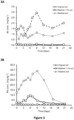
- the wWS was treated by alkalization with CaO (pH 9, 30 min, step 8 in FIG. 1 ) to co-precipitate As with Fe ( FIGS. 4A and 4B ).
- the solid material was removed from solution by filtration. After removal of As and Fe the wWS was further treated by alkalization with CaO (pH 12.5, 30 min, FIG.
- the waste first and third rinsing solutions contained less potentially valuable metalloid. They were alkalized with CaO directly to pH 12.5 (30 min) to recycle EDTA in the form of Ca-EDTA, to co-precipitate As and Fe, and to precipitate Pb as Pb hydroxide. The precipitates and excess Ca(OH) 2 were removed from solution by filtration altogether (steps 6 and 7, FIG. 1 ).
- the wRS1 was after alkaline phase acidified to pH 2 by the addition of 96% H 2 SO 4 to precipitate (120 min reaction) and recover the remaining EDTA in acidic form by filtration (step 7 in FIG. 1 ).
- the acidic form of EDTA reclaimed from wRS1 (step 7 in FIG. 1 ) and fresh Na-EDTA were applied into treated WS ( FIG. 1 ).
- Fresh Na-EDTA was added to compensate for the chelator losses in the process, mainly due to binding to the soil solid phase.
- the WS contained approx. 85 mM of Ca-EDTA, 5 mM of EDTA in acidic form and 10 mM of Na-EDTA, and was used for soil slurrying and washing in the next in series of batches.
- the Na-dithionite was oxidatively degraded during soil washing and was not detected in the wWS and wRS, except for residual Na.
- the Na arise also from addition of Na-EDTA.
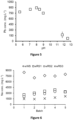
- the cation exchange capacity of the washed soil was sufficient to prevent building up of Na in WS and RS and deterioration of thereof ( FIG. 6 ).
- the solid material with cation exchange properties is added into the substrate slurry (step 3 in FIG. 1 ) to prevent Na concentration in WS and RS after series of batches.
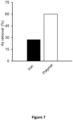
- the soil slurry was washed in polymer-coated vessel. As shown in FIG. 7 , the inert coating enables for better extraction efficiency of As, presumably by preventing the loss of oxalic acid by adsorption on bare iron surface.
- the same calcareous soil was washed with EDTA and oxalic acid (both 100 mM) using the same process conditions, but without use of Na-dithionite. Washing removed 25% of As and 55% of Pb.
- the concentration of Fe in wWS (approx. 240 mg L -1 ) was >7-times lower compared to embodiment with Na-dithionite.
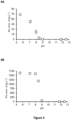
- the removal of As from wWS ( FIG. 8A ) by co-precipitation with Fe ( FIG. 8 B ) after alkalization with CaO (pH 9, 30 min) was, however, not impaired.
- the wWS was further alkalinised with CaO to pH 12.5 to recycle EDTA as Ca-EDTA, and to precipitate Pb as insoluble hydroxide.
- EDTA Ca-EDTA
- Pb insoluble hydroxide.
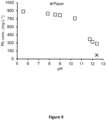
- the addition of waste paper into wWS at pH 12.5 was required to achieve effective Pb removal by alkaline adsorption on polysaccharide material ( FIG. 9 ), as it is disclosed in US patent 10124378 B2 entitled "Soil and sediment remediation" of the same applicant. This known process is imbedded into the process according to invention.
- the embodiment with Na-dithionite was approx. 2-times more effective in As removal compared to embodiment without Na-dithionite.
- the Fe concentration in the wWS was also significantly higher: 1640 mg L -1 ( FIG. 4B ) compared to 240 mg L -1 ( FIG. 8B ) in embodiment without Na-dithionite.
- Pb, on Fe hydroxide shifted the equilibrium of the Pb-EDTA substitution reaction towards the products: toxic metals, i.e. Pb, were released from EDTA complex and precipitated as insoluble hydroxides, chelator was recycled in the form of Ca-EDTA. This shift in equilibrium, induced by excess Fe, renders additional alkaline adsorption of toxic metals on polysaccharide material unnecessary.
- the waste material from the embodiment with Na-dithionite was composed of Ca(OH) 2 , the co-precipitate of As, toxic metals and Fe, and precipitate of toxic metals hydroxides. It was removed from solution by filtration and heated at 500 °C for 1h to oxidise hydroxides to nearly-water insoluble metal oxides.
- the concentration of leachable As was below the limit of quantification in untreated and heated waste material. Treatment with heating however reduced the concentration of leachable Pb in waste material from 286 mg kg -1 to 5.7 mg kg -1 . This classifies treated waste material as non-hazardous and cheaper for disposal.
- the acidic soil (pH 4.8) containing 210 mg kg -1 of As as toxic metalloid and 770 mg kg -1 of Pb as toxic metal was washed.
- the soil slurry contained 50 mM EDTA, 100 mM oxalic acid and 50 mM Na-dithionite, w / V ratio was 1 / 1.5.
- the wWS contained 70 mg L -1 of As, 515 mg L -1 of Pb, and 37 mmol kg -1 of oxalic acid.
- the limestone sand from stop butt of shooting range was washed with WS containing 100 mM EDTA, 100 mM oxalic acid and 50 mM Na-dithionite for 1 h, w /V was 1 / 1.5.
- the obtained wWS contained 27 mg L -1 of Sb as toxic metalloid, 1380 mg L -1 of Pb as toxic metal and 940 mg L -1 of Fe.
- the oxalic acid was spent in the washing process and was not detected in the wWS.
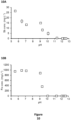
- the wWS was alkalinised by addition of CaO to pH 10 to recover Sb as co-precipitate with Fe ( FIGS. 10 A and 10 B).
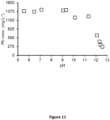
- the wWS was further alkalinised with CaO to pH 12.5 to recycle EDTA as Ca-EDTA, and to precipitate Pb as hydroxide ( FIG. 11 ).
Landscapes
- Engineering & Computer Science (AREA)
- Environmental & Geological Engineering (AREA)
- Life Sciences & Earth Sciences (AREA)
- Chemical & Material Sciences (AREA)
- Soil Sciences (AREA)
- Hydrology & Water Resources (AREA)
- Water Supply & Treatment (AREA)
- Organic Chemistry (AREA)
- Health & Medical Sciences (AREA)
- Chemical Kinetics & Catalysis (AREA)
- General Chemical & Material Sciences (AREA)
- General Health & Medical Sciences (AREA)
- Toxicology (AREA)
- Medicinal Chemistry (AREA)
- Physics & Mathematics (AREA)
- General Engineering & Computer Science (AREA)
- High Energy & Nuclear Physics (AREA)
- Processing Of Solid Wastes (AREA)
- Removal Of Specific Substances (AREA)
- Treatment Of Sludge (AREA)
- Manufacture And Refinement Of Metals (AREA)
- Inorganic Compounds Of Heavy Metals (AREA)
Claims (18)
- Chargenprozess zum Waschen von Fe-haltigem Substrat wie z. B. Erde, Sediment oder Schlamm zum Entfernen der toxischen Metalloide As und Sb und/oder von toxischen Metallen, die aus der Gruppe ausgewählt sind, die aus Pb, Zn, Cd, Cu, Ni, Hg, Mo, Mn, Tl, Cr, Cs, Sr, Th und U besteht, in einer Reihe von Chargenprozessen, wobei der Prozess umfasst:(a) Aufschlämmen eines Fe-haltigen Substrats mit einer Waschlösung, die einen Chelatbildner enthält, der in sauren wässrigen Lösungen schlecht löslich ist, wobei der Chelatbildner in Form eines Ca-Chelatbildner-Komplexes vorliegt, der in der vorherigen in der Reihe von Chargen gewonnen wurde, wobei das Fest/Flüssig-Verhältnis der Aufschlämmung in dem Bereich von 1:0,8 bis 1:30 liegt;(b) Zusetzen einer sauren Form des Chelatbildners, der in der vorherigen in der Reihe von Chargen gewonnen wurde, und optional eines Na-Chelatbildner-Komplexes, um Chelatbildnerverluste während des Prozesses in der Substrataufschlämmung in Schritt (a) unter Erhalt einer Endkonzentration des Chelatbildners im Bereich von 10 bis 300 mM zu supplementieren;(c) Zusetzen einer Säure, die in der Lage ist, ein unlösliches Ca-Salz zu bilden, zu der Substrataufschlämmung in Schritt (a) in einer Konzentration im Bereich von 10 bis 300 mM, um ggf. vorhandene toxische Metalloide aus dem Substrat zu lösen und den Chelatbildner zu aktivieren, indem Ca aus dem Ca-Chelatbildner-Komplex gewonnen wird, um toxische Metalle und Fe aus dem Substrat zu lösen;(d) Waschen der Substrataufschlämmung von Schritt (a) 15 bis 720 min lang;(e) Zusetzen eines Reduktionsmittels zu der Substrataufschlämmung in Schritt (a) oder während des Substratwaschschritts (d) in Einzel- oder Mehrfachdosen in einer Gesamtkonzentration von 5 bis 200 mM, um das Lösen von toxischen Metalloiden zu fördern;(f) optional Zusetzen eines Materials mit Kationenaustauscheigenschaften zu der Substrataufschlämmung in Schritt (d) zu 0,1 bis 20 % Gew./Gew. bezogen auf das Trockengewicht, um die Kationenaustauscheigenschaften des Substrats zu verbessern und auf diese Weise eine Konzentration von Kationen wie z. B. Na-Ionen in Wasch- und Spüllösungen zu verhindern;(g) optional Zusetzen eines Metalls, das in der Lage ist, Oxidhydroxide oder geschichtete Doppelhydroxide zu bilden, zu der Substrataufschlämmung in Schritt (d) zu 0,05 bis 5 % Gew./Gew. bezogen auf das Trockengewicht, um Emissionen von Chelatbildner, toxischen Metalloiden und toxischen Metallen aus dem gewaschenen und gespülten Substrat zu verringern, wie in Schritt (i) hergestellt;(h) Fest/Flüssig-Abscheidung der Aufschlämmung nach dem Waschschritt (d), um gewaschenes Substrat und Abfallwaschlösung zu erhalten;(i) Spülen des in Schritt (h) erhaltenen gewaschenen Substrats zumindest einmal, z. B. 1 bis 5 Male, mit einer Spüllösung und optional mit frischem Wasser, um Wasserverluste während des Prozesses zum Entfernen von Restreagenzien, toxischen Metalloiden und toxischen Metallen aus dem Substrat und der Fest/Flüssig-Abscheidung unter Erhalt einer Abfallspüllösung und eines gewaschenen und gespülten Substrats als Endprodukt zu supplementieren;(j) Alkalisieren der in Schritt (h) erhaltenen Abfallwaschlösung und zumindest einer der in Schritt (i) erhaltenen Abfallspüllösungen mit einer Ca-haltigen Base auf einen pH-Wert von 5,0 bis 8,0, um ein Ca-Salz der in Schritt (c) verwendeten Säure als Nebenprodukt auszufällen;(k) Alkalisieren von in Schritt (j) erhaltenen Abfallwasch- und Abfallspüllösungen mit einer Ca-haltigen Base auf einen pH-Wert von 8,5 bis 11,0, um Fe aus einem Fe-Chelatbildner-Komplex auszufällen und toxische Metalloide als Nebenprodukte coauszufällen;(l) Alkalisieren von in Schritt (k) erhaltenen Abfallwasch- und Abfallspüllösungen mit Ca-haltiger Base auf einen pH-Wert > 11,5, um > 80 % des Chelatbildners als Ca-Chelatbildner-Komplex zu gewinnen, um Hydroxide von toxischen Metallen und Ca(OH)2 auszufällen, die sich nach Hydrierung der Ca-haltigen Base als Nebenprodukte gebildet haben, und um eine Waschlösung, die in Schritt (a) zu verwenden ist, und eine Spüllösung, die in Schritt (i) in der nächsten in der Reihe von Chargen zu verwenden ist, zu erhalten;(m) optional Zusetzen eines Polysaccharidmaterials zu den Abfallwasch- und Abfallspüllösungen in Schritt (1), um die Entfernung von toxischen Metallen durch alkalische Adsorption auf Polysaccharidmaterial zu verbessern; und(n) Ansäuern zumindest einer von in Schritt (1) erhaltenen Spüllösungen mit H2SO4 auf einen pH-Wert von 1,5 bis 3, um die saure Form eines Chelatbildners zu erhalten, die in Schritt (b) zu verwenden ist, und um Spüllösungen zu erhalten, die in Schritt (i) in der nächsten in der Reihe von Chargen zu verwenden sind.
- Prozess nach Anspruch 1, wobei die Ca-haltige Base in Schritt (d) in die Substrataufschlämmung zugesetzt wird, um die Menge von Ca(OH)2 als Nebenprodukt zu verringern.
- Prozess nach Anspruch 1 oder 2, wobei die Abfallwasch- und Abfallspüllösungen in Schritt (j) mit einer Ca-haltigen Base auf einen pH-Wert > 11,5 alkalisiert werden, um ein Ca-Salz der in Schritt (c) verwendeten Säure, Fe und toxische Metalloide, toxische Metallhydroxide und überschüssiges Ca(OH)2 in einem einzelnen Schritt auszufällen.
- Prozess nach einem der Ansprüche 1 bis 3, wobei der Chelatbildner aus der Gruppe ausgewählt ist, die aus Aminopolycarbonsäuren, Polycarbonsäuren, Phosphonaten und synthetischen und natürlichen Polysäureverbindungen und deren Salzen besteht.
- Prozess nach einem der Ansprüche 1 bis 4, wobei der Chelatbildner aus der Gruppe ausgewählt ist, die aus Ethylendiaminettetraacetat (EDTA), Nitrilotriacetat (NTA), S,S-Ethylendiamindisuccinat (EDDS) und Diethylentriaminpentaacetat (DTPA) besteht.
- Prozess nach einem der Ansprüche 1 bis 5, wobei der Chelatbildner eine Aminopolycarbonsäure oder ein Salz davon ist.
- Prozess nach einem der Ansprüche 1 bis 5, wobei der Chelatbildner Ethylendiaminettetraacetat (EDTA) ist.
- Prozess nach einem der Ansprüche 1 bis 7, wobei die Endkonzentration des in Schritt (a) verwendeten Chelatbildners im Bereich von 10 bis 300 mM liegt; vorzugsweise 50 bis 150 mM, und stärker bevorzugt 100 mM beträgt.
- Prozess nach einem der Ansprüche 1 bis 8, wobei die Säure, die in der Lage ist, ein unlösliches Ca-Salz zu bilden, aus der Gruppe ausgewählt ist, die aus Polycarbonsäuren, H2SO4 und einem Gemisch davon besteht.
- Prozess nach einem der Ansprüche 1 bis 9, wobei die Säure, die in der Lage ist, ein unlösliches Ca-Salz zu bilden, eine Polycarbonsäure ist.
- Prozess nach einem der Ansprüche 1 bis 10, wobei die Säure, die in der Lage ist, ein unlösliches Ca-Salz zu bilden, eine Polycarbonsäure ist, die aus der Gruppe ausgewählt ist, die aus Oxalsäure, Weinsteinsäure, Zitronensäure und einem Gemisch davon besteht.
- Prozess nach einem der Ansprüche 1 bis 11, wobei die Säure, die in der Lage ist, ein unlösliches Ca-Salz zu bilden, eine Oxalsäure ist.
- Prozess nach einem der Ansprüche 1 bis 12, wobei das Reduktionsmittel aus der Gruppe ausgewählt ist, die aus Na- und Ca-Dithioniten, Na- und Ca-Dithionaten, Na- und Ca-Thiosulfaten, Lithiumaluminiumhydrid, Natriumborhydrat, Hydrazin, Diisobutylaluminiumhydrid, Oxalsäure, Ameisensäure, Ascorbinsäure, reduzierenden Zuckern, Phosphiten, Hypophosphiten und phosphoriger Säure besteht.
- Prozess nach einem der Ansprüche 1 bis 13, wobei das Reduktionsmittel ein Dithionit ist, vorzugsweise Na-Dithionit.
- Prozess nach einem der Ansprüche 1 bis 14, wobei das Material mit Kationenaustauscheigenschaften aus der Gruppe ausgewählt ist, die aus Ton, Zeolithen, unlöslichen Harzen, Biopolymeren, Huminstoffen und einem Gemisch davon besteht.
- Prozess nach einem der Ansprüche 1 bis 15, wobei das Metall, das in der Lage ist, Oxidhydroxide zu bilden, nullwertiges Fe ist, und wobei doppelschichtige Hydroxide von Hydroxiden von zweiwertigen und dreiwertigen Kationen abgeleitet sind, die aus Fe, Ca, Mg, Mn, Li und Al ausgewählt sind.
- Prozess nach einem der Ansprüche 1 bis 16, wobei die Ca-haltige Base, die in einem der Schritte (j) bis (1) verwendet wird, aus der Gruppe ausgewählt ist, die aus CaO, Ca(OH)2, CaO2 und einem Gemisch davon besteht.
- Prozess nach Anspruch 1, der umfasst:(a) Aufschlämmen eines Fe-haltigen Substrats mit einer Waschlösung, die Ca-EDTA enthält, das in der vorherigen in der Reihe von Chargen gewonnen wurde, wobei das Fest/Flüssig-Verhältnis der Aufschlämmung in dem Bereich von 1:0,8 bis 1:30 liegt;(b) Zusetzen einer sauren Form von EDTA, das in der vorherigen Chargenreihe gewonnen wurde, und optional eines Na-EDTA-Komplexes, um EDTA-Verluste während des Prozesses in der Substrataufschlämmung in Schritt (a) unter Erhalt einer Endkonzentration von EDTA im Bereich von 10 bis 300 mM zu supplementieren;(c) Zusetzen einer Säure, die in der Lage ist, ein unlösliches Ca-Salz zu bilden, die aus der Gruppe ausgewählt ist, die aus Polycarbonsäuren, H2SO4 und einem Gemisch davon besteht, zu der Substrataufschlämmung in Schritt (a) in einer Konzentration im Bereich von 10 bis 300 mM, um ggf. vorhandene toxische Metalloide aus dem Substrat zu lösen und EDTA zu aktivieren, indem Ca aus dem Ca-EDTA-Komplex gewonnen wird, um toxische Metalle und Fe aus dem Substrat zu lösen;(d) Waschen der Substrataufschlämmung von Schritt (a) 15 bis 720 min lang;(e) Zusetzen eines Reduktionsmittels, das aus der Gruppe ausgewählt ist, die aus Na- und Ca-Dithioniten, Na- und Ca-Dithionaten, Na- und Ca-Thiosulfaten, Lithiumaluminiumhydrid, Natriumborhydrat, Hydrazin, Diisobutylaluminiumhydrid, Oxalsäure, Ameisensäure, Ascorbinsäure, reduzierenden Zuckern, Phosphiten, Hypophosphiten und phosphoriger Säure besteht, zu der Substrataufschlämmung in Schritt (a) oder während des Substratwaschschritts (d) in Einzel- oder Mehrfachdosen in einer Gesamtkonzentration von 5 bis 200 mM, um ein Lösen von toxischen Metalloiden zu fördern;(f) optional Zusetzen eines Materials mit Kationenaustauscheigenschaften, das aus der Gruppe ausgewählt ist, die aus Ton, Zeolithen, unlöslichen Harzen, Biopolymeren und einem Gemisch davon besteht, zu der Substrataufschlämmung in Schritt (d) zu 0,1 bis 20 % Gew./Gew. bezogen auf das Trockengewicht, um die Kationenaustauscheigenschaften des Substrats zu verbessern und auf diese Weise eine Konzentration von Kationen wie z. B. Na-Ionen in Wasch- und Spüllösungen zu verhindern;(g) optional Zusetzen von nullwertigem Fe zu 0,05 bis 5 % Gew./Gew. bezogen auf das Trockengewicht zu der Substrataufschlämmung in Schritt (d), um Emissionen von Chelatbildner, toxischen Metalloiden und toxischen Metallen aus dem gewaschenen und gespülten Substrat zu verringern, wie in Schritt (i) hergestellt;(h) Fest/Flüssig-Abscheidung der Aufschlämmung nach dem Waschschritt (d), um gewaschenes Substrat und Abfallwaschlösung zu erhalten;(i) Spülen des in Schritt (h) erhaltenen gewaschenen Substrats zumindest einmal, z. B. 1 bis 5 Male, mit einer Spüllösung und optional mit frischem Wasser, um Wasserverluste während des Prozesses zum Entfernen von Restreagenzien, toxischen Metalloiden und toxischen Metallen aus dem Substrat und der Fest/Flüssig-Abscheidung unter Erhalt einer Abfallspüllösung und eines gewaschenen und gespülten Substrats als Endprodukt zu supplementieren;(j) Alkalisieren der in Schritt (h) erhaltenen Abfallwaschlösung und zumindest einer der in Schritt (i) erhaltenen Abfallspüllösungen mit einer Ca-haltigen Base, die aus der Gruppe ausgewählt ist, die aus CaO, Ca(OH)2, CaO2 und einem Gemisch davon besteht, auf einen pH-Wert von 5,0 bis 8,0, um ein Ca-Salz der in Schritt (c) verwendeten Säure als Nebenprodukt auszufällen;(k) Alkalisieren von in Schritt (j) erhaltenen Abfallwasch- und Abfallspüllösungen mit einer Ca-haltigen Base, die aus der Gruppe ausgewählt ist, die aus CaO, Ca(OH)2, CaO2 und einem Gemisch davon besteht, auf einen pH-Wert von 8,5 bis 11,0, um Fe aus dem Fe-EDTA-Komplex auszufüllen und toxische Metalloide als Nebenprodukte coauszufällen;(l) Alkalisieren von in Schritt (k) erhaltenen Abfallwasch- und Abfallspüllösungen mit Ca-haltiger Base, die aus der Gruppe ausgewählt ist, die aus CaO, Ca(OH)2, CaO2 und einem Gemisch davon besteht, auf einen pH-Wert > 11,5, um > 80 % EDTA als Ca-EDTA-Komplex zu gewinnen, um Hydroxide von toxischen Metallen und Ca(OH)2 auszufällen, die sich nach Hydrierung der Ca-haltigen Base als Nebenprodukte gebildet haben, und um eine Waschlösung, die in Schritt (a) zu verwenden ist, und eine Spüllösung, die in Schritt (i) in der nächsten in der Reihe von Chargen zu verwenden ist, zu erhalten;(m) optional Zusetzen eines Polysaccharidmaterials zu den Abfallwasch- und Abfallspüllösungen in Schritt (1), um die Entfernung von toxischen Metallen durch alkalische Adsorption auf Polysaccharidmaterial zu verbessern; und(n) Ansäuern zumindest einer von in Schritt (1) erhaltenen Spüllösungen mit H2SO4 auf einen pH-Wert von 1,5 bis 3, um die saure Form von EDTA zu erhalten, die in Schritt (b) zu verwenden ist, und um Spüllösungen zu erhalten, die in Schritt (i) in der nächsten in der Reihe von Chargen zu verwenden sind.
Applications Claiming Priority (2)
| Application Number | Priority Date | Filing Date | Title |
|---|---|---|---|
| LU102642 | 2021-03-05 | ||
| PCT/EP2022/055567 WO2022184903A1 (en) | 2021-03-05 | 2022-03-04 | Removal of arsenic, antimony and toxic metals from contaminated substrate |
Publications (3)
| Publication Number | Publication Date |
|---|---|
| EP4301529A1 EP4301529A1 (de) | 2024-01-10 |
| EP4301529C0 EP4301529C0 (de) | 2025-03-26 |
| EP4301529B1 true EP4301529B1 (de) | 2025-03-26 |
Family
ID=75728875
Family Applications (1)
| Application Number | Title | Priority Date | Filing Date |
|---|---|---|---|
| EP22709748.2A Active EP4301529B1 (de) | 2021-03-05 | 2022-03-04 | Entfernung von arsen, antimon und toxischen metallen aus kontaminiertem substrat |
Country Status (9)
| Country | Link |
|---|---|
| US (1) | US20240140845A1 (de) |
| EP (1) | EP4301529B1 (de) |
| KR (1) | KR20230154228A (de) |
| CN (1) | CN116917058A (de) |
| AU (1) | AU2022228695A1 (de) |
| CA (1) | CA3212288A1 (de) |
| ES (1) | ES3028370T3 (de) |
| PL (1) | PL4301529T3 (de) |
| WO (1) | WO2022184903A1 (de) |
Families Citing this family (1)
| Publication number | Priority date | Publication date | Assignee | Title |
|---|---|---|---|---|
| CN115845820B (zh) * | 2022-12-16 | 2024-07-26 | 华侨大学 | 一种铁改性羧基功能化共价有机骨架/氨基功能化生物炭复合材料及其制备方法和应用 |
Family Cites Families (4)
| Publication number | Priority date | Publication date | Assignee | Title |
|---|---|---|---|---|
| SI23762A (sl) | 2011-06-17 | 2012-12-31 | Envit D.O.O. | Ponovna uporaba edta po pranju onesnaĺ˝enih tal |
| GB2543076A (en) * | 2015-10-07 | 2017-04-12 | Envit Env Tech And Eng Ltd | Soil and sediment remediation |
| KR102027648B1 (ko) * | 2017-09-21 | 2019-11-08 | (주)티에스케이코퍼레이션 | 토양세척 폐수에 포함된 비소처리 및 옥살레이트 회수방법 |
| GB2568955A (en) * | 2017-12-04 | 2019-06-05 | Envit Environmental Tech And Engineering Ltd | Curbing toxic emissions from remediated substrate |
-
2022
- 2022-03-04 EP EP22709748.2A patent/EP4301529B1/de active Active
- 2022-03-04 WO PCT/EP2022/055567 patent/WO2022184903A1/en not_active Ceased
- 2022-03-04 ES ES22709748T patent/ES3028370T3/es active Active
- 2022-03-04 PL PL22709748.2T patent/PL4301529T3/pl unknown
- 2022-03-04 AU AU2022228695A patent/AU2022228695A1/en active Pending
- 2022-03-04 CN CN202280018763.1A patent/CN116917058A/zh active Pending
- 2022-03-04 US US18/279,690 patent/US20240140845A1/en active Pending
- 2022-03-04 CA CA3212288A patent/CA3212288A1/en active Pending
- 2022-03-04 KR KR1020237033601A patent/KR20230154228A/ko active Pending
Also Published As
| Publication number | Publication date |
|---|---|
| CN116917058A (zh) | 2023-10-20 |
| EP4301529C0 (de) | 2025-03-26 |
| KR20230154228A (ko) | 2023-11-07 |
| EP4301529A1 (de) | 2024-01-10 |
| PL4301529T3 (pl) | 2025-11-03 |
| WO2022184903A1 (en) | 2022-09-09 |
| ES3028370T3 (en) | 2025-06-19 |
| CA3212288A1 (en) | 2022-09-09 |
| US20240140845A1 (en) | 2024-05-02 |
| AU2022228695A1 (en) | 2023-09-28 |
Similar Documents
| Publication | Publication Date | Title |
|---|---|---|
| Lim et al. | Process evaluation for optimization of EDTA use and recovery for heavy metal removal from a contaminated soil | |
| EP3153246B1 (de) | Verfahren zur erdboden- und sedimentsanierung | |
| CA2871879C (en) | Washing of contaminated soils | |
| US6110379A (en) | Method for treating water containing sulfate | |
| KR101317796B1 (ko) | 수질 정화 재료, 수질 정화 방법, 인산 비료 원료 조성물 및 인산 비료 원료 조성물의 제조 방법 | |
| EP4301529B1 (de) | Entfernung von arsen, antimon und toxischen metallen aus kontaminiertem substrat | |
| KR100926736B1 (ko) | 산성광산배수를 이용한 철코팅 모래의 제조방법 및 이를이용한 중금속 함유 수 처리방법 | |
| JPH1034124A (ja) | 重金属・シアン化合物により汚染された土地の修復方法 | |
| WO1989009192A1 (en) | Hydrometallurgical effluent treatment | |
| JP3733452B2 (ja) | 廃棄物の処理方法 | |
| WO2001034524A1 (en) | Method for treating water containing sulfates | |
| JP2002126693A (ja) | 廃棄物の処理方法 | |
| RU2466105C1 (ru) | Способ обработки илового осадка | |
| HK1236466B (en) | Method for soil and sediment remediation | |
| WO2025163532A1 (en) | A process for preparing ferric chloride for a water treatment process for producing potable water | |
| HK1236466A1 (en) | Method for soil and sediment remediation | |
| JP2004121993A (ja) | 土壌の浄化方法 | |
| KR960003920B1 (ko) | 중금속 폐수의 처리방법 및 그 처리제 | |
| JP2009233545A (ja) | 吸着剤の製造方法 | |
| Stephenson et al. | Soil treatment for remediation of heavy metal contaminated soils | |
| US20060231498A1 (en) | Reactive filtration | |
| SK4912001A3 (sk) | Extrakčné činidlo a spôsob extrakcie kovov, amónin a amínov z vôd | |
| SK1342004A3 (sk) | Spôsob oddeľovania a nakoncentrovania vzájomne sa vytesňujúcich zložiek | |
| SK13182003A3 (sk) | Spôsob odstraňovania a získavania oxoaniónov prechodných prvkov z vôd |
Legal Events
| Date | Code | Title | Description |
|---|---|---|---|
| STAA | Information on the status of an ep patent application or granted ep patent |
Free format text: STATUS: UNKNOWN |
|
| STAA | Information on the status of an ep patent application or granted ep patent |
Free format text: STATUS: THE INTERNATIONAL PUBLICATION HAS BEEN MADE |
|
| PUAI | Public reference made under article 153(3) epc to a published international application that has entered the european phase |
Free format text: ORIGINAL CODE: 0009012 |
|
| STAA | Information on the status of an ep patent application or granted ep patent |
Free format text: STATUS: REQUEST FOR EXAMINATION WAS MADE |
|
| 17P | Request for examination filed |
Effective date: 20230925 |
|
| AK | Designated contracting states |
Kind code of ref document: A1 Designated state(s): AL AT BE BG CH CY CZ DE DK EE ES FI FR GB GR HR HU IE IS IT LI LT LU LV MC MK MT NL NO PL PT RO RS SE SI SK SM TR |
|
| DAV | Request for validation of the european patent (deleted) | ||
| DAX | Request for extension of the european patent (deleted) | ||
| GRAP | Despatch of communication of intention to grant a patent |
Free format text: ORIGINAL CODE: EPIDOSNIGR1 |
|
| STAA | Information on the status of an ep patent application or granted ep patent |
Free format text: STATUS: GRANT OF PATENT IS INTENDED |
|
| RIC1 | Information provided on ipc code assigned before grant |
Ipc: C02F 1/70 20230101ALI20240926BHEP Ipc: C02F 1/68 20230101ALI20240926BHEP Ipc: B09B 101/90 20220101ALI20240926BHEP Ipc: B09B 101/30 20220101ALI20240926BHEP Ipc: C02F 101/10 20060101ALI20240926BHEP Ipc: C02F 101/20 20060101ALI20240926BHEP Ipc: B09B 3/70 20220101ALI20240926BHEP Ipc: A62D 3/33 20070101ALI20240926BHEP Ipc: G21F 9/12 20060101ALI20240926BHEP Ipc: B01J 20/00 20060101ALI20240926BHEP Ipc: C02F 11/00 20060101ALI20240926BHEP Ipc: B09C 1/08 20060101ALI20240926BHEP Ipc: B09C 1/02 20060101AFI20240926BHEP |
|
| INTG | Intention to grant announced |
Effective date: 20241018 |
|
| GRAS | Grant fee paid |
Free format text: ORIGINAL CODE: EPIDOSNIGR3 |
|
| GRAA | (expected) grant |
Free format text: ORIGINAL CODE: 0009210 |
|
| STAA | Information on the status of an ep patent application or granted ep patent |
Free format text: STATUS: THE PATENT HAS BEEN GRANTED |
|
| RAP3 | Party data changed (applicant data changed or rights of an application transferred) |
Owner name: ENVIT, ENVIRONMENTAL TECHNOLOGIES ANDENGINEERING LTD. |
|
| AK | Designated contracting states |
Kind code of ref document: B1 Designated state(s): AL AT BE BG CH CY CZ DE DK EE ES FI FR GB GR HR HU IE IS IT LI LT LU LV MC MK MT NL NO PL PT RO RS SE SI SK SM TR |
|
| REG | Reference to a national code |
Ref country code: GB Ref legal event code: FG4D |
|
| REG | Reference to a national code |
Ref country code: CH Ref legal event code: EP |
|
| REG | Reference to a national code |
Ref country code: DE Ref legal event code: R096 Ref document number: 602022012270 Country of ref document: DE |
|
| REG | Reference to a national code |
Ref country code: IE Ref legal event code: FG4D |
|
| U01 | Request for unitary effect filed |
Effective date: 20250407 |
|
| U07 | Unitary effect registered |
Designated state(s): AT BE BG DE DK EE FI FR IT LT LU LV MT NL PT RO SE SI Effective date: 20250414 |
|
| REG | Reference to a national code |
Ref country code: ES Ref legal event code: FG2A Ref document number: 3028370 Country of ref document: ES Kind code of ref document: T3 Effective date: 20250619 |
|
| PG25 | Lapsed in a contracting state [announced via postgrant information from national office to epo] |
Ref country code: RS Free format text: LAPSE BECAUSE OF FAILURE TO SUBMIT A TRANSLATION OF THE DESCRIPTION OR TO PAY THE FEE WITHIN THE PRESCRIBED TIME-LIMIT Effective date: 20250626 |
|
| PG25 | Lapsed in a contracting state [announced via postgrant information from national office to epo] |
Ref country code: NO Free format text: LAPSE BECAUSE OF FAILURE TO SUBMIT A TRANSLATION OF THE DESCRIPTION OR TO PAY THE FEE WITHIN THE PRESCRIBED TIME-LIMIT Effective date: 20250626 |
|
| PG25 | Lapsed in a contracting state [announced via postgrant information from national office to epo] |
Ref country code: HR Free format text: LAPSE BECAUSE OF FAILURE TO SUBMIT A TRANSLATION OF THE DESCRIPTION OR TO PAY THE FEE WITHIN THE PRESCRIBED TIME-LIMIT Effective date: 20250326 |
|
| PG25 | Lapsed in a contracting state [announced via postgrant information from national office to epo] |
Ref country code: GR Free format text: LAPSE BECAUSE OF FAILURE TO SUBMIT A TRANSLATION OF THE DESCRIPTION OR TO PAY THE FEE WITHIN THE PRESCRIBED TIME-LIMIT Effective date: 20250627 |
|
| PG25 | Lapsed in a contracting state [announced via postgrant information from national office to epo] |
Ref country code: SM Free format text: LAPSE BECAUSE OF FAILURE TO SUBMIT A TRANSLATION OF THE DESCRIPTION OR TO PAY THE FEE WITHIN THE PRESCRIBED TIME-LIMIT Effective date: 20250326 |
|
| PG25 | Lapsed in a contracting state [announced via postgrant information from national office to epo] |
Ref country code: SK Free format text: LAPSE BECAUSE OF FAILURE TO SUBMIT A TRANSLATION OF THE DESCRIPTION OR TO PAY THE FEE WITHIN THE PRESCRIBED TIME-LIMIT Effective date: 20250326 |
|
| PG25 | Lapsed in a contracting state [announced via postgrant information from national office to epo] |
Ref country code: IS Free format text: LAPSE BECAUSE OF FAILURE TO SUBMIT A TRANSLATION OF THE DESCRIPTION OR TO PAY THE FEE WITHIN THE PRESCRIBED TIME-LIMIT Effective date: 20250726 |
|
| PG25 | Lapsed in a contracting state [announced via postgrant information from national office to epo] |
Ref country code: CZ Free format text: LAPSE BECAUSE OF FAILURE TO SUBMIT A TRANSLATION OF THE DESCRIPTION OR TO PAY THE FEE WITHIN THE PRESCRIBED TIME-LIMIT Effective date: 20250326 |
|
| PLBE | No opposition filed within time limit |
Free format text: ORIGINAL CODE: 0009261 |
|
| STAA | Information on the status of an ep patent application or granted ep patent |
Free format text: STATUS: NO OPPOSITION FILED WITHIN TIME LIMIT |
|
| REG | Reference to a national code |
Ref country code: CH Ref legal event code: L10 Free format text: ST27 STATUS EVENT CODE: U-0-0-L10-L00 (AS PROVIDED BY THE NATIONAL OFFICE) Effective date: 20260211 |
|
| U20 | Renewal fee for the european patent with unitary effect paid |
Year of fee payment: 5 Effective date: 20260129 |
|
| 26N | No opposition filed |
Effective date: 20260105 |