EP4298705B1 - Steuerungsverfahren, computerprogrammprodukt, steuerungssystem und verwendung - Google Patents
Steuerungsverfahren, computerprogrammprodukt, steuerungssystem und verwendung Download PDFInfo
- Publication number
- EP4298705B1 EP4298705B1 EP22712527.5A EP22712527A EP4298705B1 EP 4298705 B1 EP4298705 B1 EP 4298705B1 EP 22712527 A EP22712527 A EP 22712527A EP 4298705 B1 EP4298705 B1 EP 4298705B1
- Authority
- EP
- European Patent Office
- Prior art keywords
- transformer
- power
- converter
- output voltage
- grid frequency
- Prior art date
- Legal status (The legal status is an assumption and is not a legal conclusion. Google has not performed a legal analysis and makes no representation as to the accuracy of the status listed.)
- Active
Links
Images

Classifications
-
- H—ELECTRICITY
- H02—GENERATION; CONVERSION OR DISTRIBUTION OF ELECTRIC POWER
- H02J—ELECTRIC POWER NETWORKS; CIRCUIT ARRANGEMENTS OR SYSTEMS FOR SUPPLYING OR DISTRIBUTING ELECTRIC POWER; SYSTEMS FOR STORING ELECTRIC ENERGY
- H02J3/00—Circuit arrangements for AC mains or AC distribution networks
- H02J3/001—Arrangements for handling faults or abnormalities, e.g. emergencies or contingencies
-
- H—ELECTRICITY
- H02—GENERATION; CONVERSION OR DISTRIBUTION OF ELECTRIC POWER
- H02J—ELECTRIC POWER NETWORKS; CIRCUIT ARRANGEMENTS OR SYSTEMS FOR SUPPLYING OR DISTRIBUTING ELECTRIC POWER; SYSTEMS FOR STORING ELECTRIC ENERGY
- H02J3/00—Circuit arrangements for AC mains or AC distribution networks
- H02J3/001—Arrangements for handling faults or abnormalities, e.g. emergencies or contingencies
- H02J3/0014—Arrangements for handling faults or abnormalities, e.g. emergencies or contingencies for preventing or reducing power oscillations in networks
- H02J3/00142—Oscillations concerning frequency
-
- H—ELECTRICITY
- H02—GENERATION; CONVERSION OR DISTRIBUTION OF ELECTRIC POWER
- H02P—CONTROL OR REGULATION OF ELECTRIC MOTORS, ELECTRIC GENERATORS OR DYNAMO-ELECTRIC CONVERTERS; CONTROLLING TRANSFORMERS, REACTORS OR CHOKE COILS
- H02P13/00—Arrangements for controlling transformers, reactors or choke coils, for the purpose of obtaining a desired output
Definitions
- the present invention concerns a method, a computer program product, and a system for controlling an output voltage of at least one transformer in a power grid.
- the present invention also concerns the use of such a method, computer program product, or system for controlling the active power consumption within a power grid, i.e. any interconnected network for delivering electricity from at least one producer to at least one consumer, such as a transmission and distribution network.
- Power grids consist of electrical power generating stations that are often located near energy resources, electrical substations for stepping electrical voltage up for transmission, or down for distribution, high voltage transmission lines that carry electric power from distant energy sources to demand centres, and distribution lines that supply electrical power to individual customers, such as residential and commercial buildings and industrial parks.
- Centralized power stations such as coal-fired, gas- or nuclear-powered plants or hydroelectric dams, often require electrical energy to be transmitted over long distances. Electrical energy may however be generated by distributed energy resources (DER) i.e. decentralized and modular technologies, which may be located close to the load that they serve.
- DER distributed energy resources
- This type of power injection is called non-synchronous generation (NSG), whereby renewable energy sources are non-synchronously connected to the power grid, unlike traditional generation based on large synchronous generators providing the system inertia.
- NSG non-synchronous generation
- the penetration of NSG can be very high during certain parts of the year.
- high levels of NSG in a power grid bring challenges when it comes to frequency stability, voltage stability, short-circuit power levels and harmonic stability.
- a synchronous power grid may, through a crude approximation, be seen as a single synchronous machine with a turbine, where mechanical power is being generated, and which is connected to an electrical load.
- J is the moment of inertia [kg*m 2 ]
- ⁇ m is the rotational speed of the machine [rad/s]
- P m is the mechanical power supplied from the turbine [W]
- P e is the output electrical power [W].
- the grid frequency In an electrical power grid, the grid frequency needs to be constantly controlled by adjusting the generation ( P m ) with respect to the instantaneous load ( P e ) in the grid. If the mechanical power supplied from the turbine is greater than the output electrical power ( P m > P e ), the grid frequency will increase. If the mechanical power supplied from the turbine is less than the output electrical power ( P m ⁇ P e ), the grid frequency will decrease.
- the grid frequency is usually maintained within a narrow frequency band around the nominal grid frequency (which is 50 Hz in European power grids, and 60 Hz in the US) by automatically controlling power generation.
- Transmission System Operators are using several mitigation methods.
- One such mitigation method utilizes fast frequency control units, which are capable of responding very quickly when the grid frequency deviates outside a dead-band, i.e. a band of input values in a control system where the output is zero (the output is 'dead' - no action occurs).
- Examples of units which may provide fast frequency response (FFR) are Battery Energy Storage Units (BESS) and HVDC links.
- DRC Federal Energy Regulatory Commission
- Rapid control of the load in a power grid i.e. Fast Demand Response
- Fast Frequency Response is an alternative to providing Fast Frequency Response to improve the frequency containment in grids with increasing levels of NSG and reduced levels of rotating inertia.
- the PhD thesis by Yue Guo entitled “Capability Assessment of VAr Support and Demand Response to Transmission Network using Flexible Tap Changing Techniques in Distribution Networks”, which was published in 2017 and which is available from the University of Manchester Library discusses the flexible tap changing techniques that utilise parallel transformers in distribution networks to provide reactive power absorption and demand response services for transmission systems.
- the article entitled " Hybrid Transformers with Virtual Inertia for Future Distribution Networks" by Carlos R. Baier et al. discloses a fractionally rated AC/DC - DC/AC converter arrangement connected in a parallel-like manner across a main transformer. Additional DC-side energy storage is used in the converter (an oversized DC capacitor) to provide active power/frequency support.
- the hybrid transformer described in this article is a combination of a dc link (ac-dc-ac) connected in parallel with a transformer. The converter has connections to both sides of the transformer.
- VFC voltage-based frequency control
- SVCs Static Var Compensators
- An object of the invention is to provide an improved method for controlling an output voltage of at least one transformer in a power grid.
- the method comprises the steps of providing the at least one transformer with a power electronics converter and an output voltage controller, determining (i.e. measuring, estimating, calculating or receiving) a grid frequency of the power grid, comparing the determined grid frequency with a reference value, producing an error signal corresponding to the difference between the determined grid frequency and the reference value, applying the error signal as feedback to the output voltage controller, and generating a control action to cause the output voltage controller to change the output voltage of the at least one transformer comprising a power electronics converter to limit the difference between the grid frequency and the reference value, i.e.
- the power electronics converter is an AC-AC converter and the method comprises the steps of connecting the AC-AC converter to either a primary side or a secondary side of the transformer, whereby the AC-AC converter has a first AC side and a second AC side and the method comprises the step of connecting two terminals on the first AC side in parallel to a winding or a part of a winding of the transformer, and connecting the second AC side directly to, or in series with an external circuit line.
- topologies make it possible to use a power electronics converter with a smaller (fractional) rating than the total throughput power of the at least one transformer. This is in contrast to the topologies disclosed in the prior art which comprise either a fully rated converter (i.e. a converter with a rating which equals the throughput power of the transformer), or which disclose a converter with a fractional rating, but which has connections to both sides of the transformer.
- a fully rated converter i.e. a converter with a rating which equals the throughput power of the transformer
- the topologies described above will consequently result in improvements in implementation, control and costs compared to known topologies.
- This method controls the output voltage of a power electronics enhanced transformer (PEET) using a measurement of the grid frequency such that the output voltage of the PEET is a function of the grid frequency.
- the output voltage of the at least one transformer may be lowered, and when the grid frequency rises above a predetermined reference value or a predetermined range of grid frequency values, the output voltage of the at least one transformer may be increased.
- the objective of the control method according to the present invention is namely to develop a model or algorithm governing the application of power grid system-inputs to drive the system to a desired state, while minimizing any delay, overshoot, or steady state error and ensuring a level of control stability, with the aim of achieving a degree of optimality.
- a control method or control system with the requisite corrective behaviour is required.
- the control method and control system according to the present invention use feedback control to monitor a process variable, i.e. the grid frequency, by taking measurements of the grid frequency using a sensor or by receiving a grid frequency estimate from a remote location for example.
- a local controller may be used to estimate the relationship between the output voltage of a transformer in the power grid and the active power drawn by a load downstream of the transformer in order to know the demand response active power variation that can be achieved by a voltage change in advance.
- the power electronics converter has a rating (fractional rating) that is smaller than the total throughput power of a transformer of the at least one transformer, such as a main transformer of the at least one transformer.
- the AC-AC converter comprises a DC bus.
- the transformer comprises a plurality of windings, such as two, three, four or more windings, which are isolated from each other.
- the method thereby comprises the step of connecting two terminals on the first AC side of the AC-AC converter in parallel to a winding or a part of one of the windings of the transformer,
- the step of determining the grid frequency of the power grid comprises the step of estimating a local power grid frequency using a phase-locked loop (PLL) of the power electronics converter.
- PLL phase-locked loop
- the step of determining the power grid frequency of the power grid comprises the step of the output voltage controller receiving a power grid frequency estimation from a remote location, such as from a control centre of a Transmission Service Operator, via a communication channel.
- the power grid frequency estimation is namely received from a remote location rather than being measured locally.
- At least one method step or the entire method may be carried out at a remote location whereby the control action is sent to the output voltage controller via a communication channel.
- a single control system may namely be used to control the output voltage of a plurality of transformers located in different places in a power grid.
- the method comprises the step of continuously determining an active throughput power and the output voltage of the at least one transformer so as to estimate a voltage dependence of a downstream load in the power grid.
- the method comprises the step of controlling a plurality of transformers connected in parallel, whereby the control action to change the output voltage of the plurality of transformers is sent to the plurality of transformers at the same time.
- the method may comprise the step of sending a synchronization signal to synchronize the clocks of the local output voltage controllers of the power electronics converters of the plurality of transformers.
- the step of determining the grid frequency comprises the step of determining a grid frequency at a plurality of different places in the power grid in order to increase the accuracy of the grid frequency determination.
- the present invention also concerns a computer program product that comprises a computer program containing computer program code means arranged to cause a computer or a processor to execute all of the steps of a method according to any of the embodiments of the invention, stored on a computer-readable medium or a carrier wave.
- the present invention further concerns a control system for controlling an output voltage of at least one transformer in a power grid.
- the at least one transformer comprises a power electronics converter and the control system comprises an output voltage controller and a sensor configured to determine a grid frequency of the power grid, i.e. the sensor is configured to measure, estimate, or receive the grid frequency of the power grid.
- the control system is configured to compare the determined grid frequency with a reference value, produce an error signal corresponding to the difference between the determined grid frequency and the reference value and apply the error signal as feedback to the output voltage controller, and cause the output voltage controller to generate a control action to change the output voltage of the at least one transformer comprising a power electronics converter to limit the difference between the grid frequency and the reference value, whereby the power electronics converter is an AC-AC converter that is connected to either a primary side or a secondary side of the transformer , whereby the AC-AC converter has a first AC side and a second AC side and two terminals on the first AC side are connected in parallel to a winding or a part of a winding of the transformer, and the second AC side is connected directly to, or in series with an external circuit line.
- the power electronics converter is an AC-AC converter that is connected to either a primary side or a secondary side of the transformer , whereby the AC-AC converter has a first AC side and a second AC side and two terminals on the first AC side are connected in parallel
- the reference value may be a nominal grid frequency or a value indicating a maximum or minimum allowed grid frequency, such as an upper or lower limit of a dead-band frequency range.
- the power electronics converter has a rating that is smaller than the total throughput power of a main transformer of the at least one transformer, such as a main transformer of the at least one transformer
- the AC-AC converter comprises a DC bus.
- the transformer comprises a plurality of windings, such as two, three, four or more windings, which are isolated from each other.
- the two terminals on the first AC side of the AC-AC converter of the control system are thereby connected in parallel to a winding or a part of one of the windings of the transformer,
- the power electronics converter comprises a phase-locked loop (PLL) configured to determine the grid frequency of the power grid by estimating a local power grid frequency
- PLL phase-locked loop
- control system comprises a communication channel configured to receive a power grid frequency estimation from a remote location, such as from a control centre of a Transmission Service Operator, and the control system is configured to determine the power grid frequency of the power grid using the power grid frequency estimation.
- control system comprises a communication channel that is configured to receive the generated control action from a remote location, such as from a control centre of a Transmission Service Operator.
- control system comprises an instrument that is configured to continuously measure an active throughput power and the output voltage of the at least one transformer, and the control system is configured to estimate a voltage dependence of a downstream load in the power grid using the measurements.
- control system is configured to control the output voltage of a plurality of transformers that are connected in parallel and that comprise a power electronics converter, and the output voltage controller is configured to send the control action to change the output voltage of the plurality of transformers to the plurality of transformers at the same time.
- the control system may be configured to send a synchronization signal to synchronize the clocks of the local output voltage controllers of the power electronics converters of the plurality of transformers.
- the present invention also concerns the use of a method, or a computer program product or a control system according to any of the embodiments described herein for controlling the active power consumption within a power grid.
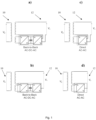
- FIG 1 shows the four topologies of transformers 10 with a power electronics converter 12, namely four power electronics enhanced transformers (PEET), whereby the power electronics converter 12 is an AC-AC converter, optionally comprising a DC bus.
- the AC-AC converter is connected to either a primary side or a secondary side of the transformer 10.
- the AC-AC converter has a first AC side and a second AC side and two terminals on the first AC side are connected in parallel to a part of a winding of the transformer 10, and the second AC side is connected directly to, or in series with an external circuit line.
- Figure 1a shows an AC-AC converter topology which comprises a DC bus.
- the voltage terminals on the first AC side are connected in parallel to one of the windings of the transformer 10, whereby the transformer 10 has two windings on the PEET side of the transformer 10 which are isolated from each other.
- the voltage terminals on the second AC side of the AC-AC converter are connected in series with the external circuit line.
- Figure 1b shows an AC-AC converter topology which comprises a DC bus.
- the voltage terminals on the first AC side are connected in parallel to a part of the winding of the transformer 10.
- the voltage terminal on the second AC side of the AC-AC converter is connected directly to the external circuit line.
- topologies shown in Figures 1a-1d preferably comprise fractionally rated converter arrangements connected across a transformer 10.
- Figure 1c shows an AC-AC converter topology in which the voltage terminals on the first AC side are connected in parallel to one of the windings of the transformer 10, whereby the transformer 10 has two windings on the PEET side of the transformer 10 which are isolated from each other, and the voltage terminals on the second AC side of the AC-AC converter are connected in series with the external circuit line.
- Figure 1d shows an AC-AC converter topology in which the voltage terminals on the first AC side are connected in parallel to a part of the winding of the transformer 10 and the voltage terminal on the second AC side of the AC-AC converter is connected directly to the external circuit line.
- One or more filters may be included or omitted depending on application requirements.
- the present invention uses a combination of series active/reactive compensation and shunt reactive compensation in the topologies shown in Figures 1a) and 1b ). This means that two types of compensation are simultaneously combined in a single device.
- a power electronics converter 12 as described herein may comprise any suitable power electronic components such as SCRs, TRIACs, IGBTs, to control and convert electric power.
- Silicon-based semiconductor devices and/or wide-band gap semiconductor devices e.g., silicon carbide
- An advantage of the latter type of semiconductor device is that it can be switched faster, which benefits the response time of the power electronics converter 12 and the size of the filters which may be used. Faster switching can namely lead to a lower response time and thus a faster regulation of frequency, as well as more compact filters.
- the power electronics converter 12 is an AC to AC converter that connects an alternating current source to an alternating current load by controlling amount of power supplied to the load.
- the power electronics converter 12 converts the AC voltage at one level to the other by varying its magnitude as well as frequency of the supply voltage. For AC voltages of the same frequency, the power electronics converter 12 can vary also the phase of the AC voltage.
- Such a power electronics converter 12 may be used in uninterrupted power supplies, high power AC to AC transmission, or renewable energy conversion systems.
- the power electronics enhanced transformer (PEET) used in the method according to the present invention has a much faster response time when it comes to regulating the voltage on the low voltage (LV) side of the transformer 10. This enables the PEET to provide a very rapid demand response when required.
- the output voltage on the LV side of the PEET may be very quickly regulated to achieve a demand response in an active power load.
- a voltage reduction which leads to a load reduction could for example be rapidly applied when the grid frequency in a power grid is reduced below a predetermined reference value, such as a threshold value according to the requirements of a Transmission System Operator for an FFR service.
- the power electronics enhanced transformer (PEET) used in the method according to the present invention will also have a much faster response time when it comes to regulating the voltage on the high voltage (HV) side of a transformer 10 if the power electronics converter 12 is connected to the high voltage (HV) side of the transformer 10.
- the power electronics converters 12 can therefore either be connected to the LV side or the HV side of the transformer 10. From a compactness perspective, it is preferable to connect the power electronics converters 12 to the LV side of the transformer 10.
- control system according to the present invention may be cheaper to implement than a conventional Battery Energy Storage Unit (BESS) since there is no need for energy storage.
- BESS Battery Energy Storage Unit
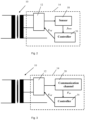
- FIG. 2 schematically shows a control system 14 for controlling the output voltage of a PEET utilizing local grid frequency determination according to an embodiment of the invention.
- the system 14 comprises an output voltage controller 16, which may be considered to be an FFR controller, and a sensor 18 for measuring a local grid frequency, f meas .
- the local grid frequency, f meas may for example be estimated by a phase-locked loop (PLL) of the power electronics converter 12 of the PEET 10.
- PLL phase-locked loop
- the grid frequency f meas may also be determined a plurality of different places in the power grid and an average value may be determined in order to improve the accuracy of the grid frequency determination.
- the transformer 10 with a power electronics converter 12 as described herein may be part of a power grid that comprises distributed energy resources (DER), such as distributed renewable energy resources.
- the power grid may supply the demand of a one or more customers and may comprise at least one controllable load.
- the control system 14 is configured to compare the measured grid frequency, f meas , with a reference value for the grid frequency.
- the reference value may for example be the nominal frequency of the power grid, such as 50 Hz.
- the system 14 is configured to produce an error signal corresponding to the difference between the determined grid frequency, f meas , and the reference value, 50 Hz, and apply the error signal as feedback to the output voltage controller 14.
- the control system 14 is configured to generate a control action to cause the output voltage controller 14 to change the output voltage of the PEET 10 to limit the difference between the grid frequency, f meas , and the reference value.
- Primary control may be used to stabilize the grid frequency, f meas
- secondary control may be used to bring the grid frequency f meas , back to the nominal value and restore the power reserve of the generators used for the primary frequency control
- tertiary control may be used to restore the power reserve of the generators used for the secondary frequency control.
- control action as used in this document may therefore be "no action", i.e. the absence of any action to change the output voltage of the transformer 10.
- the output voltage (with the reference value U ref ) on the low voltage side of the PEET 10 may then be very quickly regulated to achieve a demand response in the active power load.
- Control actions from other controllers may be used bring the grid frequency to the same value as the reference value, or to within a predetermined deviation from the reference value.
- FIG. 3 schematically shows a system 14 for controlling the output voltage of a PEET utilizing a remotely determined grid frequency, f sys , according to another embodiment of the invention.
- the control system 14 comprises a communication channel 20 that is configured to receive a power grid frequency estimation, f sys , from a remote location, such as from a control centre of a Transmission Service Operator, and said control system 14 is configured to determine the power grid frequency of the power grid using that power grid frequency estimation.
- the grid frequency is namely the same throughout the power grid, with the exception of local short-term swings. At every moment the amount of electricity that is generated by the electrical power generating stations of the power grid must be equal to the amount of energy that is taken from the grid by the consumers.
- a control system 14 may comprise both a sensor 18 for utilizing local grid frequency, f meas , and a communication channel 20 for utilizing remote grid frequency, f sys .
- a communication channel 20 may also be used to receive a control action from a remote location, whereby the steps of a control method according to the present invention are carried out at a remote location.
- control system 14 may comprise a single unit, or a plurality of units for carrying out the steps of the method according to the present invention located in one or more locations.
- control system 14 comprise an instrument for continuously determining an active throughput power and the output voltage of the at least one transformer 10 so as to estimate a voltage dependence of a downstream load in the power grid.
- P 0 will continuously change in the power grid since loads are constantly switched on and off. It is therefore most reliable to use the step responses in the active power obtained when the transformer 10 is controlled to change the output voltage as the main input to the estimation of the load voltage dependence. In many cases, P 0 may be regarded as a constant during a short time before and after the transformer output voltage is changed. The response recorded in voltage and power during this time may then be used to estimate the load characteristics.
- the amount of active power response (e.g. load reduction) will be dependent on the loading of a transformer at the point in time of the FFR activation and the voltage dependence of the downstream load.
- the load patterns in a power grid are normally continuously monitored and forecasted. This information may be used together with previous knowledge of the range of the load voltage dependence characteristics and potentially also on-line estimation data of the same, in order to get a good estimate of the available demand response capability unlocked by the transformer 10.
- a control system 14 may be used to control a plurality of transformers 10 connected in parallel, whereby the control action to change the output voltage of the plurality of transformers 10 is sent to the plurality of transformers at the same time.
- Limitations of a method according to the present invention may exist in cases where a PEET is connected in parallel to one or more regular transformers equipped with OLTCs. In such a case, it may not be suitable to change the output voltage of the PEET quickly as this will result in a difference in the secondary side voltage of the PEET compared with the regular transformers connected in parallel (since OLTCs cannot be controlled as quickly as the PEET). This may cause circulating currents between the transformers which may be unacceptable in some cases. However, in the case where a plurality of PEETs are connected in parallel there should be no such issue since the secondary side voltage of all of the PEETs can be changed at the same time.
- Figure 4 shows the steps of a method for controlling an output voltage of at least one transformer 10 in a power grid.
- a computer program product may be used to cause a computer or a processor to execute all of the steps of the method.
- the method provides a decentralized control strategy for power grid components, which utilizes the change in local or remote grid frequency to control the active power consumption within the power grid.
- a transformer 10 with a power electronics converter 12 that is controlled using a method according to the present invention allows restricted active power flow to a power grid at a desired value.
Landscapes
- Engineering & Computer Science (AREA)
- Power Engineering (AREA)
- Supply And Distribution Of Alternating Current (AREA)
Claims (21)
- Verfahren zum Steuern einer Ausgangsspannung mindestens eines Transformators (10) in einem Stromnetz, wobei das Verfahren die folgenden Schritte umfasst: Versehen des mindestens einen Transformators (10) mit einem Leistungselektronikumrichter (12), um dadurch mindestens einen leistungselektronisch erweiterten Transformator (PEET) bereitzustellen, und einer Ausgangsspannungssteuerung (16), Bestimmen einer Netzfrequenz des Stromnetzes, Vergleichen der bestimmten Netzfrequenz mit einem Referenzwert, Erzeugen eines Fehlersignals, das der Differenz zwischen der bestimmten Netzfrequenz und dem Referenzwert entspricht, Anwenden des Fehlersignals als Rückkopplung an die Ausgangsspannungssteuerung (16) und Generieren einer Steueraktion, um zu bewirken, dass die Ausgangsspannungssteuerung (16) die Ausgangsspannung des mindestens einen Transformators (10), der einen Leistungselektronikumrichter (12) umfasst, ändert, um die Differenz zwischen der Netzfrequenz und dem Referenzwert zu begrenzen, wobei der Leistungselektronikumrichter (12) ein AC-AC-Umrichter ist und das Verfahren die folgenden Schritte umfasst: Verbinden des AC-AC-Umrichters entweder mit einer Primärseite oder einer Sekundärseite des Transformators (10), wobei der AC-AC-Umrichter eine erste AC-Seite und eine zweite AC-Seite aufweist und das Verfahren den Schritt des Parallelschaltens von zwei Anschlüssen auf der ersten AC-Seite mit einer Wicklung oder einem Teil einer Wicklung des Transformators (10) und direkten Verbindens oder In-Reihe-Schalten der zweiten AC-Seite mit einer externen Schaltungsleitung umfasst,
dadurch gekennzeichnet, dass mindestens ein PEET-Transformator eine der folgenden Topologien aufweist:a) Spannungsanschlüsse auf der ersten AC-Seite sind parallel mit einer der Wicklungen des Transformators (10) verbunden, wobei der Transformator (10) zwei Wicklungen auf einer PEET-Seite des Transformators (10) aufweist, die voneinander isoliert sind, und Spannungsanschlüsse auf der zweiten AC-Seite des AC-AC-Umrichters sind mit der externen Schaltungsleitung in Reihe geschaltet,b) Spannungsanschlüsse auf der ersten AC-Seite sind mit einem Teil der Wicklung des Transformators (10) parallel geschaltet und der Spannungsanschluss auf der zweiten AC-Seite des AC-AC-Umrichters ist direkt mit der externen Schaltungsleitung verbunden. - Verfahren nach Anspruch 1, dadurch gekennzeichnet, dass der Leistungselektronikumrichter (12) eine Nennleistung aufweist, die kleiner als die Gesamtdurchsatzleistung eines Haupttransformators des mindestens einen Transformators (10) ist.
- Verfahren nach Anspruch 1 oder 2, dadurch gekennzeichnet, dass der AC-AC-Umrichter einen DC-Bus umfasst.
- Verfahren nach einem der Ansprüche 1-3, dadurch gekennzeichnet, dass der Transformator (10) mehrere Wicklungen umfasst, die voneinander isoliert sind.
- Verfahren nach einem der Ansprüche 1-4, dadurch gekennzeichnet, dass der Schritt des Bestimmens der Netzfrequenz des Stromnetzes den Schritt des Schätzens einer lokalen Stromnetzfrequenz (fmeas) unter Verwendung einer Phasenregelschleife (PLL) des Leistungselektronikumrichters (12) umfasst.
- Verfahren nach einem der Ansprüche 1-4, dadurch gekennzeichnet, dass der Schritt des Bestimmens der Stromnetzfrequenz des Stromnetzes den Schritt des Empfangens, durch die Ausgangsspannungssteuerung (16), einer Stromnetzfrequenzschätzung (fsys ) von einem entfernten Standort, wie etwa von einer Steuerzentrale eines Übertragungsnetzbetreibers, über einen Kommunikationskanal (20) umfasst.
- Verfahren nach einem der Ansprüche 1-4, dadurch gekennzeichnet, dass es an einem entfernten Standort durchgeführt wird und die Steueraktion über einen Kommunikationskanal (20) an die Ausgangsspannungssteuerung (16) gesendet wird.
- Verfahren nach einem der vorhergehenden Ansprüche, dadurch gekennzeichnet, dass es den Schritt des kontinuierlichen Bestimmens einer Durchsatzwirkleistung und der Ausgangsspannung des mindestens einen Transformators (10) umfasst, um eine Spannungsabhängigkeit einer nachgeschalteten Last im Stromnetz zu schätzen.
- Verfahren nach einem der vorhergehenden Ansprüche, dadurch gekennzeichnet, dass es den Schritt des Steuerns mehrerer parallel geschalteter Transformatoren umfasst, wobei die Steueraktion zum Ändern der Ausgangsspannung der mehreren Transformatoren gleichzeitig an die mehreren Transformatoren gesendet wird, und das Verfahren optional den Schritt des Sendens eines Synchronisierungssignals zur Synchronisierung von Takten von lokalen Ausgangsspannungssteuerungen (16) von Leistungselektronikumrichtern (12) der mehreren Transformatoren umfasst.
- Verfahren nach einem der vorhergehenden Ansprüche, dadurch gekennzeichnet, dass der Schritt des Bestimmens der Netzfrequenz (fmeas , fsys ) den Schritt des Bestimmens einer Netzfrequenz an mehreren verschiedenen Stellen im Stromnetz umfasst.
- Computerprogrammprodukt, dadurch gekennzeichnet, dass es ein Computerprogramm umfasst, das Computerprogrammcodemittel enthält, die dazu eingerichtet sind, zu bewirken, dass ein Computer oder ein Prozessor alle Schritte eines Verfahrens nach einem der Ansprüche 1-9 ausführt, gespeichert auf einem computerlesbaren Medium oder einer Trägerwelle.
- Steuersystem zum Steuern einer Ausgangsspannung mindestens eines Transformators (10) in einem Stromnetz, wobei der mindestens eine Transformator (10) einen Leistungselektronikumrichter (12) umfasst und dadurch mindestens einen leistungselektronisch erweiterten Transformator (PEET) bildet, und das Steuersystem eine Ausgangsspannungssteuerung (16) und einen Sensor (18) umfasst, ausgelegt zum Bestimmen einer Netzfrequenz des Stromnetzes, und wobei das Steuersystem ausgelegt ist zum Vergleichen der bestimmten Netzfrequenz mit einem Referenzwert, Erzeugen eines Fehlersignals, das der Differenz zwischen der bestimmten Netzfrequenz und dem Referenzwert entspricht, und Anwenden des Fehlersignals als Rückkopplung an die Ausgangsspannungssteuerung (16), und Bewirken, dass die Ausgangsspannungssteuerung (16) eine Steueraktion zum Ändern der Ausgangsspannung des mindestens einen Transformators (10), der einen Leistungselektronikumrichter (12) umfasst, generiert, um die Differenz zwischen der Netzfrequenz und dem Referenzwert zu begrenzen, wobei der Leistungselektronikumrichter (12) ein AC-AC-Umrichter ist, der entweder mit einer Primärseite oder einer Sekundärseite des Transformators (10) verbunden ist, wobei der AC-AC-Umrichter eine erste AC-Seite und eine zweite AC-Seite aufweist und zwei Anschlüssen auf der ersten AC-Seite mit einer Wicklung oder einem Teil einer Wicklung des Transformators (10) parallel geschaltet sind und die zweite AC-Seite direkt mit einer externen Schaltungsleitung verbunden oder mit dieser parallel geschaltet ist,
dadurch gekennzeichnet, dass mindestens ein PEET-Transformator eine der folgenden Topologien aufweist:a) Spannungsanschlüsse auf der ersten AC-Seite sind parallel mit einer der Wicklungen des Transformators (10) verbunden, wobei der Transformator (10) zwei Wicklungen auf einer PEET-Seite des Transformators (10) aufweist, die voneinander isoliert sind, und Spannungsanschlüsse auf der zweiten AC-Seite des AC-AC-Umrichters sind mit der externen Schaltungsleitung in Reihe geschaltet,b) Spannungsanschlüsse auf der ersten AC-Seite sind mit einem Teil der Wicklung des Transformators (10) parallel geschaltet und der Spannungsanschluss auf der zweiten AC-Seite des AC-AC-Umrichters ist direkt mit der externen Schaltungsleitung verbunden. - Steuerverfahren nach Anspruch 12, dadurch gekennzeichnet, dass der Leistungselektronikumrichter (12) eine Nennleistung aufweist, die kleiner als die Gesamtdurchsatzleistung eines Transformators des mindestens einen Transformators (10) ist.
- Steuersystem nach Anspruch 12 oder 13, dadurch gekennzeichnet, dass der AC-AC-Umrichter einen DC-Bus umfasst.
- Steuersystem nach einem der Ansprüche 12-14, dadurch gekennzeichnet, dass der Transformator (10) mehrere Wicklungen umfasst, die voneinander isoliert sind.
- Steuersystem nach einem der Ansprüche 12-15, dadurch gekennzeichnet, dass der Leistungselektronikumrichter (12) eine Phasenregelschleife (PLL) umfasst, ausgelegt zum Bestimmen der Netzfrequenz des Stromnetzes durch Schätzen einer lokalen Stromnetzfrequenz (fmeas ).
- Steuersystem nach einem der Ansprüche 12-16, dadurch gekennzeichnet, dass es einen Kommunikationskanal (20) umfasst, ausgelegt zum Empfangen einer der Stromnetzfrequenzschätzung (fsus ) von einem entfernten Standort, wie etwa von einer Steuerzentrale eines Übertragungsnetzbetreibers, und das Steuersystem dazu ausgelegt ist, die Stromnetzfrequenz des Stromnetzes unter Verwendung der Stromnetzfrequenzschätzung (fsus ) zu bestimmen.
- Steuersystem nach einem der Ansprüche 12-16, dadurch gekennzeichnet, dass es einen Kommunikationskanal (20) umfasst, der dazu ausgelegt ist, die generierte Steueraktion von einem entfernten Standort zu empfangen, wie etwa von einer Steuerzentrale eines Übertragungsnetzbetreibers.
- Steuersystem nach einem der Ansprüche 12-16, dadurch gekennzeichnet, dass es ein Instrument umfasst, das zum kontinuierlichen Messen einer Durchsatzwirkleistung und der Ausgangsspannung des mindestens einen Transformators (10) ausgelegt ist, und das Steuersystem dazu ausgelegt ist, eine Spannungsabhängigkeit einer nachgeschalteten Last im Stromnetz unter Verwendung der Messungen zu schätzen.
- Steuersystem nach einem der Ansprüche 12-19, dadurch gekennzeichnet, dass es dazu ausgelegt ist, die Ausgangsspannung von mehreren Transformatoren zu steuern, die parallel geschaltet sind und die einen Leistungselektronikumrichter (12) umfassen, und die Ausgangsspannungssteuerung (16) dazu ausgelegt ist, die Steueraktion zum Ändern der Ausgangsspannung der mehreren Transformatoren gleichzeitig an die mehreren Transformatoren zu senden, und das Steuersystem optional dazu ausgelegt ist, ein Synchronisationssignal zum Synchronisieren von Takten von lokalen Ausgangsspannungssteuerungen (16) von Leistungselektronikumrichtern (12) der mehreren Transformatoren zu senden.
- Verwendung eines Verfahrens nach einem der Ansprüche 1-11 oder eines Computerprogrammprodukts nach Anspruch 10 oder eines Steuersystems nach einem der Ansprüche 12-20 zum Steuern des Wirkleistungsverbrauchs innerhalb eines Stromnetzes.
Applications Claiming Priority (2)
| Application Number | Priority Date | Filing Date | Title |
|---|---|---|---|
| EP21162435.8A EP4057468A1 (de) | 2021-03-12 | 2021-03-12 | Steuerungsverfahren, computerprogrammprodukt, steuerungssystem und verwendung |
| PCT/EP2022/054652 WO2022189160A1 (en) | 2021-03-12 | 2022-02-24 | Control method, computer program product, control system & use |
Publications (2)
| Publication Number | Publication Date |
|---|---|
| EP4298705A1 EP4298705A1 (de) | 2024-01-03 |
| EP4298705B1 true EP4298705B1 (de) | 2024-07-17 |
Family
ID=74873663
Family Applications (2)
| Application Number | Title | Priority Date | Filing Date |
|---|---|---|---|
| EP21162435.8A Withdrawn EP4057468A1 (de) | 2021-03-12 | 2021-03-12 | Steuerungsverfahren, computerprogrammprodukt, steuerungssystem und verwendung |
| EP22712527.5A Active EP4298705B1 (de) | 2021-03-12 | 2022-02-24 | Steuerungsverfahren, computerprogrammprodukt, steuerungssystem und verwendung |
Family Applications Before (1)
| Application Number | Title | Priority Date | Filing Date |
|---|---|---|---|
| EP21162435.8A Withdrawn EP4057468A1 (de) | 2021-03-12 | 2021-03-12 | Steuerungsverfahren, computerprogrammprodukt, steuerungssystem und verwendung |
Country Status (7)
| Country | Link |
|---|---|
| US (1) | US12081020B2 (de) |
| EP (2) | EP4057468A1 (de) |
| JP (1) | JP7545591B2 (de) |
| KR (1) | KR102618098B1 (de) |
| CN (1) | CN116982232B (de) |
| PL (1) | PL4298705T3 (de) |
| WO (1) | WO2022189160A1 (de) |
Families Citing this family (1)
| Publication number | Priority date | Publication date | Assignee | Title |
|---|---|---|---|---|
| CN118137859B (zh) * | 2024-05-08 | 2024-08-09 | 东北电力大学 | 一种直接式ac/ac-hv型混合配电变压器 |
Family Cites Families (11)
| Publication number | Priority date | Publication date | Assignee | Title |
|---|---|---|---|---|
| JPS6277023A (ja) * | 1985-09-30 | 1987-04-09 | 株式会社東芝 | 電圧制御装置 |
| US6670721B2 (en) * | 2001-07-10 | 2003-12-30 | Abb Ab | System, method, rotating machine and computer program product for enhancing electric power produced by renewable facilities |
| JP3651796B2 (ja) | 2002-08-05 | 2005-05-25 | 株式会社東芝 | 電力変換装置 |
| US7571028B2 (en) * | 2005-04-19 | 2009-08-04 | Genscape Intangible Holding, Inc. | Method and system for AC power grid monitoring |
| EP2180586B1 (de) * | 2008-10-27 | 2011-10-19 | ABB Research Ltd. | Umrichterschaltung sowie Einheit und System mit einer solchen Umrichterschaltung |
| WO2010091260A2 (en) * | 2009-02-06 | 2010-08-12 | Abb Research Ltd. | A hybrid distribution transformer with ac & dc power capabilities |
| KR20170126017A (ko) * | 2010-09-28 | 2017-11-15 | 지멘스 악티엔게젤샤프트 | 컨버터기반 발전 디바이스에 의한 전력 진동 감쇠 |
| CN106026686A (zh) * | 2016-05-25 | 2016-10-12 | 中国电力科学研究院 | 一种集成储能系统的电力电子变压器 |
| CN109075717B (zh) * | 2016-09-14 | 2021-06-08 | 法拉达伊格里德有限公司 | 配电网络和过程 |
| DE102016119422A1 (de) * | 2016-10-12 | 2018-04-12 | Christian-Albrechts-Universität Zu Kiel | Verfahren zum Betrieb eines elektrischen Energieversorgungsnetzes, Computerprogramm, Leistungselektronikeinrichtung und Energieversorgungsnetz |
| US10422846B2 (en) * | 2017-01-30 | 2019-09-24 | Rohde & Schwarz Gmbh & Co. Kg | Method for calibrating a radio frequency test instrument and radio frequency test instrument |
-
2021
- 2021-03-12 EP EP21162435.8A patent/EP4057468A1/de not_active Withdrawn
-
2022
- 2022-02-24 JP JP2023554823A patent/JP7545591B2/ja active Active
- 2022-02-24 US US18/281,362 patent/US12081020B2/en active Active
- 2022-02-24 KR KR1020237030466A patent/KR102618098B1/ko active Active
- 2022-02-24 EP EP22712527.5A patent/EP4298705B1/de active Active
- 2022-02-24 CN CN202280019541.1A patent/CN116982232B/zh active Active
- 2022-02-24 WO PCT/EP2022/054652 patent/WO2022189160A1/en not_active Ceased
- 2022-02-24 PL PL22712527.5T patent/PL4298705T3/pl unknown
Also Published As
| Publication number | Publication date |
|---|---|
| JP2024508036A (ja) | 2024-02-21 |
| US12081020B2 (en) | 2024-09-03 |
| EP4057468A1 (de) | 2022-09-14 |
| KR20230132890A (ko) | 2023-09-18 |
| CN116982232A (zh) | 2023-10-31 |
| WO2022189160A1 (en) | 2022-09-15 |
| JP7545591B2 (ja) | 2024-09-04 |
| KR102618098B1 (ko) | 2023-12-27 |
| US20240097442A1 (en) | 2024-03-21 |
| EP4298705A1 (de) | 2024-01-03 |
| CN116982232B (zh) | 2025-01-21 |
| PL4298705T3 (pl) | 2024-11-18 |
Similar Documents
| Publication | Publication Date | Title |
|---|---|---|
| Kashani et al. | Smart inverter volt-watt control design in high PV-penetrated distribution systems | |
| Molina-García et al. | Reactive power flow control for PV inverters voltage support in LV distribution networks | |
| Blasco-Gimenez et al. | Distributed voltage and frequency control of offshore wind farms connected with a diode-based HVdc link | |
| EP3367547B1 (de) | Blindleistungs-intra-area-master-steuergerät für fest gekoppelte windfarmen | |
| Bloemink et al. | Increasing photovoltaic penetration with local energy storage and soft normally-open points | |
| Hossain et al. | Active power management in a low-voltage islanded microgrid | |
| US20190190274A1 (en) | An energy management system and method for grid-connected and islanded micro-energy generation | |
| CN106063118B (zh) | 无刷永磁发电机及辅助电压源恒定电位励磁机 | |
| Chistyakov et al. | Combined central and local control of reactive power in electrical grids with distributed generation | |
| US12166427B2 (en) | Power conversion device including an inverter control circuit that controls a phase of an AC voltage target value | |
| Patankar et al. | A modified control method for grid connected multiple rooftop solar power plants | |
| EP4298705B1 (de) | Steuerungsverfahren, computerprogrammprodukt, steuerungssystem und verwendung | |
| Tabrizi et al. | Micro grid voltage profile improvement using micro grid voltage controller | |
| Wasiak et al. | Integration of distributed energy sources with electrical power grid | |
| Hidayatullah | Impacts of distributed generation on Smart Grid | |
| Kumar et al. | Fault ride through of solar photovoltaic based three phase utility interactive central inverter | |
| Abdelwahed | Multi-terminal vsc-hvdc based offshore wind-farms integration system operation and control | |
| KR102725053B1 (ko) | 계통 연계형 에너지 저장 시스템 및 이의 운용 방법 | |
| Omole | Voltage stability impact of grid-tied photovoltaic systems utilizing dynamic reactive power control | |
| Nanou et al. | Evaluation of DC voltage control strategies for multi-terminal HVDC grids comprising island systems with high RES penetration | |
| Rules | Grid Connection Requirements-Appendices | |
| Lakshminarayanan et al. | Testbed for Standardizing the Integration of Utility Grade Battery Energy Storage System | |
| Anderson et al. | Advanced Distributed Wind Turbine Controls Series: Part 2-Wind Energy in Isolated Grids–Microgrids, Infrastructure Resilience, and Advanced Controls Launchpad (MIRACL) | |
| Elkholy et al. | Islanding Scenarios for High Reliable Operation of Distribution Networks | |
| Duvenhage | Proposed mitigation techniques for non-compliance challenges of a grid-connected photovoltaic plant |
Legal Events
| Date | Code | Title | Description |
|---|---|---|---|
| STAA | Information on the status of an ep patent application or granted ep patent |
Free format text: STATUS: UNKNOWN |
|
| STAA | Information on the status of an ep patent application or granted ep patent |
Free format text: STATUS: THE INTERNATIONAL PUBLICATION HAS BEEN MADE |
|
| PUAI | Public reference made under article 153(3) epc to a published international application that has entered the european phase |
Free format text: ORIGINAL CODE: 0009012 |
|
| STAA | Information on the status of an ep patent application or granted ep patent |
Free format text: STATUS: REQUEST FOR EXAMINATION WAS MADE |
|
| 17P | Request for examination filed |
Effective date: 20230912 |
|
| AK | Designated contracting states |
Kind code of ref document: A1 Designated state(s): AL AT BE BG CH CY CZ DE DK EE ES FI FR GB GR HR HU IE IS IT LI LT LU LV MC MK MT NL NO PL PT RO RS SE SI SK SM TR |
|
| GRAP | Despatch of communication of intention to grant a patent |
Free format text: ORIGINAL CODE: EPIDOSNIGR1 |
|
| STAA | Information on the status of an ep patent application or granted ep patent |
Free format text: STATUS: GRANT OF PATENT IS INTENDED |
|
| DAV | Request for validation of the european patent (deleted) | ||
| DAX | Request for extension of the european patent (deleted) | ||
| INTG | Intention to grant announced |
Effective date: 20240313 |
|
| GRAS | Grant fee paid |
Free format text: ORIGINAL CODE: EPIDOSNIGR3 |
|
| GRAA | (expected) grant |
Free format text: ORIGINAL CODE: 0009210 |
|
| STAA | Information on the status of an ep patent application or granted ep patent |
Free format text: STATUS: THE PATENT HAS BEEN GRANTED |
|
| AK | Designated contracting states |
Kind code of ref document: B1 Designated state(s): AL AT BE BG CH CY CZ DE DK EE ES FI FR GB GR HR HU IE IS IT LI LT LU LV MC MK MT NL NO PL PT RO RS SE SI SK SM TR |
|
| REG | Reference to a national code |
Ref country code: CH Ref legal event code: EP |
|
| REG | Reference to a national code |
Ref country code: DE Ref legal event code: R096 Ref document number: 602022004652 Country of ref document: DE |
|
| REG | Reference to a national code |
Ref country code: IE Ref legal event code: FG4D |
|
| REG | Reference to a national code |
Ref country code: LT Ref legal event code: MG9D |
|
| P01 | Opt-out of the competence of the unified patent court (upc) registered |
Free format text: CASE NUMBER: APP_55589/2024 Effective date: 20241010 |
|
| REG | Reference to a national code |
Ref country code: NL Ref legal event code: MP Effective date: 20240717 |
|
| PG25 | Lapsed in a contracting state [announced via postgrant information from national office to epo] |
Ref country code: PT Free format text: LAPSE BECAUSE OF FAILURE TO SUBMIT A TRANSLATION OF THE DESCRIPTION OR TO PAY THE FEE WITHIN THE PRESCRIBED TIME-LIMIT Effective date: 20241118 |
|
| REG | Reference to a national code |
Ref country code: AT Ref legal event code: MK05 Ref document number: 1705052 Country of ref document: AT Kind code of ref document: T Effective date: 20240717 |
|
| PG25 | Lapsed in a contracting state [announced via postgrant information from national office to epo] |
Ref country code: NL Free format text: LAPSE BECAUSE OF FAILURE TO SUBMIT A TRANSLATION OF THE DESCRIPTION OR TO PAY THE FEE WITHIN THE PRESCRIBED TIME-LIMIT Effective date: 20240717 |
|
| PG25 | Lapsed in a contracting state [announced via postgrant information from national office to epo] |
Ref country code: PT Free format text: LAPSE BECAUSE OF FAILURE TO SUBMIT A TRANSLATION OF THE DESCRIPTION OR TO PAY THE FEE WITHIN THE PRESCRIBED TIME-LIMIT Effective date: 20241118 Ref country code: NL Free format text: LAPSE BECAUSE OF FAILURE TO SUBMIT A TRANSLATION OF THE DESCRIPTION OR TO PAY THE FEE WITHIN THE PRESCRIBED TIME-LIMIT Effective date: 20240717 |
|
| PG25 | Lapsed in a contracting state [announced via postgrant information from national office to epo] |
Ref country code: NO Free format text: LAPSE BECAUSE OF FAILURE TO SUBMIT A TRANSLATION OF THE DESCRIPTION OR TO PAY THE FEE WITHIN THE PRESCRIBED TIME-LIMIT Effective date: 20241017 |
|
| PG25 | Lapsed in a contracting state [announced via postgrant information from national office to epo] |
Ref country code: FI Free format text: LAPSE BECAUSE OF FAILURE TO SUBMIT A TRANSLATION OF THE DESCRIPTION OR TO PAY THE FEE WITHIN THE PRESCRIBED TIME-LIMIT Effective date: 20240717 Ref country code: GR Free format text: LAPSE BECAUSE OF FAILURE TO SUBMIT A TRANSLATION OF THE DESCRIPTION OR TO PAY THE FEE WITHIN THE PRESCRIBED TIME-LIMIT Effective date: 20241018 |
|
| PG25 | Lapsed in a contracting state [announced via postgrant information from national office to epo] |
Ref country code: BG Free format text: LAPSE BECAUSE OF FAILURE TO SUBMIT A TRANSLATION OF THE DESCRIPTION OR TO PAY THE FEE WITHIN THE PRESCRIBED TIME-LIMIT Effective date: 20240717 |
|
| PG25 | Lapsed in a contracting state [announced via postgrant information from national office to epo] |
Ref country code: LV Free format text: LAPSE BECAUSE OF FAILURE TO SUBMIT A TRANSLATION OF THE DESCRIPTION OR TO PAY THE FEE WITHIN THE PRESCRIBED TIME-LIMIT Effective date: 20240717 |
|
| PG25 | Lapsed in a contracting state [announced via postgrant information from national office to epo] |
Ref country code: IS Free format text: LAPSE BECAUSE OF FAILURE TO SUBMIT A TRANSLATION OF THE DESCRIPTION OR TO PAY THE FEE WITHIN THE PRESCRIBED TIME-LIMIT Effective date: 20241117 Ref country code: AT Free format text: LAPSE BECAUSE OF FAILURE TO SUBMIT A TRANSLATION OF THE DESCRIPTION OR TO PAY THE FEE WITHIN THE PRESCRIBED TIME-LIMIT Effective date: 20240717 |
|
| PG25 | Lapsed in a contracting state [announced via postgrant information from national office to epo] |
Ref country code: HR Free format text: LAPSE BECAUSE OF FAILURE TO SUBMIT A TRANSLATION OF THE DESCRIPTION OR TO PAY THE FEE WITHIN THE PRESCRIBED TIME-LIMIT Effective date: 20240717 |
|
| PG25 | Lapsed in a contracting state [announced via postgrant information from national office to epo] |
Ref country code: ES Free format text: LAPSE BECAUSE OF FAILURE TO SUBMIT A TRANSLATION OF THE DESCRIPTION OR TO PAY THE FEE WITHIN THE PRESCRIBED TIME-LIMIT Effective date: 20240717 Ref country code: RS Free format text: LAPSE BECAUSE OF FAILURE TO SUBMIT A TRANSLATION OF THE DESCRIPTION OR TO PAY THE FEE WITHIN THE PRESCRIBED TIME-LIMIT Effective date: 20241017 |
|
| PG25 | Lapsed in a contracting state [announced via postgrant information from national office to epo] |
Ref country code: RS Free format text: LAPSE BECAUSE OF FAILURE TO SUBMIT A TRANSLATION OF THE DESCRIPTION OR TO PAY THE FEE WITHIN THE PRESCRIBED TIME-LIMIT Effective date: 20241017 Ref country code: NO Free format text: LAPSE BECAUSE OF FAILURE TO SUBMIT A TRANSLATION OF THE DESCRIPTION OR TO PAY THE FEE WITHIN THE PRESCRIBED TIME-LIMIT Effective date: 20241017 Ref country code: LV Free format text: LAPSE BECAUSE OF FAILURE TO SUBMIT A TRANSLATION OF THE DESCRIPTION OR TO PAY THE FEE WITHIN THE PRESCRIBED TIME-LIMIT Effective date: 20240717 Ref country code: IS Free format text: LAPSE BECAUSE OF FAILURE TO SUBMIT A TRANSLATION OF THE DESCRIPTION OR TO PAY THE FEE WITHIN THE PRESCRIBED TIME-LIMIT Effective date: 20241117 Ref country code: HR Free format text: LAPSE BECAUSE OF FAILURE TO SUBMIT A TRANSLATION OF THE DESCRIPTION OR TO PAY THE FEE WITHIN THE PRESCRIBED TIME-LIMIT Effective date: 20240717 Ref country code: GR Free format text: LAPSE BECAUSE OF FAILURE TO SUBMIT A TRANSLATION OF THE DESCRIPTION OR TO PAY THE FEE WITHIN THE PRESCRIBED TIME-LIMIT Effective date: 20241018 Ref country code: FI Free format text: LAPSE BECAUSE OF FAILURE TO SUBMIT A TRANSLATION OF THE DESCRIPTION OR TO PAY THE FEE WITHIN THE PRESCRIBED TIME-LIMIT Effective date: 20240717 Ref country code: ES Free format text: LAPSE BECAUSE OF FAILURE TO SUBMIT A TRANSLATION OF THE DESCRIPTION OR TO PAY THE FEE WITHIN THE PRESCRIBED TIME-LIMIT Effective date: 20240717 Ref country code: BG Free format text: LAPSE BECAUSE OF FAILURE TO SUBMIT A TRANSLATION OF THE DESCRIPTION OR TO PAY THE FEE WITHIN THE PRESCRIBED TIME-LIMIT Effective date: 20240717 Ref country code: AT Free format text: LAPSE BECAUSE OF FAILURE TO SUBMIT A TRANSLATION OF THE DESCRIPTION OR TO PAY THE FEE WITHIN THE PRESCRIBED TIME-LIMIT Effective date: 20240717 |
|
| PG25 | Lapsed in a contracting state [announced via postgrant information from national office to epo] |
Ref country code: RO Free format text: LAPSE BECAUSE OF FAILURE TO SUBMIT A TRANSLATION OF THE DESCRIPTION OR TO PAY THE FEE WITHIN THE PRESCRIBED TIME-LIMIT Effective date: 20240717 Ref country code: DK Free format text: LAPSE BECAUSE OF FAILURE TO SUBMIT A TRANSLATION OF THE DESCRIPTION OR TO PAY THE FEE WITHIN THE PRESCRIBED TIME-LIMIT Effective date: 20240717 Ref country code: SM Free format text: LAPSE BECAUSE OF FAILURE TO SUBMIT A TRANSLATION OF THE DESCRIPTION OR TO PAY THE FEE WITHIN THE PRESCRIBED TIME-LIMIT Effective date: 20240717 |
|
| REG | Reference to a national code |
Ref country code: DE Ref legal event code: R097 Ref document number: 602022004652 Country of ref document: DE |
|
| PG25 | Lapsed in a contracting state [announced via postgrant information from national office to epo] |
Ref country code: EE Free format text: LAPSE BECAUSE OF FAILURE TO SUBMIT A TRANSLATION OF THE DESCRIPTION OR TO PAY THE FEE WITHIN THE PRESCRIBED TIME-LIMIT Effective date: 20240717 |
|
| PG25 | Lapsed in a contracting state [announced via postgrant information from national office to epo] |
Ref country code: CZ Free format text: LAPSE BECAUSE OF FAILURE TO SUBMIT A TRANSLATION OF THE DESCRIPTION OR TO PAY THE FEE WITHIN THE PRESCRIBED TIME-LIMIT Effective date: 20240717 |
|
| PG25 | Lapsed in a contracting state [announced via postgrant information from national office to epo] |
Ref country code: SK Free format text: LAPSE BECAUSE OF FAILURE TO SUBMIT A TRANSLATION OF THE DESCRIPTION OR TO PAY THE FEE WITHIN THE PRESCRIBED TIME-LIMIT Effective date: 20240717 |
|
| PLBE | No opposition filed within time limit |
Free format text: ORIGINAL CODE: 0009261 |
|
| STAA | Information on the status of an ep patent application or granted ep patent |
Free format text: STATUS: NO OPPOSITION FILED WITHIN TIME LIMIT |
|
| 26N | No opposition filed |
Effective date: 20250422 |
|
| PG25 | Lapsed in a contracting state [announced via postgrant information from national office to epo] |
Ref country code: SE Free format text: LAPSE BECAUSE OF FAILURE TO SUBMIT A TRANSLATION OF THE DESCRIPTION OR TO PAY THE FEE WITHIN THE PRESCRIBED TIME-LIMIT Effective date: 20240717 |
|
| PG25 | Lapsed in a contracting state [announced via postgrant information from national office to epo] |
Ref country code: MC Free format text: LAPSE BECAUSE OF FAILURE TO SUBMIT A TRANSLATION OF THE DESCRIPTION OR TO PAY THE FEE WITHIN THE PRESCRIBED TIME-LIMIT Effective date: 20240717 |
|
| REG | Reference to a national code |
Ref country code: CH Ref legal event code: PL |
|
| PG25 | Lapsed in a contracting state [announced via postgrant information from national office to epo] |
Ref country code: LU Free format text: LAPSE BECAUSE OF NON-PAYMENT OF DUE FEES Effective date: 20250224 |
|
| PG25 | Lapsed in a contracting state [announced via postgrant information from national office to epo] |
Ref country code: CH Free format text: LAPSE BECAUSE OF NON-PAYMENT OF DUE FEES Effective date: 20250228 |
|
| REG | Reference to a national code |
Ref country code: DE Ref legal event code: R079 Ref document number: 602022004652 Country of ref document: DE Free format text: PREVIOUS MAIN CLASS: H02J0003240000 Ipc: H02J0003001400 |
|
| REG | Reference to a national code |
Ref country code: BE Ref legal event code: MM Effective date: 20250228 |
|
| PG25 | Lapsed in a contracting state [announced via postgrant information from national office to epo] |
Ref country code: BE Free format text: LAPSE BECAUSE OF NON-PAYMENT OF DUE FEES Effective date: 20250228 |
|
| PG25 | Lapsed in a contracting state [announced via postgrant information from national office to epo] |
Ref country code: IE Free format text: LAPSE BECAUSE OF NON-PAYMENT OF DUE FEES Effective date: 20250224 |
|
| PGFP | Annual fee paid to national office [announced via postgrant information from national office to epo] |
Ref country code: GB Payment date: 20260220 Year of fee payment: 5 |
|
| PGFP | Annual fee paid to national office [announced via postgrant information from national office to epo] |
Ref country code: DE Payment date: 20260218 Year of fee payment: 5 |
|
| PGFP | Annual fee paid to national office [announced via postgrant information from national office to epo] |
Ref country code: IT Payment date: 20260224 Year of fee payment: 5 |
|
| PGFP | Annual fee paid to national office [announced via postgrant information from national office to epo] |
Ref country code: FR Payment date: 20260219 Year of fee payment: 5 |
|
| PGFP | Annual fee paid to national office [announced via postgrant information from national office to epo] |
Ref country code: TR Payment date: 20260218 Year of fee payment: 5 |
|
| PGFP | Annual fee paid to national office [announced via postgrant information from national office to epo] |
Ref country code: PL Payment date: 20260213 Year of fee payment: 5 |