EP4297339B1 - Systeme und verfahren zur vermeidung oder reduzierung von kryptographisch verseilten ressourcen in einem blockchain-netzwerk - Google Patents
Systeme und verfahren zur vermeidung oder reduzierung von kryptographisch verseilten ressourcen in einem blockchain-netzwerk Download PDFInfo
- Publication number
- EP4297339B1 EP4297339B1 EP23208511.8A EP23208511A EP4297339B1 EP 4297339 B1 EP4297339 B1 EP 4297339B1 EP 23208511 A EP23208511 A EP 23208511A EP 4297339 B1 EP4297339 B1 EP 4297339B1
- Authority
- EP
- European Patent Office
- Prior art keywords
- congress
- transaction
- public key
- node
- signature
- Prior art date
- Legal status (The legal status is an assumption and is not a legal conclusion. Google has not performed a legal analysis and makes no representation as to the accuracy of the status listed.)
- Active
Links
Images


Classifications
-
- G—PHYSICS
- G06—COMPUTING OR CALCULATING; COUNTING
- G06Q—INFORMATION AND COMMUNICATION TECHNOLOGY [ICT] SPECIALLY ADAPTED FOR ADMINISTRATIVE, COMMERCIAL, FINANCIAL, MANAGERIAL OR SUPERVISORY PURPOSES; SYSTEMS OR METHODS SPECIALLY ADAPTED FOR ADMINISTRATIVE, COMMERCIAL, FINANCIAL, MANAGERIAL OR SUPERVISORY PURPOSES, NOT OTHERWISE PROVIDED FOR
- G06Q20/00—Payment architectures, schemes or protocols
- G06Q20/38—Payment protocols; Details thereof
- G06Q20/382—Payment protocols; Details thereof insuring higher security of transaction
- G06Q20/3829—Payment protocols; Details thereof insuring higher security of transaction involving key management
-
- H—ELECTRICITY
- H04—ELECTRIC COMMUNICATION TECHNIQUE
- H04L—TRANSMISSION OF DIGITAL INFORMATION, e.g. TELEGRAPHIC COMMUNICATION
- H04L9/00—Cryptographic mechanisms or cryptographic arrangements for secret or secure communications; Network security protocols
- H04L9/08—Key distribution or management, e.g. generation, sharing or updating, of cryptographic keys or passwords
- H04L9/0816—Key establishment, i.e. cryptographic processes or cryptographic protocols whereby a shared secret becomes available to two or more parties, for subsequent use
- H04L9/085—Secret sharing or secret splitting, e.g. threshold schemes
-
- G—PHYSICS
- G06—COMPUTING OR CALCULATING; COUNTING
- G06F—ELECTRIC DIGITAL DATA PROCESSING
- G06F9/00—Arrangements for program control, e.g. control units
- G06F9/06—Arrangements for program control, e.g. control units using stored programs, i.e. using an internal store of processing equipment to receive or retain programs
- G06F9/46—Multiprogramming arrangements
- G06F9/54—Interprogram communication
- G06F9/542—Event management; Broadcasting; Multicasting; Notifications
-
- H—ELECTRICITY
- H04—ELECTRIC COMMUNICATION TECHNIQUE
- H04L—TRANSMISSION OF DIGITAL INFORMATION, e.g. TELEGRAPHIC COMMUNICATION
- H04L63/00—Network architectures or network communication protocols for network security
- H04L63/14—Network architectures or network communication protocols for network security for detecting or protecting against malicious traffic
- H04L63/1441—Countermeasures against malicious traffic
-
- H—ELECTRICITY
- H04—ELECTRIC COMMUNICATION TECHNIQUE
- H04L—TRANSMISSION OF DIGITAL INFORMATION, e.g. TELEGRAPHIC COMMUNICATION
- H04L9/00—Cryptographic mechanisms or cryptographic arrangements for secret or secure communications; Network security protocols
- H04L9/06—Cryptographic mechanisms or cryptographic arrangements for secret or secure communications; Network security protocols the encryption apparatus using shift registers or memories for block-wise or stream coding, e.g. DES systems or RC4; Hash functions; Pseudorandom sequence generators
- H04L9/0618—Block ciphers, i.e. encrypting groups of characters of a plain text message using fixed encryption transformation
- H04L9/0637—Modes of operation, e.g. cipher block chaining [CBC], electronic codebook [ECB] or Galois/counter mode [GCM]
-
- H—ELECTRICITY
- H04—ELECTRIC COMMUNICATION TECHNIQUE
- H04L—TRANSMISSION OF DIGITAL INFORMATION, e.g. TELEGRAPHIC COMMUNICATION
- H04L9/00—Cryptographic mechanisms or cryptographic arrangements for secret or secure communications; Network security protocols
- H04L9/06—Cryptographic mechanisms or cryptographic arrangements for secret or secure communications; Network security protocols the encryption apparatus using shift registers or memories for block-wise or stream coding, e.g. DES systems or RC4; Hash functions; Pseudorandom sequence generators
- H04L9/0643—Hash functions, e.g. MD5, SHA, HMAC or f9 MAC
-
- H—ELECTRICITY
- H04—ELECTRIC COMMUNICATION TECHNIQUE
- H04L—TRANSMISSION OF DIGITAL INFORMATION, e.g. TELEGRAPHIC COMMUNICATION
- H04L9/00—Cryptographic mechanisms or cryptographic arrangements for secret or secure communications; Network security protocols
- H04L9/30—Public key, i.e. encryption algorithm being computationally infeasible to invert or user's encryption keys not requiring secrecy
-
- H—ELECTRICITY
- H04—ELECTRIC COMMUNICATION TECHNIQUE
- H04L—TRANSMISSION OF DIGITAL INFORMATION, e.g. TELEGRAPHIC COMMUNICATION
- H04L9/00—Cryptographic mechanisms or cryptographic arrangements for secret or secure communications; Network security protocols
- H04L9/32—Cryptographic mechanisms or cryptographic arrangements for secret or secure communications; Network security protocols including means for verifying the identity or authority of a user of the system or for message authentication, e.g. authorization, entity authentication, data integrity or data verification, non-repudiation, key authentication or verification of credentials
- H04L9/3236—Cryptographic mechanisms or cryptographic arrangements for secret or secure communications; Network security protocols including means for verifying the identity or authority of a user of the system or for message authentication, e.g. authorization, entity authentication, data integrity or data verification, non-repudiation, key authentication or verification of credentials using cryptographic hash functions
- H04L9/3239—Cryptographic mechanisms or cryptographic arrangements for secret or secure communications; Network security protocols including means for verifying the identity or authority of a user of the system or for message authentication, e.g. authorization, entity authentication, data integrity or data verification, non-repudiation, key authentication or verification of credentials using cryptographic hash functions involving non-keyed hash functions, e.g. modification detection codes [MDCs], MD5, SHA or RIPEMD
-
- H—ELECTRICITY
- H04—ELECTRIC COMMUNICATION TECHNIQUE
- H04L—TRANSMISSION OF DIGITAL INFORMATION, e.g. TELEGRAPHIC COMMUNICATION
- H04L9/00—Cryptographic mechanisms or cryptographic arrangements for secret or secure communications; Network security protocols
- H04L9/32—Cryptographic mechanisms or cryptographic arrangements for secret or secure communications; Network security protocols including means for verifying the identity or authority of a user of the system or for message authentication, e.g. authorization, entity authentication, data integrity or data verification, non-repudiation, key authentication or verification of credentials
- H04L9/3247—Cryptographic mechanisms or cryptographic arrangements for secret or secure communications; Network security protocols including means for verifying the identity or authority of a user of the system or for message authentication, e.g. authorization, entity authentication, data integrity or data verification, non-repudiation, key authentication or verification of credentials involving digital signatures
- H04L9/3255—Cryptographic mechanisms or cryptographic arrangements for secret or secure communications; Network security protocols including means for verifying the identity or authority of a user of the system or for message authentication, e.g. authorization, entity authentication, data integrity or data verification, non-repudiation, key authentication or verification of credentials involving digital signatures using group based signatures, e.g. ring or threshold signatures
-
- G—PHYSICS
- G06—COMPUTING OR CALCULATING; COUNTING
- G06F—ELECTRIC DIGITAL DATA PROCESSING
- G06F21/00—Security arrangements for protecting computers, components thereof, programs or data against unauthorised activity
- G06F21/50—Monitoring users, programs or devices to maintain the integrity of platforms, e.g. of processors, firmware or operating systems
- G06F21/57—Certifying or maintaining trusted computer platforms, e.g. secure boots or power-downs, version controls, system software checks, secure updates or assessing vulnerabilities
-
- H—ELECTRICITY
- H04—ELECTRIC COMMUNICATION TECHNIQUE
- H04L—TRANSMISSION OF DIGITAL INFORMATION, e.g. TELEGRAPHIC COMMUNICATION
- H04L2209/00—Additional information or applications relating to cryptographic mechanisms or cryptographic arrangements for secret or secure communication H04L9/00
- H04L2209/56—Financial cryptography, e.g. electronic payment or e-cash
-
- H—ELECTRICITY
- H04—ELECTRIC COMMUNICATION TECHNIQUE
- H04L—TRANSMISSION OF DIGITAL INFORMATION, e.g. TELEGRAPHIC COMMUNICATION
- H04L63/00—Network architectures or network communication protocols for network security
- H04L63/04—Network architectures or network communication protocols for network security for providing a confidential data exchange among entities communicating through data packet networks
- H04L63/0428—Network architectures or network communication protocols for network security for providing a confidential data exchange among entities communicating through data packet networks wherein the data content is protected, e.g. by encrypting or encapsulating the payload
- H04L63/0442—Network architectures or network communication protocols for network security for providing a confidential data exchange among entities communicating through data packet networks wherein the data content is protected, e.g. by encrypting or encapsulating the payload wherein the sending and receiving network entities apply asymmetric encryption, i.e. different keys for encryption and decryption
-
- H—ELECTRICITY
- H04—ELECTRIC COMMUNICATION TECHNIQUE
- H04L—TRANSMISSION OF DIGITAL INFORMATION, e.g. TELEGRAPHIC COMMUNICATION
- H04L9/00—Cryptographic mechanisms or cryptographic arrangements for secret or secure communications; Network security protocols
- H04L9/50—Cryptographic mechanisms or cryptographic arrangements for secret or secure communications; Network security protocols using hash chains, e.g. blockchains or hash trees
Definitions
- This invention relates generally to distributed ledgers, and more particularly to methods and systems for facilitating off-blockchain channels which have been set up between participants for the purpose of electronic communication, transfer and exchange.
- the invention is particularly suited, but not limited to, setting up an off-blockchain channel to allow recovery of/access to digital resources associated with a channel when a counter party fails to complete setup of the channel.
- the invention provides cryptographically enforced solutions for use in respect of channels established between participants, to ensure that resources can continue to accessed even in the event of failure of one or more participants to complete an exchange
- WO2016/161073A1 relates to a computer system which communicates with a distributed blockchain.
- US2016/350728A1 relates to a method for encrypting paper title assets to cryptocurrency.
- Joseph Poon et al The Bitcoin Lightning Network: Scalable Off-Chain Instant Payments relates to scalable off-chain instant payments .
- Steven Goldfeder et al Escrow Protocols for Crypto-currencies: How to Buy Physical Goods Using Bitcoin "In: 21st International Conference, FC2017 Conference on Financial Cryptography and Data Security, DOI: 10.1007/978-3-319-70972-7_18 " relates to the problem of buying physical goods with cryptocurrencies.
- blockchain to include all forms of electronic, computerbased, distributed ledgers. These include, but are not limited to blockchain and transactionchain technologies, permissioned and un-permissioned ledgers, shared ledgers and variations thereof.
- the most widely known application of blockchain technology is the Bitcoin ledger, although other blockchain implementations have been proposed and developed. While Bitcoin may be referred to herein for the purpose of convenience and illustration, it should be noted that the invention is not limited to use with the Bitcoin blockchain and alternative blockchain implementations and protocols fall within the scope of the present invention.
- a blockchain is a consensus-based, electronic ledger which is implemented as a computerbased decentralised, distributed system made up of blocks which in turn are made up of transactions and other information.
- each transaction is a data structure that encodes the transfer of control of a digital asset between participants in the blockchain system, and includes at least one input and at least one output.
- Each block contains a hash of the previous block to that blocks become chained together to create a permanent, unalterable record of all transactions which have been written to the blockchain since its inception.
- Transactions contain small programs known as scripts embedded into their inputs and outputs, which specify how and by whom the outputs of the transactions can be accessed. On the Bitcoin platform, these scripts are written using a stack-based scripting language.
- Validation In order for a transaction to be written to the blockchain, it must be "validated". Some network nodes act as miners and perform work to ensure that each transaction is valid, with invalid transactions rejected from the network. For example, software clients installed on the nodes perform this validation work on transactions that reference unspent transaction outputs (UTXO). Validation may be performed by executing its locking and unlocking scripts. If execution of the locking and unlocking scripts evaluate to TRUE and, if certain other conditions are met, the transaction is valid and the transaction may be written to the blockchain.
- a transaction in order for a transaction to be written to the blockchain, it must be i) validated by a node that receives the transaction - if the transaction is validated, the node relays it to the other nodes in the network; and ii) added to a new block built by a miner; and iii) mined, i.e. added to the public ledger of past transactions.
- the transaction is considered to be confirmed when a sufficient number of blocks are added to the blockchain to make the transaction practically irreversible.
- Scalability within blockchain protocols is a topic of much debate within the cryptocurrency community.
- the issue of how to enable scaling raises various technical challenges.
- blockchains operate through a "gossip protocol" in which all state modifications to the ledger are broadcast to all participants and consensus of the state is agreed upon based on this gossip protocol, every node in the blockchain network must know about every transaction that occurs globally.
- This global tracking of transactions can limit the volume or frequency of transactions on at least some blockchain networks.
- Bitcoin would likely not be able to replace high-volume existing electronic payment systems, such as Visa TM .
- it has been estimated that implementing Visa transactions on Bitcoin would consume 400 terabytes of data per year alone. Many nodes of existing networks could not handle this amount of bandwidth and storage.
- off-chain i.e., off-blockchain
- an off-chain payment channel called the "Lightning Network” is described by Poon and Dryja in "The Bitcoin Lightning Network: Scalable Off-Chain Instant Payments", January 14, 2016 .
- the Lightning Network allows transactions of value to occur off-blockchain.
- the Lightning Network describes a technique in which, in the event of certain uncooperative or hostile behaviour off-chain after a payment channel has been opened, half-signed commitment transactions previously exchanged off-chain can be fully signed and broadcast on the blockchain.
- the Lightning Network if it were to be implemented on Bitcoin, for example, without the introduction of a transaction-malleability mechanism, can, however, cause digital assets to be cryptographically stranded in certain circumstances.
- a payment channel is initiated in the Lightning Network when at least two nodes transfer digital assets in an "opening transaction" to a multisignature address (also referred to as a "multisig" address).
- This multisig address is configured such the digital assets transferred to the multisig address can only be spent if both participants in the payment channel (i.e., the at least two nodes that transferred the digital assets to the multisig address) both sign a transaction.
- Digital assets can become cryptographically stranded (in the sense that they have become unobtainable due to uncooperative behaviour of the other party involved in the payment channel, who may be referred to as the counter party) if, for example, the counter party does not act in accordance with the Lightning Network protocol.
- a node might transfer a digital asset to the multisig address and the counter party may fail to transfer corresponding digital assets to that multisig address. The counter party may then refuse to assist the node in the return of the digital assets so that the digital assets become cryptographically stranded.
- Cryptographic constraints associated with the multisig address prevent the return of the digital assets without the participation of the counter party.
- a counter party may nevertheless stop participating before any activity (such as the exchange of commitment transactions) occurs on the payment channel.
- the counter party has incentive to participate (i.e., since the digital assets that they transferred to the multisig address are now in partial control of the other party).
- their participation may cease for any one of a number of possible reasons.
- the counter party could cease to participate if they inadvertently deleted a requisite private key. If the counter party ceases to participate before the first commitment transaction is received, then the digital assets transferred to the multisig address may become cryptographically stranded.
- segregated witness requires an update to the Bitcoin core protocol, for example, and, given the distributed nature of blockchain networks, updates to the core protocol can be difficult to implement.
- concerns have been voiced within the Bitcoin community that the introduction of segregated witness (SegWit) would alter the Bitcoin protocol in a fundamental way, bringing with it potential security issues which could give rise to exploitation.
- the channel may be referred to as a "payment channel”, a “transfer channel”, “communication channel” or an “exchange channel”.
- the term “payment channel” may be used for ease of reference.
- a congress may be used during the setup of a channel.
- a congress is a group of nodes which may be joined by any node in the blockchain network upon submission of sufficient stake (a "member deposit") to a pool of digital assets associated with the congress.
- a node may join a congress through transfer of a digital asset or resource, such as digital currency (such as bitcoin), tokens or other stake or value, to an account associated with the congress.
- the congress may be secured, in part, through distributed generation of private key shares. Each private key share may be used by its holder to generate a partial signature for a transaction.
- a threshold signature scheme may be used to generate a valid signature for such a transaction using at least a threshold of partial signatures.
- the member deposit is subject to confiscation for malicious behaviour.
- the threat of cryptographically stranded digital assets is reduced.
- the payment channel can, therefore, be used to offload transactions from the blockchain network without causing digital assets to be cryptographically stranded.
- resources can be accessed and utilised by the relevant party or parties.
- the techniques described herein allow a payment channel network to be provided on an existing blockchain network, such as Bitcoin, without the need for modification of the underlying protocol.
- the computer-implemented method may include: broadcasting, to nodes of a blockchain network, a first deposit transaction, the first deposit transaction configured to allow a first digital asset to be unlocked after a defined period of time through generation of a signature which is valid for a first public key and to be unlocked at any time through generation of a signature which is valid for a second public key; before expiration of the defined period of time, broadcasting to the blockchain network a first funding transaction which encumbers a second digital asset with the first public key, the second public key and a third public key such that the encumbrance of the second digital asset may be removed by: 1) both a signature valid for the first public key and a signature valid for the third public key; or 2) a signature valid for the second public key; and after expiration of the defined period of time, broadcasting a transaction unlocking the first digital asset with a signature which is valid for the first public key.
- the computer-implemented method includes, prior to broadcasting the first funding transaction, detecting confirmation of a second deposit transaction on the blockchain network.
- the second deposit transaction is configured to allow a further digital asset to be unlocked after a defined period of time through generation of a signature which is valid for the third public key and to be unlocked at any time through generation of a signature which is valid for the second public key.
- broadcasting to the blockchain network the first funding transaction is performed automatically in response to detecting confirmation of the second deposit transaction.
- the first deposit transaction includes metadata specifying an amount of funding to be provided in the first funding transaction and a second funding transaction and wherein the second deposit transaction includes metadata specifying the amount of funding to be provided in the first funding transaction and the second funding transaction.
- the computer-implemented method includes, prior to broadcasting the first funding transaction, verifying that the second deposit transaction specifies an expected amount of funding to be provided in the first funding transaction and the second funding transaction.
- the second public key is associated with a group of nodes operating under a threshold signature scheme.
- the method further includes broadcasting a first encapsulated commitment transaction.
- the first encapsulated commitment transaction includes a commitment transaction as metadata.
- the commitment transaction is signed using a first private key corresponding to the first public key.
- the first encapsulated commitment transaction is broadcast before expiration of the defined period of time.
- the computer-implemented method further includes: prior to broadcasting the first encapsulated transaction, detecting confirmation of a second funding transaction on the blockchain network.
- the second funding transaction encumbers a further digital asset with the first public key, the second public key and the third public key such that the encumbrance of the further digital asset may be removed by: 1) both a signature valid for the first public key and a signature valid for the third public key; or 2) a signature valid for the second public key.
- the first encapsulated transaction is for nominal digital assets.
- the computer-implemented method further includes detecting confirmation of a second encapsulated commitment transaction broadcast by a node associated with the third public key.
- the second encapsulated commitment transaction includes a further commitment transaction as metadata.
- the further commitment transaction is signed using a third private key corresponding to the third public key.
- the computer-implemented method further includes broadcasting the further commitment transaction to nodes of the blockchain network.
- the computer-implemented method further includes exchanging one or more further commitment transactions directly with a node associated with the third public key.
- an electronic device includes an interface device, a processor coupled to the interface device and a memory coupled to the processor.
- the memory has stored thereon computer executable instructions which, when executed, configure the processor to perform a method described herein.
- the computer readable storage medium includes computer-executable instructions which, when executed, configure a processor to perform a method described herein.
- FIG. 1 illustrates, in block diagram form, an example blockchain network 100 associated with a blockchain.
- the blockchain network may be a public blockchain network, which is a peer-to-peer open membership network which may be joined by anyone, without invitation or without consent from other members.
- Distributed electronic devices running an instance of the blockchain protocol under which the blockchain network 100 operates may participate in the blockchain network 100. Such distributed electronic devices may be referred to as nodes 102.
- the blockchain protocol may be a Bitcoin protocol, for example.
- the electronic devices that run the blockchain protocol and that form the nodes 102 of the blockchain network 100 may be of various types including, for example, computers such as desktop computers, laptop computers, tablet computers, servers, mobile devices such as smartphones, wearable computers such as smart watches or other electronic devices.
- Nodes 102 of the blockchain network 100 are coupled to one another using suitable communication technologies which may include wired and wireless communication technologies. Such communication adheres to the protocol associated with the blockchain network.
- suitable communication technologies which may include wired and wireless communication technologies.
- Such communication adheres to the protocol associated with the blockchain network.
- the blockchain is a bitcoin blockchain
- the bitcoin protocol may be used.
- Nodes 102 maintain a global ledger of all transactions on the blockchain.
- the global ledger is a distributed ledger.
- Each node 102 may store a complete copy or a partial copy of the global ledger.
- transactions by a node 102 affecting the global ledger are verified by other nodes 102 so that the validity of the global ledger is maintained.
- blocks are also verified by checking the proof-of-work submitted with the block.
- the blockchain network 100 of FIG. 1 may be a proof-of-work blockchain in which miners 104 perform expensive computations in order to facilitate transactions on the blockchain.
- the proof-of-work blockchain may require miners to solve a cryptographic problem.
- the miners 104 find a nonce such that a block header hashes, with SHA-256, to a number that is less than a value defined by the current difficultly.
- the hashing power required for the proof-of-work algorithm means that a transaction is considered practically irreversible after a certain number of blocks have been mined on top of it.
- a miner 104 who solves the cryptographic problem creates a new block for the blockchain and broadcasts the new block to other nodes 102.
- the other nodes 102 verify that the miner 104 has, in fact, solved the cryptographic problem and has, therefore, demonstrated sufficient proof-of-work before accepting that the block should be added to the blockchain.
- the block is added to the blockchain (i.e., to the distributed global ledger) by consensus of the nodes 102.
- the blockchain network 100 may, instead, be a proof-of-stake blockchain network.
- a proof-of-stake blockchain network provides an alternative mechanism for achieving consensus.
- the blockchain is secured by proof-of-stake rather than proof-of-work.
- the miners deposit a security deposit of digital assets and, the probability of being selected as the node to mine a block is proportional to the quantity of the digital assets provided as a security deposit.
- Proof-of-stake blockchain systems can be used to avoid the computational expense and energy required to mine on proof-of-work blockchains. Further, proof-of-stake blockchains can allow for higher frequency and more regular block creation than proof-of-work blockchains.
- the block created by the miner 104 includes transactions which had been broadcast to the block chain by nodes 102.
- the block may include transactions from an address associated with one of the nodes 102 to an address associated with another of the nodes 102.
- the block serves as a record of a transaction from one address to another.
- the party which requested that the transaction be included in the block proves that they are authorized to initiate the transfer (e.g., in the case of Bitcoin, to spend the Bitcoin) by signing the request using a private key corresponding to their public key. The transfer may only be added to the block if the request is validly signed.
- each public key is associated with a single address.
- any reference herein to transferring digital assets to or from a public key (e.g., paying into the public key) and transferring digital assets to or from the address associated with that public key refer to a common operation.
- Some of the nodes 102 in the blockchain network may not operate as miners and may, instead, participate as validating nodes. Validation of transactions may involve checking signature(s), confirming reference to valid UTXO, etc.
- FIG. 1 includes five nodes 102, two of which are participating as miners 104.
- the number of nodes 102 or miners 104 may be different.
- the number of nodes 102 and miners 104 may be much greater than the number illustrated in FIG. 1 .
- various nodes 102 may cooperate to form a group which will be referred to herein as a congress 110.
- a congress 110 In the example illustrated, three nodes 102 are shown as taking part in the congress 110. However, the actual number of congress 110 members may be much larger.
- the congress 110 may be an open-membership group which may be joined by any nodes 102 upon submission of sufficient stake to a pool associated with the congress 110.
- a node may join a congress through transfer of a digital asset, such as digital currency (such as bitcoin), tokens or other stake or value, to an account (e.g., to a group public address or group public key) associated with the congress 110.
- a node 102 joining a congress may be any node in the blockchain network including both mining and non-mining nodes.
- the congress 110 may be used to facilitate setup of an off-blockchain payment channel 120 between nodes.
- This off-blockchain payment channel may be referred to herein as an off-chain payment channel, an off-chain channel, or a payment channel.
- the payment channel allows for the exchange of value off of the blockchain.
- the payment channel allows the current state of the payment channel (i.e., the respective balances of the nodes involved in the payment channel) to be committed to the blockchain at any time. That is, the parties may transfer value in multiple off-blockchain transactions and may, at some point, update the blockchain to reflect the final state of the payment channel.
- a payment channel 120 is set up between two nodes - a first node 102a and a second node 102b. While FIG. 1 illustrates a single payment channel, in practice numerous payment channels may be set up between nodes.
- the first node 102a or the second node 102b may be a hub.
- the hub may connect to other nodes to provide a hub and spoke (HAS) arrangement in which a central hub (such as the first node 102a) establishes payment channels with both a second node 102b and another node (such as a third node, etc.).
- HAS hub and spoke
- This HAS arrangement allows any node connected to the hub to transfer value off-chain to any other nodes connected to that hub or to receive value off-chain from any other nodes connected to the hub.
- the second node 102b may transfer value to or receive value from the third node off-chain.
- the nodes associated with the payment channel 120 each lock digital assets in a special way so as to fund the payment channel.
- these digital assets may be allocated using commitment transactions.
- the payment channel allows the nodes associated with the payment channel to exchange commitment transactions.
- Commitment transactions are transactions that are exchanged by the nodes without (initial) broadcast to the blockchain network.
- the commitment transactions provide a ledger which defines the allocation of the digital assets associated with the payment channel 120. This allocation may be referred to as the status of a payment channel 120.
- the commitment transactions may be broadcast at any time by one of the nodes associated with the payment channel.
- the commitment transactions may generally operate as described by Poon and Dryja in "The Bitcoin Lightning Network: Scalable Off-Chain Instant Payments", January 14, 2016 (hereinafter "the Lightning Network”).
- the payment channel may be set up in a manner that differs from that described in the Lightning Network. More particularly, a group of nodes referred to herein as a congress may be involved in the setup protocol to allow a node that was to be a party to a payment channel to reclaim digital assets if a counter party (i.e., the other node involved in the payment channel) fails to complete payment channel setup. This allows the payment channels to operate without using segregated witness or a similar transaction-malleability fix.
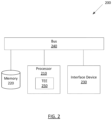
- FIG. 2 is a block diagram illustrating components of an example electronic device 200 which may serve as a node 102 ( FIG. 1 ) in a peer-to-peer blockchain network 100 ( FIG. 1 ).
- the example electronic device 200 may also be referred to as a processing device.
- the electronic device may take various forms including, for example, a desktop computer, laptop computer, tablet computer, server, mobile device such a smartphone, wearable computer such as a smart watch, or a form of another type.
- the electronic device 200 includes a processor 210, a memory 220 and an interface device 230. These components may be coupled directly or indirectly to one another and may communicate with one another.
- the processor 210, memory 220 and interface device 230 may communicate with each other via a bus 240.
- the memory 220 stores a computer software program comprising machine-readable instructions and data for performing functions described herein.
- the memory may include processor-executable instructions which, when executed by the processor 210, cause the electronic device to perform a method described herein.
- the processor-executable instructions may include instructions which, when executed by the processor 210, cause the electronic device to implement a protocol associated with the blockchain network 100 ( FIG. 1 ).
- the instructions may include instructions for implementing the Bitcoin protocol.
- the memory 220 may store the global ledger of the blockchain network 100 ( FIG. 1 ) or a portion thereof. That is, the memory 220 may store all blocks of the blockchain or a portion of the blocks, such as the most recent blocks, or a portion of the information in some blocks.
- the electronic device 200 may include multiple memory components.
- the memory components may be of various types including, for example, RAM, HDD, SSD, flash drives, etc. Different types of memory may be suited to different purposes.
- the memory 220 is illustrated separately from the processor 210, the processor 210 may include embedded memory.
- the processor 210 of some nodes 102 may include a secure area such as a Trusted Execution Environment (TEE) 250.
- TEE 250 is an isolated execution environment which provides additional security to the electronic device 200 such as isolated execution, integrity of Trusted Applications and asset confidentiality.
- the TEE 250 provides execution space which guarantees that the computer instructions and data loaded inside the TEE 250 are protected in terms of confidentiality and integrity.
- the TEE 250 may be used to protect the integrity and confidentiality of important resources, such as keys.
- the TEE 250 is implemented, at least in part, at a hardware level so that instructions and data executed within the TEE 250 are protected against access and manipulation from the rest of the electronic device 200 and from external parties such as the owner of the electronic device.
- the data and computations within the TEE 250 are secured from the party operating the node 102 that includes the TEE 250.
- the TEE 250 may operate to instantiate an enclave and then add pages of memory one at a time, while cumulatively hashing. A similar operation may also be performed on a remote machine (which may be a developer machine or another machine) so that the remote machine determines and stores the hash that is expected. The contents of an enclave can, therefore, be verified by any remote machine to ensure that the enclave is running an approved algorithm. This verification may be performed by comparing hashes. When an enclave is fully built, it is locked down. It is possible to run the code in the TEE 250 and to send secrets to the code, but the code cannot be changed. A final hash may be signed by an attestation key and may be made available to a data owner to verify it before the data owner sends any secrets to the enclave.
- a TEE 250 that is used by a node which acts as a congress member may be used to protect the confidentiality and integrity of a private key share associated with a congress public key used by the congress 110 ( FIG. 1 ).
- the TEE 250 may be used for the generation and storage of private key shares.
- the TEE 250 is intended to ensure that no member is able to directly obtain the private key share held within the TEE 250 enclave, or information about other private key shares from inter-member communication or inter-enclave communication.
- the congresses protocol is also robust against compromise of a threshold of TEEs. Further, the TEE 250 may enable remote attestation which may be used by a node 102 ( FIG.
- FIG. 2 illustrates a node (i.e., an electronic device 200) that includes a TEE 250
- at least some nodes of the blockchain network 100 may not include TEEs.
- the electronic device 200 acts as a node 102 ( FIG. 1 ) in the blockchain network 100 ( FIG. 1 ). Some nodes may join and otherwise take part in a congress 110 ( FIG. 1 ).
- a congress 110 is formed when a group of digital asset bearers pool digital assets, such as digital currency, tokens or other stake or value supported by the blockchain network 100 ( FIG. 1 ).
- the congress may, for example, return one or more digital assets to a node that provided such digital assets for the purpose of setting up a payment channel with a counter party if the counter party becomes non-responsive or otherwise fails to operate in accordance with a defined protocol.
- nodes may take part in the blockchain network as members of the congress or participants in a payment channel. Other nodes may not take part as participants in a payment channel or may not act as congress members. Such nodes may, instead, function as one or more of miners, validators, hubs, or may provide other functions associated with the blockchain network.
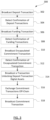
- the method 300 may be performed by a node 102 of the blockchain network.
- a node 102 may include computer-executable instructions stored in memory 220 ( FIG. 2 ) which implement the method 300.
- Such instructions when executed by a processor 210 ( FIG. 2 ), cause a node 102 (such as an electronic device 200 of the type described with reference to FIG. 2 ) to perform the method 300.
- the method 300 may be performed to open a payment channel and may be performed after the node 102 performing the method has agreed with a counter party (i.e., another node that is to be party to the payment channel) on a quantum of digital assets to be used to open the payment channel (i.e., on an amount of "funding" for the payment channel).
- a counter party i.e., another node that is to be party to the payment channel
- a quantum of digital assets i.e., on an amount of "funding" for the payment channel.
- the node 102 broadcasts, to nodes of a blockchain network 100, a first deposit transaction.
- the first deposit transaction is configured to allow a first digital asset to be unlocked after a defined period of time through generation of a signature which is valid for a first public key and to be unlocked at any time through generation of a signature which is valid for a second public key.
- the first public key is a public key that is associated with the node 102 itself while the second public key is a public key that is associated with a group of nodes operating under a threshold signature scheme. This group of nodes may be referred to as a congress 110.
- the second public key is, therefore, a public key that is associated with the congress 110.
- This public key may be referred to as a group public key, a congress public key or a group address.
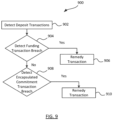
- the first deposit transaction locks the first digital asset to allow the congress (and, more particularly, a number of nodes controlling key shares that are greater than a threshold required under a threshold signature scheme for a congress protocol implemented by nodes of the congress) to assume control of the first digital asset (i.e., to unlock the first digital asset by removing an encumbrance of the digital asset using a signature that is valid for the second public key). Since the first deposit transaction is configured to allow the first digital asset to be unlocked at any time by the congress, a plurality of nodes of the congress that control a sufficient number of key shares for the congress may act to return the first digital asset to the node performing the method 300 if a counter party fails to perform the method 300 of FIG. 3 in order to open the payment channel. Operations for returning the first digital asset that may be performed by the nodes of the congress will be described in greater detail below with reference to FIG. 9 .
- the first deposit transaction may include metadata specifying an amount of funding that is to be provided by the node performing the method 300 and by a counter party to open the payment channel. That is, the first deposit transaction may include metadata specifying an amount of funding that is to be provided in a first funding transaction and a second funding transaction (these funding transactions will be described in greater detail below with reference to operations 306 and 308).
- This metadata allows the congress to ensure that both parties to the payment channel have properly funded the payment channel, as will be described below with reference to FIG. 9 .
- the first deposit transaction also locks the first digital asset with the first public key.
- the first public key is a public key that is associated with the node performing the method 300 and the first deposit transaction uses the first public key to apply a time-based lock on the first digital asset.
- the time-based lock allows the digital asset encumbered by the first deposit transaction to be reclaimed by the node by broadcast of a transaction that includes a signature that is valid for the first public key after expiration of a predetermined period of time, t. That is, after the predetermined period of time, t, has elapsed, the first digital asset may be reclaimed by the node performing the method 300 if the node broadcasts a transaction that is signed using a first private key that corresponds to the first public key.
- the lock that is applied to the first digital asset prevents the node from reclaiming the first digital asset directly before this period of time expires, t. That is, until the period of time, t, expires, the first digital asset can only be unlocked (i.e., spent) by the congress (and, more particularly, by a number of nodes of the congress controlling a sufficient number of key shares to allow them to cooperatively generate a valid signature on behalf of the congress). However, if the congress does not spend the first digital asset in this time, the node performing the method 300 may spend the first digital asset.
- the counter party for the payment channel also broadcasts a deposit transaction, which may be referred to as a second deposit transaction.
- a deposit transaction which may be referred to as a second deposit transaction.
- first and second as used herein are simply used to differentiate between different items and are not used to indicate order. That is, the first deposit transaction which is broadcast by the node performing the method may be broadcast and/or added to the blockchain before or after the second deposit transaction which is broadcast by the counter party.
- the second deposit transaction includes metadata specifying the amount of funding to be provided by the parties to open the payment channel (i.e., in the first funding transaction and the second funding transaction, described below).
- the statements of the agreed funding i.e., the funding specified in both the first deposit transaction and the second deposit transaction
- the node 102 detects confirmation of the first deposit transaction and a second deposit transaction on the blockchain network.
- the second deposit transaction which is broadcast by the counter party of the payment channel, is configured to allow a further digital asset to be unlocked after a defined period of time through generation of a signature which is valid for a third public key and to be unlocked at any time through generation of a signature which is valid for the second public key.
- the third public key is a public key associated with the counter party.
- the node 102 may also verify that the second deposit transaction specifies an expected amount of funding to be provided in the first funding transaction and the second funding transaction. For example, the node 102 may verify that the first deposit transaction and the second deposit transaction indicate a common level of funding for the payment channel.
- the node 102 performing the method could wait until the predetermined time, t, has expired and could then reclaim the first digital asset. That is, if the counter party fails to provide a deposit, after expiration of the defined period of time, t, associated with the lock placed on the first digital asset in the first deposit transaction, the node 102 performing the method 300 may broadcast a transaction unlocking the first digital asset (i.e., the digital asset deposited in the first deposit transaction) with a signature which is valid for the first public key. That is, a transaction may be broadcast which includes an unlocking script that includes a signature generated using a first private key corresponding to the first public key.
- a transaction may be broadcast which includes an unlocking script that includes a signature generated using a first private key corresponding to the first public key.
- the transaction may spend the first digital asset by transferring the first digital asset back to an address associated with the node 102 (e.g., by placing a new encumbrance on the digital asset which only requires a signature valid for the first public key associated with the node 102 performing the method 300).
- the node 102 After detecting confirmation of the deposit transactions on the blockchain, the node 102 broadcasts, to the blockchain network, a first funding transaction.
- the first funding transaction is configured to encumber a second digital asset with the first public key (i.e., the public key associated with the node performing the method 300), the second public key (i.e., the public key associated with the congress) and the third public key (i.e., the public key associated with the counter party) such that the encumbrance of the second digital asset may be removed by: 1) both a signature valid for the first public key and a signature valid for the third public key; or 2) a signature valid for the second public key.
- the first public key i.e., the public key associated with the node performing the method 300
- the second public key i.e., the public key associated with the congress
- the third public key i.e., the public key associated with the counter party
- the first funding transaction is set up so that the two parties to the payment channel can mutually remove the encumbrance on digital assets associated with the funding transaction, or a congress, acting alone, can remove the encumbrance. That is, the funding transaction is set up so that the encumbrance can be removed in one of two ways. If the parties to the payment channel wish to cooperate, the encumbrance could be removed if they both use their respective private key (i.e., the private keys associated with the first public key and the third public key) to generate signatures for a transaction that would spend the encumbered digital assets. Under this scenario, their valid signatures, taken together, remove the encumbrance.
- their respective private key i.e., the private keys associated with the first public key and the third public key
- the second way in which the encumbrance may be removed involves a plurality of members of a congress cooperating to generate a signature on behalf of the congress which is valid according to a threshold signature scheme.
- the threshold signature scheme will be discussed in greater detail below in the detailed discussion of congresses.
- the threshold signature scheme requires cooperation of a number of congress member nodes that control at least a threshold number of key shares. Since a congress is secured by deposit of stake, the member nodes of the congress risk confiscation of such stake if they act contrary to a congress protocol.
- the first funding transaction must be provided within a defined period of time, s , following broadcast of the first deposit transaction. This defined period of time is significantly less than the period of time, t , associated with the lock placed on the first digital asset in the first deposit transaction. Consequently, the first funding transaction must be broadcast within both the defined period of time, t, associated with the lock in the deposit transaction and a further defined period of time, s , that is less than the defined period of time, t , used in the first deposit transaction.
- the nodes of the congress may be configured to ensure that the first funding transaction is broadcast and/or added to the blockchain in a timely manner (i.e., before the defined period of time, s , expires). If the first funding transaction is not provided in a timely manner, the first digital assets that were encumbered in the first deposit transaction may be confiscated by the congress.
- the first funding transaction may be broadcast by the node 102 automatically in response to detecting confirmation of the second deposit transaction (at operation 304).
- the first funding transaction funds the payment channel using a quantum of digital assets that was defined in metadata of the first deposit transaction and/or the second deposit transaction. That is, the quantum of digital assets required to be included in the first funding transaction is as defined in the deposit transaction(s). If the quantum of digital assets provided in the first funding transaction differs from the amount expected, based on the metadata in the first deposit transaction, then the congress may confiscate the first digital asset that was provided as a deposit in the first deposit transaction.
- the counter party is also required to fund the payment channel with a corresponding funding transaction.
- This funding transaction may be referred to as a second funding transaction and, at operation 308, the node 102 may detect confirmation of the second funding transaction (and the first funding transaction) on the blockchain. That is, the node may confirm that the second funding transaction and the first funding transaction have been added to the blockchain.
- the second funding transaction encumbers a further digital asset with the first public key, the second public key and the third public key such that the encumbrance of the further digital asset may be removed by: 1) both a signature valid for the first public key and a signature valid for the third public key; or 2) a signature valid for the second public key.
- the encumbrance added to the digital assets provided in the second funding transaction corresponds to the encumbrance added to the digital assets provided in the first funding transaction.
- the node may also confirm (at operation 308) that the quantum of digital assets in the second funding transaction is an expected amount. That is, the node may confirm that the counter party has properly funded the payment channel. For example, the node may confirm that the quantum of digital assets in the second funding transaction corresponds to the quantum specified in the metadata of the deposit transaction(s).
- the node 102 may broadcast a first encapsulated commitment transaction.
- the first encapsulated commitment transaction is a transaction for nominal digital assets (e.g., digital assets only sufficient to cover mining fees to have the transaction added to the blockchain).
- the purpose of the first encapsulated commitment transaction is not to exchange value (i.e., to transfer digital assets to another party), but rather to act as a public record of a commitment transaction.
- a commitment transaction is a record of a state of a payment channel and allows a node to close a channel and receive digital assets back if another party were to become uncooperative. More particularly, a commitment transaction records current balances of the parties to a payment channel.
- the first encapsulated commitment transaction is a transaction which includes a commitment transaction (i.e., an initial commitment transaction) as metadata.
- Commitment transactions are configured so that the party receiving the commitment transaction may, at any point, sign and broadcast the commitment transaction to the blockchain network to commit the current state of the payment channel to the blockchain. That is, commitment transactions may be continually exchanged by the parties in a payment channel off-chain and, at any point one of those parties may add their signature to the commitment transaction and broadcast it to attempt to commit the current state of the payment channel to the blockchain.
- the initial commitment transaction included in the first encapsulated commitment transaction is, therefore, a half signed transaction. It has been signed by the node performing the method 300 (i.e., signed using a first private key corresponding to the first public key) and the counter party can add their signature to the commitment transaction and broadcast it to the blockchain network in an attempt to commit the current state of the payment channel to the blockchain.
- the congress may confirm that initial commitment transactions have been received so that the parties to the payment channel have a means of closing out a payment channel if the counter party becomes uncooperative. That is, after each party has provided the other party an initial commitment transaction, both parties have a means of closing out the channel which does not require cooperation of the other party.
- the counter party is also required to provide an encapsulated commitment transaction, which may be referred to as a second encapsulated commitment transaction, to complete setup of the payment channel.
- the node 102 performing the method detects confirmation of a second encapsulated transaction broadcast by a node associated with the third public key (i.e., by the counter party).
- the second encapsulated commitment transaction includes a further commitment transaction as metadata.
- the further commitment transaction is signed using a third private key (i.e., a private key corresponding to the third public key, which is the public key for the counter party). That is, the further commitment transaction is a half-signed transaction.
- the node 102 could add a signature to this commitment transaction that is valid for the first public key.
- the node 102 could, if desired, sign and broadcast the further commitment transaction to nodes of the blockchain network to commit a payment channel status defined in the further commitment transaction to the blockchain.
- the encapsulated commitment transactions must be provided in a timely manner and such timeliness will be evaluated by the congress. Failure to provide a timely encapsulated commitment transaction can result in confiscation of the deposit (i.e., the digital assets provided in a deposit transaction) and/or all or part of the funding provided in a funding transaction. More particularly, the encapsulated commitment transactions must be broadcast and/or confirmed on the blockchain before expiration of a defined period of time, s', following broadcast of the first deposit transaction. This defined period of time, s', may be less than the period of time, t , associated with the lock placed on the first digital asset in the first deposit transaction but may be greater than the period of time, s , allotted for providing the funding transactions.
- the funding transaction must be broadcast within both the defined period of time, t , associated with the lock in the deposit transaction and a further defined period of time, s', that is less than the defined period of time, t , used in the first deposit transaction.
- the congress may confiscate all or part of the digital assets encumbered in the deposit transaction if the encapsulated commitment transaction is not received in a timely manner.
- some implementations may not require the encapsulated commitment transaction to be received during this defined period of time, t . Instead, the congress could confiscate digital assets associated with the payment channel (e.g., digital assets provided in the funding transactions) when an encapsulated commitment transaction is not provided in the defined period of time, s' .
- the payment channel may be considered to be open.
- the node 102 performing the method 300 may broadcast a transaction unlocking the first digital asset (i.e., the digital asset deposited in the first deposit transaction) with a signature which is valid for the first public key. That is, a transaction may be broadcast which includes an unlocking script that includes a signature generated using a first private key corresponding to the first public key.
- the transaction may spend the first digital asset by transferring the first digital asset back to an address associated with the node 102 (e.g., by placing a new encumbrance on the digital asset which only requires a signature valid for the first public key associated with the node 102 performing the method 300).
- the node 102 performing the method and the counter party may (at operation 316) exchange one or more further commitment transactions.
- Such commitment transactions are exchanged directly (e.g., the node performing the method 300 may send commitment transactions directly to and receive commitment transactions directly from the counter party).
- Commitment transactions may generally be exchanged in the manner described in the Lightning Network. Commitment transactions may be exchanged together with a value that effectively invalidates a previous channel state. That is, the value effectively renders older commitment transactions unusable.
- Any attempt to broadcast an old (i.e., not current) commitment transaction by a dishonest participant may prove unwise since the value that invalidates the previous channel state may be used by an honest participant to penalize the dishonest participant by claiming all funds in the channel using a breach remedy transaction.
- the payment channel may be closed at any time by mutual agreement of the parties to the payment channel.
- the funding transaction which was used to fund the payment channel was configured such that both parties to the payment channel (e.g., the node performing the method 300 and the hub) can remove the encumbrance on digital assets by cooperating in a multisignature protocol.
- these nodes may cooperate to generate respective signatures for a transaction that would close out the payment channel and redistribute the digital assets previously encumbered by the funding transaction. That is, these nodes may simply redistribute the funds in a manner that accounts for the current state of the payment channel without having to necessarily rely on commitment transactions. This matter of closing the channel may be referred to as "soft resolution".
- the commitment transactions may, however, be useful if the counter party becomes uncooperative, refusing to sign such a closing transaction.
- the node 102 performing the method 300 may, at operation 318, sign and broadcast a most-recent commitment transaction to the nodes of the blockchain network 100. Doing so has the effect of redistributing the digital assets in the funding transactions in accordance with a current state for the payment channel.
- the advantage in closing a channel through soft resolution rather than relying on commitment transactions is that the commitment transaction requires a node to wait an extended period of time (e.g., 1000 blocks) to recover digital assets to allow the other node time to broadcast a breach remedy transaction, if need be. In contrast, soft resolution does not require the node to wait this extended period of time.
- the nodes of the congress may not be required to take any action. However, if one or both of the parties fail to operate according to the payment channel protocol, the congress may assist with the recovery of digital assets so that such digital assets do not become cryptographically stranded. Once both encapsulated commitment transactions are confirmed and observed to be valid, the congress may no longer be needed and the parties can use and close the payment channel without help from the congress.
- a congress 110 may be a permissioned or non-permissioned group of nodes 102 operating in a blockchain network. That is, the congress 110 may be joined by a node 102 ( FIG. 1 ) in the blockchain network 100 ( FIG. 1 ) (e.g., by any node that monitors and stores at least a portion of the information in the blockchain). To join the congress 110, a node 102 transfers one or more digital assets to a digital asset pool associated with the congress 110 (i.e., to a public group address associated with one or more digital assets which are, in turn, associated with other members of the congress). This digital asset pool may be referred to as a congress pool.
- a node 102 may join a congress 110 by transferring (i.e., depositing) such digital assets to an address associated with the congress pool (i.e., to a "congress address" which may also be referred to as a public group address).
- the digital assets are placed under the control of a group threshold signature with a single public key, referred to as a congress public key.
- Congress members hold distributively-generated private key shares (i.e., private key shares that are generated at the various nodes that hold such private key shares). The number of shares held may be in proportion to the amount deposited in the pool.
- the congress public key encumbers the digital assets deposited in the congress pool by the members of the congress 110 in return for private key shares, and any digital assets deposited to the address associated with the congress pool (i.e., placed under full, partial or conditional control of the congress) by members or non-members of the congress 110 which have been deposited (i.e., encumbered by the congress public key) for reasons other than obtaining private key shares.
- Non-members or members may encumber digital assets with the congress public key for various reasons. For example, as noted above with reference to FIG. 3 , a funding transaction for a payment channel may encumber digital assets using a congress public key.
- the congress may implement a failsafe mode if a payment channel fails (e.g., if a hub associated with the payment channel becomes non-responsive).
- a transaction that transfers the digital asset to the congress address may include a flag, identifier or other attribute which indicates the nature of the deposit being made.
- a transaction that transfers the digital asset to the congress address that is not made for the purpose of joining a congress or boosting a stake in congress membership may include a special identifier to indicate that the deposit is being made for another purpose.
- nodes 102 associated with the congress 110 may be used by nodes 102 associated with the congress 110 when managing private key share generation (which will be discussed in greater detail below). More particularly, nodes 102 which deposit ⁇ encumber digital assets for the purpose of joining the group are allocated private key shares for the congress 110 (as a result of making the deposit of digital assets) while other nodes 102 which encumbered digital assets for other purposes (e.g., to open a payment channel) may not hold congress private key shares for the congress (i.e., corresponding to the congress public key).
- the congress 110 may act as a self-governing group in which cooperative behaviour is enforced through the threat of confiscation of all or part of the member deposit.
- Noncooperative or malicious members may have such digital assets confiscated by participation in a cooperative protocol by a number of honest members.
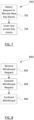
- a congress member wishes to leave the congress 110, they may withdraw their member deposit (i.e., request that the congress 110 transfer the member deposit back to that member's personal address).
- withdrawal of funds is only performed if a number of private key shares exceeding a threshold required to generate a valid digital signature are used by TEEs, associated with members of the group (i.e., the congress), to generate partial signatures to approve the withdrawal.
- the threshold signature scheme implemented by the congress 110 may be of various types.
- the threshold signature scheme allows distribution of signing power between n parties as long as at least a threshold number of private key shares have contributed towards generating a valid signature and any number of key share holders less than this treshhold cannot generate any usable information with regard to the signature. Any subset smaller than the threshold cannot generate a valid signature. More particularly, each of the parties controls a share of a private signing key and a threshold number of key shares must be used to generate a valid signature through the combining of partial signatures. Any subset of key shares that is less than the threshold cannot generate a valid signature through the combination of partial signatures.
- the threshold signature scheme may be an Elliptic Curve Digital Signature Algorithm (ECDSA) scheme.
- ECDSA Elliptic Curve Digital Signature Algorithm
- an ECDSA scheme may be of the type proposed by Ibrahim et al. in "A robust threshold elliptic curve digital signature providing a new verifiable secret sharing scheme", 2003 EIII 46th Midwest Symposium on Circuits and Systems, 1:276-280 (2003 ).
- This threshold signature scheme is an extension of a digital signature scheme which is an elliptic curve cryptography based algorithm in which t +1 key shares from a party of n key share holders are required to reconstruct a private key.
- the scheme may be used to construct a valid signature without having to reconstruct a private key and without any party having to reveal their key share to another party.
- a halting adversary is able to prevent a corrupted party from participating in a protocol or halt participation part-way through.
- This ECDSA scheme includes various mechanisms which could be used by the nodes 102 to identify a malicious or uncooperative party.
- verifiable secret sharing may be used to share a polynomial required for Shamir's Secret Sharing (SSS).
- SSS is a form of secret sharing in which a secret is divided into parts and provided to each participant in its own unique part. These parts may be used to reconstruct the secret.
- VSS may be used, by the nodes 102, to identify a malicious node 102 or member if inconsistent shares are provided to different nodes 102 or if a share is secretly sent to a node that is different than the blinded share which is broadcast to all nodes. Inconsistent shares may be identified by any one of the nodes 102.
- the sharing of the secret may be made verifiable by including auxiliary information which allows nodes 102 to verify their shares as consistent.
- the sending of an incorrect share to an individual node can be identified by the intended recipient node of the share.
- the identification of an incorrect share being secretly sent to a node can be rendered publicly verifiable using techniques of Publically Verifiable Secret Sharing (PVSS).
- PVSS Publically Verifiable Secret Sharing
- Misbehaviour such as providing inconsistent shares to different nodes, may be addressed by a congress 110 to deter malicious behaviour.
- a node 102 FIG. 1
- a number of nodes 102 i.e., nodes associated with congress members
- a threshold e.g., t+1
- the nodes 102 may take action involving a digital asset (such as digital currency, tokens or other stake or value) deposited to the congress by the malicious party.
- the congress may burn the digital currency, tokens, stake or value by transferring them to an unspendable address or the congress may confiscate such digital assets by reaching consensus on a decision not to authorize their return to the malicious party.
- the nodes 102 that are not a misbehaving node may also deter misbehaviour by cooperating to exclude a misbehaving node (e.g., by effectively invalidating key shares; for example, by excluding a node from participating in the congress protocol, or by re-sharing the private key and not allocating the misbehaving node a share).
- the ECDSA technique described above may be enhanced through the use of a TEE.
- the threshold ECDSA signature technique based on Ibrahim et al. contemplates a strong form of adversary, referred to here as a Byzantine adversary. This type of adversary may behave arbitrarily, for example, they not only refuse to participate in the signing process or halt party way through, but may also pretend to honestly participate and send incorrect information.
- TEEs and producing the data used for signing within an enclave of a TEE where a secret private key share is stored, additional security may be provided since it is highly unlikely that enclaves could be compromised in significant numbers.
- each TEE is allocated no more than one key share, for example, the number of possible compromised TEEs could reasonably be expected to not approach the threshold for robustness against Byzantine adversaries, assuming n to be sufficiently large. This allows the protocol to be secure if it is tolerant to a small number of malicious adversaries relative to the total number of key shares.
- a corrupted node is a node such that the hardware external to the TEE is corrupted, but the integrity of the TEE is not compromised.
- a corrupted node may have control over what information the enclave receives and does not receive. In particular, a corrupted node may halt i.e., refrain from participation in the protocol. If information provided to the protocol is required to be signed by a private key held secretly in the enclave (where the corresponding public key was authenticated during attestation) the private key is as trustworthy as the enclave itself.
- a corrupted node cannot send arbitrary (authenticated) information to the protocol, and may only attempt to interfere by halting or attempting to fool the enclave into acting improperly, for example, by providing it with outdated information. It follows that, for corrupted nodes, a successful attack would require gathering of a sufficient number of partial signatures to produce a full signature.
- the threshold signature scheme may be an ECDSA threshold scheme of the type proposed by Goldfeder et al., "Securing Bitcoin Wallets Via a New DSA/ECDSA threshold signature scheme", (2015 ).
- This protocol allows t + 1 parties to produce a valid signature. Consequently, the number of key shares an adversary has to control to produce a valid signature is equal to the number of key shares an adversary has to possess to reconstruct the private key.
- This technique can provide an efficient scheme in the case in which unanimity is required to produce a valid signature.
- this scheme imposes space requirements that scale exponentially with the number of congress members since, for an arbitrary threshold one needs to repeat the whole protocol for any possible subset of t + 1 players out of n. Thus, for large values of both n and t, a large number of key shares will need to be stored.
- standard bitcoin multi-signatures could be combined with threshold signatures.
- digital assets could be locked using multi signature so that each private key is divided into shares. This technique would make larger congresses more efficient in terms of space requirements.
- Scaling properties may also be improved by composing a scheme for a large number of participants out of smaller party sizes, at multiple levels, in an iterative fashion.
- the threshold signature scheme could be combined with techniques of Cohen et al., Efficient Multiparty Protocols via Log-Depth Threshold Formulae (2013), Advances in Cryptology - CRYPTO 2013 pp 185-202 .
- threshold schemes may be used including non-ECDSA signature schemes.
- a threshold scheme based on a Schnorr scheme may be used by the nodes 102 to implement the congress 110.
- Nodes 102 ( FIG. 1 ) in the blockchain network 100 may implement a congress protocol based on the selected threshold signature scheme.
- Such nodes 102 may include computer-executable instructions stored in memory 220 ( FIG. 2 ) which implement the congress protocol.
- Such instructions when executed by a processor 210 ( FIG. 2 ), cause a node 102 (such as an electronic device 200 of the type described with reference to FIG. 2 ) to perform one or more methods of the congress protocol.
- Such methods may include any one or combination of the methods 400, 500, 600, 700, 800, 900 of FIGs 4 to 9 .
- the congress protocol may include one or more of the methods 400, 500, 600, 700, 800, 900 of FIGs 4 to 9 .
- the methods may be performed by a node cooperatively with other nodes associated with other congress members.
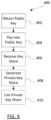
- FIG. 4 illustrates a method 400 of joining a congress.
- the method may be performed to join a pre-existing congress. That is, the method 400 may be used to join a congress that has been previously initiated.
- the method 400 of FIG. 4 includes, at operation 402, obtaining a congress public key.
- the congress public key may be obtained from a party that is a pre-existing member of the congress or it may be obtained from a third party including, for example, a third party system operating outside of the blockchain network 100 ( FIG. 1 ).
- the congress public key may be obtained from a public web server accessible over the public Internet.
- the congress public key may be observed on the blockchain; for example, observed based on metadata included in at least some transactions that transfer digital assets to the congress public key.
- the node 102 performing the method 400 pays into the congress public key at operation 404 by broadcasting a transaction of digital assets from a private account associated with the node 102 to a congress address (i.e., an address associated with the congress public key). More particularly, the node 102 broadcasts a transaction to transfer one or more digital assets to a public group address that is associated with the congress public key.
- the public group address is the address for a congress pool.
- the congress pool includes other digital assets associated with the other members of a congress.
- the transaction at operation 404 once added to a block by a miner 104 ( FIG. 1 ) and after the block is confirmed, transfers the digital asset to the congress pool which includes digital assets from other members.
- the public group address may receive both transfers from parties wishing to join the congress and transfers from parties not wishing to join the congress.
- the parties who do not wish to join the congress transfer the digital assets to the congress pool so that such digital assets may be placed under total, partial or conditional control by the congress using a threshold signature scheme employed by the congress.
- the congress public key may encumber digital assets associated with a funding transaction that opens a payment channel.
- the transaction at operation 404 may include a flag, identifier or other attribute which indicates that the party transferring the digital asset wishes to join the congress and that the deposit is being made for such purpose.
- the node 102 performing the method 400 receives, at operation 406, a private key share. Then, the node 102 regenerates the private key share at operation 408 by running a single instance of the protocol. The generation of a private key share may be performed within a TEE of the node 102.
- the node 102 generates a private key share that is to be used in a threshold signature scheme in which at least a threshold of private key shares must be used to generate a valid signature for a transaction on behalf of the congress.
- Other holders of private key shares are the other members of the congress who have joined the congress on a permissioned or non-permissioned basis by transfer of respective digital assets to the public group address.
- the existing congress members may cooperate to update the key shares.
- a node 102 may generate a random polynomial of order t and with the constant term zero f n + 1 0 x .
- the node 102 may then calculate the point f n + 1 0 n + 1 and set this as their private key share.
- the threshold signature scheme may be of various types including an Elliptic Curve Digital Signature Algorithm or a threshold scheme based on a Schnorr scheme.
- the private key share may be generated within a TEE 250 ( FIG. 2 ) and may be securely stored on the node 102.
- the private key share may be stored in the TEE 250.
- funds under control of the previous congress public key may be transferred (through cooperation of a number of group nodes sufficient to generate a valid signature under the threshold signature scheme) to a new congress public key associated with the new private key shares.
- a node may join a congress in a manner that does not require a new congress public key to be defined. Instead, the same congress public key may be used and TEEs associated with congress nodes may be used to cooperate to allow the node joining the congress to generate a private key share corresponding to the existing congress public key.
- the private key share may be used to cooperatively generate a valid signature for a transaction from the public group address which may be broadcast by a member. That is, the private key share may be used in the threshold signature scheme to contribute towards signature generation. Under the threshold signature scheme, a threshold number of private key shares of the congress are required to be used by respective members to produce a valid signature which allows the digital assets to be transferred away from the congress.
- the node 102 performing the method 500 may retrieve the private key share from storage and use the private key share in order to contribute towards signature generation. If a sufficient number of other congress members also use their respective private key to contribute towards signature generation, the signature is generated and a valid outgoing transaction may be broadcast.
- a miner 104 ( FIG. 1 ) of the blockchain network 100 adds the transaction to a mined block which is added to the blockchain by consensus of the nodes 102 in the blockchain network 100 and the block is confirmed, the outgoing transaction is complete.
- the digital assets represented in the transaction may no longer be under the control of the congress. That is, such digital assets may no longer be encumbered by the congress public key.
- the use of the private key share at operation 408 may be performed within a TEE of the node 102.
- the TEE protects the private key share such that other parts of the system nor the member themselves cannot access any data stored in an enclave, such as the private key share. Further, the TEE protects the private key in that it cannot retain a copy of the private key if the member wants their deposit back (assuming integrity of the TEE is maintained) and receive their deposit back since it must attest to the deletion of the private key before the member deposit is returned.
- the transaction at operation 410 may transfer the digital asset back to the party which originally deposited those digital assets to the congress pool. That is, the transfer may return digital assets to a depositor.
- the transfer may also transfer the digital asset elsewhere.
- the digital asset may be transferred to a third party or to an unspendable address.
- one or more digital assets that were encumbered by the congress public key in a funding transaction to open a payment channel may be redistributed by a transaction on the authorization of a congress.
- the method 500 of FIG. 5 may be performed by a node 102 that has previously joined a congress, which may be the same node performing the method 400 of FIG. 4 .
- the method 500 may be performed after operation 408 of the method 400 of FIG. 4 so that the node 102 performing the method 500 already has access to a private key share when the method 500 of FIG. 5 is performed.
- the node 102 detects malicious activity by a malicious party.
- the malicious party may be another member of the congress. Malicious activity is detected when the node 102 determines that a member of the congress is in breach of a pre-defined protocol or criteria. For example, when a node which is a member in the congress reports faulty information (i.e., false, inconsistent or otherwise unacceptable information) to other members of the congress, the member may be deemed to be a malicious member.
- the node 102 in response to detecting malicious activity, may suspend the member that is the malicious party. That is, the congress may exclude the malicious party from further participation in the congress.
- member deposits into the congress pool may be subject to confiscation.
- Confiscation means permanently preventing the return of a member deposit that is deemed confiscated.
- the digital asset(s) that form the member deposit which are not returned due to the malicious activity may be left in the congress pool but not returned, transferred immediately or in the future to another unspendable address, or otherwise confiscated and the nature of confiscation may depend on whether the congress functions as a bonded validator set for a sidechain.
- the node 102 performing the method 500 may use the private key share to provide a partial signature on a confiscation transaction.
- the other address may be an address for which no private key exists so that no party can access the digital assets bound by the public key for the address.
- the digital assets When the digital assets are transferred to the unspendable address they may be considered to have been burned, since they are no longer spendable by any members of the congress or indeed by any nodes in the blockchain network 100.
- the node may confiscate the digital asset by using the private key share in cooperation with other members of the congress to generate a valid signature for the transaction to the unspendable address.
- a threshold of members may collaborate to authorize transfer of the confiscated digital assets to an unspendable address.
- Some or all of the digital assets may, instead, be sent as a reward to a node who provided evidence of a member's wrongdoing.
- the congress is an open group which may be joined by any node 102 of the blockchain network 100 through deposit of digital assets, the group membership may periodically change. When such changes occur, the private key share distributions may be updated.
- the method 600 may be performed by a node 102 of the blockchain network 100 in cooperation with other nodes of the blockchain network 100.
- the node 102 detects a redistribution request, which is a request, the fulfilment of which entails a redistribution of key shares. For example, the node 102 may detect that a prospective new member has transferred digital assets into the public group address or that an existing member has requested withdrawal of a member deposit
- Digital assets may be transferred to the public group address (i.e., to the congress pool) by nodes requesting to join the congress or increase their participation in the congress and by other nodes who are not requesting to join the congress but are instead transferring the digital assets to the congress for another purpose (such as to transfer the digital assets to a sidechain, as will be described below).
- the node 102 may identify congress members (i.e., the parties that transferred digital assets to the congress public key to join the congress and not for another purpose) using one or more attributes included in at least some of the transactions of digital assets to the public group address. For example, certain transactions may be flagged as special transactions using an attribute in the transactions. Such attributes (or the presence or absence thereof) may indicate a purpose for which the transfer is made. For example, a flag may be included in a transaction when the transferor is not requesting to join the congress.
- a new private key share is generated by the node 102 in a manner similar to the manner that the private key share was generated at operation 408 of the method 400 of FIG. 4 .
- Other member nodes of the congress also generate respective private key shares. These private key shares may be used with the threshold signature scheme for the new congress public key. Members who will leave the congress at this point do not generate new private key shares during operation 604 and, since they will not be allocated a private key share for use with the new congress public key, they lose the capacity to take part in the congress and are no longer considered congress members.
- the node 102 collaborates with other congress members to transfer all digital assets in the public group address to a new public address associated with a new public key (which will then become the new congress public key).
- the method 700 may be performed by a node 102 of the blockchain network 100 in cooperation with other nodes of the blockchain network 100.
- the congress public key does not change each time the distribution of member deposits changes.
- the node 102 collaborates with other members of the congress to issue (at operation 704) new private key shares for the same public key to the new members of the group.
- the number of nodes that collaborate is at least the threshold number of nodes required to generate a digital signature under the threshold signature scheme.
- an additional key share may be allocated while other key shares remain the same. This may entail a change in threshold (of the threshold signature scheme), although the change may in practice be small.
- an additional key share may be allocated while other key shares are renewed. Such renewal is required to be accompanied by the attestation to deletion of any key shares of the previous generation. In this case, new shares may be allocated while maintaining the same threshold (in the context of SSS, this involves sharing on a new polynomial, of increased order).
- the node 102 may identify congress members (i.e., the parties that transferred digital assets to the congress public key to join the congress and not for another purpose) using one or more attributes included in at least some of the transactions of digital assets to the public group address. For example, certain transactions may be flagged as special transactions using an attribute in the transactions. Such attributes (or the presence or absence thereof) may indicate a purpose for which the transfer is made. For example, a flag may be included in a transaction when the transferor is not requesting to join the congress.
- the TEE is an architecture implemented at the hardware level which guarantees that instructions and data executed within them are protected against access and manipulation from the rest of the system.
- the TEE may employ hardware mechanisms to respond to remote attestation challenges which can be used to validate the system's integrity to an external party, such as the other nodes in the congress.
- Each member node may use a certified TEE configured to generate one or more random secret values which remains inaccessible to the host system without compromising the hardware at the integrated circuit level.
- Secret values generated in this way would be used in distributed generation of private key shares (e.g., at operation 410 of the method 400 of FIG. 4 ). This secret value could also be used to establish the shared public key in the set up phase of the congress.
- Computations associated with the set up protocol are performed within the TEE enclaves so that no member or former member can derive any information about their own or others private key shares from inter-member communication or any other method.
- the enclaves within the TEEs enable a remote attestation protocol to be performed which may be used to prove to other nodes that the TEE enclave is authentic and that it is running approved computer-readable instructions.
- Computations associated with group changes are performed within the TEE enclave. For example, the generation of a new secure random secret that may be used in calculating a new polynomial for the purposes of SSS is performed in the TEE enclave.
- the TEE enclave also aims to ensure that previous key shares and previous secrets that are no longer to be used are securely deleted before a member deposit can be returned. More particularly, in order to have a member deposit returned, an attestation protocol may require that the TEE enclave publicly attests to the deletion of a key share. Each node 102 may interpret such an attestation as a confirmation that the required deletion has occurred on other nodes through the remote attestation protocol. Thus, the method 800 may also include confirming that a private key share previously held within the TEE of a member who has left the congress has been deleted from a node associated with that member. This confirmation may be performed by receiving attestation of deletion of the private key share. Accordingly, the remote attestation protocol may be used to obtain attestation to the deletion of the private key share previously held in the TEE of a member who has left the congress.
- the method 600 of FIG. 6 and the method 700 of FIG. 7 each offer various benefits.
- the method 600 of FIG. 6 does not rely on secure deletion and does not need to rely on trusted hardware.
- the method 600 of FIG. 6 could benefit from such hardware since, in some circumstances, such hardware may make the malicious pooling of key shares more unlikely.
- group members may occasionally request to leave the congress and, when a group member disenrolls from a congress, the digital assets that they deposited to the congress pool may be returned to them.
- FIG. 8 an example method 800 of returning a deposit is illustrated in flowchart form. The method may be performed by a node 102 in cooperation with other nodes 102 of the congress.
- the node 102 receives a withdrawal request from a requestor who is a congress member.
- the withdrawal request may also be referred to as a disenrollment request.
- the withdrawal request is a request to withdraw digital assets previously deposited by the requestor and currently controlled by the congress.
- the request may have been broadcast, by the requestor to all congress members.
- the node 102 In response to receiving the request, the node 102, at operation 804, evaluates the request against determined criteria. Such criteria may be predetermined criteria. If the congress operates according to a congress protocol in which the congress public key is not changed each time group membership changes, then at operation 804, the node 102 may confirm that a private key share has been deleted by the requestor. Such confirmation may be obtained using a remote attestation protocol associated with a TEE.
- the node 102 may not confirm deletion of the private key share since the private key share is no longer effective. Instead, a new congress public key may be used and other digital assets under congress control may be transferred to the new congress public key.
- the congress protocol may be used for a number of different purposes.
- the congress provides a secure mechanism for performing various functions.
- the congress may operate trustlessly and provides control of ownership over a digital asset.
- the congress protocol may, for example, be used to facilitate setup of a payment channel and, more particularly, to prevent digital assets from becoming cryptographically stranded during setup of a payment channel.
- the method 900 may be performed by a node 102 that is a member of a congress 110 in cooperation with other nodes 102 that are members of the congress 110. That is, the method 900 is performed by a node 102 that has already joined the congress 110 through deposit of a member deposit into a congress pool, as described above.
- the node 102 performing the method 900 has, therefore, obtained a private key share, as described above prior to performance of the method 900 of FIG. 9 .
- a node 102 detects a deposit transaction 902.
- the node may detect that the first deposit transaction of operation 302 of the method 300 of FIG. 3 has been confirmed on the blockchain.
- the first deposit transaction includes metadata specifying an amount of funding that is to be provided in funding transactions to open a payment channel between parties. That is, the first deposit transaction may include metadata specifying an amount of funding that is to be provided in a first funding transaction and a second funding transaction (these funding transactions are described in greater detail above with reference to operations 306 and 308 of the method 300 of FIG. 3 ).
- the deposit transactions lock associated digital asset to allow the congress (and, more particularly, a number of nodes controlling key shares that are greater than a threshold required under a threshold signature scheme) to assume control of such digital assets (i.e., to unlock such digital assets by removing an encumbrance of the digital assets using a signature that is valid for a congress public key).
- the node 102 may determine whether a funding transaction breach has occurred. That is, the node 102 may determine whether one or more parties associated with the payment channel that is to be opened have breached a predefined requirement related to funding of the payment channel. For example, a funding transaction breach may be determined to have occurred when 1) a funding transaction is not broadcast by one or more of the parties; 2) a funding transaction provides insufficient funding (i.e., the quantum is less than the quantum defined in the metadata of the deposit transaction); or 3) the funding transaction is not confirmed before expiration of defined period of time (which may be a defined period of time, s, following broadcast or confirmation of the first funding transaction).
- a remedy transaction may be issued at operation 906 by the node 102 in cooperation with other nodes of the congress.
- the remedy transaction may, for example, confiscate the digital asset provided as a deposit in a deposit transaction of the party that has caused the funding transaction breach.
- the deposit of the party that breached the protocol may be confiscated.
- the node 102 may determine whether there is an encapsulated commitment transaction breach at operation 908. That is, the node 102 may determine whether one or more parties associated with the payment channel that is to be opened have breached a predefined requirements related to providing an encapsulated commitment transaction. For example, an encapsulated commitment transaction breach may be determined to have occurred when 1) an encapsulated commitment transaction is not broadcast by one or more of the parties; or 2) the encapsulated commitment transaction is not confirmed before expiration of defined period of time (which may be a defined period of time, s', following broadcast or confirmation of the first funding transaction).
- a remedy transaction may be issued at operation 910 by the node 102 in cooperation with other nodes of the congress.
- the remedy transaction may, for example, confiscate the digital asset provided as a deposit in a deposit transaction of the party that is responsible for the encapsulated commitment transaction breach.
- the deposit of the party that breached the protocol may be confiscated.
- the node 102 performing the method 900 cooperates with other nodes of the congress to perform operation 910.
- the node 102 may propose a remedy transaction and add a partial signature to the remedy transaction based on a key share held by that node.
- Other nodes of the congress may also contribute partial signatures to the remedy transaction.
- a valid signature i.e., a signature that is valid for the second public key
- the remedy transaction may be broadcast to the blockchain network.
- the remedy transaction may confiscate digital assets provided as a deposit by the party that is in breach of the protocol. That is, the deposit for the party that did not provide an encapsulated commitment transaction may be confiscated. This deposit may, for example, be distributed to one or more members of the congress to incentivize participation in the congress. Any funding provided by a party in a funding transaction may be returned to that party.
- any references to defined periods of time as described herein may refer to periods of time that are defined based on traditional measures of time (e.g., seconds, minutes, hours, days, etc.) or non-traditional measures of time, such as blocks. For example, since blocks may be created on some blockchain networks with a reasonably consistent frequency, the number of blocks added to the blockchain since a triggering event may provide a measure of time. Thus, any operations in which a node evaluates whether a defined period of time has expired may involve evaluating the number of blocks that have been added to the blockchain.
- the invention may be implemented by means of hardware comprising several distinct elements, and by means of a suitably programmed computer.
- a device claim enumerating several means several of these means may be embodied by one and the same item of hardware.
- the mere fact that certain measures are recited in mutually different dependent claims does not indicate that a combination of these measures cannot be used to advantage.
Landscapes
- Engineering & Computer Science (AREA)
- Computer Security & Cryptography (AREA)
- Computer Networks & Wireless Communication (AREA)
- Signal Processing (AREA)
- Computing Systems (AREA)
- Theoretical Computer Science (AREA)
- General Engineering & Computer Science (AREA)
- Computer Hardware Design (AREA)
- Business, Economics & Management (AREA)
- Software Systems (AREA)
- General Physics & Mathematics (AREA)
- Physics & Mathematics (AREA)
- Accounting & Taxation (AREA)
- Power Engineering (AREA)
- Multimedia (AREA)
- Finance (AREA)
- Strategic Management (AREA)
- General Business, Economics & Management (AREA)
- Financial Or Insurance-Related Operations Such As Payment And Settlement (AREA)
Claims (7)
- Ein computerimplementiertes Verfahren, das Folgendes beinhaltet:Übertragen, an Knoten eines Blockchain-Netzwerks, einer ersten Hinterlegungstransaktion, wobei die erste Hinterlegungstransaktion konfiguriert ist, um zu erlauben, dass ein erster digitaler Vermögenswert durch Erzeugung einer Signatur, die für einen ersten öffentlichen Schlüssel gültig ist, nach einem definierten Zeitraum entsperrt wird und durch Erzeugung einer Signatur, die für einen öffentlichen Kongregationsschlüssel gültig ist, der mit einer Gruppe von Knoten assoziiert ist, die unter einem Schwellensignaturverfahren operieren, zu jeder Zeit entsperrt wird, wobei der öffentliche Kongregationsschlüssel durch mindestens eine Schwellenanzahl der Gruppe von Knoten erzeugt wird, wobei jeder Knoten konfiguriert ist, um einen Schlüsselanteil zu erzeugen, wobei der Schlüsselanteil an dem jeweiligen Knoten in einer vertrauenswürdigen Ausführungsumgebung gehalten wird;vor Ablauf des definierten Zeitraums, Übertragen, an das Blockchain-Netzwerk, einer ersten Finanzierungstransaktion, die einen zweiten digitalen Vermögenswert mit dem ersten öffentlichen Schlüssel, dem öffentlichen Kongregationsschlüssel und einem dritten öffentlichen Schlüssel belegt, sodass die Belegung des zweiten digitalen Vermögenswerts durch Folgendes entfernt werden kann: 1) sowohl eine Signatur, die für den ersten öffentlichen Schlüssel gültig ist, als auch eine Signatur, die für den dritten öffentlichen Schlüssel gültig ist; oder 2) eine Signatur, die für den öffentlichen Kongregationsschlüssel gültig ist; undnach Ablauf des definierten Zeitraums, Übertragen einer Transaktion, die den ersten digitalen Vermögenswert mit einer Signatur entsperrt, die für den ersten öffentlichen Schlüssel gültig ist.
- Computerimplementiertes Verfahren gemäß Anspruch 1, wobei der Schlüsselanteil an dem jeweiligen Knoten in einer Enklave der vertrauenswürdigen Ausführungsumgebung gehalten wird.
- Computerimplementiertes Verfahren gemäß Anspruch 1, das vor dem Übertragen der ersten Finanzierungstransaktion ferner Folgendes beinhaltet:
Erkennen einer Bestätigung einer zweiten Hinterlegungstransaktion an dem Blockchain-Netzwerk, wobei die zweite Hinterlegungstransaktion konfiguriert ist, um zu erlauben, dass ein weiterer digitaler Vermögenswert durch Erzeugung einer Signatur, die für den dritten öffentlichen Schlüssel gültig ist, nach einem definierten Zeitraum entsperrt wird und durch Erzeugung einer Signatur, die für den öffentlichen Kongregationsschlüssel gültig ist, zu jeder Zeit entsperrt wird. - Computerimplementiertes Verfahren gemäß einem der vorhergehenden Ansprüche, das ferner Folgendes beinhaltet:
Übertragen einer ersten eingekapselten Festschreibungstransaktion, wobei die erste eingekapselte Festschreibungstransaktion eine Festschreibungstransaktion als Metadaten umfasst, wobei die Festschreibungstransaktion unter Verwendung eines ersten privaten Schlüssels, der dem ersten öffentlichen Schlüssel entspricht, signiert wird. - Computerimplementiertes Verfahren gemäß Anspruch 4, das vor dem Übertragen der ersten eingekapselten Transaktion ferner Folgendes beinhaltet:
Erkennen einer Bestätigung einer zweiten Finanzierungstransaktion an dem Blockchain-Netzwerk, wobei die zweite Finanzierungstransaktion einen weiteren digitalen Vermögenswert mit dem ersten öffentlichen Schlüssel, dem öffentlichen Kongregationsschlüssel und dem dritten öffentlichen Schlüssel belegt, sodass die Belegung des weiteren digitalen Vermögenswerts durch Folgendes entfernt werden kann: 1) sowohl eine Signatur, die für den ersten öffentlichen Schlüssel gültig ist, als auch eine Signatur, die für den dritten öffentlichen Schlüssel gültig ist; oder 2) eine Signatur, die für den öffentlichen Kongregationsschlüssel gültig ist. - Ein computerlesbares Speichermedium, das computerausführbare Anweisungen beinhaltet, die, wenn sie ausgeführt werden, einen Prozessor so konfigurieren, dass er das Verfahren gemäß einem der Ansprüche 1 bis 5 durchführt.
- Eine elektronische Vorrichtung, die Folgendes beinhaltet:eine Schnittstellenvorrichtung;einen Prozessor, der mit der Schnittstellenvorrichtung gekoppelt ist;einen Speicher, der mit dem Prozessor gekoppelt ist, wobei der Speicher darin gespeicherte computerausführbare Anweisungen aufweist, die, wenn sie ausgeführt werden, den Prozessor so konfigurieren, dass er das Verfahren gemäß einem der Ansprüche 1 bis 5 durchführt.
Applications Claiming Priority (4)
| Application Number | Priority Date | Filing Date | Title |
|---|---|---|---|
| GBGB1709431.9A GB201709431D0 (en) | 2017-06-14 | 2017-06-14 | Computer-implemented system and method |
| GBGB1709432.7A GB201709432D0 (en) | 2017-06-14 | 2017-06-14 | Computer-implemented system and method |
| EP18737420.2A EP3639468B1 (de) | 2017-06-14 | 2018-06-11 | Systeme und verfahren zur vermeidung oder verringerung von kryptographisch vernachlässigten ressourcen auf einem blockchain-netzwerk |
| PCT/IB2018/054209 WO2018229631A1 (en) | 2017-06-14 | 2018-06-11 | Systems and Methods For Avoiding Or Reducing Cryptographically Stranded Resources On A Blockchain Network |
Related Parent Applications (2)
| Application Number | Title | Priority Date | Filing Date |
|---|---|---|---|
| EP18737420.2A Division EP3639468B1 (de) | 2017-06-14 | 2018-06-11 | Systeme und verfahren zur vermeidung oder verringerung von kryptographisch vernachlässigten ressourcen auf einem blockchain-netzwerk |
| EP18737420.2A Division-Into EP3639468B1 (de) | 2017-06-14 | 2018-06-11 | Systeme und verfahren zur vermeidung oder verringerung von kryptographisch vernachlässigten ressourcen auf einem blockchain-netzwerk |
Publications (3)
| Publication Number | Publication Date |
|---|---|
| EP4297339A2 EP4297339A2 (de) | 2023-12-27 |
| EP4297339A3 EP4297339A3 (de) | 2024-03-06 |
| EP4297339B1 true EP4297339B1 (de) | 2025-06-25 |
Family
ID=62816889
Family Applications (4)
| Application Number | Title | Priority Date | Filing Date |
|---|---|---|---|
| EP23208511.8A Active EP4297339B1 (de) | 2017-06-14 | 2018-06-11 | Systeme und verfahren zur vermeidung oder reduzierung von kryptographisch verseilten ressourcen in einem blockchain-netzwerk |
| EP18737420.2A Active EP3639468B1 (de) | 2017-06-14 | 2018-06-11 | Systeme und verfahren zur vermeidung oder verringerung von kryptographisch vernachlässigten ressourcen auf einem blockchain-netzwerk |
| EP24157054.8A Pending EP4344130A3 (de) | 2017-06-14 | 2018-06-11 | Systeme und verfahren zur adressierung sicherheitsbezogener schwachstellen im fall von fehlern in einem netzwerk im fall von off-blockchain-kanälen |
| EP18737421.0A Active EP3639469B1 (de) | 2017-06-14 | 2018-06-11 | Systeme und verfahren zur adressierung von sicherheitsassoziierten anfälligkeiten, die in bezug auf off-blockchain-kanälen im fall von fehlern in einem netzwerk auftreten |
Family Applications After (3)
| Application Number | Title | Priority Date | Filing Date |
|---|---|---|---|
| EP18737420.2A Active EP3639468B1 (de) | 2017-06-14 | 2018-06-11 | Systeme und verfahren zur vermeidung oder verringerung von kryptographisch vernachlässigten ressourcen auf einem blockchain-netzwerk |
| EP24157054.8A Pending EP4344130A3 (de) | 2017-06-14 | 2018-06-11 | Systeme und verfahren zur adressierung sicherheitsbezogener schwachstellen im fall von fehlern in einem netzwerk im fall von off-blockchain-kanälen |
| EP18737421.0A Active EP3639469B1 (de) | 2017-06-14 | 2018-06-11 | Systeme und verfahren zur adressierung von sicherheitsassoziierten anfälligkeiten, die in bezug auf off-blockchain-kanälen im fall von fehlern in einem netzwerk auftreten |
Country Status (5)
| Country | Link |
|---|---|
| US (5) | US11687922B2 (de) |
| EP (4) | EP4297339B1 (de) |
| JP (7) | JP7072587B2 (de) |
| CN (4) | CN117640099A (de) |
| WO (2) | WO2018229631A1 (de) |
Families Citing this family (68)
| Publication number | Priority date | Publication date | Assignee | Title |
|---|---|---|---|---|
| EP4297339B1 (de) * | 2017-06-14 | 2025-06-25 | nChain Licensing AG | Systeme und verfahren zur vermeidung oder reduzierung von kryptographisch verseilten ressourcen in einem blockchain-netzwerk |
| CN113765657B (zh) * | 2017-08-28 | 2023-10-24 | 创新先进技术有限公司 | 一种密钥数据处理方法、装置及服务器 |
| US11244309B2 (en) * | 2017-11-22 | 2022-02-08 | Cornell University | Real-time cryptocurrency exchange using trusted hardware |
| EP4235479A1 (de) * | 2017-12-15 | 2023-08-30 | nChain Licensing AG | Computerimplementierte systeme und verfahren zur autorisierung von blockchain-transaktionen mit niederentropiepasswörtern |
| GB201811263D0 (en) * | 2018-07-10 | 2018-08-29 | Netmaster Solutions Ltd | A method and system for managing digital using a blockchain |
| WO2020011373A1 (en) * | 2018-07-13 | 2020-01-16 | Huawei Technologies Co., Ltd. | Device and method for resolving domain names |
| CN109377215B (zh) | 2018-08-06 | 2020-04-21 | 阿里巴巴集团控股有限公司 | 区块链交易方法及装置、电子设备 |
| CN109359971B (zh) | 2018-08-06 | 2020-05-05 | 阿里巴巴集团控股有限公司 | 区块链交易方法及装置、电子设备 |
| CN112651740B (zh) | 2018-08-30 | 2024-10-29 | 蚂蚁链技术有限公司 | 区块链交易方法及装置、电子设备 |
| CN109584055B (zh) | 2018-09-20 | 2020-07-03 | 阿里巴巴集团控股有限公司 | 基于区块链的交易方法、装置和汇出方设备 |
| US20200106623A1 (en) * | 2018-09-28 | 2020-04-02 | NEC Laboratories Europe GmbH | Method and system for a trusted execution environment-based proof of stake protocol |
| CN111833057B (zh) | 2018-09-30 | 2024-10-29 | 蚂蚁链技术有限公司 | 基于区块链的交易方法、装置和节点设备 |
| US10949548B2 (en) * | 2018-10-18 | 2021-03-16 | Verizon Patent And Licensing Inc. | Systems and methods for providing multi-node resiliency for blockchain peers |
| US11514540B2 (en) * | 2018-11-05 | 2022-11-29 | Wells Fargo Bank, N.A. | Systems and methods for providing notifications regarding data breaches |
| MX374551B (es) * | 2018-11-07 | 2025-03-06 | Advanced New Technologies Co Ltd | Regulación de transacciones confidenciales de cadena de bloques. |
| ES2859569T3 (es) | 2018-11-27 | 2021-10-04 | Advanced New Technologies Co Ltd | Sistema y método para la protección de información |
| ES2833550T3 (es) | 2018-11-27 | 2021-06-15 | Advanced New Technologies Co Ltd | Sistema y método para la protección de información |
| RU2719311C1 (ru) | 2018-11-27 | 2020-04-17 | Алибаба Груп Холдинг Лимитед | Система и способ защиты информации |
| ES2879855T3 (es) | 2018-11-27 | 2021-11-23 | Advanced New Technologies Co Ltd | Sistema y método para la protección de información |
| US10700850B2 (en) | 2018-11-27 | 2020-06-30 | Alibaba Group Holding Limited | System and method for information protection |
| PL3549303T3 (pl) | 2018-11-27 | 2021-11-22 | Advanced New Technologies Co., Ltd. | System i sposób ochrony informacji |
| US11171774B2 (en) * | 2018-11-28 | 2021-11-09 | Intel Corporation | System for synchronizing a cryptographic key state through a blockchain |
| MY203357A (en) | 2018-12-29 | 2024-06-25 | Antchain Tech Pte Ltd | System and method for information protection |
| CN113302636A (zh) * | 2019-01-03 | 2021-08-24 | 华为技术有限公司 | 基于区块链的数据处理方法、设备及介质 |
| US11960473B2 (en) | 2019-01-15 | 2024-04-16 | Fisher-Rosemount Systems, Inc. | Distributed ledgers in process control systems |
| US11115218B2 (en) * | 2019-01-15 | 2021-09-07 | Fisher-Rosemount Systems, Inc. | System for secure metering from systems of untrusted data derived from common sources |
| US11405180B2 (en) | 2019-01-15 | 2022-08-02 | Fisher-Rosemount Systems, Inc. | Blockchain-based automation architecture cybersecurity |
| US10962965B2 (en) | 2019-01-15 | 2021-03-30 | Fisher-Rosemount Systems, Inc. | Maintaining quality control, regulatory, and parameter measurement data using distributed ledgers in process control systems |
| TWI694349B (zh) * | 2019-01-22 | 2020-05-21 | 開曼群島商現代財富控股有限公司 | 防止記憶體傾印的門檻式簽章系統及其方法 |
| CA3061265C (en) * | 2019-04-03 | 2022-03-08 | Alibaba Group Holding Limited | Processing and storing blockchain data under a trusted execution environment |
| JP6830552B2 (ja) * | 2019-04-26 | 2021-02-17 | アドバンスド ニュー テクノロジーズ カンパニー リミテッド | アンチリプレー攻撃認証プロトコル |
| JP6869374B2 (ja) * | 2019-04-26 | 2021-05-12 | アドバンスド ニュー テクノロジーズ カンパニー リミテッド | トラステッド実行環境のための分散型鍵管理 |
| CN110245935B (zh) * | 2019-05-06 | 2021-03-30 | 创新先进技术有限公司 | 支付渠道推荐方法、装置及设备 |
| GB201907392D0 (en) * | 2019-05-24 | 2019-07-10 | Nchain Holdings Ltd | Proof-of-work |
| GB201907396D0 (en) | 2019-05-24 | 2019-07-10 | Nchain Holdings Ltd | Hash function attacks |
| CN112488703B (zh) | 2019-06-26 | 2025-02-21 | 蚂蚁链技术有限公司 | 基于环签名的匿名交易方法及装置 |
| US11310055B2 (en) * | 2019-07-11 | 2022-04-19 | PolySign, Inc. | Preventing an incorrect transmission of a copy of a record of data to a distributed ledger system |
| CN110401539B (zh) * | 2019-07-24 | 2021-01-08 | 创新先进技术有限公司 | 一种身份验证数据处理方法、服务器、终端及系统 |
| KR102182750B1 (ko) * | 2019-09-16 | 2020-11-25 | 주식회사 마크애니 | 블록체인을 이용한 데이터 유통 시스템 및 방법 |
| JP7636071B2 (ja) * | 2019-09-30 | 2025-02-26 | エヌチェーン ライセンシング アーゲー | ブロックチェーントランザクションのコールバックメカニズム |
| CN111064557A (zh) * | 2019-12-25 | 2020-04-24 | 杭州安司源科技有限公司 | 一种分布式托管的数字货币门限签名密钥分发方法 |
| KR20210104604A (ko) * | 2020-02-17 | 2021-08-25 | 한국전자통신연구원 | 블록체인 시스템을 통해 서비스를 사용하는 방법 및 장치 |
| CN111369307A (zh) * | 2020-02-27 | 2020-07-03 | 腾讯科技(深圳)有限公司 | 电子发票管理方法及装置 |
| DE102020207617A1 (de) * | 2020-06-19 | 2021-12-23 | Robert Bosch Gesellschaft mit beschränkter Haftung | Verfahren und Vorrichtung zur Bereitstellung einer Ressource |
| CN111756743B (zh) * | 2020-06-24 | 2021-12-14 | 腾讯科技(深圳)有限公司 | 基于区块链的资源转移方法、装置、计算机设备和存储介质 |
| SG10202006466YA (en) * | 2020-07-03 | 2021-05-28 | Alipay Labs Singapore Pte Ltd | Managing transactions in multiple blockchain networks |
| US11087016B1 (en) | 2020-08-20 | 2021-08-10 | Spideroak, Inc. | Implementation of a file system on a block chain |
| CN113159750A (zh) * | 2020-09-15 | 2021-07-23 | 裴俊伟 | 基于区块链的设备确定方法 |
| JP7666515B2 (ja) * | 2020-09-30 | 2025-04-22 | ソニーグループ株式会社 | 情報処理装置、情報処理方法、およびプログラム |
| CN112636929B (zh) * | 2020-12-29 | 2023-01-17 | 北京百度网讯科技有限公司 | 群组业务实现方法、装置、设备和存储介质 |
| US20240303635A1 (en) * | 2021-01-13 | 2024-09-12 | Visa International Service Association | Token-based off-chain interaction authorization |
| CN116802662A (zh) | 2021-01-22 | 2023-09-22 | 维萨国际服务协会 | 交互信道平衡 |
| US11448698B1 (en) * | 2021-03-30 | 2022-09-20 | Landis+Gyr Innovations, Inc. | Enabling isolated development mode in utility end points |
| CN113570458B (zh) * | 2021-07-16 | 2023-09-26 | 东北大学秦皇岛分校 | 一种基于代理重加密的区块链支付通道监管方法 |
| US12267424B2 (en) * | 2021-10-15 | 2025-04-01 | Micron Technology, Inc. | Ensuring replacement of a memory device key |
| US12614171B2 (en) * | 2021-10-21 | 2026-04-28 | Mastercard International Incorporated | Method and system for cancellation of distributed ledger transactions |
| US20230206218A1 (en) * | 2021-12-23 | 2023-06-29 | 12948231 Canada Inc. | Access Control Systems and Methods for On-line Services |
| US12107882B2 (en) * | 2022-04-08 | 2024-10-01 | Chainalysis Inc. | Systems and methods for identifying patterns in blockchain activities |
| US12026279B2 (en) | 2022-06-16 | 2024-07-02 | Bank Of America Corporation | System and method for document validation based on extracted information from the document |
| US12095795B2 (en) | 2022-06-16 | 2024-09-17 | Bank Of America Corporation | Failure-tolerant system and method for establishing consensus among blocks within a blockchain network |
| CN115001683B (zh) * | 2022-07-01 | 2024-10-25 | 深圳市凯明杨科技有限公司 | 支付数据的安全保护方法、装置、电子设备及存储介质 |
| JP2024053217A (ja) * | 2022-10-03 | 2024-04-15 | 日本電気株式会社 | 端末及び認証システム |
| JP2024053216A (ja) * | 2022-10-03 | 2024-04-15 | 日本電気株式会社 | 端末及び認証システム |
| CN116318714B (zh) * | 2023-02-15 | 2025-05-27 | 深圳华为云计算技术有限公司 | 区块链资产恢复方法和区块链资产恢复系统 |
| KR20250067407A (ko) * | 2023-11-08 | 2025-05-15 | 주식회사 안암145 | 블록체인 시스템에서 가속 명령어를 실행하기 위한 기술 |
| US20250200571A1 (en) * | 2023-12-18 | 2025-06-19 | Secretarium Ltd | System and method for facilitating and verifying offline digital asset transactions |
| WO2025257910A1 (ja) * | 2024-06-10 | 2025-12-18 | Ntt株式会社 | システム、及び価値交換方法 |
| WO2025257911A1 (ja) * | 2024-06-10 | 2025-12-18 | Ntt株式会社 | システム、及び価値交換方法 |
Family Cites Families (37)
| Publication number | Priority date | Publication date | Assignee | Title |
|---|---|---|---|---|
| US7702550B2 (en) | 1999-03-31 | 2010-04-20 | New Market Solutions, Llc | Multiple computer system supporting a private constant-dollar financial product |
| US8108300B2 (en) | 2004-12-06 | 2012-01-31 | Task Management, Inc. | Computer-system control related to standard application in usury-free, shared-risk financing |
| US8010832B2 (en) | 2008-07-25 | 2011-08-30 | International Business Machines Corporation | Transitional replacement of operations performed by a central hub |
| US9130757B2 (en) * | 2008-08-11 | 2015-09-08 | International Business Machines Corporation | Method for authenticated communication in dynamic federated environments |
| KR101062995B1 (ko) * | 2009-01-19 | 2011-09-07 | 충남대학교산학협력단 | Scada 시스템 통신 환경에 효율적인 키 관리 방법 |
| CA2807752C (en) * | 2009-08-07 | 2018-04-17 | Jay Maller | Tiered key communication system and method in support of controlled vendor message processing |
| US8959034B2 (en) | 2012-02-29 | 2015-02-17 | Google Inc. | Transaction signature for offline payment processing system |
| US10410212B2 (en) | 2012-05-04 | 2019-09-10 | Institutional Cash Distributors Technology, Llc | Secure transaction object creation, propagation and invocation |
| US20140316823A1 (en) * | 2013-01-31 | 2014-10-23 | Luke Cooper | Systems and Methods To Promote Computerized Insurance Premium Quotes for losses suffered by Crowd Funding Website Subscribers |
| US10192214B2 (en) | 2013-03-11 | 2019-01-29 | Google Llc | Pending deposit for payment processing system |
| WO2015041658A1 (en) * | 2013-09-19 | 2015-03-26 | Intel Corporation | Technologies for synchronizing and restoring reference templates |
| CN105493097B (zh) * | 2013-09-27 | 2019-08-27 | 英特尔公司 | 用于远程存储的数据的保护方案 |
| CN106664292A (zh) | 2014-05-09 | 2017-05-10 | 凡尔塔斯姆有限公司 | 可选地具有估值过滤器的用于低信任和零信任价值转移的设备、系统和方法 |
| US11200564B2 (en) * | 2015-03-31 | 2021-12-14 | Nasdaq, Inc. | Systems and methods of blockchain transaction recordation |
| WO2016164310A1 (en) * | 2015-04-05 | 2016-10-13 | Digital Asset Holdings | Digital asset intermediary electronic settlement platform |
| US10812274B2 (en) | 2015-05-07 | 2020-10-20 | Blockstream Corporation | Transferring ledger assets between blockchains via pegged sidechains |
| US11232415B2 (en) * | 2015-05-28 | 2022-01-25 | OX Labs Inc. | Method for cryptographically managing title transactions |
| US10848315B2 (en) * | 2015-07-13 | 2020-11-24 | Nippon Telegraph And Telephone Corporation | Contract agreement method, agreement verification method, contract agreement system, agreement verification device, contract agreement device, contract agreement program and agreement verification program |
| CN108027867A (zh) | 2015-07-14 | 2018-05-11 | Fmr有限责任公司 | 计算高效的转账处理、审计以及搜索装置、方法和系统 |
| SG11201803010UA (en) * | 2015-10-14 | 2018-05-30 | Cambridge Blockchain Llc | Systems and methods for managing digital identities |
| WO2017095833A1 (en) | 2015-11-30 | 2017-06-08 | Erik Voorhees | Systems and methods for improving security in blockchain-asset exchange |
| CN105681301B (zh) * | 2016-01-16 | 2019-03-12 | 杭州复杂美科技有限公司 | 区块链上的结算方法 |
| WO2017134281A1 (en) * | 2016-02-04 | 2017-08-10 | Nasdaq Technology Ab | Systems and methods for storing and sharing transactional data using distributed computer systems |
| US20170236102A1 (en) | 2016-02-12 | 2017-08-17 | D+H Usa Corporation | Peer-to-Peer Financial Transactions Using A Private Distributed Ledger |
| SG10202007907PA (en) | 2016-02-23 | 2020-09-29 | Nchain Holdings Ltd | Blockchain-implemented method for control and distribution of digital content |
| KR101701131B1 (ko) * | 2016-04-28 | 2017-02-13 | 주식회사 라피 | 이종간 블록체인 연결을 이용한 데이터 기록/검증 방법 및 시스템 |
| US10084798B2 (en) * | 2016-06-30 | 2018-09-25 | Juniper Networks, Inc. | Selective verification of signatures by network nodes |
| JP6663809B2 (ja) * | 2016-07-07 | 2020-03-13 | 株式会社日立製作所 | 監査装置、監査機能付匿名送金方法及びプログラム |
| US20180268386A1 (en) | 2016-09-13 | 2018-09-20 | C. Jay Wack | Identity Management Distributed Ledger and Blockchain |
| US10291627B2 (en) * | 2016-10-17 | 2019-05-14 | Arm Ltd. | Blockchain mining using trusted nodes |
| WO2018132108A1 (en) | 2017-01-13 | 2018-07-19 | Visa International Service Association | Techniques for secure blockchain management |
| CN106850200B (zh) | 2017-01-25 | 2019-10-22 | 中钞信用卡产业发展有限公司杭州区块链技术研究院 | 一种使用基于区块链的数字货币的安全方法、系统及终端 |
| US10230524B2 (en) * | 2017-01-26 | 2019-03-12 | Wickr Inc. | Securely transferring user information between applications |
| US11233656B2 (en) | 2017-02-24 | 2022-01-25 | Nec Corporation | Method for mining a block in a decentralized blockchain consensus network |
| US10102265B1 (en) | 2017-04-12 | 2018-10-16 | Vijay K. Madisetti | Method and system for tuning blockchain scalability for fast and low-cost payment and transaction processing |
| EP4297339B1 (de) | 2017-06-14 | 2025-06-25 | nChain Licensing AG | Systeme und verfahren zur vermeidung oder reduzierung von kryptographisch verseilten ressourcen in einem blockchain-netzwerk |
| US11343095B2 (en) * | 2017-09-19 | 2022-05-24 | Microsoft Technology Licensing, Llc | Cryplet binding key graph |
-
2018
- 2018-06-11 EP EP23208511.8A patent/EP4297339B1/de active Active
- 2018-06-11 JP JP2019566966A patent/JP7072587B2/ja active Active
- 2018-06-11 US US16/622,866 patent/US11687922B2/en active Active
- 2018-06-11 WO PCT/IB2018/054209 patent/WO2018229631A1/en not_active Ceased
- 2018-06-11 US US16/622,871 patent/US12141798B2/en active Active
- 2018-06-11 CN CN202311498059.3A patent/CN117640099A/zh active Pending
- 2018-06-11 CN CN201880039930.4A patent/CN110754061A/zh active Pending
- 2018-06-11 EP EP18737420.2A patent/EP3639468B1/de active Active
- 2018-06-11 EP EP24157054.8A patent/EP4344130A3/de active Pending
- 2018-06-11 JP JP2019566959A patent/JP7194127B2/ja active Active
- 2018-06-11 CN CN202410394960.4A patent/CN118449683A/zh active Pending
- 2018-06-11 CN CN201880039866.XA patent/CN110771088B/zh active Active
- 2018-06-11 WO PCT/IB2018/054210 patent/WO2018229632A1/en not_active Ceased
- 2018-06-11 EP EP18737421.0A patent/EP3639469B1/de active Active
-
2022
- 2022-05-10 JP JP2022077414A patent/JP7422806B2/ja active Active
- 2022-12-09 JP JP2022196776A patent/JP7553536B2/ja active Active
-
2023
- 2023-05-16 US US18/198,202 patent/US11983709B2/en active Active
-
2024
- 2024-01-16 JP JP2024004246A patent/JP7656102B2/ja active Active
- 2024-04-03 US US18/626,083 patent/US12243054B2/en active Active
- 2024-09-05 JP JP2024152817A patent/JP7820460B2/ja active Active
- 2024-09-30 US US18/902,677 patent/US20250021971A1/en active Pending
-
2026
- 2026-02-12 JP JP2026020724A patent/JP2026090393A/ja active Pending
Also Published As
Similar Documents
| Publication | Publication Date | Title |
|---|---|---|
| US20250021971A1 (en) | Systems and methods for avoiding or reducing cryptographically stranded resources on a blockchain network | |
| US12010138B2 (en) | Secure blockchain-based consensus | |
| US12273438B2 (en) | Rapid distributed consensus on blockchain |
Legal Events
| Date | Code | Title | Description |
|---|---|---|---|
| PUAI | Public reference made under article 153(3) epc to a published international application that has entered the european phase |
Free format text: ORIGINAL CODE: 0009012 |
|
| STAA | Information on the status of an ep patent application or granted ep patent |
Free format text: STATUS: THE APPLICATION HAS BEEN PUBLISHED |
|
| AC | Divisional application: reference to earlier application |
Ref document number: 3639468 Country of ref document: EP Kind code of ref document: P |
|
| AK | Designated contracting states |
Kind code of ref document: A2 Designated state(s): AL AT BE BG CH CY CZ DE DK EE ES FI FR GB GR HR HU IE IS IT LI LT LU LV MC MK MT NL NO PL PT RO RS SE SI SK SM TR |
|
| REG | Reference to a national code |
Ref country code: DE Ref legal event code: R079 Ipc: H04L0009080000 Ref country code: DE Ref legal event code: R079 Ref document number: 602018083104 Country of ref document: DE Free format text: PREVIOUS MAIN CLASS: H04L0009320000 Ipc: H04L0009080000 |
|
| PUAL | Search report despatched |
Free format text: ORIGINAL CODE: 0009013 |
|
| STAA | Information on the status of an ep patent application or granted ep patent |
Free format text: STATUS: REQUEST FOR EXAMINATION WAS MADE |
|
| TPAC | Observations filed by third parties |
Free format text: ORIGINAL CODE: EPIDOSNTIPA |
|
| 17P | Request for examination filed |
Effective date: 20240131 |
|
| AK | Designated contracting states |
Kind code of ref document: A3 Designated state(s): AL AT BE BG CH CY CZ DE DK EE ES FI FR GB GR HR HU IE IS IT LI LT LU LV MC MK MT NL NO PL PT RO RS SE SI SK SM TR |
|
| RBV | Designated contracting states (corrected) |
Designated state(s): AL AT BE BG CH CY CZ DE DK EE ES FI FR GB GR HR HU IE IS IT LI LT LU LV MC MK MT NL NO PL PT RO RS SE SI SK SM TR |
|
| RIC1 | Information provided on ipc code assigned before grant |
Ipc: H04L 9/00 20220101ALI20240126BHEP Ipc: H04L 9/40 20220101ALI20240126BHEP Ipc: H04L 9/32 20060101ALI20240126BHEP Ipc: H04L 9/08 20060101AFI20240126BHEP |
|
| P01 | Opt-out of the competence of the unified patent court (upc) registered |
Effective date: 20240412 |
|
| GRAP | Despatch of communication of intention to grant a patent |
Free format text: ORIGINAL CODE: EPIDOSNIGR1 |
|
| STAA | Information on the status of an ep patent application or granted ep patent |
Free format text: STATUS: GRANT OF PATENT IS INTENDED |
|
| GRAJ | Information related to disapproval of communication of intention to grant by the applicant or resumption of examination proceedings by the epo deleted |
Free format text: ORIGINAL CODE: EPIDOSDIGR1 |
|
| STAA | Information on the status of an ep patent application or granted ep patent |
Free format text: STATUS: REQUEST FOR EXAMINATION WAS MADE |
|
| GRAP | Despatch of communication of intention to grant a patent |
Free format text: ORIGINAL CODE: EPIDOSNIGR1 |
|
| STAA | Information on the status of an ep patent application or granted ep patent |
Free format text: STATUS: GRANT OF PATENT IS INTENDED |
|
| INTG | Intention to grant announced |
Effective date: 20241218 |
|
| INTC | Intention to grant announced (deleted) | ||
| INTG | Intention to grant announced |
Effective date: 20250117 |
|
| GRAS | Grant fee paid |
Free format text: ORIGINAL CODE: EPIDOSNIGR3 |
|
| GRAA | (expected) grant |
Free format text: ORIGINAL CODE: 0009210 |
|
| STAA | Information on the status of an ep patent application or granted ep patent |
Free format text: STATUS: THE PATENT HAS BEEN GRANTED |
|
| AC | Divisional application: reference to earlier application |
Ref document number: 3639468 Country of ref document: EP Kind code of ref document: P |
|
| AK | Designated contracting states |
Kind code of ref document: B1 Designated state(s): AL AT BE BG CH CY CZ DE DK EE ES FI FR GB GR HR HU IE IS IT LI LT LU LV MC MK MT NL NO PL PT RO RS SE SI SK SM TR |
|
| REG | Reference to a national code |
Ref country code: GB Ref legal event code: FG4D |
|
| REG | Reference to a national code |
Ref country code: CH Ref legal event code: EP |
|
| REG | Reference to a national code |
Ref country code: DE Ref legal event code: R096 Ref document number: 602018083104 Country of ref document: DE |
|
| REG | Reference to a national code |
Ref country code: CH Ref legal event code: EP |
|
| REG | Reference to a national code |
Ref country code: IE Ref legal event code: FG4D |
|
| PG25 | Lapsed in a contracting state [announced via postgrant information from national office to epo] |
Ref country code: FI Free format text: LAPSE BECAUSE OF FAILURE TO SUBMIT A TRANSLATION OF THE DESCRIPTION OR TO PAY THE FEE WITHIN THE PRESCRIBED TIME-LIMIT Effective date: 20250625 |
|
| REG | Reference to a national code |
Ref country code: LT Ref legal event code: MG9D |
|
| PG25 | Lapsed in a contracting state [announced via postgrant information from national office to epo] |
Ref country code: NO Free format text: LAPSE BECAUSE OF FAILURE TO SUBMIT A TRANSLATION OF THE DESCRIPTION OR TO PAY THE FEE WITHIN THE PRESCRIBED TIME-LIMIT Effective date: 20250925 Ref country code: GR Free format text: LAPSE BECAUSE OF FAILURE TO SUBMIT A TRANSLATION OF THE DESCRIPTION OR TO PAY THE FEE WITHIN THE PRESCRIBED TIME-LIMIT Effective date: 20250926 |
|
| PG25 | Lapsed in a contracting state [announced via postgrant information from national office to epo] |
Ref country code: BG Free format text: LAPSE BECAUSE OF FAILURE TO SUBMIT A TRANSLATION OF THE DESCRIPTION OR TO PAY THE FEE WITHIN THE PRESCRIBED TIME-LIMIT Effective date: 20250625 |
|
| PG25 | Lapsed in a contracting state [announced via postgrant information from national office to epo] |
Ref country code: HR Free format text: LAPSE BECAUSE OF FAILURE TO SUBMIT A TRANSLATION OF THE DESCRIPTION OR TO PAY THE FEE WITHIN THE PRESCRIBED TIME-LIMIT Effective date: 20250625 |
|
| PG25 | Lapsed in a contracting state [announced via postgrant information from national office to epo] |
Ref country code: RS Free format text: LAPSE BECAUSE OF FAILURE TO SUBMIT A TRANSLATION OF THE DESCRIPTION OR TO PAY THE FEE WITHIN THE PRESCRIBED TIME-LIMIT Effective date: 20250925 |
|
| PG25 | Lapsed in a contracting state [announced via postgrant information from national office to epo] |
Ref country code: LV Free format text: LAPSE BECAUSE OF FAILURE TO SUBMIT A TRANSLATION OF THE DESCRIPTION OR TO PAY THE FEE WITHIN THE PRESCRIBED TIME-LIMIT Effective date: 20250625 |
|
| REG | Reference to a national code |
Ref country code: NL Ref legal event code: MP Effective date: 20250625 |
|
| PG25 | Lapsed in a contracting state [announced via postgrant information from national office to epo] |
Ref country code: NL Free format text: LAPSE BECAUSE OF FAILURE TO SUBMIT A TRANSLATION OF THE DESCRIPTION OR TO PAY THE FEE WITHIN THE PRESCRIBED TIME-LIMIT Effective date: 20250625 |
|
| PG25 | Lapsed in a contracting state [announced via postgrant information from national office to epo] |
Ref country code: PT Free format text: LAPSE BECAUSE OF FAILURE TO SUBMIT A TRANSLATION OF THE DESCRIPTION OR TO PAY THE FEE WITHIN THE PRESCRIBED TIME-LIMIT Effective date: 20251027 |
|
| REG | Reference to a national code |
Ref country code: AT Ref legal event code: MK05 Ref document number: 1807751 Country of ref document: AT Kind code of ref document: T Effective date: 20250625 |
|
| PG25 | Lapsed in a contracting state [announced via postgrant information from national office to epo] |
Ref country code: IS Free format text: LAPSE BECAUSE OF FAILURE TO SUBMIT A TRANSLATION OF THE DESCRIPTION OR TO PAY THE FEE WITHIN THE PRESCRIBED TIME-LIMIT Effective date: 20251025 |
|
| PG25 | Lapsed in a contracting state [announced via postgrant information from national office to epo] |
Ref country code: AT Free format text: LAPSE BECAUSE OF FAILURE TO SUBMIT A TRANSLATION OF THE DESCRIPTION OR TO PAY THE FEE WITHIN THE PRESCRIBED TIME-LIMIT Effective date: 20250625 Ref country code: SM Free format text: LAPSE BECAUSE OF FAILURE TO SUBMIT A TRANSLATION OF THE DESCRIPTION OR TO PAY THE FEE WITHIN THE PRESCRIBED TIME-LIMIT Effective date: 20250625 |
|
| PG25 | Lapsed in a contracting state [announced via postgrant information from national office to epo] |
Ref country code: CZ Free format text: LAPSE BECAUSE OF FAILURE TO SUBMIT A TRANSLATION OF THE DESCRIPTION OR TO PAY THE FEE WITHIN THE PRESCRIBED TIME-LIMIT Effective date: 20250625 |
|
| PG25 | Lapsed in a contracting state [announced via postgrant information from national office to epo] |
Ref country code: PL Free format text: LAPSE BECAUSE OF FAILURE TO SUBMIT A TRANSLATION OF THE DESCRIPTION OR TO PAY THE FEE WITHIN THE PRESCRIBED TIME-LIMIT Effective date: 20250625 |
|
| PG25 | Lapsed in a contracting state [announced via postgrant information from national office to epo] |
Ref country code: EE Free format text: LAPSE BECAUSE OF FAILURE TO SUBMIT A TRANSLATION OF THE DESCRIPTION OR TO PAY THE FEE WITHIN THE PRESCRIBED TIME-LIMIT Effective date: 20250625 |
|
| PG25 | Lapsed in a contracting state [announced via postgrant information from national office to epo] |
Ref country code: SK Free format text: LAPSE BECAUSE OF FAILURE TO SUBMIT A TRANSLATION OF THE DESCRIPTION OR TO PAY THE FEE WITHIN THE PRESCRIBED TIME-LIMIT Effective date: 20250625 |
|
| PG25 | Lapsed in a contracting state [announced via postgrant information from national office to epo] |
Ref country code: ES Free format text: LAPSE BECAUSE OF FAILURE TO SUBMIT A TRANSLATION OF THE DESCRIPTION OR TO PAY THE FEE WITHIN THE PRESCRIBED TIME-LIMIT Effective date: 20250625 |
|
| REG | Reference to a national code |
Ref country code: DE Ref legal event code: R082 Ref document number: 602018083104 Country of ref document: DE |
|
| REG | Reference to a national code |
Ref country code: DE Ref legal event code: R097 Ref document number: 602018083104 Country of ref document: DE |
|
| PG25 | Lapsed in a contracting state [announced via postgrant information from national office to epo] |
Ref country code: DK Free format text: LAPSE BECAUSE OF FAILURE TO SUBMIT A TRANSLATION OF THE DESCRIPTION OR TO PAY THE FEE WITHIN THE PRESCRIBED TIME-LIMIT Effective date: 20250625 |
|
| PG25 | Lapsed in a contracting state [announced via postgrant information from national office to epo] |
Ref country code: IT Free format text: LAPSE BECAUSE OF FAILURE TO SUBMIT A TRANSLATION OF THE DESCRIPTION OR TO PAY THE FEE WITHIN THE PRESCRIBED TIME-LIMIT Effective date: 20250625 |
|
| PLBE | No opposition filed within time limit |
Free format text: ORIGINAL CODE: 0009261 |
|
| STAA | Information on the status of an ep patent application or granted ep patent |
Free format text: STATUS: NO OPPOSITION FILED WITHIN TIME LIMIT |
|
| REG | Reference to a national code |
Ref country code: CH Ref legal event code: L10 Free format text: ST27 STATUS EVENT CODE: U-0-0-L10-L00 (AS PROVIDED BY THE NATIONAL OFFICE) Effective date: 20260507 |
|
| 26N | No opposition filed |
Effective date: 20260326 |
|
| PG25 | Lapsed in a contracting state [announced via postgrant information from national office to epo] |
Ref country code: LT Free format text: LAPSE BECAUSE OF FAILURE TO SUBMIT A TRANSLATION OF THE DESCRIPTION OR TO PAY THE FEE WITHIN THE PRESCRIBED TIME-LIMIT Effective date: 20250625 |
|
| PGFP | Annual fee paid to national office [announced via postgrant information from national office to epo] |
Ref country code: GB Payment date: 20260511 Year of fee payment: 9 |
|
| PGFP | Annual fee paid to national office [announced via postgrant information from national office to epo] |
Ref country code: DE Payment date: 20260506 Year of fee payment: 9 |
|
| PGFP | Annual fee paid to national office [announced via postgrant information from national office to epo] |
Ref country code: FR Payment date: 20260511 Year of fee payment: 9 |
|
| PG25 | Lapsed in a contracting state [announced via postgrant information from national office to epo] |
Ref country code: SE Free format text: LAPSE BECAUSE OF FAILURE TO SUBMIT A TRANSLATION OF THE DESCRIPTION OR TO PAY THE FEE WITHIN THE PRESCRIBED TIME-LIMIT Effective date: 20250625 |