EP4296936B1 - Aufgabenzuweisungsverfahren und -system für etikettenvorrichtungen mit elektrophoretischer anzeige (epd) - Google Patents
Aufgabenzuweisungsverfahren und -system für etikettenvorrichtungen mit elektrophoretischer anzeige (epd) Download PDFInfo
- Publication number
- EP4296936B1 EP4296936B1 EP23172480.8A EP23172480A EP4296936B1 EP 4296936 B1 EP4296936 B1 EP 4296936B1 EP 23172480 A EP23172480 A EP 23172480A EP 4296936 B1 EP4296936 B1 EP 4296936B1
- Authority
- EP
- European Patent Office
- Prior art keywords
- epd
- target
- server
- router
- task
- Prior art date
- Legal status (The legal status is an assumption and is not a legal conclusion. Google has not performed a legal analysis and makes no representation as to the accuracy of the status listed.)
- Active
Links
Images


Classifications
-
- H—ELECTRICITY
- H04—ELECTRIC COMMUNICATION TECHNIQUE
- H04W—WIRELESS COMMUNICATION NETWORKS
- H04W40/00—Communication routing or communication path finding
- H04W40/02—Communication route or path selection, e.g. power-based or shortest path routing
- H04W40/20—Communication route or path selection, e.g. power-based or shortest path routing based on geographic position or location
-
- G—PHYSICS
- G06—COMPUTING OR CALCULATING; COUNTING
- G06Q—INFORMATION AND COMMUNICATION TECHNOLOGY [ICT] SPECIALLY ADAPTED FOR ADMINISTRATIVE, COMMERCIAL, FINANCIAL, MANAGERIAL OR SUPERVISORY PURPOSES; SYSTEMS OR METHODS SPECIALLY ADAPTED FOR ADMINISTRATIVE, COMMERCIAL, FINANCIAL, MANAGERIAL OR SUPERVISORY PURPOSES, NOT OTHERWISE PROVIDED FOR
- G06Q10/00—Administration; Management
- G06Q10/08—Logistics, e.g. warehousing, loading or distribution; Inventory or stock management
-
- H—ELECTRICITY
- H04—ELECTRIC COMMUNICATION TECHNIQUE
- H04L—TRANSMISSION OF DIGITAL INFORMATION, e.g. TELEGRAPHIC COMMUNICATION
- H04L67/00—Network arrangements or protocols for supporting network services or applications
- H04L67/50—Network services
- H04L67/60—Scheduling or organising the servicing of application requests, e.g. requests for application data transmissions using the analysis and optimisation of the required network resources
- H04L67/63—Routing a service request depending on the request content or context
-
- G—PHYSICS
- G06—COMPUTING OR CALCULATING; COUNTING
- G06Q—INFORMATION AND COMMUNICATION TECHNOLOGY [ICT] SPECIALLY ADAPTED FOR ADMINISTRATIVE, COMMERCIAL, FINANCIAL, MANAGERIAL OR SUPERVISORY PURPOSES; SYSTEMS OR METHODS SPECIALLY ADAPTED FOR ADMINISTRATIVE, COMMERCIAL, FINANCIAL, MANAGERIAL OR SUPERVISORY PURPOSES, NOT OTHERWISE PROVIDED FOR
- G06Q10/00—Administration; Management
- G06Q10/08—Logistics, e.g. warehousing, loading or distribution; Inventory or stock management
- G06Q10/087—Inventory or stock management, e.g. order filling, procurement or balancing against orders
-
- H—ELECTRICITY
- H04—ELECTRIC COMMUNICATION TECHNIQUE
- H04L—TRANSMISSION OF DIGITAL INFORMATION, e.g. TELEGRAPHIC COMMUNICATION
- H04L49/00—Packet switching elements
- H04L49/20—Support for services
-
- H—ELECTRICITY
- H04—ELECTRIC COMMUNICATION TECHNIQUE
- H04W—WIRELESS COMMUNICATION NETWORKS
- H04W40/00—Communication routing or communication path finding
- H04W40/24—Connectivity information management, e.g. connectivity discovery or connectivity update
- H04W40/248—Connectivity information update
Definitions
- the disclosure relates to a method and a system for electrophoretic display (EPD) tag devices, and more particularly to a task dispatching method and system for the EPD tag devices.
- EPD electrophoretic display
- EPD electrophoretic display
- an EPD tag device may be mounted on a shelf or a container where products are stored to indicate, for example, a quantity of the products on the shelf or in the container.
- a management system can dispatch a task (e.g., two products stored on the shelf will be picked) to the EPD tag device using the router, and would receive a report upon completion of the task (e.g., two products have been picked). Through this interaction, the quantity of the products, etc., can be effectively managed.
- the EPD tag device may be moved out of the coverage of the router that the EPD tag device was originally connected to, and errors relating to the dispatched tasks may occur because of the loss of connection.
- Document US2013/201316 relates to a system and method in abuilding or vehicle for an actuator operation in response to a sensor according to a control logic.
- Document KR20180131818 refers to an RFID tag system including a plurality of RFID tag devices, an RFID reader and a portable terminal device, and, to the use of PFDs.
- An object of the disclosure is to provide a task dispatching method for EPD tag devices that can alleviate at least one of the drawbacks of the prior art. According to an aspect of the disclosure, there is provided a task dispatching method for EPD tag devices according to claim 1.
- Another object of the disclosure is to provide a task dispatching system for electrophoretic display (EPD) tag devices.
- EPD electrophoretic display
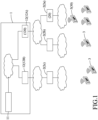
- an embodiment of a task dispatching method for electrophoretic display (EPD) tag devices 3 is implemented by a task dispatching system including a server system 1 and a plurality of routers 2 connected to the server system 1.
- the server system 1 manages and dispatches tasks to the EPD tag devices 3 via the routers 2.
- the server system 1 includes a main server 11 that is a higher level server, and a plurality of EPD servers 12 that are lower level servers connected to and managed by the main server 11.
- the server system 1 may be a single large server that is configured to be connected to all of the routers 2, and performs the functions of managing and dispatching tasks to the EPD tag devices 3 via the routers 2.
- the main server 11 may coordinate the tasks among these EPD servers 12, e.g., transferring one of the tasks from one of the EPD servers 12 to another one of the EPD servers 12.
- Each of the EPD servers 12 may be assigned to a specific area in a warehouse, and manage one or more of the routers 2 that are deployed within the area and that are connected to the EPD server 12 through a communication network.
- Each of the EPD servers 12 stores a connection list of its own, and handles commands received from the main server 11.
- the connection list is a record of the one or more of the routers 2 connected to the EPD server 12 and, for each of the one or more of the routers 2, the EPD tag device(s) 3 connected to the router 2.
- Each of the EPD tag devices 3 may be mounted on a shelf or a container (not shown) where products are placed, and is connected to one of the routers 2 with the strongest signal over a wireless network.
- the EPD tag devices 3 record and display information according to the tasks received, and have functions such as flashing lights.
- the main server 11 stores copies of the connection lists respectively of the EPD servers 12, and various commands that are inputted by clients (not shown).
- Each of the commands is exemplified as a task command hereinafter, and indicates a task and a target EPD tag device 30 that is one of the EPD tag devices 3 to which the task is assigned.
- the target EPD tag device 30 displays relevant information and flashes.
- the shelf or the container may be moved to another area in the warehouse, bringing the target EPD tag device 30 along.
- the target EPD tag device 30 may no longer be within the coverage of the router 2 to which the target EPD tag device 30 was originally connected.
- the task dispatching method for the EPD tag devices 3 is capable of ensuring that the task is correctly dispatched and performed.
- the method includes the following steps.
- step S11 the main server 11 receives and records a task command that indicates a task and the target EPD tag device 30 that the task is assigned to.
- the EPD servers 12 include an EPD server 12Awith routers 2a, 2b connected thereto, and an EPD server 12B with a router 2c connected thereto.
- the target EPD tag device 30 is connected to the router 2a.
- the copies of the connection lists of the EPD servers 12 stored in the main server 11 record these connections.
- the main server 11 further forwards this task command to the target EPD server 120 that is identified based on the copies of the connection lists of the EPD servers 12.
- the target EPD server 120 receives the task command from the main server 11, and records the task and the target EPD tag device 30 that the task is assigned to.
- the target EPD server 120 further forwards the task command to the target router 20 that is identified based on the connection list stored therein.
- the connection list of the EPD server 12A records the routers 2a, 2b that are connected thereto.
- step S21 the target router 20 checks whether the target EPD tag device 30 is currently connected thereto. When it is determined that the target EPD tag device 30 is currently connected to the target router 20, a flow of the method goes to step S22; otherwise, the flow goes to step S25.
- step S22 the target router 20 delivers the task command to the target EPD tag device 30.
- step S23 the target router 20 checks whether the task command is delivered successfully. Specifically, an acknowledgment-based protocol is used for delivery of the task command, in which the target router 20 repeatedly delivers the task command to the target EPD tag device 30 if the target EPD tag device does not acknowledge receipt of the task command. Based on this acknowledgment-based protocol, the target router 20 checks whether the task command is delivered successfully by determining whether a count of delivery exceeds a preset value.
- step S21 i.e., the target router 20 once again checks whether the target EPD tag device 30 is currently connected thereto; when it is determined that the count of delivery does not exceed the preset value, it means that the task command is delivered successfully, and the flow goes to step S31.
- step S31 the target EPD tag device 30 receives the task command.
- step S32 the target EPD tag device 30 executes the task indicated by the task command accordingly, e.g., displays information related to the task and flashes.
- step S33 the target EPD tag device 30 reports a result of execution of the task to the target EPD server 120 via the target router 20. Specifically, in step S33, the target EPD tag device 30 sends a task report that is related to the result of execution of the task to the target router 20.
- step S24 the target router 20 forwards the task report to the target EPD server 120.
- step S13 when the target EPD server 120 receives the task report, the target EPD server 120 updates its records about the task accordingly. For example, the records about the task may be stored in the target EPD server 120 and may be updated to indicate that the task has been completed. It is noted that, in step S12, whenever the task command is recorded in the target EPD server 120, the target EPD server 120 repeatedly checks whether the task has been completed. When it is determined that a count of results of checking indicating that the task is uncompleted exceeds a preset value, the target EPD server 120 forwards the task command to the target router 20 again, and the flow goes to S21, thus making another attempt on task command delivery.
- step S21 when it is determined that the target EPD tag device 30 is not currently connected to the target router 20, the flow goes to step S25.
- step S25 the target router 20 notifies the target EPD server 120 that the target EPD tag device 30 is offline by sending an offline notification to the target EPD server 120.
- the target EPD server 120 determines whether an online notification that indicates that the target EPD tag device 30 is connected to another one of the routers 2 (referred to as another router 2 hereinafter) is received from the another router 2.
- another router 2 it means that another processing flow has been triggered by the target EPD tag device 30, and the flow goes to step S43 (see Figure 4 ); otherwise, it means that the target EPD server 120 is currently unable to handle the dispatch of the task, and the flow goes to step S15.
- step S41 the target EPD tag device 30 is connected to the router 2b and sends an online notification that indicates the target EPD tag device 30 being connected to the router 2b.
- step S42 the router 2b receives the online notification and forwards the same to the EPD server 12 to which the router 2b is connected, i.e., the EPD server 12A.
- the EPD server 12A After receiving the online notification, in step S43, the EPD server 12A updates the connection list of its own accordingly.
- the connection list thus updated records that the target EPD tag device 30 is connected to the router 2b, rather than to the router 2a.
- the EPD server 12A further sends a change notification for reporting this change to the main server 11 by sending a copy of the updated connection list of its own or by forwarding the online notification.
- the main server 11 sends a request to the current target EPD server 120, which is the EPD server 12A, requesting the current target EPD server 120 to confirm whether there is any task that is assigned to the target EPD tag device 30 that has not yet been completed (hereinafter "uncompleted task").
- the main server 11 updates the copies of the connection lists of the EPD servers 12 stored therein based on the change notification.
- step S46 the EPD server 12A determines whether there is any uncompleted task by checking the records about the task stored therein. According to the example disclosed earlier, when the flow proceeds from step S11, through steps S25 and S43 to step S46, it means that the task has not yet been dispatched to the target EPD tag device 30 and is uncompleted, so "yes" would be determined in this step, and the flow would then go to step S47. It is noted that, since the router 2 to which the target EPD tag device 30 is connected has been changed and the connection lists have been updated in steps S43 and S45, the router 2b is now identified, by the main server 11 and the target EPD server 120, as the target router 20.
- step S47 the EPD server 12A forwards the task command to the target router 20, which is identified as the router 2b based on the connection list stored therein, and the flow goes to step S21. In this way, when the flow goes back to step S21, the task command may be delivered to the target EPD tag device 30 successfully.
- steps S41 to S47 in the flowchart of Figure 4 may be implemented irrespective of whether steps S25 and S14 in Figure 3 are performed, and may even be implemented without any task command being inputted by clients (namely, step S11 is not performed).
- steps S41 to S46 in the flowchart of Figure 4 will still be performed.
- step S46 the task that is related to the determination to be made in step S46 may have been previously dispatched to the target EPD tag device 30 and may have been completed. Should the task have been completed, then in step S46, "no" would be determined, and no further action would need to be performed.
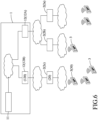
- the target EPD tag device 30 when the target EPD tag device 30 is moved out of the coverage of the routers 2a, 2b that are deployed under the EPD server 12A (that is, the target EPD server 120) and into the coverage of the router 2c, the target EPD server 120 is unable to handle the dispatch of the task. This is the case when a result of the determination as to whether an online notification is received from another router 2 in step S14 of FIG. 3 is negative.
- step S15 the target EPD server 120 updates the connection list of its own, and by sending a transfer notification to the main server 11, notifies the main server 11 that delivery of the task command is to be transferred.
- the connection list of the target EPD server 120 thus updated records that the target EPD tag device 30 is not connected to the routers 2a, 2b.
- step S16 the main server 11 receives the transfer notification.
- step S51 the target EPD tag device 30 is connected to the router 2c and sends an online notification indicating that the target EPD tag device 30 is connected to the router 2c.
- step S52 the router 2c receives the online notification and forwards the same to the EPD server 12 to which the router 2c is connected, i.e., the EPD server 12B.
- the EPD server 12B After receiving the online notification, in step S53, the EPD server 12B updates the connection list of its own accordingly.
- the connection list thus updated records that the target EPD tag device 30 is connected to the router 2c.
- the EPD server 12B further sends a change notification for reporting this change to the main server 11 by sending a copy of the updated connection list of its own or by forwarding the online notification.
- the main server 11 sends a request to the current target EPD server 120, which is the EPD server 12A, requesting the EPD server 12A to confirm whether there is any task that is assigned to the target EPD tag device 30 that has not been completed yet.
- the main server 11 updates the copies of the connection lists stored therein accordingly.
- the router 2c is now identified as the target router 20 and the EPD server 12B is now identified as the target EPD server 120 (see Figure 5 ).
- the EPD server 12A determines whether there is any task that is assigned to the target EPD tag device 30 has not been completed by checking the records about the task stored therein. Moreover, in a case where the main server 11 has received the transfer notification from the current target EPD server 120 (see step S16 in Figure 3 ), the main server 11, in step S56, further sends a target transfer signal to the EPD server 12A to notify that the task command is to be transferred to the EPD server 12B (i.e., the new target EPD server 120).
- step S57 the EPD server 12A forwards or transfers, according to the target transfer signal, the task command to the (new) target EPD server 120, which is the EPD server 12B. Then, the flow goes back to step S12, and the task command may be delivered to the target EPD tag device 30 successfully.
- steps S51 to S56 in the flowchart of Figure 5 may be implemented irrespective of whether steps S25, S14, S15 and S16 in Figure 3 are performed.
- steps S51 to S57 in the flowchart of Figure 5 will still be performed. Therefore, the task related to the determination to be made in step S56 may have been previously dispatched to the target EPD tag device 30 and may have been completed. Should the task have been completed, then in step S56, "no" would be determined and no further action would need to be performed.
- the task dispatching method for the EPD tag devices of this disclosure realizes task dispatching by making the target EPD server 120 forward the task command to the target router 20, which determines whether the target EPD tag device 30 is "online” (connected to the target router 20) and notifies the target EPD server 120 when determining that the target EPD tag device 30 is "offline,” by making the target EPD server 120 forward the task command to another router 2 when the target EPD server 120 receives an online notification from the another router 2, and by making the target EPD server 120 transfer the task command to another EPD server 12 when the target EPD server 120 does not receive an online notification from another router 2.
Landscapes
- Engineering & Computer Science (AREA)
- Business, Economics & Management (AREA)
- Signal Processing (AREA)
- Economics (AREA)
- Computer Networks & Wireless Communication (AREA)
- Human Resources & Organizations (AREA)
- General Business, Economics & Management (AREA)
- Operations Research (AREA)
- Quality & Reliability (AREA)
- Strategic Management (AREA)
- Tourism & Hospitality (AREA)
- Physics & Mathematics (AREA)
- Marketing (AREA)
- General Physics & Mathematics (AREA)
- Theoretical Computer Science (AREA)
- Entrepreneurship & Innovation (AREA)
- Development Economics (AREA)
- Accounting & Taxation (AREA)
- Finance (AREA)
- Data Exchanges In Wide-Area Networks (AREA)
- Mobile Radio Communication Systems (AREA)
Claims (10)
- Aufgabenzuweisungsverfahren für Elektrophoretische-Anzeige-(EPD-)Etikettvorrichtungen (3), die von einem Serversystem (1) und einer Vielzahl von mit dem Serversystem (1) verbundenen Routern (2) zu implementieren sind, wobei jede der EPD-Etikettvorrichtungen (3) konfiguriert ist, um über ein Drahtlosnetzwerk mit einem der Router (2) verbunden zu sein, wobei das Verfahren gekennzeichnet ist durch:a) Empfangen, durch das Serversystem (1), eines Aufgabenbefehls, der eine Aufgabe und eine Ziel-EDP-Etikettvorrichtung (30) angibt, welche eine aus den EPD-Etikettvorrichtungen (3) ist, der die Aufgabe zugeteilt wird;b) Weiterleiten, durch das Serversystem (1), des Aufgabenbefehls an einen Zielrouter (20), der einer aus den Routern (2) ist, mit dem die Ziel-EDP-Etikettvorrichtung (30) verbunden ist, und der beruhend auf zumindest einer im Serversystem (1) gespeicherten Verbindungsliste identifiziert wird, wobei jede der zumindest einen Verbindungsliste zumindest einen der Router (2) und für jeden des zumindest einen der Router (2) eine oder mehrere aus den mit dem Router (2) verbundenen EPD-Etikettvorrichtungen (3) erfasst;c) Überprüfen, durch den Zielrouter (20), ob die Ziel-EPD-Etikettvorrichtung (30) aktuell mit diesem verbunden ist;d) durch den Zielrouter (20) Benachrichtigen des Serversystems (1) darüber, dass die Ziel-EPD-Etikettvorrichtung (30) offline ist, durch Senden einer Offline-Benachrichtigung an das Serversystem (1), wenn bestimmt wird, dass die Ziel-EPD-Etikettvorrichtung (30) aktuell nicht mit dem Zielrouter (20) verbunden ist;e) als Antwort auf das Empfangen der Offline-Benachrichtigung vom Zielrouter (20) und einer Online-Benachrichtigung, die angibt, dass die Ziel-EPD-Etikettvorrichtung (30) mit einem anderen der Router (2) verbunden ist, durch das Serversystem (1), Aktualisieren der zumindest einen Verbindungsliste beruhend auf der Offline-Benachrichtigung und der Online-Benachrichtigung, und Identifizieren des anderen der Router (2) als Zielrouter (20);
nach Schritt e) Wiederholen von Schritt b) durch das Serversystem (1) und von Schritt c) durch den Zielrouter (20); undf) Zustellen des Aufgabenbefehls an die Ziel-EPD-Etikettvorrichtung (30) durch den Zielrouter (20), wenn bestimmt wird, dass die Ziel-EPD-Etikettvorrichtung (30) aktuell mit dem Zielrouter (20) verbunden ist. - Verfahren nach Anspruch 1, wobei das Serversystem (1) einen Hauptserver (11) und eine Vielzahl von mit dem Hauptserver (11) verbundenen und von diesem verwalteten EPD-Servern (12) umfasst, wobei mit jedem der EPD-Server (12) zumindest einer der Router (2) verbunden ist; wobeiSchritt b) folgende Schritte umfasst:b1) Weiterleiten des Aufgabenbefehls an einen Ziel-EPD-Server (120), der einer aus den EPD-Servern (12) ist, mit denen der Zielrouter (20) verbunden ist, durch den Hauptserver (11) undb2) Weiterleiten des Aufgabenbefehls an den Zielrouter (20) durch den Ziel-EPD-Server (120); undnach Schritt e) Wiederholen von Schritt b2) durch den Ziel-EPD-Server (120).
- Verfahren nach Anspruch 2, wobei jeder der EPD-Server (12) eine Verbindungsliste des EPD-Servers speichert und der Hauptserver (11) Kopien der Verbindungslisten der EPD-Server (12) speichert, wobeiin Schritt b1) der Hauptserver (11) den Aufgabenbefehl an einen Ziel-EPD-Server (120) weiterleitet und der beruhend auf den Kopien der Verbindungslisten der im Hauptserver (11) gespeicherten EPD-Server (12) identifiziert wird, undin Schritt b2) der Ziel-EPD-Server (120) den Aufgabenbefehl an den Zielrouter (20) weiterleitet und der beruhend auf der im Ziel-EPD-Server (120) gespeicherten Verbindungsliste identifiziert wird.
- Verfahren nach Anspruch 2, wobei in Schritt e):der Ziel-EPD-Server (120) die Offline-Benachrichtigung vom Zielrouter (20) empfängt;der Ziel-EPD-Server (120) die Online-Benachrichtigung von dem anderen der Router (2) empfängt; undder Ziel-EPD-Server (120) die Verbindungsliste desselben beruhend auf der Offline-Benachrichtigung und der Online-Benachrichtigung aktualisiert und der andere aus den Routern (2) als Zielrouter (20) identifiziert wird.
- Verfahren nach Anspruch 4, ferner umfassend folgenden Schritt:
f) falls die Online-Benachrichtigung von keinem der Router (2), mit denen der Ziel-EPD-Server (120) verbunden ist, empfangen wird, Benachrichtigen des Hauptservers durch den Ziel-EPD-Server (120), dass die Aufgabe zu übertragen ist, indem eine Übertragungsbenachrichtigung an den Hauptserver (11) gesendet wird. - Verfahren nach Anspruch 5, ferner umfassend folgende Schritte:g) Empfangen der Übertragungsbenachrichtigung durch den Hauptserver (11);h) Empfangen, durch den Hauptserver (11), einer Änderungsbenachrichtigung von einem anderen der EPD-Server, die angibt, dass die Ziel-EPD-Etikettvorrichtung (30) mit einem der Router (2) verbunden ist, welcher mit dem anderen der EPD-Server (12) verbunden ist; undi) Identifizieren, durch den Hauptserver (11) des anderen der EPD-Server (12) als Ziel-EPD-Server (120) und Identifizieren des einen aus den Routern (2), mit dem die Ziel-EPD-Etikettvorrichtung (30) verbunden ist, als Zielrouter (20).
- Verfahren nach einem der Ansprüche 2 bis 6, ferner umfassend folgende Schritte:Speichern, durch jeden der EPD-Server (12A,B), einer Verbindungsliste, die ein Verzeichnis von einem oder mehreren der mit diesen verbundenen Router (2) und der mit jedem aus dem einen oder den mehreren Routern (2) verbundenen EPD-Etikettvorrichtung(en) (3) ist;Empfangen, durch einen zweiten Router (2c) aus den Routern (2), einer Online-Benachrichtigung, die angibt, dass eine aus den EPD-Etikettvorrichtungen (30), die ursprünglich mit einem ersten Router (2a) verbunden ist, wie in der Verbindungsliste erfasst, mit dem zweiten Router (2c) verbunden ist;Weiterleiten, durch den zweiten Router (2c), der Online-Benachrichtigung an den EPD-Server (12B), mit dem der zweite Router (2c) verbunden ist;Aktualisieren, durch den EPD-Server (12B), mit dem der zweite Router (2c) verbunden ist, der Verbindungsliste beruhend auf der Online-Benachrichtigung, sodass das Verzeichnis der Verbindungsliste geändert wird und zwar ausgehend davon, dass die EPD-Etikettvorrichtung (30) mit dem ersten Router (2c) verbunden ist, dahingehend, dass die EPD-Etikettvorrichtung (30) mit dem zweiten Router (2c) verbunden ist;Senden, durch den EPD-Server (12B), mit dem der zweite Router (2c) verbunden ist, einer Änderungsbenachrichtigung, um dem Hauptserver (11) diese Änderung zu melden;als Antwort auf das Empfangen der Änderungsbenachrichtigung Senden einer Anfrage durch den Hauptserver (11) an den EPD-Server (12A), mit dem der erste Router (2a) verbunden ist, zum Anfordern einer Bestätigung darüber, ob eine der EPD-Etikettvorrichtung (30) zugeteilte Aufgabe vorliegt, die noch nicht ausgeführt wurde; undwenn bestimmt wird, dass eine der EPD-Etikettvorrichtung (30) zugeteilte Aufgabe vorliegt, die noch nicht ausgeführt wurde, Weiterleiten, durch den EPD-Server (12A), mit dem der erste Router (2a) verbunden ist, eines Befehls in Bezug auf die Aufgabe, die nicht ausgeführt wurde, an den EPD-Server (12), mit dem der zweite Router (2c) verbunden ist.
- Verfahren nach Anspruch 1, ferner umfassend nach Schritt f) folgenden Schritt:
j) durch den Zielrouter (20) Bestimmen, ob der Aufgabenbefehl erfolgreich zugestellt wurde, und wenn bestimmt wird, dass der Aufgabenbefehl nicht erfolgreich zugestellt wurde, Wiederholen von Schritt c). - Verfahren nach Anspruch 1, wobei Schritt a) ferner das Erfassen des Aufgabenbefehls umfasst, wobei das Verfahren ferner nach Schritt a) folgenden Schritt umfasst:
k) durch das Serversystem (1) wiederholtes Überprüfen, ob die Aufgabe ausgeführt wurde, und wenn bestimmt wird, dass die Anzahl von Überprüfungsergebnissen, die anzeigen, dass die Aufgabe nicht ausgeführt wurde, einen voreingestellten Wert übersteigt, Wiederholen von Schritt b). - Aufgabenzuweisungssystem für Elektrophoretische-Anzeige-(EPD-)Etikettvorrichtungen (3), gekennzeichnet durch:ein Serversystem (1) mit zumindest einer darin gespeicherten Verbindungsliste; undeine Vielzahl von mit dem Serversystem (1) verbundenen Routern (2),wobei jede der zumindest einen Verbindungsliste zumindest einen der Router (2) und für jeden des zumindest einen der Router (2) eine oder mehrere aus den mit dem Router (2) verbundenen EPD-Etikettvorrichtungen (3) erfasst;wobei das Serversystem (1) für Folgendes konfiguriert ist:Empfangen eines Aufgabenbefehls, der eine Aufgabe und eine Ziel-EDP-Etikettvorrichtung (30) angibt, welche eine aus den EPD-Etikettvorrichtungen (3) ist, der die Aufgabe zugeteilt wird; undWeiterleiten des Aufgabenbefehls an einen Zielrouter (20), der einer aus den Routern (2) ist, mit dem die Ziel-EDP-Etikettvorrichtung (30) verbunden ist, und der beruhend auf der zumindest einen Verbindungsliste identifiziert wird,wobei der Zielrouter (20) konfiguriert ist, um zu überprüfen, ob die Ziel-EPD-Etikettvorrichtung (30) aktuell mit diesem verbunden ist, und das Serversystem (1) darüber zu benachrichtigen, dass die Ziel-EPD-Etikettvorrichtung (30) offline ist, indem er eine Offline-Benachrichtigung an das Serversystem (1) sendet, wenn bestimmt wird, dass die Ziel-EPD-Etikettvorrichtung (30) aktuell nicht mit dem Zielrouter (20) verbunden ist;wobei das Serversystem (1) ferner konfiguriert ist, um die Offline-Benachrichtigung vom Zielrouter (20) und eine Online-Benachrichtigung, die angibt, dass die Ziel-EPD-Etikettvorrichtung (30) mit einem anderen der Router (2) verbunden ist, zu empfangen und die zumindest eine Verbindungsliste beruhend auf der Offline-Benachrichtigung und der Online-Benachrichtigung zu aktualisieren, wobei der andere der Router (2) als Zielrouter (20) identifiziert wird,wobei das Serversystem (1) konfiguriert ist, um den Aufgabenbefehl erneut an den Zielrouter (20) weiterzuleiten und der Zielrouter (20) konfiguriert ist, um erneut zu überprüfen, ob die Ziel-EPD-Etikettvorrichtung (30) aktuell mit diesem verbunden ist;wobei der Zielrouter (20) ferner konfiguriert ist, um den Aufgabenbefehl an die Ziel-EPD-Etikettvorrichtung (30) zuzustellen, wenn bestimmt wird, dass die Ziel-EPD-Etikettvorrichtung (30) aktuell mit diesem verbunden ist.
Applications Claiming Priority (1)
| Application Number | Priority Date | Filing Date | Title |
|---|---|---|---|
| TW111123744A TWI807880B (zh) | 2022-06-24 | 2022-06-24 | 在漫遊環境下的工作派送方法 |
Publications (3)
| Publication Number | Publication Date |
|---|---|
| EP4296936A1 EP4296936A1 (de) | 2023-12-27 |
| EP4296936B1 true EP4296936B1 (de) | 2024-11-27 |
| EP4296936C0 EP4296936C0 (de) | 2024-11-27 |
Family
ID=86331178
Family Applications (1)
| Application Number | Title | Priority Date | Filing Date |
|---|---|---|---|
| EP23172480.8A Active EP4296936B1 (de) | 2022-06-24 | 2023-05-10 | Aufgabenzuweisungsverfahren und -system für etikettenvorrichtungen mit elektrophoretischer anzeige (epd) |
Country Status (4)
| Country | Link |
|---|---|
| US (1) | US12335356B2 (de) |
| EP (1) | EP4296936B1 (de) |
| CN (1) | CN117336815A (de) |
| TW (1) | TWI807880B (de) |
Family Cites Families (9)
| Publication number | Priority date | Publication date | Assignee | Title |
|---|---|---|---|---|
| US20130201316A1 (en) * | 2012-01-09 | 2013-08-08 | May Patents Ltd. | System and method for server based control |
| CN102609233B (zh) * | 2012-03-02 | 2014-11-26 | 无锡威峰科技有限公司 | 货架无源电子标签显示系统及显示方法 |
| TWI574213B (zh) * | 2012-03-02 | 2017-03-11 | 友達光電股份有限公司 | 電子標籤系統及其更新電子標籤之方法 |
| CN202677373U (zh) * | 2012-06-20 | 2013-01-16 | 无锡威峰科技有限公司 | 采用epd屏的电子货架标签系统 |
| JP6116941B2 (ja) * | 2013-02-28 | 2017-04-19 | 株式会社東芝 | 情報処理装置 |
| KR102400014B1 (ko) * | 2014-12-26 | 2022-05-20 | 삼성전자주식회사 | 이동 단말의 데이터 브로드캐스팅을 이용한 서비스 제공 방법 및 장치 |
| GB201707024D0 (en) * | 2017-05-02 | 2017-06-14 | Henry Dean Charles | Asset tag and methods and devices for restocking and asset tracking |
| KR101984224B1 (ko) * | 2017-06-01 | 2019-05-30 | 주식회사 디피솔루션 | 태그 시스템 |
| CN107808183A (zh) * | 2017-11-14 | 2018-03-16 | 阳仲松 | 一种远程控制墨水屏电子标签系统 |
-
2022
- 2022-06-24 TW TW111123744A patent/TWI807880B/zh active
- 2022-08-15 CN CN202210972315.7A patent/CN117336815A/zh active Pending
-
2023
- 2023-04-27 US US18/307,863 patent/US12335356B2/en active Active
- 2023-05-10 EP EP23172480.8A patent/EP4296936B1/de active Active
Also Published As
| Publication number | Publication date |
|---|---|
| TW202401315A (zh) | 2024-01-01 |
| EP4296936A1 (de) | 2023-12-27 |
| TWI807880B (zh) | 2023-07-01 |
| CN117336815A (zh) | 2024-01-02 |
| US12335356B2 (en) | 2025-06-17 |
| EP4296936C0 (de) | 2024-11-27 |
| US20240080376A1 (en) | 2024-03-07 |
Similar Documents
| Publication | Publication Date | Title |
|---|---|---|
| US9733633B2 (en) | Method and system for order fulfillment | |
| CN111573112B (zh) | 仓储系统、集货方法、装置、料箱移动装置及控制终端 | |
| CN112686587A (zh) | 一种支持修改收件信息的方法和装置 | |
| CN116506434B (zh) | 一种多终端可离线运行的智能仓库管理方法 | |
| CN110976306A (zh) | 一种货物分拣方法、系统、控制服务器及介质 | |
| CN110232426A (zh) | 基于射频识别的物流系统、方法、装置、设备和存储介质 | |
| CN101102360A (zh) | 一种自动回单方法 | |
| US5911148A (en) | Automated message processing system configured for automated tape device management | |
| CN116976795A (zh) | 一种物料发放处理方法、装置、系统及介质 | |
| EP4296936A1 (de) | Aufgabenzuweisungsverfahren und -system für etikettenvorrichtungen mit elektrophoretischer anzeige (epd) | |
| JP6813193B2 (ja) | 要員選択装置、要員選択方法及びプログラム | |
| CN1694448A (zh) | 将状态信息传送到计算机资源的用户的方法和系统 | |
| CN103297477B (zh) | 一种数据采集上报系统及数据处理方法和代理服务器 | |
| CN115115194A (zh) | 一种自动化立体仓库的作业任务调度方法及系统 | |
| CN115526567A (zh) | 一种货物自动转运的系统及方法 | |
| CN112508467A (zh) | 订单发货的方法和装置 | |
| CN114489520B (zh) | 订单打印方法、装置、计算机设备和存储介质 | |
| JP5200658B2 (ja) | サーバシステム | |
| CN115689848A (zh) | 一种废钢料场无人抓钢机调度方法及系统 | |
| CN112672369B (zh) | 一种电子价签管理方法、服务器及计算机可读存储介质 | |
| JP4142678B2 (ja) | 印版収納方法 | |
| CN111105184B (zh) | 售货机备货方法及其控制系统和计算机可读存储介质 | |
| CN114897450A (zh) | 一种云端数字供应链服务管理平台 | |
| JP2022157166A (ja) | 管理システム、管理方法、管理プログラム | |
| CN114435842A (zh) | 货物验收处理方法、装置和系统 |
Legal Events
| Date | Code | Title | Description |
|---|---|---|---|
| PUAI | Public reference made under article 153(3) epc to a published international application that has entered the european phase |
Free format text: ORIGINAL CODE: 0009012 |
|
| STAA | Information on the status of an ep patent application or granted ep patent |
Free format text: STATUS: THE APPLICATION HAS BEEN PUBLISHED |
|
| AK | Designated contracting states |
Kind code of ref document: A1 Designated state(s): AL AT BE BG CH CY CZ DE DK EE ES FI FR GB GR HR HU IE IS IT LI LT LU LV MC ME MK MT NL NO PL PT RO RS SE SI SK SM TR |
|
| STAA | Information on the status of an ep patent application or granted ep patent |
Free format text: STATUS: REQUEST FOR EXAMINATION WAS MADE |
|
| 17P | Request for examination filed |
Effective date: 20240220 |
|
| RBV | Designated contracting states (corrected) |
Designated state(s): AL AT BE BG CH CY CZ DE DK EE ES FI FR GB GR HR HU IE IS IT LI LT LU LV MC ME MK MT NL NO PL PT RO RS SE SI SK SM TR |
|
| REG | Reference to a national code |
Ref country code: DE Ref legal event code: R079 Free format text: PREVIOUS MAIN CLASS: G06Q0050280000 Ipc: G06Q0010080000 Ref document number: 602023001155 Country of ref document: DE |
|
| GRAP | Despatch of communication of intention to grant a patent |
Free format text: ORIGINAL CODE: EPIDOSNIGR1 |
|
| STAA | Information on the status of an ep patent application or granted ep patent |
Free format text: STATUS: GRANT OF PATENT IS INTENDED |
|
| RIC1 | Information provided on ipc code assigned before grant |
Ipc: G06Q 10/08 20230101AFI20240521BHEP |
|
| INTG | Intention to grant announced |
Effective date: 20240617 |
|
| GRAS | Grant fee paid |
Free format text: ORIGINAL CODE: EPIDOSNIGR3 |
|
| GRAA | (expected) grant |
Free format text: ORIGINAL CODE: 0009210 |
|
| STAA | Information on the status of an ep patent application or granted ep patent |
Free format text: STATUS: THE PATENT HAS BEEN GRANTED |
|
| AK | Designated contracting states |
Kind code of ref document: B1 Designated state(s): AL AT BE BG CH CY CZ DE DK EE ES FI FR GB GR HR HU IE IS IT LI LT LU LV MC ME MK MT NL NO PL PT RO RS SE SI SK SM TR |
|
| REG | Reference to a national code |
Ref country code: GB Ref legal event code: FG4D |
|
| REG | Reference to a national code |
Ref country code: CH Ref legal event code: EP |
|
| REG | Reference to a national code |
Ref country code: IE Ref legal event code: FG4D |
|
| REG | Reference to a national code |
Ref country code: DE Ref legal event code: R096 Ref document number: 602023001155 Country of ref document: DE |
|
| U01 | Request for unitary effect filed |
Effective date: 20241209 |
|
| U07 | Unitary effect registered |
Designated state(s): AT BE BG DE DK EE FI FR IT LT LU LV MT NL PT RO SE SI Effective date: 20241219 |
|
| PG25 | Lapsed in a contracting state [announced via postgrant information from national office to epo] |
Ref country code: IS Free format text: LAPSE BECAUSE OF FAILURE TO SUBMIT A TRANSLATION OF THE DESCRIPTION OR TO PAY THE FEE WITHIN THE PRESCRIBED TIME-LIMIT Effective date: 20250327 Ref country code: HR Free format text: LAPSE BECAUSE OF FAILURE TO SUBMIT A TRANSLATION OF THE DESCRIPTION OR TO PAY THE FEE WITHIN THE PRESCRIBED TIME-LIMIT Effective date: 20241127 |
|
| PG25 | Lapsed in a contracting state [announced via postgrant information from national office to epo] |
Ref country code: ES Free format text: LAPSE BECAUSE OF FAILURE TO SUBMIT A TRANSLATION OF THE DESCRIPTION OR TO PAY THE FEE WITHIN THE PRESCRIBED TIME-LIMIT Effective date: 20241127 |
|
| PG25 | Lapsed in a contracting state [announced via postgrant information from national office to epo] |
Ref country code: NO Free format text: LAPSE BECAUSE OF FAILURE TO SUBMIT A TRANSLATION OF THE DESCRIPTION OR TO PAY THE FEE WITHIN THE PRESCRIBED TIME-LIMIT Effective date: 20250227 |
|
| PG25 | Lapsed in a contracting state [announced via postgrant information from national office to epo] |
Ref country code: GR Free format text: LAPSE BECAUSE OF FAILURE TO SUBMIT A TRANSLATION OF THE DESCRIPTION OR TO PAY THE FEE WITHIN THE PRESCRIBED TIME-LIMIT Effective date: 20250228 |
|
| PG25 | Lapsed in a contracting state [announced via postgrant information from national office to epo] |
Ref country code: PL Free format text: LAPSE BECAUSE OF FAILURE TO SUBMIT A TRANSLATION OF THE DESCRIPTION OR TO PAY THE FEE WITHIN THE PRESCRIBED TIME-LIMIT Effective date: 20241127 |
|
| PG25 | Lapsed in a contracting state [announced via postgrant information from national office to epo] |
Ref country code: RS Free format text: LAPSE BECAUSE OF FAILURE TO SUBMIT A TRANSLATION OF THE DESCRIPTION OR TO PAY THE FEE WITHIN THE PRESCRIBED TIME-LIMIT Effective date: 20250227 |
|
| U20 | Renewal fee for the european patent with unitary effect paid |
Year of fee payment: 3 Effective date: 20250423 |
|
| PG25 | Lapsed in a contracting state [announced via postgrant information from national office to epo] |
Ref country code: SM Free format text: LAPSE BECAUSE OF FAILURE TO SUBMIT A TRANSLATION OF THE DESCRIPTION OR TO PAY THE FEE WITHIN THE PRESCRIBED TIME-LIMIT Effective date: 20241127 |
|
| PG25 | Lapsed in a contracting state [announced via postgrant information from national office to epo] |
Ref country code: SK Free format text: LAPSE BECAUSE OF FAILURE TO SUBMIT A TRANSLATION OF THE DESCRIPTION OR TO PAY THE FEE WITHIN THE PRESCRIBED TIME-LIMIT Effective date: 20241127 |
|
| PG25 | Lapsed in a contracting state [announced via postgrant information from national office to epo] |
Ref country code: CZ Free format text: LAPSE BECAUSE OF FAILURE TO SUBMIT A TRANSLATION OF THE DESCRIPTION OR TO PAY THE FEE WITHIN THE PRESCRIBED TIME-LIMIT Effective date: 20241127 |
|
| PLBE | No opposition filed within time limit |
Free format text: ORIGINAL CODE: 0009261 |
|
| STAA | Information on the status of an ep patent application or granted ep patent |
Free format text: STATUS: NO OPPOSITION FILED WITHIN TIME LIMIT |
|
| 26N | No opposition filed |
Effective date: 20250828 |
|
| PG25 | Lapsed in a contracting state [announced via postgrant information from national office to epo] |
Ref country code: MC Free format text: LAPSE BECAUSE OF FAILURE TO SUBMIT A TRANSLATION OF THE DESCRIPTION OR TO PAY THE FEE WITHIN THE PRESCRIBED TIME-LIMIT Effective date: 20241127 |
|
| U20 | Renewal fee for the european patent with unitary effect paid |
Year of fee payment: 4 Effective date: 20260302 |
|
| PG25 | Lapsed in a contracting state [announced via postgrant information from national office to epo] |
Ref country code: IE Free format text: LAPSE BECAUSE OF NON-PAYMENT OF DUE FEES Effective date: 20250510 |