EP4295941B1 - Abgasreinigungskatalysator - Google Patents
Abgasreinigungskatalysator Download PDFInfo
- Publication number
- EP4295941B1 EP4295941B1 EP23179206.0A EP23179206A EP4295941B1 EP 4295941 B1 EP4295941 B1 EP 4295941B1 EP 23179206 A EP23179206 A EP 23179206A EP 4295941 B1 EP4295941 B1 EP 4295941B1
- Authority
- EP
- European Patent Office
- Prior art keywords
- coating layer
- catalyst
- exhaust gas
- specific surface
- surface area
- Prior art date
- Legal status (The legal status is an assumption and is not a legal conclusion. Google has not performed a legal analysis and makes no representation as to the accuracy of the status listed.)
- Active
Links
Images






Classifications
-
- B—PERFORMING OPERATIONS; TRANSPORTING
- B01—PHYSICAL OR CHEMICAL PROCESSES OR APPARATUS IN GENERAL
- B01D—SEPARATION
- B01D53/00—Separation of gases or vapours; Recovering vapours of volatile solvents from gases; Chemical or biological purification of waste gases, e.g. engine exhaust gases, smoke, fumes, flue gases, aerosols
- B01D53/34—Chemical or biological purification of waste gases
- B01D53/92—Chemical or biological purification of waste gases of engine exhaust gases
- B01D53/94—Chemical or biological purification of waste gases of engine exhaust gases by catalytic processes
- B01D53/9445—Simultaneously removing carbon monoxide, hydrocarbons or nitrogen oxides making use of three-way catalysts [TWC] or four-way-catalysts [FWC]
- B01D53/945—Simultaneously removing carbon monoxide, hydrocarbons or nitrogen oxides making use of three-way catalysts [TWC] or four-way-catalysts [FWC] characterised by a specific catalyst
-
- B—PERFORMING OPERATIONS; TRANSPORTING
- B01—PHYSICAL OR CHEMICAL PROCESSES OR APPARATUS IN GENERAL
- B01D—SEPARATION
- B01D53/00—Separation of gases or vapours; Recovering vapours of volatile solvents from gases; Chemical or biological purification of waste gases, e.g. engine exhaust gases, smoke, fumes, flue gases, aerosols
- B01D53/34—Chemical or biological purification of waste gases
- B01D53/74—General processes for purification of waste gases; Apparatus or devices specially adapted therefor
- B01D53/86—Catalytic processes
- B01D53/8621—Removing nitrogen compounds
- B01D53/8625—Nitrogen oxides
- B01D53/8628—Processes characterised by a specific catalyst
-
- B—PERFORMING OPERATIONS; TRANSPORTING
- B01—PHYSICAL OR CHEMICAL PROCESSES OR APPARATUS IN GENERAL
- B01D—SEPARATION
- B01D53/00—Separation of gases or vapours; Recovering vapours of volatile solvents from gases; Chemical or biological purification of waste gases, e.g. engine exhaust gases, smoke, fumes, flue gases, aerosols
- B01D53/34—Chemical or biological purification of waste gases
- B01D53/46—Removing components of defined structure
- B01D53/54—Nitrogen compounds
- B01D53/56—Nitrogen oxides
-
- B—PERFORMING OPERATIONS; TRANSPORTING
- B01—PHYSICAL OR CHEMICAL PROCESSES OR APPARATUS IN GENERAL
- B01D—SEPARATION
- B01D53/00—Separation of gases or vapours; Recovering vapours of volatile solvents from gases; Chemical or biological purification of waste gases, e.g. engine exhaust gases, smoke, fumes, flue gases, aerosols
- B01D53/34—Chemical or biological purification of waste gases
- B01D53/74—General processes for purification of waste gases; Apparatus or devices specially adapted therefor
- B01D53/86—Catalytic processes
- B01D53/88—Handling or mounting catalysts
-
- B—PERFORMING OPERATIONS; TRANSPORTING
- B01—PHYSICAL OR CHEMICAL PROCESSES OR APPARATUS IN GENERAL
- B01D—SEPARATION
- B01D53/00—Separation of gases or vapours; Recovering vapours of volatile solvents from gases; Chemical or biological purification of waste gases, e.g. engine exhaust gases, smoke, fumes, flue gases, aerosols
- B01D53/34—Chemical or biological purification of waste gases
- B01D53/92—Chemical or biological purification of waste gases of engine exhaust gases
- B01D53/94—Chemical or biological purification of waste gases of engine exhaust gases by catalytic processes
- B01D53/9459—Removing one or more of nitrogen oxides, carbon monoxide, or hydrocarbons by multiple successive catalytic functions; systems with more than one different function, e.g. zone coated catalysts
- B01D53/9463—Removing one or more of nitrogen oxides, carbon monoxide, or hydrocarbons by multiple successive catalytic functions; systems with more than one different function, e.g. zone coated catalysts with catalysts positioned on one brick
- B01D53/9472—Removing one or more of nitrogen oxides, carbon monoxide, or hydrocarbons by multiple successive catalytic functions; systems with more than one different function, e.g. zone coated catalysts with catalysts positioned on one brick in different zones
-
- B—PERFORMING OPERATIONS; TRANSPORTING
- B01—PHYSICAL OR CHEMICAL PROCESSES OR APPARATUS IN GENERAL
- B01J—CHEMICAL OR PHYSICAL PROCESSES, e.g. CATALYSIS OR COLLOID CHEMISTRY; THEIR RELEVANT APPARATUS
- B01J23/00—Catalysts comprising metals or metal oxides or hydroxides, not provided for in group B01J21/00
- B01J23/002—Mixed oxides other than spinels, e.g. perovskite
-
- B—PERFORMING OPERATIONS; TRANSPORTING
- B01—PHYSICAL OR CHEMICAL PROCESSES OR APPARATUS IN GENERAL
- B01J—CHEMICAL OR PHYSICAL PROCESSES, e.g. CATALYSIS OR COLLOID CHEMISTRY; THEIR RELEVANT APPARATUS
- B01J23/00—Catalysts comprising metals or metal oxides or hydroxides, not provided for in group B01J21/00
- B01J23/10—Catalysts comprising metals or metal oxides or hydroxides, not provided for in group B01J21/00 of rare earths
-
- B—PERFORMING OPERATIONS; TRANSPORTING
- B01—PHYSICAL OR CHEMICAL PROCESSES OR APPARATUS IN GENERAL
- B01J—CHEMICAL OR PHYSICAL PROCESSES, e.g. CATALYSIS OR COLLOID CHEMISTRY; THEIR RELEVANT APPARATUS
- B01J23/00—Catalysts comprising metals or metal oxides or hydroxides, not provided for in group B01J21/00
- B01J23/38—Catalysts comprising metals or metal oxides or hydroxides, not provided for in group B01J21/00 of noble metals
- B01J23/40—Catalysts comprising metals or metal oxides or hydroxides, not provided for in group B01J21/00 of noble metals of the platinum group metals
- B01J23/42—Platinum
-
- B—PERFORMING OPERATIONS; TRANSPORTING
- B01—PHYSICAL OR CHEMICAL PROCESSES OR APPARATUS IN GENERAL
- B01J—CHEMICAL OR PHYSICAL PROCESSES, e.g. CATALYSIS OR COLLOID CHEMISTRY; THEIR RELEVANT APPARATUS
- B01J23/00—Catalysts comprising metals or metal oxides or hydroxides, not provided for in group B01J21/00
- B01J23/38—Catalysts comprising metals or metal oxides or hydroxides, not provided for in group B01J21/00 of noble metals
- B01J23/40—Catalysts comprising metals or metal oxides or hydroxides, not provided for in group B01J21/00 of noble metals of the platinum group metals
- B01J23/44—Palladium
-
- B—PERFORMING OPERATIONS; TRANSPORTING
- B01—PHYSICAL OR CHEMICAL PROCESSES OR APPARATUS IN GENERAL
- B01J—CHEMICAL OR PHYSICAL PROCESSES, e.g. CATALYSIS OR COLLOID CHEMISTRY; THEIR RELEVANT APPARATUS
- B01J23/00—Catalysts comprising metals or metal oxides or hydroxides, not provided for in group B01J21/00
- B01J23/38—Catalysts comprising metals or metal oxides or hydroxides, not provided for in group B01J21/00 of noble metals
- B01J23/40—Catalysts comprising metals or metal oxides or hydroxides, not provided for in group B01J21/00 of noble metals of the platinum group metals
- B01J23/46—Ruthenium, rhodium, osmium or iridium
- B01J23/464—Rhodium
-
- B—PERFORMING OPERATIONS; TRANSPORTING
- B01—PHYSICAL OR CHEMICAL PROCESSES OR APPARATUS IN GENERAL
- B01J—CHEMICAL OR PHYSICAL PROCESSES, e.g. CATALYSIS OR COLLOID CHEMISTRY; THEIR RELEVANT APPARATUS
- B01J23/00—Catalysts comprising metals or metal oxides or hydroxides, not provided for in group B01J21/00
- B01J23/38—Catalysts comprising metals or metal oxides or hydroxides, not provided for in group B01J21/00 of noble metals
- B01J23/54—Catalysts comprising metals or metal oxides or hydroxides, not provided for in group B01J21/00 of noble metals combined with metals, oxides or hydroxides provided for in groups B01J23/02 - B01J23/36
- B01J23/56—Platinum group metals
- B01J23/63—Platinum group metals with rare earths or actinides
-
- B—PERFORMING OPERATIONS; TRANSPORTING
- B01—PHYSICAL OR CHEMICAL PROCESSES OR APPARATUS IN GENERAL
- B01J—CHEMICAL OR PHYSICAL PROCESSES, e.g. CATALYSIS OR COLLOID CHEMISTRY; THEIR RELEVANT APPARATUS
- B01J35/00—Catalysts, in general, characterised by their form or physical properties
- B01J35/19—Catalysts containing parts with different compositions
-
- B—PERFORMING OPERATIONS; TRANSPORTING
- B01—PHYSICAL OR CHEMICAL PROCESSES OR APPARATUS IN GENERAL
- B01J—CHEMICAL OR PHYSICAL PROCESSES, e.g. CATALYSIS OR COLLOID CHEMISTRY; THEIR RELEVANT APPARATUS
- B01J35/00—Catalysts, in general, characterised by their form or physical properties
- B01J35/60—Catalysts, in general, characterised by their form or physical properties characterised by their surface properties or porosity
- B01J35/61—Surface area
- B01J35/612—Surface area less than 10 m2/g
-
- B—PERFORMING OPERATIONS; TRANSPORTING
- B01—PHYSICAL OR CHEMICAL PROCESSES OR APPARATUS IN GENERAL
- B01J—CHEMICAL OR PHYSICAL PROCESSES, e.g. CATALYSIS OR COLLOID CHEMISTRY; THEIR RELEVANT APPARATUS
- B01J35/00—Catalysts, in general, characterised by their form or physical properties
- B01J35/60—Catalysts, in general, characterised by their form or physical properties characterised by their surface properties or porosity
- B01J35/61—Surface area
- B01J35/613—10-100 m2/g
-
- B—PERFORMING OPERATIONS; TRANSPORTING
- B01—PHYSICAL OR CHEMICAL PROCESSES OR APPARATUS IN GENERAL
- B01J—CHEMICAL OR PHYSICAL PROCESSES, e.g. CATALYSIS OR COLLOID CHEMISTRY; THEIR RELEVANT APPARATUS
- B01J37/00—Processes, in general, for preparing catalysts; Processes, in general, for activation of catalysts
- B01J37/02—Impregnation, coating or precipitation
- B01J37/0215—Coating
-
- B—PERFORMING OPERATIONS; TRANSPORTING
- B01—PHYSICAL OR CHEMICAL PROCESSES OR APPARATUS IN GENERAL
- B01J—CHEMICAL OR PHYSICAL PROCESSES, e.g. CATALYSIS OR COLLOID CHEMISTRY; THEIR RELEVANT APPARATUS
- B01J37/00—Processes, in general, for preparing catalysts; Processes, in general, for activation of catalysts
- B01J37/02—Impregnation, coating or precipitation
- B01J37/024—Multiple impregnation or coating
- B01J37/0244—Coatings comprising several layers
-
- B—PERFORMING OPERATIONS; TRANSPORTING
- B01—PHYSICAL OR CHEMICAL PROCESSES OR APPARATUS IN GENERAL
- B01J—CHEMICAL OR PHYSICAL PROCESSES, e.g. CATALYSIS OR COLLOID CHEMISTRY; THEIR RELEVANT APPARATUS
- B01J37/00—Processes, in general, for preparing catalysts; Processes, in general, for activation of catalysts
- B01J37/02—Impregnation, coating or precipitation
- B01J37/024—Multiple impregnation or coating
- B01J37/0248—Coatings comprising impregnated particles
-
- F—MECHANICAL ENGINEERING; LIGHTING; HEATING; WEAPONS; BLASTING
- F01—MACHINES OR ENGINES IN GENERAL; ENGINE PLANTS IN GENERAL; STEAM ENGINES
- F01N—GAS-FLOW SILENCERS OR EXHAUST APPARATUS FOR MACHINES OR ENGINES IN GENERAL; GAS-FLOW SILENCERS OR EXHAUST APPARATUS FOR INTERNAL-COMBUSTION ENGINES
- F01N13/00—Exhaust or silencing apparatus characterised by constructional features
- F01N13/009—Exhaust or silencing apparatus characterised by constructional features having two or more separate purifying devices arranged in series
-
- F—MECHANICAL ENGINEERING; LIGHTING; HEATING; WEAPONS; BLASTING
- F01—MACHINES OR ENGINES IN GENERAL; ENGINE PLANTS IN GENERAL; STEAM ENGINES
- F01N—GAS-FLOW SILENCERS OR EXHAUST APPARATUS FOR MACHINES OR ENGINES IN GENERAL; GAS-FLOW SILENCERS OR EXHAUST APPARATUS FOR INTERNAL-COMBUSTION ENGINES
- F01N3/00—Exhaust or silencing apparatus having means for purifying, rendering innocuous, or otherwise treating exhaust
- F01N3/02—Exhaust or silencing apparatus having means for purifying, rendering innocuous, or otherwise treating exhaust for cooling, or for removing solid constituents of, exhaust
- F01N3/021—Exhaust or silencing apparatus having means for purifying, rendering innocuous, or otherwise treating exhaust for cooling, or for removing solid constituents of, exhaust by means of filters
- F01N3/033—Exhaust or silencing apparatus having means for purifying, rendering innocuous, or otherwise treating exhaust for cooling, or for removing solid constituents of, exhaust by means of filters in combination with other devices
- F01N3/035—Exhaust or silencing apparatus having means for purifying, rendering innocuous, or otherwise treating exhaust for cooling, or for removing solid constituents of, exhaust by means of filters in combination with other devices with catalytic reactors
-
- F—MECHANICAL ENGINEERING; LIGHTING; HEATING; WEAPONS; BLASTING
- F01—MACHINES OR ENGINES IN GENERAL; ENGINE PLANTS IN GENERAL; STEAM ENGINES
- F01N—GAS-FLOW SILENCERS OR EXHAUST APPARATUS FOR MACHINES OR ENGINES IN GENERAL; GAS-FLOW SILENCERS OR EXHAUST APPARATUS FOR INTERNAL-COMBUSTION ENGINES
- F01N3/00—Exhaust or silencing apparatus having means for purifying, rendering innocuous, or otherwise treating exhaust
- F01N3/08—Exhaust or silencing apparatus having means for purifying, rendering innocuous, or otherwise treating exhaust for rendering innocuous
- F01N3/0807—Exhaust or silencing apparatus having means for purifying, rendering innocuous, or otherwise treating exhaust for rendering innocuous by using absorbents or adsorbents
- F01N3/0814—Exhaust or silencing apparatus having means for purifying, rendering innocuous, or otherwise treating exhaust for rendering innocuous by using absorbents or adsorbents combined with catalytic converters, e.g. NOx absorption/storage reduction catalysts
-
- F—MECHANICAL ENGINEERING; LIGHTING; HEATING; WEAPONS; BLASTING
- F01—MACHINES OR ENGINES IN GENERAL; ENGINE PLANTS IN GENERAL; STEAM ENGINES
- F01N—GAS-FLOW SILENCERS OR EXHAUST APPARATUS FOR MACHINES OR ENGINES IN GENERAL; GAS-FLOW SILENCERS OR EXHAUST APPARATUS FOR INTERNAL-COMBUSTION ENGINES
- F01N3/00—Exhaust or silencing apparatus having means for purifying, rendering innocuous, or otherwise treating exhaust
- F01N3/08—Exhaust or silencing apparatus having means for purifying, rendering innocuous, or otherwise treating exhaust for rendering innocuous
- F01N3/0807—Exhaust or silencing apparatus having means for purifying, rendering innocuous, or otherwise treating exhaust for rendering innocuous by using absorbents or adsorbents
- F01N3/0828—Exhaust or silencing apparatus having means for purifying, rendering innocuous, or otherwise treating exhaust for rendering innocuous by using absorbents or adsorbents characterised by the absorbed or adsorbed substances
- F01N3/0842—Nitrogen oxides
-
- F—MECHANICAL ENGINEERING; LIGHTING; HEATING; WEAPONS; BLASTING
- F01—MACHINES OR ENGINES IN GENERAL; ENGINE PLANTS IN GENERAL; STEAM ENGINES
- F01N—GAS-FLOW SILENCERS OR EXHAUST APPARATUS FOR MACHINES OR ENGINES IN GENERAL; GAS-FLOW SILENCERS OR EXHAUST APPARATUS FOR INTERNAL-COMBUSTION ENGINES
- F01N3/00—Exhaust or silencing apparatus having means for purifying, rendering innocuous, or otherwise treating exhaust
- F01N3/08—Exhaust or silencing apparatus having means for purifying, rendering innocuous, or otherwise treating exhaust for rendering innocuous
- F01N3/10—Exhaust or silencing apparatus having means for purifying, rendering innocuous, or otherwise treating exhaust for rendering innocuous by thermal or catalytic conversion of noxious components of exhaust
- F01N3/103—Oxidation catalysts for HC and CO only
-
- F—MECHANICAL ENGINEERING; LIGHTING; HEATING; WEAPONS; BLASTING
- F01—MACHINES OR ENGINES IN GENERAL; ENGINE PLANTS IN GENERAL; STEAM ENGINES
- F01N—GAS-FLOW SILENCERS OR EXHAUST APPARATUS FOR MACHINES OR ENGINES IN GENERAL; GAS-FLOW SILENCERS OR EXHAUST APPARATUS FOR INTERNAL-COMBUSTION ENGINES
- F01N3/00—Exhaust or silencing apparatus having means for purifying, rendering innocuous, or otherwise treating exhaust
- F01N3/08—Exhaust or silencing apparatus having means for purifying, rendering innocuous, or otherwise treating exhaust for rendering innocuous
- F01N3/10—Exhaust or silencing apparatus having means for purifying, rendering innocuous, or otherwise treating exhaust for rendering innocuous by thermal or catalytic conversion of noxious components of exhaust
- F01N3/105—General auxiliary catalysts, e.g. upstream or downstream of the main catalyst
- F01N3/106—Auxiliary oxidation catalysts
-
- F—MECHANICAL ENGINEERING; LIGHTING; HEATING; WEAPONS; BLASTING
- F01—MACHINES OR ENGINES IN GENERAL; ENGINE PLANTS IN GENERAL; STEAM ENGINES
- F01N—GAS-FLOW SILENCERS OR EXHAUST APPARATUS FOR MACHINES OR ENGINES IN GENERAL; GAS-FLOW SILENCERS OR EXHAUST APPARATUS FOR INTERNAL-COMBUSTION ENGINES
- F01N3/00—Exhaust or silencing apparatus having means for purifying, rendering innocuous, or otherwise treating exhaust
- F01N3/08—Exhaust or silencing apparatus having means for purifying, rendering innocuous, or otherwise treating exhaust for rendering innocuous
- F01N3/10—Exhaust or silencing apparatus having means for purifying, rendering innocuous, or otherwise treating exhaust for rendering innocuous by thermal or catalytic conversion of noxious components of exhaust
- F01N3/18—Exhaust or silencing apparatus having means for purifying, rendering innocuous, or otherwise treating exhaust for rendering innocuous by thermal or catalytic conversion of noxious components of exhaust characterised by methods of operation; Control
- F01N3/20—Exhaust or silencing apparatus having means for purifying, rendering innocuous, or otherwise treating exhaust for rendering innocuous by thermal or catalytic conversion of noxious components of exhaust characterised by methods of operation; Control specially adapted for catalytic conversion
- F01N3/206—Adding periodically or continuously substances to exhaust gases for promoting purification, e.g. catalytic material in liquid form, NOx reducing agents
- F01N3/2066—Selective catalytic reduction [SCR]
-
- F—MECHANICAL ENGINEERING; LIGHTING; HEATING; WEAPONS; BLASTING
- F01—MACHINES OR ENGINES IN GENERAL; ENGINE PLANTS IN GENERAL; STEAM ENGINES
- F01N—GAS-FLOW SILENCERS OR EXHAUST APPARATUS FOR MACHINES OR ENGINES IN GENERAL; GAS-FLOW SILENCERS OR EXHAUST APPARATUS FOR INTERNAL-COMBUSTION ENGINES
- F01N3/00—Exhaust or silencing apparatus having means for purifying, rendering innocuous, or otherwise treating exhaust
- F01N3/08—Exhaust or silencing apparatus having means for purifying, rendering innocuous, or otherwise treating exhaust for rendering innocuous
- F01N3/10—Exhaust or silencing apparatus having means for purifying, rendering innocuous, or otherwise treating exhaust for rendering innocuous by thermal or catalytic conversion of noxious components of exhaust
- F01N3/24—Exhaust or silencing apparatus having means for purifying, rendering innocuous, or otherwise treating exhaust for rendering innocuous by thermal or catalytic conversion of noxious components of exhaust characterised by constructional aspects of converting apparatus
- F01N3/28—Construction of catalytic reactors
- F01N3/2803—Construction of catalytic reactors characterised by structure, by material or by manufacturing of catalyst support
- F01N3/2825—Ceramics
- F01N3/2828—Ceramic multi-channel monoliths, e.g. honeycombs
-
- B—PERFORMING OPERATIONS; TRANSPORTING
- B01—PHYSICAL OR CHEMICAL PROCESSES OR APPARATUS IN GENERAL
- B01D—SEPARATION
- B01D2255/00—Catalysts
- B01D2255/10—Noble metals or compounds thereof
- B01D2255/102—Platinum group metals
- B01D2255/1021—Platinum
-
- B—PERFORMING OPERATIONS; TRANSPORTING
- B01—PHYSICAL OR CHEMICAL PROCESSES OR APPARATUS IN GENERAL
- B01D—SEPARATION
- B01D2255/00—Catalysts
- B01D2255/10—Noble metals or compounds thereof
- B01D2255/102—Platinum group metals
- B01D2255/1023—Palladium
-
- B—PERFORMING OPERATIONS; TRANSPORTING
- B01—PHYSICAL OR CHEMICAL PROCESSES OR APPARATUS IN GENERAL
- B01D—SEPARATION
- B01D2255/00—Catalysts
- B01D2255/10—Noble metals or compounds thereof
- B01D2255/102—Platinum group metals
- B01D2255/1025—Rhodium
-
- B—PERFORMING OPERATIONS; TRANSPORTING
- B01—PHYSICAL OR CHEMICAL PROCESSES OR APPARATUS IN GENERAL
- B01D—SEPARATION
- B01D2255/00—Catalysts
- B01D2255/20—Metals or compounds thereof
- B01D2255/206—Rare earth metals
- B01D2255/2065—Cerium
-
- B—PERFORMING OPERATIONS; TRANSPORTING
- B01—PHYSICAL OR CHEMICAL PROCESSES OR APPARATUS IN GENERAL
- B01D—SEPARATION
- B01D2255/00—Catalysts
- B01D2255/20—Metals or compounds thereof
- B01D2255/207—Transition metals
- B01D2255/20715—Zirconium
-
- B—PERFORMING OPERATIONS; TRANSPORTING
- B01—PHYSICAL OR CHEMICAL PROCESSES OR APPARATUS IN GENERAL
- B01D—SEPARATION
- B01D2255/00—Catalysts
- B01D2255/20—Metals or compounds thereof
- B01D2255/209—Other metals
- B01D2255/2092—Aluminium
-
- B—PERFORMING OPERATIONS; TRANSPORTING
- B01—PHYSICAL OR CHEMICAL PROCESSES OR APPARATUS IN GENERAL
- B01D—SEPARATION
- B01D2255/00—Catalysts
- B01D2255/40—Mixed oxides
- B01D2255/407—Zr-Ce mixed oxides
-
- B—PERFORMING OPERATIONS; TRANSPORTING
- B01—PHYSICAL OR CHEMICAL PROCESSES OR APPARATUS IN GENERAL
- B01D—SEPARATION
- B01D2255/00—Catalysts
- B01D2255/90—Physical characteristics of catalysts
- B01D2255/902—Multilayered catalyst
- B01D2255/9022—Two layers
-
- B—PERFORMING OPERATIONS; TRANSPORTING
- B01—PHYSICAL OR CHEMICAL PROCESSES OR APPARATUS IN GENERAL
- B01D—SEPARATION
- B01D2255/00—Catalysts
- B01D2255/90—Physical characteristics of catalysts
- B01D2255/903—Multi-zoned catalysts
- B01D2255/9032—Two zones
-
- B—PERFORMING OPERATIONS; TRANSPORTING
- B01—PHYSICAL OR CHEMICAL PROCESSES OR APPARATUS IN GENERAL
- B01D—SEPARATION
- B01D2255/00—Catalysts
- B01D2255/90—Physical characteristics of catalysts
- B01D2255/903—Multi-zoned catalysts
- B01D2255/9035—Three zones
-
- B—PERFORMING OPERATIONS; TRANSPORTING
- B01—PHYSICAL OR CHEMICAL PROCESSES OR APPARATUS IN GENERAL
- B01D—SEPARATION
- B01D2255/00—Catalysts
- B01D2255/90—Physical characteristics of catalysts
- B01D2255/908—O2-storage component incorporated in the catalyst
-
- B—PERFORMING OPERATIONS; TRANSPORTING
- B01—PHYSICAL OR CHEMICAL PROCESSES OR APPARATUS IN GENERAL
- B01D—SEPARATION
- B01D2255/00—Catalysts
- B01D2255/90—Physical characteristics of catalysts
- B01D2255/92—Dimensions
- B01D2255/9207—Specific surface
-
- B—PERFORMING OPERATIONS; TRANSPORTING
- B01—PHYSICAL OR CHEMICAL PROCESSES OR APPARATUS IN GENERAL
- B01D—SEPARATION
- B01D2257/00—Components to be removed
- B01D2257/40—Nitrogen compounds
- B01D2257/404—Nitrogen oxides other than dinitrogen oxide
-
- B—PERFORMING OPERATIONS; TRANSPORTING
- B01—PHYSICAL OR CHEMICAL PROCESSES OR APPARATUS IN GENERAL
- B01D—SEPARATION
- B01D2257/00—Components to be removed
- B01D2257/70—Organic compounds not provided for in groups B01D2257/00 - B01D2257/602
- B01D2257/702—Hydrocarbons
-
- B—PERFORMING OPERATIONS; TRANSPORTING
- B01—PHYSICAL OR CHEMICAL PROCESSES OR APPARATUS IN GENERAL
- B01D—SEPARATION
- B01D2258/00—Sources of waste gases
- B01D2258/01—Engine exhaust gases
- B01D2258/012—Diesel engines and lean burn gasoline engines
-
- B—PERFORMING OPERATIONS; TRANSPORTING
- B01—PHYSICAL OR CHEMICAL PROCESSES OR APPARATUS IN GENERAL
- B01D—SEPARATION
- B01D2258/00—Sources of waste gases
- B01D2258/01—Engine exhaust gases
- B01D2258/014—Stoichiometric gasoline engines
-
- B—PERFORMING OPERATIONS; TRANSPORTING
- B01—PHYSICAL OR CHEMICAL PROCESSES OR APPARATUS IN GENERAL
- B01D—SEPARATION
- B01D2258/00—Sources of waste gases
- B01D2258/02—Other waste gases
- B01D2258/0283—Flue gases
-
- F—MECHANICAL ENGINEERING; LIGHTING; HEATING; WEAPONS; BLASTING
- F01—MACHINES OR ENGINES IN GENERAL; ENGINE PLANTS IN GENERAL; STEAM ENGINES
- F01N—GAS-FLOW SILENCERS OR EXHAUST APPARATUS FOR MACHINES OR ENGINES IN GENERAL; GAS-FLOW SILENCERS OR EXHAUST APPARATUS FOR INTERNAL-COMBUSTION ENGINES
- F01N2340/00—Dimensional characteristics of the exhaust system, e.g. length, diameter or volume of the exhaust apparatus; Spatial arrangements of exhaust apparatuses
- F01N2340/02—Distance of the exhaust apparatus to the engine or between two exhaust apparatuses
-
- F—MECHANICAL ENGINEERING; LIGHTING; HEATING; WEAPONS; BLASTING
- F01—MACHINES OR ENGINES IN GENERAL; ENGINE PLANTS IN GENERAL; STEAM ENGINES
- F01N—GAS-FLOW SILENCERS OR EXHAUST APPARATUS FOR MACHINES OR ENGINES IN GENERAL; GAS-FLOW SILENCERS OR EXHAUST APPARATUS FOR INTERNAL-COMBUSTION ENGINES
- F01N2370/00—Selection of materials for exhaust purification
- F01N2370/02—Selection of materials for exhaust purification used in catalytic reactors
-
- F—MECHANICAL ENGINEERING; LIGHTING; HEATING; WEAPONS; BLASTING
- F01—MACHINES OR ENGINES IN GENERAL; ENGINE PLANTS IN GENERAL; STEAM ENGINES
- F01N—GAS-FLOW SILENCERS OR EXHAUST APPARATUS FOR MACHINES OR ENGINES IN GENERAL; GAS-FLOW SILENCERS OR EXHAUST APPARATUS FOR INTERNAL-COMBUSTION ENGINES
- F01N2610/00—Adding substances to exhaust gases
- F01N2610/02—Adding substances to exhaust gases the substance being ammonia or urea
-
- Y—GENERAL TAGGING OF NEW TECHNOLOGICAL DEVELOPMENTS; GENERAL TAGGING OF CROSS-SECTIONAL TECHNOLOGIES SPANNING OVER SEVERAL SECTIONS OF THE IPC; TECHNICAL SUBJECTS COVERED BY FORMER USPC CROSS-REFERENCE ART COLLECTIONS [XRACs] AND DIGESTS
- Y02—TECHNOLOGIES OR APPLICATIONS FOR MITIGATION OR ADAPTATION AGAINST CLIMATE CHANGE
- Y02T—CLIMATE CHANGE MITIGATION TECHNOLOGIES RELATED TO TRANSPORTATION
- Y02T10/00—Road transport of goods or passengers
- Y02T10/10—Internal combustion engine [ICE] based vehicles
- Y02T10/12—Improving ICE efficiencies
Definitions
- the present disclosure relates to an exhaust gas purification catalyst.
- harmful components such as carbon monoxide (CO), hydrocarbon (HC), and nitrogen oxide (NOx).
- JP 2016-175053 A discloses an exhaust gas purification catalyst that includes a substrate with a cell structure through which an exhaust gas flows, and a catalyst layer formed on a cell wall surface of the substrate.
- the catalyst layer includes a lower catalyst layer formed on a surface of the substrate and an upper catalyst layer formed on a surface of the lower catalyst layer.
- the upper catalyst layer includes at least a zirconia support with rhodium carried thereon, and two types of ceria-zirconia-based composite oxides with different specific surface areas, each of the ceria-zirconia-based composite oxides having no rhodium carried thereon.
- the lower catalyst layer includes an alumina support with platinum carried thereon, and a ceria-zirconia-based composite oxide.
- At least a part of the Pd/Pt layer in the catalyst coating layer includes a low specific surface area OSC material having a specific surface area of 40 m 2 /g or more and 60 m 2 /g or less, made of a ceria-zirconia-based composite oxide as the OSC material.
- the catalyst coating layer optionally includes a material having an oxygen storage capacity (OSC) (OSC material) besides the catalyst metal.
- OSC material is a material that can absorb and release oxygen.
- the OSC material allows keeping an oxygen concentration constant to maintain a purification performance (catalyst performance) of the exhaust gas purification catalyst even when an air-fuel ratio varies.
- an exhaust gas purification catalyst having a catalyst performance, that is, suppressing HC poisoning of a precious metal, and an OSC performance in a compatible manner is desired.
- the present disclosure provides an exhaust gas purification catalyst having a catalyst performance and an OSC performance in a compatible manner (balancing the catalyst performance and the OSC performance) in an air-fuel ratio (A/F) rich atmosphere where HC poisoning is likely to occur.
- Rh rhodium
- Conversion of NOx in catalytic activity is done particularly by rhodium (Rh) among precious metals.
- Rh rhodium
- the catalytic activity of Rh is easily decreased by an effect of HC poisoning, and, in particular, for example, under an A/F rich atmosphere where a low oxygen concentration state continues, a surface of Rh possibly be covered by HC, and therefore, the catalytic activity of Rh is more likely to be decreased. Accordingly, to suppress the decrease in catalytic activity, suppressing HC poisoning of Rh is effective.
- the OSC material possibly causes a delay in state change of precious metals and a decrease in catalytic activity by its OSC performance.
- an OSC material having a large specific surface area has a high OSC performance but is easily covered with HC in the exhaust gas, therefore possibly causing the decrease in catalytic activity of precious metals and a decrease in OSC performance.
- an OSC material having a small specific surface area can suppress the decrease in catalytic activity of precious metals because it is less likely to be covered with HC in the exhaust gas, but such OSC material has a limitation in OSC performance. Accordingly, selection of an appropriate OSC material is required to ensure an appropriate OSC performance.
- a known substrate having a honeycomb shape can be used, specifically, a monolith substrate having a honeycomb shape (for example, a honeycomb filter and a high-density honeycomb) and the like are employed in some embodiments.
- the material of such a substrate is not specifically limited, and a substrate made of ceramic, such as cordierite, silicon carbide (SiC), silica (SiO 2 ), alumina (Al 2 O 3 ), and mullite, and a substrate made of metal, such as stainless-steel including chromium and aluminum are employed in some embodiments.
- the cordierite is used in some embodiments from the aspect of cost.
- the catalyst coating layer at least has a first catalyst coating layer including Pd and/or Pt as a catalyst metal and a second catalyst coating layer including Rh as a catalyst metal.
- the first catalyst coating layer is formed from an end portion (end surface) in an upstream side (a side to which an exhaust gas inflows) with respect to an exhaust gas flow direction in the exhaust gas purification catalyst.
- the second catalyst coating layer has an upstream coating layer formed from the end portion in the upstream side with respect to the exhaust gas flow direction in the exhaust gas purification catalyst and a downstream coating layer formed from an end portion (end surface) in a downstream side (a side from which the exhaust gas outflows) with respect to the exhaust gas flow direction in the exhaust gas purification catalyst.
- the first catalyst coating layer has a width of usually 20% to 50%, 20% to 35% in some embodiments, of a whole length of the substrate in the exhaust gas purification catalyst.
- the width of the first catalyst coating layer within the range enables to improve a contact frequency of Pd and/or Pt with a harmful component in the exhaust gas, such as HC while suppressing an aggregation between the catalyst metals caused by an excessively short width, for example, an aggregation of Pd and/or Pt caused by a densification of Pd and/or Pt, and thus enabling an improved exhaust gas purification performance.
- the downstream coating layer has a width of usually 30% to 70%, 50% to 70% in some embodiments, of the whole length of the substrate in the exhaust gas purification catalyst.
- disposing the first catalyst coating layer under the upstream coating layer enables to convert NOx by Rh while avoiding oxidation of ammonia (NH 3 ) to nitrous oxide (N 2 O) by Pd and/or Pt, for example, during warm-up operation.
- the width of the upstream coating layer is longer in some embodiments.
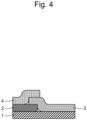
- the upstream coating layer when the first catalyst coating layer, the upstream coating layer, and the downstream coating layer overlap, in the overlapping portion, the upstream coating layer may be disposed on the first catalyst coating layer and under the downstream coating layer such that the first catalyst coating layer is not in contact with the downstream coating layer. In the first embodiment of the present disclosure, when the first catalyst coating layer, the upstream coating layer, and the downstream coating layer overlap, in the overlapping portion, the upstream coating layer may be disposed under the first catalyst coating layer and on the downstream coating layer such that the first catalyst coating layer is not in contact with the downstream coating layer.
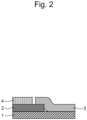
- the exhaust gas purification catalyst of the first embodiment of the present disclosure illustrated in FIG. 2 a lap portion of the upstream coating layer 2 and the downstream coating layer 3, which possibly reduces an effective use portion of Rh, exists. Meanwhile, the lap portion secures a sufficient OSC performance. Accordingly, the exhaust gas purification catalyst can achieve satisfactory purification performance and OSC performance in a compatible manner.
- the exhaust gas purification catalyst of the first embodiment of the present disclosure illustrated in FIG. 3 a lap portion of the upstream coating layer 2 and the downstream coating layer 3, which possibly reduces an effective use portion of Rh, exists. Meanwhile, the lap portion secures a sufficient OSC performance. Furthermore, in the lap portion, the upstream coating layer 2 performs atmosphere buffering of the exhaust gas, and the downstream coating layer 3 is utilized more effectively. Accordingly, the exhaust gas purification catalyst can achieve more satisfactory purification performance and OSC performance in a compatible manner.
- the first catalyst coating layer has a width of usually 15% to 50%, 15% to 35% in some embodiments, of the whole length of the substrate in the exhaust gas purification catalyst.
- the width of the first catalyst coating layer within the range enables to improve the contact frequency of Pd and/or Pt with a harmful component in the exhaust gas, such as HC while suppressing the aggregation between the catalyst metals caused by an excessively short width, for example, the aggregation of Pd and/or Pt caused by the densification of Pd and/or Pt, and thus enabling an improved exhaust gas purification performance.
- the second catalyst coating layer has a width of usually 65% to 95%, 80% to 95% in some embodiments, of the whole length of the substrate in the exhaust gas purification catalyst.
- the width of the second catalyst coating layer within the range enables to improve the contact frequency of Rh with a harmful component in the exhaust gas, such as NOx while suppressing the aggregation between the catalyst metals caused by an excessively short width, for example, the aggregation of Rh caused by the densification of Rh, and thus enabling an improved exhaust gas purification performance.
- the first catalyst coating layer is mainly constituted of Pd and/or Pt as a catalyst metal, optionally another precious metal, and the carrier particles that support Pd and/or Pt as the catalyst metal and the other precious metal, but may further include other components within a range without losing the effect of the present disclosure.
- the content of Rh as the catalyst metal contained in the upstream coating layer is not limited, but is usually 0.05 g to 1.0 g, 0.1 g to 0.8 g in some embodiments, in a catalyst metal conversion (in terms of metal of Rh) with respect to 1 L of a capacity of a portion where the upstream coating layer is applied on the substrate.
- the content of Rh as the catalyst metal contained in the upstream coating layer depends on an additive amount of a Rh precursor as a material at the production of the exhaust gas purification catalyst (excluding components to be volatilized).
- the second catalyst coating layer may each further include the carrier particles.
- the carrier particles include metal oxide, such as silica, magnesium oxide, zirconia, ceria, alumina, titania, yttria, neodymium oxide, lanthanum oxide, and their composite oxide and solid solution, such as alumina-zirconia-based composite oxide (AZ), and alumina-ceria-zirconia-based composite oxide (ACZ), ceria-zirconia-based composite oxide (CZ), and the like as the OCS materials described in detail below; a combination of two or more of them; and the like.
- metal oxide such as silica, magnesium oxide, zirconia, ceria, alumina, titania, yttria, neodymium oxide, lanthanum oxide, and their composite oxide and solid solution, such as alumina-zirconia-based composite oxide (AZ), and alumina-ceria-zirconia-based composite oxide (ACZ), ceria
- the contents of the carrier particles in the upstream coating layer and the downstream coating layer are not limited.
- the content of the carrier particles in the upstream coating layer is, for example, usually 10 g to 100 g, 15 g to 80 g in some embodiments, with respect to 1 L of the capacity of the portion where the upstream coating layer is applied on the substrate.
- the content of the carrier particles in the downstream coating layer is, for example, usually 25 g to 170 g, 30 g to 100 g in some embodiments, with respect to 1 L of the capacity of the portion where the downstream coating layer is applied on the substrate.
- the content of the carrier particles optionally contained in the upstream coating layer or the downstream coating layer depends on an additive amount of the carrier particles as a material at the production of the exhaust gas purification catalyst.
- all metallic alkoxides such as alkoxides of aluminum, cerium, zirconium, and optionally the rare earth elements, are mixed and fired after hydrolyzing, thereby enabling to prepare alumina-ceria-zirconia-based composite oxide.
- the rest of the metal it is possible to use the rest of the metal as a solution of, for example, nitrate or acetylacetate salt, as long as at least one of them is used as the metallic alkoxide.
- Ceria-zirconia-based composite oxide as the high specific surface area OSC material is conventionally a material used as a cocatalyst (oxygen storage material) in an exhaust gas purification catalyst, and the detail is publicly known to those skilled in the art.
- ceria-zirconia-based composite oxide as the high specific surface area OSC material ceria and zirconia form a solid solution in some embodiments.
- Ceria-zirconia-based composite oxide as the high specific surface area OSC material can be prepared by the alkoxide process or the coprecipitation process.
- primary particles of ceria-zirconia-based composite oxide as the medium specific surface area OSC material have a particle size (average particle size) that is not limited, but is usually 1 nm to 500 nm, 10 nm to 100 nm in some embodiments, in average value of SEM or TEM.
- the pyrochlore phase (Ce 2 Zr 2 O 7 ) of ceria-zirconia-based composite oxide has oxygen vacancy sites.
- phase shift from the pyrochlore phase to the ⁇ phase occurs.
- the ⁇ phase can release oxygen atoms such that phase shift from the ⁇ phase to the pyrochlore phase occurs.
- Oxygen storage capacity of ceria-zirconia-based composite oxide is capacity to absorb/release oxygen upon phase shift between the pyrochlore phase and the ⁇ phase.
- Pyrochlore CZ as the low specific surface area OSC material may contain praseodymium, and it contains praseodymium, in addition to cerium and zirconium, in some embodiments.
- a praseodymium reduction reaction is expressed by the formula: Pr 6 O 11 ⁇ 3Pr 2 O 3 + O 2 where ⁇ G (Gibbs free energy) is negative, and therefore, praseodymium is considered to facilitate a CeO 2 reduction reaction expressed by the formula: 2CeO 2 ⁇ Ce 2 O 3 + 0.5O 2 where ⁇ G is positive.
- the content of the high specific surface area OSC material contained in the upstream coating layer is not limited, but is usually 10 g to 100 g, 10 g to 80 g in some embodiments, with respect to 1 L of the capacity of the portion where the upstream coating layer is applied on the substrate. Note that the content of the high specific surface area OSC material possibly contained in the upstream coating layer depends on an additive amount of the high specific surface area OSC material as a material at the production of the exhaust gas purification catalyst.
- the content of the medium specific surface area OSC material contained in the downstream coating layer is not limited, but is usually 20 g to 80 g, 40 g to 80 g in some embodiments, with respect to 1 L of the capacity of the portion where the downstream coating layer is applied on the substrate. Note that the content of the medium specific surface area OSC material possibly contained in the downstream coating layer depends on an additive amount of the medium specific surface area OSC material as a material at the production of the exhaust gas purification catalyst.
- the content of the low specific surface area OSC material contained in the downstream coating layer is not limited, but is usually 5 g to 40 g, 20 g to 40 g in some embodiments, with respect to 1 L of the capacity of the portion where the downstream coating layer is applied on the substrate. Note that the content of the low specific surface area OSC material possibly contained in the downstream coating layer depends on an additive amount of the low specific surface area OSC material as a material at the production of the exhaust gas purification catalyst.
- the upstream coating layer includes the high specific surface area OSC material and the low specific surface area OSC material in some embodiments.
- the inclusion of the high specific surface area OSC material and the low specific surface area OSC material in the upstream coating layer enables to efficiently convert NOx in the upstream side where an oxygen concentration is relatively high and HC is less likely to accumulate, compared with the downstream side, when the exhaust gas purification catalyst of the first embodiment of the present disclosure is used as the S/C.
- the downstream coating layer includes the medium specific surface area OSC material and the low specific surface area OSC material in some embodiments.
- the inclusion of the medium specific surface area OSC material and the low specific surface area OSC material in the downstream coating layer enables to efficiently convert NOx in the downstream side where an oxygen concentration is relatively low and HC is likely to accumulate, compared with the upstream side, while avoiding the accumulation of HC by the OSC materials having relatively low specific surface areas when the exhaust gas purification catalyst of the first embodiment of the present disclosure is used as the S/C.
- the inclusion of the high specific surface area OSC material and the low specific surface area OSC material in the upstream coating layer and the inclusion of the medium specific surface area OSC material and the low specific surface area OSC material in the downstream coating layer enable to have an OSC performance and a catalyst performance in a more compatible manner.
- the amount of ceria in the medium specific surface area OSC material is not limited, but is usually 10 weight% to 45 weight%, 10 weight% to 40 weight% in some embodiments, and 20 weight% to 40 weight% in some embodiments, with respect to the ceria weight in the whole second catalyst coating layer.
- the amount of ceria in the high specific surface area OSC material and the medium specific surface area OSC material is not limited, but is usually 80 weight% or less, 60 weight% or less in some embodiments, and 40 weight% or less in some embodiments, with respect to the ceria weight in the whole second catalyst coating layer.
- the amount of ceria in the low specific surface area OSC material is not limited, but is usually 20 weight% to 80 weight%, 40 weight% to 80 weight% in some embodiments, and 40 weight% to 60 weight% in some embodiments, with respect to the ceria weight in the whole second catalyst coating layer.
- the ceria amounts in the respective OSC materials in the second catalyst coating layer within the ranges enable to establish both OSC performances at a low temperature and a high temperature and an exhaust gas purification performance, in particular, a NOx conversion performance in a more compatible manner.
- the inclusion of Rh as well as the three kinds of OSC materials having different specific surface areas in the second catalyst coating layer enables to suppress HC poisoning of Rh, in particular, suppress HC poisoning of Rh under conditions of (1) a rich air-fuel ratio (A/F) and (2) a large air intake quantity during, for example, acceleration in association with a decreased physical size of the exhaust gas purification catalyst (high air intake quantity or high Ga: meaning the same as high space velocity or high SV) and to secure OSC performances at a low temperature and a high temperature in a compatible manner, thereby enabling to obtain the exhaust gas purification catalyst with an improved catalyst performance, in particular, an improved NOx conversion performance.
- A/F rich air-fuel ratio
- Ga meaning the same as high space velocity or high SV
- the upstream coating layer and the downstream coating layer that constitute the second catalyst coating layer are each mainly constituted of Rh as a catalyst metal, optionally another precious metal, the carrier particles that support Rh as the catalyst metal and the other precious metal, and the OSC materials, but may further include other components within a range without losing the effect of the present disclosure.
- the other components include one or more of other metal oxides, additives, and the like used in a catalyst coating layer with this type of usage, specifically, alkali metals, such as potassium, sodium, lithium, and cesium, alkaline earth metals, such as barium, calcium, and strontium, rare earth elements, such as lanthanum, yttrium, and cerium, transition metals, such as iron, the metal oxides that have been listed as the carrier particles (that is, the metal oxides not supporting Rh or the like), and the like.
- alkali metals such as potassium, sodium, lithium, and cesium
- alkaline earth metals such as barium, calcium, and strontium
- rare earth elements such as lanthanum, yttrium, and cerium
- transition metals such as iron
- the other components may be in a form of as they are or may be in a form of being supported by the carrier particles similarly to Rh and the like.
- the content of the other components in the coating layer is not limited, but is usually 20 g to 120 g, 80 g to 120 g in some embodiments, with respect to 1 L of the capacity of the portion where the upstream coating layer or the downstream coating layer is applied on the substrate.
- the content of the other components possibly contained in the upstream coating layer or the downstream coating layer depends on an additive amount of the other components as a material at the production of the exhaust gas purification catalyst (excluding components to be volatilized).
- the coat amount of the downstream coating layer is not limited, but is usually 50 g to 250 g, 100 g to 250 g in some embodiments, with respect to 1 L of the capacity of the portion where the downstream coating layer is applied on the substrate. Note that the coat amount of the downstream coating layer depends on the total weight of the material at the production of the exhaust gas purification catalyst (excluding components to be volatilized).
- the thickness of the upstream coating layer is not limited, but is usually 5 ⁇ m to 50 ⁇ m, 10 ⁇ m to 30 ⁇ m in some embodiments, in an average thickness.
- the thickness of the upstream coating layer can be measured by, for example, SEM.
- the thickness of the downstream coating layer is not limited, but is usually 5 ⁇ m to 50 ⁇ m, 10 ⁇ m to 30 ⁇ m in some embodiments, in an average thickness.
- the thickness of the downstream coating layer can be measured by, for example, SEM.
- the amounts of the respective materials in the upstream coating layer and the downstream coating layer and the thicknesses of the upstream coating layer and the downstream coating layer within the ranges enable to properly keep a balance among a pressure loss, a catalyst performance, and durability in the exhaust gas purification catalyst.
- the second catalyst coating layer includes Rh as a catalyst metal and three kinds of OSC materials having different specific surface areas described in detail below.
- the content of Rh as the catalyst metal contained in the second catalyst coating layer is not limited, but is usually 0.05 g to 1.0 g, 0.2 g to 0.8 g in some embodiments, in a catalyst metal conversion (in terms of metal of Rh) with respect to 1 L of a capacity of a portion where the second catalyst coating layer is applied on the substrate.
- the content of Rh as the catalyst metal contained in the second catalyst coating layer depends on an additive amount of a Rh precursor as a material at the production of the exhaust gas purification catalyst (excluding components to be volatilized).
- Rh in the second catalyst coating layer enables to sufficiently provide a NOx conversion performance without HC poisoning of Rh under the atmosphere where HC is sufficiently converted by the first catalyst coating layer.
- the second catalyst coating layer may further include another precious metal, which is generally used in the technical field of the exhaust gas purification catalyst, for example, at least one selected from the group consisting of Pd, Pt, gold, argentum, iridium, and ruthenium.
- another precious metal which is generally used in the technical field of the exhaust gas purification catalyst, for example, at least one selected from the group consisting of Pd, Pt, gold, argentum, iridium, and ruthenium.
- the OSC materials contained in the second catalyst coating layer are made of a high specific surface area OSC material, a medium specific surface area OSC material, and a low specific surface area OSC material.
- the high specific surface area OSC material, the medium specific surface area OSC material, and the low specific surface area OSC material are as described in the first embodiment.
- the content of the high specific surface area OSC material contained in the second catalyst coating layer is not limited, but is usually 10 g to 80 g, 20 g to 40 g in some embodiments, with respect to 1 L of the capacity of the portion where the second catalyst coating layer is applied on the substrate. Note that the content of the high specific surface area OSC material contained in the second catalyst coating layer depends on an additive amount of the high specific surface area OSC material as a material at the production of the exhaust gas purification catalyst.
- the content of the medium specific surface area OSC material contained in the second catalyst coating layer is not limited, but is usually 10 g to 40 g, 20 g to 40 g in some embodiments, with respect to 1 L of the capacity of the portion where the second catalyst coating layer is applied on the substrate. Note that the content of the medium specific surface area OSC material contained in the second catalyst coating layer depends on an additive amount of the medium specific surface area OSC material as a material at the production of the exhaust gas purification catalyst.
- the content of the low specific surface area OSC material contained in the second catalyst coating layer is not limited, but is usually 5 g to 30 g, 10 g to 30 g in some embodiments, with respect to 1 L of the capacity of the portion where the second catalyst coating layer is applied on the substrate. Note that the content of the low specific surface area OSC material contained in the second catalyst coating layer depends on an additive amount of the low specific surface area OSC material as a material at the production of the exhaust gas purification catalyst.
- the inclusion of the above contents of the three kinds of OSC materials having different specific surface areas in the second catalyst coating layer enables to establish both OSC performances at a low temperature and a high temperature and an exhaust gas purification performance, in particular, a NOx conversion performance in a more compatible manner.
- the second catalyst coating layer of the present disclosure is mainly constituted of Rh as a catalyst metal, opptionally another precious metal, the carrier particles that support Rh as the catalyst metal and the other precious metal, and the OSC materials, but may further include other components within a range without losing the effect of the present disclosure.
- the other components include one or more of other metal oxides, additives, and the like used in a catalyst coating layer with this type of usage, specifically, alkali metals, such as potassium, sodium, lithium, and cesium, alkaline earth metals, such as barium, calcium, and strontium, rare earth elements, such as lanthanum, yttrium, and cerium, transition metals, such as iron, the metal oxides that have been listed as the carrier particles (that is, the metal oxides not supporting Rh or the like), and the like.
- alkali metals such as potassium, sodium, lithium, and cesium
- alkaline earth metals such as barium, calcium, and strontium
- rare earth elements such as lanthanum, yttrium, and cerium
- transition metals such as iron
- the other components may be in a form of as they are or may be in a form of being supported by the carrier particles similarly to Rh and the like.
- the high specific surface area OSC material, the medium specific surface area OSC material, and the low specific surface area OSC material are as described above.
- the step (ii) includes, as the step of preparing the second catalyst coating layer slurry, (ii-1) a step of preparing a downstream coating layer slurry to be formed from an end portion in a downstream side with respect to the exhaust gas flow direction in the exhaust gas purification catalyst, and (ii-2) a step of preparing an upstream coating layer slurry to be formed from the end portion in the upstream side with respect to the exhaust gas flow direction in the exhaust gas purification catalyst.
- the step (iv) includes, as the step of forming the second catalyst coating layer, (iv-1) a step of applying the downstream coating layer slurry prepared in the step (ii-1) to form a downstream coating layer, and (iv-2) a step of applying the upstream coating layer slurry prepared in the step (ii-2) to form an upstream coating layer.
- the step sequence of (i) to (iv) is not limited as long as the step (iii) is performed after the step (i), the step (iv-1) is performed after the step (ii-1), and the step (iv-2) is performed after the step (ii-2).
- the catalyst coating layer slurry for the downstream coating layer includes the materials constituting the downstream coating layer, that is, the Rh precursor (for example, salt (for example, nitrate) containing Rh or the like), one or more kinds of OSC materials selected from the group consisting of the high specific surface area OSC material, the medium specific surface area OSC material, and the low specific surface area OSC material (for example, alumina-ceria-zirconia-based composite oxide as the medium specific surface area OSC material and ceria-zirconia-based composite oxide as the low specific surface area OSC material, or the like), and the solvent (for example, water, alcohol, a mixture of water and alcohol, or the like), as well as optionally further carrier particles (for example, alumina-zirconia-based composite oxide), an additive (for example, binder), and the like.
- the Rh precursor for example, salt (for example, nitrate) containing Rh or the like
- OSC materials selected from the group consisting of the high specific surface area OSC material, the medium
- the catalyst coating layer slurry for the first catalyst coating layer includes the materials constituting the first catalyst coating layer, that is, the precursor of Pd and/or Pt as a catalyst metal (for example, salt (for example, nitrate) containing Pd and/or Pt or the like, in particular, palladium nitrate), and the solvent (for example, water, alcohol, a mixture of water and alcohol, or the like), as well as optionally carrier particles (for example, alumina-ceria-zirconia-based composite oxide and/or ceria-zirconia-based composite oxide), an additive (for example, binder), and the like.
- a catalyst metal for example, salt (for example, nitrate) containing Pd and/or Pt or the like, in particular, palladium nitrate
- the solvent for example, water, alcohol, a mixture of water and alcohol, or the like
- optionally carrier particles for example, alumina-ceria-zirconia-based composite oxide and/or ceria-zi
- the slurry is coated by the wash coat method. After blowing off extra slurry with a blower or the like, for example, it is dried for usually one hour to three hours at usually 100°C to 150°C in the atmosphere to remove the solvent, and is fired for usually one hour to three hours at usually 450°C to 550°C in the atmosphere to form the first catalyst coating layer.
- the sequence of forming the catalyst coating layers is not limited.
- the catalyst coating layers may be formed in the sequence of the first catalyst coating layer, the upstream coating layer, and the downstream coating layer, in the sequence of the first catalyst coating layer, the downstream coating layer, and the upstream coating layer, in the sequence of the upstream coating layer, the downstream coating layer, and the first catalyst coating layer, in the sequence of the upstream coating layer, the first catalyst coating layer, and the downstream coating layer, or in the sequence of the downstream coating layer, the first catalyst coating layer, and the upstream coating layer.
- the slurry is coated by the wash coat method. After blowing off extra slurry with a blower or the like, for example, it is dried for usually one hour to three hours at usually 100°C to 150°C in the atmosphere to remove the solvent, and is fired for usually one hour to three hours at usually 450°C to 550°C in the atmosphere to form the second catalyst coating layer. Subsequently, as the step (i), the catalyst coating layer slurry for the first catalyst coating layer is prepared.
- the slurry is coated by the wash coat method. After blowing off extra slurry with a blower or the like, for example, it is dried for usually one hour to three hours at usually 100°C to 150°C in the atmosphere to remove the solvent, and is fired for usually one hour to three hours at usually 450°C to 550°C in the atmosphere to form the first catalyst coating layer.
- the sequence of forming the catalyst coating layers is not limited.
- the second catalyst coating layer may be formed after the first catalyst coating layer is formed.
- Rh/AZ Material 1 (Al 2 O 3 ), Material 2 (high specific surface area OSC material), Material 4 (low specific surface area OSC material), Material 5 (AZ), and Al 2 O 3 -based binder were introduced into distilled water while being stirred to prepare a suspended slurry 1.
- Rh/AZ Materials 1 (Al 2 O 3 ), Material 2 (high specific surface area OSC material), Material 4 (low specific surface area OSC material), and Al 2 O 3 -based binder were introduced into distilled water while being stirred to prepare a suspended slurry 2.
- An exhaust gas purification catalyst was prepared similarly to Comparative Example 4 except that in Comparative Example 4, 20 g/L-zone in Material 2 (total amount: 60 g/L-zone) in the slurry 1 was changed to Material 3 (medium specific surface area OSC material) (total amount: 20 g/L-zone).
- An exhaust gas purification catalyst was prepared similarly to Comparative Example 4 except that in Comparative Example 4, the total amount (60 g/L-zone) of Material 2 in the slurry 1 was changed to Material 3 (medium specific surface area OSC material) (total amount: 60 g/L-zone).
- the test was performed by mounting each of the exhaust gas purification catalysts on the exhaust system of a V8 engine and repeatedly flowing exhaust gases in respective atmospheres of stoichiometric and lean at each certain period of time (ratio of 3:1) at a catalyst bed temperature of 900°C and over 50 hours.
- OSC g 0.23 ⁇ ⁇ A / F ⁇ injected fuel amount
- Table 5 and FIGS. 11 to 13 show the results. [Table 5] Table 5. List of Evaluation Results OSC Performance/g NOx Conversion Rate in Rich (%) Comparative Example 4 0.210 79.2 Example 6 0.211 80.0 Example 7 0.201 84.3 Example 8 0.196 86.9 Example 9 0.181 90.1 Comparative Example 5 0.144 90.4 Comparative Example 6 0.183 78.8 Example 10 0.163 88.7
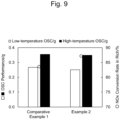
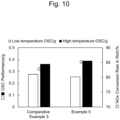
- the inclusion of all of the high specific surface area OSC material, the medium specific surface area OSC material, and the low specific surface area OSC material in the second catalyst coating layer enables to have an OSC performance and a NOx conversion rate in a compatible manner.
Landscapes
- Chemical & Material Sciences (AREA)
- Engineering & Computer Science (AREA)
- Chemical Kinetics & Catalysis (AREA)
- Materials Engineering (AREA)
- Organic Chemistry (AREA)
- Combustion & Propulsion (AREA)
- Health & Medical Sciences (AREA)
- General Engineering & Computer Science (AREA)
- Mechanical Engineering (AREA)
- Environmental & Geological Engineering (AREA)
- Biomedical Technology (AREA)
- Analytical Chemistry (AREA)
- General Chemical & Material Sciences (AREA)
- Oil, Petroleum & Natural Gas (AREA)
- Toxicology (AREA)
- Ceramic Engineering (AREA)
- Catalysts (AREA)
- Exhaust Gas After Treatment (AREA)
- Exhaust Gas Treatment By Means Of Catalyst (AREA)
Claims (15)
- Abgasreinigungskatalysator, umfassend:ein Substrat (1); undeine katalytische Beschichtungsschicht, die auf das Substrat (1) gestrichen ist,wobei die katalytische Beschichtungsschicht eine erste katalytische Beschichtungsschicht (4), die Pd und/oder Pt als ein Katalysatormetall enthält, und eine zweite katalytische Beschichtungsschicht (5) beinhaltet, die Rh als ein Katalysatormetall enthält,wobei die erste katalytische Beschichtungsschicht (4) von einem Endabschnitt an einer stromaufwärtigen Seite in Bezug auf eine Abgasströmungsrichtung in dem Abgasreinigungskatalysator ausgebildet ist, undwobei die zweite katalytische Beschichtungsschicht (5) ein OSC-Material mit einem hohen spezifischen Oberflächenbereich mit einem spezifischen Oberflächenbereich von mehr als 40 m2/g, ein OSC-Material mit einem mittleren spezifischen Oberflächenbereich mit einem spezifischen Oberflächenbereich von 4 m2/g bis 40 m2/g und ein OSC-Material mit einem niedrigen spezifischen Oberflächenbereich mit einem spezifischen Oberflächenbereich von weniger als 4 m2/g beinhaltet.
- Abgasreinigungskatalysator nach Anspruch 1,
wobei das OSC-Material mit einem hohen spezifischen Oberflächenbereich und das OSC-Material mit einem mittleren spezifischen Oberflächenbereich jeweils unabhängig voneinander ein Verbundwerkstoffoxid auf Aluminiumoxid-Ceroxid-Zirconiumoxid-Basis oder ein Verbundwerkstoffoxid auf Ceroxid-Zirconiumoxid-Basis enthält und das OSC-Material mit einem niedrigen spezifischen Oberflächenbereich ein Verbundwerkstoffoxid auf Ceroxid-Zirconiumoxid-Basis enthält. - Abgasreinigungskatalysator nach Anspruch 2,
wobei das OSC-Material mit einem niedrigen spezifischen Oberflächenbereich ein Verbundwerkstoffoxid auf Ceroxid-Zirconiumdioxid-Basis mit einer Pyrochlorstruktur enthält. - Abgasreinigungskatalysator nach einem der Ansprüche 1-3,
wobei die zweite katalytische Beschichtungsschicht (5) eine stromaufwärtige Beschichtungsschicht (2), die aus dem Endabschnitt auf der stromaufwärtigen Seite in Bezug auf die Abgasströmungsrichtung in dem Abgasreinigungskatalysator ausgebildet ist, und eine stromabwärtige Beschichtungsschicht (3) aufweist, die von einem Endabschnitt auf einer stromabwärtigen Seite in Bezug auf die Abgasströmungsrichtung in dem Abgasreinigungskatalysator ausgebildet ist. - Abgasreinigungskatalysator nach Anspruch 4,
wobei die erste katalytische Beschichtungsschicht (4) eine Breite von 20 % bis 50 % einer Gesamtlänge des Substrats (1) in dem Abgasreinigungskatalysator aufweist, die stromaufwärtige Beschichtungsschicht (2) eine Breite von 30 % bis 70 % der Gesamtlänge des Substrats (1) in dem Abgasreinigungskatalysator aufweist, und die stromabwärtige Beschichtungsschicht (3) eine Breite von 30 % bis 70 % der Gesamtlänge des Substrats (1) in dem Abgasreinigungskatalysator aufweist. - Abgasreinigungskatalysator nach Anspruch 4,
wobei die erste katalytische Beschichtungsschicht (4) auf der stromaufwärtigen Beschichtungsschicht (2) angeordnet ist. - Abgasreinigungskatalysator nach Anspruch 4,
wobei die erste katalytische Beschichtungsschicht (4) unter der stromaufwärtigen Beschichtungsschicht (2) angeordnet ist. - Abgasreinigungskatalysator nach Anspruch 4,
wobei die stromaufwärtige Beschichtungsschicht (2) das OSC-Material mit einem hohen spezifischen Oberflächenbereich und das OSC-Material mit einem niedrigen spezifischen Oberflächenbereich beinhaltet und die stromabwärtige Beschichtungsschicht (3) das OSC-Material mit einem mittleren spezifischen Oberflächenbereich beinhaltet und das OSC-Material mit einem niedrigen spezifischen Oberflächenbereich beinhaltet. - Abgasreinigungskatalysator nach Anspruch 8,wobei das OSC-Material mit hohem spezifischen Oberflächenbereich Ceroxid in einer Menge von 10 Gew.-% bis 40 Gew.-%, bezogen auf das Gesamtgewicht des Ceroxids in der stromaufwärtigen Beschichtungsschicht und der stromabwärtigen Beschichtungsschicht (3) als die zweite katalytische Beschichtungsschicht (5) aufweist,wobei das OSC-Material mit einem mittleren spezifischen Oberflächenbereich Ceroxid in einer Menge von 10 Gew.-% bis 40 Gew.-% bezogen auf das Gesamtgewicht von Ceroxid in der stromaufwärtigen Beschichtungsschicht (2) und der stromabwärtigen Beschichtungsschicht (3) als die katalytische Beschichtungsschicht (5) aufweist,wobei das OSC-Material mit einem hohen spezifischen Oberflächenbereich und das OSC-Material mit einem mittleren spezifischen Oberflächenbereich Ceroxid in einer Menge von 60 Gew.-% oder weniger bezogen auf das Gesamtgewicht von Ceroxid in der stromaufwärtigen Beschichtungsschicht (2) und der stromabwärtigen Beschichtungsschicht (3) als die katalytische Beschichtungsschicht (5) aufweisen,wobei das OSC-Material mit einem niedrigeren spezifischen Oberflächenbereich Ceroxid in einer Menge von 40 Gew.-% bis 80 Gew.-% bezogen auf das Gesamtgewicht von Ceroxid in der stromaufwärtigen Beschichtungsschicht (2) und der stromabwärtigen Beschichtungsschicht (3) als die katalytische Beschichtungsschicht (5) aufweist,wobei die Summe aller Mengen an Ceroxid in dem OSC-Material mit einem hohen spezifischen Oberflächenbereich, dem OSC-Material mit einem mittleren spezifischen Oberflächenbereich und dem OSC-Material mit niedrigen spezifischen Oberflächenbereich 100 Gew.-% beträgt.
- Abgasreinigungskatalysator nach Anspruch 4,
wobei die erste katalytische Beschichtungsschicht (4) Pd als ein Katalysatormetall beinhaltet. - Abgasreinigungskatalysator nach Anspruch 4,
wobei der Abgasreinigungskatalysator für die Verwendung als S/C (Startkatalysator) in einem Zwei-Katalysator-System dient. - Abgasreinigungskatalysator nach einem der Ansprüche 1-3,
wobei die zweite katalytische Beschichtungsschicht (5) von einem Endabschnitt auf einer stromabwärtigen Seite in Bezug auf die Abgasströmungsrichtung in dem Abgasreinigungskatalysator ausgebildet ist. - Abgasreinigungskatalysator nach Anspruch 12,
wobei die erste katalytische Beschichtungsschicht (4) eine Breite von 15 % bis 50 % einer Gesamtlänge des Substrats in dem Abgasreinigungskatalysator aufweist und die zweite katalytische Beschichtungsschicht (5) eine Breite von 65 % bis 95 % der Gesamtlänge des Substrats in dem Abgasreinigungskatalysator aufweist. - Abgasreinigungskatalysator nach Anspruch 12,
wobei die erste katalytische Beschichtungsschicht (4) Pt als ein Katalysatormetall enthält. - Abgasreinigungskatalysator nach Anspruch 12,
wobei der Abgasreinigungskatalysator für die Verwendung als UF/C (Unterbodenkatalysator) in einem Zwei-Katalysator-System dient.
Applications Claiming Priority (1)
| Application Number | Priority Date | Filing Date | Title |
|---|---|---|---|
| JP2022099117A JP7849231B2 (ja) | 2022-06-20 | 2022-06-20 | 排ガス浄化用触媒 |
Publications (2)
| Publication Number | Publication Date |
|---|---|
| EP4295941A1 EP4295941A1 (de) | 2023-12-27 |
| EP4295941B1 true EP4295941B1 (de) | 2024-07-10 |
Family
ID=86851949
Family Applications (1)
| Application Number | Title | Priority Date | Filing Date |
|---|---|---|---|
| EP23179206.0A Active EP4295941B1 (de) | 2022-06-20 | 2023-06-14 | Abgasreinigungskatalysator |
Country Status (4)
| Country | Link |
|---|---|
| US (1) | US20230405569A1 (de) |
| EP (1) | EP4295941B1 (de) |
| JP (1) | JP7849231B2 (de) |
| CN (1) | CN117258779B (de) |
Families Citing this family (2)
| Publication number | Priority date | Publication date | Assignee | Title |
|---|---|---|---|---|
| JP2024167807A (ja) * | 2023-05-22 | 2024-12-04 | トヨタ自動車株式会社 | 排ガス浄化装置 |
| JP2026049573A (ja) | 2024-09-06 | 2026-03-18 | マツダ株式会社 | 排気ガス浄化用触媒 |
Family Cites Families (16)
| Publication number | Priority date | Publication date | Assignee | Title |
|---|---|---|---|---|
| JP3379369B2 (ja) | 1997-01-17 | 2003-02-24 | トヨタ自動車株式会社 | 排ガス浄化用触媒 |
| JP2001232199A (ja) | 2000-02-24 | 2001-08-28 | Toyota Motor Corp | 排ガス浄化用触媒 |
| JP2004025013A (ja) * | 2002-06-25 | 2004-01-29 | Toyota Central Res & Dev Lab Inc | 排ガス浄化用触媒とその製造方法 |
| JP5547539B2 (ja) | 2010-04-13 | 2014-07-16 | 株式会社豊田中央研究所 | セリア−ジルコニア系複合酸化物及びその製造方法、並びにそのセリア−ジルコニア系複合酸化物を用いた排ガス浄化用触媒 |
| JP5567923B2 (ja) | 2010-07-23 | 2014-08-06 | トヨタ自動車株式会社 | 排ガス浄化用触媒 |
| JP5240275B2 (ja) * | 2010-10-22 | 2013-07-17 | トヨタ自動車株式会社 | 排ガス浄化用触媒 |
| JP5376261B2 (ja) | 2011-03-10 | 2013-12-25 | トヨタ自動車株式会社 | 排ガス浄化用触媒 |
| JP5720950B2 (ja) * | 2011-12-22 | 2015-05-20 | トヨタ自動車株式会社 | 排ガス浄化装置 |
| JP6176278B2 (ja) | 2015-03-23 | 2017-08-09 | トヨタ自動車株式会社 | 触媒コンバーター |
| JP6863799B2 (ja) | 2016-09-05 | 2021-04-21 | トヨタ自動車株式会社 | 排ガス浄化用触媒 |
| US10058846B2 (en) * | 2016-09-05 | 2018-08-28 | Toyota Jidosha Kabushiki Kaisha | Catalyst for purifying exhaust gas |
| JP6907890B2 (ja) | 2017-11-01 | 2021-07-21 | トヨタ自動車株式会社 | 排ガス浄化用触媒 |
| JP7248616B2 (ja) * | 2020-03-25 | 2023-03-29 | トヨタ自動車株式会社 | 排ガス浄化用触媒 |
| JP6980061B1 (ja) | 2020-06-26 | 2021-12-15 | 株式会社キャタラー | 排ガス浄化用触媒 |
| JP7235417B2 (ja) * | 2020-08-28 | 2023-03-08 | トヨタ自動車株式会社 | 排ガス浄化装置 |
| JP7328192B2 (ja) | 2020-10-06 | 2023-08-16 | トヨタ自動車株式会社 | 排ガス浄化装置 |
-
2022
- 2022-06-20 JP JP2022099117A patent/JP7849231B2/ja active Active
-
2023
- 2023-06-14 EP EP23179206.0A patent/EP4295941B1/de active Active
- 2023-06-19 US US18/337,103 patent/US20230405569A1/en active Pending
- 2023-06-19 CN CN202310726291.1A patent/CN117258779B/zh active Active
Also Published As
| Publication number | Publication date |
|---|---|
| CN117258779A (zh) | 2023-12-22 |
| CN117258779B (zh) | 2026-01-06 |
| JP7849231B2 (ja) | 2026-04-21 |
| EP4295941A1 (de) | 2023-12-27 |
| US20230405569A1 (en) | 2023-12-21 |
| JP2024000368A (ja) | 2024-01-05 |
Similar Documents
| Publication | Publication Date | Title |
|---|---|---|
| USRE45083E1 (en) | Method for preparing metal oxide particles and an exhaust gas purifying catalyst | |
| EP2683467B1 (de) | Abgasreinigungskatalysator | |
| EP3260189B1 (de) | Abgasreinigungskatalysator | |
| KR101405826B1 (ko) | 자동차용 배기가스 정화 장치에 이용되는 촉매계, 그것을 이용한 배기가스 정화 장치 및 배기가스 정화 방법 | |
| EP1172139B1 (de) | Katalysator zum Reinigen von Abgas | |
| EP3290112B1 (de) | Katalysator zur reinigung von abgas | |
| JP6676394B2 (ja) | コアシェル担体及びその製造方法、そのコアシェル担体を用いた排ガス浄化用触媒及びその製造方法、並びに、その排ガス浄化用触媒を用いた排ガス浄化方法 | |
| JPWO2006030763A1 (ja) | セリウム−ジルコニウム系複合酸化物、その製造方法、それを用いた酸素吸蔵放出材料、排気ガス浄化触媒、及び排気ガス浄化方法 | |
| US11725556B2 (en) | Exhaust gas purification catalyst | |
| US7989387B2 (en) | Process for producing metal oxide particle and exhaust gas purifying catalyst | |
| US20190126248A1 (en) | Exhaust gas purifying catalyst | |
| EP4295941A1 (de) | Abgasreinigungskatalysator | |
| US20150298099A1 (en) | Complex oxide particles and exhaust gas purifying catalyst using the same | |
| US20200353447A1 (en) | Exhaust gas-purifying three-way catalyst and method for producing same, and integral structure type exhaust gas-purifying catalyst | |
| JP2018038999A (ja) | 排ガス浄化用触媒 | |
| US7745371B2 (en) | Exhaust gas purifying catalyst, metal oxide particle and production process thereof | |
| JP5120360B2 (ja) | 酸素吸放出材及びそれを設けた排ガス浄化用触媒 | |
| EP4360743A1 (de) | Abgasreinigungskatalysator | |
| JP2023039982A (ja) | 窒素酸化物吸蔵材及び排ガス浄化用触媒 | |
| JPH11138001A (ja) | 排気ガス浄化用触媒 | |
| KR100332704B1 (ko) | 배기 가스 정화를 위한 촉매 변환기 | |
| JP2000093799A (ja) | 排気ガス浄化用触媒及びその製造方法 |
Legal Events
| Date | Code | Title | Description |
|---|---|---|---|
| PUAI | Public reference made under article 153(3) epc to a published international application that has entered the european phase |
Free format text: ORIGINAL CODE: 0009012 |
|
| STAA | Information on the status of an ep patent application or granted ep patent |
Free format text: STATUS: REQUEST FOR EXAMINATION WAS MADE |
|
| 17P | Request for examination filed |
Effective date: 20230614 |
|
| AK | Designated contracting states |
Kind code of ref document: A1 Designated state(s): AL AT BE BG CH CY CZ DE DK EE ES FI FR GB GR HR HU IE IS IT LI LT LU LV MC ME MK MT NL NO PL PT RO RS SE SI SK SM TR |
|
| GRAP | Despatch of communication of intention to grant a patent |
Free format text: ORIGINAL CODE: EPIDOSNIGR1 |
|
| STAA | Information on the status of an ep patent application or granted ep patent |
Free format text: STATUS: GRANT OF PATENT IS INTENDED |
|
| RIC1 | Information provided on ipc code assigned before grant |
Ipc: F01N 13/00 20100101ALI20240220BHEP Ipc: B01J 37/02 20060101ALI20240220BHEP Ipc: F01N 3/10 20060101ALI20240220BHEP Ipc: B01J 35/61 20240101ALI20240220BHEP Ipc: B01J 35/00 20060101ALI20240220BHEP Ipc: B01J 23/63 20060101ALI20240220BHEP Ipc: B01J 23/00 20060101ALI20240220BHEP Ipc: B01D 53/94 20060101AFI20240220BHEP |
|
| INTG | Intention to grant announced |
Effective date: 20240311 |
|
| GRAS | Grant fee paid |
Free format text: ORIGINAL CODE: EPIDOSNIGR3 |
|
| GRAA | (expected) grant |
Free format text: ORIGINAL CODE: 0009210 |
|
| STAA | Information on the status of an ep patent application or granted ep patent |
Free format text: STATUS: THE PATENT HAS BEEN GRANTED |
|
| AK | Designated contracting states |
Kind code of ref document: B1 Designated state(s): AL AT BE BG CH CY CZ DE DK EE ES FI FR GB GR HR HU IE IS IT LI LT LU LV MC ME MK MT NL NO PL PT RO RS SE SI SK SM TR |
|
| REG | Reference to a national code |
Ref country code: CH Ref legal event code: EP |
|
| REG | Reference to a national code |
Ref country code: DE Ref legal event code: R096 Ref document number: 602023000224 Country of ref document: DE |
|
| REG | Reference to a national code |
Ref country code: LT Ref legal event code: MG9D |
|
| REG | Reference to a national code |
Ref country code: NL Ref legal event code: MP Effective date: 20240710 |
|
| PG25 | Lapsed in a contracting state [announced via postgrant information from national office to epo] |
Ref country code: PT Free format text: LAPSE BECAUSE OF FAILURE TO SUBMIT A TRANSLATION OF THE DESCRIPTION OR TO PAY THE FEE WITHIN THE PRESCRIBED TIME-LIMIT Effective date: 20241111 |
|
| REG | Reference to a national code |
Ref country code: AT Ref legal event code: MK05 Ref document number: 1701574 Country of ref document: AT Kind code of ref document: T Effective date: 20240710 |
|
| PG25 | Lapsed in a contracting state [announced via postgrant information from national office to epo] |
Ref country code: NL Free format text: LAPSE BECAUSE OF FAILURE TO SUBMIT A TRANSLATION OF THE DESCRIPTION OR TO PAY THE FEE WITHIN THE PRESCRIBED TIME-LIMIT Effective date: 20240710 |
|
| PG25 | Lapsed in a contracting state [announced via postgrant information from national office to epo] |
Ref country code: PT Free format text: LAPSE BECAUSE OF FAILURE TO SUBMIT A TRANSLATION OF THE DESCRIPTION OR TO PAY THE FEE WITHIN THE PRESCRIBED TIME-LIMIT Effective date: 20241111 Ref country code: NL Free format text: LAPSE BECAUSE OF FAILURE TO SUBMIT A TRANSLATION OF THE DESCRIPTION OR TO PAY THE FEE WITHIN THE PRESCRIBED TIME-LIMIT Effective date: 20240710 |
|
| PG25 | Lapsed in a contracting state [announced via postgrant information from national office to epo] |
Ref country code: NO Free format text: LAPSE BECAUSE OF FAILURE TO SUBMIT A TRANSLATION OF THE DESCRIPTION OR TO PAY THE FEE WITHIN THE PRESCRIBED TIME-LIMIT Effective date: 20241010 |
|
| PG25 | Lapsed in a contracting state [announced via postgrant information from national office to epo] |
Ref country code: GR Free format text: LAPSE BECAUSE OF FAILURE TO SUBMIT A TRANSLATION OF THE DESCRIPTION OR TO PAY THE FEE WITHIN THE PRESCRIBED TIME-LIMIT Effective date: 20241011 Ref country code: FI Free format text: LAPSE BECAUSE OF FAILURE TO SUBMIT A TRANSLATION OF THE DESCRIPTION OR TO PAY THE FEE WITHIN THE PRESCRIBED TIME-LIMIT Effective date: 20240710 Ref country code: PL Free format text: LAPSE BECAUSE OF FAILURE TO SUBMIT A TRANSLATION OF THE DESCRIPTION OR TO PAY THE FEE WITHIN THE PRESCRIBED TIME-LIMIT Effective date: 20240710 |
|
| PG25 | Lapsed in a contracting state [announced via postgrant information from national office to epo] |
Ref country code: BG Free format text: LAPSE BECAUSE OF FAILURE TO SUBMIT A TRANSLATION OF THE DESCRIPTION OR TO PAY THE FEE WITHIN THE PRESCRIBED TIME-LIMIT Effective date: 20240710 |
|
| PG25 | Lapsed in a contracting state [announced via postgrant information from national office to epo] |
Ref country code: LV Free format text: LAPSE BECAUSE OF FAILURE TO SUBMIT A TRANSLATION OF THE DESCRIPTION OR TO PAY THE FEE WITHIN THE PRESCRIBED TIME-LIMIT Effective date: 20240710 |
|
| PG25 | Lapsed in a contracting state [announced via postgrant information from national office to epo] |
Ref country code: IS Free format text: LAPSE BECAUSE OF FAILURE TO SUBMIT A TRANSLATION OF THE DESCRIPTION OR TO PAY THE FEE WITHIN THE PRESCRIBED TIME-LIMIT Effective date: 20241110 Ref country code: AT Free format text: LAPSE BECAUSE OF FAILURE TO SUBMIT A TRANSLATION OF THE DESCRIPTION OR TO PAY THE FEE WITHIN THE PRESCRIBED TIME-LIMIT Effective date: 20240710 |
|
| PG25 | Lapsed in a contracting state [announced via postgrant information from national office to epo] |
Ref country code: HR Free format text: LAPSE BECAUSE OF FAILURE TO SUBMIT A TRANSLATION OF THE DESCRIPTION OR TO PAY THE FEE WITHIN THE PRESCRIBED TIME-LIMIT Effective date: 20240710 |
|
| PG25 | Lapsed in a contracting state [announced via postgrant information from national office to epo] |
Ref country code: RS Free format text: LAPSE BECAUSE OF FAILURE TO SUBMIT A TRANSLATION OF THE DESCRIPTION OR TO PAY THE FEE WITHIN THE PRESCRIBED TIME-LIMIT Effective date: 20241010 Ref country code: ES Free format text: LAPSE BECAUSE OF FAILURE TO SUBMIT A TRANSLATION OF THE DESCRIPTION OR TO PAY THE FEE WITHIN THE PRESCRIBED TIME-LIMIT Effective date: 20240710 |
|
| PG25 | Lapsed in a contracting state [announced via postgrant information from national office to epo] |
Ref country code: RS Free format text: LAPSE BECAUSE OF FAILURE TO SUBMIT A TRANSLATION OF THE DESCRIPTION OR TO PAY THE FEE WITHIN THE PRESCRIBED TIME-LIMIT Effective date: 20241010 Ref country code: PL Free format text: LAPSE BECAUSE OF FAILURE TO SUBMIT A TRANSLATION OF THE DESCRIPTION OR TO PAY THE FEE WITHIN THE PRESCRIBED TIME-LIMIT Effective date: 20240710 Ref country code: NO Free format text: LAPSE BECAUSE OF FAILURE TO SUBMIT A TRANSLATION OF THE DESCRIPTION OR TO PAY THE FEE WITHIN THE PRESCRIBED TIME-LIMIT Effective date: 20241010 Ref country code: LV Free format text: LAPSE BECAUSE OF FAILURE TO SUBMIT A TRANSLATION OF THE DESCRIPTION OR TO PAY THE FEE WITHIN THE PRESCRIBED TIME-LIMIT Effective date: 20240710 Ref country code: IS Free format text: LAPSE BECAUSE OF FAILURE TO SUBMIT A TRANSLATION OF THE DESCRIPTION OR TO PAY THE FEE WITHIN THE PRESCRIBED TIME-LIMIT Effective date: 20241110 Ref country code: HR Free format text: LAPSE BECAUSE OF FAILURE TO SUBMIT A TRANSLATION OF THE DESCRIPTION OR TO PAY THE FEE WITHIN THE PRESCRIBED TIME-LIMIT Effective date: 20240710 Ref country code: GR Free format text: LAPSE BECAUSE OF FAILURE TO SUBMIT A TRANSLATION OF THE DESCRIPTION OR TO PAY THE FEE WITHIN THE PRESCRIBED TIME-LIMIT Effective date: 20241011 Ref country code: FI Free format text: LAPSE BECAUSE OF FAILURE TO SUBMIT A TRANSLATION OF THE DESCRIPTION OR TO PAY THE FEE WITHIN THE PRESCRIBED TIME-LIMIT Effective date: 20240710 Ref country code: ES Free format text: LAPSE BECAUSE OF FAILURE TO SUBMIT A TRANSLATION OF THE DESCRIPTION OR TO PAY THE FEE WITHIN THE PRESCRIBED TIME-LIMIT Effective date: 20240710 Ref country code: BG Free format text: LAPSE BECAUSE OF FAILURE TO SUBMIT A TRANSLATION OF THE DESCRIPTION OR TO PAY THE FEE WITHIN THE PRESCRIBED TIME-LIMIT Effective date: 20240710 Ref country code: AT Free format text: LAPSE BECAUSE OF FAILURE TO SUBMIT A TRANSLATION OF THE DESCRIPTION OR TO PAY THE FEE WITHIN THE PRESCRIBED TIME-LIMIT Effective date: 20240710 |
|
| REG | Reference to a national code |
Ref country code: DE Ref legal event code: R097 Ref document number: 602023000224 Country of ref document: DE |
|
| PG25 | Lapsed in a contracting state [announced via postgrant information from national office to epo] |
Ref country code: RO Free format text: LAPSE BECAUSE OF FAILURE TO SUBMIT A TRANSLATION OF THE DESCRIPTION OR TO PAY THE FEE WITHIN THE PRESCRIBED TIME-LIMIT Effective date: 20240710 Ref country code: DK Free format text: LAPSE BECAUSE OF FAILURE TO SUBMIT A TRANSLATION OF THE DESCRIPTION OR TO PAY THE FEE WITHIN THE PRESCRIBED TIME-LIMIT Effective date: 20240710 Ref country code: SM Free format text: LAPSE BECAUSE OF FAILURE TO SUBMIT A TRANSLATION OF THE DESCRIPTION OR TO PAY THE FEE WITHIN THE PRESCRIBED TIME-LIMIT Effective date: 20240710 |
|
| PG25 | Lapsed in a contracting state [announced via postgrant information from national office to epo] |
Ref country code: EE Free format text: LAPSE BECAUSE OF FAILURE TO SUBMIT A TRANSLATION OF THE DESCRIPTION OR TO PAY THE FEE WITHIN THE PRESCRIBED TIME-LIMIT Effective date: 20240710 |
|
| PG25 | Lapsed in a contracting state [announced via postgrant information from national office to epo] |
Ref country code: CZ Free format text: LAPSE BECAUSE OF FAILURE TO SUBMIT A TRANSLATION OF THE DESCRIPTION OR TO PAY THE FEE WITHIN THE PRESCRIBED TIME-LIMIT Effective date: 20240710 |
|
| PG25 | Lapsed in a contracting state [announced via postgrant information from national office to epo] |
Ref country code: IT Free format text: LAPSE BECAUSE OF FAILURE TO SUBMIT A TRANSLATION OF THE DESCRIPTION OR TO PAY THE FEE WITHIN THE PRESCRIBED TIME-LIMIT Effective date: 20240710 Ref country code: SK Free format text: LAPSE BECAUSE OF FAILURE TO SUBMIT A TRANSLATION OF THE DESCRIPTION OR TO PAY THE FEE WITHIN THE PRESCRIBED TIME-LIMIT Effective date: 20240710 |
|
| PLBE | No opposition filed within time limit |
Free format text: ORIGINAL CODE: 0009261 |
|
| STAA | Information on the status of an ep patent application or granted ep patent |
Free format text: STATUS: NO OPPOSITION FILED WITHIN TIME LIMIT |
|
| 26N | No opposition filed |
Effective date: 20250411 |
|
| PGFP | Annual fee paid to national office [announced via postgrant information from national office to epo] |
Ref country code: DE Payment date: 20250429 Year of fee payment: 3 |
|
| PGFP | Annual fee paid to national office [announced via postgrant information from national office to epo] |
Ref country code: FR Payment date: 20250508 Year of fee payment: 3 |
|
| PG25 | Lapsed in a contracting state [announced via postgrant information from national office to epo] |
Ref country code: SE Free format text: LAPSE BECAUSE OF FAILURE TO SUBMIT A TRANSLATION OF THE DESCRIPTION OR TO PAY THE FEE WITHIN THE PRESCRIBED TIME-LIMIT Effective date: 20240710 |
|
| REG | Reference to a national code |
Ref country code: DE Ref legal event code: R084 Ref document number: 602023000224 Country of ref document: DE |
|
| PG25 | Lapsed in a contracting state [announced via postgrant information from national office to epo] |
Ref country code: MC Free format text: LAPSE BECAUSE OF FAILURE TO SUBMIT A TRANSLATION OF THE DESCRIPTION OR TO PAY THE FEE WITHIN THE PRESCRIBED TIME-LIMIT Effective date: 20240710 |
|
| PG25 | Lapsed in a contracting state [announced via postgrant information from national office to epo] |
Ref country code: LU Free format text: LAPSE BECAUSE OF NON-PAYMENT OF DUE FEES Effective date: 20250614 |
|
| REG | Reference to a national code |
Ref country code: BE Ref legal event code: MM Effective date: 20250630 |
|
| PG25 | Lapsed in a contracting state [announced via postgrant information from national office to epo] |
Ref country code: IE Free format text: LAPSE BECAUSE OF NON-PAYMENT OF DUE FEES Effective date: 20250614 |
|
| PG25 | Lapsed in a contracting state [announced via postgrant information from national office to epo] |
Ref country code: BE Free format text: LAPSE BECAUSE OF NON-PAYMENT OF DUE FEES Effective date: 20250630 |
|
| REG | Reference to a national code |
Ref country code: GB Ref legal event code: 746 Effective date: 20260327 |