EP4294858B1 - Verfahren zur herstellung eines plastischen beimengungmaterials und eines bioplastischen materials aus brotabfällen - Google Patents
Verfahren zur herstellung eines plastischen beimengungmaterials und eines bioplastischen materials aus brotabfällen Download PDFInfo
- Publication number
- EP4294858B1 EP4294858B1 EP22724946.3A EP22724946A EP4294858B1 EP 4294858 B1 EP4294858 B1 EP 4294858B1 EP 22724946 A EP22724946 A EP 22724946A EP 4294858 B1 EP4294858 B1 EP 4294858B1
- Authority
- EP
- European Patent Office
- Prior art keywords
- waste
- mixture
- bread
- water
- production method
- Prior art date
- Legal status (The legal status is an assumption and is not a legal conclusion. Google has not performed a legal analysis and makes no representation as to the accuracy of the status listed.)
- Active
Links
Images

Classifications
-
- C—CHEMISTRY; METALLURGY
- C08—ORGANIC MACROMOLECULAR COMPOUNDS; THEIR PREPARATION OR CHEMICAL WORKING-UP; COMPOSITIONS BASED THEREON
- C08H—DERIVATIVES OF NATURAL MACROMOLECULAR COMPOUNDS
- C08H99/00—Subject matter not provided for in other groups of this subclass, e.g. flours, kernels
-
- C—CHEMISTRY; METALLURGY
- C08—ORGANIC MACROMOLECULAR COMPOUNDS; THEIR PREPARATION OR CHEMICAL WORKING-UP; COMPOSITIONS BASED THEREON
- C08B—POLYSACCHARIDES; DERIVATIVES THEREOF
- C08B31/00—Preparation of derivatives of starch
-
- C—CHEMISTRY; METALLURGY
- C08—ORGANIC MACROMOLECULAR COMPOUNDS; THEIR PREPARATION OR CHEMICAL WORKING-UP; COMPOSITIONS BASED THEREON
- C08L—COMPOSITIONS OF MACROMOLECULAR COMPOUNDS
- C08L101/00—Compositions of unspecified macromolecular compounds
- C08L101/16—Compositions of unspecified macromolecular compounds the macromolecular compounds being biodegradable
-
- C—CHEMISTRY; METALLURGY
- C08—ORGANIC MACROMOLECULAR COMPOUNDS; THEIR PREPARATION OR CHEMICAL WORKING-UP; COMPOSITIONS BASED THEREON
- C08L—COMPOSITIONS OF MACROMOLECULAR COMPOUNDS
- C08L23/00—Compositions of homopolymers or copolymers of unsaturated aliphatic hydrocarbons having only one carbon-to-carbon double bond; Compositions of derivatives of such polymers
- C08L23/02—Compositions of homopolymers or copolymers of unsaturated aliphatic hydrocarbons having only one carbon-to-carbon double bond; Compositions of derivatives of such polymers not modified by chemical after-treatment
- C08L23/10—Homopolymers or copolymers of propene
- C08L23/12—Polypropene
-
- C—CHEMISTRY; METALLURGY
- C08—ORGANIC MACROMOLECULAR COMPOUNDS; THEIR PREPARATION OR CHEMICAL WORKING-UP; COMPOSITIONS BASED THEREON
- C08L—COMPOSITIONS OF MACROMOLECULAR COMPOUNDS
- C08L3/00—Compositions of starch, amylose or amylopectin or of their derivatives or degradation products
- C08L3/02—Starch; Degradation products thereof, e.g. dextrin
-
- C—CHEMISTRY; METALLURGY
- C08—ORGANIC MACROMOLECULAR COMPOUNDS; THEIR PREPARATION OR CHEMICAL WORKING-UP; COMPOSITIONS BASED THEREON
- C08J—WORKING-UP; GENERAL PROCESSES OF COMPOUNDING; AFTER-TREATMENT NOT COVERED BY SUBCLASSES C08B, C08C, C08F, C08G or C08H
- C08J11/00—Recovery or working-up of waste materials
- C08J11/04—Recovery or working-up of waste materials of polymers
- C08J11/10—Recovery or working-up of waste materials of polymers by chemically breaking down the molecular chains of polymers or breaking of crosslinks, e.g. devulcanisation
- C08J11/16—Recovery or working-up of waste materials of polymers by chemically breaking down the molecular chains of polymers or breaking of crosslinks, e.g. devulcanisation by treatment with inorganic material
Definitions
- the invention relates to the production of a sustainable plastic admixture material and bioplastic material from waste bread, wherein less harmful and waste materials for nature can be evaluated.
- Plastic waste which is increasing day by day due to the use of plastic, has started to be seen as a big problem due to the damage to all living things and the environment. For this reason, the production of more environmentally friendly equivalent products that can be biodegraded in nature more easily and replace the existing plastics has started to form the basis of the study subjects.
- the subject of the invention with application number TR 2019/06799 is directed to the production of bioplastics from waste olive seeds (pomace). Processes performed in the present invention are directed to olive seeds. In this invention, it is ensured that the cellulose in the olive seed is separated, polymerization is carried out and bioplastic material is obtained.
- the invention with application number TR 2013/15119 is directed to the production of bio-ethanol from waste bread.
- Tsang Yiu Fai et Al describe general methods of modifying the properties and structure of starch contained in bread waste.
- the invention numbered US 201816101435 is directed to the production of bioplastics from pumpkins. Accordingly, the invention includes some embodiments in order to obtain bioplastic from pumpkin.
- the present invention relates to the production method of a bioplastic and/or plastic admixture material in order to eliminate the above-mentioned disadvantages and to bring new advantages to the related technical field.
- An object of the invention is to reveal a production method for obtaining bioplastic or plastic admixture material from bread waste.
- An object of the invention is to provide the production of an environmentally friendly (degradable in nature in a short time) plastic admixture material and bioplastic for the relevant technical field.
- the invention relates to the production method of bioplastic and/or plastic admixture material. Accordingly, the production method includes the following process steps;
- the said production method includes the following process steps;
- the waste bread powder:water mixture is between 1,2:1 and 1,8:1 (g:mL). After this process, the bonds in the powdered bread waste are broken and the starch is released. In the possible embodiment of the invention, it is characterized in that the waste bread powder:water mixture is 1,5:1 (g:mL).
- said HCl is added to the waste bread powder:water mixture at a ratio between 2:10 (v:v) and 7:10 (v:v). After this process, the bonds in the powdered bread waste are broken and the starch is released.
- the amount of said glycerin is added to be between 4:10 (v:v) and 12:10 (v:v) of the amount of water in the mixture. In this way, the polymerization process of the mixture is provided.
- the amount of said NaOH is between 4:10 (v:v) and 6:10 (v:v) in the mixture.
- the said drying process is carried out for 48 hours.
- the subject of the invention relates to a production for obtaining bioplastic or plastic admixture material from bread waste; and it is only explained with examples that will not have any limiting effect only for a better understanding of the subject.
- cellulose-based wastes or agricultural wastes are used as raw materials in the production of environmentally friendly bioplastics or plastic admixture materials.
- the cost per product is high.
- cellulose-based raw materials such as olive seeds are not as suitable for polymerization as starches.
- starch-based bread waste is used as a raw material for the production of bioplastics and plastic admixture materials. The bread wastes are more suitable for polymerization, and when used as raw material, the product price per unit time is more economical compared to other agricultural or waste foodstuffs.
- the subject of the invention relates to the production of bioplastics and/or plastic admixture materials from bread waste; and it includes the following process steps;
- the drying process is accelerated and the surface area is expanded so that the starch can be separated more easily.
- the powdering of bread waste is also directed to the same purpose; and it is an issue to take into account that the powder form is not exposed to moisture in any way.
- waste bread powder:water solution is adjusted to a value between 1:1 and 2:1 (w:v) (g:mL).
- the waste bread powder:water mixture has a value between 1,2:1 and 1,8:1 (g:mL), most particularly the waste bread powder:water solution is 1,5:1.
- the resulting bread powder:water mixture is treated with HCl at a concentration of at least 30% and at most 90% at room temperature. After this process, the bonds in the powdered bread waste are broken and the starch is released.
- the said HCl concentration is preferably between 30% and 32%.
- the amount of HCl is added to the mixture such that the amount of water added to the mixture is between 1:10 (v:v) and 7:10 (v:v). For example, for 100 mL of water, a minimum of 10 mL of HCl and a maximum of 70 mL of HCl are added. Preferably, this ratio is between 2:10 (v:v) and 7:10 (v:v). In particular, this ratio, namely the amount of HCl added, is half the amount of water in the mixture.
- Glycerin which is frequently used in the art, is added to the resulting mixture to ensure polymerization.
- the amount of glycerin can also be added based on the amount of water. Accordingly, glycerin is added to the mixture at a value between 2:10 (v:v) and 15:10 (v:v) of the amount of water. Preferably, the amount of glycerin is between 4:10 (v:v) and 12:10 (v:v) of the amount of water in the mixture. Preferably, the amount of glycerin is equal to the amount of water.
- NaOH is added to the mixture after completion of polymerization to neutralize the mixture medium.
- the NaOH concentration is between 90% and 99%.
- the solution is added by adding the amount of NaOH with a concentration between 90% and 99% to the water.
- a NaOH-water solution is provided by adding 50 g of NaOH to 100 mL of water.
- the amount of said NaOH-water solution is added to the mixture and its ratio is 2:10 (v:v) to 7:10 (v:v). Preferably, this ratio is between 4:10 (v:v) and 6:10 (v:v).
- Sodium metabisulphite-water solution [(1:2) (g:mL)] is added to the resulting bio-raw material to prevent from decaying. Said sodium metabisulphite solution is added to the bio-raw material mixture at a value between 1:10 and 5:10 of the amount of water added.
- the drying process preferably takes between 24 and 72 hours. This processing time may vary depending on the amount of the product. This process is performed at room temperature.
- the resulting product is used as a bio-raw material and then can be used in the production of biopolymer material by placing in the double extruder machine. While making the biopolymer material, maleic anhydride, antioxidant and/or silane are supplied from the feeding part together with the bio-raw material. Twin screw extruding process is performed at a maximum temperature of 250°C.
- the amount of maleic anhydride is added in the twin screw extruder at a value between 0,5% and 2% by weight, based on the amount of bio-raw material.
- One of the antioxidant materials can be added at a value of 0,5% to 2% to prevent the bio-raw material from burning in the double extruder process.
- the bio-raw material obtained in the invention can act as an admixture material in the production of polymer material by the double extruder process.
- polymers such as PE, PP, PET, PS can be used as a raw material source.
- the bio-raw material is obtained by applying the said process steps.
- the bio-raw material can be used as plastic admixture material or bioplastic material together with other mixing materials.
- the bioplastic material can be obtained by processing the resulting bio-raw material in the double extruder process.
- at least one of the double extruder antioxidant, maleic anhydride and/or silane is added as admixture material together with the bio-raw material.
- the invention is directed to obtaining bio-raw material by first obtaining starches from bread waste and then polymerizing the resulting starches.
- the present invention includes some embodiments for providing biopolymer raw materials from bread waste.
- the use of starches for polymerization from bread waste provides a different advantage.
- the bioplastic materials are obtained from some of the foods available in the art by polymerization of lactic acid or celluloses; their polymerization is not as high as the starch in bread waste. In this way, it is possible to obtain more bioplastic material than the unit amount of bread waste.
- the bread waste is a raw material with a lower cost than the bioplastic raw materials available in the art.
- the efficiency of the processes of obtaining bioplastic material from bread waste is much higher than the efficiency of other processes available in the art. For example, by following the production method provided in the invention, 1,5 tons of bio-raw material can be obtained from 1 ton of bread waste.
- the bio-raw material obtained by the method provided in the invention can be dissolved in nature in a very short time.
- the bioplastic product obtained with the process steps given in the example section is added to the polypropylene polymer product in certain weight ratios as an admixture material and then mechanical tests are applied.
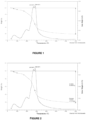
- TGA analysis of reference polypropylene is given in Figure 1 and DSC analyzes are given in Figure 2 .
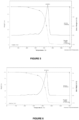
- TGA analyzes of polypropylene to which 10% by weight of bioplastic component is added are given in Figure 3 and DSC analyzes are given in Figure 4 .
- TGA analyzes of polypropylene to which 20% by weight of bioplastic component is added are given in Figure 5 and DSC analyzes are given in Figure 6 . It can be seen in the said analyzes that bioplastics are similar to polypropylene and similar polymers as raw materials and there will be no problem in adding them as an admixture component.
- bioplastics obtained from bread waste can be added to the polypropylene as an admixture material, and thus, the use of polymer materials as raw materials, which is known to have many disadvantages in the related technical field, can be reduced.
- bread waste are also brought into a sustainable economic cycle.
Landscapes
- Chemical & Material Sciences (AREA)
- Health & Medical Sciences (AREA)
- Chemical Kinetics & Catalysis (AREA)
- Medicinal Chemistry (AREA)
- Polymers & Plastics (AREA)
- Organic Chemistry (AREA)
- Life Sciences & Earth Sciences (AREA)
- Engineering & Computer Science (AREA)
- Biochemistry (AREA)
- Materials Engineering (AREA)
- Bakery Products And Manufacturing Methods Therefor (AREA)
- Polysaccharides And Polysaccharide Derivatives (AREA)
- Compositions Of Macromolecular Compounds (AREA)
Claims (8)
- Herstellungsverfahren für Biokunststoffe und/oder Kunststoffzusatzstoffe, dadurch gekennzeichnet, dass es die folgenden Prozessschritte umfasst:∘ Schneiden von Brotabfällen durch Aufschneiden und Trocknen,∘ Vermahlen der Brotabfälle nach dem Trocknungsprozess in Pulverform,∘ Erzeugen eines Abfallbrotpulver-Wasser-Gemisches durch Zugeben von Wasser zu pulverförmigem Brotabfall und Auflösen,∘ Zugeben von HCl in einer Konzentration von mindestens 30 % zum Abfallbrotpulver-Wasser-Gemisch,∘ durch Zugeben von HCl, Freisetzung der Stärken in den Brotpulverabfall und anschließendes Zugeben von Glyzerin,Erreichen der Polymerisation und Erzielung des Gemisches, das Biorohstoff enthält,∘ Zugeben von NaOH zur Neutralisierung des Mischmediums,∘ Zugeben einer Natriummetabisulfit-Wasser-Lösung zu dem Gemisch und anschließendes Trocknen des Gemisches,∘ Verringern der Dimension des getrockneten Biorohstoffs durch Mahlen,∘ Mischen der entstandenen Biorohstoffe durch Beaufschlagung im Doppelschnecken-Extruderprozess und Zugeben von Maleinanhydrid und einem Antioxidans als zusätzliche Komponente und Erzeugung von Biokunststoff als Ergebnis des Prozesses.
- Herstellungsverfahren nach Anspruch 1, dadurch gekennzeichnet, dass es folgende Prozessschritte umfasst:• Mischen von Brotpulverabfall in Wasser mit einem Wert zwischen 1/1 und 2/1 (w/v) (g/mL),• Zugeben von HCl mit einer Konzentration von mindestens 30 % in einem Wert zwischen 1/10 (v/v) und 7/10 (v/v) zu dem entstehenden Abfallbrotpulver-Wasser-Gemisch,• Zugeben von Glyzerin zu dem Gemisch in einem Wert zwischen 2/10 (v/v) und 15/10 (v/v) der Wassermenge,• Zugeben einer NaOH-Lösung in einem Verhältnis zwischen 2/10 (v/v) und 7/10 (v/v) in das Gemisch,• Zugeben einer Natriummetabisulfitlösung zu dem Biorohstoffgemisch in einem Wert zwischen 1/10 und 5/10 der zugegebenen Wassermenge,• Trocknen des Gemisches für 24 bis 72 Stunden,• Durchführen des Doppelschnecken-Extruder-Mischprozesses des Biorohstoffs bei einer maximalen Temperatur von 250 °C und Erzeugung von Biokunststoff durch Zugeben von 0,5-2 % Maleinanhydrid und 0,5-2 % Antioxidans aus dem Seitenzuführer während des Prozesses.
- Herstellungsverfahren nach Anspruch 1 oder 2, dadurch gekennzeichnet, dass das Abfallbrotpulver-Wasser-Gemisch zwischen 1,2:1 und 1,8:1 (g:mL) liegt.
- Herstellungsverfahren nach Anspruch 3, dadurch gekennzeichnet, dass das Abfallbrotpulver-Wasser-Gemisch 1,5:1 (g:mL) ist.
- Herstellungsverfahren nach Anspruch 1 und Anspruch 2, dadurch gekennzeichnet, dass das genannte HCl in den Verhältnissen zwischen 2/10 (v/v) und 7/10 (v/v) dem Abfallbrotpulver-Wasser-Gemisch zugegeben wird.
- Herstellungsverfahren nach Anspruch 1 und Anspruch 2, dadurch gekennzeichnet, dass die genannte Glyzerinmenge in einem Wert zwischen 4/10 (v/v) und 12/10 (v/v) der Wassermenge in das Gemisch zugegeben wird.
- Herstellungsverfahren nach Anspruch 1 oder 2, dadurch gekennzeichnet, dass die Menge an NaOH zwischen 4/10 (v/v) und 6/10 (v/v) des Gemisches liegt.
- Herstellungsverfahren nach Anspruch 1 oder 2, dadurch gekennzeichnet, dass der Trocknungsprozess über einen Zeitraum von 48 Stunden durchgeführt wird.
Applications Claiming Priority (2)
| Application Number | Priority Date | Filing Date | Title |
|---|---|---|---|
| TR2021/002305A TR202102305A2 (tr) | 2021-02-18 | 2021-02-18 | Ekmek atiklarindan plasti̇k katki malzemesi̇ ve bi̇yoplasti̇k malzemesi̇ elde etmek i̇çi̇n bi̇r yöntem |
| PCT/TR2022/050128 WO2022177533A1 (en) | 2021-02-18 | 2022-02-15 | A method for obtaining plastic admixture material and bioplastic material from bread waste |
Publications (4)
| Publication Number | Publication Date |
|---|---|
| EP4294858A1 EP4294858A1 (de) | 2023-12-27 |
| EP4294858C0 EP4294858C0 (de) | 2025-03-26 |
| EP4294858B1 true EP4294858B1 (de) | 2025-03-26 |
| EP4294858B8 EP4294858B8 (de) | 2025-04-30 |
Family
ID=77515782
Family Applications (1)
| Application Number | Title | Priority Date | Filing Date |
|---|---|---|---|
| EP22724946.3A Active EP4294858B8 (de) | 2021-02-18 | 2022-02-15 | Verfahren zur herstellung eines plastischen beimengungmaterials und eines bioplastischen materials aus brotabfällen |
Country Status (3)
| Country | Link |
|---|---|
| EP (1) | EP4294858B8 (de) |
| TR (1) | TR202102305A2 (de) |
| WO (1) | WO2022177533A1 (de) |
-
2021
- 2021-02-18 TR TR2021/002305A patent/TR202102305A2/tr unknown
-
2022
- 2022-02-15 EP EP22724946.3A patent/EP4294858B8/de active Active
- 2022-02-15 WO PCT/TR2022/050128 patent/WO2022177533A1/en not_active Ceased
Also Published As
| Publication number | Publication date |
|---|---|
| EP4294858C0 (de) | 2025-03-26 |
| TR202102305A2 (tr) | 2021-05-21 |
| EP4294858A1 (de) | 2023-12-27 |
| EP4294858B8 (de) | 2025-04-30 |
| WO2022177533A1 (en) | 2022-08-25 |
Similar Documents
| Publication | Publication Date | Title |
|---|---|---|
| EP3957686B1 (de) | Biologisch abbaubares material und rohmaterialzusammensetzung, herstellungsverfahren und dessen verwendung | |
| DE69830029T2 (de) | Verbundharzzusammensetzung | |
| Battegazzore et al. | Plasticizers, antioxidants and reinforcement fillers from hazelnut skin and cocoa by-products: Extraction and use in PLA and PP | |
| AU652796B2 (en) | Thermoformable compounds, their process of preparation and their use in order to obtain thermoformed articles | |
| US9085677B2 (en) | Bioplastics | |
| TWI581873B (zh) | 取自農業廢棄物之熱塑性澱粉組成物 | |
| TW200526713A (en) | Screw type processing device and product using the device | |
| Nanni et al. | A comparative study of different winemaking by-products derived additives on oxidation stability, mechanical and thermal proprieties of polypropylene | |
| CN111576090B (zh) | 一种可降解纸杯及其制备方法 | |
| CN111423737B (zh) | 一种生物基可降解餐盒材料及其制备方法 | |
| Ochi et al. | Agro-industrial waste as fillers for green composites | |
| Engel et al. | Making the reuse of agro-industrial wastes a reality for starch-based packaging sector: A storage case study of carrot cake and cherry tomatoes | |
| HUP0003350A2 (hu) | Dialdehidkeményítőt és természetes polimereket tartalmazó termoplasztikus keverékek | |
| EP4294858B1 (de) | Verfahren zur herstellung eines plastischen beimengungmaterials und eines bioplastischen materials aus brotabfällen | |
| JP4574738B1 (ja) | 生分解性成形品 | |
| CN104371290A (zh) | 一种环保型复合生物高分子材料及其制备方法 | |
| US20240052066A1 (en) | A method for obtaining plastic admixture material and bioplastic material from bread waste | |
| EP0506650B1 (de) | Biologisch abbaubares Verpackungs- und/oder Hüll-Material und Verfahren zu seiner Herstellung | |
| KR102163944B1 (ko) | 신선도 유지 기능을 갖는 복합분해성 시트 또는 진공성형품 | |
| KR102058394B1 (ko) | 친환경 바이오 필름 봉투의 제조방법 및 이로부터 수득된 필름 봉투 | |
| Choudhary et al. | Bio‐composites from food wastes | |
| KR102264798B1 (ko) | 생분해성 플라스틱용 컴파운드 및 이를 이용한 친환경 생분해성 봉투의 제조방법 | |
| CN112080114B (zh) | 一种可降解塑料母粒及可降解塑料的制备方法 | |
| DE102010026532A1 (de) | Gefüllte Formmassen | |
| CN109206719A (zh) | 基于pbat和pcl共混的果蔬薄膜及其制备方法 |
Legal Events
| Date | Code | Title | Description |
|---|---|---|---|
| STAA | Information on the status of an ep patent application or granted ep patent |
Free format text: STATUS: UNKNOWN |
|
| STAA | Information on the status of an ep patent application or granted ep patent |
Free format text: STATUS: THE INTERNATIONAL PUBLICATION HAS BEEN MADE |
|
| PUAI | Public reference made under article 153(3) epc to a published international application that has entered the european phase |
Free format text: ORIGINAL CODE: 0009012 |
|
| STAA | Information on the status of an ep patent application or granted ep patent |
Free format text: STATUS: REQUEST FOR EXAMINATION WAS MADE |
|
| 17P | Request for examination filed |
Effective date: 20230918 |
|
| AK | Designated contracting states |
Kind code of ref document: A1 Designated state(s): AL AT BE BG CH CY CZ DE DK EE ES FI FR GB GR HR HU IE IS IT LI LT LU LV MC MK MT NL NO PL PT RO RS SE SI SK SM TR |
|
| DAV | Request for validation of the european patent (deleted) | ||
| DAX | Request for extension of the european patent (deleted) | ||
| GRAP | Despatch of communication of intention to grant a patent |
Free format text: ORIGINAL CODE: EPIDOSNIGR1 |
|
| STAA | Information on the status of an ep patent application or granted ep patent |
Free format text: STATUS: GRANT OF PATENT IS INTENDED |
|
| INTG | Intention to grant announced |
Effective date: 20241014 |
|
| GRAS | Grant fee paid |
Free format text: ORIGINAL CODE: EPIDOSNIGR3 |
|
| GRAA | (expected) grant |
Free format text: ORIGINAL CODE: 0009210 |
|
| STAA | Information on the status of an ep patent application or granted ep patent |
Free format text: STATUS: THE PATENT HAS BEEN GRANTED |
|
| AK | Designated contracting states |
Kind code of ref document: B1 Designated state(s): AL AT BE BG CH CY CZ DE DK EE ES FI FR GB GR HR HU IE IS IT LI LT LU LV MC MK MT NL NO PL PT RO RS SE SI SK SM TR |
|
| REG | Reference to a national code |
Ref country code: GB Ref legal event code: FG4D |
|
| REG | Reference to a national code |
Ref country code: CH Ref legal event code: EP |
|
| REG | Reference to a national code |
Ref country code: DE Ref legal event code: R096 Ref document number: 602022012300 Country of ref document: DE |
|
| REG | Reference to a national code |
Ref country code: CH Ref legal event code: PK Free format text: BERICHTIGUNG B8 |
|
| RBV | Designated contracting states (corrected) |
Designated state(s): AL AT BE BG CH CY CZ DE DK EE ES FI FR GB GR HR HU IE IS IT LI LT LU LV MC MK MT NL NO PL PT RO RS SE SI SK SM |
|
| REG | Reference to a national code |
Ref country code: IE Ref legal event code: FG4D |
|
| U01 | Request for unitary effect filed |
Effective date: 20250410 |
|
| U07 | Unitary effect registered |
Designated state(s): AT BE BG DE DK EE FI FR IT LT LU LV MT NL PT RO SE SI Effective date: 20250422 |
|
| PG25 | Lapsed in a contracting state [announced via postgrant information from national office to epo] |
Ref country code: RS Free format text: LAPSE BECAUSE OF FAILURE TO SUBMIT A TRANSLATION OF THE DESCRIPTION OR TO PAY THE FEE WITHIN THE PRESCRIBED TIME-LIMIT Effective date: 20250626 |
|
| PG25 | Lapsed in a contracting state [announced via postgrant information from national office to epo] |
Ref country code: NO Free format text: LAPSE BECAUSE OF FAILURE TO SUBMIT A TRANSLATION OF THE DESCRIPTION OR TO PAY THE FEE WITHIN THE PRESCRIBED TIME-LIMIT Effective date: 20250626 |
|
| PG25 | Lapsed in a contracting state [announced via postgrant information from national office to epo] |
Ref country code: HR Free format text: LAPSE BECAUSE OF FAILURE TO SUBMIT A TRANSLATION OF THE DESCRIPTION OR TO PAY THE FEE WITHIN THE PRESCRIBED TIME-LIMIT Effective date: 20250326 |
|
| PG25 | Lapsed in a contracting state [announced via postgrant information from national office to epo] |
Ref country code: GR Free format text: LAPSE BECAUSE OF FAILURE TO SUBMIT A TRANSLATION OF THE DESCRIPTION OR TO PAY THE FEE WITHIN THE PRESCRIBED TIME-LIMIT Effective date: 20250627 |
|
| PG25 | Lapsed in a contracting state [announced via postgrant information from national office to epo] |
Ref country code: SM Free format text: LAPSE BECAUSE OF FAILURE TO SUBMIT A TRANSLATION OF THE DESCRIPTION OR TO PAY THE FEE WITHIN THE PRESCRIBED TIME-LIMIT Effective date: 20250326 |
|
| PG25 | Lapsed in a contracting state [announced via postgrant information from national office to epo] |
Ref country code: ES Free format text: LAPSE BECAUSE OF FAILURE TO SUBMIT A TRANSLATION OF THE DESCRIPTION OR TO PAY THE FEE WITHIN THE PRESCRIBED TIME-LIMIT Effective date: 20250326 |
|
| PG25 | Lapsed in a contracting state [announced via postgrant information from national office to epo] |
Ref country code: PL Free format text: LAPSE BECAUSE OF FAILURE TO SUBMIT A TRANSLATION OF THE DESCRIPTION OR TO PAY THE FEE WITHIN THE PRESCRIBED TIME-LIMIT Effective date: 20250326 |
|
| PG25 | Lapsed in a contracting state [announced via postgrant information from national office to epo] |
Ref country code: SK Free format text: LAPSE BECAUSE OF FAILURE TO SUBMIT A TRANSLATION OF THE DESCRIPTION OR TO PAY THE FEE WITHIN THE PRESCRIBED TIME-LIMIT Effective date: 20250326 |
|
| PG25 | Lapsed in a contracting state [announced via postgrant information from national office to epo] |
Ref country code: IS Free format text: LAPSE BECAUSE OF FAILURE TO SUBMIT A TRANSLATION OF THE DESCRIPTION OR TO PAY THE FEE WITHIN THE PRESCRIBED TIME-LIMIT Effective date: 20250726 |
|
| PGFP | Annual fee paid to national office [announced via postgrant information from national office to epo] |
Ref country code: GB Payment date: 20251223 Year of fee payment: 5 |
|
| PG25 | Lapsed in a contracting state [announced via postgrant information from national office to epo] |
Ref country code: CZ Free format text: LAPSE BECAUSE OF FAILURE TO SUBMIT A TRANSLATION OF THE DESCRIPTION OR TO PAY THE FEE WITHIN THE PRESCRIBED TIME-LIMIT Effective date: 20250326 |
|
| U20 | Renewal fee for the european patent with unitary effect paid |
Year of fee payment: 5 Effective date: 20251223 |
|
| PLBE | No opposition filed within time limit |
Free format text: ORIGINAL CODE: 0009261 |
|
| STAA | Information on the status of an ep patent application or granted ep patent |
Free format text: STATUS: NO OPPOSITION FILED WITHIN TIME LIMIT |
|
| REG | Reference to a national code |
Ref country code: CH Ref legal event code: L10 Free format text: ST27 STATUS EVENT CODE: U-0-0-L10-L00 (AS PROVIDED BY THE NATIONAL OFFICE) Effective date: 20260211 |
|
| 26N | No opposition filed |
Effective date: 20260105 |