EP4289459B1 - Atemgerät mit kohlendioxidkompensationsfunktion - Google Patents
Atemgerät mit kohlendioxidkompensationsfunktion Download PDFInfo
- Publication number
- EP4289459B1 EP4289459B1 EP22891175.6A EP22891175A EP4289459B1 EP 4289459 B1 EP4289459 B1 EP 4289459B1 EP 22891175 A EP22891175 A EP 22891175A EP 4289459 B1 EP4289459 B1 EP 4289459B1
- Authority
- EP
- European Patent Office
- Prior art keywords
- gas
- carbon dioxide
- pipeline
- oxygen
- high pressure
- Prior art date
- Legal status (The legal status is an assumption and is not a legal conclusion. Google has not performed a legal analysis and makes no representation as to the accuracy of the status listed.)
- Active
Links
Images


Classifications
-
- A—HUMAN NECESSITIES
- A61—MEDICAL OR VETERINARY SCIENCE; HYGIENE
- A61M—DEVICES FOR INTRODUCING MEDIA INTO, OR ONTO, THE BODY; DEVICES FOR TRANSDUCING BODY MEDIA OR FOR TAKING MEDIA FROM THE BODY; DEVICES FOR PRODUCING OR ENDING SLEEP OR STUPOR
- A61M16/00—Devices for influencing the respiratory system of patients by gas treatment, e.g. ventilators; Tracheal tubes
- A61M16/0045—Means for re-breathing exhaled gases, e.g. for hyperventilation treatment
-
- A—HUMAN NECESSITIES
- A61—MEDICAL OR VETERINARY SCIENCE; HYGIENE
- A61M—DEVICES FOR INTRODUCING MEDIA INTO, OR ONTO, THE BODY; DEVICES FOR TRANSDUCING BODY MEDIA OR FOR TAKING MEDIA FROM THE BODY; DEVICES FOR PRODUCING OR ENDING SLEEP OR STUPOR
- A61M16/00—Devices for influencing the respiratory system of patients by gas treatment, e.g. ventilators; Tracheal tubes
- A61M16/0003—Accessories therefor, e.g. sensors, vibrators, negative pressure
-
- A—HUMAN NECESSITIES
- A61—MEDICAL OR VETERINARY SCIENCE; HYGIENE
- A61M—DEVICES FOR INTRODUCING MEDIA INTO, OR ONTO, THE BODY; DEVICES FOR TRANSDUCING BODY MEDIA OR FOR TAKING MEDIA FROM THE BODY; DEVICES FOR PRODUCING OR ENDING SLEEP OR STUPOR
- A61M16/00—Devices for influencing the respiratory system of patients by gas treatment, e.g. ventilators; Tracheal tubes
- A61M16/0051—Devices for influencing the respiratory system of patients by gas treatment, e.g. ventilators; Tracheal tubes with alarm devices
-
- A—HUMAN NECESSITIES
- A61—MEDICAL OR VETERINARY SCIENCE; HYGIENE
- A61M—DEVICES FOR INTRODUCING MEDIA INTO, OR ONTO, THE BODY; DEVICES FOR TRANSDUCING BODY MEDIA OR FOR TAKING MEDIA FROM THE BODY; DEVICES FOR PRODUCING OR ENDING SLEEP OR STUPOR
- A61M16/00—Devices for influencing the respiratory system of patients by gas treatment, e.g. ventilators; Tracheal tubes
- A61M16/021—Devices for influencing the respiratory system of patients by gas treatment, e.g. ventilators; Tracheal tubes operated by electrical means
- A61M16/022—Control means therefor
- A61M16/024—Control means therefor including calculation means, e.g. using a processor
- A61M16/026—Control means therefor including calculation means, e.g. using a processor specially adapted for predicting, e.g. for determining an information representative of a flow limitation during a ventilation cycle by using a root square technique or a regression analysis
-
- A—HUMAN NECESSITIES
- A61—MEDICAL OR VETERINARY SCIENCE; HYGIENE
- A61M—DEVICES FOR INTRODUCING MEDIA INTO, OR ONTO, THE BODY; DEVICES FOR TRANSDUCING BODY MEDIA OR FOR TAKING MEDIA FROM THE BODY; DEVICES FOR PRODUCING OR ENDING SLEEP OR STUPOR
- A61M16/00—Devices for influencing the respiratory system of patients by gas treatment, e.g. ventilators; Tracheal tubes
- A61M16/10—Preparation of respiratory gases or vapours
-
- A—HUMAN NECESSITIES
- A61—MEDICAL OR VETERINARY SCIENCE; HYGIENE
- A61M—DEVICES FOR INTRODUCING MEDIA INTO, OR ONTO, THE BODY; DEVICES FOR TRANSDUCING BODY MEDIA OR FOR TAKING MEDIA FROM THE BODY; DEVICES FOR PRODUCING OR ENDING SLEEP OR STUPOR
- A61M16/00—Devices for influencing the respiratory system of patients by gas treatment, e.g. ventilators; Tracheal tubes
- A61M16/10—Preparation of respiratory gases or vapours
- A61M16/1005—Preparation of respiratory gases or vapours with O2 features or with parameter measurement
-
- A—HUMAN NECESSITIES
- A61—MEDICAL OR VETERINARY SCIENCE; HYGIENE
- A61M—DEVICES FOR INTRODUCING MEDIA INTO, OR ONTO, THE BODY; DEVICES FOR TRANSDUCING BODY MEDIA OR FOR TAKING MEDIA FROM THE BODY; DEVICES FOR PRODUCING OR ENDING SLEEP OR STUPOR
- A61M16/00—Devices for influencing the respiratory system of patients by gas treatment, e.g. ventilators; Tracheal tubes
- A61M16/10—Preparation of respiratory gases or vapours
- A61M16/105—Filters
-
- A—HUMAN NECESSITIES
- A61—MEDICAL OR VETERINARY SCIENCE; HYGIENE
- A61M—DEVICES FOR INTRODUCING MEDIA INTO, OR ONTO, THE BODY; DEVICES FOR TRANSDUCING BODY MEDIA OR FOR TAKING MEDIA FROM THE BODY; DEVICES FOR PRODUCING OR ENDING SLEEP OR STUPOR
- A61M16/00—Devices for influencing the respiratory system of patients by gas treatment, e.g. ventilators; Tracheal tubes
- A61M16/10—Preparation of respiratory gases or vapours
- A61M16/12—Preparation of respiratory gases or vapours by mixing different gases
-
- A—HUMAN NECESSITIES
- A61—MEDICAL OR VETERINARY SCIENCE; HYGIENE
- A61M—DEVICES FOR INTRODUCING MEDIA INTO, OR ONTO, THE BODY; DEVICES FOR TRANSDUCING BODY MEDIA OR FOR TAKING MEDIA FROM THE BODY; DEVICES FOR PRODUCING OR ENDING SLEEP OR STUPOR
- A61M16/00—Devices for influencing the respiratory system of patients by gas treatment, e.g. ventilators; Tracheal tubes
- A61M16/10—Preparation of respiratory gases or vapours
- A61M16/14—Preparation of respiratory gases or vapours by mixing different fluids, one of them being in a liquid phase
- A61M16/16—Devices to humidify the respiration air
-
- A—HUMAN NECESSITIES
- A61—MEDICAL OR VETERINARY SCIENCE; HYGIENE
- A61M—DEVICES FOR INTRODUCING MEDIA INTO, OR ONTO, THE BODY; DEVICES FOR TRANSDUCING BODY MEDIA OR FOR TAKING MEDIA FROM THE BODY; DEVICES FOR PRODUCING OR ENDING SLEEP OR STUPOR
- A61M16/00—Devices for influencing the respiratory system of patients by gas treatment, e.g. ventilators; Tracheal tubes
- A61M16/20—Valves specially adapted to medical respiratory devices
- A61M16/208—Non-controlled one-way valves, e.g. exhalation, check, pop-off non-rebreathing valves
-
- A—HUMAN NECESSITIES
- A61—MEDICAL OR VETERINARY SCIENCE; HYGIENE
- A61M—DEVICES FOR INTRODUCING MEDIA INTO, OR ONTO, THE BODY; DEVICES FOR TRANSDUCING BODY MEDIA OR FOR TAKING MEDIA FROM THE BODY; DEVICES FOR PRODUCING OR ENDING SLEEP OR STUPOR
- A61M16/00—Devices for influencing the respiratory system of patients by gas treatment, e.g. ventilators; Tracheal tubes
- A61M16/0003—Accessories therefor, e.g. sensors, vibrators, negative pressure
- A61M2016/0027—Accessories therefor, e.g. sensors, vibrators, negative pressure pressure meter
-
- A—HUMAN NECESSITIES
- A61—MEDICAL OR VETERINARY SCIENCE; HYGIENE
- A61M—DEVICES FOR INTRODUCING MEDIA INTO, OR ONTO, THE BODY; DEVICES FOR TRANSDUCING BODY MEDIA OR FOR TAKING MEDIA FROM THE BODY; DEVICES FOR PRODUCING OR ENDING SLEEP OR STUPOR
- A61M16/00—Devices for influencing the respiratory system of patients by gas treatment, e.g. ventilators; Tracheal tubes
- A61M16/0003—Accessories therefor, e.g. sensors, vibrators, negative pressure
- A61M2016/003—Accessories therefor, e.g. sensors, vibrators, negative pressure with a flowmeter
-
- A—HUMAN NECESSITIES
- A61—MEDICAL OR VETERINARY SCIENCE; HYGIENE
- A61M—DEVICES FOR INTRODUCING MEDIA INTO, OR ONTO, THE BODY; DEVICES FOR TRANSDUCING BODY MEDIA OR FOR TAKING MEDIA FROM THE BODY; DEVICES FOR PRODUCING OR ENDING SLEEP OR STUPOR
- A61M16/00—Devices for influencing the respiratory system of patients by gas treatment, e.g. ventilators; Tracheal tubes
- A61M16/10—Preparation of respiratory gases or vapours
- A61M16/1005—Preparation of respiratory gases or vapours with O2 features or with parameter measurement
- A61M2016/102—Measuring a parameter of the content of the delivered gas
- A61M2016/1025—Measuring a parameter of the content of the delivered gas the O2 concentration
-
- A—HUMAN NECESSITIES
- A61—MEDICAL OR VETERINARY SCIENCE; HYGIENE
- A61M—DEVICES FOR INTRODUCING MEDIA INTO, OR ONTO, THE BODY; DEVICES FOR TRANSDUCING BODY MEDIA OR FOR TAKING MEDIA FROM THE BODY; DEVICES FOR PRODUCING OR ENDING SLEEP OR STUPOR
- A61M16/00—Devices for influencing the respiratory system of patients by gas treatment, e.g. ventilators; Tracheal tubes
- A61M16/10—Preparation of respiratory gases or vapours
- A61M16/1005—Preparation of respiratory gases or vapours with O2 features or with parameter measurement
- A61M2016/102—Measuring a parameter of the content of the delivered gas
- A61M2016/103—Measuring a parameter of the content of the delivered gas the CO2 concentration
-
- A—HUMAN NECESSITIES
- A61—MEDICAL OR VETERINARY SCIENCE; HYGIENE
- A61M—DEVICES FOR INTRODUCING MEDIA INTO, OR ONTO, THE BODY; DEVICES FOR TRANSDUCING BODY MEDIA OR FOR TAKING MEDIA FROM THE BODY; DEVICES FOR PRODUCING OR ENDING SLEEP OR STUPOR
- A61M2202/00—Special media to be introduced, removed or treated
- A61M2202/02—Gases
- A61M2202/0208—Oxygen
-
- A—HUMAN NECESSITIES
- A61—MEDICAL OR VETERINARY SCIENCE; HYGIENE
- A61M—DEVICES FOR INTRODUCING MEDIA INTO, OR ONTO, THE BODY; DEVICES FOR TRANSDUCING BODY MEDIA OR FOR TAKING MEDIA FROM THE BODY; DEVICES FOR PRODUCING OR ENDING SLEEP OR STUPOR
- A61M2202/00—Special media to be introduced, removed or treated
- A61M2202/02—Gases
- A61M2202/0225—Carbon oxides, e.g. Carbon dioxide
-
- A—HUMAN NECESSITIES
- A61—MEDICAL OR VETERINARY SCIENCE; HYGIENE
- A61M—DEVICES FOR INTRODUCING MEDIA INTO, OR ONTO, THE BODY; DEVICES FOR TRANSDUCING BODY MEDIA OR FOR TAKING MEDIA FROM THE BODY; DEVICES FOR PRODUCING OR ENDING SLEEP OR STUPOR
- A61M2205/00—General characteristics of the apparatus
- A61M2205/18—General characteristics of the apparatus with alarm
-
- A—HUMAN NECESSITIES
- A61—MEDICAL OR VETERINARY SCIENCE; HYGIENE
- A61M—DEVICES FOR INTRODUCING MEDIA INTO, OR ONTO, THE BODY; DEVICES FOR TRANSDUCING BODY MEDIA OR FOR TAKING MEDIA FROM THE BODY; DEVICES FOR PRODUCING OR ENDING SLEEP OR STUPOR
- A61M2205/00—General characteristics of the apparatus
- A61M2205/33—Controlling, regulating or measuring
- A61M2205/3331—Pressure; Flow
- A61M2205/3334—Measuring or controlling the flow rate
-
- A—HUMAN NECESSITIES
- A61—MEDICAL OR VETERINARY SCIENCE; HYGIENE
- A61M—DEVICES FOR INTRODUCING MEDIA INTO, OR ONTO, THE BODY; DEVICES FOR TRANSDUCING BODY MEDIA OR FOR TAKING MEDIA FROM THE BODY; DEVICES FOR PRODUCING OR ENDING SLEEP OR STUPOR
- A61M2205/00—General characteristics of the apparatus
- A61M2205/33—Controlling, regulating or measuring
- A61M2205/3331—Pressure; Flow
- A61M2205/3355—Controlling downstream pump pressure
-
- A—HUMAN NECESSITIES
- A61—MEDICAL OR VETERINARY SCIENCE; HYGIENE
- A61M—DEVICES FOR INTRODUCING MEDIA INTO, OR ONTO, THE BODY; DEVICES FOR TRANSDUCING BODY MEDIA OR FOR TAKING MEDIA FROM THE BODY; DEVICES FOR PRODUCING OR ENDING SLEEP OR STUPOR
- A61M2230/00—Measuring parameters of the user
- A61M2230/005—Parameter used as control input for the apparatus
-
- A—HUMAN NECESSITIES
- A61—MEDICAL OR VETERINARY SCIENCE; HYGIENE
- A61M—DEVICES FOR INTRODUCING MEDIA INTO, OR ONTO, THE BODY; DEVICES FOR TRANSDUCING BODY MEDIA OR FOR TAKING MEDIA FROM THE BODY; DEVICES FOR PRODUCING OR ENDING SLEEP OR STUPOR
- A61M2230/00—Measuring parameters of the user
- A61M2230/04—Heartbeat characteristics, e.g. ECG, blood pressure modulation
-
- A—HUMAN NECESSITIES
- A61—MEDICAL OR VETERINARY SCIENCE; HYGIENE
- A61M—DEVICES FOR INTRODUCING MEDIA INTO, OR ONTO, THE BODY; DEVICES FOR TRANSDUCING BODY MEDIA OR FOR TAKING MEDIA FROM THE BODY; DEVICES FOR PRODUCING OR ENDING SLEEP OR STUPOR
- A61M2230/00—Measuring parameters of the user
- A61M2230/30—Blood pressure
-
- A—HUMAN NECESSITIES
- A61—MEDICAL OR VETERINARY SCIENCE; HYGIENE
- A61M—DEVICES FOR INTRODUCING MEDIA INTO, OR ONTO, THE BODY; DEVICES FOR TRANSDUCING BODY MEDIA OR FOR TAKING MEDIA FROM THE BODY; DEVICES FOR PRODUCING OR ENDING SLEEP OR STUPOR
- A61M2230/00—Measuring parameters of the user
- A61M2230/40—Respiratory characteristics
- A61M2230/42—Rate
Definitions
- the present invention relates to the technical field of breathing device, and more particularly to a breathing device with carbon dioxide compensation function.
- ventilators are divided into medical ventilators and household ventilators.
- Medical ventilators are used under the supervision of medical staff for patients with respiratory failure and barotrauma, as well as those requiring respiratory support, respiratory treatment, and first aid resuscitation.
- the medical ventilators mainly include therapeutic ventilators, first aid ventilators, out-of-hospital transport ventilators, high-frequency jet ventilators, high-frequency oscillation ventilators.
- Household ventilators are used to relieve snoring, hypopnea and sleep apnea during sleep, moderate and mild respiratory failure, and respiratory insufficiency, thus achieving adjuvant therapeutic purposes.
- the present invention provides a breathing device with carbon dioxide compensation function, so as to solve the above problems in the prior art.
- a breathing device with carbon dioxide compensation function comprises: an air source pipeline, a low pressure oxygen source pipeline, a high pressure oxygen source pipeline, a carbon dioxide source pipeline, a gas supply pipeline all of which are set in a ventilator; and a breathing pipeline which is set outside the ventilator, wherein:
- a first filter is provided on the air source pipeline, a second filter and a first check valve are provided on the low pressure oxygen source pipeline, the low pressure oxygen flows through the second filer and first check valve in sequence and enters an oxygen flow sensor, the low pressure oxygen and the air from the oxygen flow sensor enter a breathing gas generator through a second check valve, and are mixed by the breathing gas generator for forming breathing gas;
- a first pressure sensor is provided on the low pressure oxygen source pipeline and is located between the first check valve and the oxygen flow sensor for measuring a pressure of the low pressure oxygen in the low pressure oxygen source pipeline, the breathing gas enters the gas supply pipeline through a third check valve.
- a third filter, a first flow control valve, and a directional valve are provided on the high pressure oxygen source pipeline, a second pressure sensor is located between the third filter and the first flow control valve; when the directional valve is opened positively, the high pressure oxygen enters the gas supply pipeline through the third filter, the first flow control valve, and the directional valve on the high pressure oxygen source pipeline;
- an oxygen sensor, a carbon dioxide sensor, a fourth pressure sensor and a gas flow sensor are provided on the gas supply pipeline; the oxygen sensor detects an oxygen concentration in the gas supply pipeline, the carbon dioxide sensor detects a carbon dioxide concentration in the gas supply pipeline, the fourth pressure sensor detects a gas concentration in the gas supply pipeline, and the gas flow sensor detects a gas flow in the gas supply pipeline.
- a humidifier and a nebulizer are provided on a breathing pipeline, a fifth pressure sensor is located between the humidifier and the nebulizer, the breathing gas or the therapeutic gas enters a body of the user through the nebulizer; atomizing gas of the nebulizer is from the high pressure oxygen in the high pressure oxygen source pipeline, the high pressure oxygen enters an atomizing pipeline through a shut-off valve, and then enters the nebulizer through a first throttle valve for atomizing medication.
- the breathing gas or the therapeutic gas enters the body of the user through the nebulizer, which specifically comprises:
- the fifth pressure sensor is connected with an alarm; when the fifth pressure sensor detects that a pressure exceeds a preset range, an alarm instruction is sent to the alarm, and the alarm sends out an abnormal pressure alarm to remind occurrence of gas path blockage or gas leakage.
- the high pressure oxygen in the high pressure oxygen source pipeline will not enter the gas supply pipeline.
- the breathing device further comprises an auxiliary gas source pipeline, the auxiliary gas source pipeline is provided with a fifth filter and the a flow control valve, and a seventh pressure sensor is located between the fifth filter and the third flow control valve;
- the breathing device further comprises a carbon dioxide flow regulation system which comprises a carbon dioxide monitoring AI (artificial intelligence) module;
- a carbon dioxide monitoring AI artificial intelligence
- the present invention has some advantages as follows.
- the present invention provides the breathing device with carbon dioxide compensation function.
- the breathing device comprises an air source pipeline, a low pressure oxygen source pipeline, a high pressure oxygen source pipeline, a carbon dioxide source pipeline, a gas supply pipeline all of which are set in a ventilator; and a breathing pipeline which is set outside the ventilator.
- the air from an air source enters the ventilator through the air source pipeline.
- the low pressure oxygen from a low pressure oxygen source is mixed with the air in the air source pipeline through the low pressure oxygen source pipeline; mixed breathing gas enters the gas supply pipeline, is transmitted outside the ventilator through the gas supply pipeline, and is inhaled by a user through the breathing pipeline.
- the high pressure oxygen from a high pressure oxygen source enters the ventilator through the high pressure oxygen source pipeline, carbon dioxide gas from a carbon dioxide source and the high pressure oxygen in the high pressure oxygen source pipeline are mixed through the carbon dioxide source pipeline and form therapeutic gas.
- the therapeutic gas enters the gas supply pipeline, is transmitted outside the ventilator through the gas supply pipeline, and is inhaled by the user through the breathing pipeline for treatment, wherein the carbon dioxide gas is mixed with the high pressure oxygen in a preset ratio.
- the breathing device further comprises the carbon dioxide flow regulation system for detecting and regulating carbon dioxide in the breathing gas which is transported by the breathing device for patients, so as to compensate for the carbon dioxide in the body of the patient.
- the carbon dioxide flow control parameters are dynamically adjusted for preventing patients from hyperventilation, and there is no need to collect the carbon dioxide gas exhaled or produced by patients in this process.
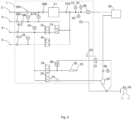
- 1 ventilator; 2: air source; 3: low pressure oxygen source; 4: high pressure oxygen source; 5: carbon dioxide source; 6: auxiliary gas source; 9: first pressure sensor; 10: oxygen flow sensor; 11: breathing gas generator; 12: carbon oxide sensor; 14: first flow control valve; 15: directional valve; 16: second flow control valve; 17: third flow control valve; 18: pressure regulating valve; 19: shut-off valve; 20: sixth pressure sensor; 21: first throttle valve; 22: second throttle valve; 23: external environment; 24: second pressure sensor; 25: third pressure sensor; 26: seventh pressure sensor; 27: oxygen sensor; 28: gas flow sensor; 29: humidifier; 30: fifth pressure sensor; 31: diaphragm regulating valve; 32: nebulizer; 33: mask; 34: user; 35: fourth pressure sensor; 36: carbon dioxide flow regulation system; 38: physiological detection instrument; 40: carbon dioxide monitoring Al (artificial intelligence) module; 108: first check valve; 207: first filter; 208: second check valve; 218: third check
- the breathing device comprises an air source pipeline, a low pressure oxygen source pipeline, a high pressure oxygen source pipeline, a carbon dioxide source pipeline, a gas supply pipeline all of which are set in a ventilator 1; and a breathing pipeline which is set outside the ventilator 1, wherein:
- the breathing control systems there are two breathing control systems in the breathing device, namely, a therapeutic breathing system and an universal breathing system, wherein the two breathing control systems share the same gas supply pipeline; in the therapeutic breathing system, the high pressure oxygen from the high pressure oxygen source 4 and the carbon dioxide gas from the carbon dioxide source 5 are mixed to form the therapeutic gas for the user 34; in the universal breathing system, the low pressure oxygen from the low pressure oxygen source 3 and the air from the air source 2 are mixed to form the breathing gas for the user 34.
- the breathing device comprises an air source 2, a low pressure oxygen source 3, a high pressure oxygen source 4, a carbon dioxide source 5, a first pressure sensor 9, an oxygen flow sensor 10, a first flow control valve 14, a directional valve 15, a shut-off valve 19, a sixth pressure sensor 20, a first throttle valve 21, a second throttle valve 22, a fifth pressure sensor 30, a diaphragm regulating valve 31, a nebulizer 32, a first check valve 108, a first filter 207, a second filter 307, a third filter 413, a fourth filter 513 and a fifth filter 613.
- the directional valve 15 When the general breathing function is activated, the directional valve 15 is switched and connected with the oxygen flow sensor 10, the high pressure oxygen from the high pressure oxygen source 4 flows through the third filter 413 for entering the ventilator 1, a proportion of the oxygen in the respiratory airflow for the user 34 is set through the first flow control valve 14, the second pressure sensor 24 monitors the pressure of the high pressure oxygen entering the ventilator 1, and the oxygen sensor 27 detects the oxygen concentration.
- the low pressure oxygen source 3 is provided, the low pressure oxygen from the low pressure oxygen source flows through the first check valve 108 and enters the oxygen flow sensor 10, the first pressure sensor 9 monitors the pressure of the low pressure oxygen, the flow of the low pressure oxygen is determined by the low pressure oxygen source 3 and is generally not higher than 15 L/min.
- the air from the air source 2 flows through the first filter 207 for entering the ventilator 1, and then is mixed with the oxygen from the oxygen flow sensor 10, and then enters the breathing gas generator 11 through the second check valve 208.
- the tidal gas generated by the breathing gas generator 11 flows through the third check valve 218 and enters the gas supply pipeline.
- the oxygen sensor 27 detects the oxygen concentration.
- the gas flow sensor 28 detects the flow of the tidal gas.
- the fourth pressure sensor 35 detects the pressure of the gas supply pipeline.
- the tidal gas flows outside the ventilator 1 and enters the respiratory tube of the user. If the humidity and temperature of the tidal gas need to be adjusted, the humidifier 29 is able to be connected with the ventilator 1 in series.
- the breathing pipeline is provided with a nebulizer 32, and at this time, the shut-off valve 19 is switched on, the diverted gas from the high pressure oxygen source 4 flows through the first throttle valve 21 and enters the nebulizer 32 for nebulizing the medication; the tidal gas is inhaled by the user 34 through a mask 33 or the respiratory pipeline.
- the exhaled gas from the user flows through the diaphragm regulating valve 31 and enters the external environment 23.
- the pressure of the diaphragm regulating valve 31 is adjusted by the sixth pressure sensor 20 and the second throttle valve 22.
- the pressure regulating valve 18 While using the PEEP (positive end-expiratory pressure) regulating function, the pressure regulating valve 18 is opened to a certain position according to the preset value of PEEP, the diverted gas from the high pressure oxygen source 4 flows through the second throttle valve 22 and enters the external environment 23; the sixth pressure sensor 20 is connected with the pressure regulating valve 18 and the second throttle valve 22, so the sixth pressure sensor 20 monitors the pressure between the pressure regulating valve 18 and the second throttle valve 22.
- the sixth pressure sensor 20 is also connected with the diaphragm regulating valve 31, so the pressure of the location where the pressure regulating valve 18, the sixth pressure sensor 20, the second throttle valve 22 and the diaphragm regulating valve 31 are connected is defined as PEEP.
- Beneficial effects of the above technical solution are as follows.
- a carbon dioxide flow regulation system 36 in the ventilator 1 for detecting and regulating the carbon dioxide gas in the breathing gas which is delivered to the user by the ventilator 1, so as to compensate for the amount of carbon dioxide or hydrogen ions H + in the user's body, so that the flow control parameters of the carbon dioxide gas are dynamically adjusted for preventing the user from hyperventilation, and there is no need to collect the carbon dioxide gas exhaled or produced by the user in this process.
- the first filter 207 is provided on the air source pipeline, that is, the first filter 207 is connected with the air source 2; the second filter 307 and the first check valve 108 are provided on the low pressure oxygen source pipeline, that is, the second filter 307 is located between the low pressure oxygen source 3 and the first check valve 108; the low pressure oxygen flows through the second filer 307 and first check valve 108 in sequence and enters the oxygen flow sensor 10, the low pressure oxygen and the air from the oxygen flow sensor 10 enter the breathing gas generator 11 through the second check valve 208, and are mixed by the breathing gas generator 11 for forming the breathing gas; the first pressure sensor 9 is provided on the low pressure oxygen source pipeline and is located between the first check valve 108 and the oxygen flow sensor 10 for measuring the pressure of the low pressure oxygen in the low pressure oxygen source pipeline, the breathing gas enters the gas supply pipeline through the third check valve 218.
- the third filter 413, the first flow control valve 14, and the directional valve 15 are provided on the high pressure oxygen source pipeline, the second pressure sensor 24 is located between the third filter 413 and the first flow control valve 14; when the directional valve 15 is opened positively, the high pressure oxygen enters the gas supply pipeline through the third filter 413, the first flow control valve 14, and the directional valve 15 on the high pressure oxygen source pipeline;
- the oxygen sensor 27, the carbon dioxide sensor 12, the fourth pressure sensor 35 and the gas flow sensor 28 are provided on the gas supply pipeline; the oxygen sensor 27 detects the oxygen concentration in the gas supply pipeline, the carbon dioxide sensor 12 detects the carbon dioxide concentration in the gas supply pipeline, the fourth pressure sensor 35 detects the gas concentration in the gas supply pipeline, and the gas flow sensor 28 detects the gas flow in the gas supply pipeline.
- the humidifier 29 and the nebulizer 32 are provided on the breathing pipeline, the fifth pressure sensor 30 is located between the humidifier 29 and the nebulizer 32, the breathing gas or the therapeutic gas enters the body of the user 34 through the nebulizer 32; the atomizing gas of the nebulizer 32 is from the high pressure oxygen in the high pressure oxygen source pipeline, and the high pressure oxygen enters the atomizing pipeline through the shut-off valve 19.
- the breathing gas or the therapeutic gas enters the body of the user 34 through the nebulizer 32, which specifically comprises:
- PEEP is the positive end-expiratory pressure for reinflating collapsed alveoli, increasing mean airway pressure, improving oxygenation, and reducing pulmonary edema, but at the same time affecting cardiac blood return and left ventricular afterload, and overcoming increased respiratory work.
- PEEP is often applied to 1-type respiratory failure represented by ARDS (Acute Respiratory Distress Syndrome).
- the fifth pressure sensor 30 is connected with an alarm; when the fifth pressure sensor 30 detects that the pressure exceeds the preset range, an alarm instruction is sent to the alarm, and the alarm sends out an abnormal pressure alarm to remind the occurrence of gas path blockage or gas leakage.
- the directional valve 15 when the directional valve 15 is opened reversely, the high pressure oxygen in the high pressure oxygen source pipeline will not enter the gas supply pipeline.
- the breathing device further comprises an auxiliary gas source pipeline, the auxiliary gas source pipeline is provided with the fifth filter 613 and the third flow control valve 17, and the seventh pressure sensor 26 is located between the fifth filter 613 and the third flow control valve 17;
- the breathing device further comprises the carbon dioxide flow regulation system 36 which comprises a carbon dioxide monitoring AI (artificial intelligence) module 40;
- the carbon dioxide flow regulation system 36 which comprises a carbon dioxide monitoring AI (artificial intelligence) module 40;
- the carbon dioxide flow regulation system comprises a high pressure oxygen source 4, a carbon dioxide source 5, a third filter 413, a fourth filter 513, a first pressure sensor 24, a second pressure sensor 25, a first flow control valve 14, a second flow control valve 16, and a fifth pressure sensor 30 which is a pressure sensor close to the user.
- the carbon dioxide regulation function When the carbon dioxide regulation function is activated, the carbon dioxide gas from the carbon dioxide source 5 flows through the fourth filter 513 and enters the ventilator 1; by adjusting the second flow control valve 16, the flow of the carbon dioxide in the breathing gas for the patient or the user 34 is set.
- the carbon dioxide sensor 12 detects the concentration of the carbon dioxide gas from the carbon dioxide source 5.
- Fig. 2 shows the carbon dioxide monitoring AI module 40 based on the carbon dioxide flow regulation system.
- the carbon dioxide monitoring AI module 40 drives the carbon dioxide flow regulation system 36 to work, so as to provide required carbon dioxide gas for entering the pipeline located at a rear end of the third check valve 218, and then the carbon dioxide is mixed with other gases and sent to the patient or the user 34 through the mask 33.
- the required carbon dioxide gas meets the set parameters which are PCO 2 (partial pressure of carbon dioxide), FiCO 2 and flow of carbon dioxide.
- the carbon dioxide monitoring AI module 40 obtains the physiological information (including blood pressure, ECG parameters, FiO 2 , FiCO 2 , respiratory rate, and respiratory tidal volume) of the patient through the physiological detection instrument 38 in real time, predicts the respiratory state of the patient on the physiological information based on the comprehensive data analysis AI algorithm, determines the possibility of hyperventilation, respiratory alkalosis, respiratory acidosis, hypoxidosis and other diseases, and according to the determination results, CO 2 parameters are dynamically adjusted independently to prevent patients from developing the above symptoms.
- physiological information including blood pressure, ECG parameters, FiO 2 , FiCO 2 , respiratory rate, and respiratory tidal volume
- the tidal volume VT, the respiratory time ratio I:E, the oxygen ratio FiO 2 , and the PEEP are set; the appropriate breathing mode is selected according to the state of the patient, and then the ventilator 1 starts to work.
- the tidal volume VT, the respiratory time ratio I:E, the oxygen ratio FiO 2 , and the PEEP are set, and then the ventilator 1 starts to work. If the pressure is abnormal at the fifth pressure sensor 30, it indicates the gas path blockage or gas leakage. Medical personnel need to check the state of gas path.
- the therapeutic gas is a mixture of oxygen and carbon dioxide. The two gases are mixed in a fixed proportion and then injected into the poisoned patient for treatment. Other medical gases are also able to be mixed according to the above method and then injected into patients through continuous ventilation or other customized ventilation modes.
- the CO 2 monitoring AI module 40 is able to automatically adjust FiCO 2 according to the physiological condition of the patient, which prevents the patient from hyperventilation while regulating CO 2 .
- the pre-opening time is preset, the first time and the second time are calculated, the ratio of carbon dioxide to oxygen is adjusted in advance according to the change rule and trend of carbon dioxide content in the body of the user 34, or the therapeutic function of the ventilator 1 is activated in advance to timely supplement the carbon dioxide gas or reduce the inhalation of carbon dioxide gas for the user 34.
- the oxygen content in the body of the user 34 is able to be measured and calculated. Based on the oxygen content, the preset ratio of carbon dioxide gas to high pressure oxygen is able to be further controlled as follows.
- the calculation method comprises steps of:
- Y S a O 2 ⁇ 0 + ⁇ 1 ⁇ r 1 ⁇ r 1 ⁇ ⁇ o 1 ⁇ ⁇ r 2 ⁇ o 1 C Hb O 2 + ⁇ r 1 C Hb ⁇ r 1 ⁇ ⁇ o 1 ⁇ o 2 C Hb O 2 + ⁇ r 2 C Hb ⁇ ⁇ W H 2 + ⁇ 2 1 ⁇ A ⁇ o 2 ⁇ ⁇ o 1 A ⁇ r 2 ⁇ ⁇ r 1 + ⁇ o 1 ⁇ A ⁇ o 2 wherin Y ( S a O 2 ) is oxygen saturation determined based on the multiple linear regression model, and ⁇ 0 , ⁇ 1 and ⁇ 2 are the regression coefficients of the multiple linear regression model.
Landscapes
- Health & Medical Sciences (AREA)
- Pulmonology (AREA)
- Heart & Thoracic Surgery (AREA)
- Engineering & Computer Science (AREA)
- Anesthesiology (AREA)
- Biomedical Technology (AREA)
- Emergency Medicine (AREA)
- Hematology (AREA)
- Life Sciences & Earth Sciences (AREA)
- Animal Behavior & Ethology (AREA)
- General Health & Medical Sciences (AREA)
- Public Health (AREA)
- Veterinary Medicine (AREA)
- Respiratory Apparatuses And Protective Means (AREA)
- Measurement Of The Respiration, Hearing Ability, Form, And Blood Characteristics Of Living Organisms (AREA)
Claims (9)
- Atemvorrichtung mit Kohlendioxid-Kompensationsfunktion, die Folgendes umfasst:
eine Luftquellen-Pipeline, eine Niederdruck-Sauerstoffquellen-Pipeline, eine Hochdruck-Sauerstoffquellen-Pipeline, eine Kohlendioxidquellen-Pipeline, eine Gasversorgungs-Pipeline, die alle in einem Beatmungsgerät (1) eingestellt sind; und eine Atem-Pipeline, die außerhalb des Beatmungsgeräts (1) eingestellt ist, wobei:Luft aus einer Luftquelle (2) durch die Luftquellen-Pipeline in das Beatmungsgerät (1) eintritt, Niederdruck-Sauerstoff aus einer Niederdruck-Sauerstoffquelle (3) durch die Niederdruck-Sauerstoffquellen-Pipeline mit der Luft in der Luftquellen-Pipeline gemischt wird; gemischtes Atemgas in die Gasversorgungs-Pipeline eintritt, die sich hinter einem dritten Rückschlagventil (218) befindet, durch die Gasversorgungs-Pipeline außerhalb des Beatmungsgeräts (1) übertragen und von einem Benutzer (34) durch die Atem-Pipeline eingeatmet wird;Hochdruck-Sauerstoff aus einer Hochdruck-Sauerstoffquelle (4) durch die Hochdruck-Sauerstoffquellen-Pipeline in das Beatmungsgerät (1) eintritt, Kohlendioxidgas aus einer Kohlendioxidquelle (5) und der Hochdruck-Sauerstoff in der Hochdruck-Sauerstoffquellen-Pipeline durch die Kohlendioxidquellen-Pipeline gemischt werden und therapeutisches Gas bilden; das therapeutische Gas in die Gasversorgungs-Pipeline eintritt, durch die Gasversorgungs-Pipeline aus dem Beatmungsgerät (1) übertragen wird und vom Benutzer (4) durch die Atem-Pipeline zur Behandlung eingeatmet wird, wobei das Kohlendioxidgas mit dem Hochdruck-Sauerstoff in einem voreingestellten Verhältnis gemischt wird, sodass ein Kohlendioxidgehalt im Körper des Benutzers (34) eingestellt werden kann;ein drittes Filter (413), ein erstes Ablaufsteuerventil (14) und ein Richtungsventil (15) an der Hochdruck-Sauerstoffquelle-Pipeline vorgesehen sind, ein zweiter Drucksensor (24) sich zwischen dem dritten Filter (413) und dem ersten Ablaufsteuerventil (14) befindet; wenn das Richtungsventil (15) positiv geöffnet wird, der Hochdruck-Sauerstoff durch das dritte Filter (413), das erste Ablaufsteuerventil (14) und das Richtungsventil (15) an der Hochdruck-Sauerstoffquelle-Pipeline in die Gasversorgungs-Pipeline eintritt;ein vierter Filter (513), ein dritter Drucksensor (25) und ein zweites Ablaufsteuerventil (16) in Sequenz an der Kohlendioxidquellen-Pipeline vorgesehen sind, das Kohlendioxidgas und der Hochdruck-Sauerstoff durch den vierten Filter (513), den dritten Drucksensor (25) und das zweite Ablaufsteuerventil (16) an der Kohlendioxidquellen-Pipeline gemischt werden und therapeutisches Gas bilden, das therapeutische Gas in die Gasversorgungs-Pipeline eintritt;der dritte Drucksensor (25) einen Druck des Kohlendioxidgases in der Kohlendioxidquellen-Pipeline misst; ein Verhältnis von Sauerstoff zu Kohlendioxidgas im therapeutischen Gas durch Einstellen eines Ablaufs des Hochdruck-Sauerstoffs und des Kohlendioxidgases durch das erste Ablaufsteuerventil (14) und das zweite Ablaufsteuerventil (16) eingestellt wird, sodass das Verhältnis einen voreingestellten Wert erreichen kann. - Atemvorrichtung mit Kohlendioxid-Kompensationsfunktion nach Anspruch 1, wobei ein erster Filter (207) an der Luftquellen-Pipeline vorgesehen ist, ein zweiter Filter (307) und ein erstes Rückschlagventil (108) an der Niederdruck-Sauerstoffquellen-Pipeline vorgesehen sind, der Niederdruck-Sauerstoff in Sequenz durch den zweiten Filter (307) und das erste Rückschlagventil (108) strömt und in einen Sauerstoff-Ablaufsensor (10) eintritt, der Niederdruck-Sauerstoff und die Luft aus dem Sauerstoff-Ablaufsensor (10) durch ein zweites Rückschlagventil (208) in einen Atemgasgenerator (11) eintreten und von dem Atemgasgenerator (11) gemischt werden, um Atemgas zu bilden;
ein erster Drucksensor (9) an der Niederdruck-Sauerstoffquellen-Pipeline vorgesehen ist und sich zwischen dem ersten Rückschlagventil (108) und dem Sauerstoff-Ablaufsensor (10) befindet, um einen Druck des Niederdruck-Sauerstoffs in der Niederdruck-Sauerstoffquellen-Pipeline zu messen, das Atemgas durch das dritte Rückschlagventil (218) in die Gasversorgungs-Pipeline eintritt. - Atemvorrichtung mit Kohlendioxid-Kompensationsfunktion nach Anspruch 1, wobei in der Gasversorgungs-Pipeline ein Sauerstoff-Sensor (27), ein Kohlendioxidsensor (12), ein vierter Drucksensor (35) und ein Gasablaufsensor (28) vorgesehen sind;
der Sauerstoff-Sensor (27) eine Sauerstoff-Konzentration in der Gasversorgungs-Pipeline feststellt, der Kohlendioxidsensor (12) eine Kohlendioxidkonzentration in der Gasversorgungs-Pipeline feststellt, der vierte Drucksensor (35) eine Gaskonzentration in der Gasversorgungs-Pipeline feststellt und der Gasablaufsensor (28) einen Gasablauf in der Gasversorgungs-Pipeline feststellt. - Atemvorrichtung mit Kohlendioxid-Kompensationsfunktion nach Anspruch 1, wobei ein Luftbefeuchter (29) und ein Vernebler (32) an einer Atem-Pipeline vorgesehen sind, ein fünfter Drucksensor (30) sich zwischen dem Luftbefeuchter (29) und dem Vernebler (32) befindet, das Atemgas oder das therapeutische Gas durch den Vernebler (32) in einen Körper des Benutzers (34) eintritt;
Zerstäubungsgas des Verneblers (32) aus dem Hochdruck-Sauerstoff in der Hochdruck-Sauerstoffquellen-Pipeline ist, der Hochdruck-Sauerstoff durch ein Absperrventil (19) in eine Zerstäubungs-Pipeline eintritt und dann durch ein erstes Drosselventil (21) in den Vernebler (32) zur Zerstäubung von Medikamenten eintritt. - Atemvorrichtung mit Kohlendioxid-Kompensationsfunktion nach Anspruch 4, wobei das Atemgas oder das therapeutische Gas durch den Vernebler (32) in den Körper des Benutzers (34) eintritt, was insbesondere Folgendes umfasst:das Atemgas oder das therapeutische Gas durch den Vernebler (32) über eine Maske (33) oder ein Beatmungsrohr in den Körper des Benutzers (34) eintritt;wenn der Benutzer (34) Gas durch die Maske (33) oder das Beatmungsrohr ausatmet, tritt das ausgeatmete Gas in eine exspiratorische Pipeline ein, die exspiratorische Pipeline ist mit einem Membranregulierventil (31) bereitgestellt, und das ausgeatmete Gas tritt durch das Membranregulierventil (31) in eine externe Umgebung (23) ein;die Hochdruck-Sauerstoffquellen-Pipeline ist mit einer PEEP (positiver endexsiratorischer Druck) regulierenden Pipeline verbunden, die PEEP regulierende Pipeline ist durch ein Druckregulierventil, einen sechsten Drucksensor (20) und ein zweites Drosselventil (22) bereitgestellt; der sechste Drucksensor (20) ist mit dem Membranregulierventil (31) zum Feststellen von PEEP verbunden; ein Druck des Membranregulierventils (31) wird durch den sechsten Drucksensor (20) und das zweite Drosselventil eingestellt;das Druckregulierventil wird auf eine Position nach einem voreingestellten PEEP-Wert geöffnet, und der abgeleitete Hochdruck-Sauerstoff in der Hochdruck-Quellleitung tritt über das zweite Drosselventil in die äußere Umgebung ein.
- Atemvorrichtung mit Kohlendioxid-Kompensationsfunktion nach Anspruch 4, wobei der fünfte Drucksensor (30) mit einem Alarm verbunden ist; wenn der fünfte Drucksensor (30) feststellt, dass ein Druck einen voreingestellten Bereich überschreitet, wird eine Alarmanweisung an den Alarm gesendet, und der Alarm sendet einen Alarm bei abnormalem Druck, um an das Vorkommen einer Gaswegblockade oder eines Gasaustritts zu erinnern.
- Atemvorrichtung mit Kohlendioxid-Kompensationsfunktion nach Anspruch 1, wobei wenn das Richtungsventil (15) in umgekehrter Richtung geöffnet wird, der Hochdruck-Sauerstoff in der Hochdruck-Sauerstoffquellen-Pipeline von einem vorderen Ende des zweiten Rückschlagventils (208) anstatt von einem hinteren Ende des dritten Rückschlagventils (218) in die Gasversorgungs-Pipeline eintritt.
- Atemvorrichtung mit Kohlendioxid-Kompensationsfunktion nach Anspruch 1, wobei die Atemvorrichtung ferner eine Hilfsgasquellen-Pipeline umfasst, die Hilfsgasquellen-Pipeline mit einem fünften Filter (613) und einem Ablaufsteuerventil (17) versehen ist und ein siebter Drucksensor (26) sich zwischen dem fünften Filter (613) und dem dritten Ablaufsteuerventil (17) befindet;Hilfsgas aus einer Hilfsgasquelle (6) mit dem Hochdruck-Sauerstoff und dem Kohlendioxidgas durch die Hilfsgasquellen-Pipeline gemischt wird und das gemischte Gas in die Gasversorgungs-Pipeline eintritt;das Hilfsgas aus der Hilfsgasquelle (6) Kohlendioxidgas und medizinisches Gas umfasst, das von einer medizinischen Industrie zum Einatmen durch den Benutzer (34) verwendet wird.
- Atemvorrichtung mit Kohlendioxid-Kompensationsfunktion nach Anspruch 1, wobei die Atemvorrichtung ferner ein System zum Regulieren des Kohlendioxidablaufs umfasst, das ein Modul zum Überwachen des Kohlendioxidablaufs mit KI (künstlicher Intelligenz) umfasst;das KI-Modul zum Überwachen des Kohlendioxids physiologische Informationen des Benutzers (34) in Echtzeit feststellt, wobei die physiologischen Informationen Blutdruck, EKG-Parameter (Elektrokardiogramm), FiO2 (Anteil des eingeatmeten Sauerstoffs), FiCO2 (Anteil des eingeatmeten Kohlendioxids), Atemfrequenz und Atemzugvolumen umfassen; das Modul zum Überwachen des Kohlendioxids den Atemzustand des Benutzers (34) auf den physiologischen Informationen basierend auf einem umfassenden KI-Algorithmus zur Datenanalyse vorhersagt, ein Verhältnis des Kohlendioxids und des Sauerstoffs nach dem Atemzustand bestimmt und das bestimmte Verhältnis des Kohlendioxids und des Sauerstoffs auf ein vorgegebenes Verhältnis einstellt;das System zum Regulieren des Kohlendioxidablaufs ferner ein Vorhersagemodul umfasst, wobei das Vorhersagemodul, das mit dem KI-Modul zum Überwachen des Kohlendioxidgases zum Ermitteln der physiologischen Informationen verbunden ist, konfiguriert ist, einen ersten Zeitpunkt vom Starten des Beatmungsgeräts (1) bis zum Einatmen des therapeutischen Gases durch den Benutzer (34) und einen zweiten Zeitpunkt vom Einatmen des therapeutischen Gases durch den Benutzer (34) in das KI-Modul zum Überwachen des Kohlendioxids zur Erkennung bis zur Wiederherstellung der physiologischen Informationen des Benutzers (34) zu bestimmen;basierend auf dem ersten Zeitpunkt, dem zweiten Zeitpunkt und den physiologischen Informationen des Benutzers (34) ein Voröffnungszeitpunkt bestimmt wird, wobei ein Voröffnungszeitpunkt einem Öffnungszustand entspricht, wenn das Kohlendioxidgas im Körper des Benutzers (34) oder das vom Benutzer ausgeatmete Gas den voreingestellten Bereich überschreitet, wird das Beatmungsgerät (1) gestartet.
Applications Claiming Priority (2)
| Application Number | Priority Date | Filing Date | Title |
|---|---|---|---|
| CN202210450492.9A CN114733024B (zh) | 2022-04-26 | 2022-04-26 | 一种带有二氧化碳补偿功能的呼吸装置 |
| PCT/CN2022/129965 WO2023207023A1 (zh) | 2022-04-26 | 2022-11-04 | 一种带有二氧化碳补偿功能的呼吸装置 |
Publications (4)
| Publication Number | Publication Date |
|---|---|
| EP4289459A1 EP4289459A1 (de) | 2023-12-13 |
| EP4289459A4 EP4289459A4 (de) | 2024-06-12 |
| EP4289459B1 true EP4289459B1 (de) | 2024-10-02 |
| EP4289459C0 EP4289459C0 (de) | 2024-10-02 |
Family
ID=82282683
Family Applications (1)
| Application Number | Title | Priority Date | Filing Date |
|---|---|---|---|
| EP22891175.6A Active EP4289459B1 (de) | 2022-04-26 | 2022-11-04 | Atemgerät mit kohlendioxidkompensationsfunktion |
Country Status (4)
| Country | Link |
|---|---|
| US (1) | US20240366890A1 (de) |
| EP (1) | EP4289459B1 (de) |
| CN (1) | CN114733024B (de) |
| WO (1) | WO2023207023A1 (de) |
Families Citing this family (8)
| Publication number | Priority date | Publication date | Assignee | Title |
|---|---|---|---|---|
| CN114733024B (zh) * | 2022-04-26 | 2022-11-15 | 广州蓝仕威克医疗科技有限公司 | 一种带有二氧化碳补偿功能的呼吸装置 |
| CN115382069B (zh) * | 2022-09-13 | 2023-12-19 | 广州蓝仕威克医疗科技有限公司 | 一种用于解决高海拔区域气体分压平衡的呼吸装置 |
| JP2024068785A (ja) * | 2022-11-09 | 2024-05-21 | セイコーエプソン株式会社 | 生体情報測定装置、及び生体情報測定方法 |
| CN116808369B (zh) * | 2023-03-07 | 2024-04-09 | 广州蓝仕威克医疗科技有限公司 | 一种自动补充调节二氧化碳作为呼吸气源的睡眠呼吸机 |
| CN116688300B (zh) * | 2023-07-03 | 2024-02-06 | 广州蓝仕威克医疗科技有限公司 | 一种连接通用呼吸机的co2及其它气体补偿装置及系统 |
| EP4537878A1 (de) | 2023-10-09 | 2025-04-16 | Koninklijke Philips N.V. | Computerprogrammprodukt, atemunterstützungsvorrichtung, verfahren und datenverarbeitungssystem |
| CN117100966B (zh) * | 2023-10-12 | 2024-05-17 | 广州蓝仕威克医疗科技有限公司 | 一种空氧及氧气和二氧化碳混合通气控制气路及呼吸装置 |
| CN118892603B (zh) * | 2024-09-30 | 2024-12-06 | 昆明市儿童医院 | 一种重症儿童供氧监测设备及其监测系统 |
Family Cites Families (32)
| Publication number | Priority date | Publication date | Assignee | Title |
|---|---|---|---|---|
| JPH0984876A (ja) * | 1995-09-20 | 1997-03-31 | Daido Hoxan Inc | 二酸化炭素吸入療法用ガス混合装置 |
| CA2538926C (en) * | 1996-11-18 | 2010-09-21 | Medlis Corp. | Artificial ventilation system and methods of controlling carbon dioxide rebreathing |
| CN2290351Y (zh) * | 1997-03-25 | 1998-09-09 | 李华军 | 便携式呼吸机 |
| US5954050A (en) * | 1997-10-20 | 1999-09-21 | Christopher; Kent L. | System for monitoring and treating sleep disorders using a transtracheal catheter |
| US7886740B2 (en) * | 2003-01-28 | 2011-02-15 | Beth Israel Deaconess Medical Center, Inc. | Gas systems and methods for enabling respiratory stability |
| EP3064242A1 (de) * | 2003-04-28 | 2016-09-07 | Advanced Circulatory Systems Inc. | Lüfter und verfahren zur behandlung von kopftrauma und geringer blutzirkulation |
| US8156937B2 (en) * | 2003-08-04 | 2012-04-17 | Carefusion 203, Inc. | Portable ventilator system |
| US7832398B2 (en) * | 2005-12-29 | 2010-11-16 | General Elecrtic Company | Arrangement in connection with an anaesthesia/ventilation system for a patient and a gas separation unit for an anaesthesia/ventilation system |
| EP2051681A4 (de) * | 2006-08-04 | 2013-07-10 | Groupe Medical Gaumond Inc Gaumond Medical Group Inc | Hyperbares/hypoxisches kammersystem |
| US20100224191A1 (en) * | 2009-03-06 | 2010-09-09 | Cardinal Health 207, Inc. | Automated Oxygen Delivery System |
| EP2425869A1 (de) * | 2010-09-07 | 2012-03-07 | Imt Ag | Beatmungsgerät und/oder Anästhesiegerät |
| WO2016032375A1 (en) * | 2014-08-27 | 2016-03-03 | Maquet Critical Care Ab | Method and apparatus for prediction of fluid responsiveness in mechanically ventilated subjects |
| CN204092768U (zh) * | 2014-09-29 | 2015-01-14 | 烟台宏远氧业有限公司 | 医用氧舱内多功能医疗模块 |
| SG10201909092SA (en) * | 2015-03-31 | 2019-11-28 | Fisher & Paykel Healthcare Ltd | A user interface and system for supplying gases to an airway |
| CN105748069B (zh) * | 2016-04-21 | 2018-10-23 | 罗远明 | 一种中枢性睡眠呼吸暂停二氧化碳吸入治疗装置 |
| CN105944201B (zh) * | 2016-05-31 | 2019-04-16 | 广州市桂勤器械设备工程有限公司 | 一种医用智能呼吸机 |
| RU2708784C2 (ru) * | 2016-06-10 | 2019-12-11 | Александр Андреевич Панин | Способ ингаляционного воздействия на организм и аппарат для его осуществления |
| CN106139343B (zh) * | 2016-06-29 | 2018-11-23 | 广州蓝仕威克医疗科技有限公司 | 一种气体中毒急救设备 |
| CN106178210A (zh) * | 2016-08-08 | 2016-12-07 | 珠海威泓医疗科技有限公司 | 气体中毒急救呼吸机 |
| BR102016029897A2 (pt) * | 2016-12-19 | 2018-07-17 | Soc Beneficente Israelita Brasileira Hospital Albert Einstein | sistema e método de controle inteligente, baseado em aprendizado de máquina, para modular níveis de concentração end-tidal através de ajustes no volume e na concentração de um fluxo de gases respiratórios de entrada em tempo real |
| EP3823708B1 (de) * | 2018-07-19 | 2024-10-09 | Aviation Works Limited | Belüftungsvorrichtung und maske |
| CN109718453A (zh) * | 2018-12-18 | 2019-05-07 | 湖南明康中锦医疗科技发展有限公司 | 呼吸支持设备 |
| CA3091078A1 (en) * | 2019-08-23 | 2021-02-23 | Thornhill Scientific Inc. | Testing for neurovascular uncoupling in multiple sclerosis using sequential gas delivery versus fixed inspired co2 |
| US12594396B2 (en) * | 2020-04-08 | 2026-04-07 | California Institute Of Technology | Ventilation methods and devices for treating respiratory diseases |
| CN111658932A (zh) * | 2020-07-21 | 2020-09-15 | 南京鼓楼医院 | 一种用于自主呼吸激发试验的呼吸器 |
| CN111821552A (zh) * | 2020-08-14 | 2020-10-27 | 华氧医疗科技(大连)有限公司 | 一种用于医院和家庭环境的多功能呼吸治疗系统及方法 |
| CN214860181U (zh) * | 2021-01-21 | 2021-11-26 | 吴易东 | 一种可穿戴呼吸康复无创通气系统 |
| CN113425535A (zh) * | 2021-05-25 | 2021-09-24 | 抚顺市华瑞安全设备制造有限公司 | 移动式应急氧疗康复舱 |
| CN113397721A (zh) * | 2021-06-04 | 2021-09-17 | 河北卫勤医疗科技有限公司 | 一种实现生命支持暨急救功能的便携式多功能集成装置 |
| CN113413529A (zh) * | 2021-06-20 | 2021-09-21 | 三河科达实业有限公司 | 适应野外环境的便携式通用生命支持系统用机械通气模块 |
| CN113797013B (zh) * | 2021-08-27 | 2023-05-26 | 广州蓝仕威克医疗科技有限公司 | 使用比例阀控制多区域温度的方法 |
| CN114733024B (zh) * | 2022-04-26 | 2022-11-15 | 广州蓝仕威克医疗科技有限公司 | 一种带有二氧化碳补偿功能的呼吸装置 |
-
2022
- 2022-04-26 CN CN202210450492.9A patent/CN114733024B/zh active Active
- 2022-11-04 WO PCT/CN2022/129965 patent/WO2023207023A1/zh not_active Ceased
- 2022-11-04 EP EP22891175.6A patent/EP4289459B1/de active Active
- 2022-11-04 US US18/031,572 patent/US20240366890A1/en active Pending
Also Published As
| Publication number | Publication date |
|---|---|
| EP4289459A1 (de) | 2023-12-13 |
| CN114733024A (zh) | 2022-07-12 |
| US20240366890A1 (en) | 2024-11-07 |
| EP4289459A4 (de) | 2024-06-12 |
| WO2023207023A1 (zh) | 2023-11-02 |
| CN114733024B (zh) | 2022-11-15 |
| EP4289459C0 (de) | 2024-10-02 |
Similar Documents
| Publication | Publication Date | Title |
|---|---|---|
| EP4289459B1 (de) | Atemgerät mit kohlendioxidkompensationsfunktion | |
| US9884159B2 (en) | Method and system for controlling breathing | |
| EP0894506B1 (de) | On-line Erfassung und Korrektur in einem Narkosemittelverabreichungssystem | |
| CN101448539B (zh) | 通气控制系统 | |
| US4188946A (en) | Controllable partial rebreathing anesthesia circuit and respiratory assist device | |
| US10773036B2 (en) | Respiratory tubing set | |
| BRPI0609985A2 (pt) | método para operar um ventilador para controlar a fração do oxigênio inspirado por pressão, e, sistema de ventilador para controlar a fração de oxigênio inspirado por pressão no ar dispensado para um paciente | |
| US20210228832A1 (en) | Continuous positive airway pressure device for neonates | |
| CN111921050A (zh) | 一种用于控制氧气输送的方法 | |
| CN116831842A (zh) | 一种高压氧舱供氧系统和高压氧舱监测系统 | |
| CN116492553A (zh) | 一种呼吸检测系统 | |
| JPH10179742A (ja) | 携帯用一酸化窒素−酸素ガス供給装置およびその操作方法 | |
| EP4129169A1 (de) | Verfahren und vorrichtung zur überwachung der beatmung eines patienten | |
| CN112263761A (zh) | 一种麻醉科用多功能吸入式全身麻醉装置 | |
| KR20200021647A (ko) | 인공 호흡기의 흡입산소농도의 자동 제어 방법 | |
| CN118076288A (zh) | 监视氧气的方法和系统 | |
| CN113842528B (zh) | 一种压差控制的高流量通气方法和系统 | |
| WO2026055604A1 (en) | Enhanced expiratory rebreathing device | |
| Kuch et al. | Respiratory Care Equipment | |
| CN116474222A (zh) | 一种可实现多种呼吸模式的通气设备及呼吸机 | |
| Haberthür et al. | New aspects in mechanical ventilation | |
| Atkinson et al. | Oxygen therapy | |
| Ventilation | 4 Ventilators, Alarms, and Safety Features Michael D. Lazar | |
| Sackner | Indications for the use of mechanical ventilation in copd | |
| WO2015002662A1 (en) | Method and system for controlling breathing |
Legal Events
| Date | Code | Title | Description |
|---|---|---|---|
| STAA | Information on the status of an ep patent application or granted ep patent |
Free format text: STATUS: UNKNOWN |
|
| STAA | Information on the status of an ep patent application or granted ep patent |
Free format text: STATUS: THE INTERNATIONAL PUBLICATION HAS BEEN MADE |
|
| PUAI | Public reference made under article 153(3) epc to a published international application that has entered the european phase |
Free format text: ORIGINAL CODE: 0009012 |
|
| STAA | Information on the status of an ep patent application or granted ep patent |
Free format text: STATUS: REQUEST FOR EXAMINATION WAS MADE |
|
| 17P | Request for examination filed |
Effective date: 20230516 |
|
| AK | Designated contracting states |
Kind code of ref document: A1 Designated state(s): AL AT BE BG CH CY CZ DE DK EE ES FI FR GB GR HR HU IE IS IT LI LT LU LV MC ME MK MT NL NO PL PT RO RS SE SI SK SM TR |
|
| A4 | Supplementary search report drawn up and despatched |
Effective date: 20240513 |
|
| RIC1 | Information provided on ipc code assigned before grant |
Ipc: A61M 16/10 20060101ALI20240506BHEP Ipc: A61M 16/00 20060101AFI20240506BHEP |
|
| GRAP | Despatch of communication of intention to grant a patent |
Free format text: ORIGINAL CODE: EPIDOSNIGR1 |
|
| STAA | Information on the status of an ep patent application or granted ep patent |
Free format text: STATUS: GRANT OF PATENT IS INTENDED |
|
| DAV | Request for validation of the european patent (deleted) | ||
| DAX | Request for extension of the european patent (deleted) | ||
| INTG | Intention to grant announced |
Effective date: 20240708 |
|
| GRAS | Grant fee paid |
Free format text: ORIGINAL CODE: EPIDOSNIGR3 |
|
| GRAA | (expected) grant |
Free format text: ORIGINAL CODE: 0009210 |
|
| STAA | Information on the status of an ep patent application or granted ep patent |
Free format text: STATUS: THE PATENT HAS BEEN GRANTED |
|
| AK | Designated contracting states |
Kind code of ref document: B1 Designated state(s): AL AT BE BG CH CY CZ DE DK EE ES FI FR GB GR HR HU IE IS IT LI LT LU LV MC ME MK MT NL NO PL PT RO RS SE SI SK SM TR |
|
| REG | Reference to a national code |
Ref country code: GB Ref legal event code: FG4D |
|
| REG | Reference to a national code |
Ref country code: CH Ref legal event code: EP |
|
| REG | Reference to a national code |
Ref country code: DE Ref legal event code: R096 Ref document number: 602022006545 Country of ref document: DE |
|
| REG | Reference to a national code |
Ref country code: IE Ref legal event code: FG4D |
|
| U01 | Request for unitary effect filed |
Effective date: 20241028 |
|
| U07 | Unitary effect registered |
Designated state(s): AT BE BG DE DK EE FI FR IT LT LU LV MT NL PT RO SE SI Effective date: 20241107 |
|
| U20 | Renewal fee for the european patent with unitary effect paid |
Year of fee payment: 3 Effective date: 20241129 |
|
| PG25 | Lapsed in a contracting state [announced via postgrant information from national office to epo] |
Ref country code: IS Free format text: LAPSE BECAUSE OF FAILURE TO SUBMIT A TRANSLATION OF THE DESCRIPTION OR TO PAY THE FEE WITHIN THE PRESCRIBED TIME-LIMIT Effective date: 20250202 Ref country code: HR Free format text: LAPSE BECAUSE OF FAILURE TO SUBMIT A TRANSLATION OF THE DESCRIPTION OR TO PAY THE FEE WITHIN THE PRESCRIBED TIME-LIMIT Effective date: 20241002 |
|
| PG25 | Lapsed in a contracting state [announced via postgrant information from national office to epo] |
Ref country code: ES Free format text: LAPSE BECAUSE OF FAILURE TO SUBMIT A TRANSLATION OF THE DESCRIPTION OR TO PAY THE FEE WITHIN THE PRESCRIBED TIME-LIMIT Effective date: 20241002 |
|
| PG25 | Lapsed in a contracting state [announced via postgrant information from national office to epo] |
Ref country code: NO Free format text: LAPSE BECAUSE OF FAILURE TO SUBMIT A TRANSLATION OF THE DESCRIPTION OR TO PAY THE FEE WITHIN THE PRESCRIBED TIME-LIMIT Effective date: 20250102 |
|
| PG25 | Lapsed in a contracting state [announced via postgrant information from national office to epo] |
Ref country code: GR Free format text: LAPSE BECAUSE OF FAILURE TO SUBMIT A TRANSLATION OF THE DESCRIPTION OR TO PAY THE FEE WITHIN THE PRESCRIBED TIME-LIMIT Effective date: 20250103 |
|
| PG25 | Lapsed in a contracting state [announced via postgrant information from national office to epo] |
Ref country code: PL Free format text: LAPSE BECAUSE OF FAILURE TO SUBMIT A TRANSLATION OF THE DESCRIPTION OR TO PAY THE FEE WITHIN THE PRESCRIBED TIME-LIMIT Effective date: 20241002 Ref country code: CZ Free format text: LAPSE BECAUSE OF FAILURE TO SUBMIT A TRANSLATION OF THE DESCRIPTION OR TO PAY THE FEE WITHIN THE PRESCRIBED TIME-LIMIT Effective date: 20241002 |
|
| PG25 | Lapsed in a contracting state [announced via postgrant information from national office to epo] |
Ref country code: RS Free format text: LAPSE BECAUSE OF FAILURE TO SUBMIT A TRANSLATION OF THE DESCRIPTION OR TO PAY THE FEE WITHIN THE PRESCRIBED TIME-LIMIT Effective date: 20250102 |
|
| PG25 | Lapsed in a contracting state [announced via postgrant information from national office to epo] |
Ref country code: SM Free format text: LAPSE BECAUSE OF FAILURE TO SUBMIT A TRANSLATION OF THE DESCRIPTION OR TO PAY THE FEE WITHIN THE PRESCRIBED TIME-LIMIT Effective date: 20241002 |
|
| PG25 | Lapsed in a contracting state [announced via postgrant information from national office to epo] |
Ref country code: MC Free format text: LAPSE BECAUSE OF FAILURE TO SUBMIT A TRANSLATION OF THE DESCRIPTION OR TO PAY THE FEE WITHIN THE PRESCRIBED TIME-LIMIT Effective date: 20241002 |
|
| PG25 | Lapsed in a contracting state [announced via postgrant information from national office to epo] |
Ref country code: SK Free format text: LAPSE BECAUSE OF FAILURE TO SUBMIT A TRANSLATION OF THE DESCRIPTION OR TO PAY THE FEE WITHIN THE PRESCRIBED TIME-LIMIT Effective date: 20241002 |
|
| PLBE | No opposition filed within time limit |
Free format text: ORIGINAL CODE: 0009261 |
|
| STAA | Information on the status of an ep patent application or granted ep patent |
Free format text: STATUS: NO OPPOSITION FILED WITHIN TIME LIMIT |
|
| 26N | No opposition filed |
Effective date: 20250703 |
|
| PG25 | Lapsed in a contracting state [announced via postgrant information from national office to epo] |
Ref country code: IE Free format text: LAPSE BECAUSE OF NON-PAYMENT OF DUE FEES Effective date: 20241104 |
|
| U1N | Appointed representative for the unitary patent procedure changed after the registration of the unitary effect |
Representative=s name: SANTARELLI; FR |
|
| U20 | Renewal fee for the european patent with unitary effect paid |
Year of fee payment: 4 Effective date: 20251127 |
|
| PG25 | Lapsed in a contracting state [announced via postgrant information from national office to epo] |
Ref country code: HU Free format text: LAPSE BECAUSE OF FAILURE TO SUBMIT A TRANSLATION OF THE DESCRIPTION OR TO PAY THE FEE WITHIN THE PRESCRIBED TIME-LIMIT; INVALID AB INITIO Effective date: 20221104 |
|
| PG25 | Lapsed in a contracting state [announced via postgrant information from national office to epo] |
Ref country code: CY Free format text: LAPSE BECAUSE OF FAILURE TO SUBMIT A TRANSLATION OF THE DESCRIPTION OR TO PAY THE FEE WITHIN THE PRESCRIBED TIME-LIMIT; INVALID AB INITIO Effective date: 20221104 |