EP4286198B1 - Véhicule doté d'un écran thermique renforcé entre un réservoir à carburant et une ligne d'échappement - Google Patents
Véhicule doté d'un écran thermique renforcé entre un réservoir à carburant et une ligne d'échappement Download PDFInfo
- Publication number
- EP4286198B1 EP4286198B1 EP23176220.4A EP23176220A EP4286198B1 EP 4286198 B1 EP4286198 B1 EP 4286198B1 EP 23176220 A EP23176220 A EP 23176220A EP 4286198 B1 EP4286198 B1 EP 4286198B1
- Authority
- EP
- European Patent Office
- Prior art keywords
- heat shield
- connecting part
- end parts
- vehicle
- vehicle according
- Prior art date
- Legal status (The legal status is an assumption and is not a legal conclusion. Google has not performed a legal analysis and makes no representation as to the accuracy of the status listed.)
- Active
Links
Images
Classifications
-
- B—PERFORMING OPERATIONS; TRANSPORTING
- B60—VEHICLES IN GENERAL
- B60K—ARRANGEMENT OR MOUNTING OF PROPULSION UNITS OR OF TRANSMISSIONS IN VEHICLES; ARRANGEMENT OR MOUNTING OF PLURAL DIVERSE PRIME-MOVERS IN VEHICLES; AUXILIARY DRIVES FOR VEHICLES; INSTRUMENTATION OR DASHBOARDS FOR VEHICLES; ARRANGEMENTS IN CONNECTION WITH COOLING, AIR INTAKE, GAS EXHAUST OR FUEL SUPPLY OF PROPULSION UNITS IN VEHICLES
- B60K15/00—Arrangement in connection with fuel supply of combustion engines or other fuel consuming energy converters, e.g. fuel cells; Mounting or construction of fuel tanks
- B60K15/03—Fuel tanks
-
- B—PERFORMING OPERATIONS; TRANSPORTING
- B60—VEHICLES IN GENERAL
- B60K—ARRANGEMENT OR MOUNTING OF PROPULSION UNITS OR OF TRANSMISSIONS IN VEHICLES; ARRANGEMENT OR MOUNTING OF PLURAL DIVERSE PRIME-MOVERS IN VEHICLES; AUXILIARY DRIVES FOR VEHICLES; INSTRUMENTATION OR DASHBOARDS FOR VEHICLES; ARRANGEMENTS IN CONNECTION WITH COOLING, AIR INTAKE, GAS EXHAUST OR FUEL SUPPLY OF PROPULSION UNITS IN VEHICLES
- B60K13/00—Arrangement in connection with combustion air intake or gas exhaust of propulsion units
- B60K13/04—Arrangement in connection with combustion air intake or gas exhaust of propulsion units concerning exhaust
-
- B—PERFORMING OPERATIONS; TRANSPORTING
- B60—VEHICLES IN GENERAL
- B60K—ARRANGEMENT OR MOUNTING OF PROPULSION UNITS OR OF TRANSMISSIONS IN VEHICLES; ARRANGEMENT OR MOUNTING OF PLURAL DIVERSE PRIME-MOVERS IN VEHICLES; AUXILIARY DRIVES FOR VEHICLES; INSTRUMENTATION OR DASHBOARDS FOR VEHICLES; ARRANGEMENTS IN CONNECTION WITH COOLING, AIR INTAKE, GAS EXHAUST OR FUEL SUPPLY OF PROPULSION UNITS IN VEHICLES
- B60K15/00—Arrangement in connection with fuel supply of combustion engines or other fuel consuming energy converters, e.g. fuel cells; Mounting or construction of fuel tanks
- B60K15/03—Fuel tanks
- B60K2015/03328—Arrangements or special measures related to fuel tanks or fuel handling
- B60K2015/03375—Arrangements or special measures related to fuel tanks or fuel handling to improve security
-
- B—PERFORMING OPERATIONS; TRANSPORTING
- B60—VEHICLES IN GENERAL
- B60K—ARRANGEMENT OR MOUNTING OF PROPULSION UNITS OR OF TRANSMISSIONS IN VEHICLES; ARRANGEMENT OR MOUNTING OF PLURAL DIVERSE PRIME-MOVERS IN VEHICLES; AUXILIARY DRIVES FOR VEHICLES; INSTRUMENTATION OR DASHBOARDS FOR VEHICLES; ARRANGEMENTS IN CONNECTION WITH COOLING, AIR INTAKE, GAS EXHAUST OR FUEL SUPPLY OF PROPULSION UNITS IN VEHICLES
- B60K15/00—Arrangement in connection with fuel supply of combustion engines or other fuel consuming energy converters, e.g. fuel cells; Mounting or construction of fuel tanks
- B60K15/03—Fuel tanks
- B60K2015/03328—Arrangements or special measures related to fuel tanks or fuel handling
- B60K2015/03421—Arrangements or special measures related to fuel tanks or fuel handling to protect the fuel tank against heat
Definitions
- the present invention relates to a vehicle provided with a reinforced heat shield between a fuel tank and an exhaust line.
- X is a front-rear longitudinal axis of the vehicle oriented towards the rear
- Y is a transverse axis oriented towards the right of the vehicle
- Z is a vertical axis directed upwards.
- the exhaust gases are evacuated from the engine by means of an exhaust line placed under a floor of said vehicles, and ending in an elongated exhaust pipe.
- These vehicles comprise a fuel tank having a lower wall extending in a substantially horizontal plane, said tank being placed under said vehicles so that the exhaust line is placed between said lower wall and the roadway on which these vehicles are traveling. Since this exhaust line is brought to a certain temperature due to the presence of hot exhaust gases circulating in said exhaust line, a heat shield is inserted between the lower wall of the tank and this exhaust line in order to prevent overheating of said tank, which could lead to a dangerous situation.
- this heat shield can be impaired over time, mainly due to the repetition of numerous impacts on said heat shield, of particles such as for example gravel or stones. Indeed, these repeated impacts on the heat shield can deform it, or even break it, with the risk that it can no longer play its role of thermal protection of the fuel tank.
- a vehicle according to the invention is provided with a heat shield which is inserted between a fuel tank and an exhaust line, and which is sized to withstand various projections such as gravel or stones.
- the subject of the invention is a vehicle comprising a fuel tank having a lower wall, a heat shield and an exhaust line materialized by a conduit ending in an elongated exhaust pipe, said conduit having a segment placed upstream of the exhaust pipe and a bent section connecting said exhaust pipe to said upstream segment, the heat shield being inserted between the lower wall of the fuel tank and the exhaust line extending along the upstream segment, the bent section and the exhaust pipe.
- the heat shield is made in three separate parts, two end parts of which extend along the upstream segment and along the exhaust pipe, and one connecting part of which extends along the bent section, the connecting part of the heat shield being fixed to the two end parts and being reinforced to withstand impacts from different projections.
- the heat shield is sized to withstand impacts from different projections and thus have an increased lifespan compared to that of existing heat shields.
- withstand impacts from projections means that the connecting part of the heat shield will neither deform, nor be pierced or be broken by said impacts. In other words, this connecting part will retain its geometry and structure under the effect of the different impacts, to fully and constantly ensure over time its thermal protection function with respect to the fuel tank.
- the connecting part adopts the profile of the bent section of the exhaust line, itself forming an elbow.
- the exhaust line allows the exhaust gases from the combustion chambers of a thermal engine to be evacuated to the outside of the vehicle via the exhaust pipe.
- this exhaust line comprises a pipe connecting the combustion chambers of the engine and the exhaust pipe.
- the heat shield extends along a part of this tubing and along the exhaust pipe, closely following the profile of this exhaust line, without unnecessarily extending beyond this exhaust line.
- each of the three parts of the heat shield has raised edges defining recesses in which the different parts of the exhaust line are intended to be placed.
- the connecting part of the heat shield forms an elbow so as to closely follow the profile of the elbow section of the exhaust line.
- the connecting part of the heat shield closely matches the shape of the elbow section of the exhaust line, without unnecessarily protruding from it and so as to effectively but without excess ensure its function of thermal protection of the fuel tank.
- the bend formed by the connecting part of the heat shield forms a right angle.
- the upstream segment of the exhaust line and the exhaust pipe are parallel.
- the reinforced connecting part is fixed to the two end parts by means of rivets.
- the heat shield is made up of three separate parts, it is important that said screen constitutes a rigid resulting part, having good mechanical strength. In other words, once the heat shield has been mounted, there remains no play between its three constituent parts. Rivets make it possible to tightly fix the connecting part to the two end parts of the heat shield.
- the connecting part is in perfect continuity with the two end parts so as to reveal a heat shield without roughness.
- the heat shield thus has no projecting elements, likely to unnecessarily clutter this heat shield and likely to deflect projections towards equipment placed under the body of the vehicle, such as, for example, the fuel tank.
- the connecting part of the heat shield has overlapping zones with the two end parts of said heat shield.
- the presence of these overlapping zones between the connecting part and the end parts contributes to making the heat shield even more rigid, with better mechanical strength under the vehicle.
- the upstream segment of the exhaust line and the exhaust pipe are parallel and extend along a longitudinal axis X of the vehicle, the two end parts of the heat shield being parallel.
- the profile of the heat shield adapts rigorously to the profile of the exhaust line.
- Another subject of the invention is a heat shield for producing a vehicle according to the invention.
- Another subject of the invention is a method of fixing a heat shield for producing a vehicle according to the invention.
- the three-part heat shield can be assembled separately, before being transported to a vehicle assembly line where it will be fitted to the vehicle.
- a vehicle according to the invention has the advantage of having a heat shield intended to prevent overheating of a fuel tank, and which is resistant to the impacts of various projections while remaining light and compact.
- the heat shield also has the advantage of closely following the profile of the exhaust line placed under the vehicle, while having a certain stiffness, so as to prevent the heat source constituted by the exhaust line from spreading to the fuel tank.
- some vehicles have a fuel tank 1 placed under a floor, so that a lower wall 2 of this tank 1 is opposite the roadway on which these vehicles are moving.
- this lower wall 2 which materializes the lowest part of the fuel tank 1, extends in a plane which is substantially horizontal.
- These vehicles having a thermal engine are equipped with an exhaust line 3 allowing exhaust gases to be evacuated from the combustion chambers of this heat engine to the outside of said vehicles.
- This exhaust line 3 schematically comprises a pipe 4 originating at the level of the combustion chambers of the heat engine, and which ends in an exhaust pipe 5.
- This exhaust line 3 is arranged in the vehicle so that it passes under the lower wall 2 of the fuel tank 1.
- this exhaust line 3 Since the exhaust gases which are evacuated by the exhaust line 3 are brought to a certain temperature, this exhaust line 3 is likely to create overheating of the fuel tank 1, risking causing dreaded events such as for example a fire or a bursting of said fuel tank 1.
- a heat shield 6 is inserted between the lower wall 2 of the fuel tank 1 and the exhaust line 3, in order to prevent any transfer of heat between said exhaust line 3 and said fuel tank 1.
- a vehicle according to the invention is provided with a heat shield 6 which is made in three parts, comprising two end parts 7, 8 and a connecting part 9 connecting said two end parts 7, 8.
- the exhaust line 3 comprises a substantially rectilinear upstream segment 10, extending along a longitudinal axis X of the vehicle, said upstream segment 10 being connected to the exhaust pipe 5 by a bent section 11.
- the exhaust pipe 5 is elongated and is arranged under the vehicle so as to extend along a longitudinal axis X of the vehicle, the bent section 11 forming a right angle.
- an end portion 7 of the heat shield 6 is inserted between the lower wall 2 of the fuel tank 1 and the exhaust pipe 5, and the other end portion 8 is inserted between said lower wall 2 and the upstream segment 10 of the exhaust line 3.
- the ... connection 9 is inserted between the lower wall 2 of the fuel tank 1 and the bent section 11 of the exhaust line 3.
- the two end parts 7, 8 each adopt the profile of the zone 5, 10 of the exhaust line 3 against which they are placed, to the point of tightly enclosing said zones 5, 10.
- These two end parts 7, 8 are comparable to molds closely matching the shape of these zones 5, 10. They are therefore each delimited by a multiplicity of small reliefs covering small reliefs of these zones 5, 10. As a reminder, these zones are represented by the upstream segment 10 and the exhaust pipe 10.
- the connecting part 9 of the heat shield 6 has a right-angled bent shape, to closely follow the profile of the bent section 11 of the exhaust line 3.
- This connecting part 9 is fixed to the two end parts 7, 8 by means of rivets.
- the connecting part 9 has overlapping zones with the two end parts 7, 8 of said heat shield 6.
- the connecting part 9 has a small width, allowing it to follow the profile of the bent section 11 of the exhaust line 3 without overflowing from said bent section 11.
- the connecting part 9 has the particularity of being reinforced to be able to resist potential impacts of projections coming from the road.
- the term “resist” means “without deforming and without breaking”. In other words, under the effect of these impacts, this connecting part 9 of the heat shield 6 will retain its structural integrity, without losing its effectiveness with regard to its function of thermal protection of the fuel tank 1.
Landscapes
- Engineering & Computer Science (AREA)
- Chemical & Material Sciences (AREA)
- Combustion & Propulsion (AREA)
- Transportation (AREA)
- Mechanical Engineering (AREA)
- Life Sciences & Earth Sciences (AREA)
- Sustainable Development (AREA)
- Sustainable Energy (AREA)
- Cooling, Air Intake And Gas Exhaust, And Fuel Tank Arrangements In Propulsion Units (AREA)
- Exhaust Silencers (AREA)
Description
- La présente invention concerne un véhicule doté d'un écran thermique renforcé entre un réservoir à carburant et une ligne d'échappement.
- Afin de bien comprendre le positionnement des différentes pièces impliquées dans un véhicule selon l'invention, la description est réalisée en faisant référence à un repère orthonormé direct XYZ lié au véhicule et dans lequel X est un axe longitudinal avant-arrière du véhicule orienté vers l'arrière, Y est un axe transversal orienté vers la droite du véhicule et Z est un axe vertical dirigé vers le haut.
- Dans un souci de clarté, les expressions « un segment placé en amont du pot d'échappement » et « segment amont » sont équivalentes.
- Dans certains véhicules possédant un moteur thermique, les gaz d'échappement sont évacués du moteur au moyen d'une ligne d'échappement placée sous un plancher desdits véhicules, et se terminant par un pot d'échappement allongé. Ces véhicules comportent un réservoir à carburant ayant une paroi inférieure s'étendant dans un plan sensiblement horizontal, ledit réservoir étant placé sous lesdits véhicules de sorte que la ligne d'échappement soit placée entre ladite paroi inférieure et la chaussée sur laquelle roulent ces véhicules. Puisque cette ligne d'échappement est portée à une certaine température en raison de la présence de gaz d'échappement chauds circulant dans ladite ligne d'échappement, un écran thermique est inséré entre la paroi inférieure du réservoir et cette ligne d'échappement afin d'empêcher une surchauffe dudit réservoir, qui pourrait conduire à une situation dangereuse. Or, la fonction de cet écran thermique peut être altérée au cours du temps, en raison principalement de la répétition de nombreux impacts sur ledit écran thermique, de particules telles que par exemple du gravier ou des pierres. En effet, ces impacts répétés sur l'écran thermique peuvent le déforme, voire le rompre, avec le risque qu'il ne puisse plus jouer son rôle de protection thermique du réservoir à carburant.
-
US 2017/267190 A1 divulgue un véhicule comprenant un réservoir à carburant, un écran thermique et une ligne d'échappement. -
US 6 401 961 B1 divulgue un écran thermique qui est réalisé en trois parties distinctes. - Un véhicule selon l'invention est doté d'un écran thermique qui est inséré entre un réservoir à carburant et une ligne d'échappement, et qui est dimensionné pour résister à diverses projections de type graviers ou pierres.
- L'invention a pour objet un véhicule comprenant un réservoir à carburant présentant une paroi inférieure, un écran thermique et une ligne d'échappement matérialisée par un conduit se terminant par un pot d'échappement allongé, ledit conduit présentant un segment placé en amont du pot d'échappement et un tronçon coudé reliant ledit pot d'échappement audit segment amont, l'écran thermique étant inséré entre la paroi inférieure du réservoir à carburant et la ligne d'échappement en s'étendant le long du segment amont, du tronçon coudé et du pot d'échappement.
- Selon l'invention, l'écran thermique est réalisé en trois parties distinctes, dont deux parties d'extrémité s'étendent le long du segment amont et le long du pot d'échappement, et dont une partie de raccordement s'étend le long du tronçon coudé, la partie de raccordement de l'écran thermique étant fixée aux deux parties d'extrémité et étant renforcée pour résister à des impacts de différentes projections. De cette manière, grâce à la partie de raccordement renforcée, l'écran thermique est dimensionné pour résister à des impacts de différentes projections et ainsi avoir une durée de vie augmentée par rapport à celle des écrans thermiques existants. L'expression « résister à des impacts de projections » signifie que la partie de raccordement de l'écran thermique ne va, ni se déformer, ni être transpercée ou être rompue par lesdits impacts. Autrement dit, cette partie de raccordement, va conserver sa géométrie et sa structure sous l'effet des différents impacts, pour assurer pleinement et de façon constante au cours du temps, sa fonction de protection thermique vis-à-vis du réservoir à carburant. Avantageusement, la partie de raccordement adopte le profil du tronçon coudé de la ligne d'échappement en formant elle-même un coude. Pour rappel, la ligne d'échappement permet d'évacuer les gaz d'échappement en provenance des chambres de combustion d'un moteur thermique, vers l'extérieur du véhicule par l'intermédiaire du pot d'échappement. Schématiquement, cette ligne d'échappement comprend une tubulure reliant les chambres de combustion du moteur, et le pot d'échappement. L'écran thermique s'étend le long d'une partie de cette tubulure et le long du pot d'échappement en suivant étroitement le profil de cette ligne d'échappement, sans déborder inutilement de cette ligne d'échappement. Avantageusement, chacune des trois parties de l'écran thermique présente des bords relevés définissant des évidements dans lesquels sont destinés à être placée les différentes parties de la ligne d'échappement.
- Selon une caractéristique possible de l'invention, la partie de raccordement de l'écran thermique forme un coude de façon à suivre étroitement le profil du tronçon coudé de la ligne d'échappement. Pour cette configuration, la partie de raccordement de l'écran thermique épouse étroitement la forme du tronçon coudé de la ligne d'échappement, sans déborder inutilement de celle-ci et de façon à assurer efficacement mais sans excès, sa fonction de protection thermique du réservoir à carburant.
- Selon une caractéristique possible de l'invention, le coude formé par la partie de raccordement de l'écran thermique forme un angle droit. Pour cette configuration, il est donc supposé que le segment amont de la ligne d'échappement et le pot d'échappement sont parallèles.
- Selon une caractéristique possible de l'invention, la partie de raccordement renforcée est fixée aux deux parties d'extrémité au moyen de rivets. Bien que l'écran thermique soit constitué de trois parties distinctes, il est important que ledit écran constitue une pièce résultante rigide, ayant une bonne tenue mécanique. Autrement dit, une fois que l'écran thermique a été monté, il ne subsiste aucun jeu entre ses trois parties constitutives. Des rivets permettent de fixer étroitement la partie de raccordement aux deux parties d'extrémité de l'écran thermique.
- Selon une caractéristique possible de l'invention, la partie de raccordement est dans la parfaite continuité des deux parties d'extrémité de manière à faire apparaitre un écran thermique sans aspérités. L'écran thermique ne présente ainsi aucun élément en saillie, susceptible d'encombrer inutilement cet écran thermique et susceptible de dévier des projections vers des équipements placés sous la caisse du véhicule, comme par exemple, le réservoir à carburant.
- Selon une caractéristique possible de l'invention, la pièce de raccordement est configurée pour être indéformable sous l'effet des impacts de projections et pour assurer une certaine raideur à l'écran thermique. Cette pièce de raccordement joue un rôle clé au sein de l'écran thermique :
- elle permet d'assure une certaine raideur à l'écran thermique et donc une certaine tenue mécanique de celui-ci afin notamment qu'il ne se déforme pas à la moindre sollicitation,
- elle permet de résister à des impacts de diverses projections, et de rendre plus robuste cet écran thermique vis-à-vis de ces projections.
- Selon une caractéristique possible de l'invention, la partie de raccordement de l'écran thermique présente des zones de chevauchement avec les deux parties d'extrémités dudit écran thermique. La présence de ces zones de chevauchement entre la partie de raccordement et les parties d'extrémité, contribue à rendre l'écran thermique encore plus rigide, avec une meilleure tenue mécanique sous le véhicule.
- Selon une caractéristique possible de l'invention, le segment amont de la ligne d'échappement et le pot d'échappement sont parallèles et s'étendent suivant un axe longitudinal X du véhicule, les deux parties d'extrémité de l'écran thermique étant parallèles. De cette manière, le profil de l'écran thermique s'adapte rigoureusement au profil de la ligne d'échappement.
- L'invention a pour autre objet un écran thermique pour la réalisation d'un véhicule selon l'invention.
- Selon l'invention, l'écran thermique est réalisé en trois parties distinctes, comprenant deux parties d'extrémité et une partie de raccordement fixée aux deux parties d'extrémité, la partie de raccordement formant un coude et étant renforcée pour résister à des impacts de différentes projections. Le renforcement de la partie de raccordement peut être réalisé :
- soit en choisissant directement un matériau résistant et indéformable pour la partie de raccordement, et apte à résister aux impacts de diverses projections,
- soit en adjoignant à la partie de raccordement une couche ou une feuille constituée d'un matériau résistant et indéformable.
- L'invention a pour autre objet un procédé de fixation d'un écran thermique pour la réalisation d'un véhicule selon l'invention.
- Selon l'invention, le procédé comprend les étapes suivantes :
- une étape de fixation de la partie de raccordement renforcée aux deux parties d'extrémité pour obtenir un écran thermique continu et présentant un coude,
- une étape de fixation dans le véhicule de l'écran thermique obtenu entre la face inférieure du réservoir de carburant et la ligne d'échappement de sorte que ledit écran thermique suive étroitement le profil de la ligne d'échappement.
- De cette manière, l'écran thermique en trois parties peut être assemblé à part, avant d'être acheminé vers une chaine de montage d'un véhicule où il sera monté sur le véhicule.
- Un véhicule selon l'invention a l'avantage de posséder un écran thermique destiné à empêcher une surchauffe d'un réservoir à carburant, et qui est résistant aux impacts de diverses projections tout en demeurant léger et peu encombrant. L'écran thermique a de plus l'avantage de suivre étroitement le profil de la ligne d'échappement placée sous le véhicule, tout en possédant une certaine raideur, de façon à empêcher que la source de chaleur constituée par la ligne d'échappement ne se répande jusqu'au réservoir à carburant.
- On donne ci-après une description détaillée d'un mode de réalisation préféré d'un véhicule et d'un écran thermique selon l'invention, en se référant aux figures suivantes :
- [
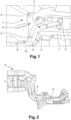
Fig. 1 ] est une vue du dessous d'un véhicule selon l'invention, montrant un écran thermique inséré entre le réservoir à carburant et la ligne d'échappement, - [
Fig. 2 ] est une vue de face d'un écran thermique selon l'invention. - En se référant à la
figure 1 , certains véhicules possèdent un réservoir 1 à carburant placé sous un plancher, de sorte qu'une paroi inférieure 2 de ce réservoir 1 se retrouve en vis-à-vis de la chaussée sur laquelle évoluent ces véhicules. De façon avantageuse, cette paroi inférieure 2 qui matérialise la partie la plus basse du réservoir à carburant 1, s'étend dans un plan qui est sensiblement horizontal. Ces véhicules possédant un moteur thermique, sont dotés d'une ligne d'échappement 3 permettant d'évacuer des gaz d'échappement depuis des chambres de combustion de ce moteur thermique vers l'extérieur desdits véhicules. Cette ligne d'échappement 3 comprend schématiquement une tubulure 4 prenant naissance au niveau des chambres de combustion du moteur thermique, et qui se termine par un pot d'échappement 5. Cette ligne d'échappement 3 est disposée dans le véhicule de sorte qu'elle passe sous la paroi inférieure 2 du réservoir 1 à carburant. Puisque les gaz d'échappement qui sont évacués par la ligne d'échappement 3 sont portés à une certaine température, cette ligne d'échappement 3 est susceptible de créer une surchauffe du réservoir 1 à carburant, risquant d'engendrer des événements redoutés tels que par exemple un incendie ou un éclatement dudit réservoir à carburant 1. Afin d'empêcher la survenance de tels événements, un écran thermique 6 est inséré entre la paroi inférieure 2 du réservoir 1 à carburant et la ligne d'échappement 3, afin d'empêcher tout transfert de chaleur entre ladite ligne d'échappement 3 et ledit réservoir à carburant 1. - Or, un tel écran thermique 6 qui est placé sous le véhicule va être soumis à des impacts de diverses projections en provenance de la route, et risque donc d'être endommagé, au point de ne plus pouvoir assurer sa fonction de protection thermique vis-à-vis du réservoir à carburant 1.
- En se référant à la
figure 2 , afin de remédier à ce problème, un véhicule selon l'invention est doté d'un écran thermique 6 qui est réalisé en trois parties, comprenant deux parties d'extrémité 7, 8 et une partie de raccordement 9 reliant lesdites deux parties d'extrémité 7, 8. - En se référant à la
figure 1 , la ligne d'échappement 3 comprend un segment amont 10 sensiblement rectiligne, s'étendant suivant un axe longitudinal X du véhicule, ledit segment amont 10 étant relié au pot d'échappement 5 par un tronçon coudé 11. Le pot d'échappement 5 est allongé et est disposé sous le véhicule de manière à s'étendre le long d'un axe longitudinal X du véhicule, le tronçon coudé 11 formant un angle droit. - En se référant aux
figures 1 et 2 , une partie d'extrémité 7 de l'écran thermique 6 est insérée entre la paroi inférieure 2 du réservoir 1 à carburant et le pot d'échappement 5, et l'autre partie d'extrémité 8 est inséré entre ladite paroi inférieure 2 et le segment amont 10 de la ligne d'échappement 3. La partie de raccordement 9 quant à elle est insérée entre la paroi inférieure 2 du réservoir 1 à carburant et le tronçon coudé 11 de la ligne d'échappement 3. Les deux parties d'extrémité 7, 8 adoptent chacune le profil de la zone 5, 10 de la ligne d'échappement 3 contre laquelle elles sont placées, au point d'enserrer étroitement lesdites zones 5, 10. Ces deux parties d'extrémité 7, 8 sont assimilables à des moules épousant étroitement la forme de ces zones 5, 10. Elles sont donc chacune délimitées par une multiplicité de petits reliefs recouvrant des petits reliefs de ces zones 5, 10. Pour rappel, ces zones sont représentées par le segment amont 10 et le pot d'échappement 10. - En se référant à la
figure 2 , la partie de raccordement 9 de l'écran thermique 6 a une forme coudée à angle droit, pour suivre étroitement le profil du tronçon coudé 11 de la ligne d'échappement 3. Cette partie de raccordement 9 est fixée aux deux parties d'extrémité 7, 8 au moyen de rivets. Afin d'assurer une certaine raideur de l'écran thermique résultant 6, la partie de raccordement 9 présente des zones de chevauchement avec les deux parties d'extrémité 7, 8 dudit écran thermique 6. Par rapport aux deux parties d'extrémité 7, 8, la partie de raccordement 9 possède une faible largeur, lui permettant de suivre le profil du tronçon coudé 11 de la ligne d'échappement 3 sans déborder dudit tronçon 11 coudé. - La partie de raccordement 9 présente la particularité d'être renforcée pour pouvoir résister à de potentiels impacts de projections en provenance de la route. Le terme « résister » signifie « sans se déformer et sans se rompre ». Autrement dit, sous l'effet de ces impacts, cette partie de raccordement 9 de l'écran thermique 6 va conserver son intégrité structurelle, sans perdre de son efficacité vis-à-vis de sa fonction de protection thermique du réservoir 1 à carburant.
- Ce renforcement de la partie de raccordement 9 peut s'effectuer :
- soit en choisissant directement pour cette partie de raccordement 9 un matériau résistant susceptible de résister aux impacts de projections,
- soit en ajoutant à cette partie de raccordement 9, initialement réalisée par exemple dans le même matériau que celui des deux parties d'extrémité 7, 9, une couche d'un matériau résistant.
- Un procédé de fixation d'un écran thermique 6 en trois parties 7, 8, 9 dans un véhicule, comprend les étapes suivantes :
- une étape de fixation de la partie de raccordement 9 renforcée aux deux parties d'extrémité 7, 8 pour obtenir un écran thermique 6 continu et présentant un coude, cette étape de fixation ayant lieu après avoir établi des zones de chevauchement entre la partie de raccordement 9 et les deux parties d'extrémité 7, 8,
- une étape de fixation dans le véhicule de l'écran thermique 6 obtenu à l'étape précédente entre la face inférieure 2 du réservoir 1 à carburant et la ligne d'échappement 3, de sorte que ledit écran thermique 6 suive étroitement le profil de la ligne d'échappement 3.
- Il est à préciser que l'écran thermique 6 obtenu par la fixation des trois partie 7, 8, 9, est rigide et indéformable. Au sein de cet écran thermique 6, la partie de raccordement 9 a une double fonction :
- assurer une certaine raideur à l'écran thermique 6 puisque cette partie de raccordement est renforcée,
- empêcher que l'écran thermique 6 ne soit endommagé sous l'effet des impacts multiples de projections en provenance de la route, telles que par exemple des pierres, du gravier, etc.
Claims (10)
- Véhicule comprenant un réservoir (1) à carburant présentant une paroi inférieure (2), un écran thermique (6) et une ligne d'échappement (3) matérialisée par un conduit (4) se terminant par un pot d'échappement (5) allongé, ledit conduit (4) présentant un segment (10) placé en amont du pot d'échappement (5) et un tronçon coudé (11) reliant ledit pot d'échappement (5) audit segment (10) amont, l'écran thermique (6) étant inséré entre la paroi inférieure (2) du réservoir (1) à carburant et la ligne d'échappement (3) en s'étendant le long du segment amont (10), du tronçon coudé (11) et du pot d'échappement (5), caractérisé en ce que l'écran thermique (6) est réalisé en trois parties distinctes (7, 8, 9), dont deux parties d'extrémité (7, 8) s'étendent le long du segment amont (10) et le long du pot d'échappement (5), et dont une partie de raccordement (9) s'étend le long du tronçon coudé (11), et en ce que la partie de raccordement (9) de l'écran thermique (6) est fixée aux deux parties d'extrémité (7, 8) et est renforcée pour résister à des impacts de différentes projections.
- Véhicule selon la revendication 1, caractérisé en ce que la partie de raccordement (9) de l'écran thermique (6) forme un coude de façon à suivre étroitement le profil du tronçon coudé (11) de la ligne d'échappement (3).
- Véhicule selon la revendication 2, caractérisé en ce que le coude formé par la partie de raccordement (9) de l'écran thermique (6) forme un angle droit.
- Véhicule selon l'une quelconque des revendications 1 à 3, caractérisé en ce que la partie de raccordement (9) renforcée est fixée aux deux parties d'extrémité (7, 8) au moyen de rivets.
- Véhicule selon l'une quelconque des revendications 1 à 4, caractérisé en ce que la partie de raccordement (9) est dans la parfaite continuité des deux parties d'extrémité (7, 8) de manière à faire apparaitre un écran thermique sans aspérités.
- Véhicule selon l'une quelconque des revendications 1 à 5, caractérisé en ce que la pièce de raccordement (9) est configurée pour être indéformable sous l'effet des impacts de projections et pour assurer une certaine raideur à l'écran thermique (6).
- Véhicule selon l'une quelconque des revendications 1 à 6, caractérisé en ce que la partie de raccordement (9) de l'écran thermique (6) présente des zones de chevauchement avec les deux parties d'extrémités (7, 8) dudit écran thermique (6).
- Véhicule selon l'une quelconque des revendications 1 à 6, caractérisé en ce que le segment amont (10) de la ligne d'échappement (3) et le pot d'échappement (5) sont parallèles et s'étendent suivant un axe longitudinal X du véhicule, et en ce que les deux parties d'extrémité (7, 8) de l'écran thermique (6) sont parallèles.
- Ecran thermique (6) pour la réalisation d'un véhicule selon l'une quelconque des revendications 1 à 8, caractérisé en ce qu'il est réalisé en trois parties distinctes (7, 8, 9), comprenant deux parties d'extrémité (7, 8) et une partie de raccordement (9) fixée auxdites deux parties d'extrémité (7, 8), et en ce que la partie de raccordement (9) forme un coude et est renforcée pour résister à des impacts de différentes projections.
- Procédé de fixation d'un écran thermique pour la (6) réalisation d'un véhicule selon l'une quelconque des revendications 1 à 8, caractérisé en ce qu'il comprend les étapes suivantes :- une étape de fixation de la partie de raccordement (9) renforcée aux deux parties d'extrémité (7, 8) pour obtenir un écran thermique (6) continu et présentant un coude,- une étape de fixation dans le véhicule de l'écran thermique (6) obtenu entre la face inférieure (2) du réservoir (1) à carburant et la ligne d'échappement (3) de sorte que ledit écran thermique (6) suive étroitement le profil de la ligne d'échappement (9).
Applications Claiming Priority (1)
| Application Number | Priority Date | Filing Date | Title |
|---|---|---|---|
| FR2205320A FR3136208B1 (fr) | 2022-06-02 | 2022-06-02 | véhicule doté d’un écran thermique renforcé entre un réservoir à carburant et une ligne d’échappement |
Publications (2)
| Publication Number | Publication Date |
|---|---|
| EP4286198A1 EP4286198A1 (fr) | 2023-12-06 |
| EP4286198B1 true EP4286198B1 (fr) | 2025-04-02 |
Family
ID=83438544
Family Applications (1)
| Application Number | Title | Priority Date | Filing Date |
|---|---|---|---|
| EP23176220.4A Active EP4286198B1 (fr) | 2022-06-02 | 2023-05-30 | Véhicule doté d'un écran thermique renforcé entre un réservoir à carburant et une ligne d'échappement |
Country Status (2)
| Country | Link |
|---|---|
| EP (1) | EP4286198B1 (fr) |
| FR (1) | FR3136208B1 (fr) |
Family Cites Families (3)
| Publication number | Priority date | Publication date | Assignee | Title |
|---|---|---|---|---|
| EP1058626B1 (fr) * | 1998-03-04 | 2001-12-12 | Rieter Automotive (International) Ag | Reservoir de carburant a ecran thermique integre |
| FR3002000B1 (fr) * | 2013-02-11 | 2015-03-13 | Peugeot Citroen Automobiles Sa | Ensemble comportant un ecran thermique permettant le chauffage d'un reservoir de reducteur |
| US9764697B1 (en) * | 2016-03-18 | 2017-09-19 | Honda Motor Co., Ltd. | Heat shield for a motor vehicle |
-
2022
- 2022-06-02 FR FR2205320A patent/FR3136208B1/fr active Active
-
2023
- 2023-05-30 EP EP23176220.4A patent/EP4286198B1/fr active Active
Also Published As
| Publication number | Publication date |
|---|---|
| FR3136208A1 (fr) | 2023-12-08 |
| FR3136208B1 (fr) | 2024-06-21 |
| EP4286198A1 (fr) | 2023-12-06 |
Similar Documents
| Publication | Publication Date | Title |
|---|---|---|
| EP2146898B1 (fr) | Carenage aerodynamique arriere inferieur pour dispositif d' accrochage d' un moteur d' aeronef | |
| CA2699840C (fr) | Carenage aerodynamique arriere inferieur pour dispositif d'accrochage d'un moteur d'aeronef | |
| EP2257470B1 (fr) | Structure primaire d'un mât d'accrochage | |
| EP0679565A1 (fr) | Face avant technique de véhicule automobile | |
| WO2003035983A1 (fr) | Element de caniveau pour caniveau de drainage pour chaussees | |
| CA2696223C (fr) | Ressort pour volet d'inverseur de poussee a grilles pour turboreacteur d'aeronef | |
| FR3066466B1 (fr) | Bac de stockage pour assemblage sur une structure de caisse de vehicule automobile. | |
| EP1879786A1 (fr) | Procede de conformation d une peau de pare-chocs autour de blocs optiques, renfort pour peau de pare-chocs et bloc avant de vehicule automobile | |
| EP4286198B1 (fr) | Véhicule doté d'un écran thermique renforcé entre un réservoir à carburant et une ligne d'échappement | |
| EP2691625A1 (fr) | Ensemble de joint d'étanchéité anti-feu et nacelle comprenant un tel joint | |
| FR2721390A1 (fr) | Manchon anti-arcure. | |
| CA2740490C (fr) | Nacelle pour turboreacteur | |
| EP3737602B1 (fr) | Vehicule presentant une piece de renfort en soutien d'un panneau de carrosserie | |
| EP0748932B1 (fr) | Tuyère à col à géométrie variable | |
| FR3070926A1 (fr) | Bloc optique de vehicule a glissiere logeant une piece d’interface de translation a pattes de guidage. | |
| FR2924162A1 (fr) | Bride d'assemblage d'au moins un element avant avec au moins un element arriere d'un dispositif d'echappement | |
| FR2997134A1 (fr) | Module d'admission d'air sous forme d'un collecteur d'admission integrant un echangeur de chaleur | |
| FR3054024A1 (fr) | Radiateur electrique a coeur mineral de chauffe et son procede de montage | |
| FR3081126A1 (fr) | Vehicule qui comporte une tubulure de remplissage d’un reservoir, une piece de support et des moyens de protection | |
| FR3147547A1 (fr) | Calandre de véhicule automobile profilée | |
| FR3143480A1 (fr) | Ensemble formant une peau de pare-chocs pour vehicule automobile | |
| FR3159590A1 (fr) | Profil aérodynamique comprenant au moins un bord de fuite emboîté, aéronef comportant au moins un tel profil aérodynamique | |
| FR3141388A1 (fr) | véhicule comprenant un radiateur fixé de façon sécuritaire à une face avant technique | |
| FR3090425A1 (fr) | Ensemble de pièces en tôle assemblées montrant au moins un relief de retenue d’un matériau d’étanchéité au niveau de leur zone de jonction et procédé d’assemblage d’un tel ensemble | |
| EP3999732A1 (fr) | Repartiteur d'admission en matiere plastique avec un chemisage interieur au moins partiel |
Legal Events
| Date | Code | Title | Description |
|---|---|---|---|
| PUAI | Public reference made under article 153(3) epc to a published international application that has entered the european phase |
Free format text: ORIGINAL CODE: 0009012 |
|
| STAA | Information on the status of an ep patent application or granted ep patent |
Free format text: STATUS: THE APPLICATION HAS BEEN PUBLISHED |
|
| AK | Designated contracting states |
Kind code of ref document: A1 Designated state(s): AL AT BE BG CH CY CZ DE DK EE ES FI FR GB GR HR HU IE IS IT LI LT LU LV MC ME MK MT NL NO PL PT RO RS SE SI SK SM TR |
|
| STAA | Information on the status of an ep patent application or granted ep patent |
Free format text: STATUS: REQUEST FOR EXAMINATION WAS MADE |
|
| 17P | Request for examination filed |
Effective date: 20240527 |
|
| RBV | Designated contracting states (corrected) |
Designated state(s): AL AT BE BG CH CY CZ DE DK EE ES FI FR GB GR HR HU IE IS IT LI LT LU LV MC ME MK MT NL NO PL PT RO RS SE SI SK SM TR |
|
| GRAP | Despatch of communication of intention to grant a patent |
Free format text: ORIGINAL CODE: EPIDOSNIGR1 |
|
| STAA | Information on the status of an ep patent application or granted ep patent |
Free format text: STATUS: GRANT OF PATENT IS INTENDED |
|
| INTG | Intention to grant announced |
Effective date: 20241025 |
|
| GRAS | Grant fee paid |
Free format text: ORIGINAL CODE: EPIDOSNIGR3 |
|
| GRAA | (expected) grant |
Free format text: ORIGINAL CODE: 0009210 |
|
| STAA | Information on the status of an ep patent application or granted ep patent |
Free format text: STATUS: THE PATENT HAS BEEN GRANTED |
|
| AK | Designated contracting states |
Kind code of ref document: B1 Designated state(s): AL AT BE BG CH CY CZ DE DK EE ES FI FR GB GR HR HU IE IS IT LI LT LU LV MC ME MK MT NL NO PL PT RO RS SE SI SK SM TR |
|
| REG | Reference to a national code |
Ref country code: GB Ref legal event code: FG4D Free format text: NOT ENGLISH |
|
| REG | Reference to a national code |
Ref country code: CH Ref legal event code: EP |
|
| REG | Reference to a national code |
Ref country code: IE Ref legal event code: FG4D Free format text: LANGUAGE OF EP DOCUMENT: FRENCH |
|
| REG | Reference to a national code |
Ref country code: DE Ref legal event code: R096 Ref document number: 602023002680 Country of ref document: DE |
|
| PGFP | Annual fee paid to national office [announced via postgrant information from national office to epo] |
Ref country code: DE Payment date: 20250521 Year of fee payment: 3 |
|
| PGFP | Annual fee paid to national office [announced via postgrant information from national office to epo] |
Ref country code: FR Payment date: 20250530 Year of fee payment: 3 |
|
| PGFP | Annual fee paid to national office [announced via postgrant information from national office to epo] |
Ref country code: AT Payment date: 20250721 Year of fee payment: 3 |
|
| REG | Reference to a national code |
Ref country code: NL Ref legal event code: MP Effective date: 20250402 |
|
| PG25 | Lapsed in a contracting state [announced via postgrant information from national office to epo] |
Ref country code: NL Free format text: LAPSE BECAUSE OF FAILURE TO SUBMIT A TRANSLATION OF THE DESCRIPTION OR TO PAY THE FEE WITHIN THE PRESCRIBED TIME-LIMIT Effective date: 20250402 |
|
| REG | Reference to a national code |
Ref country code: AT Ref legal event code: MK05 Ref document number: 1780977 Country of ref document: AT Kind code of ref document: T Effective date: 20250402 |
|
| PG25 | Lapsed in a contracting state [announced via postgrant information from national office to epo] |
Ref country code: FI Free format text: LAPSE BECAUSE OF FAILURE TO SUBMIT A TRANSLATION OF THE DESCRIPTION OR TO PAY THE FEE WITHIN THE PRESCRIBED TIME-LIMIT Effective date: 20250402 Ref country code: ES Free format text: LAPSE BECAUSE OF FAILURE TO SUBMIT A TRANSLATION OF THE DESCRIPTION OR TO PAY THE FEE WITHIN THE PRESCRIBED TIME-LIMIT Effective date: 20250402 Ref country code: PT Free format text: LAPSE BECAUSE OF FAILURE TO SUBMIT A TRANSLATION OF THE DESCRIPTION OR TO PAY THE FEE WITHIN THE PRESCRIBED TIME-LIMIT Effective date: 20250804 |
|
| REG | Reference to a national code |
Ref country code: LT Ref legal event code: MG9D |
|
| PG25 | Lapsed in a contracting state [announced via postgrant information from national office to epo] |
Ref country code: NO Free format text: LAPSE BECAUSE OF FAILURE TO SUBMIT A TRANSLATION OF THE DESCRIPTION OR TO PAY THE FEE WITHIN THE PRESCRIBED TIME-LIMIT Effective date: 20250702 Ref country code: GR Free format text: LAPSE BECAUSE OF FAILURE TO SUBMIT A TRANSLATION OF THE DESCRIPTION OR TO PAY THE FEE WITHIN THE PRESCRIBED TIME-LIMIT Effective date: 20250703 |
|
| PG25 | Lapsed in a contracting state [announced via postgrant information from national office to epo] |
Ref country code: PL Free format text: LAPSE BECAUSE OF FAILURE TO SUBMIT A TRANSLATION OF THE DESCRIPTION OR TO PAY THE FEE WITHIN THE PRESCRIBED TIME-LIMIT Effective date: 20250402 |
|
| PG25 | Lapsed in a contracting state [announced via postgrant information from national office to epo] |
Ref country code: BG Free format text: LAPSE BECAUSE OF FAILURE TO SUBMIT A TRANSLATION OF THE DESCRIPTION OR TO PAY THE FEE WITHIN THE PRESCRIBED TIME-LIMIT Effective date: 20250402 |
|
| PG25 | Lapsed in a contracting state [announced via postgrant information from national office to epo] |
Ref country code: HR Free format text: LAPSE BECAUSE OF FAILURE TO SUBMIT A TRANSLATION OF THE DESCRIPTION OR TO PAY THE FEE WITHIN THE PRESCRIBED TIME-LIMIT Effective date: 20250402 |
|
| PG25 | Lapsed in a contracting state [announced via postgrant information from national office to epo] |
Ref country code: AT Free format text: LAPSE BECAUSE OF FAILURE TO SUBMIT A TRANSLATION OF THE DESCRIPTION OR TO PAY THE FEE WITHIN THE PRESCRIBED TIME-LIMIT Effective date: 20250402 |
|
| PG25 | Lapsed in a contracting state [announced via postgrant information from national office to epo] |
Ref country code: RS Free format text: LAPSE BECAUSE OF FAILURE TO SUBMIT A TRANSLATION OF THE DESCRIPTION OR TO PAY THE FEE WITHIN THE PRESCRIBED TIME-LIMIT Effective date: 20250702 |
|
| PG25 | Lapsed in a contracting state [announced via postgrant information from national office to epo] |
Ref country code: IS Free format text: LAPSE BECAUSE OF FAILURE TO SUBMIT A TRANSLATION OF THE DESCRIPTION OR TO PAY THE FEE WITHIN THE PRESCRIBED TIME-LIMIT Effective date: 20250802 |
|
| PG25 | Lapsed in a contracting state [announced via postgrant information from national office to epo] |
Ref country code: LV Free format text: LAPSE BECAUSE OF FAILURE TO SUBMIT A TRANSLATION OF THE DESCRIPTION OR TO PAY THE FEE WITHIN THE PRESCRIBED TIME-LIMIT Effective date: 20250402 |
|
| REG | Reference to a national code |
Ref country code: DE Ref legal event code: R097 Ref document number: 602023002680 Country of ref document: DE |
|
| PG25 | Lapsed in a contracting state [announced via postgrant information from national office to epo] |
Ref country code: DK Free format text: LAPSE BECAUSE OF FAILURE TO SUBMIT A TRANSLATION OF THE DESCRIPTION OR TO PAY THE FEE WITHIN THE PRESCRIBED TIME-LIMIT Effective date: 20250402 Ref country code: SM Free format text: LAPSE BECAUSE OF FAILURE TO SUBMIT A TRANSLATION OF THE DESCRIPTION OR TO PAY THE FEE WITHIN THE PRESCRIBED TIME-LIMIT Effective date: 20250402 |
|
| PG25 | Lapsed in a contracting state [announced via postgrant information from national office to epo] |
Ref country code: LU Free format text: LAPSE BECAUSE OF NON-PAYMENT OF DUE FEES Effective date: 20250530 |
|
| PG25 | Lapsed in a contracting state [announced via postgrant information from national office to epo] |
Ref country code: CZ Free format text: LAPSE BECAUSE OF FAILURE TO SUBMIT A TRANSLATION OF THE DESCRIPTION OR TO PAY THE FEE WITHIN THE PRESCRIBED TIME-LIMIT Effective date: 20250402 |
|
| PG25 | Lapsed in a contracting state [announced via postgrant information from national office to epo] |
Ref country code: EE Free format text: LAPSE BECAUSE OF FAILURE TO SUBMIT A TRANSLATION OF THE DESCRIPTION OR TO PAY THE FEE WITHIN THE PRESCRIBED TIME-LIMIT Effective date: 20250402 |
|
| PG25 | Lapsed in a contracting state [announced via postgrant information from national office to epo] |
Ref country code: SK Free format text: LAPSE BECAUSE OF FAILURE TO SUBMIT A TRANSLATION OF THE DESCRIPTION OR TO PAY THE FEE WITHIN THE PRESCRIBED TIME-LIMIT Effective date: 20250402 |
|
| PG25 | Lapsed in a contracting state [announced via postgrant information from national office to epo] |
Ref country code: IT Free format text: LAPSE BECAUSE OF FAILURE TO SUBMIT A TRANSLATION OF THE DESCRIPTION OR TO PAY THE FEE WITHIN THE PRESCRIBED TIME-LIMIT Effective date: 20250402 |
|
| REG | Reference to a national code |
Ref country code: BE Ref legal event code: MM Effective date: 20250531 |
|
| PG25 | Lapsed in a contracting state [announced via postgrant information from national office to epo] |
Ref country code: MC Free format text: LAPSE BECAUSE OF FAILURE TO SUBMIT A TRANSLATION OF THE DESCRIPTION OR TO PAY THE FEE WITHIN THE PRESCRIBED TIME-LIMIT Effective date: 20250402 |
|
| PLBE | No opposition filed within time limit |
Free format text: ORIGINAL CODE: 0009261 |
|
| STAA | Information on the status of an ep patent application or granted ep patent |
Free format text: STATUS: NO OPPOSITION FILED WITHIN TIME LIMIT |
|
| REG | Reference to a national code |
Ref country code: CH Ref legal event code: L10 Free format text: ST27 STATUS EVENT CODE: U-0-0-L10-L00 (AS PROVIDED BY THE NATIONAL OFFICE) Effective date: 20260211 |
|
| PG25 | Lapsed in a contracting state [announced via postgrant information from national office to epo] |
Ref country code: RO Free format text: LAPSE BECAUSE OF FAILURE TO SUBMIT A TRANSLATION OF THE DESCRIPTION OR TO PAY THE FEE WITHIN THE PRESCRIBED TIME-LIMIT Effective date: 20250402 |
|
| 26N | No opposition filed |
Effective date: 20260105 |
|
| PG25 | Lapsed in a contracting state [announced via postgrant information from national office to epo] |
Ref country code: IE Free format text: LAPSE BECAUSE OF NON-PAYMENT OF DUE FEES Effective date: 20250530 |
|
| PG25 | Lapsed in a contracting state [announced via postgrant information from national office to epo] |
Ref country code: BE Free format text: LAPSE BECAUSE OF NON-PAYMENT OF DUE FEES Effective date: 20250531 |