EP4283019A2 - Einzelatommetallkatalysator und kohlendioxidumwandlungssystem damit - Google Patents
Einzelatommetallkatalysator und kohlendioxidumwandlungssystem damit Download PDFInfo
- Publication number
- EP4283019A2 EP4283019A2 EP23163670.5A EP23163670A EP4283019A2 EP 4283019 A2 EP4283019 A2 EP 4283019A2 EP 23163670 A EP23163670 A EP 23163670A EP 4283019 A2 EP4283019 A2 EP 4283019A2
- Authority
- EP
- European Patent Office
- Prior art keywords
- transition metal
- nitrogen
- catalyst
- npc
- carbon dioxide
- Prior art date
- Legal status (The legal status is an assumption and is not a legal conclusion. Google has not performed a legal analysis and makes no representation as to the accuracy of the status listed.)
- Pending
Links
Images


Classifications
-
- C—CHEMISTRY; METALLURGY
- C25—ELECTROLYTIC OR ELECTROPHORETIC PROCESSES; APPARATUS THEREFOR
- C25B—ELECTROLYTIC OR ELECTROPHORETIC PROCESSES FOR THE PRODUCTION OF COMPOUNDS OR NON-METALS; APPARATUS THEREFOR
- C25B11/00—Electrodes; Manufacture thereof not otherwise provided for
- C25B11/04—Electrodes; Manufacture thereof not otherwise provided for characterised by the material
- C25B11/051—Electrodes formed of electrocatalysts on a substrate or carrier
- C25B11/055—Electrodes formed of electrocatalysts on a substrate or carrier characterised by the substrate or carrier material
- C25B11/069—Electrodes formed of electrocatalysts on a substrate or carrier characterised by the substrate or carrier material consisting of at least one single element and at least one compound; consisting of two or more compounds
-
- B—PERFORMING OPERATIONS; TRANSPORTING
- B01—PHYSICAL OR CHEMICAL PROCESSES OR APPARATUS IN GENERAL
- B01D—SEPARATION
- B01D53/00—Separation of gases or vapours; Recovering vapours of volatile solvents from gases; Chemical or biological purification of waste gases, e.g. engine exhaust gases, smoke, fumes, flue gases, aerosols
- B01D53/32—Separation of gases or vapours; Recovering vapours of volatile solvents from gases; Chemical or biological purification of waste gases, e.g. engine exhaust gases, smoke, fumes, flue gases, aerosols by electrical effects other than those provided for in group B01D61/00
- B01D53/326—Separation of gases or vapours; Recovering vapours of volatile solvents from gases; Chemical or biological purification of waste gases, e.g. engine exhaust gases, smoke, fumes, flue gases, aerosols by electrical effects other than those provided for in group B01D61/00 in electrochemical cells
-
- B—PERFORMING OPERATIONS; TRANSPORTING
- B01—PHYSICAL OR CHEMICAL PROCESSES OR APPARATUS IN GENERAL
- B01J—CHEMICAL OR PHYSICAL PROCESSES, e.g. CATALYSIS OR COLLOID CHEMISTRY; THEIR RELEVANT APPARATUS
- B01J21/00—Catalysts comprising the elements, oxides, or hydroxides of magnesium, boron, aluminium, carbon, silicon, titanium, zirconium, or hafnium
- B01J21/18—Carbon
- B01J21/185—Carbon nanotubes
-
- B—PERFORMING OPERATIONS; TRANSPORTING
- B01—PHYSICAL OR CHEMICAL PROCESSES OR APPARATUS IN GENERAL
- B01J—CHEMICAL OR PHYSICAL PROCESSES, e.g. CATALYSIS OR COLLOID CHEMISTRY; THEIR RELEVANT APPARATUS
- B01J23/00—Catalysts comprising metals or metal oxides or hydroxides, not provided for in group B01J21/00
- B01J23/70—Catalysts comprising metals or metal oxides or hydroxides, not provided for in group B01J21/00 of the iron group metals or copper
- B01J23/74—Iron group metals
- B01J23/755—Nickel
-
- B—PERFORMING OPERATIONS; TRANSPORTING
- B01—PHYSICAL OR CHEMICAL PROCESSES OR APPARATUS IN GENERAL
- B01J—CHEMICAL OR PHYSICAL PROCESSES, e.g. CATALYSIS OR COLLOID CHEMISTRY; THEIR RELEVANT APPARATUS
- B01J23/00—Catalysts comprising metals or metal oxides or hydroxides, not provided for in group B01J21/00
- B01J23/70—Catalysts comprising metals or metal oxides or hydroxides, not provided for in group B01J21/00 of the iron group metals or copper
- B01J23/76—Catalysts comprising metals or metal oxides or hydroxides, not provided for in group B01J21/00 of the iron group metals or copper combined with metals, oxides or hydroxides provided for in groups B01J23/02 - B01J23/36
- B01J23/84—Catalysts comprising metals or metal oxides or hydroxides, not provided for in group B01J21/00 of the iron group metals or copper combined with metals, oxides or hydroxides provided for in groups B01J23/02 - B01J23/36 with arsenic, antimony, bismuth, vanadium, niobium, tantalum, polonium, chromium, molybdenum, tungsten, manganese, technetium or rhenium
- B01J23/889—Manganese, technetium or rhenium
- B01J23/8892—Manganese
-
- B—PERFORMING OPERATIONS; TRANSPORTING
- B01—PHYSICAL OR CHEMICAL PROCESSES OR APPARATUS IN GENERAL
- B01J—CHEMICAL OR PHYSICAL PROCESSES, e.g. CATALYSIS OR COLLOID CHEMISTRY; THEIR RELEVANT APPARATUS
- B01J35/00—Catalysts, in general, characterised by their form or physical properties
- B01J35/60—Catalysts, in general, characterised by their form or physical properties characterised by their surface properties or porosity
- B01J35/61—Surface area
- B01J35/617—500-1000 m2/g
-
- B—PERFORMING OPERATIONS; TRANSPORTING
- B01—PHYSICAL OR CHEMICAL PROCESSES OR APPARATUS IN GENERAL
- B01J—CHEMICAL OR PHYSICAL PROCESSES, e.g. CATALYSIS OR COLLOID CHEMISTRY; THEIR RELEVANT APPARATUS
- B01J37/00—Processes, in general, for preparing catalysts; Processes, in general, for activation of catalysts
- B01J37/02—Impregnation, coating or precipitation
-
- B—PERFORMING OPERATIONS; TRANSPORTING
- B01—PHYSICAL OR CHEMICAL PROCESSES OR APPARATUS IN GENERAL
- B01J—CHEMICAL OR PHYSICAL PROCESSES, e.g. CATALYSIS OR COLLOID CHEMISTRY; THEIR RELEVANT APPARATUS
- B01J37/00—Processes, in general, for preparing catalysts; Processes, in general, for activation of catalysts
- B01J37/08—Heat treatment
- B01J37/082—Decomposition and pyrolysis
-
- C—CHEMISTRY; METALLURGY
- C25—ELECTROLYTIC OR ELECTROPHORETIC PROCESSES; APPARATUS THEREFOR
- C25B—ELECTROLYTIC OR ELECTROPHORETIC PROCESSES FOR THE PRODUCTION OF COMPOUNDS OR NON-METALS; APPARATUS THEREFOR
- C25B1/00—Electrolytic production of inorganic compounds or non-metals
- C25B1/01—Products
- C25B1/23—Carbon monoxide or syngas
-
- C—CHEMISTRY; METALLURGY
- C25—ELECTROLYTIC OR ELECTROPHORETIC PROCESSES; APPARATUS THEREFOR
- C25B—ELECTROLYTIC OR ELECTROPHORETIC PROCESSES FOR THE PRODUCTION OF COMPOUNDS OR NON-METALS; APPARATUS THEREFOR
- C25B11/00—Electrodes; Manufacture thereof not otherwise provided for
- C25B11/04—Electrodes; Manufacture thereof not otherwise provided for characterised by the material
- C25B11/051—Electrodes formed of electrocatalysts on a substrate or carrier
- C25B11/052—Electrodes comprising one or more electrocatalytic coatings on a substrate
-
- C—CHEMISTRY; METALLURGY
- C25—ELECTROLYTIC OR ELECTROPHORETIC PROCESSES; APPARATUS THEREFOR
- C25B—ELECTROLYTIC OR ELECTROPHORETIC PROCESSES FOR THE PRODUCTION OF COMPOUNDS OR NON-METALS; APPARATUS THEREFOR
- C25B11/00—Electrodes; Manufacture thereof not otherwise provided for
- C25B11/04—Electrodes; Manufacture thereof not otherwise provided for characterised by the material
- C25B11/051—Electrodes formed of electrocatalysts on a substrate or carrier
- C25B11/054—Electrodes comprising electrocatalysts supported on a carrier
-
- C—CHEMISTRY; METALLURGY
- C25—ELECTROLYTIC OR ELECTROPHORETIC PROCESSES; APPARATUS THEREFOR
- C25B—ELECTROLYTIC OR ELECTROPHORETIC PROCESSES FOR THE PRODUCTION OF COMPOUNDS OR NON-METALS; APPARATUS THEREFOR
- C25B11/00—Electrodes; Manufacture thereof not otherwise provided for
- C25B11/04—Electrodes; Manufacture thereof not otherwise provided for characterised by the material
- C25B11/051—Electrodes formed of electrocatalysts on a substrate or carrier
- C25B11/055—Electrodes formed of electrocatalysts on a substrate or carrier characterised by the substrate or carrier material
- C25B11/057—Electrodes formed of electrocatalysts on a substrate or carrier characterised by the substrate or carrier material consisting of a single element or compound
- C25B11/065—Carbon
-
- C—CHEMISTRY; METALLURGY
- C25—ELECTROLYTIC OR ELECTROPHORETIC PROCESSES; APPARATUS THEREFOR
- C25B—ELECTROLYTIC OR ELECTROPHORETIC PROCESSES FOR THE PRODUCTION OF COMPOUNDS OR NON-METALS; APPARATUS THEREFOR
- C25B11/00—Electrodes; Manufacture thereof not otherwise provided for
- C25B11/04—Electrodes; Manufacture thereof not otherwise provided for characterised by the material
- C25B11/051—Electrodes formed of electrocatalysts on a substrate or carrier
- C25B11/073—Electrodes formed of electrocatalysts on a substrate or carrier characterised by the electrocatalyst material
- C25B11/075—Electrodes formed of electrocatalysts on a substrate or carrier characterised by the electrocatalyst material consisting of a single catalytic element or catalytic compound
- C25B11/089—Alloys
-
- C—CHEMISTRY; METALLURGY
- C25—ELECTROLYTIC OR ELECTROPHORETIC PROCESSES; APPARATUS THEREFOR
- C25B—ELECTROLYTIC OR ELECTROPHORETIC PROCESSES FOR THE PRODUCTION OF COMPOUNDS OR NON-METALS; APPARATUS THEREFOR
- C25B11/00—Electrodes; Manufacture thereof not otherwise provided for
- C25B11/04—Electrodes; Manufacture thereof not otherwise provided for characterised by the material
- C25B11/051—Electrodes formed of electrocatalysts on a substrate or carrier
- C25B11/073—Electrodes formed of electrocatalysts on a substrate or carrier characterised by the electrocatalyst material
- C25B11/091—Electrodes formed of electrocatalysts on a substrate or carrier characterised by the electrocatalyst material consisting of at least one catalytic element and at least one catalytic compound; consisting of two or more catalytic elements or catalytic compounds
-
- C—CHEMISTRY; METALLURGY
- C25—ELECTROLYTIC OR ELECTROPHORETIC PROCESSES; APPARATUS THEREFOR
- C25B—ELECTROLYTIC OR ELECTROPHORETIC PROCESSES FOR THE PRODUCTION OF COMPOUNDS OR NON-METALS; APPARATUS THEREFOR
- C25B11/00—Electrodes; Manufacture thereof not otherwise provided for
- C25B11/04—Electrodes; Manufacture thereof not otherwise provided for characterised by the material
- C25B11/051—Electrodes formed of electrocatalysts on a substrate or carrier
- C25B11/073—Electrodes formed of electrocatalysts on a substrate or carrier characterised by the electrocatalyst material
- C25B11/091—Electrodes formed of electrocatalysts on a substrate or carrier characterised by the electrocatalyst material consisting of at least one catalytic element and at least one catalytic compound; consisting of two or more catalytic elements or catalytic compounds
- C25B11/093—Electrodes formed of electrocatalysts on a substrate or carrier characterised by the electrocatalyst material consisting of at least one catalytic element and at least one catalytic compound; consisting of two or more catalytic elements or catalytic compounds at least one noble metal or noble metal oxide and at least one non-noble metal oxide
-
- C—CHEMISTRY; METALLURGY
- C25—ELECTROLYTIC OR ELECTROPHORETIC PROCESSES; APPARATUS THEREFOR
- C25B—ELECTROLYTIC OR ELECTROPHORETIC PROCESSES FOR THE PRODUCTION OF COMPOUNDS OR NON-METALS; APPARATUS THEREFOR
- C25B3/00—Electrolytic production of organic compounds
- C25B3/20—Processes
- C25B3/25—Reduction
- C25B3/26—Reduction of carbon dioxide
-
- C—CHEMISTRY; METALLURGY
- C25—ELECTROLYTIC OR ELECTROPHORETIC PROCESSES; APPARATUS THEREFOR
- C25B—ELECTROLYTIC OR ELECTROPHORETIC PROCESSES FOR THE PRODUCTION OF COMPOUNDS OR NON-METALS; APPARATUS THEREFOR
- C25B9/00—Cells or assemblies of cells; Constructional parts of cells; Assemblies of constructional parts, e.g. electrode-diaphragm assemblies; Process-related cell features
- C25B9/17—Cells comprising dimensionally-stable non-movable electrodes; Assemblies of constructional parts thereof
-
- H—ELECTRICITY
- H01—ELECTRIC ELEMENTS
- H01M—PROCESSES OR MEANS, e.g. BATTERIES, FOR THE DIRECT CONVERSION OF CHEMICAL ENERGY INTO ELECTRICAL ENERGY
- H01M4/00—Electrodes
- H01M4/86—Inert electrodes with catalytic activity, e.g. for fuel cells
- H01M4/90—Selection of catalytic material
-
- H—ELECTRICITY
- H01—ELECTRIC ELEMENTS
- H01M—PROCESSES OR MEANS, e.g. BATTERIES, FOR THE DIRECT CONVERSION OF CHEMICAL ENERGY INTO ELECTRICAL ENERGY
- H01M4/00—Electrodes
- H01M4/86—Inert electrodes with catalytic activity, e.g. for fuel cells
- H01M4/90—Selection of catalytic material
- H01M4/9041—Metals or alloys
-
- H—ELECTRICITY
- H01—ELECTRIC ELEMENTS
- H01M—PROCESSES OR MEANS, e.g. BATTERIES, FOR THE DIRECT CONVERSION OF CHEMICAL ENERGY INTO ELECTRICAL ENERGY
- H01M4/00—Electrodes
- H01M4/86—Inert electrodes with catalytic activity, e.g. for fuel cells
- H01M4/90—Selection of catalytic material
- H01M4/9075—Catalytic material supported on carriers, e.g. powder carriers
- H01M4/9083—Catalytic material supported on carriers, e.g. powder carriers on carbon or graphite
-
- H—ELECTRICITY
- H01—ELECTRIC ELEMENTS
- H01M—PROCESSES OR MEANS, e.g. BATTERIES, FOR THE DIRECT CONVERSION OF CHEMICAL ENERGY INTO ELECTRICAL ENERGY
- H01M4/00—Electrodes
- H01M4/86—Inert electrodes with catalytic activity, e.g. for fuel cells
- H01M4/96—Carbon-based electrodes
-
- B—PERFORMING OPERATIONS; TRANSPORTING
- B01—PHYSICAL OR CHEMICAL PROCESSES OR APPARATUS IN GENERAL
- B01D—SEPARATION
- B01D2257/00—Components to be removed
- B01D2257/50—Carbon oxides
- B01D2257/504—Carbon dioxide
-
- H—ELECTRICITY
- H01—ELECTRIC ELEMENTS
- H01M—PROCESSES OR MEANS, e.g. BATTERIES, FOR THE DIRECT CONVERSION OF CHEMICAL ENERGY INTO ELECTRICAL ENERGY
- H01M8/00—Fuel cells; Manufacture thereof
- H01M8/10—Fuel cells with solid electrolytes
- H01M2008/1095—Fuel cells with polymeric electrolytes
-
- Y—GENERAL TAGGING OF NEW TECHNOLOGICAL DEVELOPMENTS; GENERAL TAGGING OF CROSS-SECTIONAL TECHNOLOGIES SPANNING OVER SEVERAL SECTIONS OF THE IPC; TECHNICAL SUBJECTS COVERED BY FORMER USPC CROSS-REFERENCE ART COLLECTIONS [XRACs] AND DIGESTS
- Y02—TECHNOLOGIES OR APPLICATIONS FOR MITIGATION OR ADAPTATION AGAINST CLIMATE CHANGE
- Y02C—CAPTURE, STORAGE, SEQUESTRATION OR DISPOSAL OF GREENHOUSE GASES [GHG]
- Y02C20/00—Capture or disposal of greenhouse gases
- Y02C20/40—Capture or disposal of greenhouse gases of CO2
-
- Y—GENERAL TAGGING OF NEW TECHNOLOGICAL DEVELOPMENTS; GENERAL TAGGING OF CROSS-SECTIONAL TECHNOLOGIES SPANNING OVER SEVERAL SECTIONS OF THE IPC; TECHNICAL SUBJECTS COVERED BY FORMER USPC CROSS-REFERENCE ART COLLECTIONS [XRACs] AND DIGESTS
- Y02—TECHNOLOGIES OR APPLICATIONS FOR MITIGATION OR ADAPTATION AGAINST CLIMATE CHANGE
- Y02E—REDUCTION OF GREENHOUSE GAS [GHG] EMISSIONS, RELATED TO ENERGY GENERATION, TRANSMISSION OR DISTRIBUTION
- Y02E60/00—Enabling technologies; Technologies with a potential or indirect contribution to GHG emissions mitigation
- Y02E60/30—Hydrogen technology
- Y02E60/50—Fuel cells
Definitions
- the present disclosure relates to a single atomic metal catalyst and a carbon dioxide conversion system using the same. More particularly, the present disclosure relates to an electrochemical hybrid catalyst having a structure in which a nitrogen-doped carbon nanostructure (N-C) composite is loaded or decorated with two single atom transition metals indirectly linked adjacent to each other, and thus exhibits high carbon monoxide selectivity and current density at a low overpotential during reduction reaction for converting carbon dioxide into carbon monoxide, and a carbon dioxide conversion system using the same.
- N-C nitrogen-doped carbon nanostructure
- electrochemical conversion is (i) operable under normal temperature/pressure conditions, (ii) has a simple system and can be modulated, (iii) can increase the net reduction rate of carbon dioxide when using renewable energy, and (iv) is useful as a renewable energy storage method by conversion to high value-added chemicals.
- the carbon dioxide reduction reaction (CO 2 RR) of reacting thermodynamically stable carbon dioxide with water is environmentally friendly while minimizing the emission of pollutants because it can produce various organic compounds.
- high value-added chemicals and fuels produced by the carbon dioxide reduction reaction are regarded as promising solutions for commercialscale carbon cycles, energy crises, and environmental pollution.
- single atom catalysts in which metals are dispersed (or decorated) in a single atom size
- SACs single atom catalysts
- noble metal catalysts are disadvantageous in terms of commercial application due to the use of expensive noble metals.
- Single atom catalysts can reduce the size of metal active sites to atomic levels below the nanoscale to maximize carbon dioxide conversion activity and replace expensive noble metals with relatively inexpensive transition metals.
- single atom catalysts have an extremely simplified and ideal structure, thus being advantageously suitable to perform related research by simulating theoretical results obtained through computational science ( J. Phys. Chem. C, 2013, 117, 9187-9195 ; Angew. Chem. Int.
- M-N carbon-based metal-nitrogen
- Ni nickel
- noble metal catalysts can effectively replace noble metal catalysts because they exhibit high activity and selectivity for carbon monoxide in the carbon dioxide conversion reaction.
- a large amount of energy (high overpotential) is required to achieve high Faraday efficiency.
- An embodiment according to the present disclosure provides a transition metal single atom catalyst capable of improving price competitiveness while providing excellent carbon dioxide conversion activity compared to commercial noble metal catalysts (e.g., Ag/C) and an electrochemical electrode including the same.
- commercial noble metal catalysts e.g., Ag/C
- electrochemical electrode including the same.
- An embodiment according to the present disclosure provides a carbon dioxide conversion system capable of effectively removing carbon dioxide from flue gas discharged from power plants, steel mills, and the like using a catalyst that has higher carbon dioxide conversion activity and higher selectivity for carbon monoxide than the prior art.
- an electrochemical catalyst which comprises:
- the first transition metal (M 1 ) and the second transition metal (M 2 ) may form a linkage of M 1 -N x -N x -M 2 in which the M 1 -N x moiety is linked to the M 2 -N x moiety.
- the first transition metal (M 1 ) may be nickel (Ni) and the second transition metal (M 2 ) may be manganese (Mn).
- an electrochemical catalyst which comprises:
- an electrode for carbon dioxide reduction which comprises:
- an amount of the bimetallic single atom catalyst loaded in the electrode may be within a range of 0.2 to 5 mg/cm 2 .
- a carbon dioxide reduction system which comprises:
- the term "catalyst” refers to a component that increases the rate of an electrochemical reaction and participates in the electrochemical reaction while not being consumed by the reaction.
- the catalyst may refer to a component that facilitates a reaction mechanism that provides or accepts electrons in the carbon monoxide evolution reaction and/or oxygen evolution reaction by carbon dioxide reduction reaction.
- electrochemical carbon dioxide conversion reaction generally refers to a reaction in which carbon dioxide is reduced to useful compounds based on the potential difference generated between two electrodes (cathode and anode) to induce movement of electrons, more specifically, a reaction in which carbon dioxide is reduced to carbon monoxide.
- nanostructure refers to any nanoscale object with a shape such as nanopillar, nanorod, nano-wall, nanowire, nano-web, or the like, having a feature or texture having a nanoscale dimension or size (e.g., about 0.1 to 1,000 nm; in an embodiment, it may be 1 to 100 nm).
- single atom catalyst refers to a catalyst in which an active metal attached or fixed to a support is present as an isolated or individual atom.
- direct bonding refers to a linkage of two atoms or ions via another atom or group rather than direct bonding therebetween.
- direct bonding refers to a linkage of two atoms or ions with direct binding to each other (e.g., metal-metal bonding).
- electrode refers to a conductive structure that is electrically connected to an external power source in a carbon dioxide reduction reaction (CO 2 RR) system and is typically physically separated from the external power source.
- CO 2 RR carbon dioxide reduction reaction
- electrode also includes a cathode at which reduction occurs or an anode at which oxidation occurs, when a voltage is applied from an external power source.
- the term "catalyst electrode” refers to a current collector on which a catalyst is loaded, whereby catalyst is absorbed thereon or is electrically connected thereto in a discrete or separate manner.
- the catalyst electrode may be associated with the current collector through a change in oxidation state and/or dynamic equilibrium with an aqueous medium when the catalyst is exposed to the aqueous medium (e.g., an aqueous electrolyte solution).
- electrochemical electrode refers to an electrode structure in which a catalyst component facilitating carbon dioxide reduction reaction is mixed with or attached to a substrate for an electrode (cathode and/or anode).
- overpotential refers to a potential in excess of the thermodynamic requirement for reduction or oxidation to obtain the desired catalytic activity.
- overpotential may mean the difference between the voltage to be applied to the electrode in order to induce carbon dioxide reduction reaction and the thermodynamic voltage required for the carbon dioxide reduction reaction.
- the term “left”, or “right” is used to refer to the relative positioning between elements or members, and the expressions “disposed at the left" and “disposed at the right" are used to refer to the relative positioning between elements (or members) wherein the elements (or members) may contact or not contact one another.
- the electrochemical catalyst according to one embodiment of the present disclosure may be used as a catalyst for a cathode in a carbon dioxide reduction system that includes an anode (or oxidation electrode) and a cathode (reduction electrode), both of which are electrically connected to an external power source, and an electrolyte (specifically, an aqueous electrolyte) is filled or loaded between the anode and the cathode.
- a carbon dioxide reduction system that includes an anode (or oxidation electrode) and a cathode (reduction electrode), both of which are electrically connected to an external power source, and an electrolyte (specifically, an aqueous electrolyte) is filled or loaded between the anode and the cathode.
- This electrochemical carbon dioxide conversion reaction is a process of electrolyzing carbon dioxide along with an aqueous medium to obtain a desired product, where the reduction of carbon dioxide occurs at the cathode by electrical energy supplied from the external power source as depicted in Reaction Scheme 1 below, while the oxygen evolution reaction occurs at the anode via oxidation as depicted in Reaction Scheme 2 below.
- Reaction Scheme 1 CO 2 + H 2 O + 2e- ⁇ CO + 2OH-
- Reaction Scheme 2 2OH - ⁇ 1/2O 2 + H 2 O + 2e -
- a catalyst in which two types of metals, that is, a first transition metal (M 1 ) and a second transition metal (M 2 ) are each loaded (decorated or supported) in the form of single atoms in a nitrogen-doped carbon nanostructure is provided as an electrochemical catalyst that facilitates the carbon dioxide reduction reaction (CO 2 RR) occurring at the cathode.
- the catalyst may be a hybrid catalyst in which two types of transition metals simultaneously exist as single atoms.
- the first transition metal (M 1 ) and the second transition metal (M 2 ) are adjacent to each other on an atomic (single atom) level.
- first transition metal (M 1 ) and second transition metal (M 2 ) interact with each other while being indirectly bonded (or linked) rather than directly bonded (or linked) to each other.
- the bimetallic single-atom catalyst can realize high carbon dioxide conversion and carbon monoxide selectivity even at low overpotential, compared to a monometallic single-atom catalyst as well as a single-atom catalyst in which two types of transition metals are directly bonded to each other.
- the single atom catalyst has a structure (or configuration) in which two transition metals, specifically, a first transition metal (M 1 ) and a second transition metal (M 2 ) are each dispersed or loaded in the form of single atoms in a nitrogen-doped carbon nanostructure as a matrix.
- the nitrogen-doped carbon nanostructure may have porosity.
- the nanostructure may have an average pore size (diameter), for example, of about 50 nm to about 1 um, about 100 to about 700 nm, and about 200 to about 500 nm.
- the pore size is too small, the active sites may not be uniformly distributed and the transfer of reactants/products may be restricted.
- the pore size is too large, the electrode resistance may increase. Therefore, the pore size may be controlled within the ranges described above, which are provided for an illustrative purpose.
- pores in the porous nitrogen-doped carbon nanostructure may have a hierarchical structure.
- the content of nitrogen in the nitrogen-doped carbon nanostructure may range, for example, from about 1 to about 12 at%, from about 2 to 10 at%, and from about 4 to 8 at%.
- the doping amount of nitrogen may affect the degree of bonding with metal atoms, and may be controlled within the aforementioned ranges, but the present disclosure is not limited thereto.
- each of the two types of transition metals may be selected from types capable of acting as an active site during the carbon dioxide conversion reaction, and/or controlling the electronic structure of the active site.
- any combination or pair of the two types of transition metals may be selected so that charge transfer occurs efficiently through the difference in electronegativity therebetween.
- the difference in electronegativity between the two types of transition metals may be set within the range of about 0.1 to about 0.5. In an embodiment, the difference in electronegativity may be set within the range of about 0.2 to about 0.4.
- the first transition metal (M 1 ) may, for example, include at least one selected among nickel (Ni), iron (Fe), silver (Ag), copper (Cu), cobalt (Co), zinc (Zn) and the like.
- the second transition metal (M 2 ) may, for example, include at least one selected among manganese (Mn), molybdenum (Mo), titanium (Ti), vanadium (V), chromium (Cr), niobium (Nb), zirconium (Zr), cadmium (Cd) and the like.
- the first transition metal (M 1 ) may be nickel (Ni) and the second transition metal (M 2 ) may be manganese (Mn).
- the manganese of this binary combination of nickel (Ni) and manganese (Mn) may effectively control nickel and the electronic structure of nickel, which act as an active site for carbon dioxide conversion, thereby improving catalytic performance.
- the single atom catalyst may contain additional metal or transition metal in addition to the combination of two types of transition metals for further modification.
- the additional metal may also be introduced in the form of a single atom.
- the first transition metal (M 1 ) and the second transition metal (M 2 ) are each incorporated in the catalyst while they are bonded to (specifically, coordinated with) the nitrogen atom of the nitrogen-doped carbon nanostructure, specifically as M 1 -N x moiety and M 2 -N x moiety, which can function as active sites for the carbon dioxide reduction.
- N x may mean a nitrogen atom having coordination ability.
- x may be, for example, about 0.5 to about 2.5 (in an embodiment, about 0.8 to about 2.3; in an embodiment about 1 to about 2).
- the present disclosure is not limited thereto.
- the first transition metal (M 1 ) and the second transition metal (M 2 ) may be indirectly bonded (or linked) to each other, and for example, they may be linked to each other via nitrogen (N).
- N nitrogen
- the M 1 -N x moiety and the M 2 -N x moiety in the catalyst may be linked in the form of M 1 -N x -N x -M 2 .
- the content of each of the first transition metal (M 1 ) and the second transition metal (M 2 ) in the catalyst may be, for example, about 0.1 to about 1% by weight (in an embodiment about 0.2 to about 0.8% by weight; and in an embodiment about 0.3 to about 0.6% by weight), and about 0.05 to 0.8% by weight (in an embodiment about 0.1 to about 0.7% by weight; and in an embodiment about 0.2 to about 0.5% by weight).
- the atomic ratio of the first transition metal (M 1 ) to the second transition metal (M 2 ) may be, for example, controlled in a range of about 1:0.2 to about 1:1, about 1:0.4 to about 1:0.8, and about 1:0.5 to about 1:0.7.
- the catalyst may also have porosity.
- the specific surface area (BET) of the single atom catalyst may be, for example, of at least about 400 m 2 /g, about 500 to about 1,000 m 2 /g, and about 600 to about 800 m 2 /g.
- the pore volume of the catalyst may range, for example, from about 0.1 to 1.2 cm 3 /g, from about 0.3 to 1.0 cm 3 /g, and from about 0.5 to 0.8 cm 3 /g. Due to the increased porosity (or high specific surface area), active sites in the catalyst can be effectively exposed to carbon dioxide as a reactant.
- the specific metal surface area of the single atom catalyst measured by N 2 sorption is, for example, at least about 400 m 2 /g, about 500 to about 1,000 m 2 /g, and about 600 to about 800 m 2 /g.
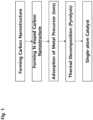
- FIG. 1 is a schematic diagram illustrating a process of preparing a single atom catalyst according to an embodiment.
- the process of preparing an single atom catalyst may include, for example, ion adsorption.
- porous carbon (or a carbon nanostructure) is formed, for example, a carbon precursor is thermally decomposed or pyrolyzed (the first thermal decomposition).
- the first thermal decomposition may be performed without using a template to prepare a carbon nanostructure.
- the carbon precursor may, for example, have an organic framework structure.
- the carbon precursor may include at least one selected from organic salts, polymer composites, biomass, metal organic frameworks (MOFs), carbohydrates, and the like, and hydrates thereof.
- the carbon precursor may be an organic salt.
- the organic salt can be easily converted into a carbon skeleton through heat treatment in an inert atmosphere since it has a carbon-carbon bonding or ring.
- the cation in the organic salt may be, for example, a metal cation such as zinc, an alkali metal and an alkaline earth metal, an ammonium ion, or the like.
- the carbon precursor may, for example, include at least one selected from sodium citrate, potassium citrate, glucose carbonate, ammonium citrate, calcium citrate, sodium gluconate, potassium gluconate, sodium alginate, potassium alginate and hydrates thereof.
- the carbon precursor may be sodium citrate dihydrate.
- the carbon precursor may be converted into porous carbon by thermal decomposition under an inert atmosphere at a first heat treatment temperature.
- the inert atmosphere may be formed by, for example, at least one gas selected from argon, nitrogen, helium, and the like.
- the inert atmosphere may be a nitrogen atmosphere.
- the first heat treatment temperature may be, for example, controlled within the range of about 400 to about 1,000°C, about 500 to about 900°C, and about 600 to about 850°C.
- the temperature increase rate in the first thermal decomposition may be adjusted depending upon the degree of formation of the morphological properties of the carbon skeleton, for example, about 1 to about 10 °C/min, about 2 to about 8 °C/min, and about 4 to about 6 °C/min.
- the heat treatment time is not particularly limited and may be, for example, controlled in a range of at least about 0.1 hour, the range of about 0.2 to about 5 hours, and the range of about 0.5 to about 2 hours.
- the heat treatment under such an inert atmosphere converts carbon precursors into carbon.
- organic salts may convert into porous carbon.
- the carbon produced by thermal decomposition may contain residual impurities (for example, inorganic impurities), metals (e.g., alkali metals, alkali metal oxides, alkaline earth metals and/or alkaline earth metal oxides), and the like.
- these residual impurities may block or occlude the pore structure of the carbon framework, thereby limiting a porosity increasing effect.
- acid washing or acid leaching (a first acid washing operation or a primary acid washing operation) may be optionally performed.
- the acid may, for example, include at least one selected from sulfuric acid, nitric acid, phosphoric acid, hydrochloric acid, formic acid, and the like.
- the acid may be sulfuric acid and/or hydrochloric acid.
- the acid may be used in the form of an acidic aqueous solution during the acid washing operation, and the concentration thereof may be adjusted within the range of, for example, about 0.1 to about 2 M, specifically about 0.5 to about 1.5 M, but this is provided as an example.
- nitrogen dopants may be incorporated into the porous carbon to prepare a nitrogen (N)-doped porous carbon nanostructure.
- nitrogen doping may provide nitrogen atoms capable of being coordinated or chelated with a transition metal (for example, a transition metal ion) to form an M-N x active site.
- nitrogen doping may be performed using a compound containing both nitrogen and carbon or a nitrogen source containing a nitrogen atom in the molecule, such as a nitrogen-containing organic compound.
- the porous carbon may be brought into contact with a nitrogen source to form a nitrogen source-porous carbon composite.
- At least one precursor may be used as such a nitrogen source without limitation to a particular compound, as long as it can be carbonized by heat treatment such as thermal decomposition.
- the nitrogen source examples include urea, melamine, ammonia, polyamide imide resins, adenine, pyrrole, polypyrrole, polyvinylpyrrole, 3-methylpolypyrrole, acrylonitrile, polyacrylonitrile, phenanthroline, polyacrylonitrile-polymethacrylic acid copolymers, pyrazole, vinylpyridine, polyvinylpyridine, pyrimidine, piperazine, pyran, carbamide, morpholine, imidazole, 1-methylimidazole, 2-methylimidazole, quinoxaline, aniline, polyaniline, polyimide, benzoimidazole, polybenzoimidazole, polyamide, ethylenediamine, cyanamide and the like.
- the nitrogen source may be polypyrrole. Since polypyrrole contains one nitrogen per pyrrole monomer molecule, it enables not only effective doping of nitrogen, but also uniform doping on the surface of porous carbon upon coating
- the previously prepared porous carbon is dispersed in a liquid medium (dispersion medium), and then a nitrogen source may be added thereto, thus being brought contact with the porous carbon.
- the liquid medium may contain at least one selected from water and C1-C4 aliphatic alcohol (e.g., methanol, ethanol, n-propanol, isopropanol, and/or n-butanol).
- the liquid medium may be a mixed solvent of ethanol and water.
- a volume ratio of ethanol to water may be adjusted within the range of, for example, about 1:0.1 to 1:2, about 1:0.4 to about 1:1.6, and about 1:0.8 to 1:1.2.
- the above ranges are mere examples, and the disclosure is not limited thereto.
- the nitrogen source may be coated or attached to the porous carbon in the carbon dispersion for nitrogen doping.
- the amount of the nitrogen source to be added to the carbon dispersion may be determined depending on the amount of nitrogen incorporated (doped) into the porous carbon. Since the total amount of the added nitrogen source is not doped, the amount to be added may be greater than the amount actually incorporated.
- the amount of the nitrogen source to be added relative to the porous carbon may be controlled to be within the range of about 0.1 to about 0.6, about 0.12 to about 0.4, and about 0.15 to about 0.25, based on the weight of the porous carbon.
- a monomer-type nitrogen source may be added to a porous carbon dispersion and then the nitrogen source may be coated with or attached to the porous carbon by in-situ polymerization (formation of nitrogen source-porous carbon composite).
- monomers such as pyrrole, phenanthroline, aniline, and melamine are added and then polymerized via a chemical oxidation route using an oxidant.
- the oxidant may be used in the form of a solution for effective polymerization.
- the oxidant may, for example, be ammonium persulfate, ammonium peroxydisulfate, sodium persulfate, potassium persulfate, iron (lll) chloride, iron (ll) chloride, hydrogen peroxide, iron (III)-alkyl benzenesulfonate or the like may be used alone or in combination of two or more thereof.
- the amount of the oxidant may be within the range of, for example, about 5 to about 30 times, about 8 to about 20 times, and about 10 to about 15 times, based on the numbers of moles of the monomer.
- the polymerization time may be controlled in a range of, for example, about 0.1 to about 30 hours, about 1 to about 20 hours, and about 1.5 to about 10 hours.
- the two types of transition metal precursors may be introduced into the nitrogen source-porous carbon composite by ion adsorption.
- the transition metal precursors may typically be used in the form of a water-soluble compound, for example, halide, organic acid salt, inorganic acid salt, hydroxide, complex, or a combination thereof, a hydrate thereof or the like.
- the inorganic acid salt may include at least one selected from nitrate, sulfate, carbonate, halide, or the like.
- the organic acid salt may include at least one selected from acetates, alkoxides, and glutarates.
- the halide may include at least one selected from fluoride, chloride, bromide, iodide, and the like.
- nickel when nickel is used as the first transition metal (M 1 ), for example, a nickel compound (specifically, a salt or complex) having an oxidation value of 2 + may be used.
- the nickel compound may include at least one selected from nickel nitrate, nickel sulfate, nickel chloride, nickel carbonate, acetylacetonate nickel complexes, nickel acetate, and the like, or a hydrate thereof.
- the nickel compound may be nickel nitrate and/or a hydrate thereof (e.g., Ni(NO 3 ) 2 ⁇ 6H 2 O).
- the manganese compound when manganese is used as the second transition metal (M 2 ), a manganese compound having an oxidation value of 2 + may be used.
- the manganese compound may include a salt or complex.
- the manganese compound may include at least one selected from manganese nitrate, manganese sulfate, manganese acetate, manganese chloride, manganese carbonate, a manganese acetylacetonate complex, and the like, or a hydrate thereof.
- the manganese compound may be manganese nitrate and/or a hydrate thereof (e.g., Mn(NO 3 ) 2 ⁇ 6H 2 O).
- the two types of transition metal precursors may be provided in the form of a solution (e.g., aqueous solution).
- the two types of precursors may be added to a single solution, or respective single transition metal precursor solutions may be prepared and then be combined with each other.
- the concentration of each of the first transition metal precursor and the second transition metal precursor in the precursor solution is not particularly limited. In consideration of the degree of ion adsorption, the concentration may be, for example, about 0.2 to 0.8 mg/mL (in an embodiment, about 0.4 to about 0.6 mg/mL) and about 0.1 to 0.7 mg/mL (in an embodiment, about 0.3 to about 0.5 mg/mL).
- the previously prepared nitrogen source-porous carbon composite may be added to the two types of transition metal precursor solutions thus prepared.
- a dispersion e.g., aqueous dispersion
- the weight ratio of the nitrogen source-porous carbon composite to the total transition metal may depend on the amount of the transition metal loaded or decorated in the final catalyst. In consideration of the transition metal that is not actually loaded, the weight ratio may be, for example, within the range of about 1:0.04 to about 1:0.16, about 1:0.06 to about 1:0.14, and about 1:0.08 to about 1:0.12.
- the above ranges are mere examples, and the disclosure is not limited thereto.
- a nitrogen source-porous carbon composite in which two types of transition metal precursors (ions) are adsorbed may be formed.
- thermal decomposition to form a single atom catalyst may be performed.
- thermal decomposition (the second thermal decomposition) may be performed under an inert atmosphere at a second heat treatment temperature.
- the inert atmosphere may be formed by, for example, at least one gas selected from argon, nitrogen, helium, and the like.
- the inert atmosphere may be a nitrogen atmosphere.
- the second heat treatment temperature may be controlled within the range of, for example, about 700 to about 1,000 °C, about 750 to 900 °C, and about 780 to 850 °C.
- the temperature increase rate in the second thermal decomposition may be controlled depending upon the degree of aggregation of metal ions, for example, about 0.5 to about 8 °C/min, about 1 to about 6 °C/min, and about 2 to about 4 °C/min.
- the second thermal decomposition enables formation of a product in which two types of transition metals (M 1 and M 2 ) are loaded or supported in the nitrogen-doped carbon nanostructure.
- the single atom of each of the two transition metals which bonds to or coordinates with nitrogen (i.e., as a M 1 -N x moiety and a M 2 -N x moiety), is incorporated into or doped into the carbon nanostructure.
- the bonding (or linking) form between the two types of transition metal atoms can be controlled using the heat treatment condition, particularly the heat treatment time.
- the adsorbed first transition metal and second transition metal form a M 1 -N x moiety and a M 2 -N x moiety, respectively, which are linked adjacent to each other in the form of M 1 -N x -N x -M 2 .
- the linkage of M 1 -N x -N x -M 2 is converted to N x -M 1 -M 2 -N x , in which M 1 directly bonds to M 2 .
- the second thermal decomposition reaction time may be, for example, about 8 hours or less, about 6 hours or less, about 0.5 to about 4 hours, and about 0.8 to about 3 hours.
- the second thermal decomposition time may be controlled within about 2 hours, and within about 1.5 hour. As the thermal decomposition temperature increases, the movement between metal ions (M 1 and M 2 ) is promoted to induce Nx-M1-M2-Nx bonds.
- the transition metals not bonded to nitrogen atoms, particles of transition metals aggregated at high temperatures, and the like are removed, while acid washing or acid leaching may be optionally performed to desirably disperse single atoms in nitrogen-doped carbon nanostructures (a second acid washing operation or a secondary acid washing operation).
- the type and/or concentration of the acid used in the second acid washing may be the same as or different from in the first acid washing, however controlled within the range described in connection with the first acid washing.
- thermal decomposition, or thermal decomposition and acid washing are performed, and then at least one of conventional post-treatments, for example, at least water washing, drying and the like, may be performed to obtain a single atom catalyst. Since these post-treatments are widely known in the art, detailed descriptions thereof will be omitted.
- the bonds of two types of transition metals with nitrogen are linked adjacent to each other in a nitrogen-doped carbon nanostructure through indirect bonding (or linkage), which has a significant effect on the electronic structure or configuration, thus controlling the adsorption strength with the intermediate generated during the carbon dioxide conversion.
- indirect bonding or linkage
- the carbon dioxide uptake capacity (25 °C) of the single atom catalyst may be, for example, in a range of at least about 1 mmol/g, about 1.5 to 3 mmol/g, and about 2 to 2.5 mmol/g.
- Electrode catalyst electrode
- two types of transition metal single atom catalysts may be introduced or loaded into an electrochemical electrode to realize a system for converting carbon dioxide (specifically, selectively reducing carbon dioxide to carbon monoxide).
- the electrode on which the catalyst is loaded may be applied as a cathode at which carbon monoxide is generated in the carbon dioxide conversion system.
- the catalyst may be loaded on a conductive substrate to fabricate the electrode.
- the loading is not limited to a particular method, and may be selected from methods known in the art, for example, slurry loading, deposition, spray coating, or the like.
- a slurry of the previously prepared catalyst (as a dispersion medium, for example, at least one selected from the group consisting of alcohol having 1 to 4 carbon atoms (e.g., methanol, ethanol, or propanol) and water (e.g., distilled water)) may be prepared.
- the concentration of the catalyst in the slurry may be adjusted within the range of, for example, about 5 to 30% by weight, and about 10 to 20% by weight.
- a catalyst electrode may be prepared by applying the slurry to an electrode substrate (e.g., a conductive substrate) and then drying the slurry.
- the catalyst layer to be loaded may be controlled by adjusting the deposition rate, drying temperature, or the like and washing may be performed after deposition.
- the substrate on which the catalyst is loaded may have any of various shapes such as a plate, a rod, a mesh, a disk, a wire or paper.
- the conductive substrate may be made of a material capable of maintaining conductivity even when exposed to an oxidization atmosphere, for example, at least one selected from a valve metal, and stainless steel, and carbon, and the like.
- the valve metal may include, for example, titanium, aluminum, chromium, and the like.
- the amount of catalyst that is loaded is, for example, within the range of about 0.2 to 5 mg/cm 2 , about 0.5 to 3 mg/cm 2 , and about 0.8 to 2 mg/cm 2 , based on the electrode.
- the above ranges are mere examples, and the disclosure is not limited thereto.
- a carbon dioxide conversion system in which carbon dioxide is reduced using the electrochemical electrode as described above as a cathode to generate carbon monoxide at the cathode and oxygen at the anode may be implemented.
- voltage is applied from an external power source
- electrons are supplied to the cathode and react with carbon dioxide at the cathode to generate carbon monoxide gas and hydroxide ions (OH - ).
- the generated carbon monoxide gas is discharged to the outside and hydroxide ions move to the anode.
- the hydroxide ions moved to the anode lose electrons (i.e., oxidation) and are converted into oxygen gas, which are then discharged.
- the carbon dioxide conversion system basically includes a pair of opposite electrodes (i.e., an anode and a cathode), and each of the pair of electrodes is electrically connected to an external power source (e.g., a potentiostat, a battery, or the like).
- an external power source e.g., a potentiostat, a battery, or the like.
- a threeelectrode system it may further include a reference electrode.
- the reference electrode may be selected from the group consisting of Ag/AgCl, SCE (saturated calomel electrode), Hg/HgO, and Hg/Hg 2 SO 4 .
- the reference electrode may be Ag/AgCl (3M NaCl).
- the anode in the carbon dioxide conversion system, among a pair of electrodes, an electrochemical electrode containing the aforementioned catalyst or being attached thereto is used as a cathode and the other electrode, the anode may be made of any type of material known in the art.
- the anode may also be made of a conductive material.
- the conductive material applicable to the cathode may be selected from materials capable of exhibiting particularly low overpotential while easily generating carbon monoxide and not being decomposed even when contacting an aqueous electrolyte solution.
- this material may include at least one selected from nickel, carbon, titanium, stainless steel, and the like, or an alloy thereof.
- each of the cathode and the anode may be operated in such a manner that the entire surface of thereof is in contact with or immersed in an electrolyte-containing aqueous solution.
- an aqueous electrolyte solution (which may be alkaline) in which the electrolyte is dissolved in the aqueous medium may be supplied to the carbon dioxide conversion system.
- the alkaline medium (or electrolyte) may contain at least one selected from potassium hydroxide, potassium hydrogen carbonate, potassium bicarbonate, sodium hydrogen carbonate, sodium hydroxide, lithium hydroxide, and the like.
- the concentration of the alkaline medium may be, for example, within the range from about 0.05 to about 3 M, from about 0.1 to about 2 M, and from about 0.5 to about 1.5 M.
- the pH of the alkaline medium i.e., the electrolyte-containing aqueous solution
- the basic range for example, within the range of about 9 to about 14, about 11 to about 14, and about 12 to about 14.
- a carbon dioxide conversion system may be configured using a polymer electrolyte membrane or the like as a separator.
- This separator is typically an ion exchange membrane, for example, such as an anion exchange membrane, that is disposed between the cathode and the anode, and functions to isolate an anode compartment from a cathode compartment.
- separator materials include porous ceramic membranes, for example, such as zirconia-based membranes, porous polymeric membranes, for example, such as polyolefin-based or polypropylene-based membranes, solid polymer electrolyte membranes, for example, such as an ion exchange membrane made of a fluorosulfonic acid polymer under the trade name Nafion, and the like.
- the reduction reaction of carbon dioxide in the thermodynamic standard state occurs around 0 V (vs. RHE), but occurs at a negative potential taking into consideration the concentration region of hydrogen ions which actually participate in the reaction. Moreover, a higher overpotential is required to electrochemically reduce carbon dioxide, considering the reaction rate. In addition, in the carbon dioxide reduction, it is preferable to suppress the hydrogen generation reaction (HER) occurring at a similar reduction potential.
- the potential allowing current of the identical intensity to flow through the pair of opposite electrodes differs at each electrode and the voltage at this time corresponds to the overpotential at each electrode.
- the reduction can be performed at a low overpotential.
- the carbon dioxide reduction may be performed at, for example, about 15 to about 40 °C, about 20 to about 30 °C, and at room temperature.
- the electrochemical electrode loaded with the single atom catalyst according to the present embodiment when used as a cathode, in the carbon dioxide reduction (carbon monoxide production) under a condition of overpotential of 0.297 V (vs. RHE) in the presence of 1 M KOH (pH 14), it may exhibit a current density of at least about 200 mA/cm 2 , about 220 to about 400 mA/cm 2 , about 250 to about 350 mA/cm 2 , and about 280 to about 320 mA/cm 2 .
- the Tafel slope may be, for example, about 200 mV/dec or less, about 180 mV/dec or less, and about 160 mV/dec or less.
- Faraday efficiency is an index for evaluating the efficiency and selectivity of an electrochemical reaction and may be represented by Equation 1 below.
- FE z ⁇ n ⁇ F I ⁇ t ⁇ 100 wherein z is the number of electrons, n is the molar ratio of the product, I is the applied current, t is the reaction duration, and F is the Faraday constant.
- the Faraday efficiency in the electrochemical reaction of converting carbon dioxide into carbon monoxide, may be at least about 90%. In an embodiment, the Faraday efficiency may be at least about 93%. In an embodiment, the Faraday efficiency may be at least about 95%.
- the metal crystal surface was observed using X-ray diffraction (XRD; PANalytical). At this time, measurement was performed at 40 kV and 100 mA using a Cu K ⁇ line in the range of 10 to 80° at a scan rate of 6°/min at an interval of 0.01°.
- XRD X-ray diffraction
- Carbon paper (Sigracet 39BB, Dioxide Materials) was coated with each catalyst in a loading amount of 1 mg/cm 2 using a spray gun to set a working electrode.
- Hg/HgO sin. 1M NaOH
- CoFeMnOx foil CoFeMnOx foil
- Sustainion anion exchange membrane (Dioxide Materials) were used as the reference electrode, counter electrode, and ion exchange membrane, respectively, and all measured values were expressed as RHE (reversible hydrogen electrode).
- a 1 M KOH solution having pH 14 was used as the electrolyte, which was circulated to the working electrode at a rate of 1.5 mL/min, and the same electrolyte was also used for the counter electrode.
- Carbon dioxide gas was continuously supplied at a flow rate of 20 mL/min to the gas diffusion layer of carbon paper in the cathode.
- the electrochemical carbon dioxide conversion performance was measured at -40 mA/cm 2 , -70 mA/cm 2 , -120 mA/cm 2 , -200 mA/cm 2 , -300 mA/cm 2 , -350 mA/cm 2 , and -370 mA/cm 2 for 1 hour using chronopotentiometry and the generated gas was analyzed by gas chromatography (Agilent 7890).
- bimetallic (Ni and Mn) single-atom catalysts indirect bonding (Non-bonding) NiMn/NPC and direct bonding NiMn/NPC) and monometallic single-atom catalysts (Ni/NPC and Mn/NPC) were prepared as catalysts in accordance with the procedure shown in FIG. 1 respectively.
- Sodium citrate dihydrate was thermally decomposed (pyrolyzed) under a N 2 atmosphere at 800 °C (a first (primary) thermal decomposition (pyrolysis)) for 1 hour and washed with a 1M H 2 SO 4 solution (Sigma) to remove residual inorganic impurities in the powder obtained thereby to obtain porous carbon.
- the thus-prepared porous carbon was dispersed in a mixed solution containing 40 mL of ethanol and 40 mL of distilled water under ultrasonication and subsequently 2.2 mmol of a pyrrole monomer was added thereto, followed by stirring for 30 minutes.
- Ni-Mn bimetallic single atom catalyst Ion adsorption was used to prepare the Ni-Mn bimetallic single atom catalyst.
- the polypyrrole-porous carbon composite was added to 40 mL of a metal nitrate precursor (0.5 mg/mL of nickel nitrate and 0.4 mg/mL of manganese nitrate) solution, followed by stirring for one day to adsorb metal ions onto the polypyrrole-porous carbon composite (Ni 2+ -Mn 2+ -PPyPC) .
- a metal nitrate precursor 0.5 mg/mL of nickel nitrate and 0.4 mg/mL of manganese nitrate
- the resulting material was centrifuged, collected, dried, thermally decomposed (pyrolyzed) under an N 2 atmosphere at 800 °C for 1 hour (a second (secondary) thermal decomposition (pyrolysis)), and finally washed with 1M HCl solution to remove metal nanoparticles generated by aggregation at a high temperature to thereby prepare a NiMn/NPC catalyst.
- a NiMn/NPC catalyst was prepared in the same manner as in Example 1, except that the secondary thermal decomposition time was adjusted to 4 hours.
- a Ni/NPC catalyst was prepared in the same manner as in Example 1, except that only nickel nitrate was used as the metal precursor.
- a Mn/NPC catalyst was prepared in the same manner as in Example 1, except that only manganese nitrate was used as the metal precursor.
- a commercial Ag/C catalyst was prepared.
- the catalysts prepared according to Example 1 and Comparative Examples 2 and 3 exhibited similar pore structures, specific surface areas (651 to 662 m 2 /g), and pore volumes (total pore volume). It is supposed that they have similar pore structures because heat treatment (the second thermal decomposition (pyrolysis)) was performed at the same temperature, and reactants can access more active sites due to the increased porosity (high specific surface area and pore volume) and can provide efficient transport channels for electron and carbon dioxide reduction reaction (CO 2 RR) species.
- heat treatment the second thermal decomposition (pyrolysis)
- CO 2 RR electron and carbon dioxide reduction reaction
- each of the indirect-bonding (non-bonding) NiMn/NPC catalyst and the direct bonding NiMn/NPC catalyst negatively shifted from the Ni/NPC catalyst at the pre-edge position of the Ni K-edge spectrum, whereas it positively shifted from the Mn/NPC catalyst at the pre-edge position of the Mn K-edge spectrum.
- NiMn/NPC catalysts the Ni atoms and the Mn atoms electrically interact with each other through indirect bonding or direct bonding. Furthermore, comparing the degree of shift in the electronic structure of Ni, which acts as a major site for CO active sites, the indirect-bonding (non-bonding) NiMn/NPC catalyst had a lower oxidation number than the direct bonding NiMn/NPC catalyst.
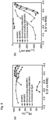
- the indirect-bonding (non-bonding) NiMn/NPC catalyst according to Example 1 had a Faraday efficiency (Feco) of 98.3% at -0.397 V (vs RHE) and 95% or more at -0.257 to -0.464 V (vs RHE), and thus had the highest Faraday efficiency for CO production at a low voltage, as compared to Comparative Example 1 (direct bonding NiMn/NPC catalyst), Comparative Example 2 (Ni/NPC catalyst), Comparative Example 3 (Mn/NPC catalyst), and Comparative Example 4 (commercial Ag/C catalyst).
- the Ni/NPC catalyst exhibited a low reaction rate when *COOH intermediates are formed during the carbon dioxide reduction (i.e., activation of carbon dioxide is difficult in Reaction Equation 3). Meanwhile, the Mn/NPC catalyst appears to exhibit the lowest Faraday efficiency because the Mn single atom has a low carbon dioxide reduction activity. Furthermore, the indirect-bonding NiMn/NPC catalyst exhibited better CO selectivity than the commercial Ag/C catalyst.
- the indirect-bonding NiMn/NPC catalyst compared to the direct bonding NiMn/NPC catalyst, exhibited improved catalytic performance despite containing both Ni and Mn. This is because the electronic structure has changed differently depending on the manner or form in which Ni and Mn are bonded to each other.
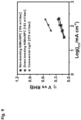
- the indirect-bonding (non-bonding) NiMn/NPC catalyst exhibited the lowest applied voltage at the current density for the same amount of CO production. Specifically, the applied voltage at a current density of -200 mA/cm 2 increases in the order of the indirect-bonding NiMn/NPC catalyst (-0.34 V), the direct bonding NiMn/NPC catalyst (-0.36 V), Ni/NPC catalyst (-0.40 V), and the commercial Ag/C catalyst (-0.66 V), which supports the fact that the indirect-bonding NiMn/NPC catalyst has a high CO production rate even under low voltage conditions.
- the indirect-bonding (non-bonding) NiMn/NPC catalyst had a structure in which Ni and Mn simultaneously exist in the form of single atoms and are indirectly linked to each other through a bond with an N atom, which is structurally different from the direct bonding NiMn/NPC catalyst having a structure in which Ni and Mn are directly bonded to each other. It is supposed that the indirect-bonding NiMn/NPC catalyst facilitates the carbon dioxide conversion by effectively controlling the electronic structure or configuration through electrical interaction.
- the slope of the Tafel plot of the indirect-bonding NiMn/NPC catalyst was significantly lower than that of the direct bonding NiMn/NPC catalyst and the commercial Ag/C.
- the transition metal single-atom catalyst includes two types of transition metals (a first transition metal (M 1 ) and a second transition metal (M 2 )) bonded with nitrogen in a nitrogen-doped carbon nanostructure such that they are adjacent to each other in the form of single atoms and are loaded in an indirect bonding manner, thereby exhibiting better carbon dioxide conversion performance (low overpotential, high current density and high selectivity for carbon monoxide), compared to the monometallic single-atom catalyst as well as the single atom catalyst in which two types of transition metals are directly bonded to each other.
- M 1 transition metal
- M 2 second transition metal
- the transition metal single-atom catalyst according to an embodiment of the present disclosure exhibits improved electrochemical catalytic activity in the carbon dioxide reduction, compared to commercial noble metal catalysts despite using inexpensive transition metals or base metals, thus being advantageous in terms of economic feasibility.
- the single atom catalyst according to the present embodiment can be prepared by a simple procedure such as ion adsorption and is applied to an electrode (i.e., cathode) of an electrochemical system for carbon dioxide reduction to reduce carbon dioxide and at the same time to effectively produce a high value-added compound (for example, carbon monoxide, which is a constituent of synthesis gas (or syngas)).
Landscapes
- Chemical & Material Sciences (AREA)
- Engineering & Computer Science (AREA)
- Materials Engineering (AREA)
- Chemical Kinetics & Catalysis (AREA)
- Organic Chemistry (AREA)
- Electrochemistry (AREA)
- Metallurgy (AREA)
- General Chemical & Material Sciences (AREA)
- Physics & Mathematics (AREA)
- Thermal Sciences (AREA)
- Nanotechnology (AREA)
- Inorganic Chemistry (AREA)
- Analytical Chemistry (AREA)
- Oil, Petroleum & Natural Gas (AREA)
- Catalysts (AREA)
- Electrodes For Compound Or Non-Metal Manufacture (AREA)
- Electrolytic Production Of Non-Metals, Compounds, Apparatuses Therefor (AREA)
- Carbon And Carbon Compounds (AREA)
Applications Claiming Priority (1)
| Application Number | Priority Date | Filing Date | Title |
|---|---|---|---|
| KR1020220063508A KR20230163774A (ko) | 2022-05-24 | 2022-05-24 | 단원자 금속 촉매 및 이를 이용한 이산화탄소 전환 시스템 |
Publications (2)
| Publication Number | Publication Date |
|---|---|
| EP4283019A2 true EP4283019A2 (de) | 2023-11-29 |
| EP4283019A3 EP4283019A3 (de) | 2024-11-20 |
Family
ID=85727095
Family Applications (1)
| Application Number | Title | Priority Date | Filing Date |
|---|---|---|---|
| EP23163670.5A Pending EP4283019A3 (de) | 2022-05-24 | 2023-03-23 | Einzelatommetallkatalysator und kohlendioxidumwandlungssystem damit |
Country Status (4)
| Country | Link |
|---|---|
| US (1) | US20230383426A1 (de) |
| EP (1) | EP4283019A3 (de) |
| JP (1) | JP7738030B2 (de) |
| KR (1) | KR20230163774A (de) |
Cited By (1)
| Publication number | Priority date | Publication date | Assignee | Title |
|---|---|---|---|---|
| CN120026367A (zh) * | 2025-04-22 | 2025-05-23 | 淮北师范大学 | 一种碳基Cu-Ni双原子簇催化剂及其制备方法和应用 |
Families Citing this family (4)
| Publication number | Priority date | Publication date | Assignee | Title |
|---|---|---|---|---|
| US12344947B1 (en) * | 2024-02-22 | 2025-07-01 | King Fahd University Of Petroleum And Minerals | Bimetallic silver doped copper complex for electrocatalytic reduction of CO2 and methods of preparation thereof |
| CN120436142B (zh) * | 2025-07-09 | 2025-10-14 | 北京大学现代农业研究院 | 杂原子掺杂碳负载单原子材料、其制备方法及应用 |
| CN120666391B (zh) * | 2025-08-22 | 2025-11-04 | 浙江省白马湖实验室有限公司 | 一种网状交联结构单原子碳基催化剂及其制备方法和应用 |
| CN120891052B (zh) * | 2025-09-29 | 2025-12-16 | 安徽医科大学 | 一种锰单原子修饰电极及其制备方法、电化学传感器和应用 |
Family Cites Families (6)
| Publication number | Priority date | Publication date | Assignee | Title |
|---|---|---|---|---|
| JPS59138066A (ja) * | 1983-01-26 | 1984-08-08 | Nippon Telegr & Teleph Corp <Ntt> | 燃料電池・空気電池用電極 |
| KR102182553B1 (ko) | 2018-11-08 | 2020-11-24 | 한국과학기술연구원 | 탄소 담체 상에 담지된 단일원자 촉매의 제조방법 |
| CN110102300B (zh) | 2019-06-05 | 2022-05-17 | 中北大学 | 一种柔性碳基载体负载金属单原子催化剂及其制备方法和应用 |
| WO2021156644A1 (en) | 2020-02-07 | 2021-08-12 | The Hong Kong University Of Science And Technology | Durable hybrid electrocatalysts for fuel cells |
| US12508580B2 (en) | 2020-04-13 | 2025-12-30 | University Of South Florida | Atomically dispersed metal catalysts and applications thereof |
| CN113151861B (zh) | 2021-04-28 | 2024-06-14 | 中国科学技术大学 | 热冲击合成碳载单原子催化剂的方法及碳载单原子催化剂 |
-
2022
- 2022-05-24 KR KR1020220063508A patent/KR20230163774A/ko active Pending
-
2023
- 2023-03-22 US US18/187,665 patent/US20230383426A1/en active Pending
- 2023-03-23 EP EP23163670.5A patent/EP4283019A3/de active Pending
- 2023-05-10 JP JP2023077916A patent/JP7738030B2/ja active Active
Non-Patent Citations (2)
| Title |
|---|
| ANGEW. CHEM. INT. ED., vol. 54, 2015, pages 10758 - 10762 |
| J. PHYS. CHEM. C, vol. 117, 2013, pages 9187 - 9195 |
Cited By (2)
| Publication number | Priority date | Publication date | Assignee | Title |
|---|---|---|---|---|
| CN120026367A (zh) * | 2025-04-22 | 2025-05-23 | 淮北师范大学 | 一种碳基Cu-Ni双原子簇催化剂及其制备方法和应用 |
| CN120026367B (zh) * | 2025-04-22 | 2025-07-25 | 淮北师范大学 | 一种碳基Cu-Ni双原子簇催化剂及其制备方法和应用 |
Also Published As
| Publication number | Publication date |
|---|---|
| EP4283019A3 (de) | 2024-11-20 |
| KR20230163774A (ko) | 2023-12-01 |
| JP7738030B2 (ja) | 2025-09-11 |
| US20230383426A1 (en) | 2023-11-30 |
| JP2023172910A (ja) | 2023-12-06 |
Similar Documents
| Publication | Publication Date | Title |
|---|---|---|
| EP4283019A2 (de) | Einzelatommetallkatalysator und kohlendioxidumwandlungssystem damit | |
| Wang et al. | A review of non-noble metal-based electrocatalysts for CO2 electroreduction | |
| Srinivas et al. | Constructing Ni/NiS heteronanoparticle-embedded metal–organic framework-derived nanosheets for enhanced water-splitting catalysis | |
| Ma et al. | Interfacial engineering of bimetallic Ni/Co-MOFs with H-substituted graphdiyne for ammonia electrosynthesis from nitrate | |
| Xu et al. | Facile preparation of self-assembled Ni/Co phosphates composite spheres with highly efficient HER electrocatalytic performances | |
| Chebrolu et al. | Overview of emerging catalytic materials for electrochemical green ammonia synthesis and process | |
| Yoon et al. | Cobalt phosphide nanoarrays with crystalline-amorphous hybrid phase for hydrogen production in universal-pH | |
| Yang et al. | Iron-doped nickel disulfide nanoarray: A highly efficient and stable electrocatalyst for water splitting | |
| Xiong et al. | Improving the electrocatalytic property of CoP for hydrogen evolution by constructing porous ternary CeO2-CoP-C hybrid nanostructure via ionic exchange of MOF | |
| Li et al. | Iron-doped NiCo-MOF hollow nanospheres for enhanced electrocatalytic oxygen evolution | |
| US20250034731A1 (en) | Electrochemical hybrid catalyst containing nickel-iron diatomic metals and carbon dioxide conversion system using the same | |
| Arumugam et al. | Regulating the electronic structure of CoMoO 4 via La doping for efficient and durable electrochemical water splitting reactions | |
| CN113373471A (zh) | 一种用于电催化还原co2制低碳醇的铟基催化剂的制备方法及应用 | |
| Gautam et al. | Rational design of a copper cobalt sulfide/tungsten disulfide heterostructure for excellent overall water splitting | |
| Huang et al. | Recent progress of two-dimensional metal-base catalysts in urea oxidation reaction | |
| Amer et al. | Synthesis of iron and vanadium co‐doped mesoporous cobalt oxide: an efficient and robust catalysts for electrochemical water oxidation | |
| Li et al. | Unraveling the significance of FeN4 and Fe3S4 active species for sustained direct ammonia fuel cells and zinc-air batteries | |
| Rajasekaran et al. | Designing coordinatively unsaturated metal sites in bimetallic organic frameworks for oxygen evolution reaction | |
| Iqbal et al. | Boosting the activity of FeOOH via integration of ZIF-12 and graphene to efficiently catalyze the oxygen evolution reaction | |
| Ashok et al. | Electrocatalytic conversion of CO2 over in-situ grown Cu microstructures on Cu and Zn foils | |
| Li et al. | Designing dual-dimensional Co4N/Co nanoheterostructures by molybdenum incorporation for boosted alkaline hydrogen evolution catalysis | |
| Qin et al. | Multi-functional layered double hydroxides supported by nanoporous gold toward overall hydrazine splitting | |
| Samanta et al. | Sn/SnO2 Nanocomposite Encapsulated on Nitrogen-Doped Carbon as a Highly Efficient Catalyst for the Electrochemical Reduction of CO2 to Formate | |
| Sohail et al. | Electrocatalytic activity of tungsten carbide hybrids with two different MOFs for water splitting: a comparative analysis | |
| Huang et al. | Nickel nanoparticles with narrow size distribution confined in nitrogen-doped carbon for efficient reduction of CO2 to CO |
Legal Events
| Date | Code | Title | Description |
|---|---|---|---|
| PUAI | Public reference made under article 153(3) epc to a published international application that has entered the european phase |
Free format text: ORIGINAL CODE: 0009012 |
|
| STAA | Information on the status of an ep patent application or granted ep patent |
Free format text: STATUS: REQUEST FOR EXAMINATION WAS MADE |
|
| 17P | Request for examination filed |
Effective date: 20230323 |
|
| AK | Designated contracting states |
Kind code of ref document: A2 Designated state(s): AL AT BE BG CH CY CZ DE DK EE ES FI FR GB GR HR HU IE IS IT LI LT LU LV MC ME MK MT NL NO PL PT RO RS SE SI SK SM TR |
|
| REG | Reference to a national code |
Ref country code: DE Ref legal event code: R079 Free format text: PREVIOUS MAIN CLASS: C25B0003260000 Ipc: C25B0011065000 |
|
| PUAL | Search report despatched |
Free format text: ORIGINAL CODE: 0009013 |
|
| AK | Designated contracting states |
Kind code of ref document: A3 Designated state(s): AL AT BE BG CH CY CZ DE DK EE ES FI FR GB GR HR HU IE IS IT LI LT LU LV MC ME MK MT NL NO PL PT RO RS SE SI SK SM TR |
|
| RIC1 | Information provided on ipc code assigned before grant |
Ipc: H01M 8/10 20160101ALI20241015BHEP Ipc: H01M 4/96 20060101ALI20241015BHEP Ipc: B01J 37/02 20060101ALI20241015BHEP Ipc: B01J 23/889 20060101ALI20241015BHEP Ipc: B01J 23/755 20060101ALI20241015BHEP Ipc: B01J 21/18 20060101ALI20241015BHEP Ipc: H01M 4/90 20060101ALI20241015BHEP Ipc: B01J 37/08 20060101ALI20241015BHEP Ipc: C25B 11/091 20210101ALI20241015BHEP Ipc: C25B 11/054 20210101ALI20241015BHEP Ipc: C25B 1/23 20210101ALI20241015BHEP Ipc: C25B 11/065 20210101AFI20241015BHEP |