EP4274745B1 - Reifengewebe mit ummantelten schussverstärkungselementen mit niedrigem feuchtigkeitsabsorptionsgehalt - Google Patents
Reifengewebe mit ummantelten schussverstärkungselementen mit niedrigem feuchtigkeitsabsorptionsgehalt Download PDFInfo
- Publication number
- EP4274745B1 EP4274745B1 EP22706066.2A EP22706066A EP4274745B1 EP 4274745 B1 EP4274745 B1 EP 4274745B1 EP 22706066 A EP22706066 A EP 22706066A EP 4274745 B1 EP4274745 B1 EP 4274745B1
- Authority
- EP
- European Patent Office
- Prior art keywords
- weft
- elements
- reinforcing elements
- fabric
- warp
- Prior art date
- Legal status (The legal status is an assumption and is not a legal conclusion. Google has not performed a legal analysis and makes no representation as to the accuracy of the status listed.)
- Active
Links
Images



Classifications
-
- B—PERFORMING OPERATIONS; TRANSPORTING
- B60—VEHICLES IN GENERAL
- B60C—VEHICLE TYRES; TYRE INFLATION; TYRE CHANGING; CONNECTING VALVES TO INFLATABLE ELASTIC BODIES IN GENERAL; DEVICES OR ARRANGEMENTS RELATED TO TYRES
- B60C9/00—Reinforcements or ply arrangement of pneumatic tyres
- B60C9/0042—Reinforcements made of synthetic materials
-
- B—PERFORMING OPERATIONS; TRANSPORTING
- B60—VEHICLES IN GENERAL
- B60C—VEHICLE TYRES; TYRE INFLATION; TYRE CHANGING; CONNECTING VALVES TO INFLATABLE ELASTIC BODIES IN GENERAL; DEVICES OR ARRANGEMENTS RELATED TO TYRES
- B60C9/00—Reinforcements or ply arrangement of pneumatic tyres
- B60C9/18—Structure or arrangement of belts or breakers, crown-reinforcing or cushioning layers
- B60C9/1807—Structure or arrangement of belts or breakers, crown-reinforcing or cushioning layers comprising fabric reinforcements
-
- D—TEXTILES; PAPER
- D02—YARNS; MECHANICAL FINISHING OF YARNS OR ROPES; WARPING OR BEAMING
- D02G—CRIMPING OR CURLING FIBRES, FILAMENTS, THREADS, OR YARNS; YARNS OR THREADS
- D02G3/00—Yarns or threads, e.g. fancy yarns; Processes or apparatus for the production thereof, not otherwise provided for
- D02G3/44—Yarns or threads characterised by the purpose for which they are designed
- D02G3/48—Tyre cords
-
- D—TEXTILES; PAPER
- D03—WEAVING
- D03D—WOVEN FABRICS; METHODS OF WEAVING; LOOMS
- D03D1/00—Woven fabrics designed to make specified articles
-
- D—TEXTILES; PAPER
- D03—WEAVING
- D03D—WOVEN FABRICS; METHODS OF WEAVING; LOOMS
- D03D13/00—Woven fabrics characterised by the special disposition of the warp or weft threads, e.g. with curved weft threads, with discontinuous warp threads, with diagonal warp or weft
- D03D13/008—Woven fabrics characterised by the special disposition of the warp or weft threads, e.g. with curved weft threads, with discontinuous warp threads, with diagonal warp or weft characterised by weave density or surface weight
-
- D—TEXTILES; PAPER
- D03—WEAVING
- D03D—WOVEN FABRICS; METHODS OF WEAVING; LOOMS
- D03D15/00—Woven fabrics characterised by the material, structure or properties of the fibres, filaments, yarns, threads or other warp or weft elements used
- D03D15/20—Woven fabrics characterised by the material, structure or properties of the fibres, filaments, yarns, threads or other warp or weft elements used characterised by the material of the fibres or filaments constituting the yarns or threads
- D03D15/283—Woven fabrics characterised by the material, structure or properties of the fibres, filaments, yarns, threads or other warp or weft elements used characterised by the material of the fibres or filaments constituting the yarns or threads synthetic polymer-based, e.g. polyamide or polyester fibres
-
- D—TEXTILES; PAPER
- D03—WEAVING
- D03D—WOVEN FABRICS; METHODS OF WEAVING; LOOMS
- D03D15/00—Woven fabrics characterised by the material, structure or properties of the fibres, filaments, yarns, threads or other warp or weft elements used
- D03D15/40—Woven fabrics characterised by the material, structure or properties of the fibres, filaments, yarns, threads or other warp or weft elements used characterised by the structure of the yarns or threads
- D03D15/44—Woven fabrics characterised by the material, structure or properties of the fibres, filaments, yarns, threads or other warp or weft elements used characterised by the structure of the yarns or threads with specific cross-section or surface shape
-
- D—TEXTILES; PAPER
- D03—WEAVING
- D03D—WOVEN FABRICS; METHODS OF WEAVING; LOOMS
- D03D15/00—Woven fabrics characterised by the material, structure or properties of the fibres, filaments, yarns, threads or other warp or weft elements used
- D03D15/40—Woven fabrics characterised by the material, structure or properties of the fibres, filaments, yarns, threads or other warp or weft elements used characterised by the structure of the yarns or threads
- D03D15/47—Woven fabrics characterised by the material, structure or properties of the fibres, filaments, yarns, threads or other warp or weft elements used characterised by the structure of the yarns or threads multicomponent, e.g. blended yarns or threads
-
- D—TEXTILES; PAPER
- D03—WEAVING
- D03D—WOVEN FABRICS; METHODS OF WEAVING; LOOMS
- D03D15/00—Woven fabrics characterised by the material, structure or properties of the fibres, filaments, yarns, threads or other warp or weft elements used
- D03D15/40—Woven fabrics characterised by the material, structure or properties of the fibres, filaments, yarns, threads or other warp or weft elements used characterised by the structure of the yarns or threads
- D03D15/49—Woven fabrics characterised by the material, structure or properties of the fibres, filaments, yarns, threads or other warp or weft elements used characterised by the structure of the yarns or threads textured; curled; crimped
-
- D—TEXTILES; PAPER
- D03—WEAVING
- D03D—WOVEN FABRICS; METHODS OF WEAVING; LOOMS
- D03D15/00—Woven fabrics characterised by the material, structure or properties of the fibres, filaments, yarns, threads or other warp or weft elements used
- D03D15/50—Woven fabrics characterised by the material, structure or properties of the fibres, filaments, yarns, threads or other warp or weft elements used characterised by the properties of the yarns or threads
-
- B—PERFORMING OPERATIONS; TRANSPORTING
- B60—VEHICLES IN GENERAL
- B60C—VEHICLE TYRES; TYRE INFLATION; TYRE CHANGING; CONNECTING VALVES TO INFLATABLE ELASTIC BODIES IN GENERAL; DEVICES OR ARRANGEMENTS RELATED TO TYRES
- B60C9/00—Reinforcements or ply arrangement of pneumatic tyres
- B60C2009/0035—Reinforcements made of organic materials, e.g. rayon, cotton or silk
-
- B—PERFORMING OPERATIONS; TRANSPORTING
- B60—VEHICLES IN GENERAL
- B60C—VEHICLE TYRES; TYRE INFLATION; TYRE CHANGING; CONNECTING VALVES TO INFLATABLE ELASTIC BODIES IN GENERAL; DEVICES OR ARRANGEMENTS RELATED TO TYRES
- B60C9/00—Reinforcements or ply arrangement of pneumatic tyres
- B60C2009/0071—Reinforcements or ply arrangement of pneumatic tyres characterised by special physical properties of the reinforcements
-
- B—PERFORMING OPERATIONS; TRANSPORTING
- B60—VEHICLES IN GENERAL
- B60C—VEHICLE TYRES; TYRE INFLATION; TYRE CHANGING; CONNECTING VALVES TO INFLATABLE ELASTIC BODIES IN GENERAL; DEVICES OR ARRANGEMENTS RELATED TO TYRES
- B60C9/00—Reinforcements or ply arrangement of pneumatic tyres
- B60C9/18—Structure or arrangement of belts or breakers, crown-reinforcing or cushioning layers
- B60C9/1807—Structure or arrangement of belts or breakers, crown-reinforcing or cushioning layers comprising fabric reinforcements
- B60C2009/1814—Structure or arrangement of belts or breakers, crown-reinforcing or cushioning layers comprising fabric reinforcements square woven
-
- D—TEXTILES; PAPER
- D10—INDEXING SCHEME ASSOCIATED WITH SUBLASSES OF SECTION D, RELATING TO TEXTILES
- D10B—INDEXING SCHEME ASSOCIATED WITH SUBLASSES OF SECTION D, RELATING TO TEXTILES
- D10B2331/00—Fibres made from polymers obtained otherwise than by reactions only involving carbon-to-carbon unsaturated bonds, e.g. polycondensation products
- D10B2331/02—Fibres made from polymers obtained otherwise than by reactions only involving carbon-to-carbon unsaturated bonds, e.g. polycondensation products polyamides
-
- D—TEXTILES; PAPER
- D10—INDEXING SCHEME ASSOCIATED WITH SUBLASSES OF SECTION D, RELATING TO TEXTILES
- D10B—INDEXING SCHEME ASSOCIATED WITH SUBLASSES OF SECTION D, RELATING TO TEXTILES
- D10B2331/00—Fibres made from polymers obtained otherwise than by reactions only involving carbon-to-carbon unsaturated bonds, e.g. polycondensation products
- D10B2331/04—Fibres made from polymers obtained otherwise than by reactions only involving carbon-to-carbon unsaturated bonds, e.g. polycondensation products polyesters, e.g. polyethylene terephthalate [PET]
-
- D—TEXTILES; PAPER
- D10—INDEXING SCHEME ASSOCIATED WITH SUBLASSES OF SECTION D, RELATING TO TEXTILES
- D10B—INDEXING SCHEME ASSOCIATED WITH SUBLASSES OF SECTION D, RELATING TO TEXTILES
- D10B2401/00—Physical properties
- D10B2401/02—Moisture-responsive characteristics
-
- D—TEXTILES; PAPER
- D10—INDEXING SCHEME ASSOCIATED WITH SUBLASSES OF SECTION D, RELATING TO TEXTILES
- D10B—INDEXING SCHEME ASSOCIATED WITH SUBLASSES OF SECTION D, RELATING TO TEXTILES
- D10B2505/00—Industrial
- D10B2505/02—Reinforcing materials; Prepregs
- D10B2505/022—Reinforcing materials; Prepregs for tyres
-
- D—TEXTILES; PAPER
- D10—INDEXING SCHEME ASSOCIATED WITH SUBLASSES OF SECTION D, RELATING TO TEXTILES
- D10B—INDEXING SCHEME ASSOCIATED WITH SUBLASSES OF SECTION D, RELATING TO TEXTILES
- D10B2505/00—Industrial
- D10B2505/12—Vehicles
Definitions
- the present invention relates to a tire fabric comprising warp reinforcing elements and weft reinforcing elements.
- the invention also relates to an elastomer composite comprising this fabric and to a tire comprising a hoop ply obtained from this composite.
- the invention also relates to a method of weaving this fabric.
- the state of the art discloses a tire fabric intended to equip passenger vehicles marketed under the MICHELIN brand and belonging to the PRIMACY 4 range and having the following dimensional characteristics: 225/45R17 94WXL TL.
- a tire comprises a tread and a hoop reinforcement extending in the crown in a circumferential direction of the tire.
- the hoop reinforcement comprises a hoop ply comprising several reinforcing elements arranged side by side substantially parallel to each other and forming an angle less than or equal to 10° with the circumferential direction of the tire.
- Such a tire of the state of the art comprises a hoop ply comprising a woven fabric comprising warp reinforcing elements comprising an assembly consisting of two nylon multifilament strands, the two strands being wound helically around each other at a twist of 250 turns per meter.
- Each multifilament strand has a count equal to 140 tex and weft reinforcing elements comprising a natural cotton fiber having a twist of 750 turns per meter and having a count equal to 30 tex.
- the woven fabric is obtained by interlacing the warp and weft reinforcing elements via an air-jet loom weaving process. Since each cotton weft element is an assembly of natural fibers, weaving using an air-jet loom is relatively easy due to the hairiness of the material which allows weaving across the entire width of the fabric.
- One solution to increase the tire life is to combat the spread of these corrosive agents. Solutions can thus be provided to increase the tire life.
- One solution is to reduce the number of textile reinforcement elements of the hooping crown ply, in order to reduce the storage and spread of water.
- Another solution would be to increase the thickness of the plies and in particular the hooping ply to avoid contact between the hooping ply and the working crown plies and thus avoid the spread of corrosive agents.
- the mass of the tire is increased and therefore the rolling resistance of the tire, which is not desirable.
- the aim of the invention is to find a fabric for the crown ply of a tire which performs industrially and is less sensitive to humidity in order to minimize the risks of corrosion and which does not have the drawbacks mentioned above.
- a weft reinforcement element consists of several wire elements. Each wire element is a short fiber and/or filament.
- a hairy weft reinforcing element is a reinforcing element comprising wire elements extending outside the circle circumscribed by a theoretical wire reinforcing element. corresponding to the frame reinforcement element from which the outgoing wire elements have been removed.
- ruffled weft reinforcement element is meant that the weft reinforcement element is neither smooth nor textured as described in the application. WO2015016791 .
- the diameter of the ruffled reinforcing element is the diameter of the circle circumscribed to the theoretical wire reinforcing element described above.
- a weft reinforcement element is a reinforcement element placed in the width direction of the fabric.
- the warp reinforcement element is placed in the length direction of the fabric.
- the warp reinforcement element serves as a support for the weft. It is the angled interlacing of these two reinforcement elements that gives the weft fabric.
- Initial mass of the weft reinforcing element means the mass of the weft reinforcing element measured after 48 hours at 23°C +/- 2°C under 50% +/-10% relative humidity according to ISO 23529 of 2016.
- the inventors behind the invention demonstrate that by selecting a weft reinforcement element having a low moisture uptake rate, the water propagation in the textile reinforcements and thus the propagation of corrosive agents which oxidize the metal reinforcing elements of the crown reinforcement, in particular the crown plies and the ruffled weft reinforcing element has the advantage of being sufficiently hairy to be able to be woven on an air jet loom and ensure the maintenance of the warp reinforcing elements.
- the lower the moisture uptake rate of the weft reinforcing element the more the storage and propagation of water inside the fabric is reduced and the more the resistance to corrosion in the tire is improved.
- the measurement of hairiness or hairiness is carried out using a measuring device to measure the geometries on the scanned and calibrated images using optics and light systems to reveal the structure of the wire elements.
- a measuring device to measure the geometries on the scanned and calibrated images using optics and light systems to reveal the structure of the wire elements.
- any wire element crossing a line perpendicular to the tangent to the external diameter of the reinforcing element in the length direction of the weft reinforcing element is counted.
- the hairiness of the weft reinforcing element can be determined.
- filamentary elements we mean filaments, i.e. continuous fibres, or short fibres, i.e. discontinuous fibres.
- the weft reinforcing elements are such that the number of wire elements extending beyond the diameter of the weft reinforcing element is greater than or equal to 1,250 wire elements per 100 meters of weft reinforcing elements, preferably greater than or equal to 5,000 wire elements per 100 meters of weft reinforcing elements and more preferably greater than or equal to 7,500 wire elements per 100 meters of weft reinforcing elements.
- the weft reinforcing elements are such that the number of 1 to 2 mm wire elements protruding from the diameter of the weft reinforcing element is greater than or equal to 5000 wire elements per 100 meters of weft reinforcing elements, preferably greater than or equal to 6000 wire elements per 100 meters of weft reinforcing elements and more preferably greater than or equal to 7000 wire elements per 100 meters of weft reinforcing elements.
- each textile warp reinforcement element comprises a single multifilament strand.
- each textile warp reinforcement element comprises several multifilament strands.
- each warp reinforcement element comprises an assembly consisting of two multifilament strands, the two strands being helically wound around each other and preferably, the reinforcement element is twist balanced.
- assembly made up is meant that the assembly does not include any multifilament strand other than the two multifilament strands of aromatic polyamide or aromatic copolyamide and polyester.
- the two multifilament strands are wound with a substantially identical twist and that the twist of the filaments of each multifilament strand, i.e. the twist of the filaments of the multifilament strand of polyamide or aromatic copolyamide and the twist of the filaments of the polyester strand is substantially zero.
- substantially zero residual twist it is meant that the residual twist is strictly less than 2.5% of the twist R3.
- the multifilament strand(s) are chosen from polyester strands, aliphatic polyamide strands, strands comprising aromatic polyamides or aromatic copolyamides and strands comprising mixtures of filaments of these materials, preferably chosen from aliphatic polyamide strands and more preferably made of nylon 6.6.
- polyester strand we recall that it is a set of filaments made up of linear macromolecules formed of groups linked together by ester bonds.
- Polyesters are manufactured by polycondensation, by esterification between a dicarboxylic acid or one of its derivatives, a diol.
- polyethylene terephthalate can be manufactured by polycondensation of terephthalic acid and ethylene glycol.
- PET polyethylene terephthalate
- PEN polyethylene naphthalate
- PBT polybutylene terephthalate
- PBN polybutylene naphthalate
- PPT polypropylene terephthalate
- PPN polypropylene naphthalate
- aromatic polyamide strand or aromatic copolyamide it is well known that it is a set of filaments consisting of linear macromolecules formed of aromatic groups linked together by amide bonds of which at least 85% are directly linked to two aromatic nuclei, and more particularly of poly (p-phenylene terephthalamide) (or PPTA) fibers, manufactured for a very long time from optically anisotropic spinning compositions.
- aromatic polyamides or aromatic copolyamides mention may be made of polyarylamides (or PAA, notably known under the name commercial name Ixef from the company Solvay), poly(metaxylylene adipamide), polyphthalamides (or PPA, notably known under the commercial name Amodel from the company Solvay), amorphous semi-aromatic polyamides (or PA 6-3T, notably known under the commercial name Trogamid from the company Evonik), meta-aramids (or poly(metaphenylene isophthalamide or PA MPD-I notably known under the commercial name Nomex from the company Du Pont de Nemours) or para-aramids (or poly(paraphenylene terephthalamide or PA PPD-T notably known under the commercial name Kevlar from the company Du Pont de Nemours or Twaron from the company Teijin).
- PAA polyarylamides
- PAA notably known under the name commercial name commercial name commercial name commercial name commercial name Ixef
- Aliphatic polyamide strand means a set of filaments consisting of linear macromolecules of polymers or copolymers containing amide functions that do not have aromatic cycles and that can be synthesized by polycondensation between a carboxylic acid and an amine.
- aliphatic polyamides mention may be made of nylons PA4.6, PA6, PA6.6 or PA6.10, and in particular Zytel from DuPont, Technyl from Solvay or Rilsamid from Arkema.
- the title of the aliphatic polyamide strand ranges from 70 to 120 tex, preferably from 90 to 110 tex, more preferably from 90 to 100 tex.
- the title (or linear mass) of each strand is determined according to the ASTM D1423 standard. The title is given in tex (mass in grams of 1000 m of product - reminder: 0.111 tex equals 1 denier).
- the density of reinforcing elements in the composite is the number of reinforcing elements taken on one decimeter of the composite in the direction perpendicular to the direction in which the reinforcing elements extend parallel to each other.
- the twist of the element of each chain reinforcement ranges from 100 to 500 turns per meter, preferably from 250 to 390 turns per meter and even more preferably from 250 to 380 turns per meter.
- the measurement of the torsion of the reinforcing element can be carried out by any method known to those skilled in the art, for example in accordance with the standards ASTM D1423 or ASTM D 885/D 885MA of January 2010 (paragraph 30), for example using a torsiometer.
- each weft reinforcement element comprises, for at least 50% of its mass, one or more textile filaments and/or several fibers.
- textiles and preferably consists of one or more textile filaments and/or several textile fibers.
- Natural filaments and fibres include filaments and fibres of plant origin (including cotton), animal origin and mineral origin.
- Man-made filaments and fibres include artificial filaments and fibres and synthetic filaments and fibres.
- Artificial filaments and fibres are made from natural raw materials and include viscose made from wood cellulose.
- Synthetic filaments and fibres include organic polymeric filaments and fibres (e.g. polyesters and polyamides) as well as inorganic polymeric filaments and fibres (e.g. glass and carbon).
- each weft reinforcing element comprises at least one strand comprising a core and a layer covering the core, the core comprising at least one filament and the layer comprising several outgoing short fibers.
- strand we mean an assembly of several wire elements held together at a certain twist.
- a filament is a unitary element of very great length and continuous generally obtained by spinning a molten material. It can be either artificial or synthetic.
- Short fiber means a discontinuous fiber of reduced length. It can be either natural fibers or cut filaments.
- each weft reinforcement element comprises an assembly of several strands each comprising a core and a layer covering the core, the core comprising at least one filament and the layer comprising several short outgoing and incoming fibers.
- each weft reinforcement element comprises an assembly of two strands each comprising a core and a layer covering the core, the core comprising at least one filament and the layer comprising several short outgoing and incoming fibers.
- each weft reinforcement element is made up of an assembly of two strands comprising a core and a coating layer the core, the core comprising at least one filament and the layer comprising several short outgoing and re-incoming fibers.
- assembly constituted is meant that the assembly does not include any strand other than the two strands mentioned above.
- the core comprises a plurality of organic polymeric synthetic filaments and the layer comprises a plurality of organic polymeric synthetic fibers.
- each filament and/or each fiber is chosen from polyester filaments and fibers, polyamide filaments and fibers, polyketone filaments and fibers, polyurethane filaments and fibers, acrylic filaments and fibers, polyolefin filaments and fibers, polyetheretherketone filaments and fibers and assemblies of these filaments and fibers, preferably from polyester filaments and fibers, polyamide filaments and fibers and assemblies of these filaments and fibers and more preferably the organic synthetic filaments and fibers are polyester filaments and fibers.
- the sum of the titles of the strands of weft reinforcement elements is strictly less than 40 tex, preferably less than or equal to 30 tex.
- the sum of the titles of the strands of weft reinforcement elements is greater than or equal to 2 tex and preferably greater than or equal to 4 tex.
- the count of each strand of weft reinforcement element ranges from 1 to 20 tex and preferably from 10 to 15 tex.
- each weft reinforcement element ranges from 250 to 1500 turns per meter, preferably from 500 to 1300 turns per meter, more preferably from 900 to 1200 turns per meter.
- each weft reinforcing element is strictly less than 0.50 mm and preferably less than or equal to 0.23 mm.
- the diameter of each weft reinforcing element is smaller than that of each weft reinforcing element of the state of the art to reduce the free volume available for water, and therefore reduce the storage and propagation of water in the weft fabric.
- the density of the weft reinforcing elements ranges from 3.0 to 8.0 weft reinforcing elements per dm of fabric, preferably from 3.0 to 6.0 weft reinforcing elements per dm of fabric and more preferably from 3.0 to 5.5 weft reinforcing elements per dm of fabric.
- the fabric length is measured in the general warp direction (Dc).
- the density of the weft reinforcing elements is smaller than that of the weft reinforcing elements of the state of the art to reduce the free volume available for water, and therefore reduce the propagation of water in the weft fabric.
- Another subject of the invention is a composite for a tire comprising at least one fabric as defined above embedded in an elastomer composition.
- elastomer composition a composition comprising an elastomer, preferably diene, for example natural rubber, a reinforcing filler, for example carbon black and/or silica and a crosslinking system, for example a vulcanization system, preferably comprising sulfur.
- the elastomer composition comprises a diene elastomer.
- Another subject of the invention is a tire comprising a hoop reinforcement comprising at least one hoop ply comprising an elastomer composite as defined above.
- the tire comprises a hoop reinforcement comprising at least one hoop ply obtained from an elastomer composite as defined above.
- the tires of the invention may be intended for motor vehicles of the passenger car, 4x4, "SUV” (Sport Utility Vehicles) type, but also for two-wheeled vehicles such as motorcycles, or for industrial vehicles such as metros, buses, road transport vehicles (vans, trucks, tractors, trailers), off-road vehicles, agricultural or civil engineering vehicles.
- SUV Sport Utility Vehicles
- two-wheeled vehicles such as motorcycles
- industrial vehicles such as metros, buses, road transport vehicles (vans, trucks, tractors, trailers), off-road vehicles, agricultural or civil engineering vehicles.
- the tires may be intended for motor vehicles of the passenger car, 4x4, "SUV” (Sport Utility Vehicles) type.
- SUV Sport Utility Vehicles
- the woven fabric is impregnated with an adhesive composition.
- radial cut or “radial section” is meant here a cut or section along a plane which includes the axis of rotation of the tire.
- the “median tangential plane” TT of the tire is the plane which is perpendicular to the “median circumferential plane” M.
- An “axial” direction is a direction parallel to the tire’s axis of rotation.
- a reference X, Y, Z is shown corresponding to the usual axial (X), radial (Y) and circumferential (Z) directions of a tire.
- the tire 10 comprises a crown 12 comprising a crown reinforcement 14 comprising a working reinforcement 15 comprising two working plies 16, 18 of working reinforcement elements and a hoop reinforcement 17 comprising a hoop ply 19 of hoop reinforcement elements.
- the crown reinforcement 14 is surmounted by a tread 20 arranged radially outside the reinforcement of summit 14.
- the hooping reinforcement 17, the hooping ply 19, is radially intercalated between the working reinforcement 15 and the tread 20.
- the carcass reinforcement 32 comprises at least one carcass ply comprising several reinforcing elements, the ply being anchored to each of the beads 24 by a turn-up around the bead wire 28, so as to form in each bead 24 a forward strand 38 extending from the beads through the sidewalls towards the crown 12, and a return strand 40, the radially outer end 42 of the return strand 40 being radially outside the annular reinforcement structure 26.
- the carcass reinforcement 32 thus extends from the beads 24 through the sidewalls 22 into the crown 12.
- the carcass reinforcement 32 is arranged radially inside the crown reinforcement 14 and the hoop reinforcement 17.
- the carcass reinforcement 32 comprises a single carcass ply 34.
- the tire 10 also comprises an internal sealing layer 43, preferably made of butyl, axially inside the sidewalls 22 and radially inside the crown reinforcement 14 and extending between the two beads 24.
- an internal sealing layer 43 preferably made of butyl, axially inside the sidewalls 22 and radially inside the crown reinforcement 14 and extending between the two beads 24.
- Each working ply 16, 18, hooping ply 19 and carcass ply 34 comprises a polymeric composition in which reinforcing elements of the corresponding ply are embedded.
- Each polymeric composition, here an elastomeric composition, of the working plies 16, 18, hooping ply 19 and carcass ply 34 is made in a conventional composition for calendering reinforcing elements conventionally comprising a diene elastomer, for example natural rubber, a reinforcing filler, for example carbon black and/or silica, a crosslinking system, for example a vulcanization system, preferably comprising sulfur, stearic acid and zinc oxide, and optionally a vulcanization accelerator and/or retarder and/or various additives.
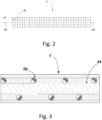
- the composite comprises a fabric T comprising textile warp reinforcement elements 44 and weft reinforcement elements 50 embedded in an elastomer composition.
- the warp reinforcement elements 44 are substantially parallel to each other and extend in a general warp direction De and the weft reinforcement elements 50 are substantially parallel to each other and extend in a general direction called weft Dt different from the general warp direction Dc.
- the general weft direction Dt and the general warp direction De form an angle greater than or equal to 45°, preferably ranging from 80° to 110° and here equal to 90°.
- the weft reinforcing elements 50 interlace the warp reinforcing elements 44.
- the moisture uptake rate of the 50 weft reinforcement elements is less than or equal to 2.0%. Here it is 1.8%.
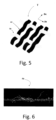
- the weft reinforcement elements 50 are ruffled as shown in the figure 6 .
- the weft reinforcing elements 50 are such that the number of wire elements extending beyond the diameter of the weft reinforcing element 50 is greater than or equal to 1,250 wire elements per 100 meters of weft reinforcing elements, preferably greater than or equal to 5,000 wire elements per 100 meters of weft reinforcing elements and more preferably greater than or equal to 7,500 wire elements per 100 meters of weft reinforcing elements.
- it is 8,750 wire elements per 100 meters of weft reinforcing elements 50.
- the warp and weft reinforcement elements will be described below.
- each warp reinforcement element 44 comprises a plurality of multifilament strands and comprises an assembly consisting of two multifilament strands of aliphatic polyamide, the two strands being helically wound around each other.
- the aliphatic polyamide is Nylon 6,6.
- Each warp reinforcement element is twist balanced.
- the figure 4 is a sectional view of the chain reinforcement element 44 and in which the filaments of each of the strands can be seen.
- Each weft reinforcement element 50 comprises, for at least 50% of its mass, one or more textile filaments and/or several textile fibers and preferably consists of one or more textile filaments and/or several textile fibers.
- each weft reinforcing element 50 comprises at least one strand comprising a core and a layer covering the core, the core comprising at least one filament and the layer comprising several outgoing short fibers.
- each weft reinforcing element consists of an assembly of two strands comprising a core and a layer covering the core, the core comprising at least one filament and the layer comprising several outgoing and re-entering short fibers.
- the core comprises several organic polymeric synthetic filaments and the layer comprises several organic polymeric synthetic fibers.
- each filament and each fiber are selected from polyester filaments and fibers.
- the count of the aliphatic polyamide multifilament strand of the warp reinforcing element is from 80 to 120 tex, preferably from 90 to 110 tex, more preferably from 90 to 100 tex.
- the count of each aliphatic polyamide multifilament strand of the warp reinforcing element is 94 tex.
- the sum of the titles of the strands of the weft reinforcing elements 50 is strictly less than 40 tex, preferably less than or equal to 30 tex and is greater than or equal to 2 tex and preferably greater than or equal to 4 tex.
- the sum of the titles of the strands of the weft reinforcing elements 50 is equal to 22 tex.
- the count of each strand of weft reinforcement element 50 ranges from 1 to 20 tex and preferably from 10 to 15 tex. Here, it is 11 tex.
- each chain reinforcement element 44 ranges from 100 to 500 turns per meter, preferably from 250 to 390 turns per meter and even more preferably from 250 to 380 turns per meter. Here, it is equal to 320 turns per meter.
- the chain reinforcing elements 44 comprise an assembly consisting of two strands of aliphatic polyamide, the two strands are wound helically around each other at a twist of 320 turns per meter and the reinforcing element is twist balanced.
- each weft reinforcing element 50 ranges from 250 to 1500 turns per meter, preferably from 500 to 1300 turns per meter, more preferably from 900 to 1200 turns per meter.
- the twist of each weft reinforcing element 50 is 1100 turns per meter.
- the weft reinforcing elements 50 comprise an assembly consisting of two strands of 11 tex wound helically around each other at a twist of 1100 turns per meter and the weft reinforcing element 50 is twist balanced.
- the density of the weft reinforcing elements 50 ranges from 3.0 to 8.0 weft reinforcing elements per dm of fabric T, preferably from 3.0 to 6.0 weft reinforcing elements per dm of fabric T and more preferably from 3.0 to 5.5 weft reinforcing elements per dm of fabric T.
- the density of the weft reinforcing elements 50 is equal to 5.0 weft reinforcing elements per dm of fabric T.
- the diameter of the frame reinforcement elements 50 is strictly less than 0.50 mm and preferably less than or equal to 0.23 mm. Here it is 0.19 mm.
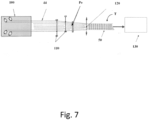
- an unwinding step 100 a plurality of warp reinforcement elements 44 are unwound on an air-jet loom; in a separating step 110, the warp reinforcement elements 44 are separated into a first and a second web of warp reinforcement elements, in an interlacing step 120, the weft reinforcement elements 50 are alternately interlaced with the warp reinforcement elements 44 of the first web of warp reinforcement elements and then of the second web of warp reinforcement elements and in a winding step 130, the weft fabric T is wound on a storage bobbin; wherein the moisture regain rate of the weft reinforcement elements 50 is 1.8% and wherein the weft reinforcement elements 50 are ruffled.
- the air jet loom used is a Dornier A1 air jet machine.
- the woven fabric T is impregnated with an adhesive composition, for example an adhesive composition of the RFL type (acronym for Resorcinol-Formaldehyde-Latex) and the fabric T undergoes heat treatment steps in order to crosslink, at least in part, the adhesive composition.
- an adhesive composition of the RFL type ascronym for Resorcinol-Formaldehyde-Latex
- Each composite C is manufactured by embedding the fabric T in the elastomer composition, for example by calendering.
- calendering well known to those skilled in the art, the fabric T is passed through and two strips are brought made of an elastomer composition, called skims, on either side of the reinforcing elements so as to sandwich the reinforcing elements between the two skims.
- the fabric is thus submerged in the elastomer composition.
- the tire manufacturing process is that conventionally used by those skilled in the art. During this process and as already described above, various plies and composites are successively arranged during a first series of assembly steps. Then, the blank thus obtained is shaped. Then, other plies and composites are arranged intended to form the crown 12 of the tire 10, including the composite according to the invention intended to form the hooping ply 19 of the tire 10. Finally, the blank thus obtained is vulcanized to obtain the tire 10.
- Table 1 summarizes the characteristics and the manufacturing method of a prior art fabric, comparative fabrics TC1 and TC2 and a fabric T and T' according to the invention.
- the measurement of the ruffling according to the first method is indicated in the table “Ruffling method 1" and the measurement of the ruffling according to the second method is indicated in the table “Ruffling method 2".
- the comparative fabric TC2 is not weaveable via an air-jet weaving process. Thus no composite can be obtained.
- the fabrics T, T' and T" according to the invention are weaveable.
- weft reinforcement elements glued with an adhesive composition used in the weft fabrics T' and T" according to the invention soaked in water is identical to that of the weft reinforcement element 50 T: they absorb very little water from the start and their rate increases very little over time.
- the tire 10 according to the invention was compared to state-of-the-art PEDT tires and control P1 tires each comprising respectively a composite C, CEDT and C1 obtained from respectively the fabrics T, TEDT and TC1.
- the tires were compared, particularly their resistance to corrosion, using the corrosion test described below: the tires were driven on a stony road in salt water for 5,000 kilometers. The total surface area of oxidation pockets on the shoulders of the tires was then measured, i.e. the areas where there is contact between the textile reinforcement elements and the metal cables of the crown ply, and therefore the surfaces where there is corrosion via the propagation of water by the hoop ply.
- Table 2 shows the corrosion resistance of the tested tires. Very poor corrosion resistance is indicated by the sign “--” and poor corrosion resistance is indicated by the sign “-”. Good corrosion resistance is indicated by the sign “+”. Very good corrosion resistance is indicated by the sign “++”. [Table 2] Pneumatic PEDT P1 10 Corrosion resistance - - ++
- the tire 10 according to the invention has corrosion resistance performances superior to those of the tire of the state of the art PEDT and to the comparative tire P1.
Landscapes
- Engineering & Computer Science (AREA)
- Textile Engineering (AREA)
- Mechanical Engineering (AREA)
- Woven Fabrics (AREA)
- Tires In General (AREA)
Claims (17)
- Gewebtes Gewebe (T) für einen Reifen (10), umfassend mehrere textile Kettverstärkungselemente (44) und mehrere Schussverstärkungselemente (50), wobei die Schussverstärkungselemente (50) mit den Kettverstärkungselementen (44) verflochten sind und haarig sind, dadurch gekennzeichnet, dass die Feuchtigkeitsaufnahme TxH der Schussverstärkungselemente (50) kleiner oder gleich 2,0 % ist, wobei die Feuchtigkeitsaufnahme nach der Norm ASTM D 885/D 885MA aus Januar 2010 bestimmt wird, und dadurch, dass die Schussverstärkungselemente (50) derart sind, dass die Anzahl von aus dem Durchmesser des Schussverstärkungselements (50) herausragenden fadenartigen Elementen größer oder gleich 1250 fadenartige Elemente je 100 Meter Schussverstärkungselemente ist, wobei die Anzahl von herausragenden fadenartigen Elementen nach einer ersten Methode zur Messung der Haarigkeit bestimmt wird, bei der jedes fadenartige Element gezählt wird, das eine senkrecht zur Tangente am Außendurchmesser des Verstärkungselements in Richtung der Länge des Schussverstärkungselements verlaufende Linie kreuzt.
- Gewebe (T) nach Anspruch 1, wobei die Schussverstärkungselemente (50) derart sind, dass die Anzahl von aus dem Durchmesser des Schussverstärkungselements (50) herausragenden fadenartigen Elementen größer oder gleich 7500 fadenartige Elemente je 100 Meter Schussverstärkungselemente ist.
- Gewebtes Gewebe (T) für einen Reifen (10), umfassend mehrere textile Kettverstärkungselemente (44) und mehrere Schussverstärkungselemente (50), wobei die Schussverstärkungselemente (50) mit den Kettverstärkungselementen (44) verflochten sind und haarig sind, dadurch gekennzeichnet, dass die Feuchtigkeitsaufnahme TxH der Schussverstärkungselemente (50) kleiner oder gleich 2,0 % ist, wobei die Feuchtigkeitsaufnahme nach der Norm ASTM D 885/D 885MA aus Januar 2010 bestimmt wird, und dadurch, dass die Schussverstärkungselemente (50) derart sind, dass die Anzahl von aus dem Durchmesser des Schussverstärkungselements herausragenden fadenartigen Elementen von 1 bis 2 mm größer oder gleich 5000 fadenartige Elemente je 100 Meter Schussverstärkungselemente ist, wobei die Anzahl von herausragenden fadenartigen Elementen nach einer zweiten Methode zur Messung der Haarigkeit bestimmt wird, bei der die Anzahl von aus dem Durchmesser des Schussverstärkungselements herausragenden fadenartigen Elementen, die eine Größe zwischen 1 und 2 mm haben, gemessen wird, wenn eine senkrecht zur Tangente am Außendurchmesser des Verstärkungselements in Richtung der Länge des Schussverstärkungselements verlaufende Linie gezeichnet wird.
- Gewebe (T) nach Anspruch 3, wobei die Schussverstärkungselemente (50) derart sind, dass die Anzahl von aus dem Durchmesser des Schussverstärkungselements herausragenden fadenartigen Elementen von 1 bis 2 mm größer oder gleich 6000 fadenartige Elemente je 100 Meter Schussverstärkungselemente und stärker bevorzugt größer oder gleich 7000 fadenartige Elemente je 100 Meter Schussverstärkungselemente ist.
- Gewebe (T) nach einem der vorhergehenden Ansprüche, wobei die Kettverstärkungselemente (44) im Wesentlich parallel zueinander sind und sich entlang einer Kettgrundrichtung (Dc) erstrecken und die Schussverstärkungselemente (50) im Wesentlichen parallel zueinander sind und sich entlang einer sogenannten Schussgrundrichtung (Dt) erstrecken, die verschiedenen von der Kettgrundrichtung (Dc) ist, wobei die Schussgrundrichtung (Dt) und die Kettgrundrichtung (Dc) bevorzugt einen Winkel größer oder gleich 45° bilden und der Winkel stärker bevorzugt von 80° bis 110° reicht.
- Gewebe (T) nach einem der Ansprüche 1 bis 5, wobei jedes textile Kettverstärkungselement (44) mehrere Multifilamentstränge umfasst.
- Gewebe (T) nach dem vorhergehenden Anspruch, wobei jedes Kettverstärkungselement (44) einen Verband umfasst, der aus zwei Multifilamentsträngen besteht, wobei die beiden Stränge helixartig umeinander gewunden sind, und wobei das Verstärkungselement bevorzugt drallausgeglichen ist.
- Gewebe (T) nach einem der vorhergehenden Ansprüche, wobei jedes Schussverstärkungselement (50), bei mindestens 50 % seiner Masse, ein oder mehrere textile Filamente und/oder mehrere textile Fasern umfasst und bevorzugt aus einem oder mehreren textilen Filamenten und/oder aus mehreren textilen Fasern besteht.
- Gewebe (T) nach einem der vorhergehenden Ansprüche, wobei jedes Schussverstärkungselement (50) mindestens einen Strang umfasst, der eine Seele und eine die Seele überziehende Schicht umfasst, wobei die Seele mindestens ein Filament umfasst und wobei die Schicht mehrere herausragende kurze Fasern umfasst.
- Gewebe (T) nach dem vorhergehenden Anspruch, wobei die Seele mehrere organische polymerische synthetische Filamente umfasst und die Schicht mehrere organische polymerische synthetische Fasern umfasst.
- Gewebe (T) nach dem vorhergehenden Anspruch, wobei jedes Filament und/oder jede Faser aus den Polyesterfilamenten und -fasern, den Polyamidfilamenten und -fasern, den Polyketonfilamenten und -fasern, den Polyurethanfilamenten und -fasern, den Acrylfilamenten und -fasern, den Polyolefinfilamenten und -fasern, den Polyetheretherketonfilamenten und -fasern und den Verbänden dieser Filamente und dieser Fasern, bevorzugt aus den Polyesterfilamenten und -fasern, den Polyamidfilamenten und -fasern und den Verbänden dieser Filamente und dieser Fasern ausgewählt ist und die organischen synthetischen Filamente und Fasern stärker bevorzugt Polyesterfilamente und -fasern sind.
- Gewebe (T) nach einem der vorhergehenden Ansprüche, wobei der Durchmesser jedes Schussverstärkungselements (50) strikt kleiner als 0,50 mm und bevorzugt kleiner oder gleich 0,23 mm ist.
- Gewebe (T) nach einem der vorhergehenden Ansprüche, wobei die Dichte der Schussverstärkungselemente (50) von 3,0 bis 8,0 Schussverstärkungselemente je dm Gewebe (T), bevorzugt von 3,0 bis 6,0 Schussverstärkungselemente je dm Gewebe (T) und stärker bevorzugt von 3,0 bis 5,5 Schussverstärkungselemente je dm Gewebe (T) reicht.
- Elastomer-Verbundmaterial (C) für einen Reifen (10), umfassend mindestens ein Gewebe (T) nach einem der vorhergehenden Ansprüche, das in eine Elastomerzusammensetzung eingebettet ist.
- Reifen (10), umfassend eine Umreifungsverstärkung (17), die mindestens eine Umreifungslage (19) umfasst, dadurch gekennzeichnet, dass die Umreifungslage (19) ein Elastomer-Verbundmaterial (C) nach Anspruch 14 umfasst.
- Verfahren zur Herstellung eines gewebten Gewebes (T), wobei:- in einem Abhaspelschritt (100) mehrere Kettverstärkungselemente (44) von einem Spulengatter (100) auf einer Luftdüsenwebmaschine abgehaspelt werden;- in einem Trennschritt (110) die Kettverstärkungselemente (44) in eine erste und eine zweite Kettverstärkungselementelage getrennt werden;- in einem Verflechtungsschritt (120) abwechselnd mindestens ein Schussverstärkungselement (50) mit Kettverstärkungselementen (44) der ersten Kettverstärkungselementelage, dann der zweiten Kettverstärkungselementelage verflochten wird;- in einem Aufhaspelschritt (130) das gewebte Gewebe (T) auf eine Speicherspule aufgehaspelt wird;wobei die Feuchtigkeitsaufnahme TxH der Schussverstärkungselemente (50) kleiner oder gleich 2,0 % ist; wobei die Feuchtigkeitsaufnahme nach der Norm ASTM D 885/D 885MA aus Januar 2010 bestimmt wird, und; wobei die Schussverstärkungselemente (50) haarig sind und derart sind, dass die Anzahl von aus dem Durchmesser des Schussverstärkungselements (50) herausragenden fadenartigen Elementen größer oder gleich 1250 fadenartige Elemente je 100 Meter Schussverstärkungselemente ist, wobei die Anzahl von herausragenden fadenartigen Elementen nach einer ersten Methode zur Messung der Haarigkeit bestimmt wird, bei der jedes fadenartige Element gezählt wird, das eine senkrecht zur Tangente am Außendurchmesser des Verstärkungselements in Richtung der Länge des Schussverstärkungselements verlaufende Linie kreuzt.
- Verfahren zur Herstellung eines gewebten Gewebes (T), wobei:- in einem Abhaspelschritt (100) mehrere Kettverstärkungselemente (44) von einem Spulengatter (100) auf einer Luftdüsenwebmaschine abgehaspelt werden;- in einem Trennschritt (110) die Kettverstärkungselemente (44) in eine erste und eine zweite Kettverstärkungselementelage getrennt werden;- in einem Verflechtungsschritt (120) abwechselnd mindestens ein Schussverstärkungselement (50) mit Kettverstärkungselementen (44) der ersten Kettverstärkungselementelage, dann der zweiten Kettverstärkungselementelage verflochten wird;- in einem Aufhaspelschritt (130) das gewebte Gewebe (T) auf eine Speicherspule aufgehaspelt wird;wobei die Feuchtigkeitsaufnahme TxH der Schussverstärkungselemente (50) kleiner oder gleich 2,0 % ist; wobei die Feuchtigkeitsaufnahme nach der Norm ASTM D 885/D 885MA aus Januar 2010 bestimmt wird, und; wobei die Schussverstärkungselemente (50) haarig sind und derart sind, dass die Anzahl von aus dem Durchmesser des Schussverstärkungselements herausragenden fadenartigen Elementen von 1 bis 2 mm größer oder gleich 5000 fadenartige Elemente je 100 Meter Schussverstärkungselemente ist, wobei die Anzahl von herausragenden fadenartigen Elementen nach einer zweiten Methode zur Messung der Haarigkeit bestimmt wird, bei der die Anzahl von aus dem Durchmesser des Schussverstärkungselements herausragenden fadenartigen Elementen, die eine Größe zwischen 1 und 2 mm haben, gemessen wird, wenn eine senkrecht zur Tangente am Außendurchmesser des Verstärkungselements in Richtung der Länge des Schussverstärkungselements verlaufende Linie gezeichnet wird.
Applications Claiming Priority (2)
| Application Number | Priority Date | Filing Date | Title |
|---|---|---|---|
| FR2100103A FR3118603A1 (fr) | 2021-01-07 | 2021-01-07 | Tissu pour pneumatique comprenant des éléments de renfort de trame ébouriffés à faible taux de reprise d’humidité |
| PCT/FR2022/050001 WO2022148920A1 (fr) | 2021-01-07 | 2022-01-03 | Tissu pour pneumatique comprenant des éléments de renfort de trame ébouriffés à faible taux de reprise d'humidité |
Publications (2)
| Publication Number | Publication Date |
|---|---|
| EP4274745A1 EP4274745A1 (de) | 2023-11-15 |
| EP4274745B1 true EP4274745B1 (de) | 2024-10-02 |
Family
ID=75746774
Family Applications (1)
| Application Number | Title | Priority Date | Filing Date |
|---|---|---|---|
| EP22706066.2A Active EP4274745B1 (de) | 2021-01-07 | 2022-01-03 | Reifengewebe mit ummantelten schussverstärkungselementen mit niedrigem feuchtigkeitsabsorptionsgehalt |
Country Status (6)
| Country | Link |
|---|---|
| US (1) | US12377685B2 (de) |
| EP (1) | EP4274745B1 (de) |
| KR (1) | KR20230129233A (de) |
| CN (1) | CN116710294A (de) |
| FR (1) | FR3118603A1 (de) |
| WO (1) | WO2022148920A1 (de) |
Family Cites Families (13)
| Publication number | Priority date | Publication date | Assignee | Title |
|---|---|---|---|---|
| JPH03137239A (ja) * | 1990-08-31 | 1991-06-11 | Teijin Kakoshi Kk | タイヤコードすだれ織物 |
| TWI384099B (zh) * | 2009-05-04 | 2013-02-01 | Ruentex Ind Ltd | 複合多層式紗線結構及其製法 |
| FR2953451B1 (fr) * | 2009-12-04 | 2011-12-09 | Soc Tech Michelin | Pneumatique comportant des cables d'armature de carcasse hybrides |
| TR201009469A2 (tr) * | 2010-11-12 | 2012-02-21 | Kordsa Global Endüstri̇yel İpli̇k Ve Kord Bezi̇ Sanayi̇ Ve Ti̇caret Anoni̇m Şi̇rketi̇ | Araç lastiği takviye şeridi. |
| US9278495B2 (en) * | 2011-08-03 | 2016-03-08 | Milliken & Company | Rubber reinforced article with high modulus, rectangular cross-section fibers |
| FR3008026A1 (fr) * | 2013-07-04 | 2015-01-09 | Michelin & Cie | Pneumatique comprenant un tissu a entrelacement |
| ES2642127T3 (es) | 2013-07-30 | 2017-11-15 | Kordsa Teknik Tekstil A.S | Banda de refuerzo de la cubierta de un neumático |
| FR3017070B1 (fr) | 2014-02-06 | 2017-08-25 | Michelin & Cie | Element de renfort en acier revetu par une composition adhesive a base d'aldehyde aromatique et de polyphenol |
| RS57503B1 (sr) * | 2014-05-06 | 2018-10-31 | Kordsa Teknik Tekstil A S | Traka za ojačavanje unutrašnje postave gume za pneumatske gume |
| TW201634781A (zh) * | 2015-03-16 | 2016-10-01 | Liang Haw Technology Co Ltd | 聚酯高分子及其製造方法 |
| EP3619052B1 (de) * | 2017-05-04 | 2021-08-18 | Kordsa Teknik Tekstil Anonim Sirketi | Verstärkung bandage für eine reifen |
| CN111491809B (zh) * | 2017-12-22 | 2023-01-31 | 米其林集团总公司 | 包括改进的环箍帘布层的充气轮胎 |
| CN112204180A (zh) * | 2018-03-20 | 2021-01-08 | 米其林集团总公司 | 包括改善的具有至少三重捻的芳纶织物帘线的充气轮胎 |
-
2021
- 2021-01-07 FR FR2100103A patent/FR3118603A1/fr not_active Ceased
-
2022
- 2022-01-03 KR KR1020237022608A patent/KR20230129233A/ko active Pending
- 2022-01-03 WO PCT/FR2022/050001 patent/WO2022148920A1/fr not_active Ceased
- 2022-01-03 US US18/271,335 patent/US12377685B2/en active Active
- 2022-01-03 CN CN202280009345.6A patent/CN116710294A/zh active Pending
- 2022-01-03 EP EP22706066.2A patent/EP4274745B1/de active Active
Also Published As
| Publication number | Publication date |
|---|---|
| WO2022148920A1 (fr) | 2022-07-14 |
| KR20230129233A (ko) | 2023-09-07 |
| US12377685B2 (en) | 2025-08-05 |
| CN116710294A (zh) | 2023-09-05 |
| FR3118603A1 (fr) | 2022-07-08 |
| US20240066925A1 (en) | 2024-02-29 |
| EP4274745A1 (de) | 2023-11-15 |
Similar Documents
| Publication | Publication Date | Title |
|---|---|---|
| EP3768883B1 (de) | Luftreifen mit einem verbesserten aramidtextilkord mit mindestens dreifacher verdrehung | |
| EP3768526B1 (de) | Reifen mit einer einzigen karkassenlage mit verbesserter verformungstiefe in der seitenwand nach dem einfahren | |
| EP3515727B1 (de) | Elastomerkomposit und reifen enthaltend ein solches komposit | |
| FR3056149A1 (fr) | Element de renfort, composite d'elastomere et pneumatique comprenant cet element de renfort | |
| EP3768882B1 (de) | Verbesserter aramidtextilkord mit mindestens einer dreifachen verdrillung | |
| WO2019122620A1 (fr) | Pneumatique comprenant une nappe de frettage perfectionnée | |
| EP3277869B1 (de) | Hybrides verstärkungselement mit differentialverdrehung | |
| WO2019122619A1 (fr) | Pneumatique comprenant une nappe de frettage perfectionnée | |
| EP3727826A1 (de) | Verfahren zur herstellung eines fadenförmigen verstärkungselementes | |
| EP4274745B1 (de) | Reifengewebe mit ummantelten schussverstärkungselementen mit niedrigem feuchtigkeitsabsorptionsgehalt | |
| EP4100264B1 (de) | Luftreifen für ein landwirtschaftliches fahrzeug mit einem hybriden karkassenverstärkungselement | |
| EP3853045B1 (de) | Reifen mit einer karkassenbewehrung aus einer einzigen schicht textiler verstärkungselemente | |
| FR3137868A1 (fr) | Tissu pour pneumatique comprenant des éléments de renfort comprenant un assemblage constitué de deux brins multifilamentaires de polyamide 5,6 | |
| EP3880492B1 (de) | Reifen für zweiradfahrzeug mit einer hybriden umreifungsverstärkung | |
| RU2818380C1 (ru) | Шина для сельскохозяйственного транспортного средства, содержащая гибридный каркасный усиливающий элемент | |
| WO2025131690A1 (fr) | Composite d'élastomère avec une pluralité d'éléments de renfort cousu selon une direction principale | |
| FR3159976A1 (fr) | Elément de renfort hybride élastique |
Legal Events
| Date | Code | Title | Description |
|---|---|---|---|
| STAA | Information on the status of an ep patent application or granted ep patent |
Free format text: STATUS: UNKNOWN |
|
| STAA | Information on the status of an ep patent application or granted ep patent |
Free format text: STATUS: THE INTERNATIONAL PUBLICATION HAS BEEN MADE |
|
| PUAI | Public reference made under article 153(3) epc to a published international application that has entered the european phase |
Free format text: ORIGINAL CODE: 0009012 |
|
| STAA | Information on the status of an ep patent application or granted ep patent |
Free format text: STATUS: REQUEST FOR EXAMINATION WAS MADE |
|
| 17P | Request for examination filed |
Effective date: 20230807 |
|
| AK | Designated contracting states |
Kind code of ref document: A1 Designated state(s): AL AT BE BG CH CY CZ DE DK EE ES FI FR GB GR HR HU IE IS IT LI LT LU LV MC MK MT NL NO PL PT RO RS SE SI SK SM TR |
|
| DAV | Request for validation of the european patent (deleted) | ||
| DAX | Request for extension of the european patent (deleted) | ||
| GRAP | Despatch of communication of intention to grant a patent |
Free format text: ORIGINAL CODE: EPIDOSNIGR1 |
|
| STAA | Information on the status of an ep patent application or granted ep patent |
Free format text: STATUS: GRANT OF PATENT IS INTENDED |
|
| INTG | Intention to grant announced |
Effective date: 20240521 |
|
| GRAS | Grant fee paid |
Free format text: ORIGINAL CODE: EPIDOSNIGR3 |
|
| GRAA | (expected) grant |
Free format text: ORIGINAL CODE: 0009210 |
|
| STAA | Information on the status of an ep patent application or granted ep patent |
Free format text: STATUS: THE PATENT HAS BEEN GRANTED |
|
| AK | Designated contracting states |
Kind code of ref document: B1 Designated state(s): AL AT BE BG CH CY CZ DE DK EE ES FI FR GB GR HR HU IE IS IT LI LT LU LV MC MK MT NL NO PL PT RO RS SE SI SK SM TR |
|
| REG | Reference to a national code |
Ref country code: GB Ref legal event code: FG4D Free format text: NOT ENGLISH |
|
| REG | Reference to a national code |
Ref country code: CH Ref legal event code: EP |
|
| REG | Reference to a national code |
Ref country code: DE Ref legal event code: R096 Ref document number: 602022006520 Country of ref document: DE |
|
| REG | Reference to a national code |
Ref country code: IE Ref legal event code: FG4D Free format text: LANGUAGE OF EP DOCUMENT: FRENCH |
|
| REG | Reference to a national code |
Ref country code: LT Ref legal event code: MG9D |
|
| REG | Reference to a national code |
Ref country code: NL Ref legal event code: MP Effective date: 20241002 |
|
| REG | Reference to a national code |
Ref country code: AT Ref legal event code: MK05 Ref document number: 1728220 Country of ref document: AT Kind code of ref document: T Effective date: 20241002 |
|
| PG25 | Lapsed in a contracting state [announced via postgrant information from national office to epo] |
Ref country code: NL Free format text: LAPSE BECAUSE OF FAILURE TO SUBMIT A TRANSLATION OF THE DESCRIPTION OR TO PAY THE FEE WITHIN THE PRESCRIBED TIME-LIMIT Effective date: 20241002 |
|
| PG25 | Lapsed in a contracting state [announced via postgrant information from national office to epo] |
Ref country code: NL Free format text: LAPSE BECAUSE OF FAILURE TO SUBMIT A TRANSLATION OF THE DESCRIPTION OR TO PAY THE FEE WITHIN THE PRESCRIBED TIME-LIMIT Effective date: 20241002 |
|
| PG25 | Lapsed in a contracting state [announced via postgrant information from national office to epo] |
Ref country code: IS Free format text: LAPSE BECAUSE OF FAILURE TO SUBMIT A TRANSLATION OF THE DESCRIPTION OR TO PAY THE FEE WITHIN THE PRESCRIBED TIME-LIMIT Effective date: 20250202 Ref country code: PT Free format text: LAPSE BECAUSE OF FAILURE TO SUBMIT A TRANSLATION OF THE DESCRIPTION OR TO PAY THE FEE WITHIN THE PRESCRIBED TIME-LIMIT Effective date: 20250203 Ref country code: HR Free format text: LAPSE BECAUSE OF FAILURE TO SUBMIT A TRANSLATION OF THE DESCRIPTION OR TO PAY THE FEE WITHIN THE PRESCRIBED TIME-LIMIT Effective date: 20241002 |
|
| PGFP | Annual fee paid to national office [announced via postgrant information from national office to epo] |
Ref country code: DE Payment date: 20250121 Year of fee payment: 4 |
|
| PG25 | Lapsed in a contracting state [announced via postgrant information from national office to epo] |
Ref country code: FI Free format text: LAPSE BECAUSE OF FAILURE TO SUBMIT A TRANSLATION OF THE DESCRIPTION OR TO PAY THE FEE WITHIN THE PRESCRIBED TIME-LIMIT Effective date: 20241002 |
|
| PG25 | Lapsed in a contracting state [announced via postgrant information from national office to epo] |
Ref country code: BG Free format text: LAPSE BECAUSE OF FAILURE TO SUBMIT A TRANSLATION OF THE DESCRIPTION OR TO PAY THE FEE WITHIN THE PRESCRIBED TIME-LIMIT Effective date: 20241002 |
|
| PG25 | Lapsed in a contracting state [announced via postgrant information from national office to epo] |
Ref country code: ES Free format text: LAPSE BECAUSE OF FAILURE TO SUBMIT A TRANSLATION OF THE DESCRIPTION OR TO PAY THE FEE WITHIN THE PRESCRIBED TIME-LIMIT Effective date: 20241002 |
|
| PG25 | Lapsed in a contracting state [announced via postgrant information from national office to epo] |
Ref country code: NO Free format text: LAPSE BECAUSE OF FAILURE TO SUBMIT A TRANSLATION OF THE DESCRIPTION OR TO PAY THE FEE WITHIN THE PRESCRIBED TIME-LIMIT Effective date: 20250102 |
|
| PG25 | Lapsed in a contracting state [announced via postgrant information from national office to epo] |
Ref country code: AT Free format text: LAPSE BECAUSE OF FAILURE TO SUBMIT A TRANSLATION OF THE DESCRIPTION OR TO PAY THE FEE WITHIN THE PRESCRIBED TIME-LIMIT Effective date: 20241002 Ref country code: GR Free format text: LAPSE BECAUSE OF FAILURE TO SUBMIT A TRANSLATION OF THE DESCRIPTION OR TO PAY THE FEE WITHIN THE PRESCRIBED TIME-LIMIT Effective date: 20250103 Ref country code: LV Free format text: LAPSE BECAUSE OF FAILURE TO SUBMIT A TRANSLATION OF THE DESCRIPTION OR TO PAY THE FEE WITHIN THE PRESCRIBED TIME-LIMIT Effective date: 20241002 |
|
| PG25 | Lapsed in a contracting state [announced via postgrant information from national office to epo] |
Ref country code: CZ Free format text: LAPSE BECAUSE OF FAILURE TO SUBMIT A TRANSLATION OF THE DESCRIPTION OR TO PAY THE FEE WITHIN THE PRESCRIBED TIME-LIMIT Effective date: 20241002 Ref country code: PL Free format text: LAPSE BECAUSE OF FAILURE TO SUBMIT A TRANSLATION OF THE DESCRIPTION OR TO PAY THE FEE WITHIN THE PRESCRIBED TIME-LIMIT Effective date: 20241002 |
|
| PGFP | Annual fee paid to national office [announced via postgrant information from national office to epo] |
Ref country code: FR Payment date: 20250128 Year of fee payment: 4 |
|
| PG25 | Lapsed in a contracting state [announced via postgrant information from national office to epo] |
Ref country code: RS Free format text: LAPSE BECAUSE OF FAILURE TO SUBMIT A TRANSLATION OF THE DESCRIPTION OR TO PAY THE FEE WITHIN THE PRESCRIBED TIME-LIMIT Effective date: 20250102 |
|
| PG25 | Lapsed in a contracting state [announced via postgrant information from national office to epo] |
Ref country code: SM Free format text: LAPSE BECAUSE OF FAILURE TO SUBMIT A TRANSLATION OF THE DESCRIPTION OR TO PAY THE FEE WITHIN THE PRESCRIBED TIME-LIMIT Effective date: 20241002 |
|
| REG | Reference to a national code |
Ref country code: DE Ref legal event code: R097 Ref document number: 602022006520 Country of ref document: DE |
|
| PG25 | Lapsed in a contracting state [announced via postgrant information from national office to epo] |
Ref country code: DK Free format text: LAPSE BECAUSE OF FAILURE TO SUBMIT A TRANSLATION OF THE DESCRIPTION OR TO PAY THE FEE WITHIN THE PRESCRIBED TIME-LIMIT Effective date: 20241002 |
|
| PG25 | Lapsed in a contracting state [announced via postgrant information from national office to epo] |
Ref country code: EE Free format text: LAPSE BECAUSE OF FAILURE TO SUBMIT A TRANSLATION OF THE DESCRIPTION OR TO PAY THE FEE WITHIN THE PRESCRIBED TIME-LIMIT Effective date: 20241002 |
|
| PG25 | Lapsed in a contracting state [announced via postgrant information from national office to epo] |
Ref country code: RO Free format text: LAPSE BECAUSE OF FAILURE TO SUBMIT A TRANSLATION OF THE DESCRIPTION OR TO PAY THE FEE WITHIN THE PRESCRIBED TIME-LIMIT Effective date: 20241002 |
|
| PG25 | Lapsed in a contracting state [announced via postgrant information from national office to epo] |
Ref country code: SK Free format text: LAPSE BECAUSE OF FAILURE TO SUBMIT A TRANSLATION OF THE DESCRIPTION OR TO PAY THE FEE WITHIN THE PRESCRIBED TIME-LIMIT Effective date: 20241002 |
|
| PG25 | Lapsed in a contracting state [announced via postgrant information from national office to epo] |
Ref country code: IT Free format text: LAPSE BECAUSE OF FAILURE TO SUBMIT A TRANSLATION OF THE DESCRIPTION OR TO PAY THE FEE WITHIN THE PRESCRIBED TIME-LIMIT Effective date: 20241002 |
|
| PLBE | No opposition filed within time limit |
Free format text: ORIGINAL CODE: 0009261 |
|
| STAA | Information on the status of an ep patent application or granted ep patent |
Free format text: STATUS: NO OPPOSITION FILED WITHIN TIME LIMIT |
|
| REG | Reference to a national code |
Ref country code: CH Ref legal event code: PL |
|
| PG25 | Lapsed in a contracting state [announced via postgrant information from national office to epo] |
Ref country code: SE Free format text: LAPSE BECAUSE OF FAILURE TO SUBMIT A TRANSLATION OF THE DESCRIPTION OR TO PAY THE FEE WITHIN THE PRESCRIBED TIME-LIMIT Effective date: 20241002 |
|
| 26N | No opposition filed |
Effective date: 20250703 |
|
| PG25 | Lapsed in a contracting state [announced via postgrant information from national office to epo] |
Ref country code: LU Free format text: LAPSE BECAUSE OF NON-PAYMENT OF DUE FEES Effective date: 20250103 Ref country code: MC Free format text: LAPSE BECAUSE OF FAILURE TO SUBMIT A TRANSLATION OF THE DESCRIPTION OR TO PAY THE FEE WITHIN THE PRESCRIBED TIME-LIMIT Effective date: 20241002 |
|
| PG25 | Lapsed in a contracting state [announced via postgrant information from national office to epo] |
Ref country code: BE Free format text: LAPSE BECAUSE OF NON-PAYMENT OF DUE FEES Effective date: 20250131 |
|
| PG25 | Lapsed in a contracting state [announced via postgrant information from national office to epo] |
Ref country code: CH Free format text: LAPSE BECAUSE OF NON-PAYMENT OF DUE FEES Effective date: 20250131 |
|
| REG | Reference to a national code |
Ref country code: BE Ref legal event code: MM Effective date: 20250131 |
|
| PG25 | Lapsed in a contracting state [announced via postgrant information from national office to epo] |
Ref country code: IE Free format text: LAPSE BECAUSE OF NON-PAYMENT OF DUE FEES Effective date: 20250103 |