EP4274696B1 - Alliages de stockage d`hydrogène de type ab2, leurs procédés de préparation et leurs utilisations - Google Patents
Alliages de stockage d`hydrogène de type ab2, leurs procédés de préparation et leurs utilisations Download PDFInfo
- Publication number
- EP4274696B1 EP4274696B1 EP22758528.8A EP22758528A EP4274696B1 EP 4274696 B1 EP4274696 B1 EP 4274696B1 EP 22758528 A EP22758528 A EP 22758528A EP 4274696 B1 EP4274696 B1 EP 4274696B1
- Authority
- EP
- European Patent Office
- Prior art keywords
- alloy
- hydrogen storage
- hydrogen
- furnace
- melt
- Prior art date
- Legal status (The legal status is an assumption and is not a legal conclusion. Google has not performed a legal analysis and makes no representation as to the accuracy of the status listed.)
- Active
Links
Images



Classifications
-
- C—CHEMISTRY; METALLURGY
- C22—METALLURGY; FERROUS OR NON-FERROUS ALLOYS; TREATMENT OF ALLOYS OR NON-FERROUS METALS
- C22C—ALLOYS
- C22C30/00—Alloys containing less than 50% by weight of each constituent
- C22C30/02—Alloys containing less than 50% by weight of each constituent containing copper
-
- B—PERFORMING OPERATIONS; TRANSPORTING
- B22—CASTING; POWDER METALLURGY
- B22F—WORKING METALLIC POWDER; MANUFACTURE OF ARTICLES FROM METALLIC POWDER; MAKING METALLIC POWDER; APPARATUS OR DEVICES SPECIALLY ADAPTED FOR METALLIC POWDER
- B22F1/00—Metallic powder; Treatment of metallic powder, e.g. to facilitate working or to improve properties
- B22F1/05—Metallic powder characterised by the size or surface area of the particles
-
- B—PERFORMING OPERATIONS; TRANSPORTING
- B22—CASTING; POWDER METALLURGY
- B22F—WORKING METALLIC POWDER; MANUFACTURE OF ARTICLES FROM METALLIC POWDER; MAKING METALLIC POWDER; APPARATUS OR DEVICES SPECIALLY ADAPTED FOR METALLIC POWDER
- B22F1/00—Metallic powder; Treatment of metallic powder, e.g. to facilitate working or to improve properties
- B22F1/06—Metallic powder characterised by the shape of the particles
- B22F1/068—Flake-like particles
-
- B—PERFORMING OPERATIONS; TRANSPORTING
- B22—CASTING; POWDER METALLURGY
- B22F—WORKING METALLIC POWDER; MANUFACTURE OF ARTICLES FROM METALLIC POWDER; MAKING METALLIC POWDER; APPARATUS OR DEVICES SPECIALLY ADAPTED FOR METALLIC POWDER
- B22F9/00—Making metallic powder or suspensions thereof
- B22F9/02—Making metallic powder or suspensions thereof using physical processes
- B22F9/06—Making metallic powder or suspensions thereof using physical processes starting from liquid material
- B22F9/08—Making metallic powder or suspensions thereof using physical processes starting from liquid material by casting, e.g. through sieves or in water, by atomising or spraying
-
- C—CHEMISTRY; METALLURGY
- C01—INORGANIC CHEMISTRY
- C01B—NON-METALLIC ELEMENTS; COMPOUNDS THEREOF; METALLOIDS OR COMPOUNDS THEREOF NOT COVERED BY SUBCLASS C01C
- C01B3/00—Hydrogen; Gaseous mixtures containing hydrogen; Separation of hydrogen from mixtures containing it; Purification of hydrogen
- C01B3/0005—Reversible uptake of hydrogen by an appropriate medium, i.e. based on physical or chemical sorption phenomena or on reversible chemical reactions, e.g. for hydrogen storage purposes ; Reversible gettering of hydrogen; Reversible uptake of hydrogen by electrodes
- C01B3/001—Reversible uptake of hydrogen by an appropriate medium, i.e. based on physical or chemical sorption phenomena or on reversible chemical reactions, e.g. for hydrogen storage purposes ; Reversible gettering of hydrogen; Reversible uptake of hydrogen by electrodes characterised by the uptaking medium; Treatment thereof
- C01B3/0031—Intermetallic compounds; Metal alloys; Treatment thereof
- C01B3/0047—Intermetallic compounds; Metal alloys; Treatment thereof containing a rare earth metal; Treatment thereof
- C01B3/0057—Intermetallic compounds; Metal alloys; Treatment thereof containing a rare earth metal; Treatment thereof also containing nickel
-
- C—CHEMISTRY; METALLURGY
- C22—METALLURGY; FERROUS OR NON-FERROUS ALLOYS; TREATMENT OF ALLOYS OR NON-FERROUS METALS
- C22C—ALLOYS
- C22C1/00—Making non-ferrous alloys
- C22C1/02—Making non-ferrous alloys by melting
-
- C—CHEMISTRY; METALLURGY
- C22—METALLURGY; FERROUS OR NON-FERROUS ALLOYS; TREATMENT OF ALLOYS OR NON-FERROUS METALS
- C22C—ALLOYS
- C22C1/00—Making non-ferrous alloys
- C22C1/04—Making non-ferrous alloys by powder metallurgy
- C22C1/0433—Nickel- or cobalt-based alloys
-
- C—CHEMISTRY; METALLURGY
- C22—METALLURGY; FERROUS OR NON-FERROUS ALLOYS; TREATMENT OF ALLOYS OR NON-FERROUS METALS
- C22C—ALLOYS
- C22C1/00—Making non-ferrous alloys
- C22C1/04—Making non-ferrous alloys by powder metallurgy
- C22C1/045—Alloys based on refractory metals
- C22C1/0458—Alloys based on titanium, zirconium or hafnium
-
- C—CHEMISTRY; METALLURGY
- C22—METALLURGY; FERROUS OR NON-FERROUS ALLOYS; TREATMENT OF ALLOYS OR NON-FERROUS METALS
- C22C—ALLOYS
- C22C14/00—Alloys based on titanium
-
- C—CHEMISTRY; METALLURGY
- C22—METALLURGY; FERROUS OR NON-FERROUS ALLOYS; TREATMENT OF ALLOYS OR NON-FERROUS METALS
- C22C—ALLOYS
- C22C19/00—Alloys based on nickel or cobalt
-
- C—CHEMISTRY; METALLURGY
- C22—METALLURGY; FERROUS OR NON-FERROUS ALLOYS; TREATMENT OF ALLOYS OR NON-FERROUS METALS
- C22C—ALLOYS
- C22C22/00—Alloys based on manganese
-
- C—CHEMISTRY; METALLURGY
- C22—METALLURGY; FERROUS OR NON-FERROUS ALLOYS; TREATMENT OF ALLOYS OR NON-FERROUS METALS
- C22C—ALLOYS
- C22C30/00—Alloys containing less than 50% by weight of each constituent
-
- B—PERFORMING OPERATIONS; TRANSPORTING
- B22—CASTING; POWDER METALLURGY
- B22F—WORKING METALLIC POWDER; MANUFACTURE OF ARTICLES FROM METALLIC POWDER; MAKING METALLIC POWDER; APPARATUS OR DEVICES SPECIALLY ADAPTED FOR METALLIC POWDER
- B22F2304/00—Physical aspects of the powder
- B22F2304/15—Millimeter size particles, i.e. above 500 micrometer
-
- B—PERFORMING OPERATIONS; TRANSPORTING
- B22—CASTING; POWDER METALLURGY
- B22F—WORKING METALLIC POWDER; MANUFACTURE OF ARTICLES FROM METALLIC POWDER; MAKING METALLIC POWDER; APPARATUS OR DEVICES SPECIALLY ADAPTED FOR METALLIC POWDER
- B22F2998/00—Supplementary information concerning processes or compositions relating to powder metallurgy
- B22F2998/10—Processes characterised by the sequence of their steps
-
- B—PERFORMING OPERATIONS; TRANSPORTING
- B22—CASTING; POWDER METALLURGY
- B22F—WORKING METALLIC POWDER; MANUFACTURE OF ARTICLES FROM METALLIC POWDER; MAKING METALLIC POWDER; APPARATUS OR DEVICES SPECIALLY ADAPTED FOR METALLIC POWDER
- B22F2999/00—Aspects linked to processes or compositions used in powder metallurgy
-
- C—CHEMISTRY; METALLURGY
- C22—METALLURGY; FERROUS OR NON-FERROUS ALLOYS; TREATMENT OF ALLOYS OR NON-FERROUS METALS
- C22C—ALLOYS
- C22C2202/00—Physical properties
- C22C2202/04—Hydrogen absorbing
-
- Y—GENERAL TAGGING OF NEW TECHNOLOGICAL DEVELOPMENTS; GENERAL TAGGING OF CROSS-SECTIONAL TECHNOLOGIES SPANNING OVER SEVERAL SECTIONS OF THE IPC; TECHNICAL SUBJECTS COVERED BY FORMER USPC CROSS-REFERENCE ART COLLECTIONS [XRACs] AND DIGESTS
- Y02—TECHNOLOGIES OR APPLICATIONS FOR MITIGATION OR ADAPTATION AGAINST CLIMATE CHANGE
- Y02E—REDUCTION OF GREENHOUSE GAS [GHG] EMISSIONS, RELATED TO ENERGY GENERATION, TRANSMISSION OR DISTRIBUTION
- Y02E60/00—Enabling technologies; Technologies with a potential or indirect contribution to GHG emissions mitigation
- Y02E60/30—Hydrogen technology
- Y02E60/32—Hydrogen storage
Definitions
- This invention relates to metal hydrides for storing gaseous hydrogen, in particular AB2 based metal hydrides, methods of production and application thereof.
- Hydrogen storage is a key step in the decarbonisation of fossil fuel technologies by renewable energy.
- a variety of storage methods including pressurized gas, hydrogen liquefaction and absorption in solid materials have been considered.
- Hydride storage uses the reaction with hydrogen.
- This method to store hydrogen is also known as ' chemical hydrogen storage ' and is based on the formation by the hydrogen of an interstitial compound with elemental metals such as palladium, magnesium, and lanthanum, intermetallic compounds, light metals like aluminium, or some alloys.
- Metal hydrides dissociate molecular hydrogen into atoms on their surface and store them in the metallic lattice, thereby producing heat. Conversely, when hydrogen is released from a hydride, heat is absorbed.
- These hydrides can absorb large volumes of gas, with palladium, for example, able to absorb volumes of hydrogen 900 times that of its own.
- the process proceeds as follows: a) absorption: Hydrogen gas molecules (H 2 ) stick to the metal surface and is then dissociated at the surface before absorption, breaking down into hydrogen atoms (H). The hydrogen atoms then penetrate into the interior of the metal crystal to form a new solid substance called a " metal hydride ". The metal atoms are usually stretched apart to accommodate the hydrogen atoms. The physical arrangement (structure) of the metal atoms may also change to form a hydride; b) desorption: Hydrogen atoms migrate to the surface of the metal hydride, combine into hydrogen molecules H 2 and flow away as hydrogen gas. The metal atoms contract to form the original metal crystal structure.
- thermodynamic aspects of hydride formation from gaseous hydrogen are described by pressure - composition isotherms as illustrated in Figure 1A which show typical desorption isotherms of H 2 in AB2-type metal hydrides ( US 4,228,145 ) at different temperatures.
- the hydrogen absorption reaction in the material is typically exothermic (producing heat) whereas the hydrogen desorption reaction is conversely endothermic (absorbing heat).
- the low pressure and thermodynamics of metal hydride systems increase the level of safety of the system: in case of a container failure, the hydrogen will be released slowly, the process being thermally limited by the endothermic desorption reaction.
- good H 2 storage capacities are considered to be more than 1.6 wt%.
- metal alloys and intermetallics react with hydrogen, forming metal hydrides.
- temperature and pressure By controlling temperature and pressure appropriately, the direction of the chemical reaction can be adjusted.
- Typical metal hydrides are in the form of powders whose particles are only a few millionths of a meter (micrometers) across.
- Metal hydride storage systems are thus safe, reliable and compact in comparison to compressed gas or liquefied H 2 storage systems. Further, they require minimal maintenance and have a long lifetime. Metal hydrides are therefore of high interest for the storage of hydrogen under low pressures as many metals and alloys are capable of reversibly absorbing significant amounts of hydrogen, whereby a high volumetric density of up 150 kgH 2 /m 3 is reachable and have been the subject of many recent developments ( Bellosta von Colbe et al., 2019, International Journal of Hydrogen Energy, 44, 7780-7808 ).
- alloys belonging to groups IIA to VA in the Periodic Table readily combine with hydrogen to form metal hydrides.
- alloys of type AB2 are those where metal A is Ti or Zr, and metal B is third transition one.
- Ti/Zr-based AB2 type alloys are considered as a promising candidate for high capacity, efficient hydrogen storage. They have proper hydrogen desorption equilibrium pressure at room temperature. The low hysteresis and remarkable thermal dynamics characteristics of AB2 materials also make them suitable to work as a compression media and compress hydrogen to 20 MPa and even to 100 MPa ( Johnson et al., 2019, Annual Progress Report for the US Department of Energy Hydrogen and Fuel Cells Program ) .
- AB2-type of alloys present high production cost since it is mandatory to avoid the reaction between the melt of the alloy and the crucible during the melting process and it is therefore required a special water-cooled copper crucible or non-contact melting processes followed by a heat treatment process. These methods could produce good AB2 alloys, but require expensive facilities, which will remarkably increase the production cost and reduce the production efficiency.
- a magnetic levitation high frequency furnace is used to produce a Ti a V b Cr c Mn d Me 100-a-b-c-d alloys. This method is only applicable to small amounts of alloy. Further, this method usually takes several cycles of melting in order to make the alloy homogeneous.
- the hydrogen storage alloy has at 25°C a hydrogen absorption plateau between 10-150 bar and a desorption plateau between 8-145 bar.
- the hydrogen storage alloy has at 20°C a hydrogen storage capacity of about 1.45 to about 1.80 wt% (typically from about 1.50 to 1.65 wt%).
- AB2 type alloy with single phase microstructure is provided.
- a hydrogen storage alloy according to claim 1, wherein said alloy is selected from the following group: Ti 0.65 Zr 0.35 Cr 0.6 Mn 1.15 Ni 0.1 Cu 0.1 La 0.05 (5); Ti 0.2 Zr 0.4 Cr 0.6 Mn 0.3 Fe 0.05 Ni 0.14 La 0.05 (1) ; Ti 0.7 Zr 0.1 Cr 0.9 Mn 0.8 Fe 0.5 Ni 0.05 Cu 0.1 Ce 0.05 (2) ; Ti 0.85 Zr 0.15 Cr 0.05 Mn 1 Fe 0.1 Ni 0.45 V 0.4 La 0.05 (3) ; and Ti 0.95 Zr 0.05 Cr 0.2 Mn 0.8 Fe 0.3 Ni 1 Ce 0.05 (4).
- a hydrogen storage alloy according to the invention can be prepared by typical methods used for AB2 alloys such as described in CN1602366 .
- raw materials of each required metal elements are placed in a water-cooled copper crucible in an Arc melting furnace and the furnace is put under vacuum (e.g. 5*10 -3 Pa (PABS)) and then filled with a controlled atmosphere (e.g. Ar, > 99.99%) under a pressure from about 30K Pa to about 70 KPa (e.g. 50 kPa (PABS)).
- PABS Arc melting furnace
- the raw materials are melted and kept at a melting temperature for about 5 to 10 min and then the melted mixture is let solidified and the solidified alloy (ingot) is turned upside down and melted again and the operation is repeated few times (e.g. 3 to 6 times, such as 5 times) in order to achieve an homogeneous composition of the resulting alloy.
- the furnace is put in communication with air and the ingot alloy is collected.
- the alloy prepared by this method has a more homogenous composition, stable crystal structure, less phases other than AB5 structure and lower crystal strain (thus with a smaller hysteresis and more flat plateau pressure).
- the alloy does need to undergo heat-treatment process before usage, while maintain a long cycle life.
- This method is also suitable for large scale production and remarkably reduces production cost.
- the metal elements are melted in a furnace initially purged and put under vacuum (e.g. 5*10 -3 Pa (PABS)) and then filled with a controlled inert atmosphere (e.g. Argon or Helium> 99.99%)) at a pressure from about 30 KPa to about 70 KPa (e.g. 50 kPa (PABS)).
- a controlled inert atmosphere e.g. Argon or Helium> 99.99%)
- the metal elements are melted in a Al 2 O 3 -based crucible placed in the furnace.
- the metal elements are melted in a crucible at a temperature from about 1' 850 and 2' 150°C placed in a furnace.
- the temperature is reduced to a temperature between about 1'750 and 1'850°C and hold for about 5 to 10 min.
- the metal mixture is melted in a crucible 1 (e.g. heated by an induction coil 2 ) placed in the furnace in said controlled atmosphere and then casted onto a spinning roller 3 (e.g. copper roller) rolling at a constant speed where the melt rapidly solidifies and breaks into flakes 4 when entering into a cooling unit (e.g. water-cooled collector).
- a spinning roller 3 e.g. copper roller
- the melted mixture is casted onto a spinning roller (e.g. copper roller) rolling at a constant speed from about 1 to about 9 m/s where the melt rapidly solidifies and breaks into flakes.
- the thickness of the flakes will depend on the roller speed, the lower the speed, the thicker the flakes. According to a particular aspect, the thickness of the flakes typically ranges from 0.1 - 0.6 mm.
- the flakes are left to cool down in the furnace at a temperature in a water-cooled chamber.
- the alloy of the invention could be used directly from the obtained flakes or can undergo a heat-treatment below the melting temperature of the alloy, when needed.
- the heat treatment is applied to further reduce the hysteresis and improve the cycle performance.
- a heat treatment is carried out in a furnace under vacuum (e.g. 9*10 -2 Pa (PABS)), wherein the temperature is raised up to about 200°C and hold to this temperature for about 20 min.
- PABS 9*10 -2 Pa
- an inert atmosphere e.g. pure Argon (>99.99%)
- PABS pressure of 50 KPa
- the temperature of the furnace is then increased to a temperature between about 850 and 1' 150°C which is hold for about 0.5 to about 72 h.
- the temperature-treated alloy is then cooled down at a rate of about 5 to about 20 K/min. Once the temperature of the alloy is below 60°C, the furnace is put in communication with air and the alloy is collected.
- a method for the preparation of hydrogen storage alloy having an AB2 type crystal structure by rapid melt solidification by spinning roller quenching wherein said method further comprises a heat treatment step.
- the alloy according to the invention (heat-treated or not) can be used in the form of a powder.
- the obtained alloys are then crunched into a powder by mechanical or jet milling under the inert gas (e.g. N 2 or Ar, Ar preferred).
- the particle size of the alloy could be from about 0.5 mm to about 3 mm, depending on the hydrogen storage system it will be used for.
- the alloy powder can be then stored as a powder under vacuum or inert gas (e.g. N 2 or Ar, Ar preferred).
- inert gas e.g. N 2 or Ar, Ar preferred.
- Alloys powder can be then used in a hydrogen storage system as described in Bellosta von Colbe et al., 2019, supra.
- An alloy of the invention was prepared as follows.
- the required amount of the metals is weighted according to the Formula (I) in a total weight of 450 kg and placed in a Al 2 O 3 -based crucible in an industrial induction melting furnace.
- the furnace is evacuated until the vacuum reached 5*10 -3 Pa (PABS), then filled with Helium (>99.99%) to the pressure of 50 KPa (PABS).
- PABS 5*10 -3 Pa
- PABS Helium
- the metals are heated up to 1850°C and then melted. After all metals are melted, the temperature was reduced to 1'550°C and held for 10 min.
- the melt was cast onto a spinning Cu roller, the speed of which was set to be 3 m/s, the thickness of the flake is around 0.3 mm.
- the solidified flake will be led to a water-cooled chamber for further cool down.
- the furnace was refilled with air and the flake was taken out when the temperature of the flake drop below 50°C.
- the alloy could be used without further treatment
- Table 1 Various examples of alloys of the invention are presented in Table 1 below together with their hydrogen storage performance.
- Table 1 A Side (molar ratio)
- B Side (molar ratio) AB Hydrogen Storage Pressure at room temperature (atm)
- the H 2 storage performance of the alloy prepared under Example 1 has been tested as follows. 3 g of alloy ingot/flake was broken into powder (size ⁇ 100 mesh) and loaded into a stainless cylindrical sample chamber. The alloy was charged with constant 5 MPa of hydrogen pressure for 2 hours. After that the sample was evacuated for 30 min. The charging-evacuation step was repeated at least 3 times, in order to fully activate the alloy.
- a fully-automatic, and computer-controlled volumetric apparatus (known as Sievert's apparatus, or PCT apparatus) will be used to measure the amount of hydrogen absorbed by the alloy at 25°C in water bath.
- the alloys of the invention have a much higher and wider desorption plateau than the conventional AB2 alloys.
- the AB2 alloy used for large-scale hydrogen storage as shown in Figure 2A shows a suitable plateau pressure at room temperature.
- the hysteresis and the slope of the plateau of both the charging and discharging are both much smaller than the conventional AB2 alloys.
- the PCT curves for compression at different temperatures show that the pressure increases fast with an increase of temperature and the hysteresis remain small at high pressure output.
- Example 3 Activation ability of single-phase alloy of the invention
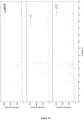
- the two-phase nature of the alloy of CN109609791 is shown by X-ray diffraction at room temperature and atmosphere on Fig. 3C , as compared to the above alloy of the invention (5) and LaNi 5 (AB5 structure).
- the alloys of the invention present both a hysteresis and a slope of plateau of both the charging and discharging much smaller than the two-phase alloy at room temperature.
- the activation time of the alloy of the invention is nearly immediate after exposing the alloy under a pressure of H 2 of 35 bar, while for the comparative alloy, it takes 80s to initiate the absorption at a pressure above 80 bar H 2 .
- Table 2 Alloy Initial Hydrogen Pressure (bar) Time needed to start absorption of H 2 (s) Ti 0.65 Zr 0.35 Cr 0.6 Mn 1.15 Ni 0.1 Cu 0.1 La 0.05 (from the invention) 35 15 Ti 0.5 Zr 0.5 Fe 0.2 Cr 0.6 Mn 0.2 La 0.1 Ni 0.1 Mn 0.05 Comparative alloy 80 80
Landscapes
- Chemical & Material Sciences (AREA)
- Engineering & Computer Science (AREA)
- Organic Chemistry (AREA)
- Materials Engineering (AREA)
- Mechanical Engineering (AREA)
- Metallurgy (AREA)
- Nanotechnology (AREA)
- General Life Sciences & Earth Sciences (AREA)
- Environmental & Geological Engineering (AREA)
- Geology (AREA)
- Chemical Kinetics & Catalysis (AREA)
- Combustion & Propulsion (AREA)
- Inorganic Chemistry (AREA)
- Life Sciences & Earth Sciences (AREA)
- Hydrogen, Water And Hydrids (AREA)
- Manufacture Of Metal Powder And Suspensions Thereof (AREA)
- Powder Metallurgy (AREA)
Claims (11)
- Alliage de stockage d'hydrogène ayant une structure cristalline de type AB2, dont le site A contient Ti et Zr, et le site B contient les éléments Cr, Mn, Fe, Ni et Re, représenté par la formule générale (I)
TixZryCraMnbFecNidCueVfReg (I)
dans laquelle x, y, a, b, c et d sont des proportions molaires, Re est choisi parmi La et Ce ; 0,2 < x < 0,95 ; 0,05 ≤ y ≤ 0,45 ; 0,001 < a < 1 ; 0,3 ≤ b ≤ 2 ; 0,01 ≤ c ≤ 0,6 ; 0,005 ≤ d ≤ 1,5 ; 0 < e < 0,1 ; 0 < f < 0,5 ; 0,01 < g < 0,05 ; a+b+c+d+e+f+g = 1,9 à 2,3. - Alliage de stockage d'hydrogène selon la revendication 1, lequel alliage est choisi dans le groupe suivant :
Ti0,65Zr0,35Cr0,6Mn1,15Ni0,1Cu0,1La0,05 ;
Ti0,2Zr0,4Cr0,6Mn0,3Fe0,05Ni0,14La0,05 ;
Ti0,7Zr0,1Cr0,9Mn0,8Fe0,5Ni0,05Cu0,1Ce0,05 ;
Ti0,85Zr0,15Cr0,05Mn1Fe0,1Ni0,45V0,4La0,05 ;
et
Ti0,95Zr0,05Cr0,2Mn0,8Fe0,3Ni1Ce0,05 .
- Alliage de stockage d'hydrogène selon l'une quelconque des revendications précédentes, lequel alliage de stockage d'hydrogène a, à 25°C, un plateau d'absorption d'hydrogène compris entre 10 et 150 bar et un plateau de désorption compris entre 8 et 140 bar.
- Alliage de stockage d'hydrogène selon l'une quelconque des revendications précédentes, lequel alliage de stockage d'hydrogène a, à 25°C, une capacité de stockage d'hydrogène d'environ 1,45 à environ 1,80 % en poids, typiquement d'environ 1,50 à 1,65 % en poids.
- Procédé pour la préparation d'un alliage de stockage d'hydrogène ayant une structure cristalline de type AB2 selon l'une quelconque des revendications 1 à 5 par solidification rapide de masse fondue au moyen d'une trempe au rouleau rotatif, lequel procédé comprend les étapes dans lesquelles :- une masse fondue de tous les éléments métalliques est formée dans un four dans une atmosphère inerte contrôlée sous une pression d'environ 30 kPa à environ 70 kPa ;- la masse fondue à l'intérieur du four est coulée sur un rouleau rotatif tournant à une vitesse d'environ 1,5 à environ 9 m/s où la masse fondue solidifie rapidement et se rompt en copeaux lors de son entrée dans une unité de refroidissement ;- les copeaux sont laissés à refroidir encore davantage jusqu'à une température inférieure à 50°C ;- le four est rempli d'air et les copeaux obtenus sont collectés.
- Procédé selon la revendication 4, dans lequel le rouleau rotatif, par exemple un rouleau en cuivre, roule à une vitesse constante d'environ 1 à environ 9 m/s.
- Procédé selon la revendication 4 ou 5, dans lequel l'alliage obtenu est soumis à un autre traitement thermique typiquement à une température comprise entre environ 850 et 1150°C pendant environ 0,5 à environ 72 heures.
- Alliage pouvant être obtenu par le procédé selon l'une quelconque des revendications 4 à 6.
- Poudre d'un alliage selon l'une quelconque des revendications 1 à 3 et 7, dans laquelle la granulométrie de l'alliage est d'environ 0,5 mm à environ 3 mm.
- Utilisation d'un alliage selon l'une quelconque des revendications 1 à 3 et 7 pour le stockage d'hydrogène.
- Système de stockage d'hydrogène comprenant un alliage selon l'une quelconque des revendications 1 à 3 et 7 ou une poudre de celui-ci.
Applications Claiming Priority (2)
| Application Number | Priority Date | Filing Date | Title |
|---|---|---|---|
| EP21189513.1A EP4129535A1 (fr) | 2021-08-03 | 2021-08-03 | Alliages de stockage d`hydrogène de type ab2, leurs procédés de préparation et leurs utilisations |
| PCT/EP2022/071620 WO2023012135A1 (fr) | 2021-08-03 | 2022-08-02 | Alliages de stockage d'hydrogène de type ab2, leurs procédés de préparation et leurs utilisations |
Publications (3)
| Publication Number | Publication Date |
|---|---|
| EP4274696A1 EP4274696A1 (fr) | 2023-11-15 |
| EP4274696B1 true EP4274696B1 (fr) | 2024-10-02 |
| EP4274696C0 EP4274696C0 (fr) | 2024-10-02 |
Family
ID=77207051
Family Applications (2)
| Application Number | Title | Priority Date | Filing Date |
|---|---|---|---|
| EP21189513.1A Withdrawn EP4129535A1 (fr) | 2021-08-03 | 2021-08-03 | Alliages de stockage d`hydrogène de type ab2, leurs procédés de préparation et leurs utilisations |
| EP22758528.8A Active EP4274696B1 (fr) | 2021-08-03 | 2022-08-02 | Alliages de stockage d`hydrogène de type ab2, leurs procédés de préparation et leurs utilisations |
Family Applications Before (1)
| Application Number | Title | Priority Date | Filing Date |
|---|---|---|---|
| EP21189513.1A Withdrawn EP4129535A1 (fr) | 2021-08-03 | 2021-08-03 | Alliages de stockage d`hydrogène de type ab2, leurs procédés de préparation et leurs utilisations |
Country Status (10)
| Country | Link |
|---|---|
| US (1) | US12435397B2 (fr) |
| EP (2) | EP4129535A1 (fr) |
| JP (1) | JP7685290B2 (fr) |
| KR (1) | KR102793012B1 (fr) |
| CN (1) | CN117794664A (fr) |
| AU (1) | AU2022324666B2 (fr) |
| BR (1) | BR112023026734A2 (fr) |
| ES (1) | ES2991367T3 (fr) |
| HU (1) | HUE069099T2 (fr) |
| WO (1) | WO2023012135A1 (fr) |
Family Cites Families (14)
| Publication number | Priority date | Publication date | Assignee | Title |
|---|---|---|---|---|
| US4153484A (en) | 1976-01-20 | 1979-05-08 | Matsushita Electric Industrial Co., Ltd. | Hydrogen storage material |
| US4849205A (en) | 1987-11-17 | 1989-07-18 | Kuochih Hong | Hydrogen storage hydride electrode materials |
| JPH0873970A (ja) * | 1994-09-09 | 1996-03-19 | Sumitomo Metal Ind Ltd | 水素吸蔵合金とこれを用いたNi−水素電池用負極 |
| US6536487B2 (en) * | 1999-11-06 | 2003-03-25 | Energy Conversion Devices, Inc. | Atomically engineered hydrogen storage alloys having extended storage capacity at high pressures and high pressure hydrogen storage units containing variable amounts thereof |
| US7165615B2 (en) | 2001-10-24 | 2007-01-23 | Shell Oil Company | In situ recovery from a hydrocarbon containing formation using conductor-in-conduit heat sources with an electrically conductive material in the overburden |
| US20030103861A1 (en) | 2001-11-30 | 2003-06-05 | Stetson Ned T. | Hydrogen storage material including a modified Ti-Mn2 alloy |
| AU2002354479A1 (en) | 2001-12-13 | 2003-07-09 | Santoku Corporation | Hydrogen storage alloy and hydrogen storage alloy powder, method for production thereof, and negative electrode for nickel-hydrogen secondary cell |
| CN1789455A (zh) | 2004-12-15 | 2006-06-21 | 北京有色金属研究总院 | 一种金属氢化物氢压缩材料 |
| CN100335665C (zh) | 2005-10-24 | 2007-09-05 | 中国科学院上海微系统与信息技术研究所 | 一种有效吸氢量高的钛-钒基储氢合金 |
| WO2015189758A1 (fr) * | 2014-06-09 | 2015-12-17 | University Of The Western Cape | Lit d'hydrure métallique, récipient d'hydrure métallique, et leur procédé de fabrication |
| CN109609791B (zh) * | 2018-12-27 | 2020-11-10 | 广东省稀有金属研究所 | 一种静态氢压缩用复相储氢合金及其制备方法与应用 |
| CN111893346B (zh) * | 2019-05-06 | 2022-10-21 | 中国石油化工股份有限公司 | 固溶体型储氢合金及其制备方法和应用以及含有机物氢气提纯方法 |
| EP4129534A1 (fr) | 2021-08-03 | 2023-02-08 | GRZ Technologies SA | Alliages de stockage d'hydrogène de type ab5, leurs procédés de préparation et utilisations |
| AU2023219655A1 (en) * | 2022-02-08 | 2024-08-15 | Santoku Corporation | Hydrogen storage material, hydrogen storage container and hydrogen supply device |
-
2021
- 2021-08-03 EP EP21189513.1A patent/EP4129535A1/fr not_active Withdrawn
-
2022
- 2022-08-02 KR KR1020247005445A patent/KR102793012B1/ko active Active
- 2022-08-02 CN CN202280046290.6A patent/CN117794664A/zh active Pending
- 2022-08-02 HU HUE22758528A patent/HUE069099T2/hu unknown
- 2022-08-02 US US18/681,104 patent/US12435397B2/en active Active
- 2022-08-02 AU AU2022324666A patent/AU2022324666B2/en active Active
- 2022-08-02 EP EP22758528.8A patent/EP4274696B1/fr active Active
- 2022-08-02 JP JP2024506764A patent/JP7685290B2/ja active Active
- 2022-08-02 BR BR112023026734A patent/BR112023026734A2/pt active IP Right Grant
- 2022-08-02 ES ES22758528T patent/ES2991367T3/es active Active
- 2022-08-02 WO PCT/EP2022/071620 patent/WO2023012135A1/fr not_active Ceased
Non-Patent Citations (1)
| Title |
|---|
| MAEDA TETSUHIKO ET AL: "Cyclic stability test of AB2 type (Ti, Zr)(Ni, Mn, V, Fe)2.18for stationary hydrogen storage in water contaminated hydrogen", JOURNAL OF ALLOYS AND COMPOUNDS, ELSEVIER SEQUOIA, LAUSANNE, CH, vol. 580, 3 April 2013 (2013-04-03), XP028743384, ISSN: 0925-8388, DOI: 10.1016/J.JALLCOM.2013.03.230 * |
Also Published As
| Publication number | Publication date |
|---|---|
| CN117794664A (zh) | 2024-03-29 |
| BR112023026734A2 (pt) | 2024-03-12 |
| JP7685290B2 (ja) | 2025-05-29 |
| WO2023012135A1 (fr) | 2023-02-09 |
| JP2024529539A (ja) | 2024-08-06 |
| KR102793012B1 (ko) | 2025-04-11 |
| US20240263284A1 (en) | 2024-08-08 |
| HUE069099T2 (hu) | 2025-02-28 |
| KR20240044439A (ko) | 2024-04-04 |
| EP4274696A1 (fr) | 2023-11-15 |
| EP4129535A1 (fr) | 2023-02-08 |
| EP4274696C0 (fr) | 2024-10-02 |
| ES2991367T3 (es) | 2024-12-03 |
| US12435397B2 (en) | 2025-10-07 |
| AU2022324666B2 (en) | 2024-07-25 |
| AU2022324666A1 (en) | 2024-01-04 |
Similar Documents
| Publication | Publication Date | Title |
|---|---|---|
| Guoxian et al. | Hydrogen absorption and desorption characteristics of mechanically milled Mg 35wt.% FeTi1. 2 powders | |
| Nayebossadri et al. | Development of a high-pressure Ti-Mn based hydrogen storage alloy for hydrogen compression | |
| CN111636012B (zh) | 一种La-Mg-Ni系储氢材料及其制备方法 | |
| EP0815273A1 (fr) | Materiaux nanocristallises a base de mg et leur utilisation pour le transport et le stockage de l'hydrogene | |
| Zhang et al. | Dehydriding properties of ternary Mg2Ni1− xZrx hydrides synthesized by ball milling and annealing | |
| Paul et al. | Intermetallic compounds for hydrogen storage: current status and future perspectives | |
| US20240279052A1 (en) | Ab5 type-based hydrogen storage alloys, methods of preparation and uses thereof | |
| EP4274696B1 (fr) | Alliages de stockage d`hydrogène de type ab2, leurs procédés de préparation et leurs utilisations | |
| CN1314823C (zh) | 一种REMg3型贮氢合金及其制备方法 | |
| CN114645179A (zh) | 25MPa初级氢压缩机用储氢合金及制备方法 | |
| JPS61250136A (ja) | チタン系水素吸蔵合金 | |
| JP3775639B2 (ja) | 水素吸蔵合金の製造方法 | |
| US20020139456A1 (en) | High-capacity hydrogen storage alloy and method for producing the same | |
| JPH0471985B2 (fr) | ||
| Dutta et al. | Synthesis and hydrogen storage characteristics of the composite alloy La2Mg17-x wt% MmNi4. 5Al0. 5 | |
| JP2002097535A (ja) | 水素吸蔵合金 | |
| CN120796814A (zh) | 一种循环诱导氢分解的高熵储氢合金及其制备方法和超高循环稳定性维持方法 | |
| Srivastava et al. | On the synthesis and characterization of some new AB5 type MmNi4. 3Al0. 3Mn0. 4, LaNi5-xSix (x= 0.1, 0.3, 0.5) and MgÀx wt% CFMmNi5Ày wt% Si hydrogen storage materials | |
| CN119614968A (zh) | 快淬Mg-Ni-Y-Si系储氢合金及其制备方法和应用 | |
| CN114619026A (zh) | 一种复合固态贮氢材料及其制备方法 | |
| CN120230949A (zh) | 双级金属氢化物氢压缩机第二级储氢合金及其制备方法 | |
| JPH0224764B2 (fr) | ||
| JPS61276945A (ja) | ジルコニウム系水素吸蔵合金 | |
| JPH03247735A (ja) | 希土類金属―ニッケル系水素吸蔵合金および水素吸蔵用材料 | |
| US20040247481A1 (en) | Ca-Mm-Ni based hydrogen storage alloys |
Legal Events
| Date | Code | Title | Description |
|---|---|---|---|
| STAA | Information on the status of an ep patent application or granted ep patent |
Free format text: STATUS: UNKNOWN |
|
| STAA | Information on the status of an ep patent application or granted ep patent |
Free format text: STATUS: THE INTERNATIONAL PUBLICATION HAS BEEN MADE |
|
| PUAI | Public reference made under article 153(3) epc to a published international application that has entered the european phase |
Free format text: ORIGINAL CODE: 0009012 |
|
| STAA | Information on the status of an ep patent application or granted ep patent |
Free format text: STATUS: REQUEST FOR EXAMINATION WAS MADE |
|
| 17P | Request for examination filed |
Effective date: 20230808 |
|
| AK | Designated contracting states |
Kind code of ref document: A1 Designated state(s): AL AT BE BG CH CY CZ DE DK EE ES FI FR GB GR HR HU IE IS IT LI LT LU LV MC MK MT NL NO PL PT RO RS SE SI SK SM TR |
|
| GRAP | Despatch of communication of intention to grant a patent |
Free format text: ORIGINAL CODE: EPIDOSNIGR1 |
|
| STAA | Information on the status of an ep patent application or granted ep patent |
Free format text: STATUS: GRANT OF PATENT IS INTENDED |
|
| RIC1 | Information provided on ipc code assigned before grant |
Ipc: C22C 30/00 20060101ALI20240408BHEP Ipc: C22C 22/00 20060101ALI20240408BHEP Ipc: C22C 1/02 20060101ALI20240408BHEP Ipc: C22C 1/03 20060101ALI20240408BHEP Ipc: C22C 19/00 20060101ALI20240408BHEP Ipc: C22C 14/00 20060101ALI20240408BHEP Ipc: C22C 1/04 20230101ALI20240408BHEP Ipc: B22F 9/08 20060101ALI20240408BHEP Ipc: B22F 1/068 20220101AFI20240408BHEP |
|
| INTG | Intention to grant announced |
Effective date: 20240424 |
|
| DAV | Request for validation of the european patent (deleted) | ||
| DAX | Request for extension of the european patent (deleted) | ||
| GRAS | Grant fee paid |
Free format text: ORIGINAL CODE: EPIDOSNIGR3 |
|
| GRAA | (expected) grant |
Free format text: ORIGINAL CODE: 0009210 |
|
| STAA | Information on the status of an ep patent application or granted ep patent |
Free format text: STATUS: THE PATENT HAS BEEN GRANTED |
|
| AK | Designated contracting states |
Kind code of ref document: B1 Designated state(s): AL AT BE BG CH CY CZ DE DK EE ES FI FR GB GR HR HU IE IS IT LI LT LU LV MC MK MT NL NO PL PT RO RS SE SI SK SM TR |
|
| REG | Reference to a national code |
Ref country code: GB Ref legal event code: FG4D |
|
| REG | Reference to a national code |
Ref country code: CH Ref legal event code: EP |
|
| REG | Reference to a national code |
Ref country code: IE Ref legal event code: FG4D |
|
| REG | Reference to a national code |
Ref country code: DE Ref legal event code: R096 Ref document number: 602022006536 Country of ref document: DE |
|
| U01 | Request for unitary effect filed |
Effective date: 20241003 |
|
| U07 | Unitary effect registered |
Designated state(s): AT BE BG DE DK EE FI FR IT LT LU LV MT NL PT RO SE SI Effective date: 20241025 |
|
| REG | Reference to a national code |
Ref country code: ES Ref legal event code: FG2A Ref document number: 2991367 Country of ref document: ES Kind code of ref document: T3 Effective date: 20241203 |
|
| REG | Reference to a national code |
Ref country code: HU Ref legal event code: AG4A Ref document number: E069099 Country of ref document: HU |
|
| PG25 | Lapsed in a contracting state [announced via postgrant information from national office to epo] |
Ref country code: IS Free format text: LAPSE BECAUSE OF FAILURE TO SUBMIT A TRANSLATION OF THE DESCRIPTION OR TO PAY THE FEE WITHIN THE PRESCRIBED TIME-LIMIT Effective date: 20250202 Ref country code: HR Free format text: LAPSE BECAUSE OF FAILURE TO SUBMIT A TRANSLATION OF THE DESCRIPTION OR TO PAY THE FEE WITHIN THE PRESCRIBED TIME-LIMIT Effective date: 20241002 |
|
| PG25 | Lapsed in a contracting state [announced via postgrant information from national office to epo] |
Ref country code: GR Free format text: LAPSE BECAUSE OF FAILURE TO SUBMIT A TRANSLATION OF THE DESCRIPTION OR TO PAY THE FEE WITHIN THE PRESCRIBED TIME-LIMIT Effective date: 20250103 |
|
| PG25 | Lapsed in a contracting state [announced via postgrant information from national office to epo] |
Ref country code: CZ Free format text: LAPSE BECAUSE OF FAILURE TO SUBMIT A TRANSLATION OF THE DESCRIPTION OR TO PAY THE FEE WITHIN THE PRESCRIBED TIME-LIMIT Effective date: 20241002 Ref country code: PL Free format text: LAPSE BECAUSE OF FAILURE TO SUBMIT A TRANSLATION OF THE DESCRIPTION OR TO PAY THE FEE WITHIN THE PRESCRIBED TIME-LIMIT Effective date: 20241002 |
|
| PG25 | Lapsed in a contracting state [announced via postgrant information from national office to epo] |
Ref country code: RS Free format text: LAPSE BECAUSE OF FAILURE TO SUBMIT A TRANSLATION OF THE DESCRIPTION OR TO PAY THE FEE WITHIN THE PRESCRIBED TIME-LIMIT Effective date: 20250102 |
|
| PG25 | Lapsed in a contracting state [announced via postgrant information from national office to epo] |
Ref country code: SM Free format text: LAPSE BECAUSE OF FAILURE TO SUBMIT A TRANSLATION OF THE DESCRIPTION OR TO PAY THE FEE WITHIN THE PRESCRIBED TIME-LIMIT Effective date: 20241002 |
|
| PG25 | Lapsed in a contracting state [announced via postgrant information from national office to epo] |
Ref country code: SK Free format text: LAPSE BECAUSE OF FAILURE TO SUBMIT A TRANSLATION OF THE DESCRIPTION OR TO PAY THE FEE WITHIN THE PRESCRIBED TIME-LIMIT Effective date: 20241002 |
|
| PLBE | No opposition filed within time limit |
Free format text: ORIGINAL CODE: 0009261 |
|
| STAA | Information on the status of an ep patent application or granted ep patent |
Free format text: STATUS: NO OPPOSITION FILED WITHIN TIME LIMIT |
|
| U20 | Renewal fee for the european patent with unitary effect paid |
Year of fee payment: 4 Effective date: 20250722 |
|
| 26N | No opposition filed |
Effective date: 20250703 |
|
| PGFP | Annual fee paid to national office [announced via postgrant information from national office to epo] |
Ref country code: HU Payment date: 20250825 Year of fee payment: 4 |
|
| PGFP | Annual fee paid to national office [announced via postgrant information from national office to epo] |
Ref country code: ES Payment date: 20250926 Year of fee payment: 4 |
|
| PGFP | Annual fee paid to national office [announced via postgrant information from national office to epo] |
Ref country code: NO Payment date: 20250826 Year of fee payment: 4 |
|
| PGFP | Annual fee paid to national office [announced via postgrant information from national office to epo] |
Ref country code: TR Payment date: 20250728 Year of fee payment: 4 |
|
| PGFP | Annual fee paid to national office [announced via postgrant information from national office to epo] |
Ref country code: CH Payment date: 20250901 Year of fee payment: 4 |