EP4268622A1 - Method for manufacturing tobacco rod part for non-combustion heating-type flavor inhalation article - Google Patents
Method for manufacturing tobacco rod part for non-combustion heating-type flavor inhalation article Download PDFInfo
- Publication number
- EP4268622A1 EP4268622A1 EP21910412.2A EP21910412A EP4268622A1 EP 4268622 A1 EP4268622 A1 EP 4268622A1 EP 21910412 A EP21910412 A EP 21910412A EP 4268622 A1 EP4268622 A1 EP 4268622A1
- Authority
- EP
- European Patent Office
- Prior art keywords
- tobacco
- sheet
- reconstituted tobacco
- reconstituted
- drying
- Prior art date
- Legal status (The legal status is an assumption and is not a legal conclusion. Google has not performed a legal analysis and makes no representation as to the accuracy of the status listed.)
- Pending
Links
- 235000002637 Nicotiana tabacum Nutrition 0.000 title claims abstract description 314
- 239000000796 flavoring agent Substances 0.000 title claims abstract description 72
- 238000000034 method Methods 0.000 title claims abstract description 68
- 235000019634 flavors Nutrition 0.000 title claims abstract description 58
- 241000208125 Nicotiana Species 0.000 title claims abstract description 40
- 238000004519 manufacturing process Methods 0.000 title claims abstract description 15
- 238000002485 combustion reaction Methods 0.000 title abstract description 3
- 239000000463 material Substances 0.000 claims abstract description 50
- 238000001035 drying Methods 0.000 claims abstract description 49
- 239000000945 filler Substances 0.000 claims description 68
- 239000000203 mixture Substances 0.000 claims description 36
- 238000002156 mixing Methods 0.000 claims description 25
- 239000000654 additive Substances 0.000 claims description 21
- 230000000996 additive effect Effects 0.000 claims description 21
- 238000005259 measurement Methods 0.000 claims description 14
- 238000005520 cutting process Methods 0.000 claims description 3
- 238000011049 filling Methods 0.000 abstract description 55
- 244000061176 Nicotiana tabacum Species 0.000 description 275
- XLYOFNOQVPJJNP-UHFFFAOYSA-N water Substances O XLYOFNOQVPJJNP-UHFFFAOYSA-N 0.000 description 19
- PEDCQBHIVMGVHV-UHFFFAOYSA-N Glycerine Chemical compound OCC(O)CO PEDCQBHIVMGVHV-UHFFFAOYSA-N 0.000 description 16
- 239000000843 powder Substances 0.000 description 15
- 235000013355 food flavoring agent Nutrition 0.000 description 14
- 238000010438 heat treatment Methods 0.000 description 14
- 239000002994 raw material Substances 0.000 description 14
- 230000000391 smoking effect Effects 0.000 description 13
- 239000000835 fiber Substances 0.000 description 12
- 239000003963 antioxidant agent Substances 0.000 description 11
- 235000006708 antioxidants Nutrition 0.000 description 11
- 239000000443 aerosol Substances 0.000 description 10
- 230000003078 antioxidant effect Effects 0.000 description 10
- 239000000047 product Substances 0.000 description 10
- DNIAPMSPPWPWGF-UHFFFAOYSA-N Propylene glycol Chemical compound CC(O)CO DNIAPMSPPWPWGF-UHFFFAOYSA-N 0.000 description 9
- 229920002301 cellulose acetate Polymers 0.000 description 9
- 238000010586 diagram Methods 0.000 description 9
- 239000003921 oil Substances 0.000 description 9
- 235000019198 oils Nutrition 0.000 description 9
- 238000003860 storage Methods 0.000 description 9
- 235000011187 glycerol Nutrition 0.000 description 8
- 235000019640 taste Nutrition 0.000 description 8
- 150000004676 glycans Chemical class 0.000 description 7
- 229920001282 polysaccharide Polymers 0.000 description 7
- 239000005017 polysaccharide Substances 0.000 description 7
- LFQSCWFLJHTTHZ-UHFFFAOYSA-N Ethanol Chemical compound CCO LFQSCWFLJHTTHZ-UHFFFAOYSA-N 0.000 description 6
- 229920001131 Pulp (paper) Polymers 0.000 description 6
- 230000000052 comparative effect Effects 0.000 description 6
- 239000000123 paper Substances 0.000 description 6
- 210000003462 vein Anatomy 0.000 description 6
- 239000007788 liquid Substances 0.000 description 5
- 239000000779 smoke Substances 0.000 description 5
- WRMNZCZEMHIOCP-UHFFFAOYSA-N 2-phenylethanol Chemical compound OCCC1=CC=CC=C1 WRMNZCZEMHIOCP-UHFFFAOYSA-N 0.000 description 4
- CIWBSHSKHKDKBQ-JLAZNSOCSA-N Ascorbic acid Chemical compound OC[C@H](O)[C@H]1OC(=O)C(O)=C1O CIWBSHSKHKDKBQ-JLAZNSOCSA-N 0.000 description 4
- GLZPCOQZEFWAFX-UHFFFAOYSA-N Geraniol Chemical compound CC(C)=CCCC(C)=CCO GLZPCOQZEFWAFX-UHFFFAOYSA-N 0.000 description 4
- 238000005266 casting Methods 0.000 description 4
- 238000000605 extraction Methods 0.000 description 4
- 238000001125 extrusion Methods 0.000 description 4
- 238000001914 filtration Methods 0.000 description 4
- LNTHITQWFMADLM-UHFFFAOYSA-N gallic acid Chemical compound OC(=O)C1=CC(O)=C(O)C(O)=C1 LNTHITQWFMADLM-UHFFFAOYSA-N 0.000 description 4
- 238000011068 loading method Methods 0.000 description 4
- 238000002360 preparation method Methods 0.000 description 4
- 230000008569 process Effects 0.000 description 4
- 235000000346 sugar Nutrition 0.000 description 4
- URAYPUMNDPQOKB-UHFFFAOYSA-N triacetin Chemical compound CC(=O)OCC(OC(C)=O)COC(C)=O URAYPUMNDPQOKB-UHFFFAOYSA-N 0.000 description 4
- XHXUANMFYXWVNG-ADEWGFFLSA-N (-)-Menthyl acetate Chemical compound CC(C)[C@@H]1CC[C@@H](C)C[C@H]1OC(C)=O XHXUANMFYXWVNG-ADEWGFFLSA-N 0.000 description 3
- SNICXCGAKADSCV-JTQLQIEISA-N (-)-Nicotine Chemical compound CN1CCC[C@H]1C1=CC=CN=C1 SNICXCGAKADSCV-JTQLQIEISA-N 0.000 description 3
- WWZKQHOCKIZLMA-UHFFFAOYSA-N Caprylic acid Natural products CCCCCCCC(O)=O WWZKQHOCKIZLMA-UHFFFAOYSA-N 0.000 description 3
- 241000196324 Embryophyta Species 0.000 description 3
- XEKOWRVHYACXOJ-UHFFFAOYSA-N Ethyl acetate Chemical compound CCOC(C)=O XEKOWRVHYACXOJ-UHFFFAOYSA-N 0.000 description 3
- DOOTYTYQINUNNV-UHFFFAOYSA-N Triethyl citrate Chemical compound CCOC(=O)CC(O)(C(=O)OCC)CC(=O)OCC DOOTYTYQINUNNV-UHFFFAOYSA-N 0.000 description 3
- BTANRVKWQNVYAZ-UHFFFAOYSA-N butan-2-ol Chemical compound CCC(C)O BTANRVKWQNVYAZ-UHFFFAOYSA-N 0.000 description 3
- 238000001816 cooling Methods 0.000 description 3
- 230000000694 effects Effects 0.000 description 3
- 229960002715 nicotine Drugs 0.000 description 3
- SNICXCGAKADSCV-UHFFFAOYSA-N nicotine Natural products CN1CCCC1C1=CC=CN=C1 SNICXCGAKADSCV-UHFFFAOYSA-N 0.000 description 3
- 230000000704 physical effect Effects 0.000 description 3
- 239000002002 slurry Substances 0.000 description 3
- 239000007787 solid Substances 0.000 description 3
- 238000005507 spraying Methods 0.000 description 3
- 239000002562 thickening agent Substances 0.000 description 3
- 239000001069 triethyl citrate Substances 0.000 description 3
- VMYFZRTXGLUXMZ-UHFFFAOYSA-N triethyl citrate Natural products CCOC(=O)C(O)(C(=O)OCC)C(=O)OCC VMYFZRTXGLUXMZ-UHFFFAOYSA-N 0.000 description 3
- 235000013769 triethyl citrate Nutrition 0.000 description 3
- OOCCDEMITAIZTP-QPJJXVBHSA-N (E)-cinnamyl alcohol Chemical compound OC\C=C\C1=CC=CC=C1 OOCCDEMITAIZTP-QPJJXVBHSA-N 0.000 description 2
- UFLHIIWVXFIJGU-ARJAWSKDSA-N (Z)-hex-3-en-1-ol Chemical compound CC\C=C/CCO UFLHIIWVXFIJGU-ARJAWSKDSA-N 0.000 description 2
- WBYWAXJHAXSJNI-VOTSOKGWSA-M .beta-Phenylacrylic acid Natural products [O-]C(=O)\C=C\C1=CC=CC=C1 WBYWAXJHAXSJNI-VOTSOKGWSA-M 0.000 description 2
- OXQOBQJCDNLAPO-UHFFFAOYSA-N 2,3-Dimethylpyrazine Chemical compound CC1=NC=CN=C1C OXQOBQJCDNLAPO-UHFFFAOYSA-N 0.000 description 2
- LCZUOKDVTBMCMX-UHFFFAOYSA-N 2,5-Dimethylpyrazine Chemical compound CC1=CN=C(C)C=N1 LCZUOKDVTBMCMX-UHFFFAOYSA-N 0.000 description 2
- 239000001934 2,5-dimethylpyrazine Substances 0.000 description 2
- AYJXHIDNNLJQDT-UHFFFAOYSA-N 2,6,6-Trimethyl-2-cyclohexene-1,4-dione Chemical compound CC1=CC(=O)CC(C)(C)C1=O AYJXHIDNNLJQDT-UHFFFAOYSA-N 0.000 description 2
- HJFZAYHYIWGLNL-UHFFFAOYSA-N 2,6-Dimethylpyrazine Chemical compound CC1=CN=CC(C)=N1 HJFZAYHYIWGLNL-UHFFFAOYSA-N 0.000 description 2
- MOMFXATYAINJML-UHFFFAOYSA-N 2-Acetylthiazole Chemical compound CC(=O)C1=NC=CS1 MOMFXATYAINJML-UHFFFAOYSA-N 0.000 description 2
- LNIMMWYNSBZESE-UHFFFAOYSA-N 2-Ethyl-3-methylpyrazine, 9CI Chemical compound CCC1=NC=CN=C1C LNIMMWYNSBZESE-UHFFFAOYSA-N 0.000 description 2
- DBZAKQWXICEWNW-UHFFFAOYSA-N 2-acetylpyrazine Chemical compound CC(=O)C1=CN=CC=N1 DBZAKQWXICEWNW-UHFFFAOYSA-N 0.000 description 2
- IGJQUJNPMOYEJY-UHFFFAOYSA-N 2-acetylpyrrole Chemical compound CC(=O)C1=CC=CN1 IGJQUJNPMOYEJY-UHFFFAOYSA-N 0.000 description 2
- WGAVDEVFJDQIMZ-UHFFFAOYSA-N 3,4-dimethyl-1,2-cyclopentanedione Chemical compound CC1CC(=O)C(=O)C1C WGAVDEVFJDQIMZ-UHFFFAOYSA-N 0.000 description 2
- DZAUWHJDUNRCTF-UHFFFAOYSA-N 3-(3,4-dihydroxyphenyl)propanoic acid Chemical compound OC(=O)CCC1=CC=C(O)C(O)=C1 DZAUWHJDUNRCTF-UHFFFAOYSA-N 0.000 description 2
- XPCTZQVDEJYUGT-UHFFFAOYSA-N 3-hydroxy-2-methyl-4-pyrone Chemical compound CC=1OC=CC(=O)C=1O XPCTZQVDEJYUGT-UHFFFAOYSA-N 0.000 description 2
- IGIDLTISMCAULB-UHFFFAOYSA-N 3-methylvaleric acid Chemical compound CCC(C)CC(O)=O IGIDLTISMCAULB-UHFFFAOYSA-N 0.000 description 2
- GNKZMNRKLCTJAY-UHFFFAOYSA-N 4'-Methylacetophenone Chemical compound CC(=O)C1=CC=C(C)C=C1 GNKZMNRKLCTJAY-UHFFFAOYSA-N 0.000 description 2
- NGSWKAQJJWESNS-UHFFFAOYSA-N 4-coumaric acid Chemical compound OC(=O)C=CC1=CC=C(O)C=C1 NGSWKAQJJWESNS-UHFFFAOYSA-N 0.000 description 2
- XCZPDOCRSYZOBI-UHFFFAOYSA-N 5,6,7,8-Tetrahydroquinoxaline Chemical compound C1=CN=C2CCCCC2=N1 XCZPDOCRSYZOBI-UHFFFAOYSA-N 0.000 description 2
- IUFQZPBIRYFPFD-UHFFFAOYSA-N 5-ethyl-3-hydroxy-4-methyl-2(5H)-furanone Chemical compound CCC1OC(=O)C(O)=C1C IUFQZPBIRYFPFD-UHFFFAOYSA-N 0.000 description 2
- OALYTRUKMRCXNH-UHFFFAOYSA-N 5-pentyloxolan-2-one Chemical compound CCCCCC1CCC(=O)O1 OALYTRUKMRCXNH-UHFFFAOYSA-N 0.000 description 2
- GHBSPIPJMLAMEP-UHFFFAOYSA-N 6-pentyloxan-2-one Chemical compound CCCCCC1CCCC(=O)O1 GHBSPIPJMLAMEP-UHFFFAOYSA-N 0.000 description 2
- KWOLFJPFCHCOCG-UHFFFAOYSA-N Acetophenone Chemical compound CC(=O)C1=CC=CC=C1 KWOLFJPFCHCOCG-UHFFFAOYSA-N 0.000 description 2
- QGZKDVFQNNGYKY-UHFFFAOYSA-N Ammonia Chemical compound N QGZKDVFQNNGYKY-UHFFFAOYSA-N 0.000 description 2
- FERIUCNNQQJTOY-UHFFFAOYSA-N Butyric acid Chemical compound CCCC(O)=O FERIUCNNQQJTOY-UHFFFAOYSA-N 0.000 description 2
- VTYYLEPIZMXCLO-UHFFFAOYSA-L Calcium carbonate Chemical compound [Ca+2].[O-]C([O-])=O VTYYLEPIZMXCLO-UHFFFAOYSA-L 0.000 description 2
- 235000013912 Ceratonia siliqua Nutrition 0.000 description 2
- 240000008886 Ceratonia siliqua Species 0.000 description 2
- WBYWAXJHAXSJNI-SREVYHEPSA-N Cinnamic acid Chemical compound OC(=O)\C=C/C1=CC=CC=C1 WBYWAXJHAXSJNI-SREVYHEPSA-N 0.000 description 2
- CIWBSHSKHKDKBQ-DUZGATOHSA-N D-araboascorbic acid Natural products OC[C@@H](O)[C@H]1OC(=O)C(O)=C1O CIWBSHSKHKDKBQ-DUZGATOHSA-N 0.000 description 2
- QSJXEFYPDANLFS-UHFFFAOYSA-N Diacetyl Chemical compound CC(=O)C(C)=O QSJXEFYPDANLFS-UHFFFAOYSA-N 0.000 description 2
- VLSVVMPLPMNWBH-UHFFFAOYSA-N Dihydro-5-propyl-2(3H)-furanone Chemical compound CCCC1CCC(=O)O1 VLSVVMPLPMNWBH-UHFFFAOYSA-N 0.000 description 2
- VUNOFAIHSALQQH-UHFFFAOYSA-N Ethyl menthane carboxamide Chemical compound CCNC(=O)C1CC(C)CCC1C(C)C VUNOFAIHSALQQH-UHFFFAOYSA-N 0.000 description 2
- 235000019501 Lemon oil Nutrition 0.000 description 2
- CRZQGDNQQAALAY-UHFFFAOYSA-N Methyl benzeneacetate Chemical compound COC(=O)CC1=CC=CC=C1 CRZQGDNQQAALAY-UHFFFAOYSA-N 0.000 description 2
- 239000004368 Modified starch Substances 0.000 description 2
- 229920000881 Modified starch Polymers 0.000 description 2
- ZOZIRNMDEZKZHM-UHFFFAOYSA-N Phenethyl phenylacetate Chemical compound C=1C=CC=CC=1CCOC(=O)CC1=CC=CC=C1 ZOZIRNMDEZKZHM-UHFFFAOYSA-N 0.000 description 2
- LCTONWCANYUPML-UHFFFAOYSA-N Pyruvic acid Chemical compound CC(=O)C(O)=O LCTONWCANYUPML-UHFFFAOYSA-N 0.000 description 2
- REFJWTPEDVJJIY-UHFFFAOYSA-N Quercetin Chemical compound C=1C(O)=CC(O)=C(C(C=2O)=O)C=1OC=2C1=CC=C(O)C(O)=C1 REFJWTPEDVJJIY-UHFFFAOYSA-N 0.000 description 2
- 244000028419 Styrax benzoin Species 0.000 description 2
- 235000000126 Styrax benzoin Nutrition 0.000 description 2
- FINHMKGKINIASC-UHFFFAOYSA-N Tetramethylpyrazine Chemical compound CC1=NC(C)=C(C)N=C1C FINHMKGKINIASC-UHFFFAOYSA-N 0.000 description 2
- 244000269722 Thea sinensis Species 0.000 description 2
- 244000299461 Theobroma cacao Species 0.000 description 2
- XTXRWKRVRITETP-UHFFFAOYSA-N Vinyl acetate Chemical compound CC(=O)OC=C XTXRWKRVRITETP-UHFFFAOYSA-N 0.000 description 2
- 239000002253 acid Substances 0.000 description 2
- 239000000853 adhesive Substances 0.000 description 2
- 230000001070 adhesive effect Effects 0.000 description 2
- IGODOXYLBBXFDW-UHFFFAOYSA-N alpha-Terpinyl acetate Chemical compound CC(=O)OC(C)(C)C1CCC(C)=CC1 IGODOXYLBBXFDW-UHFFFAOYSA-N 0.000 description 2
- 239000012298 atmosphere Substances 0.000 description 2
- QVGXLLKOCUKJST-UHFFFAOYSA-N atomic oxygen Chemical compound [O] QVGXLLKOCUKJST-UHFFFAOYSA-N 0.000 description 2
- HUMNYLRZRPPJDN-UHFFFAOYSA-N benzaldehyde Chemical compound O=CC1=CC=CC=C1 HUMNYLRZRPPJDN-UHFFFAOYSA-N 0.000 description 2
- ISAOCJYIOMOJEB-UHFFFAOYSA-N benzoin Chemical compound C=1C=CC=CC=1C(O)C(=O)C1=CC=CC=C1 ISAOCJYIOMOJEB-UHFFFAOYSA-N 0.000 description 2
- SESFRYSPDFLNCH-UHFFFAOYSA-N benzyl benzoate Chemical compound C=1C=CC=CC=1C(=O)OCC1=CC=CC=C1 SESFRYSPDFLNCH-UHFFFAOYSA-N 0.000 description 2
- 239000011230 binding agent Substances 0.000 description 2
- 238000009835 boiling Methods 0.000 description 2
- XUPYJHCZDLZNFP-UHFFFAOYSA-N butyl butanoate Chemical compound CCCCOC(=O)CCC XUPYJHCZDLZNFP-UHFFFAOYSA-N 0.000 description 2
- 235000010354 butylated hydroxytoluene Nutrition 0.000 description 2
- 229920002678 cellulose Polymers 0.000 description 2
- 239000001913 cellulose Substances 0.000 description 2
- 230000008859 change Effects 0.000 description 2
- 235000019504 cigarettes Nutrition 0.000 description 2
- 235000013985 cinnamic acid Nutrition 0.000 description 2
- 229930016911 cinnamic acid Natural products 0.000 description 2
- GJWSUKYXUMVMGX-UHFFFAOYSA-N citronellic acid Chemical compound OC(=O)CC(C)CCC=C(C)C GJWSUKYXUMVMGX-UHFFFAOYSA-N 0.000 description 2
- 239000000470 constituent Substances 0.000 description 2
- 238000012937 correction Methods 0.000 description 2
- WTWBUQJHJGUZCY-UHFFFAOYSA-N cuminaldehyde Chemical compound CC(C)C1=CC=C(C=O)C=C1 WTWBUQJHJGUZCY-UHFFFAOYSA-N 0.000 description 2
- 239000000839 emulsion Substances 0.000 description 2
- 235000010350 erythorbic acid Nutrition 0.000 description 2
- 239000004318 erythorbic acid Substances 0.000 description 2
- HCRBXQFHJMCTLF-ZCFIWIBFSA-N ethyl (2r)-2-methylbutanoate Chemical compound CCOC(=O)[C@H](C)CC HCRBXQFHJMCTLF-ZCFIWIBFSA-N 0.000 description 2
- LZCLXQDLBQLTDK-UHFFFAOYSA-N ethyl 2-hydroxypropanoate Chemical compound CCOC(=O)C(C)O LZCLXQDLBQLTDK-UHFFFAOYSA-N 0.000 description 2
- XIRNKXNNONJFQO-UHFFFAOYSA-N ethyl hexadecanoate Chemical compound CCCCCCCCCCCCCCCC(=O)OCC XIRNKXNNONJFQO-UHFFFAOYSA-N 0.000 description 2
- SHZIWNPUGXLXDT-UHFFFAOYSA-N ethyl hexanoate Chemical compound CCCCCC(=O)OCC SHZIWNPUGXLXDT-UHFFFAOYSA-N 0.000 description 2
- PPXUHEORWJQRHJ-UHFFFAOYSA-N ethyl isovalerate Chemical compound CCOC(=O)CC(C)C PPXUHEORWJQRHJ-UHFFFAOYSA-N 0.000 description 2
- MMXKVMNBHPAILY-UHFFFAOYSA-N ethyl laurate Chemical compound CCCCCCCCCCCC(=O)OCC MMXKVMNBHPAILY-UHFFFAOYSA-N 0.000 description 2
- MVLVMROFTAUDAG-UHFFFAOYSA-N ethyl octadecanoate Chemical compound CCCCCCCCCCCCCCCCCC(=O)OCC MVLVMROFTAUDAG-UHFFFAOYSA-N 0.000 description 2
- YYZUSRORWSJGET-UHFFFAOYSA-N ethyl octanoate Chemical compound CCCCCCCC(=O)OCC YYZUSRORWSJGET-UHFFFAOYSA-N 0.000 description 2
- FKRCODPIKNYEAC-UHFFFAOYSA-N ethyl propionate Chemical compound CCOC(=O)CC FKRCODPIKNYEAC-UHFFFAOYSA-N 0.000 description 2
- CBOQJANXLMLOSS-UHFFFAOYSA-N ethyl vanillin Chemical compound CCOC1=CC(C=O)=CC=C1O CBOQJANXLMLOSS-UHFFFAOYSA-N 0.000 description 2
- 235000004515 gallic acid Nutrition 0.000 description 2
- 229940074391 gallic acid Drugs 0.000 description 2
- IFYYFLINQYPWGJ-UHFFFAOYSA-N gamma-decalactone Chemical compound CCCCCCC1CCC(=O)O1 IFYYFLINQYPWGJ-UHFFFAOYSA-N 0.000 description 2
- GAEKPEKOJKCEMS-UHFFFAOYSA-N gamma-valerolactone Chemical compound CC1CCC(=O)O1 GAEKPEKOJKCEMS-UHFFFAOYSA-N 0.000 description 2
- 239000001087 glyceryl triacetate Substances 0.000 description 2
- 235000013773 glyceryl triacetate Nutrition 0.000 description 2
- LHGVFZTZFXWLCP-UHFFFAOYSA-N guaiacol Chemical compound COC1=CC=CC=C1O LHGVFZTZFXWLCP-UHFFFAOYSA-N 0.000 description 2
- ZSIAUFGUXNUGDI-UHFFFAOYSA-N hexan-1-ol Chemical compound CCCCCCO ZSIAUFGUXNUGDI-UHFFFAOYSA-N 0.000 description 2
- AOGQPLXWSUTHQB-UHFFFAOYSA-N hexyl acetate Chemical compound CCCCCCOC(C)=O AOGQPLXWSUTHQB-UHFFFAOYSA-N 0.000 description 2
- MLFHJEHSLIIPHL-UHFFFAOYSA-N isoamyl acetate Chemical compound CC(C)CCOC(C)=O MLFHJEHSLIIPHL-UHFFFAOYSA-N 0.000 description 2
- PQLMXFQTAMDXIZ-UHFFFAOYSA-N isoamyl butyrate Chemical compound CCCC(=O)OCCC(C)C PQLMXFQTAMDXIZ-UHFFFAOYSA-N 0.000 description 2
- XAOGXQMKWQFZEM-UHFFFAOYSA-N isoamyl propanoate Chemical compound CCC(=O)OCCC(C)C XAOGXQMKWQFZEM-UHFFFAOYSA-N 0.000 description 2
- 229940026239 isoascorbic acid Drugs 0.000 description 2
- WNZQDUSMALZDQF-UHFFFAOYSA-N isobenzofuranone Natural products C1=CC=C2C(=O)OCC2=C1 WNZQDUSMALZDQF-UHFFFAOYSA-N 0.000 description 2
- IYRMWMYZSQPJKC-UHFFFAOYSA-N kaempferol Chemical compound C1=CC(O)=CC=C1C1=C(O)C(=O)C2=C(O)C=C(O)C=C2O1 IYRMWMYZSQPJKC-UHFFFAOYSA-N 0.000 description 2
- MWDZOUNAPSSOEL-UHFFFAOYSA-N kaempferol Natural products OC1=C(C(=O)c2cc(O)cc(O)c2O1)c3ccc(O)cc3 MWDZOUNAPSSOEL-UHFFFAOYSA-N 0.000 description 2
- 239000010501 lemon oil Substances 0.000 description 2
- CDOSHBSSFJOMGT-UHFFFAOYSA-N linalool Chemical compound CC(C)=CCCC(C)(O)C=C CDOSHBSSFJOMGT-UHFFFAOYSA-N 0.000 description 2
- UWKAYLJWKGQEPM-LBPRGKRZSA-N linalyl acetate Chemical compound CC(C)=CCC[C@](C)(C=C)OC(C)=O UWKAYLJWKGQEPM-LBPRGKRZSA-N 0.000 description 2
- VAMXMNNIEUEQDV-UHFFFAOYSA-N methyl anthranilate Chemical compound COC(=O)C1=CC=CC=C1N VAMXMNNIEUEQDV-UHFFFAOYSA-N 0.000 description 2
- WBYWAXJHAXSJNI-UHFFFAOYSA-N methyl p-hydroxycinnamate Natural products OC(=O)C=CC1=CC=CC=C1 WBYWAXJHAXSJNI-UHFFFAOYSA-N 0.000 description 2
- OSWPMRLSEDHDFF-UHFFFAOYSA-N methyl salicylate Chemical compound COC(=O)C1=CC=CC=C1O OSWPMRLSEDHDFF-UHFFFAOYSA-N 0.000 description 2
- 235000019426 modified starch Nutrition 0.000 description 2
- 210000000214 mouth Anatomy 0.000 description 2
- NUJGJRNETVAIRJ-UHFFFAOYSA-N octanal Chemical compound CCCCCCCC=O NUJGJRNETVAIRJ-UHFFFAOYSA-N 0.000 description 2
- 239000001301 oxygen Substances 0.000 description 2
- 229910052760 oxygen Inorganic materials 0.000 description 2
- 238000004806 packaging method and process Methods 0.000 description 2
- CFNJLPHOBMVMNS-UHFFFAOYSA-N pentyl butyrate Chemical compound CCCCCOC(=O)CCC CFNJLPHOBMVMNS-UHFFFAOYSA-N 0.000 description 2
- WVDDGKGOMKODPV-ZQBYOMGUSA-N phenyl(114C)methanol Chemical compound O[14CH2]C1=CC=CC=C1 WVDDGKGOMKODPV-ZQBYOMGUSA-N 0.000 description 2
- NMHMNPHRMNGLLB-UHFFFAOYSA-N phloretic acid Chemical compound OC(=O)CCC1=CC=C(O)C=C1 NMHMNPHRMNGLLB-UHFFFAOYSA-N 0.000 description 2
- SATCULPHIDQDRE-UHFFFAOYSA-N piperonal Chemical compound O=CC1=CC=C2OCOC2=C1 SATCULPHIDQDRE-UHFFFAOYSA-N 0.000 description 2
- -1 poly(lactic acid) Polymers 0.000 description 2
- 238000012545 processing Methods 0.000 description 2
- RODXRVNMMDRFIK-UHFFFAOYSA-N scopoletin Chemical compound C1=CC(=O)OC2=C1C=C(OC)C(O)=C2 RODXRVNMMDRFIK-UHFFFAOYSA-N 0.000 description 2
- 230000035807 sensation Effects 0.000 description 2
- 235000019615 sensations Nutrition 0.000 description 2
- 239000002904 solvent Substances 0.000 description 2
- 239000000126 substance Substances 0.000 description 2
- 239000000758 substrate Substances 0.000 description 2
- QAIPRVGONGVQAS-DUXPYHPUSA-N trans-caffeic acid Chemical compound OC(=O)\C=C\C1=CC=C(O)C(O)=C1 QAIPRVGONGVQAS-DUXPYHPUSA-N 0.000 description 2
- 229960002622 triacetin Drugs 0.000 description 2
- CYIFVRUOHKNECG-UHFFFAOYSA-N tridecan-2-one Chemical compound CCCCCCCCCCCC(C)=O CYIFVRUOHKNECG-UHFFFAOYSA-N 0.000 description 2
- IIYFAKIEWZDVMP-UHFFFAOYSA-N tridecane Chemical compound CCCCCCCCCCCCC IIYFAKIEWZDVMP-UHFFFAOYSA-N 0.000 description 2
- IAEGWXHKWJGQAZ-UHFFFAOYSA-N trimethylpyrazine Chemical compound CC1=CN=C(C)C(C)=N1 IAEGWXHKWJGQAZ-UHFFFAOYSA-N 0.000 description 2
- WJUFSDZVCOTFON-UHFFFAOYSA-N veratraldehyde Chemical compound COC1=CC=C(C=O)C=C1OC WJUFSDZVCOTFON-UHFFFAOYSA-N 0.000 description 2
- 230000004580 weight loss Effects 0.000 description 2
- PHXATPHONSXBIL-UHFFFAOYSA-N xi-gamma-Undecalactone Chemical compound CCCCCCCC1CCC(=O)O1 PHXATPHONSXBIL-UHFFFAOYSA-N 0.000 description 2
- NPNUFJAVOOONJE-ZIAGYGMSSA-N β-(E)-Caryophyllene Chemical compound C1CC(C)=CCCC(=C)[C@H]2CC(C)(C)[C@@H]21 NPNUFJAVOOONJE-ZIAGYGMSSA-N 0.000 description 2
- PSQYTAPXSHCGMF-BQYQJAHWSA-N β-ionone Chemical compound CC(=O)\C=C\C1=C(C)CCCC1(C)C PSQYTAPXSHCGMF-BQYQJAHWSA-N 0.000 description 2
- FQTLCLSUCSAZDY-UHFFFAOYSA-N (+) E(S) nerolidol Natural products CC(C)=CCCC(C)=CCCC(C)(O)C=C FQTLCLSUCSAZDY-UHFFFAOYSA-N 0.000 description 1
- SFEOKXHPFMOVRM-UHFFFAOYSA-N (+)-(S)-gamma-ionone Natural products CC(=O)C=CC1C(=C)CCCC1(C)C SFEOKXHPFMOVRM-UHFFFAOYSA-N 0.000 description 1
- NOOLISFMXDJSKH-UTLUCORTSA-N (+)-Neomenthol Chemical compound CC(C)[C@@H]1CC[C@@H](C)C[C@@H]1O NOOLISFMXDJSKH-UTLUCORTSA-N 0.000 description 1
- PFTAWBLQPZVEMU-DZGCQCFKSA-N (+)-catechin Chemical compound C1([C@H]2OC3=CC(O)=CC(O)=C3C[C@@H]2O)=CC=C(O)C(O)=C1 PFTAWBLQPZVEMU-DZGCQCFKSA-N 0.000 description 1
- NFLGAXVYCFJBMK-RKDXNWHRSA-N (+)-isomenthone Natural products CC(C)[C@H]1CC[C@@H](C)CC1=O NFLGAXVYCFJBMK-RKDXNWHRSA-N 0.000 description 1
- 239000001562 (3E)-3-propylidene-2-benzofuran-1-one Substances 0.000 description 1
- 239000001490 (3R)-3,7-dimethylocta-1,6-dien-3-ol Substances 0.000 description 1
- AAWZDTNXLSGCEK-LNVDRNJUSA-N (3r,5r)-1,3,4,5-tetrahydroxycyclohexane-1-carboxylic acid Chemical compound O[C@@H]1CC(O)(C(O)=O)C[C@@H](O)C1O AAWZDTNXLSGCEK-LNVDRNJUSA-N 0.000 description 1
- NGSZDVVHIGAMOJ-YHYXMXQVSA-N (3z)-3-propylidene-2-benzofuran-1-one Chemical compound C1=CC=C2C(=C/CC)/OC(=O)C2=C1 NGSZDVVHIGAMOJ-YHYXMXQVSA-N 0.000 description 1
- 239000001605 (5-methyl-2-propan-2-ylcyclohexyl) acetate Substances 0.000 description 1
- ACEAELOMUCBPJP-UHFFFAOYSA-N (E)-3,4,5-trihydroxycinnamic acid Natural products OC(=O)C=CC1=CC(O)=C(O)C(O)=C1 ACEAELOMUCBPJP-UHFFFAOYSA-N 0.000 description 1
- KSEBMYQBYZTDHS-HWKANZROSA-M (E)-Ferulic acid Natural products COC1=CC(\C=C\C([O-])=O)=CC=C1O KSEBMYQBYZTDHS-HWKANZROSA-M 0.000 description 1
- KJPRLNWUNMBNBZ-QPJJXVBHSA-N (E)-cinnamaldehyde Chemical compound O=C\C=C\C1=CC=CC=C1 KJPRLNWUNMBNBZ-QPJJXVBHSA-N 0.000 description 1
- NQBWNECTZUOWID-UHFFFAOYSA-N (E)-cinnamyl (E)-cinnamate Natural products C=1C=CC=CC=1C=CC(=O)OCC=CC1=CC=CC=C1 NQBWNECTZUOWID-UHFFFAOYSA-N 0.000 description 1
- CDOSHBSSFJOMGT-JTQLQIEISA-N (R)-linalool Natural products CC(C)=CCC[C@@](C)(O)C=C CDOSHBSSFJOMGT-JTQLQIEISA-N 0.000 description 1
- WUOACPNHFRMFPN-SECBINFHSA-N (S)-(-)-alpha-terpineol Chemical compound CC1=CC[C@@H](C(C)(C)O)CC1 WUOACPNHFRMFPN-SECBINFHSA-N 0.000 description 1
- XJHRZBIBSSVCEL-ARJAWSKDSA-N (Z)-non-6-en-1-ol Chemical compound CC\C=C/CCCCCO XJHRZBIBSSVCEL-ARJAWSKDSA-N 0.000 description 1
- JLIDRDJNLAWIKT-UHFFFAOYSA-N 1,2-dimethyl-3h-benzo[e]indole Chemical compound C1=CC=CC2=C(C(=C(C)N3)C)C3=CC=C21 JLIDRDJNLAWIKT-UHFFFAOYSA-N 0.000 description 1
- WEEGYLXZBRQIMU-UHFFFAOYSA-N 1,8-cineole Natural products C1CC2CCC1(C)OC2(C)C WEEGYLXZBRQIMU-UHFFFAOYSA-N 0.000 description 1
- POIARNZEYGURDG-UHFFFAOYSA-N 1-(2,6,6-trimethylcyclohexa-1,3-dien-1-yl)but-2-en-1-one Chemical compound CC=CC(=O)C1=C(C)C=CCC1(C)C POIARNZEYGURDG-UHFFFAOYSA-N 0.000 description 1
- BGTBFNDXYDYBEY-UHFFFAOYSA-N 1-(2,6,6-trimethylcyclohexen-1-yl)but-2-en-1-one Chemical compound CC=CC(=O)C1=C(C)CCCC1(C)C BGTBFNDXYDYBEY-UHFFFAOYSA-N 0.000 description 1
- GYSCBCSGKXNZRH-UHFFFAOYSA-N 1-benzothiophene-2-carboxamide Chemical compound C1=CC=C2SC(C(=O)N)=CC2=C1 GYSCBCSGKXNZRH-UHFFFAOYSA-N 0.000 description 1
- HNAGHMKIPMKKBB-UHFFFAOYSA-N 1-benzylpyrrolidine-3-carboxamide Chemical compound C1C(C(=O)N)CCN1CC1=CC=CC=C1 HNAGHMKIPMKKBB-UHFFFAOYSA-N 0.000 description 1
- SPSPIUSUWPLVKD-UHFFFAOYSA-N 2,3-dibutyl-6-methylphenol Chemical compound CCCCC1=CC=C(C)C(O)=C1CCCC SPSPIUSUWPLVKD-UHFFFAOYSA-N 0.000 description 1
- RADIRXJQODWKGQ-HWKANZROSA-N 2-Ethoxy-5-(1-propenyl)phenol Chemical compound CCOC1=CC=C(\C=C\C)C=C1O RADIRXJQODWKGQ-HWKANZROSA-N 0.000 description 1
- RJASFPFZACBKBE-UHFFFAOYSA-N 2-Methylpropyl phenylacetate Chemical compound CC(C)COC(=O)CC1=CC=CC=C1 RJASFPFZACBKBE-UHFFFAOYSA-N 0.000 description 1
- QGLVWTFUWVTDEQ-UHFFFAOYSA-N 2-chloro-3-methoxyphenol Chemical compound COC1=CC=CC(O)=C1Cl QGLVWTFUWVTDEQ-UHFFFAOYSA-N 0.000 description 1
- WHMWOHBXYIZFPF-UHFFFAOYSA-N 2-ethyl-3,(5 or 6)-dimethylpyrazine Chemical compound CCC1=NC(C)=CN=C1C WHMWOHBXYIZFPF-UHFFFAOYSA-N 0.000 description 1
- CFAKWWQIUFSQFU-UHFFFAOYSA-N 2-hydroxy-3-methylcyclopent-2-en-1-one Chemical compound CC1=C(O)C(=O)CC1 CFAKWWQIUFSQFU-UHFFFAOYSA-N 0.000 description 1
- WLJVXDMOQOGPHL-PPJXEINESA-N 2-phenylacetic acid Chemical compound O[14C](=O)CC1=CC=CC=C1 WLJVXDMOQOGPHL-PPJXEINESA-N 0.000 description 1
- MIDXCONKKJTLDX-UHFFFAOYSA-N 3,5-dimethylcyclopentane-1,2-dione Chemical compound CC1CC(C)C(=O)C1=O MIDXCONKKJTLDX-UHFFFAOYSA-N 0.000 description 1
- CWVRJTMFETXNAD-FWCWNIRPSA-N 3-O-Caffeoylquinic acid Natural products O[C@H]1[C@@H](O)C[C@@](O)(C(O)=O)C[C@H]1OC(=O)\C=C\C1=CC=C(O)C(O)=C1 CWVRJTMFETXNAD-FWCWNIRPSA-N 0.000 description 1
- 239000001636 3-phenylprop-2-enyl 3-phenylprop-2-enoate Substances 0.000 description 1
- NGSWKAQJJWESNS-ZZXKWVIFSA-M 4-Hydroxycinnamate Natural products OC1=CC=C(\C=C\C([O-])=O)C=C1 NGSWKAQJJWESNS-ZZXKWVIFSA-M 0.000 description 1
- NTPLXRHDUXRPNE-UHFFFAOYSA-N 4-methoxyacetophenone Chemical compound COC1=CC=C(C(C)=O)C=C1 NTPLXRHDUXRPNE-UHFFFAOYSA-N 0.000 description 1
- 241000208140 Acer Species 0.000 description 1
- QTBSBXVTEAMEQO-UHFFFAOYSA-M Acetate Chemical compound CC([O-])=O QTBSBXVTEAMEQO-UHFFFAOYSA-M 0.000 description 1
- DFYRUELUNQRZTB-UHFFFAOYSA-N Acetovanillone Natural products COC1=CC(C(C)=O)=CC=C1O DFYRUELUNQRZTB-UHFFFAOYSA-N 0.000 description 1
- 240000008554 Aloysia triphylla Species 0.000 description 1
- 235000013668 Aloysia triphylla Nutrition 0.000 description 1
- 240000000662 Anethum graveolens Species 0.000 description 1
- JMGZEFIQIZZSBH-UHFFFAOYSA-N Bioquercetin Natural products CC1OC(OCC(O)C2OC(OC3=C(Oc4cc(O)cc(O)c4C3=O)c5ccc(O)c(O)c5)C(O)C2O)C(O)C(O)C1O JMGZEFIQIZZSBH-UHFFFAOYSA-N 0.000 description 1
- PZIRUHCJZBGLDY-UHFFFAOYSA-N Caffeoylquinic acid Natural products CC(CCC(=O)C(C)C1C(=O)CC2C3CC(O)C4CC(O)CCC4(C)C3CCC12C)C(=O)O PZIRUHCJZBGLDY-UHFFFAOYSA-N 0.000 description 1
- 235000005881 Calendula officinalis Nutrition 0.000 description 1
- 239000005973 Carvone Substances 0.000 description 1
- 240000003538 Chamaemelum nobile Species 0.000 description 1
- 235000007866 Chamaemelum nobile Nutrition 0.000 description 1
- 244000037364 Cinnamomum aromaticum Species 0.000 description 1
- 235000014489 Cinnamomum aromaticum Nutrition 0.000 description 1
- NQBWNECTZUOWID-MZXMXVKLSA-N Cinnamyl cinnamate Chemical compound C=1C=CC=CC=1/C=C/C(=O)OC\C=C\C1=CC=CC=C1 NQBWNECTZUOWID-MZXMXVKLSA-N 0.000 description 1
- 229930008398 Citronellate Natural products 0.000 description 1
- 235000010205 Cola acuminata Nutrition 0.000 description 1
- 244000228088 Cola acuminata Species 0.000 description 1
- AAWZDTNXLSGCEK-UHFFFAOYSA-N Cordycepinsaeure Natural products OC1CC(O)(C(O)=O)CC(O)C1O AAWZDTNXLSGCEK-UHFFFAOYSA-N 0.000 description 1
- 235000002787 Coriandrum sativum Nutrition 0.000 description 1
- 244000018436 Coriandrum sativum Species 0.000 description 1
- FKUPPRZPSYCDRS-UHFFFAOYSA-N Cyclopentadecanolide Chemical compound O=C1CCCCCCCCCCCCCCO1 FKUPPRZPSYCDRS-UHFFFAOYSA-N 0.000 description 1
- XHXUANMFYXWVNG-UHFFFAOYSA-N D-menthyl acetate Natural products CC(C)C1CCC(C)CC1OC(C)=O XHXUANMFYXWVNG-UHFFFAOYSA-N 0.000 description 1
- NOOLISFMXDJSKH-UHFFFAOYSA-N DL-menthol Natural products CC(C)C1CCC(C)CC1O NOOLISFMXDJSKH-UHFFFAOYSA-N 0.000 description 1
- GHVNFZFCNZKVNT-UHFFFAOYSA-N Decanoic acid Natural products CCCCCCCCCC(O)=O GHVNFZFCNZKVNT-UHFFFAOYSA-N 0.000 description 1
- UBSCDKPKWHYZNX-UHFFFAOYSA-N Demethoxycapillarisin Natural products C1=CC(O)=CC=C1OC1=CC(=O)C2=C(O)C=C(O)C=C2O1 UBSCDKPKWHYZNX-UHFFFAOYSA-N 0.000 description 1
- XEHFSYYAGCUKEN-UHFFFAOYSA-N Dihydroscopoletin Natural products C1CC(=O)OC2=C1C=C(OC)C(O)=C2 XEHFSYYAGCUKEN-UHFFFAOYSA-N 0.000 description 1
- 239000004097 EU approved flavor enhancer Substances 0.000 description 1
- LVGKNOAMLMIIKO-UHFFFAOYSA-N Elaidinsaeure-aethylester Natural products CCCCCCCCC=CCCCCCCCC(=O)OCC LVGKNOAMLMIIKO-UHFFFAOYSA-N 0.000 description 1
- 240000002943 Elettaria cardamomum Species 0.000 description 1
- GMEONFUTDYJSNV-UHFFFAOYSA-N Ethyl levulinate Chemical compound CCOC(=O)CCC(C)=O GMEONFUTDYJSNV-UHFFFAOYSA-N 0.000 description 1
- YIKYNHJUKRTCJL-UHFFFAOYSA-N Ethyl maltol Chemical compound CCC=1OC=CC(=O)C=1O YIKYNHJUKRTCJL-UHFFFAOYSA-N 0.000 description 1
- ICMAFTSLXCXHRK-UHFFFAOYSA-N Ethyl pentanoate Chemical compound CCCCC(=O)OCC ICMAFTSLXCXHRK-UHFFFAOYSA-N 0.000 description 1
- SWESETWDPGZBCR-UHFFFAOYSA-N Ethylvanillin glucoside Chemical compound CCOC1=CC(C=O)=CC=C1OC1C(O)C(O)C(O)C(CO)O1 SWESETWDPGZBCR-UHFFFAOYSA-N 0.000 description 1
- WEEGYLXZBRQIMU-WAAGHKOSSA-N Eucalyptol Chemical compound C1C[C@H]2CC[C@]1(C)OC2(C)C WEEGYLXZBRQIMU-WAAGHKOSSA-N 0.000 description 1
- 239000005715 Fructose Substances 0.000 description 1
- 229930091371 Fructose Natural products 0.000 description 1
- RFSUNEUAIZKAJO-ARQDHWQXSA-N Fructose Chemical compound OC[C@H]1O[C@](O)(CO)[C@@H](O)[C@@H]1O RFSUNEUAIZKAJO-ARQDHWQXSA-N 0.000 description 1
- 241001071795 Gentiana Species 0.000 description 1
- 239000005792 Geraniol Substances 0.000 description 1
- GLZPCOQZEFWAFX-YFHOEESVSA-N Geraniol Natural products CC(C)=CCC\C(C)=C/CO GLZPCOQZEFWAFX-YFHOEESVSA-N 0.000 description 1
- PVNIQBQSYATKKL-UHFFFAOYSA-N Glycerol trihexadecanoate Natural products CCCCCCCCCCCCCCCC(=O)OCC(OC(=O)CCCCCCCCCCCCCCC)COC(=O)CCCCCCCCCCCCCCC PVNIQBQSYATKKL-UHFFFAOYSA-N 0.000 description 1
- 241000202807 Glycyrrhiza Species 0.000 description 1
- 240000004670 Glycyrrhiza echinata Species 0.000 description 1
- 235000001453 Glycyrrhiza echinata Nutrition 0.000 description 1
- 235000006200 Glycyrrhiza glabra Nutrition 0.000 description 1
- 235000017382 Glycyrrhiza lepidota Nutrition 0.000 description 1
- 229920002907 Guar gum Polymers 0.000 description 1
- MTAHGWGAEGVCLS-UHFFFAOYSA-N Hexyl phenylacetate Chemical compound CCCCCCOC(=O)CC1=CC=CC=C1 MTAHGWGAEGVCLS-UHFFFAOYSA-N 0.000 description 1
- 229920002153 Hydroxypropyl cellulose Polymers 0.000 description 1
- 235000015164 Iris germanica var. florentina Nutrition 0.000 description 1
- 235000010254 Jasminum officinale Nutrition 0.000 description 1
- 240000005385 Jasminum sambac Species 0.000 description 1
- 241000212322 Levisticum officinale Species 0.000 description 1
- 235000015511 Liquidambar orientalis Nutrition 0.000 description 1
- 235000007688 Lycopersicon esculentum Nutrition 0.000 description 1
- HYMLWHLQFGRFIY-UHFFFAOYSA-N Maltol Natural products CC1OC=CC(=O)C1=O HYMLWHLQFGRFIY-UHFFFAOYSA-N 0.000 description 1
- 235000007232 Matricaria chamomilla Nutrition 0.000 description 1
- 240000004658 Medicago sativa Species 0.000 description 1
- 235000017587 Medicago sativa ssp. sativa Nutrition 0.000 description 1
- 235000014749 Mentha crispa Nutrition 0.000 description 1
- 244000246386 Mentha pulegium Species 0.000 description 1
- 235000016257 Mentha pulegium Nutrition 0.000 description 1
- 244000078639 Mentha spicata Species 0.000 description 1
- 235000004357 Mentha x piperita Nutrition 0.000 description 1
- NFLGAXVYCFJBMK-UHFFFAOYSA-N Menthone Chemical compound CC(C)C1CCC(C)CC1=O NFLGAXVYCFJBMK-UHFFFAOYSA-N 0.000 description 1
- AMQJEAYHLZJPGS-UHFFFAOYSA-N N-Pentanol Chemical compound CCCCCO AMQJEAYHLZJPGS-UHFFFAOYSA-N 0.000 description 1
- CWVRJTMFETXNAD-KLZCAUPSSA-N Neochlorogenin-saeure Natural products O[C@H]1C[C@@](O)(C[C@@H](OC(=O)C=Cc2ccc(O)c(O)c2)[C@@H]1O)C(=O)O CWVRJTMFETXNAD-KLZCAUPSSA-N 0.000 description 1
- GLZPCOQZEFWAFX-JXMROGBWSA-N Nerol Natural products CC(C)=CCC\C(C)=C\CO GLZPCOQZEFWAFX-JXMROGBWSA-N 0.000 description 1
- FQTLCLSUCSAZDY-ATGUSINASA-N Nerolidol Chemical compound CC(C)=CCC\C(C)=C\CC[C@](C)(O)C=C FQTLCLSUCSAZDY-ATGUSINASA-N 0.000 description 1
- IOVCWXUNBOPUCH-UHFFFAOYSA-M Nitrite anion Chemical compound [O-]N=O IOVCWXUNBOPUCH-UHFFFAOYSA-M 0.000 description 1
- 235000019502 Orange oil Nutrition 0.000 description 1
- MIYFJEKZLFWKLZ-UHFFFAOYSA-N Phenylmethyl benzeneacetate Chemical compound C=1C=CC=CC=1COC(=O)CC1=CC=CC=C1 MIYFJEKZLFWKLZ-UHFFFAOYSA-N 0.000 description 1
- 241000508269 Psidium Species 0.000 description 1
- ZVOLCUVKHLEPEV-UHFFFAOYSA-N Quercetagetin Natural products C1=C(O)C(O)=CC=C1C1=C(O)C(=O)C2=C(O)C(O)=C(O)C=C2O1 ZVOLCUVKHLEPEV-UHFFFAOYSA-N 0.000 description 1
- AAWZDTNXLSGCEK-ZHQZDSKASA-N Quinic acid Natural products O[C@H]1CC(O)(C(O)=O)C[C@H](O)C1O AAWZDTNXLSGCEK-ZHQZDSKASA-N 0.000 description 1
- HWTZYBCRDDUBJY-UHFFFAOYSA-N Rhynchosin Natural products C1=C(O)C(O)=CC=C1C1=C(O)C(=O)C2=CC(O)=C(O)C=C2O1 HWTZYBCRDDUBJY-UHFFFAOYSA-N 0.000 description 1
- 241000220317 Rosa Species 0.000 description 1
- 235000002911 Salvia sclarea Nutrition 0.000 description 1
- 244000182022 Salvia sclarea Species 0.000 description 1
- 240000003768 Solanum lycopersicum Species 0.000 description 1
- 239000004870 Styrax Substances 0.000 description 1
- 229930006000 Sucrose Natural products 0.000 description 1
- CZMRCDWAGMRECN-UGDNZRGBSA-N Sucrose Chemical compound O[C@H]1[C@H](O)[C@@H](CO)O[C@@]1(CO)O[C@@H]1[C@H](O)[C@@H](O)[C@H](O)[C@@H](CO)O1 CZMRCDWAGMRECN-UGDNZRGBSA-N 0.000 description 1
- 235000008411 Sumatra benzointree Nutrition 0.000 description 1
- 240000000785 Tagetes erecta Species 0.000 description 1
- 235000009470 Theobroma cacao Nutrition 0.000 description 1
- 235000005764 Theobroma cacao ssp. cacao Nutrition 0.000 description 1
- 235000005767 Theobroma cacao ssp. sphaerocarpum Nutrition 0.000 description 1
- AXMVYSVVTMKQSL-UHFFFAOYSA-N UNPD142122 Natural products OC1=CC=C(C=CC=O)C=C1O AXMVYSVVTMKQSL-UHFFFAOYSA-N 0.000 description 1
- 235000009499 Vanilla fragrans Nutrition 0.000 description 1
- 244000263375 Vanilla tahitensis Species 0.000 description 1
- 235000012036 Vanilla tahitensis Nutrition 0.000 description 1
- 235000014787 Vitis vinifera Nutrition 0.000 description 1
- 240000006365 Vitis vinifera Species 0.000 description 1
- XJHRZBIBSSVCEL-UHFFFAOYSA-N Z-Non-6-en-1-ol Natural products CCC=CCCCCCO XJHRZBIBSSVCEL-UHFFFAOYSA-N 0.000 description 1
- 239000001887 acacia decurrens willd. var. dealbata absolute Substances 0.000 description 1
- 150000007513 acids Chemical class 0.000 description 1
- QNHQEUFMIKRNTB-UHFFFAOYSA-N aesculetin Natural products C1CC(=O)OC2=C1C=C(O)C(O)=C2 QNHQEUFMIKRNTB-UHFFFAOYSA-N 0.000 description 1
- GUAFOGOEJLSQBT-UHFFFAOYSA-N aesculetin dimethyl ether Natural products C1=CC(=O)OC2=C1C=C(OC)C(OC)=C2 GUAFOGOEJLSQBT-UHFFFAOYSA-N 0.000 description 1
- 150000001298 alcohols Chemical class 0.000 description 1
- OENHQHLEOONYIE-UKMVMLAPSA-N all-trans beta-carotene Natural products CC=1CCCC(C)(C)C=1/C=C/C(/C)=C/C=C/C(/C)=C/C=C/C=C(C)C=CC=C(C)C=CC1=C(C)CCCC1(C)C OENHQHLEOONYIE-UKMVMLAPSA-N 0.000 description 1
- OOCCDEMITAIZTP-UHFFFAOYSA-N allylic benzylic alcohol Natural products OCC=CC1=CC=CC=C1 OOCCDEMITAIZTP-UHFFFAOYSA-N 0.000 description 1
- OVKDFILSBMEKLT-UHFFFAOYSA-N alpha-Terpineol Natural products CC(=C)C1(O)CCC(C)=CC1 OVKDFILSBMEKLT-UHFFFAOYSA-N 0.000 description 1
- OBETXYAYXDNJHR-UHFFFAOYSA-N alpha-ethylcaproic acid Natural products CCCCC(CC)C(O)=O OBETXYAYXDNJHR-UHFFFAOYSA-N 0.000 description 1
- 229940088601 alpha-terpineol Drugs 0.000 description 1
- 229910021529 ammonia Inorganic materials 0.000 description 1
- 239000001416 apis mellifera l. absolute Substances 0.000 description 1
- 239000001387 apium graveolens Substances 0.000 description 1
- 235000015197 apple juice Nutrition 0.000 description 1
- 239000001889 artemisia pallens wall. flower oil Substances 0.000 description 1
- 235000010323 ascorbic acid Nutrition 0.000 description 1
- 229960005070 ascorbic acid Drugs 0.000 description 1
- 239000011668 ascorbic acid Substances 0.000 description 1
- 238000000889 atomisation Methods 0.000 description 1
- 239000011324 bead Substances 0.000 description 1
- 230000008901 benefit Effects 0.000 description 1
- DULCUDSUACXJJC-UHFFFAOYSA-N benzeneacetic acid ethyl ester Natural products CCOC(=O)CC1=CC=CC=C1 DULCUDSUACXJJC-UHFFFAOYSA-N 0.000 description 1
- 229960002130 benzoin Drugs 0.000 description 1
- 229960002903 benzyl benzoate Drugs 0.000 description 1
- GONOPSZTUGRENK-UHFFFAOYSA-N benzyl(trichloro)silane Chemical compound Cl[Si](Cl)(Cl)CC1=CC=CC=C1 GONOPSZTUGRENK-UHFFFAOYSA-N 0.000 description 1
- BGLUXFNVVSVEET-UHFFFAOYSA-N beta-angelica lactone Chemical compound CC1OC(=O)C=C1 BGLUXFNVVSVEET-UHFFFAOYSA-N 0.000 description 1
- NPNUFJAVOOONJE-UHFFFAOYSA-N beta-cariophyllene Natural products C1CC(C)=CCCC(=C)C2CC(C)(C)C21 NPNUFJAVOOONJE-UHFFFAOYSA-N 0.000 description 1
- 235000013734 beta-carotene Nutrition 0.000 description 1
- 239000011648 beta-carotene Substances 0.000 description 1
- TUPZEYHYWIEDIH-WAIFQNFQSA-N beta-carotene Natural products CC(=C/C=C/C=C(C)/C=C/C=C(C)/C=C/C1=C(C)CCCC1(C)C)C=CC=C(/C)C=CC2=CCCCC2(C)C TUPZEYHYWIEDIH-WAIFQNFQSA-N 0.000 description 1
- 229960002747 betacarotene Drugs 0.000 description 1
- 230000015572 biosynthetic process Effects 0.000 description 1
- OBNCKNCVKJNDBV-UHFFFAOYSA-N butanoic acid ethyl ester Natural products CCCC(=O)OCC OBNCKNCVKJNDBV-UHFFFAOYSA-N 0.000 description 1
- 235000001046 cacaotero Nutrition 0.000 description 1
- 235000004883 caffeic acid Nutrition 0.000 description 1
- 229940074360 caffeic acid Drugs 0.000 description 1
- 229910000019 calcium carbonate Inorganic materials 0.000 description 1
- 235000013736 caramel Nutrition 0.000 description 1
- 235000005300 cardamomo Nutrition 0.000 description 1
- 235000015190 carrot juice Nutrition 0.000 description 1
- NPNUFJAVOOONJE-UONOGXRCSA-N caryophyllene Natural products C1CC(C)=CCCC(=C)[C@@H]2CC(C)(C)[C@@H]21 NPNUFJAVOOONJE-UONOGXRCSA-N 0.000 description 1
- ADRVNXBAWSRFAJ-UHFFFAOYSA-N catechin Natural products OC1Cc2cc(O)cc(O)c2OC1c3ccc(O)c(O)c3 ADRVNXBAWSRFAJ-UHFFFAOYSA-N 0.000 description 1
- 235000005487 catechin Nutrition 0.000 description 1
- 239000010627 cedar oil Substances 0.000 description 1
- 238000005119 centrifugation Methods 0.000 description 1
- 239000010628 chamomile oil Substances 0.000 description 1
- 235000019480 chamomile oil Nutrition 0.000 description 1
- 238000006243 chemical reaction Methods 0.000 description 1
- CWVRJTMFETXNAD-JUHZACGLSA-N chlorogenic acid Chemical compound O[C@@H]1[C@H](O)C[C@@](O)(C(O)=O)C[C@H]1OC(=O)\C=C\C1=CC=C(O)C(O)=C1 CWVRJTMFETXNAD-JUHZACGLSA-N 0.000 description 1
- 235000001368 chlorogenic acid Nutrition 0.000 description 1
- 229940074393 chlorogenic acid Drugs 0.000 description 1
- FFQSDFBBSXGVKF-KHSQJDLVSA-N chlorogenic acid Natural products O[C@@H]1C[C@](O)(C[C@@H](CC(=O)C=Cc2ccc(O)c(O)c2)[C@@H]1O)C(=O)O FFQSDFBBSXGVKF-KHSQJDLVSA-N 0.000 description 1
- 229950001002 cianidanol Drugs 0.000 description 1
- 229960005233 cineole Drugs 0.000 description 1
- KJPRLNWUNMBNBZ-UHFFFAOYSA-N cinnamic aldehyde Natural products O=CC=CC1=CC=CC=C1 KJPRLNWUNMBNBZ-UHFFFAOYSA-N 0.000 description 1
- 229940117916 cinnamic aldehyde Drugs 0.000 description 1
- BMRSEYFENKXDIS-KLZCAUPSSA-N cis-3-O-p-coumaroylquinic acid Natural products O[C@H]1C[C@@](O)(C[C@@H](OC(=O)C=Cc2ccc(O)cc2)[C@@H]1O)C(=O)O BMRSEYFENKXDIS-KLZCAUPSSA-N 0.000 description 1
- QAIPRVGONGVQAS-UHFFFAOYSA-N cis-caffeic acid Natural products OC(=O)C=CC1=CC=C(O)C(O)=C1 QAIPRVGONGVQAS-UHFFFAOYSA-N 0.000 description 1
- 239000001507 cistus ladaniferus l. oil Substances 0.000 description 1
- 239000010632 citronella oil Substances 0.000 description 1
- QMVPMAAFGQKVCJ-UHFFFAOYSA-N citronellol Chemical compound OCCC(C)CCC=C(C)C QMVPMAAFGQKVCJ-UHFFFAOYSA-N 0.000 description 1
- 235000016213 coffee Nutrition 0.000 description 1
- 235000013353 coffee beverage Nutrition 0.000 description 1
- 235000020057 cognac Nutrition 0.000 description 1
- 239000010636 coriander oil Substances 0.000 description 1
- GVJHHUAWPYXKBD-UHFFFAOYSA-N d-alpha-tocopherol Natural products OC1=C(C)C(C)=C2OC(CCCC(C)CCCC(C)CCCC(C)C)(C)CCC2=C1C GVJHHUAWPYXKBD-UHFFFAOYSA-N 0.000 description 1
- FYTRVXSHONWYNE-UHFFFAOYSA-N delta-octanolide Chemical compound CCCC1CCCC(=O)O1 FYTRVXSHONWYNE-UHFFFAOYSA-N 0.000 description 1
- 238000013461 design Methods 0.000 description 1
- 230000006866 deterioration Effects 0.000 description 1
- 238000007599 discharging Methods 0.000 description 1
- 230000002708 enhancing effect Effects 0.000 description 1
- IVTMALDHFAHOGL-UHFFFAOYSA-N eriodictyol 7-O-rutinoside Natural products OC1C(O)C(O)C(C)OC1OCC1C(O)C(O)C(O)C(OC=2C=C3C(C(C(O)=C(O3)C=3C=C(O)C(O)=CC=3)=O)=C(O)C=2)O1 IVTMALDHFAHOGL-UHFFFAOYSA-N 0.000 description 1
- ILEDWLMCKZNDJK-UHFFFAOYSA-N esculetin Chemical compound C1=CC(=O)OC2=C1C=C(O)C(O)=C2 ILEDWLMCKZNDJK-UHFFFAOYSA-N 0.000 description 1
- 150000002148 esters Chemical class 0.000 description 1
- 239000001813 ethyl (2R)-2-methylbutanoate Substances 0.000 description 1
- 229940090910 ethyl 2-methylbutyrate Drugs 0.000 description 1
- 229940116333 ethyl lactate Drugs 0.000 description 1
- 229940093503 ethyl maltol Drugs 0.000 description 1
- LVGKNOAMLMIIKO-QXMHVHEDSA-N ethyl oleate Chemical compound CCCCCCCC\C=C/CCCCCCCC(=O)OCC LVGKNOAMLMIIKO-QXMHVHEDSA-N 0.000 description 1
- 229940093471 ethyl oleate Drugs 0.000 description 1
- 229940067592 ethyl palmitate Drugs 0.000 description 1
- 229940073505 ethyl vanillin Drugs 0.000 description 1
- 238000011156 evaluation Methods 0.000 description 1
- 238000000855 fermentation Methods 0.000 description 1
- 230000004151 fermentation Effects 0.000 description 1
- KSEBMYQBYZTDHS-HWKANZROSA-N ferulic acid Chemical compound COC1=CC(\C=C\C(O)=O)=CC=C1O KSEBMYQBYZTDHS-HWKANZROSA-N 0.000 description 1
- 235000001785 ferulic acid Nutrition 0.000 description 1
- 229940114124 ferulic acid Drugs 0.000 description 1
- KSEBMYQBYZTDHS-UHFFFAOYSA-N ferulic acid Natural products COC1=CC(C=CC(O)=O)=CC=C1O KSEBMYQBYZTDHS-UHFFFAOYSA-N 0.000 description 1
- 239000012467 final product Substances 0.000 description 1
- 235000013373 food additive Nutrition 0.000 description 1
- 239000002778 food additive Substances 0.000 description 1
- 235000019264 food flavour enhancer Nutrition 0.000 description 1
- 235000011389 fruit/vegetable juice Nutrition 0.000 description 1
- 230000006870 function Effects 0.000 description 1
- IFYYFLINQYPWGJ-VIFPVBQESA-N gamma-Decalactone Natural products CCCCCC[C@H]1CCC(=O)O1 IFYYFLINQYPWGJ-VIFPVBQESA-N 0.000 description 1
- OALYTRUKMRCXNH-QMMMGPOBSA-N gamma-Nonalactone Natural products CCCCC[C@H]1CCC(=O)O1 OALYTRUKMRCXNH-QMMMGPOBSA-N 0.000 description 1
- PHXATPHONSXBIL-JTQLQIEISA-N gamma-Undecalactone Natural products CCCCCCC[C@H]1CCC(=O)O1 PHXATPHONSXBIL-JTQLQIEISA-N 0.000 description 1
- JBFHTYHTHYHCDJ-UHFFFAOYSA-N gamma-caprolactone Chemical compound CCC1CCC(=O)O1 JBFHTYHTHYHCDJ-UHFFFAOYSA-N 0.000 description 1
- 229940020436 gamma-undecalactone Drugs 0.000 description 1
- 239000007789 gas Substances 0.000 description 1
- HIGQPQRQIQDZMP-UHFFFAOYSA-N geranil acetate Natural products CC(C)=CCCC(C)=CCOC(C)=O HIGQPQRQIQDZMP-UHFFFAOYSA-N 0.000 description 1
- 229940113087 geraniol Drugs 0.000 description 1
- HIGQPQRQIQDZMP-DHZHZOJOSA-N geranyl acetate Chemical compound CC(C)=CCC\C(C)=C\COC(C)=O HIGQPQRQIQDZMP-DHZHZOJOSA-N 0.000 description 1
- 239000008187 granular material Substances 0.000 description 1
- 235000019674 grape juice Nutrition 0.000 description 1
- 229960001867 guaiacol Drugs 0.000 description 1
- 239000000665 guar gum Substances 0.000 description 1
- 235000010417 guar gum Nutrition 0.000 description 1
- 229960002154 guar gum Drugs 0.000 description 1
- 235000019382 gum benzoic Nutrition 0.000 description 1
- 238000003306 harvesting Methods 0.000 description 1
- 239000001538 helichrysum angustifolium dc. absolute Substances 0.000 description 1
- UFLHIIWVXFIJGU-UHFFFAOYSA-N hex-3-en-1-ol Natural products CCC=CCCO UFLHIIWVXFIJGU-UHFFFAOYSA-N 0.000 description 1
- 235000012907 honey Nutrition 0.000 description 1
- 235000001050 hortel pimenta Nutrition 0.000 description 1
- 239000001863 hydroxypropyl cellulose Substances 0.000 description 1
- 235000010977 hydroxypropyl cellulose Nutrition 0.000 description 1
- 238000001802 infusion Methods 0.000 description 1
- 238000011835 investigation Methods 0.000 description 1
- LTINPJMVDKPJJI-UHFFFAOYSA-N iodinated glycerol Chemical compound CC(I)C1OCC(CO)O1 LTINPJMVDKPJJI-UHFFFAOYSA-N 0.000 description 1
- 244000023249 iris florentino Species 0.000 description 1
- GJRQTCIYDGXPES-UHFFFAOYSA-N iso-butyl acetate Natural products CC(C)COC(C)=O GJRQTCIYDGXPES-UHFFFAOYSA-N 0.000 description 1
- 229940117955 isoamyl acetate Drugs 0.000 description 1
- 229940094941 isoamyl butyrate Drugs 0.000 description 1
- FGKJLKRYENPLQH-UHFFFAOYSA-M isocaproate Chemical compound CC(C)CCC([O-])=O FGKJLKRYENPLQH-UHFFFAOYSA-M 0.000 description 1
- OQAGVSWESNCJJT-UHFFFAOYSA-N isovaleric acid methyl ester Natural products COC(=O)CC(C)C OQAGVSWESNCJJT-UHFFFAOYSA-N 0.000 description 1
- 239000010656 jasmine oil Substances 0.000 description 1
- 235000008777 kaempferol Nutrition 0.000 description 1
- 239000001645 levisticum officinale Substances 0.000 description 1
- 239000001475 levisticum officinale koch root oil Substances 0.000 description 1
- 229940010454 licorice Drugs 0.000 description 1
- 229930007744 linalool Natural products 0.000 description 1
- UWKAYLJWKGQEPM-UHFFFAOYSA-N linalool acetate Natural products CC(C)=CCCC(C)(C=C)OC(C)=O UWKAYLJWKGQEPM-UHFFFAOYSA-N 0.000 description 1
- 230000014759 maintenance of location Effects 0.000 description 1
- 229940043353 maltol Drugs 0.000 description 1
- 238000002844 melting Methods 0.000 description 1
- 230000008018 melting Effects 0.000 description 1
- 239000001525 mentha piperita l. herb oil Substances 0.000 description 1
- 239000001683 mentha spicata herb oil Substances 0.000 description 1
- 229940041616 menthol Drugs 0.000 description 1
- 229930007503 menthone Natural products 0.000 description 1
- 229940102398 methyl anthranilate Drugs 0.000 description 1
- 229960001047 methyl salicylate Drugs 0.000 description 1
- 235000013379 molasses Nutrition 0.000 description 1
- UXOUKMQIEVGVLY-UHFFFAOYSA-N morin Natural products OC1=CC(O)=CC(C2=C(C(=O)C3=C(O)C=C(O)C=C3O2)O)=C1 UXOUKMQIEVGVLY-UHFFFAOYSA-N 0.000 description 1
- 239000001627 myristica fragrans houtt. fruit oil Substances 0.000 description 1
- 239000001186 myroxylon pereirae klotzsch oil Substances 0.000 description 1
- YKYONYBAUNKHLG-UHFFFAOYSA-N n-Propyl acetate Natural products CCCOC(C)=O YKYONYBAUNKHLG-UHFFFAOYSA-N 0.000 description 1
- FUZZWVXGSFPDMH-UHFFFAOYSA-N n-hexanoic acid Natural products CCCCCC(O)=O FUZZWVXGSFPDMH-UHFFFAOYSA-N 0.000 description 1
- 210000003928 nasal cavity Anatomy 0.000 description 1
- WASNIKZYIWZQIP-AWEZNQCLSA-N nerolidol Natural products CC(=CCCC(=CCC[C@@H](O)C=C)C)C WASNIKZYIWZQIP-AWEZNQCLSA-N 0.000 description 1
- 150000004005 nitrosamines Chemical class 0.000 description 1
- LOKPJYNMYCVCRM-UHFFFAOYSA-N omega-pentadecalactone Natural products O=C1CCCCCCCCCCCCCCCO1 LOKPJYNMYCVCRM-UHFFFAOYSA-N 0.000 description 1
- 239000010502 orange oil Substances 0.000 description 1
- VWMVAQHMFFZQGD-UHFFFAOYSA-N p-Hydroxybenzyl acetone Natural products CC(=O)CC1=CC=C(O)C=C1 VWMVAQHMFFZQGD-UHFFFAOYSA-N 0.000 description 1
- ZRSNZINYAWTAHE-UHFFFAOYSA-N p-methoxybenzaldehyde Chemical compound COC1=CC=C(C=O)C=C1 ZRSNZINYAWTAHE-UHFFFAOYSA-N 0.000 description 1
- 238000012856 packing Methods 0.000 description 1
- QNGNSVIICDLXHT-UHFFFAOYSA-N para-ethylbenzaldehyde Natural products CCC1=CC=C(C=O)C=C1 QNGNSVIICDLXHT-UHFFFAOYSA-N 0.000 description 1
- NRNCYVBFPDDJNE-UHFFFAOYSA-N pemoline Chemical compound O1C(N)=NC(=O)C1C1=CC=CC=C1 NRNCYVBFPDDJNE-UHFFFAOYSA-N 0.000 description 1
- 230000000149 penetrating effect Effects 0.000 description 1
- 235000019477 peppermint oil Nutrition 0.000 description 1
- 239000012466 permeate Substances 0.000 description 1
- 229940067107 phenylethyl alcohol Drugs 0.000 description 1
- 229940081310 piperonal Drugs 0.000 description 1
- 229920003023 plastic Polymers 0.000 description 1
- 239000004033 plastic Substances 0.000 description 1
- 239000004014 plasticizer Substances 0.000 description 1
- 229920000747 poly(lactic acid) Polymers 0.000 description 1
- 229920000642 polymer Polymers 0.000 description 1
- 150000008442 polyphenolic compounds Chemical class 0.000 description 1
- 235000013824 polyphenols Nutrition 0.000 description 1
- 230000002035 prolonged effect Effects 0.000 description 1
- 229940090181 propyl acetate Drugs 0.000 description 1
- 229940107700 pyruvic acid Drugs 0.000 description 1
- 229960001285 quercetin Drugs 0.000 description 1
- 235000005875 quercetin Nutrition 0.000 description 1
- FDRQPMVGJOQVTL-UHFFFAOYSA-N quercetin rutinoside Natural products OC1C(O)C(O)C(CO)OC1OCC1C(O)C(O)C(O)C(OC=2C(C3=C(O)C=C(O)C=C3OC=2C=2C=C(O)C(O)=CC=2)=O)O1 FDRQPMVGJOQVTL-UHFFFAOYSA-N 0.000 description 1
- NJGBTKGETPDVIK-UHFFFAOYSA-N raspberry ketone Chemical compound CC(=O)CCC1=CC=C(O)C=C1 NJGBTKGETPDVIK-UHFFFAOYSA-N 0.000 description 1
- 230000009467 reduction Effects 0.000 description 1
- 238000007670 refining Methods 0.000 description 1
- 239000010666 rose oil Substances 0.000 description 1
- 235000019719 rose oil Nutrition 0.000 description 1
- 235000013533 rum Nutrition 0.000 description 1
- 235000005493 rutin Nutrition 0.000 description 1
- ALABRVAAKCSLSC-UHFFFAOYSA-N rutin Natural products CC1OC(OCC2OC(O)C(O)C(O)C2O)C(O)C(O)C1OC3=C(Oc4cc(O)cc(O)c4C3=O)c5ccc(O)c(O)c5 ALABRVAAKCSLSC-UHFFFAOYSA-N 0.000 description 1
- IKGXIBQEEMLURG-BKUODXTLSA-N rutin Chemical compound O[C@H]1[C@H](O)[C@@H](O)[C@H](C)O[C@@H]1OC[C@H]1[C@H](O)[C@@H](O)[C@H](O)[C@@H](OC=2C(C3=C(O)C=C(O)C=C3OC=2C=2C=C(O)C(O)=CC=2)=O)O1 IKGXIBQEEMLURG-BKUODXTLSA-N 0.000 description 1
- 229960004555 rutoside Drugs 0.000 description 1
- 229940112950 sage extract Drugs 0.000 description 1
- 239000010670 sage oil Substances 0.000 description 1
- 239000010671 sandalwood oil Substances 0.000 description 1
- FWYIBGHGBOVPNL-UHFFFAOYSA-N scopoletin Natural products COC=1C=C2C=CC(OC2=C(C1)O)=O FWYIBGHGBOVPNL-UHFFFAOYSA-N 0.000 description 1
- 238000000926 separation method Methods 0.000 description 1
- VQTLGLGPQXZERV-UHFFFAOYSA-M sodium;4-hydroxyundecanoate Chemical compound [Na+].CCCCCCCC(O)CCC([O-])=O VQTLGLGPQXZERV-UHFFFAOYSA-M 0.000 description 1
- UNYNVICDCJHOPO-UHFFFAOYSA-N sotolone Chemical compound CC1OC(=O)C(O)=C1C UNYNVICDCJHOPO-UHFFFAOYSA-N 0.000 description 1
- 239000001288 spartium junceum l. absolute Substances 0.000 description 1
- 235000019721 spearmint oil Nutrition 0.000 description 1
- 241000894007 species Species 0.000 description 1
- 239000010676 star anise oil Substances 0.000 description 1
- 239000005720 sucrose Substances 0.000 description 1
- 150000005846 sugar alcohols Polymers 0.000 description 1
- 150000008163 sugars Chemical class 0.000 description 1
- 239000006188 syrup Substances 0.000 description 1
- 235000020357 syrup Nutrition 0.000 description 1
- PINIEAOMWQJGBW-FYZOBXCZSA-N tenofovir hydrate Chemical compound O.N1=CN=C2N(C[C@@H](C)OCP(O)(O)=O)C=NC2=C1N PINIEAOMWQJGBW-FYZOBXCZSA-N 0.000 description 1
- TUNFSRHWOTWDNC-HKGQFRNVSA-N tetradecanoic acid Chemical compound CCCCCCCCCCCCC[14C](O)=O TUNFSRHWOTWDNC-HKGQFRNVSA-N 0.000 description 1
- 239000010678 thyme oil Substances 0.000 description 1
- 229940098465 tincture Drugs 0.000 description 1
- 235000019505 tobacco product Nutrition 0.000 description 1
- 235000010384 tocopherol Nutrition 0.000 description 1
- 229960001295 tocopherol Drugs 0.000 description 1
- 229930003799 tocopherol Natural products 0.000 description 1
- 239000011732 tocopherol Substances 0.000 description 1
- RUVINXPYWBROJD-ONEGZZNKSA-N trans-anethole Chemical compound COC1=CC=C(\C=C\C)C=C1 RUVINXPYWBROJD-ONEGZZNKSA-N 0.000 description 1
- QURCVMIEKCOAJU-UHFFFAOYSA-N trans-isoferulic acid Natural products COC1=CC=C(C=CC(O)=O)C=C1O QURCVMIEKCOAJU-UHFFFAOYSA-N 0.000 description 1
- 238000012546 transfer Methods 0.000 description 1
- 239000001917 trigonella foenum graecum l. absolute Substances 0.000 description 1
- NQPDZGIKBAWPEJ-UHFFFAOYSA-N valeric acid Chemical compound CCCCC(O)=O NQPDZGIKBAWPEJ-UHFFFAOYSA-N 0.000 description 1
- 235000012141 vanillin Nutrition 0.000 description 1
- MWOOGOJBHIARFG-UHFFFAOYSA-N vanillin Chemical compound COC1=CC(C=O)=CC=C1O MWOOGOJBHIARFG-UHFFFAOYSA-N 0.000 description 1
- FGQOOHJZONJGDT-UHFFFAOYSA-N vanillin Natural products COC1=CC(O)=CC(C=O)=C1 FGQOOHJZONJGDT-UHFFFAOYSA-N 0.000 description 1
- 235000015112 vegetable and seed oil Nutrition 0.000 description 1
- 235000013311 vegetables Nutrition 0.000 description 1
- 239000010679 vetiver oil Substances 0.000 description 1
- 239000001846 viola odorata l. leaf absolute Substances 0.000 description 1
- 229930003231 vitamin Natural products 0.000 description 1
- 229940088594 vitamin Drugs 0.000 description 1
- 239000011782 vitamin Substances 0.000 description 1
- 235000013343 vitamin Nutrition 0.000 description 1
- KPQMCAKZRXOZLB-AATRIKPKSA-N vomifoliol Chemical compound CC(O)\C=C\C1(O)C(C)=CC(=O)CC1(C)C KPQMCAKZRXOZLB-AATRIKPKSA-N 0.000 description 1
- GVJHHUAWPYXKBD-IEOSBIPESA-N α-tocopherol Chemical compound OC1=C(C)C(C)=C2O[C@@](CCC[C@H](C)CCC[C@H](C)CCCC(C)C)(C)CCC2=C1C GVJHHUAWPYXKBD-IEOSBIPESA-N 0.000 description 1
- OENHQHLEOONYIE-JLTXGRSLSA-N β-Carotene Chemical compound CC=1CCCC(C)(C)C=1\C=C\C(\C)=C\C=C\C(\C)=C\C=C\C=C(/C)\C=C\C=C(/C)\C=C\C1=C(C)CCCC1(C)C OENHQHLEOONYIE-JLTXGRSLSA-N 0.000 description 1
Images



Classifications
-
- A—HUMAN NECESSITIES
- A24—TOBACCO; CIGARS; CIGARETTES; SIMULATED SMOKING DEVICES; SMOKERS' REQUISITES
- A24B—MANUFACTURE OR PREPARATION OF TOBACCO FOR SMOKING OR CHEWING; TOBACCO; SNUFF
- A24B3/00—Preparing tobacco in the factory
- A24B3/14—Forming reconstituted tobacco products, e.g. wrapper materials, sheets, imitation leaves, rods, cakes; Forms of such products
-
- A—HUMAN NECESSITIES
- A24—TOBACCO; CIGARS; CIGARETTES; SIMULATED SMOKING DEVICES; SMOKERS' REQUISITES
- A24B—MANUFACTURE OR PREPARATION OF TOBACCO FOR SMOKING OR CHEWING; TOBACCO; SNUFF
- A24B15/00—Chemical features or treatment of tobacco; Tobacco substitutes, e.g. in liquid form
- A24B15/10—Chemical features of tobacco products or tobacco substitutes
- A24B15/12—Chemical features of tobacco products or tobacco substitutes of reconstituted tobacco
-
- A—HUMAN NECESSITIES
- A24—TOBACCO; CIGARS; CIGARETTES; SIMULATED SMOKING DEVICES; SMOKERS' REQUISITES
- A24B—MANUFACTURE OR PREPARATION OF TOBACCO FOR SMOKING OR CHEWING; TOBACCO; SNUFF
- A24B15/00—Chemical features or treatment of tobacco; Tobacco substitutes, e.g. in liquid form
- A24B15/18—Treatment of tobacco products or tobacco substitutes
- A24B15/28—Treatment of tobacco products or tobacco substitutes by chemical substances
- A24B15/30—Treatment of tobacco products or tobacco substitutes by chemical substances by organic substances
-
- A—HUMAN NECESSITIES
- A24—TOBACCO; CIGARS; CIGARETTES; SIMULATED SMOKING DEVICES; SMOKERS' REQUISITES
- A24C—MACHINES FOR MAKING CIGARS OR CIGARETTES
- A24C5/00—Making cigarettes; Making tipping materials for, or attaching filters or mouthpieces to, cigars or cigarettes
- A24C5/01—Making cigarettes for simulated smoking devices
Definitions
- the present invention relates to a method for manufacturing a tobacco rod portion for a non-combustion-heating-type flavor inhalation article.
- Patent Literatures 1 and 2 each disclose a method for manufacturing a tobacco rod portion by discharging the reconstituted tobacco sheet from a bobbin and directly filling the sheet into a wrapper.
- NPL 1 Jaccard G. et al., "Investigation and comparison of the transfer of TSNA from tobacco to cigarette mainstream smoke and to the aerosol of a heated tobacco product, THS2.2", Reg. Toxicol. Pharmacol., Vol. 97, p. 103-109, 2018
- the tobacco rod portion can be efficiently manufactured by the method described in each patent literature.
- the present inventors have conceived that the quality can be further improved by performing a specific treatment before a tobacco filler is filled into a wrapper.
- a method for manufacturing a tobacco rod portion for a non-combustion-heating-type flavor inhalation article includes:
- the tobacco filler contains an aerosol-source material and a reconstituted tobacco sheet.
- the method described in the second aspect further includes a step of cutting the tobacco filler into a strand shape.
- the method described in any one of the first to fifth aspects further includes a step of mixing the tobacco filler with a non-tobacco material.
- the method described in any one of the first to sixth aspects further includes a step of adding an additive to the tobacco filler.
- the method described in the fourth or sixth aspect further includes a step of adding an additive to one or both of the reconstituted tobacco sheet A and the reconstituted tobacco sheet B.
- the method described in the fifth or sixth aspect further includes a step of adding an additive to one or both of the reconstituted tobacco sheet and the lamina.
- the method described in any one of the seventh to ninth aspect further includes a step of measuring a component of the tobacco filler and adjusting the amount or type of the additive added based on the measurement result.
- the moistening is performed in such a manner that the tobacco filler has a moisture content of 15% to 25% by weight.
- the moistening is performed in such a manner that the reconstituted tobacco sheet has a moisture content of 15% to 25% by weight.
- the drying is performed by a flash drying method or an annular drying method.
- the reconstituted tobacco sheets are each a sheet formed by papermaking, a cast sheet, or an extruded sheet.
- X to Y includes X and Y that are end values.
- a manufacturing method of the present invention includes step 1 of moistening and then drying a tobacco filler, and step 2 of preparing a tobacco rod portion in which a tubular wrapper is filled with the tobacco filler obtained in the step 1.
- the tobacco filler is a material that is filled into the wrapper and used for smoking.
- a known tobacco filler can be used in the present invention.
- a tobacco sheet is preferably contained from the viewpoint of ease of manufacture.
- the tobacco sheet is a sheet-shaped tobacco material.
- a reconstituted tobacco sheet is preferred in the present invention.
- the term "tobacco sheet" refers to a sheet-shaped tobacco material or a material derived from the sheet-shaped tobacco material (for example, shreds).
- a reconstituted tobacco sheet is a tobacco sheet containing a reconstituted material (reconstituted tobacco or reconstituted tobacco granules) composed of the fine powder of plants of the genus Nicotiana.
- the tobacco sheet may be a sheet produced by a papermaking method, a cast sheet produced by a casting method, or an extruded sheet produced by an extrusion method.
- the papermaking method is a method in which a mixture containing a tobacco raw material and a liquid medium, such as water, is made into paper and dried to produce a sheet.
- the mixture typically contains a pulped or fiberized tobacco material.
- the casting method is a method in which a mixture containing a tobacco raw material and a liquid medium, such as water, is spread (cast) on a substrate and dried to produce a sheet.
- the extrusion method is a method in which a mixture containing a tobacco raw material and a liquid medium, such as water, is extruded through a die, such as a T-die, to produce a sheet.
- the tobacco filler may contain an aerosol-source material.
- the aerosol-source material is a material that is vaporized by heating and cooled to generate an aerosol or generates an aerosol by atomization.
- a known substance can be used. Examples thereof include polyhydric alcohols, such as glycerine and propylene glycol (PG); and materials, such as triethyl citrate (TEC) and triacetin, each having a boiling point of higher than 100°C.
- the amount of aerosol-source material in the tobacco filler is preferably 1% to 40% by weight, more preferably 5% to 30% by weight, still more preferably 5% to 20% by weight, on a dry weight basis (weight excluding the amount of water contained, the same applies hereinafter).
- An amount of aerosol-source material of more than the upper limit may result in a difficulty in producing the tobacco filler.
- An amount of aerosol-source material of less than the lower limit may result in a reduction in smoke sensation.
- the laminated form of the reconstituted tobacco sheets has a pillar shape whose cross section has a quadrangular shape with a side of 3 to 10 cm.
- the reconstituted tobacco sheets in laminated form are conveyed, they are preferably packed in packaging containers each having a shape and a size that are easy to handle.
- An example of packaging containers is a C-48 box known among tobacco manufacturers.
- the C-48 box is made of cardboard and measures about 115 ⁇ 70 ⁇ 75 cm.
- the reconstituted tobacco sheets in laminated form can be directly packed in the C-48 box, but may be packed in plastic bags and then accommodated in the C-48 box in order to inhibit a change in quality during conveyance.
- about 100 to 200 kg of the reconstituted tobacco sheets in laminated form are packed in the C-48 box.
- the regenerated tobacco sheets are conveyed in the form of a bobbin.
- a longitudinally continuous sheet having a width of 10 to 100 cm can be wound around a core into a bobbin shape.
- the moistening can be performed with a known apparatus.
- a cylinder-type apparatus is preferably used from the viewpoint of efficiency.
- the apparatus includes a water supply device, a heating device, an exhaust device, and a rotating device configured to rotate about a central axis of the cylinder.
- the moistening is performed by supplying water to the tobacco filler from the water supply device.
- the moistening conditions are adjusted in such a manner that the moisture content of the tobacco filler after the moistening is about 15% to 25% by weight.
- the temperature of the inner wall of the cylinder can be about 50°C to 70°C
- the flow rate of air in the cylinder can be about 0.05 to 0.15 m/sec
- the residence time of the tobacco filler can be about 3 to 6 minutes.
- the dimensions of the cylinder are not limited.
- the cylinder has a diameter of about 2 to 4 m and a length of about 5 to 10 m.
- the moistening is more preferably performed by ventilating the inside of the cylinder. As the tobacco filler is heated, some content components having low boiling points, such as ammonia, are volatilized and vented out of the cylinder by exhaust, thereby reducing negative taste and aroma during use.
- Drying allows the tobacco filler to be in a state suitable for storage.
- the drying can be performed by a known method.
- the tobacco filler is brought into contact with a heated gas stream (preferably superheated steam) in a tube to dry the tobacco filler.
- a heated gas stream preferably superheated steam
- An example of such a device is a device described in International Publication No. 2013/052490.
- distinctive flavor characters can also be imparted to the tobacco filler.
- the moisture in the tobacco filler is reduced in a short time; thus, the tobacco filler after the drying can be expanded as compared with that before the drying.
- the shape of the tobacco filler after the drying has a curled shape, thereby increasing the filling capacity of the tobacco filler.
- the tobacco filler is dried in a short time in an atmosphere of a large amount of superheated steam; thus, the amount of oxygen in the atmosphere during heating in the drying step can be reduced to inhibit an undesired chemical change of the tobacco filler due to oxygen.
- the latter is a method in which the tobacco filler is heated and dried in a cylinder-type apparatus. With this method, highly volatile components contained in the tobacco filler can also be removed. This method requires a longer time for drying than that of the flash drying method; thus, it is possible to perform fine moisture control and to accurately achieve the finish moisture content at the outlet, which is preferable.
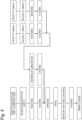
- step 1 will be described below with reference to preferred embodiments.
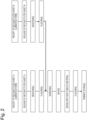
- Fig. 1 illustrates a first embodiment.
- reconstituted tobacco sheets in laminated form are provided and released.
- the moisture content of each reconstituted tobacco sheet at this stage is preferably 5% to 15% by weight.
- the aerosol-source material is added before or after the release.
- the amount of aerosol-source material in the sheet is preferably 5% to 30% by weight.
- Foreign matter is removed from the released reconstituted tobacco sheet.
- a blending silo can also be used to mix the reconstituted tobacco sheets, thereby achieving uniform quality.
- the reconstituted tobacco sheet is then moistened.
- the apparatus used for moistening and the moistening conditions are as described above.
- the moisture content of the reconstituted tobacco sheet is adjusted to 15% to 25% by weight.
- undesirable components derived from the tobacco raw material e.g., components that impart an acrid taste
- an additive is added to the reconstituted tobacco sheet after the moistening.
- the additive is a material other than the raw material, such as the reconstituted tobacco sheet, or the aerosol-source material.
- the additive include tobacco powders; flavoring agents; the above-described aerosol-source material; tobacco flavor enhancers, such as acids and alkalis; solvents, such as ethanol, water, benzyl alcohol, and propylene glycol; and antioxidants, such as polyphenols and vitamins.
- the additive can be added by a known method, i.e., by filling the reconstituted tobacco sheet into a rotating cylinder-type apparatus and spraying, for example, a flavoring agent.
- flavoring is particularly referred to as "flavoring". Flavoring is preferably performed in the present embodiment. Flavoring at this stage is suitable for adding a flavor component having a relatively large molecular weight. This is because such a flavor component has a low vapor pressure and a high affinity for water, and therefore, when added to the reconstituted tobacco sheet after moistening, the flavor component easily permeates into the sheet.
- flavoring agent examples include the following, which may be used alone or in combination of two or more.
- Examples thereof include acetanisole, acetophenone, acetylpyrazine, 2-acetylthiazole, alfalfa extract, amyl alcohol, amyl butyrate, trans-anethole, star anise oil, apple juice, Peru balsam oil, beeswax absolute, benzaldehyde, benzoin resinoid, benzyl alcohol, benzyl benzoate, benzyl phenylacetate, benzyl propionate, 2,3-butanedione, 2-butanol, butyl butyrate, butyric acid, caramel, cardamom oil, carob absolute, ⁇ -carotene, carrot juice, L-carvone, ⁇ -caryophyllene, cassia bark oil, cedarwood oil, celery seed oil, chamomile oil, cinnamic aldehyde, cinnamic acid, cinnamyl alcohol, cinnamyl
- Non Patent Literature 1 tobacco specific nitrosamines
- an antioxidant known as a food additive can be used.
- examples thereof include gallic acid, erythorbic acid, ascorbic acid, catechin, dihydrocaffeic acid, p-coumaric acid, ferulic acid, 3-(4-hydroxyphenyl) propionic acid, quercetin, esculetin, kaempferol, caffeic acid, tocopherol, dibutylhydroxytoluene (BHT), quinic acid, chlorogenic acid, rutin, scopoletin, and cinnamic acid.
- the antioxidant is preferably at least one selected from the group consisting of gallic acid and erythorbic acid.
- the antioxidant is contained in the tobacco filler in an amount of, for example, 0.25% to 10% by weight, preferably 0.25% to 5.0% by weight, more preferably % by weight, based on the tobacco filler.
- the antioxidant can be added to the tobacco filler by, for example, melting or dispersing the antioxidant in a solvent, such as water or ethanol, and spraying the resulting mixture.
- the reconstituted tobacco sheet that has been flavored is shredded.
- the shredding can be performed with a known apparatus.
- the reconstituted tobacco sheet is fed while compressed in such a manner that the end portions thereof are parallel to the direction in which the blades of the knife drum extend, and cut into strands.
- the strands can each have a width of about 0.6 to 1.5 mm from the viewpoint of, for example, ease of filling into the wrapper.
- the length of the strands after the shredding is determined by the size of the individual reconstituted tobacco sheets supplied to the shredding step, the crushed states of the individual reconstituted tobacco sheets in the individual steps, and the crushed states of the strands during and after the shredding.
- each strand preferably has a length of about 5 to 40 mm.
- the reconstituted tobacco sheet is preferably supplied to a shredder using a metering tube. In this step, the moisture content of the reconstituted tobacco sheet supplied in the shredding step may be adjusted to 15% to 25% by weight in order to efficiently perform cutting.
- the strand-shaped reconstituted tobacco sheet is dried.
- the apparatus used for drying and the drying conditions are as described above.
- the moisture content of the reconstituted tobacco sheet is adjusted to 8% to 12% by weight.
- This step also improves the filling capacity of the strand-shaped reconstituted tobacco sheet.
- a solid additive carrying a filler or flavoring agent is added to the strand-shaped reconstituted tobacco sheet.
- the filler include strand-shaped paper, strand-shaped calcium carbonate sheets, and granular porous polysaccharide beads.
- a material to be added preferably has a shape similar to the strands. For example, when a flavoring agent-carrying polysaccharide sheet is added as a flavoring agent-carrying solid additive, the taste and flavor of the non-combustion-heating-type flavor inhalation article during use can be advantageously enhanced.
- the flavoring agent-carrying sheet to be mixed with the tobacco filler is preferably one containing a polysaccharide thickener as a base material, which is disclosed in Japanese Patent Nos. 5941988 , 5934799 , 5514953 , and 5481574 , in view of the balance between the flavor retention performance during storage and the flavoring agent release performance during use.
- the sheet of the flavoring agent-carrying polysaccharide can have a width of about 0.5 to 1.5 mm, a length of about 2 to 4 mm, and a thickness of about 70 ⁇ m.
- the mixing method is not limited.
- Examples thereof include a method in which a conveyor on which a shredded flavoring agent-carrying polysaccharide sheet is conveyed is joined to a conveyor on which a strand-shaped reconstituted tobacco sheet is conveyed to mix them together, and a method in which they are introduced into a cylinder-type mixer to mix them.
- the strand-shaped reconstituted tobacco sheet after drying may be flavored again.
- a flavoring method and a component used are as described above.
- the flavoring at this stage is suitable when a flavor component having a relatively small molecular weight is added.
- a flavor inhalation article can be produced without drying the tobacco filler. For this reason, in this step, the addition of a relatively easily volatile flavor component expressing a flavor, strong flavor characteristics can be imparted to the final product.
- the strands thus obtained are stored.
- the stored tobacco filler (strands) is subjected to the step 2.
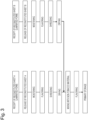
- Fig. 2 illustrates a second embodiment.
- two lines are used. On one line, 1) to 3) of the first embodiment are performed to prepare a reconstituted tobacco sheet A. Similarly, on the other line, 1) to 3) of the first embodiment are performed to prepare a reconstituted tobacco sheet B.
- the reconstituted tobacco sheets A and B are preferably composed of different components. Both reconstituted tobacco sheets A and B may be flavored, one of them may be flavored, or neither need be flavored.
- the reconstituted tobacco sheets A and B are then mixed together.
- the mixing ratio is appropriately adjusted so as to achieve a desired flavor. Mixing them at this point can result in high mixing efficiency.
- the mixture can be subjected to processes, such as shredding and drying, thus resulting in a more uniform product.
- the mixture of the reconstituted tobacco sheets A and B is subjected to steps of shredding, drying, mixing with a non-tobacco material, and flavoring.
- the resulting product is subjected to primary storage. These steps are as described in the first embodiment 4) to 8).
- This embodiment is suitable for producing brands having different flavor characteristics.
- a base material common to these brands is the reconstituted tobacco sheet A
- different brands can be efficiently produced by appropriately using the reconstituted tobacco sheet B serving as a sub-raw material at the time of brand switching.
- the reconstituted tobacco sheet A is analyzed during the production of the reconstituted tobacco sheet A and found to contain insufficient components
- the reconstituted tobacco sheet B designed to compensate for the insufficient components is mixed therewith. This can produce a mixture of the reconstituted tobacco sheets with stable quality.
- Examples of the varieties of tobacco used as a material for the reconstituted tobacco include flue-cured varieties of Nicotiana tabacum, Burley varieties, Oriental varieties, and native varieties. These may be used alone or in combination as a mixture. Typically, the blend ratio thereof is changed to achieve the desired taste and flavor.
- An example of the design concept of blending the sheet A and the sheet B is as follows: The sheet A having high proportions of a flue-cured variety and an Oriental variety, which are constituent tobacco varieties, is prepared (the total amount thereof is preferably more than 50% by weight, more preferably 80% or more by weight, of the total amount of tobaccos).
- the sheet B having a high proportion of a Burley variety or a native variety, which is a constituent tobacco variety, is prepared (the total amount thereof is preferably more than 30% by weight, more preferably 80% or more by weight, of the total amount of tobaccos).
- the blending ratio of the sheet A and the sheet B is determined in accordance with the target taste and flavor, and thus it is possible to manufacture flavor inhalation articles having a large number of variations although the number of types of sheets prepared is two.
- tobacco varieties that exhibit different flavors
- tobacco varieties that have strong taste and flavor characteristics even in a small amount.
- tobaccos include those referred to as Perique, Latakia, and Dark Fire-Cured. These varieties are the same as the aforementioned flue-cured varieties, Burley varieties, Oriental varieties, or native species, but are subjected to smoke treatment or forced fermentation treatment under high-temperature and high-moisture conditions after harvesting in leaf tobacco farmers.
- Specially treated tobaccos such as fermented tobaccos, e.g., Perique and Dark Fire-Cured tobaccos, or smoked tobaccos, e.g., Latakia tobacco, develop unique flavor characteristics when blended in small amounts.
- a reconstituted tobacco sheet containing Perique, Latakia, Dark Fire-Cured, or the like can be used as the sheet B to expand the variation in brand characteristics.
- the total amount of Perique, Latakia, and Dark Fire-Cured tobaccos is preferably 1.0% or more by weight and less than 10.0% by weight, more preferably 1.0% or more by weight and less than 5.0% by weight, based on the total amount of tobacco.
- Fig. 3 illustrates a third embodiment.
- two lines are used. On one line, 1) to 5) of the first embodiment are performed to prepare a strand-shaped reconstituted tobacco sheet A. Similarly, on the other line, 1) to 5) of the first embodiment are performed to prepare a strand-shaped reconstituted tobacco sheet B.
- the reconstituted tobacco sheets A and B are preferably composed of different components. Both reconstituted tobacco sheets A and B may be flavored, or one of them may be flavored.
- the strand-shaped reconstituted tobacco sheets A and B are then mixed together.
- the mixing ratio is appropriately adjusted so as to achieve a desired flavor.
- the resulting mixture is subjected to steps of mixing with a non-tobacco material and flavoring.
- the resulting product is subjected to primary storage. These steps are as described in 6) and 7) of the first embodiments.
- This embodiment is suitable for producing brands having different flavor characteristics as in the second embodiment.
- a base material common to these brands is the reconstituted tobacco sheet A
- different brands can be efficiently produced by appropriately using the reconstituted tobacco sheet B serving as a sub-raw material at the time of brand switching.
- the reconstituted tobacco sheet A is analyzed during the production of the reconstituted tobacco sheet A and found to contain insufficient components
- the reconstituted tobacco sheet B designed to compensate for the insufficient components can also be mixed therewith to produce the reconstituted tobacco sheet A with stable quality.
- the reconstituted tobacco sheets A and B are separately subjected to shredding and drying; thus, it is possible to set conditions according to individual characteristics.
- the optimal drying conditions are different depending on the flavoring agent.
- the conditions suitable for each flavoring agent can be selected.
- Fig. 4 illustrates a fourth embodiment.
- two lines are used.
- 1) to 3) of the first embodiment are performed to process a reconstituted tobacco sheet A.
- laminae are similarly processed.
- the term "laminae” refers to stemmed leaves obtained by removing midribs from tobacco leaves.
- Fig. 4 illustrates an embodiment in which two types of laminae are used, one or more types of laminae can be used.
- laminae A and B are preferably composed of different components.
- the steps up to a step of flavoring a lamina can be performed in the same manner as in 1) to 3) of the first embodiment.
- the laminae A and B are then mixed together, and the resulting mixture is moistened.
- the moistening can be performed in the same manner as in 2) of the first embodiment.
- the moistened mixture is further mixed with the flavored reconstituted tobacco sheet A.
- the resulting mixture is subjected to steps of shredding, drying, mixing with a non-tobacco material, and flavoring.
- the resulting product is subjected to primary storage. These steps are as described in the first embodiment 4) to 8).
- the flavoring may be performed on one or more of the reconstituted tobacco sheet A, the lamina A, and the lamina B, or may be performed on all of them.
- the effects described in the second embodiment can be provided.
- a lamina having a higher filling capacity than the tobacco sheet is mixed, the amount of filling materials required to achieve the same firmness of the wrapped tobacco rod portion can be reduced, compared with the case where the tobacco rod portion is formed of only the tobacco sheet.
- Fig. 5 illustrates a fifth embodiment.
- two lines are used. On one line, 1) to 5) of the first embodiment are performed to prepare a strand-shaped reconstituted tobacco sheet A. Similarly, in the other line, a mixture of the laminae A and B is prepared in the same manner as in 1) to 3) of the first embodiment. The mixture is subjected to moistening, shredding, and drying in the same manner as in 2), 3), and 5) of the first embodiment.
- the strand-shaped reconstituted tobacco sheet A and the strand-shaped lamina mixture are mixed together.
- the mixing ratio is appropriately adjusted so as to achieve a desired flavor.
- the resulting mixture is subjected to steps of mixing with a non-tobacco material and flavoring.
- the resulting product is subjected to primary storage. These steps are as described in the first embodiments 6) and 7).
- the flavoring may be performed on one or more of the reconstituted tobacco sheet A, the lamina A, and the lamina B, or may be performed on all of them.
- the effects described in the third embodiment can be provided.
- the amount of filling materials can also be reduced.
- the manufacturing method of the present invention may further include a step of measuring a component of the tobacco filler and adjusting the amount of additive to be added on the basis of the measurement result.
- An excessively large amount of antioxidant added results in an increase in cost or a deterioration in flavor.
- the determination of an appropriate amount can provide a user-friendly product without causing such an disadvantage.
- flue-cured varieties of Nicotiana tabacum, Burley varieties, Oriental varieties, and native varieties can be used alone or in combination.
- plant parts any one or combination of flowers, leaves, veins, stems, and roots may be used.
- the tobacco plant material is coarsely ground to a size of about 1 to 40 mm and subjected to extraction with water.
- the extraction temperature is preferably 30°C to 90°C, and the extraction time is preferably 10 to 45 minutes.
- the mixture subjected to the extraction step is subjected to a separation operation by centrifugation or using a wire mesh, and separated into an extract and a residue.
- the extract is concentrated under reduced pressure at a temperature of 40°C to 70°C in such a manner that the ratio of the extract to water is 40% to 55% by weight.
- the concentrated liquid is mixed with an aerosol-source material, such as glycerine.
- the residue is mixed with coarsely ground wood pulp.
- the mixture is treated in a refining device (refiner) to fluff the fibers, and then the mixture is further ground to a uniform size.
- refining device refining device
- the mixture of the residue and the wood pulp is suspended in a large amount of water, supplied onto a mesh wire used in a papermaking process at a constant feed rate, dewatered, and dried, thereby forming a sheet.
- the sheet is sprayed with the concentrated liquid. Drying is performed again after the spraying.
- the sheet may be wound on a bobbin, or may be cut into 3 to 10 cm squares with a shredder and stored in a container.
- flue-cured varieties of Nicotiana tabacum, Burley varieties, Oriental varieties, and native varieties can be used alone or in combination.
- plant parts any one or combination of flowers, leaves, veins, stems, and roots may be used.
- the tobacco plant material is ground to a size of 100 ⁇ m or less and mixed with water, pulp, an aerosol-source material, such as glycerine, a binder, such as a gum, a modified cellulose, a polysaccharide thickener, or a modified starch, and a flavoring agent to prepare a slurry.
- the moisture content of the slurry is preferably 50% by volume or more.
- the slurry is spread on a substrate in a thin sheet and dried with a dryer until the moisture content reaches about 7% to 14% by weight.
- the sheet may be wound on a bobbin, or may be cut into 3 to 10 cm squares with a shredder and stored in a container.
- the tobacco plant material is ground to a size of 300 ⁇ m or less and mixed with water, pulp, an aerosol-source material, such as glycerine, a binder, such as a gum, a modified cellulose, a polysaccharide thickener, or a modified starch, and a flavoring agent to prepare a kneaded material. Thereafter, the kneaded material is placed into an extruder in which a die having an opening with a predetermined thickness and a predetermined width is disposed at an outlet portion. A sheet-like kneaded product is extruded from the extruder to a drying section, such as a drying drum or a drying conveyor. Drying is performed with the drying section until the moisture content reaches about 7% to 14% by weight. Finally, the sheet may be wound on a bobbin, or may be cut into 3 to 10 cm squares with a shredder and stored in a container.
- an aerosol-source material such as glycerine
- a tobacco rod portion is prepared in which a tubular wrapper is filled with the tobacco filler prepared in the step 1.
- the tobacco rod portion can be produced by providing paper as a wrapper and wrapping the tobacco filler with the paper.
- the tobacco rod portion can also be produced by providing a tubular wrapper and filling the tobacco filler into the wrapper.
- the cross-sectional shape of the tubular wrapper is not limited and can be circular, elliptical, or polygonal.
- the tobacco filler provided by the manufacturing method of the present invention has particularly better filling capacity.
- the tobacco rod portion of a flavor inhalation article is mainly manufactured by wrapping a tobacco filler with a cylindrical paper wrapper.
- a tobacco filler typically, users tend to prefer tobacco rod portions having certain degrees of firmness.
- To harden the tobacco rod portion it is conceivable to increase the amount of tobacco filler filled, but a larger amount of tobacco filler filled results in higher costs.
- a tobacco filler having high filling capacity can provide a tobacco rod portion having required firmness when filled in a smaller amount.
- smoking articles examples include a flavor inhalation article in which a user tastes flavor by inhalation; and smokeless tobacco (smokeless smoking article) in which a user tastes flavor by directly holding a product in a nasal cavity or an oral cavity.
- Flavor inhalation articles can be roughly classified into combustion-type smoking articles represented by conventional cigarettes and non-combustion-type smoking articles.
- the tobacco rod portion of the present invention is used for a non-combustion-heating-type flavor inhalation article to be heated for use, among non-combustion smoking articles.
- the non-combustion-heating-type flavor inhalation article may be heated by a heating device separate from the article, or may be heated by a heating device integrated with the article.
- the non-combustion-heating-type flavor inhalation article and the heating device are also collectively referred to as a "non-combustion-heating-type smoking system".
- An example of the non-combustion-heating-type smoking system will be described below with reference to Figs. 6 and 7 .
- Fig. 6 is a schematic cross-sectional diagram of an example of a non-combustion-heating-type smoking system, and illustrates a state before a heater 12 is inserted into a tobacco rod portion 20A of a non-combustion-heating-type flavor inhalation article 20. In use, the heater 12 is inserted into the tobacco rod portion 20A.
- Fig. 7 is a cross-sectional diagram of the non-combustion-heating-type flavor inhalation article 20.
- the non-combustion-heating-type smoking system includes a non-combustion-heating-type flavor inhalation article 20 and a heating device 10 configured to heat the tobacco rod portion 20A from the inside thereof.
- the non-combustion-heating-type smoking system is not limited to the configuration of Fig. 6 .
- the heating device 10 illustrated in Fig. 6 includes a body 11 and the heater 12.
- the body 11 may include a battery unit and a control unit.
- the heater 12 may be an electric resistance heater, and is inserted into the tobacco rod portion 20A to heat the tobacco rod portion 20A.
- the figure illustrates an embodiment in which the tobacco rod portion 20A is heated from the inside thereof.
- the non-combustion-heating-type flavor inhalation article 20 is not limited to the embodiment.
- the tobacco rod portion 20A is heated from the outside thereof.
- the heating temperature is preferably, but not particularly limited to, 400°C or lower, more preferably 50°C to 400°C, still more preferably 150°C to 350°C.
- heating temperature refers to the temperature of the heater 12 of the heating device 10.
- the non-combustion-heating-type flavor inhalation article 20 (hereinafter, simply referred to as a "flavor inhalation article 20") has a cylindrical shape.
- the circumference of the flavor inhalation article 20 is preferably 16 mm to 27 mm, more preferably 20 mm to 26 mm, still more preferably 21 mm to 25 mm.
- the total length (length in the horizontal direction) of the flavor inhalation article 20 is preferably, but not particularly limited to, 40 mm to 90 mm, more preferably 50 mm to 75 mm, still more preferably 50 mm to 60 mm.
- the flavor inhalation article 20 includes the tobacco rod portion 20A, a filter portion 20C constituting an inhalation port, and a connecting portion 20B connecting them.
- the tobacco rod portion 20A has a cylindrical shape, and the overall length (length in the axial direction) thereof is, for example, preferably 5 to 100 mm, more preferably 10 to 50 mm, still more preferably 10 to 25 mm.
- the cross-sectional shape of the tobacco rod portion 20A is not particularly limited and can be, for example, circular, elliptical, or polygonal.
- the tobacco rod portion 20A includes a tobacco filler 21 and a wrapper 22 wrapped therearound.
- the wrapper 22 may be a tobacco sheet composed of the tobacco filler of the present invention.
- the filter portion 20C has a cylindrical shape.
- the filter portion 20C has a rod-shaped first segment 25 filled with cellulose acetate fibers and a rod-shaped second segment 26 also filled with cellulose acetate fibers.
- the first segment 25 is located adjacent to the tobacco rod portion 20A.
- the first segment 25 may have a hollow portion.
- the second segment 26 is located adjacent to the inhalation port.
- the second segment 26 is solid.
- the first segment 25 is composed of a first filling layer (cellulose acetate fibers) 25a and an inner plug wrapper 25b wound around the first filling layer 25a.
- the second segment 26 is composed of a second filling layer (cellulose acetate fibers) 26a and an inner plug wrapper 26b wound around the second filling layer 26a.
- the first segment 25 and the second segment 26 are connected by an outer plug wrapper 27.
- the outer plug wrapper 27 is bonded to the first segment 25 and the second segment 26 with a vinyl acetate emulsion-based adhesive or
- the length of the filter portion 20C can be, for example, 10 to 30 mm
- the length of the connecting portion 20B can be, for example, 10 to 30 mm
- the length of the first segment 25 can be, for example, 5 to 15 mm
- the length of the second segment 26 can be, for example, 5 to 15 mm.
- the lengths of these individual segments are merely examples, and can be appropriately changed in accordance with manufacturing suitability, required qualities, the lengths of the tobacco rod portion 20A, and the like.
- the first segment 25 (center hole segment) includes the first filling layer 25a having one or multiple hollow portions and the inner plug wrapper 25b covering the first filling layer 25a.
- the first segment 25 has the function of increasing the strength of the second segment 26.
- the first filling layer 25a of the first segment 25 is densely filled with, for example, cellulose acetate fibers.
- a plasticizer containing triacetin is added to the cellulose acetate fibers in an amount of, for example, 6% to 20% by weight based on the weight of the cellulose acetate, and the cellulose acetate fibers are hardened.
- the hollow portion of the first segment 25 has an inside diameter of, for example, ⁇ 10 to o5.0 mm.
- the first filling layer 25a of the first segment 25 may have, for example, a relatively high fiber filling density, or may have a fiber filling density comparable to the second filling layer 26a of the second segment 26 described below.
- air or aerosol flows through only the hollow portion, and air or aerosol hardly flows through the first filling layer 25a.
- the length of the second segment 26 may be reduced, and the first segment 25 may be lengthened by the shortened length.
- Replacing the shortened portion of the second segment 26 with the first segment 25 is effective in increasing the amount of aerosol component delivered.
- the first filling layer 25a of the first segment 25 is a fiber-filled layer; thus, the tactile sensation from the outside during use does not cause discomfort to the user.
- the second segment 26 is composed of the second filling layer 26a and the inner plug wrapper 26b covering the second filling layer 26a.
- the second segment 26 (filter segment) is filled with cellulose acetate fibers at a typical packing density and has typical filtration performance for aerosol components.
- the first segment 25 and the second segment 26 may have different filtration performances for filtering aerosol (mainstream smoke) released from the tobacco rod portion 20A. At least one of the first segment 25 and the second segment 26 may contain a flavoring agent.
- the structure of the filter portion 20C is freely selected, and may be a structure having multiple segments as described above, or may be composed of a single segment. Alternatively, the filter portion 20C may be composed of one segment. In this case, the filter portion 20C may be composed of any of the first segment and the second segment.
- the connecting portion 20B has a cylindrical shape.
- the connecting portion 20B includes a paper tube 23 formed of, for example, cardboard in a cylindrical shape.
- the connecting portion 20B may be filled with a cooling member for cooling the aerosol.
- An example of the cooling member is a sheet of a polymer, such as poly(lactic acid), and this sheet can be folded and filled.
- a support portion may be disposed between the tobacco rod portion 20A and the connecting portion 20B configured to inhibit variations in the position of the tobacco rod portion 20A.
- the support portion can be composed of a known material, such as a center hole filter like the first segment 25.
- a wrapper 28 is cylindrically wound around the outside of the tobacco rod portion 20A, the connecting portion 20B, and the filter portion 20C, and integrally connects them.
- a vinyl acetate emulsion-based adhesive is applied to the entire surface or substantially the entire surface excluding the vicinities of vent hole portions 24.
- the vent hole portions 24 have two or more through-holes penetrating the connecting portion 20B in the thickness direction.
- the two or more through-holes are formed so as to be radially arranged when viewed from the extension of the central axis of the flavor inhalation article 20.
- the vent hole portions 24 are provided in the connecting portion 20B, but may be provided in the filter portion 20C.
- the two or more through-holes of the vent hole portions 24 are provided in one row at regular intervals on one circular ring, or may be provided in two rows at regular intervals on two circular rings.
- One or two rows of the vent hole portions 24 may be arranged discontinuously or irregularly.
- Reconstituted tobacco sheets were prepared by a papermaking method.
- Table 1 presents proportions of components in finished products, and Table 2 presents the basic physical properties of the finished products.
- Sheet 1 Name: Sheet 2 Thickness [ ⁇ m] 220 220 Basis weight [g/m 2 ] 102 102 Filling capacity [cm 3 /100 g] * 303 342 Moisture content [%] 13.7 13.2 *Filling capacity after processing into a shredded shape with a shred width of 0.8 mm
- the filling capacity was measured according to the following procedure.
- the filling capacity is a value calculated from the height of the column of shredded tobacco, the height being obtained after applying a load of 11.4 kg for 5 seconds to the inside of a measurement cylinder, having a diameter of 95 mm, into which a sample has been placed. That is, the filling capacity represents the volume per unit weight of shreds when the lump of the shreds is compressed at a constant force.
- FP A ⁇ h 5 / W cm 3 / 100 g
- a reconstituted tobacco sheet (name: sheet 1) was shredded with a shredder (available from Hauni, name: KT2L) set at a shred width of 0.8 mm. After the shredding, the shreds had various lengths, and the lengths were in the range of about 5.0 mm to 30.0 mm. The moisture content and the filling capacity of the reconstituted tobacco sheet after the shredding were measured. In the moisture content measurement, the weight loss after storage in an oven at 105°C for 1 hour was calculated as the moisture loss.
- a shredder available from Hauni, name: KT2L
- Shredding was performed in the same manner as in Comparative example 1, except that the type of reconstituted tobacco sheet was changed to sheet 2. The filling capacity was evaluated. The results are described below.
- the reconstituted tobacco sheet (name: sheet 1) was placed in a cylindrical container (inside diameter: 0.9 m, length: 2.0 m) equipped with a moisture-supplying device, a heating device, and a rotating device, and was moistened by adding water vapor. At this time, the temperature of the reconstituted tobacco sheet was about 50°C to 70°C. The cylinder was evacuated when steam and hot water were added. The moisture content of the reconstituted tobacco sheet after the moistening was 18.0% by weight.
- the reconstituted tobacco sheet after the moistening was shredded with a shredder (available from Hauni, name: KT2L) set at a shred width of 0.8 mm.
- the shreds after the shredding had various lengths, and the lengths were in the range of about 5.0 mm to 30.0 mm.
- the moisture content was 18.0% by weight.
- the tobacco sheet after the shredding was dried with a flash dryer.
- the flash dryer (available from Garbuio/Dickinson, name: EVA Dryer 400) was used.
- the moisture content and the filling capacity of the reconstituted tobacco sheet after the flash drying were measured.
- the weight loss after storage in an oven at 105°C for 1 hour was calculated as the moisture loss. The results are described below.
- Shredding was performed in the same manner as in Example 1, except that the type of reconstituted tobacco sheet was changed to sheet 2. The filling capacity was evaluated. The results are described below.
- Each of the two types of reconstituted tobacco sheets produced by the method of the present invention had a higher filling capacity than the reconstituted tobacco sheets produced by the comparative examples.
- the value of the filling capacity is strongly influenced by the shape of the tobacco when measuring the filling capacity. For this reason, all the shredded tobaccos in these examples were of the same shape. In addition, the moisture content of the shredded tobaccos also affects the filling capacity. For this reason, the shredded tobaccos in these examples were made to have the same moisture content as much as possible.
- an empirical formula (experimental formula) there is a correction formula for correcting the moisture content of tobacco in terms of filling capacity. In these examples, differences in moisture content among these levels were small. It was thus determined that moisture content correction was unnecessary.
Landscapes
- Chemical & Material Sciences (AREA)
- Chemical Kinetics & Catalysis (AREA)
- General Chemical & Material Sciences (AREA)
- Health & Medical Sciences (AREA)
- General Health & Medical Sciences (AREA)
- Toxicology (AREA)
- Manufacture Of Tobacco Products (AREA)
Abstract
Description
- The present invention relates to a method for manufacturing a tobacco rod portion for a non-combustion-heating-type flavor inhalation article.
- As alternatives to conventional combustion-type flavor inhalation articles, non-combustion-heating-type flavor inhalation articles have been developed. For such an article, a reconstituted tobacco sheet containing a relatively large amount of aerosol-source material is used. For example, Patent Literatures 1 and 2 each disclose a method for manufacturing a tobacco rod portion by discharging the reconstituted tobacco sheet from a bobbin and directly filling the sheet into a wrapper.
-
- PTL 1:
Japanese Patent No. 6017546 - PTL 2:
Japanese Patent No. 6307661 - NPL 1: Jaccard G. et al., "Investigation and comparison of the transfer of TSNA from tobacco to cigarette mainstream smoke and to the aerosol of a heated tobacco product, THS2.2", Reg. Toxicol. Pharmacol., Vol. 97, p. 103-109, 2018
- The tobacco rod portion can be efficiently manufactured by the method described in each patent literature. The present inventors have conceived that the quality can be further improved by performing a specific treatment before a tobacco filler is filled into a wrapper. In view of the foregoing circumstances, it is an object of the present invention to provide a tobacco rod portion having improved quality for a non-combustion-heating-type flavor inhalation article.
- The above object is achieved by the present invention described below.
- A method for manufacturing a tobacco rod portion for a non-combustion-heating-type flavor inhalation article includes:
- step 1 of moistening and then drying a tobacco filler; and
- step 2 of preparing a tobacco rod portion in which a tubular wrapper is filled with the tobacco filler obtained in the step 1.
- In the method described in the first aspect, the tobacco filler contains an aerosol-source material and a reconstituted tobacco sheet.
- The method described in the second aspect further includes a step of cutting the tobacco filler into a strand shape.
- In the method described in any one of the first to third aspects,
- the tobacco filler contains a reconstituted tobacco sheet A and a reconstituted tobacco sheet B, and
- the step 1 includes separately moistening the reconstituted tobacco sheets, then mixing the reconstituted tobacco sheets to give a mixture, and drying the mixture, or includes separately moistening and then drying the reconstituted tobacco sheets, and subsequently mixing the reconstituted tobacco sheets.
- In the method described in any one of the first to third aspects,
- the tobacco filler contains a reconstituted tobacco sheet A and a lamina, and
- the step 1 includes separately moistening the reconstituted tobacco sheet A and the lamina, then mixing the reconstituted tobacco sheet A and the lamina to give a mixture, and drying the mixture, or includes separately moistening and then drying the reconstituted tobacco sheet A and the lamina, and subsequently mixing the reconstituted tobacco sheet A and the lamina.
- The method described in any one of the first to fifth aspects further includes a step of mixing the tobacco filler with a non-tobacco material.
- The method described in any one of the first to sixth aspects further includes a step of adding an additive to the tobacco filler.
- The method described in the fourth or sixth aspect further includes a step of adding an additive to one or both of the reconstituted tobacco sheet A and the reconstituted tobacco sheet B.
- The method described in the fifth or sixth aspect further includes a step of adding an additive to one or both of the reconstituted tobacco sheet and the lamina.
- The method described in any one of the seventh to ninth aspect further includes a step of measuring a component of the tobacco filler and adjusting the amount or type of the additive added based on the measurement result.
- In the method described in the fourth or fifth aspect,
- a component of the reconstituted tobacco sheet A is measured, and
- the type of the reconstituted tobacco sheet B or the lamina is determined based on the measurement result.
- In the method described in the seventh aspect,
- a component of the reconstituted tobacco sheet A is measured, and
- based on the measurement result,
- the amount or type of the additive added to the reconstituted tobacco sheet B is determined, or
- the amount or type of the additive added to the lamina is determined.
- In the method described in any one of the first to third, sixth, and seventh aspects, the moistening is performed in such a manner that the tobacco filler has a moisture content of 15% to 25% by weight.
- In the method described in any one of the fourth to twelfth aspects, the moistening is performed in such a manner that the reconstituted tobacco sheet has a moisture content of 15% to 25% by weight.
- In the method described in any one of the first to fourteenth aspects, the drying is performed by a flash drying method or an annular drying method.
- In the method described in any one of the fourth to fifteenth aspects, the reconstituted tobacco sheets are each a sheet formed by papermaking, a cast sheet, or an extruded sheet.
- According to the present invention, it is possible to provide a tobacco rod portion having improved quality for a non-combustion-heating-type flavor inhalation article.
-
- [
Fig. 1] Fig. 1 is a conceptual diagram of a first embodiment. - [
Fig. 2] Fig. 2 is a conceptual diagram of a second embodiment. - [
Fig. 3] Fig. 3 is a conceptual diagram of a third embodiment. - [
Fig. 4] Fig. 4 is a conceptual diagram of a fourth embodiment. - [
Fig. 5] Fig. 5 is a conceptual diagram of a fifth embodiment. - [
Fig. 6] Fig. 6 is a schematic cross-sectional diagram of an example of a non-combustion-heating-type smoking system. - [
Fig. 7] Fig. 7 is a schematic cross-sectional diagram of an example of a non-combustion-heating-type flavor inhalation article. - The present invention will be described in detail below. In the present invention, "X to Y" includes X and Y that are end values.
- A manufacturing method of the present invention includes step 1 of moistening and then drying a tobacco filler, and step 2 of preparing a tobacco rod portion in which a tubular wrapper is filled with the tobacco filler obtained in the step 1.
- The tobacco filler is a material that is filled into the wrapper and used for smoking. A known tobacco filler can be used in the present invention. A tobacco sheet is preferably contained from the viewpoint of ease of manufacture. The tobacco sheet is a sheet-shaped tobacco material. A reconstituted tobacco sheet is preferred in the present invention. In one embodiment, the term "tobacco sheet" refers to a sheet-shaped tobacco material or a material derived from the sheet-shaped tobacco material (for example, shreds). A reconstituted tobacco sheet is a tobacco sheet containing a reconstituted material (reconstituted tobacco or reconstituted tobacco granules) composed of the fine powder of plants of the genus Nicotiana. The tobacco sheet may be a sheet produced by a papermaking method, a cast sheet produced by a casting method, or an extruded sheet produced by an extrusion method.
- The papermaking method is a method in which a mixture containing a tobacco raw material and a liquid medium, such as water, is made into paper and dried to produce a sheet. The mixture typically contains a pulped or fiberized tobacco material. The casting method is a method in which a mixture containing a tobacco raw material and a liquid medium, such as water, is spread (cast) on a substrate and dried to produce a sheet. The extrusion method is a method in which a mixture containing a tobacco raw material and a liquid medium, such as water, is extruded through a die, such as a T-die, to produce a sheet.
- The tobacco filler may contain an aerosol-source material. The aerosol-source material is a material that is vaporized by heating and cooled to generate an aerosol or generates an aerosol by atomization. As the aerosol-source material, a known substance can be used. Examples thereof include polyhydric alcohols, such as glycerine and propylene glycol (PG); and materials, such as triethyl citrate (TEC) and triacetin, each having a boiling point of higher than 100°C. The amount of aerosol-source material in the tobacco filler is preferably 1% to 40% by weight, more preferably 5% to 30% by weight, still more preferably 5% to 20% by weight, on a dry weight basis (weight excluding the amount of water contained, the same applies hereinafter). An amount of aerosol-source material of more than the upper limit may result in a difficulty in producing the tobacco filler. An amount of aerosol-source material of less than the lower limit may result in a reduction in smoke sensation.
- In the case of using the reconstituted tobacco sheet, it is preferable to release reconstituted tobacco sheets in laminated form and quantitatively supply them in the step 1. The term "release" indicates that the laminated block of the reconstituted tobacco sheets (in laminated form) is delaminated into individual sheets. The size thereof is not limited. In one embodiment, the laminated form of the reconstituted tobacco sheets has a pillar shape whose cross section has a quadrangular shape with a side of 3 to 10 cm.
- When the reconstituted tobacco sheets in laminated form are conveyed, they are preferably packed in packaging containers each having a shape and a size that are easy to handle. An example of packaging containers is a C-48 box known among tobacco manufacturers. The C-48 box is made of cardboard and measures about 115 × 70 × 75 cm. The reconstituted tobacco sheets in laminated form can be directly packed in the C-48 box, but may be packed in plastic bags and then accommodated in the C-48 box in order to inhibit a change in quality during conveyance. In an embodiment of the present invention, about 100 to 200 kg of the reconstituted tobacco sheets in laminated form are packed in the C-48 box.
- In another embodiment, the regenerated tobacco sheets are conveyed in the form of a bobbin. In a process for manufacturing a reconstituted sheet, a longitudinally continuous sheet having a width of 10 to 100 cm can be wound around a core into a bobbin shape. When the reconstituted tobacco sheet conveyed in the form of a bobbin is used in the present invention, it is necessary to cut the reconstituted tobacco sheet into a predetermined size with, for example, a shredder before the reconstituted tobacco sheet is subjected to the step 1.
- The moistening can be performed with a known apparatus. In the present invention, a cylinder-type apparatus is preferably used from the viewpoint of efficiency. The apparatus includes a water supply device, a heating device, an exhaust device, and a rotating device configured to rotate about a central axis of the cylinder. The moistening is performed by supplying water to the tobacco filler from the water supply device. The moistening conditions are adjusted in such a manner that the moisture content of the tobacco filler after the moistening is about 15% to 25% by weight. In one embodiment, the temperature of the inner wall of the cylinder can be about 50°C to 70°C, the flow rate of air in the cylinder can be about 0.05 to 0.15 m/sec, and the residence time of the tobacco filler can be about 3 to 6 minutes. The dimensions of the cylinder are not limited. In one embodiment, the cylinder has a diameter of about 2 to 4 m and a length of about 5 to 10 m. The moistening is more preferably performed by ventilating the inside of the cylinder. As the tobacco filler is heated, some content components having low boiling points, such as ammonia, are volatilized and vented out of the cylinder by exhaust, thereby reducing negative taste and aroma during use.
- Drying allows the tobacco filler to be in a state suitable for storage. The drying can be performed by a known method. In the present invention, it is preferable to use a flash drying method or an annular drying method from the viewpoint of efficiency. In the former method, the tobacco filler is brought into contact with a heated gas stream (preferably superheated steam) in a tube to dry the tobacco filler. An example of such a device is a device described in International Publication No. 2013/052490. In this method, distinctive flavor characters can also be imparted to the tobacco filler. In this method, the moisture in the tobacco filler is reduced in a short time; thus, the tobacco filler after the drying can be expanded as compared with that before the drying. The shape of the tobacco filler after the drying has a curled shape, thereby increasing the filling capacity of the tobacco filler. In addition, the tobacco filler is dried in a short time in an atmosphere of a large amount of superheated steam; thus, the amount of oxygen in the atmosphere during heating in the drying step can be reduced to inhibit an undesired chemical change of the tobacco filler due to oxygen.
- The latter is a method in which the tobacco filler is heated and dried in a cylinder-type apparatus. With this method, highly volatile components contained in the tobacco filler can also be removed. This method requires a longer time for drying than that of the flash drying method; thus, it is possible to perform fine moisture control and to accurately achieve the finish moisture content at the outlet, which is preferable.
- The step 1 will be described below with reference to preferred embodiments.
-
Fig. 1 illustrates a first embodiment. According to the present embodiment, reconstituted tobacco sheets in laminated form are provided and released. The moisture content of each reconstituted tobacco sheet at this stage is preferably 5% to 15% by weight. The aerosol-source material is added before or after the release. The amount of aerosol-source material in the sheet is preferably 5% to 30% by weight. Foreign matter is removed from the released reconstituted tobacco sheet. A blending silo can also be used to mix the reconstituted tobacco sheets, thereby achieving uniform quality. - The reconstituted tobacco sheet is then moistened. The apparatus used for moistening and the moistening conditions are as described above. At this time, the moisture content of the reconstituted tobacco sheet is adjusted to 15% to 25% by weight. In this step, undesirable components derived from the tobacco raw material (e.g., components that impart an acrid taste) are removed.
- In this step, an additive is added to the reconstituted tobacco sheet after the moistening. The additive is a material other than the raw material, such as the reconstituted tobacco sheet, or the aerosol-source material. Examples of the additive include tobacco powders; flavoring agents; the above-described aerosol-source material; tobacco flavor enhancers, such as acids and alkalis; solvents, such as ethanol, water, benzyl alcohol, and propylene glycol; and antioxidants, such as polyphenols and vitamins. The additive can be added by a known method, i.e., by filling the reconstituted tobacco sheet into a rotating cylinder-type apparatus and spraying, for example, a flavoring agent. In particular, the addition of a tobacco powder or a flavoring agent, which is a flavor component, is particularly referred to as "flavoring". Flavoring is preferably performed in the present embodiment. Flavoring at this stage is suitable for adding a flavor component having a relatively large molecular weight. This is because such a flavor component has a low vapor pressure and a high affinity for water, and therefore, when added to the reconstituted tobacco sheet after moistening, the flavor component easily permeates into the sheet.
- Examples thereof include acetanisole, acetophenone, acetylpyrazine, 2-acetylthiazole, alfalfa extract, amyl alcohol, amyl butyrate, trans-anethole, star anise oil, apple juice, Peru balsam oil, beeswax absolute, benzaldehyde, benzoin resinoid, benzyl alcohol, benzyl benzoate, benzyl phenylacetate, benzyl propionate, 2,3-butanedione, 2-butanol, butyl butyrate, butyric acid, caramel, cardamom oil, carob absolute, β-carotene, carrot juice, L-carvone, β-caryophyllene, cassia bark oil, cedarwood oil, celery seed oil, chamomile oil, cinnamic aldehyde, cinnamic acid, cinnamyl alcohol, cinnamyl cinnamate, citronella oil, DL-citronellol, clary sage extract, cocoa, coffee, cognac oil, coriander oil, cuminaldehyde, davana oil, δ-decalactone, γ-decalactone, decanoic acid, dill herb oil, 3,4-dimethyl-1,2-cyclopentanedione, 4,5-dimethyl-3-hydroxy-2,5-dihydrofuran-2-one, 3,7-dimethyl-6-octenoic acid, 2,3-dimethylpyrazine, 2,5-dimethylpyrazine, 2,6-dimethylpyrazine, ethyl 2-methylbutyrate, ethyl acetate, ethyl butyrate, ethyl hexanoate, ethyl isovalerate, ethyl lactate, ethyl laurate, ethyl levulinate, ethyl maltol, ethyl octanoate, ethyl oleate, ethyl palmitate, ethyl phenylacetate, ethyl propionate, ethyl stearate, ethyl valerate, ethyl vanillin, ethyl vanillin glucoside, 2-ethyl-3,(5 or 6)-dimethylpyrazine, 5-ethyl-3-hydroxy-4-methyl-2(5H)-furanone, 2-ethyl-3-methylpyrazine, eucalyptol, fenugreek absolute, genet absolute, gentian root infusion, geraniol, geranyl acetate, grape juice, guaiacol, guava extract, γ-heptalactone, γ-hexalactone, hexanoic acid, cis-3-hexen-1-ol, hexyl acetate, hexyl alcohol, hexyl phenylacetate, honey, 4-hydroxy-3-pentenoic acid lactone, 4-hydroxy-4-(3-hydroxy-1-butenyl)-3,5,5-trimethyl-2-cyclohexen-1-one, 4-(p-hydroxyphenyl)-2-butanone, sodium 4-hydroxyundecanoate, immortelle absolute, β-ionone, isoamyl acetate, isoamyl butyrate, isoamyl phenylacetate, isobutyl acetate, isobutyl phenylacetate, jasmine absolute, kola nut tincture, labdanum oil, terpeneless lemon oil, glycyrrhiza extract, linalool, linalyl acetate, lovage root oil, maltol, maple syrup, menthol, menthone, L-menthyl acetate, p-methoxybenzaldehyde, methyl-2-pyrrolyl ketone, methyl anthranilate, methyl phenylacetate, methyl salicylate, 4'-methylacetophenone, methylcyclopentenolone, 3-methylvaleric acid, mimosa absolute, molasses, myristic acid, nerol, nerolidol, γ-nonalactone, nutmeg oil, δ-octalactone, octanal, octanoic acid, orange flower oil, orange oil, orris root oil, palmitin acid, ω-pentadecalactone, peppermint oil, petitgrain Paraguay oil, phenethyl alcohol, phenethyl phenylacetate, phenylacetic acid, piperonal, plum extract, propenyl guaethol, propyl acetate, 3-propylidene phthalide, prune juice, pyruvic acid, raisin extract, rose oil, rum, sage oil, sandalwood oil, spearmint oil, styrax absolute, marigold oil, tea distillate, α-terpineol, terpinyl acetate, 5,6,7,8-tetrahydroquinoxaline, 1,5,5,9-tetramethyl-13-oxacyclo(8.3.0.0(4.9))tridecane, 2,3,5,6-tetramethylpyrazine, thyme oil, tomato extract, 2-tridecanone, triethyl citrate, 4-(2,6,6-trimethyl-1-cyclohexenyl)-2-buten-4-one, 2,6,6-trimethyl-2-cyclohexene-1,4-dione, 4-(2,6,6-trimethyl-1,3-cyclohexadienyl)-2-buten-4-one, 2,3,5-trimethylpyrazine, γ-undecalactone, γ-valerolactone, vanilla extract, vanillin, veratraldehyde, violet leaf absolute, N-ethyl-p-menthane-3-carboxamide (WS-3), ethyl-2-(p-menthane-3-carboxamide) acetate (WS-5), sugars (such as sucrose and fructose), cacao powders, carob powders, coriander powders, licorice powders, orange peel powders, rose hip powders, chamomile flower powders, Lemon verbena powders, peppermint powders, leaf powders, spearmint powders, tea powders, natural vegetable flavoring agents (such as jasmine oil, lemon oil, vetiver oil, and lovage oil), esters (such as menthyl acetate and isoamyl propionate), and alcohols (such as phenylethyl alcohol and cis-6-nonen-1-ol).
- It is also preferable to add an antioxidant as an additive. It has been reported that tobacco vapors from non-combustion-heating-type flavor inhalation articles contain TSNAs (Tobacco specific nitrosamines) (Non Patent Literature 1). In the non-combustion-heating-type flavor inhalation article, the tobacco filler is continuously heated for a long time during use. Thus, prolonged heating may form an unintended component in the tobacco filler of the non-combustion-heating-type flavor inhalation article. The addition of the antioxidant can inhibit the aforementioned reaction and inhibit the formation of the unintended component.
- As the antioxidant, for example, an antioxidant known as a food additive can be used. Examples thereof include gallic acid, erythorbic acid, ascorbic acid, catechin, dihydrocaffeic acid, p-coumaric acid, ferulic acid, 3-(4-hydroxyphenyl) propionic acid, quercetin, esculetin, kaempferol, caffeic acid, tocopherol, dibutylhydroxytoluene (BHT), quinic acid, chlorogenic acid, rutin, scopoletin, and cinnamic acid. The antioxidant is preferably at least one selected from the group consisting of gallic acid and erythorbic acid. The antioxidant is contained in the tobacco filler in an amount of, for example, 0.25% to 10% by weight, preferably 0.25% to 5.0% by weight, more preferably % by weight, based on the tobacco filler. The antioxidant can be added to the tobacco filler by, for example, melting or dispersing the antioxidant in a solvent, such as water or ethanol, and spraying the resulting mixture.
- In this step, the reconstituted tobacco sheet that has been flavored is shredded. The shredding can be performed with a known apparatus. In the present invention, preferably, the reconstituted tobacco sheet is fed while compressed in such a manner that the end portions thereof are parallel to the direction in which the blades of the knife drum extend, and cut into strands. Regarding the shape of the strands, the strands can each have a width of about 0.6 to 1.5 mm from the viewpoint of, for example, ease of filling into the wrapper. The length of the strands after the shredding is determined by the size of the individual reconstituted tobacco sheets supplied to the shredding step, the crushed states of the individual reconstituted tobacco sheets in the individual steps, and the crushed states of the strands during and after the shredding. For ease of filling into the wrapper, each strand preferably has a length of about 5 to 40 mm. The reconstituted tobacco sheet is preferably supplied to a shredder using a metering tube. In this step, the moisture content of the reconstituted tobacco sheet supplied in the shredding step may be adjusted to 15% to 25% by weight in order to efficiently perform cutting.
- In this step, the strand-shaped reconstituted tobacco sheet is dried. The apparatus used for drying and the drying conditions are as described above. At this time, the moisture content of the reconstituted tobacco sheet is adjusted to 8% to 12% by weight. This step also improves the filling capacity of the strand-shaped reconstituted tobacco sheet.
- In this step, a solid additive carrying a filler or flavoring agent is added to the strand-shaped reconstituted tobacco sheet. Examples of the filler include strand-shaped paper, strand-shaped calcium carbonate sheets, and granular porous polysaccharide beads. From the viewpoint of enhancing the mixing properties, a material to be added preferably has a shape similar to the strands. For example, when a flavoring agent-carrying polysaccharide sheet is added as a flavoring agent-carrying solid additive, the taste and flavor of the non-combustion-heating-type flavor inhalation article during use can be advantageously enhanced. The flavoring agent-carrying sheet to be mixed with the tobacco filler is preferably one containing a polysaccharide thickener as a base material, which is disclosed in
Japanese Patent Nos. 5941988 5934799 5514953 5481574 - The strand-shaped reconstituted tobacco sheet after drying may be flavored again. A flavoring method and a component used are as described above. The flavoring at this stage is suitable when a flavor component having a relatively small molecular weight is added. After this step, a flavor inhalation article can be produced without drying the tobacco filler. For this reason, in this step, the addition of a relatively easily volatile flavor component expressing a flavor, strong flavor characteristics can be imparted to the final product.
- The strands thus obtained are stored. The stored tobacco filler (strands) is subjected to the step 2.
-
Fig. 2 illustrates a second embodiment. In the present embodiment, two lines are used. On one line, 1) to 3) of the first embodiment are performed to prepare a reconstituted tobacco sheet A. Similarly, on the other line, 1) to 3) of the first embodiment are performed to prepare a reconstituted tobacco sheet B. In this case, the reconstituted tobacco sheets A and B are preferably composed of different components. Both reconstituted tobacco sheets A and B may be flavored, one of them may be flavored, or neither need be flavored. - The reconstituted tobacco sheets A and B are then mixed together. The mixing ratio is appropriately adjusted so as to achieve a desired flavor. Mixing them at this point can result in high mixing efficiency. In addition, the mixture can be subjected to processes, such as shredding and drying, thus resulting in a more uniform product.
- Subsequently, the mixture of the reconstituted tobacco sheets A and B is subjected to steps of shredding, drying, mixing with a non-tobacco material, and flavoring. The resulting product is subjected to primary storage. These steps are as described in the first embodiment 4) to 8).
- This embodiment is suitable for producing brands having different flavor characteristics. For example, when a base material common to these brands is the reconstituted tobacco sheet A, different brands can be efficiently produced by appropriately using the reconstituted tobacco sheet B serving as a sub-raw material at the time of brand switching. When the reconstituted tobacco sheet A is analyzed during the production of the reconstituted tobacco sheet A and found to contain insufficient components, the reconstituted tobacco sheet B designed to compensate for the insufficient components is mixed therewith. This can produce a mixture of the reconstituted tobacco sheets with stable quality.
- Examples of the varieties of tobacco used as a material for the reconstituted tobacco include flue-cured varieties of Nicotiana tabacum, Burley varieties, Oriental varieties, and native varieties. These may be used alone or in combination as a mixture. Typically, the blend ratio thereof is changed to achieve the desired taste and flavor. An example of the design concept of blending the sheet A and the sheet B is as follows: The sheet A having high proportions of a flue-cured variety and an Oriental variety, which are constituent tobacco varieties, is prepared (the total amount thereof is preferably more than 50% by weight, more preferably 80% or more by weight, of the total amount of tobaccos). The sheet B having a high proportion of a Burley variety or a native variety, which is a constituent tobacco variety, is prepared (the total amount thereof is preferably more than 30% by weight, more preferably 80% or more by weight, of the total amount of tobaccos). The blending ratio of the sheet A and the sheet B is determined in accordance with the target taste and flavor, and thus it is possible to manufacture flavor inhalation articles having a large number of variations although the number of types of sheets prepared is two.
- In addition to the above-mentioned four varieties of tobaccos that exhibit different flavors, there are tobacco varieties that have strong taste and flavor characteristics even in a small amount. Examples of such tobaccos include those referred to as Perique, Latakia, and Dark Fire-Cured. These varieties are the same as the aforementioned flue-cured varieties, Burley varieties, Oriental varieties, or native species, but are subjected to smoke treatment or forced fermentation treatment under high-temperature and high-moisture conditions after harvesting in leaf tobacco farmers. Specially treated tobaccos, such as fermented tobaccos, e.g., Perique and Dark Fire-Cured tobaccos, or smoked tobaccos, e.g., Latakia tobacco, develop unique flavor characteristics when blended in small amounts. A reconstituted tobacco sheet containing Perique, Latakia, Dark Fire-Cured, or the like can be used as the sheet B to expand the variation in brand characteristics. The total amount of Perique, Latakia, and Dark Fire-Cured tobaccos is preferably 1.0% or more by weight and less than 10.0% by weight, more preferably 1.0% or more by weight and less than 5.0% by weight, based on the total amount of tobacco.
-
Fig. 3 illustrates a third embodiment. In the present embodiment, two lines are used. On one line, 1) to 5) of the first embodiment are performed to prepare a strand-shaped reconstituted tobacco sheet A. Similarly, on the other line, 1) to 5) of the first embodiment are performed to prepare a strand-shaped reconstituted tobacco sheet B. In this case, the reconstituted tobacco sheets A and B are preferably composed of different components. Both reconstituted tobacco sheets A and B may be flavored, or one of them may be flavored. - The strand-shaped reconstituted tobacco sheets A and B are then mixed together. The mixing ratio is appropriately adjusted so as to achieve a desired flavor.
- Subsequently, the resulting mixture is subjected to steps of mixing with a non-tobacco material and flavoring. The resulting product is subjected to primary storage. These steps are as described in 6) and 7) of the first embodiments.
- This embodiment is suitable for producing brands having different flavor characteristics as in the second embodiment. For example, when a base material common to these brands is the reconstituted tobacco sheet A, different brands can be efficiently produced by appropriately using the reconstituted tobacco sheet B serving as a sub-raw material at the time of brand switching. When the reconstituted tobacco sheet A is analyzed during the production of the reconstituted tobacco sheet A and found to contain insufficient components, the reconstituted tobacco sheet B designed to compensate for the insufficient components can also be mixed therewith to produce the reconstituted tobacco sheet A with stable quality. In the present embodiment, the reconstituted tobacco sheets A and B are separately subjected to shredding and drying; thus, it is possible to set conditions according to individual characteristics. For example, when a flavoring agent added to the reconstituted tobacco sheet A is different from a flavoring agent added to the reconstituted tobacco sheet B, the optimal drying conditions are different depending on the flavoring agent. In the present embodiment, there is an advantage that the conditions suitable for each flavoring agent can be selected.
-
Fig. 4 illustrates a fourth embodiment. In the present embodiment, two lines are used. In one line, 1) to 3) of the first embodiment are performed to process a reconstituted tobacco sheet A. On the other line, laminae are similarly processed. The term "laminae" refers to stemmed leaves obtained by removing midribs from tobacco leaves. WhileFig. 4 illustrates an embodiment in which two types of laminae are used, one or more types of laminae can be used. In this case, laminae A and B are preferably composed of different components. The steps up to a step of flavoring a lamina can be performed in the same manner as in 1) to 3) of the first embodiment. - The laminae A and B are then mixed together, and the resulting mixture is moistened. The moistening can be performed in the same manner as in 2) of the first embodiment. The moistened mixture is further mixed with the flavored reconstituted tobacco sheet A. Subsequently, the resulting mixture is subjected to steps of shredding, drying, mixing with a non-tobacco material, and flavoring. The resulting product is subjected to primary storage. These steps are as described in the first embodiment 4) to 8). The flavoring may be performed on one or more of the reconstituted tobacco sheet A, the lamina A, and the lamina B, or may be performed on all of them.
- In the present embodiment, the effects described in the second embodiment can be provided. When a lamina having a higher filling capacity than the tobacco sheet is mixed, the amount of filling materials required to achieve the same firmness of the wrapped tobacco rod portion can be reduced, compared with the case where the tobacco rod portion is formed of only the tobacco sheet.
-
Fig. 5 illustrates a fifth embodiment. In the present embodiment, two lines are used. On one line, 1) to 5) of the first embodiment are performed to prepare a strand-shaped reconstituted tobacco sheet A. Similarly, in the other line, a mixture of the laminae A and B is prepared in the same manner as in 1) to 3) of the first embodiment. The mixture is subjected to moistening, shredding, and drying in the same manner as in 2), 3), and 5) of the first embodiment. - The strand-shaped reconstituted tobacco sheet A and the strand-shaped lamina mixture are mixed together. The mixing ratio is appropriately adjusted so as to achieve a desired flavor.
- Subsequently, the resulting mixture is subjected to steps of mixing with a non-tobacco material and flavoring. The resulting product is subjected to primary storage. These steps are as described in the first embodiments 6) and 7). The flavoring may be performed on one or more of the reconstituted tobacco sheet A, the lamina A, and the lamina B, or may be performed on all of them.
- In the present embodiment, the effects described in the third embodiment can be provided. As described in the fourth embodiment, the amount of filling materials can also be reduced.
- The manufacturing method of the present invention may further include a step of measuring a component of the tobacco filler and adjusting the amount of additive to be added on the basis of the measurement result. In this case, it is preferable to transmit the measurement result to a controller and to transmit the resulting information from the controller to an additive-adding device. In particular, it is preferable to measure nitrite in the tobacco filler and to determine the amount of antioxidant added on the basis of the measurement result. An excessively large amount of antioxidant added results in an increase in cost or a deterioration in flavor. Thus, the determination of an appropriate amount can provide a user-friendly product without causing such an disadvantage.
- Preferred embodiments of the preparation of reconstituted tobacco sheets will be described below.
- As tobacco plant materials, flue-cured varieties of Nicotiana tabacum, Burley varieties, Oriental varieties, and native varieties can be used alone or in combination. Regarding plant parts, any one or combination of flowers, leaves, veins, stems, and roots may be used.
- The tobacco plant material is coarsely ground to a size of about 1 to 40 mm and subjected to extraction with water. The extraction temperature is preferably 30°C to 90°C, and the extraction time is preferably 10 to 45 minutes.
- The mixture subjected to the extraction step is subjected to a separation operation by centrifugation or using a wire mesh, and separated into an extract and a residue. The extract is concentrated under reduced pressure at a temperature of 40°C to 70°C in such a manner that the ratio of the extract to water is 40% to 55% by weight. The concentrated liquid is mixed with an aerosol-source material, such as glycerine. The residue is mixed with coarsely ground wood pulp. The mixture is treated in a refining device (refiner) to fluff the fibers, and then the mixture is further ground to a uniform size. The mixture of the residue and the wood pulp is suspended in a large amount of water, supplied onto a mesh wire used in a papermaking process at a constant feed rate, dewatered, and dried, thereby forming a sheet. The sheet is sprayed with the concentrated liquid. Drying is performed again after the spraying. Finally, the sheet may be wound on a bobbin, or may be cut into 3 to 10 cm squares with a shredder and stored in a container.
- Examples of the raw-material composition, components, and physical properties of the reconstituted tobacco sheet by the papermaking method is described below.
-
- Flue-cured lamina/scrap (mesophyll): 50% to 70% by weight
- Burley lamina: 0% to 50% by weight
- Flue-cured midrib (vein): 0% to 50% by weight
- Burley midrib: 0% to 35% by weight
- Wood pulp: 7% to 12% by weight
- Glycerine: 10% to 20% by weight
- Moisture content: 7% to 12% by weight
-
- Nicotine: 0.8% to 3.0% by weight (dry basis)
- Reducing sugar: 5.0% to 20.0% by weight (dry basis)
-
- Filling capacity after simply shredding to a width of 0.8 mm: 250 to 400 cm3/100 g
- Filling capacity after addition of water, shredding to a width of 0.8 mm, and flash drying: 300 to 450 cm3/100 g
- As tobacco plant materials, flue-cured varieties of Nicotiana tabacum, Burley varieties, Oriental varieties, and native varieties can be used alone or in combination. Regarding plant parts, any one or combination of flowers, leaves, veins, stems, and roots may be used.
- The tobacco plant material is ground to a size of 100 µm or less and mixed with water, pulp, an aerosol-source material, such as glycerine, a binder, such as a gum, a modified cellulose, a polysaccharide thickener, or a modified starch, and a flavoring agent to prepare a slurry. The moisture content of the slurry is preferably 50% by volume or more. Thereafter, the slurry is spread on a substrate in a thin sheet and dried with a dryer until the moisture content reaches about 7% to 14% by weight. Finally, the sheet may be wound on a bobbin, or may be cut into 3 to 10 cm squares with a shredder and stored in a container.
- Examples of the raw-material composition and components of the reconstituted tobacco sheet by the casting method is described below.
-
- Flue-cured lamina (mesophyll): 60% to 95% by weight
- Burley lamina: 0% to 20% by weight
- Flue-cured midrib (vein): 0% to 20% by weight
- Burley midrib: 0% by weight
- Wood pulp: 3% to 5% by weight
- Glycerine: 10% to 20% by weight
- Guar gum: 2% to 10% by weight
- Moisture content: 7% to 14%
-
- Nicotine: 1.5% to 5.0% by weight (dry basis)
- Reducing sugar: 5% to 20% by weight (dry basis)
- The tobacco plant material is ground to a size of 300 µm or less and mixed with water, pulp, an aerosol-source material, such as glycerine, a binder, such as a gum, a modified cellulose, a polysaccharide thickener, or a modified starch, and a flavoring agent to prepare a kneaded material. Thereafter, the kneaded material is placed into an extruder in which a die having an opening with a predetermined thickness and a predetermined width is disposed at an outlet portion. A sheet-like kneaded product is extruded from the extruder to a drying section, such as a drying drum or a drying conveyor. Drying is performed with the drying section until the moisture content reaches about 7% to 14% by weight. Finally, the sheet may be wound on a bobbin, or may be cut into 3 to 10 cm squares with a shredder and stored in a container.
- Examples of the raw-material composition and components of the reconstituted tobacco sheet by the extrusion method is described below.
-
- Flue-cured lamina (mesophyll): 60% to 95% by weight
- Burley lamina: 0% to 20% by weight
- Flue-cured midrib (vein): 0% to 20% by weight
- Burley midrib: 0% by weight
- Wood pulp: 3% to 5% by weight
- Glycerine: 10% to 20% by weight
- Hydroxypropyl cellulose: 2% to 10% by weight
- Moisture content: 7% to 14%
-
- Nicotine: 1.5% to 5.0% by weight (dry basis)
- Reducing sugar: 5% to 20% by weight (dry basis)
- In this step, a tobacco rod portion is prepared in which a tubular wrapper is filled with the tobacco filler prepared in the step 1. For example, the tobacco rod portion can be produced by providing paper as a wrapper and wrapping the tobacco filler with the paper. Alternatively, the tobacco rod portion can also be produced by providing a tubular wrapper and filling the tobacco filler into the wrapper. The cross-sectional shape of the tubular wrapper is not limited and can be circular, elliptical, or polygonal.
- The tobacco filler provided by the manufacturing method of the present invention has particularly better filling capacity. The term "filling capacity" refers to a volume per unit weight when a lump of the tobacco filler (preferably shreds) is compressed at a constant force, and is also an index of bulk density. Specifically, the filling capacity is calculated from the following formula using the height of the column of shredded tobacco, the height being obtained after applying a load of 11.4 kg for 5 seconds to the inside of a measurement cylinder, having a diameter of 95 mm, into which a sample has been placed:

- FP: filling capacity,
- A: the cross-sectional area of the column of the shredded tobacco,
- W: the weight of the shredded tobacco, and
- h5: the height of the column of the shredded tobacco at the end of loading.
- The tobacco rod portion of a flavor inhalation article (or smoking article) is mainly manufactured by wrapping a tobacco filler with a cylindrical paper wrapper. Typically, users tend to prefer tobacco rod portions having certain degrees of firmness. To harden the tobacco rod portion, it is conceivable to increase the amount of tobacco filler filled, but a larger amount of tobacco filler filled results in higher costs. A tobacco filler having high filling capacity, however, can provide a tobacco rod portion having required firmness when filled in a smaller amount.
- Examples of smoking articles include a flavor inhalation article in which a user tastes flavor by inhalation; and smokeless tobacco (smokeless smoking article) in which a user tastes flavor by directly holding a product in a nasal cavity or an oral cavity. Flavor inhalation articles can be roughly classified into combustion-type smoking articles represented by conventional cigarettes and non-combustion-type smoking articles. The tobacco rod portion of the present invention is used for a non-combustion-heating-type flavor inhalation article to be heated for use, among non-combustion smoking articles.
- The non-combustion-heating-type flavor inhalation article may be heated by a heating device separate from the article, or may be heated by a heating device integrated with the article. In the former flavor inhalation article (separate type), the non-combustion-heating-type flavor inhalation article and the heating device are also collectively referred to as a "non-combustion-heating-type smoking system". An example of the non-combustion-heating-type smoking system will be described below with reference to
Figs. 6 and 7 . -
Fig. 6 is a schematic cross-sectional diagram of an example of a non-combustion-heating-type smoking system, and illustrates a state before aheater 12 is inserted into atobacco rod portion 20A of a non-combustion-heating-typeflavor inhalation article 20. In use, theheater 12 is inserted into thetobacco rod portion 20A.Fig. 7 is a cross-sectional diagram of the non-combustion-heating-typeflavor inhalation article 20. - As illustrated in
Fig. 6 , the non-combustion-heating-type smoking system includes a non-combustion-heating-typeflavor inhalation article 20 and aheating device 10 configured to heat thetobacco rod portion 20A from the inside thereof. However, the non-combustion-heating-type smoking system is not limited to the configuration ofFig. 6 . - The
heating device 10 illustrated inFig. 6 includes abody 11 and theheater 12. Although not illustrated in the figure, thebody 11 may include a battery unit and a control unit. Theheater 12 may be an electric resistance heater, and is inserted into thetobacco rod portion 20A to heat thetobacco rod portion 20A. - The figure illustrates an embodiment in which the
tobacco rod portion 20A is heated from the inside thereof. However, the non-combustion-heating-typeflavor inhalation article 20 is not limited to the embodiment. In another embodiment, thetobacco rod portion 20A is heated from the outside thereof. - In the
heating device 10, the heating temperature is preferably, but not particularly limited to, 400°C or lower, more preferably 50°C to 400°C, still more preferably 150°C to 350°C. The term "heating temperature" refers to the temperature of theheater 12 of theheating device 10. - As illustrated in
Fig. 7 , the non-combustion-heating-type flavor inhalation article 20 (hereinafter, simply referred to as a "flavor inhalation article 20") has a cylindrical shape. The circumference of theflavor inhalation article 20 is preferably 16 mm to 27 mm, more preferably 20 mm to 26 mm, still more preferably 21 mm to 25 mm. The total length (length in the horizontal direction) of theflavor inhalation article 20 is preferably, but not particularly limited to, 40 mm to 90 mm, more preferably 50 mm to 75 mm, still more preferably 50 mm to 60 mm. - The
flavor inhalation article 20 includes thetobacco rod portion 20A, afilter portion 20C constituting an inhalation port, and a connectingportion 20B connecting them. - The
tobacco rod portion 20A has a cylindrical shape, and the overall length (length in the axial direction) thereof is, for example, preferably 5 to 100 mm, more preferably 10 to 50 mm, still more preferably 10 to 25 mm. The cross-sectional shape of thetobacco rod portion 20A is not particularly limited and can be, for example, circular, elliptical, or polygonal. - The
tobacco rod portion 20A includes atobacco filler 21 and awrapper 22 wrapped therearound. Thewrapper 22 may be a tobacco sheet composed of the tobacco filler of the present invention. - The
filter portion 20C has a cylindrical shape. Thefilter portion 20C has a rod-shapedfirst segment 25 filled with cellulose acetate fibers and a rod-shapedsecond segment 26 also filled with cellulose acetate fibers. Thefirst segment 25 is located adjacent to thetobacco rod portion 20A. Thefirst segment 25 may have a hollow portion. Thesecond segment 26 is located adjacent to the inhalation port. Thesecond segment 26 is solid. Thefirst segment 25 is composed of a first filling layer (cellulose acetate fibers) 25a and aninner plug wrapper 25b wound around thefirst filling layer 25a. Thesecond segment 26 is composed of a second filling layer (cellulose acetate fibers) 26a and aninner plug wrapper 26b wound around thesecond filling layer 26a. Thefirst segment 25 and thesecond segment 26 are connected by anouter plug wrapper 27. Theouter plug wrapper 27 is bonded to thefirst segment 25 and thesecond segment 26 with a vinyl acetate emulsion-based adhesive or the like. - The length of the
filter portion 20C can be, for example, 10 to 30 mm, the length of the connectingportion 20B can be, for example, 10 to 30 mm, the length of thefirst segment 25 can be, for example, 5 to 15 mm, and the length of thesecond segment 26 can be, for example, 5 to 15 mm. The lengths of these individual segments are merely examples, and can be appropriately changed in accordance with manufacturing suitability, required qualities, the lengths of thetobacco rod portion 20A, and the like. - For example, the first segment 25 (center hole segment) includes the
first filling layer 25a having one or multiple hollow portions and theinner plug wrapper 25b covering thefirst filling layer 25a. Thefirst segment 25 has the function of increasing the strength of thesecond segment 26. Thefirst filling layer 25a of thefirst segment 25 is densely filled with, for example, cellulose acetate fibers. A plasticizer containing triacetin is added to the cellulose acetate fibers in an amount of, for example, 6% to 20% by weight based on the weight of the cellulose acetate, and the cellulose acetate fibers are hardened. The hollow portion of thefirst segment 25 has an inside diameter of, for example, ø10 to o5.0 mm. - The
first filling layer 25a of thefirst segment 25 may have, for example, a relatively high fiber filling density, or may have a fiber filling density comparable to thesecond filling layer 26a of thesecond segment 26 described below. Thus, at the time of inhalation, air or aerosol flows through only the hollow portion, and air or aerosol hardly flows through thefirst filling layer 25a. For example, in order to reduce the decrease of an aerosol component in thesecond segment 26 due to filtration, for example, the length of thesecond segment 26 may be reduced, and thefirst segment 25 may be lengthened by the shortened length. - Replacing the shortened portion of the
second segment 26 with thefirst segment 25 is effective in increasing the amount of aerosol component delivered. Thefirst filling layer 25a of thefirst segment 25 is a fiber-filled layer; thus, the tactile sensation from the outside during use does not cause discomfort to the user. - The
second segment 26 is composed of thesecond filling layer 26a and theinner plug wrapper 26b covering thesecond filling layer 26a. The second segment 26 (filter segment) is filled with cellulose acetate fibers at a typical packing density and has typical filtration performance for aerosol components. - The
first segment 25 and thesecond segment 26 may have different filtration performances for filtering aerosol (mainstream smoke) released from thetobacco rod portion 20A. At least one of thefirst segment 25 and thesecond segment 26 may contain a flavoring agent. The structure of thefilter portion 20C is freely selected, and may be a structure having multiple segments as described above, or may be composed of a single segment. Alternatively, thefilter portion 20C may be composed of one segment. In this case, thefilter portion 20C may be composed of any of the first segment and the second segment. - The connecting
portion 20B has a cylindrical shape. The connectingportion 20B includes apaper tube 23 formed of, for example, cardboard in a cylindrical shape. The connectingportion 20B may be filled with a cooling member for cooling the aerosol. An example of the cooling member is a sheet of a polymer, such as poly(lactic acid), and this sheet can be folded and filled. A support portion may be disposed between thetobacco rod portion 20A and the connectingportion 20B configured to inhibit variations in the position of thetobacco rod portion 20A. The support portion can be composed of a known material, such as a center hole filter like thefirst segment 25. - A
wrapper 28 is cylindrically wound around the outside of thetobacco rod portion 20A, the connectingportion 20B, and thefilter portion 20C, and integrally connects them. On one surface (inner surface) of thewrapper 28, a vinyl acetate emulsion-based adhesive is applied to the entire surface or substantially the entire surface excluding the vicinities ofvent hole portions 24. After thetobacco rod portion 20A, the connectingportion 20B, and thefilter portion 20C are integrated with thewrapper 28, the multiplevent hole portions 24 are formed by laser processing from the outside. - The
vent hole portions 24 have two or more through-holes penetrating the connectingportion 20B in the thickness direction. The two or more through-holes are formed so as to be radially arranged when viewed from the extension of the central axis of theflavor inhalation article 20. In the present embodiment, thevent hole portions 24 are provided in the connectingportion 20B, but may be provided in thefilter portion 20C. In the present embodiment, the two or more through-holes of thevent hole portions 24 are provided in one row at regular intervals on one circular ring, or may be provided in two rows at regular intervals on two circular rings. One or two rows of thevent hole portions 24 may be arranged discontinuously or irregularly. When a user holds the inhalation port in user's mouth and inhales, outside air is taken into the mainstream smoke through thevent hole portions 24. However, thevent hole portions 24 need not be provided. - Reconstituted tobacco sheets were prepared by a papermaking method. Table 1 presents proportions of components in finished products, and Table 2 presents the basic physical properties of the finished products.
-
Table 1 Raw material Name: Sheet 1 Name: Sheet 2 Tobacco mesophyll (variety: flue-cured, Burley, Oriental) 66.6% 63.2% Tobacco vein (variety: flue-cured) 7.4% 15.8% Wood pulp 11.0% 6.0% Glycerine 15.0% 15.0% Total 100.0% 100.0% * % by weight on wet basis -
Table 2 Name: Sheet 1 Name: Sheet 2 Thickness [µm] 220 220 Basis weight [g/m2] 102 102 Filling capacity [cm3/100 g] * 303 342 Moisture content [%] 13.7 13.2 *Filling capacity after processing into a shredded shape with a shred width of 0.8 mm - The filling capacity was measured according to the following procedure.
-
- Instrument name: Factory Densimeter D51 (
version 12Rev 27/03/02) - Instrument manufacturer: Borgwaldt (Germany)
- Temperature: 22°C, relative humidity: 60%
-
- Tobacco container size
- Inside diameter: 95 mm
- Capacity: about 1.5 L
- Loading weight: 11.4 kg
- Descending speed: about 30 mm/s
- Loading interval: 5 seconds
- Interval time: 10 seconds
- The filling capacity is a value calculated from the height of the column of shredded tobacco, the height being obtained after applying a load of 11.4 kg for 5 seconds to the inside of a measurement cylinder, having a diameter of 95 mm, into which a sample has been placed. That is, the filling capacity represents the volume per unit weight of shreds when the lump of the shreds is compressed at a constant force.

- FP: filling capacity,
- A: the cross-sectional area of the column of the shredded tobacco,
- W: the weight of the shredded tobacco, and
- h5: the height of the column of the shredded tobacco at the end of loading.
- A reconstituted tobacco sheet (name: sheet 1) was shredded with a shredder (available from Hauni, name: KT2L) set at a shred width of 0.8 mm. After the shredding, the shreds had various lengths, and the lengths were in the range of about 5.0 mm to 30.0 mm. The moisture content and the filling capacity of the reconstituted tobacco sheet after the shredding were measured. In the moisture content measurement, the weight loss after storage in an oven at 105°C for 1 hour was calculated as the moisture loss.
- The results are described below.
- Water content: 13.7 [% by weight]
- Filling capacity: 303 [cm3/100 g]
- Shredding was performed in the same manner as in Comparative example 1, except that the type of reconstituted tobacco sheet was changed to sheet 2. The filling capacity was evaluated. The results are described below.
- The results are as follows.
- Moisture content: 13.2 [% by weight]
- Filling capacity: 342 [cm3/100 g]
- The reconstituted tobacco sheet (name: sheet 1) was placed in a cylindrical container (inside diameter: 0.9 m, length: 2.0 m) equipped with a moisture-supplying device, a heating device, and a rotating device, and was moistened by adding water vapor. At this time, the temperature of the reconstituted tobacco sheet was about 50°C to 70°C. The cylinder was evacuated when steam and hot water were added. The moisture content of the reconstituted tobacco sheet after the moistening was 18.0% by weight.
- The reconstituted tobacco sheet after the moistening was shredded with a shredder (available from Hauni, name: KT2L) set at a shred width of 0.8 mm. The shreds after the shredding had various lengths, and the lengths were in the range of about 5.0 mm to 30.0 mm. The moisture content was 18.0% by weight.
- The tobacco sheet after the shredding was dried with a flash dryer. The flash dryer (available from Garbuio/Dickinson, name: EVA Dryer 400) was used.
- The moisture content and the filling capacity of the reconstituted tobacco sheet after the flash drying were measured. In the moisture content measurement, the weight loss after storage in an oven at 105°C for 1 hour was calculated as the moisture loss. The results are described below.
- Moisture content: 13.3 [% by weight]
- Filling capacity: 354 [cm3/100 g]
- Shredding was performed in the same manner as in Example 1, except that the type of reconstituted tobacco sheet was changed to sheet 2. The filling capacity was evaluated. The results are described below.
- Moisture content: 13.2 [% by weight]
- Filling capacity: 371 [cm3/100 g]
- The above results are summarized in the table below.
[Table 3] Moisture content [% by weight] Filling capacity [cm3/100 g] Sheet 1 Before treatment (Comparative example 1) 13.7 303 After treatment (Example 1) 13.3 354 Sheet 2 Before treatment (Comparative example 2) 13.2 342 After treatment (Example 2) 13.2 371 - Each of the two types of reconstituted tobacco sheets produced by the method of the present invention had a higher filling capacity than the reconstituted tobacco sheets produced by the comparative examples. The value of the filling capacity is strongly influenced by the shape of the tobacco when measuring the filling capacity. For this reason, all the shredded tobaccos in these examples were of the same shape. In addition, the moisture content of the shredded tobaccos also affects the filling capacity. For this reason, the shredded tobaccos in these examples were made to have the same moisture content as much as possible. As an empirical formula (experimental formula), there is a correction formula for correcting the moisture content of tobacco in terms of filling capacity. In these examples, differences in moisture content among these levels were small. It was thus determined that moisture content correction was unnecessary.
Claims (16)
- A method for manufacturing a tobacco rod portion for a non-combustion-heating-type flavor inhalation article, comprising:step 1 of moistening and then drying a tobacco filler; andstep 2 of preparing a tobacco rod portion in which a tubular wrapper is filled with the tobacco filler obtained in the step 1.
- The method according to claim 1, wherein the tobacco filler contains an aerosol-source material and a reconstituted tobacco sheet.
- The method according to claim 2, further comprising a step of cutting the tobacco filler into a strand shape.
- The method according to any one of claims 1 to 3,wherein the tobacco filler contains a reconstituted tobacco sheet A and a reconstituted tobacco sheet B, andthe step 1 includes separately moistening the reconstituted tobacco sheets, then mixing the reconstituted tobacco sheets to give a mixture, and drying the mixture, or includes separately moistening and then drying the reconstituted tobacco sheets, and subsequently mixing the reconstituted tobacco sheets.
- The method according to any one of claims 1 to 3,wherein the tobacco filler contains a reconstituted tobacco sheet A and a lamina, andthe step 1 includes separately moistening the reconstituted tobacco sheet A and the lamina, then mixing the reconstituted tobacco sheet A and the lamina to give a mixture, and drying the mixture, or includes separately moistening and then drying the reconstituted tobacco sheet A and the lamina, and subsequently mixing the reconstituted tobacco sheet A and the lamina.
- The method according to any one of claims 1 to 5, further comprising a step of mixing the tobacco filler with a non-tobacco material.
- The method according to any one of claims 1 to 6, further comprising a step of adding an additive to the tobacco filler.
- The method according to claim 4 or 6, further comprising a step of adding an additive to one or both of the reconstituted tobacco sheet A and the reconstituted tobacco sheet B.
- The method according to claim 5 or 6, further comprising a step of adding an additive to one or both of the reconstituted tobacco sheet and the lamina.
- The method according to any one of claims 7 to 9, further comprising a step of measuring a component of the tobacco filler and adjusting an amount or type of the additive added based on a measurement result.
- The method according to claim 4 or 5,wherein a component of the reconstituted tobacco sheet A is measured, anda type of the reconstituted tobacco sheet B or the lamina is determined based on a measurement result.
- The method according to claim 7,wherein a component of the reconstituted tobacco sheet A is measured, andbased on a measurement result,an amount or type of the additive added to the reconstituted tobacco sheet B is determined, oran amount or type of the additive added to the lamina is determined.
- The method according to any one of claims 1 to 3, 6, and 7, wherein the moistening is performed in such a manner that the tobacco filler has a moisture content of 15% to 25% by weight.
- The method according to any one of claims 4 to 12, wherein the moistening is performed in such a manner that the reconstituted tobacco sheet has a moisture content of 15% to 25% by weight.
- The method according to any one of claims 1 to 14, wherein the drying is performed by a flash drying method or an annular drying method.
- The method according to any one of claims 4 to 15, wherein the reconstituted tobacco sheets are each a sheet formed by papermaking, a cast sheet, or an extruded sheet.
Applications Claiming Priority (2)
| Application Number | Priority Date | Filing Date | Title |
|---|---|---|---|
| JP2020215304 | 2020-12-24 | ||
| PCT/JP2021/045741 WO2022138263A1 (en) | 2020-12-24 | 2021-12-13 | Method for manufacturing tobacco rod part for non-combustion heating-type flavor inhalation article |
Publications (2)
| Publication Number | Publication Date |
|---|---|
| EP4268622A1 true EP4268622A1 (en) | 2023-11-01 |
| EP4268622A4 EP4268622A4 (en) | 2024-12-18 |
Family
ID=82157820
Family Applications (1)
| Application Number | Title | Priority Date | Filing Date |
|---|---|---|---|
| EP21910412.2A Pending EP4268622A4 (en) | 2020-12-24 | 2021-12-13 | Method for manufacturing tobacco rod part for non-combustion heating-type flavor inhalation article |
Country Status (3)
| Country | Link |
|---|---|
| EP (1) | EP4268622A4 (en) |
| JP (1) | JP7671310B2 (en) |
| WO (1) | WO2022138263A1 (en) |
Families Citing this family (4)
| Publication number | Priority date | Publication date | Assignee | Title |
|---|---|---|---|---|
| KR102838798B1 (en) * | 2022-07-26 | 2025-07-25 | 주식회사 케이티앤지 | Flavor sheet comprising active carbon, filter and smoking article comprising the same |
| CN116941806A (en) * | 2023-07-26 | 2023-10-27 | 四川中烟工业有限责任公司 | Treatment method of cigar core tobacco with sugar fumigation flavor |
| WO2026003957A1 (en) * | 2024-06-25 | 2026-01-02 | 日本たばこ産業株式会社 | Production method for sheet for flavor-generating article |
| CN223773088U (en) * | 2024-12-06 | 2026-01-09 | 思摩尔国际控股有限公司 | Aerosol generating product and aerosol generating system |
Family Cites Families (25)
| Publication number | Priority date | Publication date | Assignee | Title |
|---|---|---|---|---|
| DE69428563T2 (en) * | 1993-11-08 | 2002-06-27 | Philip Morris Products Inc., Richmond | Process for the preparation of a cigarette filler mixture |
| JP3871258B2 (en) * | 2000-02-16 | 2007-01-24 | 日本たばこ産業株式会社 | And method for producing chopped tobacco |
| CN101305836B (en) | 2007-05-18 | 2010-12-01 | 云南瑞升烟草技术(集团)有限公司 | Method and device for preparing expanded stem granule |
| JPWO2009142159A1 (en) | 2008-05-19 | 2011-09-29 | 日本たばこ産業株式会社 | Fragrance-containing material for cigarette, method for producing the same, and cigarette |
| UA109311C2 (en) | 2011-03-02 | 2015-08-10 | FIELD OF THE PREPOSITION OF THE SMOKING PRODUCT | |
| MX358027B (en) | 2011-05-31 | 2018-08-01 | Philip Morris Products Sa | Rods for use in smoking articles. |
| EP2764700A4 (en) | 2011-10-04 | 2015-07-29 | Google Inc | System and method for obtaining video streams |
| CN104582512A (en) | 2012-08-31 | 2015-04-29 | 日本烟草产业株式会社 | Fragrance-loaded cigarette component and cigarette containing same |
| JP5941988B2 (en) | 2012-08-31 | 2016-06-29 | 日本たばこ産業株式会社 | Method for producing flavor component carrying member and method for producing tobacco product |
| GB201302485D0 (en) * | 2013-02-13 | 2013-03-27 | British American Tobacco Co | Tobacco Treatment |
| GB201314917D0 (en) | 2013-08-21 | 2013-10-02 | British American Tobacco Co | Treated Tobacco and processes for preparing the same, Devices including the same and uses thereof |
| PT3136881T (en) | 2014-08-13 | 2018-01-04 | Philip Morris Products Sa | Method of making a rod for use as an aerosol-forming substrate having controlled porosity distribution |
| BR112017003797B1 (en) * | 2014-09-30 | 2022-05-24 | Philip Morris Products S.A. | Method for producing homogenized tobacco material |
| CN104770846B (en) * | 2015-03-05 | 2017-03-08 | 云南中烟工业有限责任公司 | A kind of raising is reproduced cut tobacco and mixes the method for joining precision |
| GB201803905D0 (en) * | 2018-03-12 | 2018-04-25 | British American Tobacco Investments Ltd | Methods for treating tobacco, material, apparatus for treating tobacco material, treated tobacco material and uses thereof |
| CN111867404B (en) | 2018-08-09 | 2022-09-13 | 韩国烟草人参公社 | Method and apparatus for producing aerosol-forming rod |
| CN110810885A (en) | 2018-08-14 | 2020-02-21 | 秦皇岛烟草机械有限责任公司 | A device for pre-loosening and moisturizing of sheet tobacco |
| GB201817556D0 (en) * | 2018-10-29 | 2018-12-12 | Nerudia Ltd | Smoking substitute consumable |
| CN109288137B (en) | 2018-11-21 | 2020-11-03 | 湖北中烟工业有限责任公司 | Preparation method and application of tobacco shreds added with atomizing agent |
| IT201800010532A1 (en) * | 2018-11-23 | 2020-05-23 | Magg Consulting S R L | Improved Method for Preparing Solid Smoke Products. |
| WO2020148902A1 (en) * | 2019-01-18 | 2020-07-23 | 日本たばこ産業株式会社 | Method for producing laminated reconstituted tobacco sheet |
| FR3095739B1 (en) | 2019-05-07 | 2024-05-10 | Swm Luxembourg Sarl | HIGH DENSITY RECONSTITUTED PLANT SHEET |
| CN211211416U (en) * | 2019-11-06 | 2020-08-11 | 秦皇岛烟草机械有限责任公司 | Production equipment of tobacco material |
| CN110771936B (en) * | 2019-11-18 | 2022-02-11 | 福建中烟工业有限责任公司 | Tobacco shred and preparation method and application thereof |
| CN112056609B (en) | 2020-09-10 | 2022-09-20 | 河南中烟工业有限责任公司 | Production method of heating cigarette paper-making method sheet |
-
2021
- 2021-12-13 WO PCT/JP2021/045741 patent/WO2022138263A1/en not_active Ceased
- 2021-12-13 EP EP21910412.2A patent/EP4268622A4/en active Pending
- 2021-12-13 JP JP2022572158A patent/JP7671310B2/en active Active
Also Published As
| Publication number | Publication date |
|---|---|
| JP7671310B2 (en) | 2025-05-01 |
| WO2022138263A1 (en) | 2022-06-30 |
| JPWO2022138263A1 (en) | 2022-06-30 |
| EP4268622A4 (en) | 2024-12-18 |
Similar Documents
| Publication | Publication Date | Title |
|---|---|---|
| JP7764450B2 (en) | Tobacco composition | |
| JP7671310B2 (en) | Method for manufacturing tobacco rod part for non-combustion heating type flavor inhalation article | |
| JP2023504832A (en) | tobacco composition | |
| EP4144229A1 (en) | Sheet for smoking article | |
| JP7675810B2 (en) | Articles for use in non-combustion aerosol delivery systems | |
| JP7759997B2 (en) | Tobacco composition, tobacco-containing segment, non-combustion heating type flavor inhalation device, and non-combustion heating type flavor inhalation system | |
| JP7628551B2 (en) | Tobacco Sheet | |
| EP4268620A1 (en) | Tobacco composition, tobacco-containing segment, non-combustion heating-type flavor inhaler, and non-combustion heating-type flavor inhalation system | |
| EP4410120A1 (en) | Tobacco sheet for non-combustion heating flavor inhaler, non-combustion heating flavor inhaler, and non-combustion heating flavor inhalation system | |
| CN116829003A (en) | Dry aerosol-generating material and use thereof | |
| US20250049103A1 (en) | A method of manufacturing an article for use in an aerosol provision system and an article for use in an aerosol provision system | |
| EP4635310A1 (en) | Tobacco sheet, method for producing tobacco sheet, tobacco filler, and smoking article | |
| EP4042883B1 (en) | Method for flavoring and aging smoking material, and smoking item manufactured using same | |
| WO2024247077A1 (en) | Tobacco material and flavor inhalation article | |
| WO2024111110A1 (en) | Non-combustion heating type flavor inhalation system | |
| US20250057211A1 (en) | An article for use in an aerosol provision system and a method of manufacturing an article for use in an aerosol provision system | |
| EP4676246A1 (en) | Aerosol generating material | |
| WO2025163780A1 (en) | Flavor material, method for producing same, and smoking article | |
| TW202519134A (en) | Dried shaped particles, method of manufacturing them, and uses thereof | |
| KR20250172949A (en) | Aerosol generating sheets, flavor generating compositions and non-combustion heated smoking articles | |
| TW202432006A (en) | Tobacco treatment | |
| WO2025186949A1 (en) | Heated tobacco and electrically-heated tobacco inhalation system |
Legal Events
| Date | Code | Title | Description |
|---|---|---|---|
| STAA | Information on the status of an ep patent application or granted ep patent |
Free format text: STATUS: THE INTERNATIONAL PUBLICATION HAS BEEN MADE |
|
| PUAI | Public reference made under article 153(3) epc to a published international application that has entered the european phase |
Free format text: ORIGINAL CODE: 0009012 |
|
| STAA | Information on the status of an ep patent application or granted ep patent |
Free format text: STATUS: REQUEST FOR EXAMINATION WAS MADE |
|
| 17P | Request for examination filed |
Effective date: 20230719 |
|
| AK | Designated contracting states |
Kind code of ref document: A1 Designated state(s): AL AT BE BG CH CY CZ DE DK EE ES FI FR GB GR HR HU IE IS IT LI LT LU LV MC MK MT NL NO PL PT RO RS SE SI SK SM TR |
|
| A4 | Supplementary search report drawn up and despatched |
Effective date: 20241115 |
|
| RIC1 | Information provided on ipc code assigned before grant |
Ipc: A24B 3/14 20060101ALI20241111BHEP Ipc: A24F 40/20 20200101ALI20241111BHEP Ipc: A24B 15/12 20060101ALI20241111BHEP Ipc: A24B 15/30 20060101ALI20241111BHEP Ipc: A24C 5/01 20200101ALI20241111BHEP Ipc: A24B 15/16 20200101AFI20241111BHEP |