EP4265749A1 - Nichtorientiertes elektrostahlblech und verfahren zur herstellung davon - Google Patents
Nichtorientiertes elektrostahlblech und verfahren zur herstellung davon Download PDFInfo
- Publication number
- EP4265749A1 EP4265749A1 EP21911426.1A EP21911426A EP4265749A1 EP 4265749 A1 EP4265749 A1 EP 4265749A1 EP 21911426 A EP21911426 A EP 21911426A EP 4265749 A1 EP4265749 A1 EP 4265749A1
- Authority
- EP
- European Patent Office
- Prior art keywords
- weight
- electrical steel
- steel sheet
- oriented electrical
- less
- Prior art date
- Legal status (The legal status is an assumption and is not a legal conclusion. Google has not performed a legal analysis and makes no representation as to the accuracy of the status listed.)
- Pending
Links
Images


Classifications
-
- H—ELECTRICITY
- H01—ELECTRIC ELEMENTS
- H01F—MAGNETS; INDUCTANCES; TRANSFORMERS; SELECTION OF MATERIALS FOR THEIR MAGNETIC PROPERTIES
- H01F1/00—Magnets or magnetic bodies characterised by the magnetic materials therefor; Selection of materials for their magnetic properties
- H01F1/01—Magnets or magnetic bodies characterised by the magnetic materials therefor; Selection of materials for their magnetic properties of inorganic materials
- H01F1/03—Magnets or magnetic bodies characterised by the magnetic materials therefor; Selection of materials for their magnetic properties of inorganic materials characterised by their coercivity
- H01F1/12—Magnets or magnetic bodies characterised by the magnetic materials therefor; Selection of materials for their magnetic properties of inorganic materials characterised by their coercivity of soft-magnetic materials
- H01F1/14—Magnets or magnetic bodies characterised by the magnetic materials therefor; Selection of materials for their magnetic properties of inorganic materials characterised by their coercivity of soft-magnetic materials metals or alloys
- H01F1/147—Alloys characterised by their composition
- H01F1/14766—Fe-Si based alloys
-
- C—CHEMISTRY; METALLURGY
- C21—METALLURGY OF IRON
- C21D—MODIFYING THE PHYSICAL STRUCTURE OF FERROUS METALS; GENERAL DEVICES FOR HEAT TREATMENT OF FERROUS OR NON-FERROUS METALS OR ALLOYS; MAKING METAL MALLEABLE, e.g. BY DECARBURISATION OR TEMPERING
- C21D8/00—Modifying the physical properties of ferrous metals or ferrous alloys by deformation combined with, or followed by, heat treatment
- C21D8/12—Modifying the physical properties of ferrous metals or ferrous alloys by deformation combined with, or followed by, heat treatment during manufacturing of articles with special electromagnetic properties
- C21D8/1216—Modifying the physical properties of ferrous metals or ferrous alloys by deformation combined with, or followed by, heat treatment during manufacturing of articles with special electromagnetic properties characterised by the working steps
- C21D8/1222—Hot rolling
-
- C—CHEMISTRY; METALLURGY
- C21—METALLURGY OF IRON
- C21D—MODIFYING THE PHYSICAL STRUCTURE OF FERROUS METALS; GENERAL DEVICES FOR HEAT TREATMENT OF FERROUS OR NON-FERROUS METALS OR ALLOYS; MAKING METAL MALLEABLE, e.g. BY DECARBURISATION OR TEMPERING
- C21D1/00—General methods or devices for heat treatment, e.g. annealing, hardening, quenching or tempering
- C21D1/18—Hardening; Quenching with or without subsequent tempering
-
- C—CHEMISTRY; METALLURGY
- C21—METALLURGY OF IRON
- C21D—MODIFYING THE PHYSICAL STRUCTURE OF FERROUS METALS; GENERAL DEVICES FOR HEAT TREATMENT OF FERROUS OR NON-FERROUS METALS OR ALLOYS; MAKING METAL MALLEABLE, e.g. BY DECARBURISATION OR TEMPERING
- C21D1/00—General methods or devices for heat treatment, e.g. annealing, hardening, quenching or tempering
- C21D1/26—Methods of annealing
-
- C—CHEMISTRY; METALLURGY
- C21—METALLURGY OF IRON
- C21D—MODIFYING THE PHYSICAL STRUCTURE OF FERROUS METALS; GENERAL DEVICES FOR HEAT TREATMENT OF FERROUS OR NON-FERROUS METALS OR ALLOYS; MAKING METAL MALLEABLE, e.g. BY DECARBURISATION OR TEMPERING
- C21D1/00—General methods or devices for heat treatment, e.g. annealing, hardening, quenching or tempering
- C21D1/74—Methods of treatment in inert gas, controlled atmosphere, vacuum or pulverulent material
-
- C—CHEMISTRY; METALLURGY
- C21—METALLURGY OF IRON
- C21D—MODIFYING THE PHYSICAL STRUCTURE OF FERROUS METALS; GENERAL DEVICES FOR HEAT TREATMENT OF FERROUS OR NON-FERROUS METALS OR ALLOYS; MAKING METAL MALLEABLE, e.g. BY DECARBURISATION OR TEMPERING
- C21D6/00—Heat treatment of ferrous alloys
- C21D6/005—Heat treatment of ferrous alloys containing Mn
-
- C—CHEMISTRY; METALLURGY
- C21—METALLURGY OF IRON
- C21D—MODIFYING THE PHYSICAL STRUCTURE OF FERROUS METALS; GENERAL DEVICES FOR HEAT TREATMENT OF FERROUS OR NON-FERROUS METALS OR ALLOYS; MAKING METAL MALLEABLE, e.g. BY DECARBURISATION OR TEMPERING
- C21D6/00—Heat treatment of ferrous alloys
- C21D6/008—Heat treatment of ferrous alloys containing Si
-
- C—CHEMISTRY; METALLURGY
- C21—METALLURGY OF IRON
- C21D—MODIFYING THE PHYSICAL STRUCTURE OF FERROUS METALS; GENERAL DEVICES FOR HEAT TREATMENT OF FERROUS OR NON-FERROUS METALS OR ALLOYS; MAKING METAL MALLEABLE, e.g. BY DECARBURISATION OR TEMPERING
- C21D8/00—Modifying the physical properties of ferrous metals or ferrous alloys by deformation combined with, or followed by, heat treatment
- C21D8/12—Modifying the physical properties of ferrous metals or ferrous alloys by deformation combined with, or followed by, heat treatment during manufacturing of articles with special electromagnetic properties
- C21D8/1216—Modifying the physical properties of ferrous metals or ferrous alloys by deformation combined with, or followed by, heat treatment during manufacturing of articles with special electromagnetic properties characterised by the working steps
- C21D8/1233—Cold rolling
-
- C—CHEMISTRY; METALLURGY
- C21—METALLURGY OF IRON
- C21D—MODIFYING THE PHYSICAL STRUCTURE OF FERROUS METALS; GENERAL DEVICES FOR HEAT TREATMENT OF FERROUS OR NON-FERROUS METALS OR ALLOYS; MAKING METAL MALLEABLE, e.g. BY DECARBURISATION OR TEMPERING
- C21D8/00—Modifying the physical properties of ferrous metals or ferrous alloys by deformation combined with, or followed by, heat treatment
- C21D8/12—Modifying the physical properties of ferrous metals or ferrous alloys by deformation combined with, or followed by, heat treatment during manufacturing of articles with special electromagnetic properties
- C21D8/1244—Modifying the physical properties of ferrous metals or ferrous alloys by deformation combined with, or followed by, heat treatment during manufacturing of articles with special electromagnetic properties characterised by the heat treatment
- C21D8/1261—Modifying the physical properties of ferrous metals or ferrous alloys by deformation combined with, or followed by, heat treatment during manufacturing of articles with special electromagnetic properties characterised by the heat treatment following hot rolling
-
- C—CHEMISTRY; METALLURGY
- C21—METALLURGY OF IRON
- C21D—MODIFYING THE PHYSICAL STRUCTURE OF FERROUS METALS; GENERAL DEVICES FOR HEAT TREATMENT OF FERROUS OR NON-FERROUS METALS OR ALLOYS; MAKING METAL MALLEABLE, e.g. BY DECARBURISATION OR TEMPERING
- C21D8/00—Modifying the physical properties of ferrous metals or ferrous alloys by deformation combined with, or followed by, heat treatment
- C21D8/12—Modifying the physical properties of ferrous metals or ferrous alloys by deformation combined with, or followed by, heat treatment during manufacturing of articles with special electromagnetic properties
- C21D8/1244—Modifying the physical properties of ferrous metals or ferrous alloys by deformation combined with, or followed by, heat treatment during manufacturing of articles with special electromagnetic properties characterised by the heat treatment
- C21D8/1272—Final recrystallisation annealing
-
- C—CHEMISTRY; METALLURGY
- C21—METALLURGY OF IRON
- C21D—MODIFYING THE PHYSICAL STRUCTURE OF FERROUS METALS; GENERAL DEVICES FOR HEAT TREATMENT OF FERROUS OR NON-FERROUS METALS OR ALLOYS; MAKING METAL MALLEABLE, e.g. BY DECARBURISATION OR TEMPERING
- C21D9/00—Heat treatment, e.g. annealing, hardening, quenching or tempering, adapted for particular articles; Furnaces therefor
- C21D9/46—Heat treatment, e.g. annealing, hardening, quenching or tempering, adapted for particular articles; Furnaces therefor for sheet metals
-
- C—CHEMISTRY; METALLURGY
- C22—METALLURGY; FERROUS OR NON-FERROUS ALLOYS; TREATMENT OF ALLOYS OR NON-FERROUS METALS
- C22C—ALLOYS
- C22C38/00—Ferrous alloys, e.g. steel alloys
- C22C38/001—Ferrous alloys, e.g. steel alloys containing N
-
- C—CHEMISTRY; METALLURGY
- C22—METALLURGY; FERROUS OR NON-FERROUS ALLOYS; TREATMENT OF ALLOYS OR NON-FERROUS METALS
- C22C—ALLOYS
- C22C38/00—Ferrous alloys, e.g. steel alloys
- C22C38/002—Ferrous alloys, e.g. steel alloys containing In, Mg, or other elements not provided for in one single group C22C38/001 - C22C38/60
-
- C—CHEMISTRY; METALLURGY
- C22—METALLURGY; FERROUS OR NON-FERROUS ALLOYS; TREATMENT OF ALLOYS OR NON-FERROUS METALS
- C22C—ALLOYS
- C22C38/00—Ferrous alloys, e.g. steel alloys
- C22C38/004—Very low carbon steels, i.e. having a carbon content of less than 0,01%
-
- C—CHEMISTRY; METALLURGY
- C22—METALLURGY; FERROUS OR NON-FERROUS ALLOYS; TREATMENT OF ALLOYS OR NON-FERROUS METALS
- C22C—ALLOYS
- C22C38/00—Ferrous alloys, e.g. steel alloys
- C22C38/02—Ferrous alloys, e.g. steel alloys containing silicon
-
- C—CHEMISTRY; METALLURGY
- C22—METALLURGY; FERROUS OR NON-FERROUS ALLOYS; TREATMENT OF ALLOYS OR NON-FERROUS METALS
- C22C—ALLOYS
- C22C38/00—Ferrous alloys, e.g. steel alloys
- C22C38/04—Ferrous alloys, e.g. steel alloys containing manganese
-
- C—CHEMISTRY; METALLURGY
- C22—METALLURGY; FERROUS OR NON-FERROUS ALLOYS; TREATMENT OF ALLOYS OR NON-FERROUS METALS
- C22C—ALLOYS
- C22C38/00—Ferrous alloys, e.g. steel alloys
- C22C38/06—Ferrous alloys, e.g. steel alloys containing aluminium
-
- C—CHEMISTRY; METALLURGY
- C22—METALLURGY; FERROUS OR NON-FERROUS ALLOYS; TREATMENT OF ALLOYS OR NON-FERROUS METALS
- C22C—ALLOYS
- C22C38/00—Ferrous alloys, e.g. steel alloys
- C22C38/12—Ferrous alloys, e.g. steel alloys containing tungsten, tantalum, molybdenum, vanadium, or niobium
-
- C—CHEMISTRY; METALLURGY
- C22—METALLURGY; FERROUS OR NON-FERROUS ALLOYS; TREATMENT OF ALLOYS OR NON-FERROUS METALS
- C22C—ALLOYS
- C22C38/00—Ferrous alloys, e.g. steel alloys
- C22C38/14—Ferrous alloys, e.g. steel alloys containing titanium or zirconium
-
- H—ELECTRICITY
- H01—ELECTRIC ELEMENTS
- H01F—MAGNETS; INDUCTANCES; TRANSFORMERS; SELECTION OF MATERIALS FOR THEIR MAGNETIC PROPERTIES
- H01F1/00—Magnets or magnetic bodies characterised by the magnetic materials therefor; Selection of materials for their magnetic properties
- H01F1/01—Magnets or magnetic bodies characterised by the magnetic materials therefor; Selection of materials for their magnetic properties of inorganic materials
- H01F1/03—Magnets or magnetic bodies characterised by the magnetic materials therefor; Selection of materials for their magnetic properties of inorganic materials characterised by their coercivity
- H01F1/12—Magnets or magnetic bodies characterised by the magnetic materials therefor; Selection of materials for their magnetic properties of inorganic materials characterised by their coercivity of soft-magnetic materials
- H01F1/14—Magnets or magnetic bodies characterised by the magnetic materials therefor; Selection of materials for their magnetic properties of inorganic materials characterised by their coercivity of soft-magnetic materials metals or alloys
- H01F1/147—Alloys characterised by their composition
-
- H—ELECTRICITY
- H01—ELECTRIC ELEMENTS
- H01F—MAGNETS; INDUCTANCES; TRANSFORMERS; SELECTION OF MATERIALS FOR THEIR MAGNETIC PROPERTIES
- H01F1/00—Magnets or magnetic bodies characterised by the magnetic materials therefor; Selection of materials for their magnetic properties
- H01F1/01—Magnets or magnetic bodies characterised by the magnetic materials therefor; Selection of materials for their magnetic properties of inorganic materials
- H01F1/03—Magnets or magnetic bodies characterised by the magnetic materials therefor; Selection of materials for their magnetic properties of inorganic materials characterised by their coercivity
- H01F1/12—Magnets or magnetic bodies characterised by the magnetic materials therefor; Selection of materials for their magnetic properties of inorganic materials characterised by their coercivity of soft-magnetic materials
- H01F1/14—Magnets or magnetic bodies characterised by the magnetic materials therefor; Selection of materials for their magnetic properties of inorganic materials characterised by their coercivity of soft-magnetic materials metals or alloys
- H01F1/147—Alloys characterised by their composition
- H01F1/14766—Fe-Si based alloys
- H01F1/14791—Fe-Si-Al based alloys, e.g. Sendust
-
- H—ELECTRICITY
- H01—ELECTRIC ELEMENTS
- H01F—MAGNETS; INDUCTANCES; TRANSFORMERS; SELECTION OF MATERIALS FOR THEIR MAGNETIC PROPERTIES
- H01F1/00—Magnets or magnetic bodies characterised by the magnetic materials therefor; Selection of materials for their magnetic properties
- H01F1/01—Magnets or magnetic bodies characterised by the magnetic materials therefor; Selection of materials for their magnetic properties of inorganic materials
- H01F1/03—Magnets or magnetic bodies characterised by the magnetic materials therefor; Selection of materials for their magnetic properties of inorganic materials characterised by their coercivity
- H01F1/12—Magnets or magnetic bodies characterised by the magnetic materials therefor; Selection of materials for their magnetic properties of inorganic materials characterised by their coercivity of soft-magnetic materials
- H01F1/14—Magnets or magnetic bodies characterised by the magnetic materials therefor; Selection of materials for their magnetic properties of inorganic materials characterised by their coercivity of soft-magnetic materials metals or alloys
- H01F1/16—Magnets or magnetic bodies characterised by the magnetic materials therefor; Selection of materials for their magnetic properties of inorganic materials characterised by their coercivity of soft-magnetic materials metals or alloys in the form of sheets
-
- C—CHEMISTRY; METALLURGY
- C22—METALLURGY; FERROUS OR NON-FERROUS ALLOYS; TREATMENT OF ALLOYS OR NON-FERROUS METALS
- C22C—ALLOYS
- C22C2202/00—Physical properties
- C22C2202/02—Magnetic
Definitions
- An exemplary embodiment of the present invention relates to a non-oriented electrical steel sheet and a method for manufacturing the same. Specifically, an exemplary embodiment of the present invention relates to a non-oriented electrical steel sheet that suppresses the formation of fine carbonitrides by appropriately adding Mo, Ti, Nb, and V, and controlling the time in a specific temperature range in a cooling process after final annealing, and a method for manufacturing the same. As a result, the present invention relates to a non-oriented electrical steel sheet with excellent magnetism and strength and a method for manufacturing the same.
- a non-oriented electrical steel sheet is mainly used in motors that convert electrical energy into mechanical energy, and requires excellent magnetic properties of the non-oriented electrical steel sheet to exhibit high efficiency in this process.
- the demand for the non-oriented electrical steel sheet used as a core material for a driving motor is increasing, and to this end, there is a demand for a non-oriented electrical steel sheet having both excellent magnetic properties and strength.
- the magnetic properties of the non-oriented electrical steel sheet are mainly evaluated by iron loss and magnetic flux density.
- the iron loss means energy loss that occurs at specific magnetic flux density and frequency
- the magnetic flux density means the degree of magnetization obtained under a specific magnetic field.
- the characteristics of the non-oriented electrical steel sheet to be considered according to an operating condition of the motor also vary.
- W15/50 which is iron loss when a 1.5 T magnetic field is applied at a commercial frequency of 50 Hz
- W10/400 iron loss is often used to evaluate the properties of the non-oriented electrical steel sheets.
- the non-oriented electrical steel sheets for driving motors of eco-friendly vehicles require excellent strength as much as magnetic properties.
- the drive motors for the eco-friendly vehicles are mainly designed in the form of a permanent magnet inserted into a rotor, but in order for permanent magnet-inserted motors to exhibit excellent performance, the permanent magnets need to be located outside the rotor so as to be as close to the stator as possible.
- the strength of the electrical steel sheet is low when the motor rotates at high speed, the permanent magnet inserted into the rotor may be separated by centrifugal force, and thus, an electrical steel sheet having high strength is required to secure the performance and durability of the motor.
- a method commonly used to simultaneously increase the magnetic properties and strength of the non-oriented electrical steel sheet is to add an alloy element of Si, Al, Mn, or the like. If the resistivity of the steel is increased through the addition of these alloy elements, the eddy current loss may be reduced, thereby lowering the total iron loss.
- the alloy element is employed as a substitutional element to iron to cause a strengthening effect, thereby increasing the strength.
- the added amount of alloy element such as Si, Al, and Mn increases, there is a disadvantage that the magnetic flux density deteriorates and brittleness increases, and when a certain amount or more is added, cold rolling becomes impossible, thereby making commercial production impossible.
- the thinner the thickness of the electrical steel sheet the better the high-frequency iron loss, but the deterioration in rollability due to brittleness is a fatal problem.
- the method for manufacturing electrical steel sheets for this use includes a method of using precipitation of interstitial elements and a method of reducing the grain size.
- a rotor made of an electrical steel sheet with significantly improved strength is used even though the magnetic properties of the electrical steel sheet are slightly deteriorated.
- the method of reducing the grain size has a disadvantage in that the non-uniformity of the material of the steel sheet increases due to the addition of a non-recrystallization portion, thereby increasing the quality deviation of mass-produced products.
- the present invention attempts to provide a non-oriented electrical steel sheet and a method for manufacturing the same. More specifically, an exemplary embodiment of the present invention attempts to provide a non-oriented electrical steel sheet capable of suppressing the formation of fine carbonitrides by appropriately adding Mo, Ti, Nb, and V, and controlling the time in a specific temperature range in a cooling process after final annealing and a method for manufacturing the same.
- a non-oriented electrical steel sheet includes 3.3 to 4.0 weight% of Si; 0.4 to 1.5 weight% of Al; 0.2 to 1.0 weight% of Mn; 0.0015 to 0.0040 weight% of C; 0.0005 to 0.0020 weight% of N; 0.0005 to 0.0025 weight% of S; 0.005 to 0.01 weight% of Mo; 0.0005 to 0.0020 weight% of Ti; 0.0005 to 0.0020 weight% of Nb; and 0.0005 to 0.0020 weight% of V, with the remainder including Fe and unavoidable impurities, and satisfies Equation 1 below.
- the non-oriented electrical steel sheet according to an exemplary embodiment of the present invention may have an average grain size of 55 to 80 ⁇ m.
- a distribution density of at least one of carbides, nitrides, and carbonitrides having particle sizes of 50 nm or less may be 0.5 number/mm 2 or less.
- Values calculated in Equation 2 below may be of 500 to 2000. Average grain size ⁇ m 2 ⁇ Distribution density of at least one of carbides , nitrides , and carbonitrides having particle sizes of 50 nm or less number/mm 2
- the non-oriented electrical steel sheet according to an exemplary embodiment of the present invention may further include at least one of 0.015 to 0.1 weight% of Sn; 0.015 to 0.1 weight% of Sb; and 0.005 to 0.05 weight% of P.
- the non-oriented electrical steel sheet according to an exemplary embodiment of the present invention may further include at least one of 0.05 weight% or less of Cu; 0.002 weight% or less of B; 0.005 weight% or less of Mg; and 0.005 weight% or less of Zr.
- the non-oriented electrical steel sheet according to an exemplary embodiment of the present invention may have the resistivity of 50 ⁇ •cm or more.
- the non-oriented electrical steel sheet according to an exemplary embodiment of the present invention may have a density of 7.55 g/cm 3 or more.
- the non-oriented electrical steel sheet according to an exemplary embodiment of the present invention may have a 0.2% offset yield strength (Rp 0.2 ) of 440 MPa or more.
- the non-oriented electrical steel sheet according to an exemplary embodiment of the present invention may have a 0.2% offset yield strength (Rp 0.2 ) of 98.5% or more of upper yield strength (ReH).
- a method of manufacturing a non-oriented electrical steel sheet includes preparing a slab including 3.3 to 4.0 weight% of Si; 0.4 to 1.5 weight% of Al; 0.2 to 1.0 weight% of Mn; 0.0015 to 0.0040 weight% of C; 0.0005 to 0.0020 weight% of N; 0.0005 to 0.0025 weight% of S; 0.005 to 0.01 weight% of Mo; 0.0005 to 0.0020 weight% of Ti; 0.0005 to 0.0020 weight% of Nb; and 0.0005 to 0.0020 weight% of V, with the remainder including Fe and unavoidable impurities, and satisfying Equation 1 below; preparing a hot-rolled sheet by hot-rolling the slab; cold-rolling the hot-rolled sheet to prepare a cold-rolled sheet; and final annealing the cold-rolled sheet.
- the final annealing step may include cracking the cold-rolled sheet at a cracking temperature of 910°C to 1000°C and cooling the cold-rolled sheet from the cracking temperature to 600°C within 25 seconds.
- the method of manufacturing the non-oriented electrical steel sheet may further include annealing the hot-rolled sheet at a temperature of 850 to 1150°C, after the preparing the hot-rolled sheet.
- the final annealing step may be performed in an atmosphere in which hydrogen (H 2 ) and nitrogen (N 2 ) are mixed.
- first, second and third are used to describe various parts, components, regions, layers and/or sections, but are not limited thereto. These terms are only used to distinguish one part, component, region, layer or section from another part, component, region, layer or section. Accordingly, a first part, component, region, layer or section to be described below may be referred to as a second part, component, region, layer or section without departing from the scope of the present invention.
- % means weight%, and 1 ppm is 0.0001 weight%.
- the meaning of further including an additional element means replacing and including iron (Fe), which is the remainder by an additional amount of an additional element.
- a non-oriented electrical steel sheet includes 3.3 to 4.0 weight% of Si; 0.4 to 1.5 weight% of Al; 0.2 to 1.0 weight% of Mn; 0.0015 to 0.0040 weight% of C; 0.0005 to 0.0020 weight% of N; 0.0005 to 0.0025 weight% of S; 0.005 to 0.01 weight% of Mo; 0.0005 to 0.0020 weight% of Ti; 0.0005 to 0.0020 weight% of Nb; and 0.0005 to 0.0020 weight% of V, with the remainder including Fe and unavoidable impurities.
- Si serves to increase the resistivity of the material, lower iron loss, and increase strength by solid solution hardening. If too little Si is added, an effect of improving iron loss and strength may be insufficient. When too much Si is added, brittleness of the material is increased so that rolling productivity is rapidly decreased, and an oxide layer and an oxide in the surface layer that are harmful to magnetism are formed, which may be a problem. Accordingly, Si may be included in an amount of 3.3 to 4.0 weight%. More specifically, Si may be included in an amount of 3.4 to 3.6 weight%.
- Aluminum (Al) serves to increase the resistivity of the material, lower iron loss, and increase strength by solid solution hardening. If too little Al is added, it may be difficult to obtain a magnetic improvement effect because fine nitrides are formed or a surface oxide layer is not formed densely. If too much Al is added, nitride is excessively formed to deteriorate magnetism and cause problems in all processes such as steelmaking and continuous casting, thereby greatly reducing productivity. Accordingly, Al may be included in an amount of 0.4 to 1.5 weight%. More specifically, Al may be included in an amount of 0.5 to 1.0 weight%.
- Mn Manganese
- MnS serves to increase the resistivity of the material to improve iron loss and form sulfides. If too little Mn is added, MnS is formed finely to cause magnetic deterioration, and if too much Mn is added, fine MnS is excessively precipitated and the formation of a ⁇ 111 ⁇ texture against magnetism is made, resulting in a rapid decrease in magnetic flux density. Accordingly, Mn may be included in an amount of 0.2 to 1.0 weight%. More specifically, Mn may be included in an amount of 0.30 to 0.70 weight%.
- Carbon (C) causes magnetic aging and is combined with other impurity elements to form carbides and serves to improve strength by deteriorating magnetic characteristics or interfering with potential shift. If too little C is added, the strength improving effect may be insufficient. If too much C is added, fine carbides may increase and the magnetism may deteriorate rapidly. Accordingly, C may be included in an amount of 0.0015 to 0.0040 weight%. More specifically, C may be included in an amount of 0.0020 to 0.0038 weight%.
- N Nitrogen (N) not only forms fine AlN precipitates inside a base material, but also forms fine precipitates in combination with other impurities to inhibit grain growth, thereby deteriorating iron loss or improving strength. If too little nitrogen is added, the strength may not be sufficiently improved. If too much nitrogen is added, fine nitrides may increase and iron loss may deteriorate rapidly. Accordingly, N may be included in an amount of 0.0005 to 0.0020 weight%. More specifically, N may be included in an amount of 0.0008 to 0.0018 weight%.
- S deteriorates magnetic properties and hot workability by forming fine precipitates such as MnS and CuS, it is preferable to be managed at a low level. However, if too little S is added, the magnetic flux density may decrease. Accordingly, S may be included in an amount of 0.0005 to 0.0025 weight%. More specifically, S may be included in an amount of 0.0010 to 0.0023 weight%.
- Molybdenum serves to suppress the development of ⁇ 111 ⁇ texture harmful to magnetism by segregating at grain boundaries during annealing, and improve strength by forming fine carbides during cooling. If too little Mo is added, the effect thereof may be insufficient. If too much Mo is added, the carbide formation is promoted to degrade magnetism. Accordingly, Mo may be included in an amount of 0.005 to 0.01 weight%. More specifically, Mo may be included in an amount of 0.0060 to 0.0090 weight%.
- Titanium (Ti), niobium (Nb), and vanadium (V) have a very strong tendency to form precipitates in steel, and degrades iron loss by forming fine carbides, nitrides, or sulfides inside the base material to suppress grain growth and domain wall motion. Accordingly, it is necessary to properly adjust the upper limits of Ti, Nb, and V. On the other hand, if Ti, Nb, and V are included too little, the strength of an electrical steel sheet may be significantly lowered. Therefore, each of Ti, Nb and V may be included in an amount of 0.0005 to 0.0020 weight%. More specifically, each of Ti, Nb and V may be included in an amount of 0.0007 to 0.0018 weight%.
- Ti, Nb, and V serve to enhance strength, it is preferable to include the total amount of 0.0030 weight% or more.
- Ti, Nb, and V are included too much, fine carbides, nitrides, or sulfides are formed to suppress grain growth and domain wall motion, thereby deteriorating iron loss.
- the non-oriented electrical steel sheet according to an exemplary embodiment of the present invention satisfies Equation 1 below. 1.75 ⁇ Mo + Ti + Nb + V / C + N ⁇ 4.00 (In Equation 1, [Mo], [Ti], [Nb], [V], [C] and [N] represent the contents (weight%) of Mo, Ti, Nb, V, C and N, respectively.)
- Equation 1 When Equation 1 is satisfied, the formation of fine carbonitrides may be minimized. That is, within the range of 1.75 to 4.00, the formation of fine carbonitrides is suppressed and the distribution density of carbonitrides is minimized, and thus the non-oriented electrical steel sheet may be managed within this range. If the value in Equation 1 is too low, there may be a problem in terms of strength. More specifically, the value of Equation 1 may be 2.00 to 3.50.
- the non-oriented electrical steel sheet according to an exemplary embodiment of the present invention may further include at least one of 0.015 to 0.1 weight% of Sn; 0.015 to 0.1 weight% of Sb; and 0.005 to 0.05 weight% of P.
- each of Sn and Sb may be further included in an amount of 0.015 to 0.100 weight%. More specifically, each of Sn and Sb may be further included in an amount of 0.020 to 0.075 weight%.
- Phosphorus (P) segregate on the surface and grain boundaries of the steel sheet to suppress surface oxidation during annealing, hinder the diffusion of elements through grain boundaries, and hinder recrystallization of ⁇ 111 ⁇ //ND orientation, thereby improving the texture. If too little P is added, the effect may not be sufficient. If too much P is added, hot working properties may be deteriorated, and thus productivity may be lowered compared to magnetic improvement. Accordingly, P may be further included in an amount of 0.005 to 0.050 weight%. More specifically, P may be further included in an amount of 0.007 to 0.045 weight%.
- the non-oriented electrical steel sheet according to an exemplary embodiment of the present invention may further include at least one of 0.01 weight% or less of Cu; 0.002 weight% or less of B; 0.005 weight% or less of Mg; and 0.005 weight% or less of Zr.
- Copper (Cu) is an element capable of forming sulfides at high temperatures, and an element that causes defects in the surface during manufacture of slabs when added in large amounts. Accordingly, when Cu is further included, Cu may be included in an amount of 0.05 weight% or less. More specifically, Cu may be included in an amount of 0.001 to 0.05 weight%.
- B, Mg, and Zr are elements that adversely affect magnetism, and each of B, Mg, and Zr may be further included within the aforementioned range.
- the remainder includes Fe and unavoidable impurities.
- the unavoidable impurities are impurities to be added during the steelmaking step and the manufacturing process of the oriented electrical steel sheet, and since the unavoidable impurities are well known in the art, a detailed description thereof will be omitted.
- the addition of elements other than the above-described alloy components is not excluded, and may be variously included within a range without impairing the technical spirit of the present invention. Additional elements are further included by replacing the remainder Fe.
- the non-oriented electrical steel sheet according to an exemplary embodiment of the present invention has an average grain size of 55 to 80 ⁇ m. If the average grain size is too small, iron loss may be degraded. If the average grain size is too large, the strength may be weakened. More specifically, the average grain size may be 58 ⁇ m to 75 ⁇ m.
- a density of at least one of carbides, nitrides, and carbonitrides having particle sizes of 50 nm or less is 0.5 number/mm 2 or less.
- the density of carbides, nitrides, or carbonitrides may be reduced as much as possible.
- the lower limit of the grain size of carbonitride may be 5 nm. Carbonitrides having smaller than the aforementioned grain size may have no substantial effect on magnetism.
- the grain size may mean the grain size of a circle assuming a virtual circle having the same area as that of the carbonitride when observing the steel sheet.
- the measurement faces of the carbonitride may be a surface (ND face) or cross sections (TD face and RD face).
- the carbonitrides may be observed using TEM.
- the carbonitride means a particle-shaped portion with a high content of C and/or N compared to the base material of the steel sheet.
- the distribution density of the carbonitride may be 0.5 number/mm 2 or less. More specifically, the distribution density may be 0.05 to 0.50 number/mm 2 . More specifically, the distribution density may be 0.10 to 0.40 number/mm 2 . When carbides, nitrides, or carbonitrides are simultaneously included, the distribution density may be a distribution density of the sum of these.
- the non-oriented electrical steel sheet according to an exemplary embodiment of the present invention may have values of 500 to 2000 in Equation 2 below.
- Equation 2 When the values of Equation 2 satisfy 500 to 2000, it is possible to improve the strength while improving the magnetism.
- the non-oriented electrical steel sheet according to an exemplary embodiment of the present invention may have the resistivity of 50 ⁇ •cm or more. More specifically, the resistivity may be 53 ⁇ •cm or more. More specifically, the resistivity may be 58 ⁇ •cm or more. The upper limit is not particularly limited, but may be 100 ⁇ •cm or less.
- the non-oriented electrical steel sheet according to an exemplary embodiment of the present invention may have a density of 7.55 g/cm 3 or more. In an exemplary embodiment of the present invention, it is possible to obtain improved strength while having an appropriate density. Specifically, the density may be 7.55 to 8.00 g/cm 3 .
- the non-oriented electrical steel sheet according to an exemplary embodiment of the present invention has excellent strength and magnetism.
- the non-oriented electrical steel sheet according to an exemplary embodiment of the present invention may have a 0.2% offset yield strength (Rp 0.2 ) of 440 MPa or more.
- Rp 0.2 offset yield strength
- the efficiency may be improved by disposing the permanent magnet at the distal end of a rotor, but when an electrical steel sheet having a low yield strength is used, the permanent magnet inserted into the rotor causes deformation and destruction of the distal end of the rotor by centrifugal force when the motor rotates, which may cause a problem in durability.
- the mechanical properties of the steel sheet are important, which may be confirmed through the 0.2% offset yield strength (Rp 0.2 ). More specifically, the 0.2% offset yield strength (Rp 0.2 ) may be 440 to 460 MPa.
- the yield strength is reduced to a small extent compared to before tension is applied, so that the strength of the motor may be maintained even if the motor rotates at a high speed.
- the 0.2% offset yield strength (Rp 0.2 ) may be 98.5% or more of upper yield strength (ReH). More specifically, the 0.2% offset yield strength (Rp 0.2 ) may be 98.5% to 99.9% of the upper yield strength (ReH).
- the yield strength may be measured in accordance with the ISO6892 standard by performing a tensile test with a specimen having a parallel length of 80 mm and measuring the yield strength with 0.2% tension or no tension, respectively.
- the non-oriented electrical steel sheet according to an exemplary embodiment of the present invention may have a magnetic flux density (B50) of 1.66 T or more.
- B50 means the magnetic flux density induced in a magnetic field of 5000 A/m. More specifically, the magnetic flux density (B50) may be 1.67 to 1.70 T.
- the non-oriented electrical steel sheet according to an exemplary embodiment of the present invention may have iron loss (W10/400) of 12.0 W/kg or less.
- W10/400 means iron loss when a magnetic flux density of 1.0 T is left at a frequency of 400 Hz. More specifically, the iron loss (W10/400) may be 10.5 to 11.5 W/kg.
- a measurement standard thickness of iron loss may be 0.30 mm.
- a method of manufacturing a non-oriented electrical steel sheet according to an exemplary embodiment of the present invention includes the steps of preparing a slab; preparing a hot-rolled sheet by hot-rolling the slab; cold-rolling the hot-rolled sheet to prepare a cold-rolled sheet and final annealing the cold-rolled sheet.
- the slab is prepared.
- alloy components of the slab have been described in the alloy components of the aforementioned non-oriented electrical steel sheet, overlapping descriptions will be omitted. Since alloy components are not substantially changed during the manufacturing process of the non-oriented electrical steel sheet, the alloy components of the non-oriented electrical steel sheet and the slab are substantially the same.
- the slab includes 3.3 to 4.0 weight% of Si; 0.4 to 1.5 weight% of Al; 0.2 to 1.0 weight% of Mn; 0.0015 to 0.0040 weight% of C; 0.0005 to 0.0020 weight% of N; 0.0005 to 0.0025 weight% of S; 0.005 to 0.01 weight% of Mo; 0.0005 to 0.0020 weight% of Ti; 0.0005 to 0.0020 weight% of Nb; and 0.0005 to 0.0020 weight% of V, with the remainder including Fe and unavoidable impurities, and may satisfy the following Equation 1.
- the slab preparing process may be performed by a process known in the art.
- the slab may be heated. Specifically, the slab may be charged to a heating furnace and heated to a temperature of 1,200°C or less. If the slab heating temperature is too high, precipitates such as AlN and MnS present in the slab are re-dissolved and then finely precipitated during hot rolling and annealing to suppress grain growth and reduce magnetism.
- the hot-rolled sheet is manufactured by hot-rolling the slab.
- the thickness of the hot-rolled sheet may be 2 to 2.3 mm.
- the finish rolling temperature may be 800°C or higher. Specifically, the finish rolling temperature may be 800°C to 1000°C.
- the hot-rolled sheet may be wound at a temperature of 700°C or lower.
- the step of annealing the hot-rolled sheet may be further included.
- the annealing temperature of the hot-rolled sheet may be 850 to 1150°C. If the annealing temperature of the hot-rolled sheet is too low, the structure does not grow or grows finely, so that it is not easy to obtain a texture favorable to magnetism during annealing after cold rolling. If the annealing temperature is too high, self-grains may grow excessively and surface defects of the sheet may become excessive.
- the annealing of the hot-rolled sheet is performed to increase orientation favorable to magnetism, if necessary, and can be omitted.
- the annealed hot-rolled sheet may be pickled. More specifically, the annealing temperature of the hot-rolled sheet may be 950 to 1150°C.
- the hot-rolled sheet is cold-rolled to prepare the cold-rolled sheet.
- the rolling may be performed by adjusting the reduction ratio to 70 to 85%.
- the cold rolling step may include one cold rolling step or two or more cold rolling steps with intermediate annealing interposed therebetween.
- the intermediate annealing temperature may be 850 to 1150°C.
- the cold-rolled sheet may have a thickness of 0.10 to 0.35 mm.
- the cold-rolled sheet is subjected to final annealing.
- the annealing temperature is not particularly limited as long as the temperature is generally applied to the non-oriented electrical steel sheet. Since the iron loss of the non-oriented electrical steel sheet is closely related to the grain size, the cold-rolled sheet may be annealed at a cracking temperature T max of 910 to 1000°C. In this case, the cracking temperature means a state in which there is almost no temperature fluctuation. In addition, the cracking time may be annealed for a short time of 100 seconds or less.
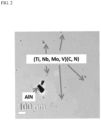
- FIG. 1 schematically illustrates the cracking temperature and cooling time (t) according to an exemplary embodiment of the present invention.
- the final annealing step may be performed in an atmosphere in which hydrogen (H 2 ) and nitrogen (N 2 ) are mixed. Specifically, the annealing may be performed in an atmosphere containing 5 to 40 volume% of hydrogen and 60 to 95 volume% of nitrogen. Annealing in the atmosphere has an advantage of preventing the formation of fine oxides harmful to magnetism that may be formed at high temperature.
- the average grain size may be 55 to 80 ⁇ m, and all (i.e., 99% or more) of the processed structure formed in the previous cold rolling step may be recrystallized.
- an insulating film may be formed.
- the insulating film may be treated with organic, inorganic, and organic/inorganic composite films, and may be treated with other insulating films.
- a slab was prepared from Table 1 and components including the remainder Fe and unavoidable impurities.
- the slab was heated at 1,150°C and hot-rolled at a finishing temperature of 880°C to prepare a hot-rolled sheet having a thickness of 2.0 mm.
- the hot-rolled sheet was annealed through hot rolling at 1020°C for 100 seconds, and then cold-rolled to a thickness of 0.25 mm.
- the cold-rolled sheet was subjected to final annealing at a temperature of Table 2 for 100 seconds.
- Table 2 showed calculated values of Relation 1 for each specimen, cooling time from cracking temperature to 600°C during final annealing, distribution density of (Mo, Ti, Nb, V)(C,N) precipitates with diameters of 50 nm or less, average grain size, upper yield strength (ReH), 0.2% offset yield strength (Rp 0.2 ), Rp 0.2 /ReH and magnetic properties.
- the content of each component was measured by an ICP wet analysis method.
- the cooling time from a highest temperature to 600°C was measured by directly measuring a sheet temperature by attaching TC to the surface of the specimen.
- a TEM specimen was prepared by a replica method, an area of 0.5 mm 2 or more was measured at high magnification, and carbides or nitrides with a diameter of 50 nm or less and containing one of Mo, Ti, Nb, and V were found, and then the distribution density was calculated by dividing the number by the observed area.
- the grain size was calculated as (measurement area ⁇ number of grains) ⁇ 0.5 by abrading and etching the cross-section of the specimen in a vertical direction of rolling, and photographing an area sufficient to contain 1500 or more grains with an optical microscope.
- a tensile test was performed with a specimen having a parallel length of 80 mm based on the ISO6892 standard, and the result values were shown.
Landscapes
- Chemical & Material Sciences (AREA)
- Engineering & Computer Science (AREA)
- Materials Engineering (AREA)
- Mechanical Engineering (AREA)
- Metallurgy (AREA)
- Organic Chemistry (AREA)
- Physics & Mathematics (AREA)
- Thermal Sciences (AREA)
- Crystallography & Structural Chemistry (AREA)
- Electromagnetism (AREA)
- Manufacturing & Machinery (AREA)
- Dispersion Chemistry (AREA)
- Power Engineering (AREA)
- Soft Magnetic Materials (AREA)
- Manufacturing Of Steel Electrode Plates (AREA)
Applications Claiming Priority (2)
| Application Number | Priority Date | Filing Date | Title |
|---|---|---|---|
| KR1020200179458A KR102468078B1 (ko) | 2020-12-21 | 2020-12-21 | 무방향성 전기강판 및 그 제조방법 |
| PCT/KR2021/019338 WO2022139359A1 (ko) | 2020-12-21 | 2021-12-17 | 무방향성 전기강판 및 그 제조방법 |
Publications (2)
| Publication Number | Publication Date |
|---|---|
| EP4265749A1 true EP4265749A1 (de) | 2023-10-25 |
| EP4265749A4 EP4265749A4 (de) | 2025-07-30 |
Family
ID=82158121
Family Applications (1)
| Application Number | Title | Priority Date | Filing Date |
|---|---|---|---|
| EP21911426.1A Pending EP4265749A4 (de) | 2020-12-21 | 2021-12-17 | Nichtorientiertes elektrostahlblech und verfahren zur herstellung davon |
Country Status (7)
| Country | Link |
|---|---|
| US (1) | US20240038422A1 (de) |
| EP (1) | EP4265749A4 (de) |
| JP (1) | JP7736793B2 (de) |
| KR (1) | KR102468078B1 (de) |
| CN (1) | CN116635542A (de) |
| MX (1) | MX2023007353A (de) |
| WO (1) | WO2022139359A1 (de) |
Cited By (13)
| Publication number | Priority date | Publication date | Assignee | Title |
|---|---|---|---|---|
| WO2025104471A1 (en) * | 2023-11-15 | 2025-05-22 | Arcelormittal | A non-oriented electrical steel and a method of manufacturing non-oriented electrical steel thereof |
| WO2025104648A1 (en) * | 2023-11-15 | 2025-05-22 | Arcelormittal | A non-oriented electrical steel and a method of manufacturing non-oriented electrical steel thereof |
| WO2025104652A1 (en) * | 2023-11-15 | 2025-05-22 | Arcelormittal | A non-oriented electrical steel and a method of manufacturing non-oriented electrical steel thereof |
| WO2025104480A1 (en) * | 2023-11-15 | 2025-05-22 | Arcelormittal | A non-oriented electrical steel and a method of manufacturing non-oriented electrical steel thereof |
| WO2025104467A1 (en) * | 2023-11-15 | 2025-05-22 | Arcelormittal | A non-oriented electrical steel and a method of manufacturing non-oriented electrical steel thereof |
| WO2025104647A1 (en) * | 2023-11-15 | 2025-05-22 | Arcelormittal | A non-oriented electrical steel and a method of manufacturing non-oriented electrical steel thereof |
| WO2025104645A1 (en) * | 2023-11-15 | 2025-05-22 | Arcelormittal | A double cold rolled non-oriented electrical steel and a method of manufacturing non-oriented electrical steel thereof |
| WO2025104477A1 (en) * | 2023-11-15 | 2025-05-22 | Arcelormittal | A double cold rolled non-oriented electrical steel and a method of manufacturing non-oriented electrical steel thereof |
| WO2025104476A1 (en) * | 2023-11-15 | 2025-05-22 | Arcelormittal | A double cold rolled non-oriented electrical steel and a method of manufacturing non-oriented electrical steel thereof |
| WO2025104469A1 (en) * | 2023-11-15 | 2025-05-22 | Arcelormittal | A non-oriented electrical steel and a method of manufacturing non-oriented electrical steel thereof |
| WO2025104482A1 (en) * | 2023-11-15 | 2025-05-22 | Arcelormittal | A double cold rolled non-oriented electrical steel and a method of manufacturing non-oriented electrical steel thereof |
| WO2025104651A1 (en) * | 2023-11-15 | 2025-05-22 | Arcelormittal | A non-oriented electrical steel and a method of manufacturing non-oriented electrical steel thereof |
| EP4640878A4 (de) * | 2022-12-21 | 2026-05-06 | Posco Co Ltd | Nichtorientiertes elektrostahlblech und verfahren zur herstellung davon |
Families Citing this family (5)
| Publication number | Priority date | Publication date | Assignee | Title |
|---|---|---|---|---|
| WO2024019550A1 (ko) | 2022-07-19 | 2024-01-25 | 주식회사 엘지에너지솔루션 | 배터리, 이를 포함하는 배터리 팩, 그리고 배터리 팩을 포함하는 자동차 |
| DE102022129243A1 (de) * | 2022-11-04 | 2024-05-08 | Thyssenkrupp Steel Europe Ag | Nicht kornorientiertes metallisches Elektroband oder -blech sowie Verfahren zur Herstellung eines nicht kornorientierten Elektrobands |
| TWI883806B (zh) * | 2023-02-01 | 2025-05-11 | 日商日本製鐵股份有限公司 | 無方向性電磁鋼板及其製造方法 |
| KR20250093638A (ko) * | 2023-12-15 | 2025-06-25 | 주식회사 포스코 | 무방향성 전기강판 및 그 제조방법 |
| CN119243029A (zh) * | 2024-09-12 | 2025-01-03 | 山西太钢不锈钢股份有限公司 | 汽车驱动电机用高磁感应强度无取向硅钢薄带及制造方法 |
Family Cites Families (20)
| Publication number | Priority date | Publication date | Assignee | Title |
|---|---|---|---|---|
| JP3486230B2 (ja) * | 1994-08-05 | 2004-01-13 | Jfeスチール株式会社 | 電気自動車用無方向性電磁鋼板の製造方法 |
| JP5699642B2 (ja) * | 2010-04-30 | 2015-04-15 | Jfeスチール株式会社 | モータコア |
| KR20130116332A (ko) * | 2011-08-18 | 2013-10-23 | 신닛테츠스미킨 카부시키카이샤 | 무방향성 전자 강판, 그 제조 방법, 모터 철심용 적층체 및 그 제조 방법 |
| JP6476979B2 (ja) * | 2015-02-19 | 2019-03-06 | 新日鐵住金株式会社 | 無方向性電磁鋼板およびその製造方法 |
| KR101659808B1 (ko) * | 2015-05-20 | 2016-09-26 | 주식회사 포스코 | 무방향성 전기강판 및 그 제조방법 |
| KR101705235B1 (ko) * | 2015-12-11 | 2017-02-09 | 주식회사 포스코 | 무방향성 전기강판 및 그 제조방법 |
| KR102177523B1 (ko) * | 2015-12-22 | 2020-11-11 | 주식회사 포스코 | 방향성 전기강판 및 그 제조방법 |
| KR102175064B1 (ko) * | 2015-12-23 | 2020-11-05 | 주식회사 포스코 | 무방향성 전기강판 및 그 제조방법 |
| KR101728028B1 (ko) * | 2015-12-23 | 2017-04-18 | 주식회사 포스코 | 무방향성 전기강판 및 그 제조방법 |
| KR101701194B1 (ko) * | 2015-12-23 | 2017-02-01 | 주식회사 포스코 | 무방향성 전기강판 및 그 제조방법 |
| KR101901313B1 (ko) * | 2016-12-19 | 2018-09-21 | 주식회사 포스코 | 무방향성 전기강판 및 그 제조방법 |
| KR101903008B1 (ko) * | 2016-12-20 | 2018-10-01 | 주식회사 포스코 | 무방향성 전기강판 및 그 제조방법 |
| CN110536971B (zh) * | 2017-03-30 | 2022-12-02 | 杰富意钢铁株式会社 | 无方向性电磁钢板的制造方法、马达铁芯的制造方法和马达铁芯 |
| KR102043289B1 (ko) * | 2017-12-26 | 2019-11-12 | 주식회사 포스코 | 무방향성 전기강판 및 그 제조방법 |
| KR102119095B1 (ko) * | 2018-09-27 | 2020-06-04 | 주식회사 포스코 | 방향성 전기강판 및 그의 제조방법 |
| JP6866935B2 (ja) * | 2018-10-31 | 2021-04-28 | Jfeスチール株式会社 | 無方向性電磁鋼板の製造方法 |
| EP3875612A4 (de) * | 2018-11-02 | 2022-07-06 | Nippon Steel Corporation | Nichtorientiertes elektromagnetisches stahlblech |
| US12148555B2 (en) * | 2018-11-02 | 2024-11-19 | Nippon Steel Corporation | Non-oriented electrical steel sheet |
| KR102164113B1 (ko) * | 2018-11-29 | 2020-10-13 | 주식회사 포스코 | 낮은 철손 및 우수한 표면품질을 갖는 무방향성 전기강판 및 그 제조방법 |
| KR102178341B1 (ko) * | 2018-11-30 | 2020-11-12 | 주식회사 포스코 | 자성이 우수한 무방향성 전기강판 및 그 제조방법 |
-
2020
- 2020-12-21 KR KR1020200179458A patent/KR102468078B1/ko active Active
-
2021
- 2021-12-17 EP EP21911426.1A patent/EP4265749A4/de active Pending
- 2021-12-17 MX MX2023007353A patent/MX2023007353A/es unknown
- 2021-12-17 WO PCT/KR2021/019338 patent/WO2022139359A1/ko not_active Ceased
- 2021-12-17 CN CN202180085962.XA patent/CN116635542A/zh active Pending
- 2021-12-17 US US18/268,387 patent/US20240038422A1/en active Pending
- 2021-12-17 JP JP2023537616A patent/JP7736793B2/ja active Active
Cited By (27)
| Publication number | Priority date | Publication date | Assignee | Title |
|---|---|---|---|---|
| EP4640878A4 (de) * | 2022-12-21 | 2026-05-06 | Posco Co Ltd | Nichtorientiertes elektrostahlblech und verfahren zur herstellung davon |
| WO2025104657A1 (en) * | 2023-11-15 | 2025-05-22 | Arcelormittal | A non-oriented electrical steel and a method of manufacturing nonoriented electrical steel thereof |
| WO2025104470A1 (en) * | 2023-11-15 | 2025-05-22 | Arcelormittal | A non-oriented electrical steel and a method of manufacturing non-oriented electrical steel thereof |
| WO2025104480A1 (en) * | 2023-11-15 | 2025-05-22 | Arcelormittal | A non-oriented electrical steel and a method of manufacturing non-oriented electrical steel thereof |
| WO2025104467A1 (en) * | 2023-11-15 | 2025-05-22 | Arcelormittal | A non-oriented electrical steel and a method of manufacturing non-oriented electrical steel thereof |
| WO2025104647A1 (en) * | 2023-11-15 | 2025-05-22 | Arcelormittal | A non-oriented electrical steel and a method of manufacturing non-oriented electrical steel thereof |
| WO2025104640A1 (en) * | 2023-11-15 | 2025-05-22 | Arcelormittal | A non-oriented electrical steel and a method of manufacturing non-oriented electrical steel thereof |
| WO2025104645A1 (en) * | 2023-11-15 | 2025-05-22 | Arcelormittal | A double cold rolled non-oriented electrical steel and a method of manufacturing non-oriented electrical steel thereof |
| WO2025104477A1 (en) * | 2023-11-15 | 2025-05-22 | Arcelormittal | A double cold rolled non-oriented electrical steel and a method of manufacturing non-oriented electrical steel thereof |
| WO2025104655A1 (en) * | 2023-11-15 | 2025-05-22 | Arcelormittal | A double cold rolled non-oriented electrical steel and a method of manufacturing non-oriented electrical steel thereof |
| WO2025104476A1 (en) * | 2023-11-15 | 2025-05-22 | Arcelormittal | A double cold rolled non-oriented electrical steel and a method of manufacturing non-oriented electrical steel thereof |
| WO2025104473A1 (en) * | 2023-11-15 | 2025-05-22 | Arcelormittal | A non-oriented electrical steel and a method of manufacturing non-oriented electrical steel thereof |
| WO2025104471A1 (en) * | 2023-11-15 | 2025-05-22 | Arcelormittal | A non-oriented electrical steel and a method of manufacturing non-oriented electrical steel thereof |
| WO2025104652A1 (en) * | 2023-11-15 | 2025-05-22 | Arcelormittal | A non-oriented electrical steel and a method of manufacturing non-oriented electrical steel thereof |
| WO2025104644A1 (en) * | 2023-11-15 | 2025-05-22 | Arcelormittal | A non-oriented electrical steel and a method of manufacturing non-oriented electrical steel thereof |
| WO2025104651A1 (en) * | 2023-11-15 | 2025-05-22 | Arcelormittal | A non-oriented electrical steel and a method of manufacturing non-oriented electrical steel thereof |
| WO2025104658A1 (en) * | 2023-11-15 | 2025-05-22 | Arcelormittal | A double cold rolled non-oriented electrical steel and a method of manufacturing non-oriented electrical steel thereof |
| WO2025104478A1 (en) * | 2023-11-15 | 2025-05-22 | Arcelormittal | A non-oriented electrical steel and a method of manufacturing non-oriented electrical steel thereof |
| WO2025104472A1 (en) * | 2023-11-15 | 2025-05-22 | Arcelormittal | A double cold rolled non-oriented electrical steel and a method of manufacturing non-oriented electrical steel thereof |
| WO2025104482A1 (en) * | 2023-11-15 | 2025-05-22 | Arcelormittal | A double cold rolled non-oriented electrical steel and a method of manufacturing non-oriented electrical steel thereof |
| WO2025104649A1 (en) * | 2023-11-15 | 2025-05-22 | Arcelormittal | A double cold rolled non-oriented electrical steel and a method of manufacturing non-oriented electrical steel thereof |
| WO2025104481A1 (en) * | 2023-11-15 | 2025-05-22 | Arcelormittal | A non-oriented electrical steel and a method of manufacturing non-oriented electrical steel thereof |
| WO2025104642A1 (en) * | 2023-11-15 | 2025-05-22 | Arcelormittal | A non-oriented electrical steel and a method of manufacturing non-oriented electrical steel thereof |
| WO2025104469A1 (en) * | 2023-11-15 | 2025-05-22 | Arcelormittal | A non-oriented electrical steel and a method of manufacturing non-oriented electrical steel thereof |
| US12516396B2 (en) | 2023-11-15 | 2026-01-06 | Arcelormittal | Non-oriented electrical steel and a method of manufacturing non-oriented electrical steel thereof |
| US12571066B2 (en) | 2023-11-15 | 2026-03-10 | Arcelormittal | Non-oriented electrical steel and a method of manufacturing non-oriented electrical steel thereof |
| WO2025104648A1 (en) * | 2023-11-15 | 2025-05-22 | Arcelormittal | A non-oriented electrical steel and a method of manufacturing non-oriented electrical steel thereof |
Also Published As
| Publication number | Publication date |
|---|---|
| JP7736793B2 (ja) | 2025-09-09 |
| MX2023007353A (es) | 2023-09-04 |
| EP4265749A4 (de) | 2025-07-30 |
| KR102468078B1 (ko) | 2022-11-16 |
| KR20220089123A (ko) | 2022-06-28 |
| US20240038422A1 (en) | 2024-02-01 |
| CN116635542A (zh) | 2023-08-22 |
| JP2023554680A (ja) | 2023-12-28 |
| WO2022139359A1 (ko) | 2022-06-30 |
Similar Documents
| Publication | Publication Date | Title |
|---|---|---|
| US20240038422A1 (en) | Non-oriented electrical steel sheet and method for manufacturing same | |
| KR102325005B1 (ko) | 무방향성 전기강판 및 그 제조방법 | |
| KR101682284B1 (ko) | 무방향성 전기 강판 | |
| KR102325008B1 (ko) | 무방향성 전기강판 및 그 제조방법 | |
| EP4455329A1 (de) | Nichtorientiertes elektrostahlblech und verfahren zur herstellung davon | |
| EP4265745A1 (de) | Nichtorientiertes elektrostahlblech und verfahren zur herstellung davon | |
| KR102493776B1 (ko) | 무방향성 전기강판 및 그 제조방법 | |
| KR102178341B1 (ko) | 자성이 우수한 무방향성 전기강판 및 그 제조방법 | |
| CN106957994A (zh) | 高强度电磁钢板及其制造方法 | |
| EP4455341B1 (de) | Nichtorientiertes elektrostahlblech und verfahren zur herstellung davon | |
| EP3825434A1 (de) | Nichtorientiertes elektrisches stahlblech und verfahren zur herstellung davon | |
| TW202202639A (zh) | 無方向性電磁鋼板及其製造方法 | |
| KR102706290B1 (ko) | 무방향성 전자 강판 및 그 제조 방법 | |
| EP4640866A1 (de) | Nichtorientiertes elektrostahlblech und verfahren zur herstellung davon | |
| EP3889290A2 (de) | Nichtorientiertes elektrostahlblech und verfahren zur herstellung davon | |
| KR102961099B1 (ko) | 무방향성 전자 강판과 그의 제조 방법 | |
| KR20250093765A (ko) | 무방향성 전기강판 및 그 제조방법 | |
| KR20250093740A (ko) | 무방향성 전기강판 및 그 제조방법 | |
| KR20250093747A (ko) | 무방향성 전기강판, 모터 코어 및 그 제조방법 | |
| KR20250093775A (ko) | 무방향성 전기강판 및 그 제조방법 | |
| EP4640869A1 (de) | Nichtorientiertes elektrostahlblech und verfahren zur herstellung davon | |
| KR20250093762A (ko) | 무방향성 전기강판 및 그 제조방법 | |
| KR20250093638A (ko) | 무방향성 전기강판 및 그 제조방법 | |
| KR20240098933A (ko) | 무방향성 전기강판 및 그 제조방법 | |
| KR20260043693A (ko) | 무방향성 전기강판 및 무방향성 전기강판의 제조방법 |
Legal Events
| Date | Code | Title | Description |
|---|---|---|---|
| STAA | Information on the status of an ep patent application or granted ep patent |
Free format text: STATUS: THE INTERNATIONAL PUBLICATION HAS BEEN MADE |
|
| PUAI | Public reference made under article 153(3) epc to a published international application that has entered the european phase |
Free format text: ORIGINAL CODE: 0009012 |
|
| STAA | Information on the status of an ep patent application or granted ep patent |
Free format text: STATUS: REQUEST FOR EXAMINATION WAS MADE |
|
| 17P | Request for examination filed |
Effective date: 20230705 |
|
| AK | Designated contracting states |
Kind code of ref document: A1 Designated state(s): AL AT BE BG CH CY CZ DE DK EE ES FI FR GB GR HR HU IE IS IT LI LT LU LV MC MK MT NL NO PL PT RO RS SE SI SK SM TR |
|
| DAV | Request for validation of the european patent (deleted) | ||
| DAX | Request for extension of the european patent (deleted) | ||
| A4 | Supplementary search report drawn up and despatched |
Effective date: 20250630 |
|
| RIC1 | Information provided on ipc code assigned before grant |
Ipc: C21D 8/12 20060101AFI20250624BHEP Ipc: H01F 1/16 20060101ALI20250624BHEP Ipc: H01F 1/147 20060101ALI20250624BHEP Ipc: C21D 9/46 20060101ALI20250624BHEP Ipc: C22C 38/02 20060101ALI20250624BHEP Ipc: C22C 38/06 20060101ALI20250624BHEP Ipc: C22C 38/04 20060101ALI20250624BHEP Ipc: C22C 38/14 20060101ALI20250624BHEP Ipc: C22C 38/12 20060101ALI20250624BHEP Ipc: C22C 38/00 20060101ALI20250624BHEP Ipc: C21D 1/26 20060101ALI20250624BHEP Ipc: C21D 6/00 20060101ALI20250624BHEP |