EP4265734A1 - Détection des acides nucléiques dans une pcr au moyen d'un complexe rapporteur modulaire non spécifique à la séquence cible - Google Patents
Détection des acides nucléiques dans une pcr au moyen d'un complexe rapporteur modulaire non spécifique à la séquence cible Download PDFInfo
- Publication number
- EP4265734A1 EP4265734A1 EP22191150.6A EP22191150A EP4265734A1 EP 4265734 A1 EP4265734 A1 EP 4265734A1 EP 22191150 A EP22191150 A EP 22191150A EP 4265734 A1 EP4265734 A1 EP 4265734A1
- Authority
- EP
- European Patent Office
- Prior art keywords
- signal
- sequence
- mediator
- pcr
- nucleic acid
- Prior art date
- Legal status (The legal status is an assumption and is not a legal conclusion. Google has not performed a legal analysis and makes no representation as to the accuracy of the status listed.)
- Withdrawn
Links
Images




Classifications
-
- C—CHEMISTRY; METALLURGY
- C12—BIOCHEMISTRY; BEER; SPIRITS; WINE; VINEGAR; MICROBIOLOGY; ENZYMOLOGY; MUTATION OR GENETIC ENGINEERING
- C12Q—MEASURING OR TESTING PROCESSES INVOLVING ENZYMES, NUCLEIC ACIDS OR MICROORGANISMS; COMPOSITIONS OR TEST PAPERS THEREFOR; PROCESSES OF PREPARING SUCH COMPOSITIONS; CONDITION-RESPONSIVE CONTROL IN MICROBIOLOGICAL OR ENZYMOLOGICAL PROCESSES
- C12Q1/00—Measuring or testing processes involving enzymes, nucleic acids or microorganisms; Compositions therefor; Processes of preparing such compositions
- C12Q1/68—Measuring or testing processes involving enzymes, nucleic acids or microorganisms; Compositions therefor; Processes of preparing such compositions involving nucleic acids
- C12Q1/6813—Hybridisation assays
- C12Q1/6816—Hybridisation assays characterised by the detection means
- C12Q1/6823—Release of bound markers
-
- C—CHEMISTRY; METALLURGY
- C12—BIOCHEMISTRY; BEER; SPIRITS; WINE; VINEGAR; MICROBIOLOGY; ENZYMOLOGY; MUTATION OR GENETIC ENGINEERING
- C12Q—MEASURING OR TESTING PROCESSES INVOLVING ENZYMES, NUCLEIC ACIDS OR MICROORGANISMS; COMPOSITIONS OR TEST PAPERS THEREFOR; PROCESSES OF PREPARING SUCH COMPOSITIONS; CONDITION-RESPONSIVE CONTROL IN MICROBIOLOGICAL OR ENZYMOLOGICAL PROCESSES
- C12Q1/00—Measuring or testing processes involving enzymes, nucleic acids or microorganisms; Compositions therefor; Processes of preparing such compositions
- C12Q1/68—Measuring or testing processes involving enzymes, nucleic acids or microorganisms; Compositions therefor; Processes of preparing such compositions involving nucleic acids
- C12Q1/6813—Hybridisation assays
- C12Q1/6816—Hybridisation assays characterised by the detection means
- C12Q1/6818—Hybridisation assays characterised by the detection means involving interaction of two or more labels, e.g. resonant energy transfer
Definitions
- target sequences are detected either by dyes that intercalate into the DNA, but which bind non-specifically to all existing DNA double strands, or by DNA probes , which only bind a specific DNA target sequence.
- DNA probes produce an optical signal change directly (e.g. TaqMan probes) or indirectly (mediator probes in combination with universal reporter molecules) through their cleavage.
- Optical detectors detect the light emissions generated during the reaction outside the reaction vessel. These detection systems mostly rely on light-absorbing and emitting fluorescence molecules. After being stimulated by light energy of a certain wavelength, these molecules release energy in the form of higher wavelengths, which can be detected using detectors.
- fluorescence donor or fluorophore molecules whose light energy is to be detected in a specific wavelength range
- fluorescence acceptor or quencher molecules that lead to a decrease in the fluorescence intensity of a fluorophore when in close proximity
- fluorescence acceptor or quencher molecules that lead to a decrease in the fluorescence intensity of a fluorophore when in close proximity
- DNA probes or detection molecules which carry different fluorophore-quencher combinations, each of which emits a fluorescence signal in a specific wavelength range in the presence of a specific DNA sequence.
- fluorophore-quencher combinations each of which emits a fluorescence signal in a specific wavelength range in the presence of a specific DNA sequence.
- Further developments of this multiplexing detection also enable the detection of multiple target sequences within a wavelength range by considering the fluorescence values quantitatively or combining them with other parameters (e.g. the readout temperature).
- Two well-known single-part target sequence-specific DNA probes for optical detection are Taqman probes and molecular beacons (Tan et al. 2004; Li et al. 2008; Holland et al. 1991; Rodriguez et al. 2005). These bind target sequence-specifically and are cleaved during PCR, generating a signal.
- the disadvantage of these probes is their dependence on the target gene sequence, which means that only special regions of a DNA target sequence that must meet certain requirements can be used. For example, attention must be paid to probe length, melting temperature, binding enthalpy, GC content, guanine quenching and complementary sequence fragments. However, these probes are easy to synthesize because usually only two terminal labels are required.
- fluorogenic detection molecules that are target sequence-unspecific (e.g. mediator probes and universal reporters). These have the disadvantage that their synthesis is much more demanding, but they enable completely new types of sequence detection and have highly optimized fluorescence signal generation.
- two-part, target sequence-specific detection probe systems (light cycler probes).
- a fluorescence signal between two neighboring DNA probes is shifted into the longer wavelength spectral range via their fluorophores using FRET, provided both bind correctly to the DNA target sequence and thus create the required distance from one another.
- FRET fluorophores
- Molecular beacons consist of an oligonucleotide (oligo) with five to seven complementary bases at the two ends and a terminal fluorophore or quencher (Tyagi and Kramer 1996).
- oligo oligonucleotide
- quencher a terminal fluorophore or quencher
- TaqMan probes also consist of an oligonucleotide and two terminal fluorescent molecules (Heid et al. 1996). However, the oligonucleotide does not form a loop, but rather the fluorescence is transmitted via spatial proximity to the oligonucleotide. When the probe is attached to the target gene and a primer is extended, the probe is degraded by the exonuclease activity of the polymerase used, thus separating the fluorophore from the quencher. If the fluorescence quenching is too low due to a particularly long probe sequence and the associated large spatial separation of the fluorescence molecules, another internal or terminal quencher can be attached.
- Taqman probe systems are also used for so-called “intensity multiplexing”. Taqman probes with identical fluorescent labels but different DNA sequences are used to differentiate several target sequences in a multiplex PCR. This is made possible by using the different types of TaqMan probes at different concentrations. However, this process also requires complex fine-tuning of the concentrations and is usually not very precise (Whale et al. 2016).
- the modular reporter complex described in this invention has the advantage that different fluorescence strengths can be set with constant concentrations of detection molecule complexes by forming complexes from several fluorophore- and quencher-labeled oligonucleotides. This requires less fine-tuning and allows for more precise signal adjustment.
- mediator probe PCR One of these methods is called mediator probe PCR, which was registered for a patent by the University of Freiburg in 2012.
- MP Mediator Probe
- UR Universal Reporter
- PCR amplification of the target sequence only part of a mediator probe binds in a sequence-specific manner and is cleaved by the exonuclease activity of the polymerase.
- a second part of the mediator probe, the mediator which did not previously bind to the sequence, is separated. If no target sequence is present, the mediator probe remains intact. After the mediator is separated, it will again bind to a universal reporter.
- a universal reporter is target sequence-independent and, in addition to the mediator binding site, also has a fluorophore and quencher modification as well as a conformation that brings both modifications into spatial proximity to one another.
- this spatial proximity is eliminated, e.g. by splitting off the fluorophore; which creates a fluorescence signal of a specific wavelength.
- This method has the advantage that there is a separation between probe binding to the DNA sequence and fluorescence signal generation. This allows clear guidelines to be set for mediator probe design, universal reporters can be optimized to a great extent once and then used for multiple sequences, and this two-part process also provides double control, which makes signal generation very specific (Lehnert et al. 2018; Wadle et al.
- a technology was developed by Seegene Inc., which is also based on the separation of DNA sequence detection and signal generation via two detection molecules in real-time PCR.
- an unlabeled PTO probe binds to a DNA target sequence, is cleaved and releases a fragment, which then forms an extended duplex with a fluorescently labeled target sequence-nonspecific detection molecule (CTO molecule).
- CTO molecule fluorescently labeled target sequence-nonspecific detection molecule
- This process is used to influence signal generation over different lengths of these detection molecules. This makes it possible, for example, to differentiate between several target sequences in the same detection channel by reading the signal at defined, predetermined temperatures.
- a CTO is a single molecule that places corresponding requirements on the synthesis.
- Another patent also uses reading at different temperatures in one approach and can be interpreted as a further development of the Seegene technology mentioned above ( PCT/CN2018/084794 ).
- an extended reporter molecule is melted after detection.
- a reporter molecule can be used to differentiate between different target sequences.
- the patent WO2013079307A1 Bifunctional oligonucleotide probe for universal real-time multianalyte detection uses the Mediator probe technology system.
- a mediator probe is activated by extending a primer (auxiliary molecule 1) to the target sequence (target molecule) using a polymerase (auxiliary molecule 2). Due to the exonuclease activity of the polymerase, the mediator probe is cleaved and can then bind to the universal reporter (UR) (mediator hybridization sequence). Here it acts as a primer after its cleavage. As a result, it is extended by the polymerase and thus separates the fluorophore and quencher on the universal reporter.
- UR universal reporter
- the modular reporter complex described in this invention has the advantage that, in certain embodiments, several target sequences can be detected in a detection channel regardless of temperature.
- several fluorophores or quenchers are used on a signal initiation or base strand, which ensure different fluorescence strengths and thus make fluorescence signals assignable within the same channel. This allows detected target sequences to be distinguished based on the fluorescence intensity generated. This enables the simultaneous detection of at least two target sequences within a detection channel without complex temperature-dependent readout steps.
- Biorad patent Another patent is the Biorad patent, which is only granted in the USA ( US 9921154 B2 ). This also claims the detection of multiple target sequences in identical detection channels in a digital PCR, but only describes sequence-specific hydrolysis probes marked with fluorophore and quencher or intercalating dyes for such detection. Other patents from Biorad also describe the differentiation of different target sequences, sometimes in one channel. However, according to current understanding, these can only be used effectively if there is a significant overcrowding of the drops.
- PCR is the gold standard method for amplifying individual DNA sequences and making them detectable.
- DNA or cDNA in the case of RNA either intercalating dyes or DNA probes are used.
- intercalating dyes bind non-specifically to all existing double-stranded DNA molecules, which means that direct sequence-specific detection in PCR is not possible.
- DNA probes are signal-generating DNA sequences that are complementary to the respective sequence section of a PCR product and can therefore specifically detect and quantify them. This method is used in particular in real-time PCR and digital PCR.
- DNA probes either have a biochemical modification themselves in order to generate a signal in the presence of a DNA target sequence during PCR (e.g. Taqman probes) or activate a second detection molecule which, independently of the target sequence, generates a signal (e.g. mediator probes in Combination with target sequence-unspecific universal reporters).
- detection molecules or detection molecule systems also have the disadvantage that they usually have to have several biochemical markings and modifications at once (e.g. fluorophore and quencher in the case of a fluorogenic Taqman probe, fluorophore, Quencher and 3' block group in the case of a target sequence non-specific universal reporter), making them more complex and are more expensive to synthesize and thereby become inflexible in their design.
- fluorophore and quencher in the case of a fluorogenic Taqman probe, fluorophore, Quencher and 3' block group in the case of a target sequence non-specific universal reporter
- the at least one label of the target sequence-unspecific modular reporter complex comprises at least one fluorophore and/or at least one quencher.
- the present method is used to detect at least one nucleic acid sequence during a PCR reaction, during which a mediator probe is cleaved (by an exonuclease activity of the polymerase).
- the cleavage product is a mediator, which subsequently binds to a target sequence-unspecific modular reporter complex and, via a subsequent reaction, initiates a signal change that serves to detect the DNA sequence.
- the target sequence-unspecific modular reporter complex consists of In this embodiment, preferably from at least two oligonucleotides which are not covalently linked, at least one oligonucleotide of this complex having at least one label which initiates a signal change and which preferably comprises at least one fluorophore and at least one quencher.
- an oligonucleotide of the target sequence-unspecific modular reporter complex (base strand) preferably has at least one binding site for at least one mediator sequence (also referred to herein as a receptor) and at least one binding site for a signal oligo.
- the second oligonucleotide of the complex is the signaling oligo, which binds to the base strand (forming a signaling complex). As long as the mediator probe is uncleaved, the target sequence-unspecific modular reporter complex remains in its basal state during the detection or readout process.
- the target sequence-unspecific modular reporter complex is broken up on the signal complex in such a way that the marking or markings on the base strand and / or on the signal oligo are separated from each other, whereby a Change of the signal to the basic state and thus a signal change is initiated, which serves to detect the DNA target sequence.
- steps d - h of the method according to the invention can occur continuously in each cycle during the PCR amplification; this is preferably the case if the PCR amplification is a real-time PCR or qPCR.
- steps d - h are repeated during the PCR amplification in each PCR cycle, the PCR amplification being a real-time PCR or qPCR.
- steps d - g of the method according to the invention can take place during the PCR amplification, with step h taking place afterwards; this is preferably the case if the PCR amplification is a digital PCR or endpoint analysis.
- steps d - g are repeated during the PCR amplification in each PCR cycle, and then step h takes place, the PCR amplification being a digital PCR or endpoint analysis.
- the detection step h of the method according to the invention preferably takes place separately, following the PCR amplification reaction.
- the modular reporter system according to the invention for target sequence-unspecific detection distinguishes itself from the previously known detection systems through the flexible use of different oligonucleotides with different labels and surprisingly has the same performance indicators in a PCR as current one-part detection molecules.
- the modular structure offers various advantages such as the flexibly adaptable design to specific device conditions, the uniformity of the signal generation reaction between different detection methods or the inexpensive, simple production as well as completely new multiplex detection methods.
- the system and its functionality have not yet been described in a patent or in the literature for nucleic acid detection in a PCR.
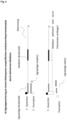
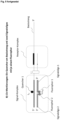
- the core of the invention is the modular target sequence-independent modular reporter complex (see Figure 2A for an exemplary embodiment) made of non-covalently linked oligonucleotides.
- This system has all the advantages of the various target sequence-specific detection systems as well as target sequence-unspecific detection molecules and combines them with increased flexibility in the design of such detection molecules, which lead to completely new detection methods.
- the system can be used without any problems in a PCR with cyclical temperature changes and the associated melting of the DNA strands in each cycle.
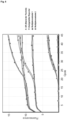
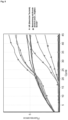
- the results of the present examples, which are also in the Figures 6-8 are shown provide evidence that the modular Universal Reporter (UR) system according to the invention even exceeds the prior art in terms of functionality. Here, significantly cheaper production can be achieved with at least as good performance parameters.
- UR Universal Reporter
- Another advantage of the system is the possibility of flexible adaptation of the universal probe according to the invention. Different fluorophores and quenchers can be conveniently combined and investigated and multiplex reactions can be expanded. Different labels can be used to distinguish between different probes in a fluorescence channel.
- the invention thus provides a dynamic, inexpensive and universal detection system.
- the basic structure of the modular system of the target sequence-independent modular reporter complex consists of a basic strand.
- This preferably has at least one binding site for a mediator (receptor complex) and at least one binding site for a signal initiation oligonucleotide (or "signal oligo" for short) and thus forms a signal complex (examples of embodiments comprising a signal complex and a receptor complex can be found, for example, in Figures 2 , 4 and 5 ).
- the base strand and at least one signal oligo together form a complex (see, for example, FIG. 2B for an exemplary embodiment).
- at least one of these strands has a label that can detect a structural change in this complex.
- This structural change preferably represents the separation, displacement, or (re)cleavage, detachment or enzymatic digestion of the signal oligo from the base strand, which preferably leads to a signal change.
- the modular structure results from several possible signal initiation oligonucleotides (or signal oligonucleotides, "signal oligos" for short) as well as additional markings, which can be attached both to the signal oligonucleotides and to the base strand (see, for example, FIG. 2B, marking positions L 1 to L i am signal complex).
- FIG. 2B marking positions L 1 to L i am signal complex.
- the base strand comprises at least one signal oligo binding site to which two or more signal oligos are hybridized, and wherein the two or more signal oligos and/or the base strand have one or more markers at the at least one signal oligo binding site.
- a mediator probe binds to the amplified DNA target sequence during a PCR detection reaction.
- a mediator probe is preferably an oligonucleotide and has a sequence-specific probe section which binds to the target sequence and is 3'-protected, and a target sequence-unspecific section, called mediator, which is common to the mediator and probe, except for one nucleotide Target sequence binds.
- mediator a target sequence-unspecific section
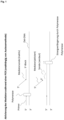
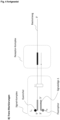
- the mediator is cleaved from the probe, leaving the common base on the mediator ( Figure 1 ).
- the mediator is now no longer blocked by the probe section and can now bind to the target sequence-nonspecific reporter complex and be extended here.
- the mediator binds to the receptor complex of the base strand of the target sequence-independent modular reporter complex.
- the mediator is then extended along the base strand by the polymerase, whereby the signaling complex is broken up in such a way that individual components and/or molecules of this complex are cleaved off, thereby initiating a signal change compared to the original state ( Figure 2A).
- no fluorescence signal change is generated by the at least one fluorophore when the at least one signal oligo is hybridized with the at least one signal oligo binding site of the base strand, with either the at least one quencher being localized at the at least one signal oligo binding site of the base strand and the at least one fluorophore on the at least one signal oligo or vice versa, and wherein in step g at least one fluorophore and at least one quencher are separated, whereby a signal change is initiated.
- a fluorescence signal change preferably describes a significant, differentiable and/or characteristic change in the fluorescence signal, which is clearly demarcated or different from potential basic or background signals or background or background noise. Therefore, in the context of the invention, a fluorescence signal change preferably describes a significant, differentiable and/or characteristic change in the fluorescence signal, and not a fluorescence base or background signal or background or background noise.
- the at least one label further comprises at least one fluorophore and at least one quencher, wherein both the at least one quencher and the at least one fluorophore are localized on the at least one signal oligo, and wherein in step g. (extension of the sequence of at least one Mediator sequence bound to a Mediator binding site by a PCR polymerase) the at least one signal oligo is cleaved by the PCR polymerase, whereby the at least one fluorophore and the at least one quencher are separated, whereby a signal change is initiated.
- cleavage of the signal oligo from the signal oligo binding site of the base strand by a PCR polymerase can occur either by enzymatic digestion or cleavage of the signal oligo by the polymerase (e.g. by exonuclease activity of the polymerase) or by another mechanism, for example by the signal oligo being removed by the polymerase is detached from, separated from, or displaced from the base strand.
- the process according to the invention for detecting DNA sequences by means of PCR in combination with optical readout comprises a novel system of individual oligonucleotides, preferably DNA oligonucleotides. These form such a target sequence-independent modular reporter complex without covalent bonds.
- This target sequence-independent modular reporter complex surprisingly has all the advantages and performance indicators of one-part target sequence-dependent DNA probes or one-part target sequence-independent detection molecules.
- the target sequence-independent modular reporter complex preferably consists of at least two DNA sequences which specifically bind to one another and carry chemical modifications which initiate signal generation during a PCR reaction (e.g. DNA amplification).
- a PCR reaction e.g. DNA amplification
- signals of different strengths can be generated, which make the activation of these target sequence-independent reporter complexes distinguishable.
- markings e.g. different color and/or intensity
- the signal of a signal oligo with one red marker can be differentiated in color from the signal of a signal oligo with two or three red markers based on the intensity differences of the signal generated, or from the signal of a signal oligo with one red and one green marker.
- not only individual markings but also different combinations of different fluorophore colors and/or the number of fluorophores (signal intensity) are provided, each of which encodes a signal that is specific for a target sequence. This ability to combine signals is advantageous for detecting multiple target sequences at the same time (in the same PCR reaction).
- the target sequence-independent modular reporter complex enables combined detection via different channels, for which a basic strand with more than one receptor complex can be used.
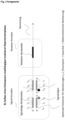
- multiple receptor complexes ⁇ 2 are staggered along the base strand so that they can activate different signaling complexes (see Figure 3 for an exemplary embodiment).
- a receptor complex regulate or activate one or more signal complexes, preferably located upstream (at the 5' end).
- the base strand comprises at least one signal oligo binding site to which two or more signal oligos are hybridized, and wherein the two or more signal oligos and/or the base strand have one or more markers at the at least one signal oligo binding site.
- the base strand comprises two or more signal oligo binding sites, and at least one of the signal oligos hybridized with the two or more signal oligo binding sites and/or the base strand has one or more labels at at least one of the two or more signal oligo binding sites owns.
- the base strand has at least a first and a second label, the signal change caused by the at least one first label being characteristic of the first target nucleic acid sequence, and the signal change caused by the at least one second label being characteristic of the second target nucleic acid sequence is.
- step a at least a first and a second target sequence-nonspecific modular reporter complex is provided, wherein the at least first target sequence-nonspecific modular reporter complex detects at least a first target nucleic acid sequence and the at least second target sequence-nonspecific modular reporter complex detects a second target -Nucleic acid sequence enables, the signal change by the at least one marking of the at least first target sequence-unspecific modular reporter complex being characteristic of the first target nucleic acid sequence and the signal change by the at least one marking of the at least second target sequence-unspecific modular reporter complex being characteristic of the second target nucleic acid sequence.
- a target sequence-independent modular reporter complex according to the invention is therefore flexible in design.
- the signal changes characteristic of the at least first and the at least second target nucleic acid sequence differ from each other by their color and/or their fluorescence or signal strength.
- a signal complex comprises at least two signal oligos with two labels, the common signal being characteristic of a target sequence.
- the base strand comprises at least two signal complexes with different signal oligos and/or different labels on the signal oligos, the base strand comprising a single receptor complex corresponding to the at least two signal complexes with at least one mediator binding site, e.g. downstream (gen 3' end) of the signaling complexes.
- a target sequence can be encoded by two colors.
- the effect achieved by these embodiments is a colorimetrically coded multiplexing in the digital PCR or qPCR detection or amplification reaction, which enables the detection of more (a larger number of) target sequences than detection channels are available.
- An example of color coding of fluorophores would be the signal combinations: target sequence 1: red-red, target sequence 2: red-green, target sequence 3: green-green, target sequence 4: green-green-red.
- the detection of several target sequences within a wavelength range can be done by quantitatively examining the fluorescence values or combined with other parameters (e.g. the readout temperature).
- the signal generation can be influenced via different lengths of the signal oligos, so that multiple target sequences can be differentiated in the same detection channel.
- specific readout temperatures for signal detection must be determined before the analysis.
- a different signal results at different temperatures.
- a specific signal change can be detected in certain temperature ranges, which is characteristic of the selected fluorescence modifications or Lengths of the signal oligos is. This allows conclusions to be drawn as to which modular reporter complex was activated.
- the detection of the signal change includes an analysis of the signal change as a function of the detection temperature.
- the method according to the invention described here has advantages over that in US 9921154 B2
- the multiplexing method described has the advantage that the method according to the invention can also be used without multiple occupancy of each reaction space and / or a set of different types of modular reporter complexes can generate fluorescence signals of different levels through multiple labels, for example via simple or multiple signal oligos that are very easy to apply in this case , without the need for a complex synthesis.
- a target sequence-independent modular reporter complex according to the invention has a very high stability in the initial state under PCR conditions.
- the initial signal is comparable to that generated by a one-part DNA probe or a one-part target sequence-independent reporter.
- the entire resulting PCR detection system according to the invention has performance indicators comparable to current PCR detection methods based on one-part detection molecules. This is the case even though this complex of a target sequence-independent modular reporter has to be separated with each cycle of a PCR and formed again before the signal is read out.
- the system according to the invention thus increases the efficiency of signal generation and is also suitable for the simultaneous detection of several DNA target genes in a PCR reaction (multiplex PCR). It also offers completely new possibilities for detecting and differentiating multiple DNA sequences in the same channel of a PCR detector.
- steps c take place. until h. as part of a reaction selected from the group comprising PCR, digital PCR, RT-PCR, digital RT-PCR, real-time/qPCR, droplet PCR, or any combination of these.
- steps c take place. until h. as part of a PCR reaction, preferably a digital PCR reaction.
- steps c take place. until h. as part of a PCR reaction, preferably a real-time PCR or qPCR reaction.
- steps c take place. until h. as part of a droplet PCR or emulsion PCR reaction.
- the target sequence-independent modular reporter complex according to the invention is at the same time flexible in design and, on the other hand, the individual components are inexpensive to develop and produce.
- the system according to the invention enables the production of universal microarrays. Overall, this represents a significant improvement over the state of the art.
- the oligonucleotide primers preferably at least one pair of oligonucleotide primers, the at least one signal oligo, the at least one mediator and/or the at least one base strand can be configured or suitable for the specific detection of one or more different target sequences.
- kit according to the invention can be used to carry out the method according to the invention.
- the kit can thus be used for the specific amplification and/or detection of target sequences within the scope of the method according to the invention.
- the specific amplification and/or detection reaction is a PCR, qPCR, real-time PCR, droplet PCR and/or digital PCR.
- inventions described for one aspect of the invention may also be embodiments of any of the other aspects of the present invention. Accordingly, embodiments described for the method according to the invention can also be embodiments of the kit according to the invention. Additionally, any embodiment described herein may also include features of any other embodiment of the invention.
- the various aspects of the invention are united, benefit from, are based on and/or are associated with the common and surprising discovery of the unexpected beneficial effects of the present method, namely the optimized PCR detection of target sequences by reporter complexes, which themselves are target sequence non-specific.
- target sequence-unspecific reporter complex describes a complex of target sequence-unspecific nucleic acid oligonucleotides (e.g. DNA oligonucleotides) for signal generation during PCR in the presence of DNA target sequences.
- a Target sequence-nonspecific reporter complex at least one label and at least two oligonucleotides, namely 1) a base strand comprising at least one mediator binding site and at least one signal oligo binding site, and 2) at least one signal oligo, wherein the signal oligo binding site of the base strand and the at least one Signal oligo hybridize with each other, but are not covalently linked.
- a base strand describes a nucleic acid oligonucleotide (e.g. a DNA oligonucleotide) and part of the target sequence-nonspecific reporter complex.
- a basic strand serves as the basis for the connection of signaling oligos and mediators, which form a signaling complex and receptor complex. Therefore, a base strand preferably comprises at least one mediator binding site and at least one signal oligo binding site.
- a base strand includes one or more mediator binding sites and/or signal oligo binding sites.
- a base strand can have at least 1, 2, 3, 4, 5, 6, 7, 8, 9, 10, 11, 12, 13, 14, 15, 16, 17, 18, 19, 20, 25, 30, 40 or even include 50 Mediator binding sites.
- a basic strand can also have at least 1, 2, 3, 4, 5, 6, 7, 8, 9, 10, 11, 12, 13, 14, 15, 16, 17, 18, 19, 20, 25, 30, 40 or even include 50 signal oligo binding sites.
- a base strand comprises between 1 and 10 mediator binding sites and between 1 and 10 signal oligo binding sites.
- a Mediator binding site can correspond to one or more signal oligo binding sites, in other words, an (activated) Mediator bound to a Mediator binding site can be extended by a (PCR) polymerase for activation or degradation, digestion (Ab ) Cleavage or release of one or more signal oligos from one or more signal oligo binding sites, preferably located upstream (towards the 5' end).
- a basic strand may comprise one or more signaling complexes and one or more receptor complexes, where a signal oligo complex may comprise at least one signal oligo binding site and (in the non-activated state) at least one signal oligo, and a receptor complex may comprise at least one mediator binding site can.
- a “signal initiation oligonucleotide”, “signal initiation oligo” or “signal oligo” for short is a nucleic acid oligonucleotide (preferably a DNA oligonucleotide) and part of the signal complex, which initiates a signal change in the presence of a target sequence by itself and or parts thereof are split off or broken up by the signaling complex.
- the terms signal initiation oligonucleotide, signal initiation oligo and signal oligo are to be considered equivalent and interchangeable.
- a "label” may describe one or more fluorophores or one or more quenchers. Accordingly, in the context of the invention, a base strand and/or a signal initiation molecule or signal oligo in embodiments may carry or comprise one or more fluorophores and/or quenchers.
- the proximity of a fluorophore to the quencher prevents detection/detection of its fluorescence, with degradation of the signal oligo by hydrolysis by the 5'-to-3' exonuclease activity of the PCR polymerase used for the amplification reaction, the reporter quencher -Proximity interrupts and thus enables an unquenched emission of fluorescence, which can be detected with a laser after excitation.
- a target sequence comprises non-specific modular reporter complex at least one fluorophore and at least one quencher (these are preferably present "in pairs"), the quencher preferably suppressing the fluorophore signal as long as the signal oligo is hybridized at the signal oligo binding site, the at least one fluorophore and the at least one quencher to each other within the target sequence-unspecific modular reporter complex either in cis position (both on either the signal oligo or on the base strand) or in trans position (one of the two markers is located on the base strand, the other on the signal oligo, or vice versa) can be localized.
- a base strand can contain zero, one or more markings, for example none or at least 1, 2, 3, 4, 5, 6, 7, 8, 9, 10, 11, 12, 13, 14, 15, 16, 17, 18, 19, or 20 marks, or exactly 0, 1, 2, 3, 4, 5, 6, 7, 8, 9, 10, 11, 12, 13, 14, 15, 16, 17, 18, There may be 19, 20 or even 25 marks.
- a base strand includes zero, 1, 2, 3, or up to 5 markers. In other embodiments, a base strand includes zero, 1, 2, 3, 4, 5, or even more than 5 tags.
- a signal oligo can contain zero, one or more markings, for example no or at least 1, 2, 3, 4, 5, 6, 7, 8, 9, 10, 15, or even 20 markings, or exactly 0. 1, 2, 3, 4, 5, 6, 7, 8, 9, 10, 11, 12, 13, 14, 15, 16, 17, 18, 19, 20 markings may be present.
- a signal oligo includes zero, 1, 2, 3, or up to 5 tags. In other embodiments, a signal oligo includes zero, 1, 2, 3, 4, 5, or even more than 5 tags.
- a “mediator” refers to an oligonucleotide and part of the receptor complex, which can be extended along the "basic strand” by the polymerase.
- a “mediator probe” describes a nucleic acid oligonucleotide, preferably a DNA oligonucleotide, which establishes the connection between the target sequence and the target sequence-independent (modular) receptor by binding to it during a PCR in the presence of a DNA target sequence, through which Exonuclease activity of the polymerase is cleaved and a mediator sequence is released, which then binds to a base strand and, together with the base strand, forms a receptor complex.
- nucleic acid refers to nucleic acid molecules including, without limitation, DNA, ssDNA, dsDNA, RNA, mRNA, tRNA, lncRNA, ncRNA, microRNA, siRNA, rRNA, sgRNA, piRNA, rmRNA, snRNA, snoRNA, scaRNA, gRNA or viral RNA.
- Nucleic acid sequences herein refer to a sequential arrangement of nucleotides, the nucleotides being represented by their nucleobases in guanine (G), adenine (A), cytosine (C) and thymine (T) in DNA and uracil (U) in RNA.
- a nucleic acid sequence here can also refer to the sequence of consecutive letters or nucleobases (consisting of G, A, C and T or U), which represent the actual sequence of consecutive nucleic acids in a DNA or RNA strand.
- This nucleic acid sequence can be identified and characterized biochemically and bioinformatically using DNA or RNA sequencing or by complementary nucleic acid probes (e.g., in embodiments herein through mediator probes) can be specifically detected, e.g. as part of a PCR, real-time PCR or detection reaction of a digital PCR.
- the sequence analysis can also include the comparison of the nucleic acid sequence obtained or a detection signal specific therefor with one or more reference nucleic acid sequences and/or with the detection signals of housekeeping genes.
- nucleotide can be abbreviated as "nt”.
- base pair two nucleobases bound together via hydrogen bonds
- a “target sequence” describes any nucleic acid sequence of interest that is to be detected by the method according to the invention.
- a target sequence can preferably be a DNA or RNA sequence.
- a target sequence can represent part or all of the nucleic acid sequence of a target DNA.
- a mediator probe preferably comprises a sequence which is wholly or partially complementary to the nucleic acid sequence of the target sequence or a part thereof. In some embodiments, this mediator probe sequence is 100%, 99%, 95%, 90%, or 80% complementary to the target sequence.
- a mediator probe may, in some embodiments, tolerate one or more mismatches to the target sequence and still bind to it. In other embodiments, the mediator probe only binds to a target sequence if it matches the target sequence 100%.
- nucleic acid amplification reaction refers to any method that involves an enzymatic reaction that enables the amplification of nucleic acids.
- a preferred embodiment of the invention relates to a polymerase chain reaction (PCR).
- PCR Polymerase chain reaction
- PCR is the gold standard method for quickly producing millions to billions of copies (full copies or partial copies) of a given DNA sample, allowing the amplification of a very small DNA sample to a sufficiently large amount becomes.
- PCR amplifies a specific region of a DNA strand (the target DNA sequence) depending on where the primers used bind to start the amplification reaction.
- Almost all PCR applications use a heat-stable DNA polymerase enzyme, such as. B. Taq polymerase.
- Quantitative PCR represents a specific form of PCR and is a standard method for detecting and quantifying a specific target sequence or for quantifying the level of gene expression in a sample Real time.
- fluorescently labeled probes or nucleic acids e.g. mediator probes
- a complementary sequence e.g. a target sequence
- the presence and the amplification of target sequences is monitored in real time after or during each PCR cycle.
- a real-time PCR makes it possible to monitor the progress of an ongoing amplification reaction as it occurs (i.e. in real time). Data is therefore collected during the exponential phase of the PCR reaction and not at the end point as in traditional PCR. Measuring reaction kinetics in the early phases of PCR offers significant advantages over conventional PCR detection.
- reactions are characterized by the point in time during the cycle at which amplification of a target first occurs is detected, and not by the amount of target accumulated after a fixed number of cycles, as in a classic PCR. The higher the starting copy number of the nucleic acid target, the more likely a significant increase in fluorescence is to be observed.
- Real-time PCR enables analysis using optical signals that are used to detect a specific PCR product (the target sequence), using specific fluorochromes or fluorophores. An increase in DNA product during a PCR therefore results in an increase in the fluorescence intensity measured at each cycle. Using different colored labels, fluorescent probes can be used in multiplex assays to monitor multiple target sequences.
- qPCR While real-time qPCR depends on the relative amount of target nucleic acid being determined in each amplification cycle, "digital PCR", on the other hand, enables the absolute amount of target nucleic acid to be determined based on Poisson statistics, which is determined following an endpoint analysis.
- PCR amplification is used to calculate the target nucleic acid amount. The steps before amplification are usually comparable or similar between digital PCR and qPCR. However, in qPCR all nucleic acid molecules are preferably pooled and then amplified and analyzed, while in digital PCR the nucleic acid molecules are preferably divided into individual partitions (e.g.
- emulsion drops cavities or gel beads
- this reaction is often referred to as droplet PCR or digital droplet PCR
- digital PCR the random division of the nucleic acid molecules into individual partitions occurs according to the Poisson distribution.
- Digital PCR analysis then applies Poisson statistics to determine the average number of nucleic acid molecules per partition (none, one, or more). Statistical Poisson analysis of the number of positive and negative reactions provides precise absolute quantification of the target sequence.
- the invention relates to a method, wherein the amplification is a multiplex PCR with more than one pair of primers.
- Multiplex PCR is a variant of standard PCR in which two or more target sequences can be amplified and/or detected simultaneously in the same reaction by using at least one pair of primers in the reaction.
- a “signal change” describes a fluorescence signal change.
- This signal change is preferably a significant, differentiable and/or characteristic change in the fluorescence signal, which is clearly demarcated or different from potential basic or background signals or background or background noise.
- a signal change preferably describes a significant, differentiable and/or characteristic change in the fluorescence signal, and no fluorescence base or background signal or background or background noise.
- this signal change can mean an increase in the fluorescence intensity, in other words an increase in the fluorescence signal.
- a signal change is the decrease in fluorescent signal.
- the increase in a fluorescence signal is preferably due to the fact that the number of target sequence amplicons increases as a result of an amplification reaction and thereby the activation of associated signal complexes. Accordingly, the number of resulting cleavages, digestions and/or separations of the respective signal oligos from their binding site on the associated base strands increases, whereby at least one fluorophore is released and/or separated from its quencher (i.e. the distance from quencher and fluorophore increases in size to such an extent that the fluorescence signal is no longer quenched by the quencher).
- an increase (increase in number) of released and/or non-quenched fluorophores thus leads to an increase in the fluorescence signal, which is specific and indicative of a target sequence.
- the more target sequences are present and are bound by mediator probes in a PCR reaction the more the fluorescence signal increases.
- the fluorescence signal is proportional or approximately proportional to the amount of the corresponding target sequence for which the fluorophore signal (e.g. its color) is specific/characteristic. Since in the context of a digital or "droplet" PCR there is preferably only one target sequence per reaction space (e.g. partition, emulsion drop), the signal increases increasingly with the number of target sequence amplicons per reaction space.
- there is ideally a uniform distribution of a maximum of 1 target sequence per reaction space e.g. partition, emulsion drop
- a target sequence e.g. partition, emulsion drop
- the specific signal for the detection of an identical Target sequence in different reaction spaces with comparable height/strength/intensity arises during the readout using digital or "droplet" PCR, which is preferably indicative of the presence and / or number of target sequence amplicons present in each reaction space.
- the intensity/strength of a respective label preferably specific for a target sequence, as well as the maximum achievable signal strength/intensity can depend on the number of labels per signal oligo and signal complex and/or the type of label (e.g. type of fluorophores and/or quenchers). depend.
- Fluorophore (or fluorochrome, similar to a chromophore) is a fluorescent chemical compound that can re-emit light when excited by light.
- Fluorophores for use as labels in the construction of labeled probes of the invention include, without limitation, rhodamine and derivatives such as Texas Red, fluorescein and derivatives such as 5-bromomethylfluorescein, LuciferYellow, IAEDANS, 7-Me2N-coumarin -4- Acetate, 7-OH-4-CH3-coumarin-3-acetate, monobromobimane, pyrene trisulfonates such as Cascade Blue and monobromotrimethyl-ammoniobimane, 7-NH2-4CH3-25-coumarin-3-acetate (AMCA), FAM, TET, CAL Fluor Gold 540, JOE, VIC, Quasar 570, CAL Fluor Orange 560, Cy3, NED, Oyster 556, TMR, CAL Fluor Red 5
- Quenching refers to any process that reduces the fluorescence intensity of a given substance. Quenching (“quenching”) is the basis for Förster resonance energy transfer (FRET) assays or static or contact quenching assays or a combination of both. FRET is a dynamic quenching mechanism because energy transfer occurs while the donor is in the excited state. Contact quenching requires immediate spatial proximity in the form of physical contact between donor and quencher. A "quencher” is a molecule that quenches the fluorescence emitted by the fluorophore when it is excited by the light source of a PCR cycler or detection device.
- Quenchers for use as labels in the construction of labeled signal oligos and/or base strands of the invention include, without limitation, DDQ-I, Iowa Black, Iowa Black FQ, QSY-9, BHQ-1, QSY-7, BHQ- 2, DDQ-II, 22 Eclipse, Iowa Black RQ, QSY-21, BHQ-3 Dabcyl,, QSY-35, BHQ-0, ElleQuencher, BMN-Q1, BMN-Q2, BMN-Q60, BMN-Q-535 , BMN-Q590, BMN-Q620, BMN-Q650.
- suitable reporter-quencher pairs and knows which ones should be selected for a particular application.
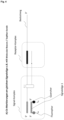
- the target sequence-nonspecific modular reporter complex can consist of a basic strand with a label at the 5' end and a signal initiation strand with a label at the 3' end ( Figure 4B).
- a fluorophore and a quencher are attached to each marking point, which means that no fluorescence signal is generated in the initial state.
- the two-part target sequence-unspecific reporter for optimizing fluorescence signals shows very good performance both in comparison to the universal reporter currently used in the state of the art and with regard to its use for investigating optimal fluorophore-quencher combinations.
- a first comparative experiment which in Figure 6 are shown, it is shown that the two-part system surprisingly works excellently despite the non-covalent connection between fluorophore and quencher via several nucleotides of the same molecule.
- Using a base strand without marking also offers benefits. On the one hand, production is simplified and cheaper. On the other hand, various signal initiation molecules (or “signal molecules” for short), which in this case carry a fluorophore and quencher, can also be attached.
- probe systems such as the TaqMan probe or molecular beacons can be attached to a base strand, which means that signal generation remains target sequence-unspecific, but is already readily available in state-of-the-art systems integrates. Results of an example experiment with an exemplary embodiment are in Figure 8 shown, the simplified functional diagram of this representative exemplary embodiment can be found in Figure 4A.
- the reporter according to the invention offers the possibility of combining measurements via different channels, for which basic strands according to the invention with more than one receptor complex can be used.
- the receptor complexes are preferably offset along the base strand in such a way that they activate different signaling complexes ( Figure 3 ).
- the possible different color and/or intensity combinations of the respective markings can preferably encode different extended mediator sequences and thus different detected target sequences.
- multiple target sequences can be detected simultaneously over different fluorescence intensities by using different target sequence-unspecific modular reporter complexes.
- These target sequence-unspecific modular reporter complexes each have different mediator binding sites on the base strand, each with a different number of fluorescence and/or quencher markings.
- Various exemplary embodiments of this are shown in Figures 5A, B and C. In this way, signals of different signal strength are generated by each type of signal complex, which can then be distinguished in a fluorescence channel (see the results of an exemplary experiment in Figure 6 ).
- Mediator probe PCR a novel approach for detection of real-time PCR based on label-free primary probes and standardized secondary universal fluorogenic reporters.
- Clinical Chemistry 58 (11), pp. 1546-1556. DOI: 10.1373/clinchem.2012.186734 .
Landscapes
- Chemical & Material Sciences (AREA)
- Organic Chemistry (AREA)
- Life Sciences & Earth Sciences (AREA)
- Zoology (AREA)
- Wood Science & Technology (AREA)
- Proteomics, Peptides & Aminoacids (AREA)
- Health & Medical Sciences (AREA)
- Engineering & Computer Science (AREA)
- Microbiology (AREA)
- Immunology (AREA)
- Physics & Mathematics (AREA)
- Molecular Biology (AREA)
- Biotechnology (AREA)
- Biophysics (AREA)
- Analytical Chemistry (AREA)
- Biochemistry (AREA)
- Bioinformatics & Cheminformatics (AREA)
- General Engineering & Computer Science (AREA)
- General Health & Medical Sciences (AREA)
- Genetics & Genomics (AREA)
- Measuring Or Testing Involving Enzymes Or Micro-Organisms (AREA)
Priority Applications (3)
| Application Number | Priority Date | Filing Date | Title |
|---|---|---|---|
| US18/837,317 US20250340928A1 (en) | 2022-04-22 | 2023-04-21 | Nucleic acid detection in a pcr by means of a target-sequence-unspecific modular reporter complex |
| EP23721864.9A EP4511509A1 (fr) | 2022-04-22 | 2023-04-21 | Détection d'acide nucléique dans une pcr au moyen d'un complexe rapporteur modulaire non spécifique à une séquence cible |
| PCT/EP2023/060517 WO2023203230A1 (fr) | 2022-04-22 | 2023-04-21 | Détection d'acide nucléique dans une pcr au moyen d'un complexe rapporteur modulaire non spécifique à une séquence cible |
Applications Claiming Priority (1)
| Application Number | Priority Date | Filing Date | Title |
|---|---|---|---|
| EP22169463 | 2022-04-22 |
Publications (1)
| Publication Number | Publication Date |
|---|---|
| EP4265734A1 true EP4265734A1 (fr) | 2023-10-25 |
Family
ID=81346240
Family Applications (2)
| Application Number | Title | Priority Date | Filing Date |
|---|---|---|---|
| EP22191150.6A Withdrawn EP4265734A1 (fr) | 2022-04-22 | 2022-08-19 | Détection des acides nucléiques dans une pcr au moyen d'un complexe rapporteur modulaire non spécifique à la séquence cible |
| EP23717587.2A Pending EP4511508A1 (fr) | 2022-04-22 | 2023-04-21 | Détection d'acide nucléique dans une pcr au moyen d'un complexe rapporteur modulaire non spécifique d'une séquence cible et détection électrochimique |
Family Applications After (1)
| Application Number | Title | Priority Date | Filing Date |
|---|---|---|---|
| EP23717587.2A Pending EP4511508A1 (fr) | 2022-04-22 | 2023-04-21 | Détection d'acide nucléique dans une pcr au moyen d'un complexe rapporteur modulaire non spécifique d'une séquence cible et détection électrochimique |
Country Status (3)
| Country | Link |
|---|---|
| US (1) | US20250270625A1 (fr) |
| EP (2) | EP4265734A1 (fr) |
| WO (1) | WO2023203237A1 (fr) |
Citations (6)
| Publication number | Priority date | Publication date | Assignee | Title |
|---|---|---|---|---|
| US20070020656A1 (en) * | 2005-05-11 | 2007-01-25 | Stratagene California | Snapback oligonucleotide probe |
| WO2013079307A1 (fr) | 2011-11-10 | 2013-06-06 | Albert-Ludwigs-Universität Freiburg | Sonde oligonucléotidique bifonctionnelle pour la détection multianalyte en temps réel universelle |
| EP2708608A1 (fr) | 2011-01-11 | 2014-03-19 | Seegene, Inc. | Détection de séquences d'acide nucléique cible par analyse d'extension et clivage PTO |
| US20160060690A1 (en) * | 2012-12-27 | 2016-03-03 | Seegene, Inc. | Detection of target nucleic acid sequence by pto cleavage and extension-dependent non-hybridization assay |
| US9921154B2 (en) | 2011-03-18 | 2018-03-20 | Bio-Rad Laboratories, Inc. | Multiplexed digital assays |
| WO2018114674A1 (fr) | 2016-12-23 | 2018-06-28 | Albert-Ludwigs-Universität Freiburg | Sonde médiatrice en deux parties |
Family Cites Families (2)
| Publication number | Priority date | Publication date | Assignee | Title |
|---|---|---|---|---|
| DE102011056606B3 (de) | 2011-12-19 | 2013-01-03 | Friz Biochem Gesellschaft Für Bioanalytik Mbh | Verfahren zur elektrochemischen Detektion von Nukleinsäureoligomer-Hybridisierungsereignissen |
| KR101750464B1 (ko) * | 2014-11-28 | 2017-06-28 | 케이맥바이오센터주식회사 | 바이오물질의 실시간 정량 및 정성 분석을 위한 프로브 시스템, 상기 프로브 시스템을 구비한 반응용기 및 이를 이용한 분석 방법 |
-
2022
- 2022-08-19 EP EP22191150.6A patent/EP4265734A1/fr not_active Withdrawn
-
2023
- 2023-04-21 EP EP23717587.2A patent/EP4511508A1/fr active Pending
- 2023-04-21 WO PCT/EP2023/060527 patent/WO2023203237A1/fr not_active Ceased
- 2023-04-21 US US18/858,489 patent/US20250270625A1/en active Pending
Patent Citations (8)
| Publication number | Priority date | Publication date | Assignee | Title |
|---|---|---|---|---|
| US20070020656A1 (en) * | 2005-05-11 | 2007-01-25 | Stratagene California | Snapback oligonucleotide probe |
| EP2708608A1 (fr) | 2011-01-11 | 2014-03-19 | Seegene, Inc. | Détection de séquences d'acide nucléique cible par analyse d'extension et clivage PTO |
| US20200087718A1 (en) | 2011-01-11 | 2020-03-19 | Seegene, Inc. | Detection of target nucleic acid sequences by pto cleavage and extension assay |
| US9921154B2 (en) | 2011-03-18 | 2018-03-20 | Bio-Rad Laboratories, Inc. | Multiplexed digital assays |
| WO2013079307A1 (fr) | 2011-11-10 | 2013-06-06 | Albert-Ludwigs-Universität Freiburg | Sonde oligonucléotidique bifonctionnelle pour la détection multianalyte en temps réel universelle |
| US20160060690A1 (en) * | 2012-12-27 | 2016-03-03 | Seegene, Inc. | Detection of target nucleic acid sequence by pto cleavage and extension-dependent non-hybridization assay |
| WO2018114674A1 (fr) | 2016-12-23 | 2018-06-28 | Albert-Ludwigs-Universität Freiburg | Sonde médiatrice en deux parties |
| US20190376126A1 (en) * | 2016-12-23 | 2019-12-12 | Albert-Ludwigs-Universität Freiburg | Two-part mediator probe |
Non-Patent Citations (17)
| Title |
|---|
| BECHERER, LISABAKHEIT, MOHAMMEDFRISCHMANN, SIEGHARDSTINCO, SILVINABORST, NADINEZENGERLE, ROLANDSTETTEN, FELIX VON: "Simplified Real-Time Multiplex Detection of Loop-Mediated Isothermal Amplification Using Novel Mediator Displacement Probes with Universal Reporters", ANAL. CHEM., vol. 90, no. 7, 2018, pages 4741 - 4748, XP055791062, DOI: 10.1021/acs.analchem.7b05371 |
| FALTIN BERND ET AL: "Current Methods for Fluorescence-Based Universal Sequence-Dependent Detection of Nucleic Acids in Homogenous Assays and Clinical Applications", CLINICAL CHEMISTRY, OXFORD UNIVERSITY PRESS, US, vol. 59, no. 11, 1 November 2013 (2013-11-01), pages 1567 - 1582, XP009178871, ISSN: 0009-9147, DOI: 10.1373/CLINCHEM.2013.205211 * |
| FALTIN, BERNDWADLE, SIMONROTH, GÜNTERZENGERLE, ROLANDSTETTEN, FELIX VON: "Mediator probe PCR: a novel approach for detection of real-time PCR based on label-free primary probes and standardized secondary universal fluorogenic reporters", CLINICAL CHEMISTRY, vol. 58, no. 11, 2012, pages 1546 - 1556, XP002694250, DOI: 10.1373/clinchem.2012.186734 |
| FALTIN, BERNDZENGERLE, ROLANDSTETTEN, FELIX VON: "Current Methods for Fluorescence-Based Universal Sequence-Dependent Detection of Nucleic Acids in Homogenous Assays and Clinical Applications", CLINICAL CHEMISTRY, vol. 59, no. 11, 2013, pages 1567 - 1582, XP009178871, DOI: 10.1373/clinchem.2013.205211 |
| HEID, C. A.STEVENS, J.LIVAK, K. J.WILLIAMS, P. M.: "Real time quantitative PCR", GENOME RESEARCH, vol. 6, no. 10, 1996, pages 986 - 994 |
| HOLLAND, P. M.ABRAMSON, R. D.WATSON, R.GELFAND, D. H.: "Detection of specific polymerase chain reaction product by utilizing the 5'----3' exonuclease activity of Thermus aquaticus DNA polymerase", PROCEEDINGS OF THE NATIONAL ACADEMY OF SCIENCES OF THE UNITED STATES OF AMERICA, vol. 88, no. 16, 1991, pages 7276 - 7280, XP000606188, DOI: 10.1073/pnas.88.16.7276 |
| LEHNERT, MICHAELKIPF, ELENASCHLENKER, FRANZISKABORST, NADINEZENGERLE, ROLANDSTETTEN, FELIX VON: "Fluorescence signal-to-noise optimisation for real-time PCR using universal reporter oligonucleotides", ANAL. METHODS, vol. 10, no. 28, 2018, pages 3444 - 3454, XP055931738, DOI: 10.1039/C8AY00812D |
| LI, YONGSHENGZHOU, XIAOYANYE, DUYUN: "Molecular beacons: an optimal multifunctional biological probe", BIOCHEMICAL AND BIOPHYSICAL RESEARCH COMMUNICATIONS, vol. 373, no. 4, 2008, pages 457 - 461 |
| LIU, SHUFENGFANG, LIWANG, YANQUNWANG, LI: "Universal Dynamic DNA Assembly-Programmed Surface Hybridization Effect for Single-Step, Reusable, and Amplified Electrochemical Nucleic Acid Biosensing", ANAL. CHEM., vol. 89, no. 5, 2017, pages 3108 - 3115 |
| LYAMICHEV, V.BROW, M. A.DAHLBERG, J. E.: "Structure-specific endonucleolytic cleavage of nucleic acids by eubacterial DNA polymerases", SCIENCE (NEW YORK, N.Y.), vol. 260, no. 5109, 1993, pages 778 - 783, XP002910110, DOI: 10.1126/science.7683443 |
| RODRIGUEZ, MIGUEL A.GARCIA, TERESAGONZALEZ, ISABELHERNÄNDEZ, PABLO E.MARTIN, ROSARIO: "TaqMan real-time PCR for the detection and quantitation of pork in meat mixtures", MEAT SCIENCE, vol. 70, no. 1, 2005, pages 113 - 120 |
| SCHLENKER, FRANZISKAELENA KIPFMAX DEUTERINGA HÖFFKESMICHAEL LEHNERTROLAND ZENGERLEFELIX VON STETTENFLORIAN SCHERERJULIUS WEHRLENIK: "Stringent Base Specific and Optimization-Free Multiplex Mediator Probe ddPCR for the Quantification of Point Mutations in Circulating Tumor DNA", CANCERS, vol. 13, no. 22, 2021, pages 5742 |
| TAN, WEIHONGWANG, KEMIMDRAKE, TIMOTHY J.: "Molecular beacons", CURRENT OPINION IN CHEMICAL BIOLOGY, vol. 8, no. 5, 2004, pages 547 - 553, XP027554812 |
| TYAGI, S.KRAMER, F. R.: "Molecular beacons: probes that fluoresce upon hybridization", NAT BIOTECHNOL, vol. 14, no. 3, 1996, pages 303 - 308, XP002914999, DOI: 10.1038/nbt0396-303 |
| WADLE, SIMONLEHNERT, MICHAELSCHULER, FRIEDRICHKÖPPEL, RENESERR, ANNEROSEZENGERLE, ROLANDSTETTEN, FELIX VON: "Simplified development of multiplex real-time PCR through master mix augmented by universal fluorogenic reporters", BIOTECHNIQUES, vol. 61, no. 3, 2016, pages 123 - 128, XP055527930, DOI: 10.2144/000114443 |
| WHALE, ALEXANDRA S.HUGGETT, JIM F.TZONEV, SVILEN: "Fundamentals of multiplexing with digital PCR", BIOMOLECULAR DETECTION AND QUANTIFICATION, vol. 10, 2016, pages 15 - 23, XP055504396, DOI: 10.1016/j.bdq.2016.05.002 |
| WU PING ET AL: "DNA strand-displacement-induced fluorescence enhancement for highly sensitive and selective assay of multiple microRNA in cancer cells", CHEMICAL COMMUNICATIONS, vol. 50, no. 8, 1 January 2014 (2014-01-01), UK, pages 1012 - 1014, XP093019130, ISSN: 1359-7345, DOI: 10.1039/C3CC46773B * |
Also Published As
| Publication number | Publication date |
|---|---|
| WO2023203237A1 (fr) | 2023-10-26 |
| US20250270625A1 (en) | 2025-08-28 |
| EP4511508A1 (fr) | 2025-02-26 |
Similar Documents
| Publication | Publication Date | Title |
|---|---|---|
| DE60118655T2 (de) | Sonden und Methoden zum Nachweis von Nukleinsäuren | |
| DE69836885T2 (de) | Nachweis von Nukleinsäuren durch Fluoreszenz quenching | |
| DE60114525T2 (de) | Array-basierende Methoden zur Synthese von Nukleinsäuregemischen | |
| DE69836049T2 (de) | Bestimmung von Nukleinsäuren durch Löschung der Fluoreszenz | |
| DE69524425T2 (de) | Nukleotid-sequenzierungsmethode | |
| EP2167685B1 (fr) | Procédé et système de sondes et d'amorces pour la mise en évidence en temps réel d'un d'acide nucléique cible | |
| EP3559275A1 (fr) | Sonde médiatrice en deux parties | |
| DE10338308B4 (de) | Verfahren zum Nachweis von Cytosin-Methylierungen in DNA | |
| EP2776585B1 (fr) | Sonde d'oligonucleotide bifonctionale pout la detection universelle de plusieurs analytes en temps reel | |
| EP3287528A1 (fr) | Procede d'amplification d'acides nucleiques et kit d'execution | |
| DE60204874T2 (de) | Verfahren zur nachweis von nukleinsäuren | |
| DE69902086T2 (de) | Verfahren zum nachweis von nukleinsäure-zielsequenzen mittels in vitro transkription von einem rna-promoter | |
| DE69427876T2 (de) | Methode zur detektion einer gezielten nukleinsäure | |
| DE69834506T2 (de) | Fluorometrisches verfahren zur überwachung und zum nachweis der amplifizierung von nucleinsäuren | |
| DE602005000485T2 (de) | Nukleinsäurenachweisverfahren mittels mehreren Paaren von Donorflurophoren und Quenchemolekülen in derselben Sonde | |
| DE112020000525B4 (de) | Verfahren zum nachweis mehrerer ziele basierend auf einer einzigen nachweissonde unter verwendung eines markierungs-sequenz-snp | |
| EP2467498A1 (fr) | Procédé de détection d'acides nucléiques cibles | |
| EP4511509A1 (fr) | Détection d'acide nucléique dans une pcr au moyen d'un complexe rapporteur modulaire non spécifique à une séquence cible | |
| DE69921594T2 (de) | Methoden zur synthese von polynukleotiden durch ligation von multiplen oligomeren | |
| EP3350340A1 (fr) | Test de vérification de produits d'amplification primaires d'acides nucléiques dans un processus réactionnel continu et analyse directe au moyen d'un procédé immunochromatographique | |
| EP4265735A1 (fr) | Multiplexage pcr par molécules rapporteurs indépendantes de la séquence cible à l'aide de récepteurs pouvant être distingués | |
| WO2023203227A1 (fr) | Amplification par pcr multiplexe par l'intermédiaire de molécules rapporteurs indépendantes des séquences cibles avec des intensités de signal différenciables | |
| DE60017750T2 (de) | Amplifizierungsverfahren zum Nachweis von zu bestimmenden Nucleinsäuren und Anwendung von Flourszenzenergieübertragung | |
| EP4511508A1 (fr) | Détection d'acide nucléique dans une pcr au moyen d'un complexe rapporteur modulaire non spécifique d'une séquence cible et détection électrochimique | |
| DE60319146T2 (de) | Zusammensetzungen und verfahren für den nachweis von polynukleotiden |
Legal Events
| Date | Code | Title | Description |
|---|---|---|---|
| STAA | Information on the status of an ep patent application or granted ep patent |
Free format text: STATUS: THE APPLICATION HAS BEEN PUBLISHED |
|
| PUAI | Public reference made under article 153(3) epc to a published international application that has entered the european phase |
Free format text: ORIGINAL CODE: 0009012 |
|
| AK | Designated contracting states |
Kind code of ref document: A1 Designated state(s): AL AT BE BG CH CY CZ DE DK EE ES FI FR GB GR HR HU IE IS IT LI LT LU LV MC MK MT NL NO PL PT RO RS SE SI SK SM TR |
|
| P01 | Opt-out of the competence of the unified patent court (upc) registered |
Effective date: 20231106 |
|
| RAP3 | Party data changed (applicant data changed or rights of an application transferred) |
Owner name: ALBERT-LUDWIGS-UNIVERSITAET FREIBURG Owner name: HAHN-SCHICKARD-GESELLSCHAFT FUER ANGEWANDTE FORSCHUNG E. V. |
|
| STAA | Information on the status of an ep patent application or granted ep patent |
Free format text: STATUS: THE APPLICATION IS DEEMED TO BE WITHDRAWN |
|
| 18D | Application deemed to be withdrawn |
Effective date: 20240426 |